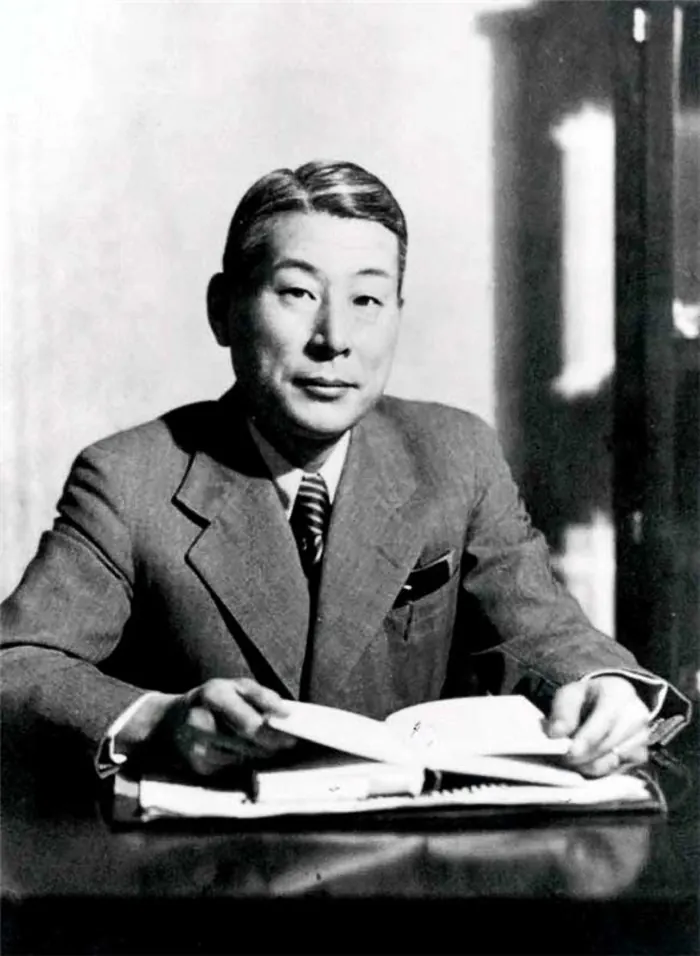
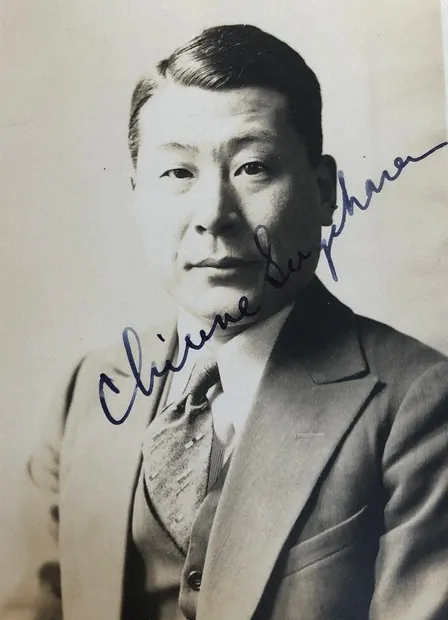
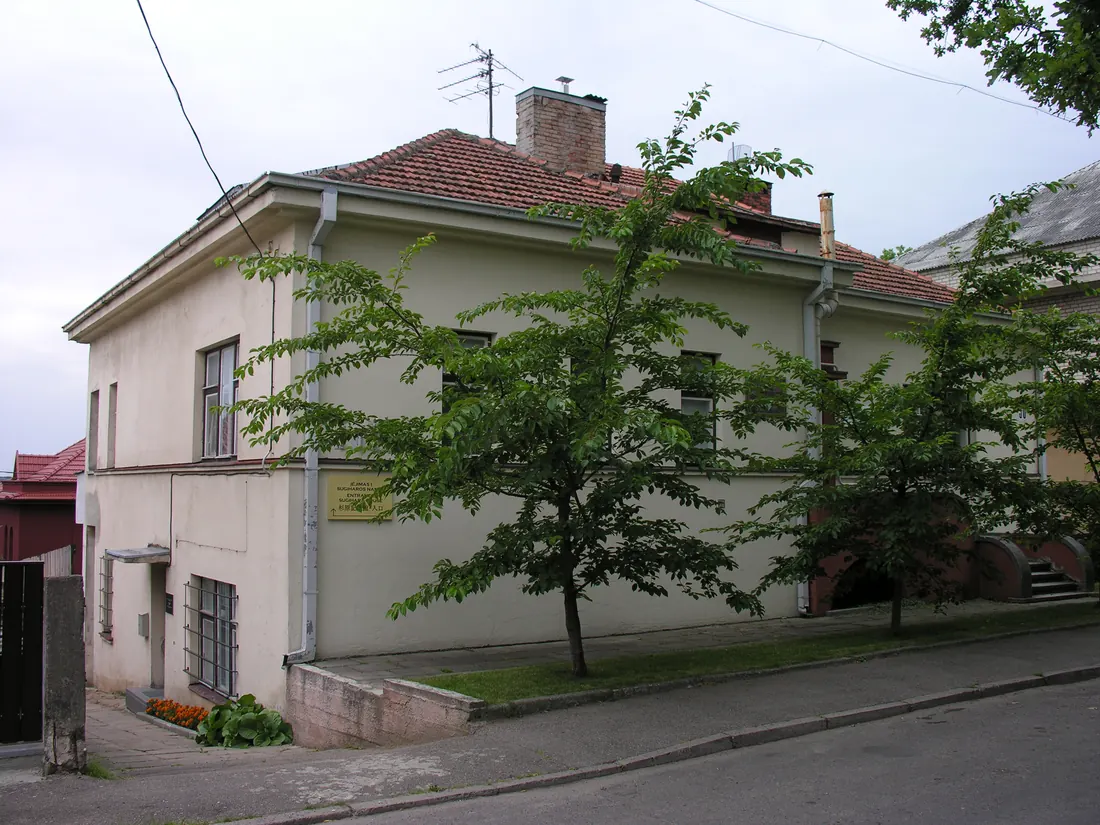
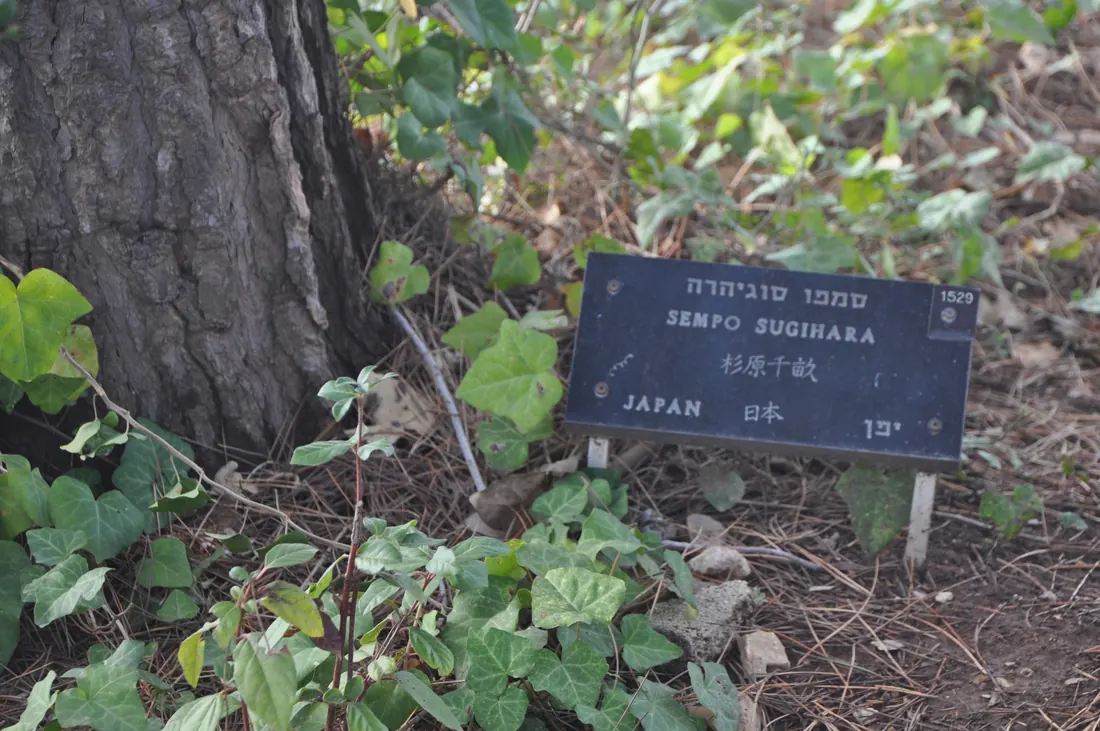
In 1939 Chiune Sugihara became vice-consul at the Japanese consulate in Kaunas, then Lithuania’s temporary capital. In July 1940 hundreds of Jewish refugees lined up outside. They had fled German-occupied western Poland, and a Japanese transit visa was a way out: refugees with papers for Curaçao and other Dutch colonies needed one to travel east through the Soviet Union and Japan.
Sugihara contacted the Foreign Ministry in Tokyo three times for instructions. Each time the answer was that every visa holder needed a destination visa, without exception. Tokyo’s cable told him, “Otherwise, you should not give them the transit visa.” He wrote the visas anyway, by hand, for weeks, working “more than sixteen hours a day.”
In June 1940 the Soviet Union had invaded Lithuania, and it ordered all consulates to close by the end of August. Sugihara kept issuing visas into early September, when he had to leave, and even at the railway station he kept writing. He reportedly handed visas out of the train window as it pulled away.
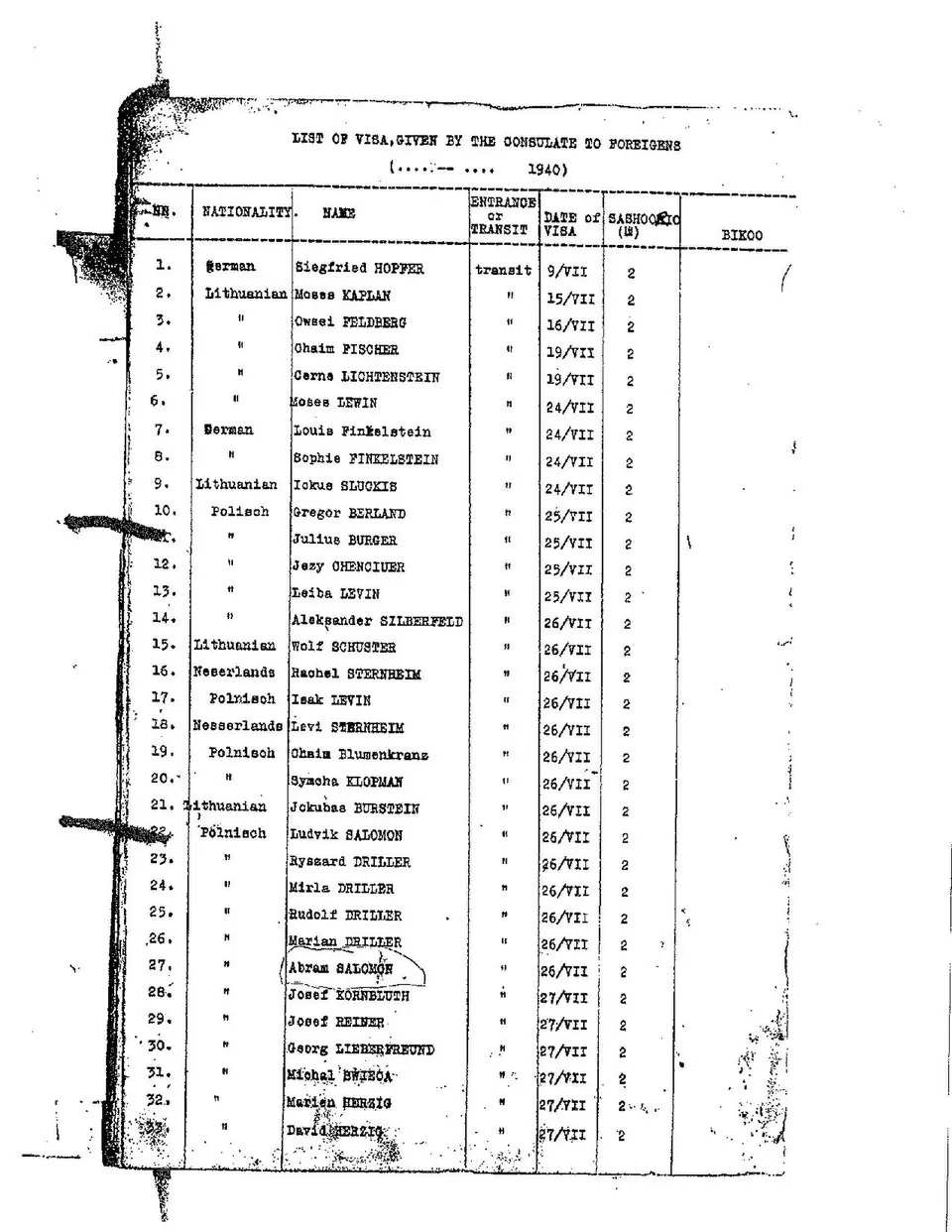
His list counts 2,139 visas, many covering whole families, and an estimated 6,000 people escaped. Back in Japan in 1947, he was asked to resign. The official reason was staff cuts, but his family believed it was because of the visas. In 1984 Yad Vashem named him Righteous Among the Nations, and the Simon Wiesenthal Center estimates that about 40,000 descendants of the refugees are alive today.
Fact check
The facts and where they come from
- Sugihara became vice-consul at the Japanese consulate in Kaunas, then Lithuania’s temporary capital, in 1939; the US Holocaust Memorial Museum says he was sent to Kovno in November 1939. 12
- On July 27, 1940, hundreds of people were waiting outside the consulate: “That July, hundreds of Jewish refugees lined up.” 3
- The refugees were Jews who had fled the Nazis: “The fleeing Jews were refugees from German-occupied Western Poland.” The Jewish Foundation for the Righteous describes Polish Jews trying to escape the advancing German army. 13
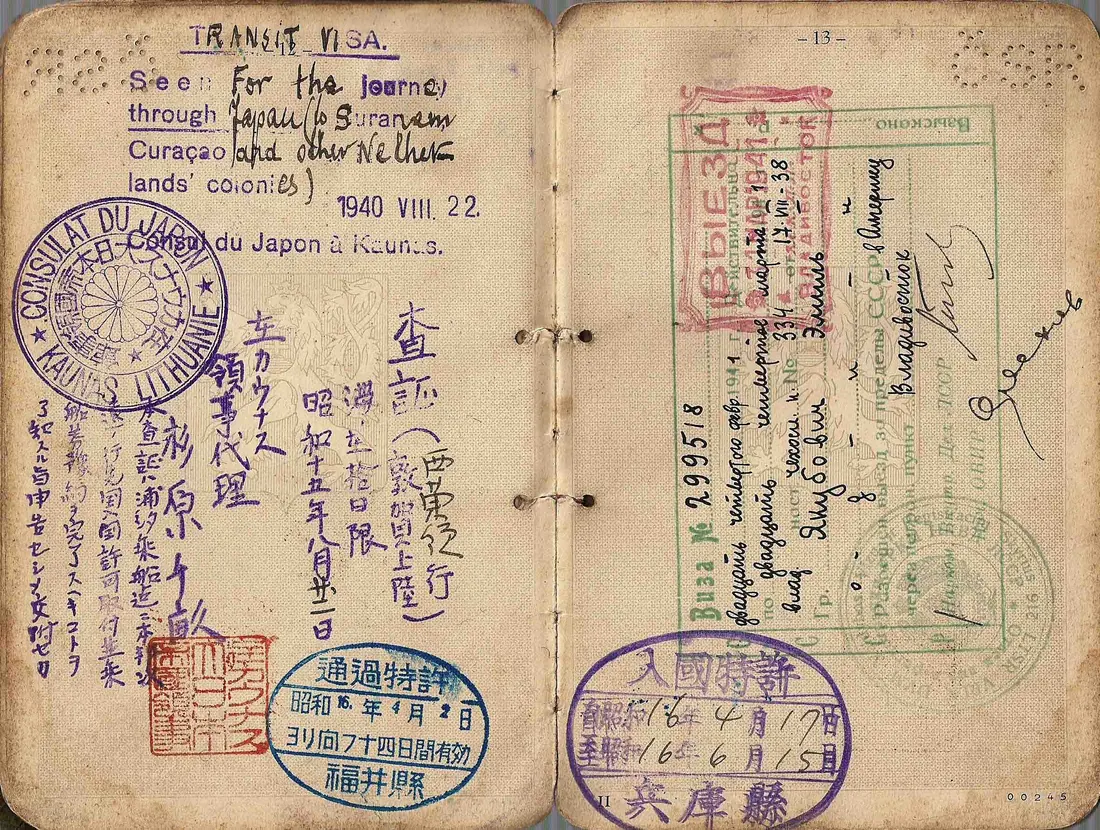
- A Japanese transit visa was a way out: refugees with papers for Curaçao and other Dutch colonies needed it to travel east through the Soviet Union and Japan. The visa itself reads “Seen for the journey through Japan (to Suranam, Curaçao and other Netherlands’ colonies).” 25
- He contacted the Foreign Ministry three times for instructions; each time it answered that every visa holder needed a destination visa, without exception. Tokyo’s cable: “Otherwise, you should not give them the transit visa.” The Jewish Foundation for the Righteous says his request was denied. 123
- He wrote the visas anyway, by hand (“handwritten transit visas”). 31
- He worked “more than sixteen hours a day” (Jewish Foundation for the Righteous); Wikipedia says reportedly 18 to 20 hours a day. 31
- He issued visas for weeks, from July into early September 1940 (Wikipedia: July 18 to August 28, and on until September 4, when he had to leave). 14
- “In June 1940, the Soviet Union invaded Lithuania and ordered all consulates to close by the end of August.” 3
- Even at the train station he kept writing: the Jewish Foundation for the Righteous says he continued to issue visas on the train platform, and his son Hiroki said he “continued to pen visas even at the railway station.” 31
- He reportedly handed visas out of the train window as it left. Wikipedia, citing witnesses, says he threw visas out of the window as the train pulled out; the Jewish Foundation for the Righteous says he handed out more once on board. 13
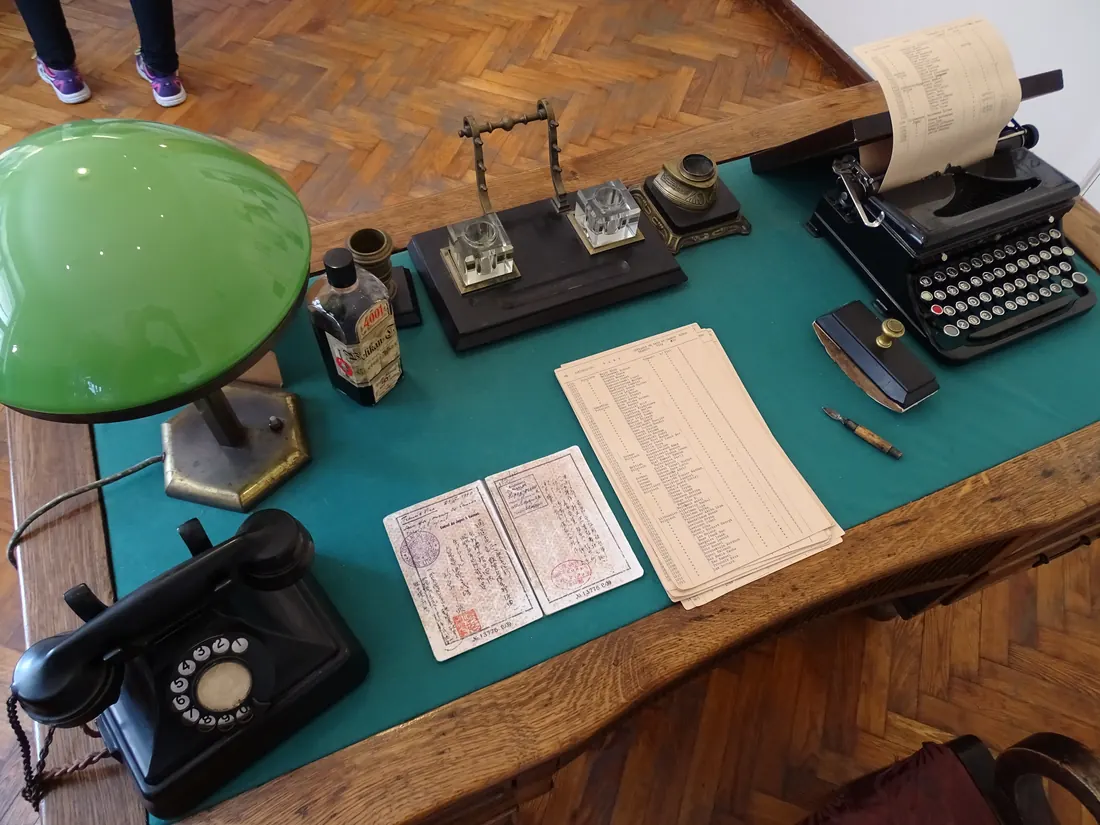
- His list counts 2,139 visas: the consulate’s typed list ends at entry no. 2139, and a February 1941 note to Foreign Minister Matsuoka lists 2,139 transit visas. The US Holocaust Memorial Museum gives visas to 2,140 persons. 412
- Many visas covered whole families: a family visa let several people travel on one visa. The US Holocaust Memorial Museum says the visas also covered some 300 others, mostly children. 12
- An estimated 6,000 people escaped (a Simon Wiesenthal Center estimate, cited by Wikipedia). 1
- Back in Japan in 1947 he was asked to resign: due to downsizing (Wikipedia), or retired with a small pension as part of a large staff reduction (US Holocaust Memorial Museum); the Jewish Foundation for the Righteous says he was forced to resign. 123
- His family believed it was because of the visas: his wife, Yukiko, and others said the ministry told him he was dismissed over “that incident” in Lithuania. 1
- Yad Vashem named him Righteous Among the Nations in 1984, with a ceremony in Jerusalem in January 1985. 2
- The Simon Wiesenthal Center estimates about 40,000 descendants of the refugees are alive today; Wikipedia’s lead gives a range of 40,000 to 100,000. 1
Sources
- Chiune Sugihara Wikipedia
- Chiune (Sempo) Sugihara United States Holocaust Memorial Museum: Holocaust Encyclopedia
- Holocaust Story of Moral Courage: Chiune Sugihara Jewish Foundation for the Righteous
- Sugihara Visa List Original Scan (PDF) Wikimedia Commons
- 1940 issued visa by consul Sugihara in Lithuania Wikimedia Commons
Notes
Estimates of how many people escaped run from about 3,000 (Akira Kitade) through 6,000 (the Simon Wiesenthal Center) to 10,000 (his widow and eldest son). We use the Simon Wiesenthal Center’s estimate. Estimates of descendants run from 40,000 to 100,000, and we use the lower figure.
Why he left the foreign service is disputed: the official reason was staff cuts, while his wife and family say it was punishment for the visas. We give both.
Tokyo’s answer each time was that visa holders needed destination visas and funds, without exception, which most refugees lacked. It was not a word-for-word “no.”
Dates differ between sources: the list’s first entries are dated July 9; Wikipedia gives July 18 to August 28; the Jewish Foundation for the Righteous dates the crowd to July 27. Yad Vashem’s title is dated 1984, and the ceremony in Jerusalem was in January 1985. Hours a day run from “more than sixteen” (Jewish Foundation for the Righteous) to a reported 18 to 20 (Wikipedia); we use the lower figure.
Left out: the claim that he gave the consulate stamp to a refugee (his son Nobuki denies it), blank signed sheets from the train, and Jan Zwartendijk’s Curaçao notations.
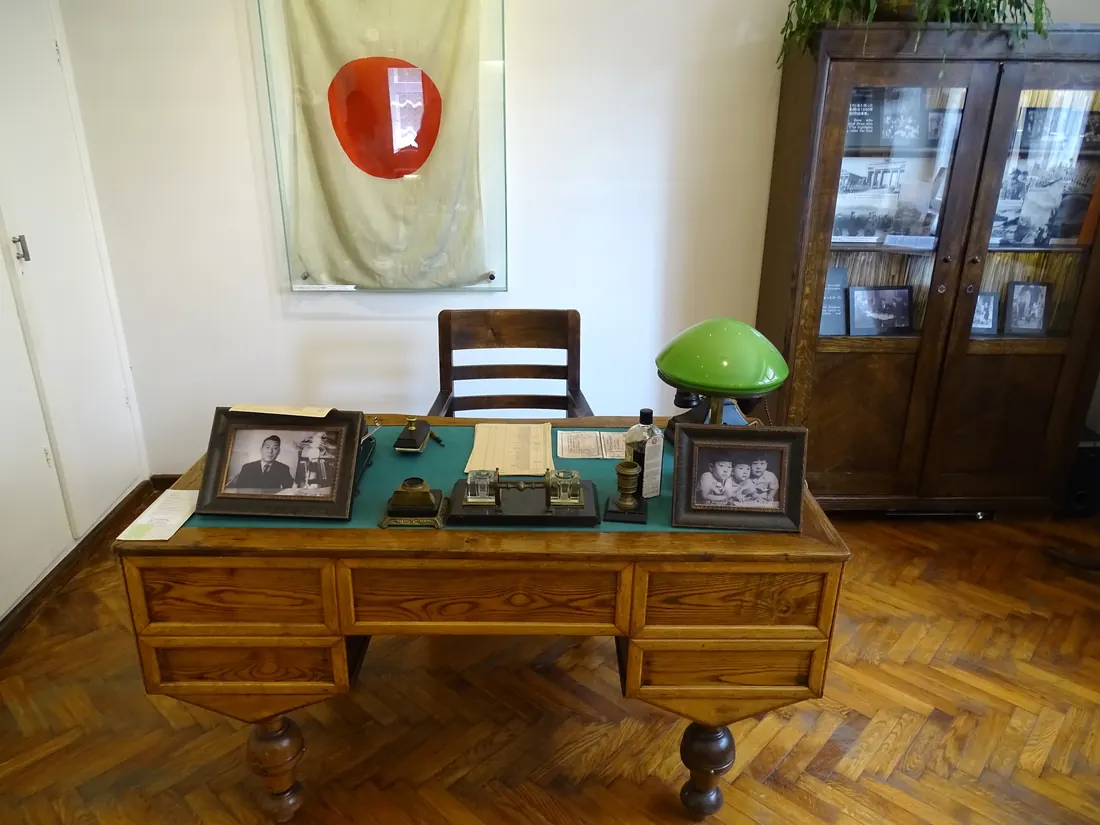
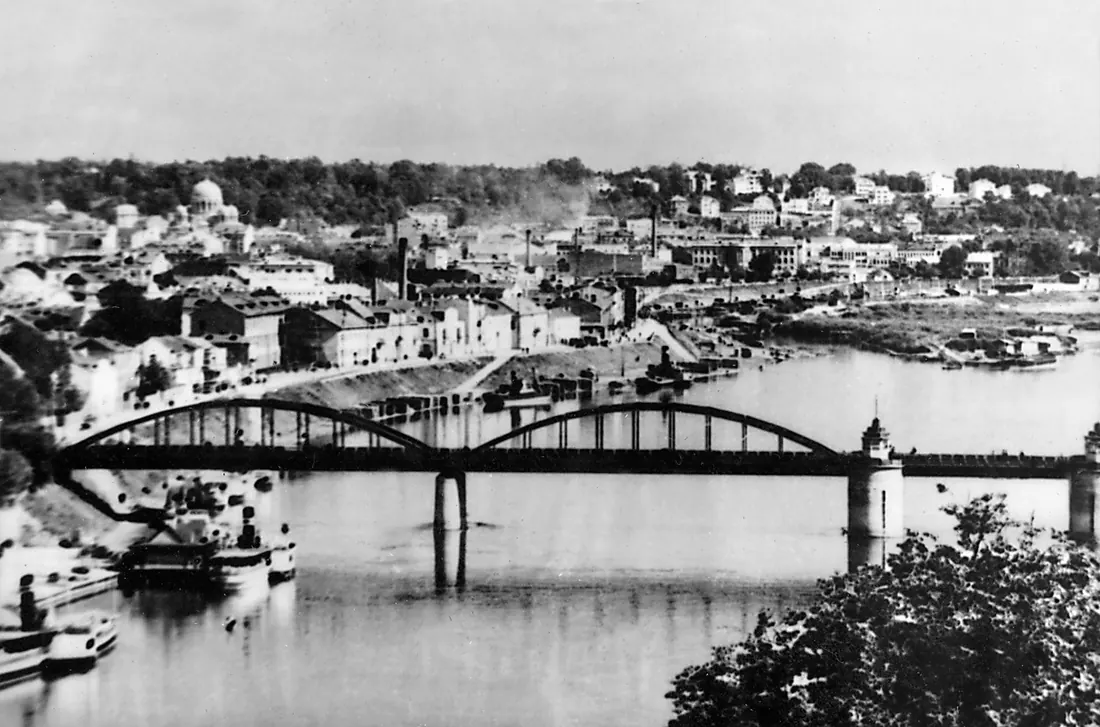
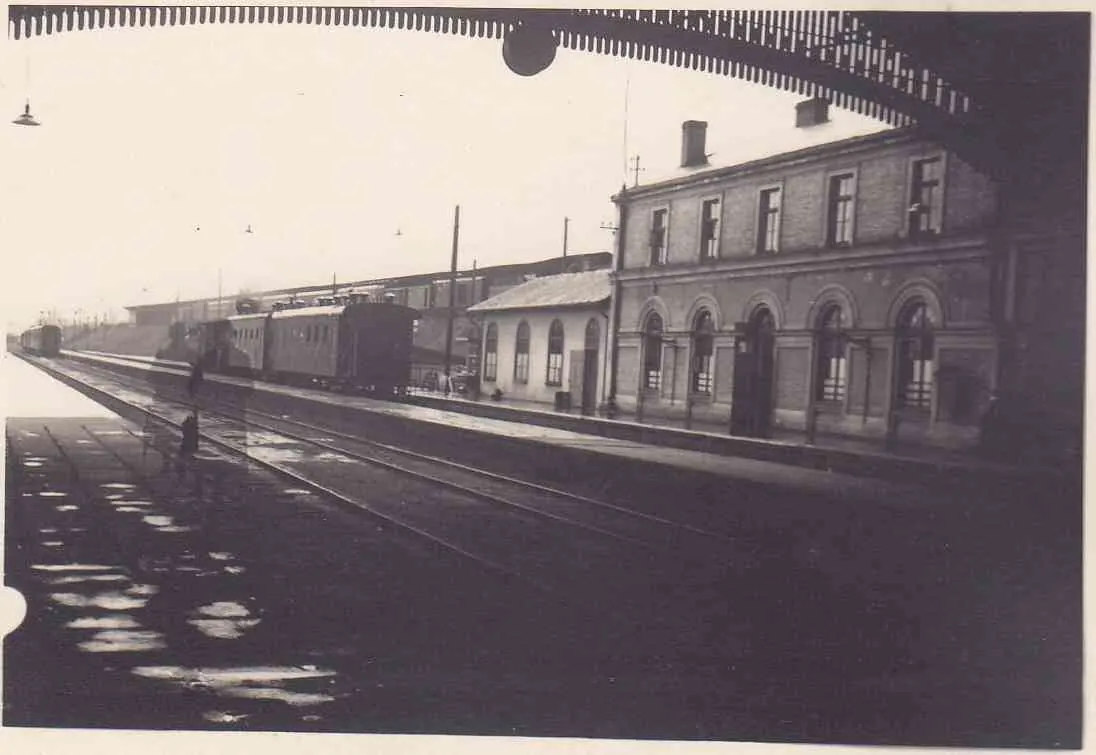
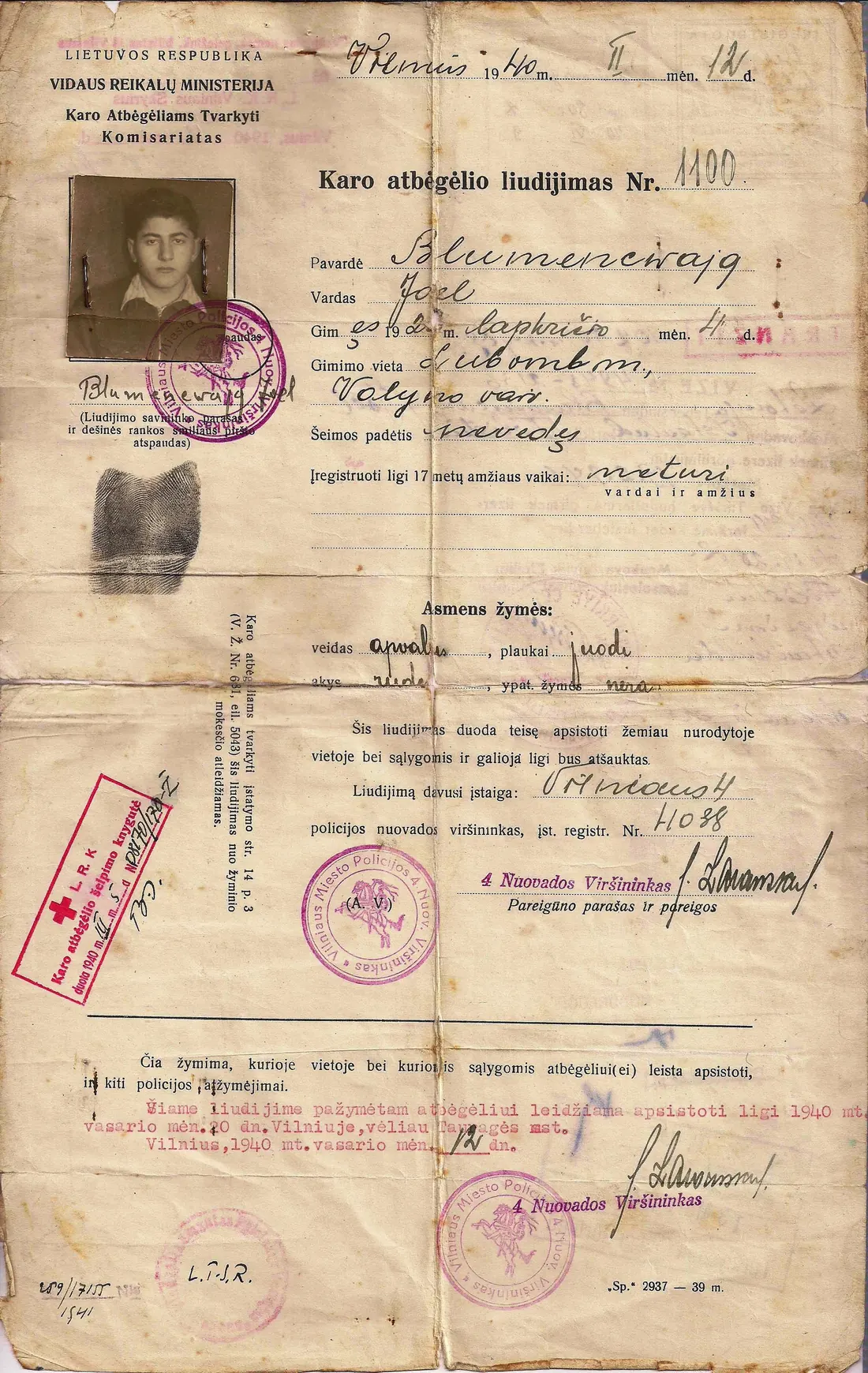
No rights-free photo of the line outside the consulate exists, so we show a real 1940 refugee certificate from Vilnius; its holder escaped to Palestine and is not known to have held a Sugihara visa. The station photo is Kaunas in the 1930s, not the day he left. The desk and office are a museum recreation at Sugihara House; the consular flag is original.
Photo credits
The archive photos in this story
The photographs and illustrations in this story are in the public domain or shared under open licenses; each one is credited below with its license. Tap one to enlarge it, or follow the link to its Wikimedia Commons page for the full record. The narration, music, captions and graphics in the Short are our own.