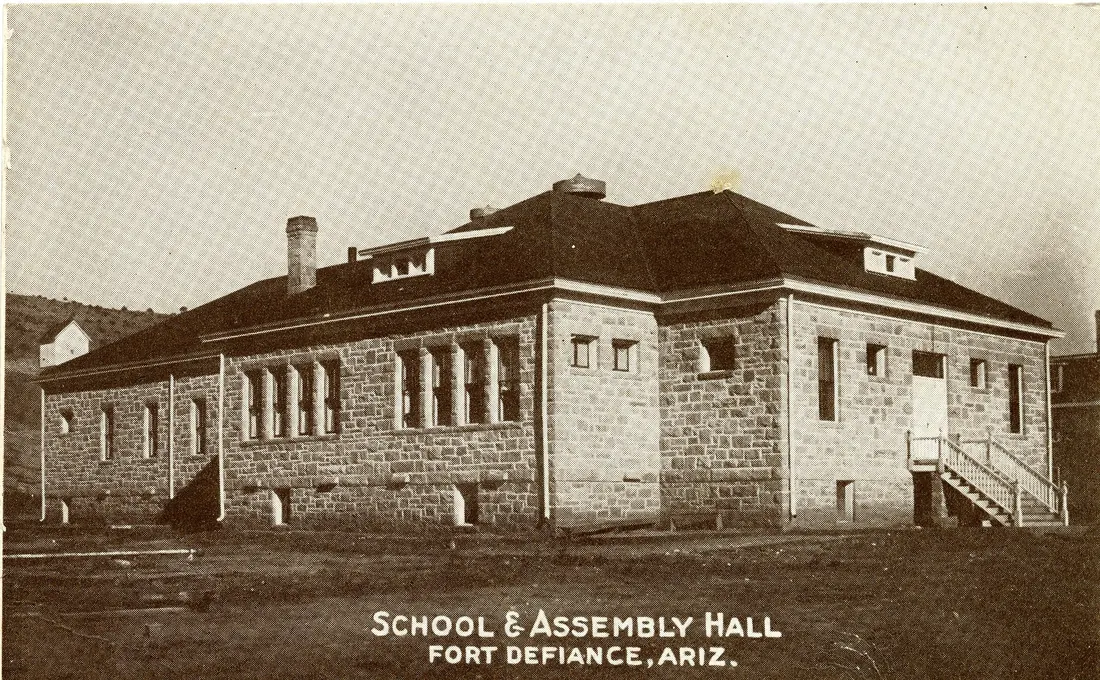
Many of the Navajo (Diné) men who became code talkers, the National WWII Museum writes, “had been forced to attend government or religious-run boarding schools that tried to assimilate Native peoples and would punish students for speaking in their traditional language.” Among the first recruits, John Brown Jr. recalled that students were punished if they used Navajo at school, and Carl Gorman was punished for speaking it.
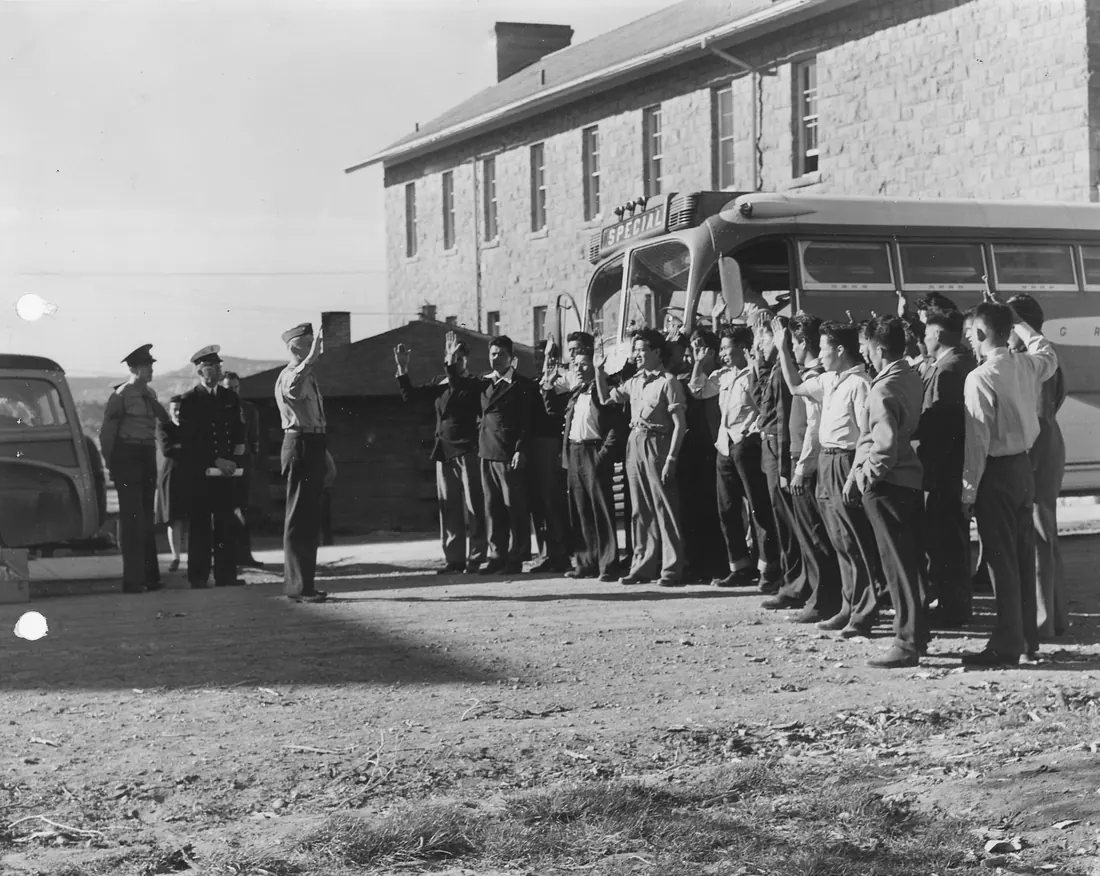
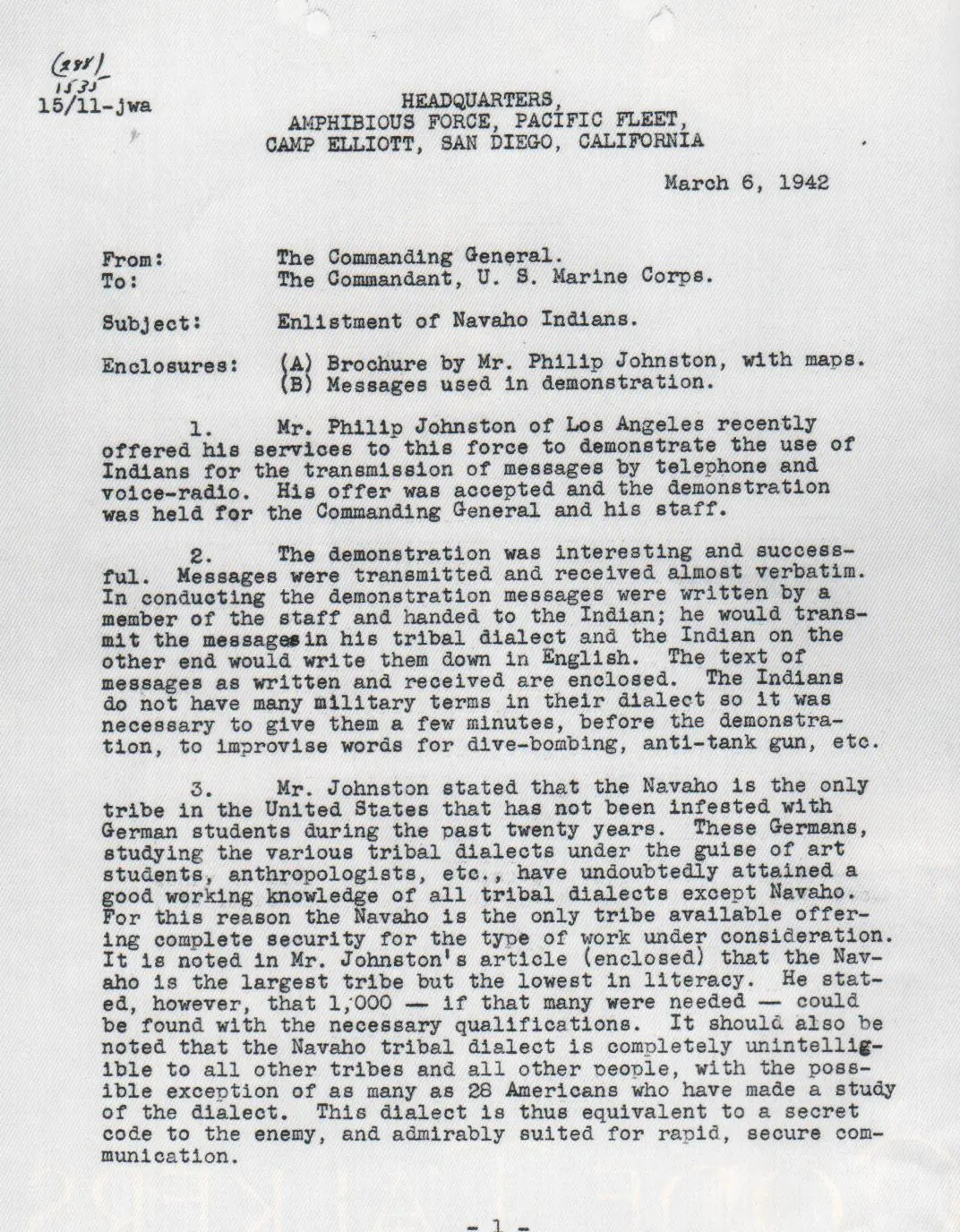
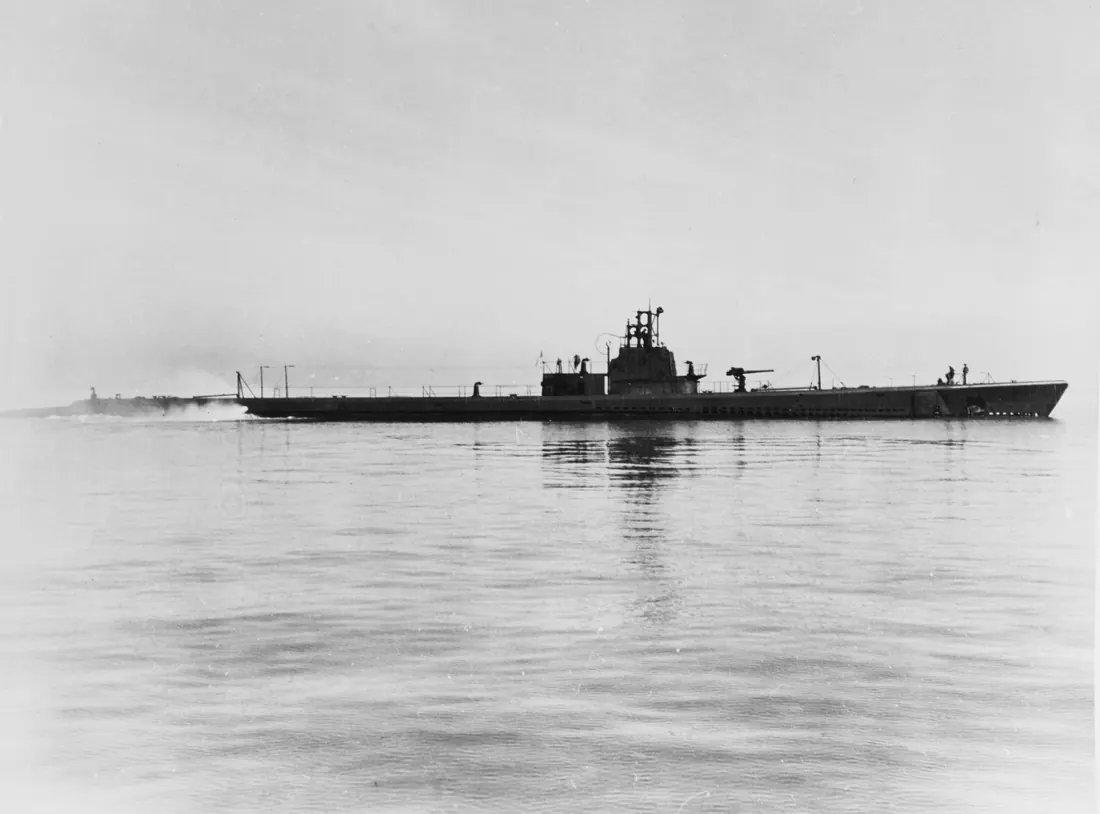
Now the Marines needed that language. In a memo of March 6, 1942, Maj. Gen. Clayton Vogel called it “equivalent to a secret code to the enemy.” On May 4, 1942, 29 Navajo men were sworn in at Fort Wingate, New Mexico, and this first group created the Navajo code. The Navajo word for buzzard stood for bomber, and the code word for submarine, béésh łóóʼ, meant iron fish.
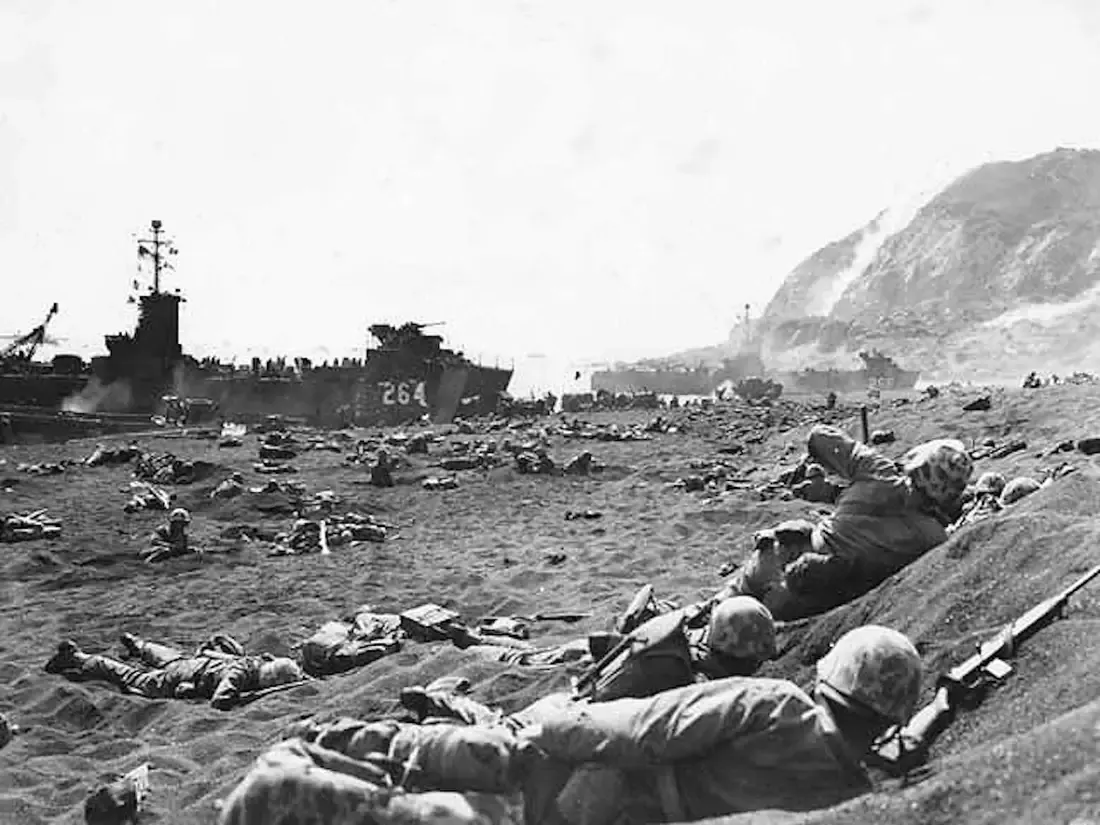
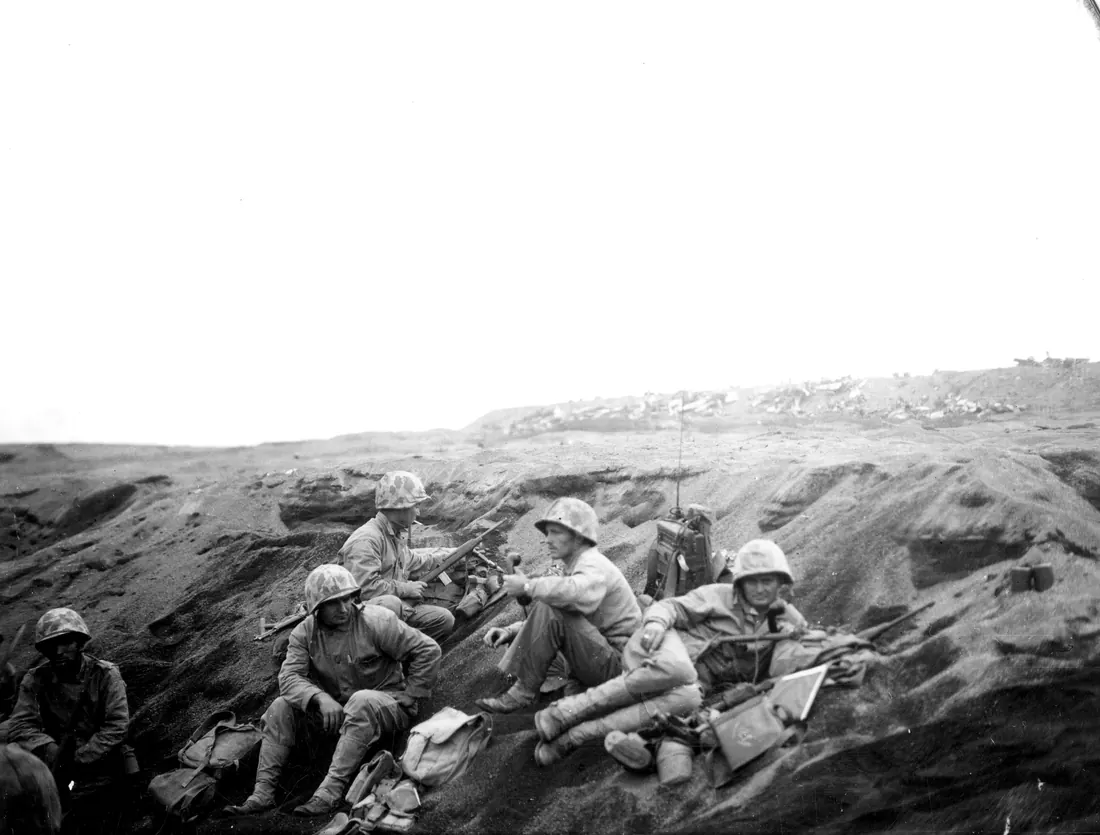
About 400 Navajo served as code talkers. At Iwo Jima in February 1945, Maj. Howard Connor, the 5th Marine Division’s signal officer, had six of them working around the clock for the first two days of the battle. They sent more than 800 messages, all without error. Connor said: “Were it not for the Navajos, the Marines would never have taken Iwo Jima.”
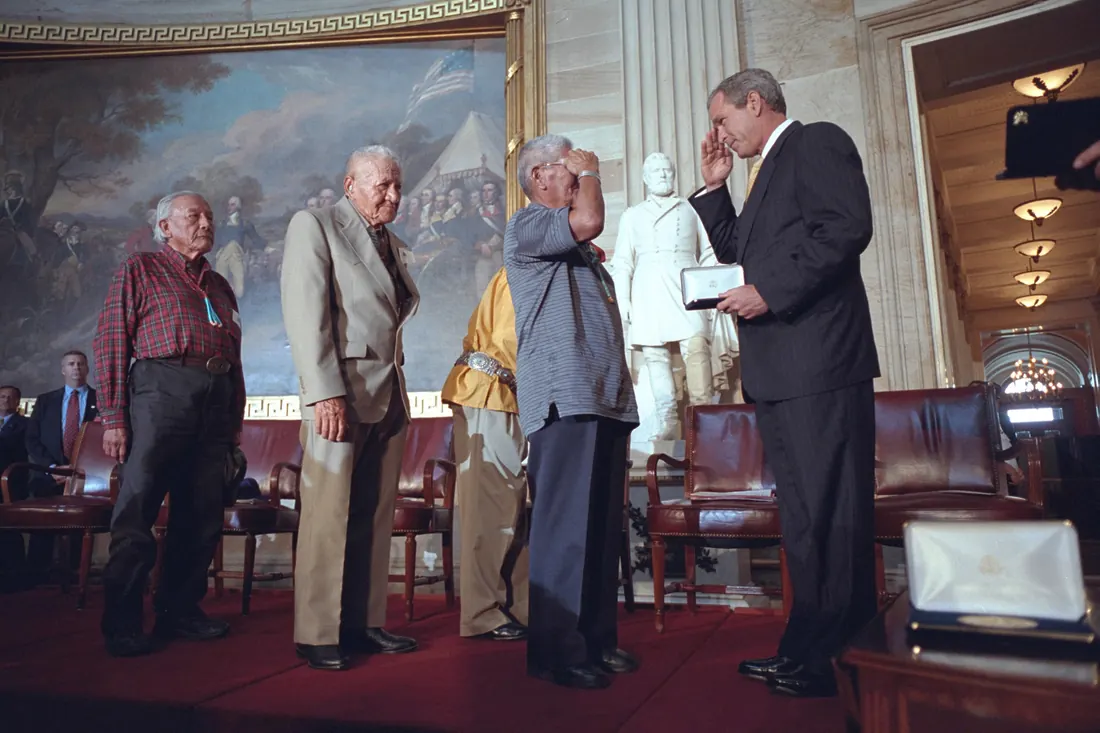
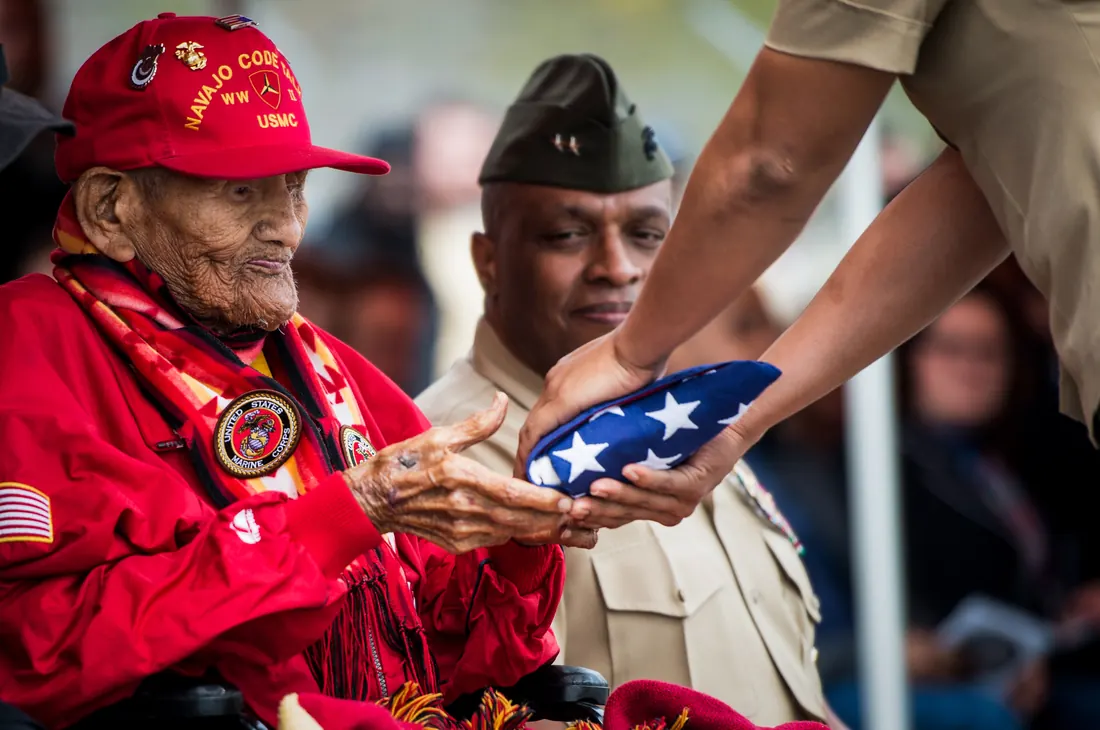
The code was never broken. But it stayed classified until 1968, and the code talkers couldn’t tell even their families about their work. On July 26, 2001, President George W. Bush presented the Congressional Gold Medal to the four surviving members of the original 29 who attended, and to the families of the 24 who had died; the other code talkers received silver medals. Chester Nez, the last of the original 29, died on June 4, 2014.
Fact check
The facts and where they come from
- In 1942 the Marines took 29 Navajo men. Wikipedia: “On May 4, 1942, twenty-nine Navajo men were sworn into service at Fort Wingate, an old US Army fort converted into a Bureau of Indian Affairs boarding school. They were organized as Platoon 382.” The CIA: “The first 29 recruited Navajos (one dropped out) arrived at Camp Elliott near San Diego in May 1942.” 12
- Many had been punished at boarding schools for speaking Navajo. The National WWII Museum says many code talkers “had been forced to attend government or religious-run boarding schools that tried to assimilate Native peoples and would punish students for speaking in their traditional language.” Of the first 29, John Brown Jr. “recalled that students were only allowed to speak English at school and were punished if they used the Navajo language,” and Carl Gorman was at “an American Indian boarding school where he was punished for speaking the Navajo language.” Chester Nez recalled children “forbidden to speak the Navajo language.” 3456
- The Marines needed that language. Maj. Gen. Clayton Vogel’s memo of March 6, 1942, “Enlistment of Navaho Indians,” reports Johnston’s demonstration and calls the dialect “equivalent to a secret code to the enemy.” Vogel recommended recruiting Navajos; the plan was cut to one platoon as a pilot. 71
- From it, they built a secret code. Wikipedia: “This first group created the Navajo code.” The CIA: “One of the first tasks for these recruits was to develop a Navajo code.” 12
- The code words included “the Navajo word for buzzard, jeeshóóʼ, which was used for bomber, while the code word used for submarine, béésh łóóʼ, meant iron fish in Navajo” (Wikipedia). 1
- About 400 Navajo served as code talkers. The CIA: “During the course of the war, about 400 Navajos participated in the code talker program.” 2
- At Iwo Jima in February 1945, Maj. Howard Connor, the 5th Marine Division’s signal officer, “had six Navajo code talkers working around the clock during the first two days of the battle. These six sent and received over 800 messages, all without error” (Wikipedia). The CIA: “six Navajo Code Talkers were operating continuously. They sent more than 800 messages. All of the messages were transmitted without error.” 12
- Connor’s words, the same on all three pages: “Were it not for the Navajos, the Marines would never have taken Iwo Jima.” The CIA calls him “the signal officer of the Navajos at Iwo Jima.” 231
- The code was never broken. Wikipedia: “The Navajo code is the only spoken military code never to have been deciphered.” The National WWII Museum: “the codes that they developed remained unbroken.” 13
- It stayed secret until 1968. Wikipedia: “The code remained classified until 1968.” The CIA: “not recognized until after the declassification of the operation in 1968.” 12
- They couldn’t tell even their families. The National WWII Museum: “They couldn’t even tell their family members about their communications work.” 3
- Public Law 106–554, signed on December 21, 2000, “awarded the Congressional Gold Medal to the original 29 World War II Navajo code talkers and Silver Medals to each person who qualified as a Navajo code talker.” On July 26, 2001, President George W. Bush presented the gold medals in the Capitol Rotunda to the four surviving originals who attended, and to the families of the 24 who had died. 128
- “The last of the original 29 Navajo code talkers who developed the code, Chester Nez, died on June 4, 2014” (Wikipedia). Nez was born in 1921 and was 93; he received his Gold Medal on July 26, 2001. 16
- Their work helped win a war. The National WWII Museum: “The work of hundreds of code talkers was essential to Allied victory in World War II.” 3
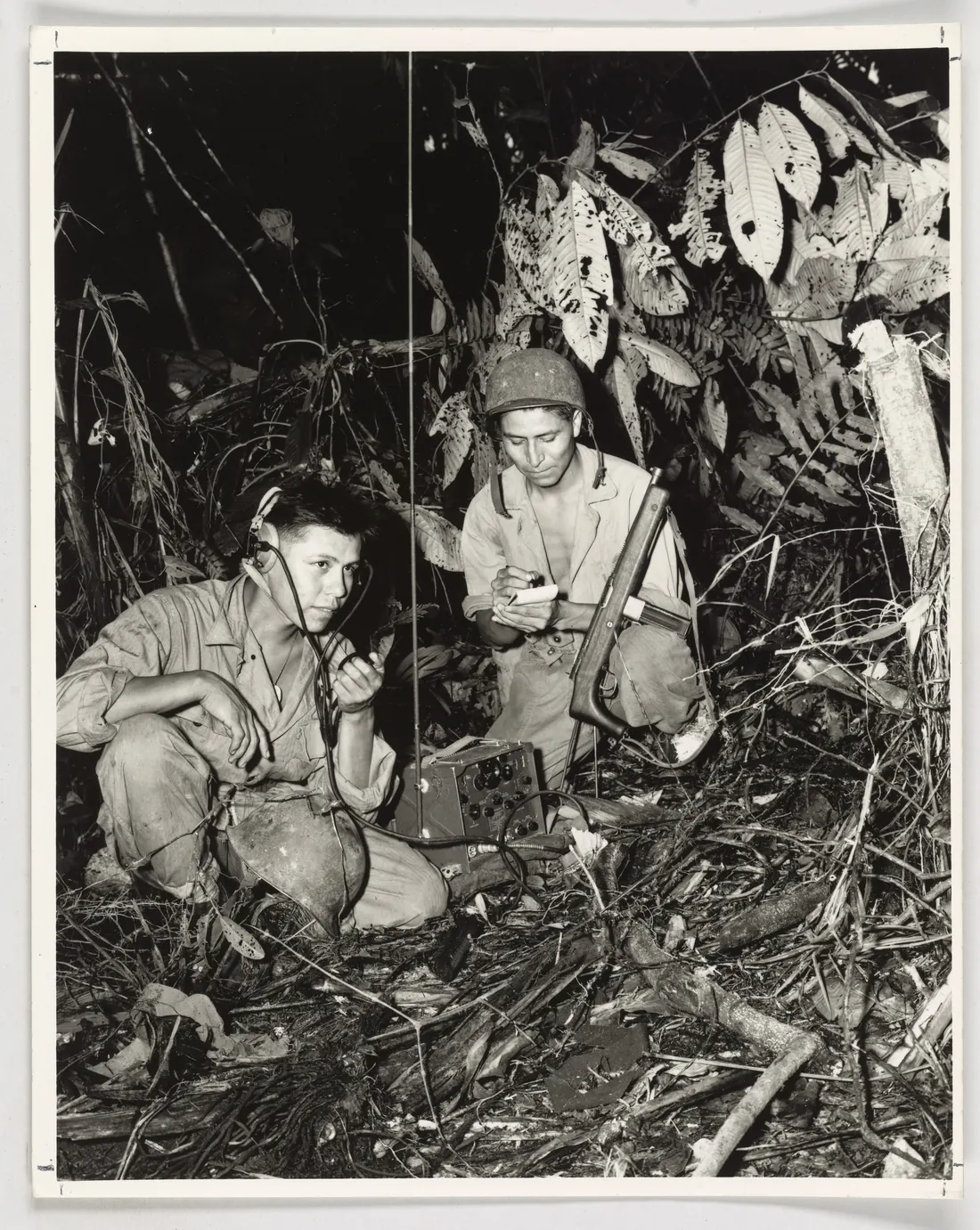
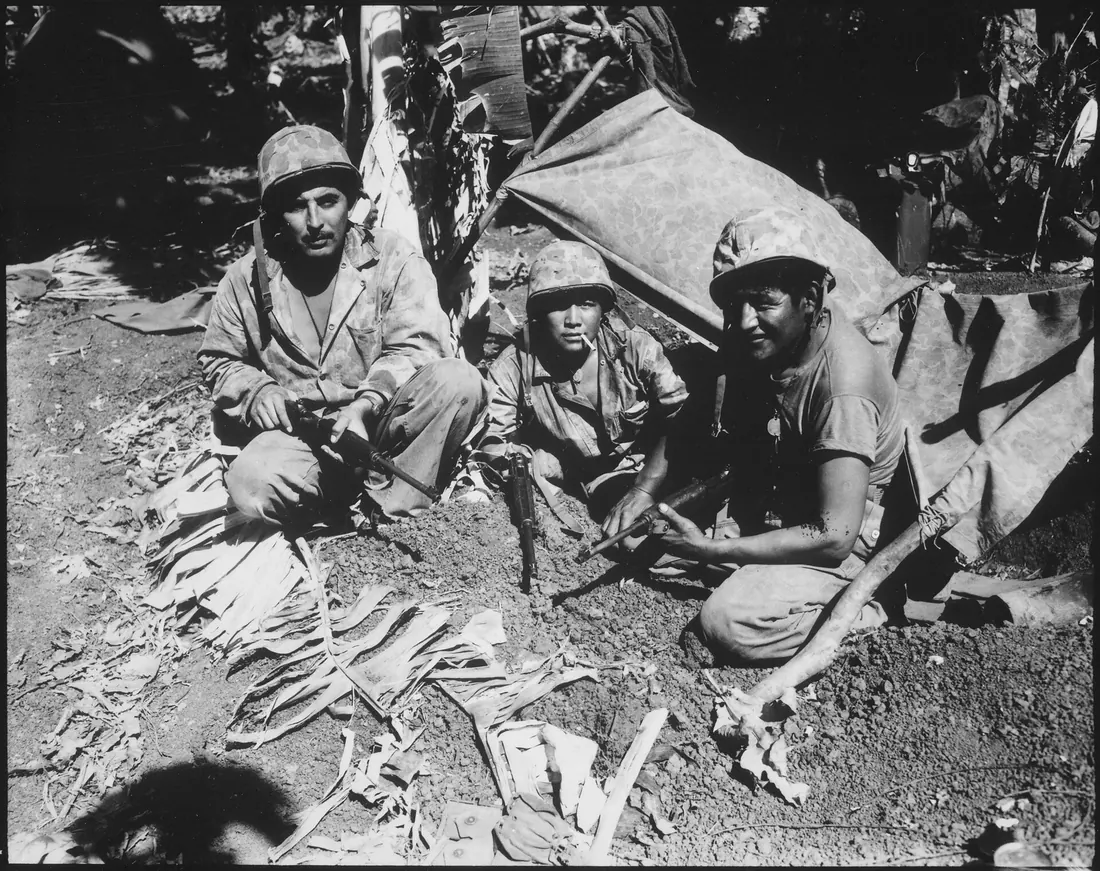
- Who the photos show: Cpl. Henry Bake Jr. and Pfc. George H. Kirk, “Navajos serving in December 1943 with a Marine Corps signal unit” (the CIA’s caption; Wikimedia Commons spells his name “Blake”), and Chester Nez at Quantico on April 4, 2014, “the last of the original 29 Navajo Code Talkers.” 29
Sources
- Code talker Wikipedia
- Navajo Code Talkers and the Unbreakable Code Central Intelligence Agency
- American Indian Code Talkers The National WWII Museum
- John Brown Jr. (Navajo code talker) Wikipedia
- Carl Gorman Wikipedia
- Chester Nez Wikipedia
- Maj. Gen. Clayton B. Vogel, “Enlistment of Navaho Indians” (March 6, 1942), page 1 Wikimedia Commons
- President Bush with the Navajo code talkers at the US Capitol, July 26, 2001 (White House Photo Office) Wikimedia Commons
- “Honoring a Legend”: Chester Nez at Quantico, April 4, 2014 (US Marine Corps) Wikimedia Commons
Notes
How many code talkers: about 400 is the CIA’s figure. Wikipedia says silver medals went to the “approximately 300” who qualified, and other counts run from about 375 to 420. We say about 400.
“Punished”: the sources say many were punished, with named cases among the first 29 (John Brown Jr., Carl Gorman); not every code talker went to a boarding school. Some of the schools were government (Bureau of Indian Affairs) schools and some were mission schools (Gorman’s was the Rehoboth Mission School), so we don’t call them government schools.
The Gold Medal: the law passed in December 2000, and the medals were presented on July 26, 2001, in person to four of the five living members of the original 29 and to the families of the 24 who had died.
Iwo Jima’s 800 messages: Wikipedia says they were “sent and received”; the CIA says “sent.” We say sent.
Where the code was built: Wikipedia’s Navajo section says Camp Pendleton; the CIA and the Chester Nez article say Camp Elliott. We don’t name the camp.
Left out: the story that a code talker’s bodyguard was to shoot him to protect the code (it rests on one veteran’s account) and the film Windtalkers. No Iwo Jima flag-raising photo is used; Joe Rosenthal’s is an AP photo and not free.
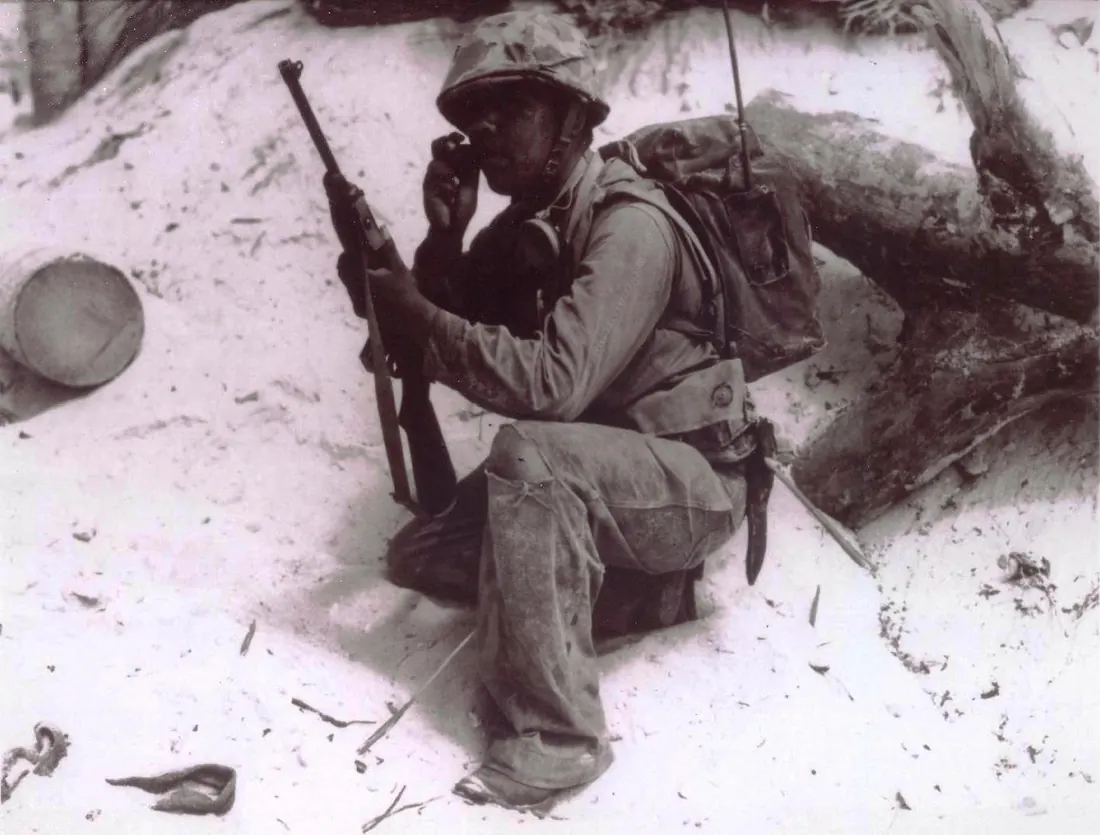
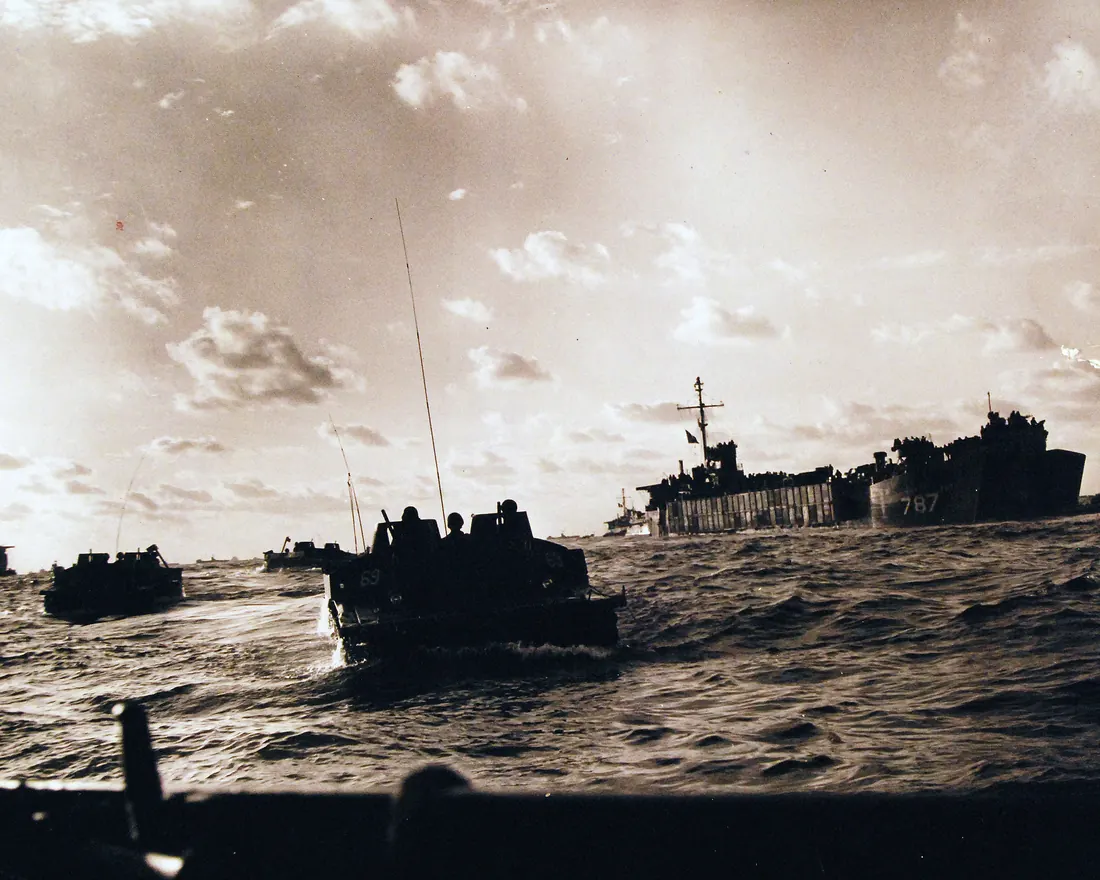
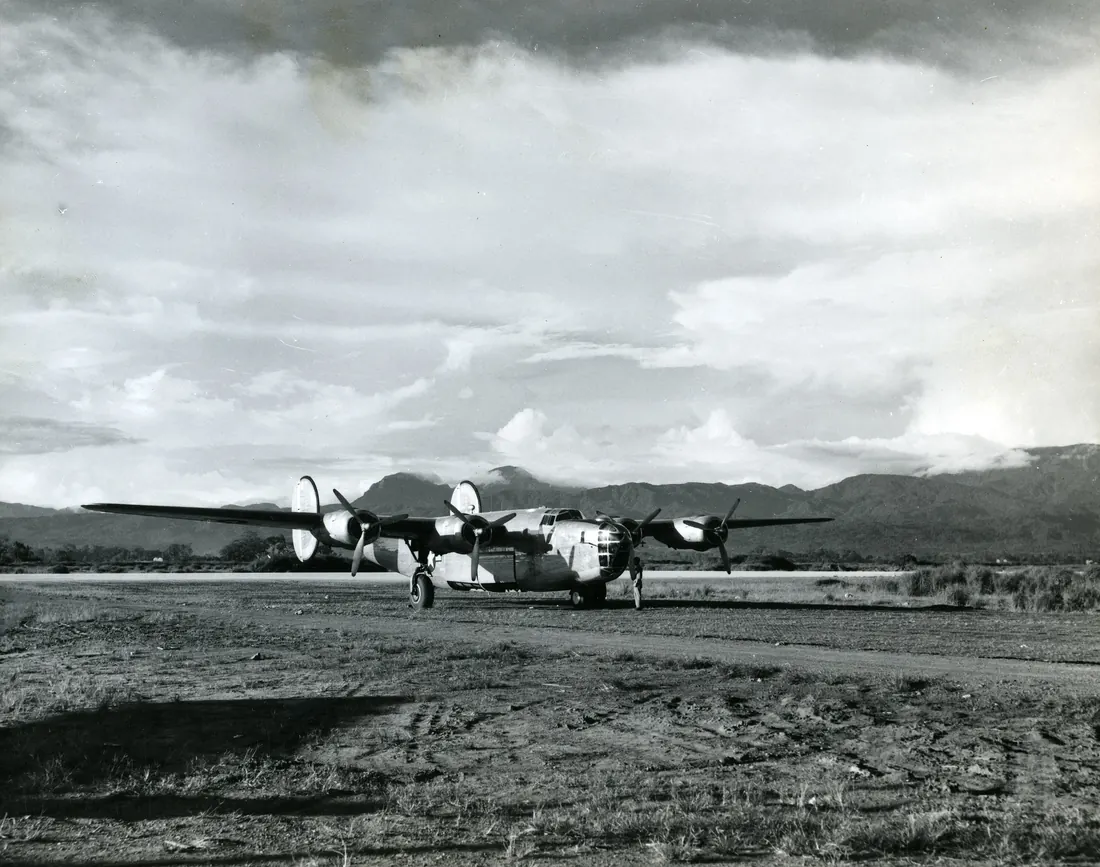
The Fort Defiance school postcard stands for the boarding schools in general (Nez, Brown and Gorman went to other schools). The submarine and bomber photos only illustrate the code words. The Iwo Jima photos show the landing and the beach in February 1945, not the code talkers themselves; the Saipan, Tarawa and Bougainville photos show Navajo code talkers in other Pacific battles. Wikimedia Commons spells Cpl. Henry Bake Jr.’s name “Blake”; the CIA’s caption has Bake.
Photo credits
The archive photos in this story
The photographs and illustrations in this story are in the public domain or shared under open licenses; each one is credited below with its license. Tap one to enlarge it, or follow the link to its Wikimedia Commons page for the full record. The narration, music, captions and graphics in the Short are our own.