Mary Anning was born on May 21, 1799, in Lyme Regis, England. Her father, Richard, was a cabinet-maker and carpenter, and the family was very poor; they sold fossils to tourists from a table outside their home. When he died in November 1810, he left them £120 in debt.
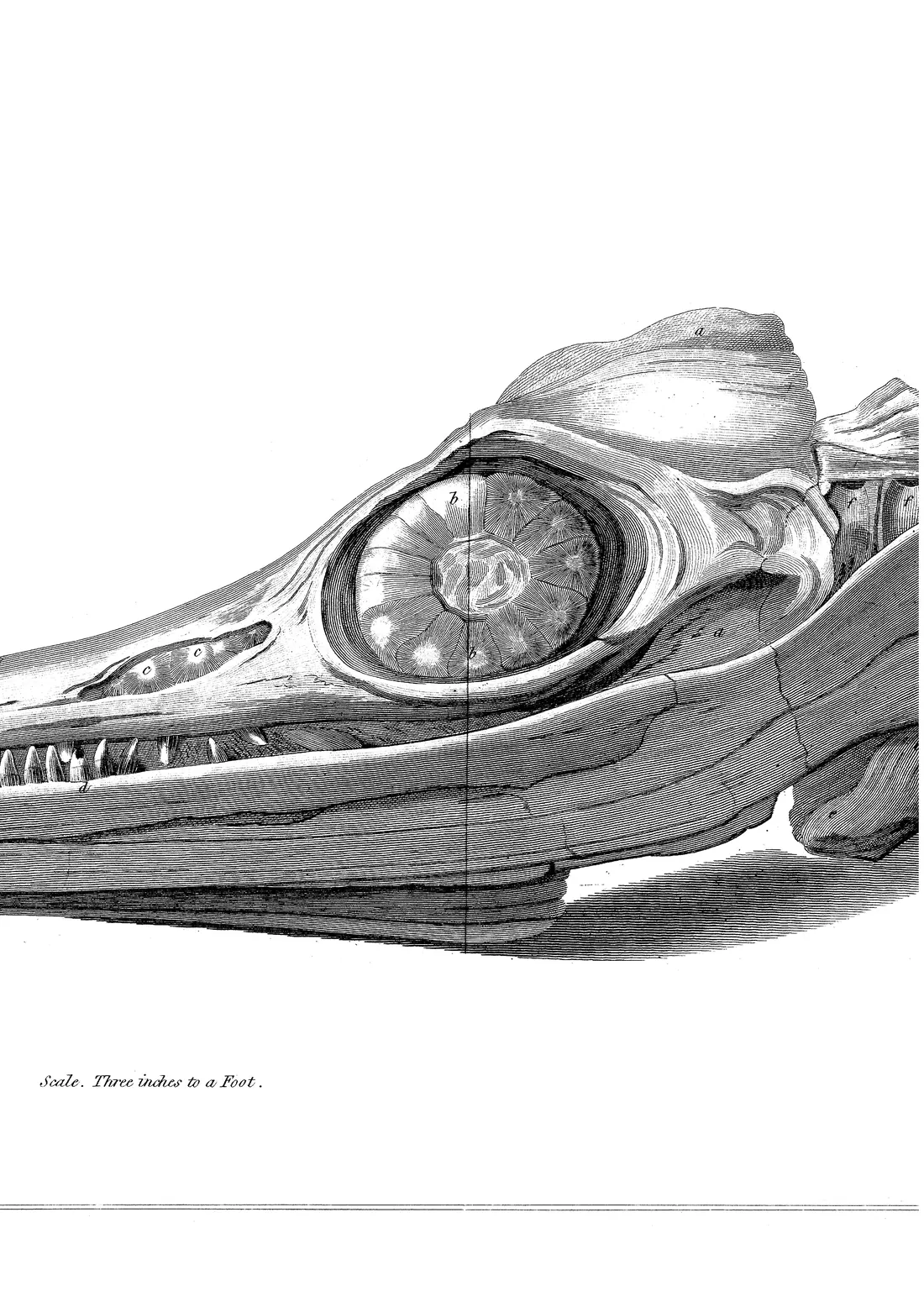
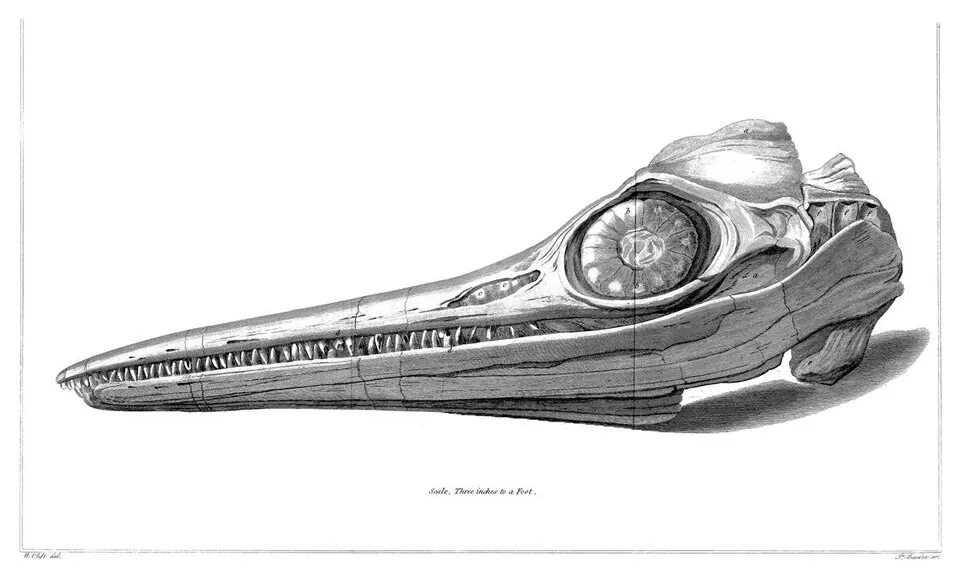
In the autumn of 1811 her brother Joseph found a strange skull. About a year later Mary dug out the rest of its skeleton, five meters long. By 1820 it was recognized as an extinct marine reptile and named Ichthyosaurus. When Everard Home described it in an 1814 paper, he never mentioned the Annings.
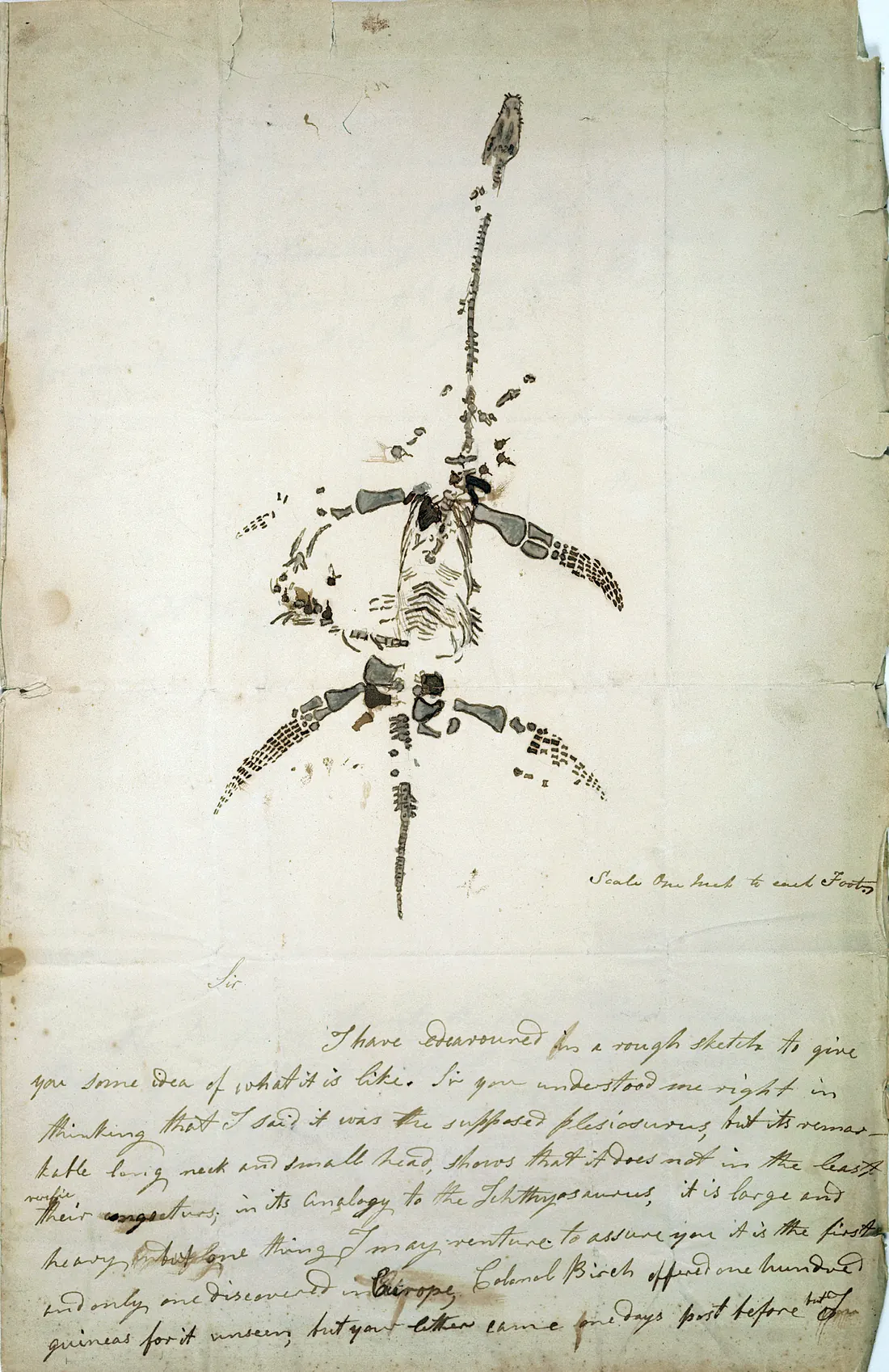
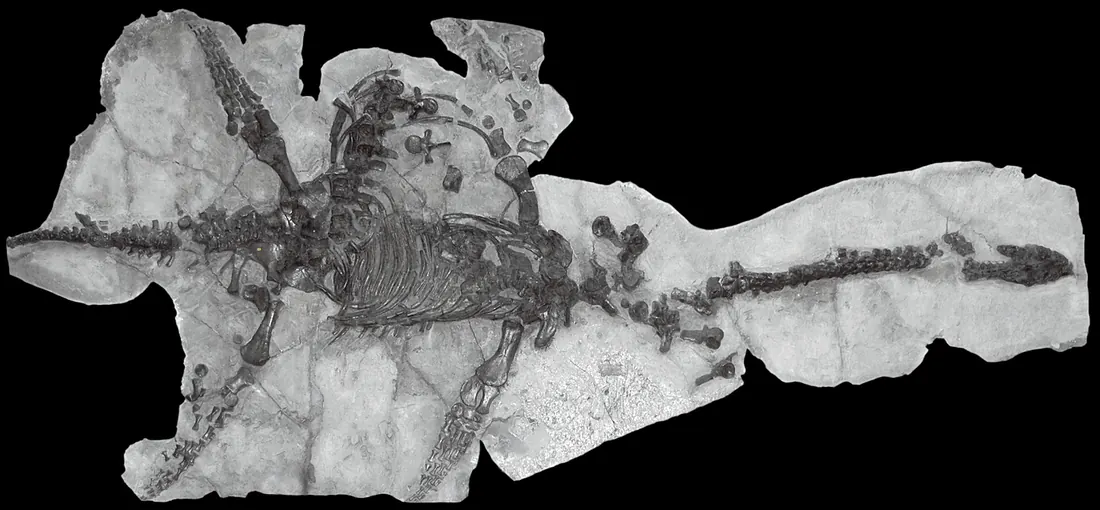
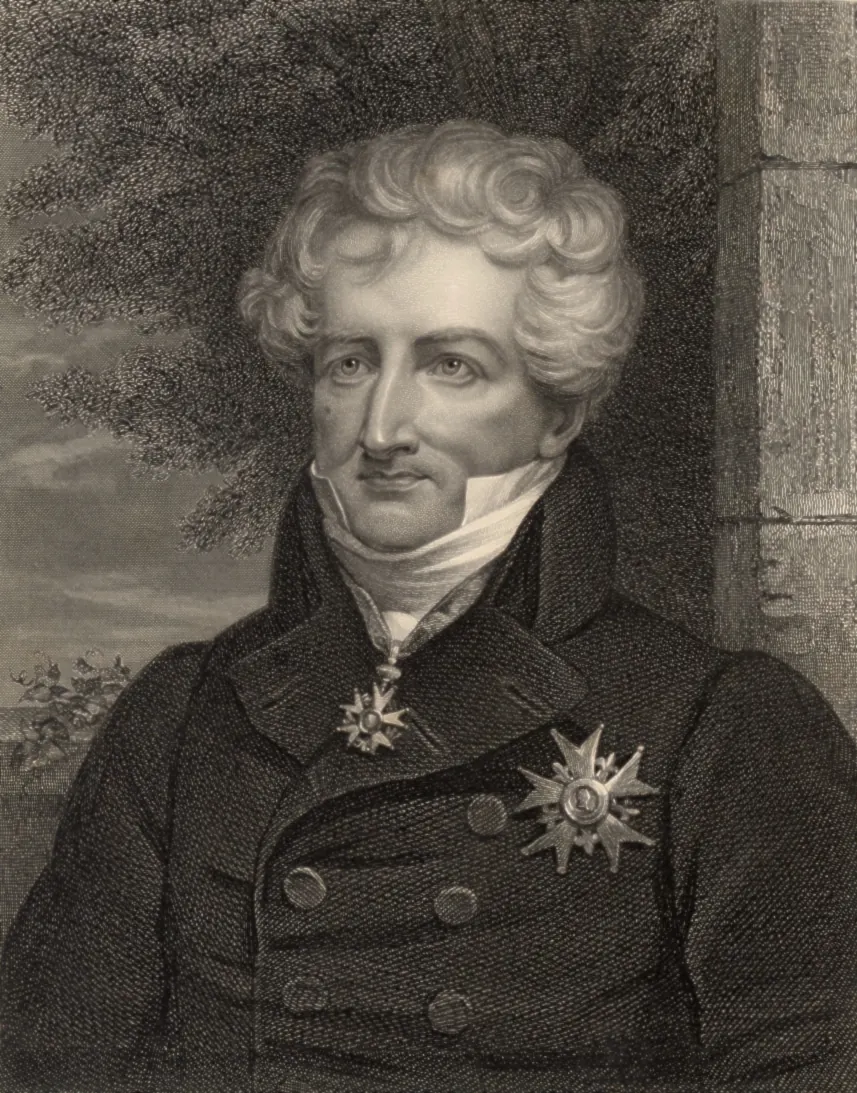
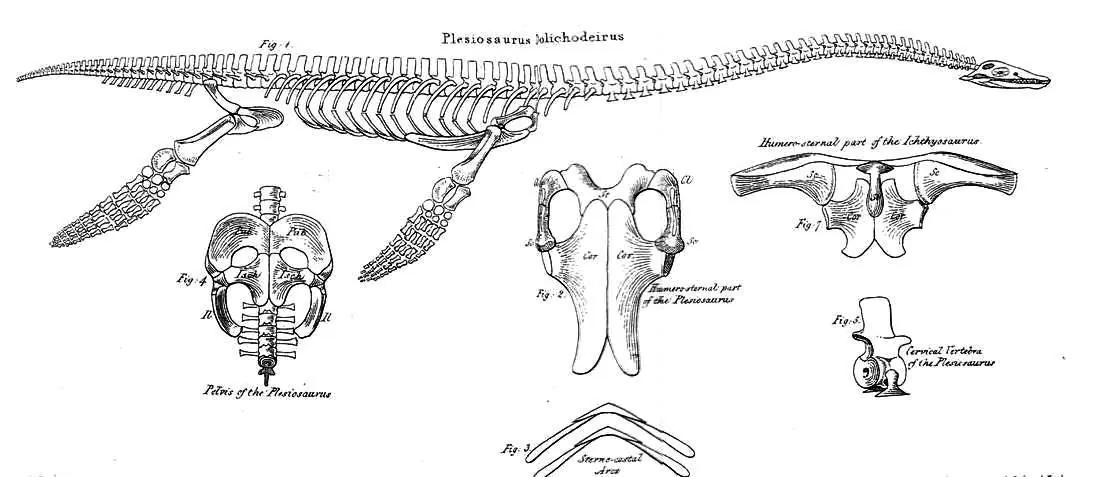
On December 10, 1823, she found the first complete skeleton of a plesiosaur. It looked so strange that rumors spread it was a fake, and Georges Cuvier, the most influential scientist of his day, thought it was a fraud. The skeleton was taken to a special meeting of the Geological Society of London in February 1824, but Mary wasn’t invited; the Society didn’t let women become members or even attend meetings as guests. Cuvier was assured it was real, and later admitted he had acted in haste.
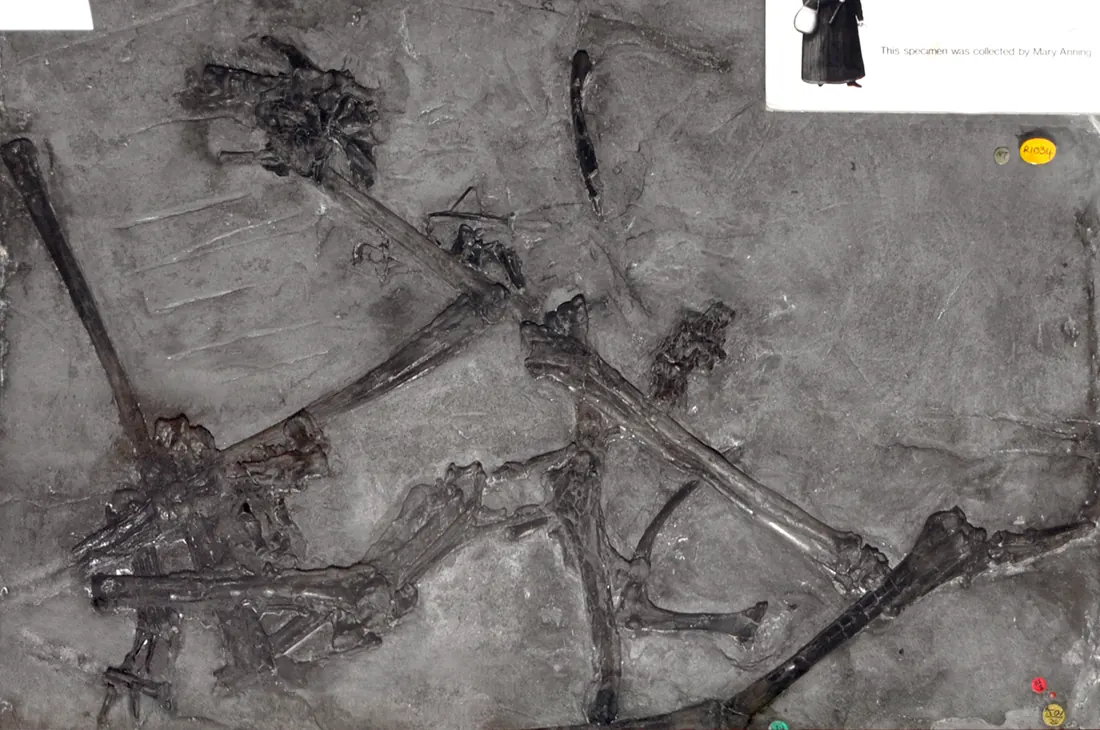
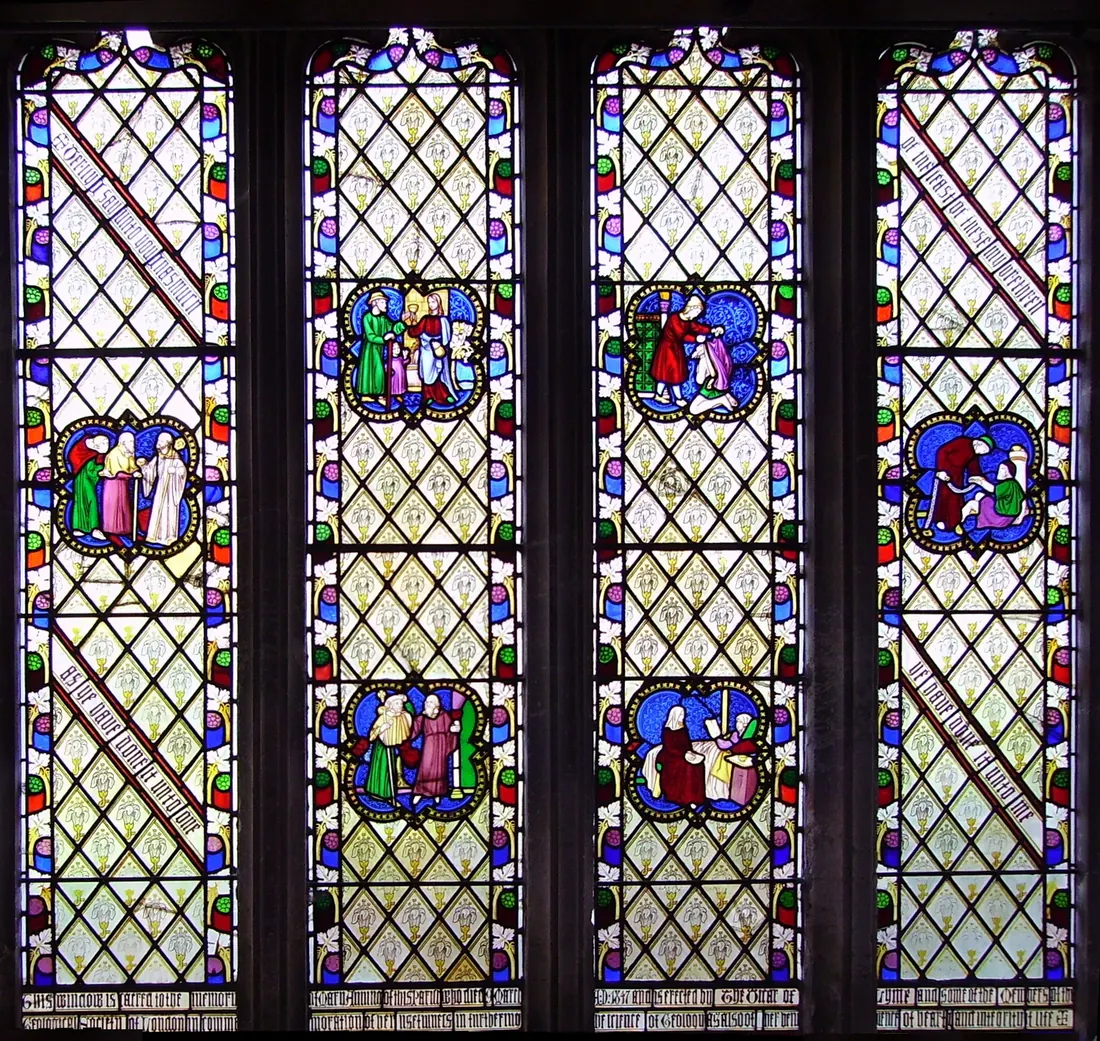
In 1828 she found Britain’s first pterosaur, a flying reptile. Scientists often published her finds without crediting her. She died of breast cancer in 1847, aged 47, still in financial strain, and in 1850 a stained-glass window in her memory, to which members of the Geological Society contributed, was unveiled. The Society elected its first women Fellows only in 1919. In 2010 the Royal Society named her among the ten British women who have most influenced science.
Fact check
The facts and where they come from
- She found the fossils, but scientists often left out her name. The Natural History Museum: “Male scientists – who frequently bought the fossils Mary would uncover, clean, prepare and identify – often didn’t credit her discoveries in their scientific papers.” The Lyme Regis Museum: “Many of her discoveries now reside in the Natural History Museum, London, though often credited to those who purchased them.” 12
- Mary Anning, fossil hunter, was born in Lyme Regis. The Geological Society: “Mary Anning was born on 21 May 1799 in Lyme Regis.” Wikipedia: an “English fossil collector, dealer, and palaeontologist.” 39
- Her father was a poor carpenter in Lyme Regis. The Geological Society: “Her father Richard, a cabinet-maker and carpenter.” The Natural History Museum: “They were very poor.” 31
- The family sold fossils to tourists. The Geological Society: her father “supplemented his income by selling his finds to tourists.” Wikipedia: “They offered their discoveries for sale to tourists on a table outside their home.” 39
- He died in 1810, leaving debts. The Geological Society: “by the time of his death in November 1810, from a combination of the consequences of the fall and consumption, the family were left with £120 of debts.” UC Berkeley: “Richard died in 1810, leaving his family in debt without a provider.” 37
- Then her brother Joseph found a strange skull. The Natural History Museum: “In the autumn of 1811, when Mary was 12, Joseph found a strange-looking fossilised skull.” The Geological Society: “The four-foot-long skull was discovered by Joseph sometime in autumn 1811.” 14
- Mary dug out its skeleton, five meters long. The Natural History Museum: “About a year later, in November 1812, Mary searched for and painstakingly dug the outline of its five-metre-long skeleton.” The Lyme Regis Museum: “a five-metre-long creature later named Ichthyosaurus.” 12
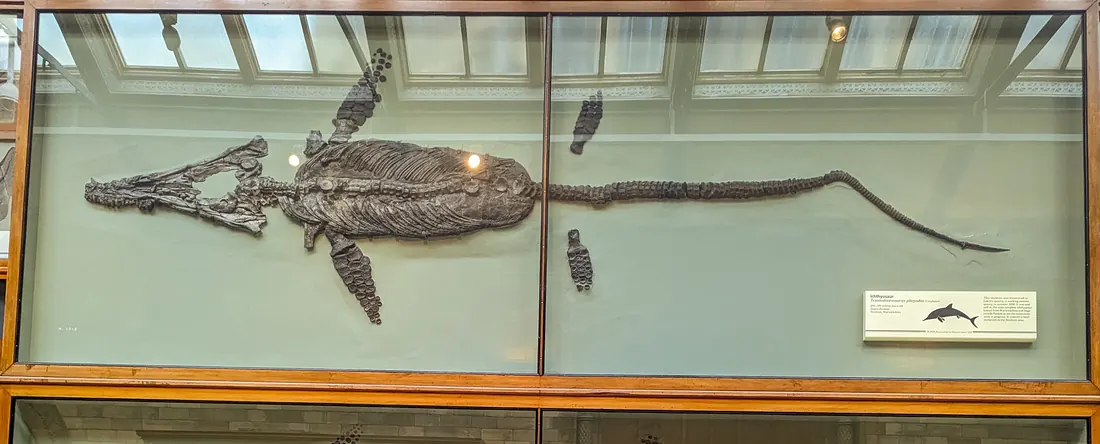
- It was an ichthyosaur, an extinct sea reptile. The Natural History Museum: “By 1820, it was recognised as being an extinct marine reptile and named Ichthyosaurus.” 1
- The man who described it never named the Annings. Everard Home used it for his 1814 paper, and, in the Geological Society’s words, “As was not uncommon during the period, the Annings as finders of the specimen are not mentioned.” Wikipedia: “The papers never mentioned who had collected the fossil.” 49
- In 1823 she found the first complete skeleton of a plesiosaur. The Natural History Museum: “In December 1823, Mary was the first to discover the complete skeleton of a Plesiosaurus.” The Geological Society: “the first articulated plesiosaur which was found by Mary Anning on 10 December 1823.” 15
- It looked so strange that the great Georges Cuvier suspected a fraud. The Natural History Museum: “So strange was the specimen and so quickly had the news spread that soon there were rumours that the fossil was a fake. Georges Cuvier reviewed sketches and disputed the find. He thought it was either a fake, an error or a composite.” The Geological Society: “The most influential scientist of his day, the French naturalist Georges Cuvier … still thought that the plesiosaur was a fraud.” 15
- Scientists met to see it, but she wasn’t invited. The Natural History Museum: “A special meeting was scheduled at the Geological Society of London, though Mary was not invited.” The Geological Society: the plesiosaur was “quickly transported to the Geological Society for its meeting of 20 February 1824.” 15
- Women weren’t allowed in. Wikipedia: the Geological Society “did not allow women to become members, or even to attend meetings as guests.” The Society’s blog: as late as 1893 a woman award winner “was not permitted to attend Society meetings.” 96
- The fossil was real. The Natural History Museum: “Cuvier was sent further illustrations by researchers and assured it was indeed real.” The Geological Society: he was “convinced otherwise by Conybeare and William Buckland that it was genuine.” Wikipedia: “Cuvier later admitted he had acted in haste and was mistaken.” 159
- In 1828 she found Britain’s first flying reptile. The Lyme Regis Museum: “Britain’s first Dimorphodon (a flying reptile, 1828).” Wikipedia: “in 1828 the first British example of the flying reptiles known as pterosaurs.” The Natural History Museum: “It was the first pterosaur ever discovered outside Germany.” 291
- She died in 1847, still short of money. The Natural History Museum: “Mary died from breast cancer in 1847. She was only 47 years old and still in financial strain despite a lifetime of extraordinary scientific discoveries.” 12
- The Geological Society didn’t admit women until 1919. Its own blog: “The Geological Society first admitted female members in May 1919” and “on 21 May 1919, eight women were elected as Fellows of the Geological Society.” The Lyme Regis Museum: “The Geological Society, which did not admit women until 1919.” 62
- In 2010 the Royal Society named her among Britain’s most influential women in science. The Royal Society “asked a panel of experts – all leading female scientists or science historians – to vote for the ten women in British history who have had the most influence on science to celebrate the Society’s 350th anniversary in 2010,” and the list includes “Mary Anning (1799-1847).” Wikipedia: “In 2010, 163 years after her death, the Royal Society included Anning in a list of the ten British women who have most influenced the history of science.” 89
- The girl who sold fossils to tourists had changed science. Wikipedia: “Anning’s findings contributed to changes in scientific thinking about prehistoric life and the history of the Earth.” The Royal Society: her finds included “the first two plesiosaur skeletons ever found, the first pterosaur skeleton found outside of Germany.” 98
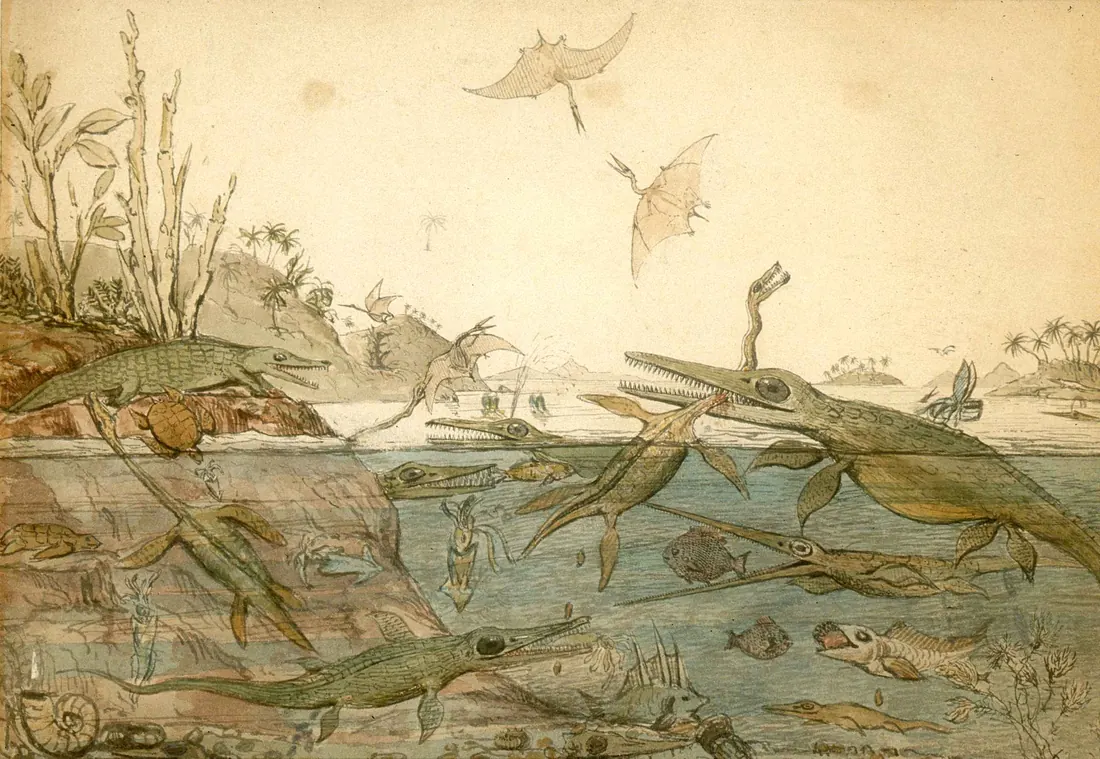
- The pictures: Home’s 1814 plates are “Engravings of the incomplete ichthyosaur found by Joseph and Mary Anning between 1811-1812” (the Geological Society). Duria Antiquior was painted in 1830 by “her childhood friend Henry De la Beche” from her discoveries (the Natural History Museum). Wikipedia: “Members of the Geological Society contributed to a stained-glass window in Anning’s memory, unveiled in 1850.” 419
Sources
- Mary Anning: The unsung hero of fossil discovery Natural History Museum, London
- The Mary Anning Experts Lyme Regis Museum
- First discoveries (Mary Anning and the Geological Society) The Geological Society of London
- Temmodontosaurus (Mary Anning and the Geological Society) The Geological Society of London
- Plesiosaurus dolichodeirus (Mary Anning and the Geological Society) The Geological Society of London
- The road to Fellowship: the history of women and the Geological Society The Geological Society Blog, March 8, 2016
- Mary Anning (1799–1847) UC Berkeley Museum of Paleontology
- Most influential women in British science history The Royal Society
- Mary Anning Wikipedia
Notes
Her age at the ichthyosaur find: the Natural History Museum says she was 12 when Joseph found the skull (autumn 1811) and dug out the skeleton about a year later; the Geological Society calls her “the 13-year-old Mary” in November 1812; UC Berkeley says the find was “probably … between 1809 and 1811, when Mary was only 10 to 12.” We give no age.
When the Geological Society admitted women: Wikipedia says 1904 and the Natural History Museum says 1908, but the Society’s own history says its first women Fellows were elected on May 21, 1919 (1904 was the first time a woman attended the reading of her own paper; in 1908 a vote to admit women failed). We follow the Society, backed by the Lyme Regis Museum.
How much credit she got: the Geological Society’s exhibition says the story that men took her finds with little reference to her is true “in some instances,” and some friends (Buckland on the pterosaur and coprolites, Agassiz) did credit her. We say scientists often left out her name (true of Home’s 1814 paper, Conybeare’s 1824 paper and others), not that she was never credited.
“She sells seashells”: the tongue-twister is often said to be about her, but the American Folklife Center found no evidence (Wikipedia). Left out. Also left out: her family were Dissenters, which barred men from Oxford and Cambridge; the Geological Society’s bar was on women.
Skeleton length: five meters (the Natural History Museum, the Lyme Regis Museum); Wikipedia gives both 17 feet (5.2 m) and “over 5 yards (4.57 metres).”
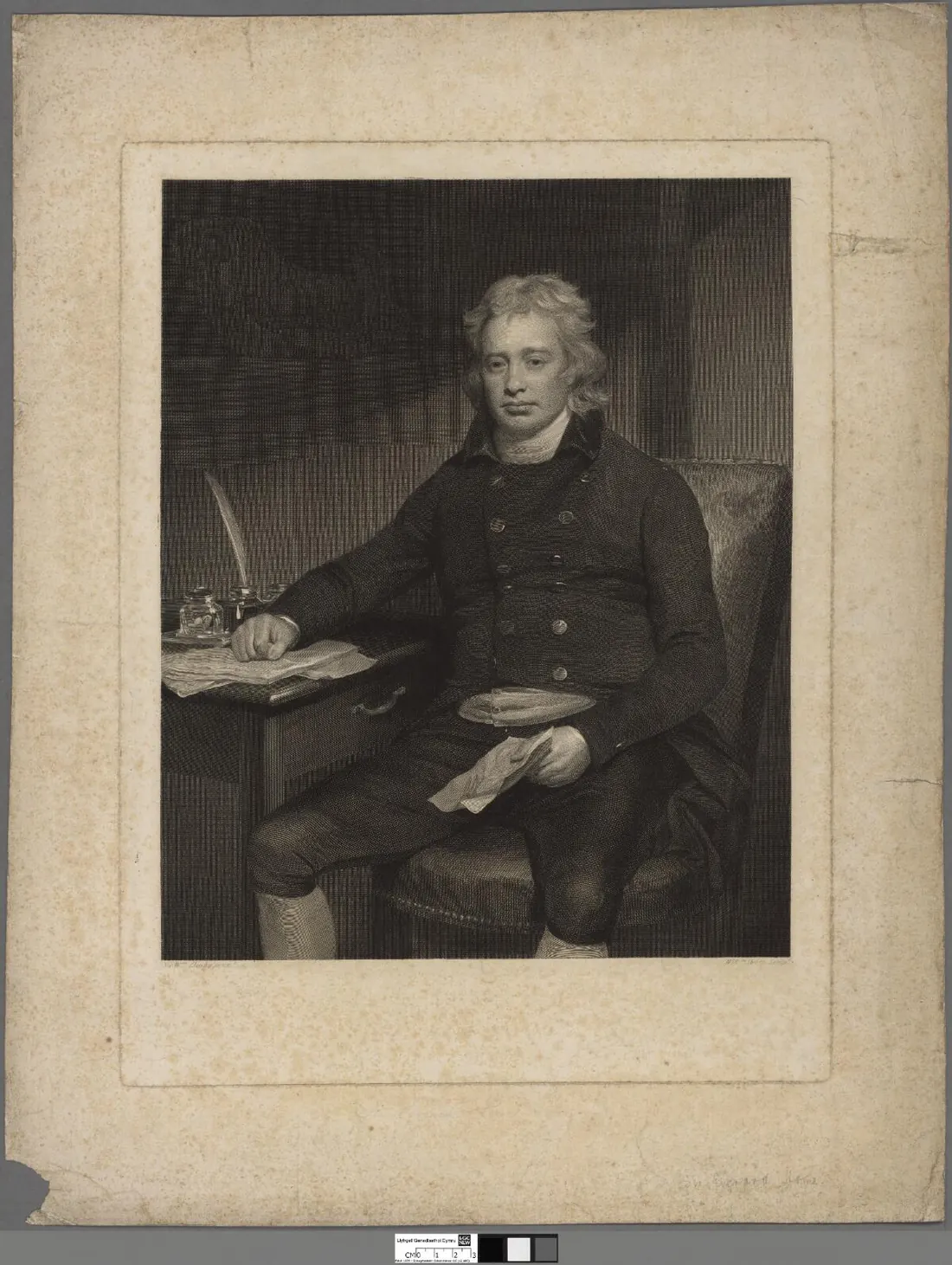
The man who described the ichthyosaur was Sir Everard Home, whose 1814 paper in the Royal Society’s Philosophical Transactions named only the previous owner.
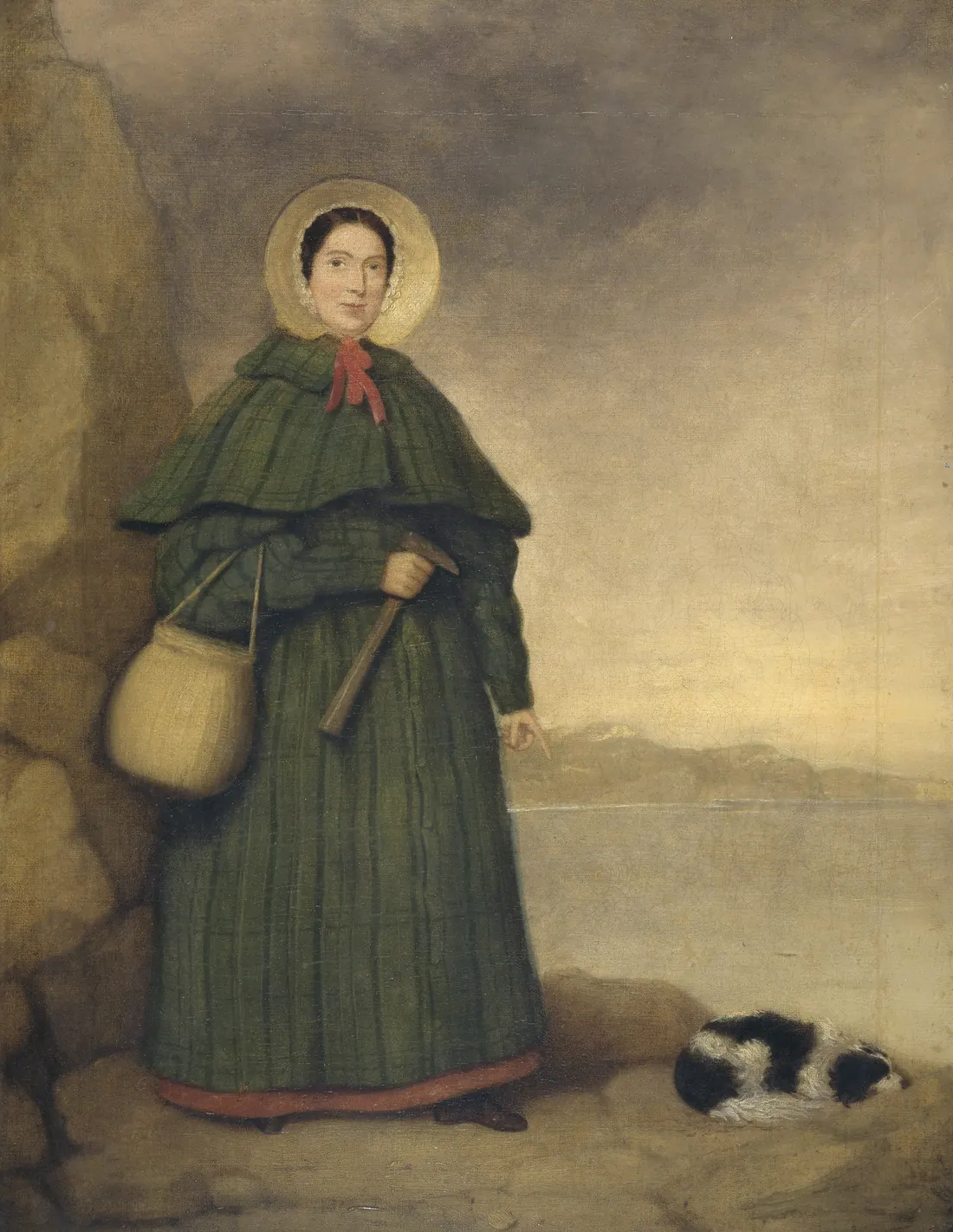
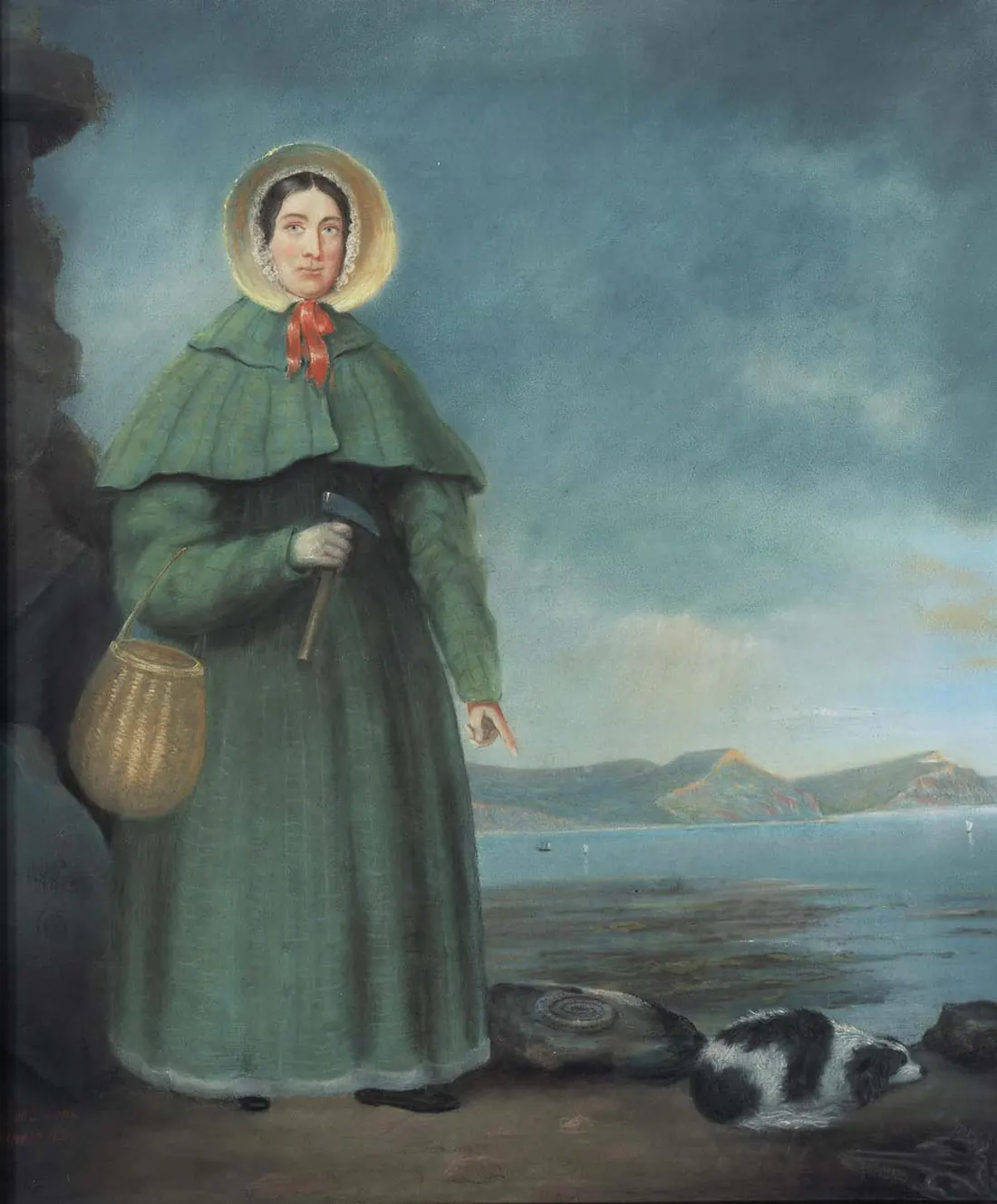
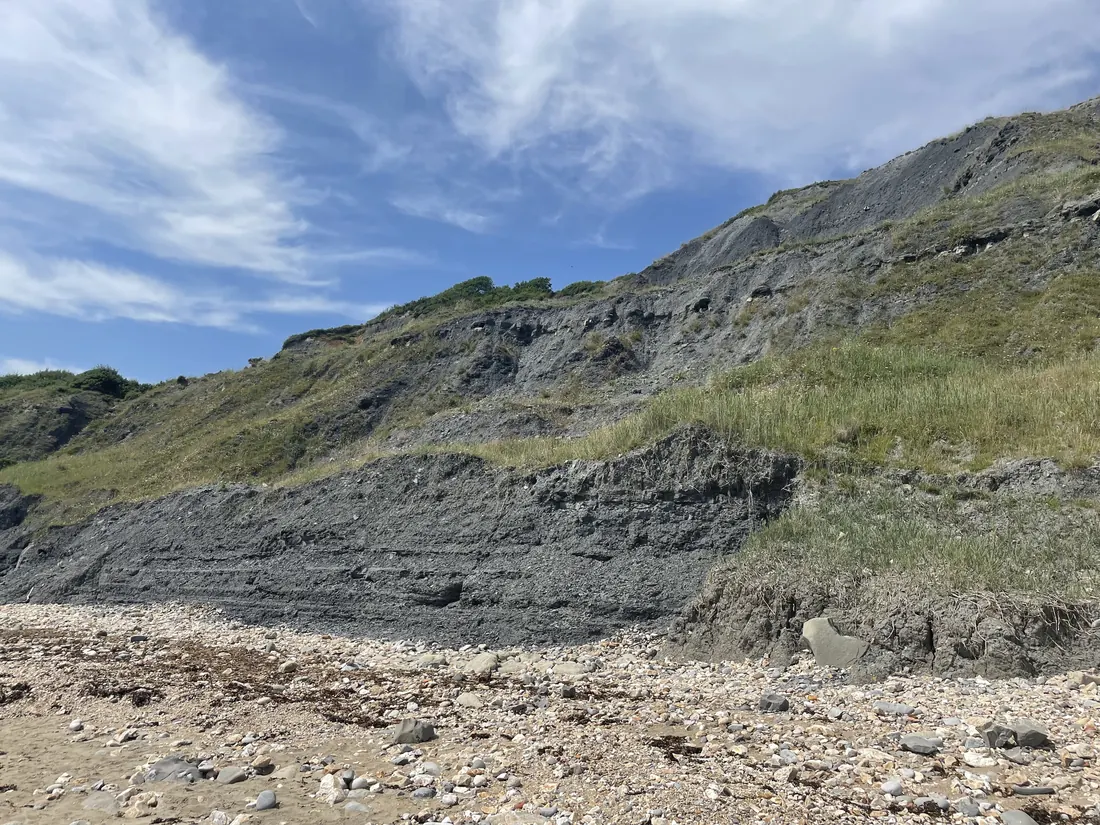
Pictures: the oil portrait with her dog Tray (before 1842, artist unknown) and B. J. M. Donne’s 1847 copy are the only likenesses of her. The museum ichthyosaur (likely Temnodontosaurus platyodon, the species of her first find) is not the 1812 skeleton, whose body is lost; only its skull survives at the Natural History Museum (Wikipedia). The Commons caption calls the plesiosaur photo “Mary Anning’s plesiosaur”; it is very likely the 1823 specimen, but the photo record doesn’t give its number. The Black Ven cliff photo is from 2021. Duria Antiquior (1830) is a watercolor based on her finds.
Photo credits
The archive photos in this story
The photographs and illustrations in this story are in the public domain or shared under open licenses; each one is credited below with its license. Tap one to enlarge it, or follow the link to its Wikimedia Commons page for the full record. The narration, music, captions and graphics in the Short are our own.