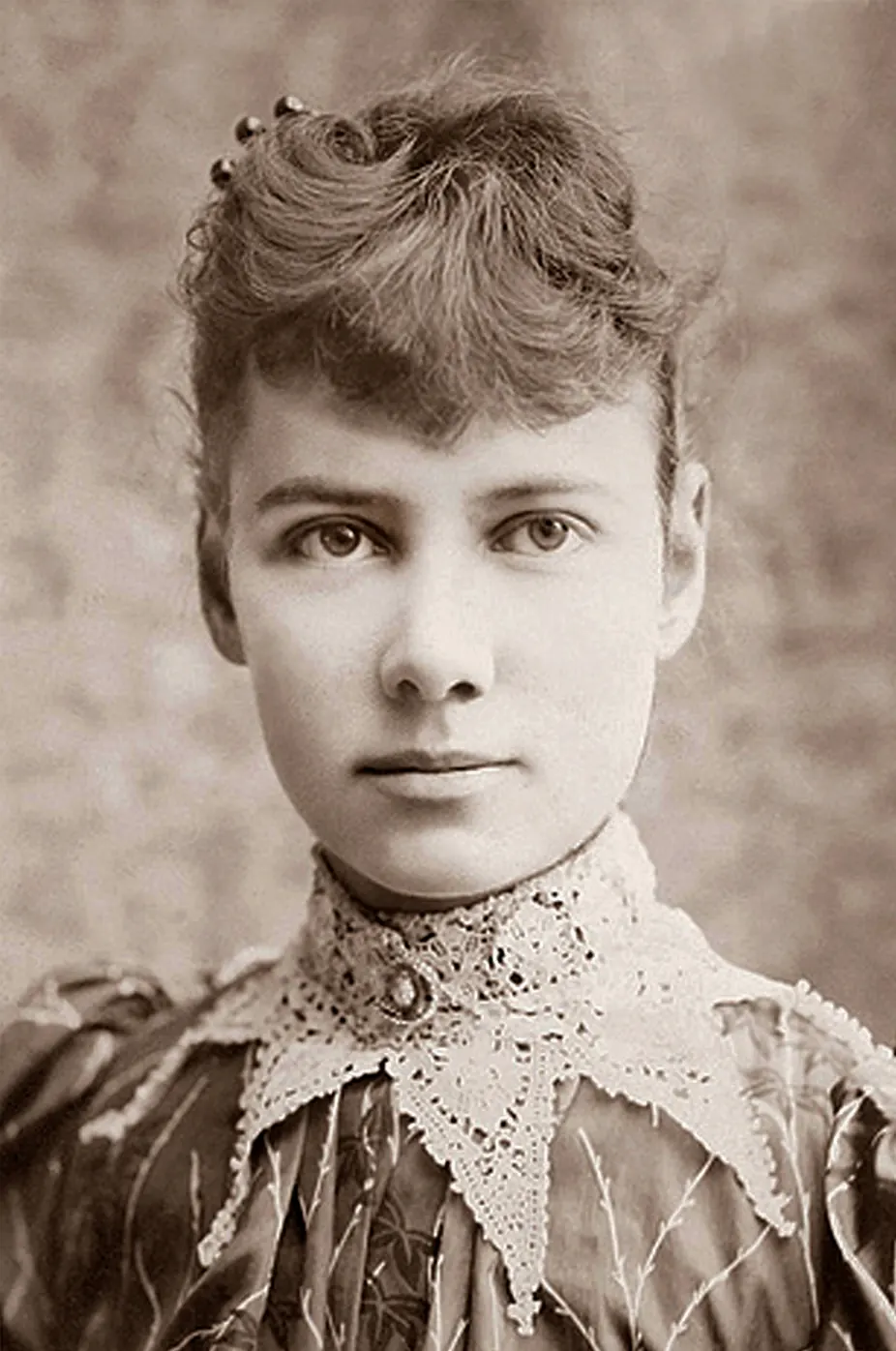
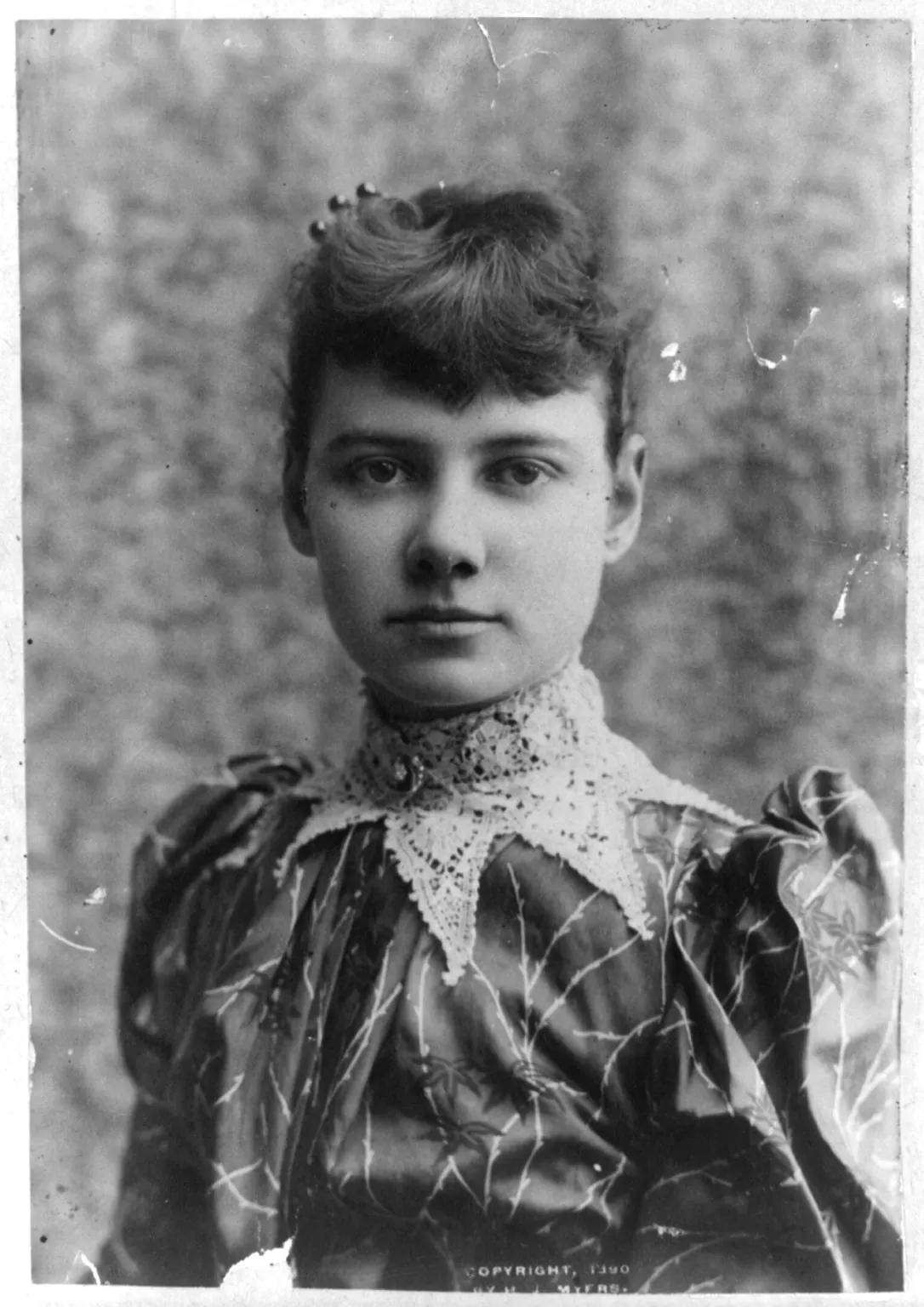
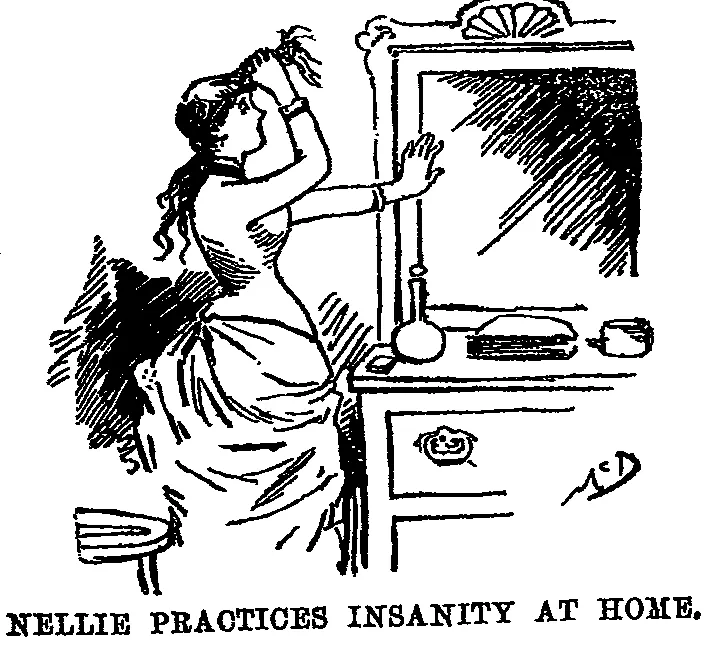
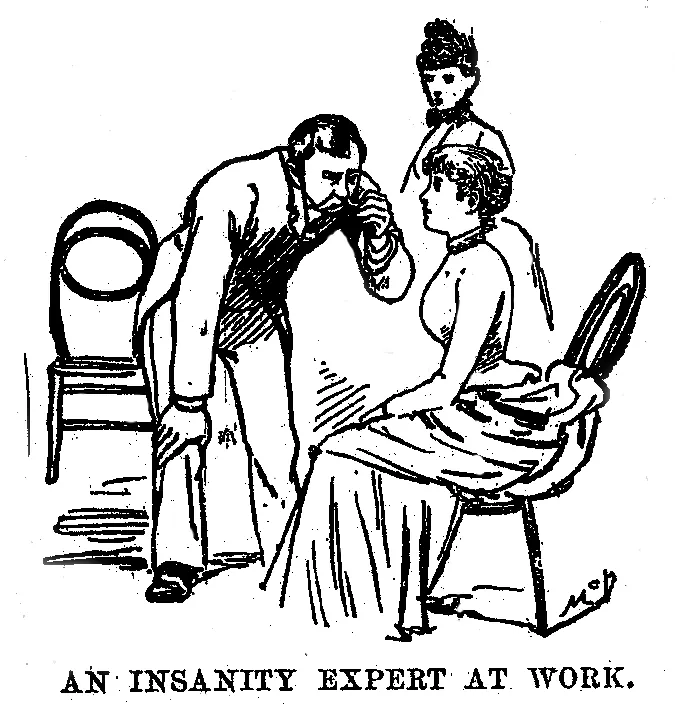
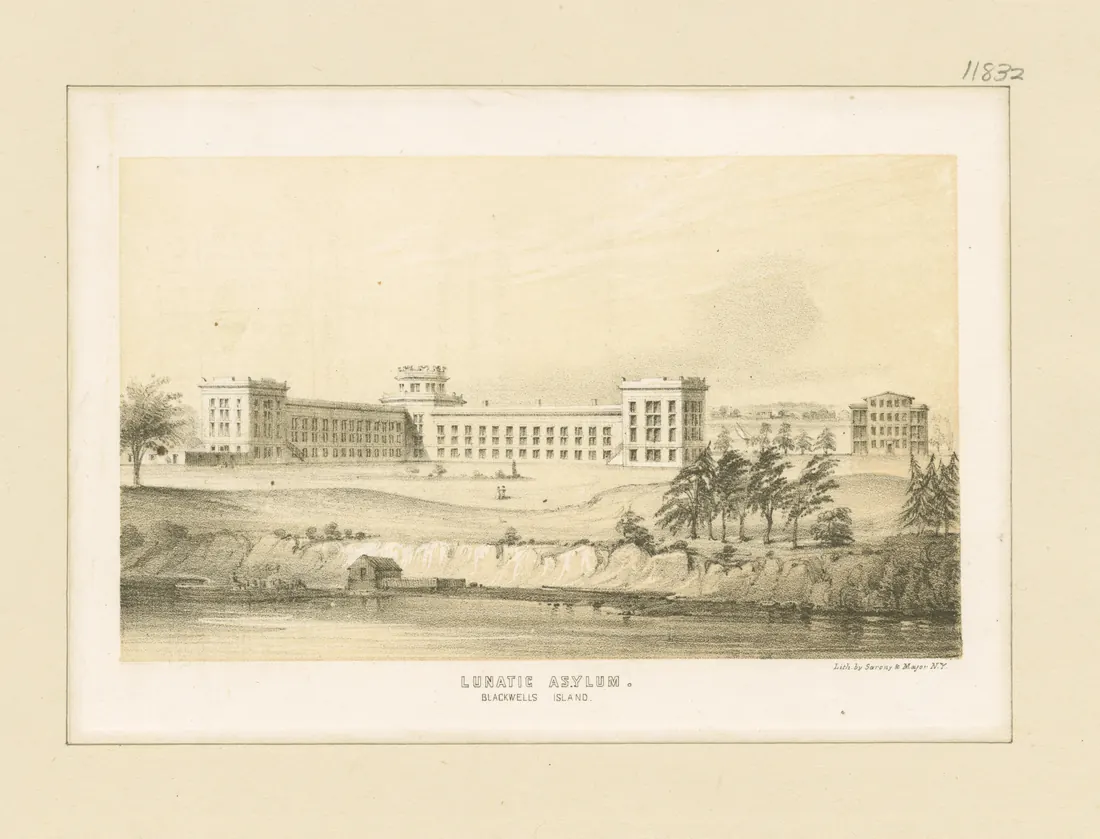
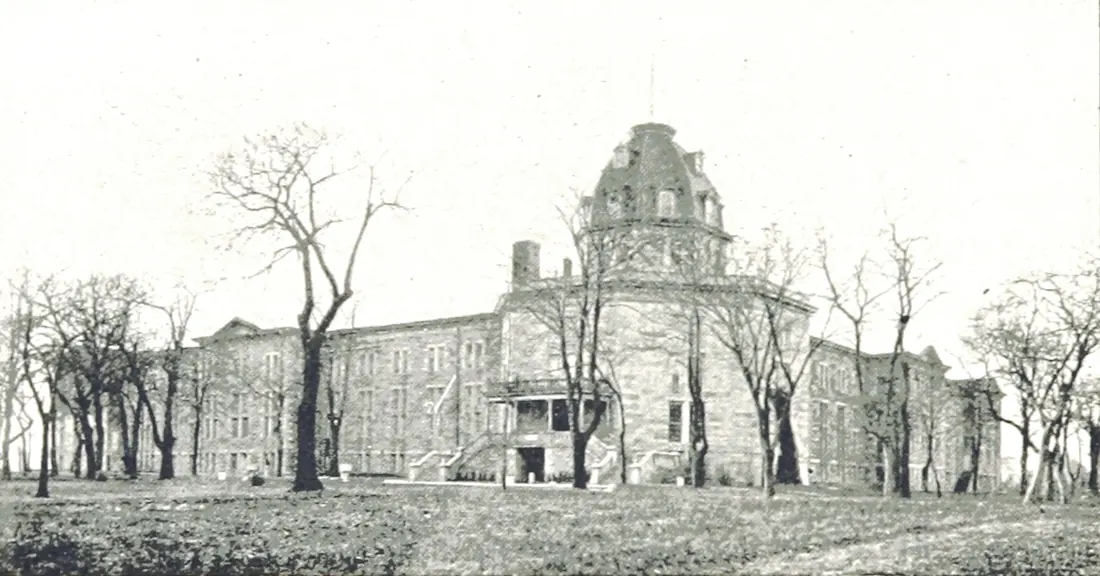
Nellie Bly was the pen name of Elizabeth Jane Cochran. In 1887, at 23, she took an undercover assignment for Joseph Pulitzer’s New York World: to feign insanity and investigate reports of brutality and neglect at the Women’s Lunatic Asylum on Blackwell’s Island, now Roosevelt Island. Under the name Nellie Brown, she stared unblinkingly at her own reflection, stayed up all night to give herself the wide-eyed look of a disturbed woman, and refused to go to bed. The police were called, several doctors examined her, and all of them declared her insane.
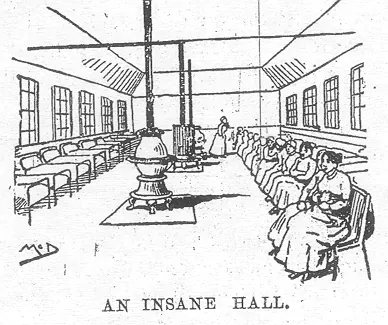
Once she was admitted, she dropped any pretense and behaved as she normally would, but even her pleas to be released were taken as further signs of mental illness. She saw nurses tell patients to shut up and beat them if they did not. The food was spoiled, and the bathwater was frigid: “three buckets of water over my head—ice-cold water, too,” she wrote. After ten days, The World secured her release.
Her exposé, published as Ten Days in a Mad-House, prompted a grand jury investigation and reforms at the asylum. The city raised the budget of its Department of Public Charities and Corrections from $1.5 million to $2.34 million, with $50,000 set aside for the asylum on Blackwell’s Island. Bly herself wrote that New York had appropriated “$1,000,000 more per annum than ever before for the care of the insane.”
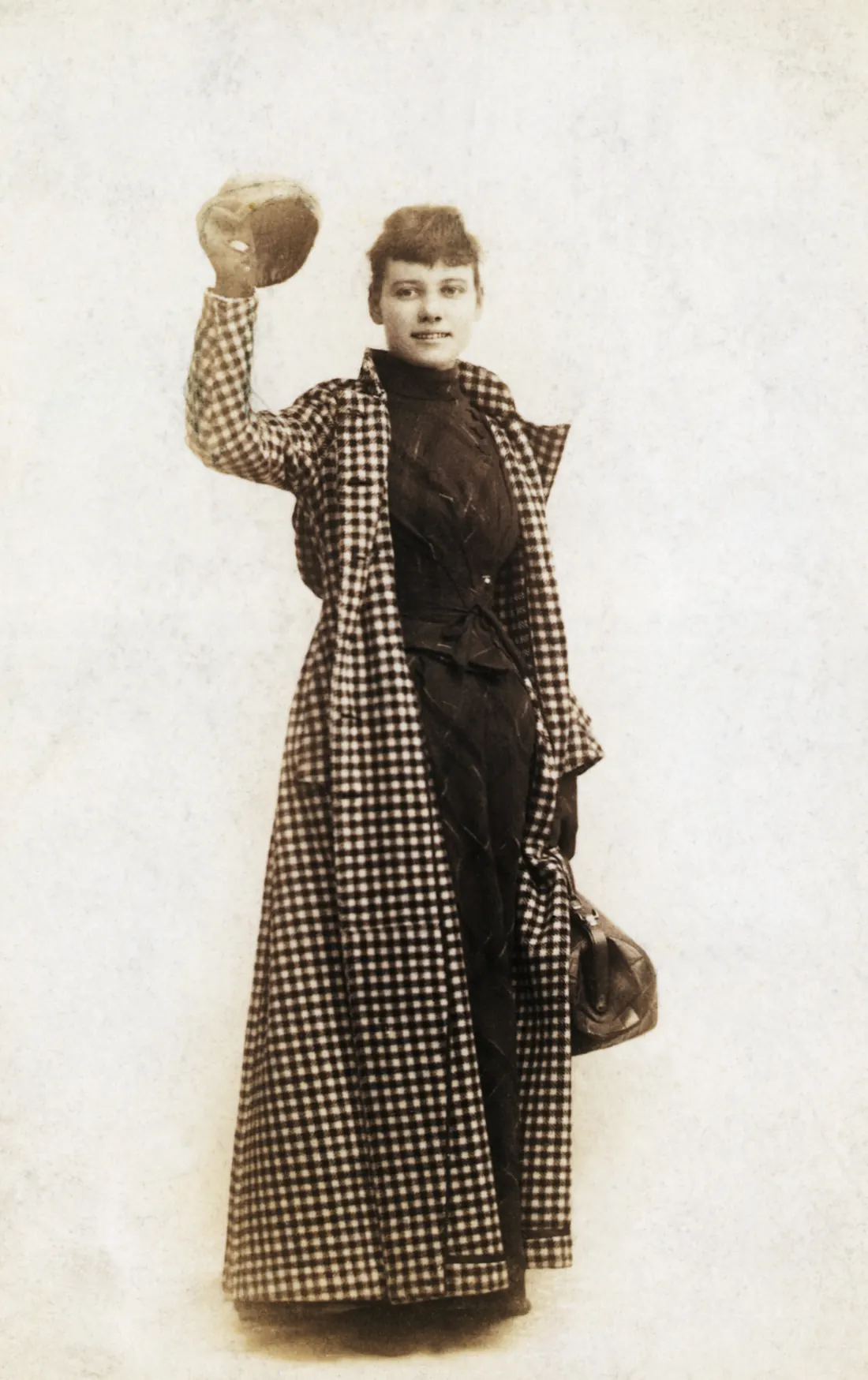
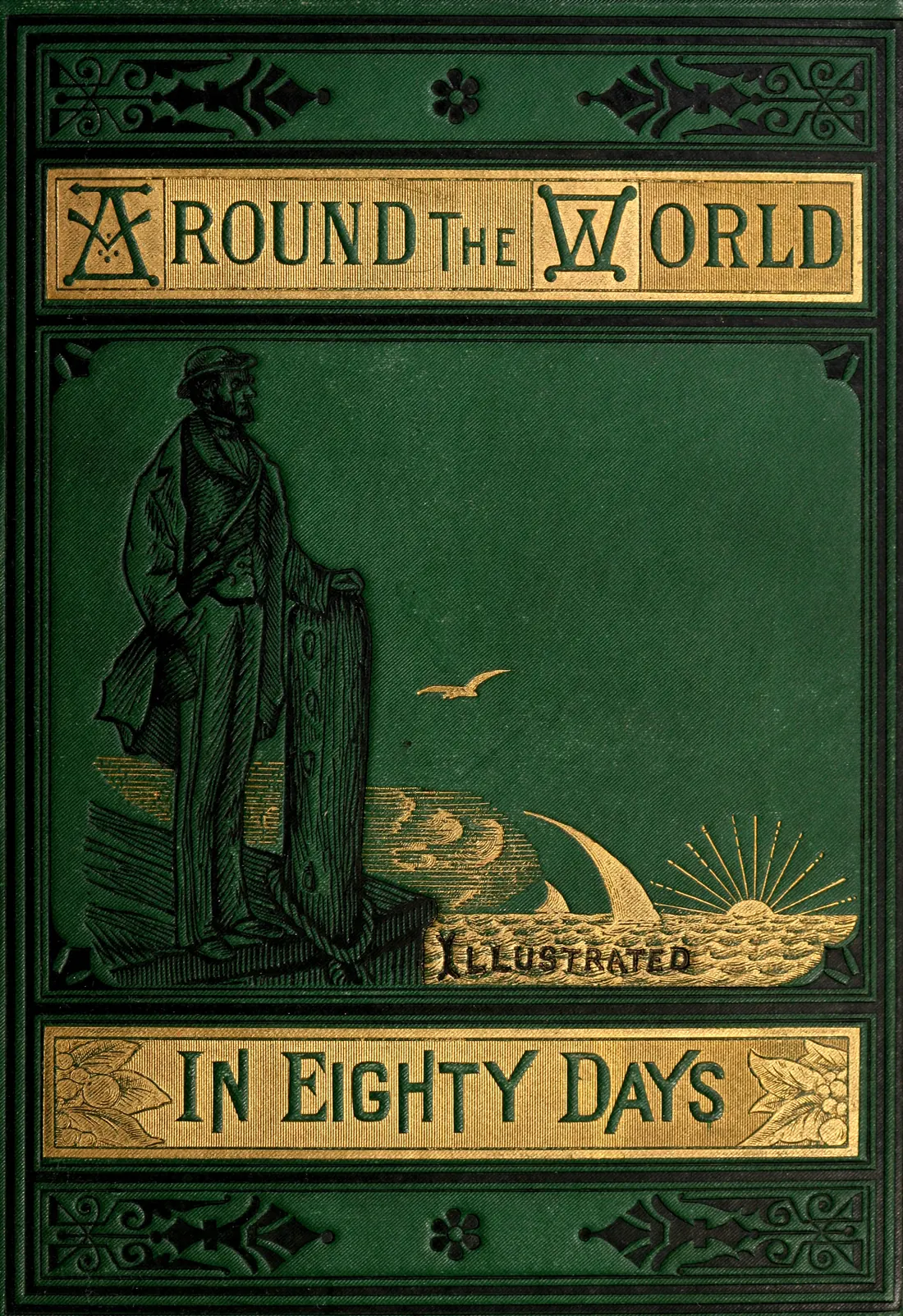
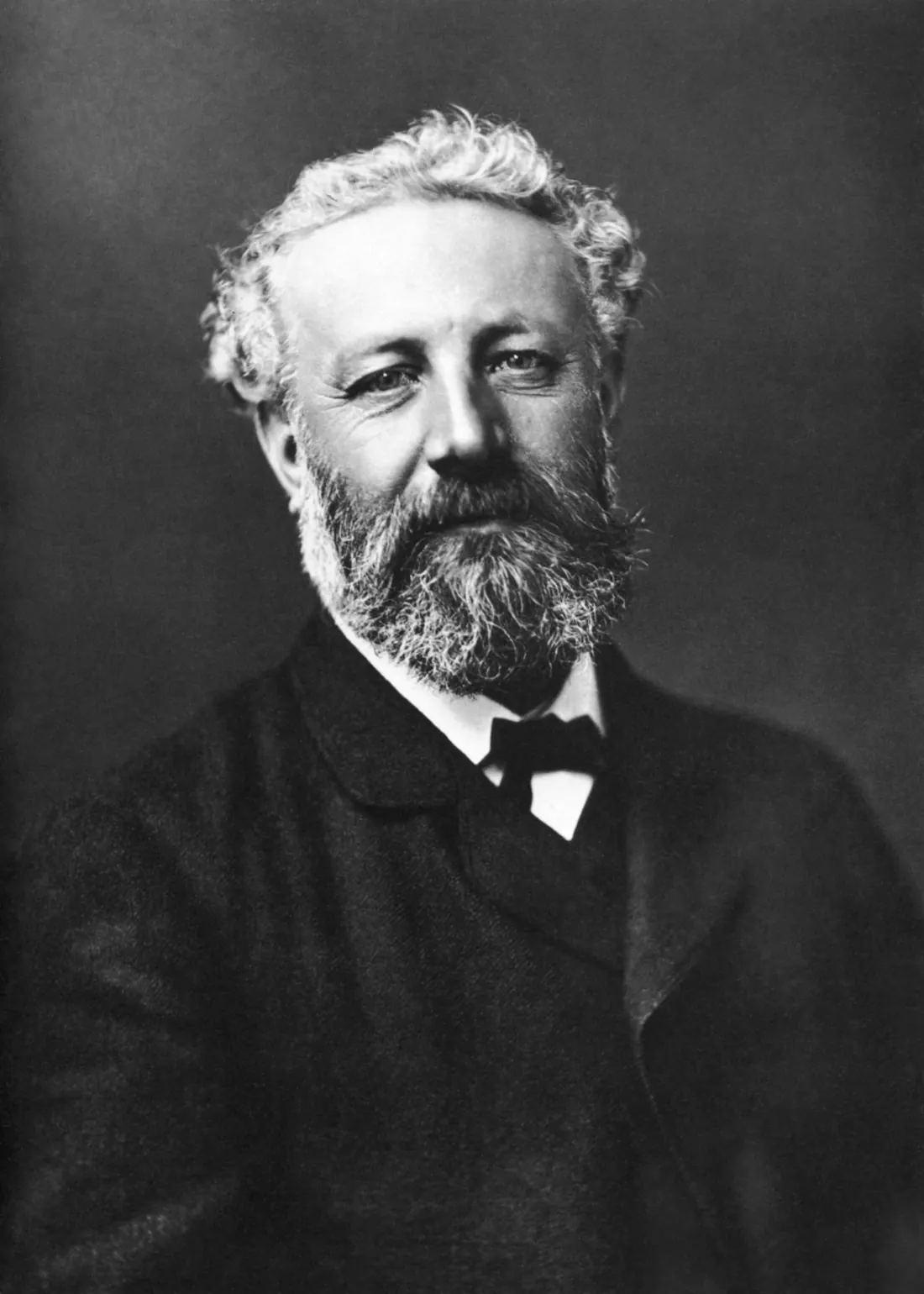
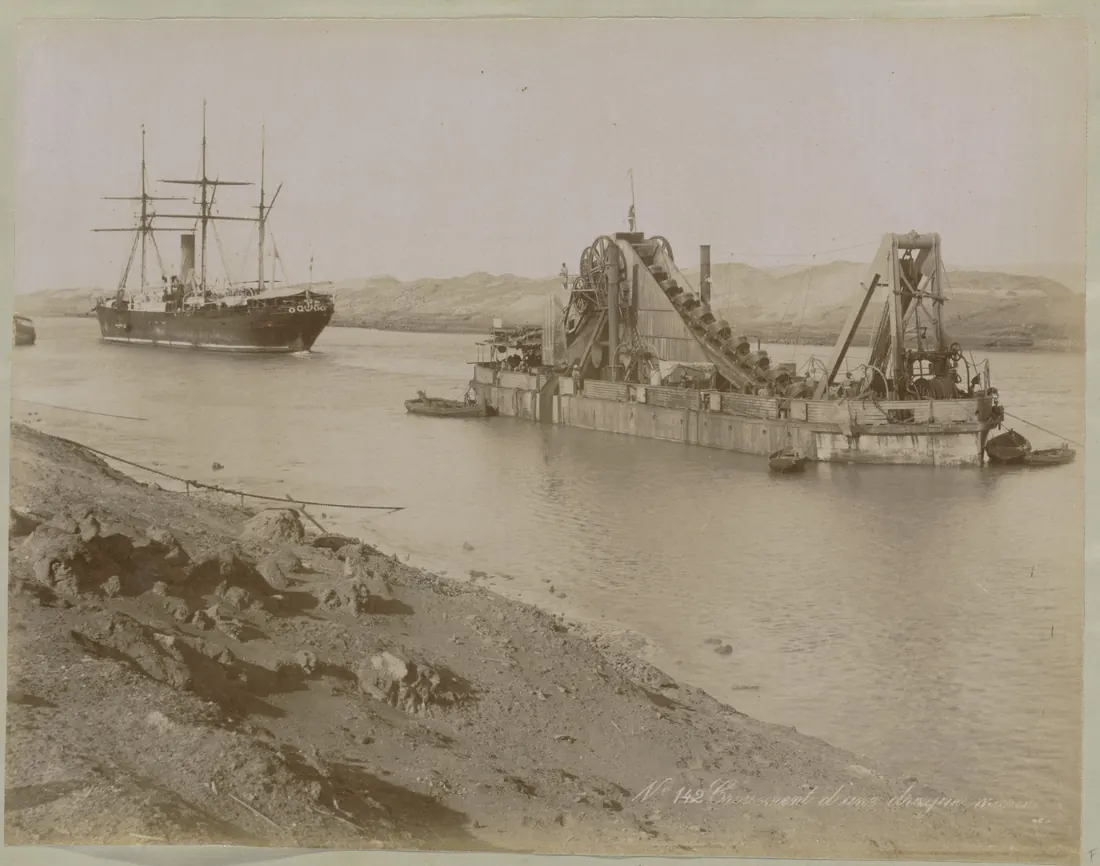
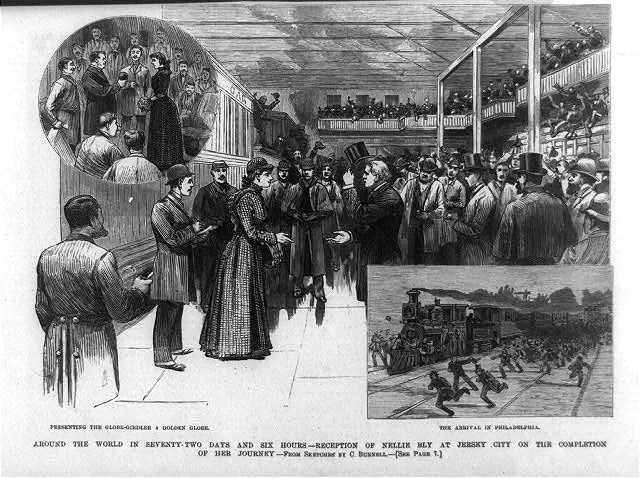
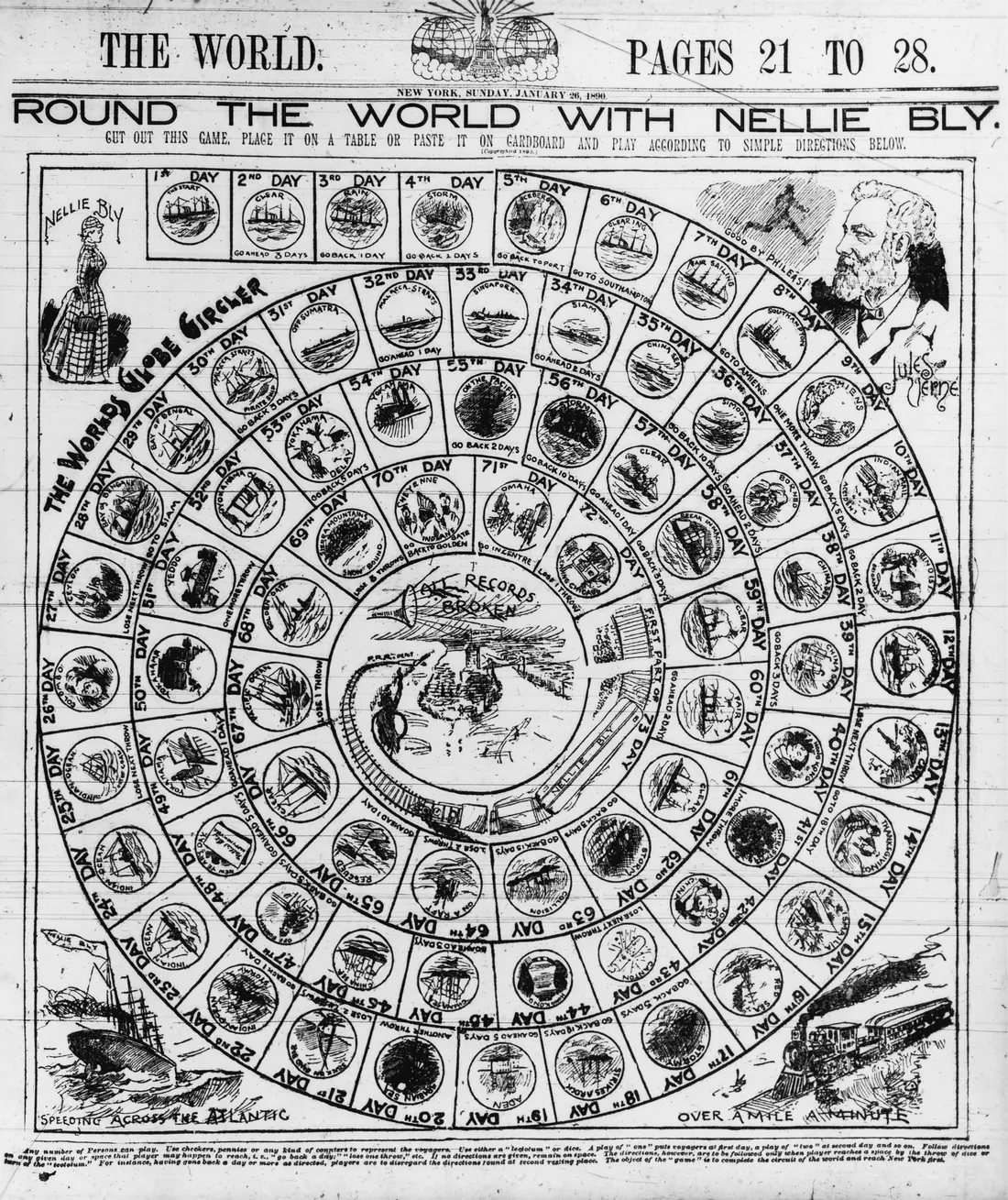
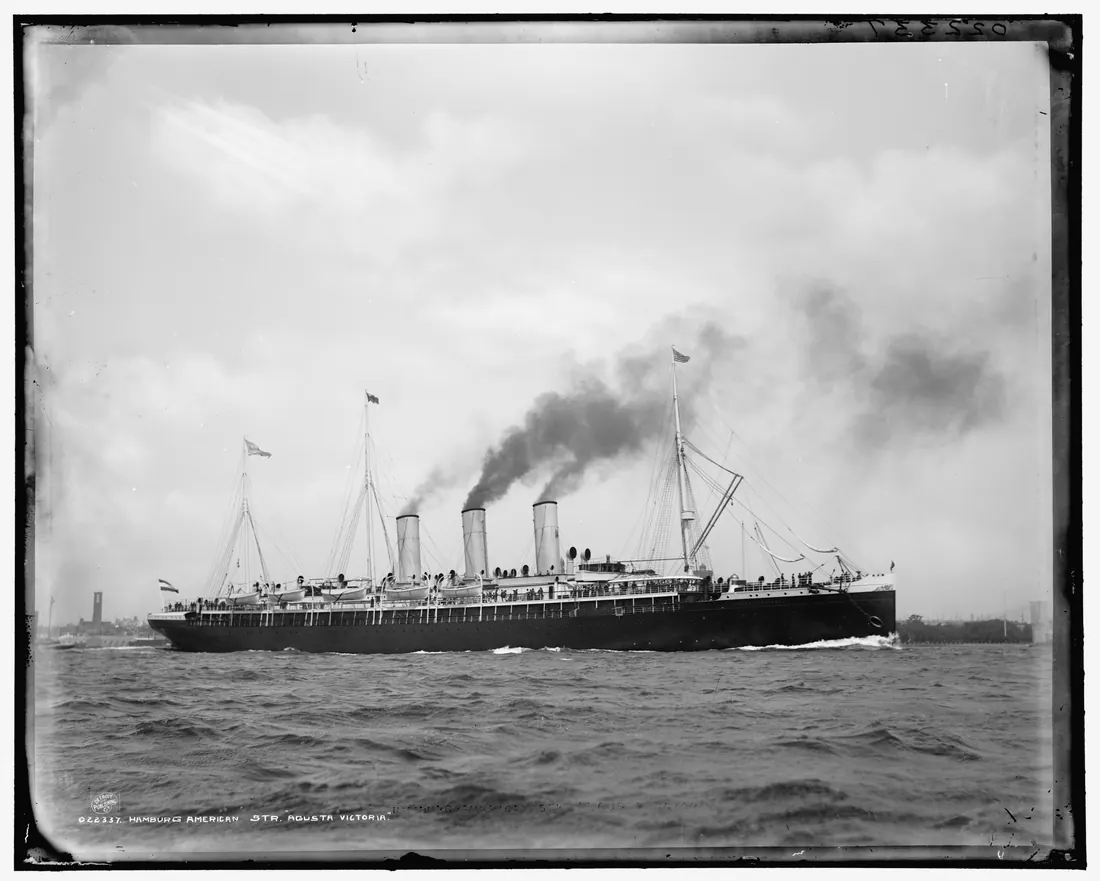
Two years later she set out to turn Jules Verne’s novel Around the World in Eighty Days into fact. Her paper’s business manager told her she couldn’t, that only a man could make such a trip. At 9:40 a.m. on November 14, 1889, she boarded the steamer Augusta Victoria with a single hand-bag, and she traveled alone for almost the entire journey. At Amiens, in France, she met Verne himself, who told her: “If you do it in seventy-nine days, I shall applaud with both hands.” By steamship and railroad she went through the Suez Canal, Ceylon, Singapore, Hong Kong and Japan, and when rough weather on the Pacific left her two days behind, Pulitzer chartered a private train to bring her home. On January 25, 1890, she reached a Jersey City station “packed with thousands of people,” 72 days, 6 hours and 11 minutes after leaving Hoboken: a world record, though it stood only a few months.
Fact check
The facts and where they come from
- She faked insanity on purpose to get into the asylum. Wikipedia: she “took an undercover assignment for which she agreed to feign insanity to investigate reports of brutality and neglect at the Women’s Lunatic Asylum on Blackwell’s Island, now named Roosevelt Island.” In her own words: “I succeeded in getting committed to the insane ward at Blackwell’s Island, where I spent ten days and nights.” 14
- Her names: “Elizabeth Cochrane Seaman (born Elizabeth Jane Cochran; May 5, 1864 – January 27, 1922), better known by her pen name Nellie Bly” (Wikipedia). 1
- In 1887 she went undercover for the New York World. The Library of Congress: “In 1887, under the name Nellie Brown, she had herself committed to an asylum in New York for ten days so she could expose the horrible conditions there.” The National Park Service: “Her first assignment was an undercover investigation of the Women’s Lunatic Asylum on Blackwell’s Island.” Wikipedia: “Just twenty-three years old.” 671
- She stared wildly and refused to sleep. Her book: “I opened mine as wide as possible and stared unblinkingly at my own reflection,” and she “was determined to keep awake all night.” Wikipedia: “She stayed up all night to give herself the wide-eyed look of a disturbed woman” … “She refused to go to bed.” 41
- Doctors declared her insane: “Several doctors then examined her; all declared her insane” (Wikipedia). Before that, “the police were called to take her to the nearby courthouse.” 21
- Inside she acted normally, but nobody believed she was sane: “Once admitted to the asylum, Bly abandoned any pretense at mental illness and began to behave as she would normally.” … “Even her pleas to be released were interpreted as further signs of mental illness” (Wikipedia). 2
- Nurses beat patients and poured ice-cold water over their heads. Wikipedia: “The nurses behaved obnoxiously and abusively, telling the patients to shut up, and beating them if they did not.” … “The bathwater was frigid and buckets of it were poured over their heads.” Her book: “three buckets of water over my head—ice-cold water, too.” The National Park Service: “physical and emotional abuse from caretakers, cold showers, filthy living conditions, spoiled food.” 247
- After ten days her newspaper got her out: “After ten days, The World secured Bly’s release from the asylum” (Wikipedia). 2
- Her story forced reforms and more money for patients. The Library of Congress: “Bly’s fearless investigation brought about much-needed reforms for inpatient treatment at the asylum” … “The budget appropriation for the Department of Public Charities and Corrections was increased from $1.5 million to $2.34 million and $50,000 was specifically designated for Blackwell’s asylum.” Wikipedia: her work “prompted the asylum to implement reforms,” and “Bly’s report prompted a grand jury to launch its own investigation.” Bly herself: “the City of New York has appropriated $1,000,000 more per annum than ever before for the care of the insane.” 6124
- Then she raced to beat a novel. Wikipedia: she wanted “to turn the fictional Around the World in Eighty Days (1873) into fact for the first time.” The National Park Service: “inspired by Jules Verne’s novel Around the World in Eighty Days.” 17
- Her boss said only a man could do it: in her book, the World’s business manager tells her it can’t be done by her, and that only a man could make the trip (paraphrased). Wikipedia: “The editor expressed doubts she could do it, reasoning that she only spoke English, that as a woman she would pack too much to travel successfully, and that she would have to be escorted by a man.” 51
- In November 1889 she set off alone with one small bag. Wikipedia: “at 9:40 a.m. on November 14, 1889, with only two days notice given to her editor, she boarded the Augusta Victoria, a steamer of the Hamburg America Line” … “She had traveled alone for almost the entire journey.” Her book: “I bought one hand-bag with the determination to confine my baggage to its limit.” The trip was timed from Hoboken: “72 days, 6 hours, and 11 minutes after leaving Hoboken.” 153
- In France she met Jules Verne himself: “France (where she met Jules Verne in Amiens)” (Wikipedia). In her book’s chapter on the visit, Verne tells her, “If you do it in seventy-nine days, I shall applaud with both hands.” 15
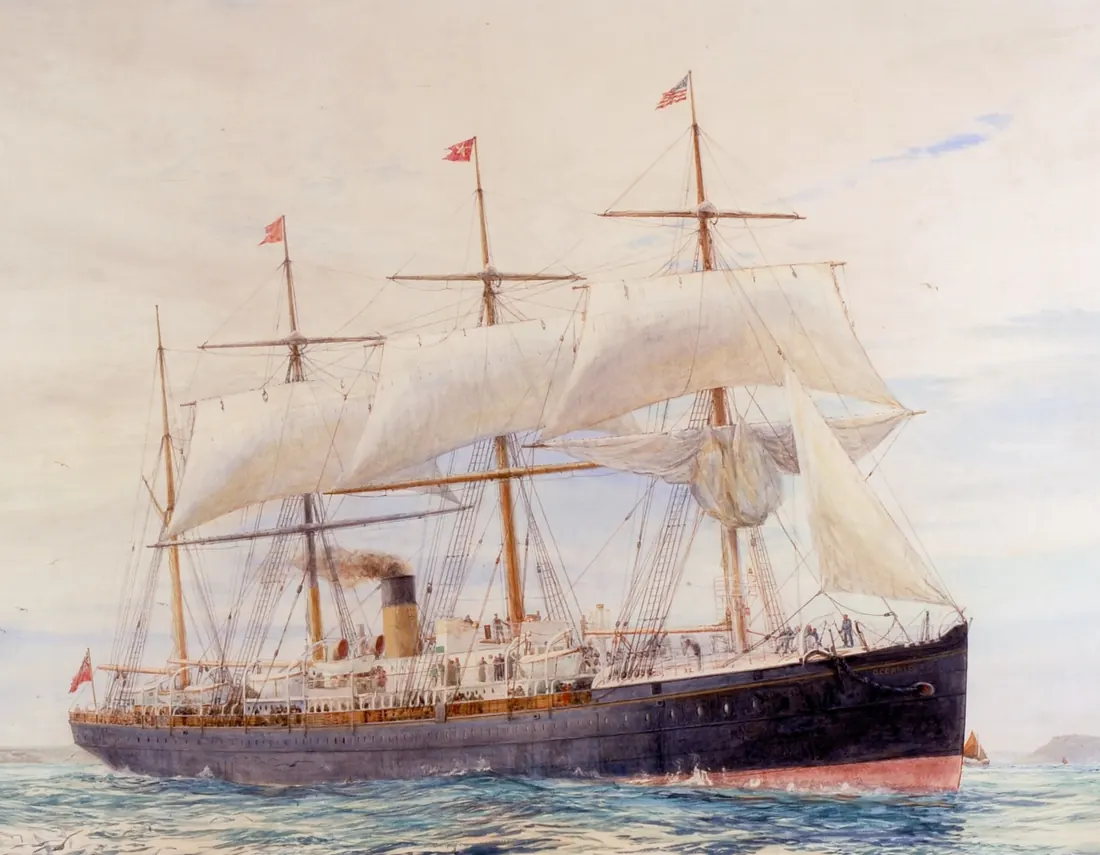
- By ship and train through Suez, Hong Kong and Japan: “Bly travelled using steamships and the existing railroad systems”; her route took in “the Suez Canal; Colombo in Ceylon; the Straits Settlements … of Penang and Singapore …; Hong Kong; and Japan” (Wikipedia). From Hong Kong she took “the Oceanic, the ship on which I would eventually travel to Japan and America” (her book). 35
- Storms on the Pacific, and a special train: “As a result of rough weather on her Pacific crossing, she arrived in San Francisco on the White Star liner Oceanic on January 21, two days behind schedule. However, World owner Pulitzer chartered a private train to bring her home” (Wikipedia). 3
- In January 1890 thousands cheered her home: “Bly arrived back in New Jersey on January 25, 1890, at 3:51 p.m.” (Wikipedia); “The station was packed with thousands of people” (her book, at Jersey City). 35
- Her time was 72 days, 6 hours and 11 minutes: “completing her journey 72 days, 6 hours, and 11 minutes after leaving Hoboken” (Wikipedia); “Total time occupied in tour, 1,734 hours and 11 minutes, being 72 days, 6 hours and 11 minutes” (her book). 35
- A world record. The National Park Service: “She set a world record for the fastest circumnavigation of the globe.” Wikipedia: “Bly’s journey was a world record, though it only stood for a few months, until George Francis Train lowered it to 67 days.” 71
Sources
- Nellie Bly Wikipedia
- Ten Days in a Mad-House Wikipedia
- Around the World in Seventy-Two Days Wikipedia
- Ten Days in a Mad-House (Nellie Bly, 1887) Project Gutenberg
- Around the World in Seventy-Two Days (Nellie Bly, 1890) A Celebration of Women Writers (University of Pennsylvania)
- “Behind Asylum Bars”: Nellie Bly Reporting from Blackwell’s Island Headlines & Heroes (Library of Congress), 2022
- Nellie Bly National Park Service
Notes
How much more money: the Library of Congress says the department’s budget rose from $1.5 million to $2.34 million, with $50,000 for Blackwell’s asylum; Wikipedia says “an $850,000 increase”; Bly’s own book says “$1,000,000 more per annum.” We give the Library of Congress figures, and Bly’s as her own claim.
Who said “only a man”: in her book it is the World’s business manager; Wikipedia says “the editor” doubted her. We say her boss, which is true of either, and paraphrase his words.
“Alone”: she had escorts for short stretches (a World correspondent met her in London and took her to Amiens), so we say, as Wikipedia does, that she traveled alone for almost the entire journey.
Her time: 72 days, 6 hours and 11 minutes (her book, Wikipedia). One January 1890 newspaper gave 6 hours 10 minutes, and some accounts add 14 seconds. We use her own figure.
The record stood only a few months, until George Francis Train went around the world in 67 days in 1890.
Left out for length: Elizabeth Bisland’s rival trip for Cosmopolitan, the monkey Bly bought in Singapore, and the readers’ guessing contest.
There are no photos of the asylum stunt itself. The asylum pictures show the real building: the women’s asylum (the Octagon) in an 1893 book, and an earlier Sarony & Major lithograph of the asylum on Blackwell’s Island. The scenes inside are the 1887 illustrations printed in her own book. The Augusta Victoria photo shows her ship around 1890, at sea, not on her departure day. The Suez Canal photo dates from 1885 and doesn’t show her ship. The Oceanic painting dates from 1895 and shows the ship as she looked in 1871. The novel’s cover is from the 1873 illustrated English edition.
Photo credits
The archive photos in this story
All the photographs and illustrations in this story are in the public domain. Tap one to enlarge it, or follow the link to its Wikimedia Commons page for the full record. The narration, music, captions and graphics in the Short are our own.