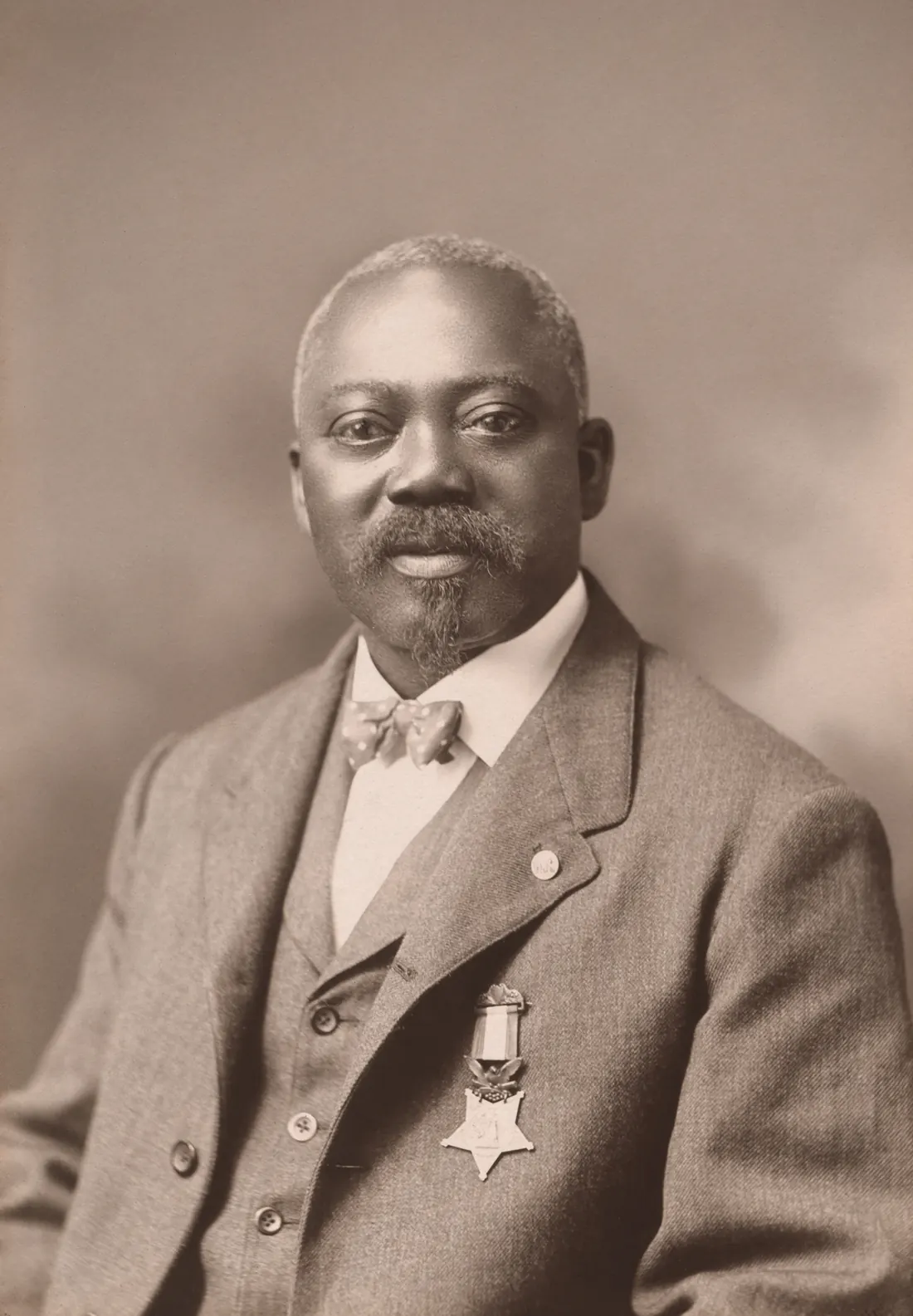
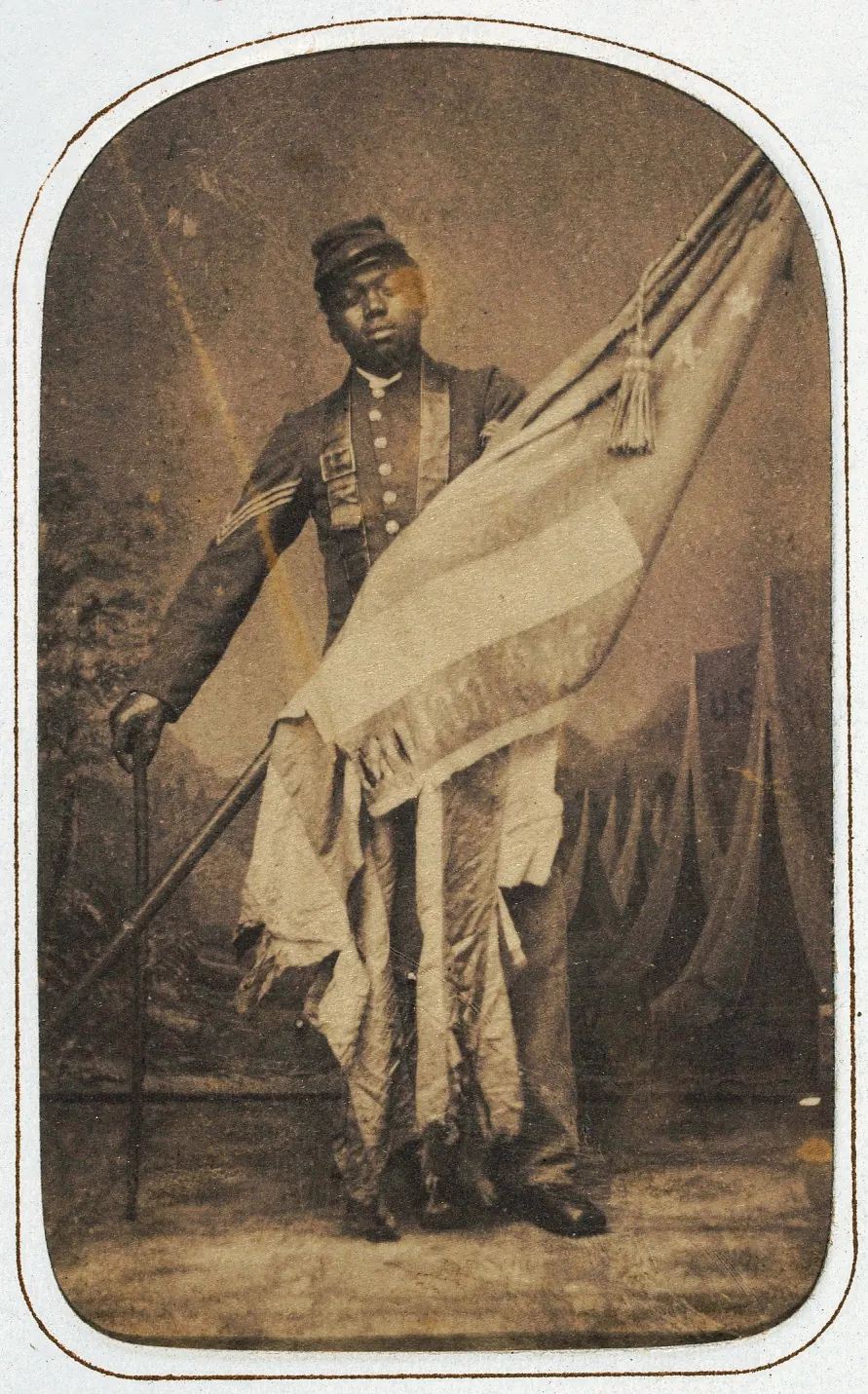
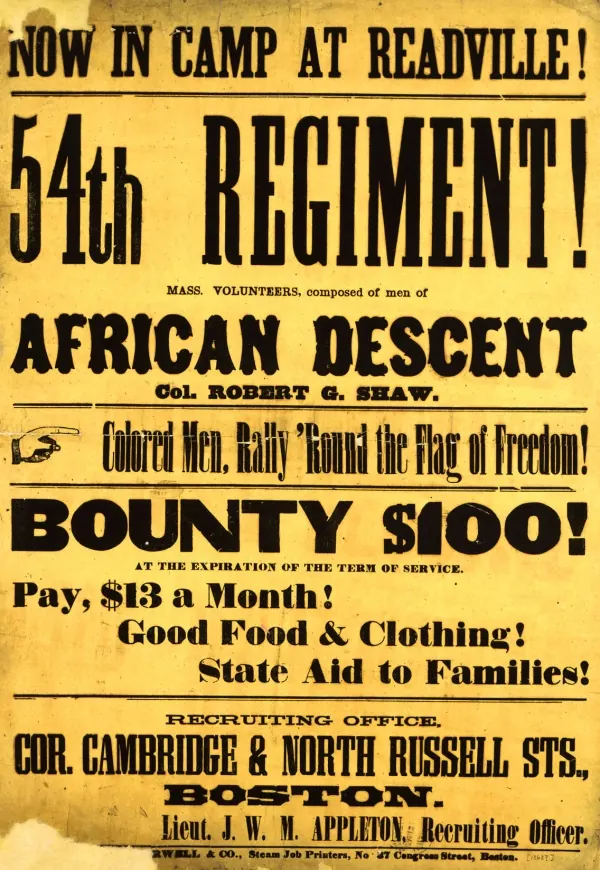
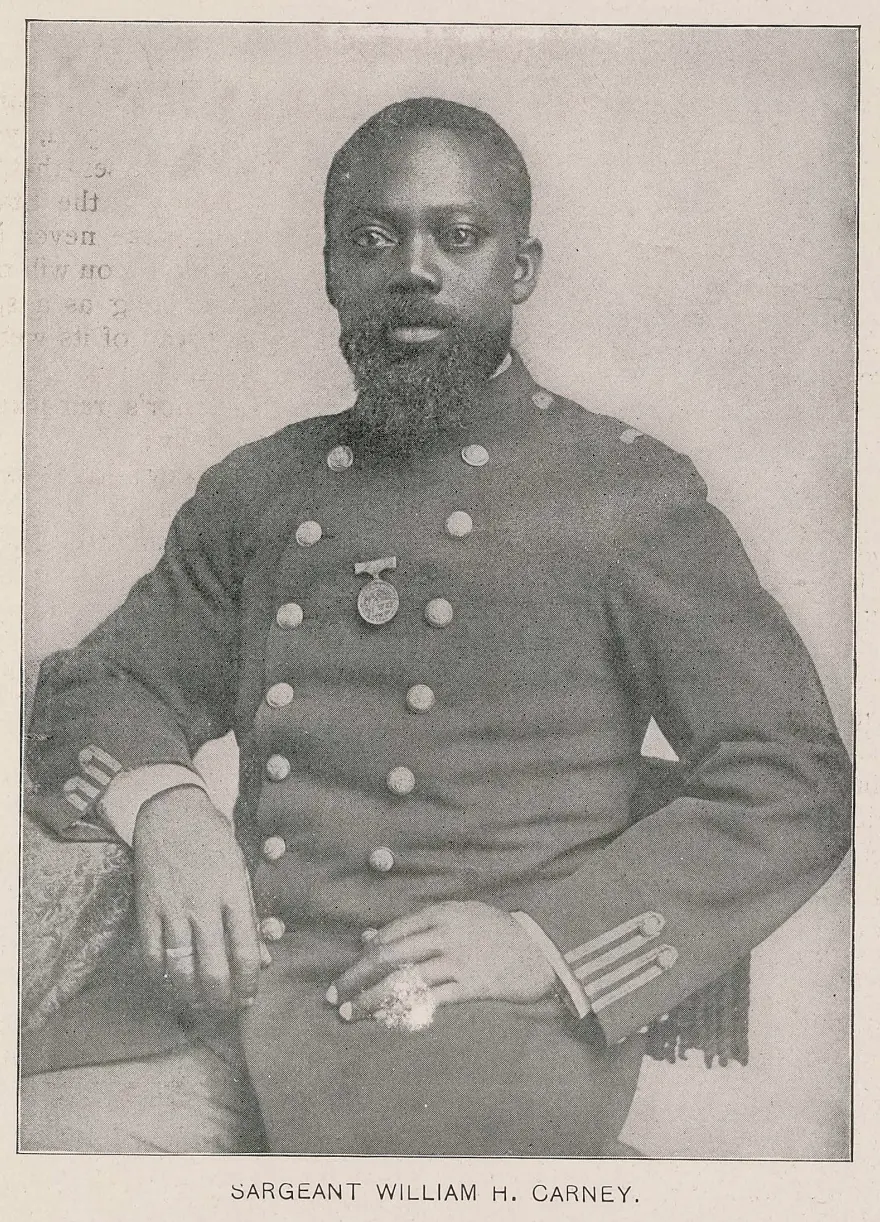
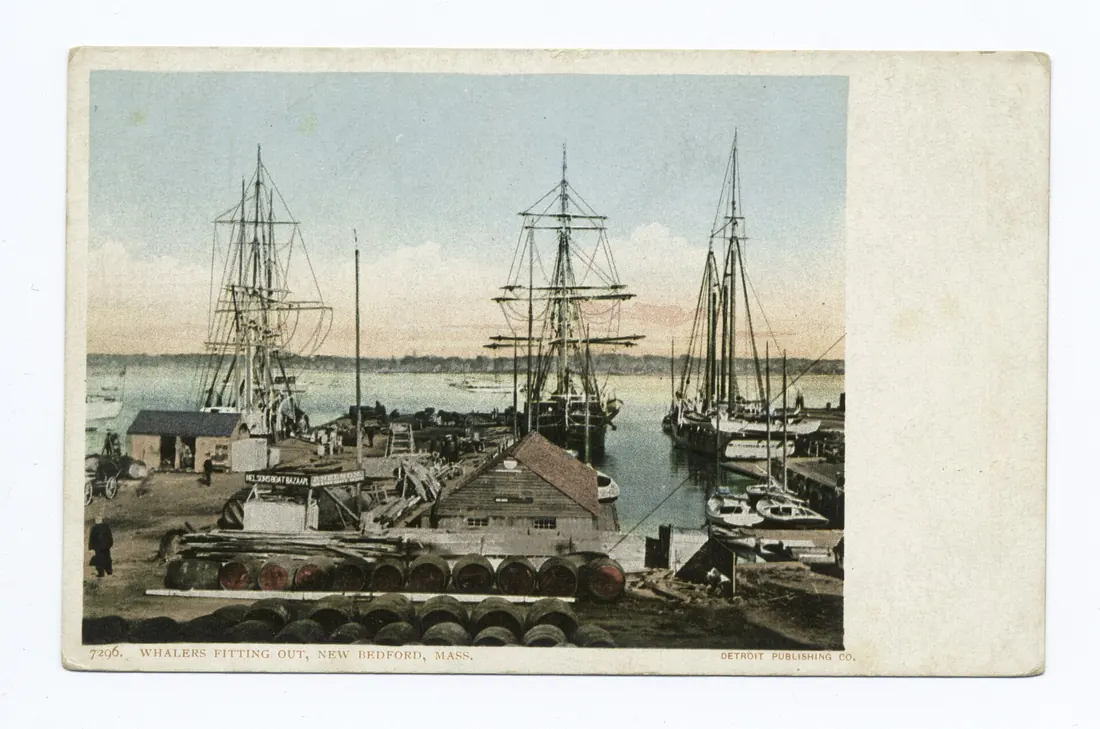
William Harvey Carney was born enslaved in Norfolk, Virginia, on February 29, 1840. How he made his way to freedom is not certain, but his family settled in New Bedford, Massachusetts. In 1863 he joined the 54th Massachusetts, one of the first Black fighting units of the Civil War.
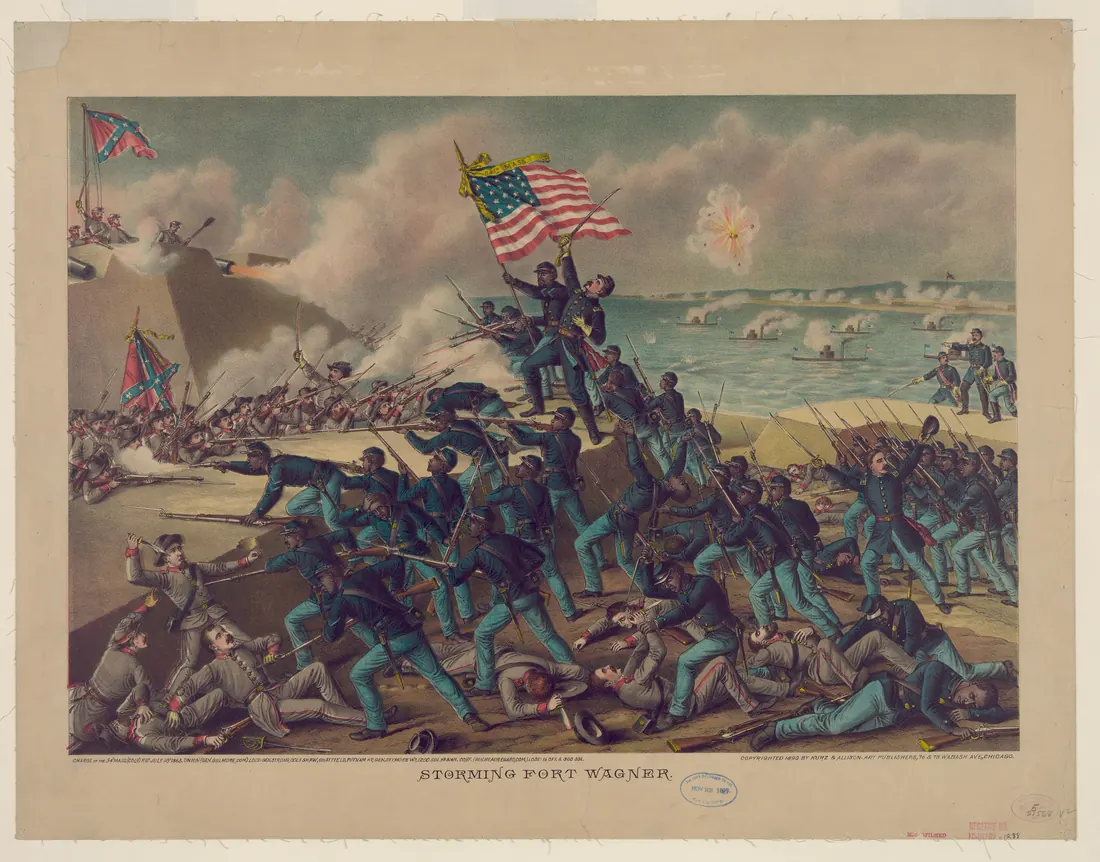
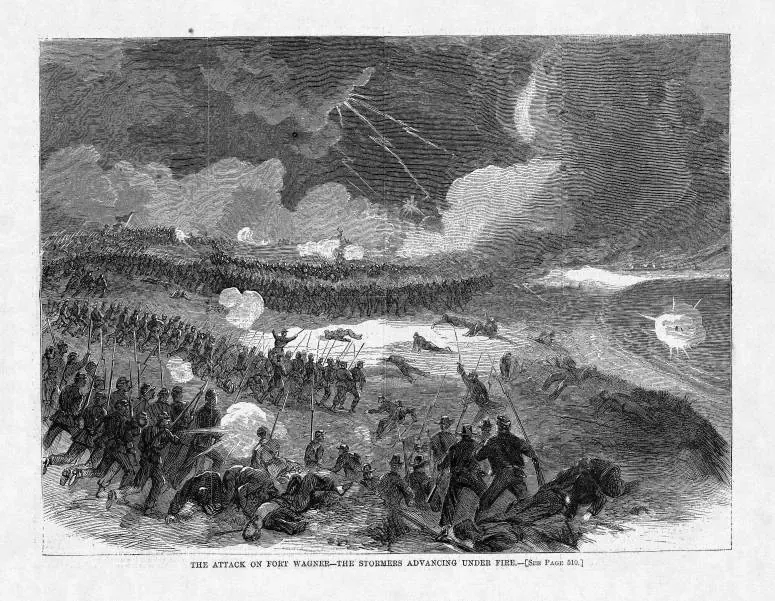
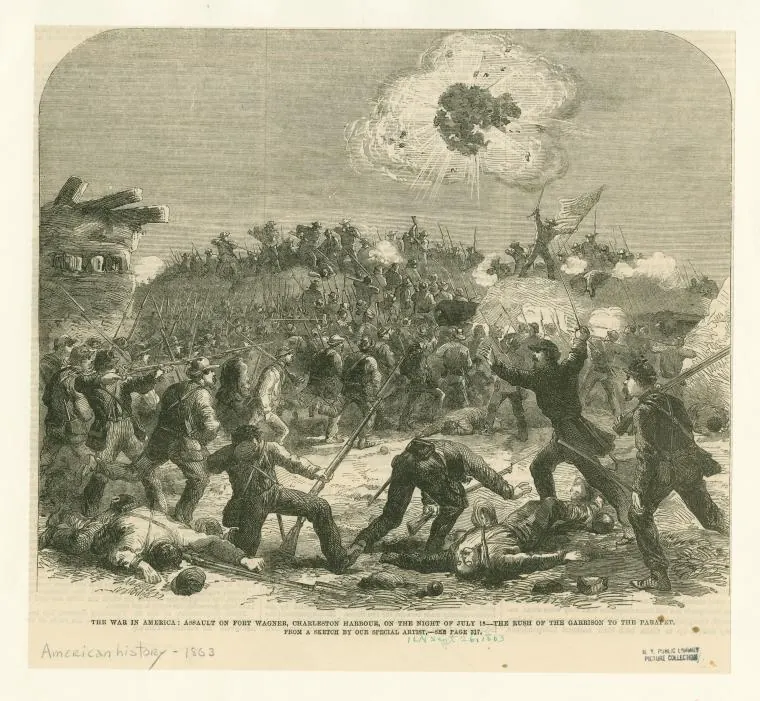
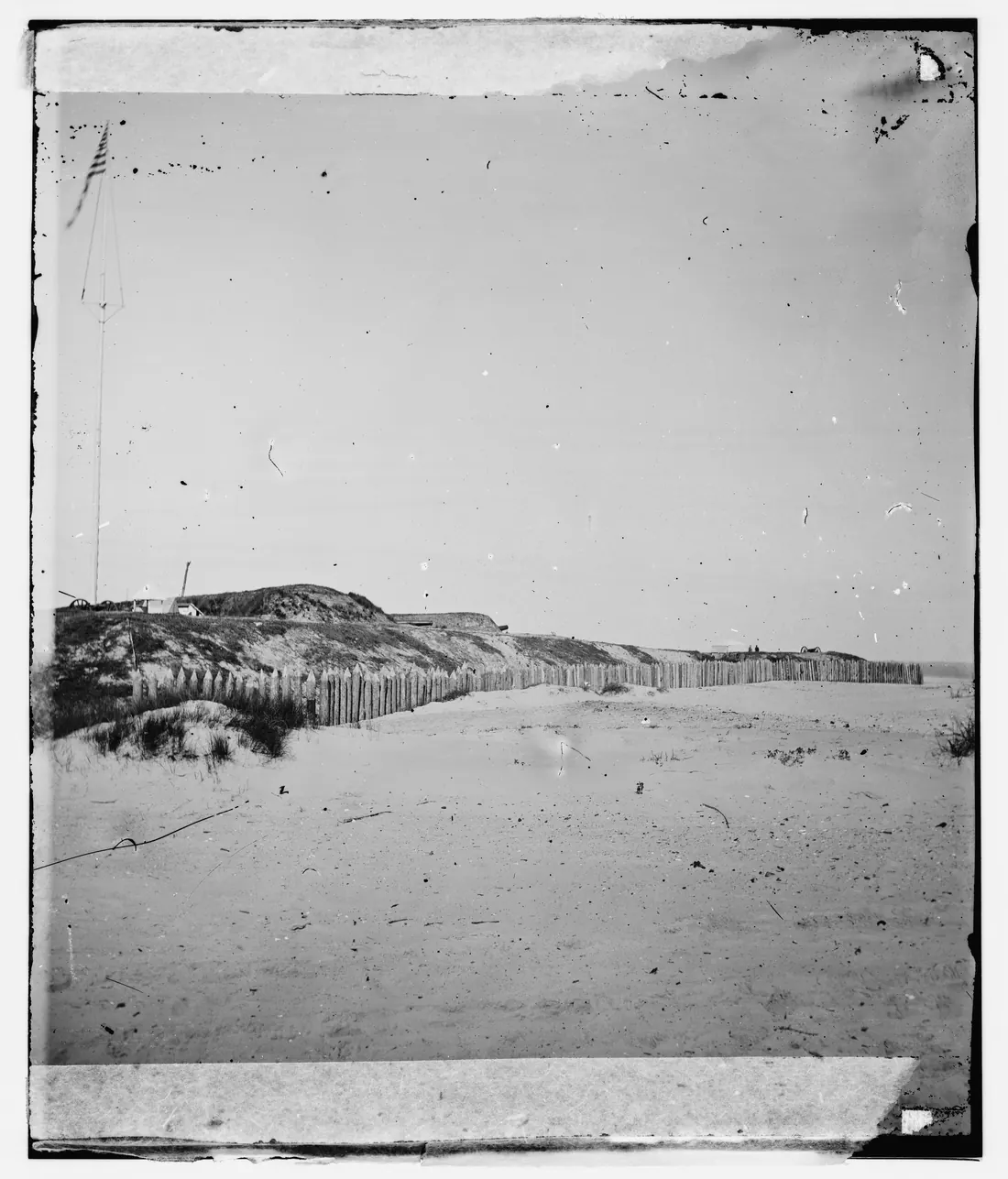
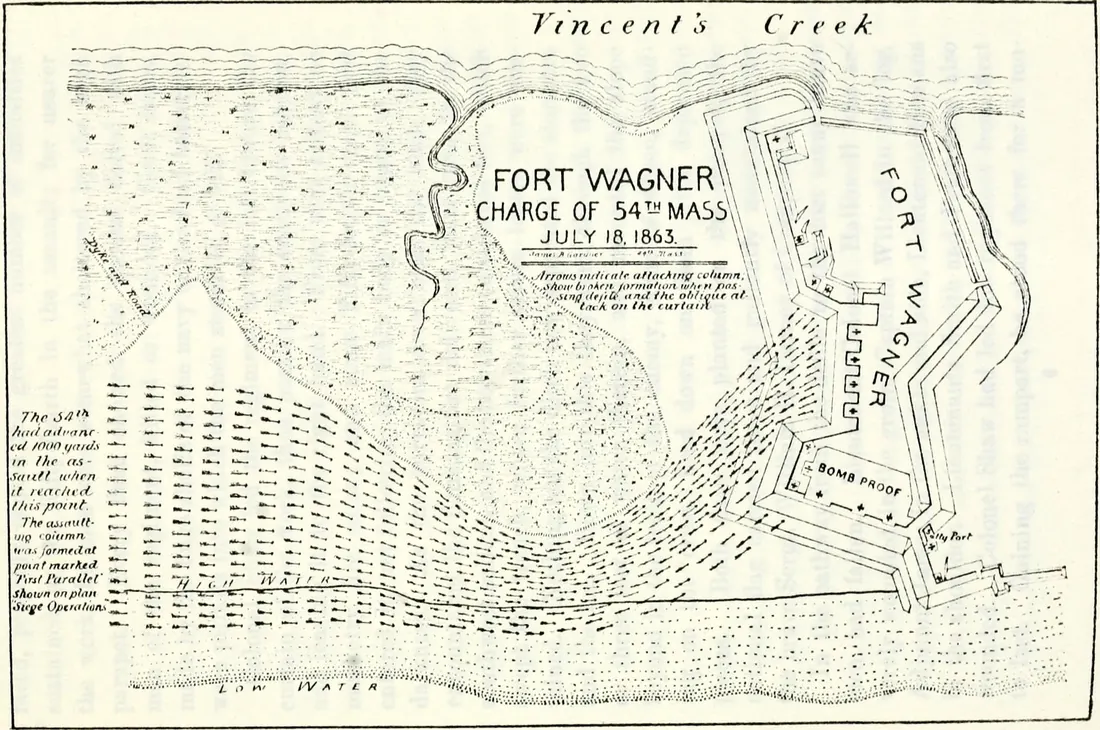
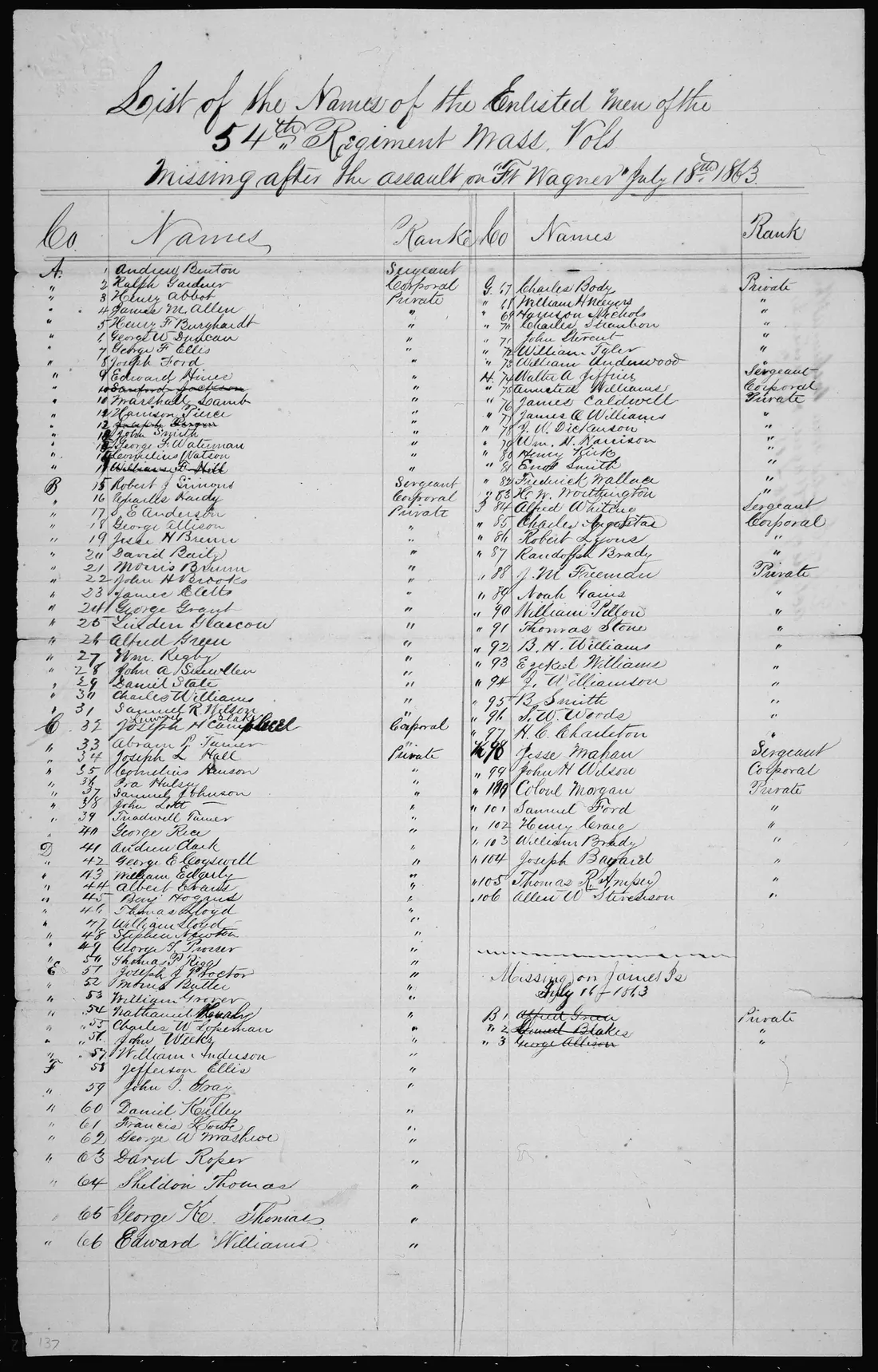
On July 18, 1863, the 54th, under Col. Robert Gould Shaw, led the charge on Fort Wagner, outside Charleston, South Carolina. “Our men fell like grass before a sickle,” wrote Lt. James W. Grace of the 54th. When the flag bearer was shot down, Carney threw away his gun and took the flag: “I threw my gun away and grasped the staff of the fallen colors,” he recalled. He carried it up the fort’s wall and found himself “near the top of the embankment, all alone.”
As the regiment fell back, a musket ball shattered his leg. An officer offered to carry the flag, and Carney refused: “I will never give up these colors to any man unless he belongs to the 54th Massachusetts.” Then a shell fragment struck his head. Still, with a comrade’s help, he crawled back to the Union lines and handed the flag to Lieutenant Johnson. “Boys, the old flag never touched the ground,” he said. When he crawled into the hospital with the flag, one observer wrote, his wounded companions, “both black and white, rose from the straw upon which they were lying and cheered him until exhausted they could shout no longer.”
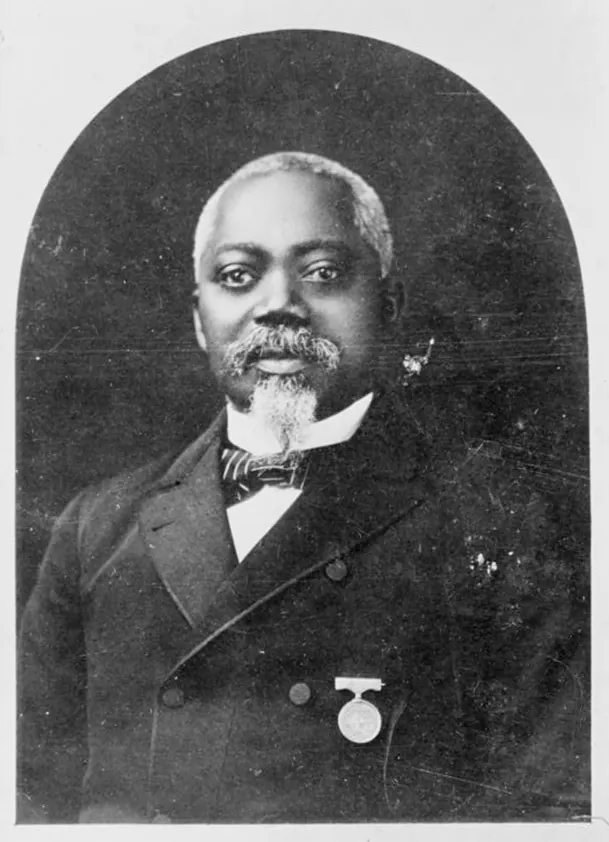
He received the Medal of Honor on May 23, 1900, nearly 37 years after Fort Wagner. Others received the medal before him, but his actions are, in the National Park Service’s words, “the earliest act of African American bravery to be recognized with the medal.”
Fact check
The facts and where they come from
- He was shot carrying the flag, but never let it touch the ground. His Medal of Honor citation: “When the troops fell back he brought off the flag, under a fierce fire in which he was twice severely wounded.” Carney’s own account: “I planted the hilt of the staff in the sand and never let it drag in the dust”; “The old flag never touched the ground.” 32
- He was born enslaved in Norfolk, Virginia, on February 29, 1840. NPS: “Born to William Carney Sr. and Ann Dean in Norfolk, Virginia on February 29, 1840, William H. Carney spent the majority of his boyhood enslaved.” The NPS story map: “Born enslaved in 1840, William Carney Jr. grew up in Norfolk, Virginia.” 123
- He reached freedom in Massachusetts, in New Bedford. NPS: “William H. Carney’s exact route to freedom is uncertain. … The Carney family made their way to Massachusetts and settled in New Bedford.” The NPS story map: “Following his escape from slavery in the 1850s, William H. Carney Jr. began his new life in New Bedford, Massachusetts.” Wikipedia: “How he made his way to freedom is not certain.” 123
- In 1863 he joined the 54th Massachusetts, a Black regiment. NPS: he joined the Morgan Guards in February 1863, which became Company C of the 54th. The NPS story map: “In February 1863, Carney enlisted”; the 54th was “one of the first Black fighting units in the Civil War.” Wikipedia: “Carney joined the 54th Massachusetts Volunteer Infantry in March 1863.” 123
- On July 18, 1863, they led the charge on Fort Wagner. NPS: “On July 18, 1863, the 54th Massachusetts Volunteer Regiment led the charge on Fort Wagner outside of Charleston, South Carolina under the command of Col. Robert Gould Shaw.” 1
- Men fell like grass before a sickle, in the words of Lt. James W. Grace of the 54th. The NPS story map: “When all was ready,” wrote J.W. Grace, “… Our men fell like grass before a sickle.” 2
- Then the flag bearer went down. NPS: “When the unit’s flag bearer fell after being shot down during the battle.” Carney: “I suddenly saw the old flag fall.” His citation: “When the color sergeant was shot down.” 123
- Carney threw down his gun and grabbed the flag. Carney: “I threw my gun away and grasped the staff of the fallen colors.” His citation: “this soldier grasped the flag.” 23
- He carried it up the fort’s wall, alone. Carney: “I found myself near the top of the embankment, all alone.” His citation: he “led the way to the parapet, and planted the colors thereon.” NPS: “Carney pushed forward and planted the flag upon the parapet.” 231
- As they fell back, a musket ball shattered his leg. Carney: “As I mounted the incline a musket ball shattered my leg.” His citation: “When the troops fell back he brought off the flag.” 23
- An officer offered to take the flag; Carney said only a man of the 54th could. Carney: “At the summit an officer came to my assistance, ‘Let me carry the color for you,’ he said. ‘No. sir,’ I replied. ‘I will never give up these colors to any man unless he belongs to the 54th Massachusetts.’” 2
- A shell fragment struck his head. Carney: “in a moment I received my second wound, a fragment of a shell struck me in the head.” 2
- Still, he crawled back to his own lines. Carney: “With the assistance of my comrade, I managed to crawl along till we came to our own lines, and at length delivered the flag into the hands of Lieut. Johnson.” 2
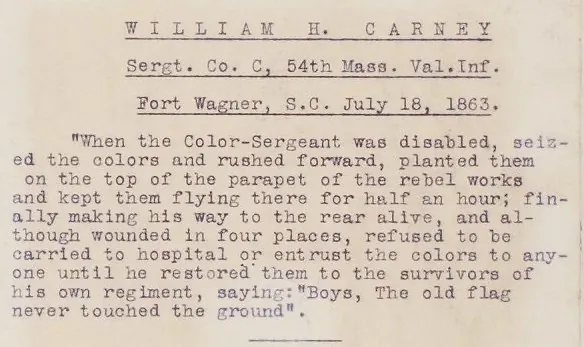
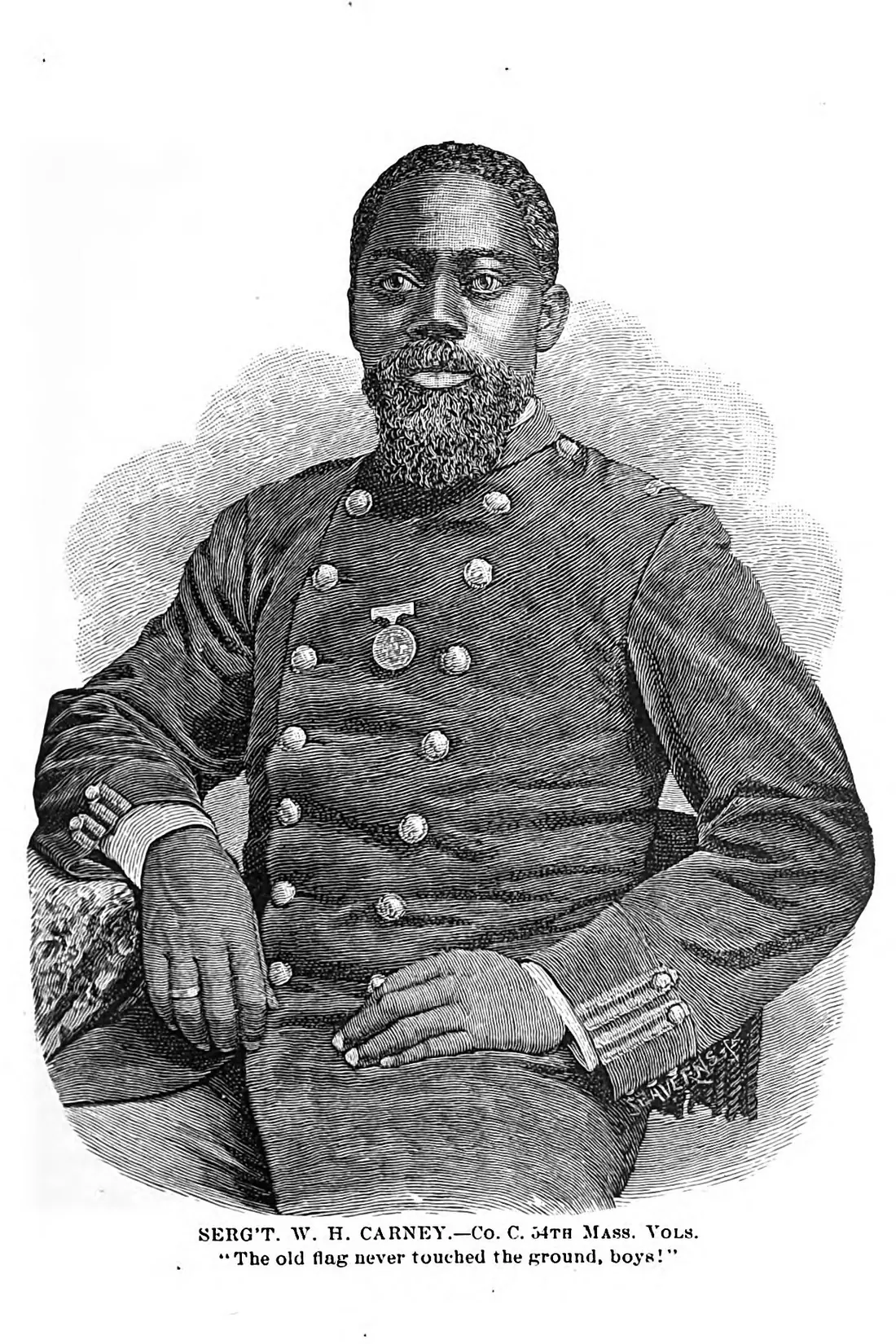
- His words, from the 1900 Paris Exposition record (typed): “saying: ‘Boys, The old flag never touched the ground.’” Carney’s own account: “in my enthusiasm I shouted: ‘The old flag never touched the ground.’” Wikipedia: “Boys, I only did my duty; the old flag never touched the ground!” The Black Phalanx (1888), caption: “The old flag never touched the ground, boys!” 45236
- In the hospital, wounded men rose from the straw to cheer him. The NPS story map: “One observer wrote that the ‘moment he [Carney] was seen crawling into the hospital with the flag still in his possession, his wounded companions, both black and white, rose from the straw upon which they were lying and cheered him until exhausted they could shout no longer.’” 2
- His Medal of Honor came almost 37 years later, on May 23, 1900. Wikipedia: “Carney received his Medal of Honor on May 23, 1900, nearly 37 years after the events at Fort Wagner.” NPS: “Almost four decades after the battle of Fort Wagner, in May, 1900, Sergeant Carney received the Medal of Honor.” 31
- No earlier act by a Black American ever earned it, though others received the medal before him. NPS: “his actions are the earliest act of African American bravery to be recognized with the medal.” Wikipedia: “The action for which he received the Medal of Honor preceded that of any other African American Medal of Honor recipient”; “20 African American men received the medal before him, but because his battle actions happened earlier than the others, some have incorrectly cited him as the first to receive the medal.” 13
Sources
- William H. Carney National Park Service (Boston African American National Historic Site)
- “The Old Flag Never Touched the Ground”: Sergeant William H. Carney Jr. Story Map National Park Service
- William Harvey Carney Wikipedia
- Official records, United States Army and Navy (1900 Paris Exposition) Library of Congress
- Typed card about William Harvey Carney, from Official records, United States Army and Navy (1900) Wikimedia Commons
- Sergt. W. H. Carney, woodcut in The Black Phalanx by Joseph T. Wilson (1888) Wikimedia Commons
Notes
How he reached freedom: most accounts say he escaped (Wikipedia: through the Underground Railroad; the NPS story map: “his escape from slavery in the 1850s”; NPS calls him “self-liberated”), but NPS also notes that some say his father bought his freedom, and Carney himself wrote only “In 1856, I left the sea for a time.” We say he made his way to freedom.
How many wounds: twice (his citation, and his own account: the leg, then the head), “wounded in four places” (the 1900 record), or the right arm, a leg, the chest and a graze to the head (Wikipedia, citing a 2008 children’s history). We name only the leg and the head, which all accounts include, and give no count.
His words differ from source to source: “Boys, the old flag never touched the ground” (the 1900 record), “The old flag never touched the ground” (his own account), “Boys, I only did my duty; the old flag never touched the ground!” (Wikipedia) and “Boys, I did but my duty; the dear old flag never touched the ground!” (NPS). We quote the 1900 record, the shared core of all four.
“First Black Medal of Honor recipient”: the NPS story map and some Army articles say this; Wikipedia and the NPS article say it is wrong, since 20 Black men received the medal before him. We say his is the earliest act of bravery by a Black American to earn it.
Enlistment: February 1863 (NPS, the NPS story map) or March 1863 (Wikipedia). We say 1863.
“Alone” is Carney’s own word (“all alone,” near the top of the embankment); his citation says he “led the way to the parapet.” Left out: the 1900 record’s claim that he kept the colors flying there for half an hour (one source).
Pictures: the Kurz & Allison print (1890), Frank Vizetelly’s drawing and the Harper’s Weekly engraving (both 1863) are artists’ illustrations of the assault, not photographs, and the Kurz & Allison print shows other men around the flag. The photo of the fort shows its sand walls after its capture, in September 1863. The New Bedford postcard dates from about 1903. The photo with the flag, about 1864, is the only one of Carney from the war years; the others show him later, with his medal.
Photo credits
The archive photos in this story
All the photographs and illustrations in this story are in the public domain. Tap one to enlarge it, or follow the link to its Wikimedia Commons page for the full record. The narration, music, captions and graphics in the Short are our own.