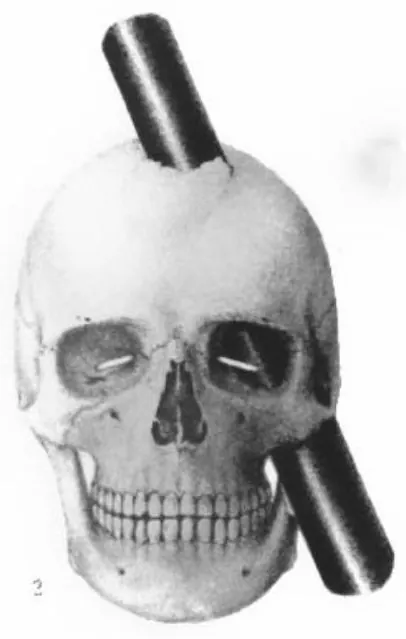
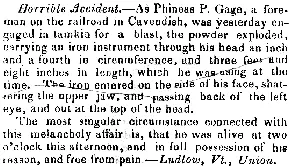
On September 13, 1848, Phineas Gage, 25, was the foreman of a crew cutting a railroad bed near Cavendish, Vermont. He was using an iron rod to pack explosive powder into a hole when the powder exploded. The rod, 43 inches long and weighing 13¼ pounds, shot up through his left cheek, into his brain and out through the top of his skull, and landed about 80 feet away.
Within a few minutes he was talking. His men sat him in an oxcart, and he rode into town, in the words of his doctor, John M. Harlow, “sitting erect, full three quarters of a mile.” He was still savvy enough, Smithsonian says, to tell a doctor that day, “Here is business enough for you.” He lost the sight of his left eye and survived a severe infection under Harlow’s care.
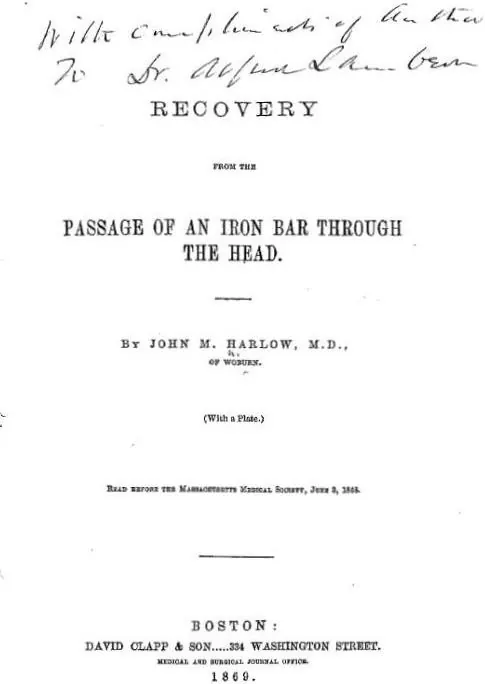
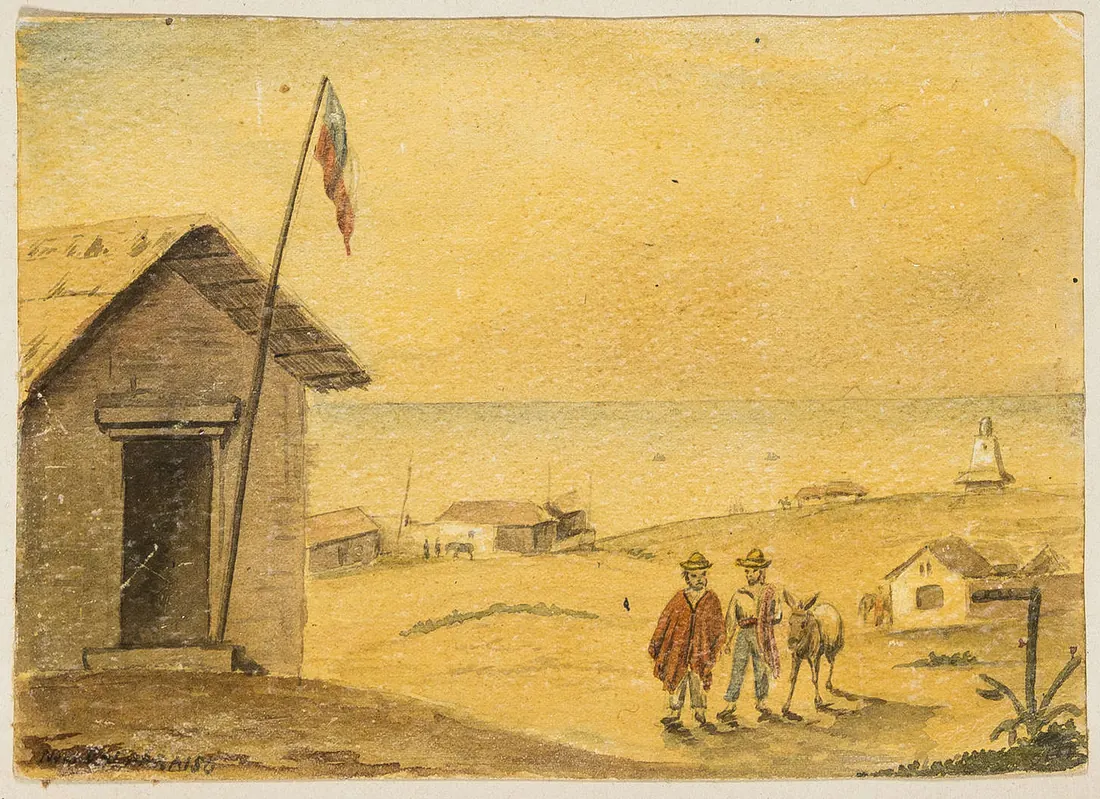
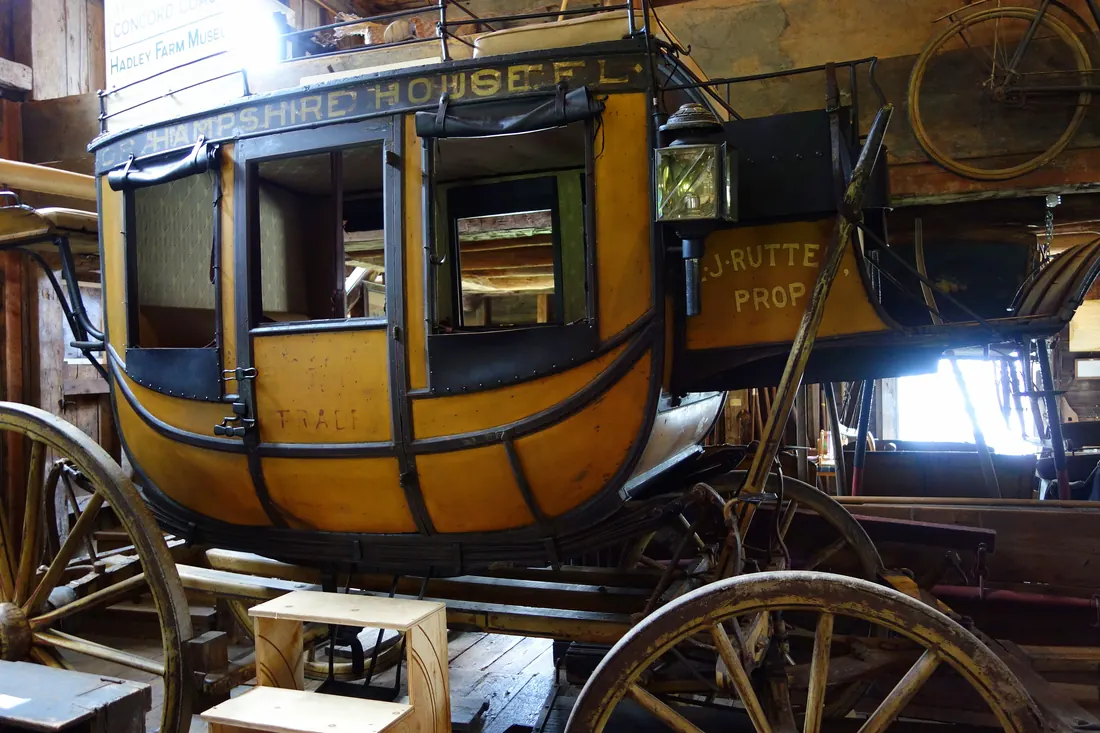
In 1868 Harlow wrote that Gage had become “fitful, irreverent, indulging at times in the grossest profanity,” and “impatient of restraint or advice when it conflicts with his desires.” His friends, Harlow wrote, said he was “no longer Gage.” As Smithsonian puts it, citing the researcher Malcolm Macmillan, later accounts of his changed character “had gone far beyond Harlow’s observations,” turning him into “an ill-tempered, shiftless drunk.” Wikipedia lists such claims as “either unsupported by, or in contradiction to, the known facts.” In fact, in 1852 he was invited to Chile to work as a long-distance stagecoach driver, and for years he was “often driving a coach heavily laden and drawn by six horses” on the Valparaíso–Santiago route, until his health began to fail in mid-1859.
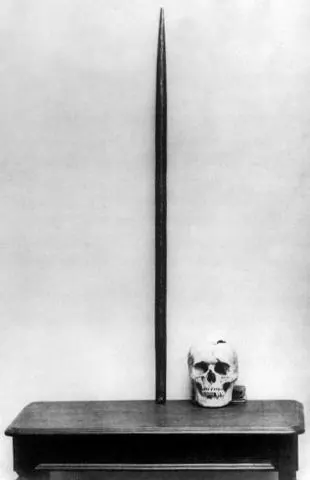
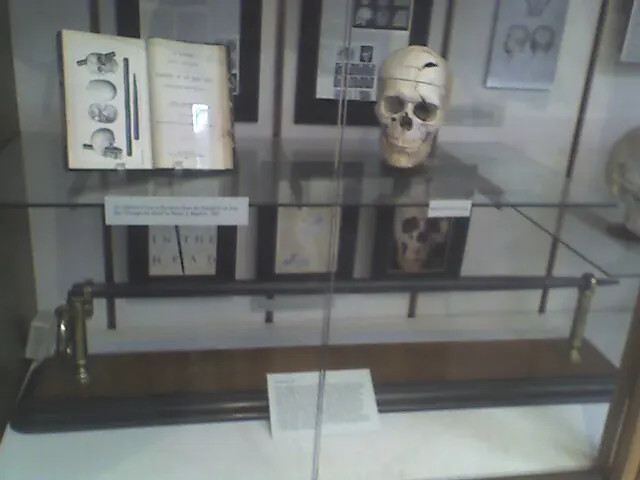
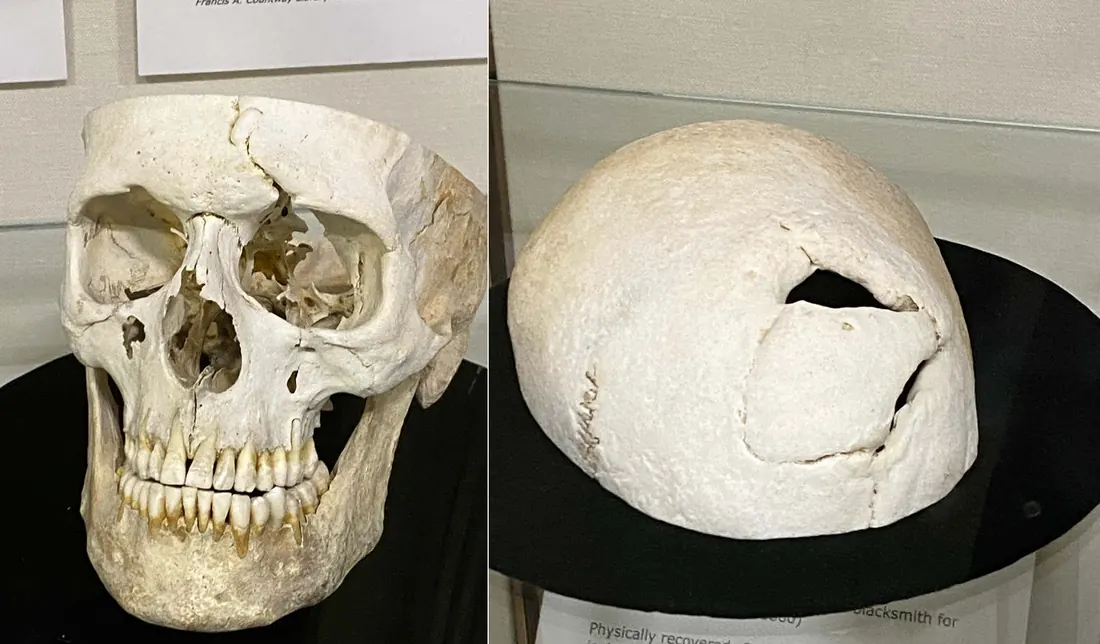
He died in May 1860, about 12 years after the accident. His skull and the tamping iron are kept at the Warren Anatomical Museum. Because his case was the first to suggest a link between brain trauma and personality change, Gage became, in Smithsonian’s words, “the most famous patient in the annals of neuroscience.”
Fact check
The facts and where they come from
- An iron bar went through his head. Wikipedia: the tamping iron “entered the left side of Gage’s face in an upward direction, just forward of the angle of the lower jaw” and exited through the top of the skull. Smithsonian: it “shot skyward, penetrated Gage’s left cheek, ripped into his brain and exited through his skull.” 12
- Minutes later he was talking. Harlow (1848): he “spoke in a few minutes.” Wikipedia: Gage “spoke within a few minutes, walked with little assistance, and sat upright in an oxcart.” 31
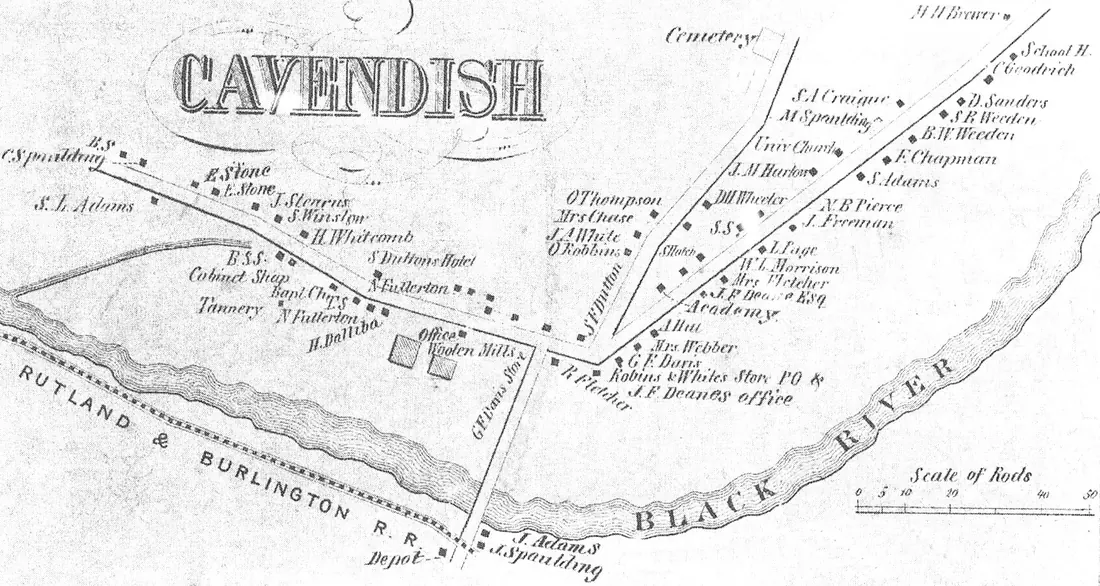
- In September 1848 he was a railroad foreman in Vermont. Smithsonian: “In 1848, Gage, 25, was the foreman of a crew cutting a railroad bed in Cavendish, Vermont. On September 13 …” Wikipedia places the work on the Rutland & Burlington Railroad, south of Cavendish. 21
- He was packing powder into a hole with an iron rod, and the powder exploded. Smithsonian: “as he was using a tamping iron to pack explosive powder into a hole, the powder detonated.” 2
- The rod weighed 13 pounds: 13¼ pounds, 3 feet 7 inches long and 1¼ inches across. Harlow (1848): it “weighs 13¼ pounds.” Smithsonian: “43 inches long, 1.25 inches in diameter and weighing 13.25 pounds.” 32
- It landed about 80 feet away. Wikipedia: “The tamping iron landed point-first some 80 feet (25 m) away.” Harlow (1868) says “several rods behind him,” a rod being 16½ feet. 14
- He rode into town sitting up in an oxcart. Harlow (1848): his men “sat him into an ox cart, in which he rode, sitting erect, full three quarters of a mile.” Wikipedia: “the 3⁄4-mile (1.2 km) ride to his lodgings in town.” 31
- He told the doctor, “Here is business enough for you.” Smithsonian: “he remained savvy enough to tell a doctor that day, ‘Here is business enough for you.’” Wikipedia quotes Dr. Edward H. Williams’s account: “Doctor, here is business enough for you.” 21
- He went blind in one eye, but he lived. Smithsonian: “Though blinded in his left eye.” Wikipedia notes that the sight of his left eye was lost for good from the tenth day, and that he survived a severe infection under Harlow’s care. 21
- His doctor wrote that he turned impatient and foul-mouthed. Harlow (1868) describes him as “fitful, irreverent, indulging at times in the grossest profanity” and “impatient of restraint or advice when it conflicts with his desires.” 4
- His friends said he was “no longer Gage” (Harlow, 1868, word for word; also quoted by Smithsonian and Wikipedia). 421
- Later retellings made him a bad-tempered drunk, with no evidence. Smithsonian: “accounts of his changed character had gone far beyond Harlow’s observations, Macmillan says, turning him into an ill-tempered, shiftless drunk.” Wikipedia lists behaviors later ascribed to him “that are either unsupported by, or in contradiction to, the known facts,” including “irresponsibility, untrustworthiness, aggressiveness, violence” and “vagrancy, begging, drifting, drinking.” 21
- In fact, he spent years in Chile driving six-horse stagecoaches. Wikipedia, quoting Harlow (1868): “In August 1852, Gage was invited to Chile to work as a long-distance stagecoach driver there, ‘caring for horses, and often driving a coach heavily laden and drawn by six horses’ on the Valparaíso–Santiago route,” until “his health began to fail in mid-1859.” 14
- He became the most famous patient in neuroscience. Smithsonian: “In time, Gage became the most famous patient in the annals of neuroscience, because his case was the first to suggest a link between brain trauma and personality change.” 2
- He was 25 at the time of the accident and died in May 1860, about 12 years later; his skull and the iron are at the Warren Anatomical Museum. Smithsonian: “Gage, 25”; he “died in May 1860, at age 36, after a series of seizures”; “his skull, the tamping iron … the Warren Anatomical Museum.” Wikipedia gives May 21, 1860, and speaks of “the remaining 12 years of his life.” 21
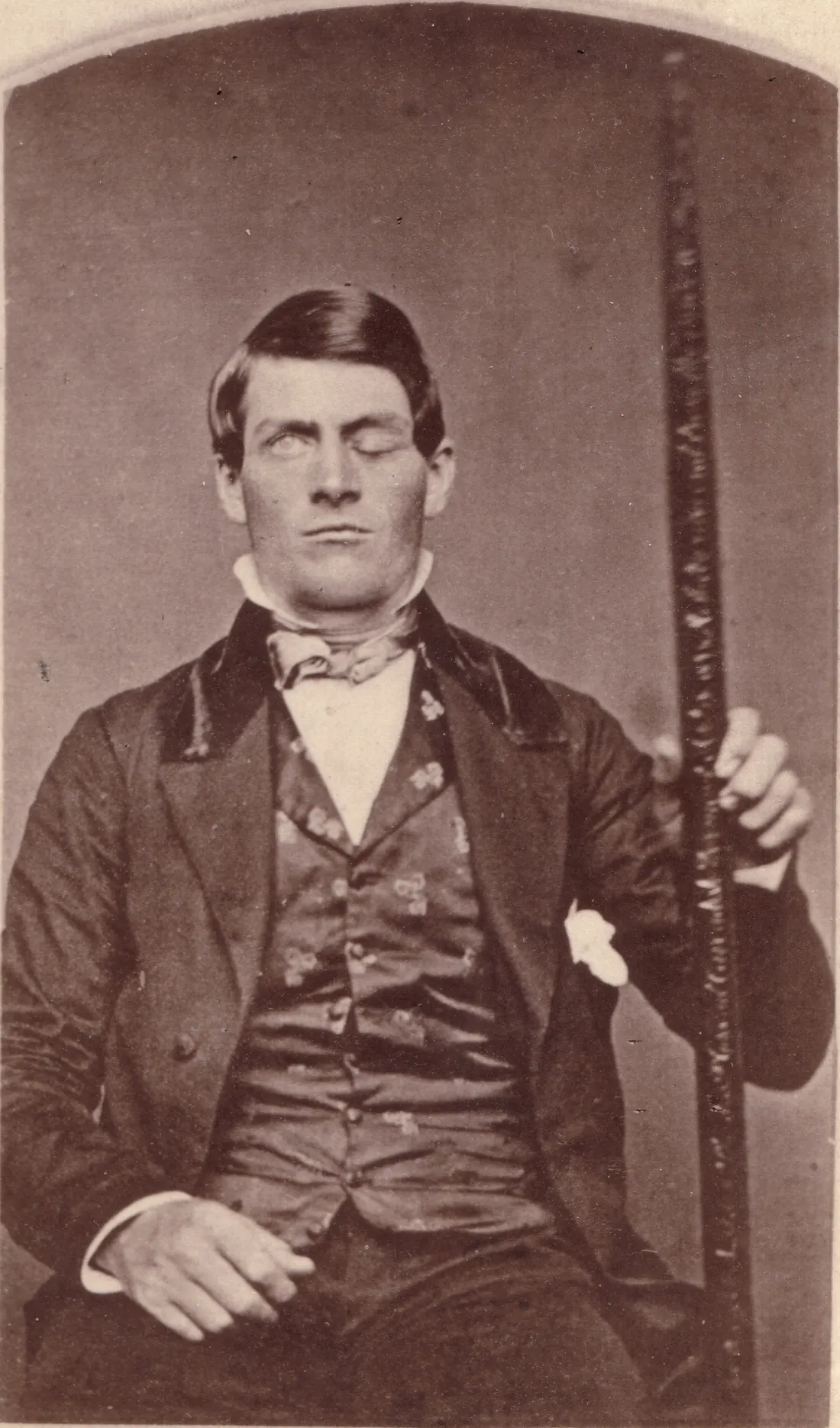
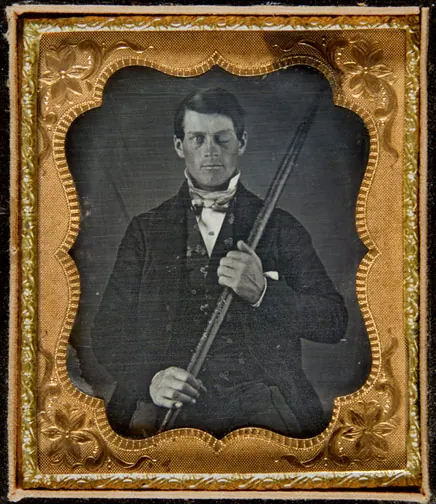
- Only two photographs of him are known. Wikipedia: “Two daguerreotype portraits of Gage, identified in 2009 and 2010, are the only likenesses of him known.” 1
Sources
- Phineas Gage Wikipedia
- Phineas Gage: Neuroscience’s Most Famous Patient Smithsonian Magazine (Steve Twomey)
- Passage of an Iron Rod Through the Head (John M. Harlow, Boston Medical and Surgical Journal, 1848) Wikisource
- Recovery from the Passage of an Iron Bar through the Head (John M. Harlow, 1868) Wikisource
Notes
The personality change: Harlow’s 1868 description is the only first-hand account, and it was written after Gage’s death. Malcolm Macmillan (An Odd Kind of Fame) argues that the worst changes were temporary and that Gage made a “social recovery,” and a doctor who knew him in Chile in 1858–59 reported “no impairment whatever of his mental faculties” (Wikipedia). We attribute the change to Harlow and to Gage’s friends, and don’t call it permanent.
The date of his death: Harlow (1868) printed May 21, 1861; modern research (Macmillan, Wikipedia, Smithsonian) gives May 1860, and so do we.
“About 80 feet” is Wikipedia’s figure, from Macmillan; Harlow’s own words are “some rods distant” and “several rods behind him.”
Left out: his time at Barnum’s American Museum (true, but it needs explaining), and the myths that he was a circus freak or died penniless, which Wikipedia says are unsupported.
Pictures: only two photographs of Gage are known, the Gage family’s portrait of him holding the iron and the Wilgus daguerreotype, so both appear more than once. The Wilgus portrait is the unretouched scan; the enlarged, retouched version on Commons was made with an AI upscaler and is not used. The 1855 and 1869 maps, the 2009 rock cut (only presumed to be the accident site), the Valparaíso sketch and the 2013 museum coach show places and a coach of the type Wikipedia says he likely drove, not the events themselves. The only anatomy shown is his skull in the museum and the 1850 drawings.
Photo credits
The archive photos in this story
The photographs and illustrations in this story are in the public domain or shared under open licenses; each one is credited below with its license. Tap one to enlarge it, or follow the link to its Wikimedia Commons page for the full record. The narration, music, captions and graphics in the Short are our own.