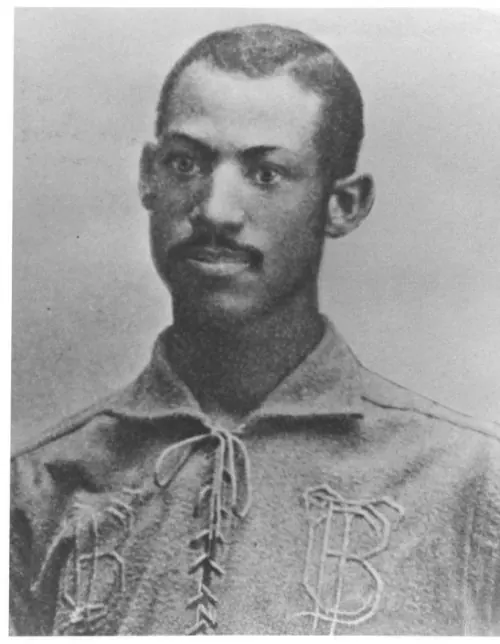
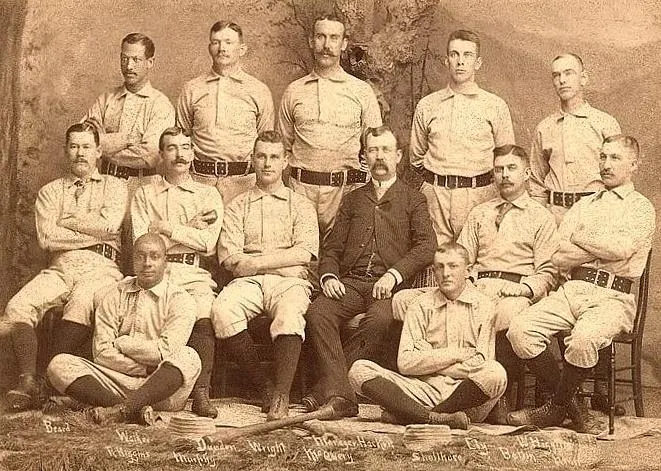
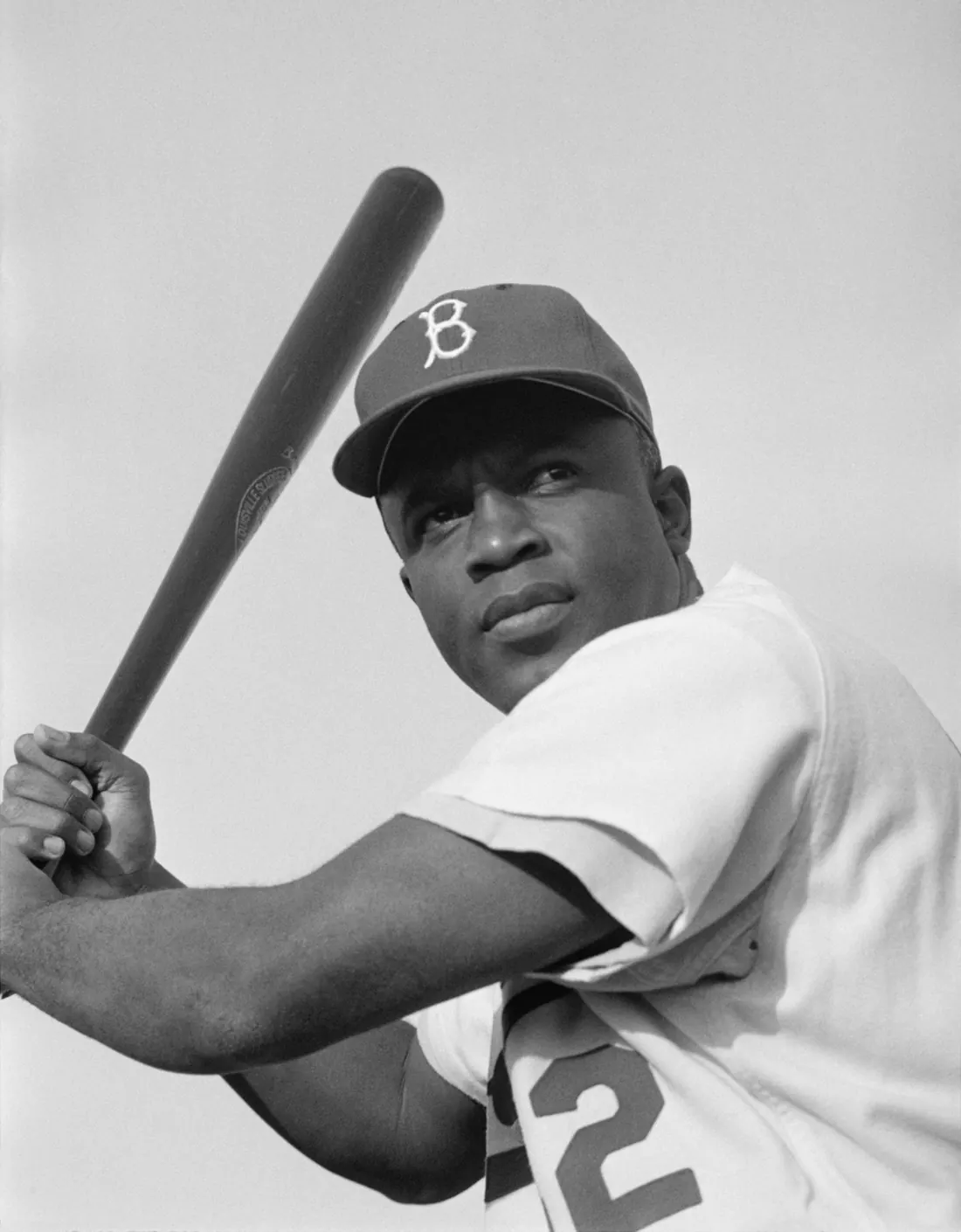
Moses Fleetwood Walker had been a star athlete at Oberlin College and the University of Michigan. On May 1, 1884, he played his first major league game, as catcher for the Toledo Blue Stockings of the American Association, away at Louisville. He was, in SABR’s words, “the first to play major league baseball openly as a black man,” 63 years before Jackie Robinson.
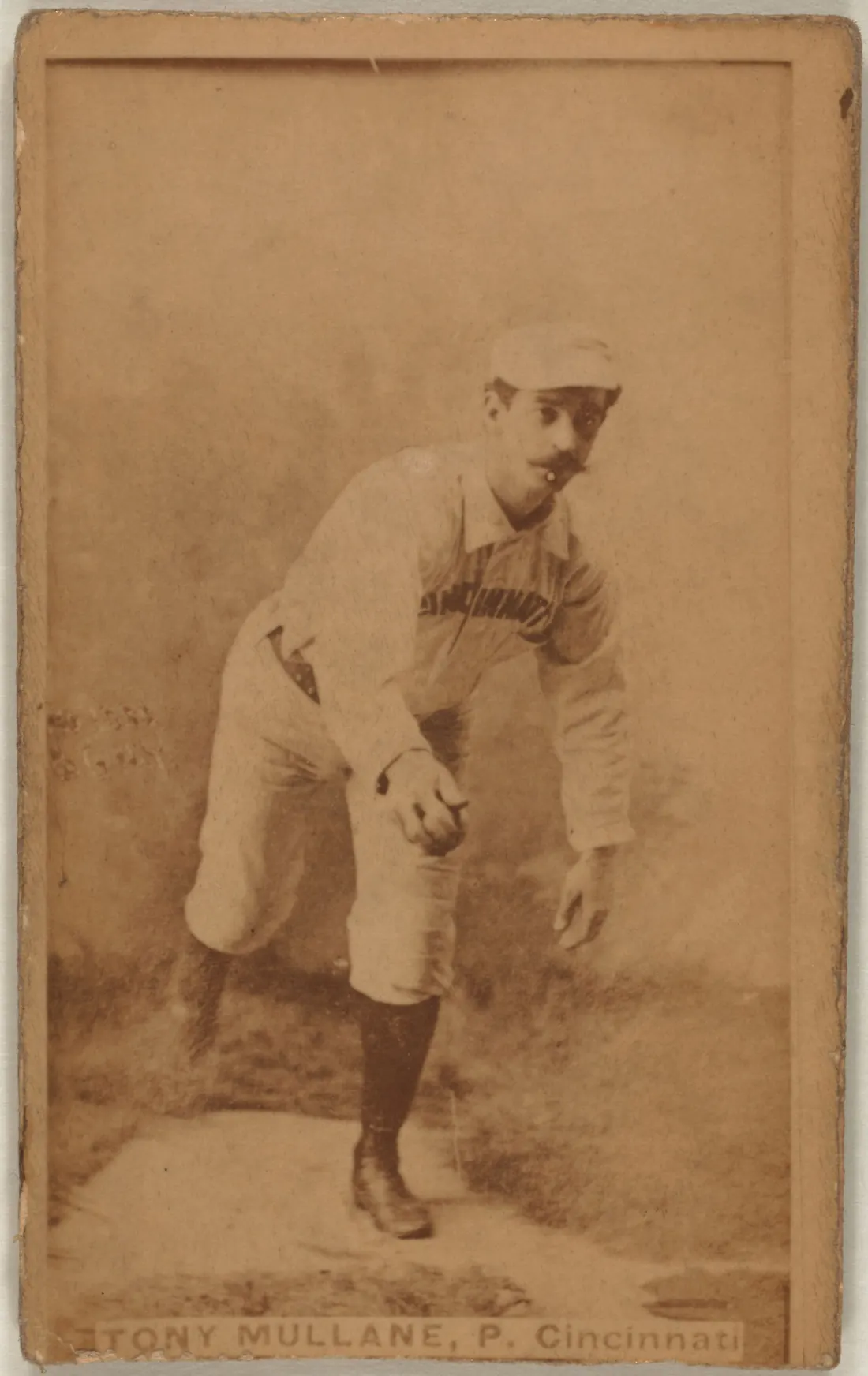
Catchers then played without gloves, and Walker often caught barehanded until his fingers split and bled. His own pitcher, Tony Mullane, later admitted ignoring Walker’s signals because Walker was Black, and Walker caught him anyway, never knowing what was coming. Before a trip to Richmond, Virginia, in September 1884, a letter warned of “75 determined men who have sworn to mob Walker if he comes to the ground in a suit.” Injuries ended his season, and on September 22 he was released. He never returned to the major leagues.
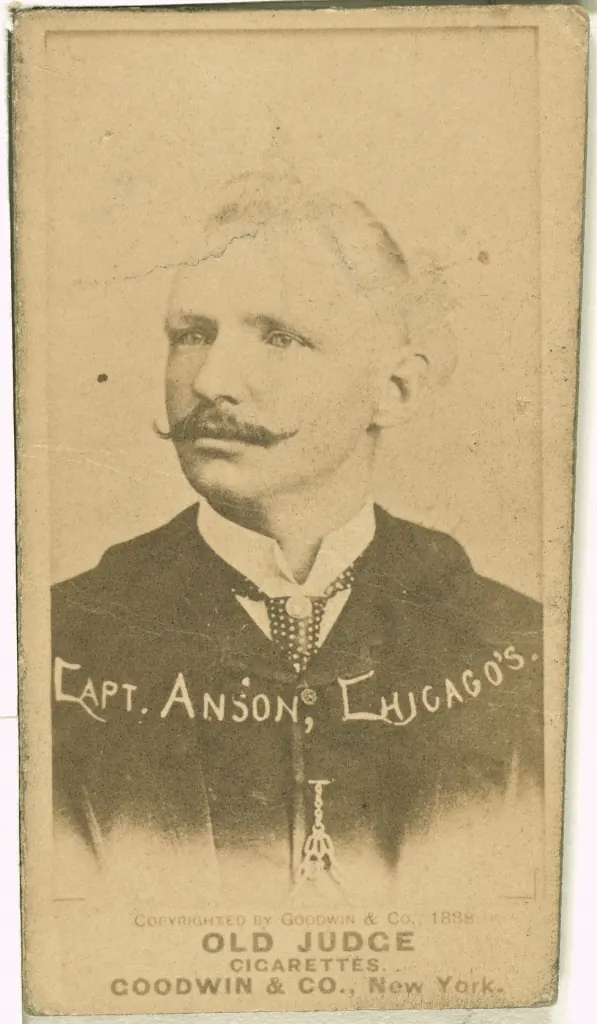
In 1887, playing for Newark in the International League, he was held out of an exhibition game on July 14 when Chicago’s star, Cap Anson, refused to play against him and pitcher George Stovey. That same day the league’s directors, meeting in Buffalo, voted to approve no more contracts with Black players. The major leagues stayed all-white until Jackie Robinson in 1947.
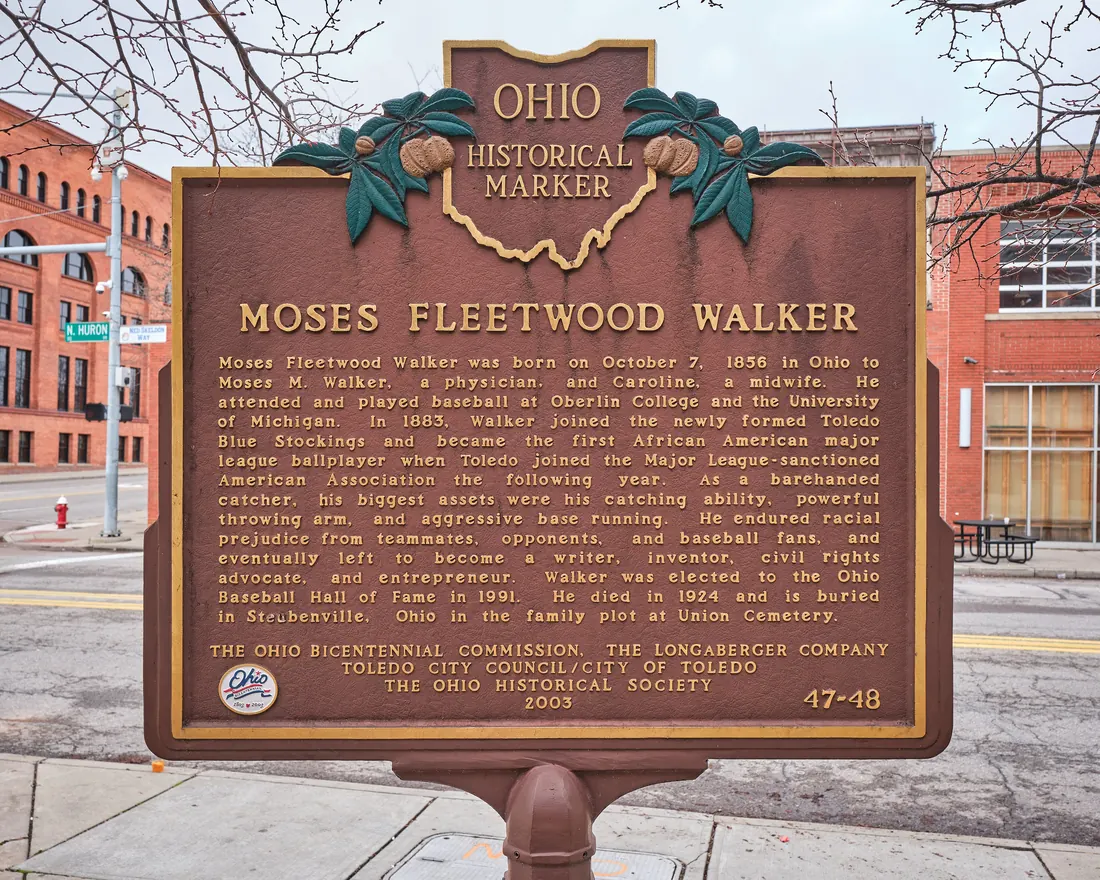
Walker later patented an artillery shell and three inventions for changing movie reels, and in 1908 wrote Our Home Colony, urging Black Americans to leave for Africa. He died in Cleveland on May 11, 1924, and was buried in Union Cemetery, Steubenville, Ohio, in a grave with no headstone. Decades later, Oberlin’s Heisman Club, an alumni group for athletics, gave him one. Today an Ohio historical marker outside Toledo’s ballpark says what history forgot: he “became the first African American major league ballplayer.”
Fact check
The facts and where they come from
- He broke baseball’s color line: in 1884 he was the first to play major league baseball openly as a Black man. SABR: “Moses Fleetwood Walker of the 1884 Toledo team is, without question, the first to play major league baseball openly as a black man.” Wikipedia: he “was the first to be open about his black heritage despite the widespread prejudice.” 13
- Sixty-three years before Jackie Robinson. History.com: “Sixty-three years before Jackie Robinson became the first African American in the modern era to play in a Major League Baseball game, Moses Fleetwood Walker debuted in the league on May 1, 1884, with the Toledo Blue Stockings.” SABR: “separated by 63 years.” Oberlin’s Observer: he “beat Jackie Robinson to the majors by 63 years.” 415
- But history forgot him. Oberlin’s Observer: “Walker’s baseball accomplishments were generally forgotten.” The Toledo Blade: “Mr. Walker is largely forgotten today.” SABR asks: “Why then does the myth persist that Jackie Robinson was first?” 571
- His name was Moses Fleetwood Walker (Wikipedia; SABR). 31
- In 1884 he became a major league catcher in Toledo, with the Toledo Blue Stockings of the American Association. Wikipedia: “Walker’s first appearance as a major league ballplayer was an away game against the Louisville Eclipse on May 1, 1884.” 314
- He often caught barehanded, until his fingers split and bled. SABR, quoting a batboy: “more often he caught barehanded.” Malloy: “recalled the sight of Walker catching barehanded, as was common in those days, with his fingers split open and bleeding.” Oberlin’s Observer: “Gloves were not used then and contemporary accounts describe Moses Walker’s swollen hands and split, bleeding fingers.” The Toledo marker: “As a barehanded catcher.” 1259
- His own pitcher, Tony Mullane, admitted ignoring his signals because Walker was Black. In an interview in the New York Age of January 11, 1919 (quoted by SABR; History.com gives a slightly different transcription), Mullane called Walker the best catcher he ever worked with, but said that because of his dislike of Black people he pitched whatever he wanted without looking at Walker’s signals. 143
- Walker caught him anyway, never knowing what was coming: Mullane said that for the rest of that season Walker caught anything he pitched without knowing what was coming (SABR). 1
- A letter threatened a mob of 75 men, before Toledo’s trip to Richmond, Virginia, in September 1884. The letter of September 5, 1884 (SABR): “we could mention the names of 75 determined men who have sworn to mob Walker if he comes to the ground in a suit.” History.com: “a letter declaring that a lynch mob of 75 men would attack Walker if he tried to take the field.” 14
- Then injuries ended his season. SABR: “He played in just six games after July 12 and was finally released on September 22. He never returned to the major leagues.” Wikipedia: “42 games total, before injuries led to his release.” History.com names a broken rib. 134
- In 1887 Chicago’s star Cap Anson refused to play against him, at an exhibition game in Newark on July 14, 1887 (Malloy); Walker and George Stovey were held out. SABR: “On Anson’s demand, neither Walker nor Stovey played.” History.com calls Anson “one of the most dominant white MLB players of the era”: “Walker and his Black teammate, George Stovey, ended up on the bench.” 124
- That same day, his league, the International League, voted to stop signing Black players. Malloy: “On the same day that Anson succeeded in removing the ‘colored battery,’ the directors of the International League met in Buffalo,” and “the board finally directed Secretary White to approve of no more contracts with colored men”; six teams voted for, four against. SABR: “That same day, the International League acted not to approve the contracts of additional black players.” 21
- The majors stayed all-white until 1947. Wikipedia: Walker was “the last African-American to participate on the major league level before Jackie Robinson broke baseball’s color line in 1947.” SABR, quoting John Thorn: “He would be the last black player in the major leagues until 1947.” History.com describes a “gentlemen’s agreement.” 314
- He later wrote a book, Our Home Colony (1908), urging Black Americans to leave for Africa. Lemelson-MIT: “In his writing, Walker expresses defeat and urges Black people to leave the U.S. in search of better opportunities in Africa.” History.com: “where he urged African Americans to return to Africa.” Oberlin’s Observer: he “advocated a back-to-Africa policy.” 6451
- He died in 1924. SABR: “On May 11, 1924, Moses Fleetwood Walker died at his Cleveland home of lobar pneumonia.” 13
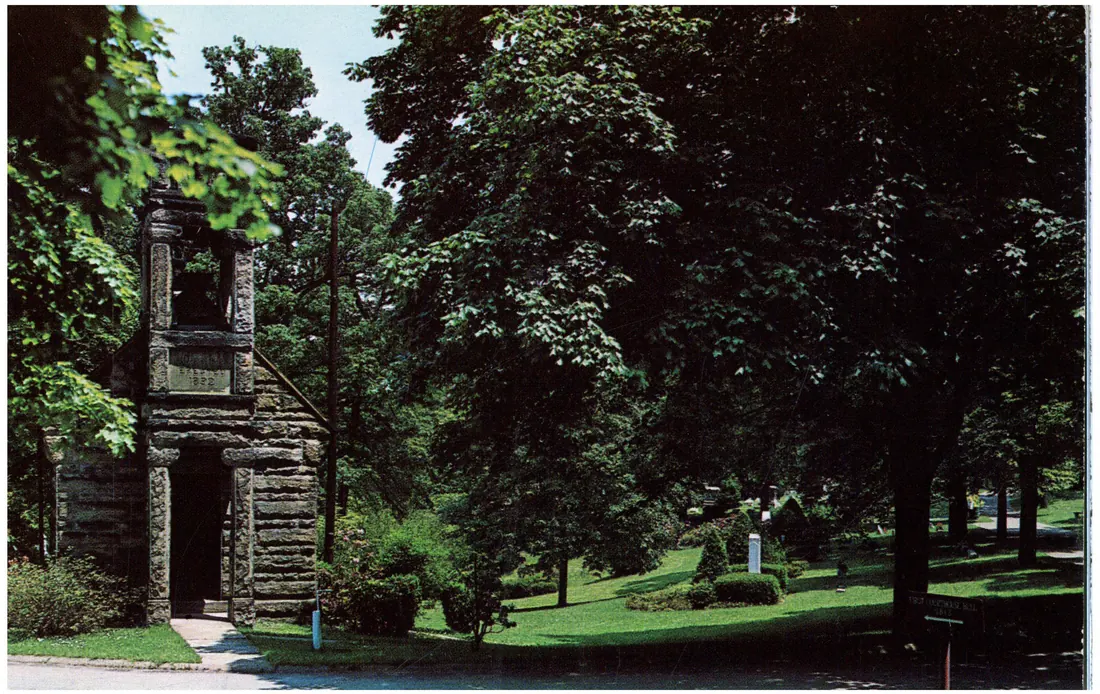
- His grave, in Union Cemetery, Steubenville, Ohio, had no headstone. Oberlin’s Observer: the stone was “set up over the previously unmarked grave of Oberlin alumnus Moses Fleetwood Walker.” SABR: “He was buried, in a grave unmarked until 1991, at Union Cemetery in Steubenville, Ohio.” 517
- Decades later, his old college’s alumni gave him one: Oberlin’s Heisman Club, in November 1990. Oberlin’s Observer: “The Heisman Club--an alumni support group for athletics”; “The club donated the headstone”; the stone reads in part “First black major league baseball player in USA.” The Toledo Blade: “In 1990 … the Oberlin Heisman Club paid for a headstone for his previously unmarked grave.” 57
- Today a marker in Toledo says what history forgot: he was the first. Ohio Historical Marker 47-48 (2003), outside the Mud Hens’ ballpark, Fifth Third Field, says he “became the first African American major league ballplayer when Toledo joined the Major League-sanctioned American Association” (photo, 2024). Lemelson-MIT: “The minor league Toledo Mud Hens have posted a historical marker outside their ballpark chronicling Walker’s career.” 96
- He also patented inventions: an artillery shell in 1891, and three devices for changing movie reels. Lemelson-MIT: “In 1891, Walker designed and patented an outer casing for an artillery shell”; “In total, he received four patents.” SABR: “he patented three inventions for improving the changing of movie reels. Coupled with an earlier patent for an exploding artillery shell.” 618
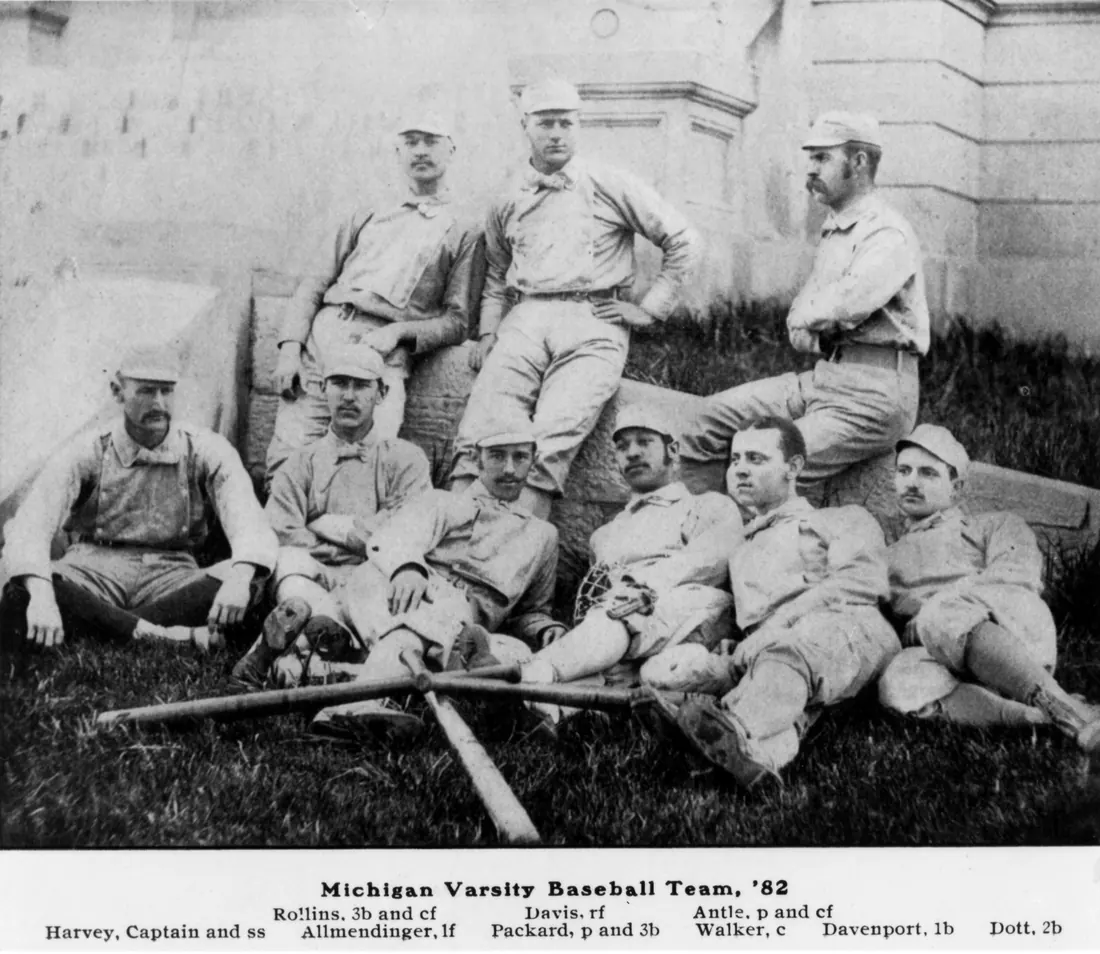
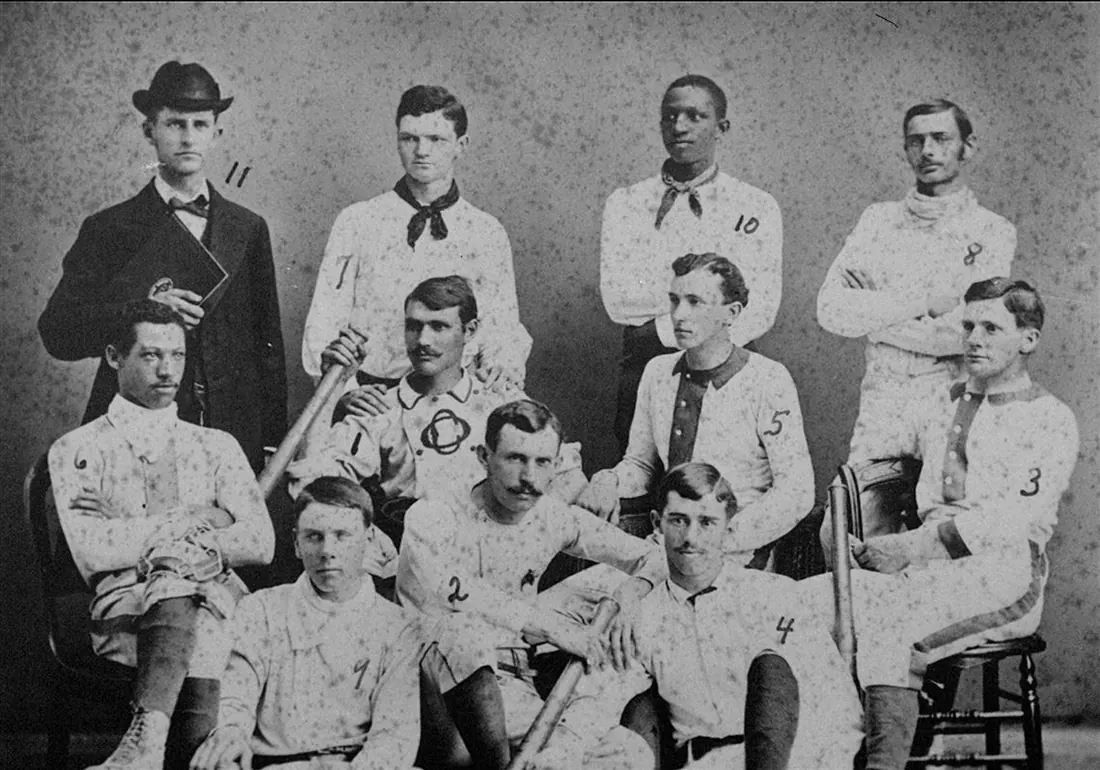
- He studied at Oberlin College and the University of Michigan. Wikipedia: he was “a star athlete at Oberlin College as well as the University of Michigan.” 315
Sources
- Moses Fleetwood Walker (SABR biography by John R. Husman) Society for American Baseball Research
- Out at Home: Baseball Draws the Color Line, 1887 (Jerry Malloy, The National Pastime, 1983) Society for American Baseball Research
- Moses Fleetwood Walker Wikipedia
- 6 Decades Before Jackie Robinson, This Man Broke Baseball’s Color Barrier History.com
- Alumnus was first black major leaguer (John Appley, The Observer, November 7, 1990) Oberlin College Archives
- Moses Fleetwood Walker Lemelson-MIT
- Bill aims to honor groundbreaking Toledo player (February 23, 2014) The Toledo Blade
- Moses Fleetwood Walker: A Depiction of his Notable and Innovative Inventions Oberlin Heritage Center
- Historical marker about Moses Fleetwood Walker, Toledo (photo by Chris Rycroft, 2024) Wikimedia Commons
Notes
“First”: William Edward White played one game for Providence in 1879 but lived as a white man (Wikipedia, SABR). We say Walker was the first to play in the majors openly as a Black man. His brother Weldy also played for Toledo in July 1884 (five or six games; sources differ), after Fleet’s debut.
63 or 64 years: SABR, History.com and Oberlin’s 1990 article say 63 (1884 to 1947); Malloy’s 1983 essay says 64. We use 63.
The headstone’s year: 1990 (Oberlin’s Observer, November 7, 1990, and the Toledo Blade) or 1991 (SABR). We say “decades later.” The Blade’s “76 years later” is its own arithmetic slip: 1924 to 1990 is 66.
Mullane’s words were reported decades later (New York Age, 1919), and the two transcriptions differ slightly, so we paraphrase them and quote nothing.
The injury: History.com says a broken rib; SABR and Wikipedia say injuries. We say injuries.
Cap Anson was the Chicago White Stockings’ captain and biggest name. In 1883 he threatened not to play against Walker but played; in 1887 (and again in 1888) Walker was held out at his demand. We use the 1887 refusal, the same day as the league vote.
“His league” in 1887 was the International League, where he played for the Newark Little Giants: a minor league, not the majors.
“His old college’s alumni”: Oberlin’s Heisman Club, an alumni support group for athletics, donated the stone, and Oberlin’s athletic director delivered it.
Left out, as true but not needed for this story: his 1891 acquittal for killing a man in a street fight in Syracuse (self-defense, by an all-white jury), and his 1898 mail-robbery conviction (SABR, Wikipedia).
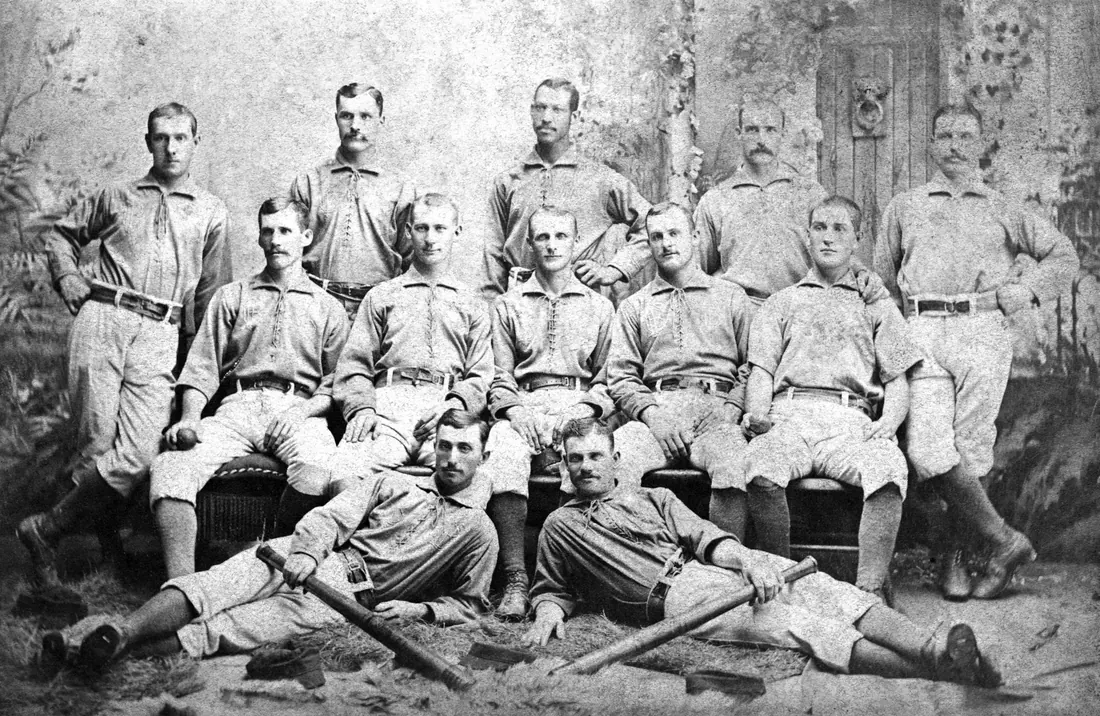
Pictures: the portrait shows Walker in a Toledo uniform, about 1883–84. The Toledo team photo is from 1883, the season before the club joined the American Association; the Michigan (1882) and Oberlin (1881) photos show his college teams, and the Syracuse photo is his International League club of 1888, the year after the vote. Tony Mullane and Cap Anson are shown on Old Judge cigarette cards. The cemetery postcard shows the cemetery where he is buried, not his own grave.
Photo credits
The archive photos in this story
The photographs and illustrations in this story are in the public domain or shared under open licenses; each one is credited below with its license. Tap one to enlarge it, or follow the link to its Wikimedia Commons page for the full record. The narration, music, captions and graphics in the Short are our own.