
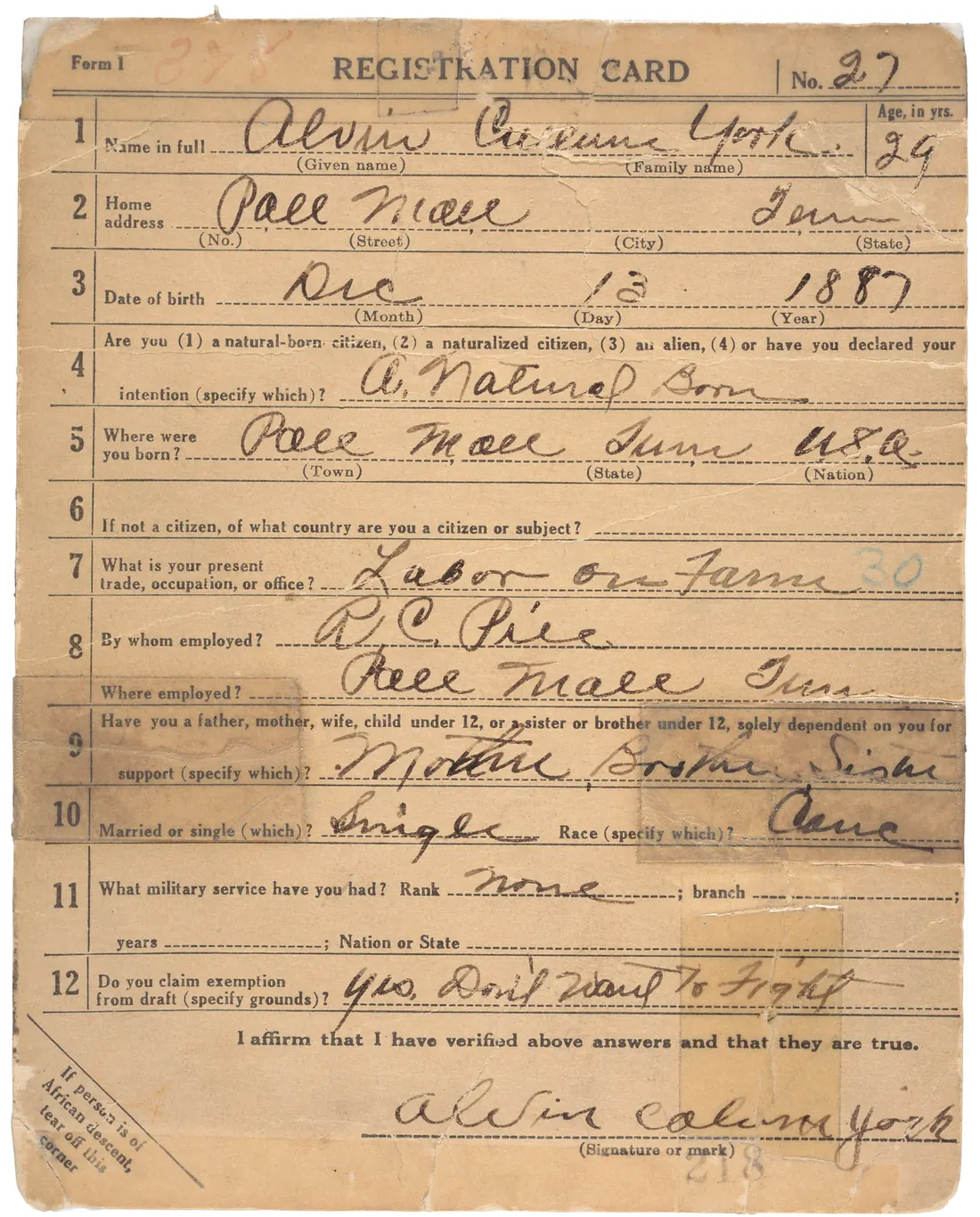
Alvin York was a farmer from the mountains of north Tennessee, born in Pall Mall, Fentress County. On June 5, 1917, his draft card asked, “Do you claim exemption from draft (specify grounds)?” He wrote: “Don’t want to fight.” His church forbade violence, and he asked to be excused for his faith. The local and state boards turned him down, because his church was not recognized as a legitimate Christian sect.
His company commander, Capt. Edward Danforth, and his battalion commander, Maj. G. Edward Buxton, talked with him at length, and the Bible passages Danforth cited persuaded him to reconsider. After a 10-day leave he came back “convinced that God meant him to fight.” On October 8, 1918, in the Meuse-Argonne offensive, his patrol of 17 men under Acting Sgt. Bernard Early worked its way behind the German lines near Hill 223. Then German machine guns opened up, killing six Americans and wounding three others.
York, a crack shot, picked off the gunners one by one. A German officer, 1st Lt. Paul Jürgen Vollmer, emptied his pistol at him and missed, then offered in English to surrender his unit, and York accepted. York and his seven men marched 132 prisoners back to the American lines, by the Army’s count, and the Army credited him with putting 35 machine gun nests out of commission. In April 1919 he was awarded the Medal of Honor.
He turned down many offers, reportedly including $30,000 to appear in vaudeville. Instead he raised money to build a proper high school for the rural children around his home, and mortgaged his farm, twice. The York Agricultural Institute was founded in 1926, and it is still Jamestown’s high school. York himself had only finished the third grade, in a one-room school.
Fact check
The facts and where they come from
- He didn’t want to fight. On his draft card (June 5, 1917), asked “Do you claim exemption from draft (specify grounds)?”, he wrote “Yes. Don’t Want To Fight.” (Wikipedia’s transcription). The card itself reads “yes, Don’t want to fight”; the Tennessee Encyclopedia gives “Dont [sic] want to fight.” 523
- He captured 132 men, by the Army’s record. His Medal of Honor citation (via Wikipedia): “the machinegun nest was taken, together with 4 officers and 128 men,” 132 in all. Wikipedia: “capturing 132 prisoners.” 12
- A Tennessee mountain farmer: he was born in Pall Mall, Fentress County, and his parents farmed (Wikipedia). NPR calls him “the Tennessee farmer” whose home was “in the mountains of north Tennessee.” 24
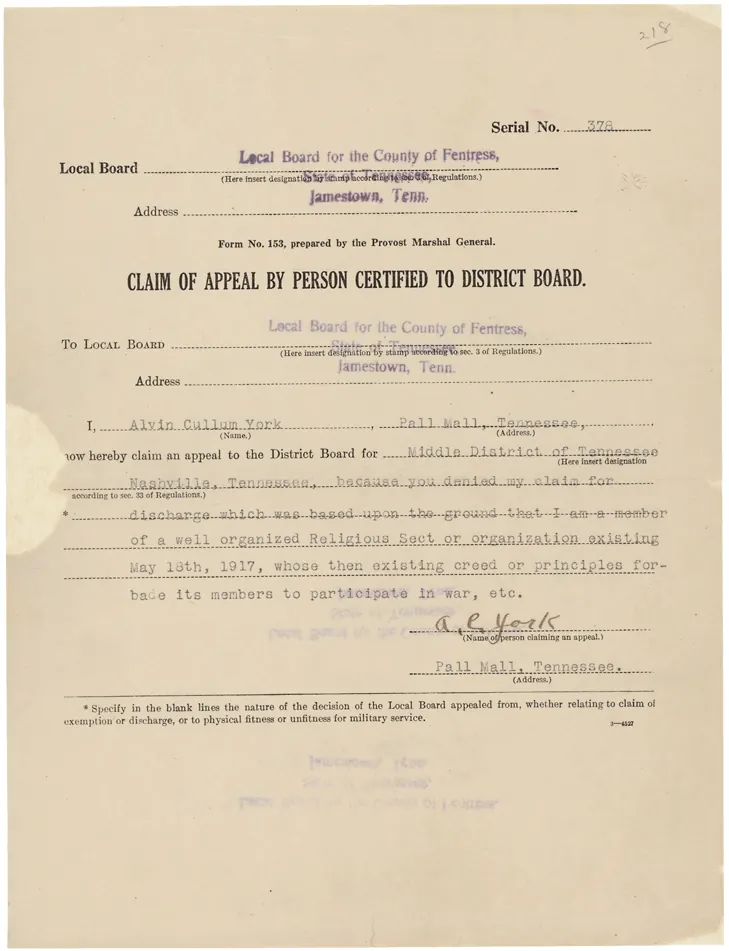
- He asked to be excused for his faith. Wikipedia: he “initially claimed conscientious objector status on the grounds that his religious denomination forbade violence.” His claim of appeal says his claim for discharge rested on his membership in a religious sect “whose then existing creed or principles forbade its members to participate in war.” 26
- The draft boards refused. Tennessee Encyclopedia: “local and state review boards denied his case because the church was not recognized as a legitimate Christian sect.” Wikipedia: “When his initial claim for conscientious objector status was denied, he appealed.” His claim of appeal: “because you denied my claim.” 326
- His officers used the Bible to change his mind. His company commander, Capt. Edward Danforth, and his battalion commander, Maj. G. Edward Buxton, talked with him at length; the Bible passages Danforth cited “persuaded York to reconsider,” and after a 10-day leave he returned “convinced that God meant him to fight” (Wikipedia). The Tennessee Encyclopedia also names Buxton. 23
- On October 8, 1918, his patrol slipped behind German lines: 17 men under Acting Sgt. Bernard Early “worked their way behind the Germans,” in the Meuse-Argonne offensive near Hill 223 and Châtel-Chéhéry (Wikipedia). US Army: “Ordered to take Hills 223 and 240 on October 8.” 21
- Machine guns opened up, killing six Americans. Wikipedia: “German machine gun fire suddenly peppered the area, killing six Americans and wounding three others.” 2
- York, a crack shot, picked off the gunners one by one. Wikipedia calls him “a crack shot”; the US Army says York “touched them off” one by one. 21
- A German officer emptied his pistol at him, and missed. US Army: “the German officer had emptied his pistol firing at, but not harming, Corporal York.” Wikipedia names the officer as 1st Lt. Paul Jürgen Vollmer. 12
- Then he surrendered his whole unit. Wikipedia: Vollmer “offered in English to surrender the unit to York, who accepted.” 2
- York and seven men marched 132 prisoners back. US Army: “Corporal York and his band of seven men marched 132 prisoners back to the American side.” Wikipedia: “York and his seven men marched their German prisoners back to the American lines.” 12
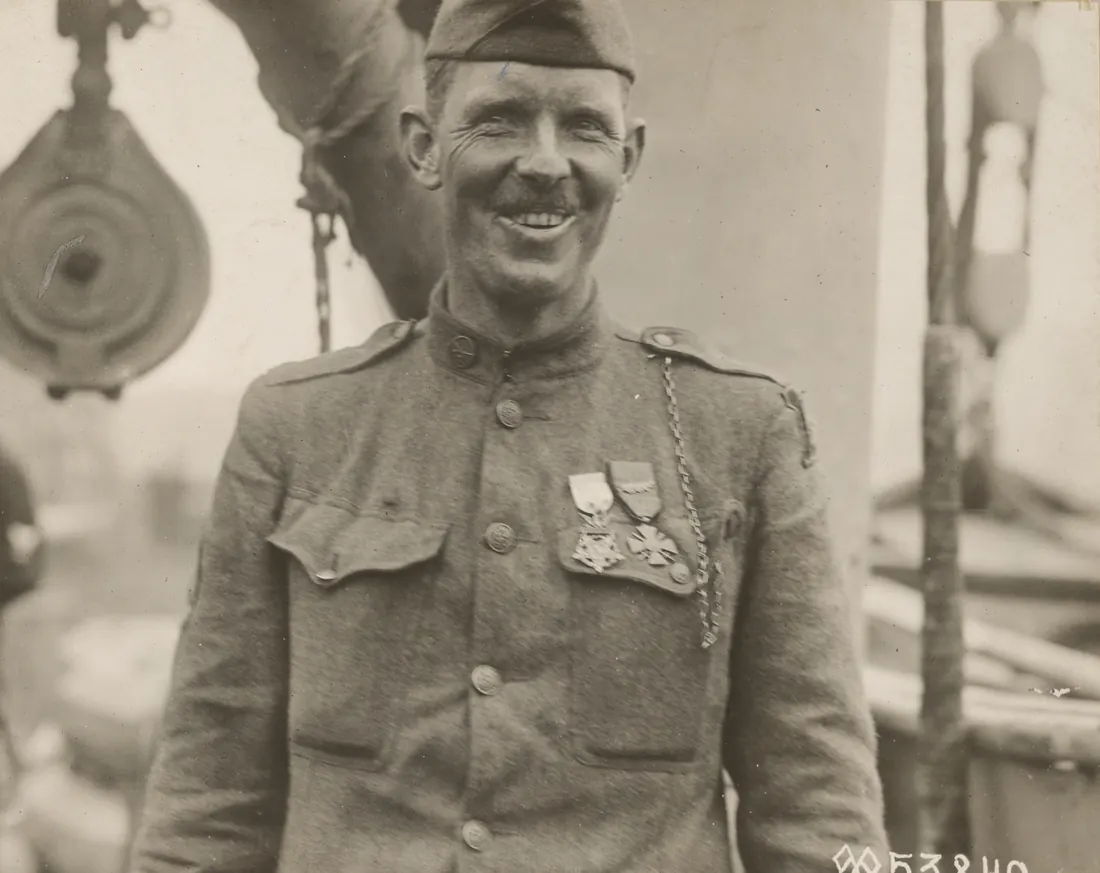
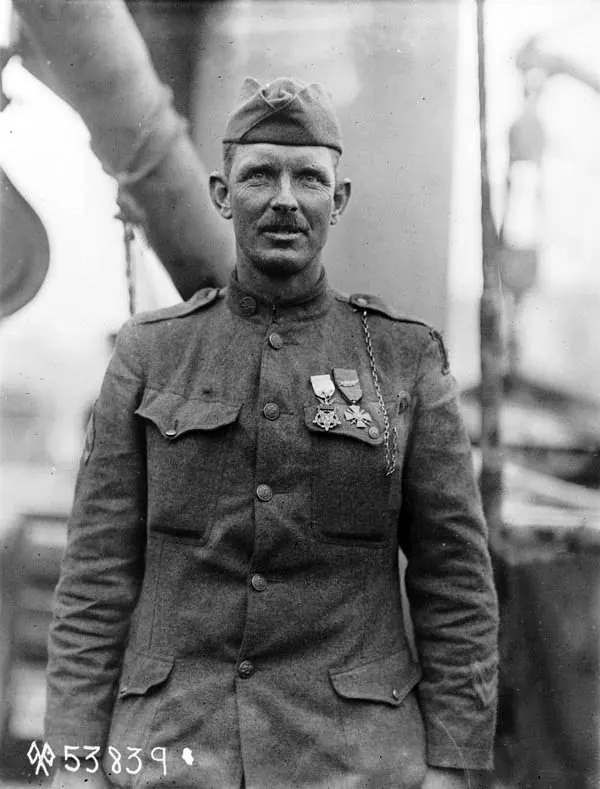
- He came home with the Medal of Honor. US Army: “In April 1919, Alvin C York was awarded the Congressional Medal of Honor.” He returned from the war in May 1919; Signal Corps photos show him on the Ohioan in New York on May 22, 1919 (Wikipedia). 12
- He turned down fortunes, reportedly even $30,000 to go on stage. Wikipedia, citing an Underwood & Underwood press photo caption of June 7, 1919: “York turned down many lucrative offers, including one worth $30,000 … to appear in vaudeville.” NPR: “He had turned down all the celebrity deals, even vaudeville.” Tennessee Encyclopedia: he “turned his back on quick and certain fortune offered by Hollywood, Broadway, and various advertisers.” The figure rests on that one 1919 caption, so we say “reportedly.” 243
- Instead, he mortgaged his farm to build a school for mountain kids. NPR: he “did start raising money to build a proper high school. He even mortgaged his farm, twice. He finished building and staffing the school in 1926,” for “the kids around here, in the rural areas.” Wikipedia: the York Agricultural Institute, “founded in 1926.” 42
- He had barely been to school himself. NPR: “York had only finished the third grade in a one-room school.” Wikipedia: “The York sons attended school for only nine months.” 42
- The Army credited him with putting 35 machine gun nests out of commission. US Army (photo caption): “putting 35 machine gun nests out of commission on 8 October 1918.” Wikipedia: “gathering 35 machine guns.” 12
- The York Institute is still Jamestown’s high school. Wikipedia: it was “founded in 1926 as an agricultural high school by York and residents of Fentress County, and it continues to serve as Jamestown’s high school.” NPR (2015): “The York Institute is now in its 89th year, with close to 600 students enrolled.” 24
Sources
- A Reluctant Hero (Stephen M. Bye, US Army Military History Institute, September 17, 2007) US Army (army.mil)
- Alvin York Wikipedia
- York, Alvin Cullom Tennessee Encyclopedia
- Remembering Sgt. York, A War Hero Who Built A School (November 11, 2015) NPR
- World War I draft registration card for Alvin C. York, June 5, 1917 (National Archives 596217) Wikimedia Commons
- Conscientious objector claim of appeal for Alvin Cullum York, 1917 (US Army records, National Archives) Wikimedia Commons
Notes
132 prisoners and 35 machine guns are the US Army’s figures. A 1929 German Reichsarchiv study, summarized by Wikipedia, found records of only 79 prisoners lost in that sector and fewer than 35 machine guns present, while agreeing that York was “a brave and fearless soldier.” We give 132 as the Army’s record and the count in his Medal of Honor citation (4 officers and 128 men), and the 35 guns as what the Army credited him with.
How many Americans died: Wikipedia (and York’s own account) say six killed and three wounded. The Tennessee Encyclopedia says “the deaths of nine Americans,” and the Sergeant York site (sgtyork.org) says “wounding or killing nine Americans.” We say six killed.
His part in the fight: later research (James P. Gregory, The Other Sixteen, 2022) argues that the other survivors of the patrol deserve more credit. We keep to the Army’s account: York and seven men. The Army also credits him with killing 25 Germans, later 28; we leave that number out.
“Conscientious objector”: he signed an exemption claim and an appeal, but later “disclaimed ever having been a conscientious objector” (Wikipedia). We say only that he asked to be excused for his faith and was refused.
The $30,000 rests on one 1919 press caption (via Wikipedia), so we say “reportedly.” NPR and the Tennessee Encyclopedia confirm that he turned down vaudeville and other fortunes, without giving a figure.
Left out: Gen. Lindsey’s “whole German army” exchange with York, a well-known retelling that only Wikipedia gives here. NPR dates the fight October 18, 1918, a typo; every other source says October 8.
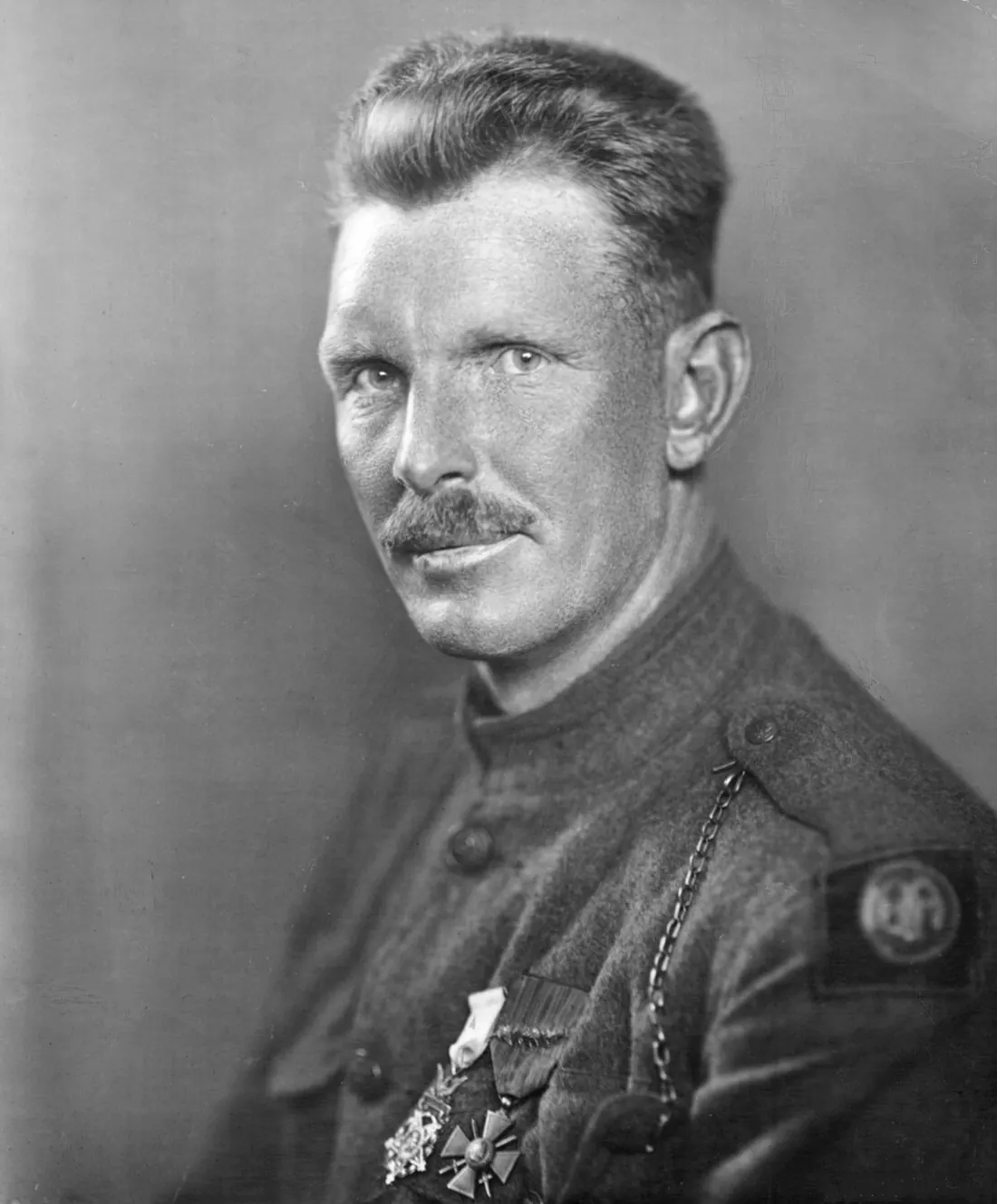
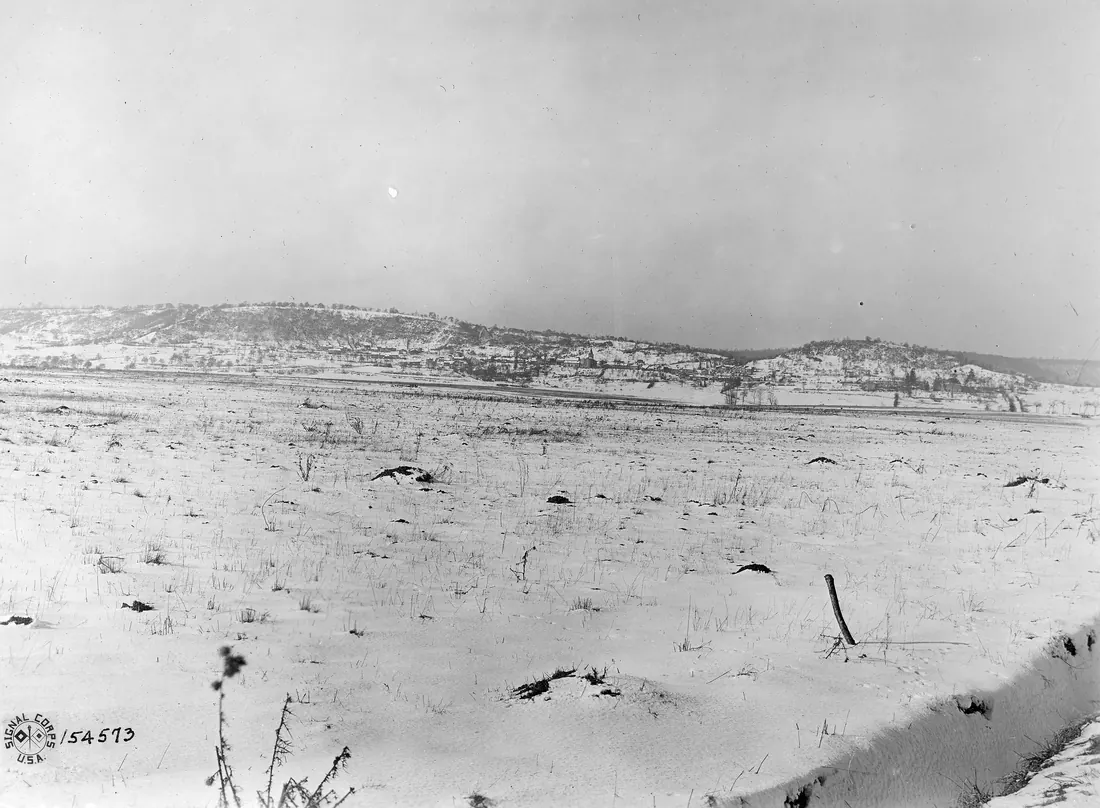
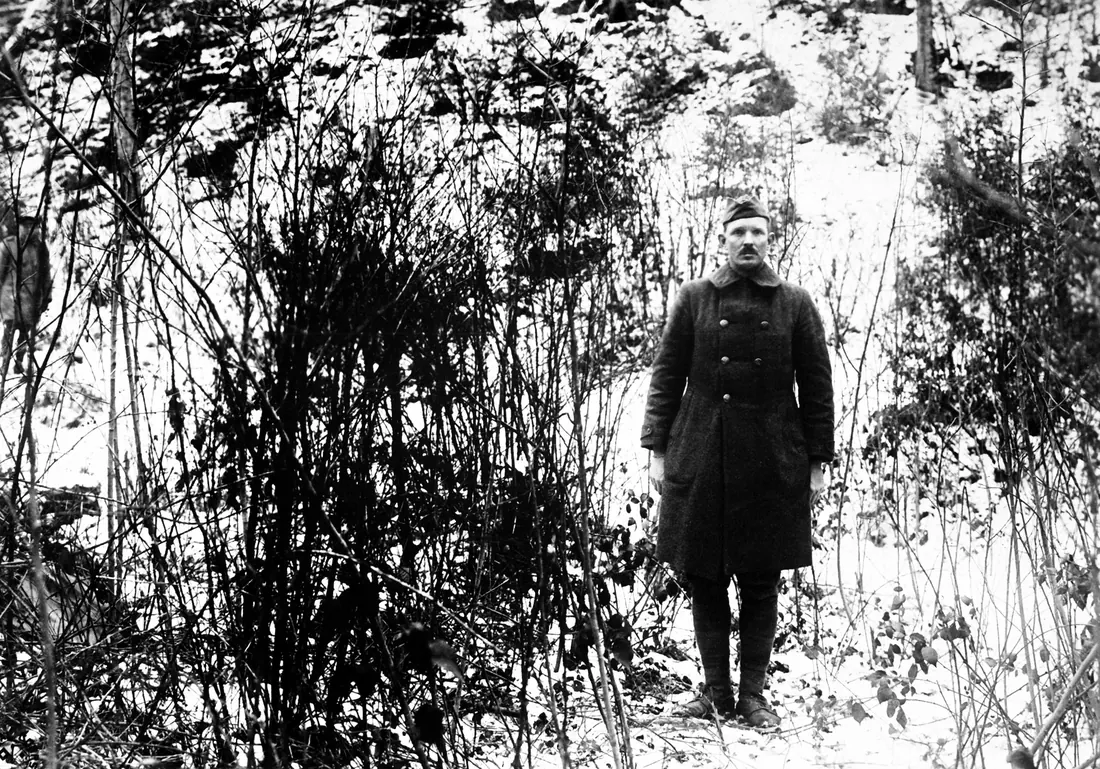
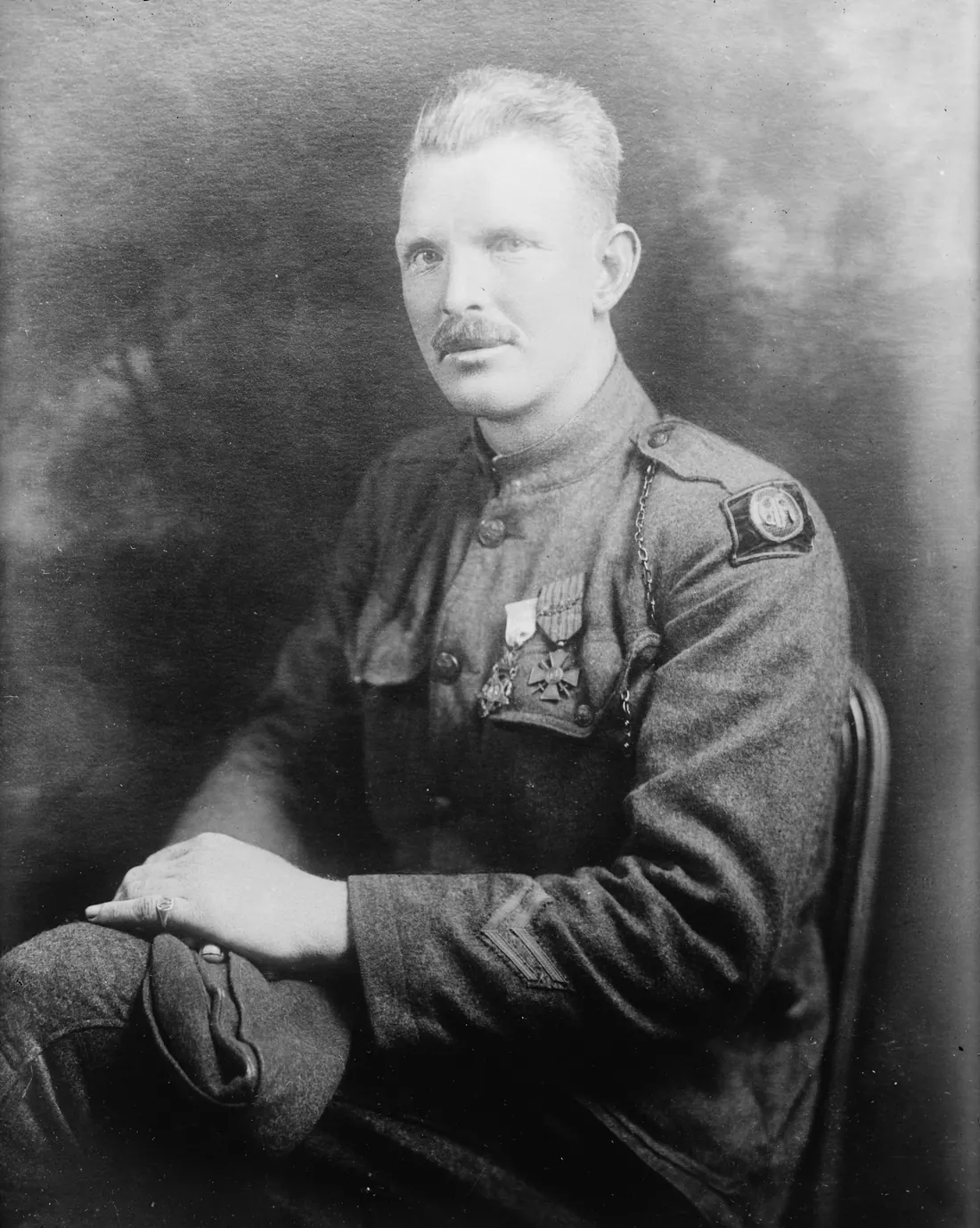
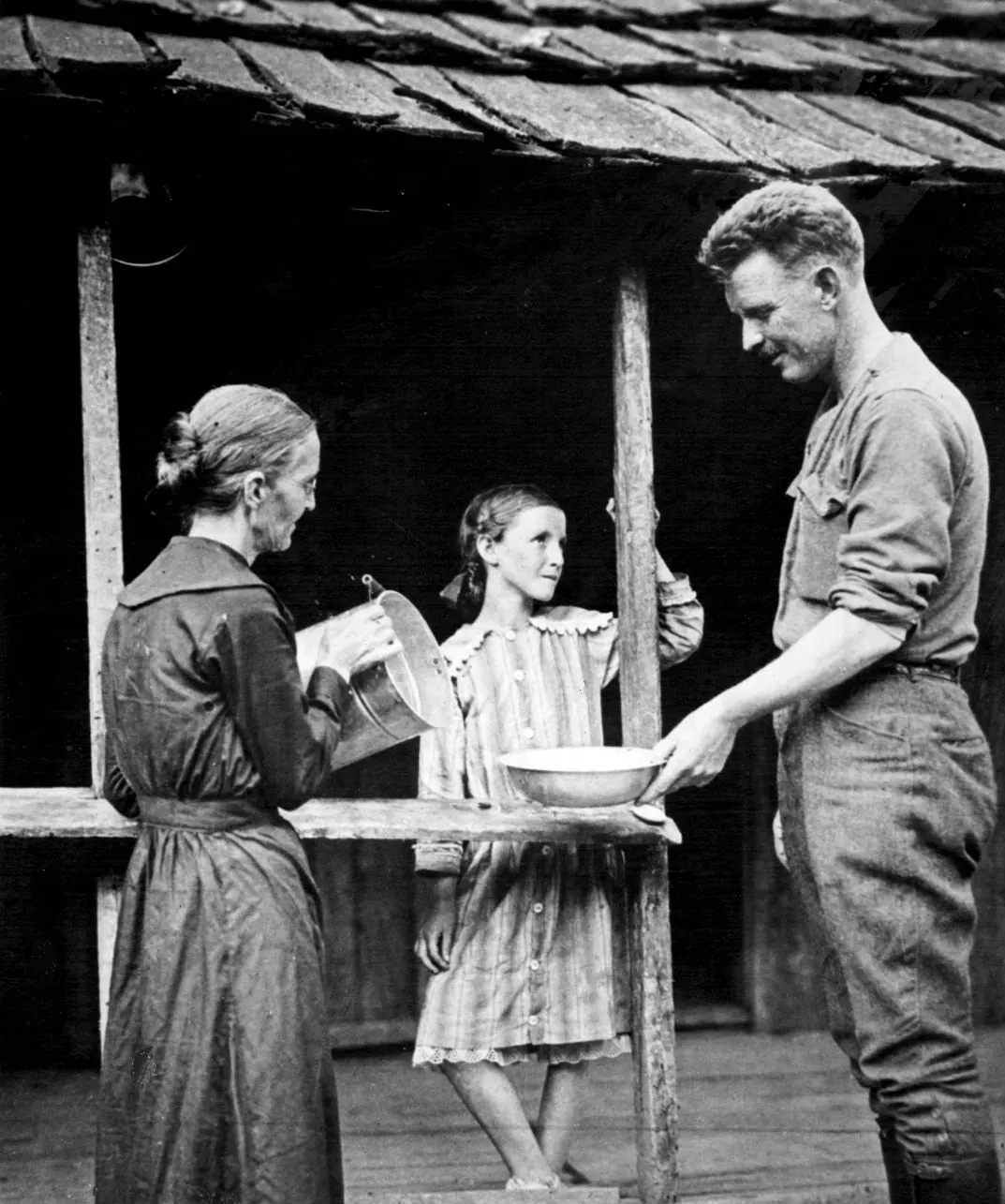
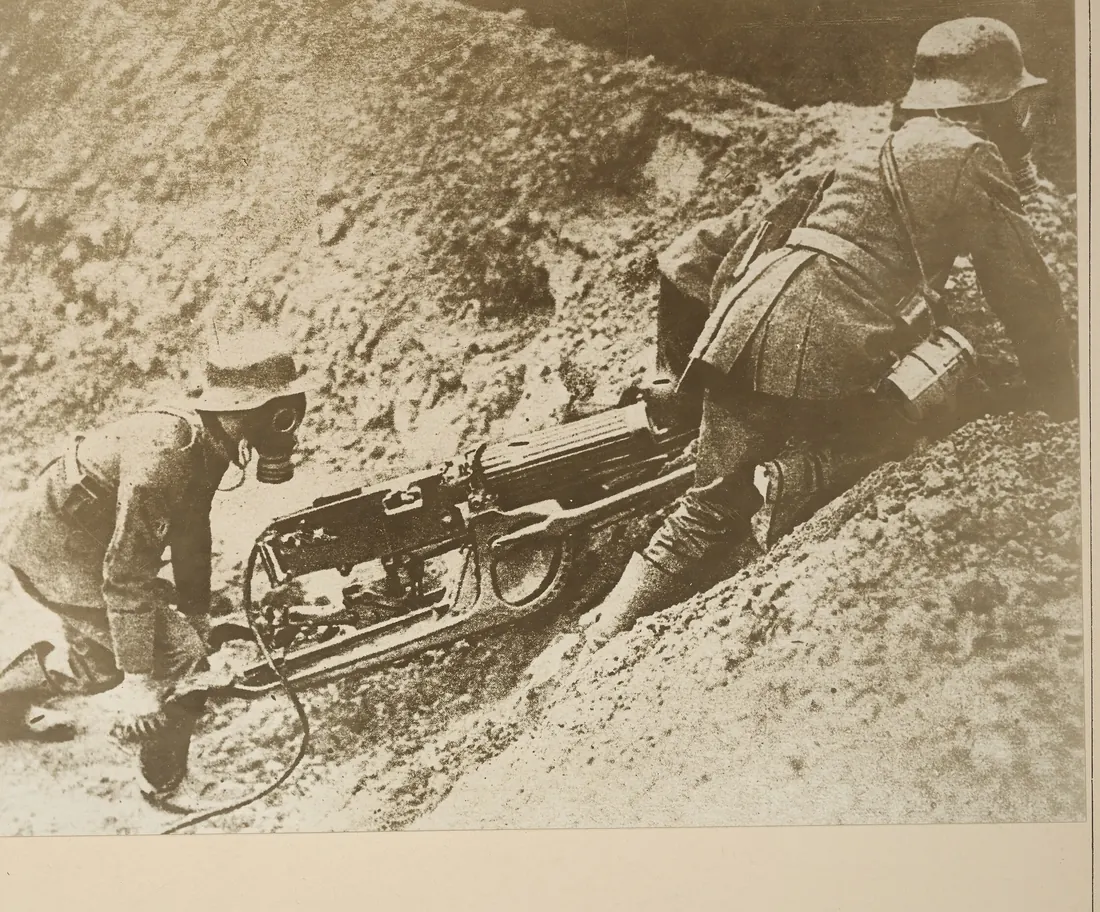
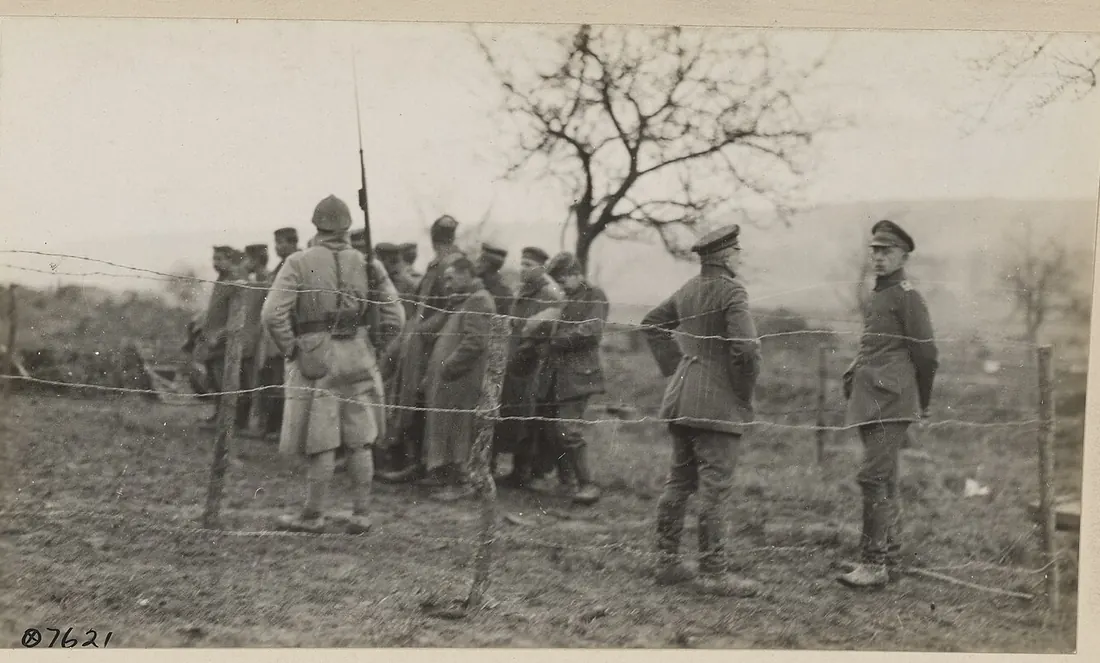
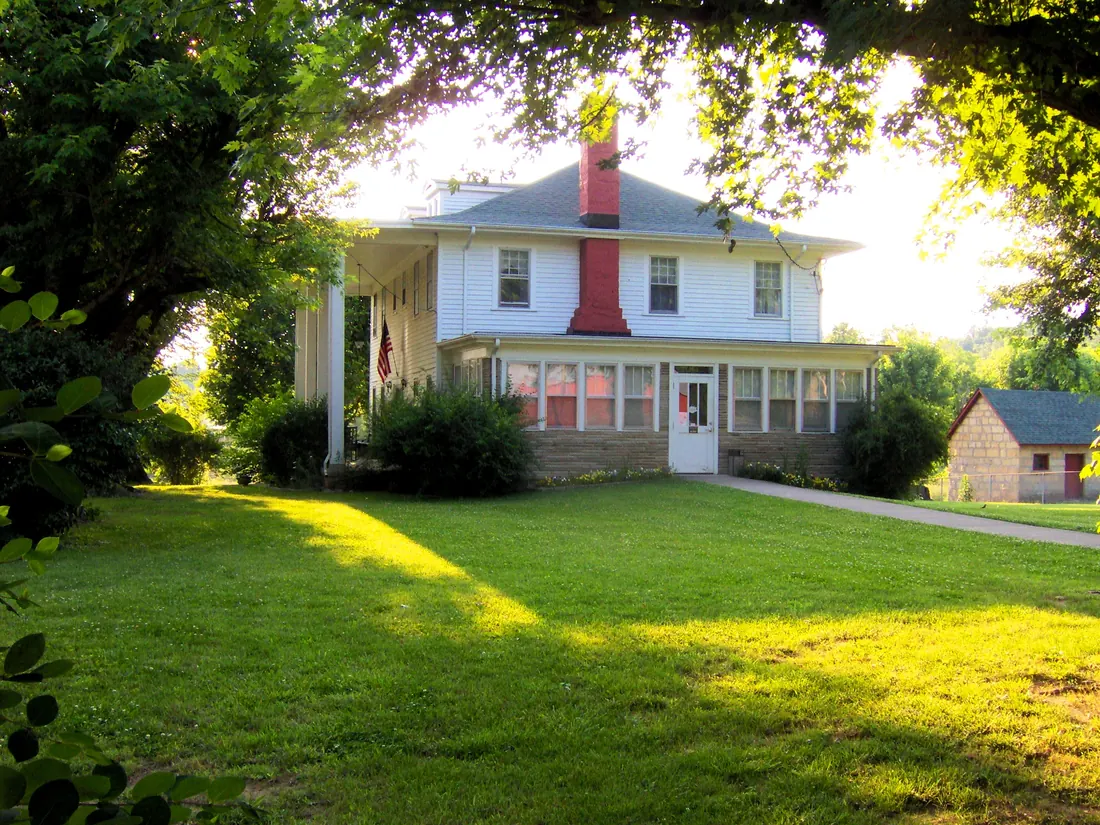
Pictures: York himself is in the 1919 portraits, at the hill where he fought (February 7, 1919), on the Ohioan in New York (May 22, 1919) and home in Tennessee with his mother and sister (June 1919). His draft card and his claim of appeal are the real documents. The German machine gunners and the German prisoners are from other 1918 photos, not the men York faced. The Hill 223 photo shows his regiment’s line of advance. His farmhouse (photographed in 2009) and the York Institute’s old building (2010) are modern photos.
Photo credits
The archive photos in this story
The photographs and illustrations in this story are in the public domain or shared under open licenses; each one is credited below with its license. Tap one to enlarge it, or follow the link to its Wikimedia Commons page for the full record. The narration, captions and graphics in the Short are our own; its music and sound effects are credited below.

Music and sound effects
Music: Brahms, Tragic Overture, Op. 81 (Musopen Symphony Orchestra, CC0); Dvorak, Goin' Home (US Air Force Band, Concert Band, public domain, US government work).
Sound effects: Freesound, CC0.


































































