
Mary Seacole was born Mary Jane Grant in Kingston, Jamaica, on November 23, 1805. Her mother, a healer who used traditional Caribbean and African herbal medicines, taught Mary many of her skills. Seacole nursed patients through the cholera epidemic of 1850 in Jamaica, and in Cruces, Panama, in 1851 she was on hand to treat the first victim.
In 1854, British soldiers in the Crimea were dying of cholera. Late that year Seacole traveled to London to volunteer as an Army nurse. She made, in her own words, “long and unwearied application at the War Office,” and was turned away. Her offer to join Florence Nightingale’s team of nurses was turned down too: she was told that “the full complement of nurses had been secured,” and one of Miss Nightingale’s companions gave her “the same reply.” She wondered whether the ladies had refused her “because my blood flowed beneath a somewhat duskier skin than theirs,” and as she stood in the street, tears streamed down her cheeks.
“Let what might happen, to the Crimea I would go,” she wrote, “upon my own responsibility and at my own cost.” She sailed on the Hollander on January 27, 1855, at 49. At Spring Hill, about three and a half miles from Balaclava, she and her partner, Thomas Day, set up the British Hotel, built from salvaged driftwood, packing cases, iron sheets, glass doors and window frames. There she served meals to the troops and nursed casualties from the trenches around Sevastopol, and she often rode out to the fighting with a large bag slung across her shoulder, carrying “lint, bandages, needles, thread, and medicines.” When a shot or a shell came over, she wrote, “those around would cry out, ‘Lie down, mother, lie down!’”
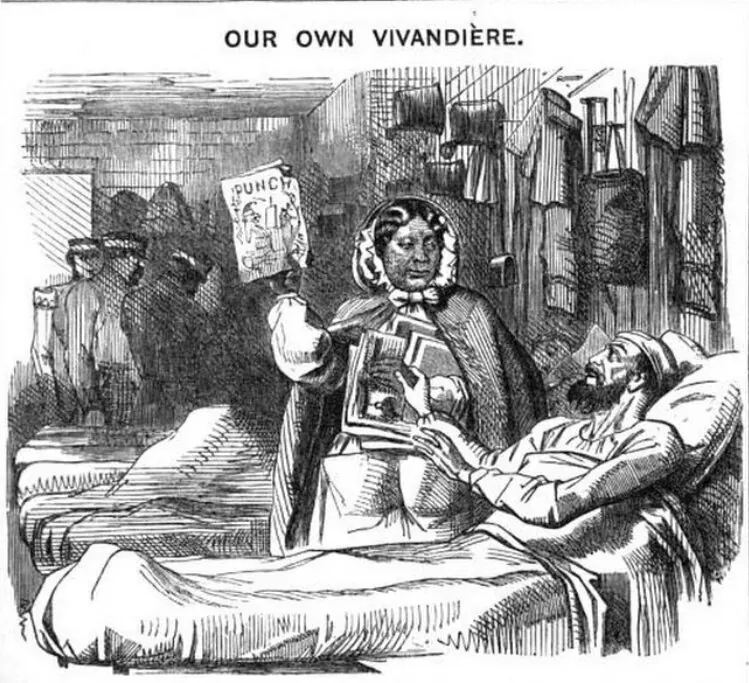
After the war she was declared bankrupt, on November 7, 1856. Soldiers, generals and members of the royal family came to her aid, and both The Times and Punch organized appeals to pay off her debts. In July 1857, the month her book Wonderful Adventures of Mrs. Seacole in Many Lands came out, the Seacole Fund Grand Military Festival was held for her over four days at the Royal Surrey Gardens, with 11 military bands. In February 2004 the woman who had been turned away was voted the greatest Black Briton, in the online poll 100 Great Black Britons.
Fact check
The facts and where they come from
- She was refused as a war nurse, so she paid her own way to the war. National Army Museum: “Rejected by the War Office and Florence Nightingale, she paid her own passage to the war.” Mary Seacole Trust: “Mary travelled to England and approached the British War Office, asking to be sent as an army nurse to the Crimea … She was refused.” London Museum: “Undeterred, Seacole funded her own trip to the Crimea in 1855.” 124
- Her name was Mary Seacole, a healer from Jamaica. She was born Mary Jane Grant on November 23, 1805, in Kingston, Jamaica (Wikipedia). Her mother “was a healer who used traditional Caribbean and African herbal medicines” (Wikipedia). Mary Seacole Trust: “she was also a healer and taught Mary many of her skills using traditional Jamaican medicines.” 72
- In 1854, British soldiers in the Crimea were dying of cholera. Wikipedia (Crimean War): “The Allied lines, beginning to suffer from cholera as early as September.” Wikipedia (Mary Seacole): “disease broke out almost immediately. Hundreds perished, mostly from cholera.” 87
- She had treated cholera. Wikipedia: “She treated and nursed patients in the cholera epidemic of 1850” in Jamaica, and in Cruces, Panama, in 1851 “Seacole was on hand to treat the first victim.” 7
- She sailed to London to help. National Army Museum: “Mary Seacole had travelled to London late in 1854 to volunteer her services as an Army nurse.” Wikipedia: she “travelled from Navy Bay in Panama to England.” 17
- The War Office turned her away. Her own book: “So I made long and unwearied application at the War Office”; “my ridiculous endeavours to gain an interview with the Secretary-at-War of course failed.” London Museum: “her attempt to apply in-person at the War Office to serve as a war nurse was unsuccessful.” 34
- Florence Nightingale’s nurses said no too. London Museum: “As was her offer to join Florence Nightingale’s team of nurses.” Queen’s University Belfast: “after trying unsuccessfully to join Florence Nightingale’s group of nurses.” Her own book: “a message from Mrs. H. that the full complement of nurses had been secured, and that my offer could not be entertained,” then “an interview this time with one of Miss Nightingale’s companions. She gave me the same reply.” 453
- She cried in the street, wondering if it was her skin. Her own book: “Was it possible that American prejudices against colour had some root here? Did these ladies shrink from accepting my aid because my blood flowed beneath a somewhat duskier skin than theirs? Tears streamed down my foolish cheeks, as I stood in the fast thinning streets.” 3
- At almost 50, she went anyway, at her own cost. Born on November 23, 1805, she sailed on the Hollander on January 27, 1855 (Wikipedia), at 49. Her own book: “Let what might happen, to the Crimea I would go. If in no other way, then would I upon my own responsibility and at my own cost.” Queen’s University Belfast adds that she “borrowed money to fund herself.” 735
- Near Balaclava, she built the British Hotel from scrap. Wikipedia: “The hotel was built from the salvaged driftwood, packing cases, iron sheets, and salvaged architectural items such as glass doors and window-frames,” at Spring Hill near Kadikoi, about 3½ miles from Balaclava; it opened in March 1855. London Museum: she and Thomas Day “set up the so-called British Hotel near where fighting had been in Balaclava.” 74
- There she fed the troops and nursed the sick. Wikipedia: “Meals were served at the hotel”; she was “nursing casualties brought out from the trenches around Sevastopol or from the Tchernaya valley.” Mary Seacole Trust: “The hotel provided a place of respite for sick and recovering soldiers.” 72
- She rode out to the fighting with a bag of bandages. Her own book (June 18, 1855): “the large bag, which I always carried into the field slung across my shoulder, with lint, bandages, needles, thread, and medicines”; “I leading the way on horseback.” National Army Museum: “she frequently rode out to dispense medicine and food to those in need.” 31
- When shells flew, soldiers shouted, “Lie down, mother, lie down!” Her own book: “More frequently than was agreeable, a shot would come ploughing up the ground and raising clouds of dust, or a shell whizz above us. Upon these occasions those around would cry out, ‘Lie down, mother, lie down!’” National Army Museum: “She was often on the front line and frequently under fire.” Mary Seacole Trust: “Mary was able to visit the battlefield, sometimes under fire.” 312
- But after the war, she went bankrupt. Wikipedia: “The Bankruptcy Court in Basinghall Street declared her bankrupt on 7 November 1856.” London Museum: “Soon after Seacole returned to England, she was declared bankrupt.” 74
- So soldiers and newspapers raised money for her. Mary Seacole Trust: “All those who admired her came to her aid, whether soldiers, generals or members of the Royal family. In 1857 a fund-raising gala was held for her over four nights on the banks of the River Thames.” London Museum: “Both The Times and Punch magazine organised appeals to raise money to pay off her debts.” Wikipedia: the Seacole Fund Grand Military Festival, Royal Surrey Gardens, July 27–30, 1857, with 11 military bands, supported by Lord Rokeby and other officers. 247
- In 2004, the woman they turned away was voted the greatest Black Briton. Mary Seacole Trust: “In 2004, Mary was voted the Greatest Black Briton.” Wikipedia: “In 2004, she was voted into first place in an online poll of 100 Great Black Britons carried out by the website Every Generation.” Jamaica Observer (February 10, 2004): “Jamaican-born Mary Seacole was named the ‘Greatest Black Briton’ after topping the vote.” Queen’s University Belfast: “In February 2004 Seacole was voted the ‘greatest Black Briton’ in an internet survey.” 2765
- Her autobiography, Wonderful Adventures of Mrs. Seacole in Many Lands, came out in July 1857, published by James Blackwood (Wikipedia). 73
Sources
- Crimean War (section “Aiding the wounded”) National Army Museum
- Read Mary’s Story Mary Seacole Trust
- Wonderful Adventures of Mrs. Seacole in Many Lands (Mary Seacole, 1857), eBook #23031 Project Gutenberg
- Humanitarian, herbalist, ‘Mother’ to sons at war London Museum
- The life, and public memory, of Mary Seacole (1805-1881) Queen’s University Belfast Special Collections
- Jamaica’s Mary Seacole named greatest Black Briton (February 10, 2004) Jamaica Observer
- Mary Seacole Wikipedia
- Crimean War Wikipedia
Notes
Florence Nightingale herself had already left for Turkey (October 21, 1854, by Wikipedia) and never interviewed Seacole: the refusals came from her nursing team (“Mrs. H.” and one of Miss Nightingale’s companions, in Seacole’s words). Nightingale’s later private remarks about Seacole, and claims that Nightingale was hostile to her, are left out.
“Under fire”: this comes from Seacole’s own 1857 account, which the National Army Museum and the Mary Seacole Trust follow. The Florence Nightingale Society, in a letter to The Times quoted by Wikipedia, says she “was not a frequenter of the battlefield ‘under fire’.” We give the soldiers’ cry as her own account.
Why she was refused: her book wonders whether it was her color; other accounts point to her lack of formal training and to the nurses already having been chosen. We give it as her own question, not as a fact.
“She built” is the common short form: she set up the hotel with her partner, Thomas Day, and hired local labor (Wikipedia; the London Museum). It was completed in July 1855 and cost £800 (Wikipedia).
Her own way: Queen’s University Belfast adds that she borrowed the money. Wikipedia says she first came to England partly to see to her gold-mining investments; the National Army Museum says she came to volunteer as a nurse.
The festival crowd: “circa 40,000” (Wikipedia) or “Over 80,000 people” (Mary Seacole Trust). We give no number.
The 2004 vote was an online poll, 100 Great Black Britons, run by the website Every Generation, not a BBC or government vote.
Left out: her medals (they are not in the London Gazette, per Wikipedia) and the claim that she was the first woman into Sevastopol.
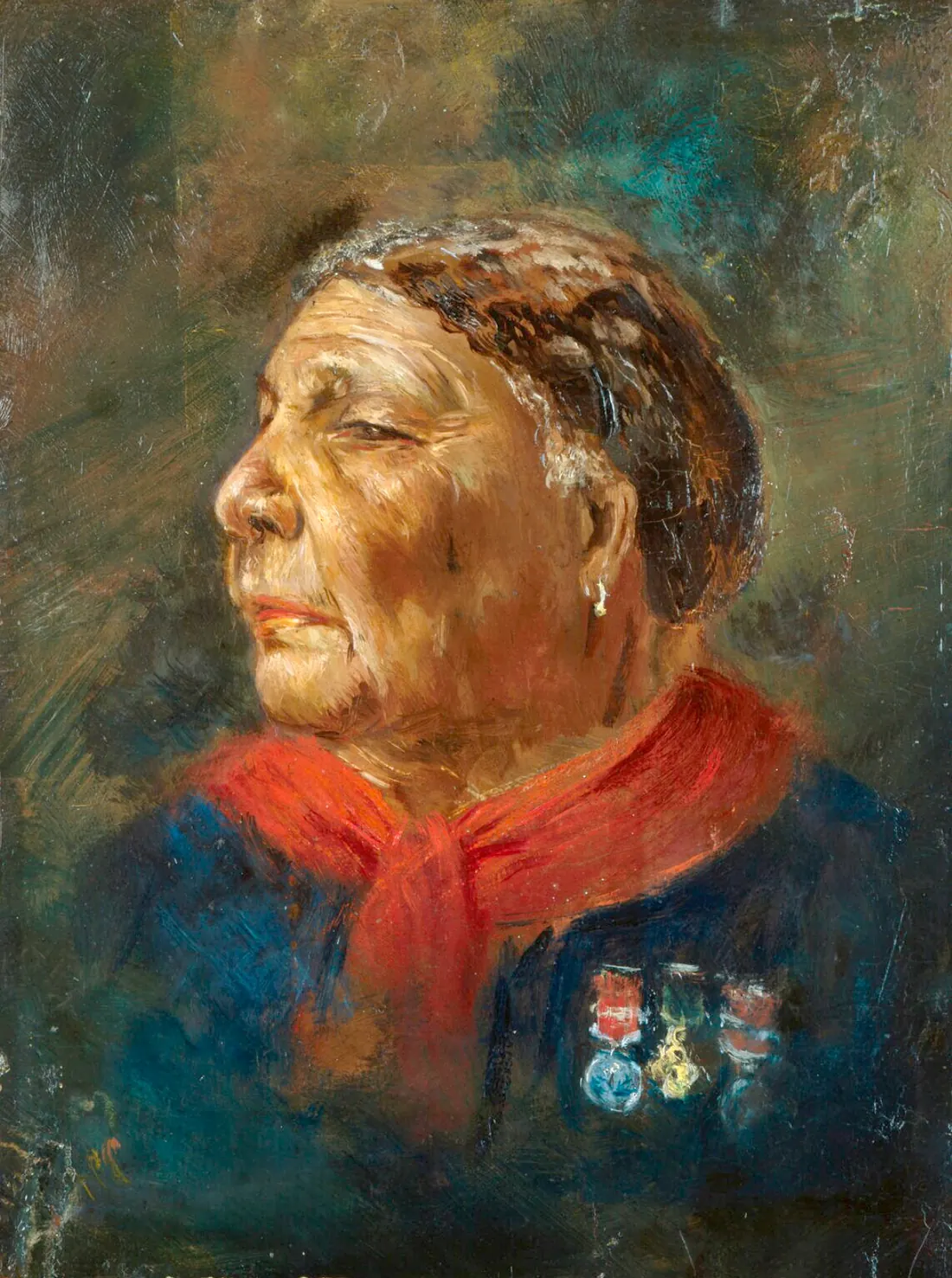
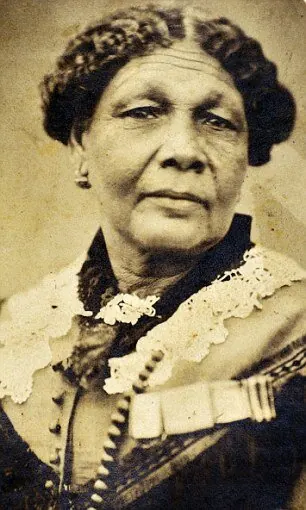
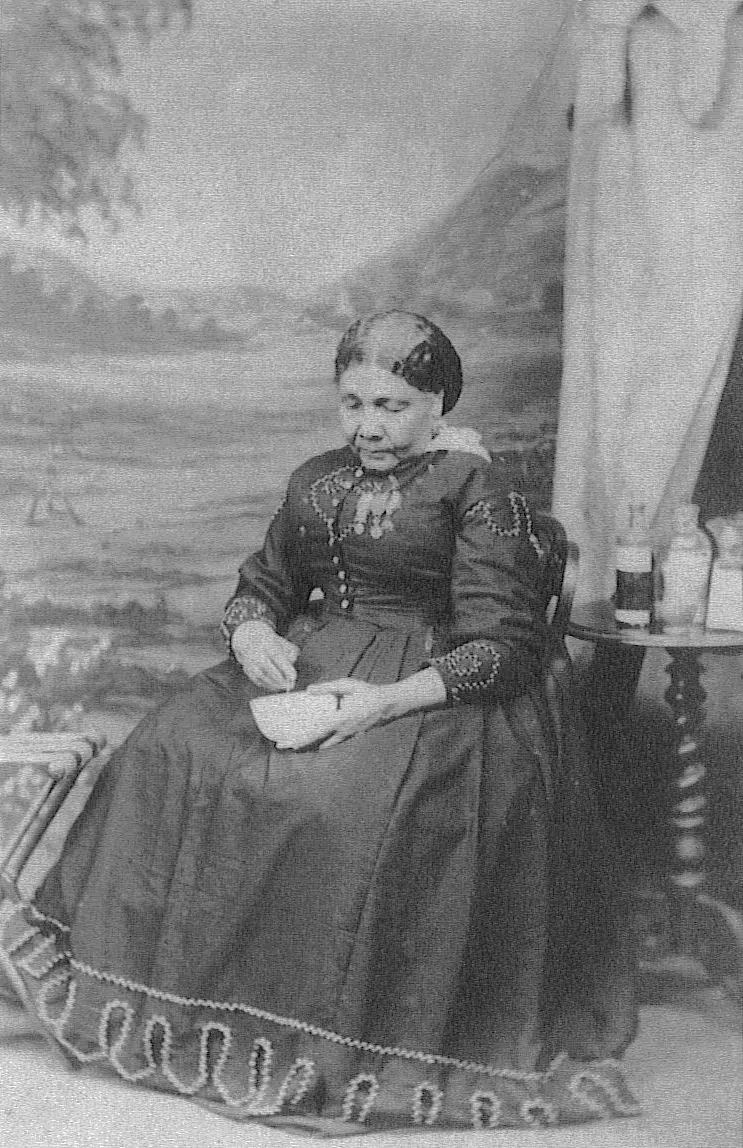
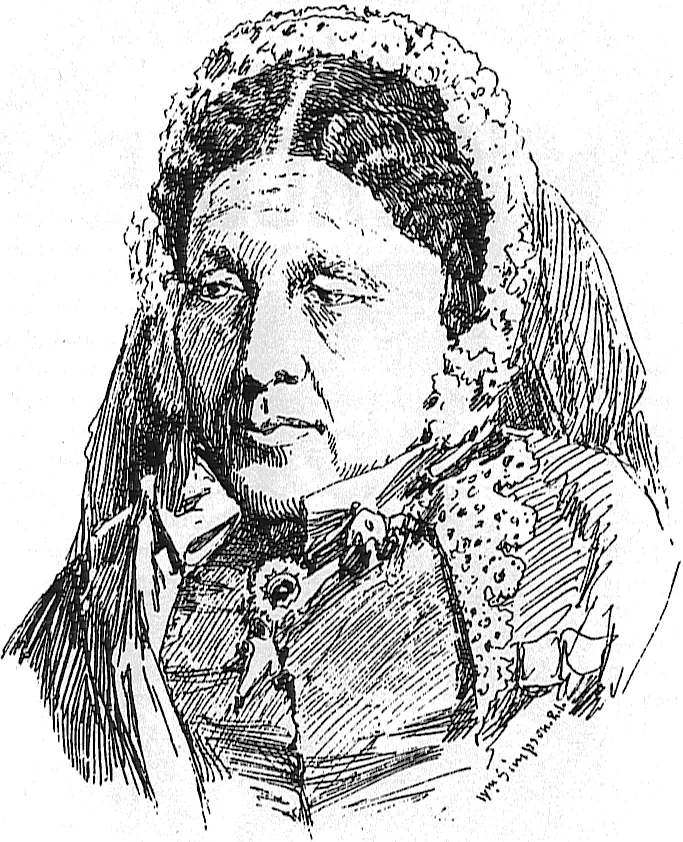
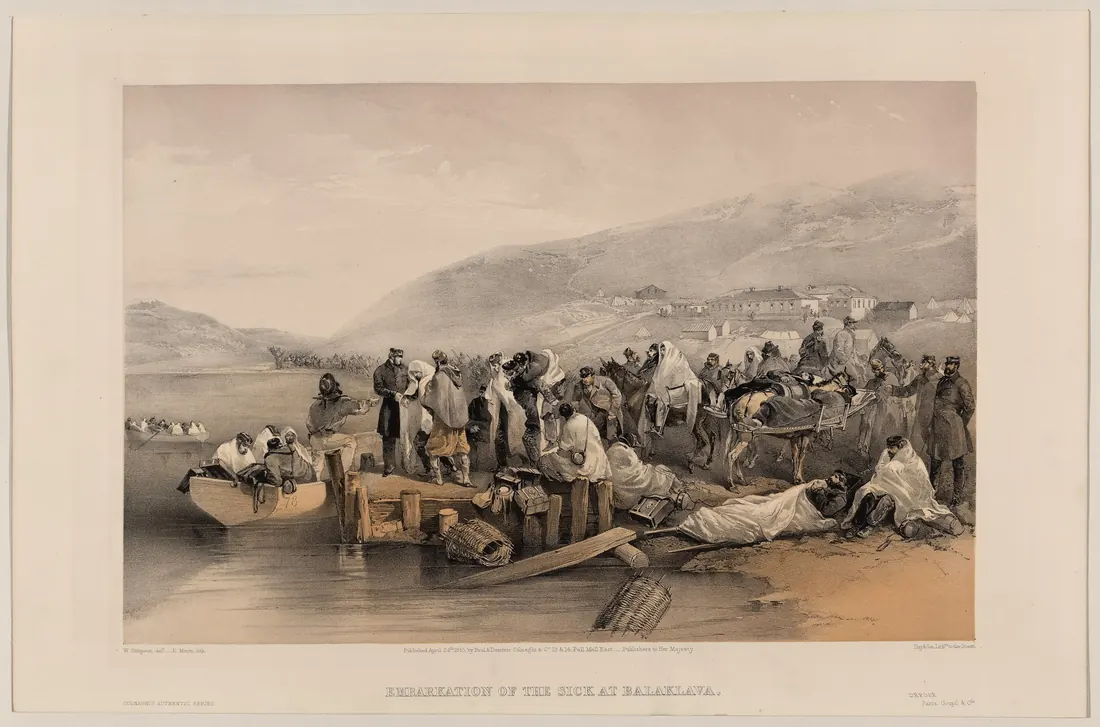
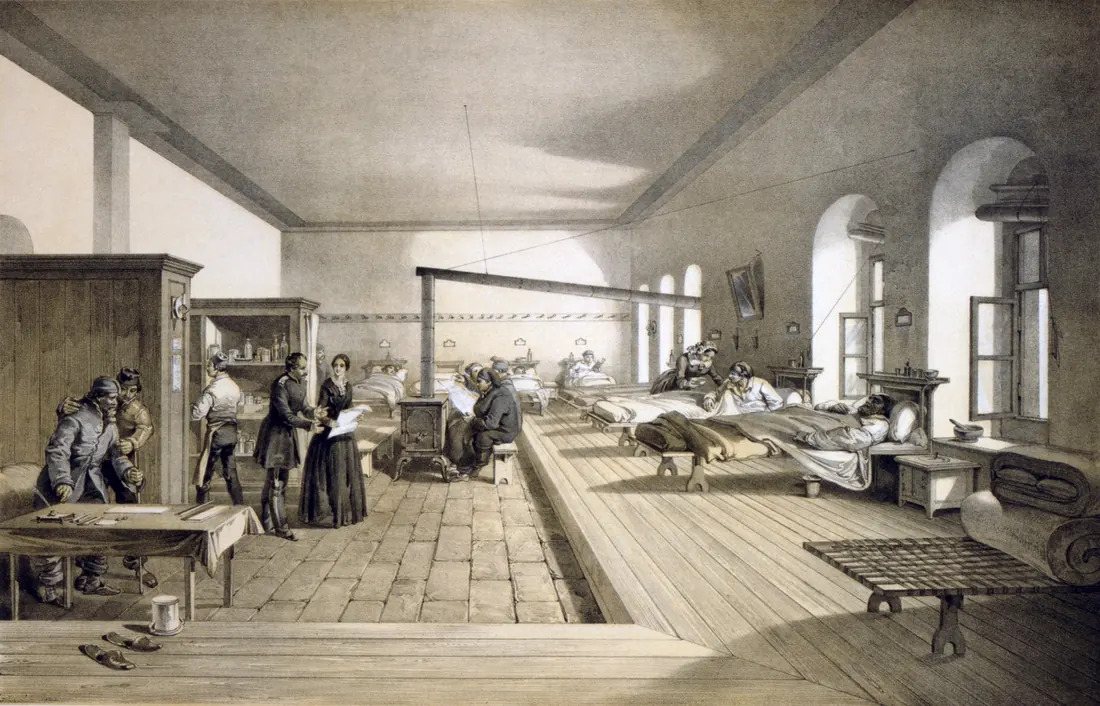
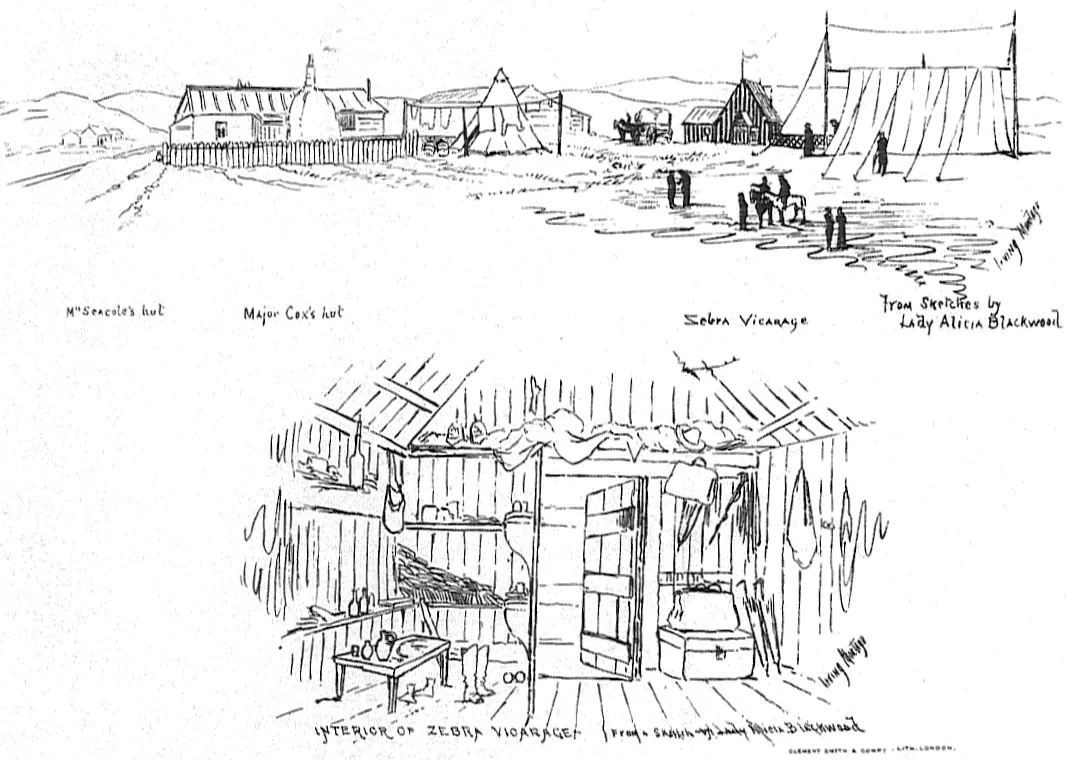
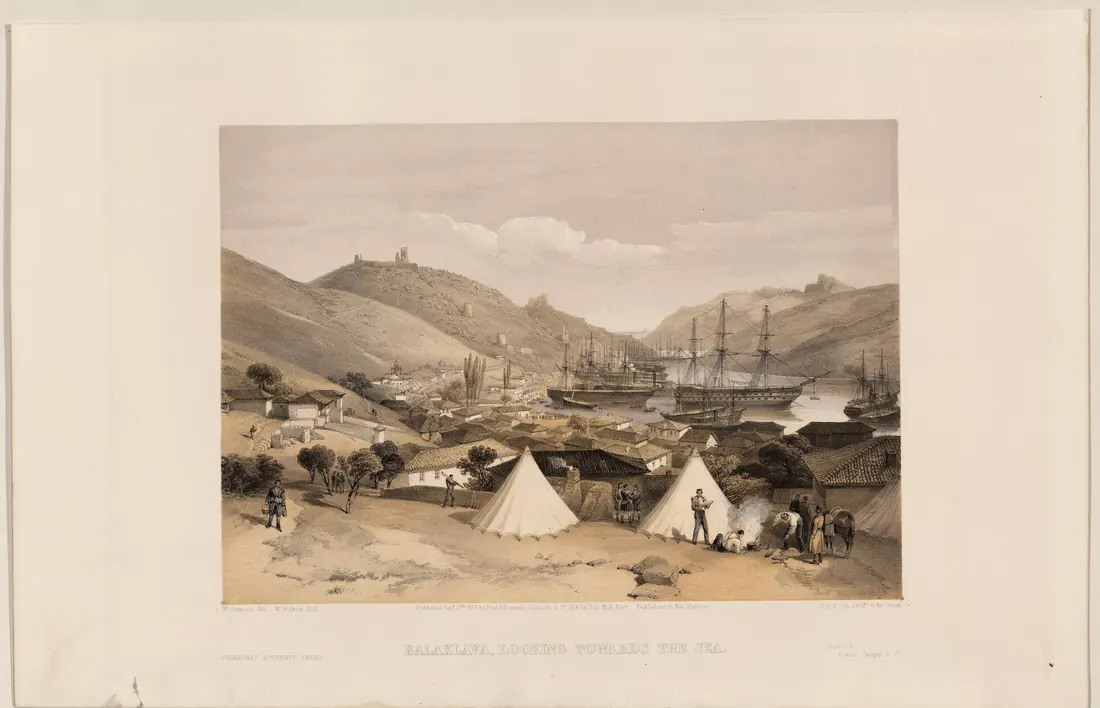
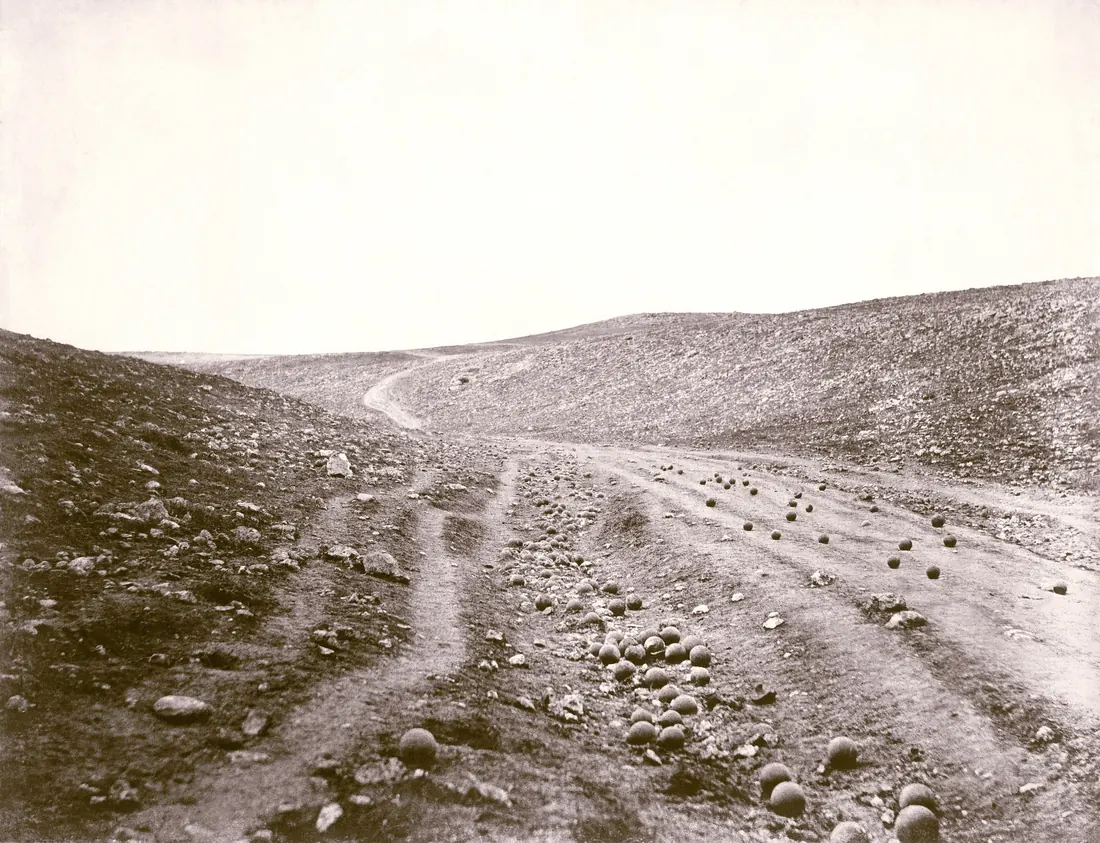
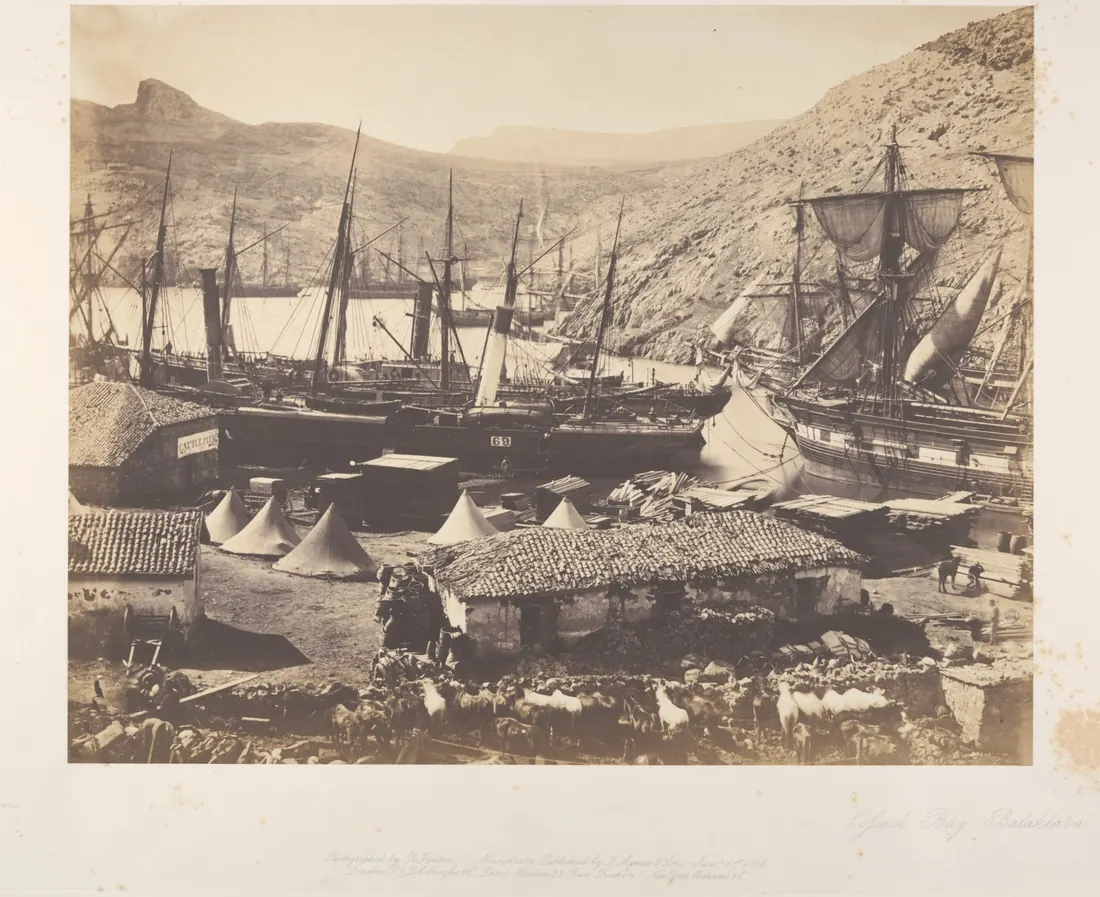
Pictures: the Challen portrait (about 1869) and both photographs (1870s) show her later in life; William Simpson’s sketch (about 1855) is the wartime likeness. Simpson’s lithographs and Roger Fenton’s photographs show Balaclava, the sick, the Scutari hospital and a Crimean battlefield in 1855–56, not Seacole herself. The drawing of huts made from Lady Alicia Blackwood’s sketches is the only picture here of Seacole’s own hut. The Punch cartoon is shown as a document of the 1857 appeal for her debts. The prints spell the town Balaklava.
Photo credits
The archive photos in this story
All the photographs and illustrations in this story are in the public domain. Tap one to enlarge it, or follow the link to its Wikimedia Commons page for the full record. The narration, captions and graphics in the Short are our own; its music and sound effects are credited below.
Music and sound effects
Music: Brahms, Symphony No. 1 in C minor, Op. 68: I. Un poco sostenuto - Allegro (Musopen Symphony Orchestra, CC0); Brahms, Symphony No. 2 in D major, Op. 73: IV. Allegro con spirito (Musopen Symphony Orchestra, CC0).
Sound effects: Freesound, CC0.


































































