
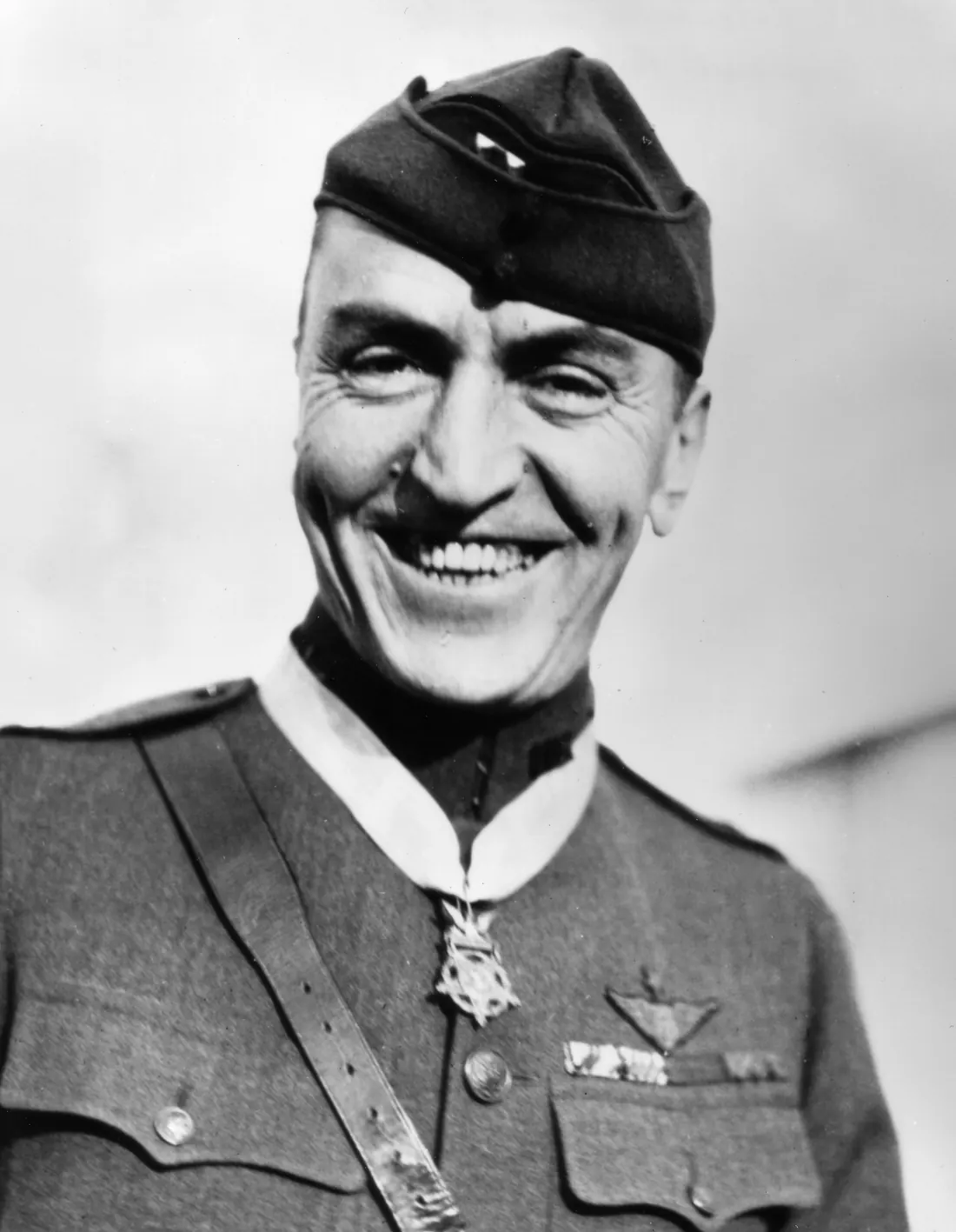
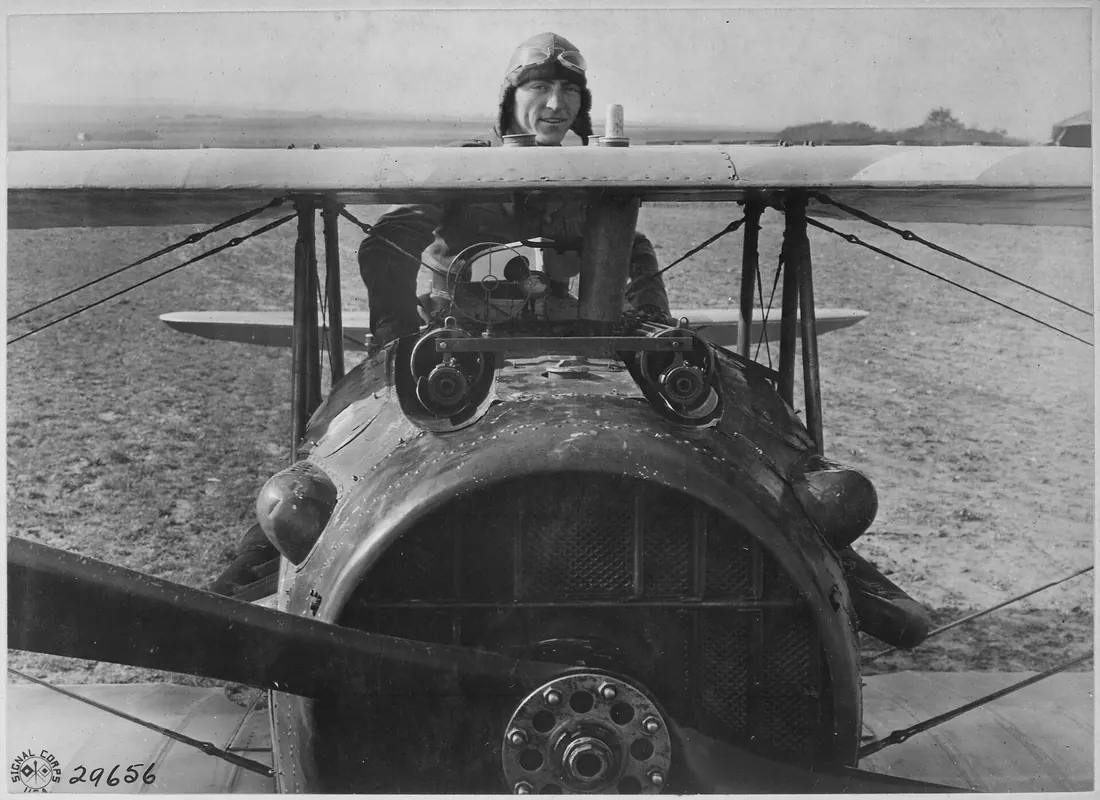
Eddie Rickenbacker was America’s ace of aces of the First World War. Officially, he brought down 26 aircraft, 20 airplanes and 6 balloons, between April 29 and October 30, 1918. His Medal of Honor, presented on November 6, 1930, was for a voluntary patrol on September 25, 1918, when, in the words of his citation, he “attacked seven enemy planes.”
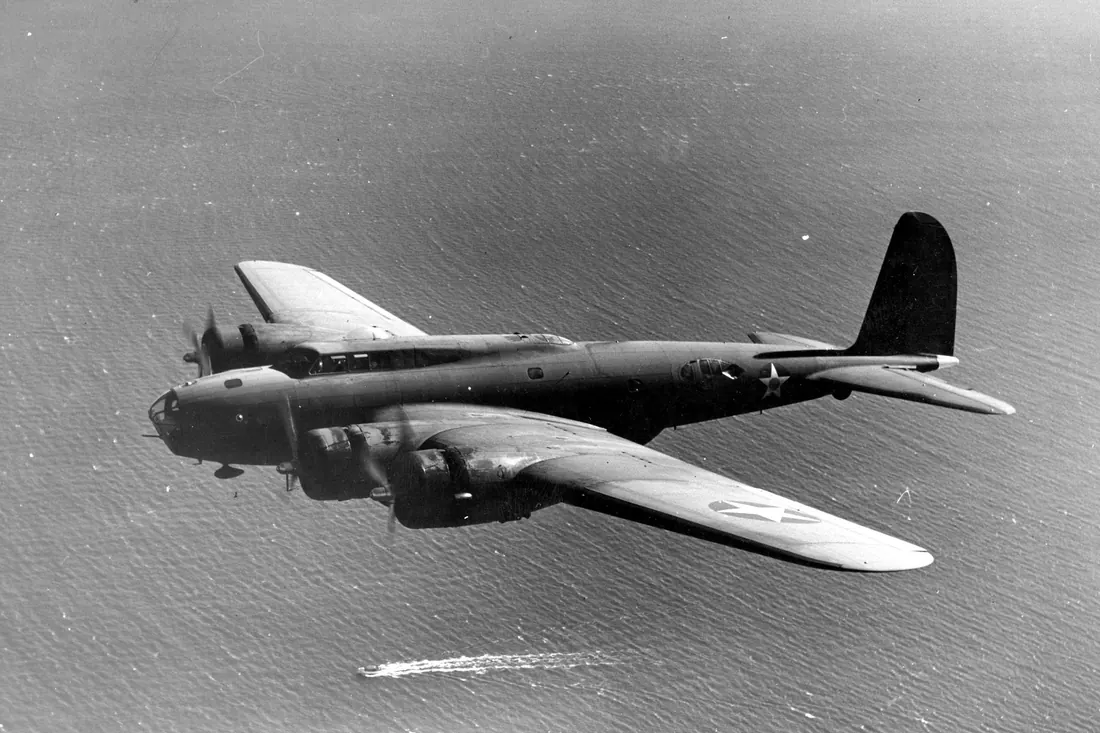
In October 1942 Rickenbacker, by then a 52-year-old airline executive, was on his way to deliver a secret message to Gen. Douglas MacArthur. On October 21, flying from Hawaii to Canton Island, his B-17 drifted off course, an error Wikipedia blames on “an out-of-adjustment bubble octant.” Low on fuel, it ditched “into a trough between waves.” All eight men aboard climbed into three small rafts. No one had grabbed even a single thermos of water, and their only food was four oranges. Sharks swam so close, HistoryNet says, “that they were continually bumping into the boats.”
Each evening the rafts were drawn together for prayer, and Private John Bartek, a mechanic, read from a small New Testament he carried in his pocket. On the eighth day Rickenbacker was lying on his back with his hat pulled down over his face when something landed on it: a seagull. He grabbed it, and the bird became both a meal and fishing bait. It was no coincidence, Rickenbacker insisted, that the meal had arrived immediately after they had prayed. That night, at about 3 a.m., the rain came, and all hands did what they could to collect it.
Not everyone survived. Sgt. Alex Kaczmarczyk, a passenger, died on the 13th day and was buried at sea. Search planes came and went without seeing them: a floatplane about five miles away on the 17th day, two planes on the 18th, four more on the morning of the 19th. At last, on November 13, their 24th day at sea, a Navy OS2U Kingfisher floatplane found Rickenbacker’s raft, and its crew strapped him to one of its wings. Seven of the eight men came home.
Fact check
The facts and where they come from
- He shot down 26 enemy aircraft. Wikipedia: “Officially, he brought down 26 aircraft during the war.” This Day in Aviation lists 26 aerial victories between April 29 and October 30, 1918: 20 airplanes and 6 balloons, so we say “aircraft,” not “planes.” 16
- He was America’s ace of aces. Wikipedia: “making him the United States ace of aces for the war.” American Heritage: “Rickenbacker, known fondly as the ‘Ace of Aces.’” 12
- He won the Medal of Honor. His citation: “While on a voluntary patrol over the lines, 1st Lt. Rickenbacker attacked seven enemy planes,” on September 25, 1918. It was presented on November 6, 1930, at Bolling Field. 61
- He was 52. HistoryNet calls him “the 52-year-old airline executive.” Wikipedia gives his birth date as October 8, 1890. 31
- In 1942 he was carrying a secret message to MacArthur. American Heritage: he “had been headed to deliver a top-secret oral message to General Douglas MacArthur from Secretary of War Henry L. Stimson.” Wikipedia: “a secret message from the president to General” Douglas MacArthur. Defense Media Network: “to deliver a secret message.” 214
- His B-17 got lost, ran out of fuel and ditched at sea, on October 21, 1942, on the way from Hawaii to Canton Island. Pacific Wrecks: “Low on fuel the B-17 successfully ditched into a trough between waves.” Wikipedia blames the faulty navigation on “an out-of-adjustment bubble octant.” 516
- All eight men climbed into three rafts. American Heritage: Rickenbacker’s “seven companions”; “three rafts bobbing on the Pacific.” Defense Media Network: “three small life rafts.” Wikipedia: “For 24 days, Rickenbacker, Army Captain Hans C. Adamson (his friend and business partner), and six crewmen drifted.” 2341
- They had four oranges and no water. American Heritage: “the third of their four oranges, the only food they had with them”; “no one had grabbed even a single thermos of water or emergency ration box.” Defense Media Network: “They had no water and only four oranges that Cherry had stuffed into his jacket pocket.” 24
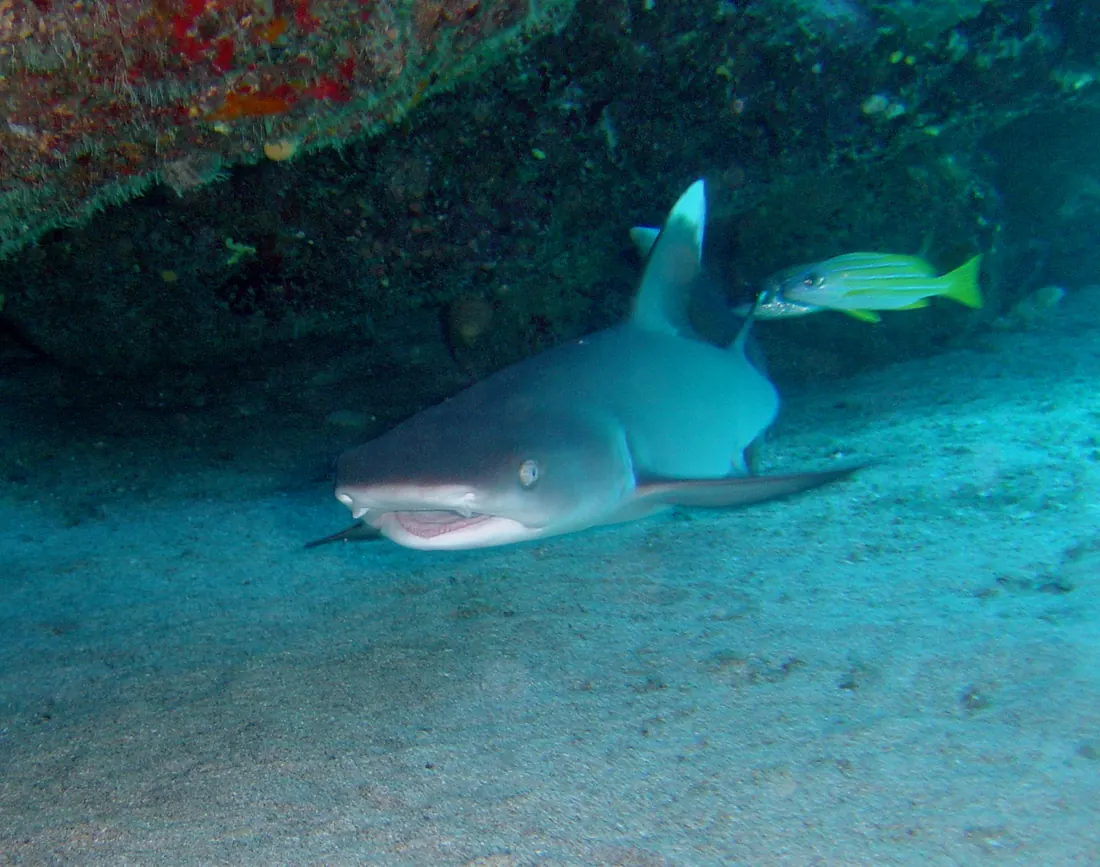
- Sharks kept bumping the rafts. HistoryNet: “Sharks were always present in large numbers, swimming so close that they were continually bumping into the boats.” 3
- Each evening they prayed, and a crewman read from his pocket Bible. HistoryNet: “They held prayer meetings and sang hymns to keep their spirits up,” and the rafts were drawn together “each evening for prayer.” American Heritage: “Mechanic Private John Bartek pulled out a small copy of the New Testament from his pocket and read a passage.” Pacific Wrecks also describes Bible readings and prayers each morning and evening. 325
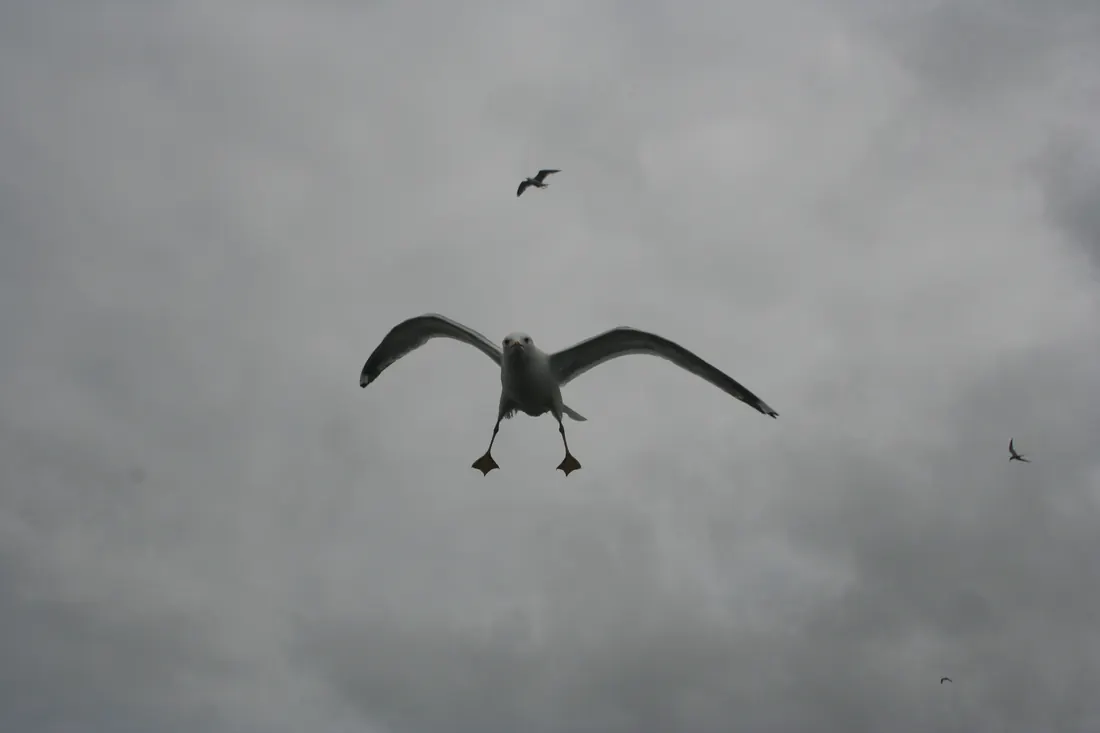
- On the eighth day, a seagull landed on his head. HistoryNet: “Rickenbacker was lying on his back with his hat pulled down over his face when something landed on it—a seagull.” American Heritage: on the eighth day “a seagull alighted on his fedora.” Defense Media Network: “On the eighth day, they received a bit of luck when Rickenbacker captured a sea gull that landed on his head.” Wikipedia: “On the eighth day, a tern landed on Rickenbacker’s head.” 3241
- He grabbed it, and they ate it. Wikipedia: “He captured it, and the bird became both a meal for the men and fishing bait.” Defense Media Network says he managed to grab the gull. 14
- It was no coincidence, he insisted: they had just prayed. American Heritage: “It was no coincidence, insisted Rickenbacker, that the two-course dinner had arrived immediately after they had prayed.” 2
- That night, the rain came. HistoryNet: “About 3 a.m. raindrops fell for a few minutes, and they spotted a squall not far away”; “The squall turned into a driving rainstorm, and all hands did what they could to collect water.” American Heritage: after a storm, “rain poured down in sheets.” Pacific Wrecks puts the rain the same evening. 325
- One sergeant died and was buried at sea. American Heritage names him: “passenger Sergeant Alex Kaczmarczyk.” Defense Media Network: “on the 13th day, he died and was buried at sea.” Wikipedia: “he died after two weeks adrift and was buried at sea.” 2415
- Search planes flew past them, again and again. HistoryNet: on the 17th day a floatplane passed “about five miles away,” and “they had not been spotted”; on the 18th, two planes, “to no avail”; “They saw four more planes on the morning of the 19th day.” 3
- On day 24, a Navy floatplane found them. American Heritage: they were spotted on “November 13, their 24th day at sea.” Hans Christian Adamson’s Wikipedia article: “A US Navy patrol OS2U-3 Kingfisher float-plane spotted and rescued the survivors on November 13.” Wikipedia places the rescue in the Ellice Islands, and Pacific Wrecks names the pilot as Lt. W. F. Eadie. 2715
- He was strapped to a wing. HistoryNet: “the crew secured Rickenbacker to one of the wings and Bartek to the other.” Pacific Wrecks says Rickenbacker and Adamson were strapped to the wing. 35
- In the end, seven came home. HistoryNet and American Heritage: seven of the eight survived; only Kaczmarczyk died. Rickenbacker, quoted in a 1942 Office of War Information caption: “One tire that is not wasted on pleasure driving may save the lives of seven men as ours was saved.” 328
Sources
- Eddie Rickenbacker Wikipedia
- Lost at Sea for 24 Days (Thomas Fleming) American Heritage
- Eddie Rickenbacker and six other people survive a B-17 crash and three weeks lost in the Pacific Ocean (Billy A. Rea; first printed in World War II magazine, February 2004) HistoryNet
- Eddie Rickenbacker Adrift in the Pacific Ocean (Dwight Jon Zimmerman, November 15, 2012) Defense Media Network
- B-17D 40-3089 Pacific Wrecks
- Ace of Aces (his Medal of Honor citation and victory list) This Day in Aviation
- Hans Christian Adamson Wikipedia
- “Rickenbacker Rescue Boats,” Office of War Information photo and caption, 1942 (National Museum of the US Navy, Lot-2058-9) Wikimedia Commons
Notes
The bird: HistoryNet, American Heritage, Defense Media Network and Pacific Wrecks say a seagull, and so did Rickenbacker; Wikipedia says a tern. We say a seagull. Strictly, it landed on the fedora he had pulled down over his face.
How many days: 24 (Wikipedia; American Heritage, whose November 13 is “their 24th day at sea,” counting October 21 as the first), 22 (Pacific Wrecks) or 21 (HistoryNet, Defense Media Network, This Day in Aviation and Rickenbacker’s 1943 book; Wikipedia says he later corrected it to 24). Day 24 is the day Rickenbacker’s own raft, the last one, was found.
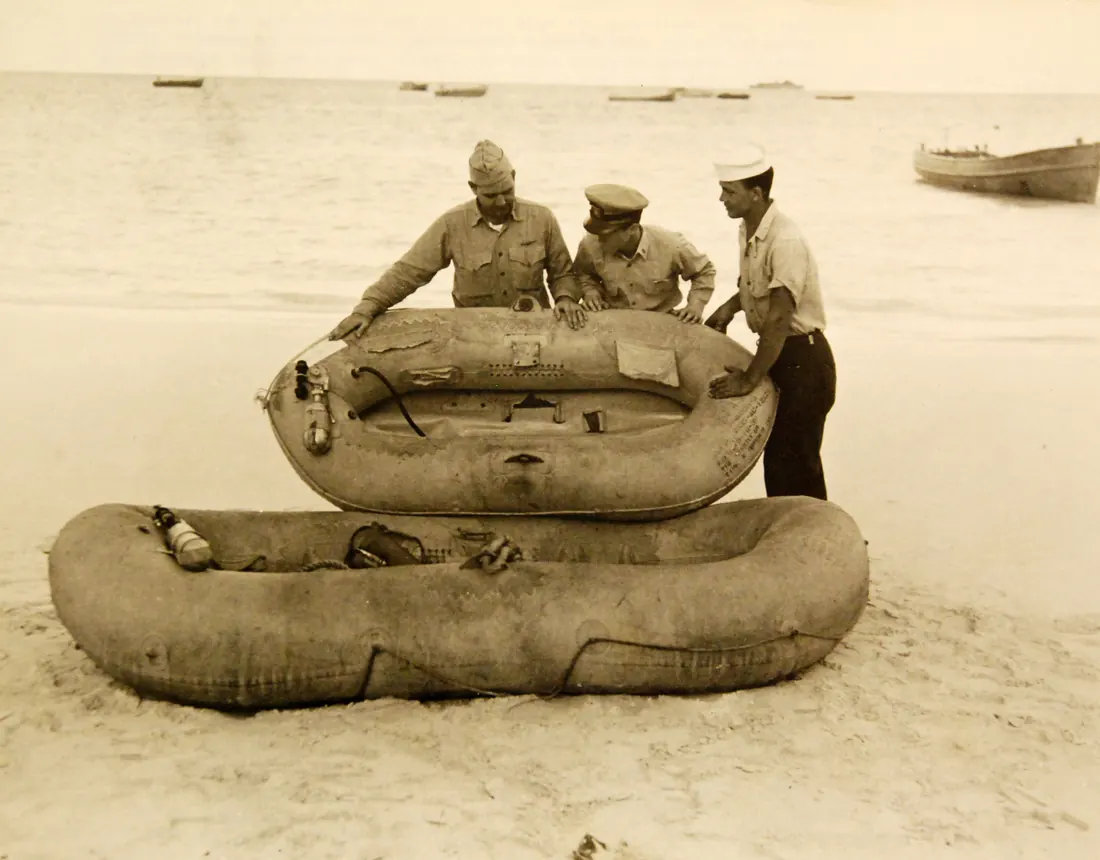
Three rafts or two: three in American Heritage, HistoryNet and Defense Media Network; two in Pacific Wrecks. The 1942 Office of War Information caption calls the photographed raft “one of the two” of its maker’s type, which fits two big rafts and one small one.
Who sent the message: Secretary of War Stimson (American Heritage) or the president (Wikipedia). We name no sender.
When the sergeant died: on the 13th day (Defense Media Network, Pacific Wrecks) or “after two weeks adrift” (Wikipedia). Who was strapped to the plane with Rickenbacker: Bartek (HistoryNet) or Adamson (Pacific Wrecks); the accounts also differ on the pilots, so we name none of them in the story.
Left out: Wikipedia’s account that his wife persuaded the services to search for another week (it rests on an archive page that would not open for us), the later, unsourced “Old Man and the Gulls” story of him feeding gulls on a Florida pier, and his weight loss (40 or 80 pounds, by different accounts).
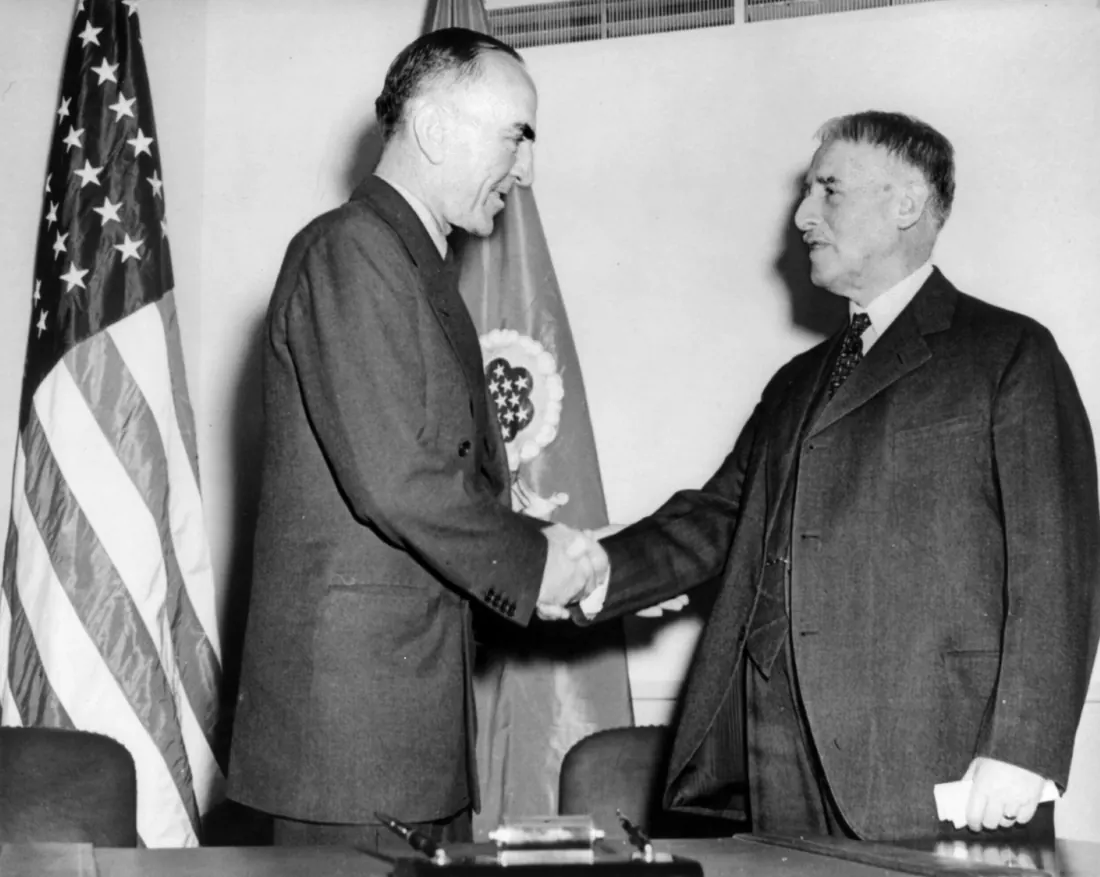
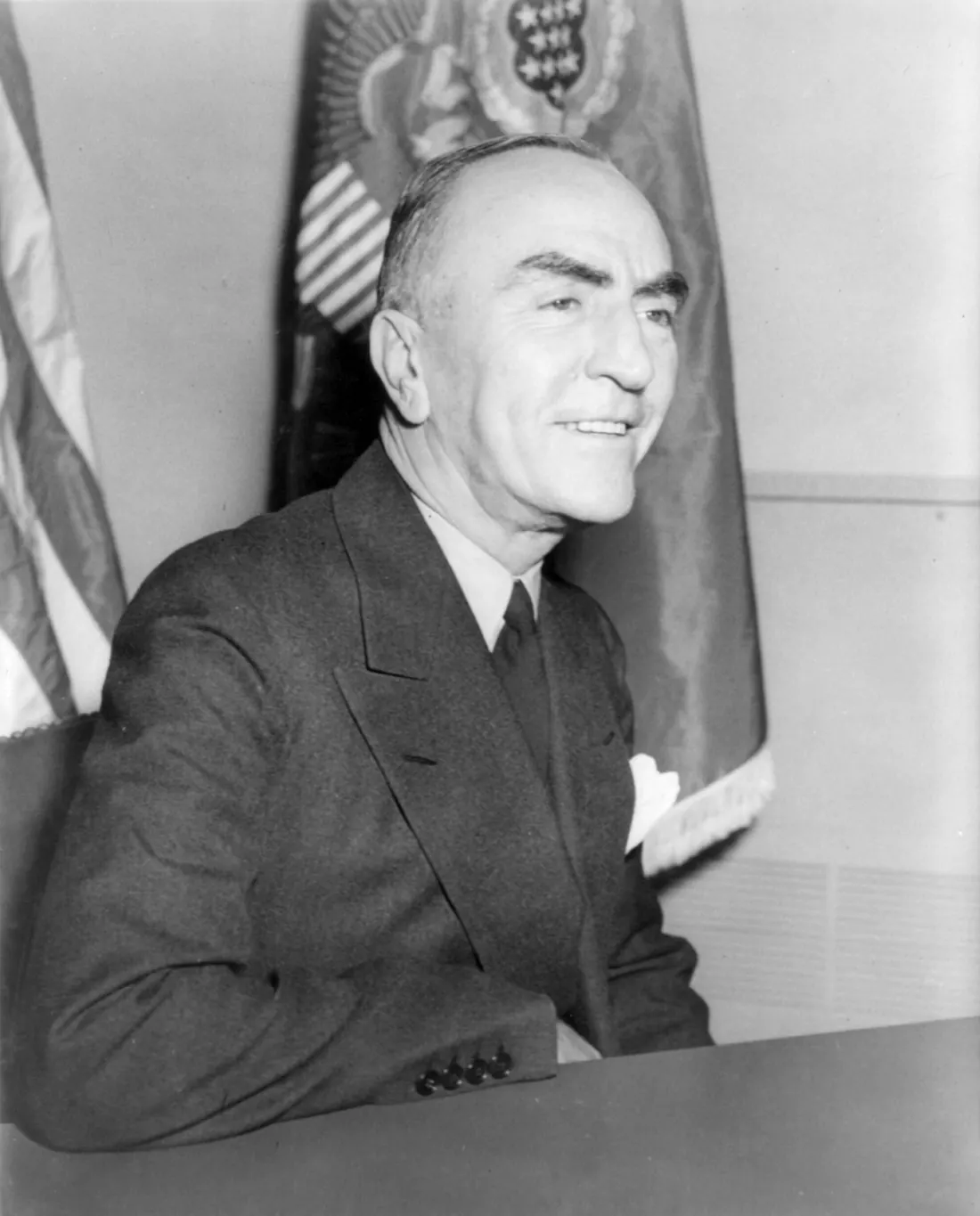
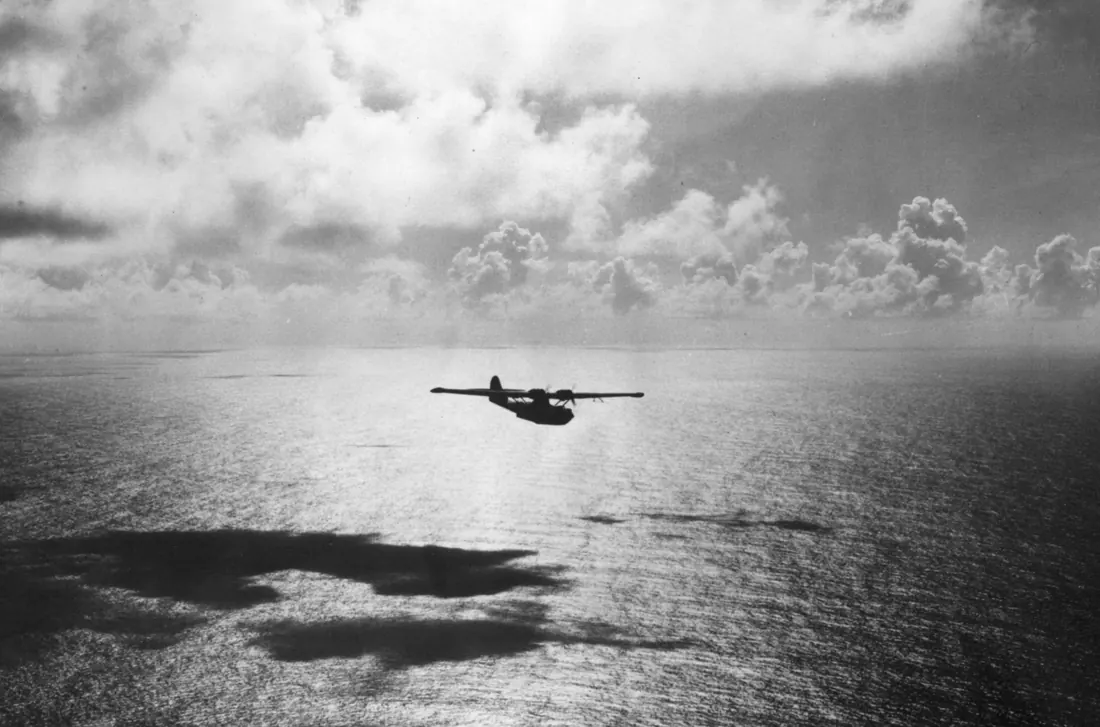
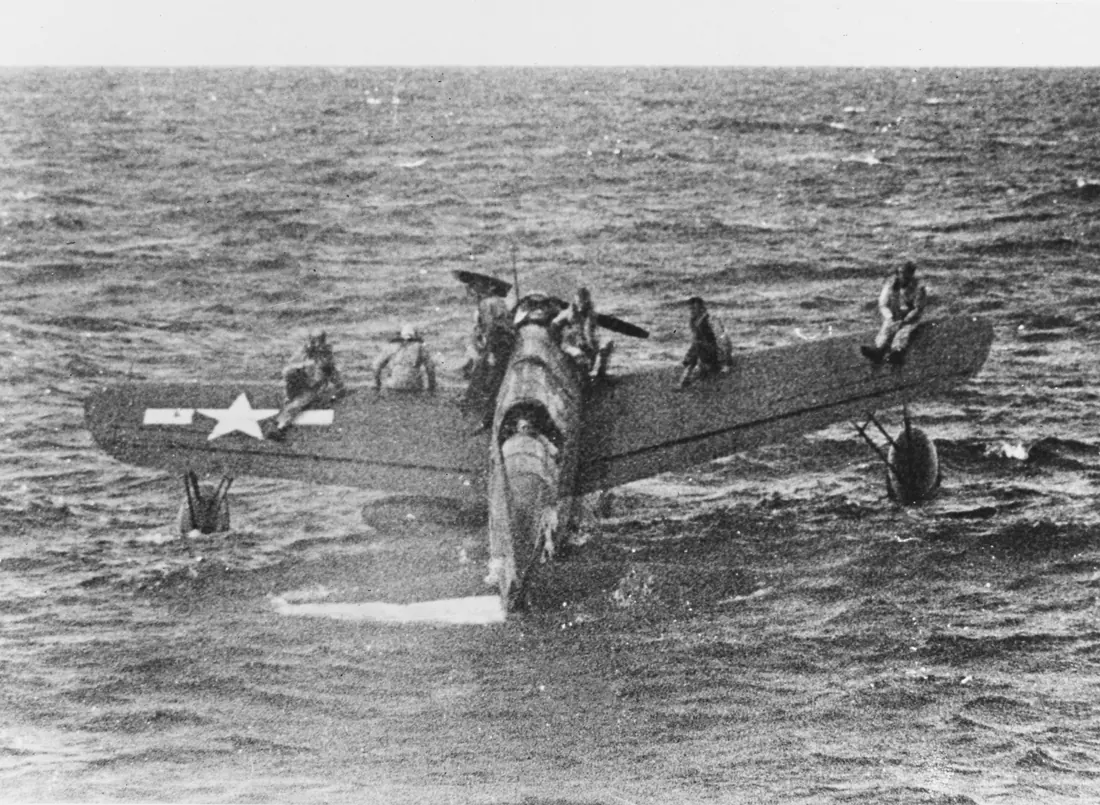
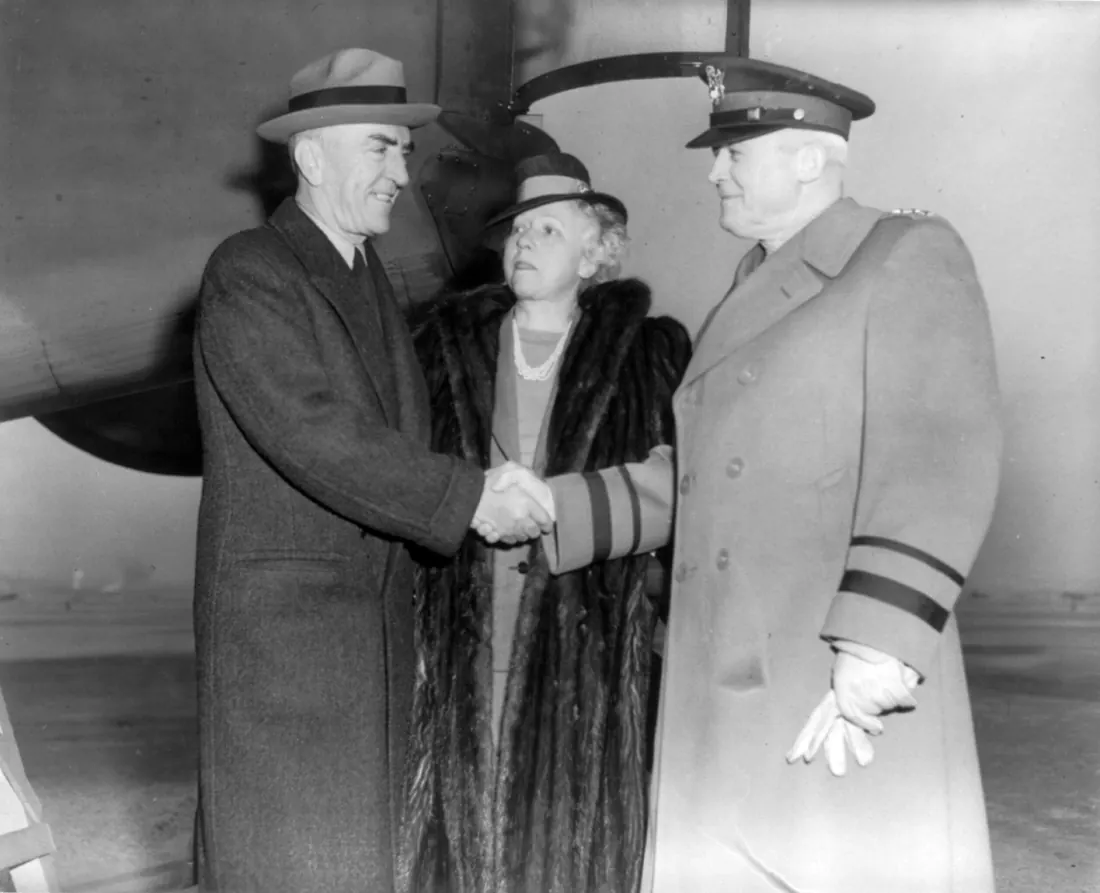
Pictures: Rickenbacker himself is in the Medal of Honor portrait (about 1931), in his SPAD in France (October 18, 1918) and in three photos of December 19, 1942, taken in Washington after the rescue: with Secretary of War Henry Stimson, with his wife, Adelaide, and Gen. Henry Arnold, and alone. The B-17D is the same model, not his plane. The rafts are “of the type that saved the party,” in the Office of War Information’s words. The shark (Guam, 2010), the gull (Alaska, 2010), the rain shaft (Tobago, 1980), the PBY and the 1944 Kingfisher rescue off Truk illustrate the story; none of them shows these men.
Photo credits
The archive photos in this story
The photographs and illustrations in this story are in the public domain or shared under open licenses; each one is credited below with its license. Tap one to enlarge it, or follow the link to its Wikimedia Commons page for the full record. The narration, captions and graphics in the Short are our own; its music and sound effects are credited below.

Music and sound effects
Music: Debussy, La Mer: III. Dialogue du vent et de la mer (US Air Force Band, Concert Band, public domain, US government work); Dykes, Eternal Father, Strong to Save ('The Navy Hymn'; tune 'Melita'), instrumental (US Navy Band, Ceremonial Band, public domain, US government work).
Sound effects: Freesound, CC0.


































































