
John Clem was nine when he ran away from home to join the Union Army. He is said to have left in May 1861, after his mother’s death in a train accident. The newly formed 3rd Ohio refused him, because of his age and small size. Undeterred, he tried the 22nd Michigan, and his persistence won over its officers: they let him follow the regiment, adopting him as a mascot and unofficial drummer boy, and chipped in to pay him the regular soldier’s wage of $13 a month. In 1863 he was finally allowed to enlist officially.
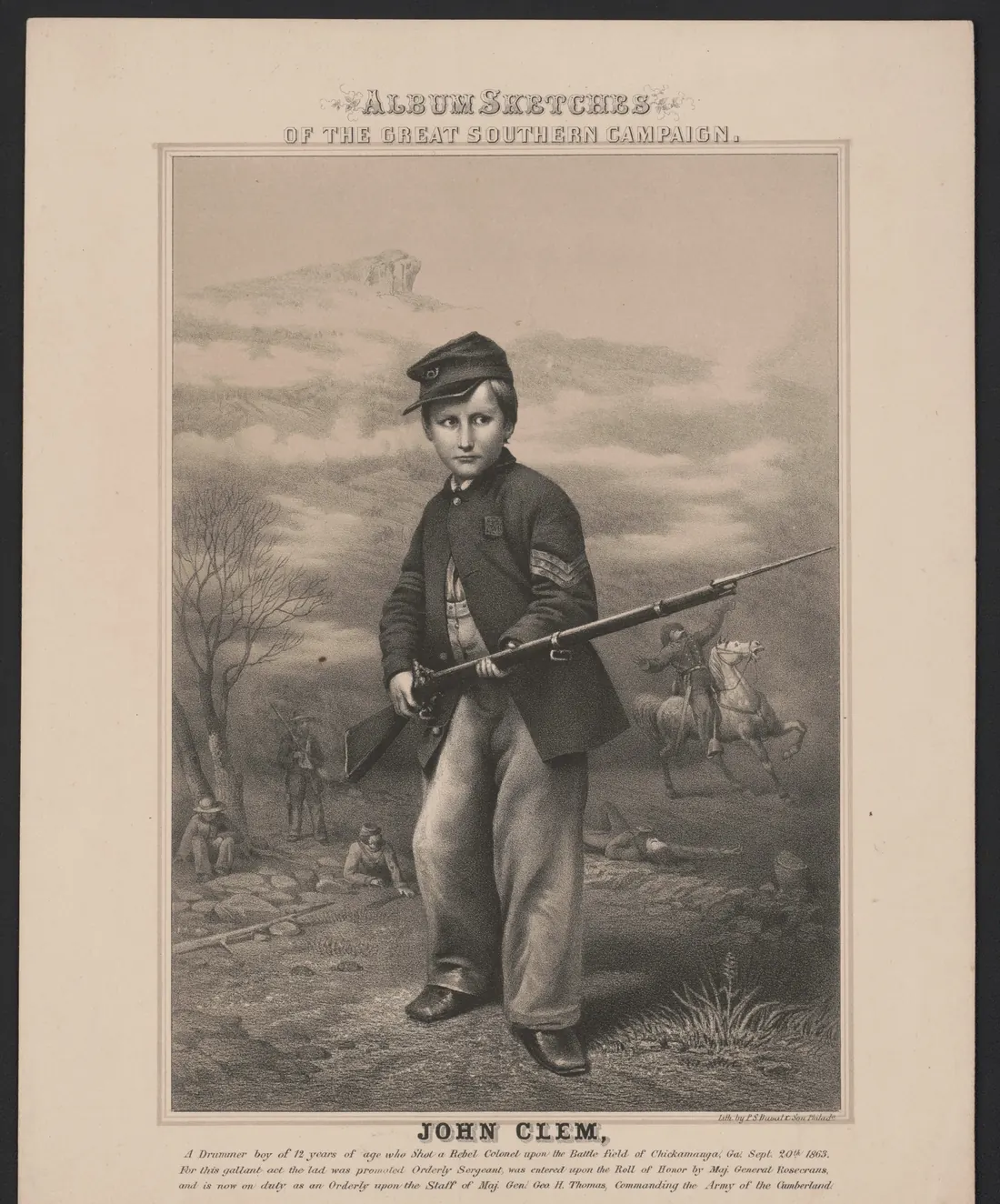
On September 20, 1863, at the Battle of Chickamauga, the 12-year-old, armed with a musket sawed down for him to carry, joined the 22nd Michigan in the defense of Horseshoe Ridge. Separated from his unit, he was ordered to surrender by a Confederate colonel, and he reportedly shot the officer and escaped to the Union lines. In January 1864 Brig. Gen. Richard W. Johnson wrote to his son that the colonel had said, “you little Yankee throw down your gun and surrender.” Clem was promoted to sergeant, the youngest noncommissioned officer in US Army history, and he became a national celebrity, the “Drummer Boy of Chickamauga.”
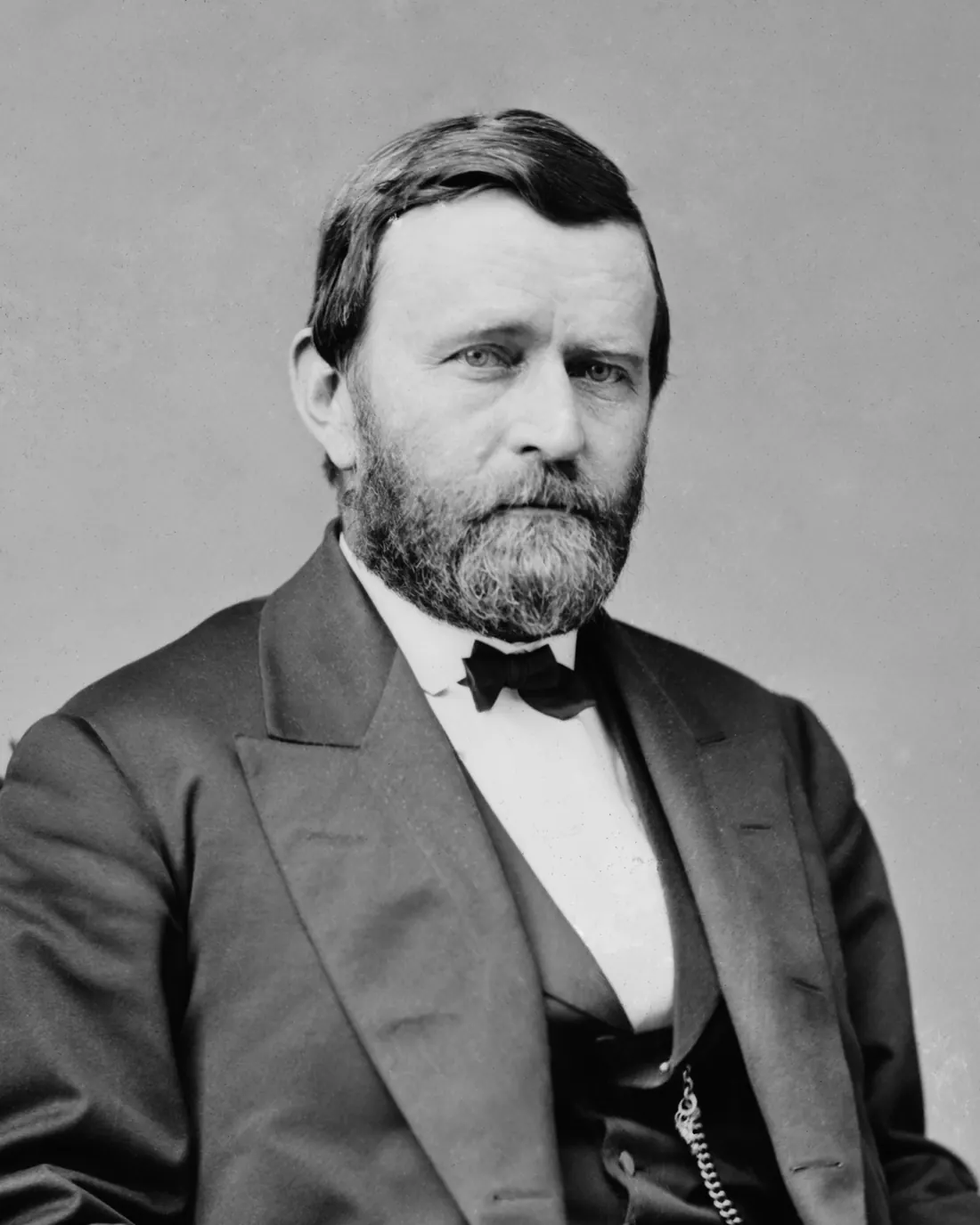
He was wounded twice, and in September 1864, at 13, he was discharged. Later he failed the entrance exam for West Point several times, and in December 1871 President Ulysses S. Grant appointed him a second lieutenant in the 24th Infantry Regiment.
On August 13, 1915, he reached the mandatory retirement age of 64 and retired as a brigadier general, at that time the last veteran of the Civil War still on duty in the US armed forces. In 1916 he was promoted to major general on the retired list. All told, the boy once turned away as too young served 44 years and 11 months in the Army. He died in San Antonio, Texas, on May 13, 1937, and is buried in Arlington National Cemetery.
Fact check
The facts and where they come from
- He was nine when the Army turned him away. US Army: “After the death of his mother, Clem ran away from home at age nine and attempted to join the Union Army.” American Battlefield Trust: “Not yet 10 years old, Clem’s service was refused by the newly formed 3rd Ohio.” Library of Congress: “the nine-year-old boy who attached himself to the 22nd Michigan Infantry.” 123
- But he retired a general. US Army: “before retiring in 1915 as a brigadier general.” HistoryNet: he “retired a brigadier general in 1915, the last Civil War veteran on the Army rolls.” 15
- His name was John Clem. Wikipedia: “John Lincoln Clem (nicknamed Johnny Shiloh; August 13, 1851 – May 13, 1937).” 126
- After his mother died, he ran away to war. Wikipedia: “He is said to have run away from home at age 9 in May 1861, after the death of his mother in a train accident.” 16
- An Ohio regiment said he was too young. US Army: “He was turned away from the 3rd Ohio.” Wikipedia: “First he attempted to enlist in the 3rd Ohio Infantry but was rejected because of his age and small size.” 126
- So he followed another until it took him as a drummer boy. American Battlefield Trust: “Undeterred, Clem later tried to join the 22nd Michigan, where his persistence won over the unit’s officers. They agreed to let him follow the regiment, adopting him as a mascot and unofficial drummer boy.” US Army: he “after some persistence joined the 22nd Michigan Infantry Regiment as a drummer boy.” 21
- Its officers paid him $13 a month. American Battlefield Trust: “The officers also chipped in to pay his monthly salary of $13 before he finally was allowed to officially enlist in 1863.” Wikipedia: “Officers chipped in to pay him the regular soldier’s wage of $13 a month.” 26
- At Chickamauga in 1863, he was 12. US Army: “During the Battle of Chickamauga on Sept. 20, 1863, 12-year-old Clem found himself separated from his unit.” The 1863–64 lithograph: “A Drummer boy of 12 years of age who Shot a Rebel Colonel upon the Battle Field of Chickamauga, Ga. Sept. 20th 1863.” 17
- He carried a musket cut down for him. American Battlefield Trust: “Armed with a musket sawed down for him to carry, Clem joined the 22nd Michigan in the defense of Horseshoe Ridge on the afternoon of September 20.” Wikipedia: he “wielded a musket trimmed to his size.” 26
- When a Confederate colonel ordered him to surrender, Johnny reportedly shot him. US Army: “When a Confederate colonel demanded his surrender, Clem shot the officer and escaped to Union lines.” American Battlefield Trust: “Rather than surrender, Clem shot the colonel and successfully made his way back to Union lines.” Gen. Johnson’s letter of 1864: “The Col said ‘you little Yankee throw down your gun and surrender.’” We say “reportedly” because the Library of Congress says sources dispute “his real exploits during the war,” and Wikipedia says the shooting “is also open for debate.” 12436
- He became the Army’s youngest sergeant. US Army: it “earned him a promotion to sergeant, making him the youngest noncommissioned officer in U.S. Army history.” American Battlefield Trust: “For his actions, Clem was promoted to sergeant, the youngest soldier ever to become a noncommissioned officer in the U.S. Army.” 12
- America called him the Drummer Boy of Chickamauga. American Battlefield Trust: “Clem became a national celebrity for his actions at” Chickamauga, “and became known as the ‘Drummer Boy of Chickamauga.’” Library of Congress: he “was popularized as ‘Johnny Clem, The Drummer Boy of Chickamauga.’” The Duval lithograph is a celebrity print of him, published in 1863–64. 237
- Wounded twice, he left the Army at 13. American Battlefield Trust: “where he was wounded twice. Clem was discharged from the Army in 1864 at age 13.” Wikipedia: “he was discharged in September 1864. Clem was wounded in combat twice during the war.” 26
- He failed West Point’s exam, so President Grant made him an officer. American Battlefield Trust: “Clem failed the entrance exam several times before Grant appointed him a second lieutenant in the U.S. Army.” Wikipedia: “After he failed the entrance exam to enter the United States Military Academy, President Ulysses S. Grant appointed him second lieutenant in the 24th Infantry Regiment in December 1871.” HistoryNet: “Grant appointed him a second lieutenant in the Army.” 265
- He retired in 1915 as a general. US Army: “before retiring in 1915 as a brigadier general.” Wikipedia: “Clem reached the mandatory retirement age of 64 on August 13, 1915, when he was retired and promoted to the rank of brigadier general.” 16
- He was the Army’s last Civil War veteran still on duty. Wikipedia: “he was at that time the last veteran of the American Civil War still on duty in the United States Armed Forces.” HistoryNet: “the last Civil War veteran on the Army rolls.” 65
- The boy who was too young to fight served almost 45 years. American Battlefield Trust: “Throughout his life, Clem served a total of 44 years and eleven months as an official U.S. Army soldier.” 2
- In 1916 he was made a major general. US Army: “In 1916, he was promoted to major general while on the retired list.” 1
- He died in 1937. American Battlefield Trust: “Clem died in San Antonio, Texas on May 13, 1937, and is buried in Arlington National Cemetery.” 2
- The “Johnny Shiloh” story of a drum smashed at Shiloh is most likely a legend. American Battlefield Trust: “One holds that his drum was destroyed at the” Battle of Shiloh, but “the 22nd Michigan, Clem’s unit, was not mustered until the summer after the Battle of Shiloh, making it unlikely Clem saw action in the battle with that regiment.” 26
Sources
- Heroes of the U.S. Army: John Clem US Army (army.mil)
- John Clem American Battlefield Trust
- The Civil War in America: Reality Becomes Legend (December 1862–October 1863, item 34) Library of Congress
- Brig. Gen. Richard W. Johnson to his son Harry, January 27, 1864 (transcript) Library of Congress
- Legends of Little Drummer Boys HistoryNet
- John Clem Wikipedia
- John Clem, a drummer boy of 12 years of age … (lithograph, P. S. Duval & Son, 1863–64) Library of Congress
Notes
The shooting at Chickamauga: the US Army and the American Battlefield Trust state it as fact, and Gen. Richard W. Johnson described it to his son in January 1864. But the Library of Congress says sources “dispute when Clem enlisted, where he actually served, and his real exploits during the war,” and Wikipedia says the shooting “is also open for debate” and that he may have wounded Col. Calvin Walker of the 3rd Tennessee. We say “reportedly,” and we don’t say the colonel died (the 1864 letter says killed; the others say shot).
What the colonel said: “you little Yankee throw down your gun and surrender” (the 1864 letter), “Stop, you little Yankee devil” (HistoryNet), or “damned little Yankee devil” or “drop that gun” (the American Battlefield Trust, “according to various sources”). We quote only the 1864 letter.
“Johnny Shiloh”: the drum smashed at Shiloh is most likely a legend, because the 22nd Michigan wasn’t mustered until after that battle (American Battlefield Trust, Wikipedia); the nickname likely comes from the song “The Drummer Boy of Shiloh.”
Which regiment first took him in: the 22nd Michigan (US Army, American Battlefield Trust, Wikipedia, Library of Congress) or the 24th Ohio (HistoryNet). We follow the first four.
“Retired a general”: he retired as a brigadier general in 1915 (US Army, HistoryNet, Wikipedia). The American Battlefield Trust says “with the rank of major general,” which he received on the retired list in 1916.
“Last” veteran: he was the last Civil War veteran still on duty when he retired in 1915 (Wikipedia, HistoryNet). Peter Conover Hains, also a Civil War veteran, was recalled for World War I in 1917, so we don’t say Clem was the last ever to serve.
His age and the date: the US Army says he ran away at nine; the American Battlefield Trust says he was “not yet 10” when the 3rd Ohio refused him. May 1861 comes from Wikipedia (“He is said to have”).
Left out: his birth name (John Joseph Klem, per HistoryNet), his capture in October 1863 and the cap with three bullet holes, and two details found only in Wikipedia: the Confederate newspapers’ “babies” jibe and Salmon P. Chase’s decoration.
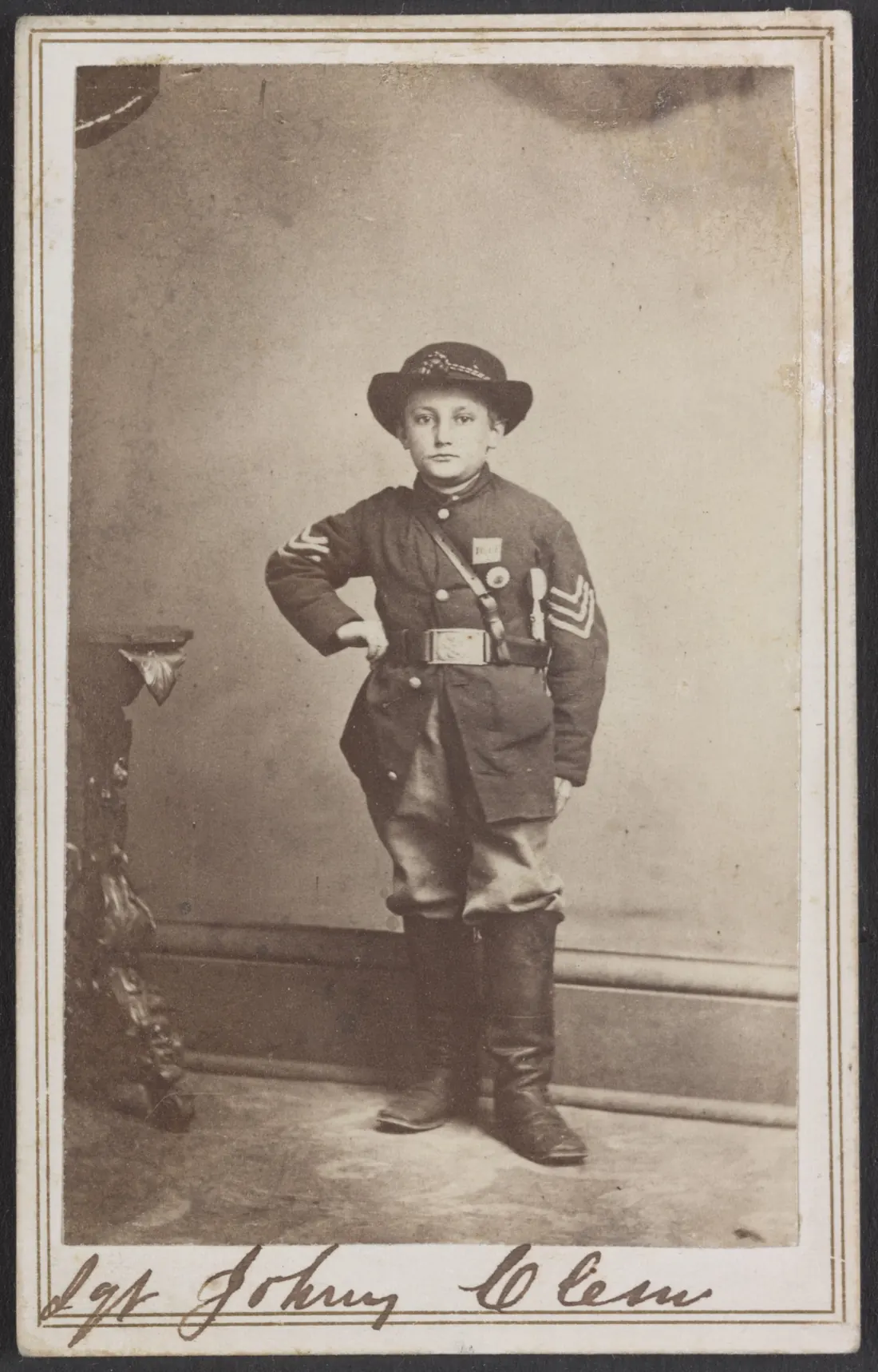
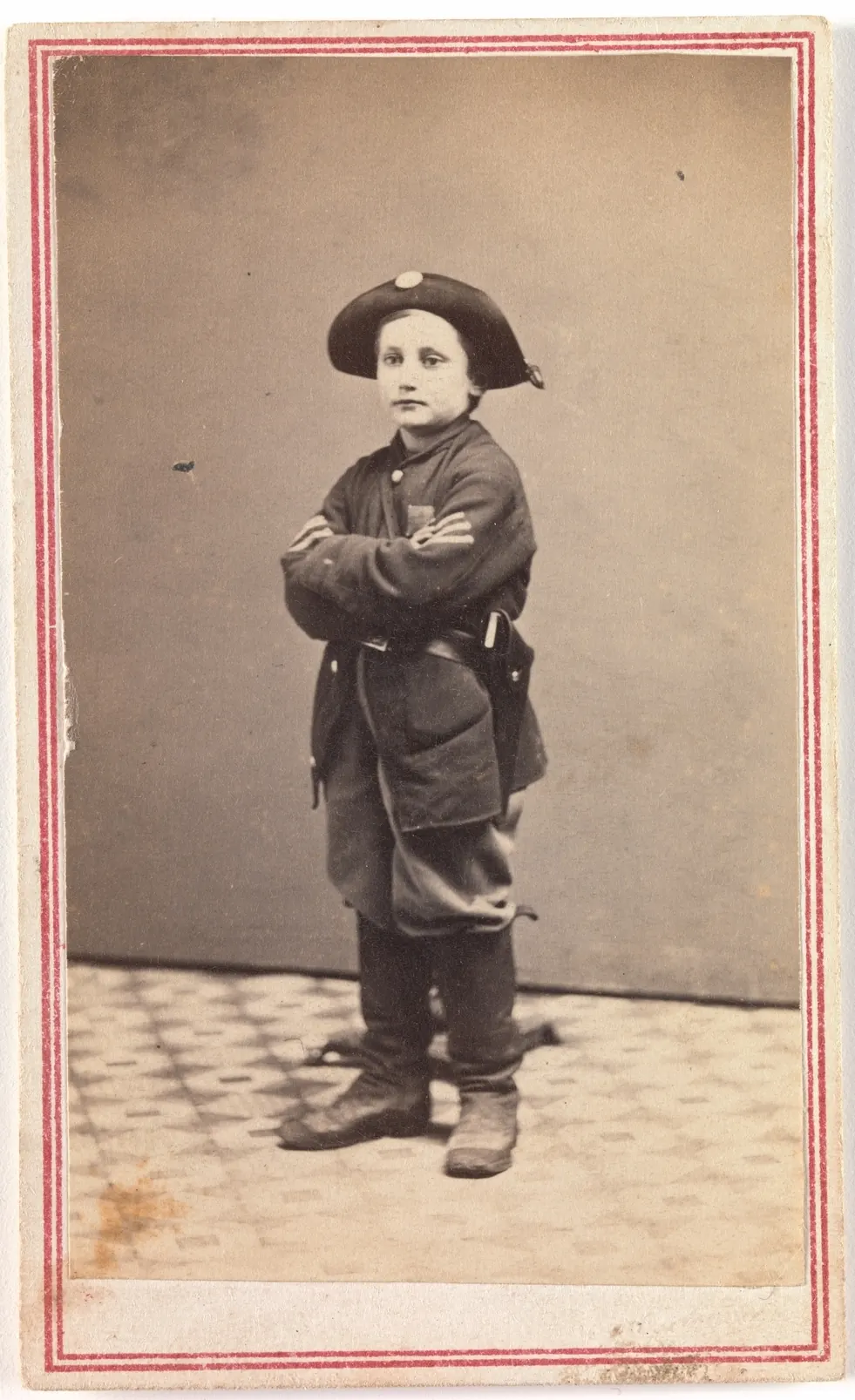
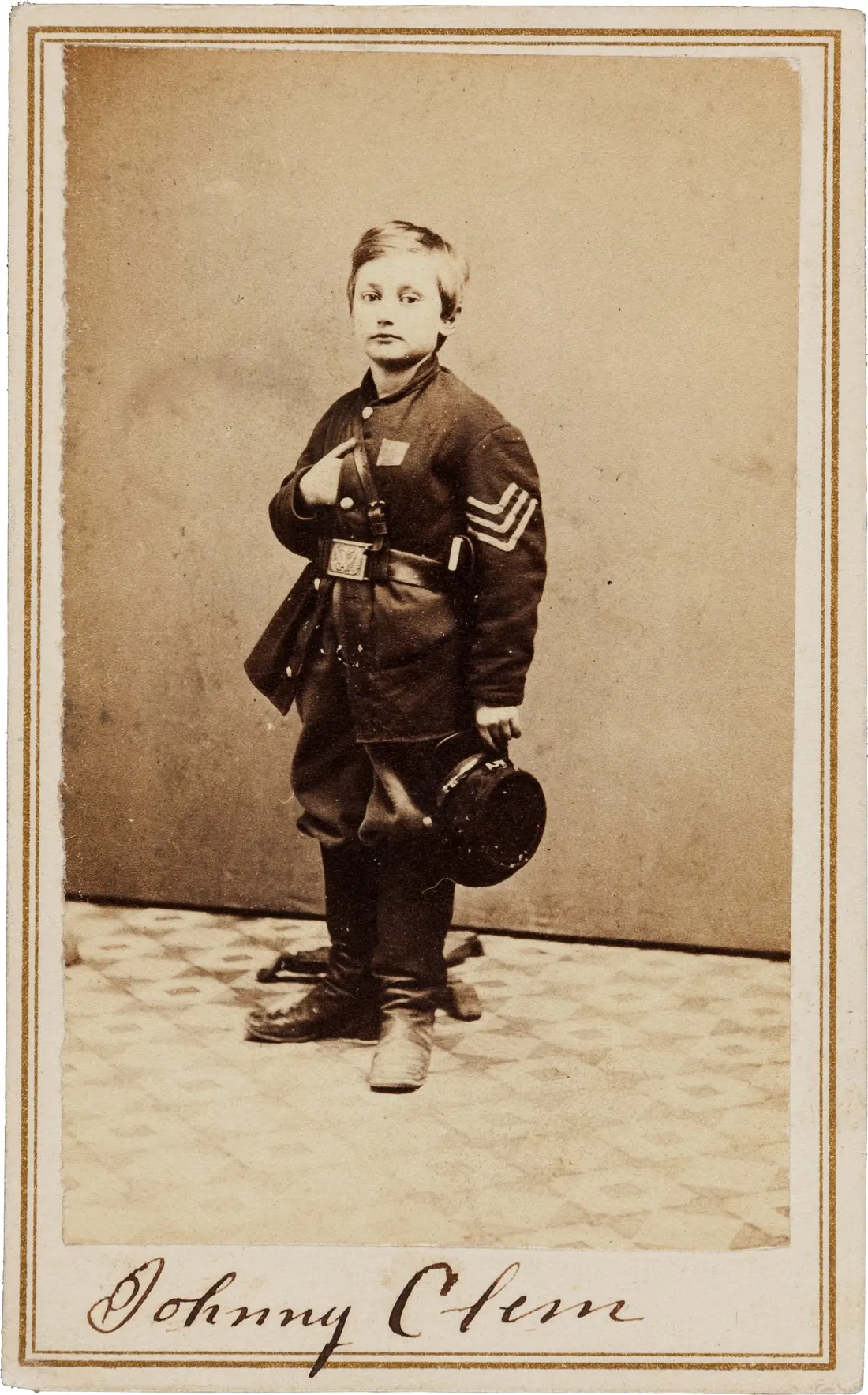
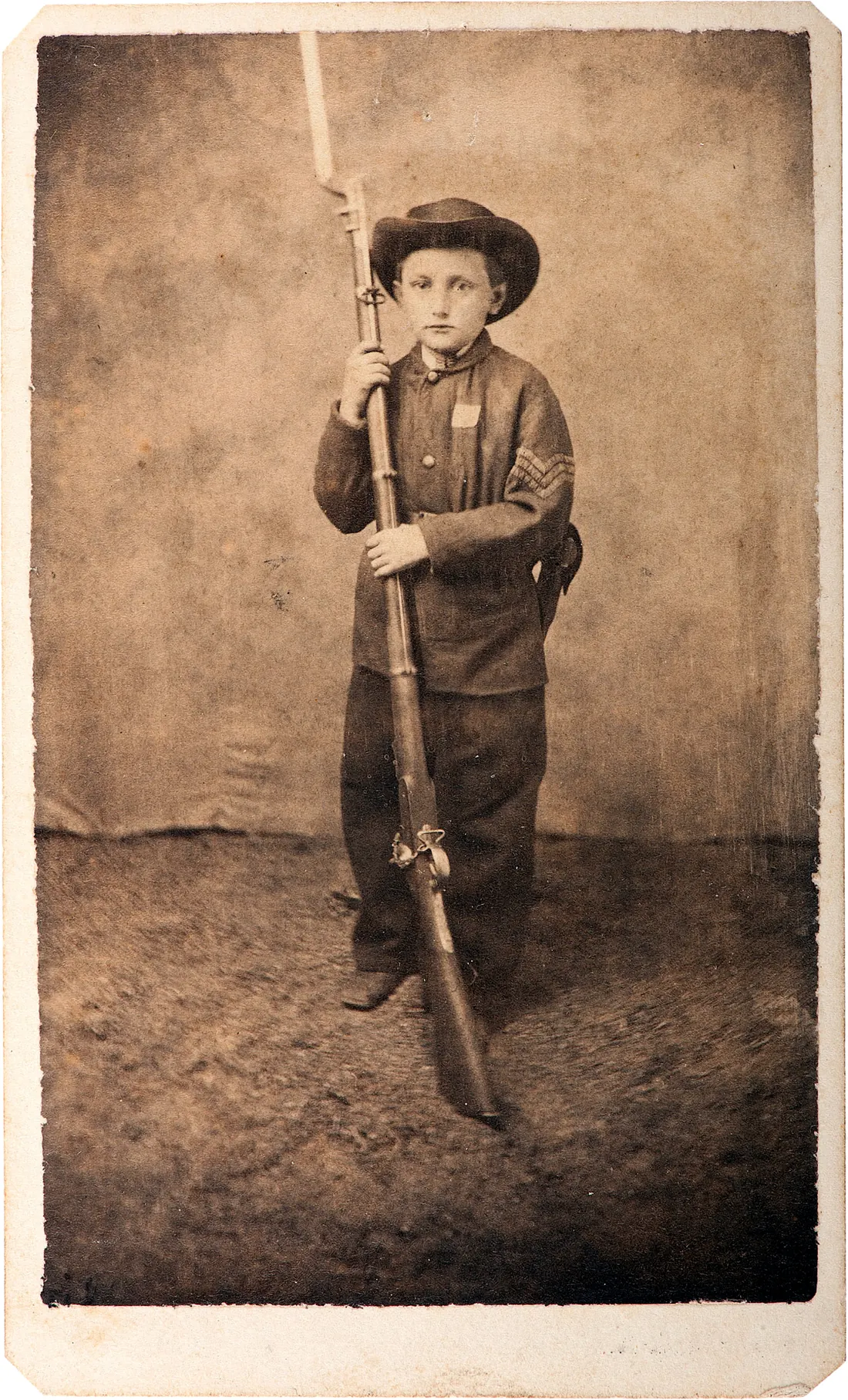
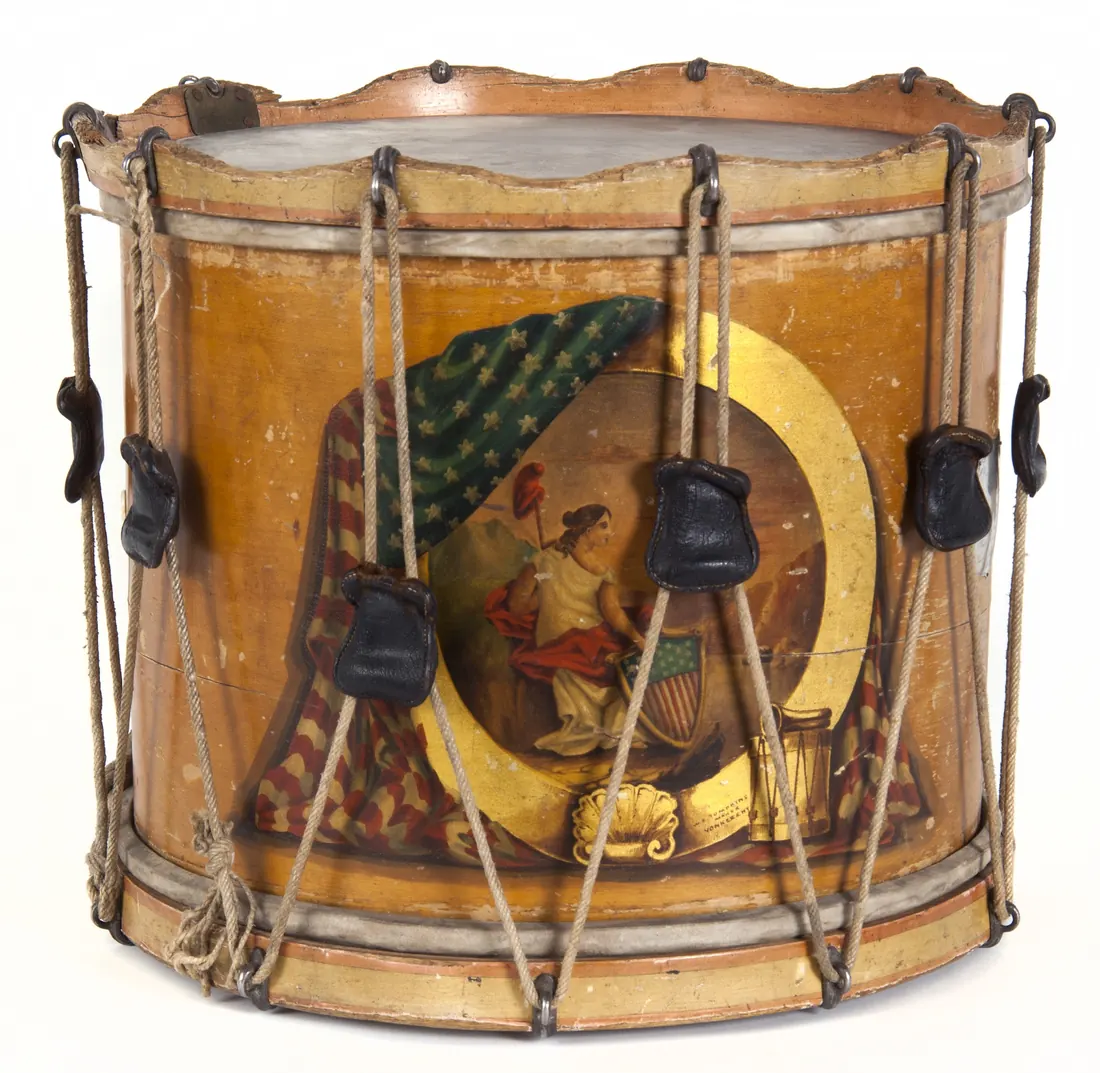
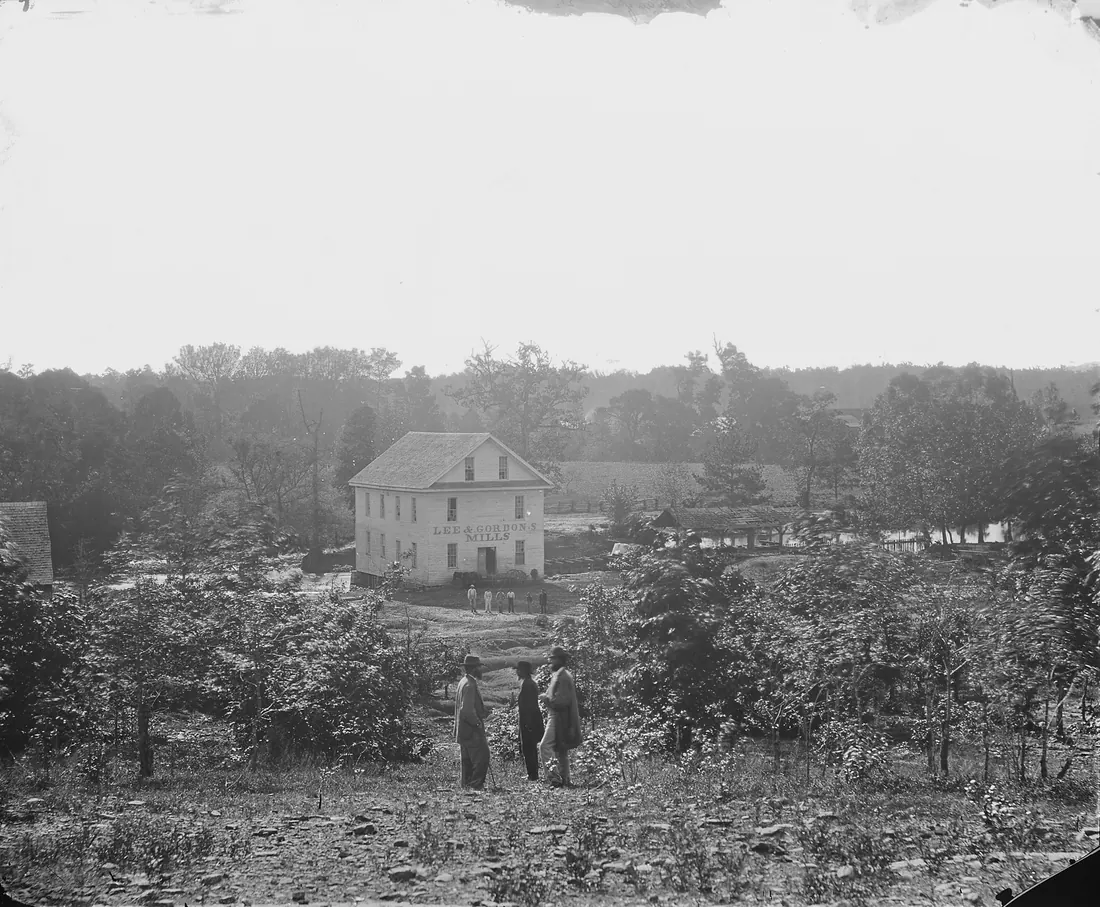
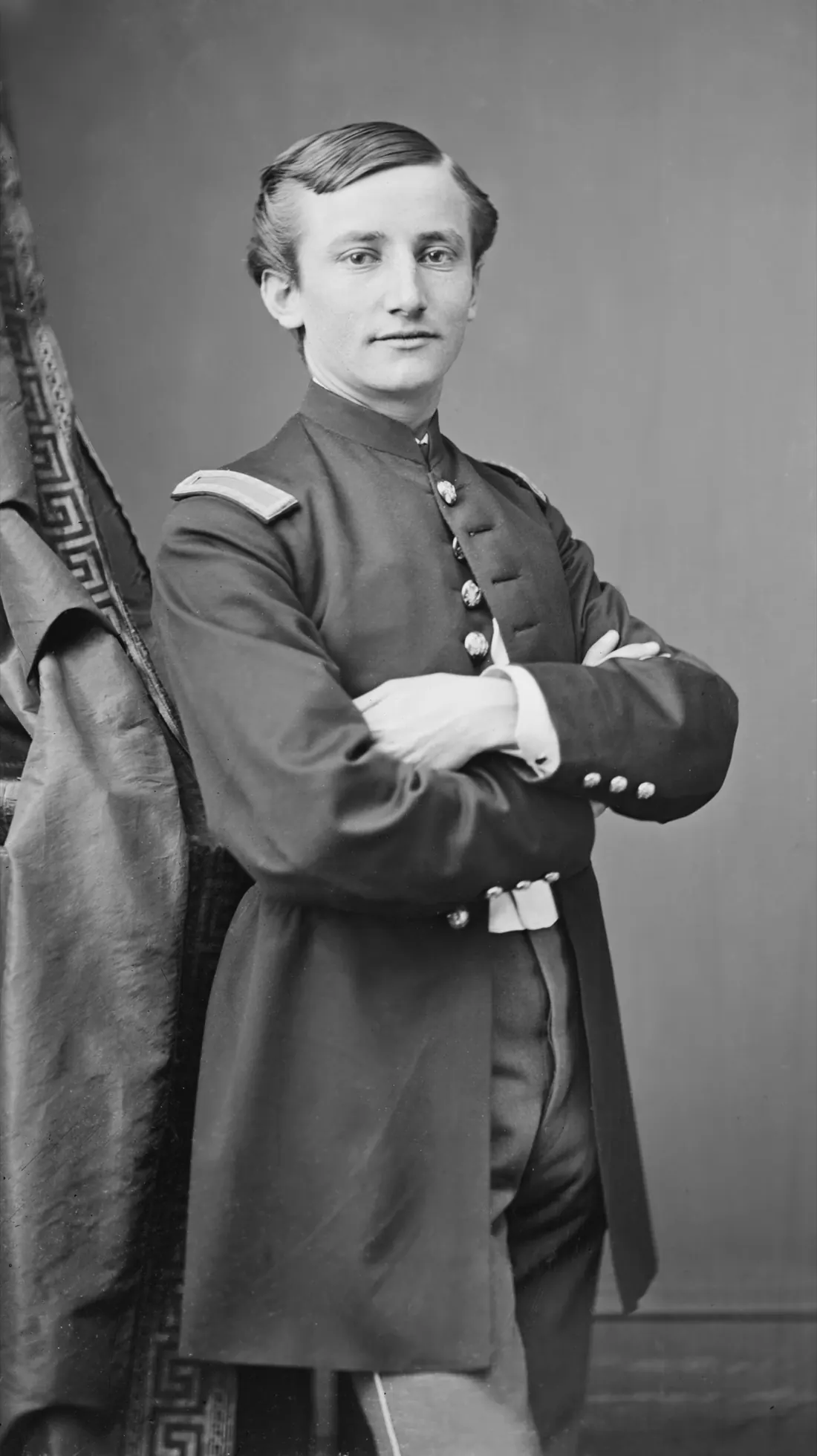
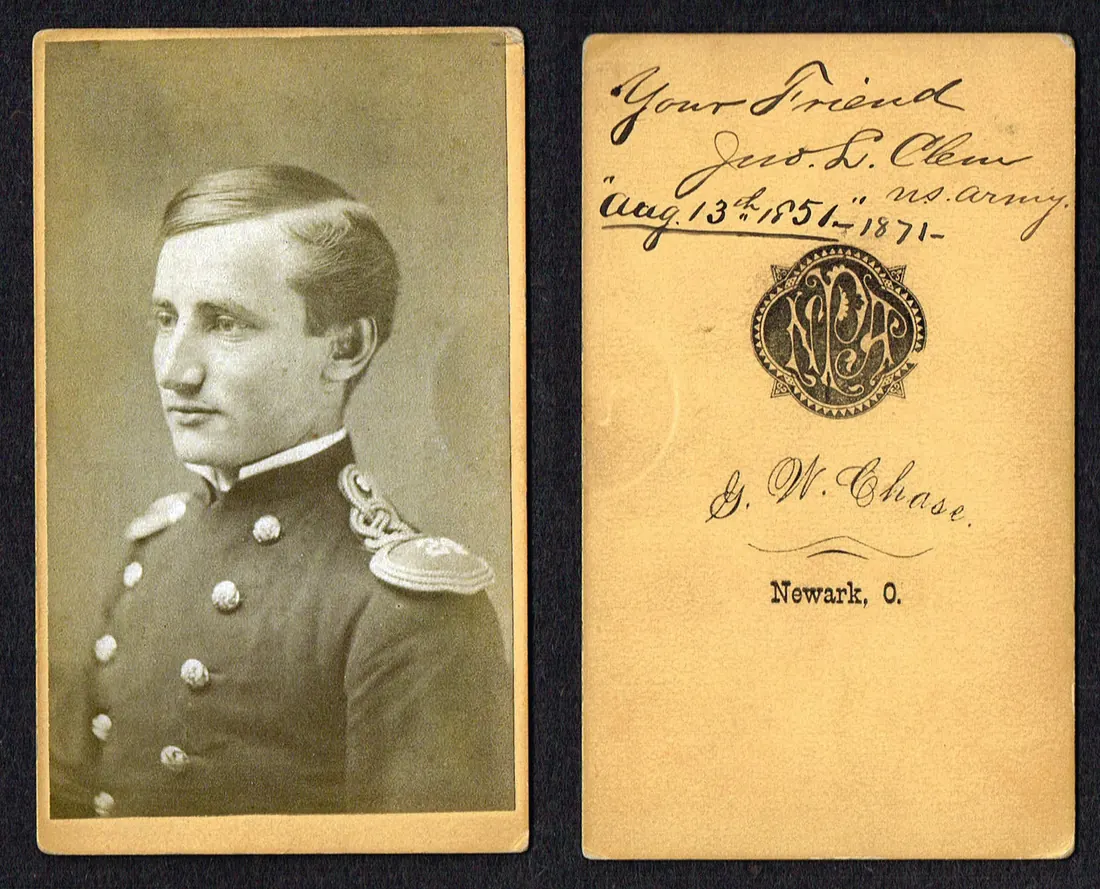
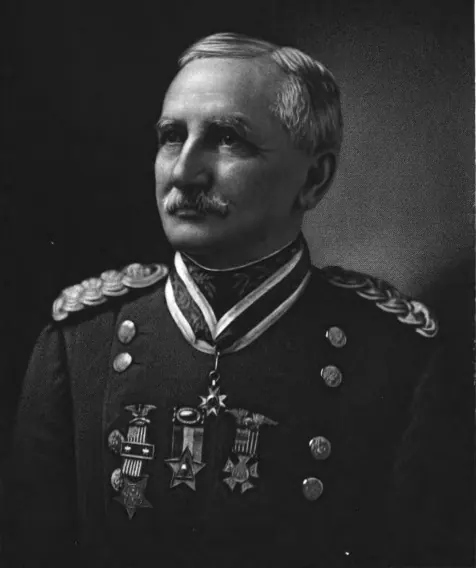
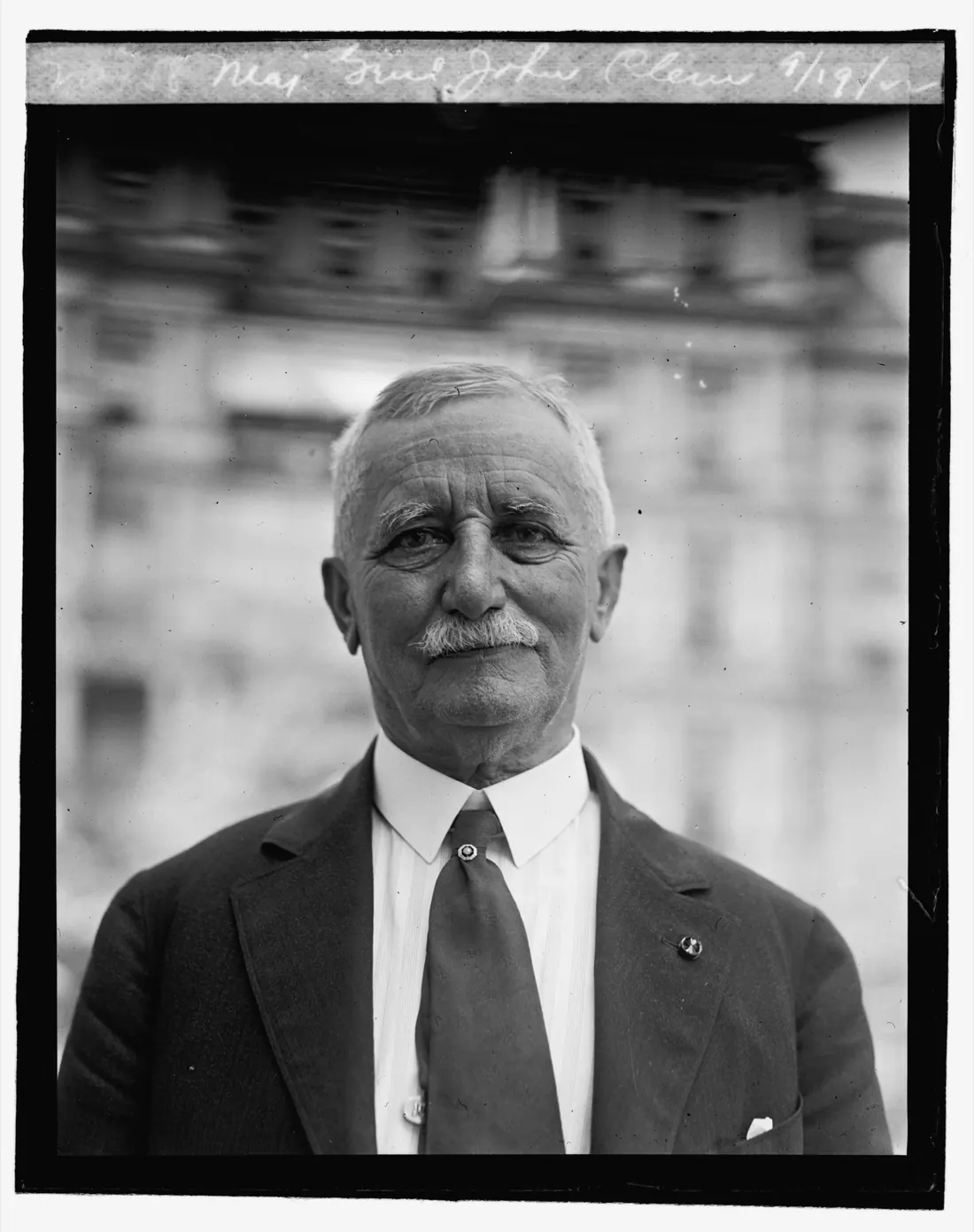
Pictures: every portrait shows John Clem except Ulysses S. Grant’s. Three cartes de visite (the signed one, the one with the rifle and the 1871 card) are scans from auction and dealer listings. The drum belonged to the 1st Minnesota (1861), not to Clem. Lee and Gordon’s Mills is on the Chickamauga battlefield but not at Horseshoe Ridge, where he fought. The lithograph is an artist’s picture of the Chickamauga story, published in 1863–64. The Brady-Handy portrait is dated 1871 on Commons and 1867 in Wikipedia’s caption.
Photo credits
The archive photos in this story
The photographs and illustrations in this story are in the public domain or shared under open licenses; each one is credited below with its license. Tap one to enlarge it, or follow the link to its Wikimedia Commons page for the full record. The narration, captions and graphics in the Short are our own; its music and sound effects are credited below.
Music and sound effects
Music: Brahms, Tragic Overture, Op. 81 (Musopen Symphony Orchestra, CC0); Dvorak, Goin' Home (US Air Force Band, Concert Band, public domain, US government work).
Sound effects: Freesound, CC0.


































































