
On September 17, 1862, after twelve hours of savage combat at Antietam, in Maryland, 23,000 soldiers were killed, wounded or missing. The National Park Service calls it “the bloodiest single-day battle in American history.” Clara Barton had no official job title there, and she had never attended nursing school; the nursing care she gave was self-taught. She watched harried surgeons dress the soldiers’ wounds with corn husks, and she handed over to them a wagon load of bandages and other medical supplies that she had personally collected over the past year.
As bullets whizzed overhead and artillery boomed in the distance, she cradled the heads of suffering soldiers. As she knelt down to give one man a drink, she felt her sleeve quiver. She looked down and saw a bullet hole in it, and then she discovered that the bullet had killed the man she was helping.
Working non-stop until dark, she comforted the men and assisted the surgeons. When night fell, the surgeons were stymied again, this time by lack of light, and she produced lanterns from her wagon of supplies, so that the thankful doctors could go back to work. After Antietam, Brigade Surgeon James L. Dunn wrote that Gen. McClellan, “with all his laurels, sinks into insignificance beside the true heroine of the age, the angel of the battlefield.”
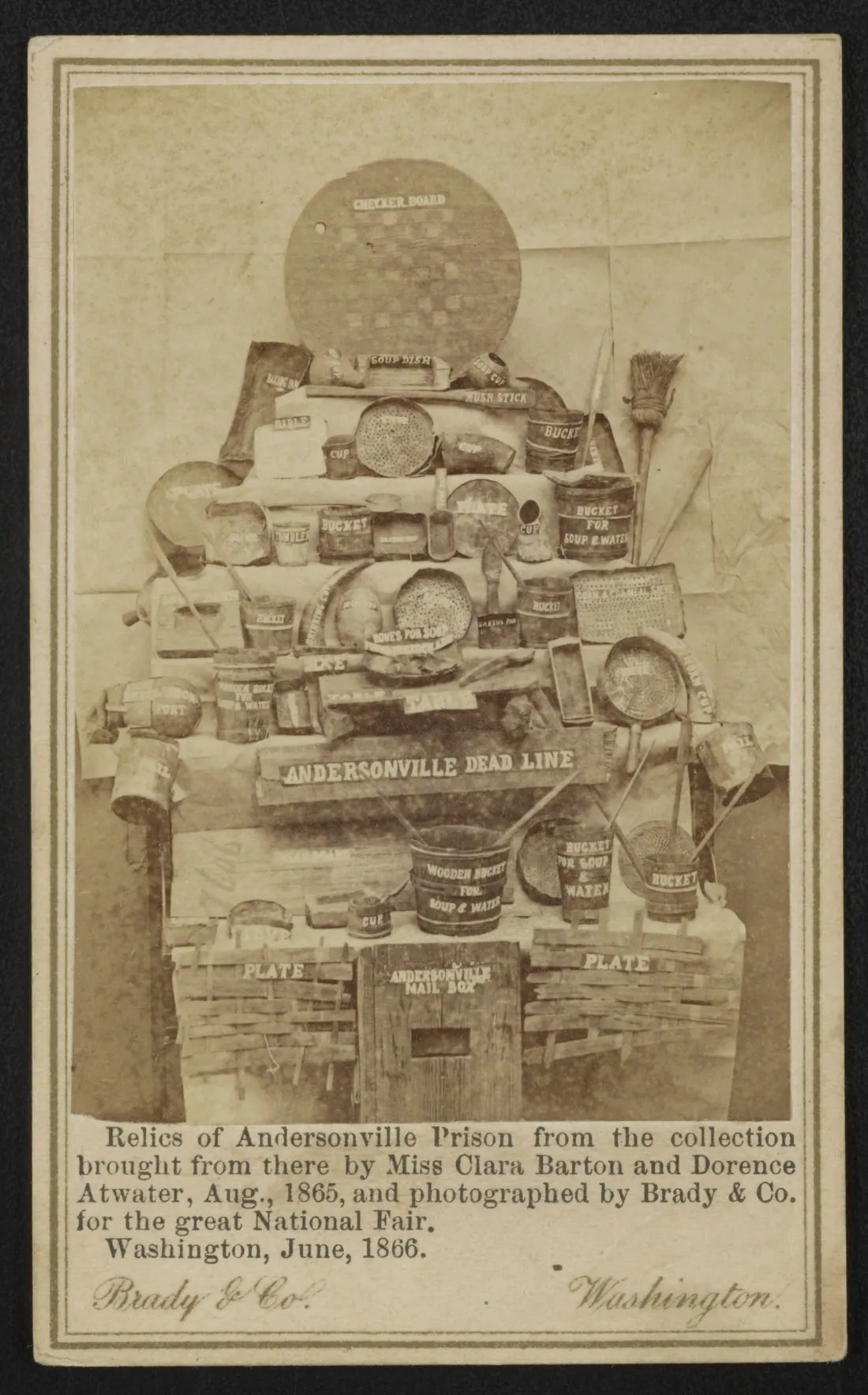
After the war her Missing Soldiers Office, in four years, received 63,182 inquiries and, in the words of her final report to Congress, “identified 22,000 men.” In August 1865 she and Dorence Atwater brought back relics from Andersonville Prison. On May 21, 1881, she founded the American Red Cross, and she led it for twenty-three years. Her account of the bullet at Antietam ends: “I have never mended that hole in my sleeve.”
Fact check
The facts and where they come from
- She was holding a wounded soldier, but a bullet went through her sleeve and killed him. Clara Barton Museum: “She held another wounded man in her arms and as she helped him take a drink of water from a canteen, a bullet passed through her dress sleeve killing her patient instantly.” National Park Service: “As she knelt down to give one man a drink, she felt her sleeve quiver. She looked down, noticed a bullet hole in her sleeve, and then discovered that the bullet had killed the man she was helping.” 51
- September 17, 1862, Antietam. National Park Service: “23,000 soldiers were killed, wounded or missing after twelve hours of savage combat on September 17, 1862.” 3
- The bloodiest single day in American history. National Park Service: “the bloodiest single-day battle in American history.” Wikipedia: “It remains the bloodiest day in American history.” 411
- She had no army job and no formal training. Clara Barton Museum: “Despite having no official job title, she served nearly as a quartermaster, aid, nurse, and cook.” Wikipedia: “Since nursing education was not very formalized, and she did not attend nursing school, she provided self-taught nursing care.” 510
- But she brought a wagon of supplies she had collected herself. National Park Service: “Miss Barton handed over to grateful surgeons a wagon load of bandages and other medical supplies that she had personally collected over the past year.” 1
- At the front, surgeons were dressing wounds with corn husks. National Park Service: “Clara Barton watched as harried surgeons dressed the soldiers’ wounds with corn husks.” 1
- Bullets flew overhead as she cradled the wounded. National Park Service: “As bullets whizzed overhead and artillery boomed in the distance, Miss Barton cradled the heads of suffering soldiers …” 1
- She knelt to give one man a drink. Her sleeve quivered. A bullet had passed through it, and killed him. National Park Service: “As she knelt down to give one man a drink, she felt her sleeve quiver,” and “the bullet had killed the man she was helping.” 1
- She kept working until dark. National Park Service: “Working non-stop until dark, Miss Barton comforted the men and assisted the surgeons with their work.” 1
- When the surgeons ran out of light, she brought out lanterns. National Park Service: “When night fell, the surgeons were stymied again—this time by lack of light. But Miss Barton produced some lanterns from her wagon of supplies, and the thankful doctors went back to work.” Clara Barton Museum: “That night she retrieved the candles and lanterns she brought which the surgeons lacked.” 15
- A surgeon called her the angel of the battlefield. Brigade Surgeon James L. Dunn, after Antietam: “In my feeble estimation, Gen. McClellan, with all his laurels, sinks into insignificance beside the true heroine of the age, the angel of the battlefield.” The National Park Service quotes the same line. 71
- After the war, she helped identify about 22,000 missing soldiers. Clara Barton Museum, quoting her final report to Congress: in four years her Missing Soldiers Office “had received 63,182 inquiries, written 41,855 letters, mailed 58,693 printed circulars, distributed 99,057 copies of her printed rolls, and identified 22,000 men.” Wikipedia: she “helped locate more than 22,000 missing men.” 610
- She brought back relics from Andersonville Prison. The Library of Congress title of the Brady & Co. photograph: “Relics of Andersonville Prison from the collection brought from there by Miss Clara Barton and Dorence Atwater, Aug., 1865.” 12
- In 1881, she founded the American Red Cross. American Red Cross: “On May 21, 1881, Clara founded the American Red Cross.” National Park Service: “She led the organization for twenty-three years.” 92
- In her words, “I have never mended that hole in my sleeve.” Word for word at the end of her account of Antietam, as given by the National Park Service and the Antietam Institute. 18
Sources
- Clara Barton at Antietam National Park Service, Antietam National Battlefield
- Clara Barton National Park Service
- Antietam National Battlefield (home page) National Park Service
- Antietam National Battlefield, page on the park’s 2024 film National Park Service
- Clara Barton at Antietam: The Angel of the Battlefield Emerges Clara Barton Museum
- The Missing Soldiers Office Clara Barton Museum
- Angel of the Battlefield – A Letter From Antietam’s Field Hospitals (Dr. James L. Dunn’s letter, as printed in 1862) National Museum of Civil War Medicine
- Clarissa Harlowe Barton Antietam Institute
- Clara Barton American Red Cross
- Clara Barton Wikipedia
- Battle of Antietam Wikipedia
- “Relics of Andersonville Prison from the collection brought from there by Miss Clara Barton and Dorence Atwater, Aug., 1865,” Brady & Co., 1866 (Library of Congress) Wikimedia Commons
Notes
Where the nickname began: the National Park Service’s biography says the surgeon at Cedar Mountain (August 1862) “later likened her to an angel”; the phrase “the angel of the battlefield” itself is in Dr. Dunn’s letter, written after Antietam. We say only that a surgeon called her that.
Her account of the bullet: its wording differs between versions (“A ball has passed … cutting through his chest” at the National Park Service and the Antietam Institute; “had passed … cutting through the sleeve, and passing through his chest” in other retellings), so we quote only its last sentence, which is the same everywhere.
When and where she arrived: about noon at the northern edge of the Cornfield (National Park Service) or about 9 a.m. at Samuel Poffenberger’s farm (Clara Barton Museum). We give neither.
22,000: her final report says “identified 22,000 men”; Wikipedia says “more than 22,000”; the American Red Cross says “more than 20,000.” We say about 22,000.
Left out for length: she cut a bullet from a soldier’s cheek with a pocketknife (Clara Barton Museum), cooked gruel, and days later collapsed with typhoid fever (National Park Service).
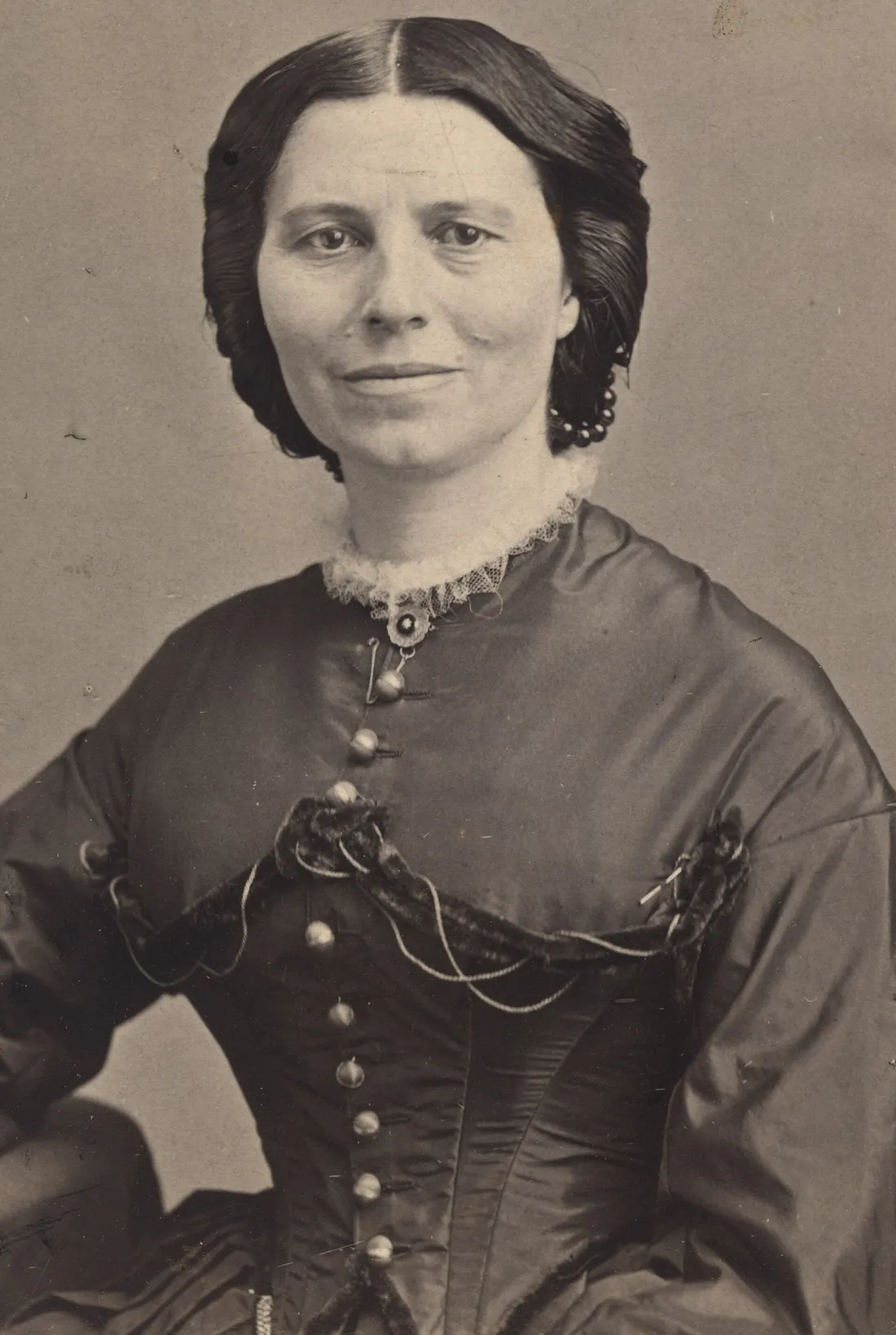
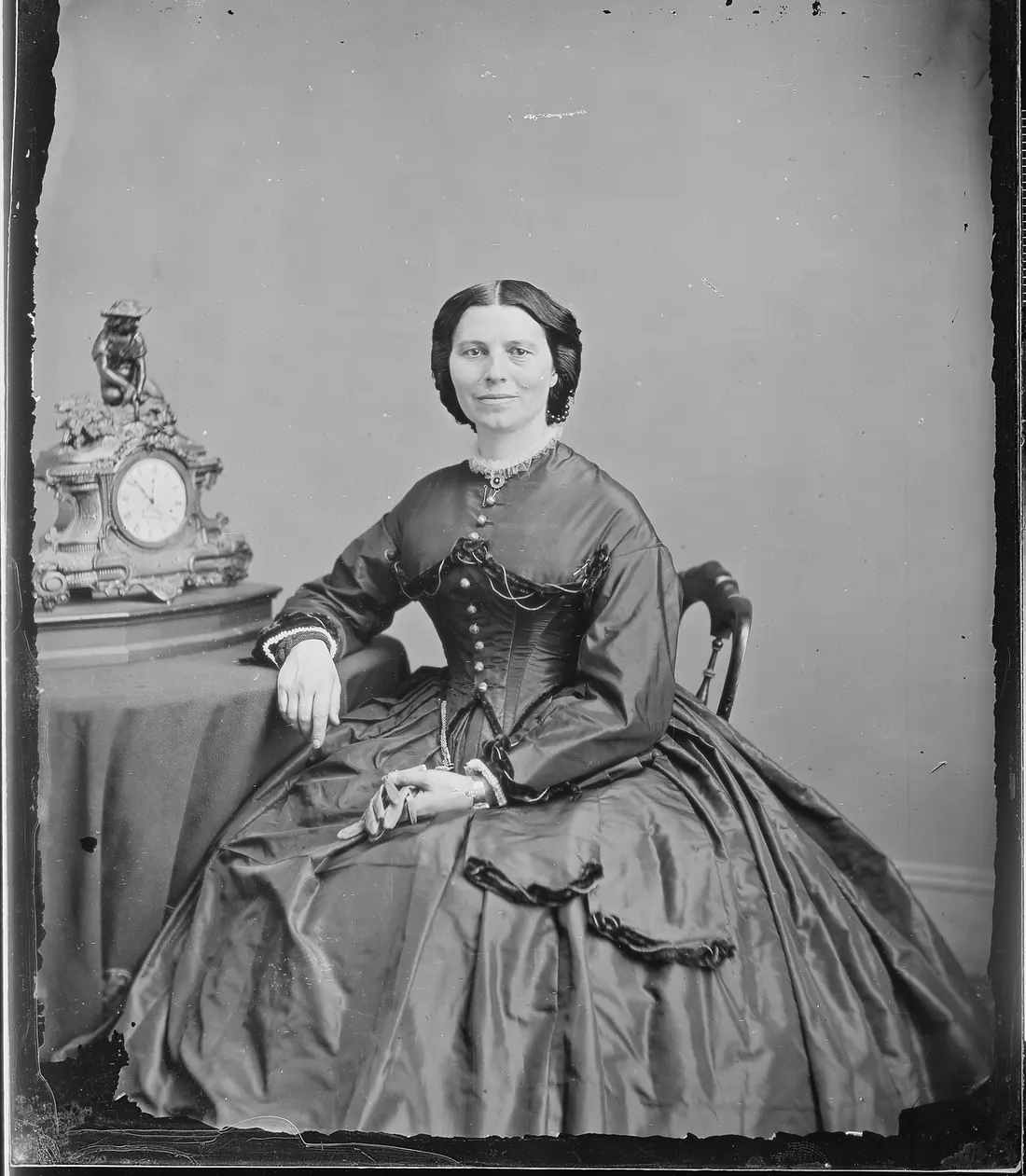
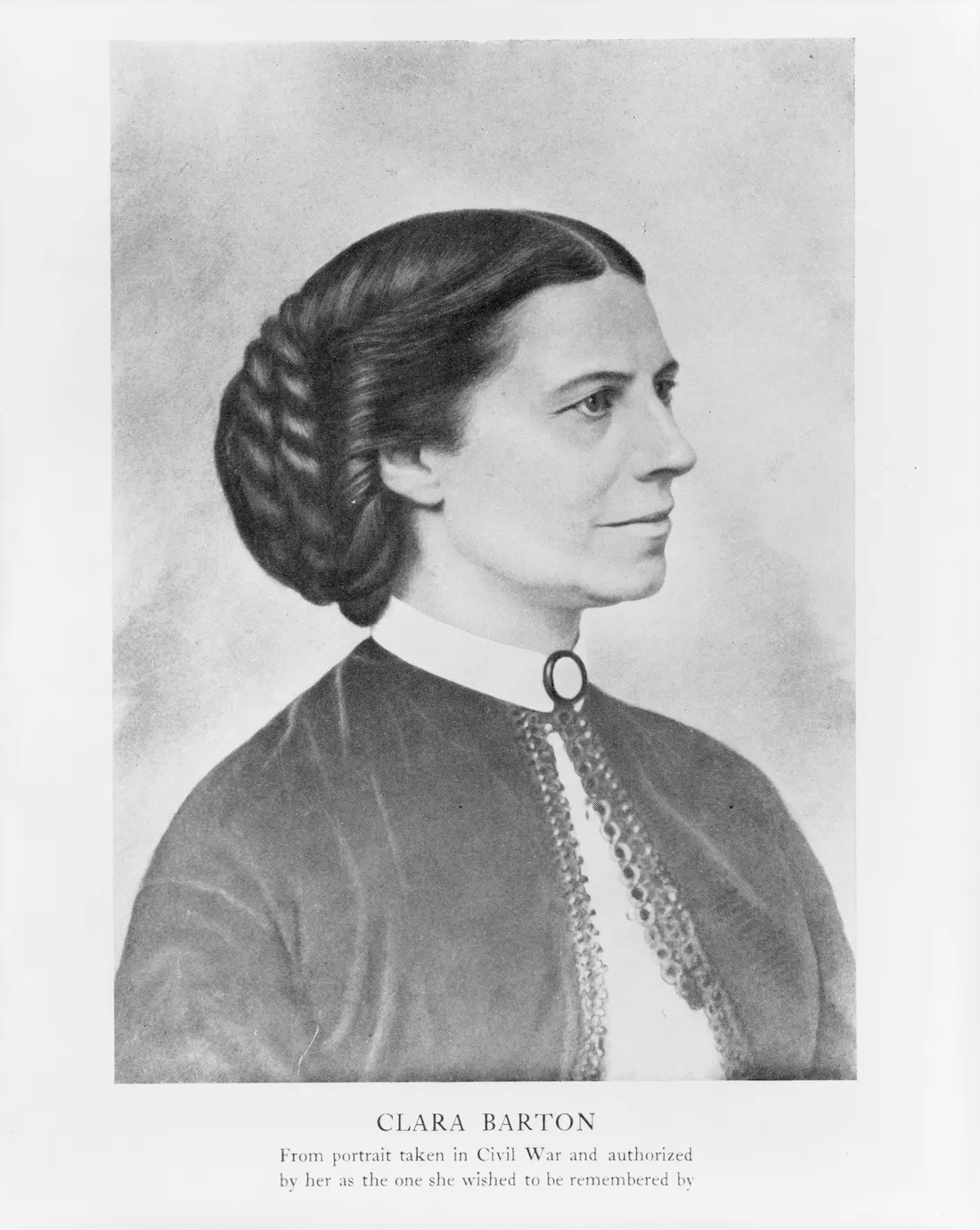
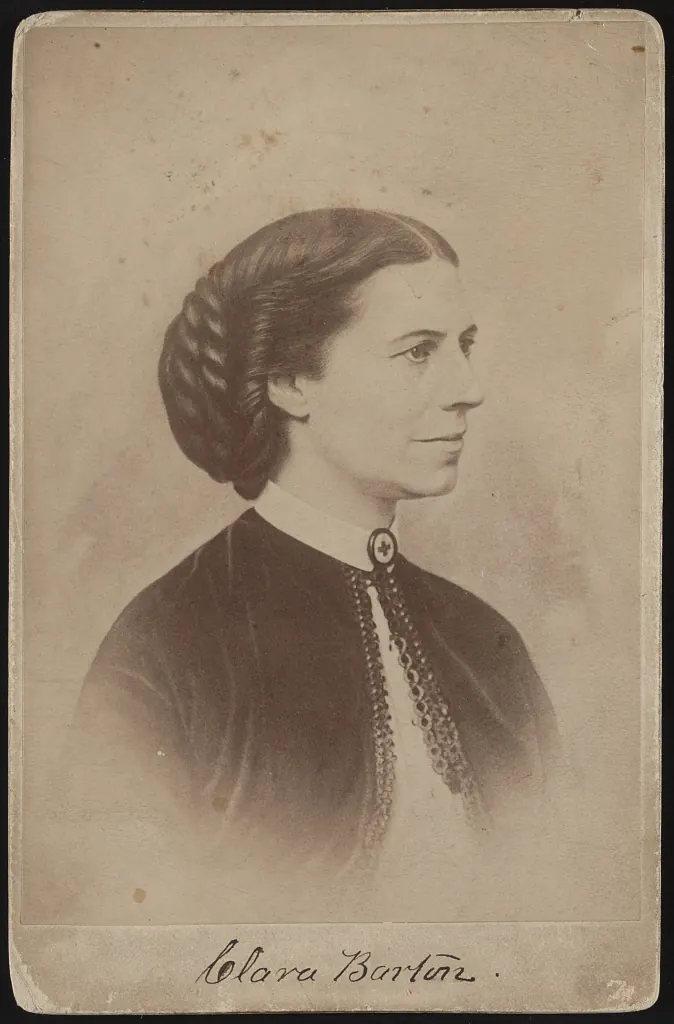
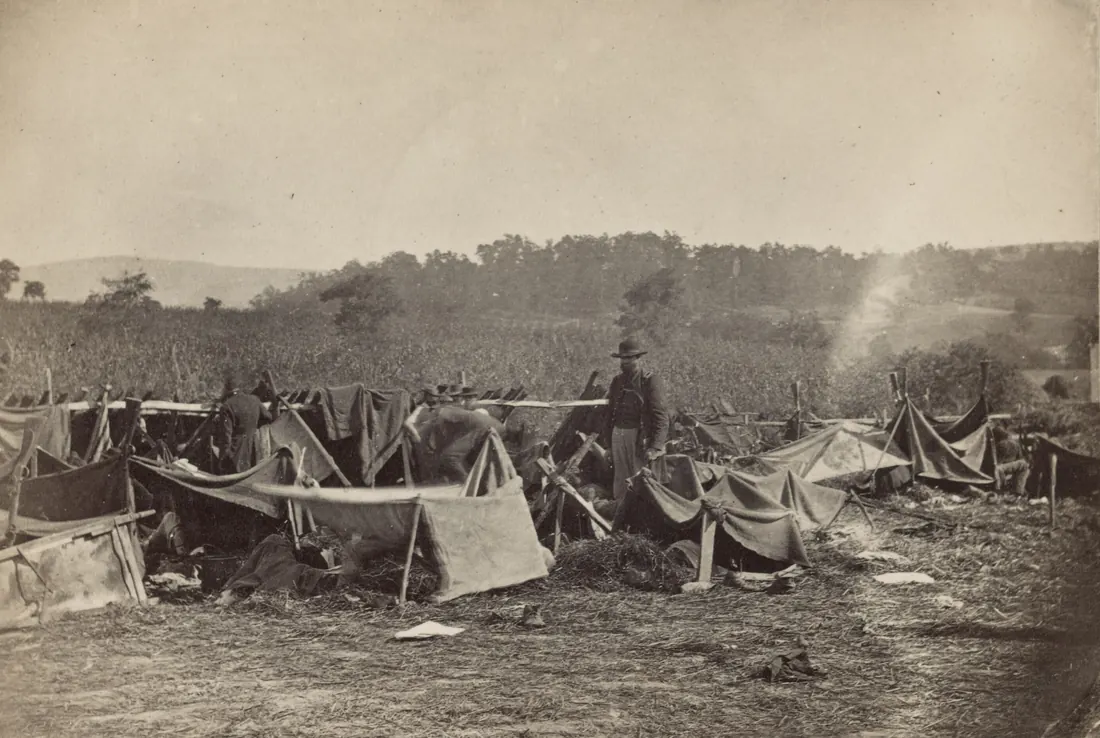
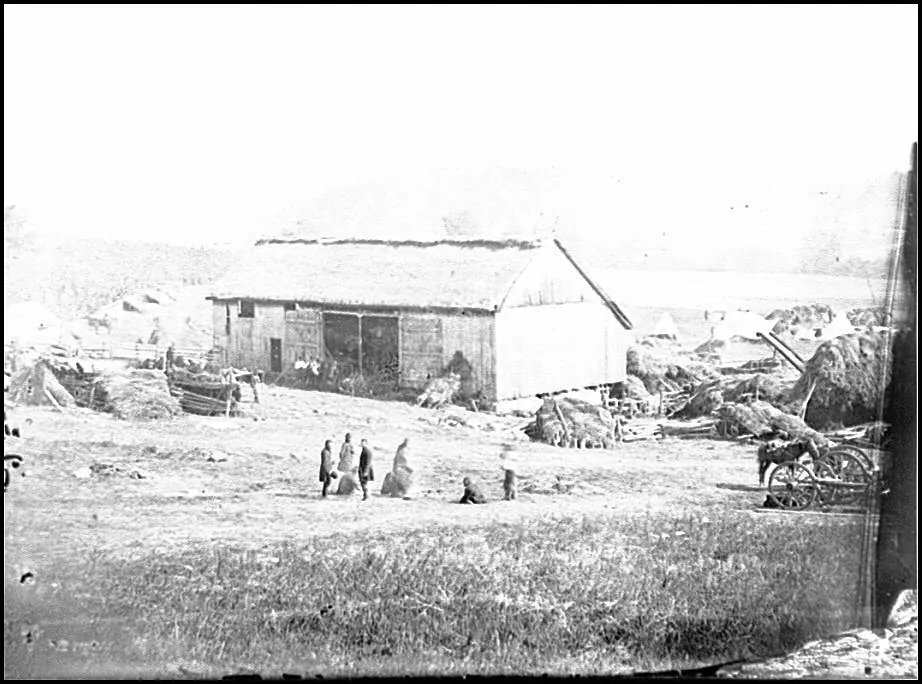
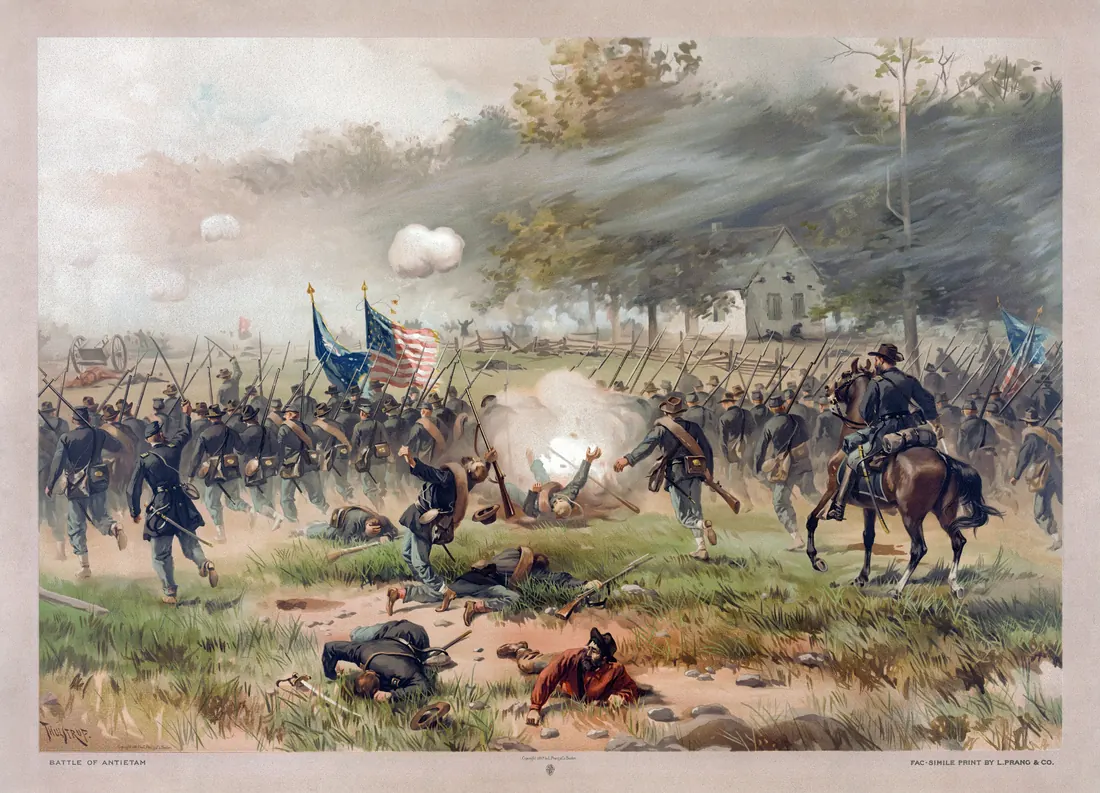
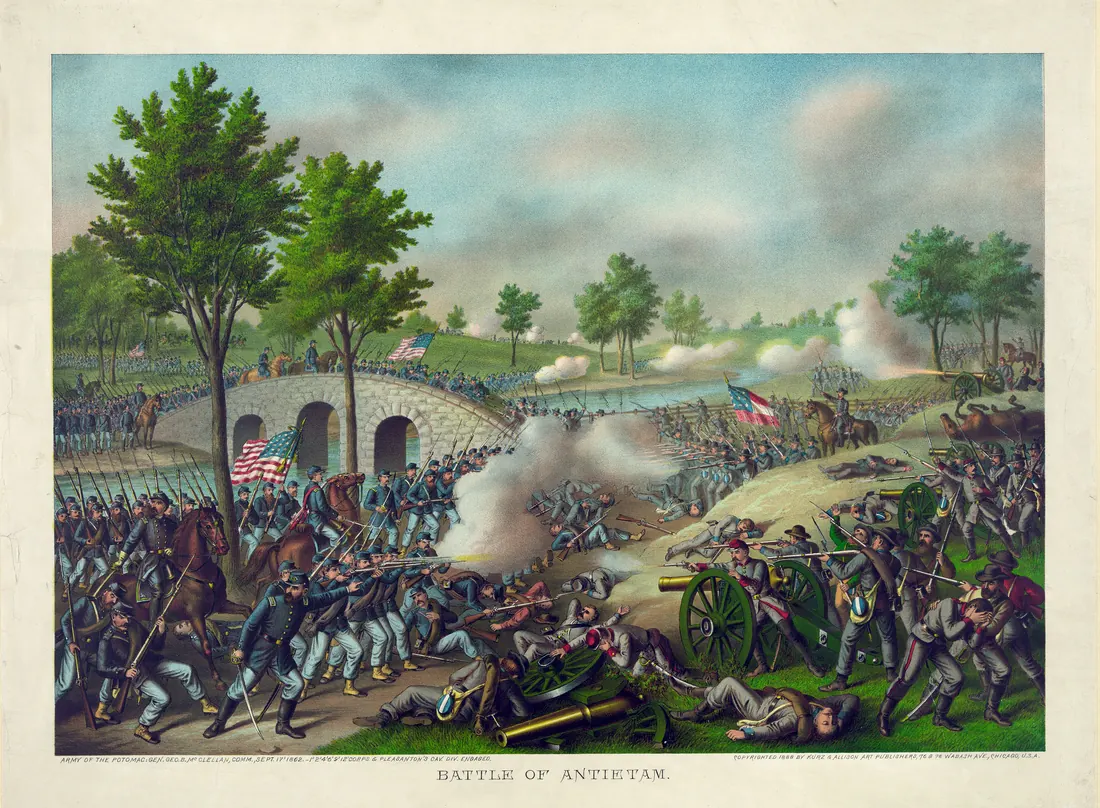
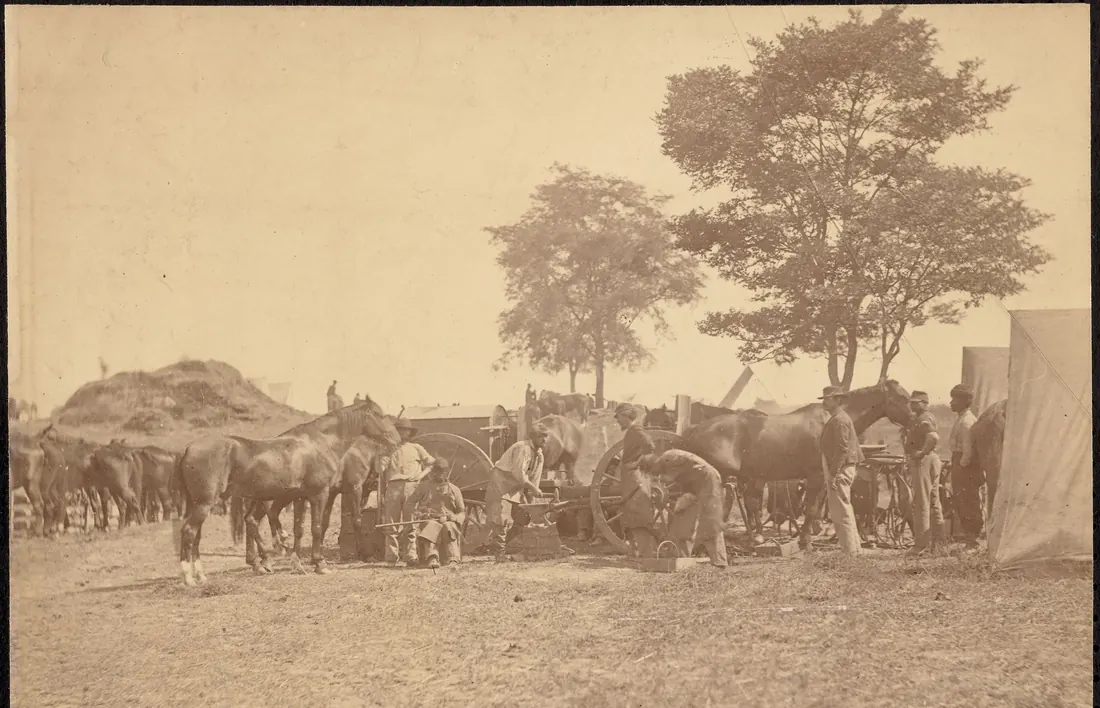
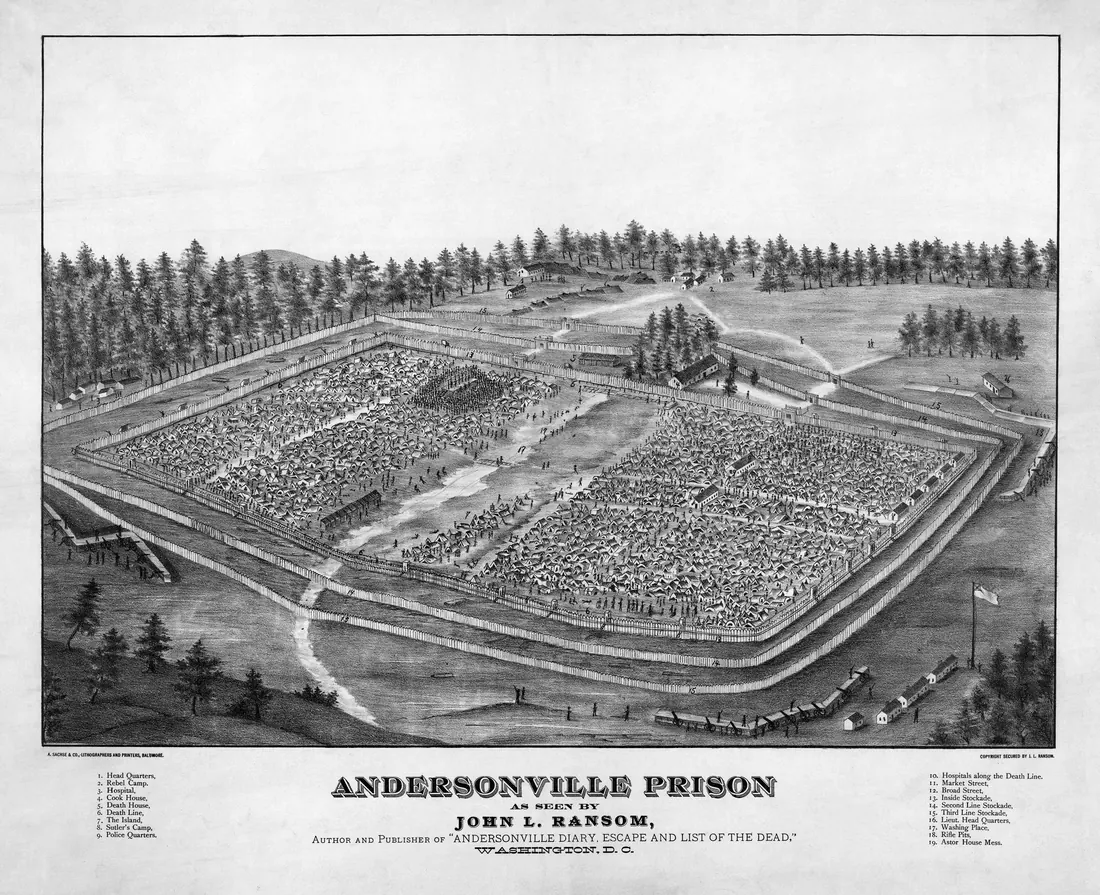
Pictures: Clara Barton herself is in Mathew Brady’s portrait of about 1865, the Brady studio portrait, the halftone of the Civil War portrait she authorized “as the one she wished to be remembered by” (about 1890) and the cabinet card with her Red Cross brooch (the Library of Congress dates the photo about 1865; she inscribed the card in 1894). The paintings of 1887 and 1888 show the battle, not Barton. Alexander Gardner’s photos of Dr. Hurd’s field hospital and Smith’s barn show Antietam field hospitals after the battle, not the place she worked, and his army forge with wagons isn’t her wagon. The Andersonville relics are the ones she and Dorence Atwater brought back in 1865; John L. Ransom’s lithograph of 1882 shows the prison.
Photo credits
The archive photos in this story
All the photographs and illustrations in this story are in the public domain. Tap one to enlarge it, or follow the link to its Wikimedia Commons page for the full record. The narration, captions and graphics in the Short are our own; its music and sound effects are credited below.
Music and sound effects
Music: Mussorgsky, Night on Bald Mountain (1886 version) (Musopen, public domain); Dvorak, Symphony No. 9 'From the New World': II. Largo (Musopen, public domain).
Sound effects: Freesound, CC0.










































































