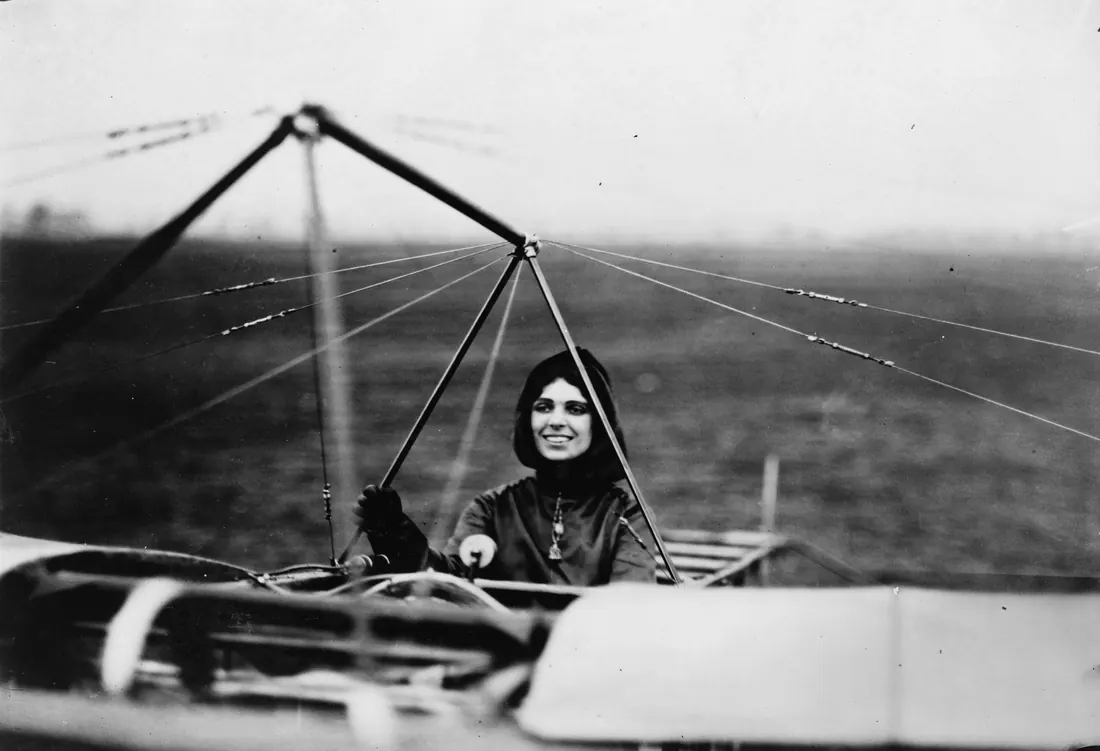
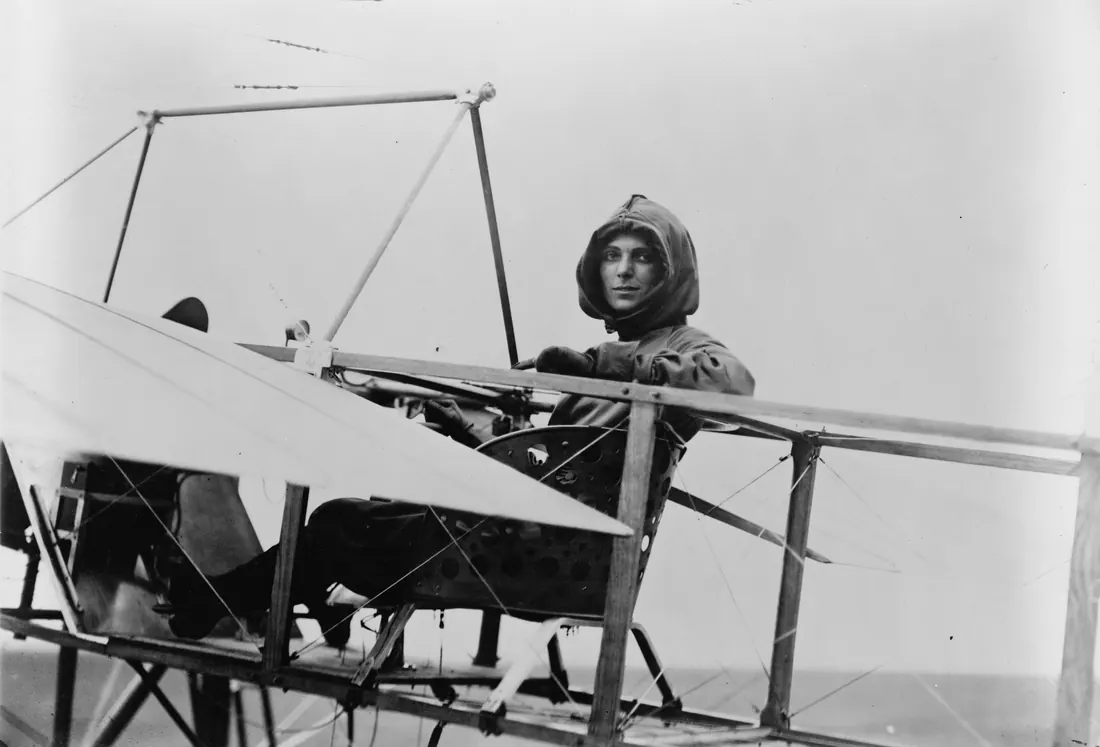
Harriet Quimby was an American aviator, journalist and film screenwriter. On August 2, 1911, after four months and thirty-three lessons, she won her pilot’s license by performing two test flights, and, as PBS NOVA puts it, she became “America’s first licensed woman pilot.” In late 1911 she decided to try a Channel crossing from England to France, a flight first made by Louis Blériot in 1909 and since by other pilots, “but never by a woman,” the Federal Aviation Administration says. In March 1912 she sailed for England.
An accomplished male pilot who had shown her how to use a compass was so sure she would fail that he offered to make the flight for her, promising to wear her purple flying suit. NOVA names him as Gustav Hamel. She turned down the offer. In thickening fog on the morning of April 16, 1912, she took off from Dover in a plane she had never flown. “They knew I had never used the machine before,” she said.
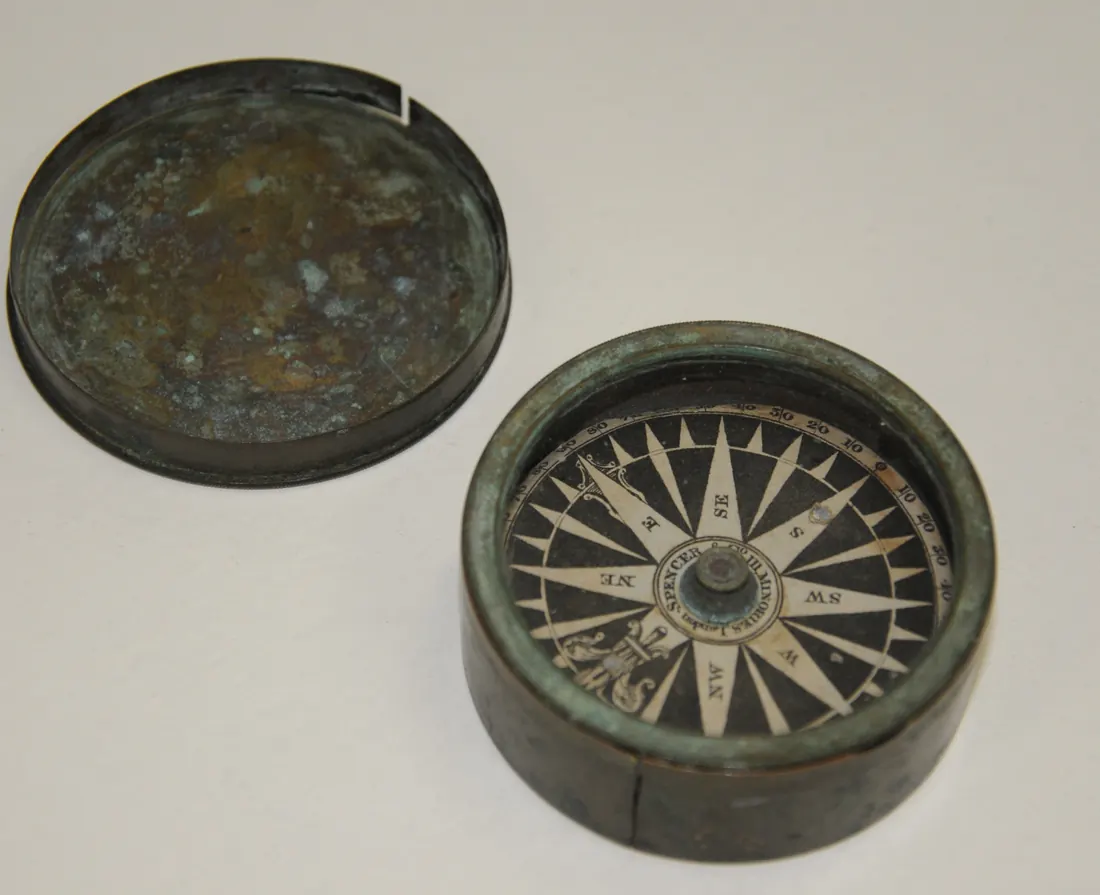
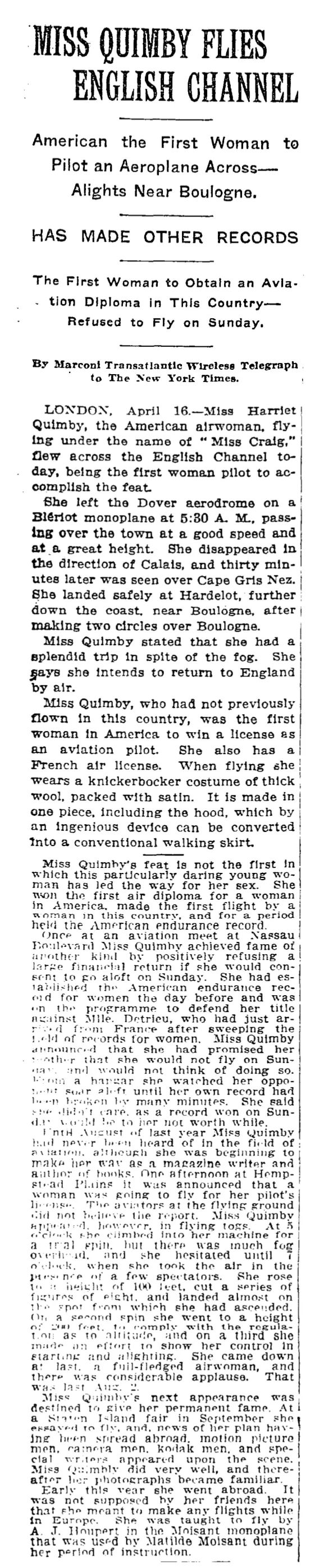
“I could not see ahead of me at all, nor could I see the water below,” she said of the fog. She steered by a compass Hamel had only just taught her to use, and after about an hour (59 minutes, says Wikipedia; one hour and nine minutes, says NOVA) she landed on a beach in France. Flight magazine gave her “the honour of being the first of the fair sex to make the journey, unaccompanied, across the Channel on an aeroplane.” The New York Times headline called her “the First Woman to Pilot an Aeroplane Across.”
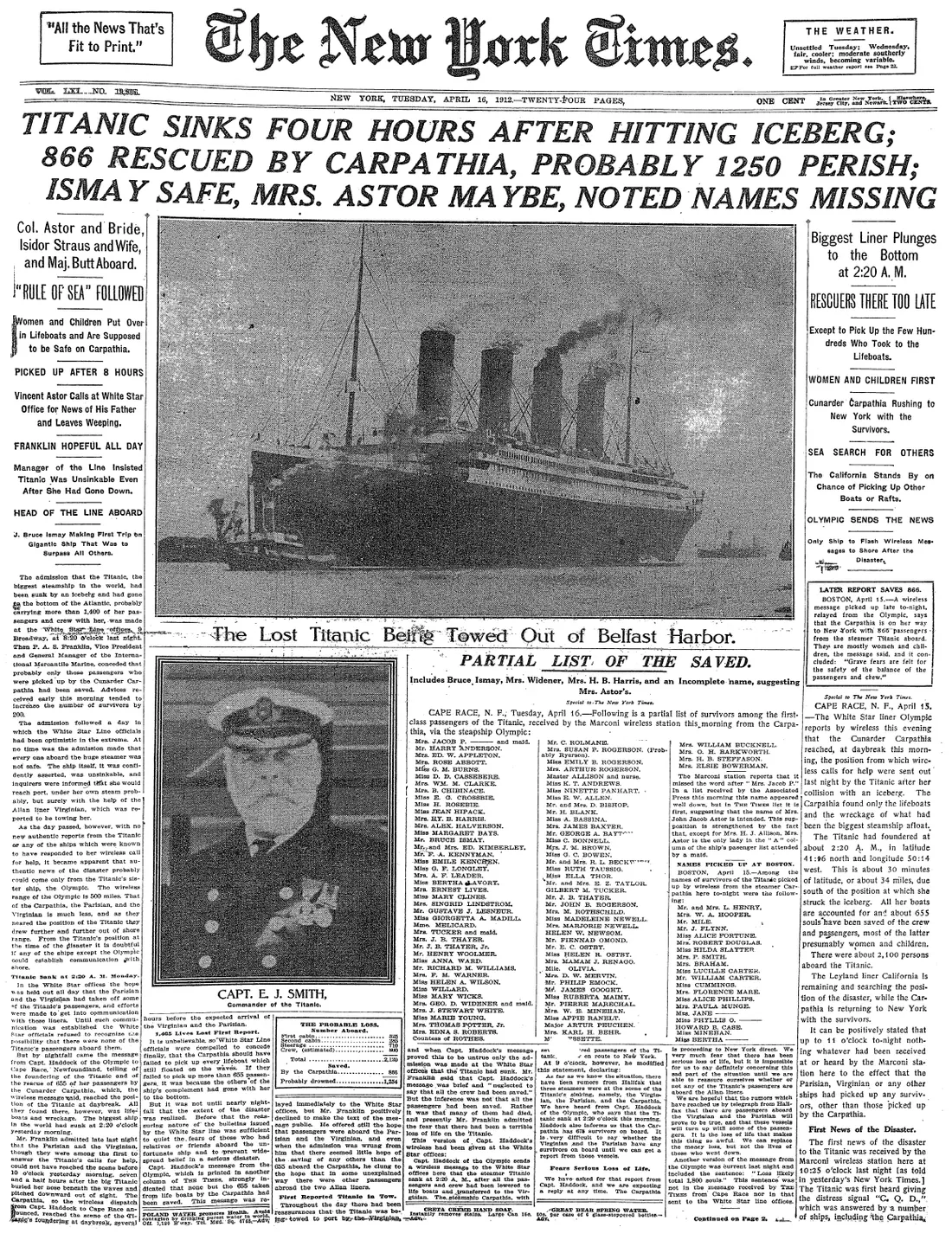
But the Titanic had sunk in the early hours of April 15, the day before she took off. Her hopes for front-page headlines never came true, the FAA says, and her achievement went largely unnoticed in the next days’ papers. In NOVA’s words, “Quimby’s achievement was all but overshadowed.”
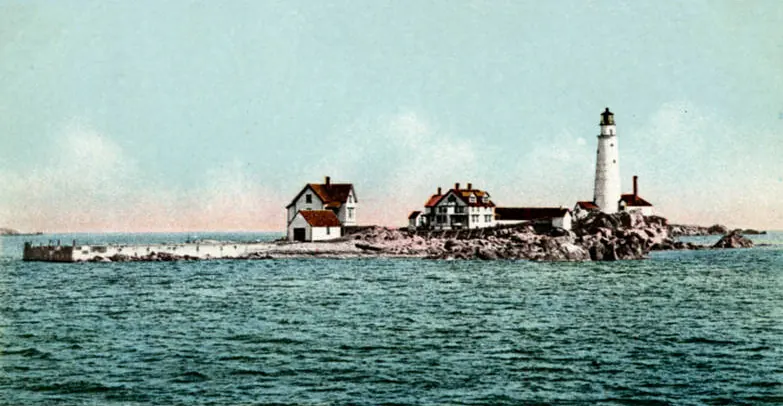
On July 1, 1912, less than three months after the crossing, she flew out to the Boston Light lighthouse in Boston Harbor during the Harvard-Boston aviation meet, with the meet’s organizer, William A. P. Willard, as her passenger. The aircraft unexpectedly pitched forward. Both she and Willard were thrown out of the plane, and in front of horrified spectators they fell to their deaths in the shallow waters of the harbor. Not until almost eighty years after her death, the FAA says, did she receive the kind of accolades she had hoped for: on April 28, 1991, the United States Post Office issued a commemorative stamp honoring her contributions to aviation.
Fact check
The facts and where they come from
- She did what no woman had ever done, but the world barely noticed. Federal Aviation Administration: the crossing “had been first accomplished by Louis Bleriot in 1909 and subsequently by other pilots, but never by a woman”; “Her hopes for front page headlines never materialized, and her achievement went largely unnoticed in the next days’ papers.” Wikipedia: “Her accomplishment received little media attention.” 18
- Her name was Harriet Quimby, aviator and journalist. Wikipedia: “an American pioneering aviator, journalist, and film screenwriter.” 8
- In 1911 she became America’s first licensed woman pilot. Federal Aviation Administration: “on August 2, 1911, after four months and thirty-three lessons, she applied for and won her pilot’s license by performing two test flights. This made her the first American woman …” PBS NOVA: “On August 1, 1911, at age 36, Harriet Quimby became America’s first licensed woman pilot.” 13
- Then she aimed for the Channel. Federal Aviation Administration: “Quimby decided to attempt a channel crossing from England to France in late 1911 … In March 1912 she sailed for England.” 1
- A male pilot offered to fly it for her, wearing her purple suit. PBS American Experience: “An accomplished male pilot who showed Quimby how to use a compass was so sure she would fail that he offered to make the flight for her, promising to wear Quimby’s purple flying suit.” PBS NOVA names him: “Hamel even offered to don Quimby’s satin suit and fly in her stead.” 23
- She said no. PBS American Experience: “She turned down the offer.” 2
- April 16, 1912: Dover, England. Federal Aviation Administration: “In thickening fog on the morning of April 16, 1912, the adventuresome pilot began her flight from Dover to Calais.” 1
- She took off in a plane she had never flown. Her own words (PBS American Experience): “They knew I had never used the machine before.” PBS NOVA: “Quimby had never piloted the model, much less the particular plane Blériot had loaned her.” 23
- Fog swallowed her over the sea. Her words, as the Federal Aviation Administration quotes them: “I could not see ahead of me at all, nor could I see the water below.” PBS NOVA, quoting her: “The fog quickly surrounded me, like a cold, wet, gray blanket.” 13
- She steered by a compass she had just learned to use. Federal Aviation Administration: “a compass Hamel had recently taught her how to use.” PBS NOVA: she “had never used a compass, which Gustav Hamel … had just taught her to use.” Flight (1912): “Guided solely by compass.” 134
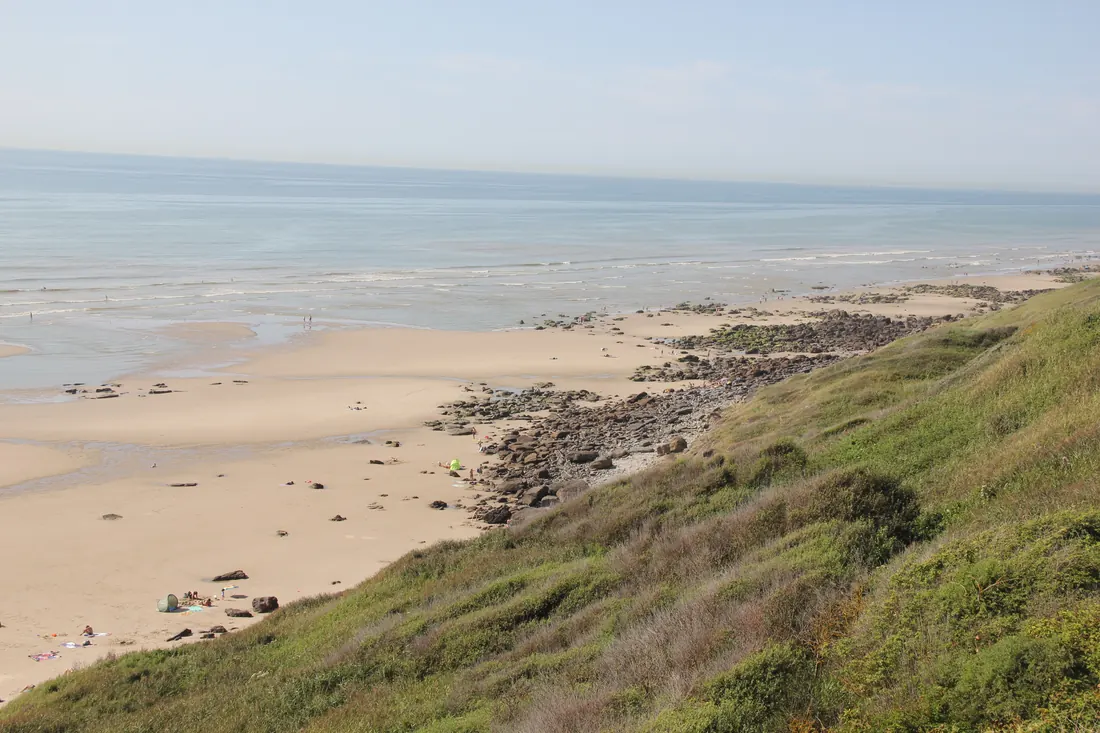
- About an hour later, she landed on a French beach. Wikipedia: “After 59 minutes flying she landed … on a beach in Équihen-Plage, Pas-de-Calais.” PBS NOVA: “she landed on the beach. Her flight had lasted one hour and nine minutes.” 83
- She was the first woman to fly the English Channel. Flight (1912): “To Miss Quimby, therefore belongs the honour of being the first of the fair sex to make the journey, unaccompanied, across the Channel on an aeroplane.” The New York Times, April 17, 1912: “American the First Woman to Pilot an Aeroplane Across.” 45
- But the day before, the Titanic had sunk. Wikipedia: “it occurred the day after news broke of the sinking of the Titanic ocean liner on April 15”; the Titanic “sank in the early hours of 15 April 1912.” The New York Times front page of April 16, 1912, reported the sinking. 896
- Her flight was buried in the news. PBS NOVA: “no banner headlines followed Quimby’s historic feat … Quimby’s achievement was all but overshadowed.” PBS American Experience: “Her feat coincided with the sinking of the Titanic.” Federal Aviation Administration: “her achievement went largely unnoticed in the next days’ papers.” 321
- Less than three months later, her plane pitched forward over Boston Harbor. Federal Aviation Administration: “On July 1, 1912, less than three months after her channel crossing, she made her tragic last flight.” Wikipedia: she “flew out to the Boston Light lighthouse in Boston Harbor … the aircraft unexpectedly pitched forward.” 18
- She and her passenger were thrown out and fell to their deaths. Federal Aviation Administration: “Both she and a passenger were thrown out of the plane, and, in front of horrified spectators, they plummeted to their death in the shallow waters of the Boston harbor.” Wikipedia: “Both fell to their deaths.” The passenger was William A. P. Willard, the meet’s organizer (Wikipedia). The Chicago Tribune, July 2, 1912: “Monoplane Hurls Harriet Quimby to Death in Sea.” 187
- It took 79 years, but America finally put her on a stamp. Federal Aviation Administration: “Not until almost eighty years after her death did Harriet Quimby receive the kind of accolades she had hoped for after her channel crossing. On April 28, 1991, the United States Post Office issued a commemorative stamp honoring her contributions to aviation.” From her flight in 1912 to the stamp in 1991 is 79 years. 1
Sources
- Harriet Quimby (aviation pioneers) Federal Aviation Administration
- Harriet Quimby (Fly Girls) PBS American Experience
- Queen of the Channel Crossing (Peter Tyson) PBS NOVA
- Miss Quimby flies the Channel (Flight, April 1912, reprinted) This Day in Aviation
- Miss Quimby Flies English Channel (April 17, 1912) The New York Times
- Titanic Sinks Four Hours After Hitting Iceberg (front page, April 16, 1912) The New York Times, via Wikimedia Commons
- Monoplane Hurls Harriet Quimby to Death in Sea (July 2, 1912) Chicago Tribune, via Wikimedia Commons
- Harriet Quimby Wikipedia
- Titanic Wikipedia
Notes
“The day before” or “two days earlier”: the FAA, the Cradle of Aviation Museum and NOVA say the Titanic sank two days before her flight. It sank in the early hours of April 15 and she took off on the morning of April 16, so we say the day before (Wikipedia).
Borrowed or bought: NOVA and PBS American Experience say Blériot lent her a 50-hp Blériot XI; Flight (1912) says “Miss Quimby had ordered a 50-h.p. Gnome-Blériot,” and Wikipedia says she bought it. We say only that she had never flown it.
The flight: she took off at 5:30 a.m. (NOVA, This Day in Aviation) or “5.38” (Flight), and flew for 59 minutes (Wikipedia) or one hour and nine minutes (NOVA, PBS American Experience), so we say about an hour. She landed at Équihen (Flight, Wikipedia) or near Hardelot (FAA, NOVA), so we say a French beach.
Her license: she passed the test on August 1 (NOVA, Cradle of Aviation) or won the license on August 2, 1911 (FAA, Wikipedia).
“First woman to fly the Channel”: Eleanor Trehawke Davies had crossed earlier as Hamel’s passenger (Flight); Quimby was the first woman to pilot a plane across.
Her suit: “purple” (PBS American Experience); the FAA and Wikipedia call it plum-colored satin.
The fall: 1,000 feet (Wikipedia, NOVA, the Chicago Tribune of July 2, 1912) or 1,500 feet (This Day in Aviation). We give no height.
Left out for length: the hot-water bottle, the engine misfire over the sea and her screenplays for D. W. Griffith.
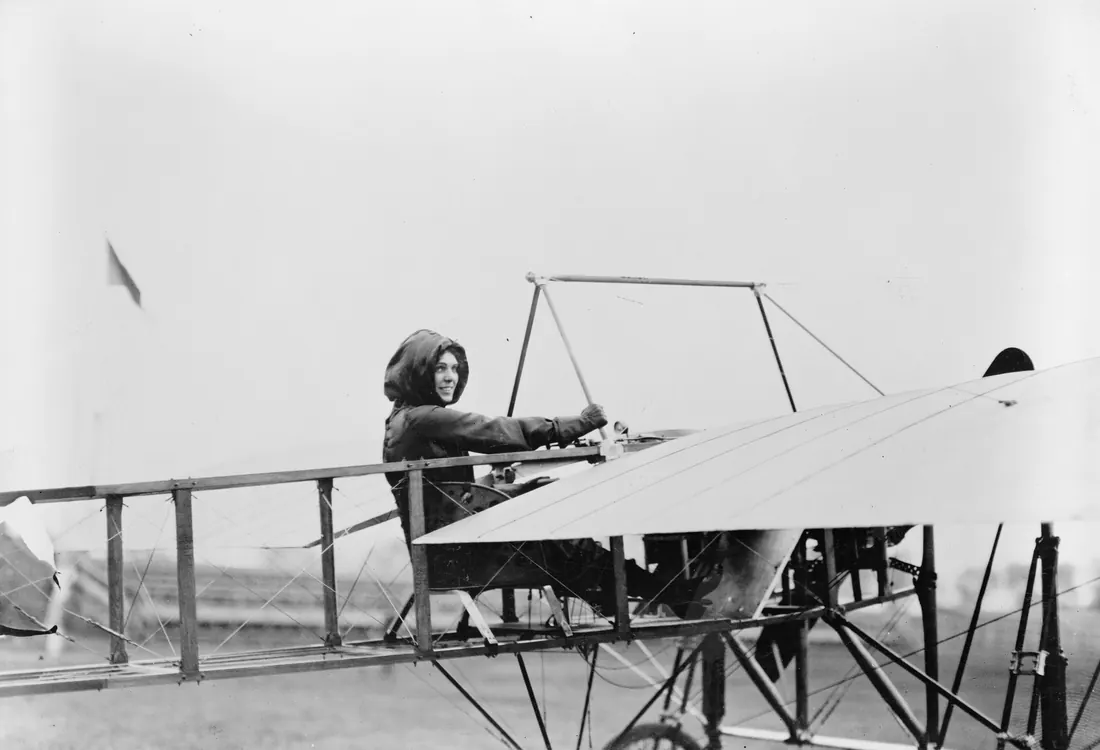
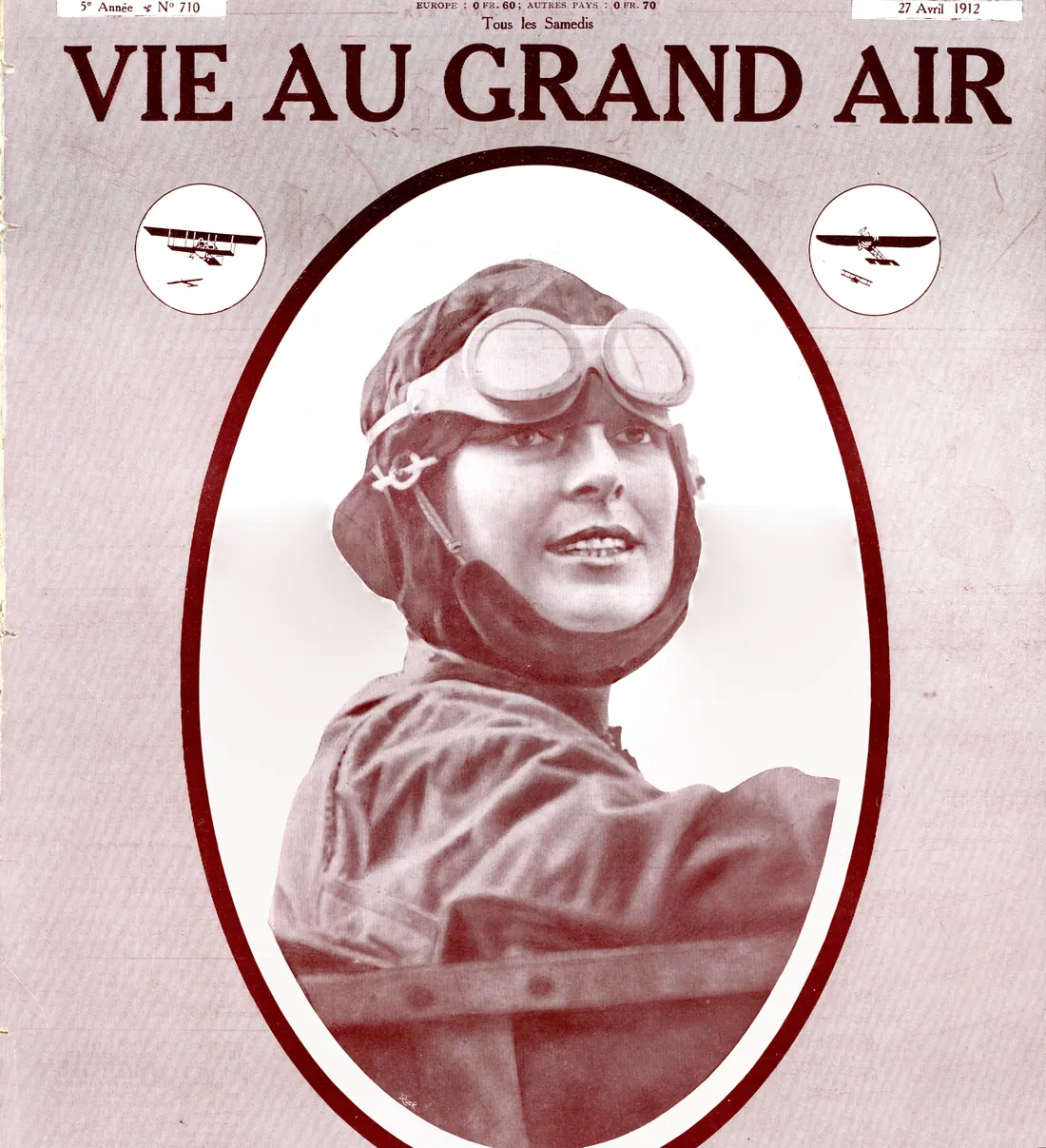
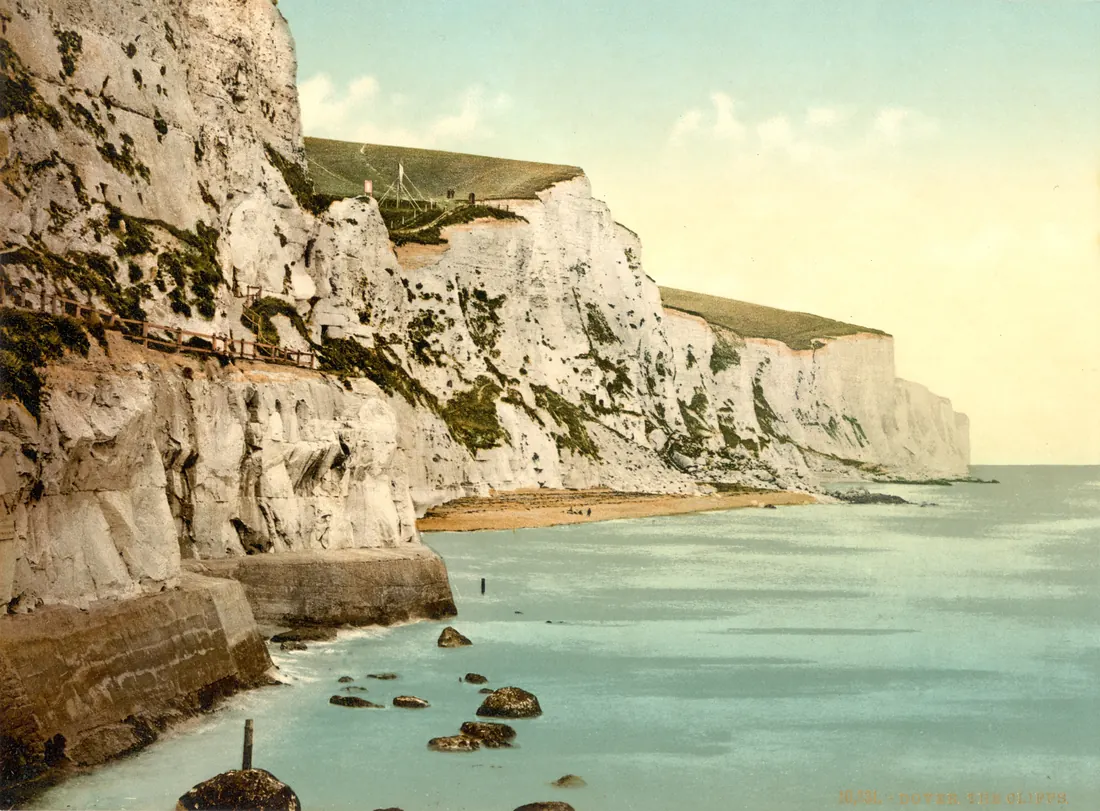
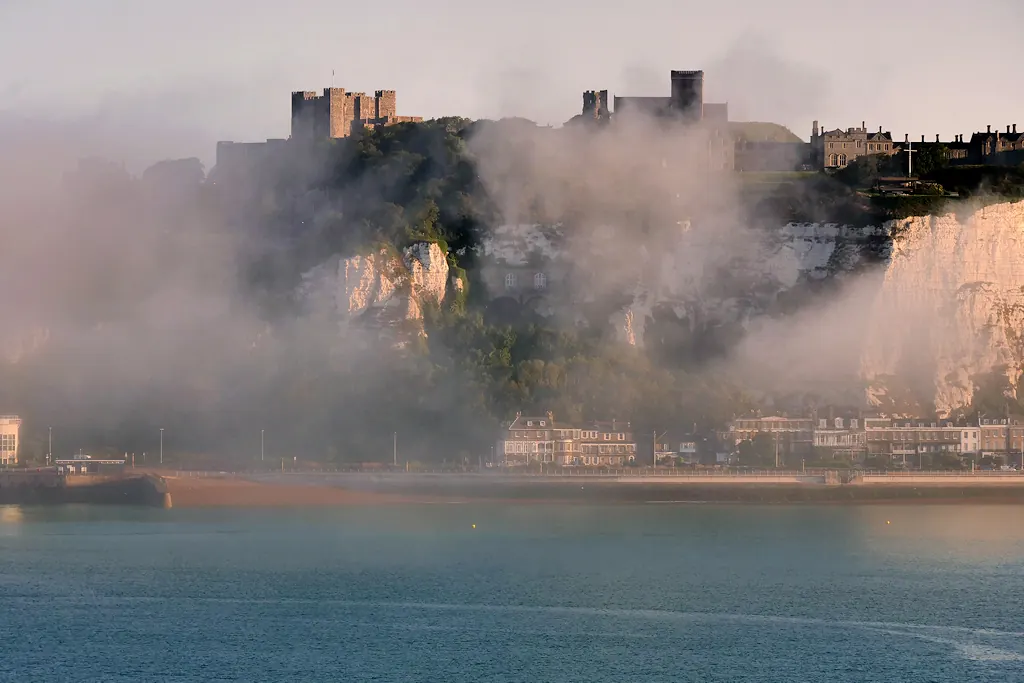
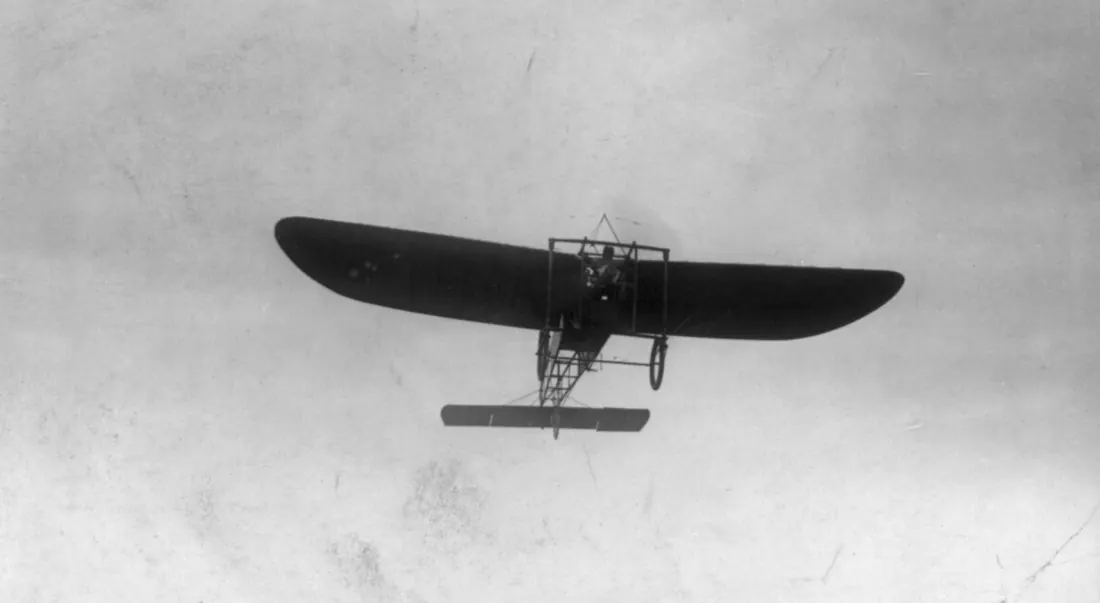
Pictures: the three photos of Quimby in her Blériot monoplane and its cockpit are 1911 Bain News Service photos taken in America, not on the Channel day. The cover of La Vie au Grand Air of April 27, 1912, shows her in her Channel flying suit. Louis Blériot’s monoplane in flight in 1909 is the same type of plane, not hers. The cliffs of Dover are a Photochrom print of about 1890–1900, and Dover in fog was photographed in 2023. The compass is a 19th-century pocket compass from USS Constitution, not hers, and the beach at Équihen-Plage was photographed in 2015. Boston Light is a Detroit Publishing Co. postcard of the 1900s. The newspapers are The New York Times of April 16 and 17, 1912, and the Chicago Tribune of July 2, 1912; the Commons file name of the Quimby article says 1911 by mistake.
Photo credits
The archive photos in this story
The photographs and illustrations in this story are in the public domain or shared under open licenses; each one is credited below with its license. Tap one to enlarge it, or follow the link to its Wikimedia Commons page for the full record. The narration, captions and graphics in the Short are our own; its music and sound effects are credited below.

Music and sound effects
Music: Debussy, La Mer: III. Dialogue du vent et de la mer (US Air Force Band, Concert Band, public domain, US government work); Grieg, Peer Gynt Suite No. 1, Op. 46: II. Ase's Death (Musopen Symphony Orchestra, CC0).
Sound effects: Freesound, CC0.