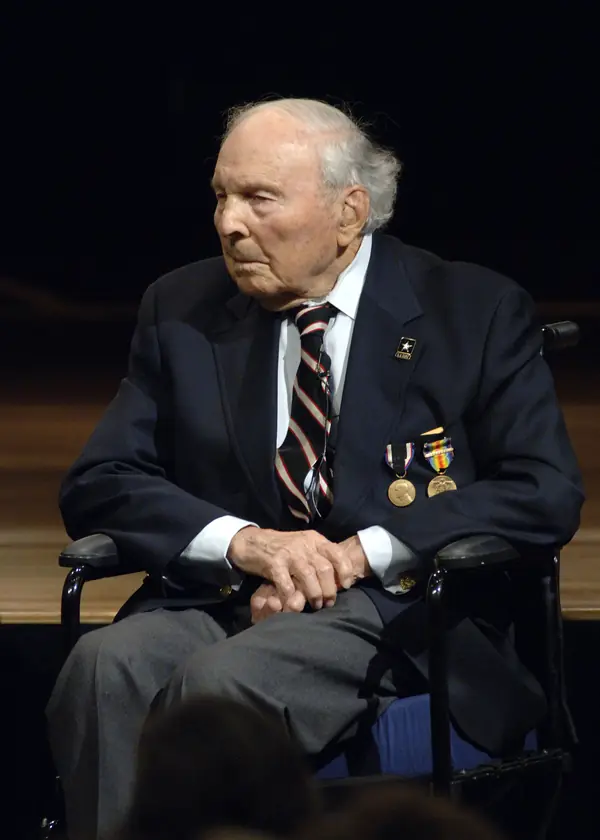
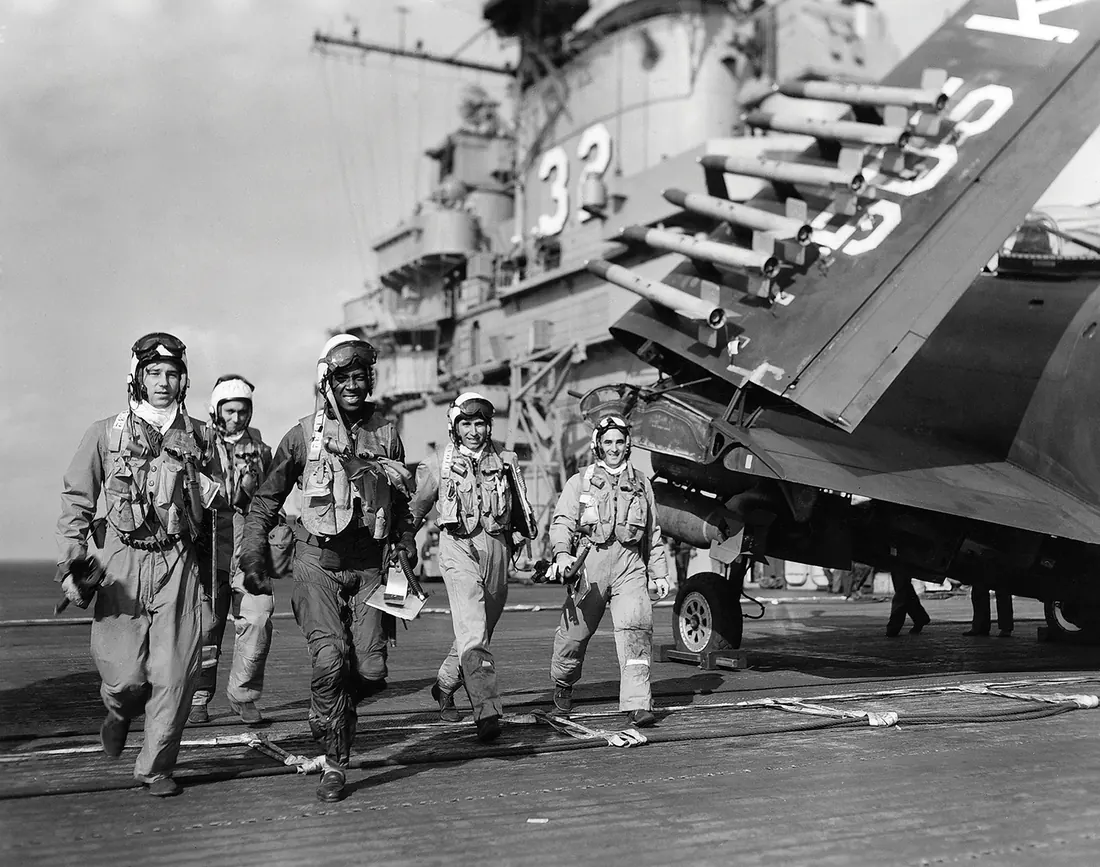
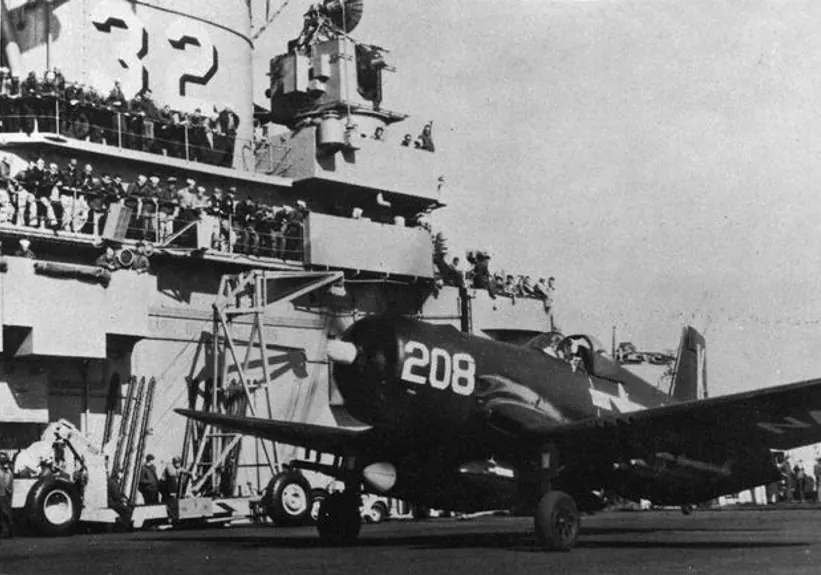
Jesse Brown was a sharecropper’s son from Mississippi, born in Hattiesburg. His father, John, moved the family to Lux, Mississippi, where he worked as a sharecropper on a farm. Brown became the first African American to complete the Navy’s basic flight training program for pilot qualification and to be designated a naval aviator, though not, Wikipedia notes, the first African-American Navy aviator. By 1950 he and Lt. (jg) Tom Hudner were flying F4U Corsairs in Fighter Squadron 32 from the carrier USS Leyte.
On December 4, 1950, near the Chosin Reservoir in North Korea, Brown’s Corsair was hit behind enemy lines and began losing fuel pressure. He crashed on a snow-covered mountainside west of the lake, 15 miles behind Chinese lines. He survived the impact, but he was pinned inside the mangled wreckage, and Hudner saw that he was alive but not getting out of the plane, and that the aircraft was smoldering. Hudner decided to crash-land his own aircraft near Brown in an attempt to save his life. He came down wheels-up, in high winds and snowy rocks, about 100 yards from the downed fighter.
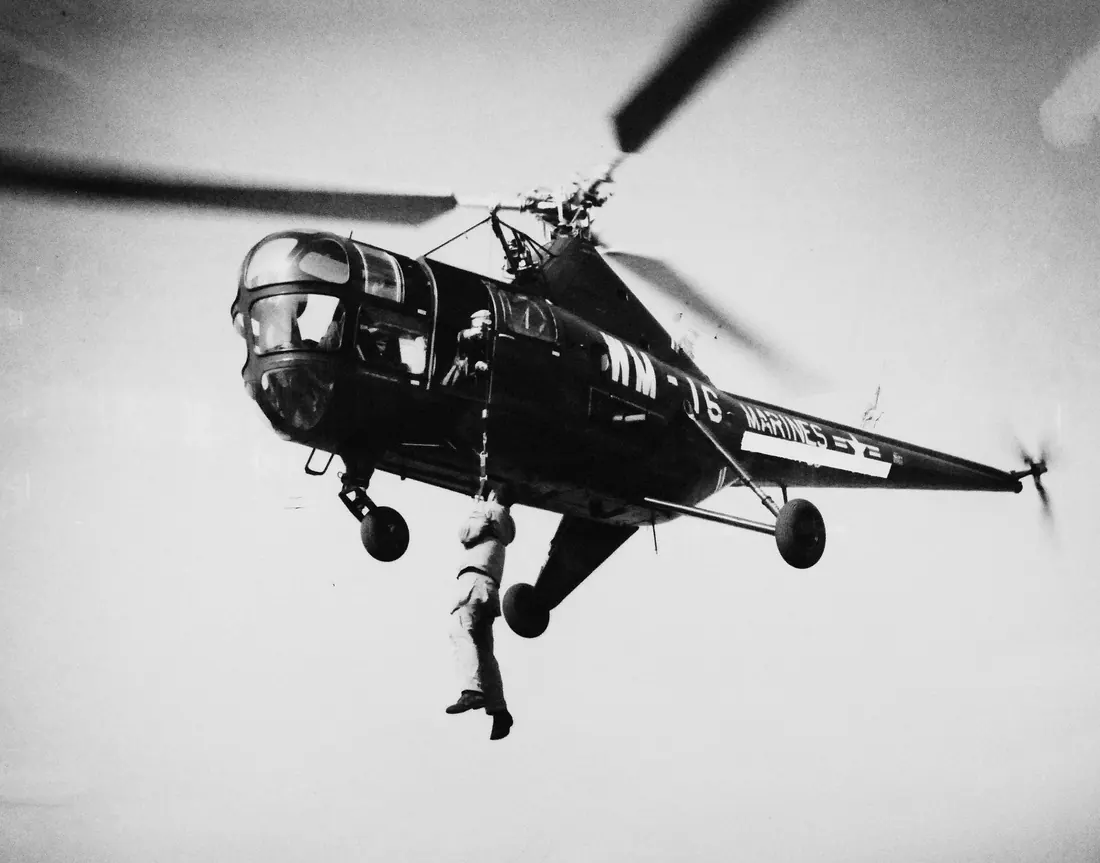
His Medal of Honor citation tells what he did next: “With his bare hands, he packed the fuselage with snow to keep the flames away from the pilot and struggled to pull him free.” A Marine Sikorsky HO3S-1 helicopter arrived, flown by 1st Lt. Charles Ward. Ward and Hudner used an extinguisher on the fire and then tried to free Brown from the wreckage with an ax, but to no avail. “Hudner took the ax to the downed aircraft,” the Naval History and Heritage Command says, “but it just bounced off it.” Wikipedia says they tried for 45 minutes.
As daylight slipped away, Brown faded from consciousness. The Navy’s historians give his final words as “Tell Daisy how much I love her”; other accounts word them a little differently. In the gathering darkness, with a helicopter not equipped for night flight, Ward had to lift off in short order, carrying Hudner to safety. Hudner promised to come back: “We’ll come back for you,” in the Associated Press’s account, or, in Adam Makos’s, “We’ll be back for you.”
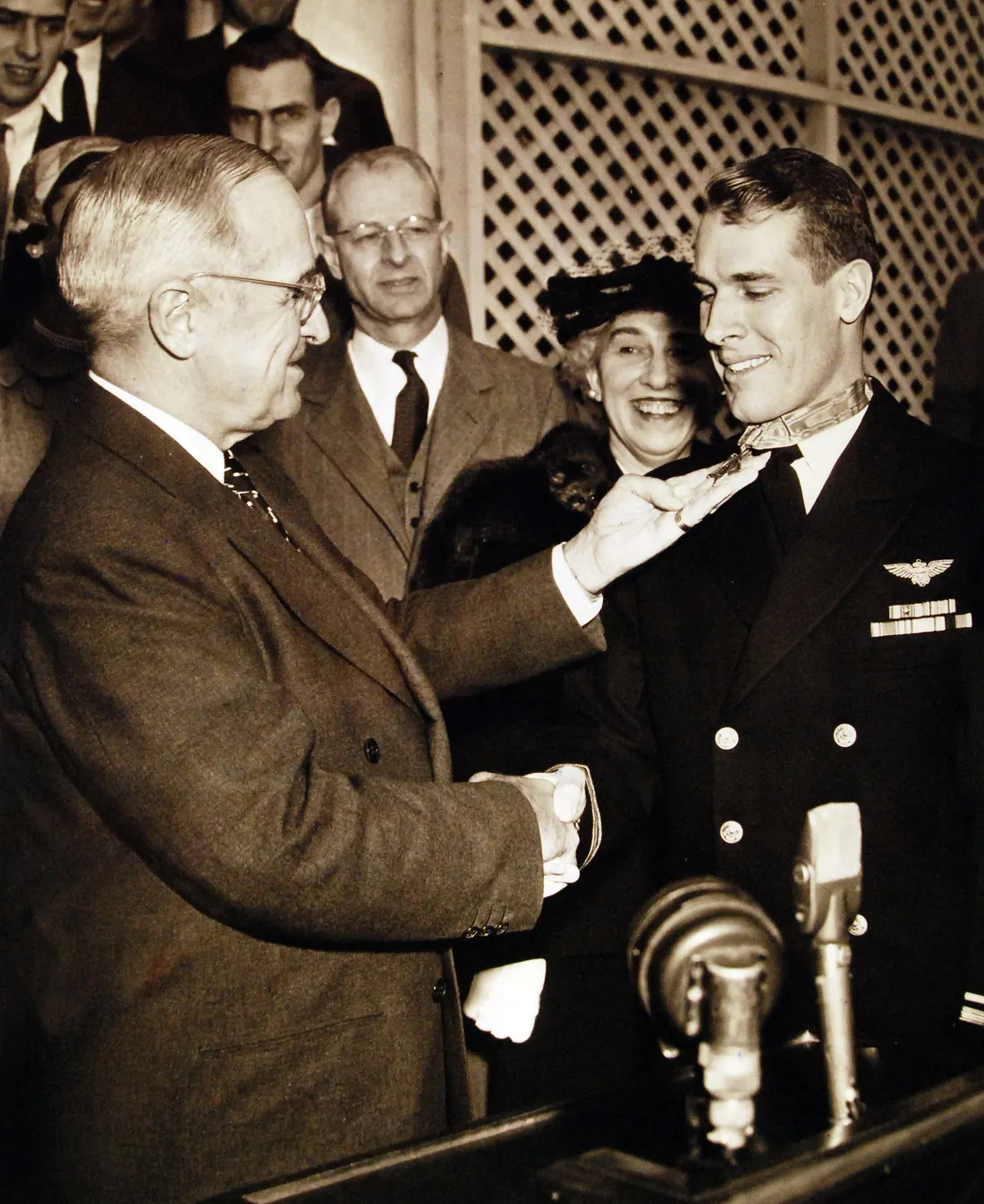
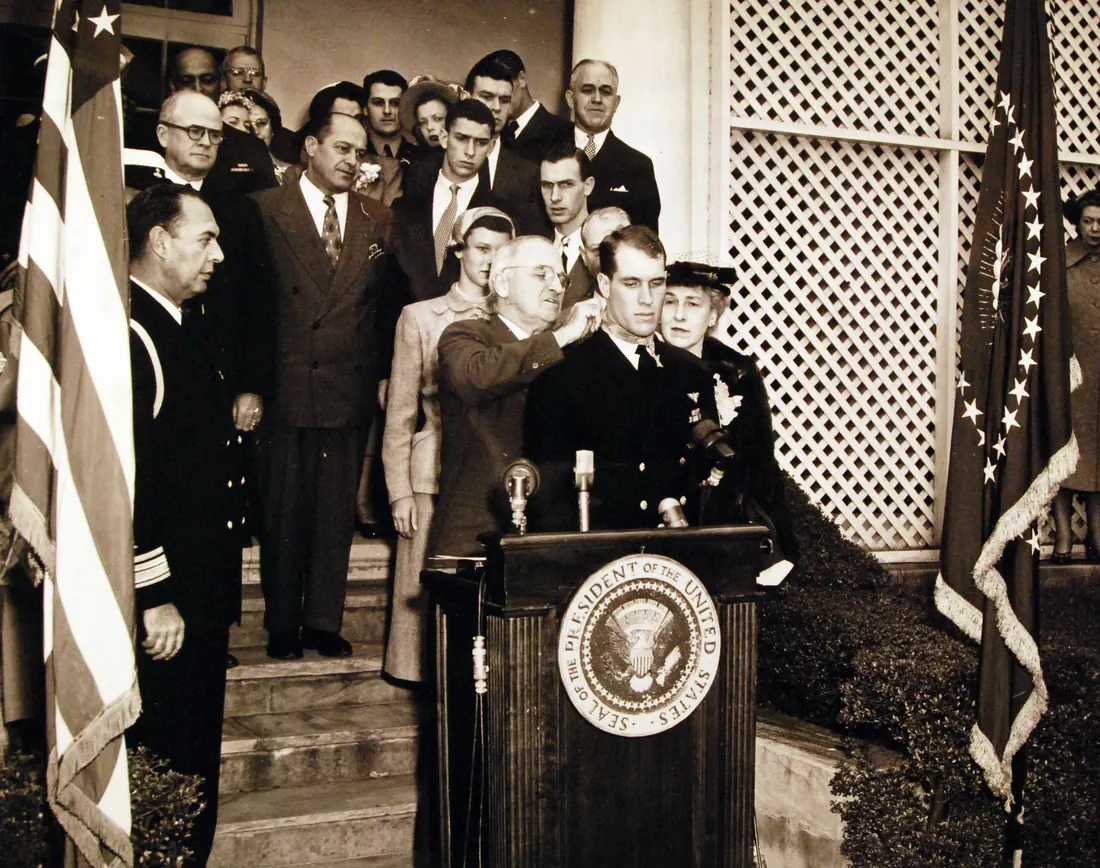
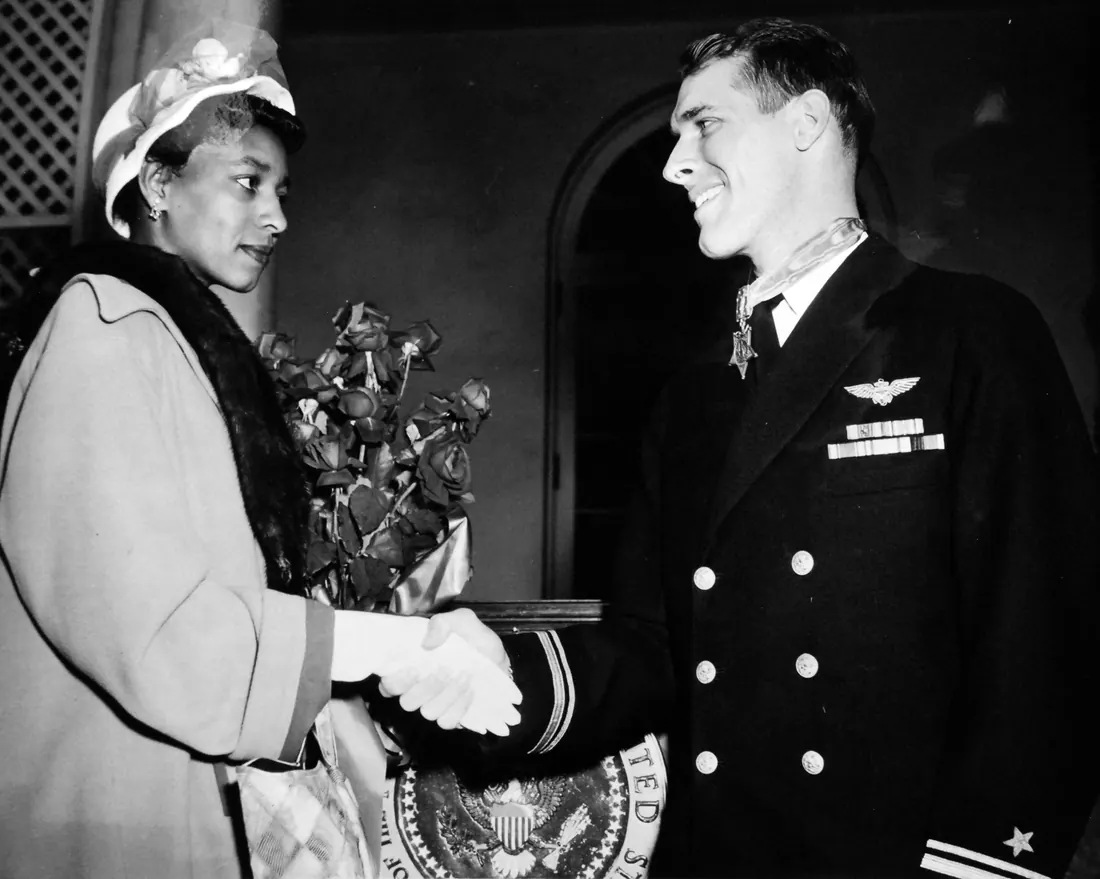
On April 13, 1951, Hudner received the Medal of Honor at a ceremony hosted by President Harry S. Truman. At the White House he met Brown’s widow, Daisy, and the two stayed in contact for the rest of their lives, until she died in 2014. Brown’s remains and his aircraft were never recovered. The Navy commissioned the frigate USS Jesse L. Brown on February 17, 1973, and the destroyer USS Thomas Hudner in Boston on December 1, 2018. In July 2013, at 88, Hudner went to Pyongyang, North Korea, to try to recover Brown’s remains from the crash site, but heavy rains kept him from reaching it.
Fact check
The facts and where they come from
- He crashed his own plane on purpose, because his friend was trapped in a burning wreck. Wikipedia: “Hudner intentionally crash-landed his own aircraft on a snowy mountainside in freezing temperatures.” Naval History and Heritage Command: “Hudner made the decision to crash land his own aircraft in the vicinity of Brown in an attempt to save his life.” The Medal of Honor citation: “trapped alive in the burning wreckage.” The Associated Press quotes Hudner calling Brown “a friend who, I’d say, was beloved by almost everybody who knew him.” 415
- His name was Tom Hudner, a US Navy fighter pilot: Lt. (jg) Thomas J. Hudner Jr. (Wikipedia). The American Legion Magazine: “the true story of Tom Hudner, Jesse Brown.” 46
- He flew with Jesse Brown, a sharecropper’s son. Wikipedia: “John Brown moved the family to Lux, Mississippi, where he worked as a sharecropper on a farm.” Associated Press: “the white son of a New England grocery-store magnate made a promise to the black son of a sharecropper.” Both flew F4U Corsairs in Fighter Squadron 32 from USS Leyte (Wikipedia). 354
- Jesse was the first Black pilot to complete the Navy’s basic flight training. Dictionary of American Naval Fighting Ships: “becoming the first African American to complete the Navy’s basic flight training program for pilot qualification and to be designated a naval aviator.” Wikipedia: “He was the first African-American aviator to complete the United States Navy’s basic flight training program (though not the first African-American Navy aviator).” 23
- In December 1950, near Korea’s Chosin Reservoir, Jesse was shot down. Naval History and Heritage Command: “On 4 December 1950 … Brown’s Vought F4U-4 Corsair was hit by antiaircraft fire behind enemy lines”; a Navy photo caption says he “had been shot down by enemy fire near Chosin Reservoir, North Korea, 4 December 1950.” Dictionary of American Naval Fighting Ships: “With his plane apparently struck by gunfire and losing fuel pressure.” 12
- He came down on a snowy mountainside, behind enemy lines. Dictionary of American Naval Fighting Ships: “Brown crashed in enemy territory on a snow-covered mountainside west of the lake.” Wikipedia: “15 miles (24 km) behind Chinese lines.” 23
- He was alive, but trapped in the burning plane. Dictionary of American Naval Fighting Ships: “Although he survived the impact, Brown was pinned inside the mangled wreckage of his plane”; Hudner “observed that Brown was alive but not getting out of the plane and that the aircraft was smoldering.” The Medal of Honor citation: “trapped alive in the burning wreckage.” 21
- So Tom crash-landed his own plane nearby. Dictionary of American Naval Fighting Ships: he “executed a wheels-up landing near Brown’s plane.” Associated Press: “Hudner crash-landed his plane in high winds and snowy rocks about 100 yards from the downed fighter.” 25
- With his bare hands, he packed snow on the fire. The Medal of Honor citation, on Wikipedia and the Naval History and Heritage Command’s page: “With his bare hands, he packed the fuselage with snow to keep the flames away from the pilot and struggled to pull him free.” 41
- A helicopter came, but even with an ax, they couldn’t free him. Dictionary of American Naval Fighting Ships: a “Sikorsky HO3S-1 helicopter piloted by 1st Lt. Charles Ward, USMC”; “Ward and Hudner used an extinguisher to control the fire and then raced to free Brown from the wreckage with an ax, but to no avail.” Naval History and Heritage Command: “Hudner took the ax to the downed aircraft, but it just bounced off it.” Wikipedia: they “tried unsuccessfully to free Brown with an axe for 45 minutes.” 213
- As night fell, Jesse asked him to tell his wife, Daisy, that he loved her. Naval History and Heritage Command: “His final words were, ‘Tell Daisy [his wife] how much I love her.’” Wikipedia: “His last known words, which he told Hudner, were ‘tell Daisy I love her.’” Associated Press: “‘If I don’t make it, please tell Daisy I love her.’” The American Legion Magazine: “‘Just tell Daisy how much I love her.’” Dictionary of American Naval Fighting Ships: “As daylight slipped away and Brown faded from consciousness.” 14562
- Tom had to leave him. Dictionary of American Naval Fighting Ships: “In the gathering darkness, with a helicopter not equipped for night flight, Ward had to lift off in short order, carrying Hudner to safety.” 2
- He promised to come back. Associated Press: he “made a promise to the black son of a sharecropper: ‘We’ll come back for you.’” The American Legion Magazine: “He turned and shouted to his departed friend, ‘We’ll be back for you.’” 56
- President Truman gave Tom the Medal of Honor, with Daisy there. Naval History and Heritage Command: “On 13 April 1951, Hudner received the Medal of Honor during a ceremony hosted by President Harry S. Truman. While at the White House, Hudner met Brown’s widow, Daisy, and the two remained in contact throughout their lives until she died in 2014.” Wikipedia: “On April 13, 1951, Hudner received the Medal of Honor from President Harry S. Truman, meeting Brown’s widow, Daisy Brown, in the process.” A US Navy photo of the ceremony (National Archives 330-PS-1283) shows Hudner shaking hands with Daisy P. Brown. 147
- At 88, Tom went to North Korea, trying to bring Jesse home. Associated Press (July 20, 2013): “Hudner is now 88”; “Hudner hopes to bring Brown’s remains home.” Wikipedia: “In July 2013, he visited Pyongyang, North Korea, in an attempt to recover Jesse Brown’s remains from the crash site.” Dictionary of American Naval Fighting Ships: he “returned to North Korea in 2013 with the goal of retrieving Brown’s remains, but heavy rains prevented him from reaching the crash site.” Wikipedia: “The remains of both Brown and the aircraft were never recovered.” 5423
Sources
- Thomas Hudner (with his Medal of Honor citation) Naval History and Heritage Command
- Dictionary of American Naval Fighting Ships: Jesse L. Brown (DE-1089) Naval History and Heritage Command
- Jesse L. Brown Wikipedia
- Thomas J. Hudner Jr. Wikipedia
- Veteran returns to North Korea for first black Navy aviator (Associated Press, July 20, 2013) Fox News
- ‘We’ll be back for you’ (Adam Makos, December 2015) The American Legion Magazine
- Hudner and Daisy P. Brown at the Medal of Honor ceremony, April 13, 1951 (330-PS-1283, USN 708202) US National Archives, via Wikimedia Commons
Notes
“The Navy’s first Black naval aviator”: we don’t say it. Oscar W. Holmes was designated a Naval Aviator in 1943, when the Navy did not know he was Black (Wikipedia). Every source agrees that Brown was the first Black pilot to complete the Navy’s basic flight training.
His last words come in four wordings: “Tell Daisy how much I love her” (Naval History and Heritage Command), “tell Daisy I love her” (Wikipedia), “If I don’t make it, please tell Daisy I love her” (Associated Press) and “Just tell Daisy how much I love her” (Adam Makos, The American Legion Magazine).
The promise: “We’ll come back for you” (Associated Press) or “We’ll be back for you” (Makos). The AP has Brown still alive and losing consciousness; Makos has him already dead when Hudner shouted it.
When Brown died: the Naval History and Heritage Command and Wikipedia put his last words after the helicopter and the ax; Makos’s magazine piece says Brown was gone before the helicopter arrived. We follow the Navy’s histories and don’t say whether Brown was alive when Hudner left.
Who was whose wingman: Wikipedia’s article on Brown and the Dictionary of American Naval Fighting Ships call Hudner Brown’s wingman; Wikipedia’s article on Hudner and the Naval History and Heritage Command say the reverse. We say only that they flew together.
What hit his plane: antiaircraft fire (Naval History and Heritage Command, the Medal of Honor citation), gunfire (Dictionary of American Naval Fighting Ships) or small-arms fire (Wikipedia). We say he was shot down.
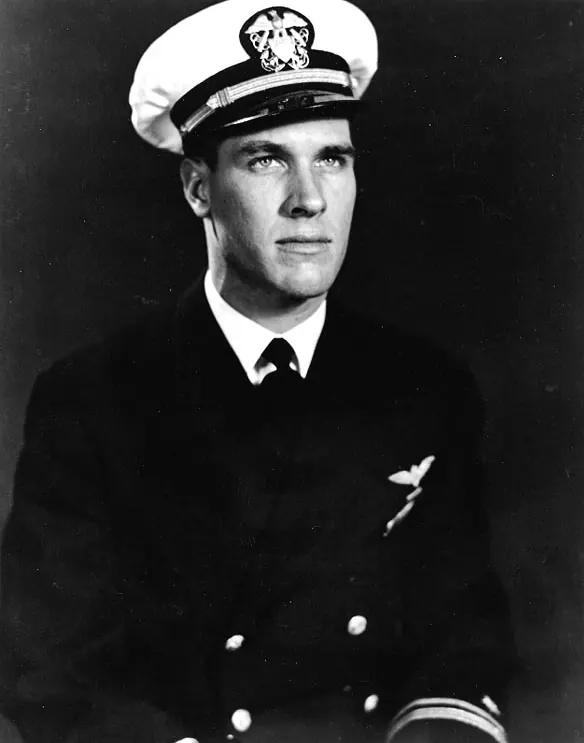
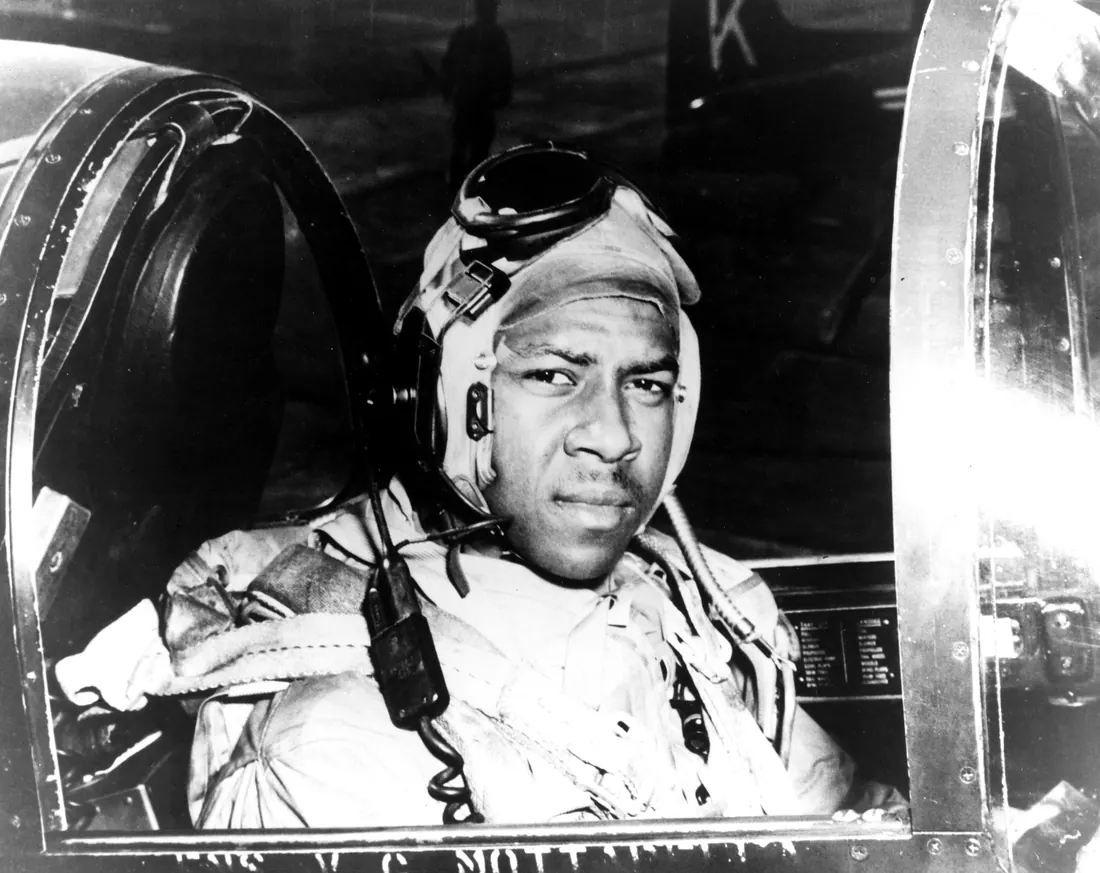
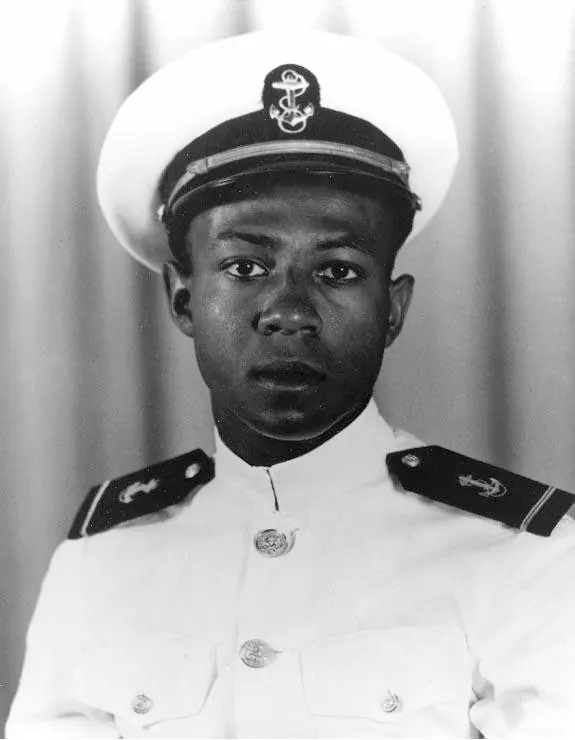
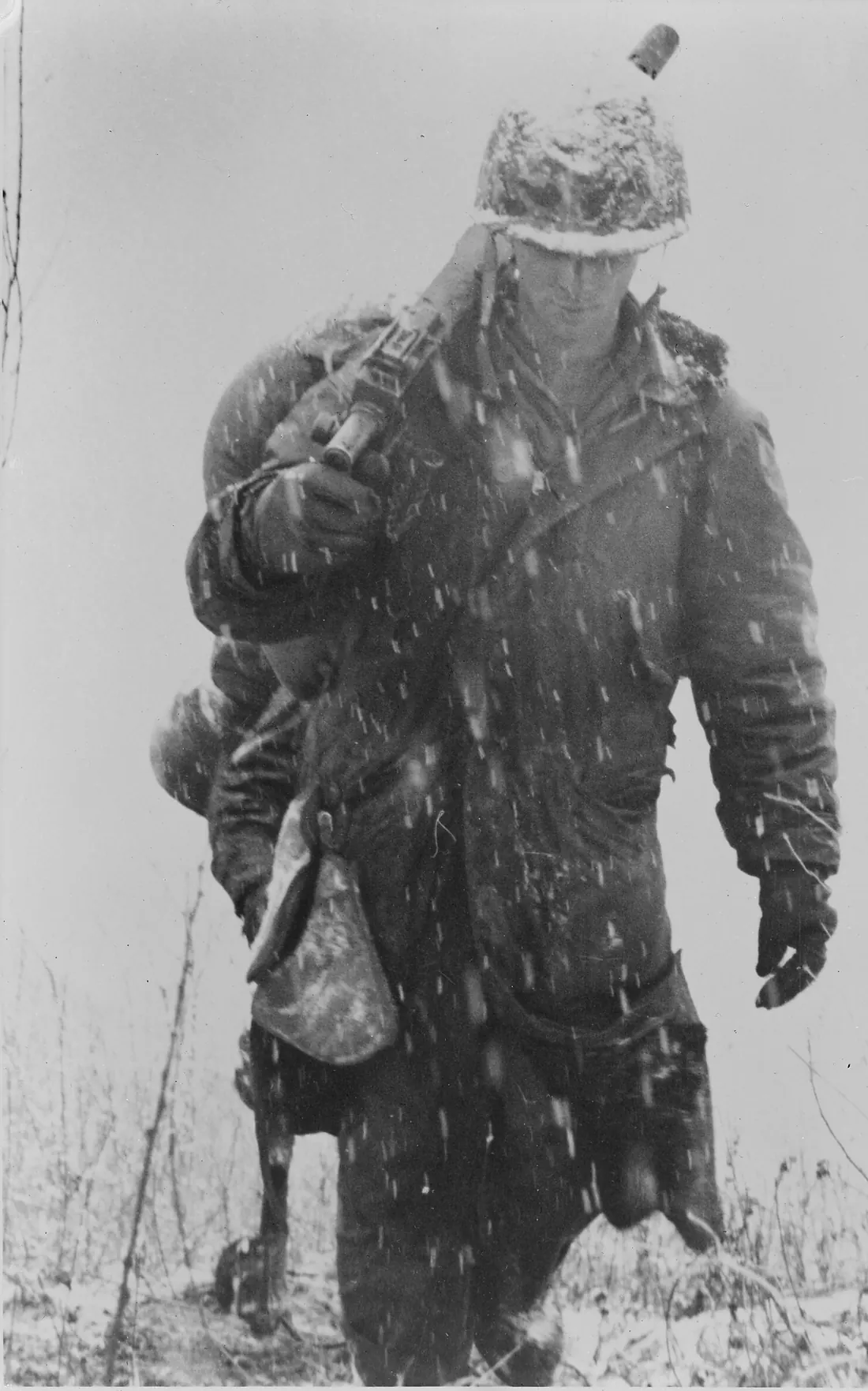
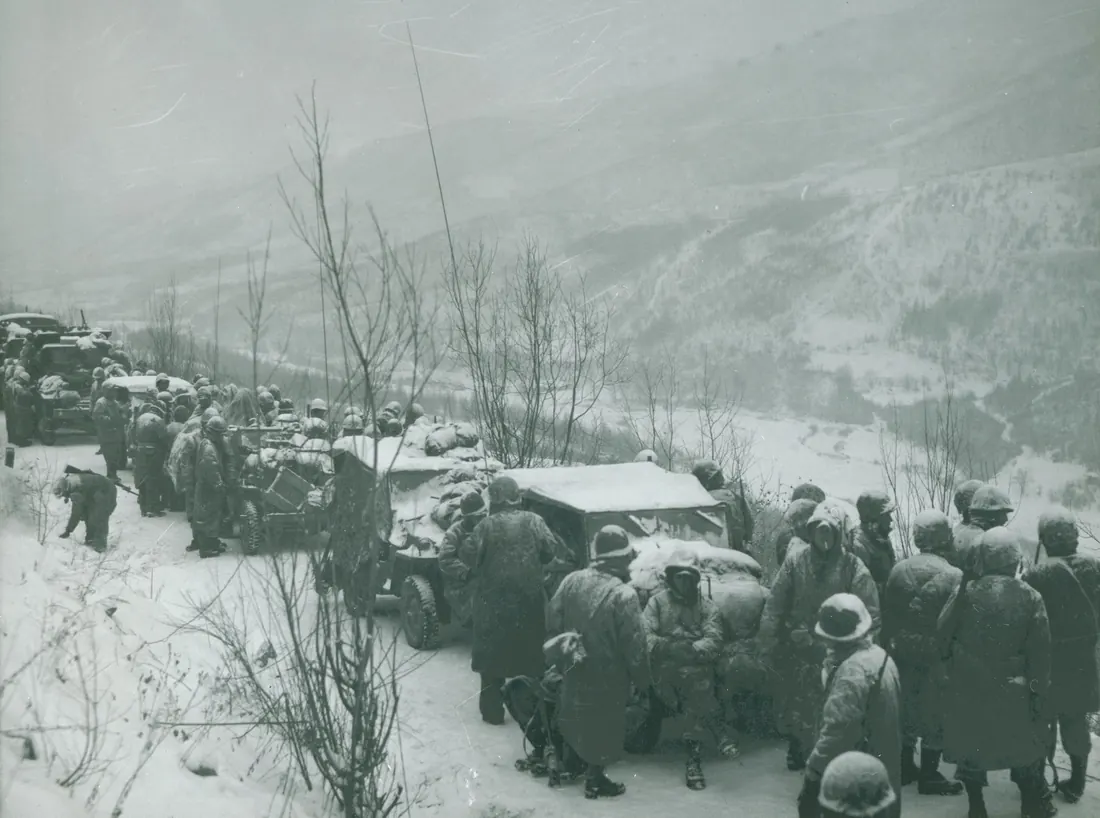
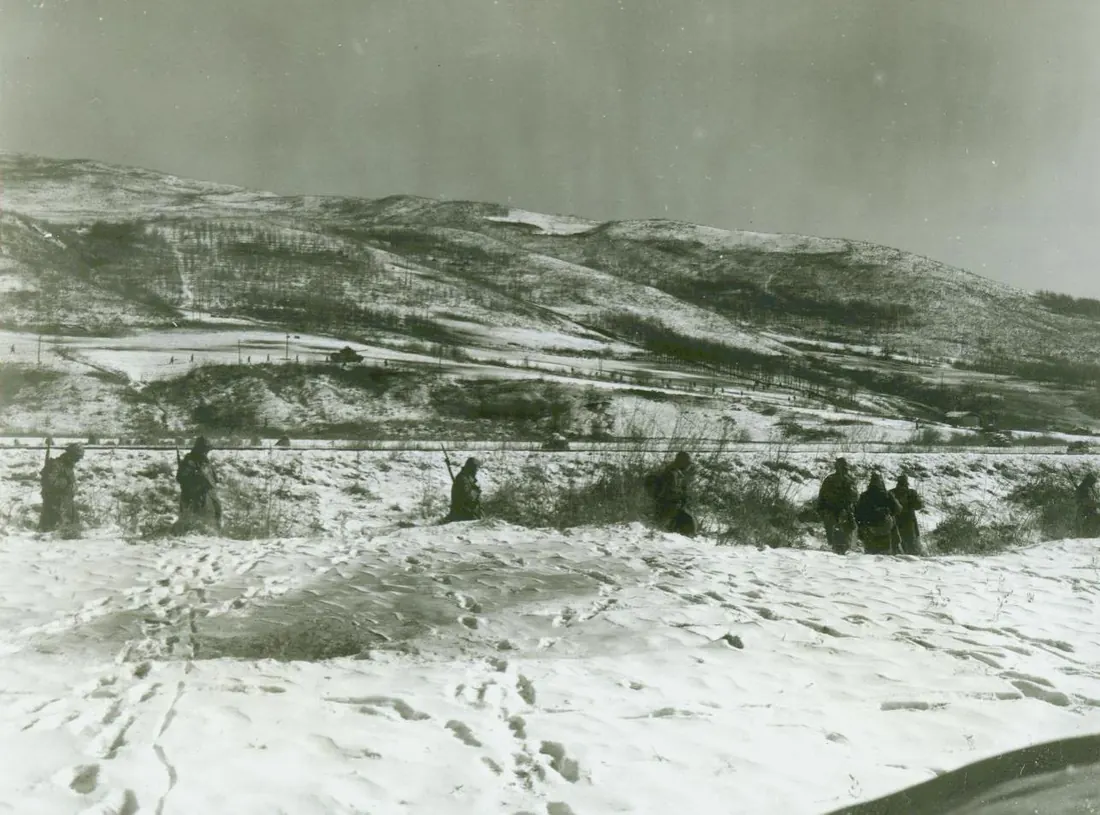
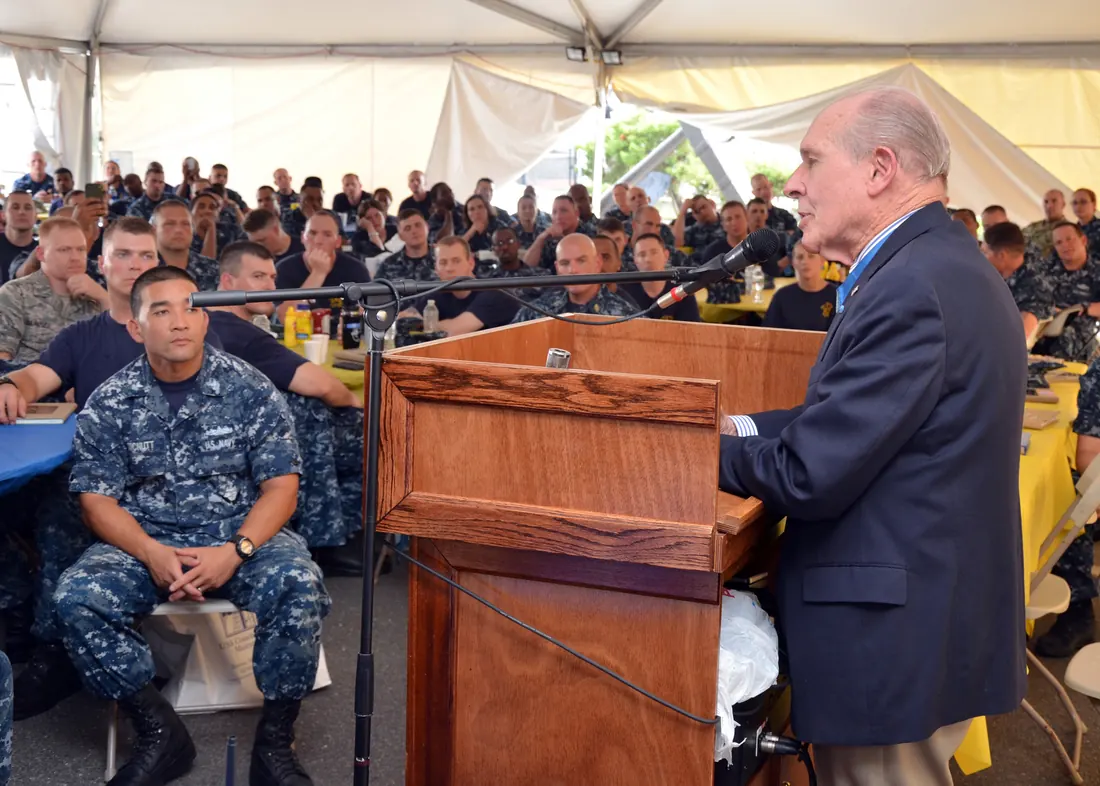
Pictures: Tom Hudner is in his 1950 Navy portrait, in three US Navy photos of the Medal of Honor ceremony at the White House on April 13, 1951 (with President Truman, and shaking hands with Daisy Brown), and speaking in Charlestown, Massachusetts, on August 22, 2013, at 88, a month after his North Korea trip (not in North Korea). Jesse Brown is in his October 1948 portrait as a midshipman at NAS Jacksonville, in the cockpit of a VF-32 Corsair in 1950, and in the center of the pilots crossing USS Leyte’s flight deck in November 1950. The Corsair launching from Leyte is his squadron’s type, about 1950, not his plane; the helicopter is a Marine HO3S-1, the type Lt. Charles Ward flew, photographed in August 1950, not Ward’s; and the three snow photos show Marines in the Chosin Reservoir battle area in the winter of 1950, not the crash site.
Photo credits
The archive photos in this story
The photographs and illustrations in this story are in the public domain or shared under open licenses; each one is credited below with its license. Tap one to enlarge it, or follow the link to its Wikimedia Commons page for the full record. The narration, captions and graphics in the Short are our own; its music and sound effects are credited below.
Music and sound effects
Music: Mussorgsky, Night on Bald Mountain (1886 version) (Musopen, public domain); Dykes, Eternal Father, Strong to Save ('The Navy Hymn'; tune 'Melita'), instrumental (US Navy Band, Ceremonial Band, public domain, US government work).
Sound effects: Freesound, CC0.