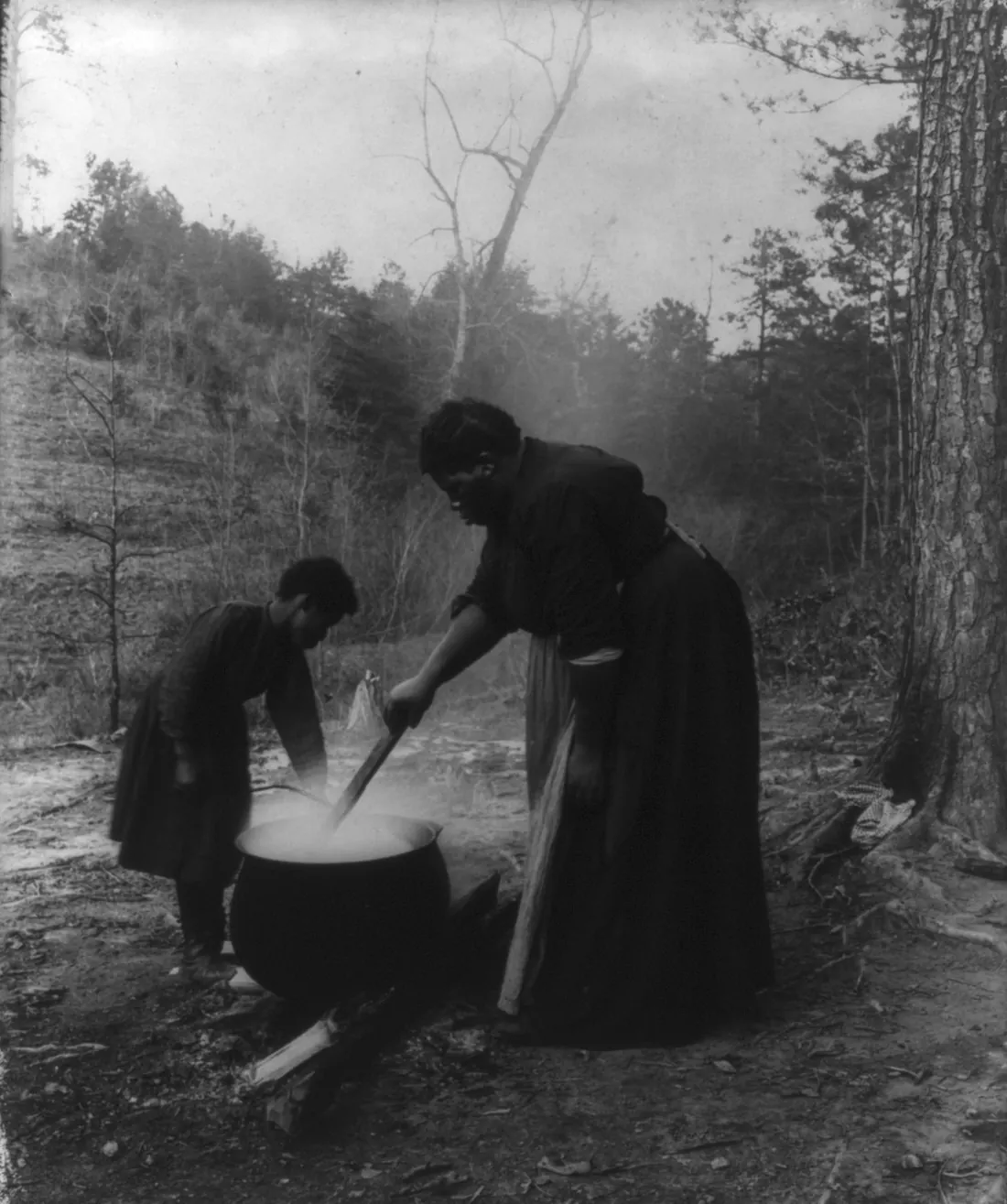
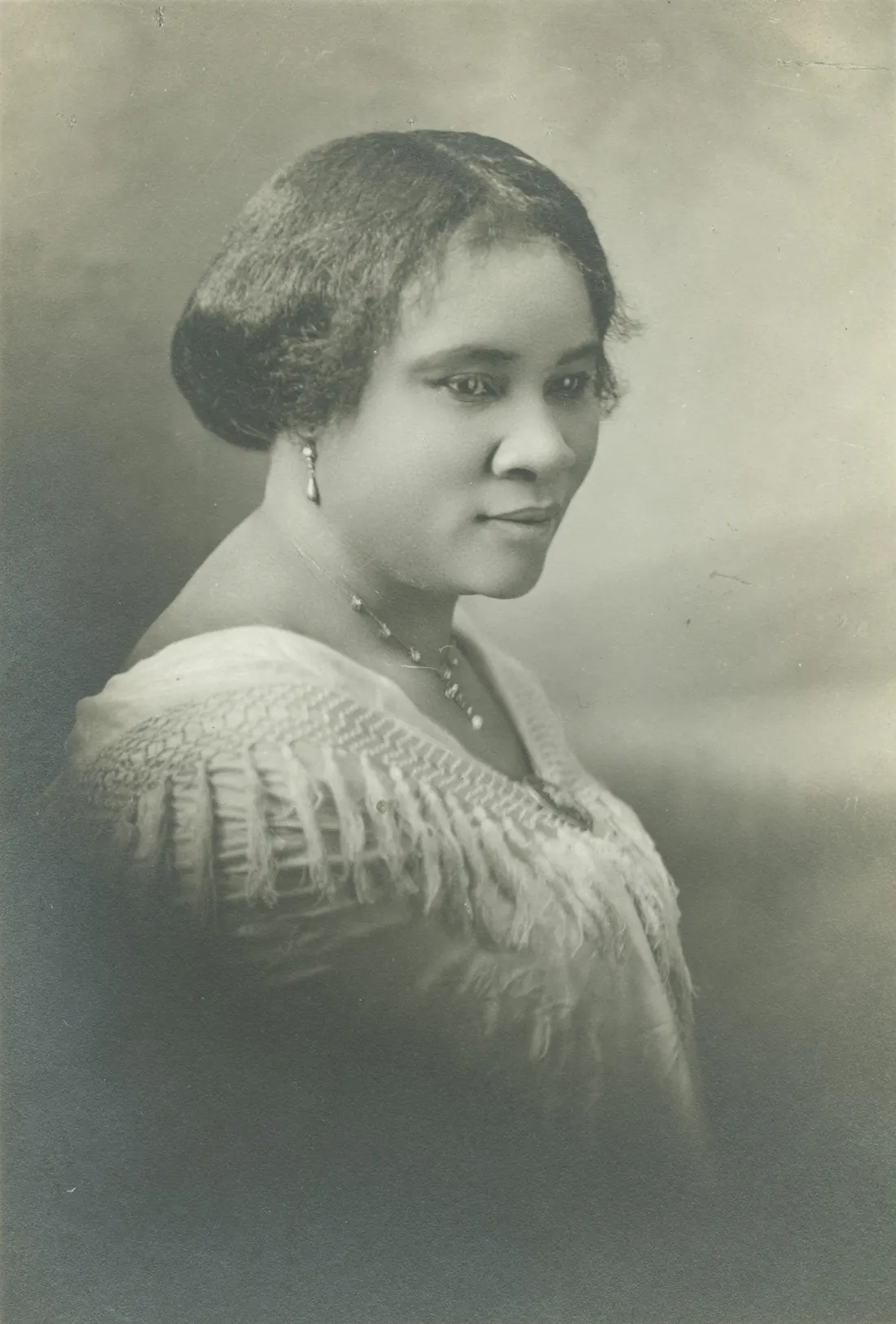
Sarah Breedlove was born on December 23, 1867, on the same Delta, Louisiana, plantation where her parents had been enslaved. She was the first child in her family born into freedom. Orphaned at seven, she married Moses McWilliams at 14, and by 20 she was a widow with a young daughter. In St. Louis she worked as a laundress, washing other people’s clothes.
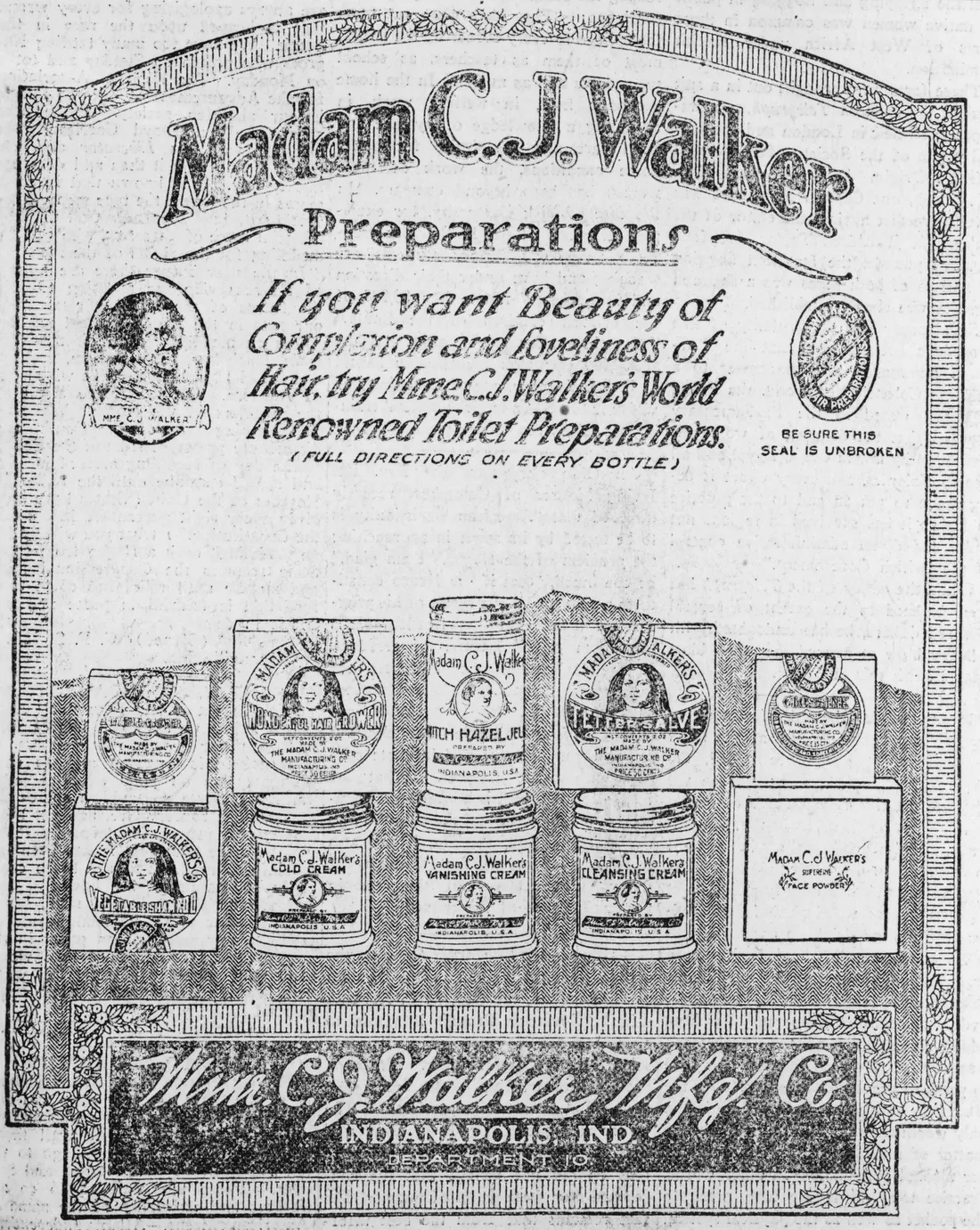
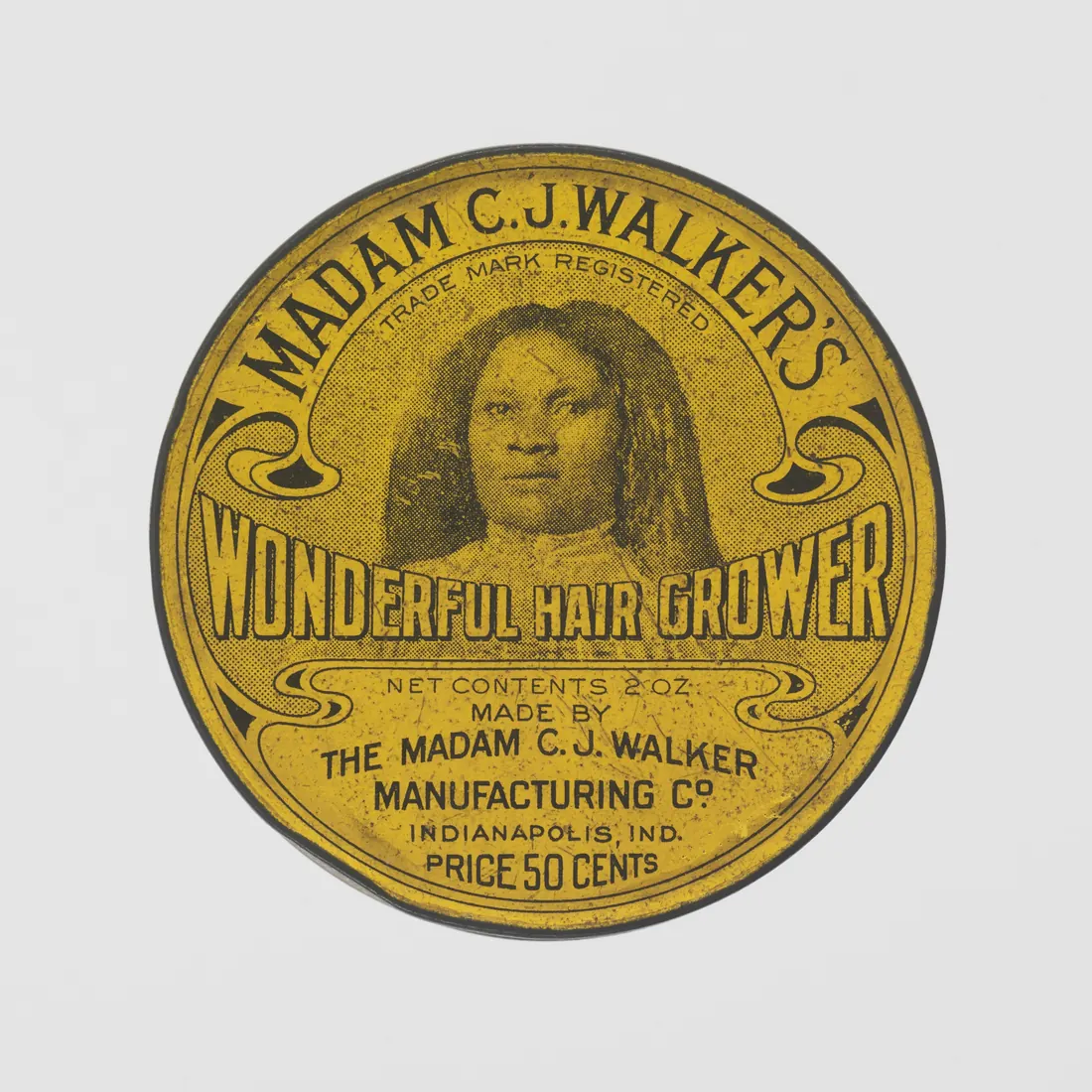
During the 1890s, her biographer A’Lelia Bundles writes, she began to suffer from a scalp ailment that caused her to lose most of her hair. She perfected a formula to treat dandruff and cure scalp infections, and she began selling Madam Walker’s Wonderful Hair Grower, “a scalp conditioning and healing formula,” which she claimed had been revealed to her in a dream. After changing her name to “Madam” C. J. Walker, she founded her own business and sold her products door to door. Between 1911 and 1919, Walker and her company employed several thousand women as sales agents, and by 1917 the company claimed to have trained nearly 20,000 women.
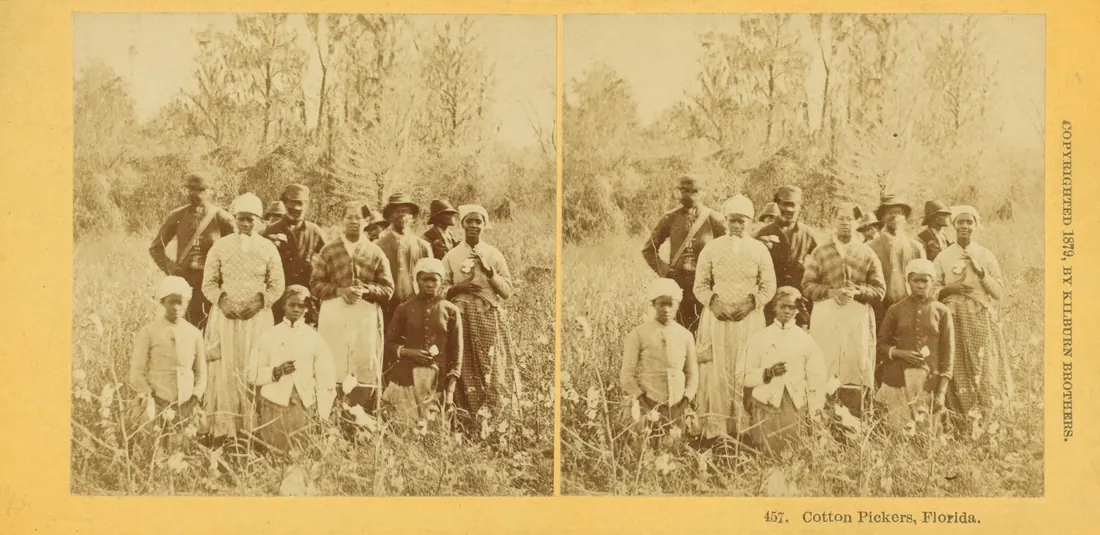
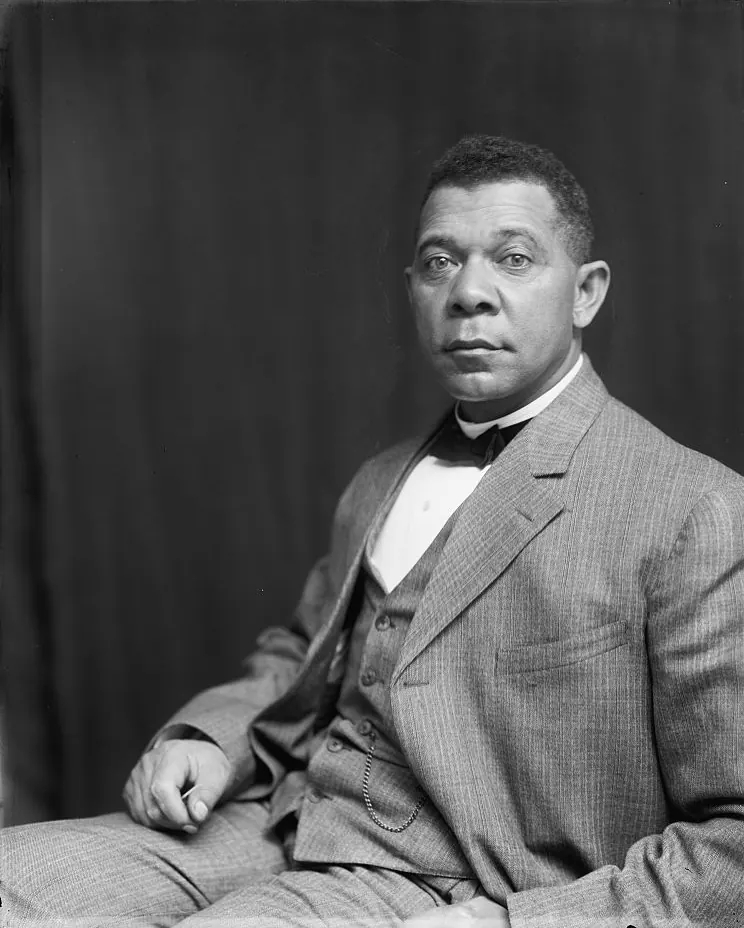
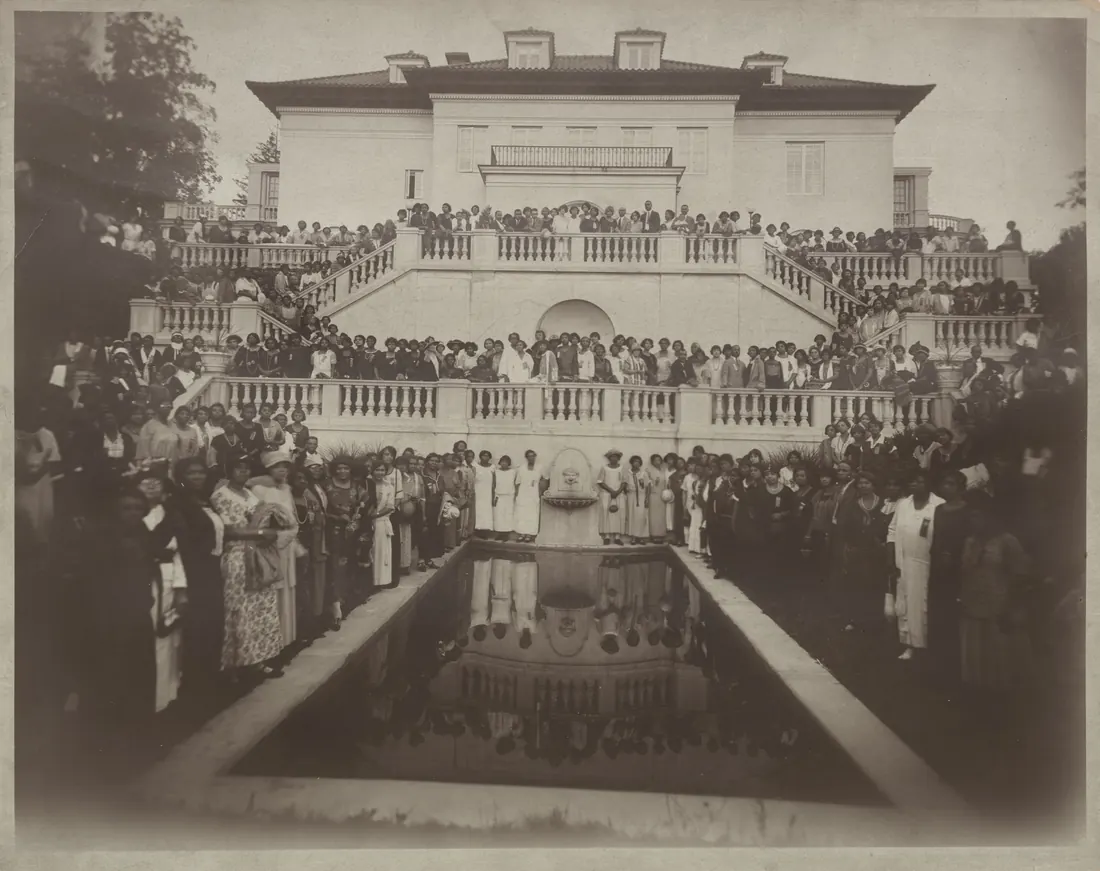
In 1912, when Booker T. Washington did not include her on the podium at the National Negro Business League’s convention, she took the floor and introduced herself: “I am a woman who came from the cotton fields of the South.” In 1917 she commissioned Vertner Tandy to design her house in Irvington-on-Hudson, New York. Villa Lewaro, which cost $250,000 to build, was completed in 1918 on a five-acre site.
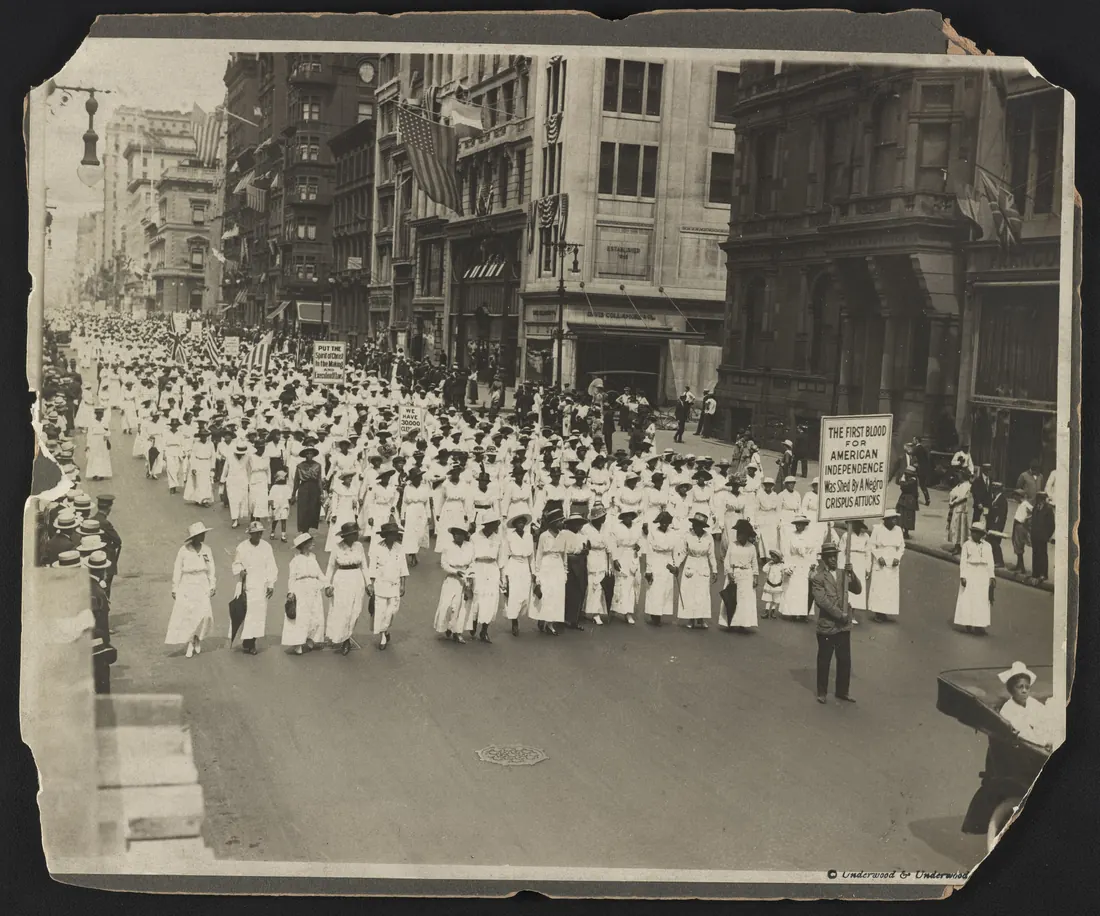
Before she died, she pledged $5,000 to the NAACP’s anti-lynching fund, at the time the largest gift from an individual that the NAACP had ever received. She sat on the executive committee of the New York NAACP, which organized the Silent Protest Parade of 1917. She died at Villa Lewaro on May 25, 1919, aged 51, and obituaries in dozens of American newspapers called her the wealthiest Black woman in America. Guinness World Records lists her as the first woman to earn a personal fortune of more than $1,000,000. In her biographer’s words, she often said, “I got my start by giving myself a start.”
Fact check
The facts and where they come from
- She washed other people’s clothes, but she died the richest Black woman in America. Wikipedia: “Breedlove found work as a laundress.” National Archives: “In St. Louis, Sarah worked as a laundress.” Encyclopedia of Indianapolis: “Obituaries in dozens of American newspapers called her the wealthiest Black woman in America.” Wikipedia: “Walker was the wealthiest African-American woman in America.” 234
- Her name was Sarah Breedlove, later Madam C. J. Walker. Wikipedia: “Madam C. J. Walker (born Sarah Breedlove; December 23, 1867 – May 25, 1919).” 2
- She was the first child in her family born free. Wikipedia: “Sarah was the first child in her family born into freedom.” National Archives: “Sarah was their first child born into freedom.” Her biographer: “she was the first Breedlove child born after the end of slavery and the Civil War,” “born on December 23, 1867 on the same Delta, Louisiana plantation where her parents … had been enslaved.” 231
- Orphaned at seven, married at 14, widowed by 20. Her biographer: “Orphaned at age seven”; “At 14, she married Moses McWilliams.” Guinness World Records: “She married at 14 but was widowed (with a young daughter) by 20.” National Archives: “By age 20, Breedlove was a widow.” 153
- Then her hair started falling out. Her biographer: “During the 1890s, Sarah began to suffer from a scalp ailment that caused her to lose most of her hair.” Encyclopedia of Indianapolis: “Around 1900, after developing a severe scalp ailment that caused her to lose most of her hair.” 14
- So she made her own treatment. Her biographer: she “began selling Madam Walker’s Wonderful Hair Grower, a scalp conditioning and healing formula.” Encyclopedia of Indianapolis: “she perfected her formula to treat dandruff and cure scalp infections.” 14
- She said the formula came to her in a dream. Her biographer: “which she claimed had been revealed to her in a dream.” 1
- As Madam C. J. Walker, she sold it door to door. Her biographer: “After changing her name to ‘Madam’ C. J. Walker, she founded her own business”; “selling her products door to door.” Wikipedia: “Walker sold her products door to door.” 12
- Then she trained thousands of women to sell it. Wikipedia: “Between 1911 and 1919, during the height of her career, Walker and her company employed several thousand women as sales agents for its products. By 1917, the company claimed to have trained nearly 20,000 women.” Guinness World Records: “her army of around 25,000 sales agents.” 25
- When Booker T. Washington left her off the stage, she spoke from the floor. National Archives: “Madam C. J. Walker took the floor and introduced herself at the National Negro Business League’s 1912 convention with these words when Booker T. Washington did not include her on the podium.” Wikipedia: “In 1912, Walker addressed an annual gathering of the National Negro Business League (NNBL) from the convention floor.” 32
- She said, “I am a woman who came from the cotton fields of the South.” Word for word in her biographer’s account, Wikipedia, the National Archives and History.com; the sentences after it differ from one version to another, so only this one is quoted. 1236
- She built a mansion on the Hudson. Wikipedia: “In 1917, Walker commissioned Vertner Tandy … to design her house in Irvington-on-Hudson, New York”; Villa Lewaro “cost $250,000 to build.” National Archives: “Villa Lewaro, on a five-acre site in Irvington-on-the-Hudson, New York. Villa Lewaro was completed in 1918.” 23
- She pledged $5,000 to the NAACP to fight lynching. Wikipedia: “Before Walker died in 1919, Walker pledged $5,000 … to the NAACP’s anti-lynching fund. At the time, it was the largest gift from an individual that the NAACP had ever received.” Her biographer: “the NAACP’s anti-lynching movement to which she contributed $5,000.” Encyclopedia of Indianapolis: “including $5,000 to the NAACP’s anti-lynching fund.” 214
- Guinness lists her as America’s first self-made woman millionaire. Guinness World Records: “The first woman to earn a personal fortune of more than $1,000,000 is Madam C J Walker (USA; born Sarah Breedlove).” Her biographer: “Madam Walker is listed in the Guinness Book of World Records as the first self-made American woman millionaire.” Encyclopedia of Indianapolis: “The Guinness Book Of World Records lists her as the first American woman to become a millionaire through her own business efforts.” 514
- She often said, “I got my start by giving myself a start.” Her biographer: “Orphaned at age seven, she often said, ‘I got my start by giving myself a start.’” We found these words only on her biographer’s site. 1
Sources
- About Madam C. J. Walker (A’Lelia Bundles, her great-great-granddaughter and biographer) madamcjwalker.com
- Madam C. J. Walker Wikipedia
- Madam C. J. Walker’s Rags-to-Riches Story Found in the Holdings of the National Archives (2021) US National Archives, Pieces of History
- Madam C. J. Walker The Encyclopedia of Indianapolis
- First self-made millionairess Guinness World Records
- Madam C.J. Walker is born History.com
Notes
Her pay as a laundress: as little as $1.50 a day (her biographer), as little as $1.50 a week (Encyclopedia of Indianapolis), about a dollar a day (History.com), $1.00 a day (National Archives) or barely more than a dollar a day (Wikipedia). We give no figure.
“Millionaire”: in her lifetime she denied being one (Guinness World Records; the 1919 New York Times obituary, quoted by Wikipedia). Her estate was valued at $600,000–700,000 (her biographer) or “between a half million and a million dollars” (Wikipedia); with her company, her biographer and Guinness put her worth at “well over $1,000,000.” Other women (Mary Ellen Pleasant, Annie Malone, Biddy Mason) may have been earlier but are less documented (Guinness, her biographer). We say only what Guinness lists.
“The richest Black woman in America” is what the 1919 obituaries called her (Encyclopedia of Indianapolis) and what Wikipedia says; it isn’t a claim that she was the richest woman in America.
Widowed at 19 or 20: her first husband died in 1887 (Wikipedia) or around 1888 (Encyclopedia of Indianapolis); she was born in December 1867. We say by 20, as Guinness and the National Archives do.
When her hair fell out: “During the 1890s” (her biographer) or “Around 1900” (Encyclopedia of Indianapolis).
The formula: Annie Malone, her former employer, accused her of copying it (Wikipedia). The dream is Walker’s own account, so we say she claimed it.
The NAACP gift was “pledged” (Wikipedia), “contributed” (her biographer) or bequeathed just before her death (Encyclopedia of Indianapolis). We say pledged.
Her agents: “several thousand” (Wikipedia), “nearly 20,000” trained by 1917 (the company’s claim, Wikipedia) or “around 25,000” (Guinness). We say thousands.
The 1912 speech: after its first sentence the versions differ (“I was promoted from there to the washtub,” National Archives; “From there I was promoted to the washtub,” her biographer and Wikipedia), so we quote only the first.
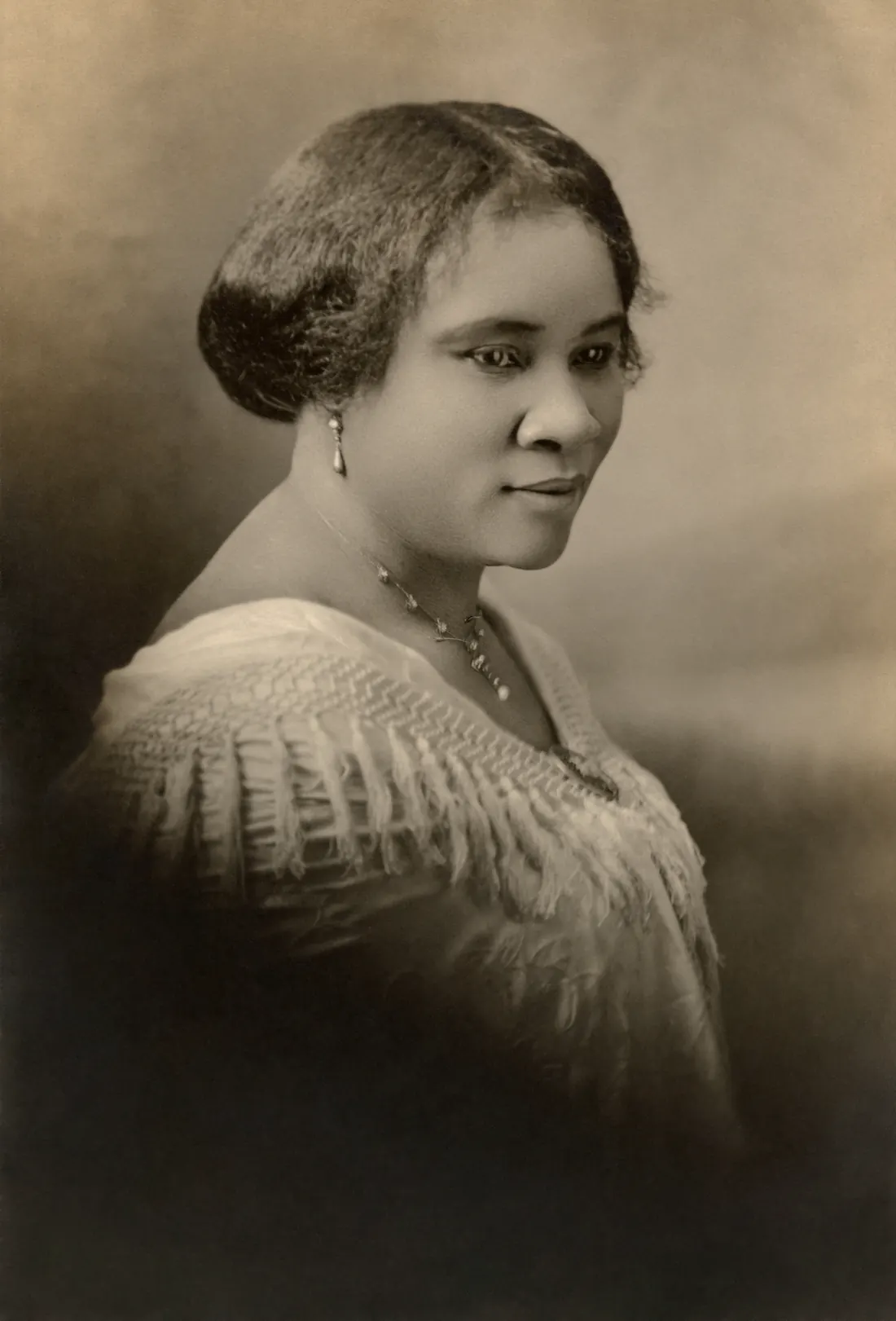
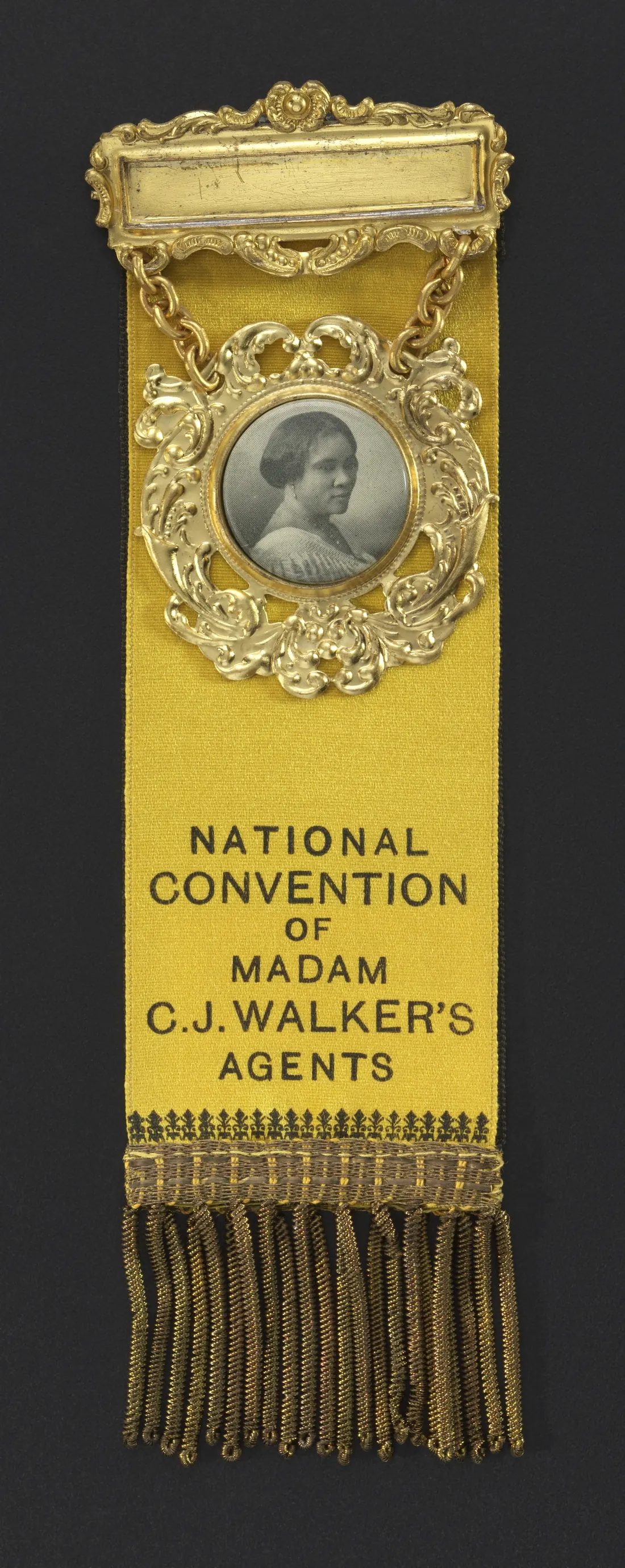
Pictures: Walker herself is in Addison N. Scurlock’s portraits of about 1912 (Smithsonian NMAAHC) and about 1914 (National Portrait Gallery; published in 1919 in The National Cyclopedia of the Colored Race), in the medallion of the 1917 convention badge and in the portrait printed on the Wonderful Hair Grower tin. “Washing Day” (J. H. Tarbell, 1901) and “Cotton Pickers, Florida” (a Kilburn Brothers stereograph, its card copyrighted 1879) show the work she described, not Walker, and not Louisiana. The 1920 advertisement, the 1924 convention of her agents at Villa Lewaro and the Historic American Buildings Survey photo of the house were all made after her death in 1919. The Silent Protest Parade of 1917 was organized by the New York NAACP, on whose executive committee she sat. Booker T. Washington is in Frances Benjamin Johnston’s portrait of about 1895.
Photo credits
The archive photos in this story
The photographs and illustrations in this story are in the public domain or shared under open licenses; each one is credited below with its license. Tap one to enlarge it, or follow the link to its Wikimedia Commons page for the full record. The narration, captions and graphics in the Short are our own; its music and sound effects are credited below.

Music and sound effects
Music: Satie, Gymnopedie No. 1 (Lent et douloureux) (Robin Alciatore, piano, public domain); Beethoven, Coriolan Overture, Op. 62 (Musopen Symphony Orchestra, CC0); Brahms, Symphony No. 2 in D major, Op. 73: IV. Allegro con spirito (Musopen Symphony Orchestra, CC0).
Sound effects: Freesound, CC0.