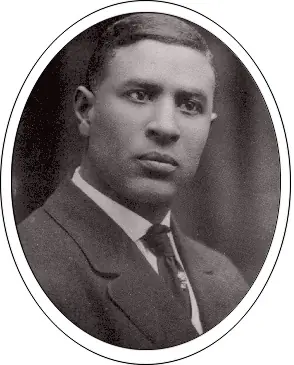
George Washington Carver was born enslaved in Missouri near the end of the Civil War, the National Park Service says, and it gives his date of birth as July 12, 1864. When he was a baby, night raiders kidnapped him and his mother. Wikipedia says he was a week old and that his sister was taken too; the State Historical Society of Missouri says they were taken by “one of the many bands of bushwhackers.”
A neighbor “only succeeded in finding George, whom he purchased by trading one of Moses’ finest horses,” History.com says, and the Missouri encyclopedia agrees: “The return of George Carver to his master’s farm cost Moses Carver one of his finest horses.” His mother was never found; as the Missouri encyclopedia puts it, “George Carver never saw his mother again.” He was so good with plants that local farmers called him “the plant doctor,” History.com says; as Carver himself put it, “I was styled the plant doctor.”
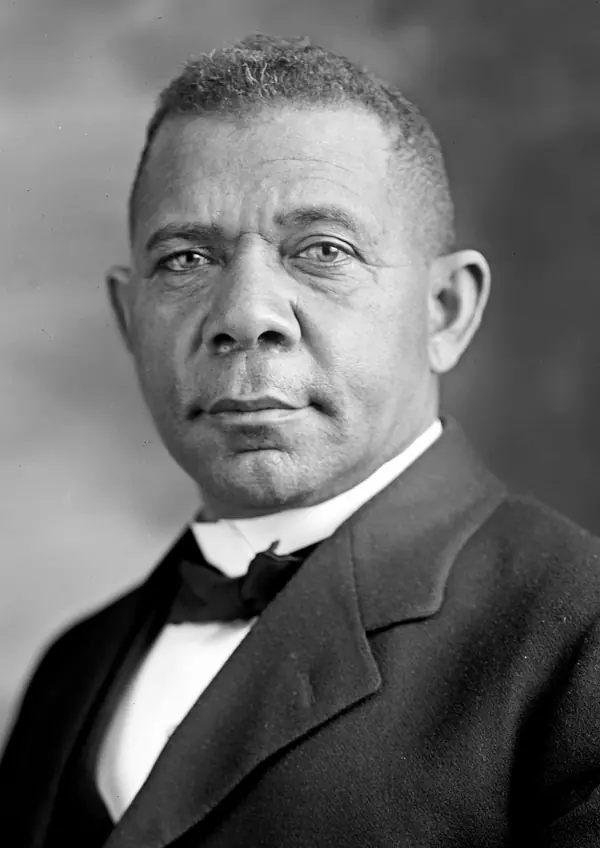
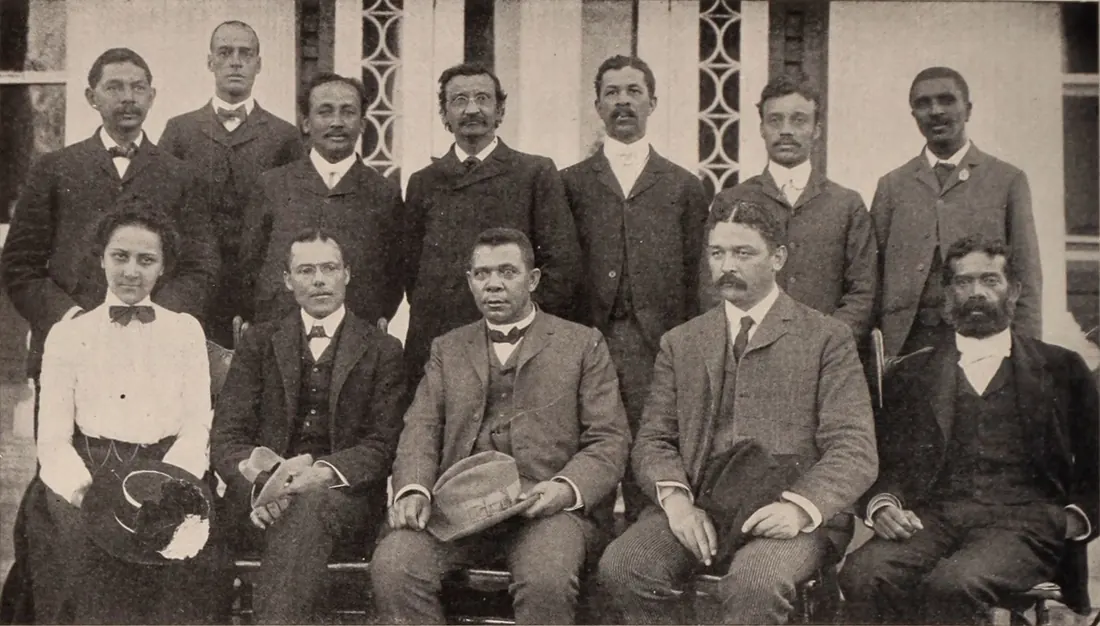
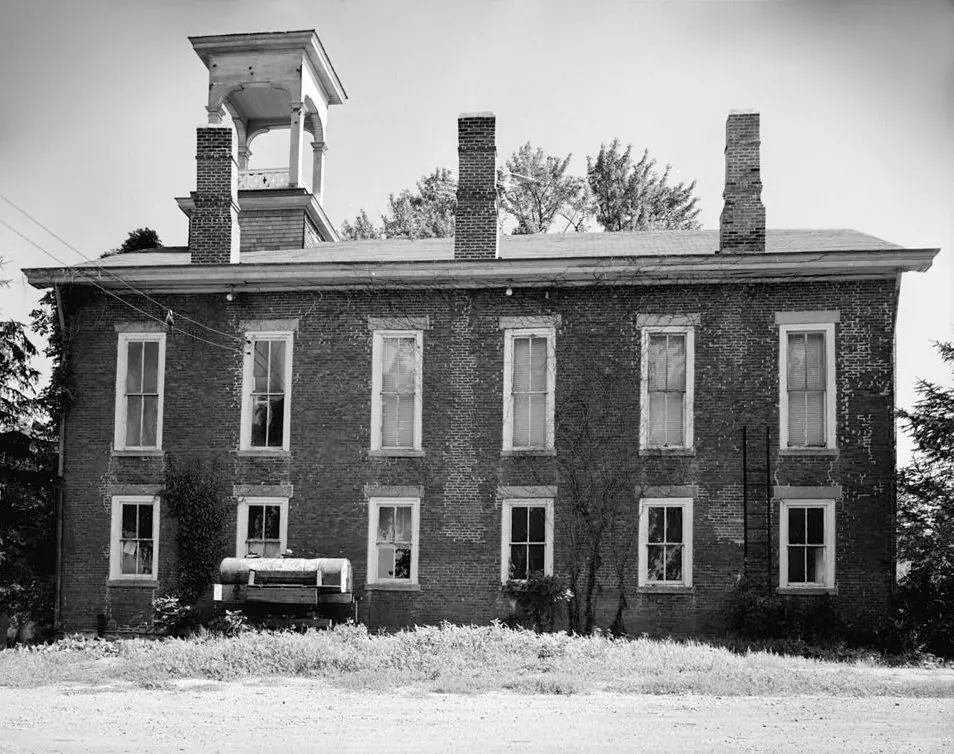
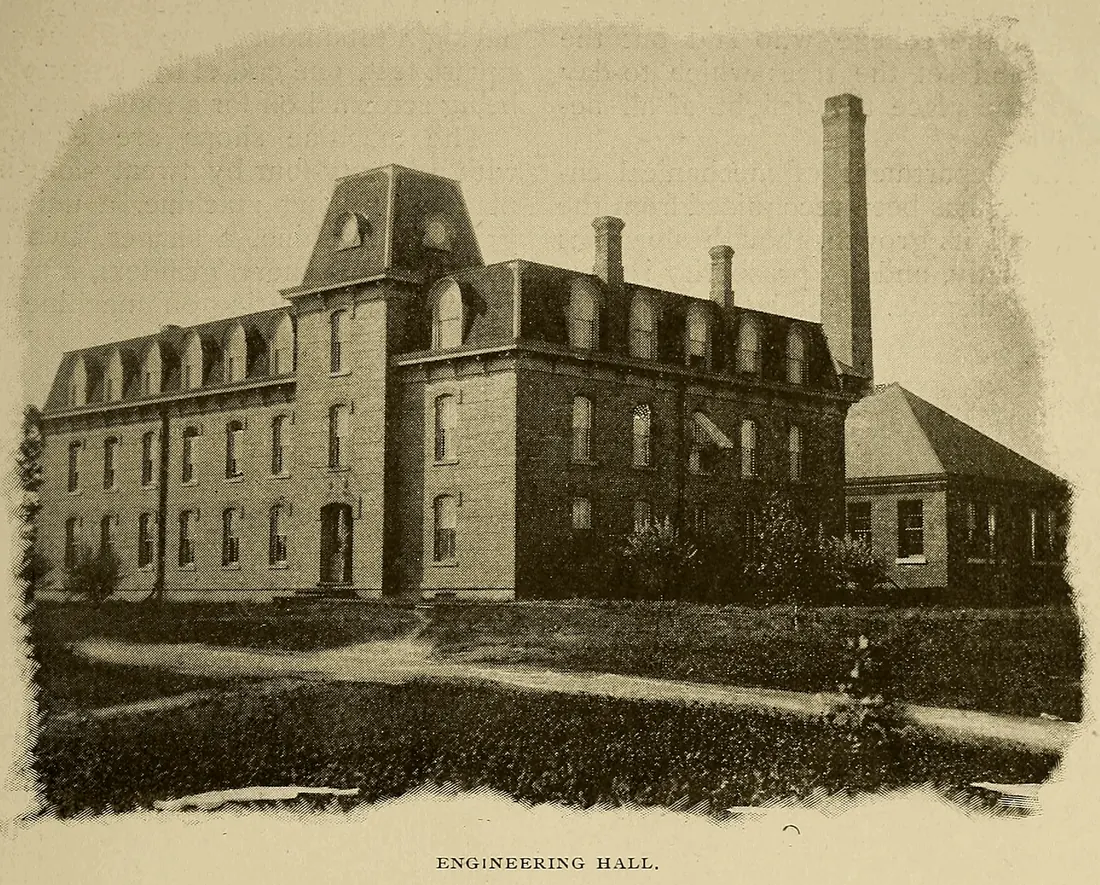
Highland College accepted him in 1885, but his admission was withdrawn when the college discovered he was Black. When he arrived, Wikipedia says, “they refused to let him attend because of his race.” When he began at Iowa State in 1891, he was its first Black student. In 1896 Booker T. Washington, the first principal and president of the Tuskegee Institute, invited Carver to head its Agriculture Department.
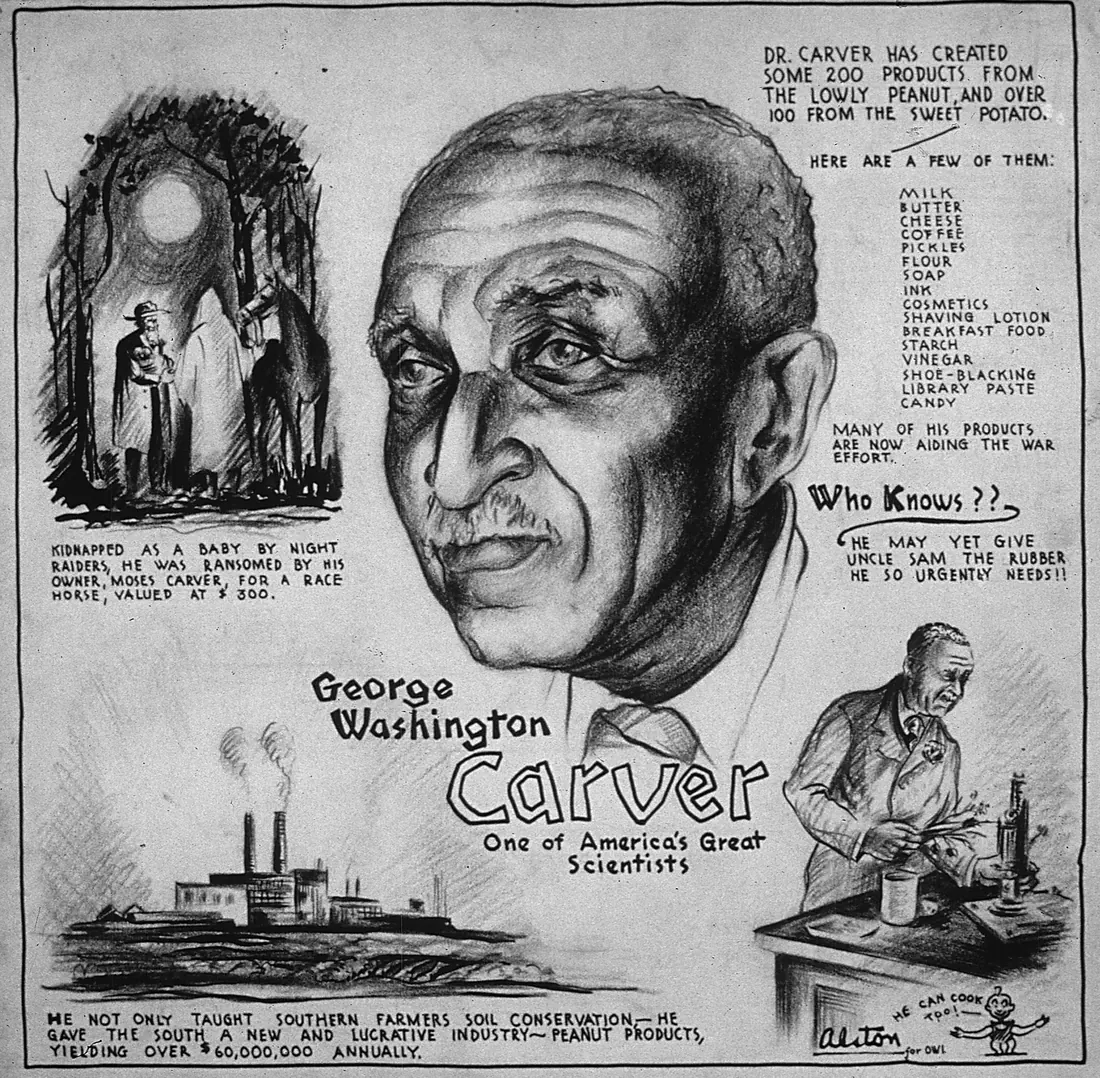
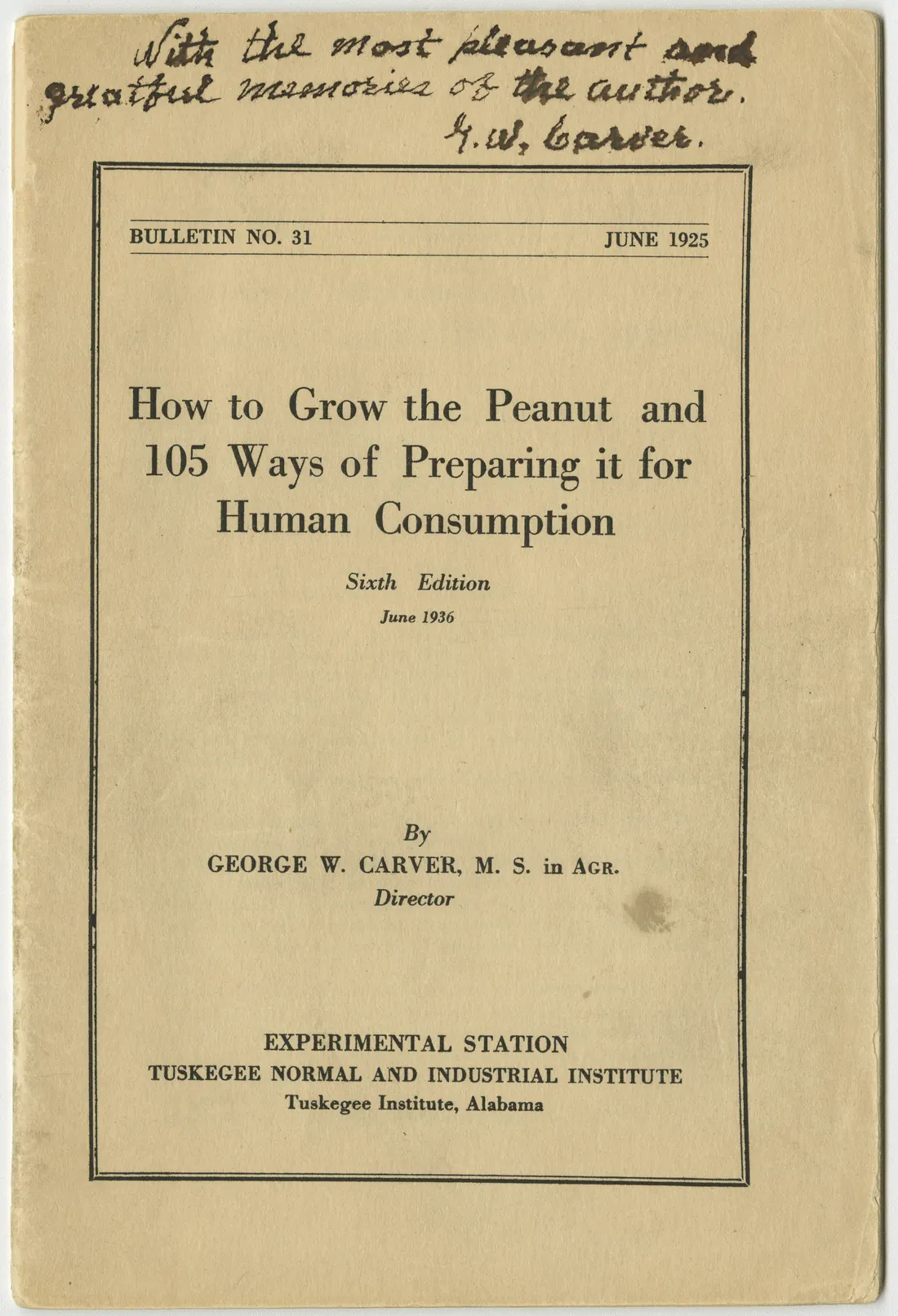
At Tuskegee, Carver developed techniques to improve soils depleted by repeated plantings of cotton, and he wanted poor farmers to grow other crops, such as peanuts and sweet potatoes. He and his assistants worked to popularize the new crops by developing hundreds of applications for them; the National Park Service says he “created 325 uses for peanuts, 108 applications for sweet potatoes and 75 products derived from pecans.” (He did not invent peanut butter: Wikipedia says he “is often mistakenly credited with the invention of peanut butter.”) In January 1921 he appeared before the House Ways and Means Committee. Southern congressmen mocked him, but as he talked about the importance of the peanut and its uses for American agriculture and manufacturing, committee members repeatedly extended the time for his testimony, and “he held the committee’s interest well over his allotted time,” American Heritage says.
Carver died on January 5, 1943, and his entire estate, amounting to over $60,000, was bequeathed to the George Washington Carver Foundation. Congress passed legislation creating the George Washington Carver National Monument on the farm where he was born, near Diamond, Missouri. It was the first national monument dedicated to an African American, and the first to honor someone other than a president.
Fact check
The facts and where they come from
- He was traded for a horse as a baby, but he became a famous scientist. History.com: “the neighbor only succeeded in finding George, whom he purchased by trading one of Moses’ finest horses.” State Historical Society of Missouri: “The return of George Carver to his master’s farm cost Moses Carver one of his finest horses.” Wikipedia: “He was one of the most prominent Black scientists of the early 20th century.” National Park Service: “He is regarded as one of the most prominent black scientists of the early 20th century.” 4361
- His name was George Washington Carver (National Park Service, Wikipedia). 16
- He was born enslaved in Missouri. National Park Service: “Carver was born enslaved in Missouri near the end of the Civil War”; it lists “Date of Birth: 12 July 1864.” Wikipedia: “c. 1864.” 16
- Night raiders kidnapped him and his mother. Wikipedia: “when he was a week old, he, his sister, and his mother were kidnapped by night raiders from Arkansas.” State Historical Society of Missouri: “he and his mother were kidnapped by one of the many bands of bushwhackers.” 63
- His owner traded a fine horse to get him back. History.com: “whom he purchased by trading one of Moses’ finest horses.” State Historical Society of Missouri: “The return of George Carver to his master’s farm cost Moses Carver one of his finest horses.” Wikipedia (Moses Carver): “George was brought back, costing Moses a prize horse.” American Heritage adds a caveat: “his owner gave a horse in payment for his recovery, according to later accounts.” 4375
- His mother was never seen again. Wikipedia (Moses Carver): “but his mother was never seen again.” State Historical Society of Missouri: “George Carver never saw his mother again.” National Park Service (Tuskegee): “however his mother was never found.” 732
- He was so good with plants, they called him the plant doctor. American Heritage, quoting Carver: “until I was styled the plant doctor.” History.com: he became known as “the plant doctor” to local farmers. 54
- A college accepted him, then turned him away for being Black. National Park Service: “Carver was accepted into Highland College in 1885, but his admission was withdrawn when the college discovered he was black.” Wikipedia (on Highland University): “When he arrived, they refused to let him attend because of his race.” 16
- Later, he became Iowa State’s first Black student. Wikipedia: “When he began there in 1891, he was the first black student at Iowa State.” The National Park Service says the same. 61
- Then Booker T. Washington called him to Tuskegee. Wikipedia: “In 1896, Booker T. Washington, the first principal and president of the Tuskegee Institute (now Tuskegee University), invited Carver to head its Agriculture Department.” 6
- Cotton had worn out the soil, so he taught poor farmers to grow peanuts and sweet potatoes. Wikipedia: “Carver developed techniques to improve types of soils depleted by repeated plantings of cotton. He wanted poor farmers to grow other crops, such as peanuts and sweet potatoes.” 6
- His lab found hundreds of uses, from peanut milk to dyes. Wikipedia: “he and assistants worked to popularize the new crops by developing hundreds of applications for them,” and, on his 1921 testimony, “samples of peanut milk, peanut flour, industrial dyes made from peanuts.” National Park Service: “He created 325 uses for peanuts, 108 applications for sweet potatoes and 75 products derived from pecans.” 61
- In 1921, he spoke to Congress. American Heritage: “Carver’s appearance before the House Ways and Means Committee in January, 1921.” 56
- Some mocked him, but they kept giving him more time. Wikipedia: “Southern congressmen mocked him, but as he talked about the importance of the peanut and its uses for American agriculture and manufacturing, committee members repeatedly extended the time for his testimony.” American Heritage: “he held the committee’s interest well over his allotted time.” 65
- The farm where he was born enslaved became the first national monument to a Black American. State Historical Society of Missouri: “Congress passed legislation creating the George Washington Carver National Monument on the farm where he was born near Diamond, Missouri. The monument was the first national memorial to an African American.” Wikipedia: “This was the first national monument dedicated to an African American and the first to honor someone other than a president.” 36
Sources
- George Washington Carver National Park Service
- George Washington Carver National Park Service, Tuskegee Institute National Historic Site
- George Washington Carver (Gary R. Kremer, from the Dictionary of Missouri Biography, 1999) State Historical Society of Missouri, Missouri Encyclopedia
- George Washington Carver History.com
- George Washington Carver and the Peanut (Barry Mackintosh, 1977) American Heritage
- George Washington Carver Wikipedia
- Moses Carver Wikipedia
Notes
The horse: the sources agree that a horse was the price of his return, but not on the details. It was “one of his finest horses” (State Historical Society of Missouri, History.com), “a prize horse” (Wikipedia’s Moses Carver article) or “a race horse valued at $300” (the 1943 Office of War Information drawing). Wikipedia’s main article says only that Moses Carver “negotiated with the raiders to gain the boy’s return and rewarded Bentley,” the neighbor he hired, and American Heritage says the horse comes from “later accounts”; the legend was popularized by a 1932 American Magazine article titled “A Boy Who Was Traded for a Horse.” We give no value.
Who was kidnapped, and when: he, his sister and his mother (Wikipedia) or he and his mother (State Historical Society of Missouri); he was “a week old” (Wikipedia) or “a few months old” (State Historical Society of Missouri), and the Park Service at Tuskegee says 1865. We say as a baby. His birth year is 1864 (National Park Service) or about 1865 (State Historical Society of Missouri, and Carver himself).
The college is Highland College to the National Park Service and Highland University to Wikipedia.
“Hundreds of uses”: Carver claimed more than 300 peanut products and the Carver Museum credited him with 287; American Heritage notes that “Many items were clearly not original with Carver,” and Wikipedia says his lab collected recipes from others. We say his lab found hundreds of uses, not that he invented them. That he changed Southern farming single-handed is a myth, American Heritage and Wikipedia say, so we don’t claim it, nor that he “saved the South.”
Myths kept out: he did not invent peanut butter (Wikipedia, History.com). The story that Thomas Edison offered him a job appears only on school and fan pages, with no reliable source, so it is left out.
The 1921 hearing: popular retellings say he was given ten minutes; the sources we checked give no figure.
Left out for length: the Jesup Wagon, which Carver started in May 1906 with Thomas Monroe Campbell (National Park Service, Tuskegee).
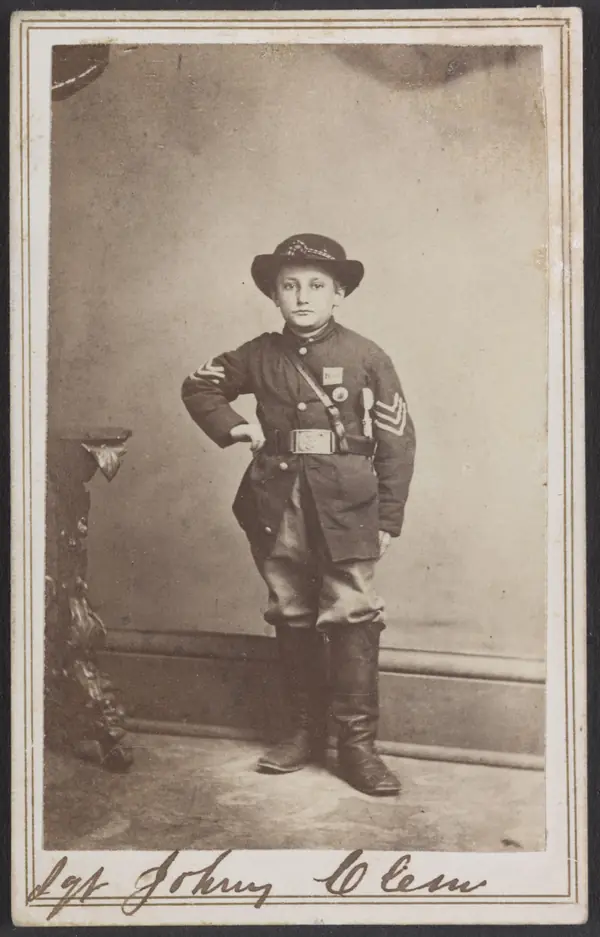
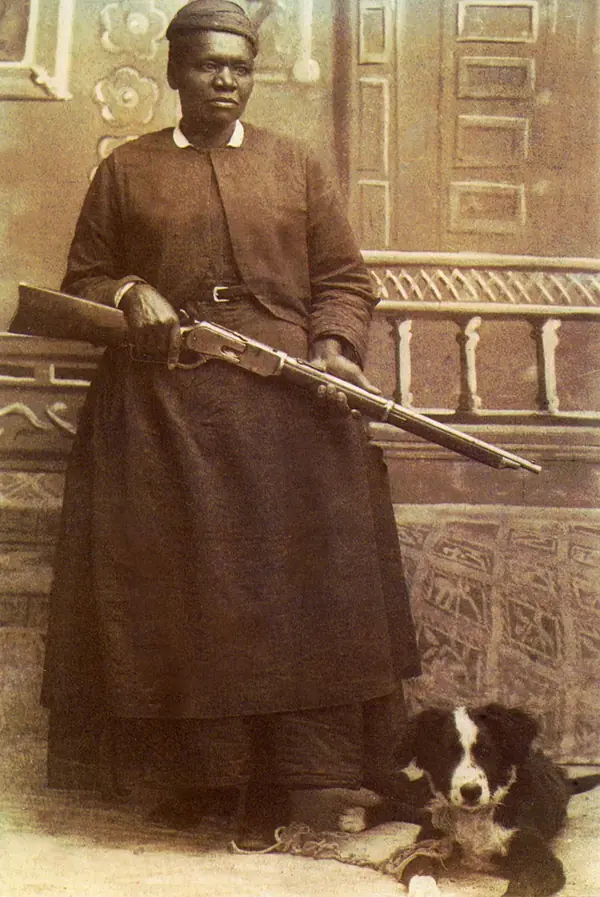
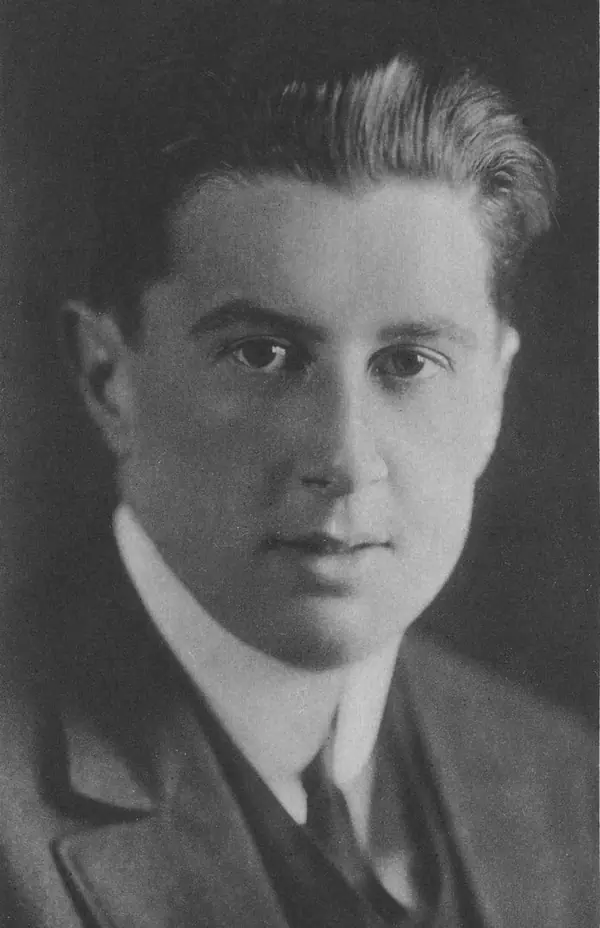
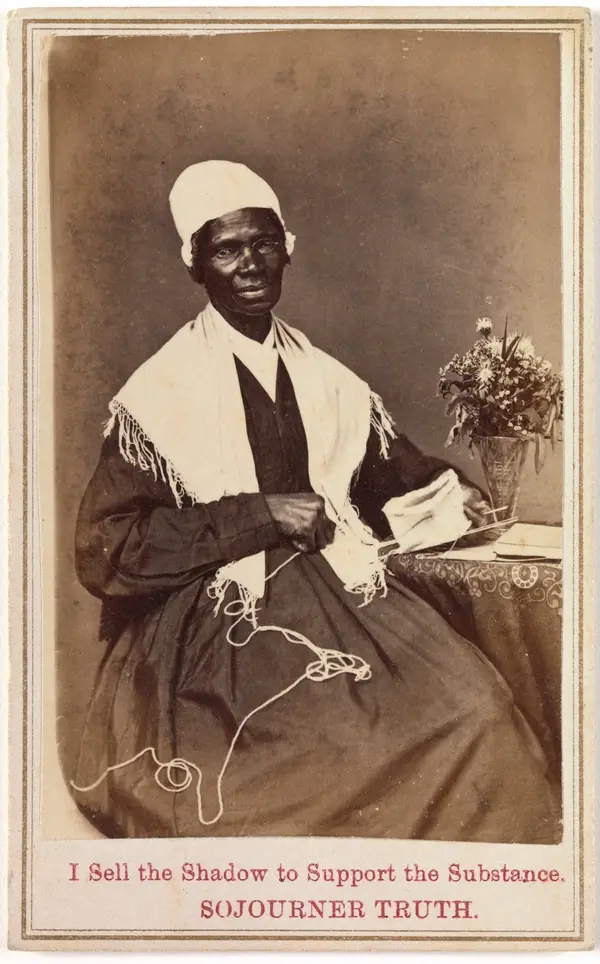
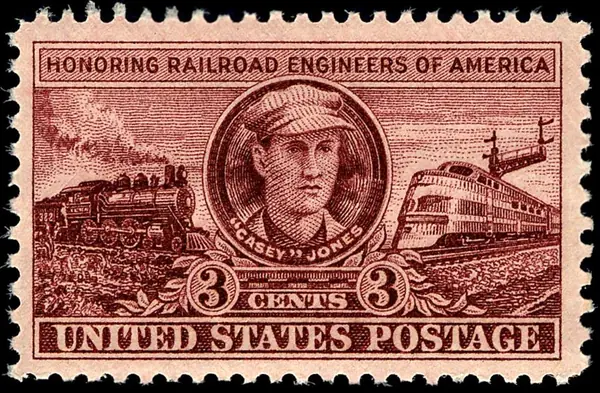
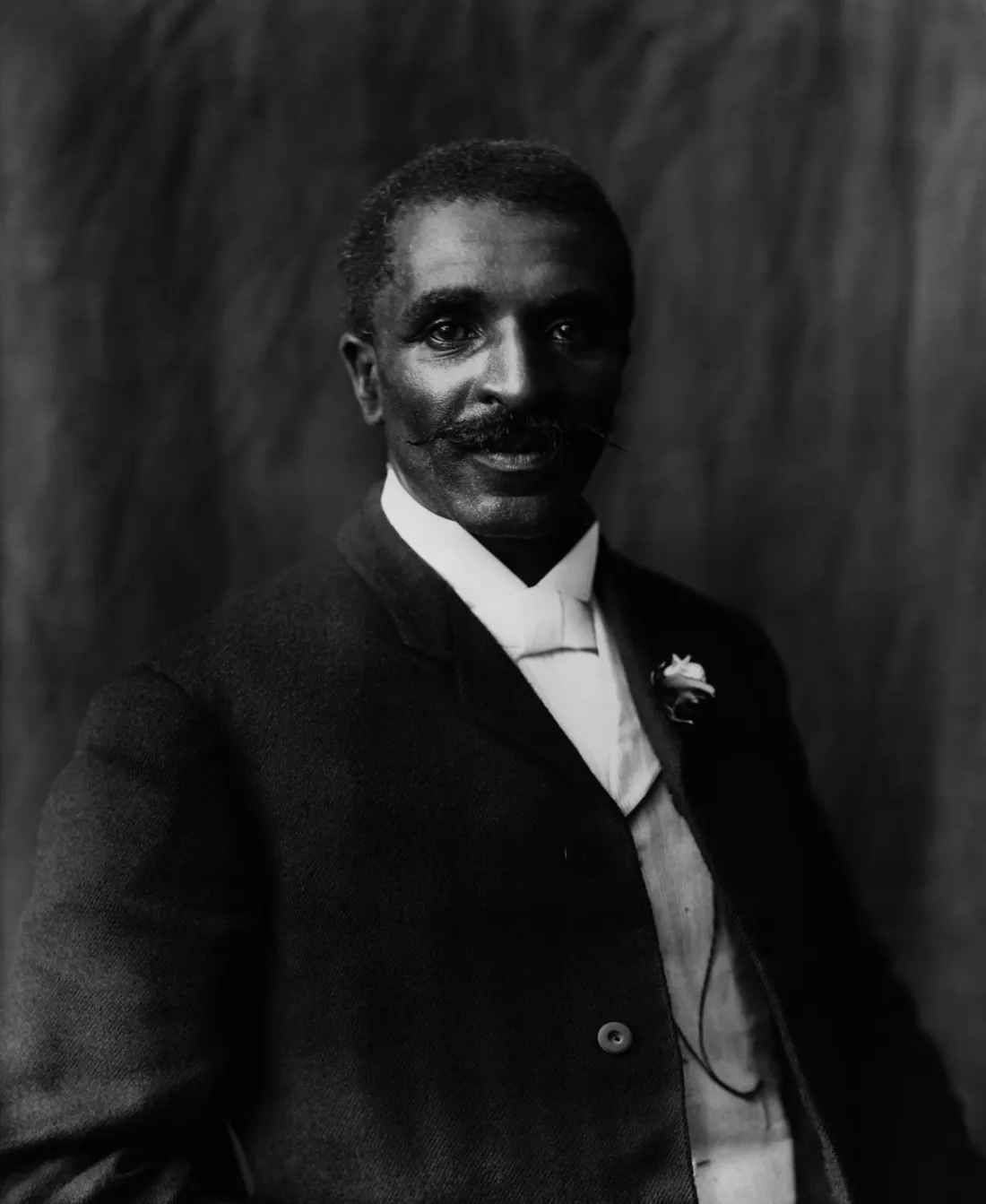
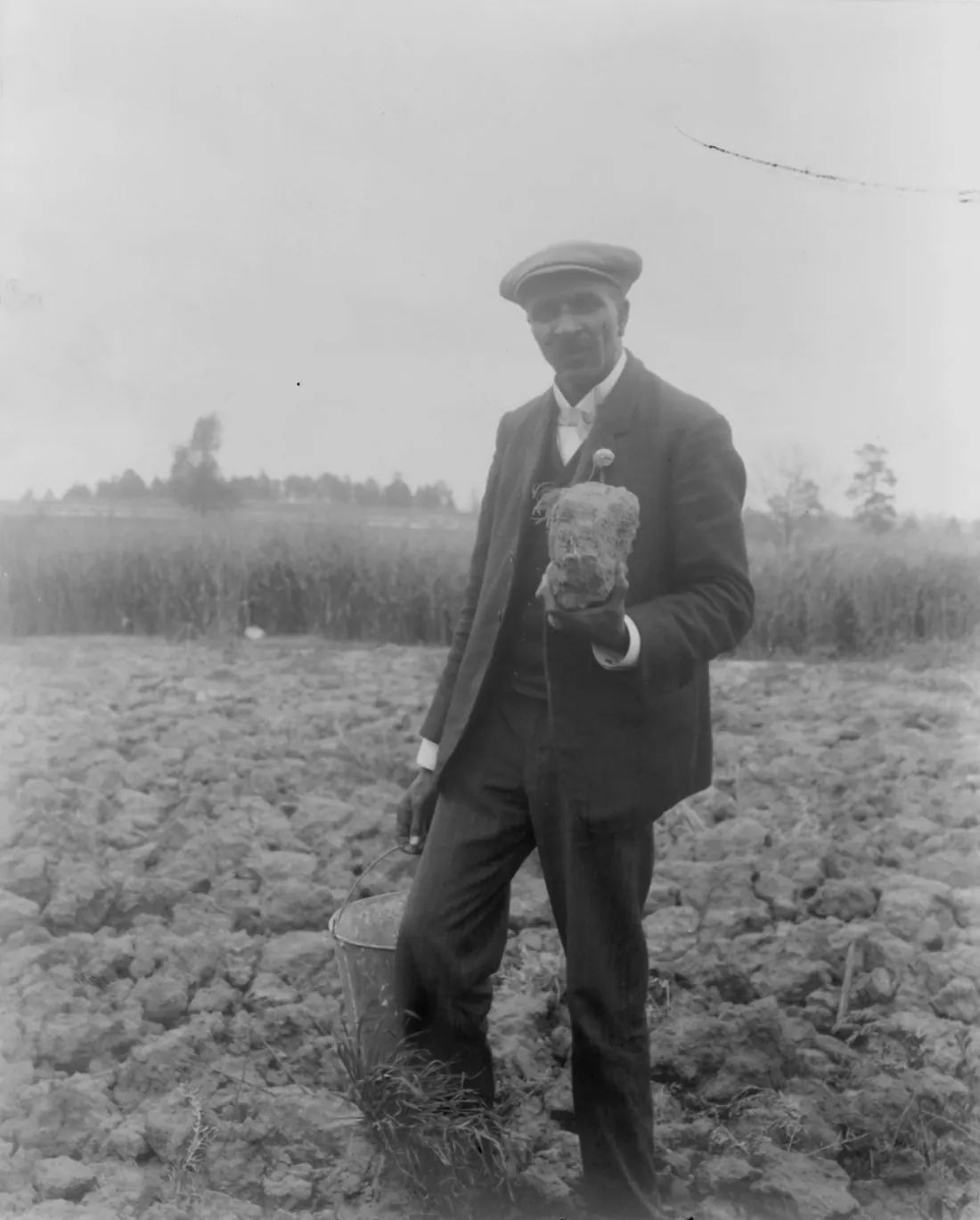
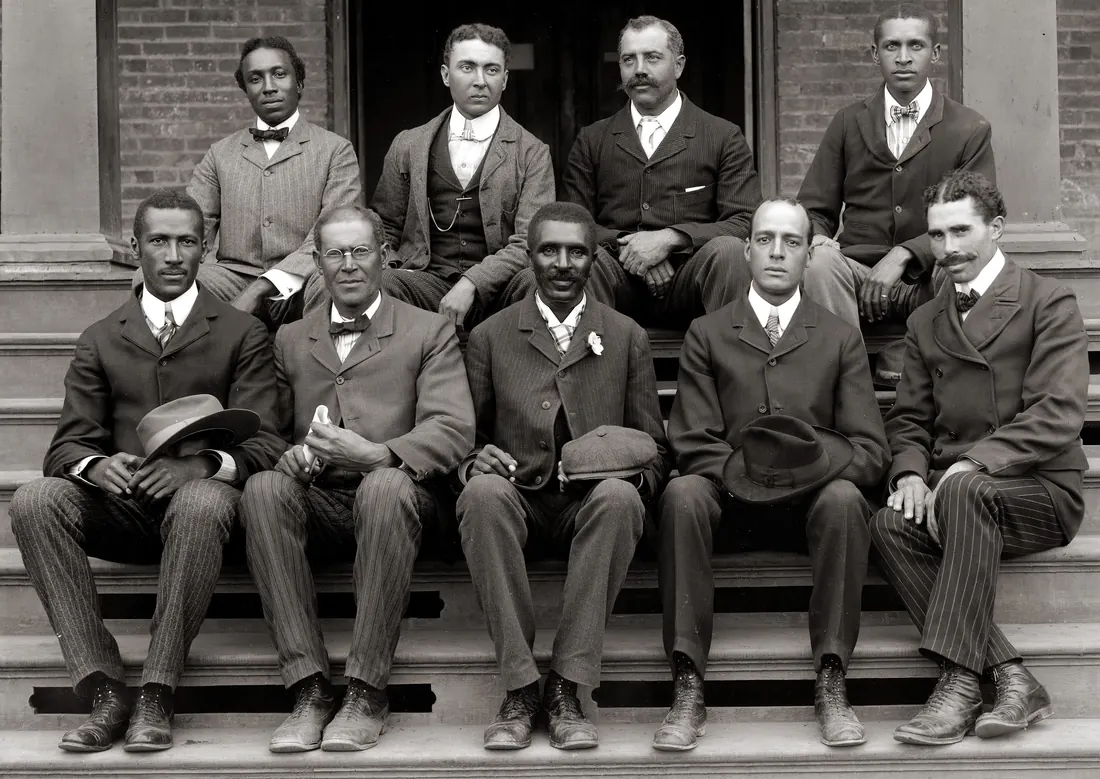
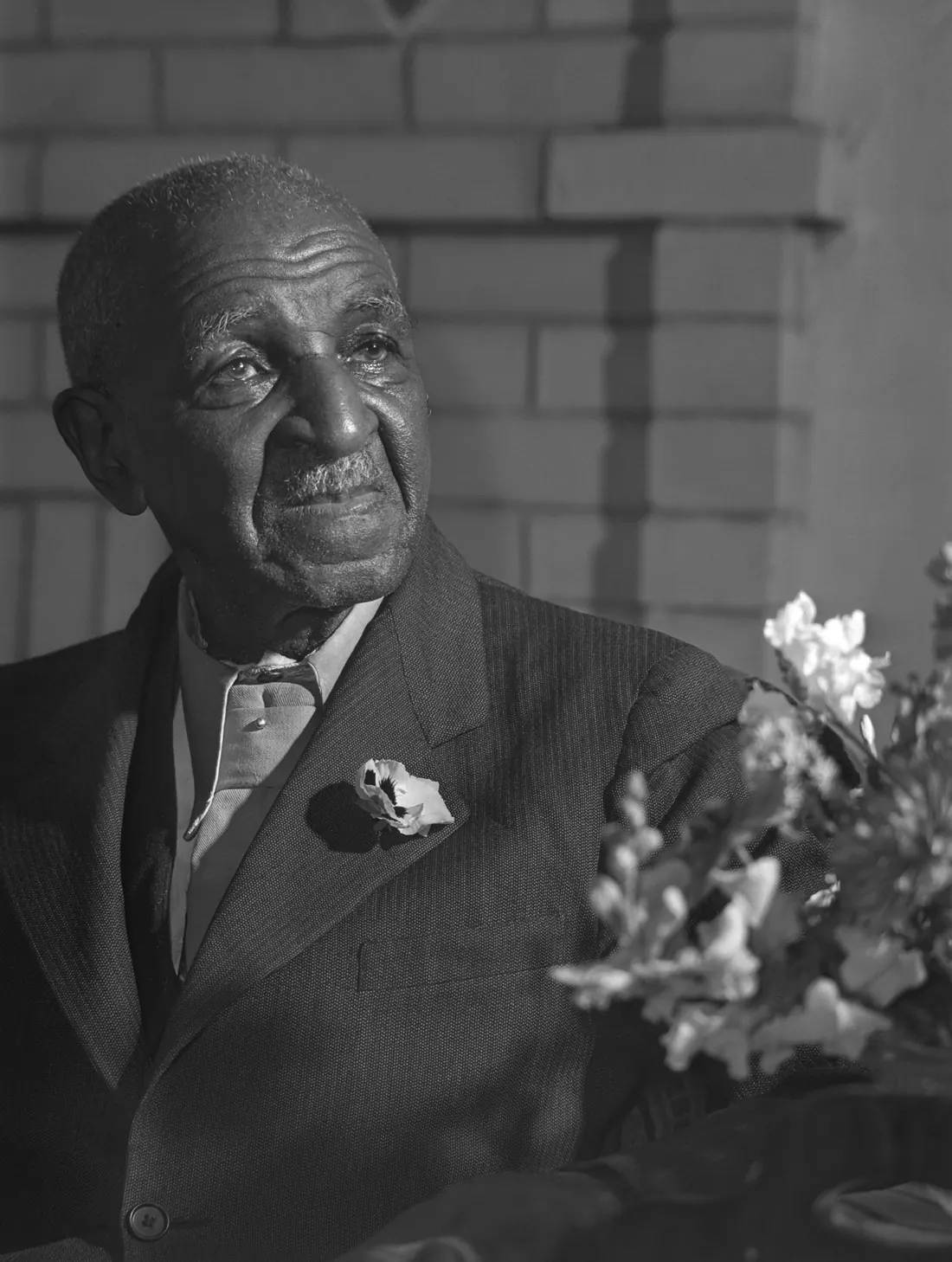
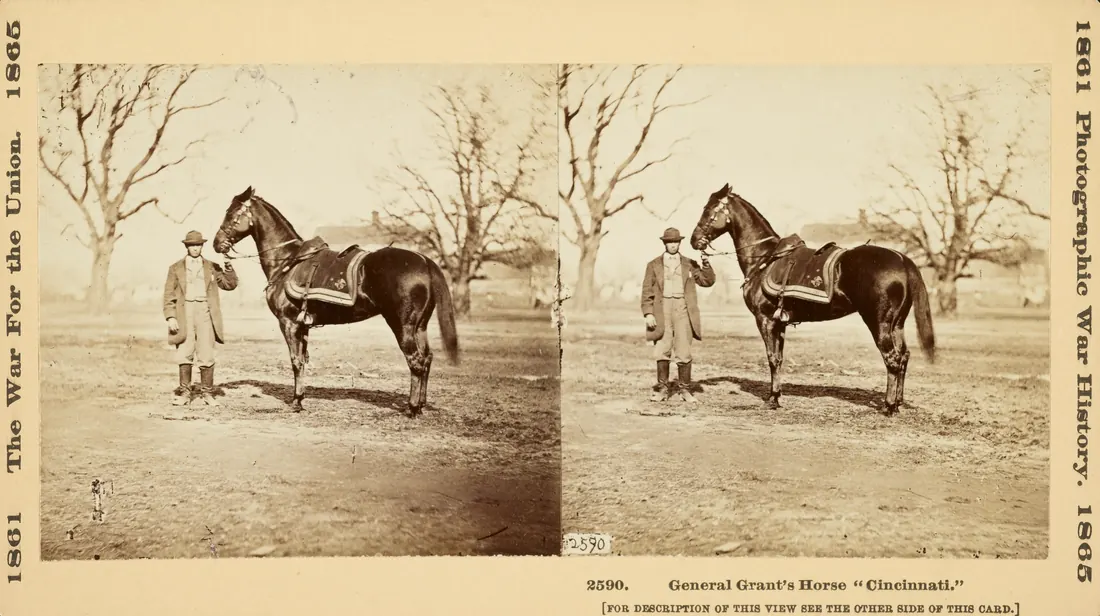
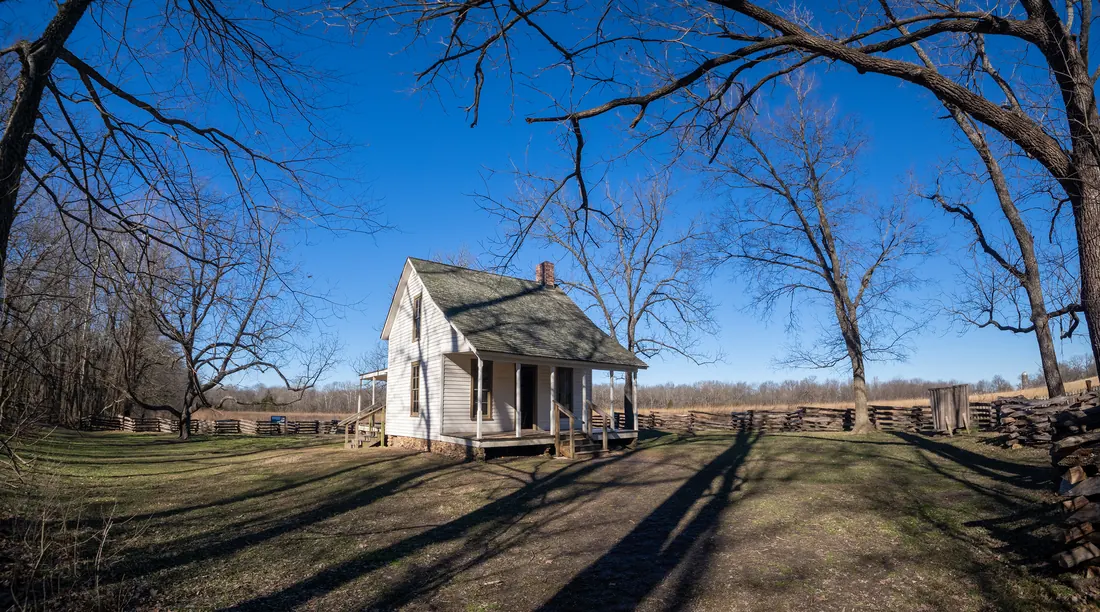
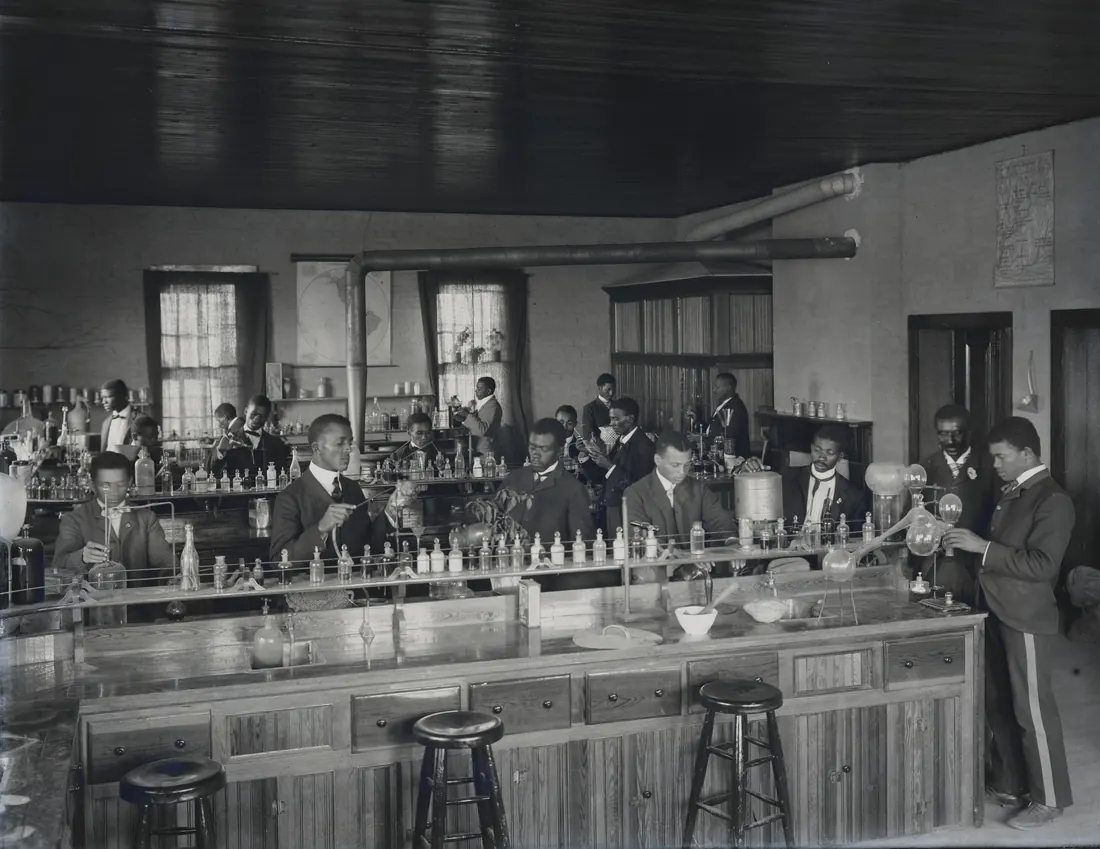
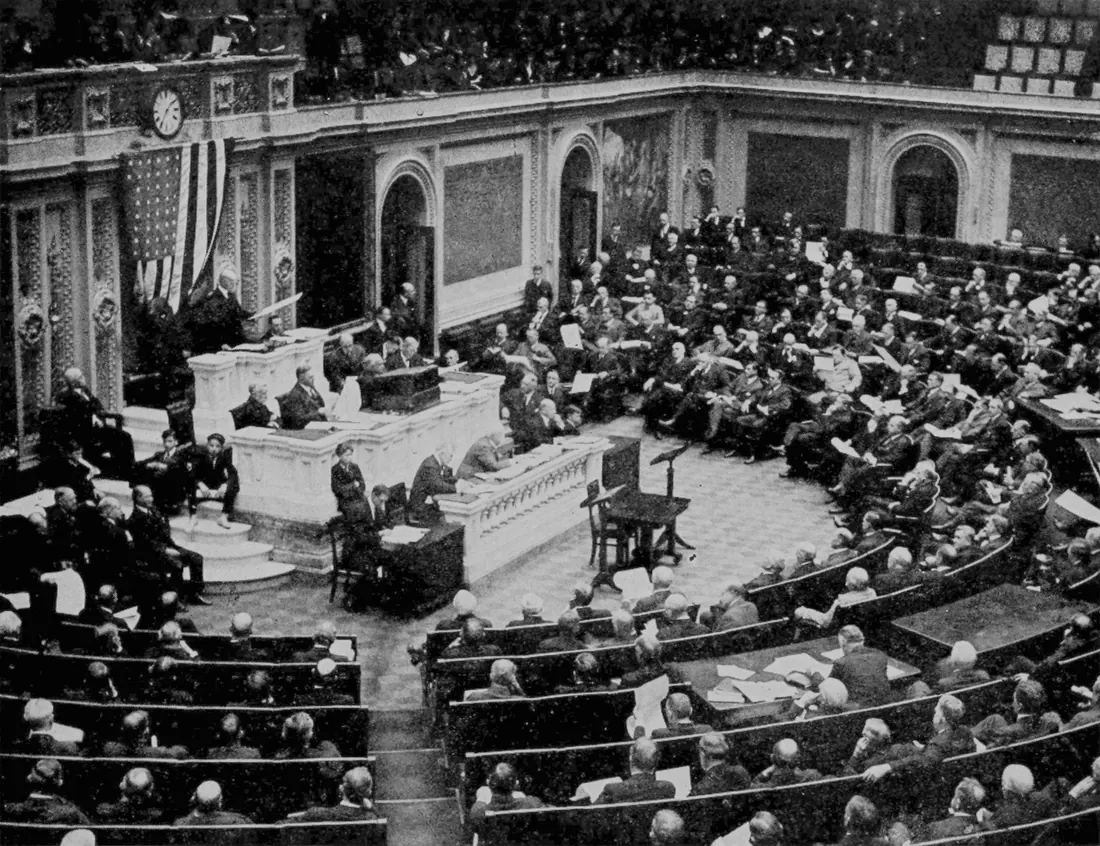
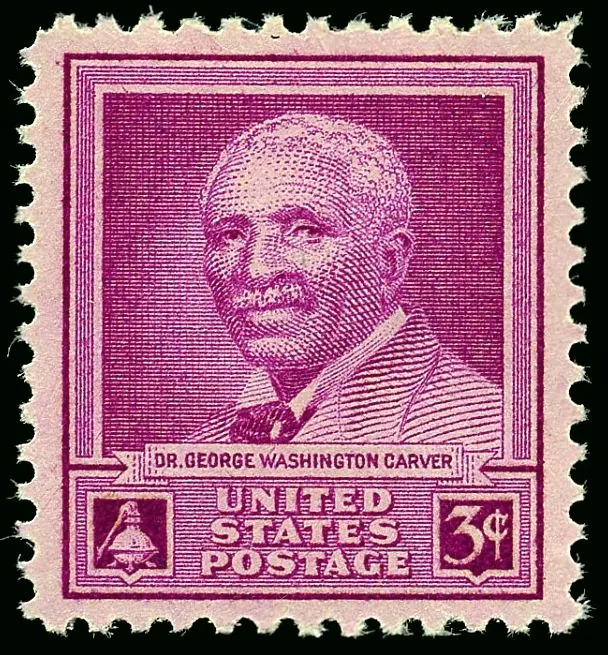
Pictures: Carver himself is in Frances Benjamin Johnston’s portrait of 1906 (restored by Adam Cuerden), her photo of him standing in a field holding a piece of soil (1906), and her 1902 photos of him with Tuskegee staff (front row, center) and of the Tuskegee Faculty Council (back row, right, with Booker T. Washington front center), and in Arthur Rothstein’s photo at Tuskegee of March 1942. No photograph of the kidnapping or of Carver as a child exists: the 1943 Office of War Information drawing by Charles Alston tells the story in its captions, and General Grant’s horse Cincinnati, in a stereograph of March 1865, is not the Carver horse. The Moses Carver house of 1881, photographed in 2020, was built on the same farm after his childhood. Irvin Hall, the Highland University building, was photographed in 1958, and Engineering Hall at Iowa State was printed in 1893. The chemistry laboratory of about 1902 shows Tuskegee students, not Carver. The peanut bulletin is the sixth edition of 1936 (first published in 1916), signed by Carver. The House of Representatives was photographed in session in 1921, but his hearing was held in a committee room. The stamp was issued in 1948.
Photo credits
The archive photos in this story
The photographs and illustrations in this story are in the public domain or shared under open licenses; each one is credited below with its license. Tap one to enlarge it, or follow the link to its Wikimedia Commons page for the full record. The narration, captions and graphics in the Short are our own; its music and sound effects are credited below.
Music and sound effects
Music: Grieg, Peer Gynt Suite No. 1, Op. 46: II. Ase's Death (Musopen Symphony Orchestra, CC0); Grieg, Peer Gynt Suite No. 1, Op. 46: I. Morning Mood (Musopen Symphony Orchestra, public domain).
Sound effects: Freesound, CC0.