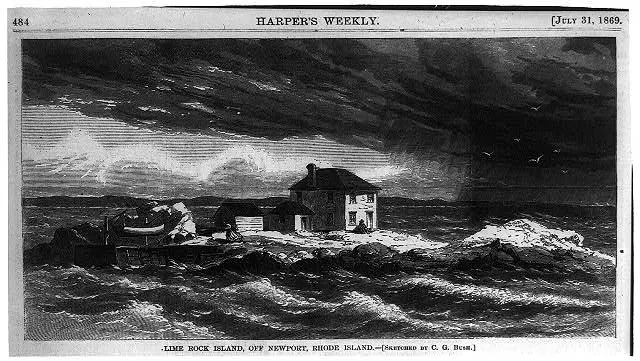
Ida Lewis was born on February 25, 1842. Her father, Hosea, was the official keeper of the lighthouse on Lime Rock, in Newport, Rhode Island, but after the family had been at Lime Rock for less than four months, he suffered a stroke and became disabled. “From 1857 until 1872, she kept the light and cared for her disabled father and a seriously ill sister,” the US Coast Guard says. Tending the light meant “filling the lamp with oil at sundown and again at midnight,” and she rowed her younger siblings to school on the mainland every weekday.
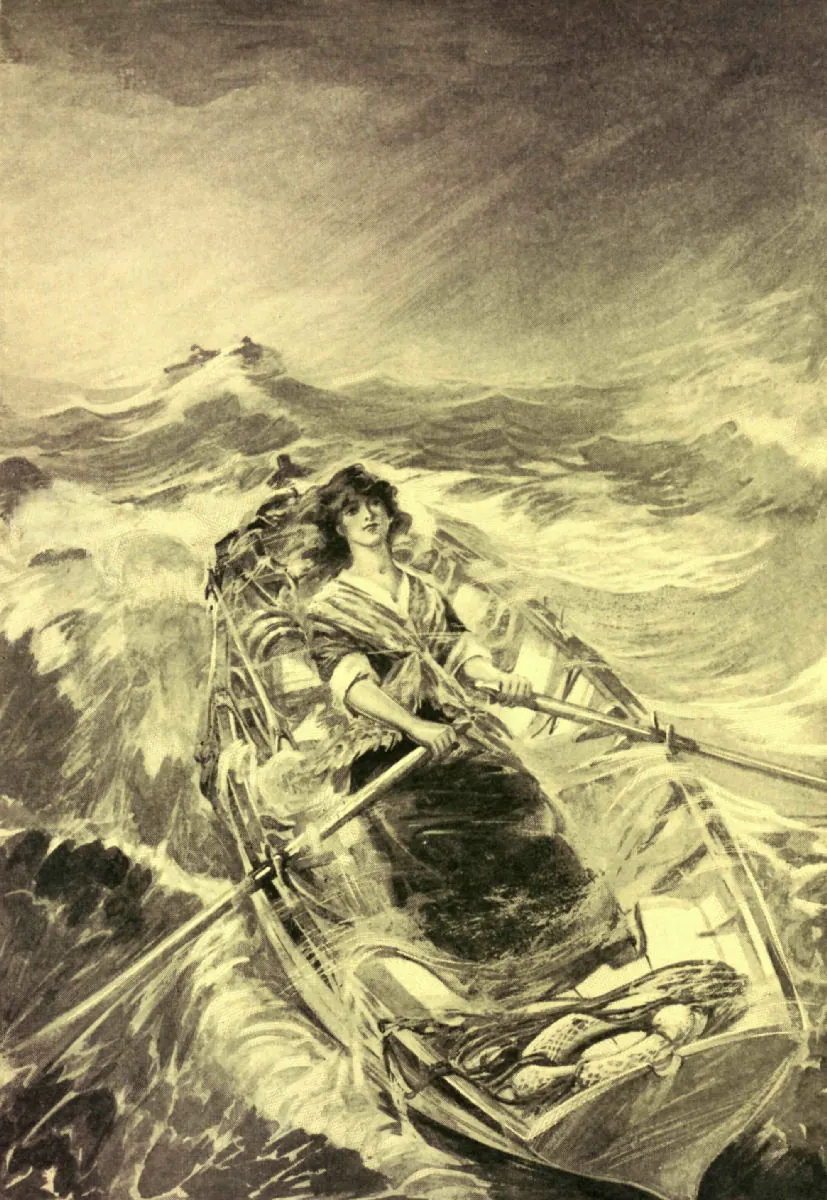
Her most famous rescue came on March 29, 1869. During a storm (a snowstorm, Wikipedia says), an overturned boat was spotted drifting near Lime Rock with two men desperately clinging to its hull: two soldiers, Sgt. James Adams and Pvt. John McLaughlin. A third person, a young boy hired to row the soldiers back to Fort Adams, was unable to stay afloat and drowned before Ida and her brother could reach him. Ida, who was suffering from a cold, “ran to her boat without taking the time to put on a coat or shoes.”
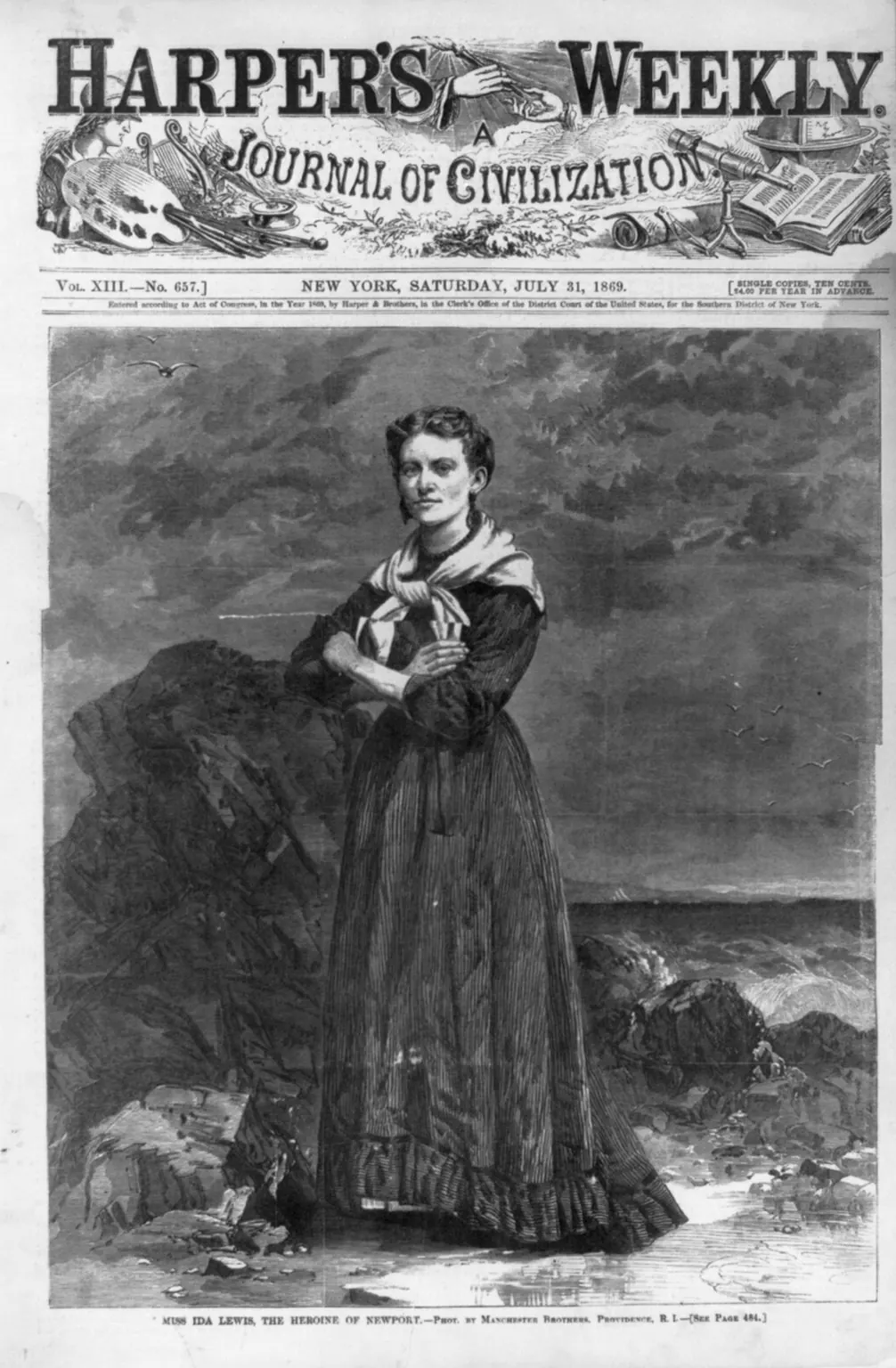
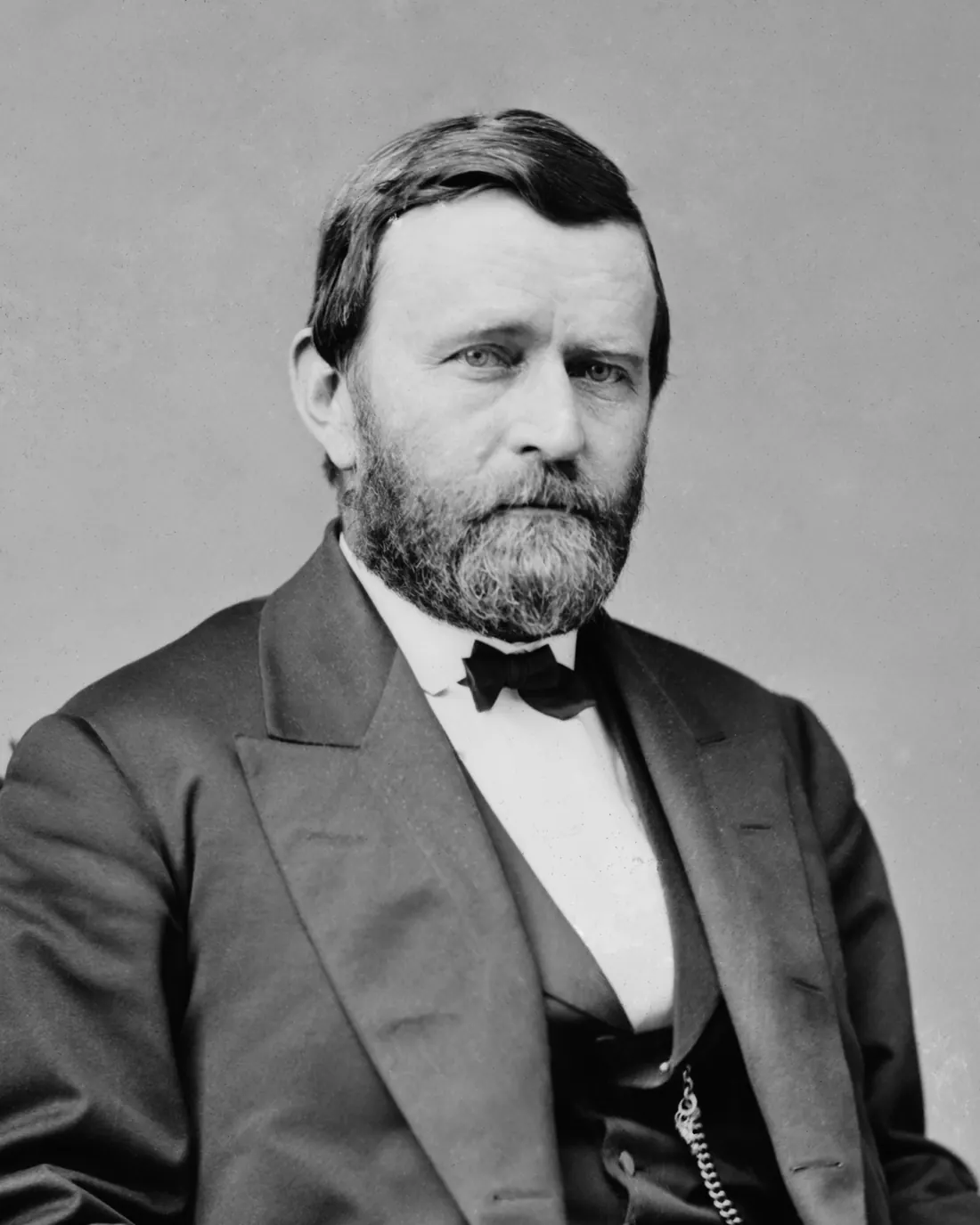
“Despite rough seas and freezing water, Ida and her younger brother Hosea rowed out to the wreck,” the Newport Historical Society says, and “she and her brother pulled both men into their boat and returned them safely to the lighthouse.” On July 31, 1869, she was on the cover of Harper’s Weekly, “the only lighthouse keeper ever to receive such a distinction,” the National Archives says. Visitors frequently traveled to Newport to meet her, including President Ulysses S. Grant, who came that same year. In her lifetime she was called “the Bravest Woman in America”; the Coast Guard says the American Cross of Honor Society gave her the title.
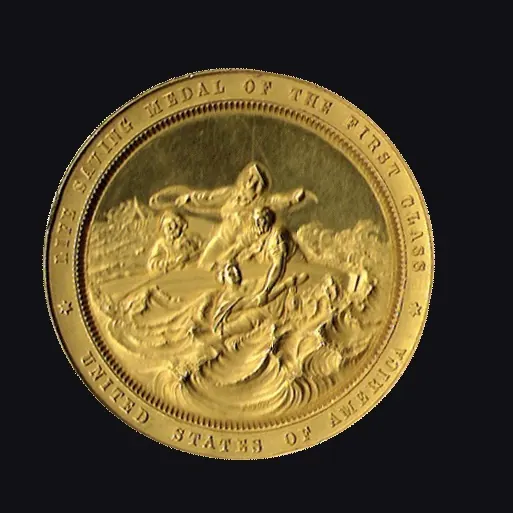
On July 16, 1881, she was awarded the rare Gold Lifesaving Medal from the United States government, the first woman to receive it, for saving two soldiers from nearby Fort Adams who had fallen through the ice on February 4, 1881. She made her last recorded rescue at 63, Wikipedia says, or at 64, says the Coast Guard, which also notes that she “was officially credited with saving 18 lives; however, other sources indicate the number to be much higher.”
Ida Lewis’s career ended only when she died at the Lime Rock Light Station on October 24, 1911, at the age of 69, the National Archives says. The bells of all the vessels in Newport Harbor tolled for her that night. In 1924 the Rhode Island legislature officially changed the name of Lime Rock to Ida Lewis Rock, which the National Archives calls “the only time a lighthouse has been renamed for a keeper.”
Fact check
The facts and where they come from
- She was told rowing a boat wasn’t ladylike, but she rowed into storms and saved at least 18 lives. Wikipedia: “Responding to criticism that it was un-ladylike for women to row boats.” National Geographic: “As newspapers argued among themselves as to whether Lewis’s rowing a boat or tending a lighthouse on a rocky station was ‘unladylike’ …” US Coast Guard: “Lewis was officially credited with saving 18 lives; however, other sources indicate the number to be much higher.” PBS: “she rescued at least eighteen persons.” Newport Buzz: she “is credited with saving at least 18 lives” and “she rowed through a snowstorm.” 84156
- Her name was Ida Lewis, lighthouse keeper in Newport. Wikipedia: she was the keeper of Lime Rock Light in Newport, Rhode Island, officially appointed in 1879. 8
- Her father kept a Newport lighthouse, but a stroke left him disabled. Wikipedia: “After the family had been at Lime Rock for less than four months, he suffered a stroke and became disabled.” Newport Historical Society: “Only a few months later, Hosea suffered a severe stroke that left him unable to perform the demanding duties of a lighthouse keeper.” US Coast Guard: “her father, the official keeper, was disabled by a stroke.” 821
- So the teenager kept the lamp lit and rowed her siblings to school. US Coast Guard: “From 1857 until 1872, she kept the light and cared for her disabled father and a seriously ill sister.” She was born on February 25, 1842, so she was 15 in 1857 (Wikipedia). Wikipedia: tending the light meant “filling the lamp with oil at sundown and again at midnight”; “She rowed her younger siblings to school every weekday.” Newport Historical Society: “she rowed her brothers and sister to school on the mainland each day.” 182
- March 1869. Wikipedia: “Her most famous rescue occurred on March 29, 1869.” Newport Historical Society: “A rescue on March 29, 1869, however, brought Ida national attention.” 82
- A storm flipped a boat near her rock. Newport Historical Society: “during a storm, an overturned boat was spotted drifting near Lime Rock with two men desperately clinging to its hull.” Wikipedia: “A snowstorm was churning the harbor’s waters, and the boat overturned.” 28
- The boy rowing it drowned. Two soldiers clung on. Newport Historical Society: “A third person, a young boy hired to row the soldiers back to Fort Adams, was unable to stay afloat after the boat capsized and drowned before Ida and her brother could reach him.” Wikipedia: “Two soldiers, Sgt. James Adams and Pvt. John McLaughlin” … “The two soldiers clung to it while the boy was lost.” 28
- Ida had a cold, but she ran out without her coat or shoes. Wikipedia: Ida, “who was suffering from a cold” … “Ida ran to her boat without taking the time to put on a coat or shoes.” PBS: “She was sick with a terrible cold. She saw a boat overturn, and ran out into the water in her stocking feet and rowed a boat out to save them.” 85
- With her brother, she rowed into the storm and hauled both men in. Newport Historical Society: “Despite rough seas and freezing water, Ida and her younger brother Hosea rowed out to the wreck” … “She and her brother pulled both men into their boat and returned them safely to the lighthouse.” Wikipedia: “With the help of her younger brother, she was able to haul the two men into her boat and bring them to the lighthouse.” 28
- Harper’s Weekly put her on its cover. Library of Congress: “Illus. in: Harper’s weekly, July 31, 1869, p. 481 (title page).” National Archives: “She was featured on the cover of Harper’s Weekly magazine (the only lighthouse keeper ever to receive such a distinction).” US Coast Guard: “Her likeness graced the cover of Harper’s Weekly Magazine.” 731
- President Grant came to meet her. Newport Buzz: “Even President Ulysses S. Grant came to meet her that same year.” Newport Historical Society: “Visitors frequently traveled to Newport to meet her, including President Ulysses S. Grant.” PBS: “Visited by President Ulysses S. Grant in 1869.” 625
- They called her the bravest woman in America. Wikipedia: “During her lifetime, Lewis was called ‘the Bravest Woman in America’.” US Coast Guard, on the American Cross of Honor Society: “The Society gave Lewis the title of ‘The Bravest Woman in America.’” Newport Buzz: “once called ‘the bravest woman in America’.” 816
- She became the first woman to win the Gold Lifesaving Medal. Wikipedia: “On July 16, 1881, she was awarded the rare Gold Lifesaving Medal from the United States government – the first woman to receive it,” for two soldiers who fell through the ice on February 4, 1881. Newport Buzz: she “later received the prestigious Gold Lifesaving Medal — the first woman ever to do so.” US Coast Guard: “In 1881, she received the Gold Lifesaving Medal for the rescue of two soldiers from nearby Fort Adams.” 861
- She kept saving people into her sixties. Wikipedia: “Lewis made her last recorded rescue when she was 63.” US Coast Guard: “She performed her last rescue at the ripe age of 64.” 81
- The night she died, every ship in Newport Harbor rang its bell for her. Wikipedia: “The bells of all the vessels in Newport Harbor tolled for her that night.” PBS: “When she died in 1911, the bells of vessels in Newport tolled all night.” National Archives: “Ida Wilson Lewis’s career ended only when she died at the Lime Rock Light Station on October 24, 1911, at the age of 69.” 853
Sources
- The Long Blue Line: Ida Lewis, “The Bravest Woman in America” US Coast Guard History
- Remembering Ida Lewis (Noella Suchecki, McGinty Fellow, 2026) Newport Historical Society, via Salve Regina University
- Ida Wilson Lewis, lighthouse keeper and fearless Federal worker (Ashley Mattingly, 2015) US National Archives, Pieces of History
- The extraordinary lives of America’s “bravest women” (Erin Blakemore, 2021) National Geographic
- Legendary Lighthouses: North Atlantic PBS
- Newport to honor lighthouse heroine Ida Lewis with graveside ceremony on May 24 Newport Buzz
- Miss Ida Lewis, the heroine of Newport (Harper’s Weekly, July 31, 1869) Library of Congress, via Wikimedia Commons
- Ida Lewis Wikipedia
Notes
How many lives: officially 18 (US Coast Guard, Newport Historical Society, Wikipedia; PBS says “at least eighteen”). Her 1881 medal citation says “at least thirteen persons” (Wikipedia), the National Archives gives somewhere between 13 and 25, and Wikipedia and National Geographic say up to 25. We say at least 18, the official count.
Her first rescue: in 1854 at age 12 (National Archives, Wikipedia) or on September 4, 1858, at 16 (Newport Historical Society, US Coast Guard, PBS). The family moved onto the rock only in 1857 (Wikipedia, Newport Historical Society), which favors 1858. Left out.
The 1869 rescue: March 29 (Wikipedia, Newport Historical Society), but March 12 in PBS, which also says three soldiers where every other source says two. The weather was a snowstorm (Wikipedia, Newport Buzz), a storm (Newport Historical Society) or a squall (National Archives), so we say a storm. The cold and the missing coat and shoes come from Wikipedia and PBS; the Newport Historical Society doesn’t mention them. She was 27 (National Geographic; she was born in February 1842).
“The bravest woman in America”: the US Coast Guard says the American Cross of Honor Society gave her the title; Wikipedia and Newport Buzz say only that she was called it.
Her last rescue was at 63 (Wikipedia) or 64 (US Coast Guard), so we say into her sixties. The bells tolled “that night” (Wikipedia) or “all night” (PBS). Her years on Lime Rock: 54 (Wikipedia, US Coast Guard) or thirty-nine (Newport Historical Society); not used.
Left out for length: the 1877 rescue of three men and a sheep in a gale (National Archives) and the rowboat “Rescue” that Newport gave her on July 4, 1869 (Newport Historical Society).
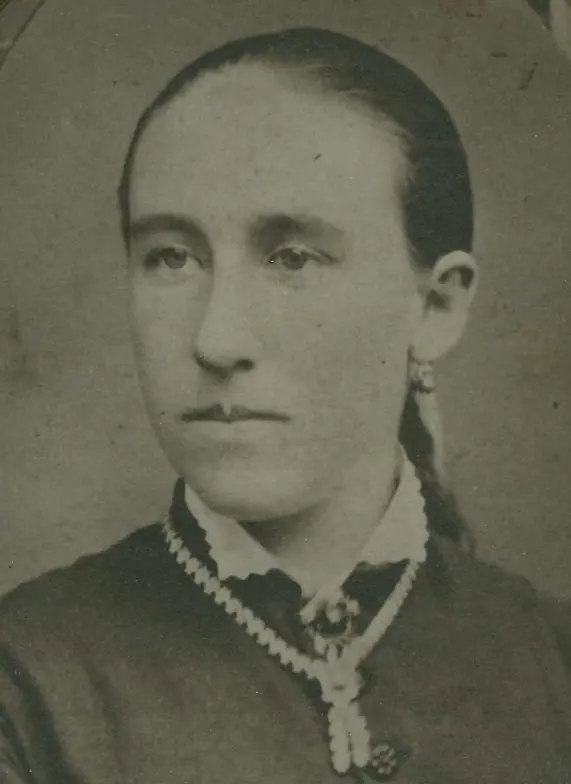
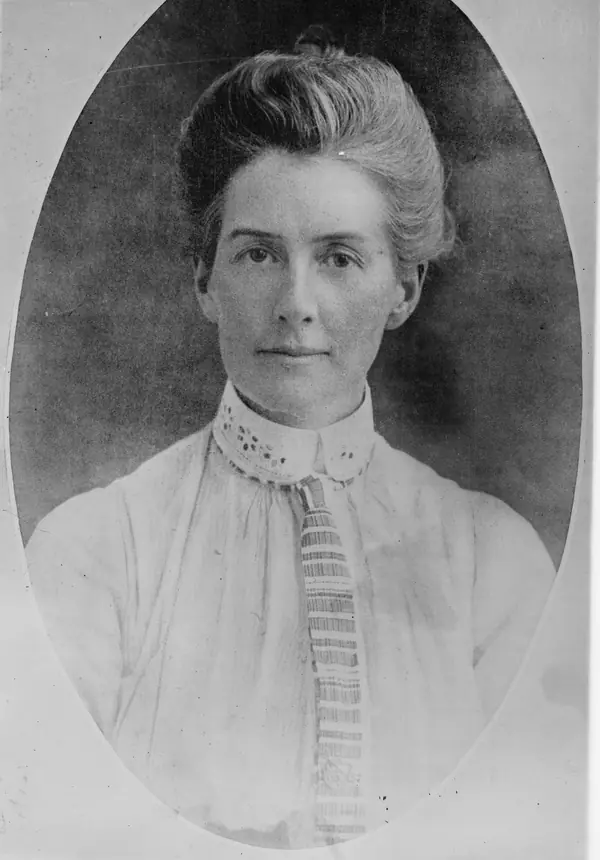
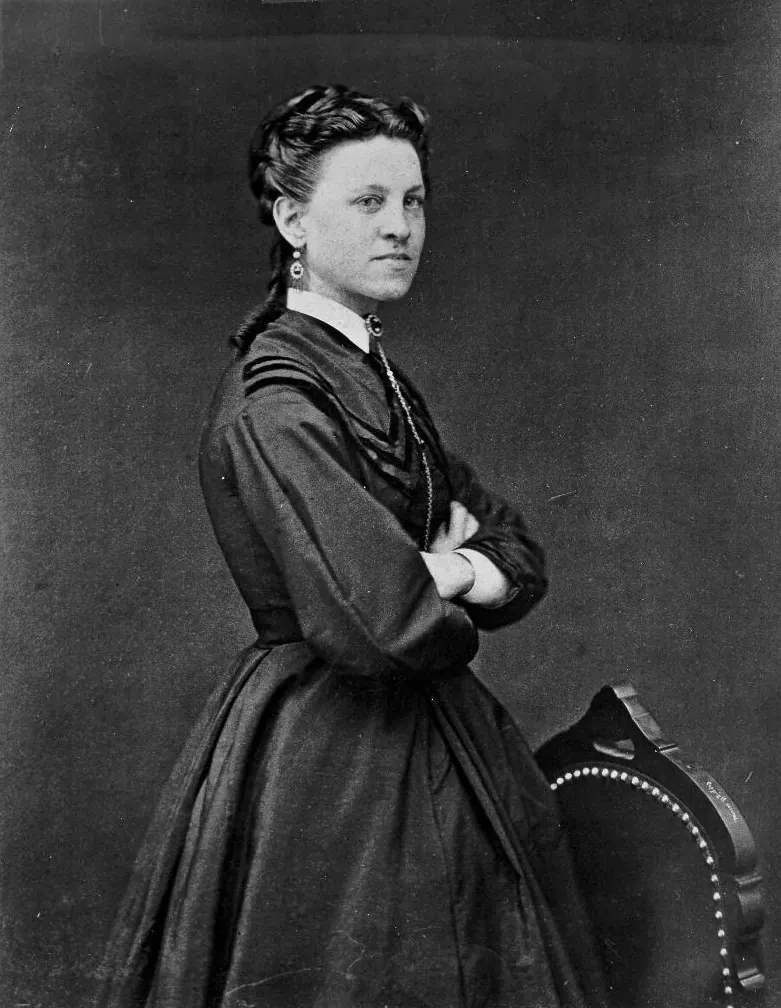
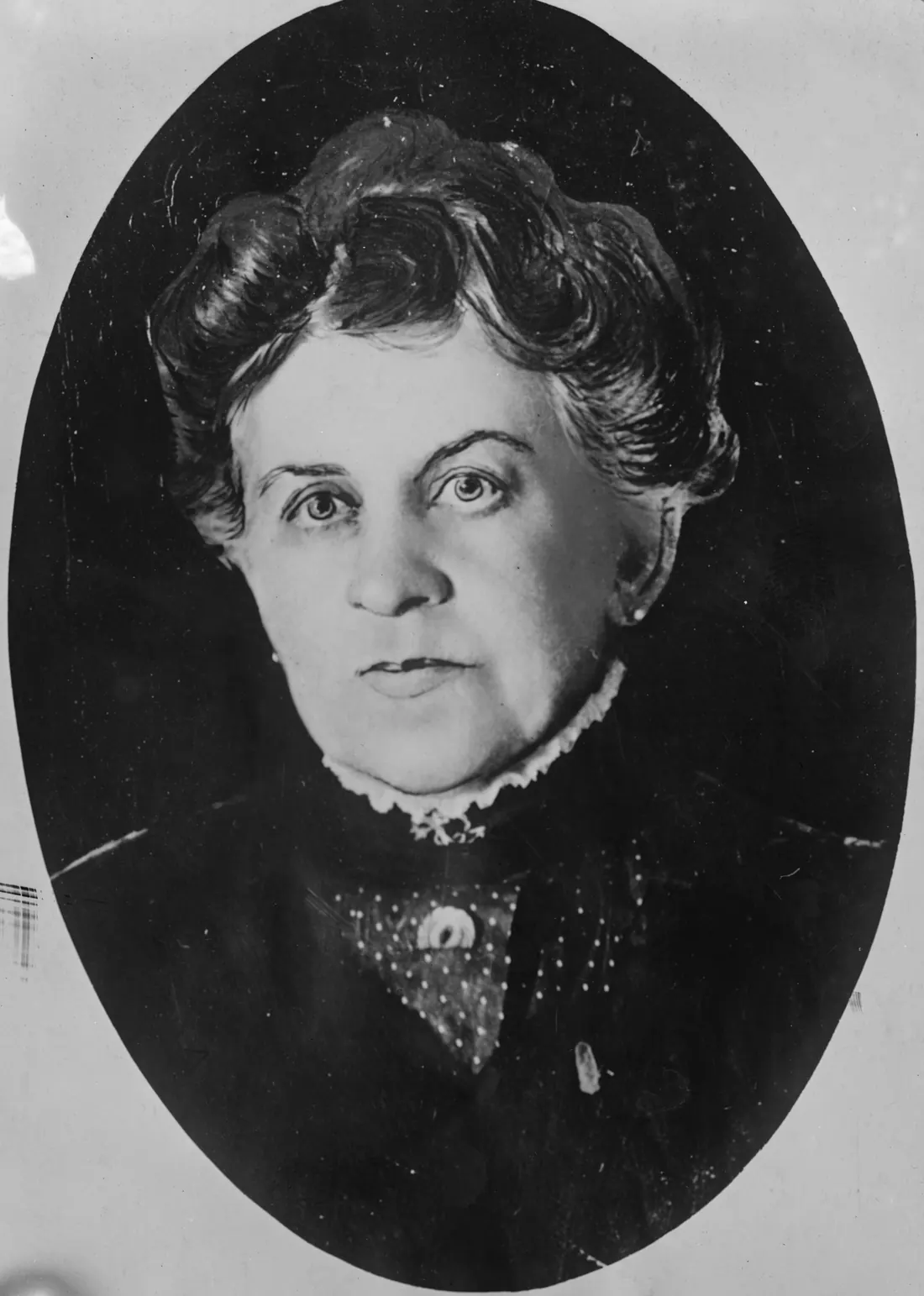
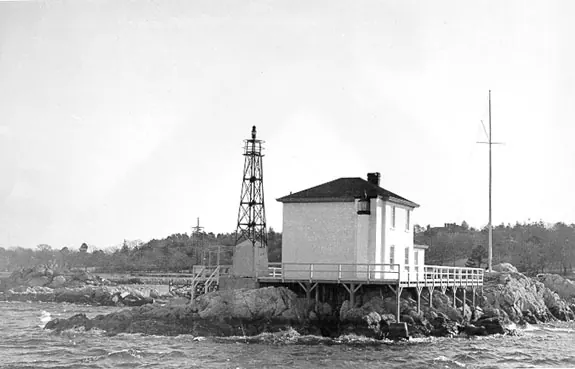
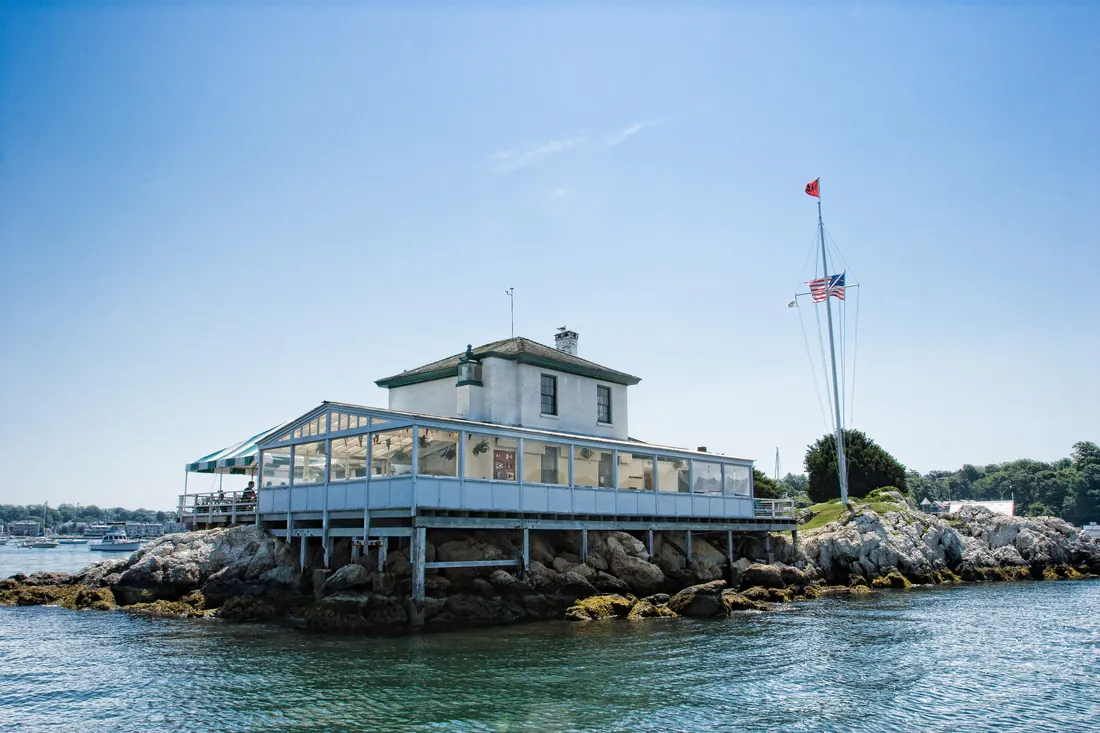
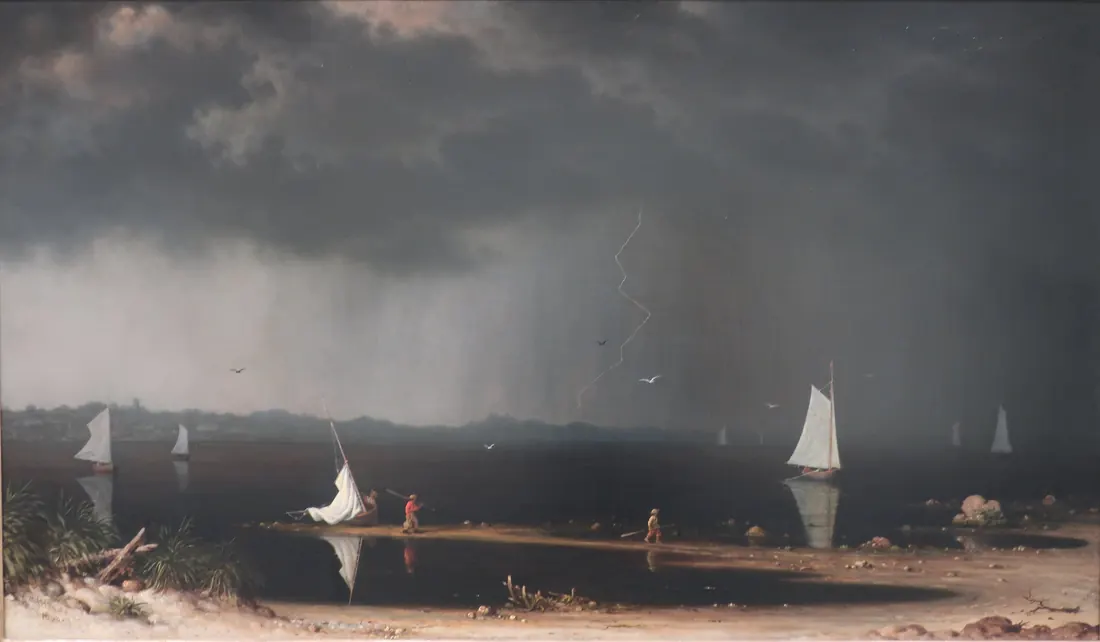
Pictures: Ida Lewis herself is in the photograph of her as a young woman (photographer unknown, undated; from the US Coast Guard History Office), on the Harper’s Weekly cover of July 31, 1869, a wood engraving after a photo by Manchester Bros., and in a Bain News Service copy of an oval portrait from later in her life. The two early pictures show her in her twenties, because no picture of her as a girl is known on Commons. The 1917 illustration by George Alfred Williams imagines her rowing in a storm and isn’t a record of the rescue. Martin Johnson Heade painted Thunder Storm on Narragansett Bay in 1868, a year before the rescue. C. G. Bush sketched Lime Rock Island for Harper’s Weekly of July 31, 1869. The US Coast Guard photo of the station with its skeleton light tower is a later one, not the lighthouse of 1857, and the lighthouse, now the Ida Lewis Yacht Club, was photographed in 2007. The medal is a first-class Lifesaving Medal awarded in 1877, the same type as hers, not her own. Ulysses S. Grant was photographed by Mathew Brady about 1870.
Photo credits
The archive photos in this story
The photographs and illustrations in this story are in the public domain or shared under open licenses; each one is credited below with its license. Tap one to enlarge it, or follow the link to its Wikimedia Commons page for the full record. The narration, captions and graphics in the Short are our own; its music and sound effects are credited below.
Music and sound effects
Music: Mussorgsky, Pictures at an Exhibition: IV. Bydlo (piano) (Musopen, public domain); Grieg, Peer Gynt Suite No. 1, Op. 46: I. Morning Mood (Musopen Symphony Orchestra, public domain); Dvorak, Symphony No. 9 'From the New World': II. Largo (Musopen, public domain).
Sound effects: Freesound, CC0.