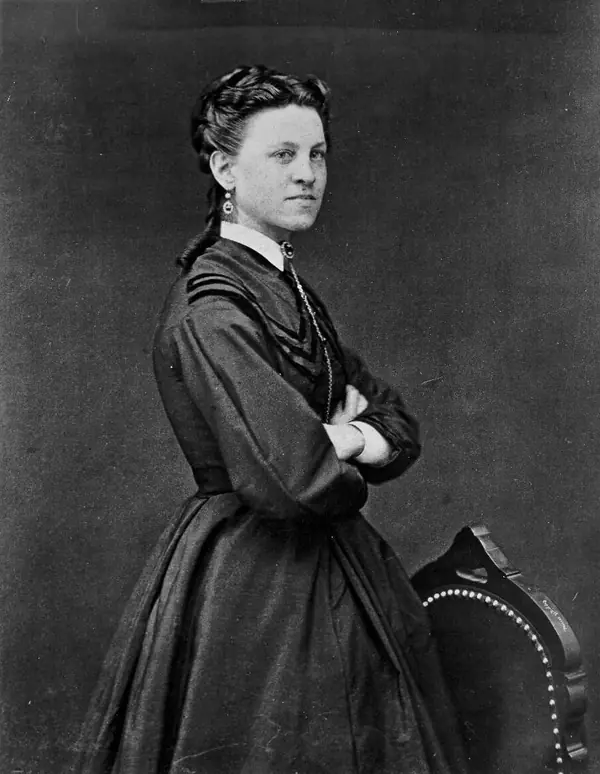
Gertrude Ederle won Olympic gold in the 4×100 m freestyle relay at the 1924 Paris Games. When she set out to swim the English Channel, Outside says, “the public perception was that women simply weren’t capable of swimming the English Channel.” She “encountered criticism, particularly from journalists, that women were physically unable to cross the Channel” (EBSCO). Only five men had made the swim, Wikipedia says, “with the best time of 16 hours, 33 minutes by Enrique Tirabocchi.”
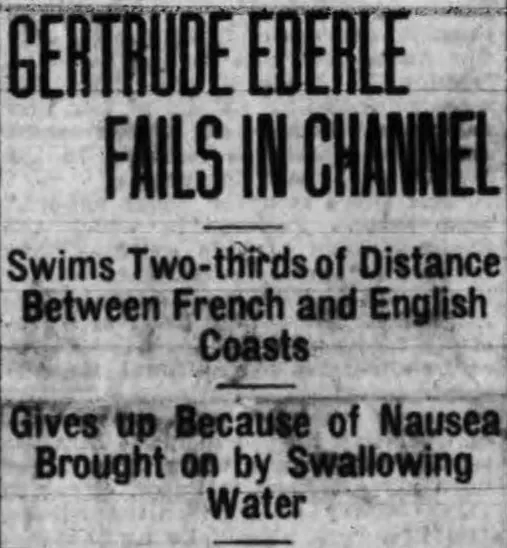
Her first try, on August 18, 1925, ended “after eight hours and 46 minutes,” when her coach, Jabez Wolffe, forced her to stop “out of concern that she was swallowing too much saltwater” (History.com). Wikipedia says she was disqualified when Wolffe ordered another swimmer, Ishak Helmy, to recover her from the water; “Ederle was disqualified the moment her ‘rescuer’ touched her,” the Library of America notes. The Victoria Daily Times headline read “Gertrude Ederle Fails in Channel.” “After that failed attempt, however, many believed that if Gertrude Ederle couldn’t make the swim, no woman could,” Outside says.
On August 6, 1926, at 7:08 a.m., she started again from Cap Gris-Nez in France, having “slathered herself in sheep grease, olive oil, and Vaseline for insulation” (Encyclopedia.com). “That afternoon, a storm threatened to end Ederle’s attempt. Rain pelted, and wind caused waves to surge and drag her backward,” EBSCO writes. Her coach, Bill Burgess, urged her to end the swim, and “‘What for?’ she yelled back, calmly and surely” (Outside). “A southwest wind drove her off-course, and she actually swam the equivalent of 35 miles” (Encyclopedia.com).
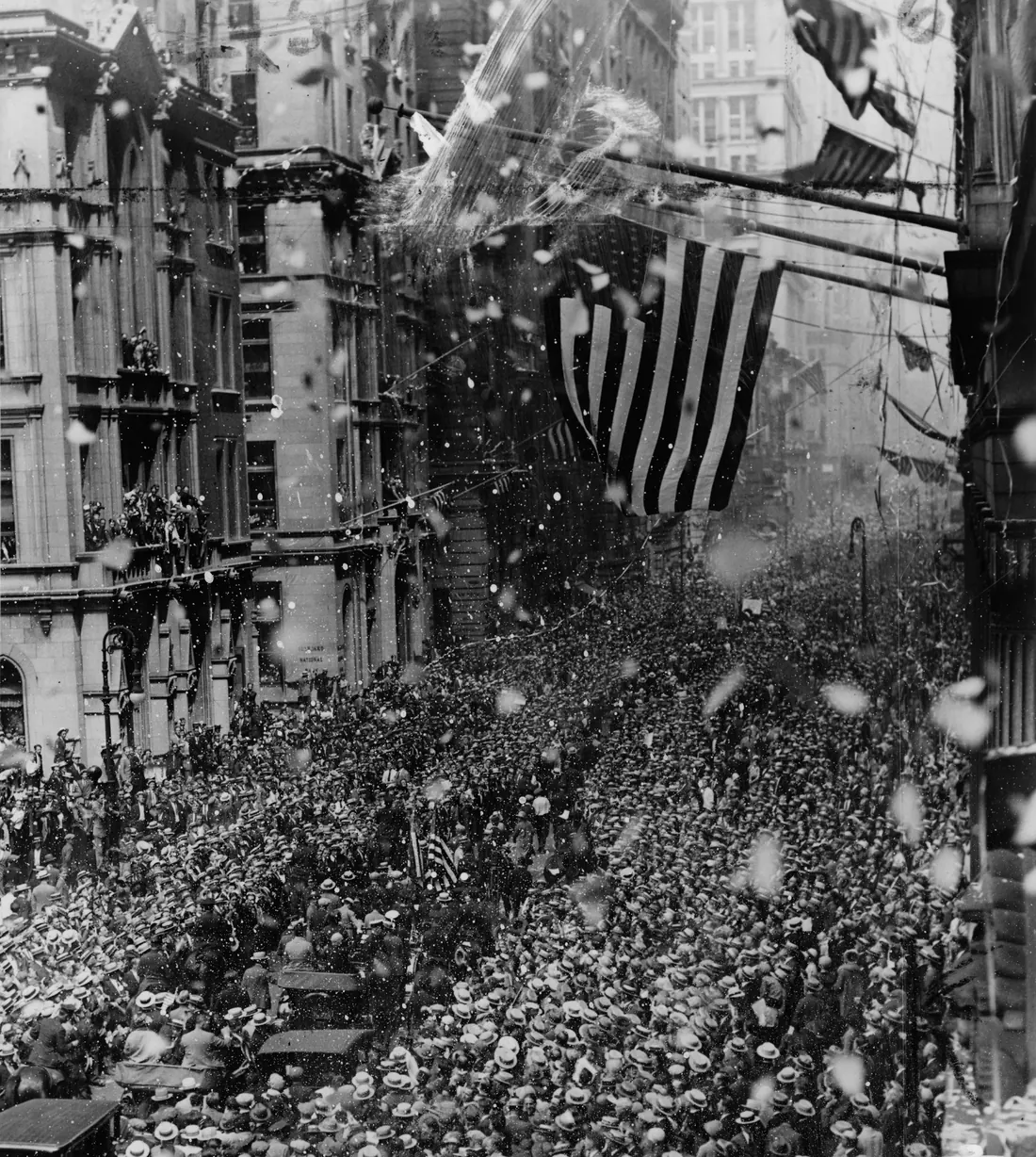
That night, after about fourteen and a half hours, she “stumbled onto shore” at Kingsdown, England. Olympedia gives her time as 14 hours 39 minutes and calls her the “First woman to swim English Channel.” She “beat the records of the five men who had previously made the swim from 1875 to 1923,” The New York Times wrote; in Outside’s words, she was “nearly two hours faster than any of the five men before her.” “I knew it could be done, it had to be done, and I did it,” she said (History.com). New York greeted her with a ticker-tape parade, with more than two million people along the route, Wikipedia says, and President Calvin Coolidge called her “America’s best girl” (The New York Times).
As a result of childhood measles, Ederle “had poor hearing most of her life” (Wikipedia). “Her hearing also worsened over time” (Outside), and by the 1940s she “had lost most of her hearing.” She went on “to spend much of her adult life teaching deaf children in New York City to swim,” History.com says. She died in 2003, aged 98.
Fact check
The facts and where they come from
- She was told no woman could swim the English Channel, but she beat the men’s record by two hours. EBSCO: “Ederle encountered criticism, particularly from journalists, that women were physically unable to cross the Channel.” Outside: “At the time, the public perception was that women simply weren’t capable of swimming the English Channel.” National Geographic: “And many believed that only a man could do it”; “At 14 and a half hours, she also beat the record men’s time by two hours.” History.com: “Furthermore, she had bettered the previous record by two hours.” 5432
- Her name was Gertrude Ederle, an Olympic champion. She won gold in the 4×100 m freestyle relay at the 1924 Paris Olympics (Wikipedia, Olympedia). History.com: “20-year-old Gertrude Ederle becomes the first woman to swim.” 172
- In 1925 she tried, and after nearly nine hours her own trainer had her pulled out. History.com: “after eight hours and 46 minutes, her coach, Jabez Wolff, forced her to stop, out of concern that she was swallowing too much saltwater.” Outside: her trainer Jabez Wolffe “ordered her to be pulled from the water because he thought she looked sick.” Wikipedia: “she was disqualified when Wolffe ordered another swimmer, Ishak Helmy, to recover her from the water” (August 18, 1925). Library of America: “Ederle was disqualified the moment her ‘rescuer’ touched her.” 2419
- People said if she couldn’t, no woman could. Outside: “After that failed attempt, however, many believed that if Gertrude Ederle couldn’t make the swim, no woman could.” Victoria Daily Times, August 18, 1925: “Gertrude Ederle Fails in Channel.” 411
- August 6, 1926: Cape Gris-Nez, France. Wikipedia: “She started at Cap Gris-Nez in France at 07:08 am on August 6, 1926” (History.com also gives 7:08 a.m.). The Library of Congress caption of the Acme photo: she “starts out from Cape Griz Nez, France, on her successful attempt.” 1212
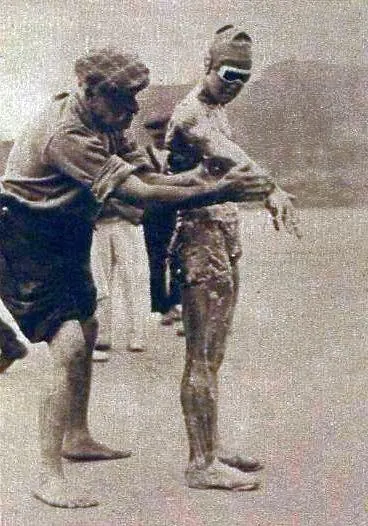
- She greased up and tried again. History.com: “Gertrude Ederle slathered herself in grease.” Encyclopedia.com: she “slathered herself in sheep grease, olive oil, and Vaseline for insulation.” Le Miroir des sports of August 11, 1926, shows Bill Burgess greasing her. 2613
- By afternoon, a storm was dragging her back. EBSCO: “That afternoon, a storm threatened to end Ederle’s attempt. Rain pelted, and wind caused waves to surge and drag her backward.” History.com: she “encountered squalls” at noon and 6 p.m. 52
- Her coach begged her to come out. EBSCO: “She ignored Burgess’s demands that she stop” and later “Burgess’s continued pleas.” History.com: “Burgess urged her to end the swim.” Encyclopedia.com: “She had spurned the urgings of her coach, worried about the terrible weather conditions, to come in.” 526
- She yelled back, “What for?” Outside: “‘What for?’ she yelled back, calmly and surely.” Encyclopedia.com: “by calling out from the waves, ‘What for?’” 46
- The storm drove her off course, so she swam about 35 miles. Encyclopedia.com: “A southwest wind drove her off-course, and she actually swam the equivalent of 35 miles.” Wikipedia: “having swum the equivalent of 35 miles due to stormy conditions.” KentOnline: “Her time of 14 hours 39 minutes for the 35-mile distance.” 6110
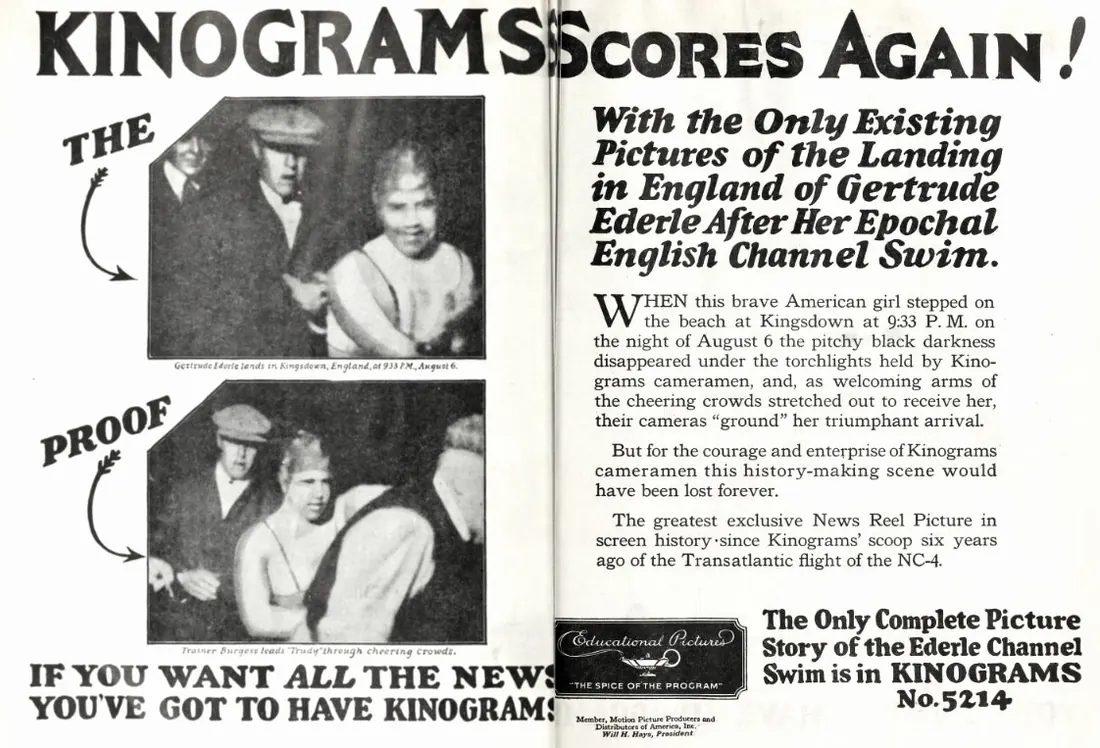
- That night, after fourteen and a half hours, she stumbled onto an English beach. National Geographic: “At 14 and a half hours.” Outside: “Fourteen hours and 31 minutes after leaving France, Ederle stumbled onto shore.” EBSCO: “Ederle neared the shore at approximately 9:40 P.M.” at Kingsdown. Olympedia: “(14:39).” The Kinogram advertisement, 1926: “Gertrude Ederle lands in Kingsdown, England, at 9:33 P.M., August 6.” 345714
- The first woman across, and no man had done it faster. Olympedia: “First woman to swim English Channel.” The New York Times: “she beat the records of the five men who had previously made the swim from 1875 to 1923.” Outside: “nearly two hours faster than any of the five men before her.” 784
- New York gave her a ticker-tape parade. History.com: “Ederle’s feat was celebrated by a ticker-tape parade in New York City.” Wikipedia: “she was greeted with a ticker-tape parade in Manhattan, with more than two million people along the parade route.” KentOnline: “two million people lined lower Broadway.” 2110
- But her hearing, weak since childhood, kept fading. Wikipedia: “As a result of childhood measles, Ederle had poor hearing most of her life.” Outside: “Since the age of five, young Trudy had suffered a hearing impairment from a bout of the measles”; “Her hearing also worsened over time.” Encyclopedia.com: “True to her doctors’ predictions, Ederle’s hearing worsened.” 146
- By the 1940s, she was nearly deaf. Wikipedia: “by the 1940s had lost most of her hearing.” 1
- She spent years teaching deaf children to swim. History.com: she “went on to spend much of her adult life teaching deaf children in New York City to swim.” Wikipedia: “she worked for much of her life as a swimming instructor for deaf children.” Encyclopedia.com: she “taught deaf children to swim at a New York City school for the hard of hearing.” 216
Sources
- Gertrude Ederle Wikipedia
- Gertrude Ederle becomes first woman to swim English Channel History.com
- Six Epic Swims National Geographic
- The First Woman to Brave the English Channel Outside
- Ederle Swims the English Channel EBSCO Research Starters
- Ederle, Gertrude (Newsmakers 2005) Encyclopedia.com
- Gertrude Ederle Olympedia
- Gertrude Ederle, the First Woman to Swim Across the English Channel, Dies at 98 (Richard Severo, December 1, 2003) The New York Times
- Gertrude Ederle vs. the Channel (W. O. McGeehan, New York Herald Tribune, June 28, 1926) Library of America, Story of the Week
- Death of first woman to swim the Channel KentOnline
- Gertrude Ederle Fails in Channel (August 18, 1925, page 1) Victoria Daily Times, via Wikimedia Commons
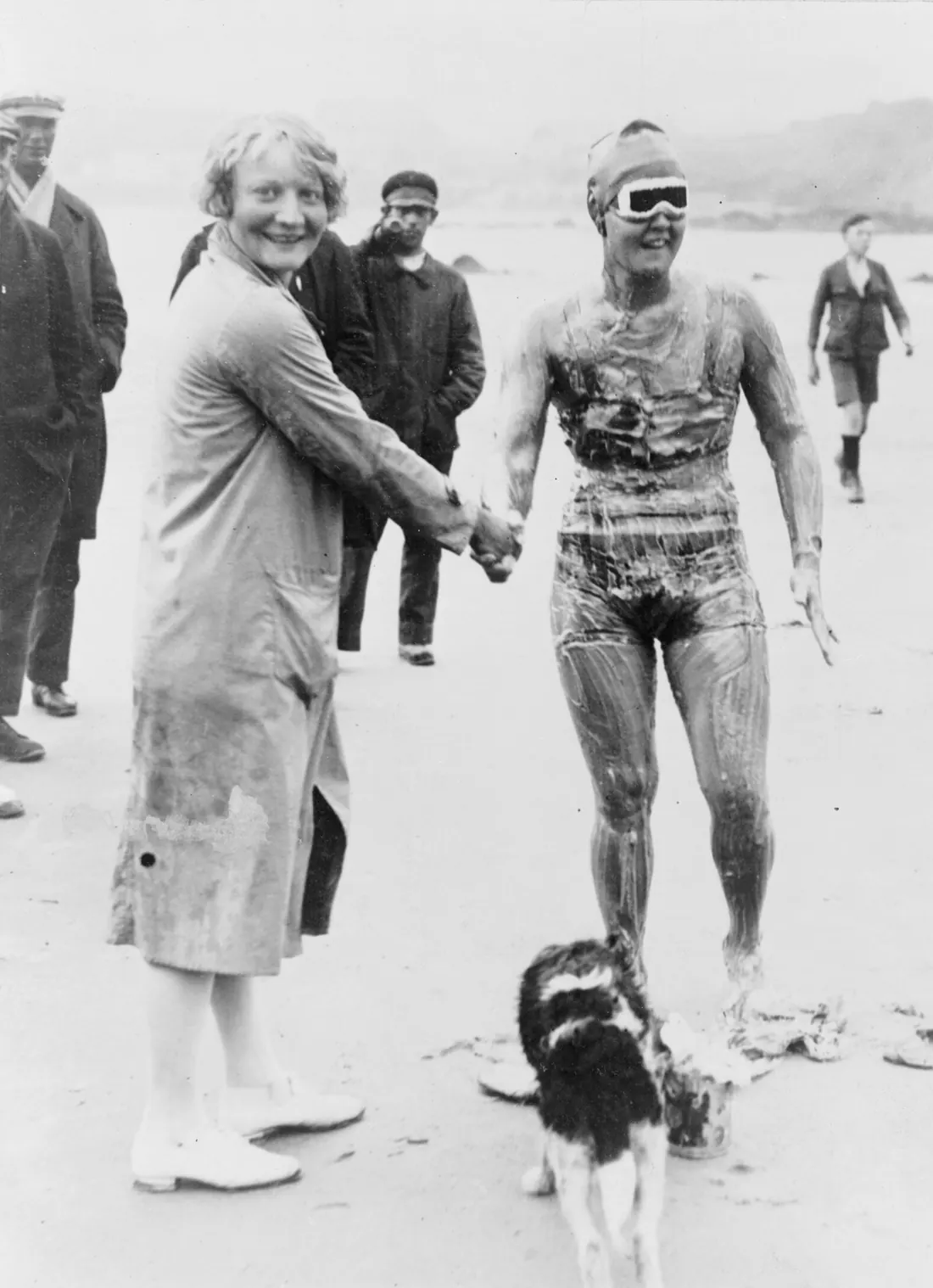
- Lillian Cannon … offering her best wishes to Gertrude Ederle, as she starts out from Cape Griz Nez, France, on her successful attempt to swim the English Channel (Acme, 1926) Library of Congress, via Wikimedia Commons
- Gertrude Ederle graissée par Bill Burgess (Le Miroir des sports, August 11, 1926) Wikimedia Commons
- Kinogram advertisement (The Film Daily, August 20, 1926) Wikimedia Commons
Notes
Her time: 14 hours 39 minutes (Olympedia, National Geographic, HistoryNet, KentOnline), 14 hours 31 minutes (History.com, EBSCO, Encyclopedia.com, Outside), 14 hours 34 minutes (Wikipedia’s text, Library of America) or 14 hours 45 minutes (Wikipedia’s introduction). “Fourteen and a half hours” (National Geographic) fits them all.
The margin: 16 hours 33 minutes minus 14 hours 39 minutes is 1 hour 54 minutes. National Geographic, History.com and Encyclopedia.com say two hours, Outside says nearly two hours, and Wikipedia’s introduction says 1 hour 48 minutes, so the Short says by two hours and this page says about two hours.
The record did not last: “later Ernst Vierkoetter beat Ederle’s record by almost two hours” (EBSCO), in August 1926. Her time stood as the women’s record until Florence Chadwick in 1950 (Wikipedia, Encyclopedia.com).
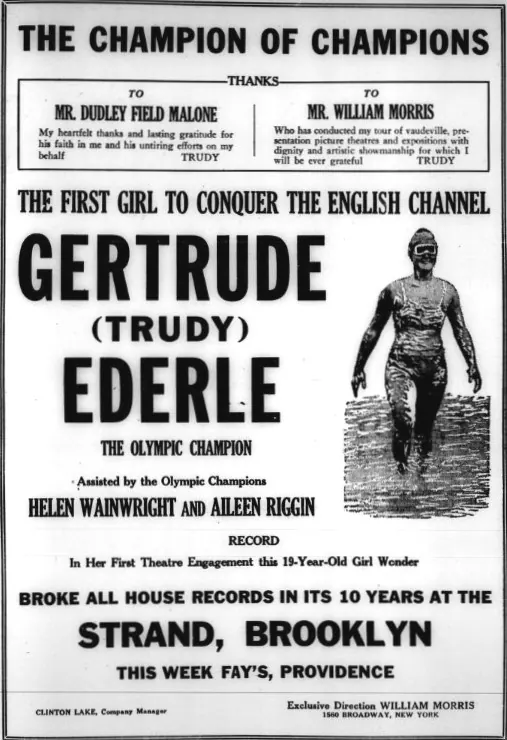
Her age: 20 in August 1926 (History.com, National Geographic; she was born on October 23, 1905, Wikipedia). Outside, KentOnline and the 1926 Variety advertisement say 19, which her birth date rules out.
Her hearing: childhood measles (Wikipedia, Outside, Encyclopedia.com); “slightly deaf through an injury to her eardrums from swimming” (W. O. McGeehan, 1926, via the Library of America); “Ederle damaged her hearing during the Channel swim” (History.com); the worsening was “perhaps a result of the channel swim” (Outside). Because the cause is disputed, the Short names none.
The 1925 attempt: the sources agree that her trainer, Jabez Wolffe (History.com spells it Wolff), had her taken out and that the touch disqualified her, but not why: swallowing too much saltwater (History.com), coughing (Encyclopedia.com), looking sick (Outside) or “nausea brought on by swallowing water” (the Victoria Daily Times). She said: “I don’t know if I could have gone across but I could have gone further” (Library of America). Her suspicion that Wolffe poisoned her tea (Outside) is left out.
Who called to her to come out in 1926: “someone—no one knows who,” says Outside; Encyclopedia.com and EBSCO say her coach, Bill Burgess. We follow the two.
“Women couldn’t do it”: a London Daily News line about women staying the weaker sex is quoted only in a 2003 essay, so it is left out. EBSCO says only that after the swim “The London Daily News, however, suggested she was an anomaly and emphasized that women are weaker than men.”
The parade crowd: about two million (EBSCO, KentOnline, Wikipedia) or “hundreds of thousands” (Outside). Her landing time: 9:33 p.m. (the Kinogram advertisement, 1926), 9:40 p.m. (EBSCO, HistoryNet) or 9:04 p.m. (History.com), so the Short says only that night.
Left out for length: the red roadster her father promised her, her two-piece swimsuit, the 1933 fall that injured her spine and the 2024 film about her.
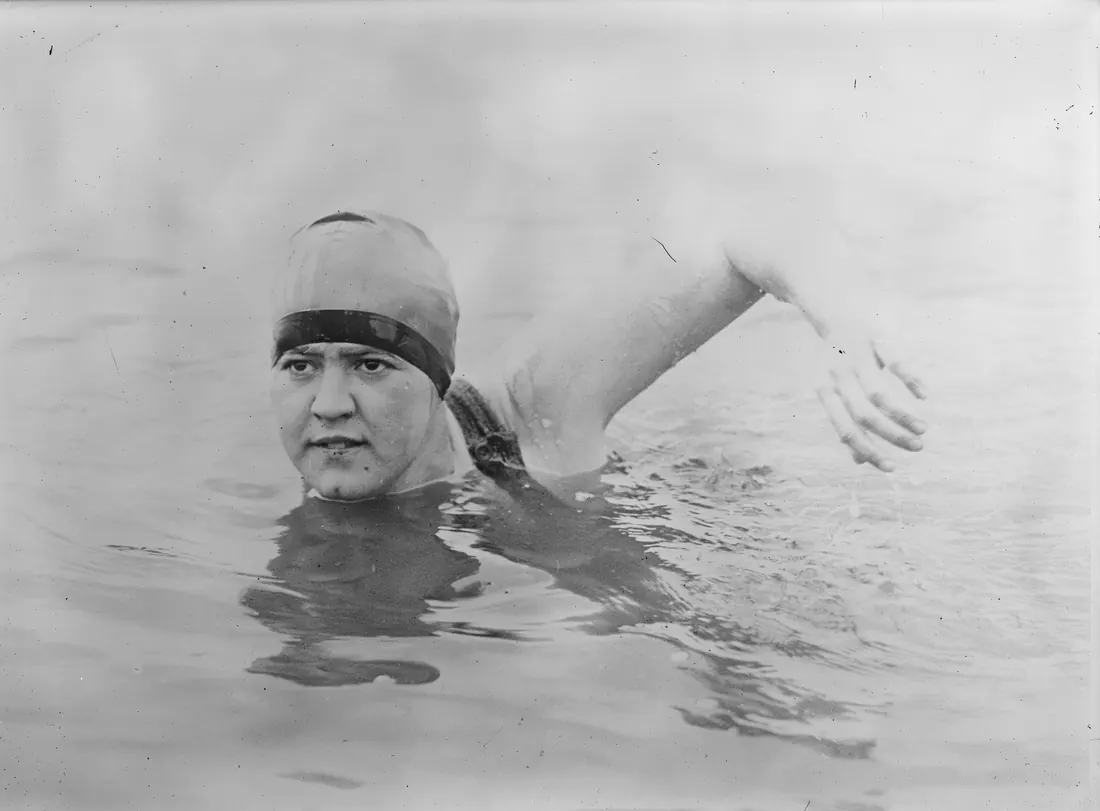
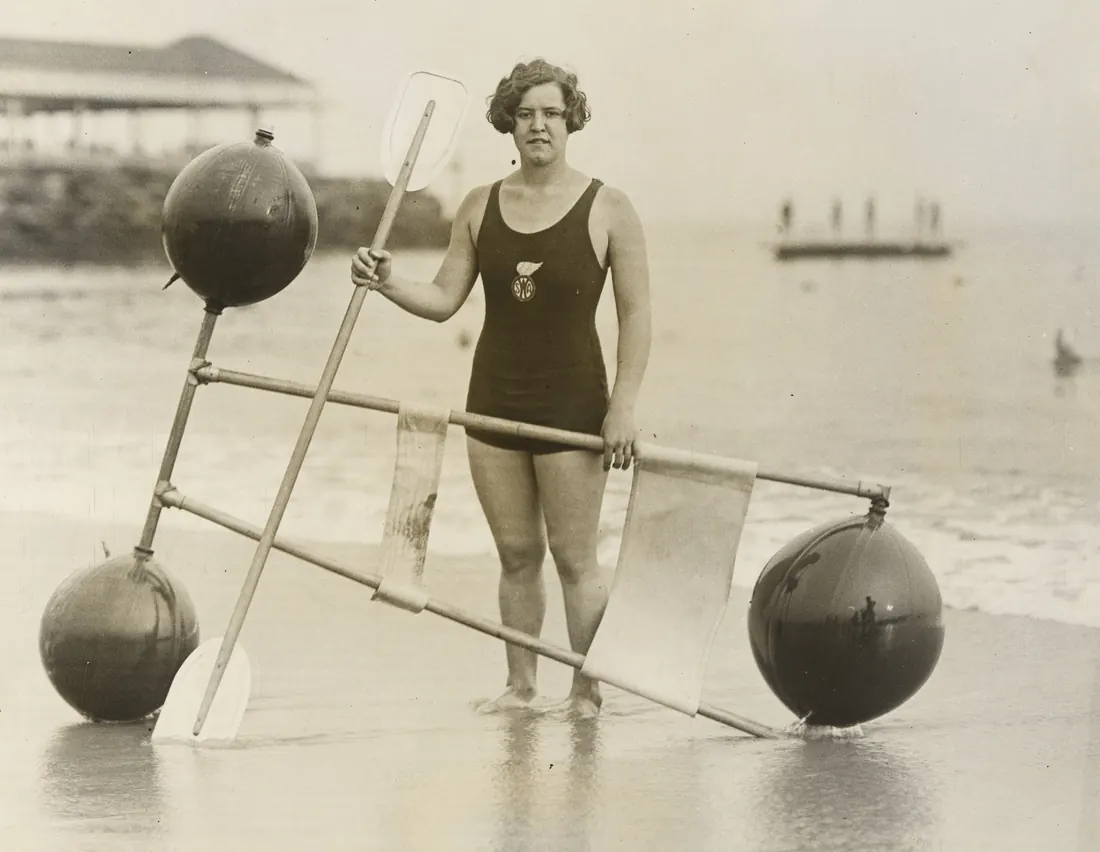
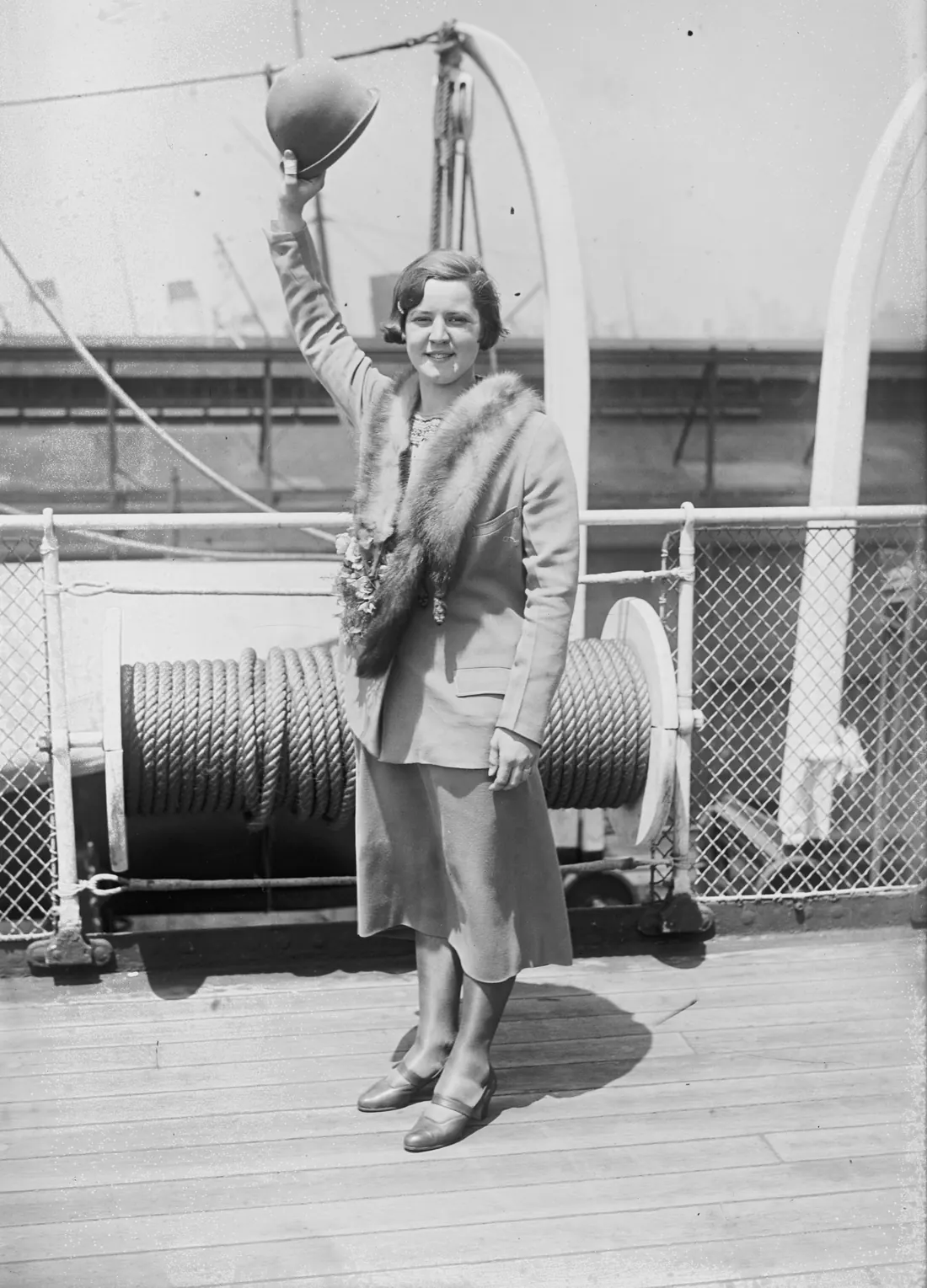
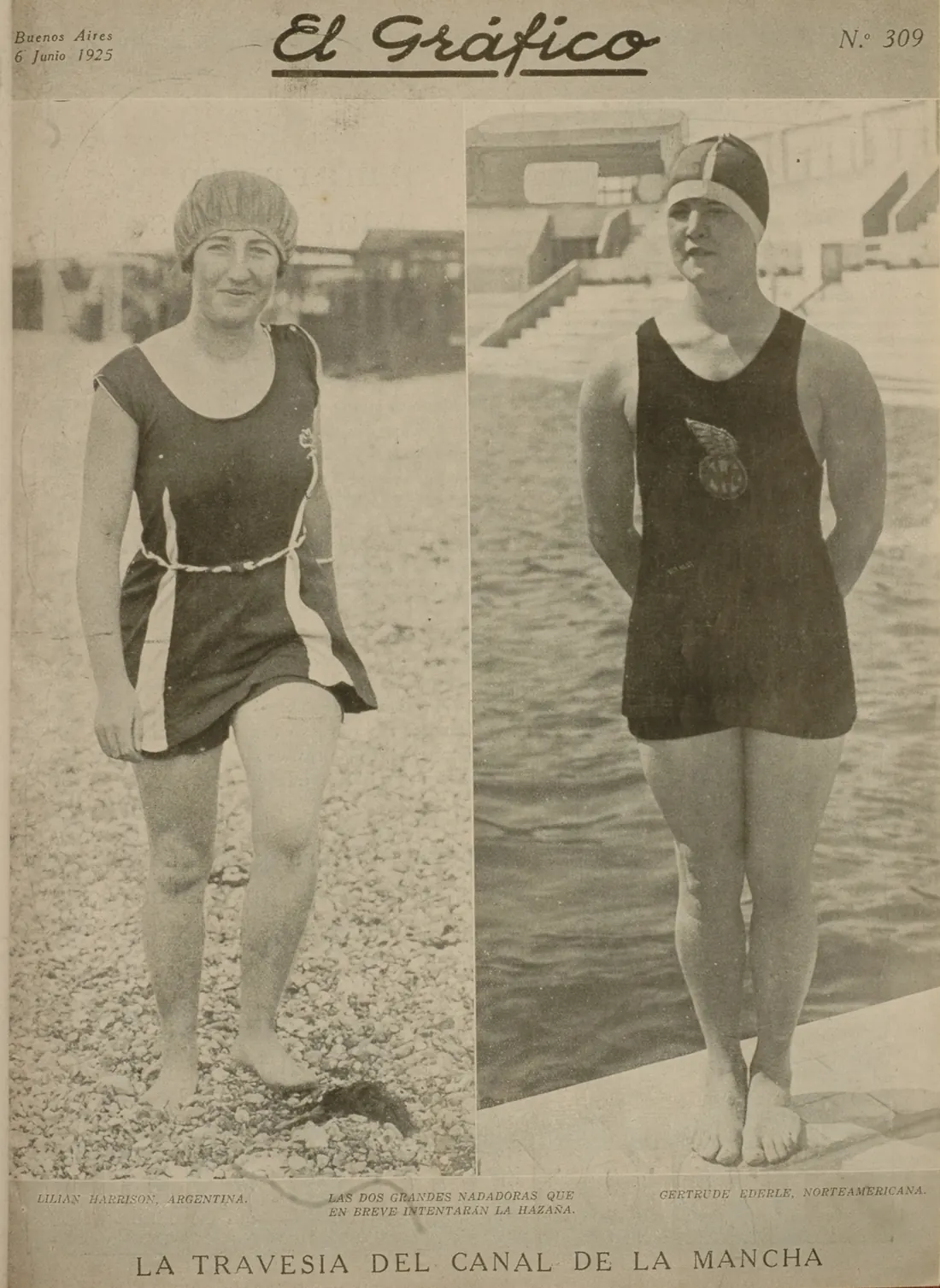
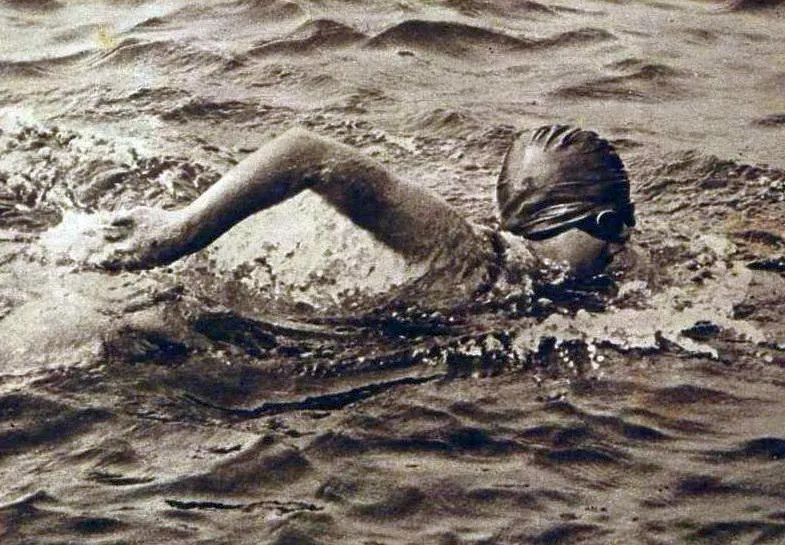
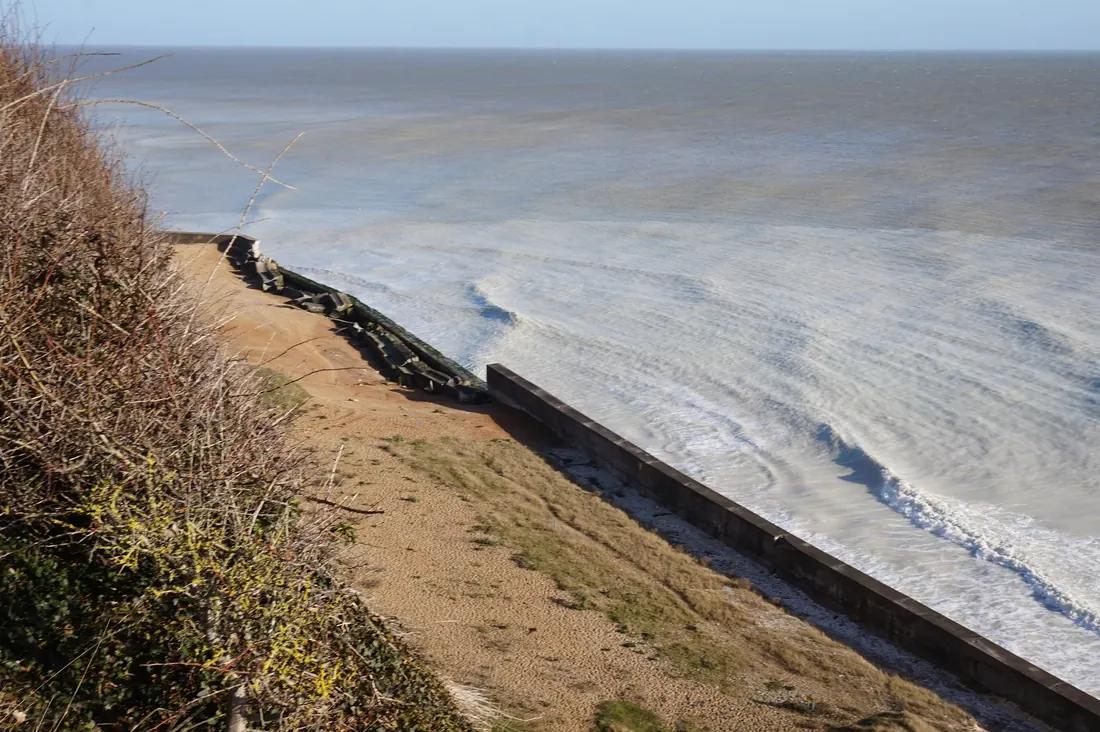
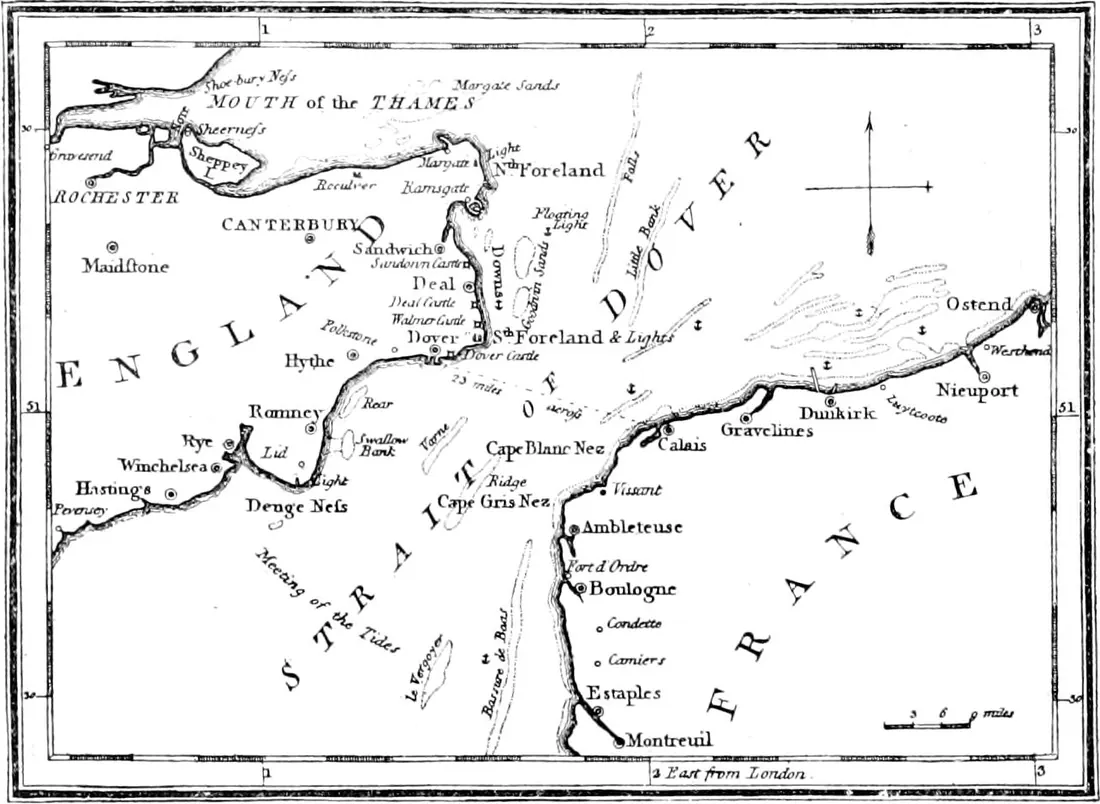
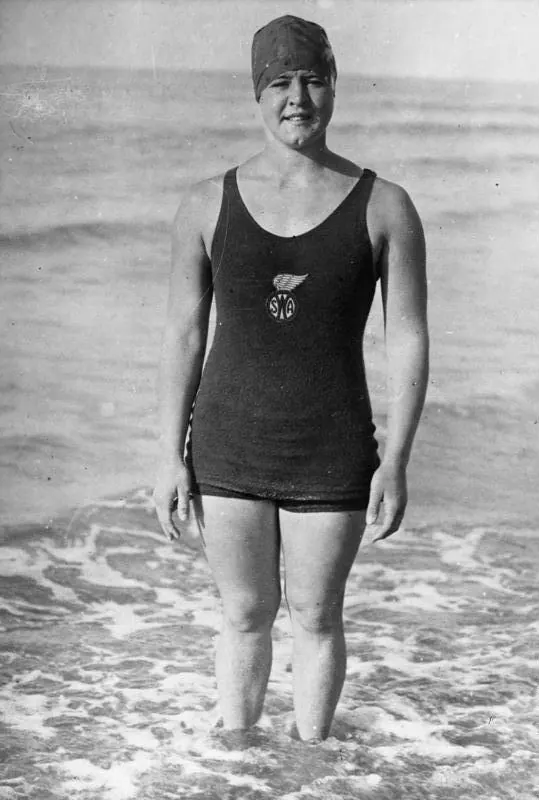
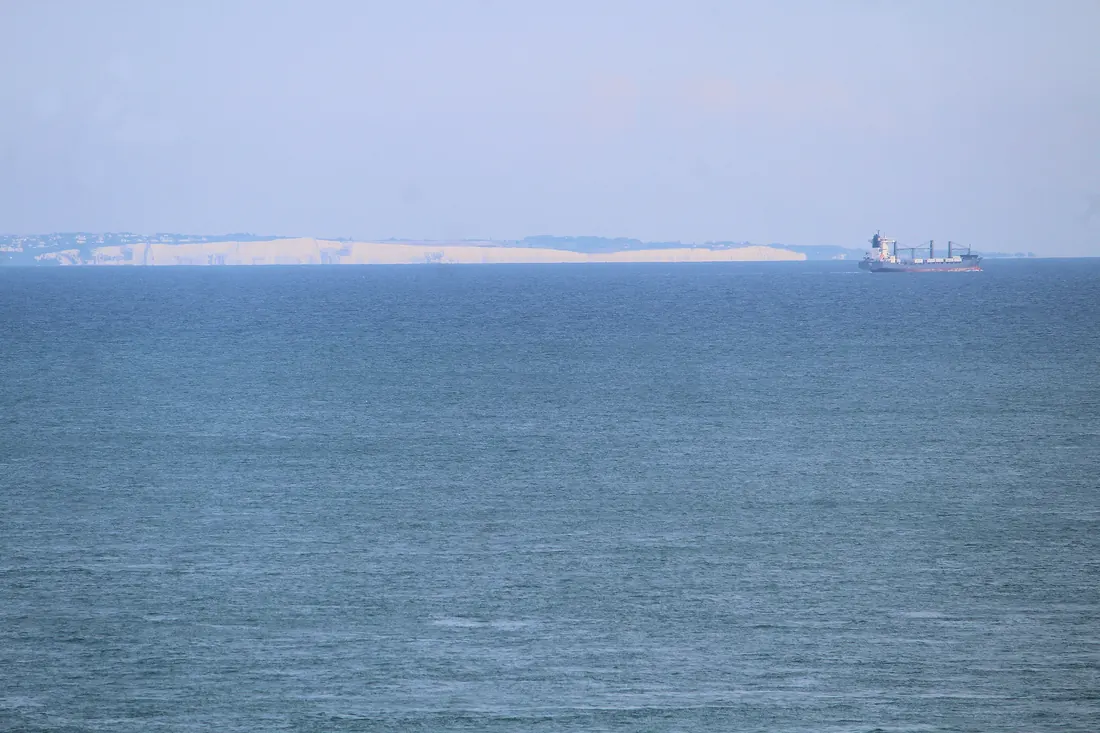
Pictures: the Bain News Service photo of her swimming is undated (1920s), and the Underwood & Underwood portrait and the photo of her waving on a ship’s deck are from 1925; none of them shows a Channel swim. The El Gráfico cover of June 6, 1925, shows Lilian Harrison and Ederle before their 1925 attempts, and the Victoria Daily Times headline is from August 18, 1925. Lillian Cannon wishes her luck at Cape Gris-Nez at the start of the 1926 swim (Acme). Le Miroir des sports of August 11, 1926, shows Bill Burgess greasing her and Ederle in the water. The two Kinogram photos show her landing at Kingsdown at night and Burgess leading her through the crowds. The Bundesarchiv photo of her standing in the sea is a daylight photo taken after the swim (she landed at night). The rough sea at Oldstairs Bay near Kingsdown (2020), the view from Cap Gris-Nez to the cliffs of Dover (2017) and the 1816 chart of the Strait of Dover show the places and the route, not the swim. The Variety advertisement is from October 27, 1926, and the parade photo shows Broadway in 1926.
Photo credits
The archive photos in this story
The photographs and illustrations in this story are in the public domain or shared under open licenses; each one is credited below with its license. Tap one to enlarge it, or follow the link to its Wikimedia Commons page for the full record. The narration, captions and graphics in the Short are our own; its music and sound effects are credited below.
Music and sound effects
Music: Beethoven, Coriolan Overture, Op. 62 (Musopen Symphony Orchestra, CC0); Brahms, Symphony No. 2 in D major, Op. 73: IV. Allegro con spirito (Musopen Symphony Orchestra, CC0); Satie, Gymnopedie No. 1 (Lent et douloureux) (Robin Alciatore, piano, public domain).
Sound effects: Freesound, CC0.