Annie Oakley was born Phoebe Ann Mosey in Darke County, Ohio, on August 13, 1860, Wikipedia says. PBS’s American Experience tells what happened to her father: “Jacob died in March. Phoebe Anne—Annie—was not yet six years old.” “On March 15, 1870, at age nine, she was admitted to the Darke County Infirmary along with her sister Sarah Ellen,” Wikipedia writes; PBS puts it plainly: “To ease the burden, Annie’s mother sent her to live at the county poor farm.”
“Soon she was hired out to work as a live-in helper for a family in a neighboring county,” PBS says. The National Women’s History Museum calls them “an abusive family,” and “She referred to them as the ‘wolves.’” Once, in her own words, they “threw me out into the deep snow and locked the door. I had no shoes on.” “She ran away, slipped into a crowded railroad car, and made her way back to Greenville.” She hunted, and “Eventually she saved up enough money to pay off the $200 mortgage on the family farm.” Wikipedia: “Her skill paid off the mortgage on her mother’s farm when Annie was fifteen.”
Then came the touring sharpshooter Frank Butler, “claiming he could outshoot anyone around,” as PBS tells it; Wikipedia describes a $100 bet “that Butler could beat any local fancy shooter.” A Cincinnati hotelkeeper “who knew of the country girl’s reputation arranged a shooting contest,” HISTORY says, and Butler’s opponent turned out to be, in PBS’s words, “a 15-year-old girl who was only five feet tall and weighed a hundred pounds.” “Both shooters hit 24 birds in a row. Then Butler missed.” Butler “hit 24 out of 25 targets. The teenager hit all 25.” “The loser was instantly smitten,” PBS says. “Frank Butler was Annie’s ticket out of Greenville. They soon married.”
She went on to star in Buffalo Bill’s Wild West, where, the National Women’s History Museum says, “Oakley became the star of the show.” Then, “On August 11, 1903, two of Hearst’s Chicago newspapers reported that a destitute Oakley had been arrested for stealing a pair of men’s pants to pay for her cocaine addiction,” HISTORY writes. It wasn’t her. “The woman arrested in Chicago was a burlesque dancer posing as Annie Oakley,” PBS says, and the National Women’s History Museum names her as “Maude Fontanella who used the false name ‘Any Oakley,’” adding that Annie was in New Jersey at the time.
The story spread: the Associated Press, PBS says, “sends it across the country.” Annie fought back in court. “Oakley spent much of the next six years winning all but one of her 55 libel lawsuits against newspapers,” Wikipedia says; PBS: “Oakley won 54 of the 55 cases.” It cost her: “After expenses, she actually lost money over the course of her six-year campaign.”
Fact check
The facts and where they come from
- She outshot a professional marksman, and the man she beat married her. HISTORY: “a traveling professional sharpshooter named Frank Butler” … “hit 24 out of 25 targets. The teenager hit all 25.” PBS: “The loser was instantly smitten.” … “They soon married.” 41
- Her name was Annie Oakley. Wikipedia gives her birth name as Phoebe Ann Mosey, born on August 13, 1860, in Darke County, Ohio; PBS calls her “Phoebe Anne—Annie.” 21
- Her father died when she was five. PBS: “Jacob died in March. Phoebe Anne—Annie—was not yet six years old.” Wikipedia: “He died shortly after from pneumonia in the following year at the age of 66.” 12
- At nine, she was sent to a poor farm. Wikipedia: “On March 15, 1870, at age nine, she was admitted to the Darke County Infirmary along with her sister Sarah Ellen.” PBS: “To ease the burden, Annie’s mother sent her to live at the county poor farm.” 21
- Then she was hired out to a family she called the wolves. PBS: “Soon she was hired out to work as a live-in helper for a family in a neighboring county” … “She referred to them as the ‘wolves.’” National Women’s History Museum: “She later stayed with an abusive family, whom she referred to as ‘the wolves.’” 13
- They once threw her into the snow without shoes. PBS, in her own words: they “threw me out into the deep snow and locked the door. I had no shoes on.” Wikipedia: “the wife put Annie outside in freezing temperatures without shoes.” 12
- So she ran away, and hunted game to pay off her mother’s mortgage. PBS: “She ran away, slipped into a crowded railroad car, and made her way back to Greenville” … “Eventually she saved up enough money to pay off the $200 mortgage on the family farm.” Wikipedia: “Her skill paid off the mortgage on her mother’s farm when Annie was fifteen.” 12
- Then the touring sharpshooter Frank Butler bet he could outshoot anyone. PBS: “claiming he could outshoot anyone around.” Wikipedia: a $100 bet “that Butler could beat any local fancy shooter.” 12
- His opponent was a five-foot girl. PBS: “a 15-year-old girl who was only five feet tall and weighed a hundred pounds.” Wikipedia: “a five-foot-tall” 15-year-old girl. 12
- Both hit 24 birds. Then Butler missed. Annie didn’t. PBS: “Both shooters hit 24 birds in a row. Then Butler missed.” HISTORY: “hit 24 out of 25 targets. The teenager hit all 25.” 14
- He fell for her, and they married. PBS: “The loser was instantly smitten.” … “Frank Butler was Annie’s ticket out of Greenville. They soon married.” 1
- She became the star of Buffalo Bill’s Wild West. National Women’s History Museum: “Oakley became the star of the show.” Buffalo Bill Center of the West: “she quickly became a star.” Wikipedia: she “starred in Buffalo Bill’s Wild West.” 352
- But in 1903, Hearst’s papers said she’d stolen to buy drugs. PBS: “William Randolph Hearst’s Chicago newspapers reported that Oakley had stolen a pair of men’s pants to pay for cocaine.” HISTORY: “On August 11, 1903, two of Hearst’s Chicago newspapers reported that a destitute Oakley had been arrested for stealing a pair of men’s pants to pay for her cocaine addiction.” 14
- It was a burlesque dancer using her name. PBS: “The woman arrested in Chicago was a burlesque dancer posing as Annie Oakley.” Wikipedia: “The woman actually arrested was a burlesque performer who told Chicago police that her name was Annie Oakley.” The National Women’s History Museum names her: “Maude Fontanella who used the false name ‘Any Oakley.’” 123
- So Annie sued 55 newspapers, and won all but one. Wikipedia: “Oakley spent much of the next six years winning all but one of her 55 libel lawsuits against newspapers.” PBS: “Oakley won 54 of the 55 cases.” National Women’s History Museum: “Over the course of seven years, Oakley successfully won 54 out of 55 cases against the newspapers.” 213
- She lost money, but she got her good name back. PBS: “After expenses, she actually lost money over the course of her six-year campaign.” (“Her good name back” is our summary of her winning 54 of the 55 cases.) 1
Sources
- Annie Oakley (American Experience, 2006), film transcript PBS
- Annie Oakley Wikipedia
- Annie Oakley (Ashlee Anderson, 2018) National Women’s History Museum
- 10 Things You May Not Know About Annie Oakley (Christopher Klein) HISTORY
- Annie Oakley (western essay) Buffalo Bill Center of the West
- Annie Missed the Mark…Just Once (Bryn Silverman) Library of Virginia, The UncommonWealth
Notes
When the match was, and how old she was: most accounts say Thanksgiving 1875, when she was 15 (PBS, the National Women’s History Museum, HISTORY, the Buffalo Bill Center of the West and the opening of Wikipedia’s article). But Wikipedia also reports that “According to a modern-day account in The Cincinnati Enquirer, it is possible that the shooting match took place in 1881, not 1875,” and that her biographer Shirl Kasper puts it in the spring of 1881 near Greenville, when she would have been 20. So the Short gives no year or age for the match.
The wedding: many sources say August 23, 1876, but the only marriage certificate found (Archives of Ontario) is dated June 20, 1882 (Wikipedia). We say only that they married.
Her father’s death: PBS says she was “not yet six,” and Wikipedia dates his death to 1866 (she was born in August 1860), so we say five; the National Women’s History Museum says “When she was six years old.” He died of pneumonia after he was caught in a blizzard late in 1865 (Wikipedia, PBS); the blizzard is left out of the Short for length.
Her ages: nine at the infirmary comes from Wikipedia (admitted on March 15, 1870); PBS gives no age. When she ran away, PBS says she was 12, in 1872, and Wikipedia says around the spring of 1872, when she would have been 11, so we give no age.
The false story: the drug was cocaine to PBS, HISTORY and the National Women’s History Museum, but the Library of Virginia quotes the Chicago American article as saying she was “addicted to morphine,” so we say drugs. HISTORY and PBS date it to August 11, 1903, in two Hearst papers in Chicago; the Library of Virginia dates the Chicago American article to August 13, and Wikipedia’s “In 1904” is wrong against every other source. The story ran first in Hearst’s Chicago papers and was then carried across the country, and most of the 55 suits were against papers that reprinted it, so we say she sued 55 newspapers, not 55 Hearst papers.
How many cases she won: 54 of 55 (PBS, the National Women’s History Museum) or “all but one of her 55” (Wikipedia); HISTORY says she “won or settled 54.” The campaign lasted six years (PBS, Wikipedia, HISTORY) or seven (the National Women’s History Museum). Hearst paid her $27,000 (PBS); other sources say $27,500, so we give no sum.
Left out as legends: shooting the ash off a cigarette held by Kaiser Wilhelm II (Wikipedia: “Oakley supposedly shot the ashes off a cigarette held by the newly crowned German Kaiser Wilhelm II”), Sitting Bull “adopting” her, and the story that “Oakley” came from the man who paid her train fare. Left out for length: the 1901 train crash, her 1898 offer of 50 women sharpshooters to President McKinley, free tickets called “Annie Oakleys,” the some 15,000 women she taught to shoot, and Frank Butler’s death 18 days after hers.
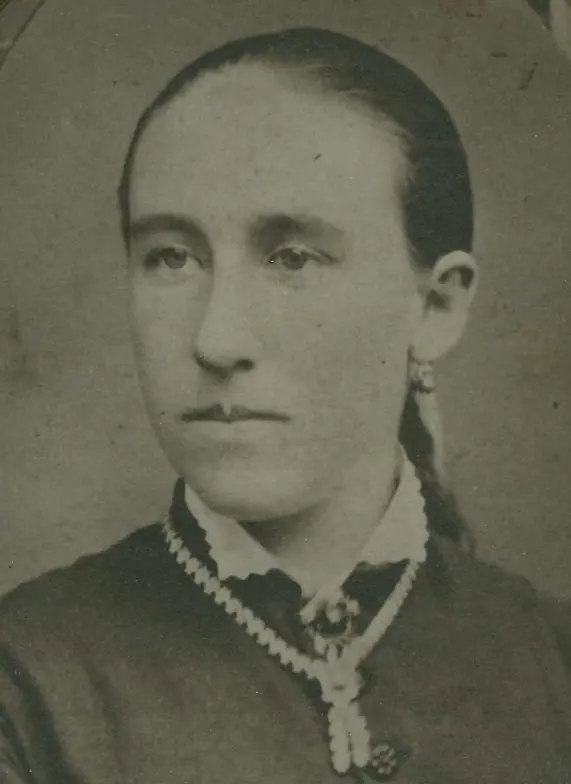
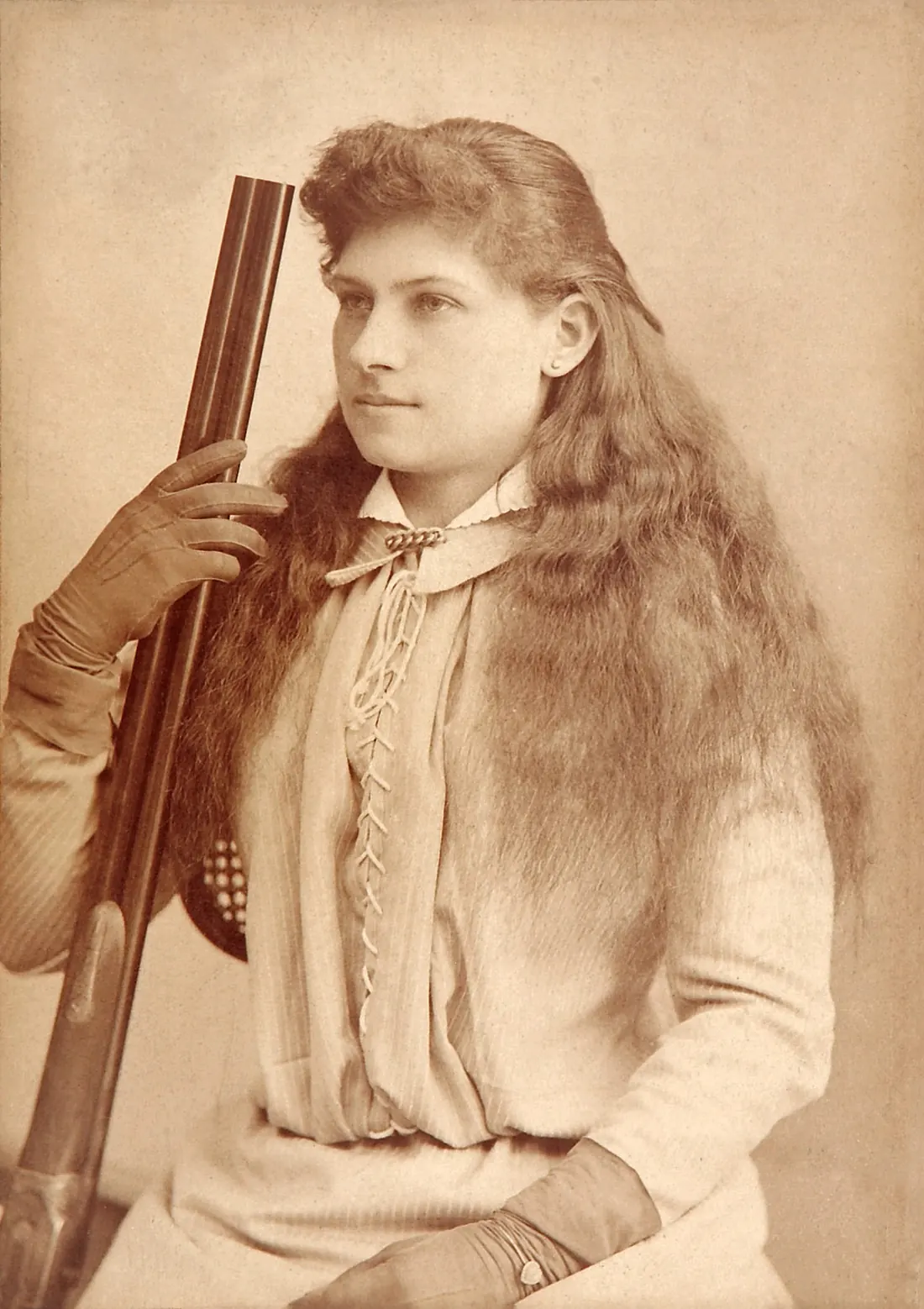
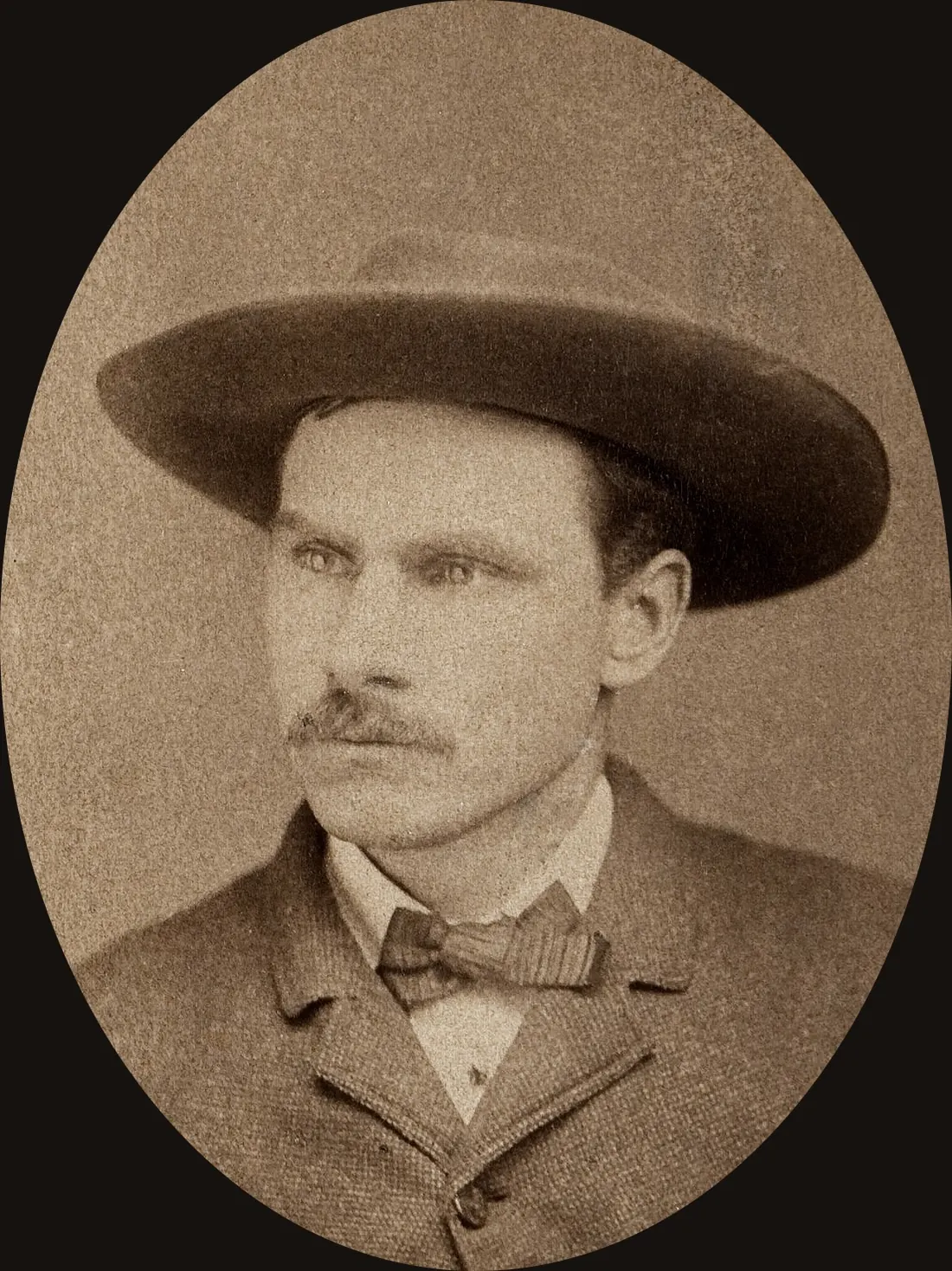
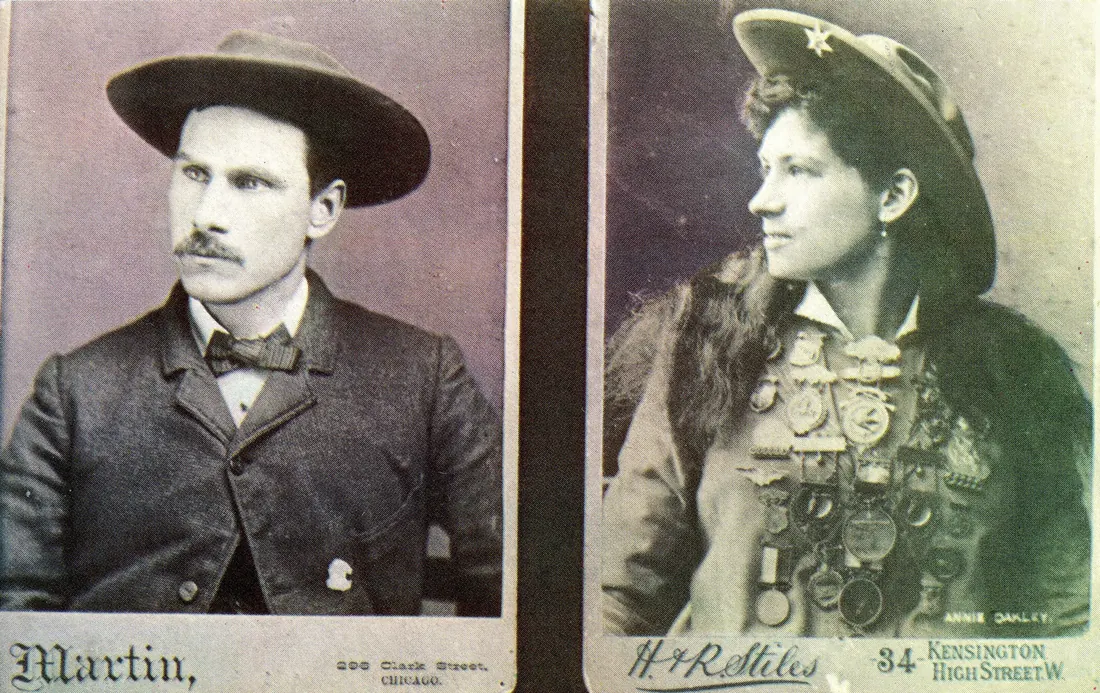
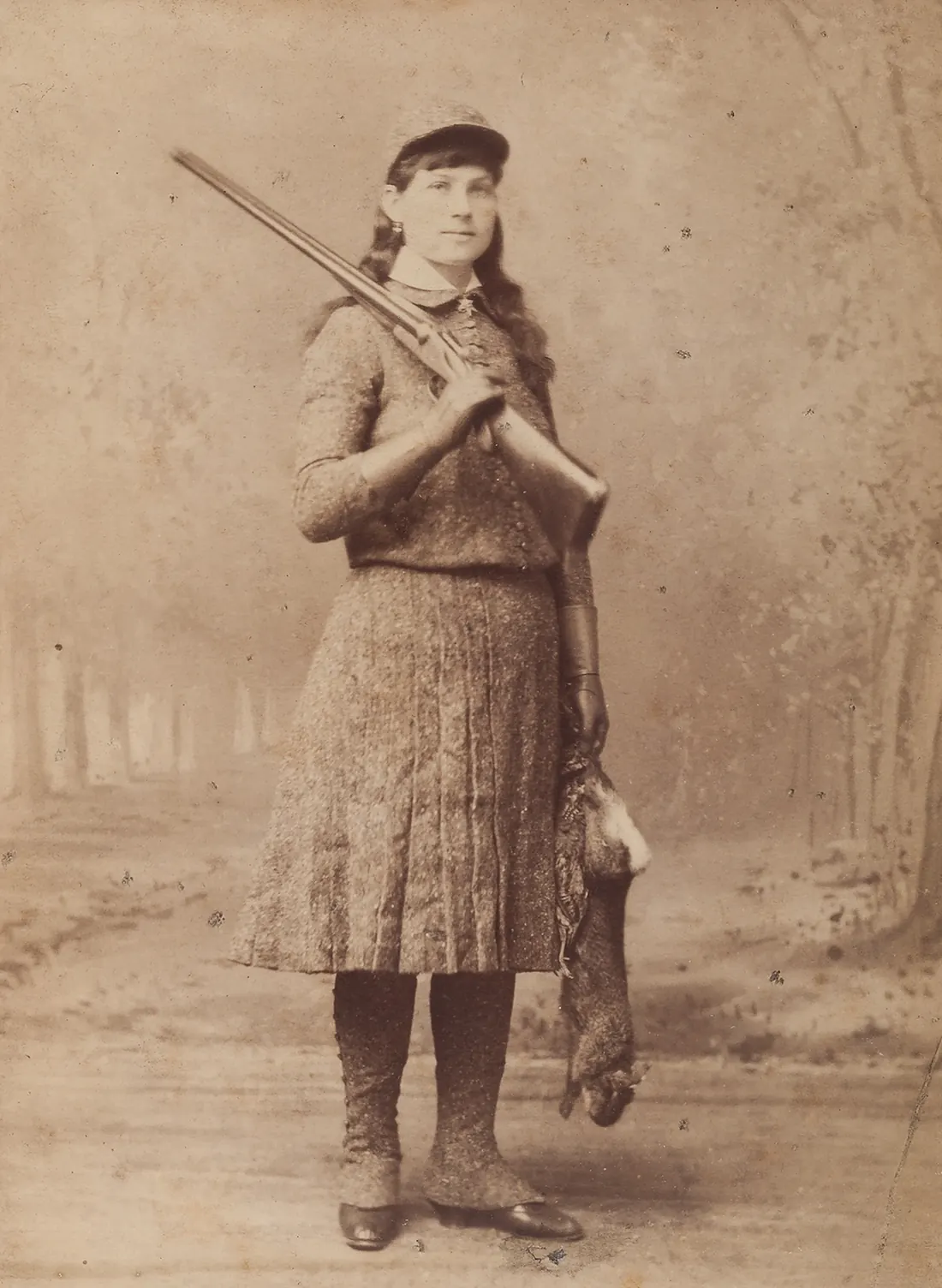
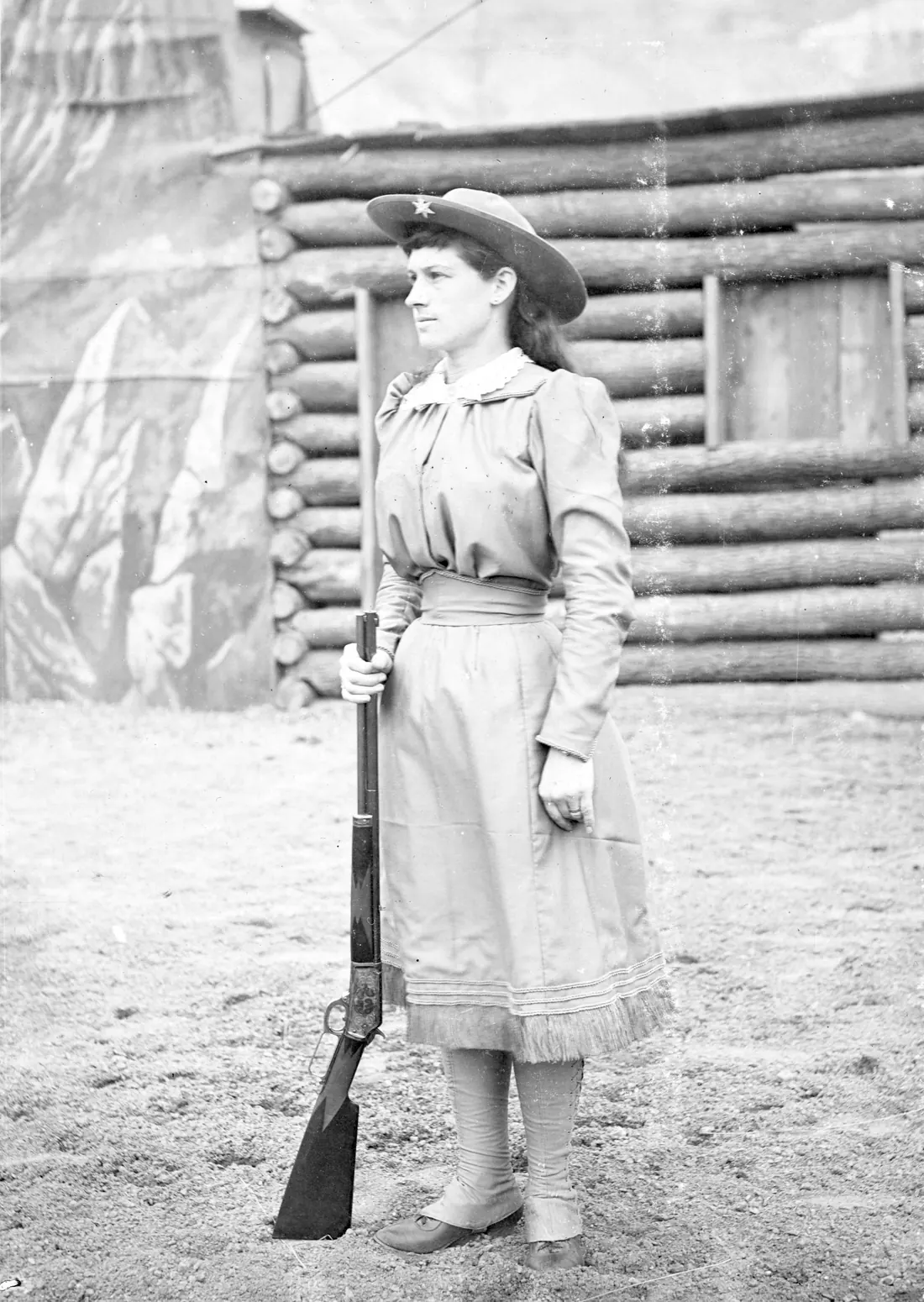
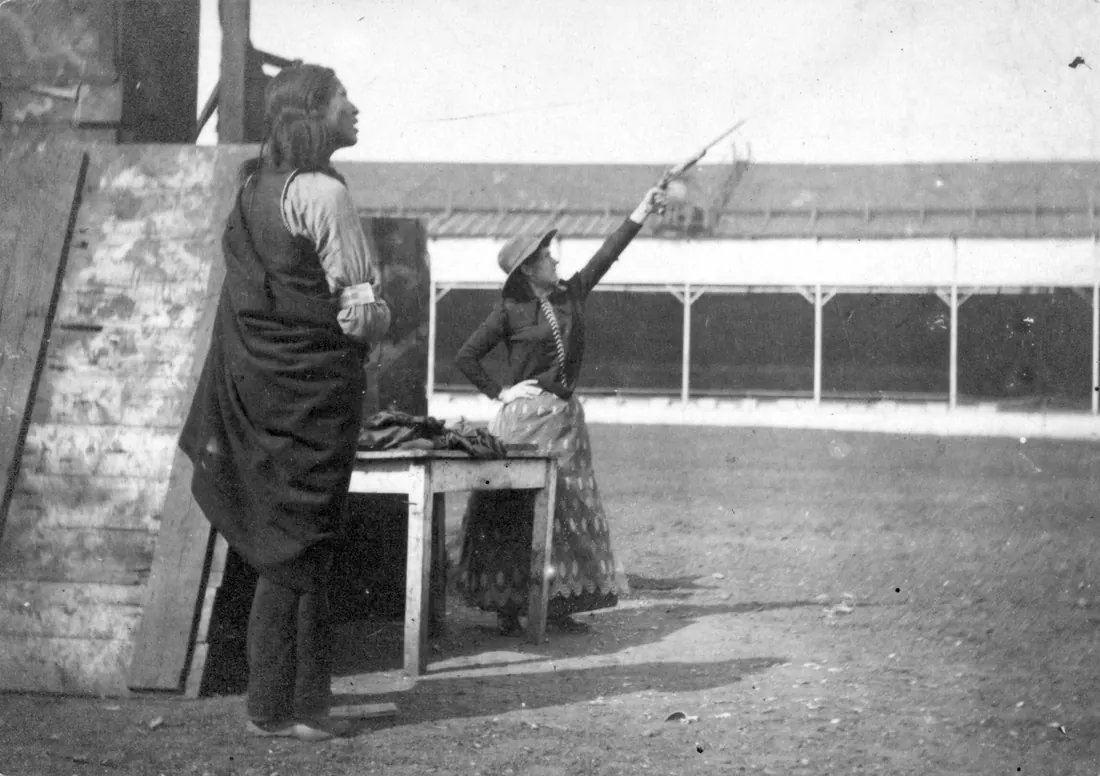
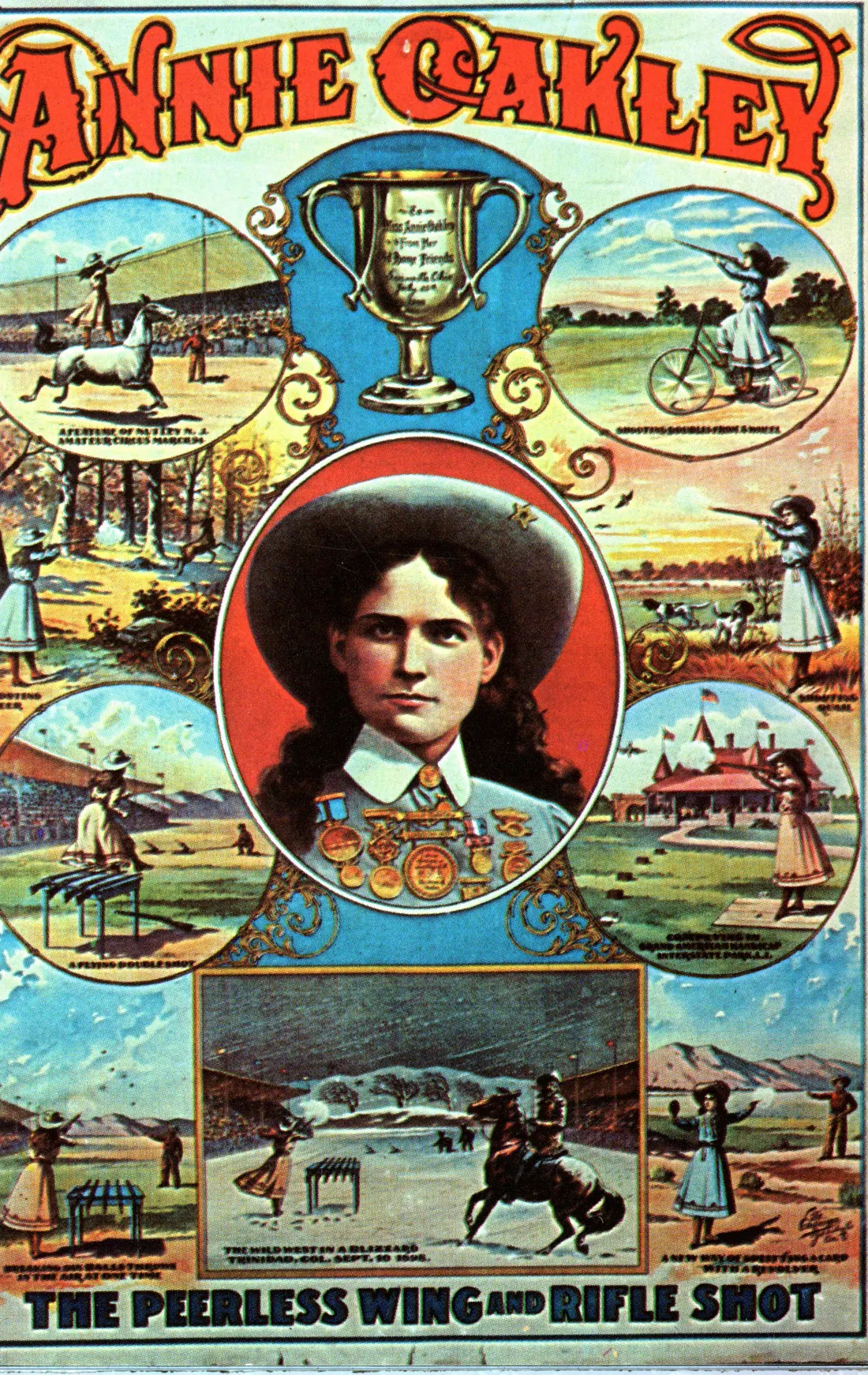
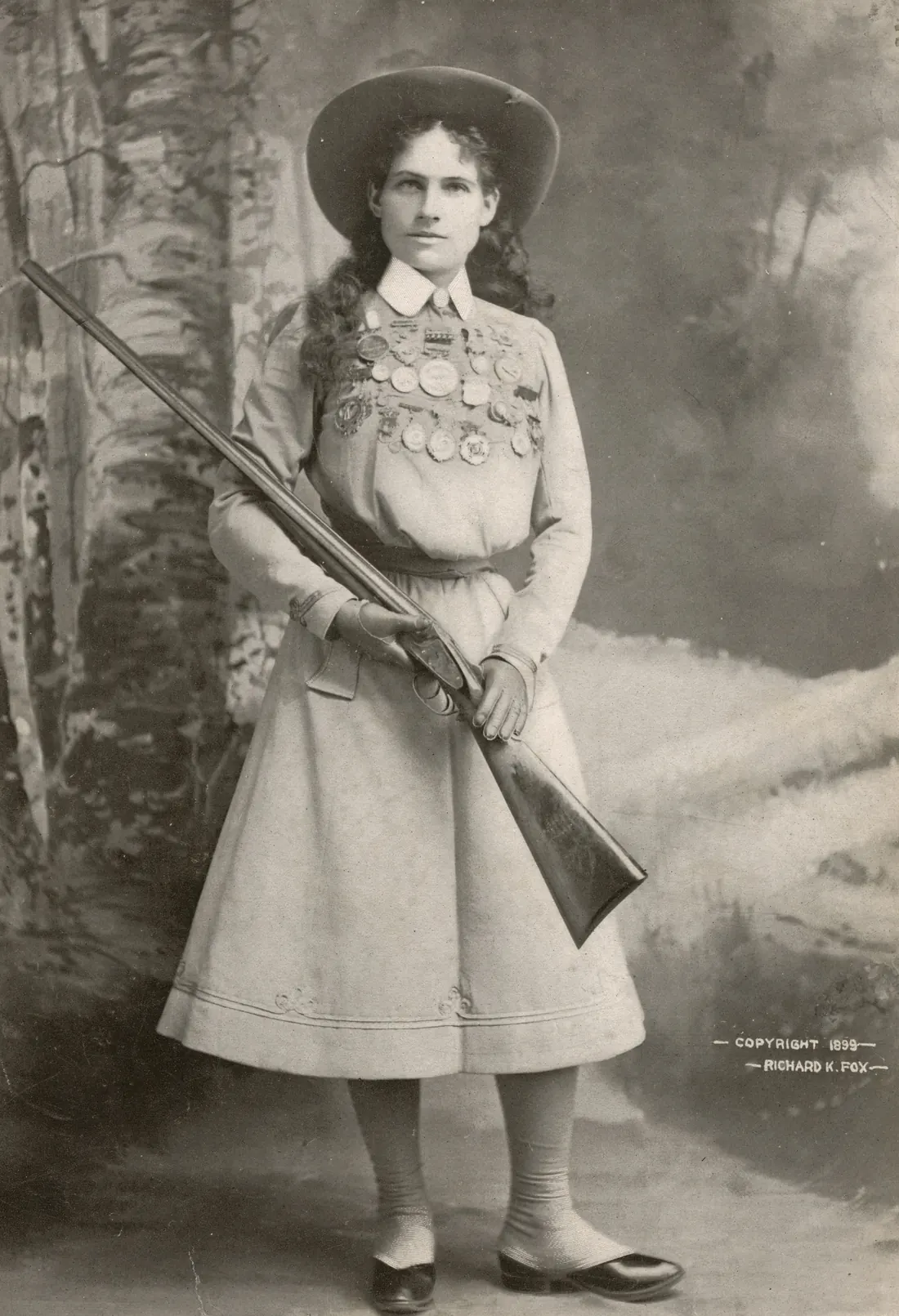
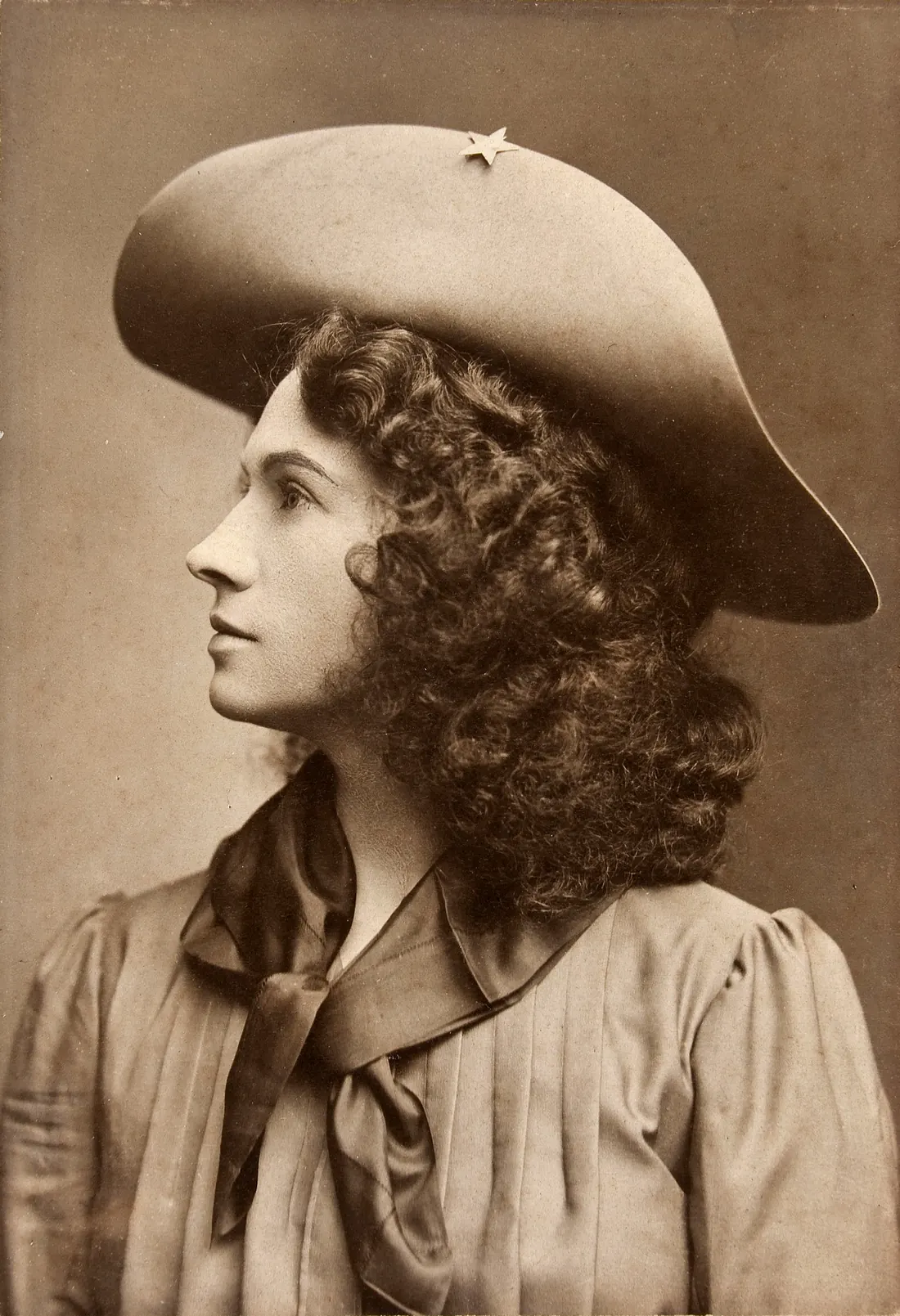
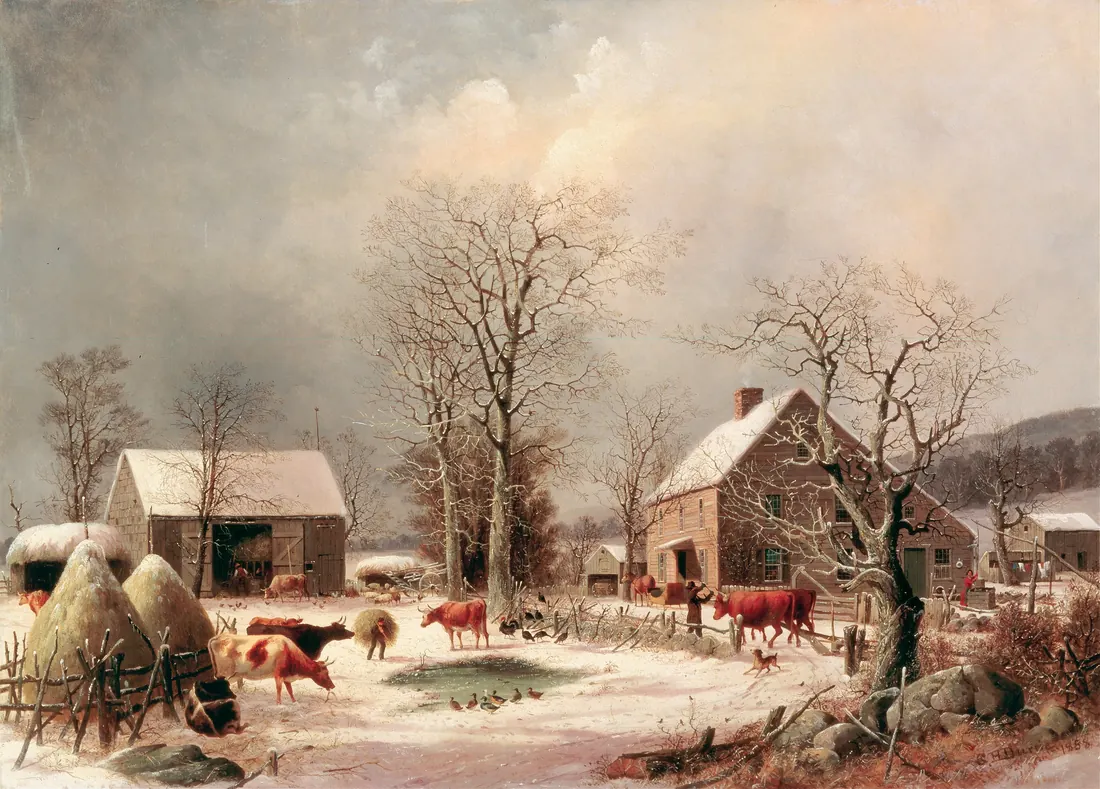
Pictures: Annie Oakley herself is in the Baker’s Art Gallery cabinet card (Columbus, Ohio, 1880s), J. Wood’s cabinet card “Miss Annie Oakley, Little Sure Shot” with the game she shot (New York, 1880s), the cabinet card by H&R Stiles of London shown beside Frank Butler’s card by Martin of Chicago at the Garst Museum (1880s, after the match), Stacy’s photo at Buffalo Bill’s Wild West in Brooklyn (1894), the photo of her shooting at the Wild West at Earl’s Court, London (1892), the Police Gazette portrait copyrighted by Richard K. Fox in 1899 and the profile taken in New York about 1902–1904, the time of the false story. No photo of her as a child is known, so her portraits are from her twenties and later. Frank Butler is in the Scannell & Missimer cabinet photograph of about 1882. The poster “The Peerless Wing and Rifle Shot” is her own, undated, from her career, and the title band is the same poster. Farmyard in Winter is George Henry Durrie’s painting of 1858, a winter farm of her childhood era, not her home or the wolves’ farm.
Photo credits
The archive photos in this story
All the photographs and illustrations in this story are in the public domain. Tap one to enlarge it, or follow the link to its Wikimedia Commons page for the full record. The narration, captions and graphics in the Short are our own; its music and sound effects are credited below.
Music and sound effects
Music: Mussorgsky, Pictures at an Exhibition: IV. Bydlo (piano) (Musopen, public domain); Brahms, Symphony No. 2 in D major, Op. 73: IV. Allegro con spirito (Musopen Symphony Orchestra, CC0); Beethoven, Coriolan Overture, Op. 62 (Musopen Symphony Orchestra, CC0); Dvorak, Symphony No. 9 'From the New World': II. Largo (Musopen, public domain).
Sound effects: Freesound, CC0.