Wilson Bentley was born on February 9, 1865, in Jericho, Vermont, the Jericho Historical Society says: “A farmer by trade.” He told The American Magazine in 1925, as Duncan C. Blanchard quotes him: “And it was my mother that made it possible for me, at fifteen, to begin the work to which I have devoted my life. She had a small microscope which she had used in her school teaching.” And “always, from the very beginning, it was snowflakes that fascinated me most.”
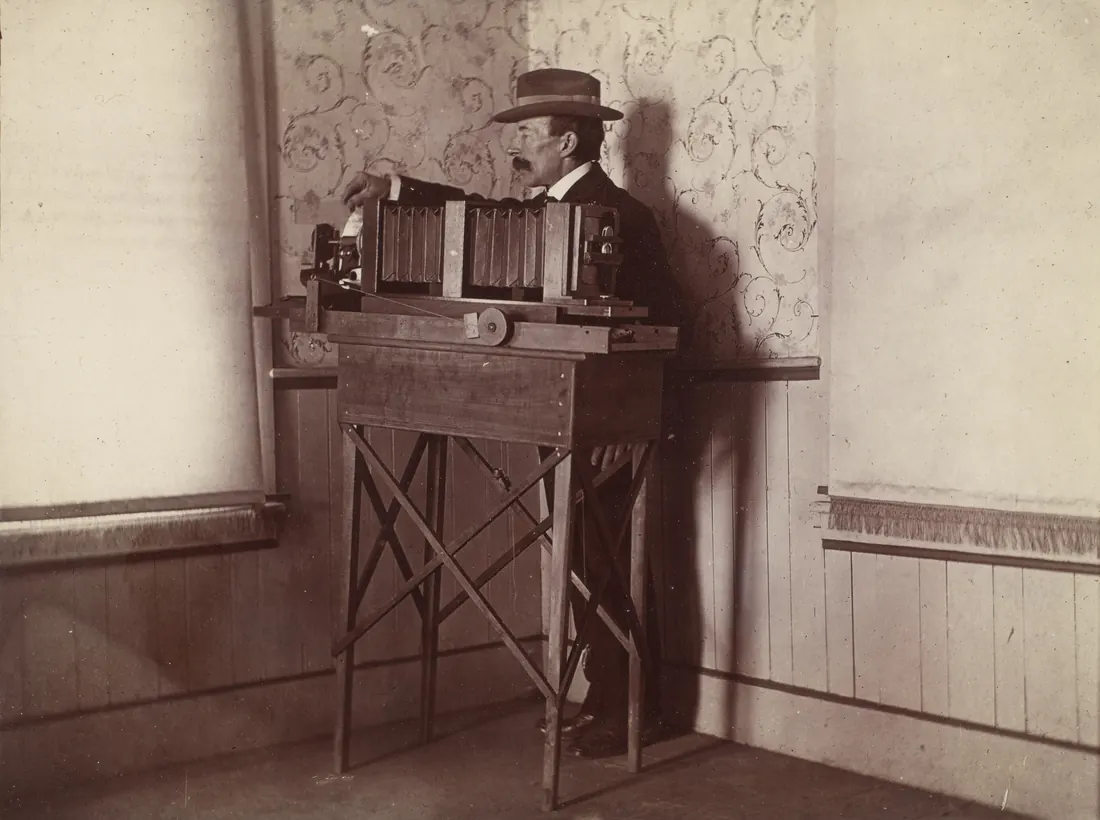
“The snowflakes were too complex to record before they melted, so he attached a bellows camera to a compound microscope,” Wikipedia says; in Blanchard’s account, “Bentley and his mother somehow persuaded his father that they must buy a bellows camera and a microscope objective.” “On January 15, 1885 he became the first person to photograph a single snow crystal,” the Jericho Historical Society says, and Guinness World Records says the photograph was taken “on his family’s farm near Jericho, Vermont.” Bentley remembered: “The day that I developed the first negative made by this method, and found it good, I felt almost like falling on my knees beside that apparatus and worshiping it! It was the greatest moment of my life.”
“During a snowstorm, he would hold out a black tray,” HistoryNet says. “He would go on to photograph well over 5000 snow crystals (never finding two the same),” the Jericho Historical Society says, and in March 1931 he made his “5,381st photomicrograph,” Blanchard writes, with “the same camera with which he had taken his first photomicrograph 46 years before.” But “many of the people in the village, like his father and brother, thought him just a bit odd and he was the butt of many a village joke.” Asked what his neighbors thought of him, Bentley said: “Oh, I guess they’ve always believed I was crazy, or a fool, or both.” “So I announced that I would give a talk in the village and show lantern slides of my pictures,” he said, and “just six people were there to hear me. It was free, mind you!”
“In November of 1931, his book ‘Snow Crystals’ was published by McGraw/Hill,” the Jericho Historical Society says, “a magnificent collection of nearly 2,500 photomicrographs,” in Blanchard’s words. “In early-December 1931, Wilson Bentley walked six miles, ill-dressed, through a slushy snowstorm to reach his home,” The Public Domain Review says. “Not long thereafter, he contracted a cold, which grew into pneumonia.” “Shortly after, on December 23, 1931, Wilson Bentley died at the family farmhouse in Jericho where he lived his entire life.”
“His father, however, to the end of his days thought the whole thing a lot of nonsense,” Blanchard writes. But, the Smithsonian Institution Archives say, “In 1903 Bentley sent prints of his snowflakes to the Smithsonian,” and “This photomicrograph and more than five thousand others supported the belief that no two snowflakes are alike.” Mental Floss says that “his research is credited with establishing the theory that no two snowflakes are alike.”
Fact check
The facts and where they come from
- This farmer’s neighbors laughed at him, but he spent his life photographing snowflakes. Duncan C. Blanchard: “many of the people in the village, like his father and brother, thought him just a bit odd and he was the butt of many a village joke.” The Boston Globe, quoting his great-grandniece: “People in town thought he was crazy.” 29
- His name was Wilson Bentley, a Vermont farmer. Jericho Historical Society: “A farmer by trade,” born on February 9, 1865, in Jericho, Vermont. 1
- At 15, his mother gave him a microscope. Bentley, quoted by Duncan C. Blanchard: “And it was my mother that made it possible for me, at fifteen, to begin the work to which I have devoted my life. She had a small microscope which she had used in her school teaching.” 2
- He loved snowflakes, but they melted before he could draw them. Bentley: “But always, from the very beginning, it was snowflakes that fascinated me most.” Wikipedia: “The snowflakes were too complex to record before they melted, so he attached a bellows camera to a compound microscope.” 23
- So he hooked a camera to the microscope. Wikipedia: “he attached a bellows camera to a compound microscope.” Duncan C. Blanchard: “Bentley and his mother somehow persuaded his father that they must buy a bellows camera and a microscope objective.” 32
- In 1885, he took the first known photo of a single snow crystal. Jericho Historical Society: “On January 15, 1885 he became the first person to photograph a single snow crystal.” Guinness World Records: “The first photograph of an individual snow crystal was taken on 15 January 1885 by Wilson Bentley (USA) on his family’s farm near Jericho, Vermont, USA.” 14
- He called it the greatest moment of his life. Bentley: “The day that I developed the first negative made by this method, and found it good, I felt almost like falling on my knees beside that apparatus and worshiping it! It was the greatest moment of my life.” 2
- For 46 years, he caught snowflakes on a black tray. Duncan C. Blanchard, writing of 1931: “This was the same camera with which he had taken his first photomicrograph 46 years before.” HistoryNet: “During a snowstorm, he would hold out a black tray.” 28
- He photographed over 5,000, and never found two alike. Jericho Historical Society: “He would go on to photograph well over 5000 snow crystals (never finding two the same).” Duncan C. Blanchard: his “5,381st photomicrograph,” in March 1931. 12
- But the village thought he was crazy, or a fool, or both. Bentley, asked what his neighbors thought of him: “Oh, I guess they’ve always believed I was crazy, or a fool, or both.” 2
- His free slide show drew six people. Bentley: “So I announced that I would give a talk in the village and show lantern slides of my pictures.” … “just six people were there to hear me. It was free, mind you!” 2
- In 1931, his life’s work became a book. Jericho Historical Society: “In November of 1931, his book ‘Snow Crystals’ was published by McGraw/Hill.” Duncan C. Blanchard: “a magnificent collection of nearly 2,500 photomicrographs.” 12
- Weeks later, he walked six miles home through a snowstorm. The Public Domain Review: “In early-December 1931, Wilson Bentley walked six miles, ill-dressed, through a slushy snowstorm to reach his home.” WBUR, quoting his great-grandniece Sue Richardson: “Bentley walked six miles home from the station in what turned into a blizzard and caught pneumonia.” 57
- He caught pneumonia, and died two days before Christmas. The Public Domain Review: “Not long thereafter, he contracted a cold, which grew into pneumonia.” Mental Floss: “After walking six miles home during a blinding blizzard, Bentley caught pneumonia and died at the family home in Jericho on December 23, 1931.” Jericho Historical Society: “Shortly after, on December 23, 1931, Wilson Bentley died at the family farmhouse in Jericho where he lived his entire life.” 561
- The farmer they called a fool is why we say no two snowflakes are alike. Mental Floss: “his research is credited with establishing the theory that no two snowflakes are alike.” Wikipedia: he “elaborated the theory that no two snowflakes are identical.” Smithsonian Institution Archives: “This photomicrograph and more than five thousand others supported the belief that no two snowflakes are alike.” 6310
Sources
- Biography — Snowflake Bentley Jericho Historical Society (snowflakebentley.com)
- The Snowflake Man (Duncan C. Blanchard, Weatherwise, 1970) Jericho Historical Society (snowflakebentley.com)
- Wilson Bentley Wikipedia
- First photograph of a snowflake Guinness World Records
- The Snowflake Man of Vermont (Keith C. Heidorn) The Public Domain Review
- Wilson Bentley, the man who photographed snowflakes Mental Floss
- Snowflake man (February 25, 2022, with his great-grandniece Sue Richardson) WBUR
- Snowflake Savant HistoryNet
- Snowflake Bentley, the Vermont farmer (December 6, 2019) The Boston Globe
- Snowflake Study (Smithsonian Institution Archives record) Wikimedia Commons
Notes
“First”: the Jericho Historical Society says “the first person,” Wikipedia “the first known person,” and Guinness World Records “The first photograph of an individual snow crystal.” The Short says “the first known photo.”
“Never found two alike” is what he reported (Jericho Historical Society). It is a belief his photographs made famous (“credited with establishing the theory,” Mental Floss; “supported the belief,” the Smithsonian Institution Archives), not a proof, and very small, simple crystals can look alike, so we never say he proved it.
How many: “well over 5000” (Jericho Historical Society), “more than 5,000” (The Boston Globe), and his “5,381st photomicrograph” in March 1931 (Blanchard). The Short says “over five thousand.”
The walk and his death: The Public Domain Review calls it a “slushy snowstorm,” Mental Floss a “blinding blizzard” and WBUR “what turned into a blizzard.” Wikipedia is more careful: pneumonia “which he may have contracted while walking home in the snow.” Blanchard’s 1970 article doesn’t mention the walk (his last log entry was on December 7). So the Short says “snowstorm,” and puts the walk before the pneumonia without saying that one caused the other.
“Laughed at” is our summary of Blanchard’s “the butt of many a village joke” and Bentley’s own “crazy, or a fool, or both”; the six people at his slide show are his own number, from his late-life account.
Who bought the camera: Blanchard says Bentley and his mother persuaded his father; Bentley’s own 1909 article in The Guide to Nature says “I purchased” the microscope and camera, in the autumn of 1884. The Short says only that he hooked a camera to the microscope.
Left out for length: that the work cost him $15,000 and earned him under $4,000 (Blanchard, 1926), the American Meteorological Society’s first research grant (1924), his raindrop studies, and Kenneth Libbrecht’s view that he did it so well nobody bothered for almost 100 years (Wikipedia).
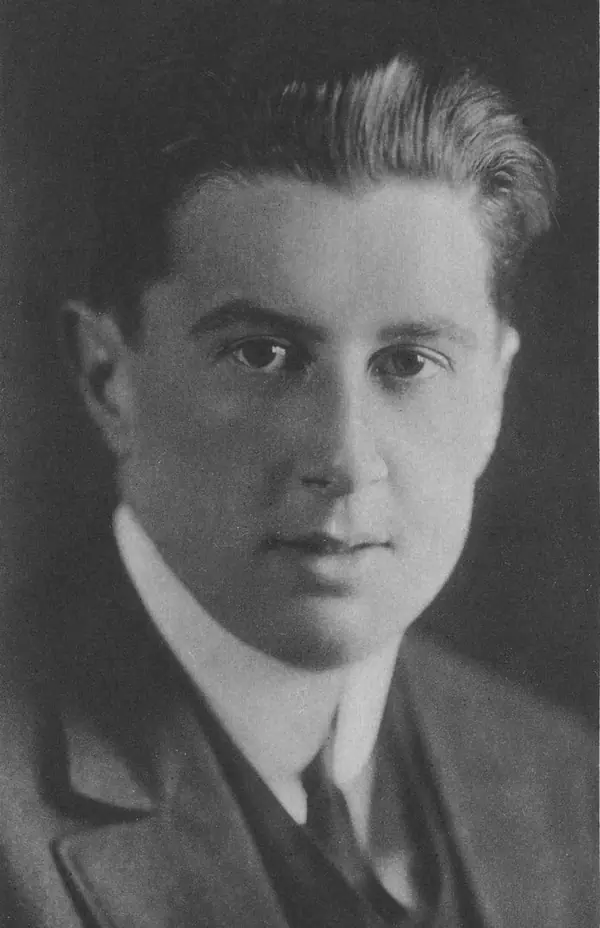
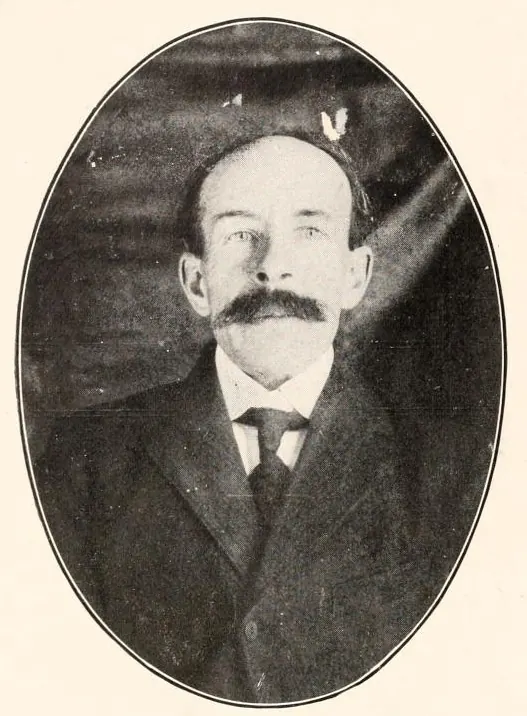
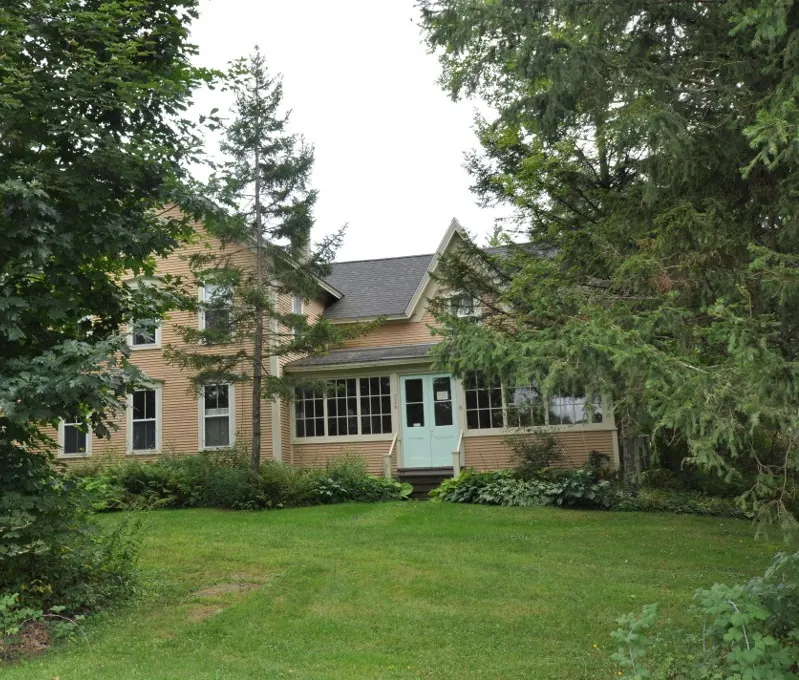
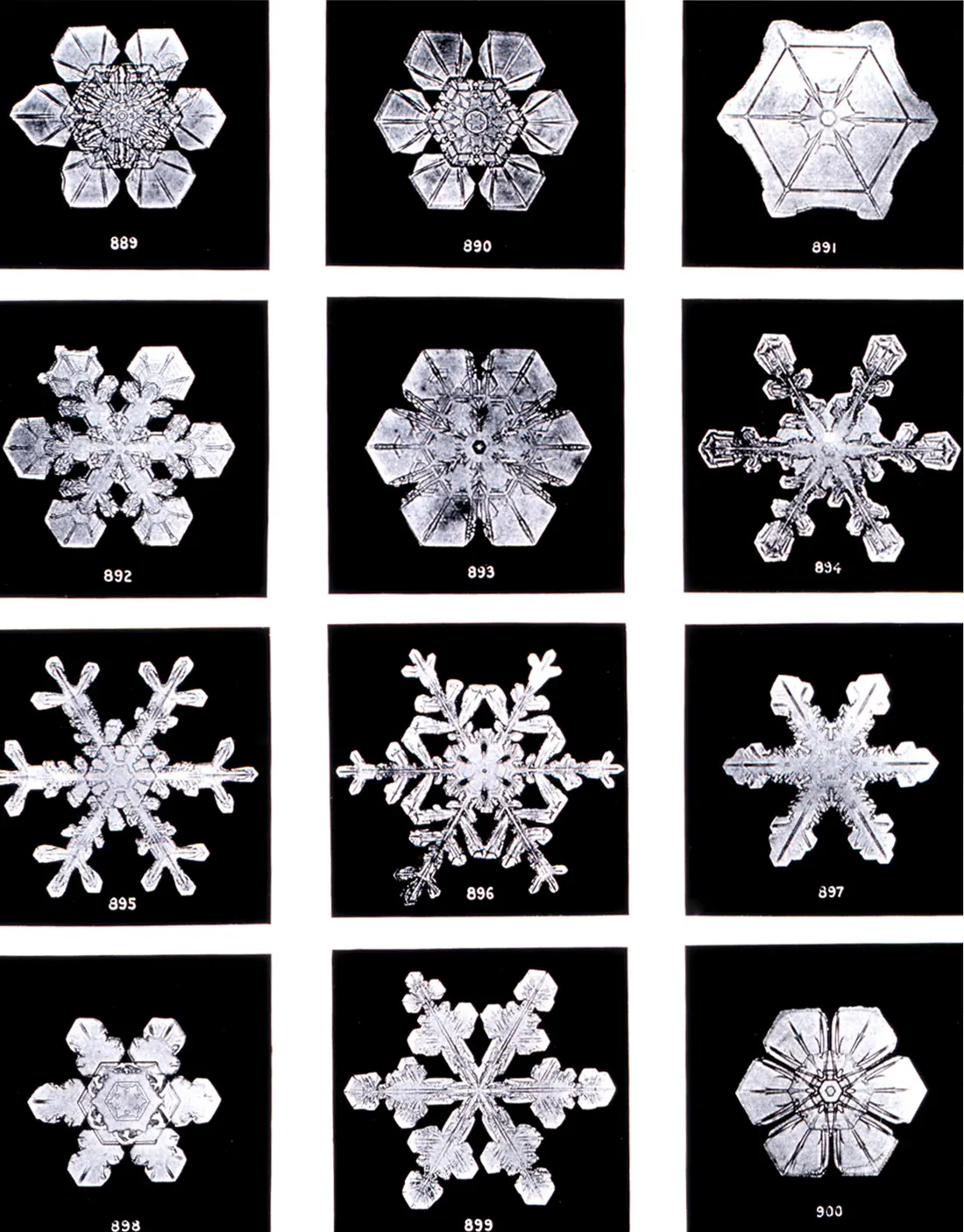
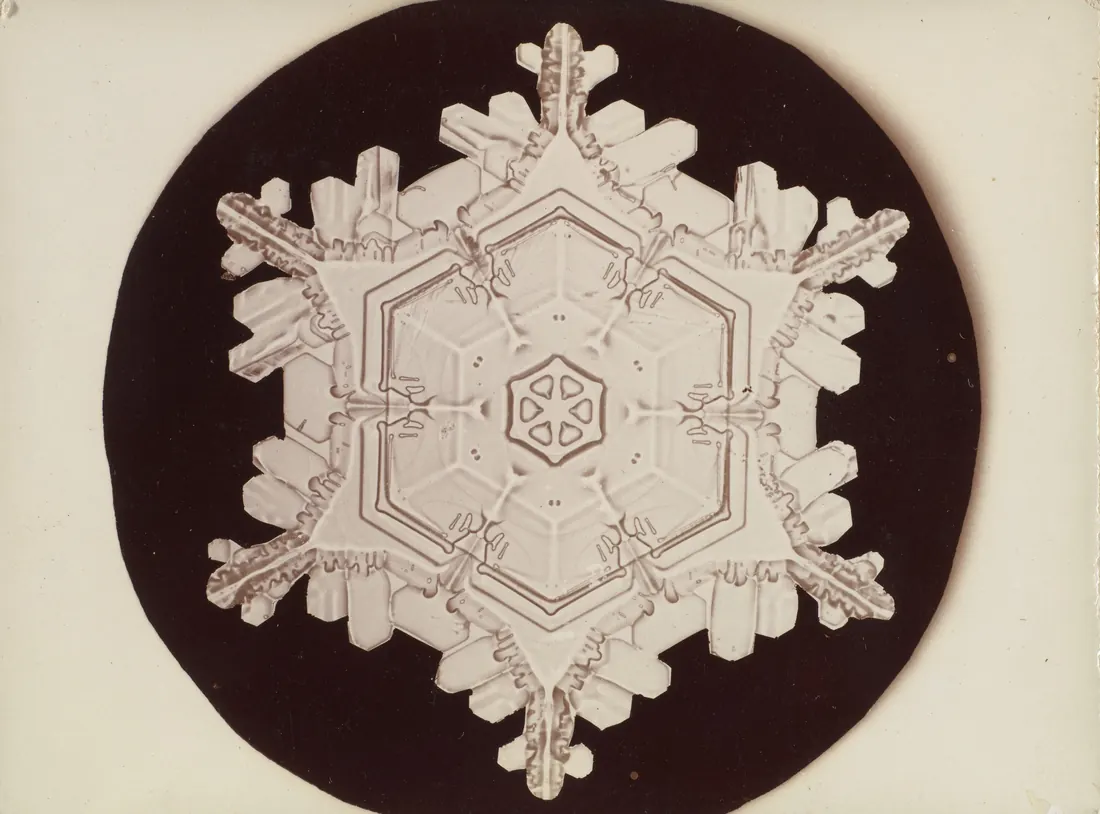
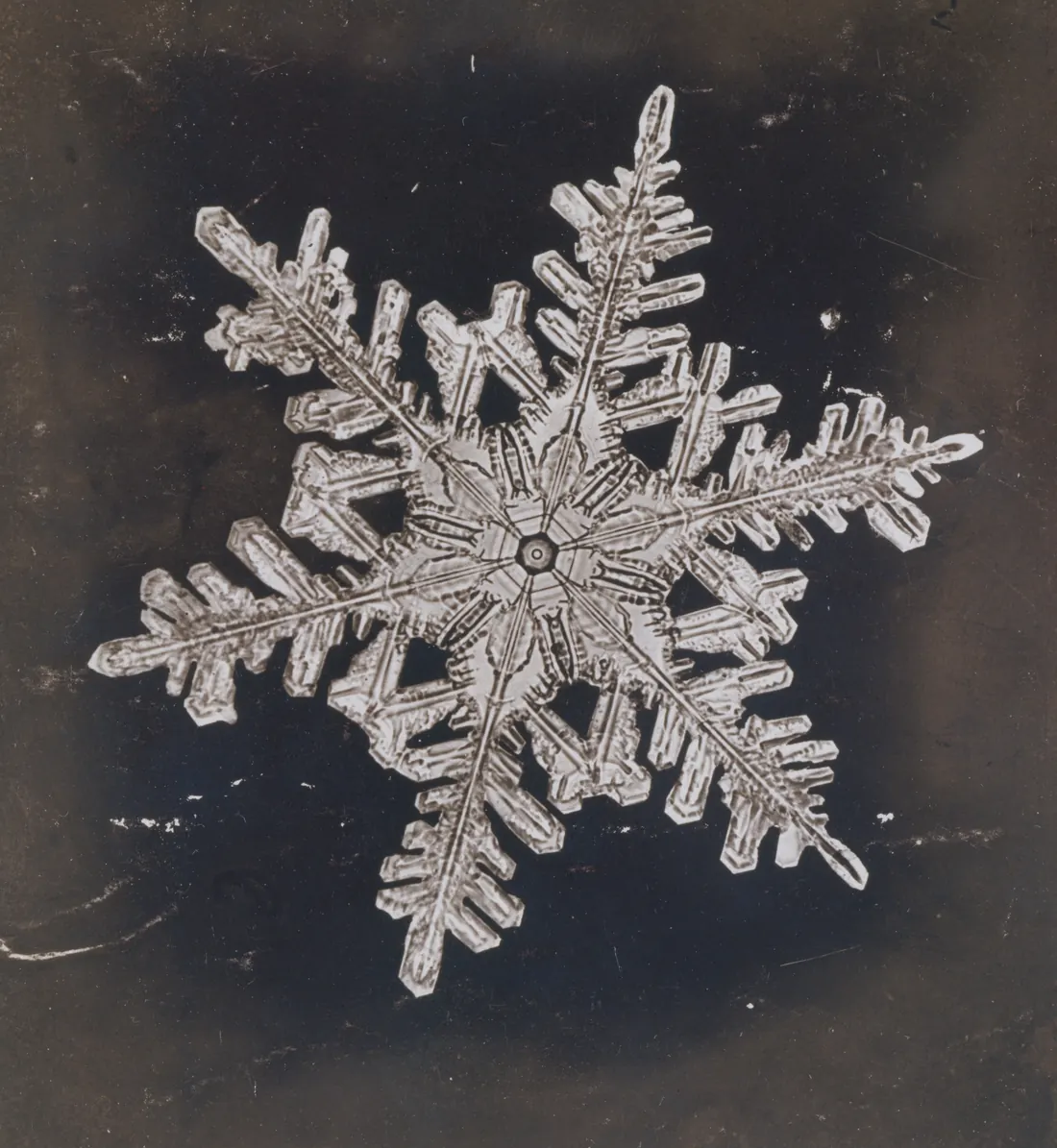
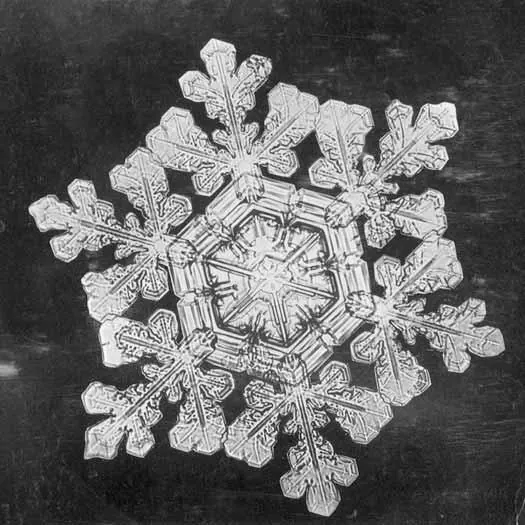
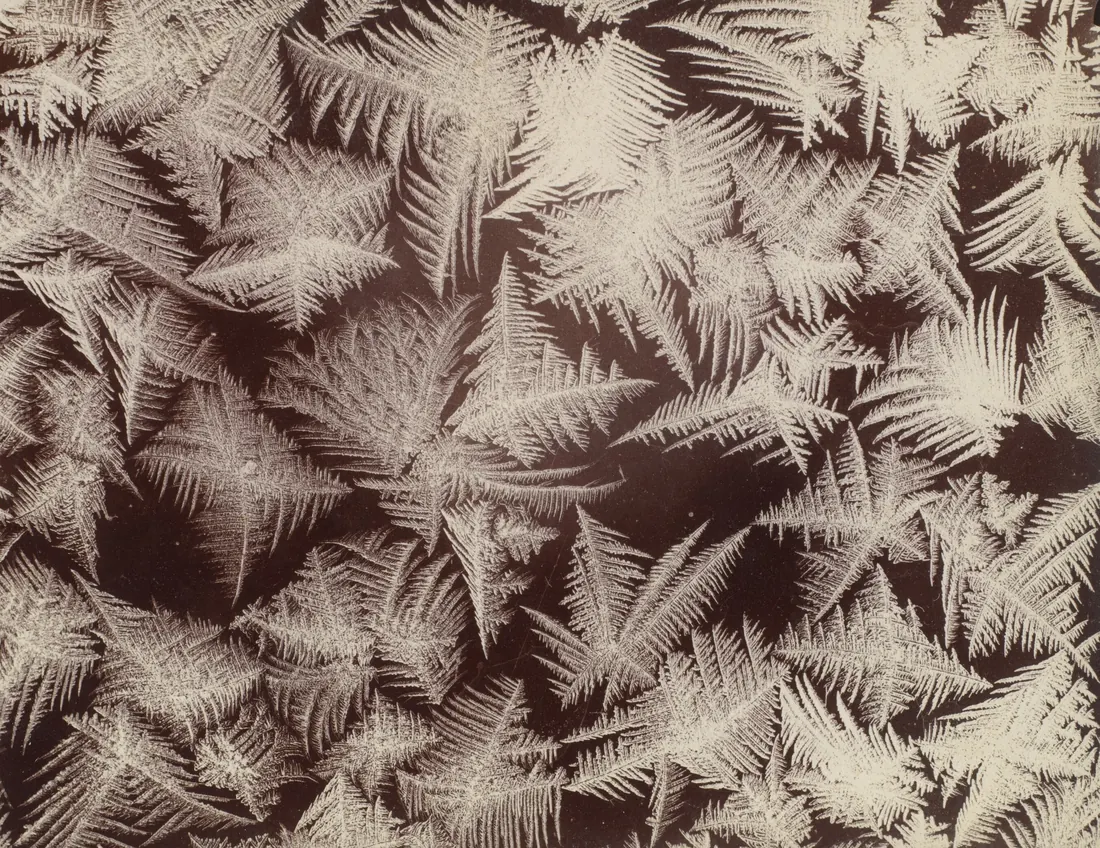
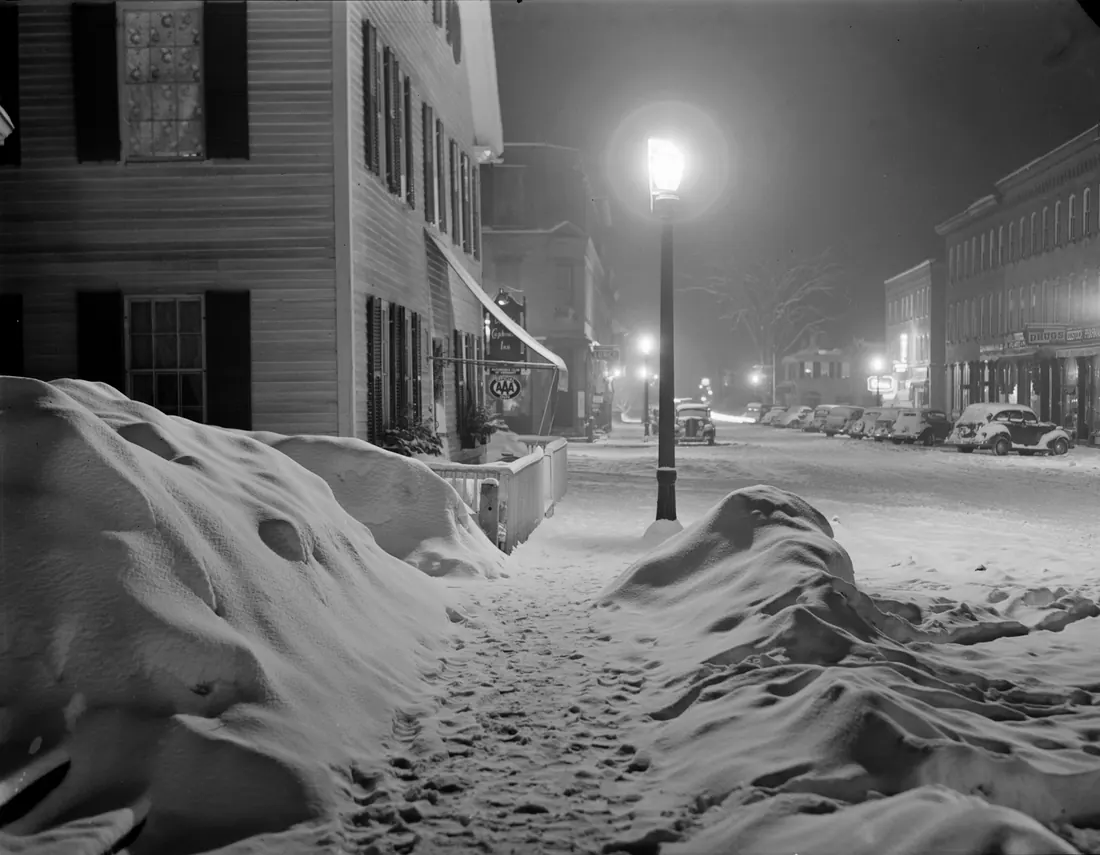
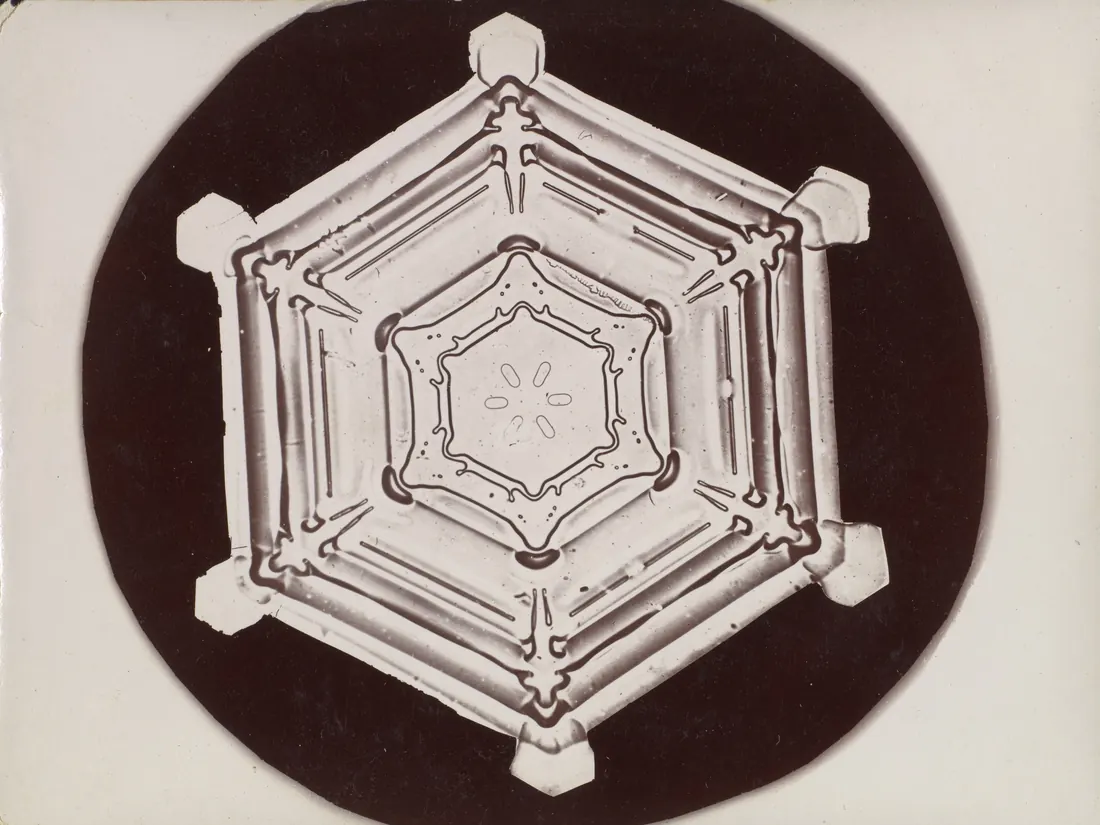
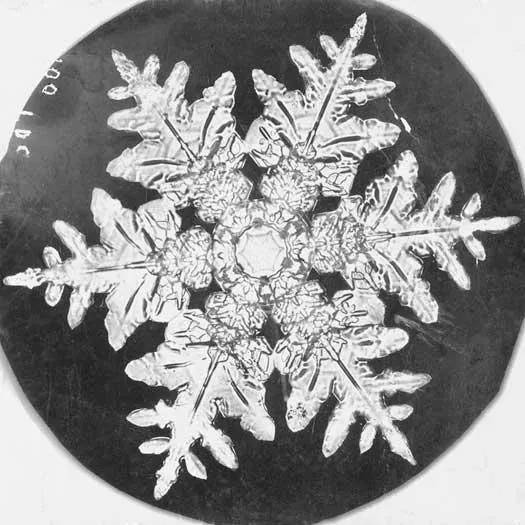
Pictures: Bentley himself is in his self-portrait with his camera of about 1910 (The Metropolitan Museum of Art) and in the portrait printed with his article in The Guide to Nature in 1909. The snow crystals and the frost are his own photomicrographs: prints of the 1890s–1920s and of about 1910 at the Met, two prints dated 1890 at the Smithsonian Institution Archives, and Plate XIX of his “Studies among the Snow Crystals” in the Monthly Weather Review for 1902. None of them is his first photograph of January 15, 1885, or a plate from his 1931 book. The “Snowy night” in Woodstock, Vermont, was photographed by Marion Post Wolcott in March 1940 and is not his walk. His house in Jericho was photographed in 2018.
Photo credits
The archive photos in this story
The photographs and illustrations in this story are in the public domain or shared under open licenses; each one is credited below with its license. Tap one to enlarge it, or follow the link to its Wikimedia Commons page for the full record. The narration, captions and graphics in the Short are our own; its music and sound effects are credited below.
Music and sound effects
Music: Satie, Gymnopedie No. 1 (Lent et douloureux) (Robin Alciatore, piano, public domain); Grieg, Peer Gynt Suite No. 1, Op. 46: I. Morning Mood (Musopen Symphony Orchestra, public domain); Grieg, Peer Gynt Suite No. 1, Op. 46: II. Ase's Death (Musopen Symphony Orchestra, CC0).
Sound effects: Freesound, CC0.