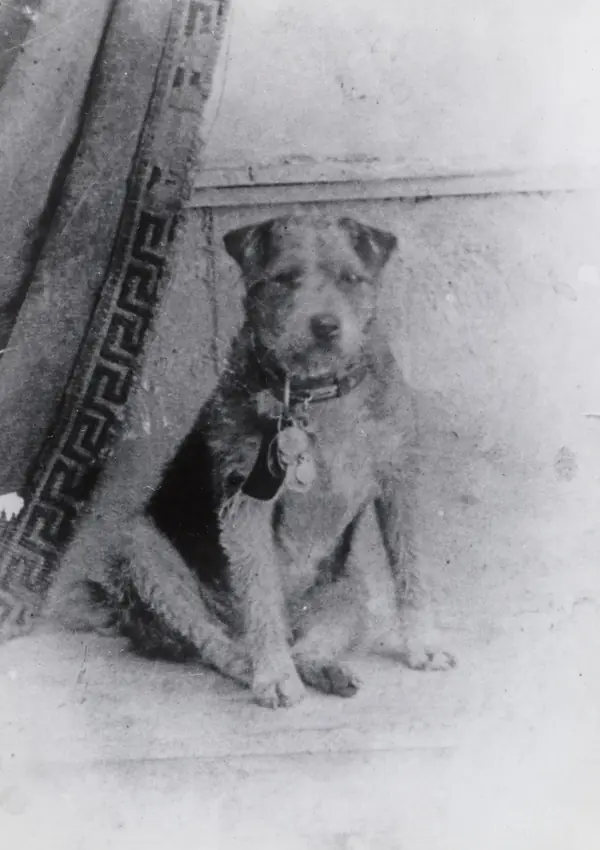
“Rags was found abandoned on the streets of Paris by an American doughboy, Private James Donovan,” Wikipedia says. “He was adopted into the 1st Division on July 14, 1918, in the Montmartre section of Paris, France.” Smithsonian Magazine describes him then as “a street dog scrounging for scraps outside a cafe in Paris.” Donovan was out without a pass, the story goes: “To avoid being Absent Without Leave, Donovan told Military Police that Rags was the missing mascot of the 1st Infantry Division and that he was part of a search party.” That story comes from Jack Rohan’s 1930 book about Rags, which tells it with dialogue: “He’s sort of mascot to the whole First Division.”
“Donovan escaped punishment and was allowed to keep Rags largely because Donovan was being ordered to the front lines,” Wikipedia says. “Donovan trained Rags to carry written messages attached to his collar,” and Donovan “also had to repair field telephone wires that had been damaged by shellfire.” The men learned to watch the dog: “Rags’ acute and sensitive hearing was telling them when the shells were coming well before they could hear them.” His biographer, Grant Hayter-Menzies, told Smithsonian Magazine: “He could also tell when shells were coming minutes before the men could hear it.”
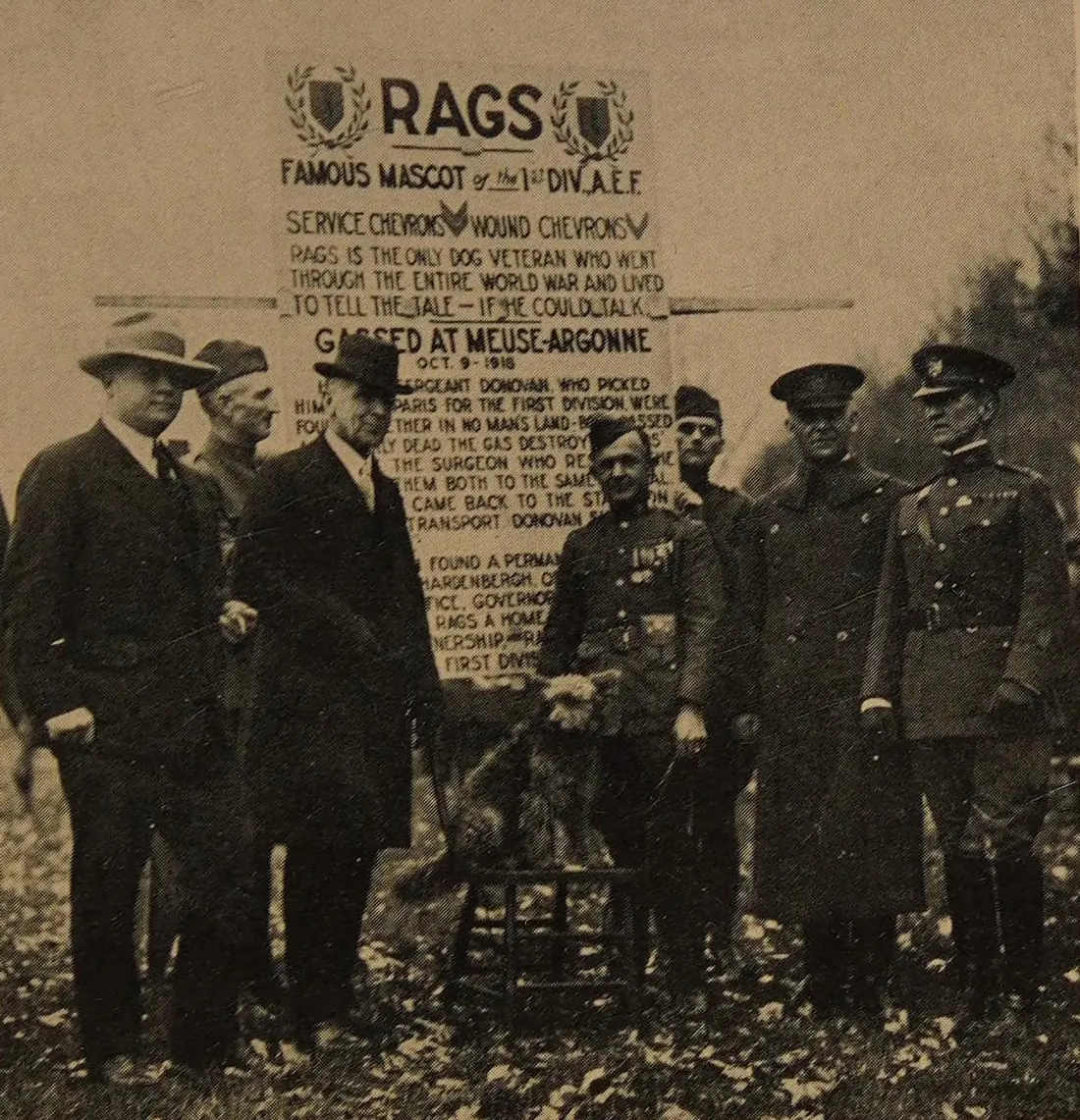
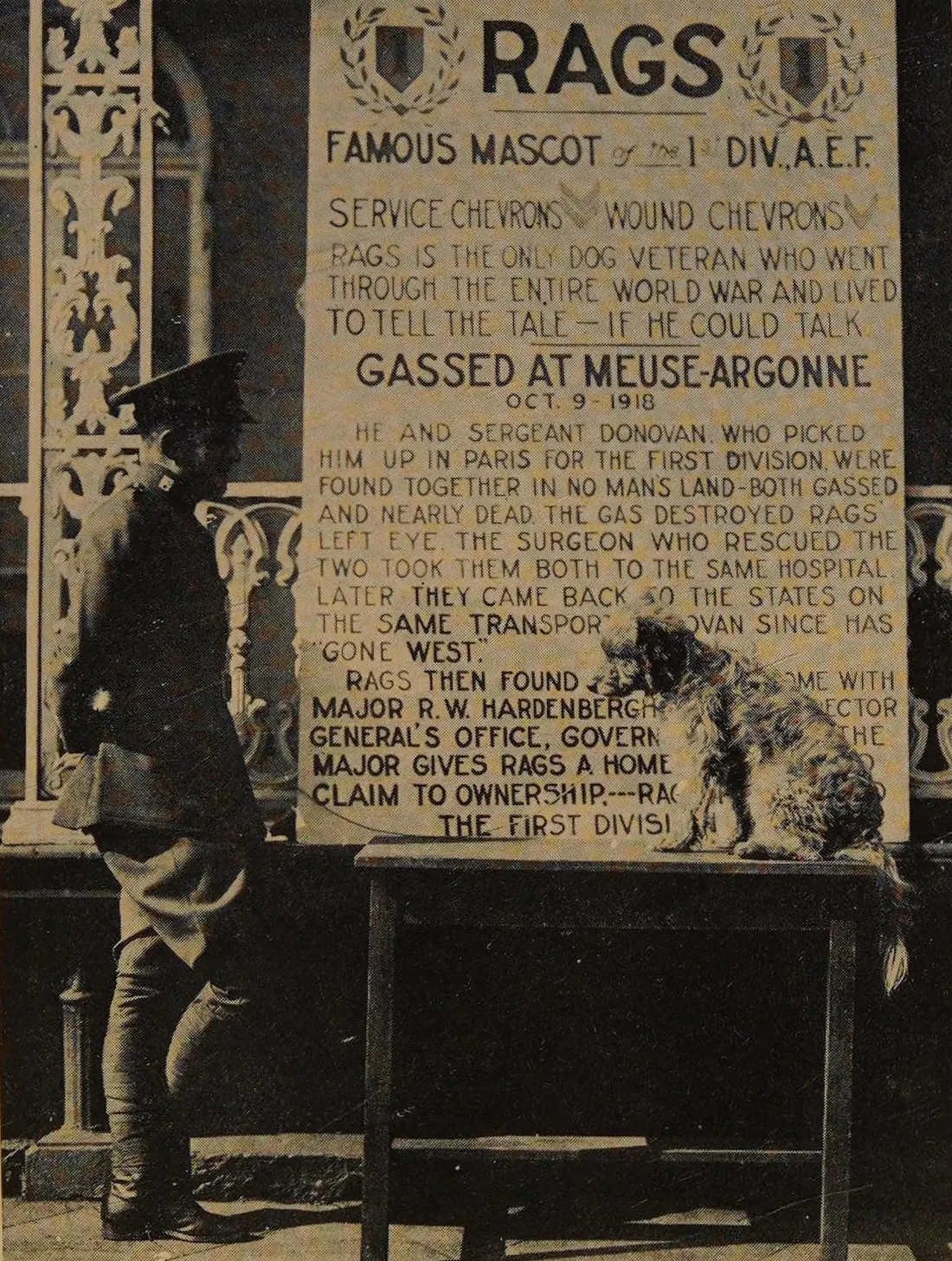
“In September 1918, Rags and Donovan were involved in the final American campaign of the war,” Wikipedia says, and a 1920s sign about Rags, photographed for Rohan’s book, reads “GASSED AT MEUSE-ARGONNE OCT. 9 1918.” In Rohan’s telling, “After a final futile effort to telephone the message, Donovan decided to waste no more time on the wires,” and he “tied the note he had made from the infantry message to Rags’s collar and started the dog toward the guns.” “A terrific blast sent both of them sprawling.” Smithsonian Magazine says Rags was hurt “while running a message that Donovan carefully tied to his collar with telephone wire”: “His paws and ears were injured by shrapnel, and his lungs damaged by poisonous gas he inhaled from a close-range explosion after his mask slipped off. (The message was successfully delivered.)”
“Rags had his right front paw, right ear and right eye damaged by shell splinters, and was also mildly gassed,” Wikipedia says, and “Donovan was more seriously wounded and badly gassed.” “In early 1919, Donovan died and Rags became the post dog.” Alabama Public Radio says that “Donovan died in 1919 from his wounds,” and that “Rags, who had lost his right eye in the attack, recovered.”
Smithsonian Magazine says Rags “lived from 1916 to 1936.” “When he became old and frail, his owners boarded him at Aspin Hill where he died and was buried,” Wikipedia’s article on the Aspin Hill Memorial Park says, and “Rags was buried with military honors, and a monument was erected at the Aspin Hill Memorial Park in Silver Spring, Maryland near the Hardenbergh home.”
Fact check
The facts and where they come from
- This dog was gassed and hit by shrapnel, but the message still got through. Smithsonian Magazine: “His paws and ears were injured by shrapnel, and his lungs damaged by poisonous gas he inhaled from a close-range explosion after his mask slipped off. (The message was successfully delivered.)” Wikipedia: “delivering a vital message despite being bombed, gassed, and partially blinded.” 21
- His name was Rags, the 1st Division’s mascot. Wikipedia: he “became the U.S. 1st Infantry Division’s dog-mascot in World War I.” 1
- In 1918, he was a stray on the streets of Paris. Wikipedia: “Rags was found abandoned on the streets of Paris by an American doughboy, Private James Donovan”; “He was adopted into the 1st Division on July 14, 1918, in the Montmartre section of Paris, France.” Smithsonian Magazine: “a street dog scrounging for scraps outside a cafe in Paris.” 12
- An American soldier, James Donovan, took him in. Wikipedia: “found abandoned on the streets of Paris by an American doughboy, Private James Donovan.” 1
- Without a pass, Donovan reportedly told the military police the dog was his division’s mascot. Wikipedia: “To avoid being Absent Without Leave, Donovan told Military Police that Rags was the missing mascot of the 1st Infantry Division and that he was part of a search party.” Jack Rohan’s 1930 retelling, with dialogue: “He’s sort of mascot to the whole First Division.” 13
- So Rags went to war. Wikipedia: “Donovan escaped punishment and was allowed to keep Rags largely because Donovan was being ordered to the front lines.” 1
- Donovan taught him to carry messages. Wikipedia: “Donovan trained Rags to carry written messages attached to his collar.” Smithsonian Magazine: “First Sergeant James Donovan taught him to deliver messages.” 12
- He could hear shells coming before the men could. Wikipedia: “Rags’ acute and sensitive hearing was telling them when the shells were coming well before they could hear them.” Grant Hayter-Menzies in Smithsonian Magazine: “He could also tell when shells were coming minutes before the men could hear it.” 12
- In the Meuse-Argonne, shellfire cut the phone lines. Wikipedia: Donovan “also had to repair field telephone wires that had been damaged by shellfire”; “In September 1918, Rags and Donovan were involved in the final American campaign of the war.” Jack Rohan: “After a final futile effort to telephone the message, Donovan decided to waste no more time on the wires.” The 1920s sign in a photo in Rohan’s book: “GASSED AT MEUSE-ARGONNE OCT. 9 1918.” 13
- Donovan tied a message to his collar and sent him running. Smithsonian Magazine: “while running a message that Donovan carefully tied to his collar with telephone wire.” Jack Rohan: Donovan “tied the note he had made from the infantry message to Rags’s collar and started the dog toward the guns.” 23
- A shell exploded beside them. Smithsonian Magazine: “a close-range explosion.” Jack Rohan: “A terrific blast sent both of them sprawling.” 23
- Shrapnel tore his paw, his ear and his eye. Wikipedia: “Rags had his right front paw, right ear and right eye damaged by shell splinters, and was also mildly gassed.” 1
- His mask slipped, and gas got into his lungs. Smithsonian Magazine: “his lungs damaged by poisonous gas he inhaled from a close-range explosion after his mask slipped off.” 2
- But the message got through. Smithsonian Magazine: “(The message was successfully delivered.)” Wikipedia: “delivering a vital message despite being bombed, gassed, and partially blinded.” 21
- Donovan was gassed too, and died months later. Wikipedia: “Donovan was more seriously wounded and badly gassed”; “In early 1919, Donovan died and Rags became the post dog.” Alabama Public Radio: “Donovan died in 1919 from his wounds.” 14
- Rags lived on, with one blind eye. Alabama Public Radio: “Rags, who had lost his right eye in the attack, recovered.” Jack Rohan (the doctor): “He’ll be blind in that eye.” Wikipedia: “partially blinded.” 431
- In 1936, the stray from Paris was buried with military honors. Wikipedia: “Rags was buried with military honors, and a monument was erected at the Aspin Hill Memorial Park in Silver Spring, Maryland near the Hardenbergh home.” Alabama Public Radio: “When he passed away in 1936 … Rags was buried with military honors.” Smithsonian Magazine: “Rags, who lived from 1916 to 1936.” Wikipedia (Aspin Hill Memorial Park): “When he became old and frail, his owners boarded him at Aspin Hill where he died and was buried.” 1425
Sources
- Rags (dog) Wikipedia
- The Animals That Helped Win World War I (Jennifer Nalewicki, with Rags’s biographer Grant Hayter-Menzies) Smithsonian Magazine
- Rags: The Story of a Dog Who Went to War (Jack Rohan, 1930) Internet Archive
- Rags – World War I Hero Dog (Mindy Norton) Alabama Public Radio
- Aspin Hill Memorial Park Wikipedia
Notes
How the message got through, and when: Smithsonian Magazine, and the opening of Wikipedia’s article, put the wounding and the delivered message together. Wikipedia’s account of the battle splits them: on October 2, 1918, Rags “carried one from the 1st Battalion of the 26th Infantry Regiment to the 7th Field Artillery that resulted in an artillery barrage,” and “On October 9, 1918, Rags and Donovan were both the victims of German shellfire and gas shells.” In Jack Rohan’s 1930 account, the blast knocked the dog into a shell hole near the guns, where an artillery liaison man found him with the note in his teeth and carried him the rest of the way. The Short says only that the message got through, which every version supports, and leaves out the dates and the hill names.
Which eye: the right (Wikipedia, Alabama Public Radio) or the left (the 1920s sign in the photo in Rohan’s book). The Short says “one blind eye.”
Donovan’s rank: private (Wikipedia, and Rohan at the start), first sergeant (Smithsonian Magazine) or sergeant (the sign, and Rohan later), so we call him an American soldier.
The military police story comes from Rohan’s 1930 book, which reconstructs dialogue, and Wikipedia repeats it, so the Short says Donovan “reportedly” told it.
His grave: Rags is buried at the Aspin Hill Memorial Park in Silver Spring, Maryland (Wikipedia, Smithsonian Magazine, Alabama Public Radio), not at the Hartsdale Pet Cemetery in New York, whose 1923 war dog memorial is unrelated. Wikipedia gives his death as March 6 or March 22, 1936, so we say only 1936.
Left out: that he saved hundreds of lives (Grant Hayter-Menzies in Smithsonian Magazine) and the July 1918 rescue of 42 men (Wikipedia), each from a single source.
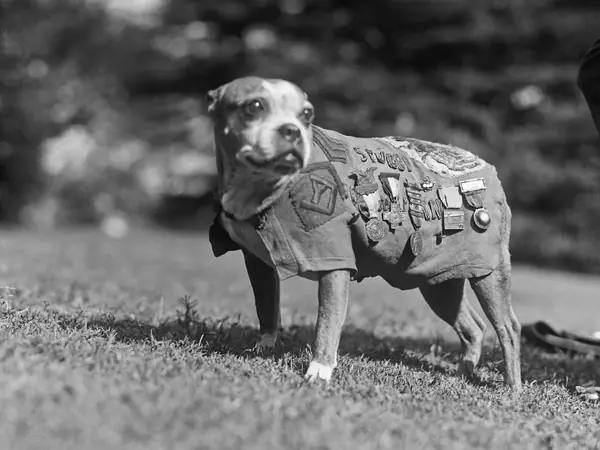
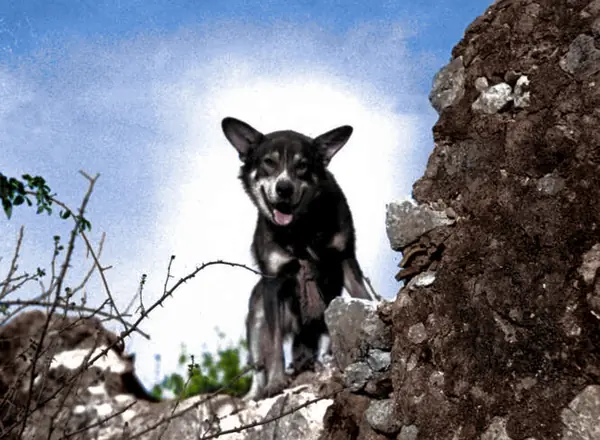
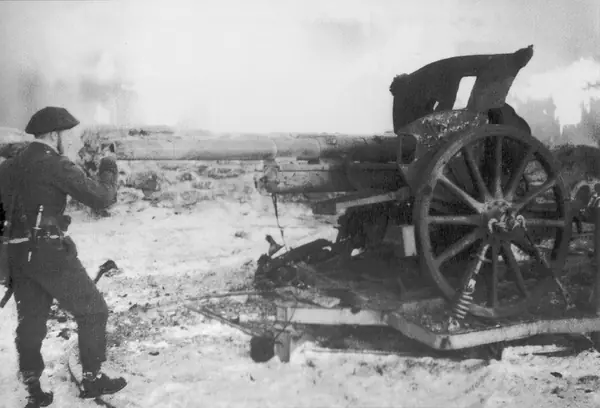
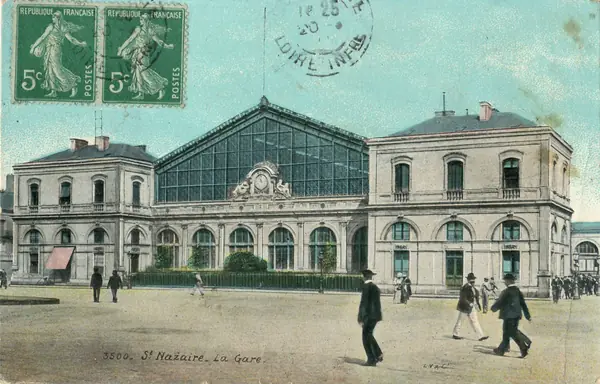
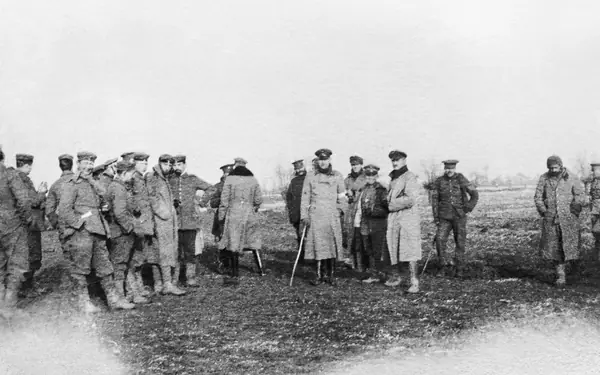
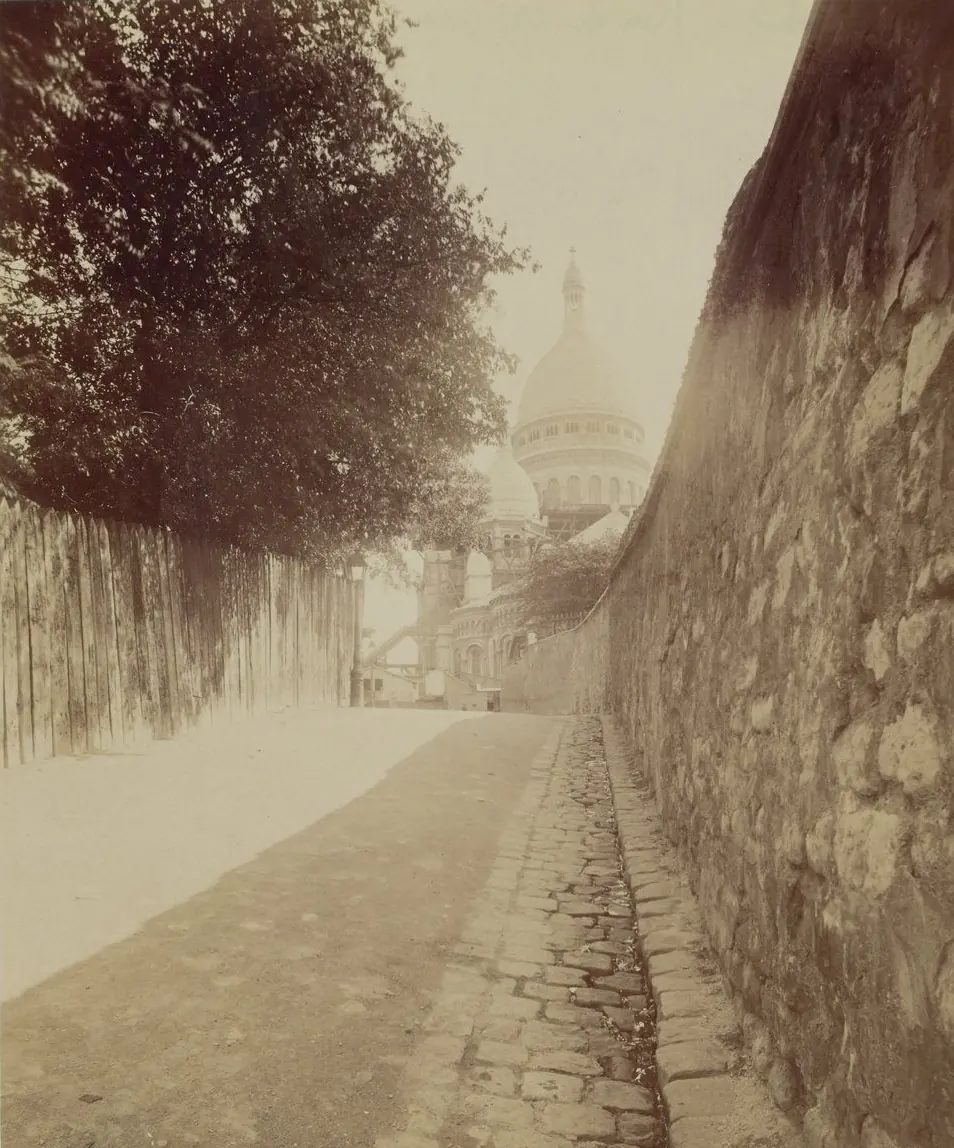
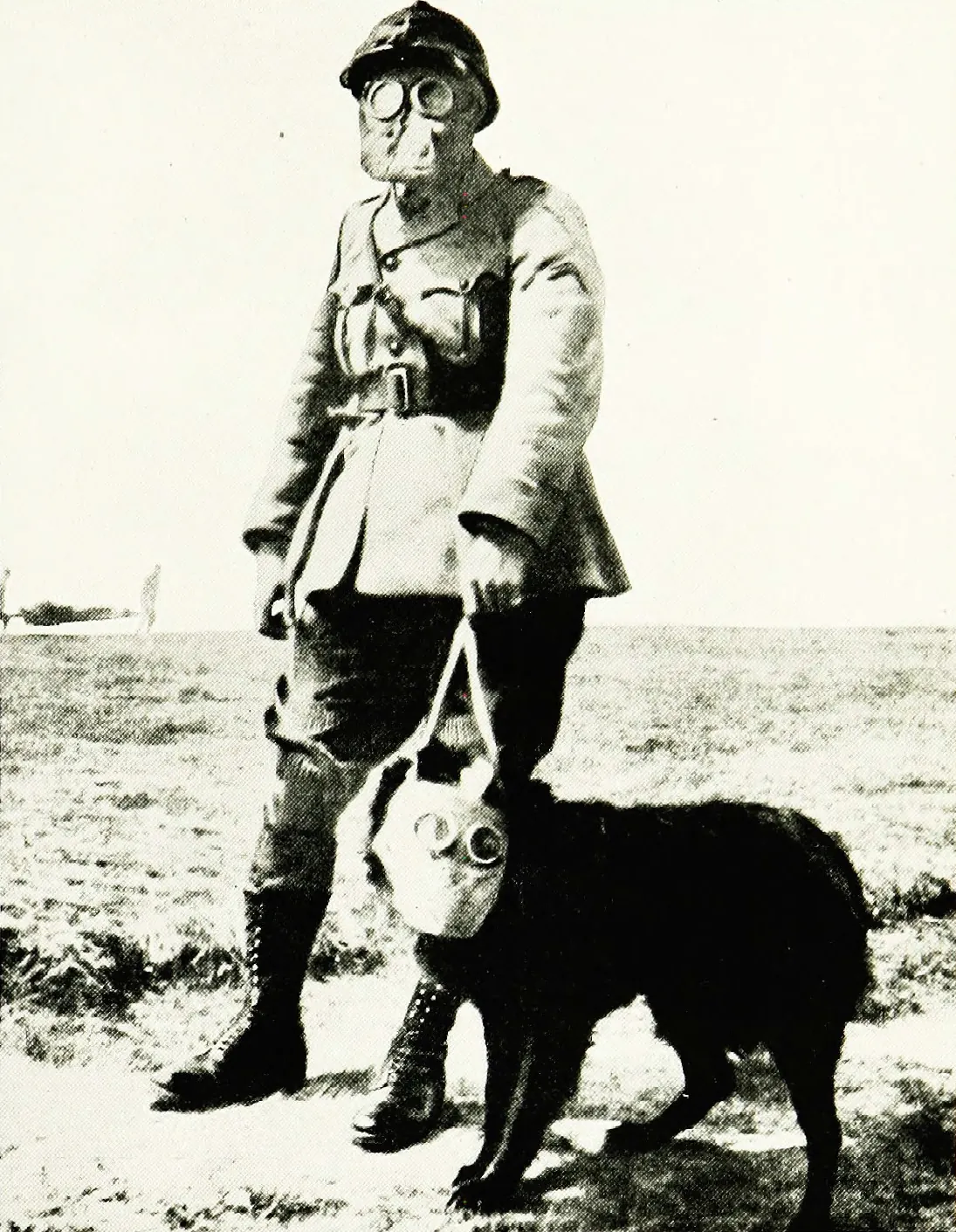
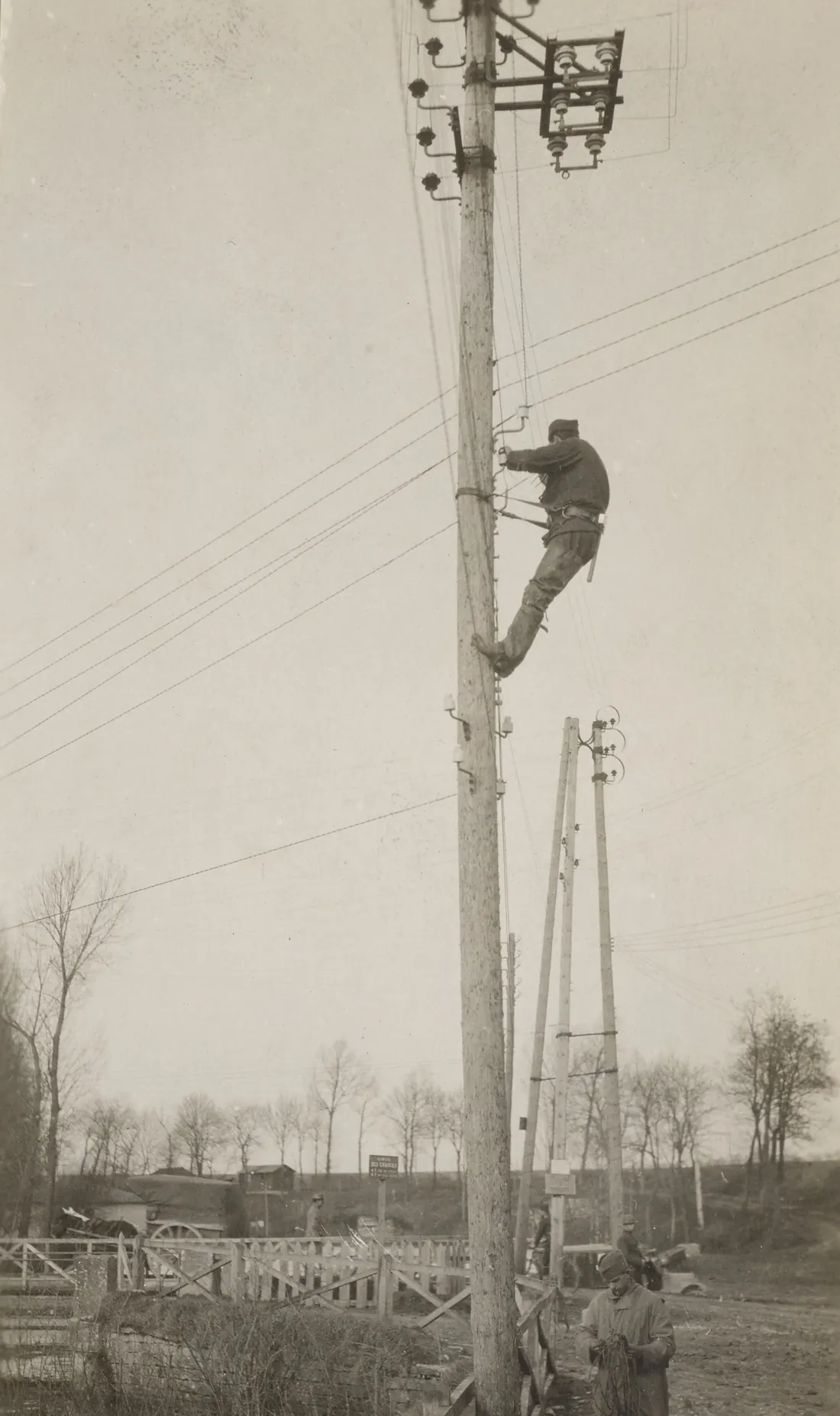
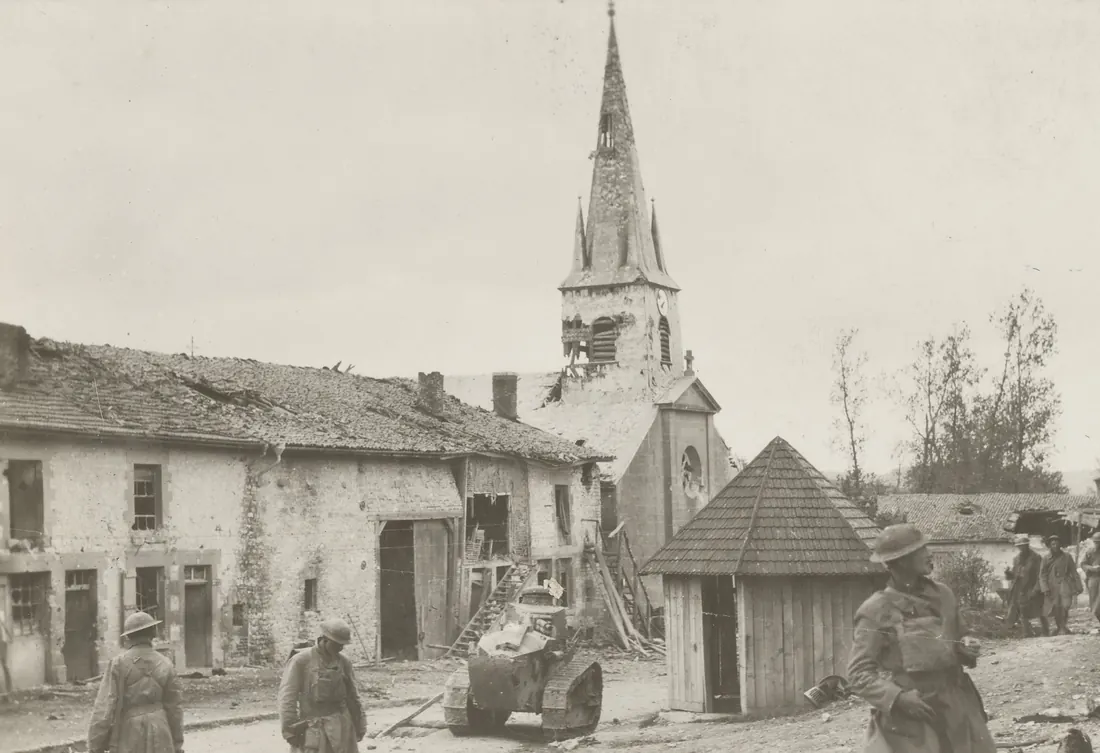
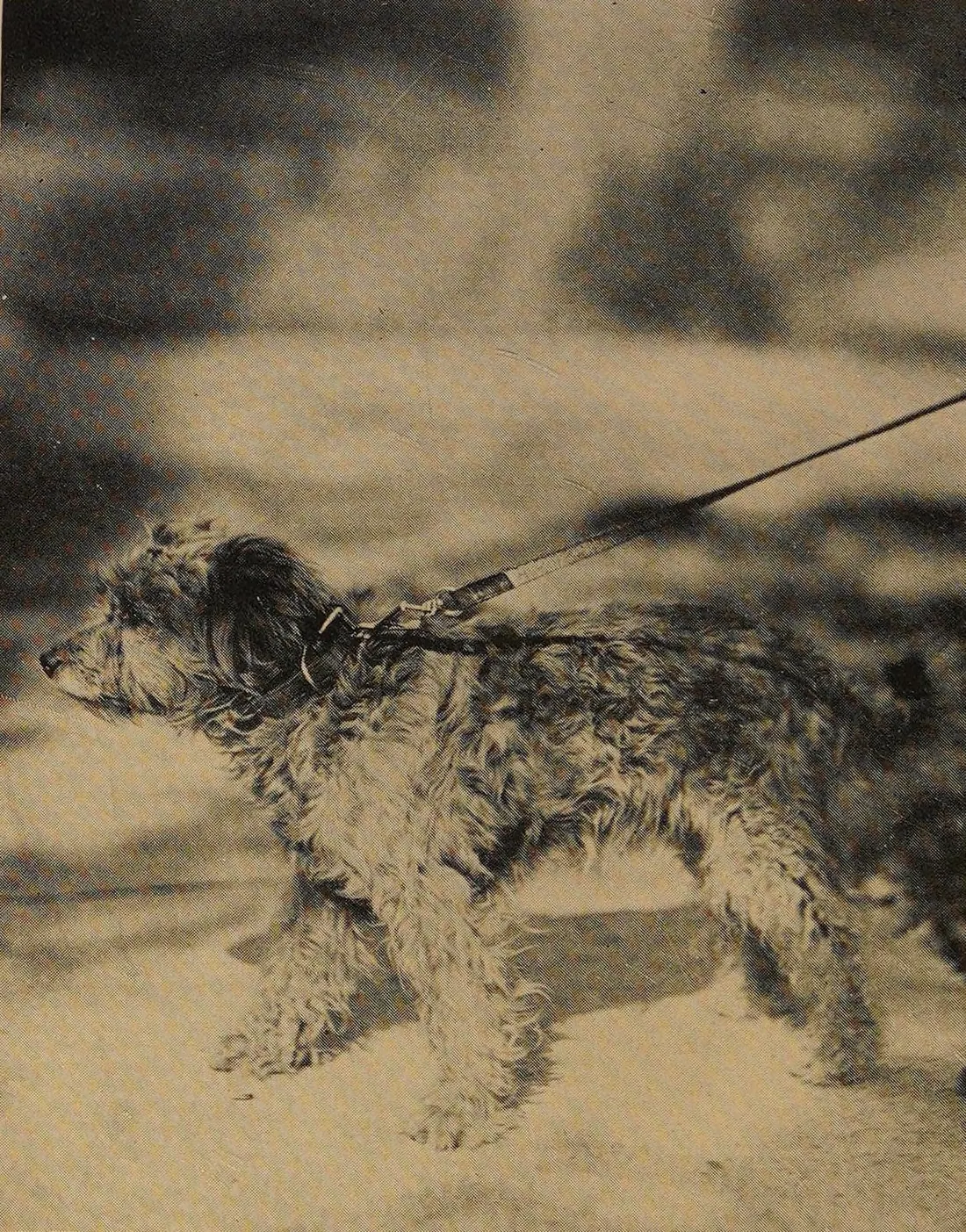
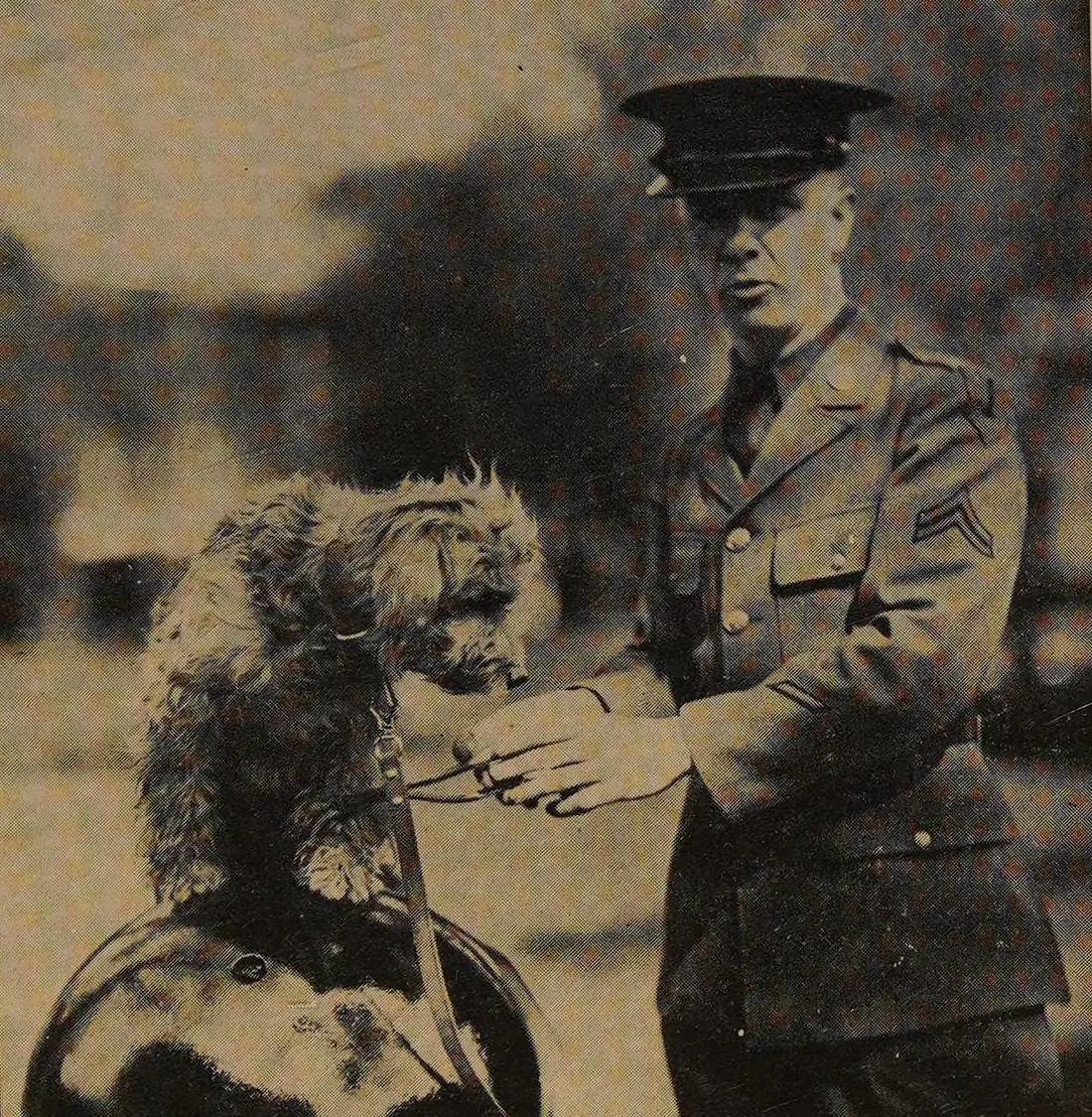
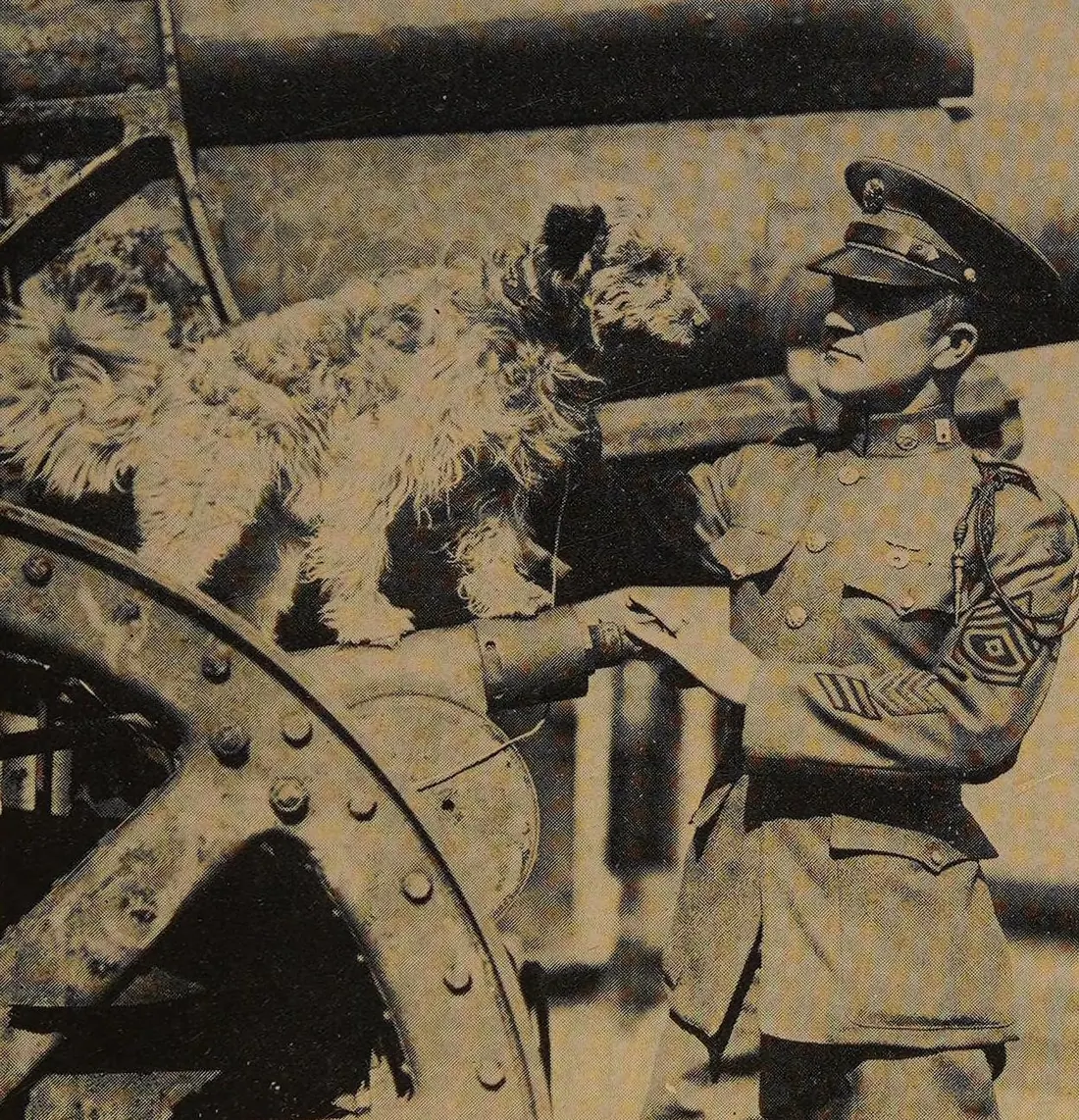
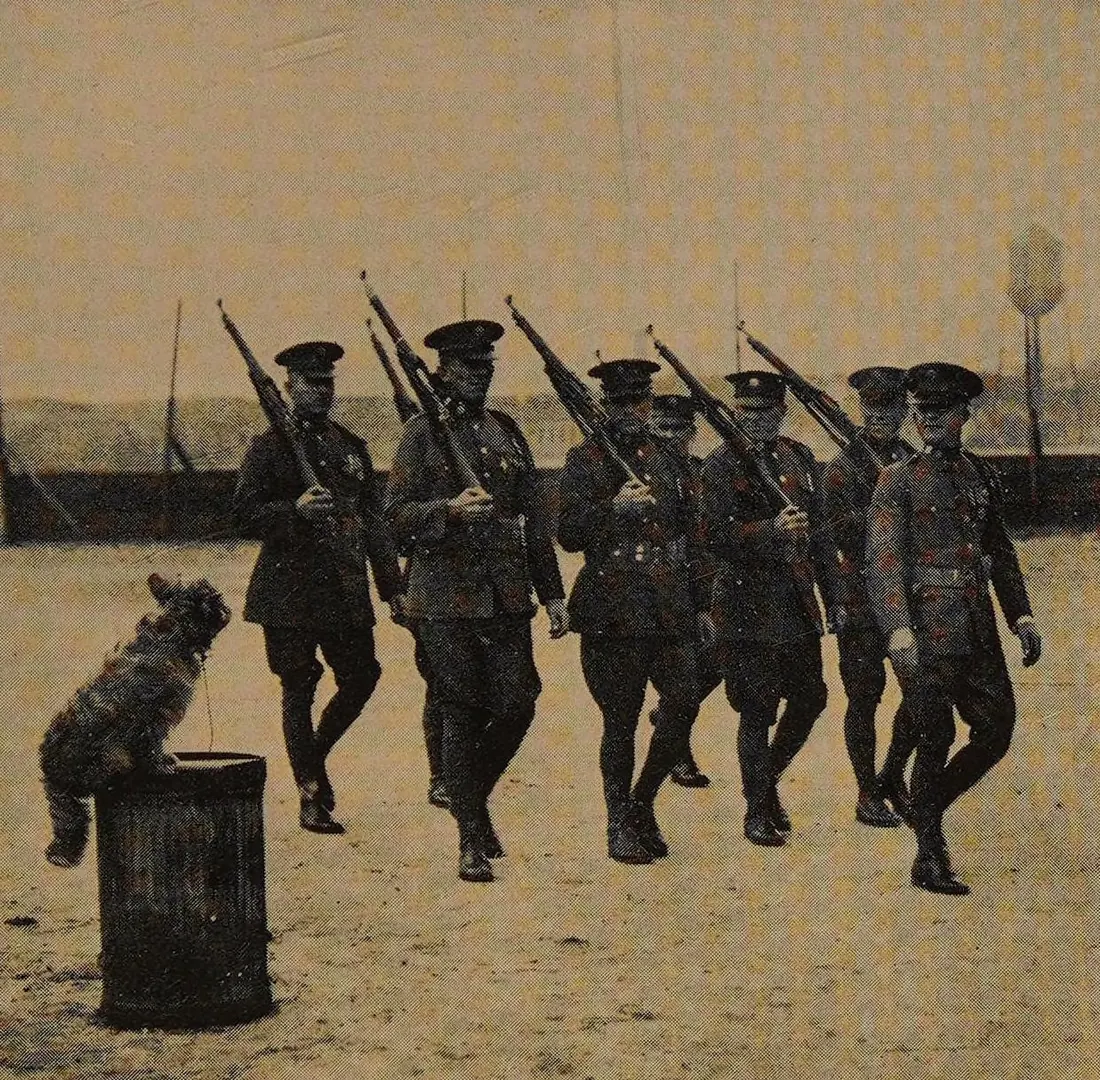
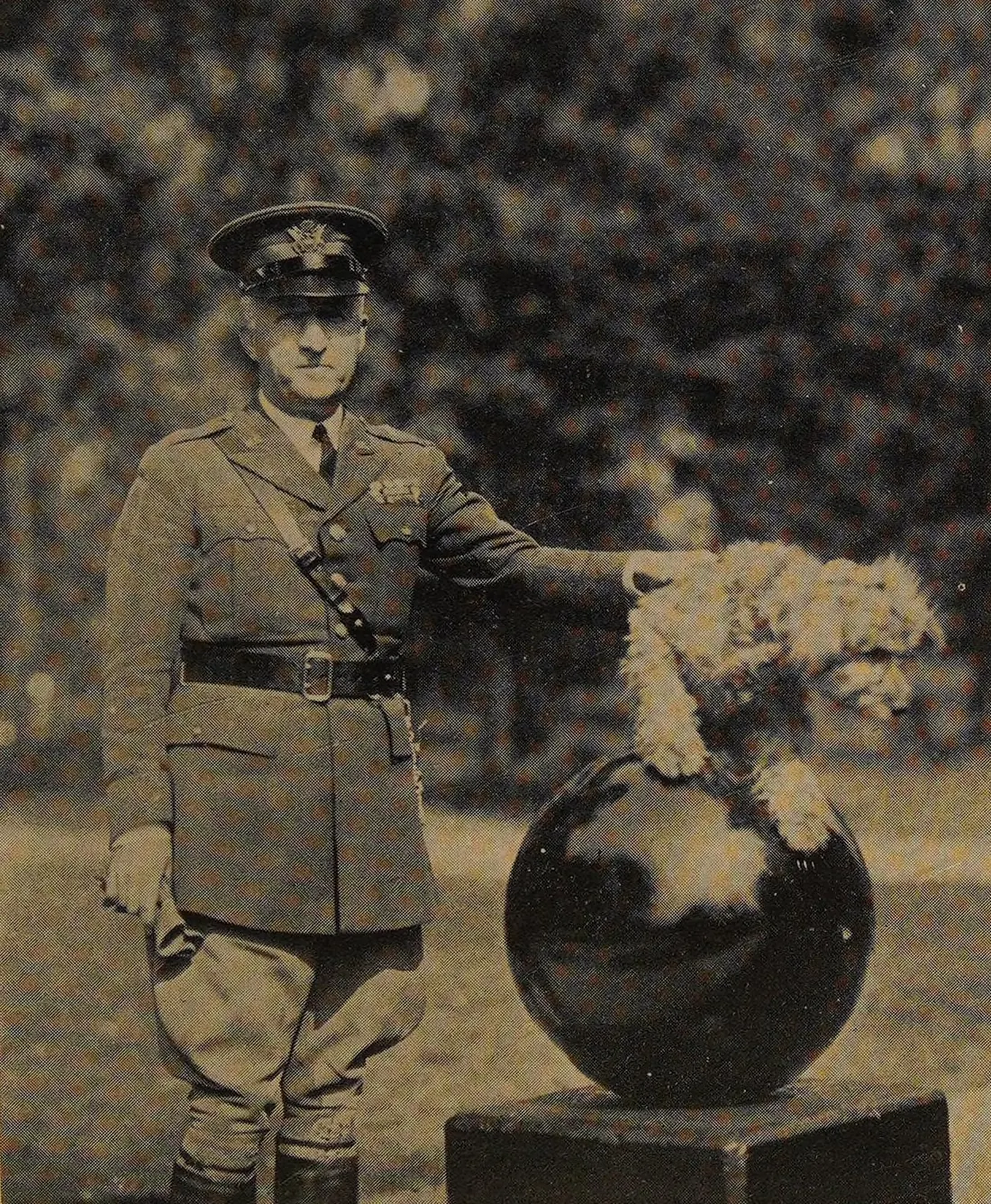
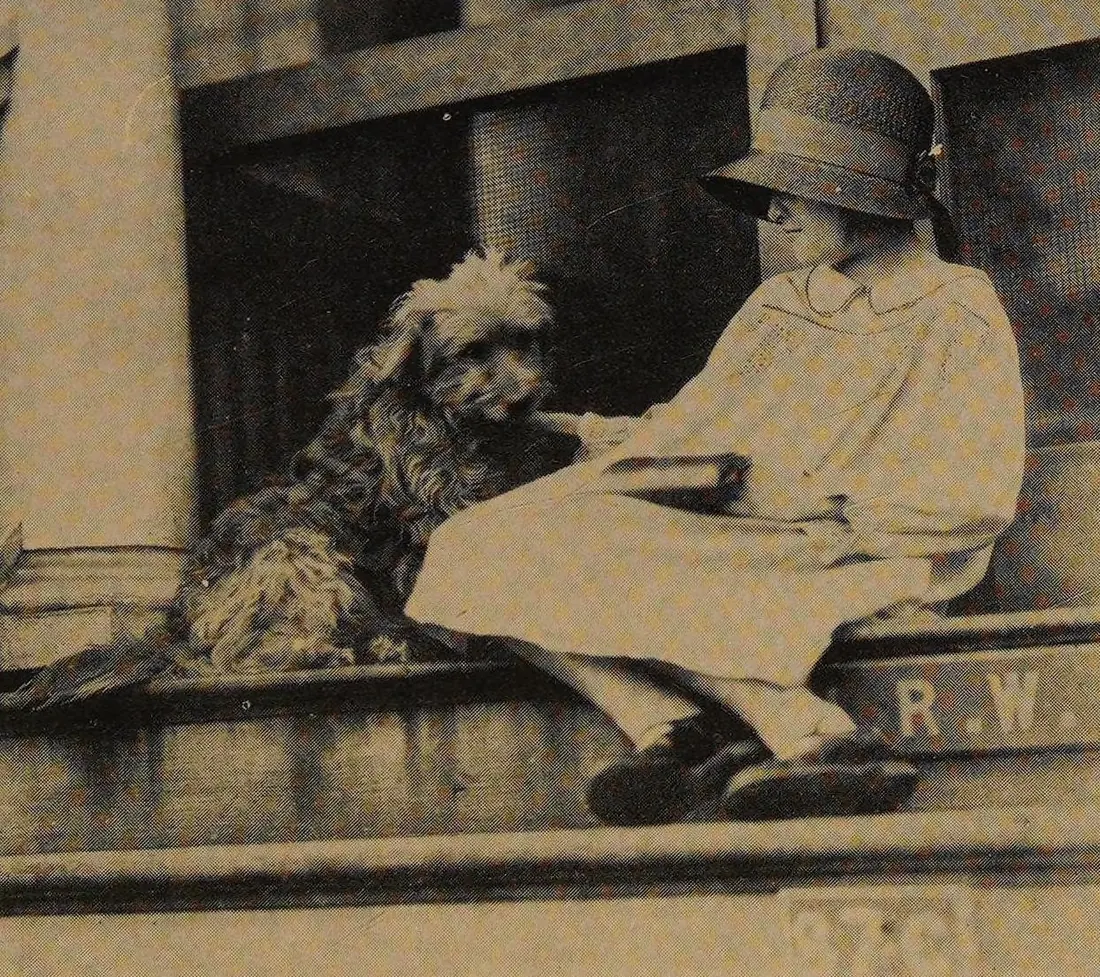
Pictures: Rags himself is in the eight photo plates of Jack Rohan’s 1930 book, taken in the 1920s on Army posts: on a leash (the frontispiece), on a big cannon ball with a corporal, on an artillery piece with a sergeant, under his sign with Generals Robert Lee Bullard, Charles P. Summerall and Frank Parker, on a table under the sign, holding a “doggy” review of marching soldiers, with General Drum, and with an admirer. None of them shows the 1918 events, and James Donovan is in none of them. The Montmartre street is Eugène Atget’s rue de la Bonne, photographed before 1927, not the night Donovan found him. The Signal Corps linemen, another unit, were photographed at Menil-la-Tour on February 7, 1918. Exermont, a 1st Division battleground in the Meuse-Argonne, was photographed under shell fire on October 7, 1918, two days before Rags was gassed. The dog in a gas mask is another army dog, from the National Geographic Society’s Book of Dogs (1919).
Photo credits
The archive photos in this story
All the photographs and illustrations in this story are in the public domain. Tap one to enlarge it, or follow the link to its archive page for the full record. The narration, captions and graphics in the Short are our own; its music and sound effects are credited below.
Music and sound effects
Music: Brahms, Symphony No. 1 in C minor, Op. 68: I. Un poco sostenuto - Allegro (Musopen Symphony Orchestra, CC0); Brahms, Symphony No. 2 in D major, Op. 73: IV. Allegro con spirito (Musopen Symphony Orchestra, CC0); Dvorak, Symphony No. 9 'From the New World': II. Largo (Musopen, public domain).
Sound effects: Freesound, CC0.