
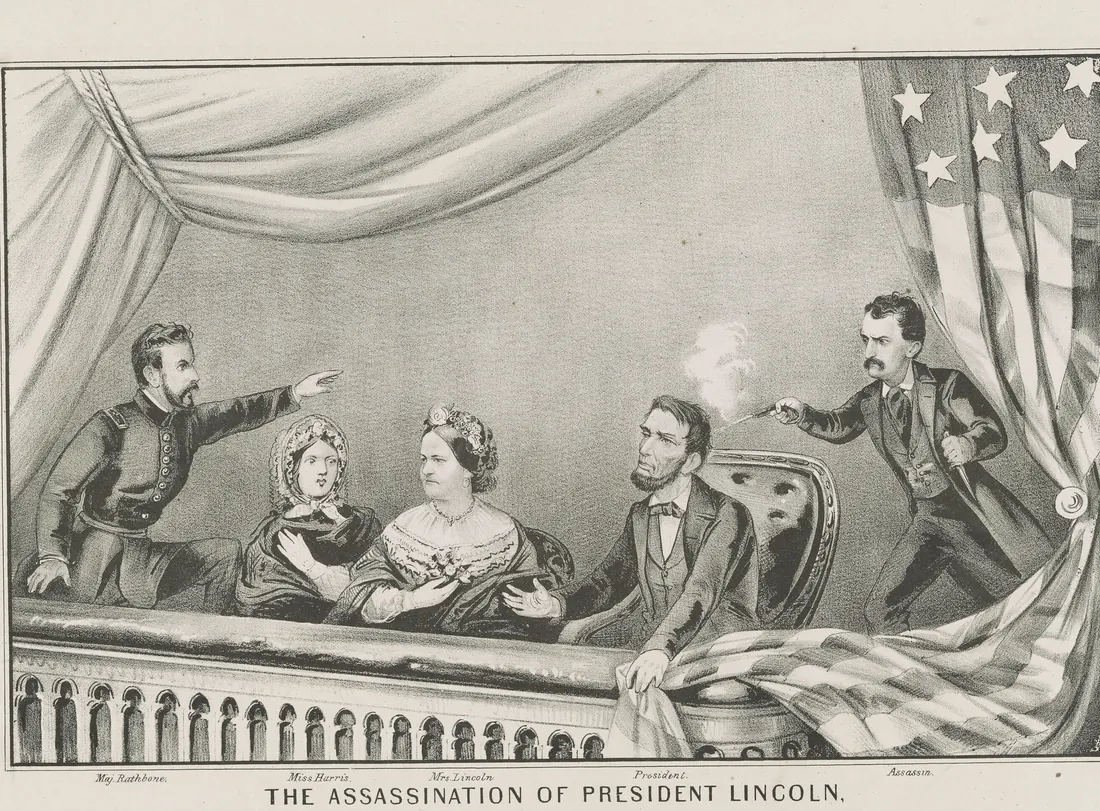
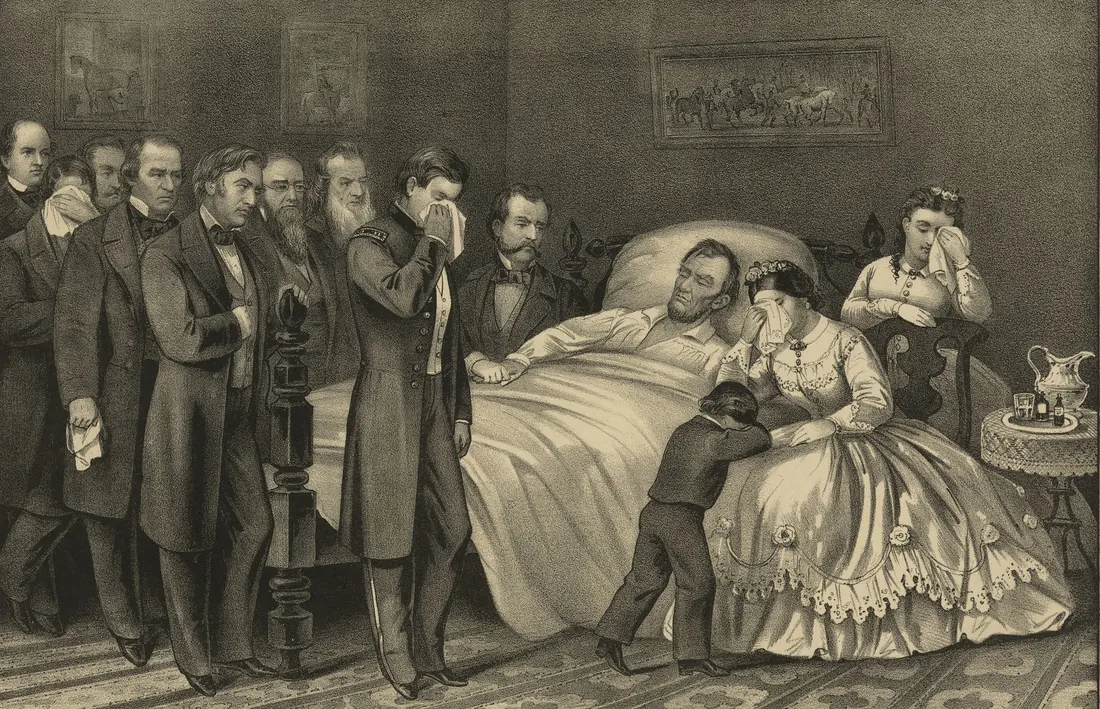
Robert Todd Lincoln was the “eldest son of President and Mrs. Abraham Lincoln,” the National Park Service says, and he “felt cursed”: “it was his close connection to three presidential assassinations in just 36 years.” On the night of April 14, 1865, his parents invited him, “then Capt. Robert T. Lincoln of Gen. Ulysses S. Grant’s staff, to Ford’s Theater to see a performance of Our American Cousin.” “The younger Lincoln declined, telling his father that he planned to retire early that night”; Wikipedia gives the reason as “fatigue from being at the battlefront.” That night John Wilkes Booth shot his father. Robert “immediately left for the Petersen house,” and “Robert was there at 7:22 a.m. on April 15 when President Lincoln died.”
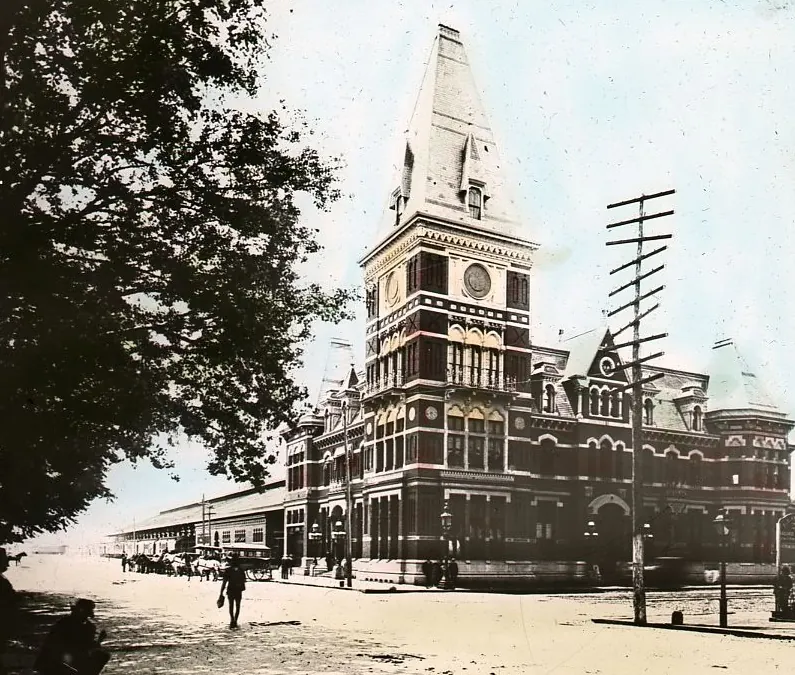
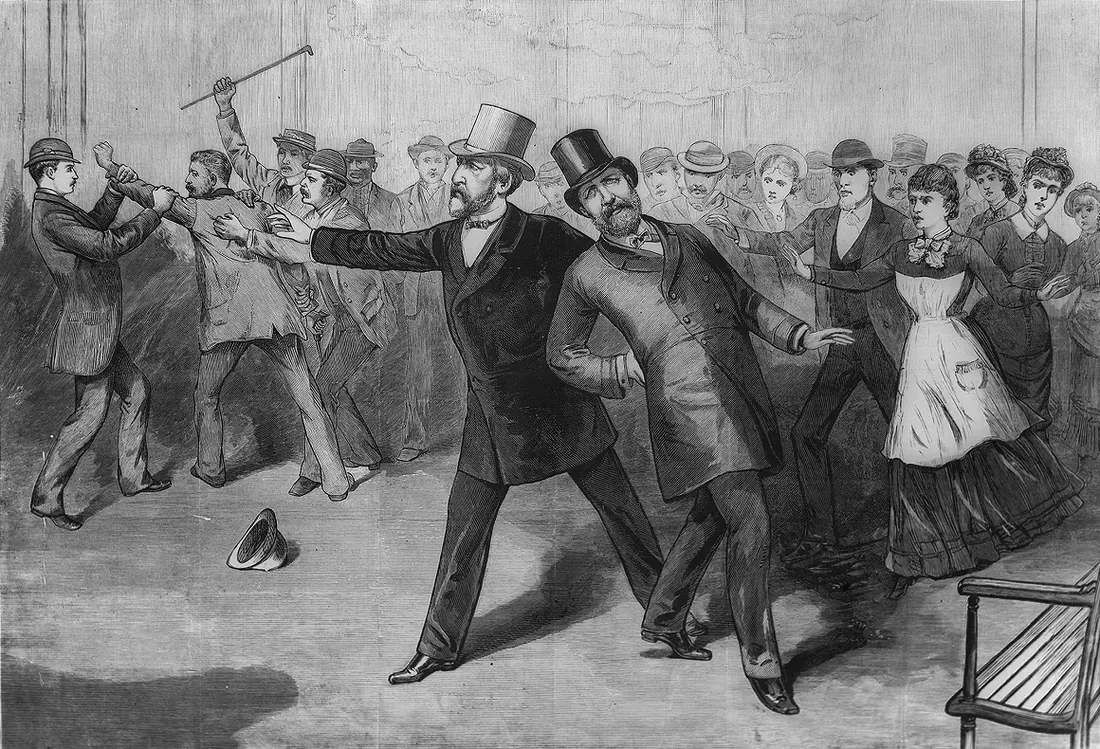
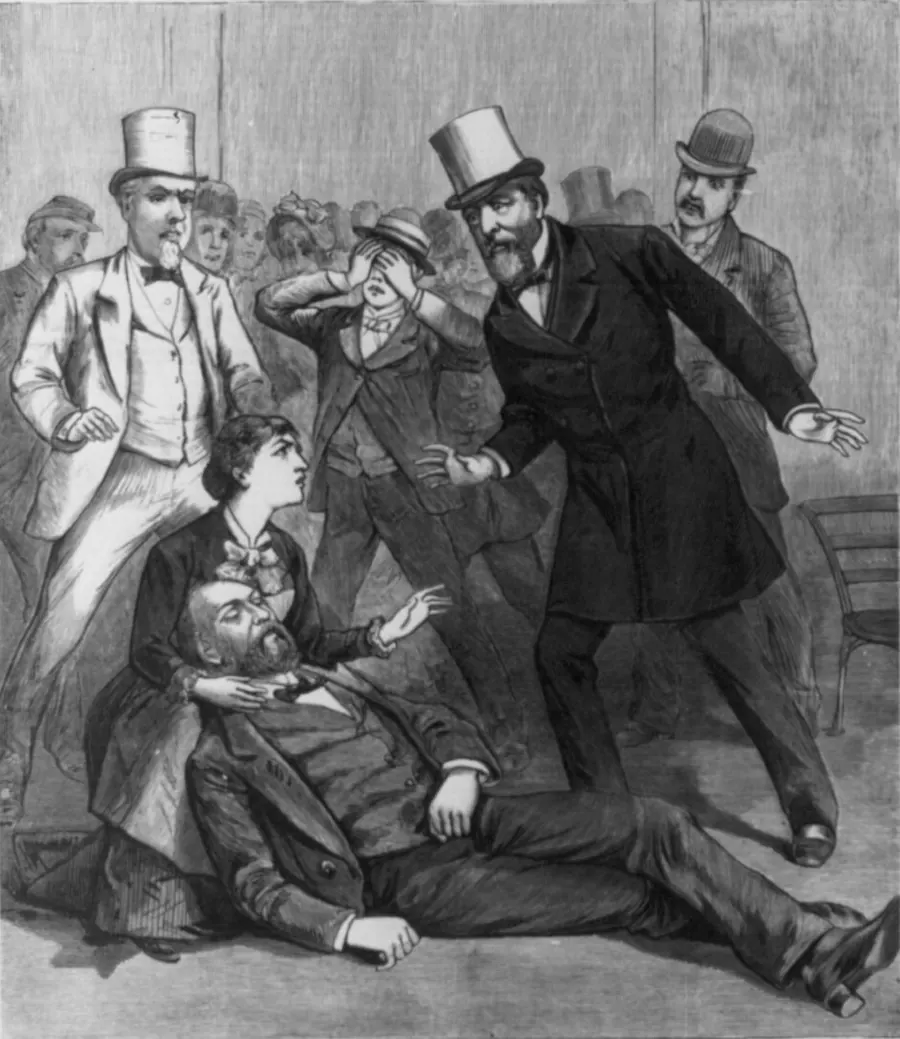
In early 1881, the Park Service says, he “relented and agreed to serve as Secretary of War under President James A. Garfield”; he “served from 1881 to 1885 under Garfield and then Chester A. Arthur,” Wikipedia says. On July 2, 1881, he “went to Washington, D.C.’s Baltimore and Potomac train station that morning to meet the President and let him know that the Lincolns would be along on July 3.” “He was about forty feet away and walking toward President Garfield and Secretary of State James G. Blaine when Charles Guiteau approached from behind and shot Garfield twice.” “By Lincoln’s own recollection, ‘I think I reached him in fifteen seconds.’ Secretary Lincoln immediately sent for Dr. D.W. Bliss, then ordered four companies of soldiers to immediately come to the train depot for security.”
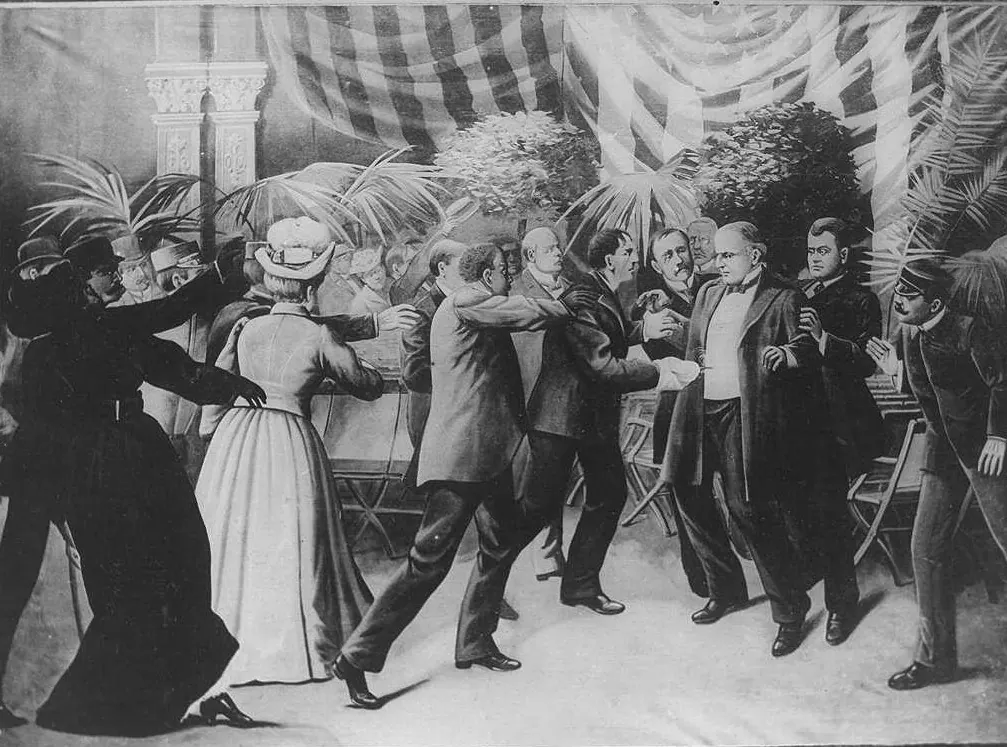
“My god,” he said to a New York Times reporter the day after the shooting. “How many hours of sorrow I have passed in this town.” Twenty years later, “The Lincolns’ train pulled into the Buffalo train station on the evening of Friday, September 6,” 1901. “A Pullman employee was waiting and immediately handed Lincoln a telegram that read: ‘President McKinley was shot down by an anarchist in Buffalo this afternoon. He was hit twice in the abdomen. Condition serious.’” “A week later, McKinley was dead of infection.”
After that, the story goes, he kept away from presidents. Wikipedia: “He is said to have refused a later presidential invitation with the comment, ‘No, I’m not going, and they’d better not ask me, because there is a certain fatality about presidential functions when I am present.’” The Park Service gives the words differently, and adds: “While there is no direct evidence that Lincoln ever actually said this, it certainly seems like a thought that might have crossed his mind.” It says “the idea that after McKinley’s death Lincoln refused to ever go around presidents again is a myth.”
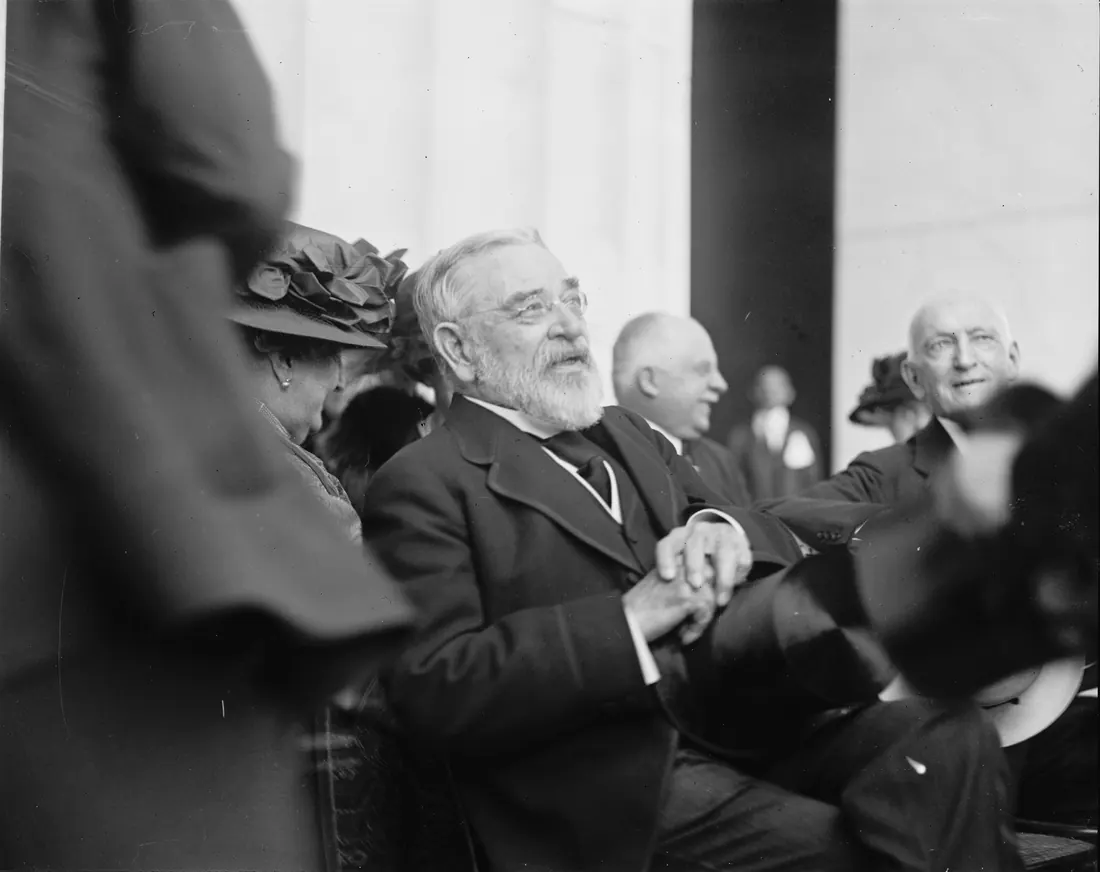
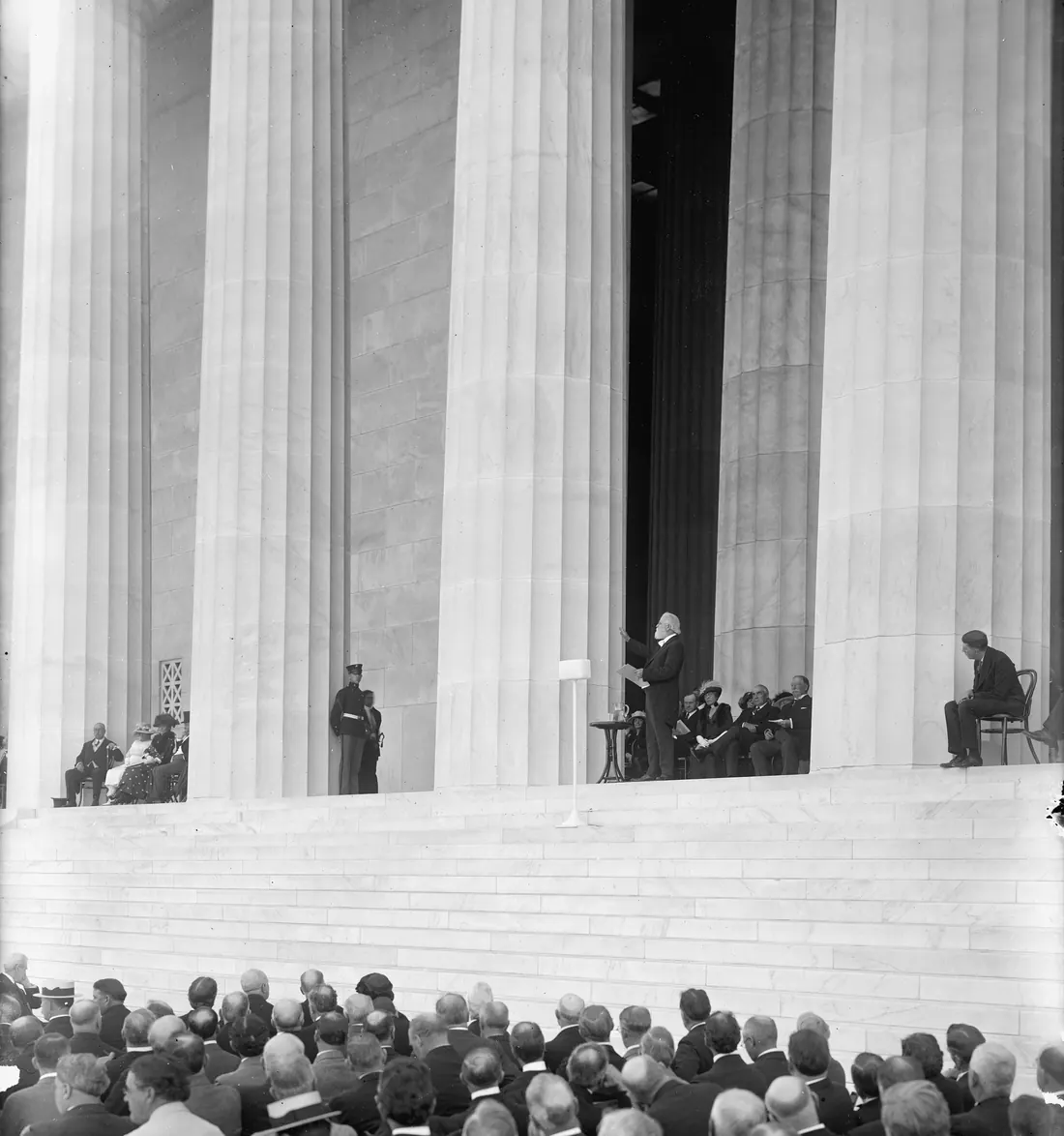
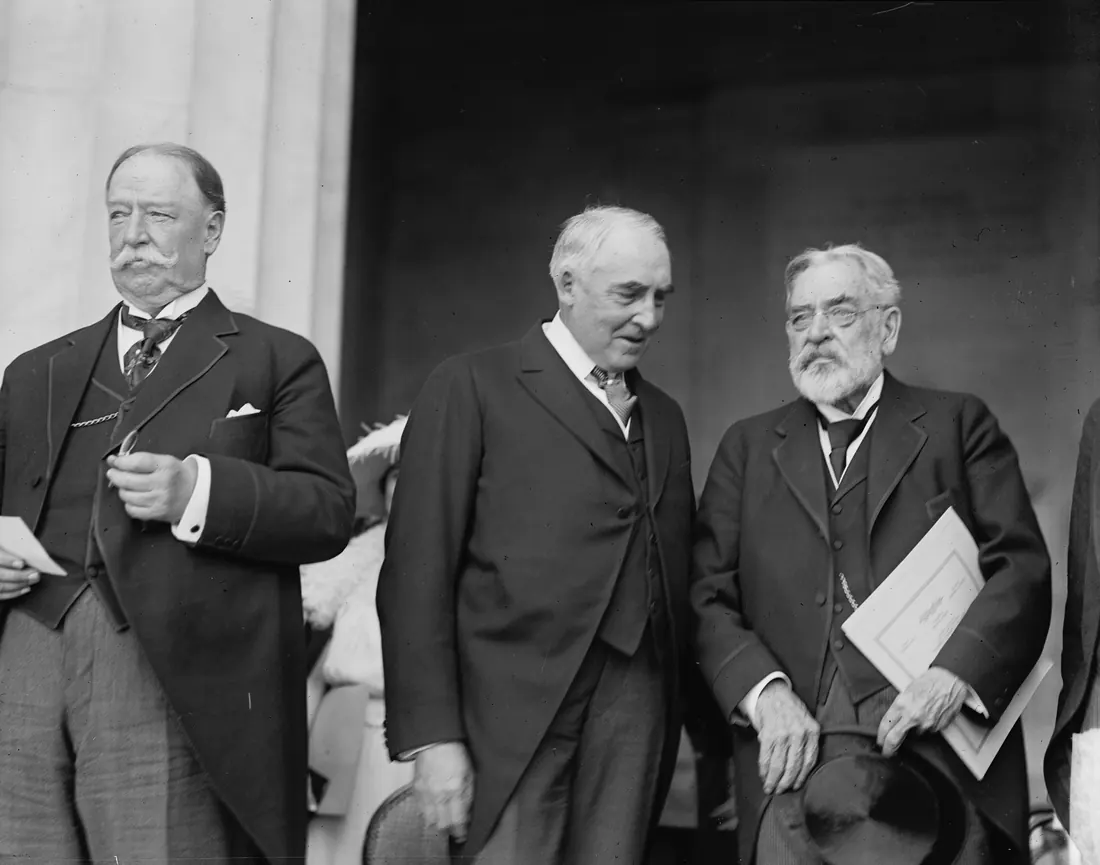
“Robert Lincoln’s last public appearance was on May 30, 1922, when he attended the dedication of the Lincoln Memorial in Washington, D.C. President Warren G. Harding presided over that dedication.” A Library of Congress photo shows “Chief Justice William Howard Taft (left) with President Warren G. Harding and former Secretary of War Robert Lincoln at the dedication of the Lincoln Memorial, May 30, 1922.” “Robert Todd Lincoln died on July 26, 1926, just six days before his 83rd birthday.”
Fact check
The facts and where they come from
- He couldn’t escape it. Three presidents were shot, and he was close by every time. National Park Service: “it was his close connection to three presidential assassinations in just 36 years”; “Robert Todd Lincoln, eldest son of President and Mrs. Abraham Lincoln, felt cursed.” Wikipedia: he was “coincidentally either present or nearby.” 12
- His name was Robert Todd Lincoln, Abraham Lincoln’s eldest son. National Park Service: “Robert Todd Lincoln, eldest son of President and Mrs. Abraham Lincoln.” 1
- In 1865, his parents invited him to Ford’s Theatre. National Park Service: “President and Mrs. Lincoln invited their son, then Capt. Robert T. Lincoln of Gen. Ulysses S. Grant’s staff, to Ford’s Theater to see a performance of Our American Cousin on the night of April 14, 1865.” 1
- But he was tired. National Park Service: “The younger Lincoln declined, telling his father that he planned to retire early that night.” Wikipedia: “Robert had turned down an invitation to accompany the Lincolns to Ford’s Theatre due to fatigue from being at the battlefront.” 12
- That night, John Wilkes Booth shot his father. National Park Service: “He immediately left for the Petersen house, where his father, unconscious but alive, had been taken after Booth shot him.” 1
- Robert was at his bedside when he died. National Park Service: “Robert was there at 7:22 a.m. on April 15 when President Lincoln died.” Wikipedia: “The president was moved to the Petersen House after the shooting, where Robert attended his father’s deathbed.” 12
- In 1881, Robert was Secretary of War. National Park Service: “In early 1881, however, he relented and agreed to serve as Secretary of War under President James A. Garfield.” Wikipedia: “Lincoln was Garfield’s Secretary of War at the time.” 12
- At a train station, he was about forty feet away when President Garfield was shot. National Park Service: “He went to Washington, D.C.’s Baltimore and Potomac train station that morning to meet the President and let him know that the Lincolns would be along on July 3”; “He was about forty feet away and walking toward President Garfield and Secretary of State James G. Blaine when Charles Guiteau approached from behind and shot Garfield twice.” Wikipedia: “Lincoln was an eyewitness when Charles J. Guiteau shot President James A. Garfield at the Sixth Street Train Station in Washington, D.C., on July 2, 1881.” DC Public Library: the Baltimore and Potomac station “was the site of President James A. Garfield’s assassination in 1881.” 123
- Robert reached him in seconds. National Park Service: “By Lincoln’s own recollection, ‘I think I reached him in fifteen seconds.’ Secretary Lincoln immediately sent for Dr. D.W. Bliss, then ordered four companies of soldiers to immediately come to the train depot for security.” 1
- He told a reporter, “How many hours of sorrow I have passed in this town.” Word for word in the National Park Service article: “‘My god,’ he said to a New York Times reporter the day after the shooting. ‘How many hours of sorrow I have passed in this town.’” 1
- In 1901, his train pulled into Buffalo. National Park Service: “The Lincolns’ train pulled into the Buffalo train station on the evening of Friday, September 6”; “he was just entering the city of Buffalo when McKinley was shot on September 6, 1901.” 1
- He was handed a telegram. National Park Service: “A Pullman employee was waiting and immediately handed Lincoln a telegram.” 1
- President McKinley had been shot there that afternoon. The telegram, in the National Park Service article: “President McKinley was shot down by an anarchist in Buffalo this afternoon. He was hit twice in the abdomen. Condition serious.” 1
- He reportedly refused a later invitation, saying there was a certain fatality about presidential functions when he was present. Wikipedia: “He is said to have refused a later presidential invitation with the comment, ‘No, I’m not going, and they’d better not ask me, because there is a certain fatality about presidential functions when I am present.’” National Park Service: “Supposedly he once scoffed at an invitation to an event at the White House by saying, ‘If only they knew, they wouldn’t want me there. There is a certain fatality about presidential functions when I am present.’ While there is no direct evidence that Lincoln ever actually said this, it certainly seems like a thought that might have crossed his mind.” 21
- But in 1922, he stood beside the President once more, at his father’s memorial. National Park Service: “Robert Lincoln’s last public appearance was on May 30, 1922, when he attended the dedication of the Lincoln Memorial in Washington, D.C. President Warren G. Harding presided over that dedication.” Wikipedia: “His last public appearance was on May 30, 1922, at the dedication ceremony for his father’s memorial in Washington, D.C.” Library of Congress photo record: “Chief Justice William Howard Taft (left) with President Warren G. Harding and former Secretary of War Robert Lincoln at the dedication of the Lincoln Memorial, May 30, 1922.” 124
Sources
- Robert Todd Lincoln and Presidential Assassinations (Todd Arrington, July 2014) National Park Service
- Robert Todd Lincoln Wikipedia
- Railroad Station (the Baltimore and Potomac station), photo record DC Public Library, via Wikimedia Commons
- Taft, Harding and Robert Lincoln, May 30, 1922, photo record Library of Congress, via Wikimedia Commons
Notes
“Present” at three shootings? The National Park Service says plainly that “the popular old stories about Robert Lincoln being ‘present’ at the three murders are certainly untrue.” So we never say he was present: he was at the White House when his father was shot and at the deathbed hours later; about forty feet away at the Garfield shooting (Wikipedia calls him an eyewitness; the Park Service says he was walking toward Garfield and reached him in about fifteen seconds); and on a train entering Buffalo when McKinley was shot.
McKinley: Wikipedia says he was “just outside the Temple of Music when the shooting occurred.” The Park Service article, written by the site manager of the James A. Garfield National Historic Site, says his family’s train was approaching Buffalo and pulled in that evening, when he was handed the telegram. We follow the Park Service.
The refusal is told as a legend. Wikipedia says he “is said to have refused a later presidential invitation,” and the Park Service calls the idea that he kept away from presidents after McKinley’s death a myth and says “there is no direct evidence that Lincoln ever actually said this.” The two sources word his remark differently, and only the “certain fatality” sentence is the same, so the Short gives that one sentence as reported speech.
“Once more”: he stood with presidents many times as a cabinet member and as minister to Britain; the line means only that after the reported refusal he appeared beside a sitting president again, in 1922, as the Park Service, Wikipedia and the Library of Congress photo all show.
Left out of the Short for length: the assassin’s name, the two shots and Secretary Blaine at the Garfield shooting (quoted above from the Park Service), and Edwin Booth’s rescue of Robert from a moving train, which has its own story on this site.
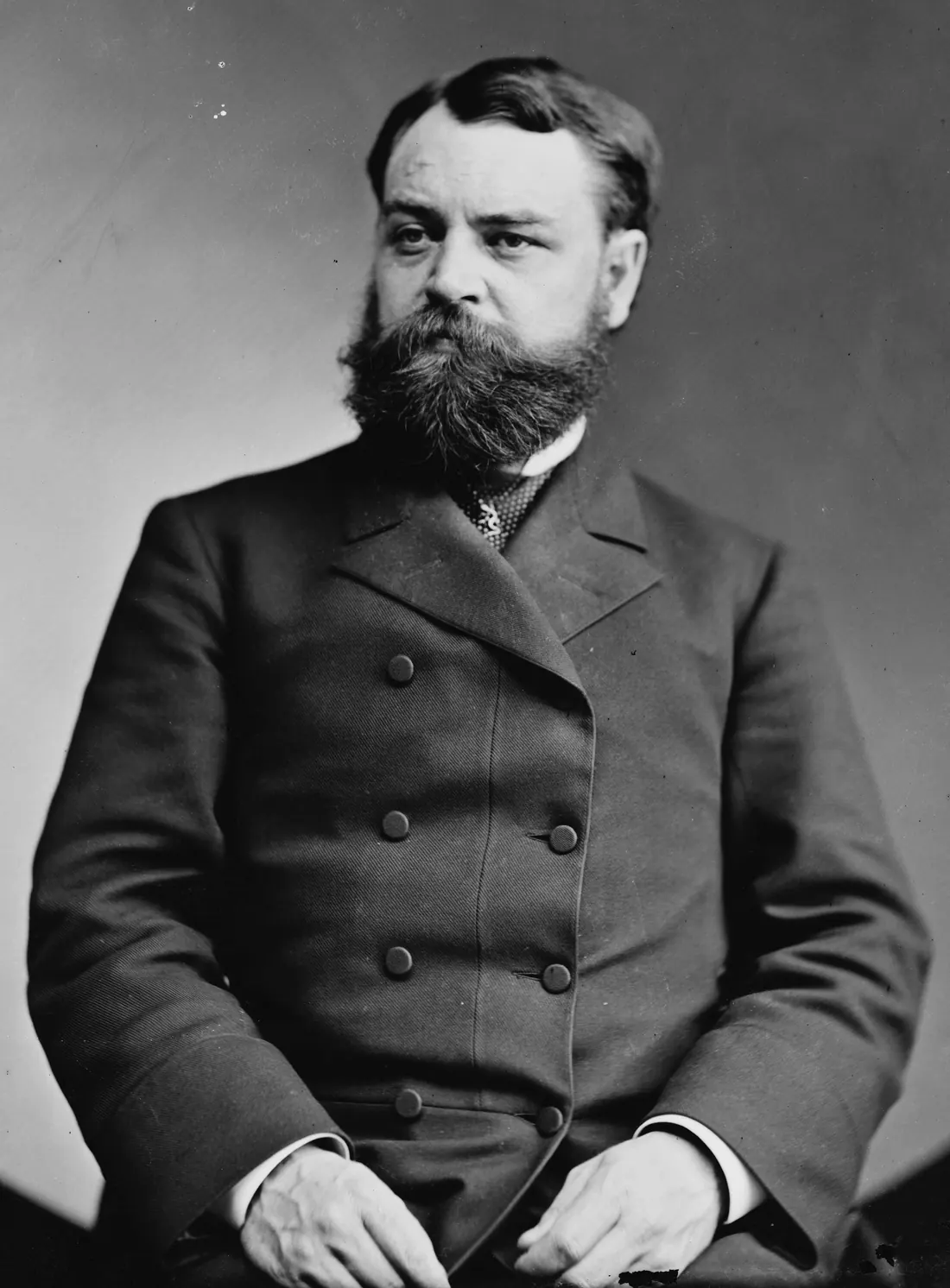
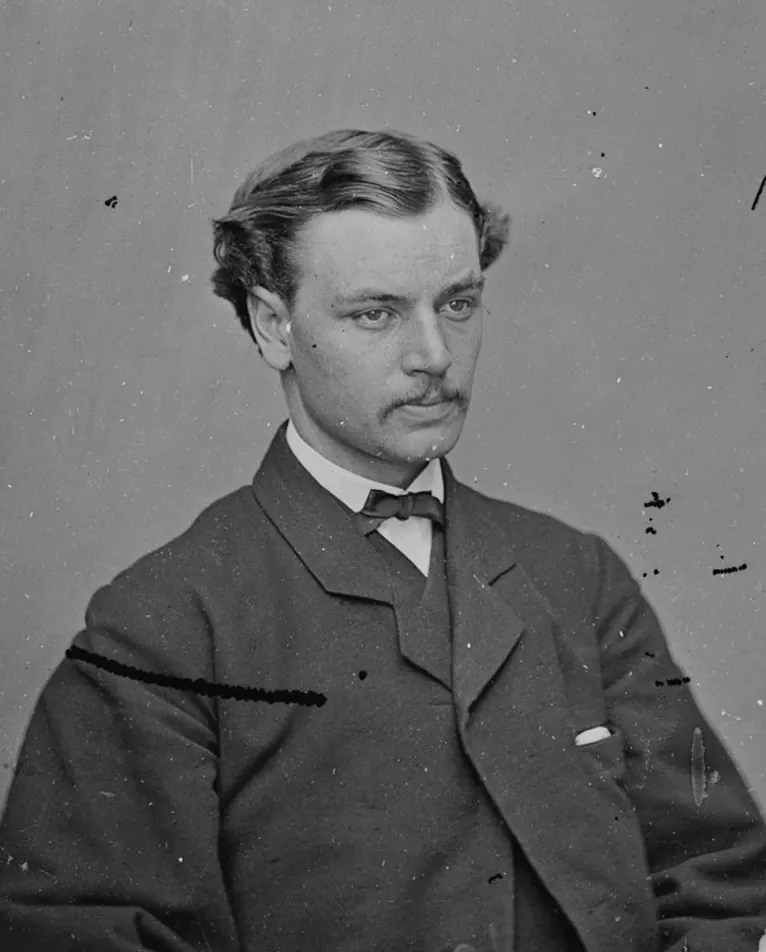
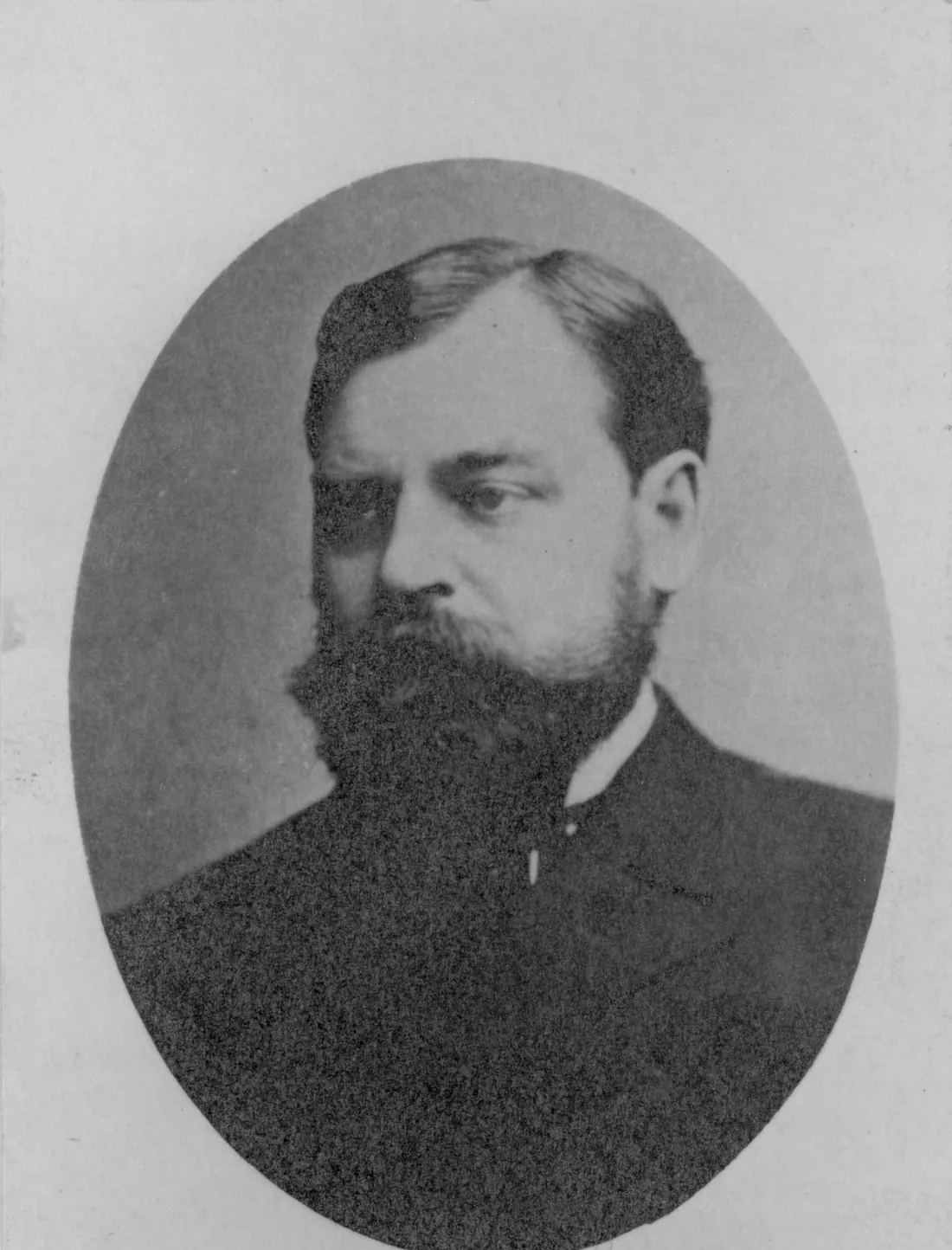
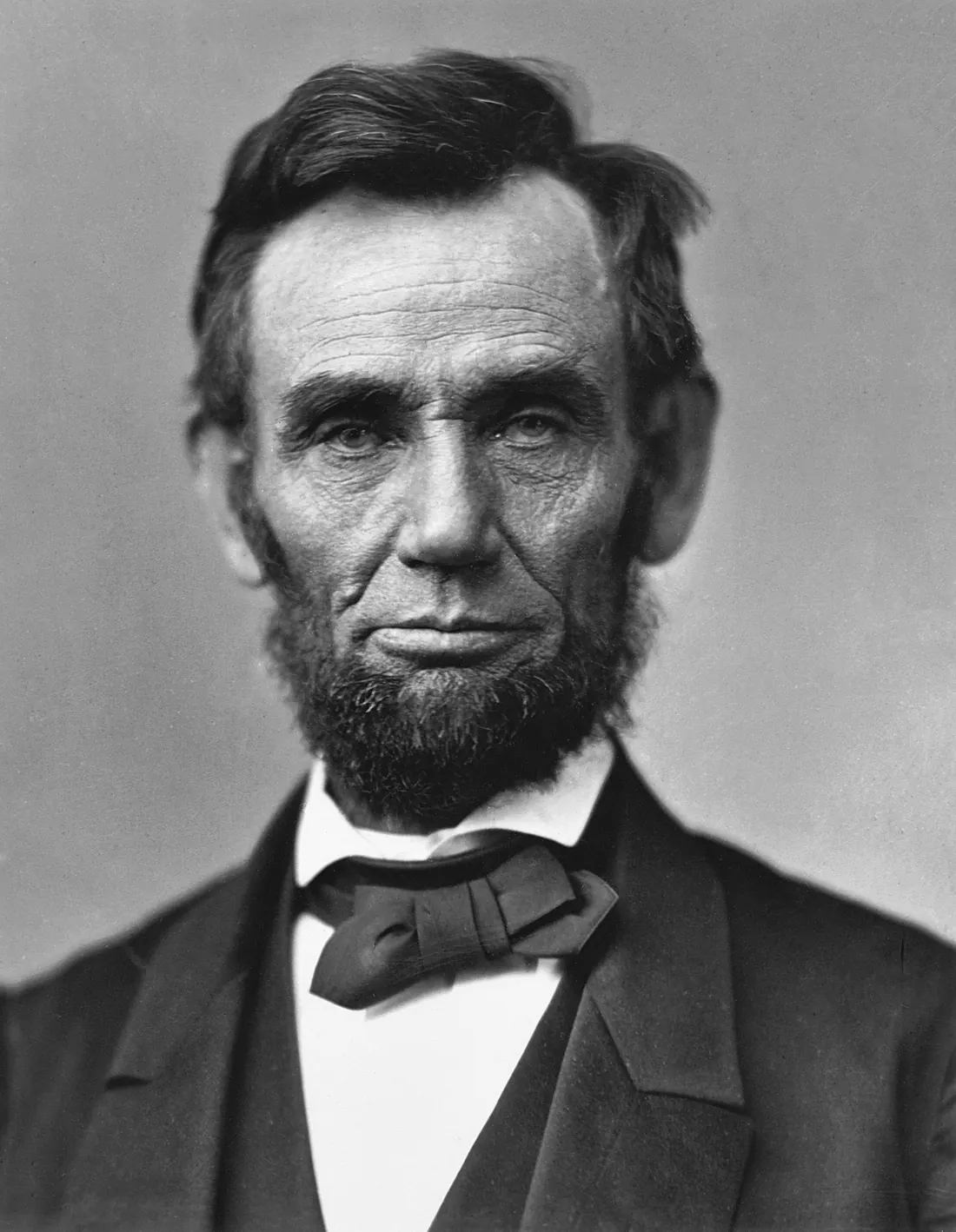
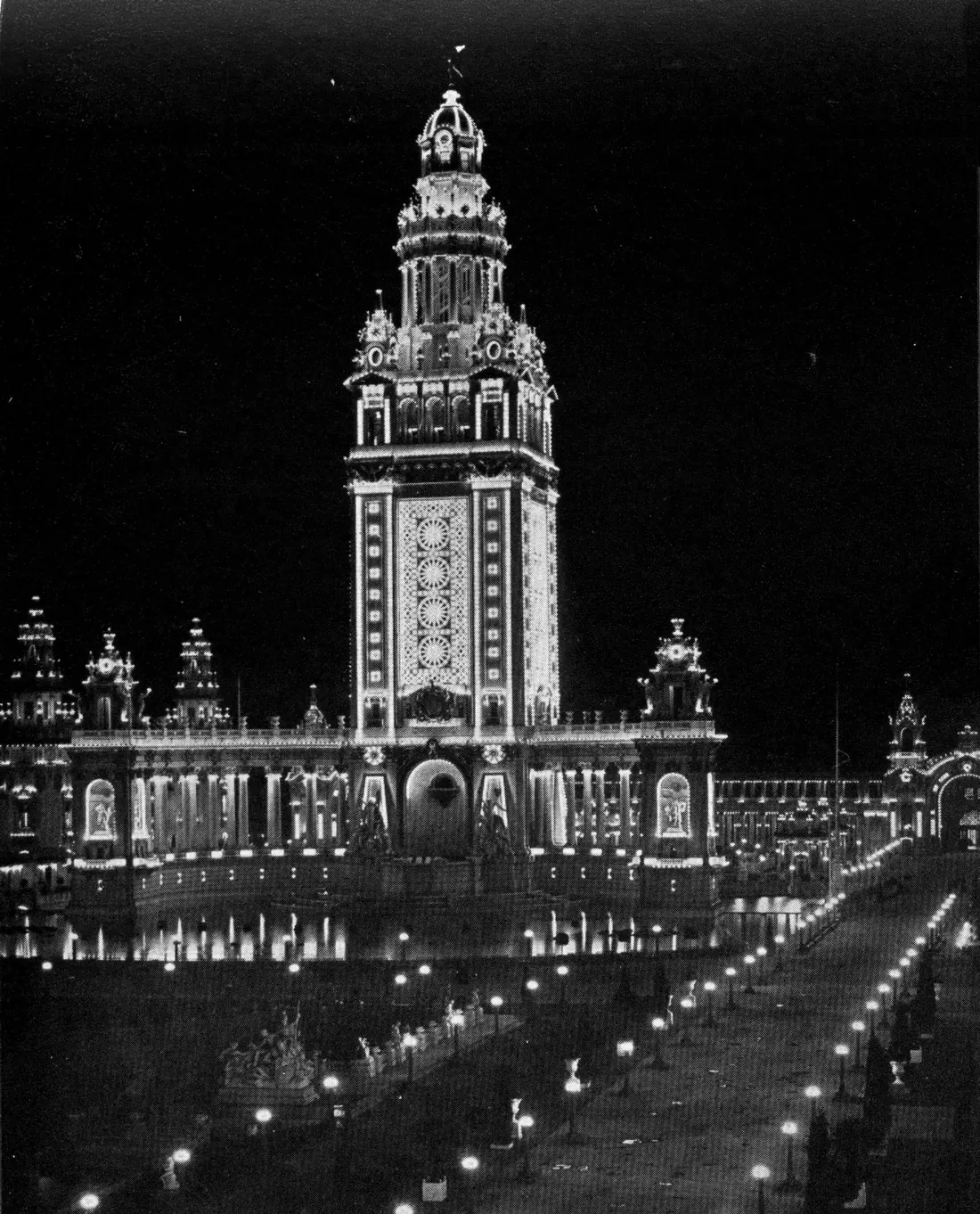
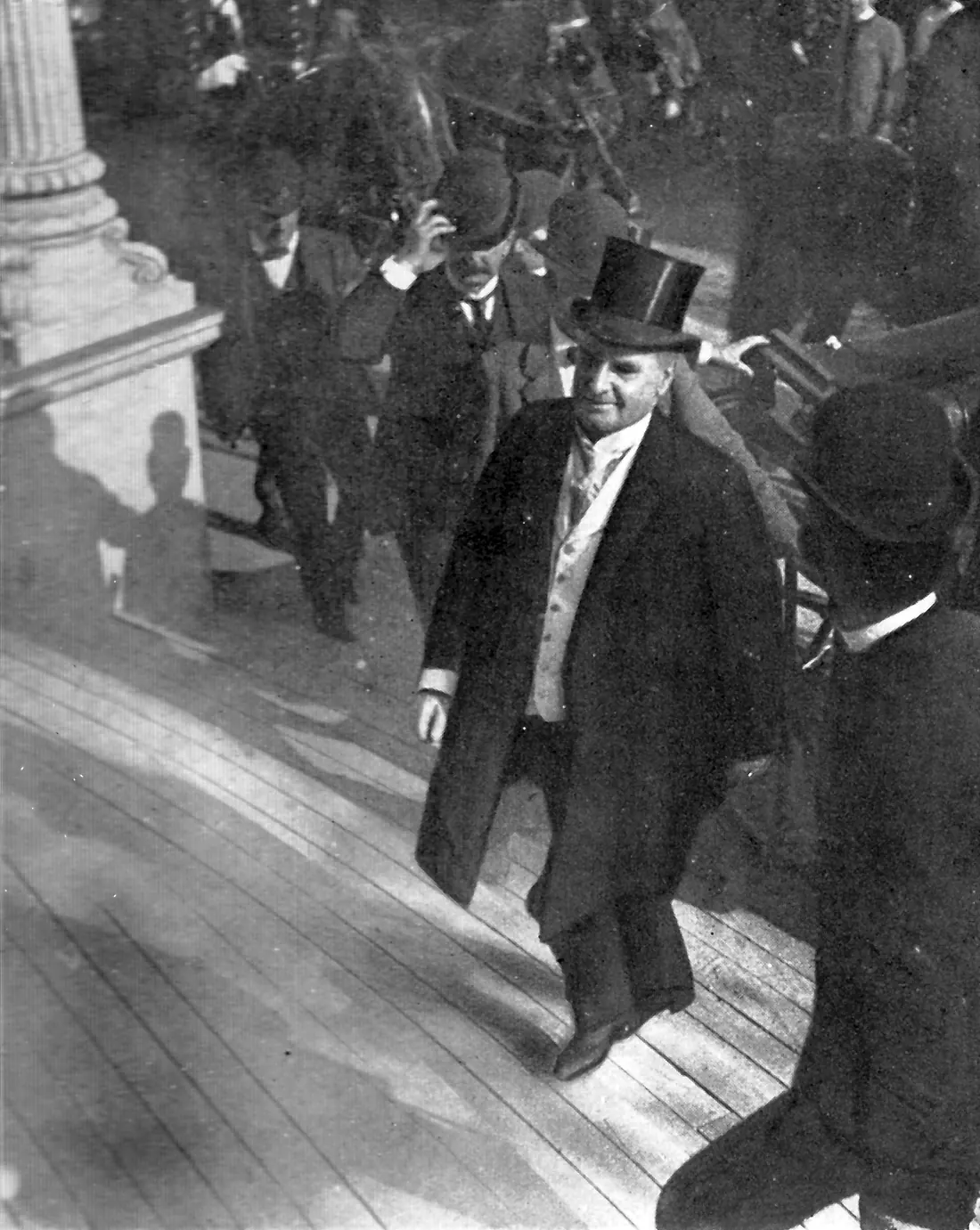
Pictures: Robert Todd Lincoln himself is in the Brady National Photographic Art Gallery negative of about 1860–65 (National Archives), the carte de visite of 1880 and the Brady-Handy portrait of about 1870–80 (Library of Congress), and in two National Photo Company photos at the Lincoln Memorial dedication on May 30, 1922 (in the audience, and with Taft and Harding, on the right). Abraham Lincoln is in Alexander Gardner’s photo of November 8, 1863. The Ford’s Theatre and deathbed scenes are Currier & Ives prints of 1865 (the deathbed print imagines a crowd around the bed, but names “Robt Lincoln” as the weeping officer to the left of it), the two Garfield scenes are engravings from Frank Leslie’s Illustrated Newspaper of July 16, 1881, and the McKinley shooting is T. Dart Walker’s painting of 1905: artists’ versions, not photographs of the events. The Baltimore and Potomac station, which stood from 1873 to 1907, is on a lantern slide made some years after 1881. The Electric Tower at night is from C. D. Arnold’s official views of the Pan-American Exposition in Buffalo, 1901. McKinley is shown climbing the steps of the Temple of Music on September 6, 1901, in a photo published in E. Benjamin Andrews’s History of the United States (1912). Harris & Ewing photographed the dedication itself.
Photo credits
The archive photos in this story
All the photographs and illustrations in this story are in the public domain. Tap one to enlarge it, or follow the link to its Wikimedia Commons page for the full record. The narration, captions and graphics in the Short are our own; its music and sound effects are credited below.
Music and sound effects
Music: Brahms, Tragic Overture, Op. 81 (Musopen Symphony Orchestra, CC0); Dvorak, Symphony No. 9 'From the New World': II. Largo (Musopen, public domain).
Sound effects: Freesound, CC0.

































































































,_5-30-22_LOC_npcc.06391.jpg)