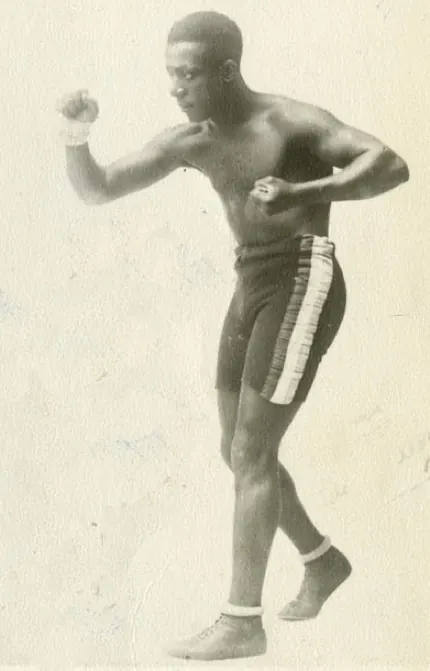
Eugene Jacques Bullard, “born Eugene James Bullard,” grew up in Georgia, where, Wikipedia says, “he suffered the trauma of watching a white mob attempt to lynch his father.” The New Georgia Encyclopedia dates it: “Shaken by the near lynching of his father in 1903.” Then, PBS writes, “in 1912, at the age of 16, he stowed away on a ship leaving Norfolk, Virginia for Germany,” the German freighter Marta Russ, in Wikipedia’s account. He “trained under the then-famous boxer Dixie Kid, who arranged for him to fight in Paris, France,” and “As a result of that visit to Paris, Bullard decided to settle in France.”
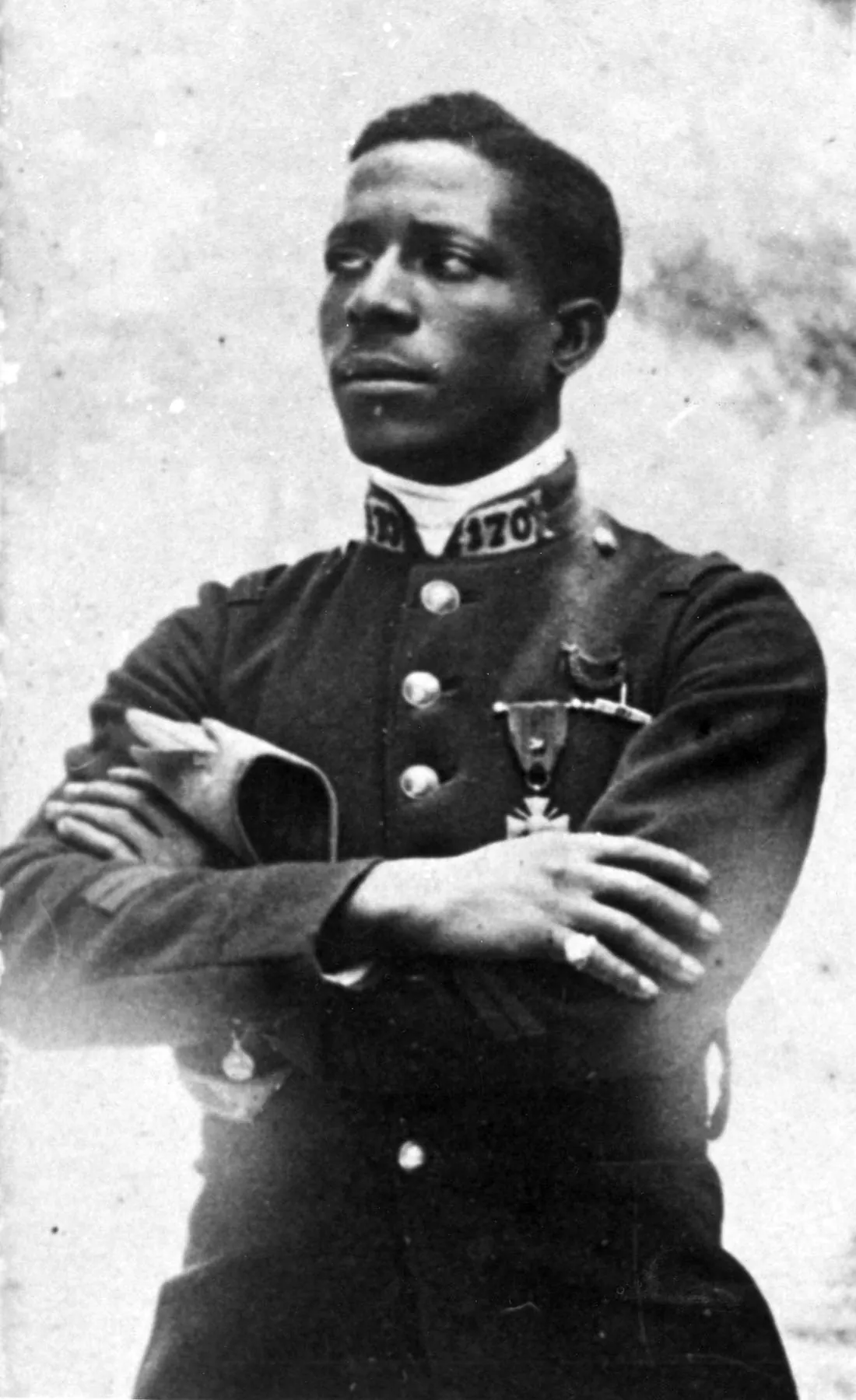
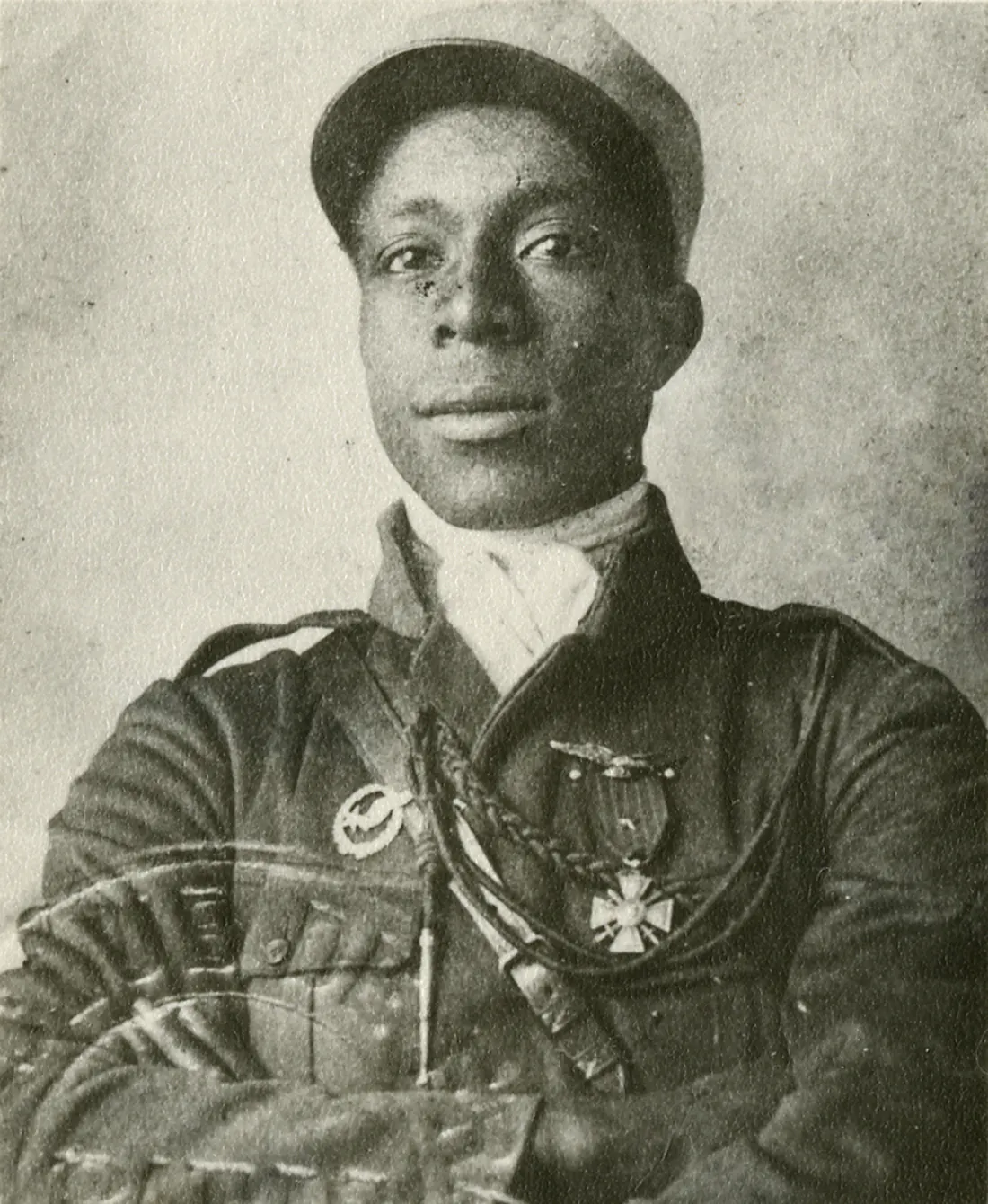
When war came, “On October 19, 1914, Bullard enlisted and was assigned to the 3rd Marching Regiment of the Foreign Legion,” Wikipedia says; PBS: he “joined the fabled French Foreign Legion to fight for his adopted country.” By 1916 he had been “transferred to a standard French army unit,” the 170th Infantry Regiment, and at Verdun “he was severely wounded on March 5, 1916.” “While recuperating, he learned to fly on a bet,” and he “received pilot’s license number 6950 from the Aéro-Club de France on May 5, 1917.”
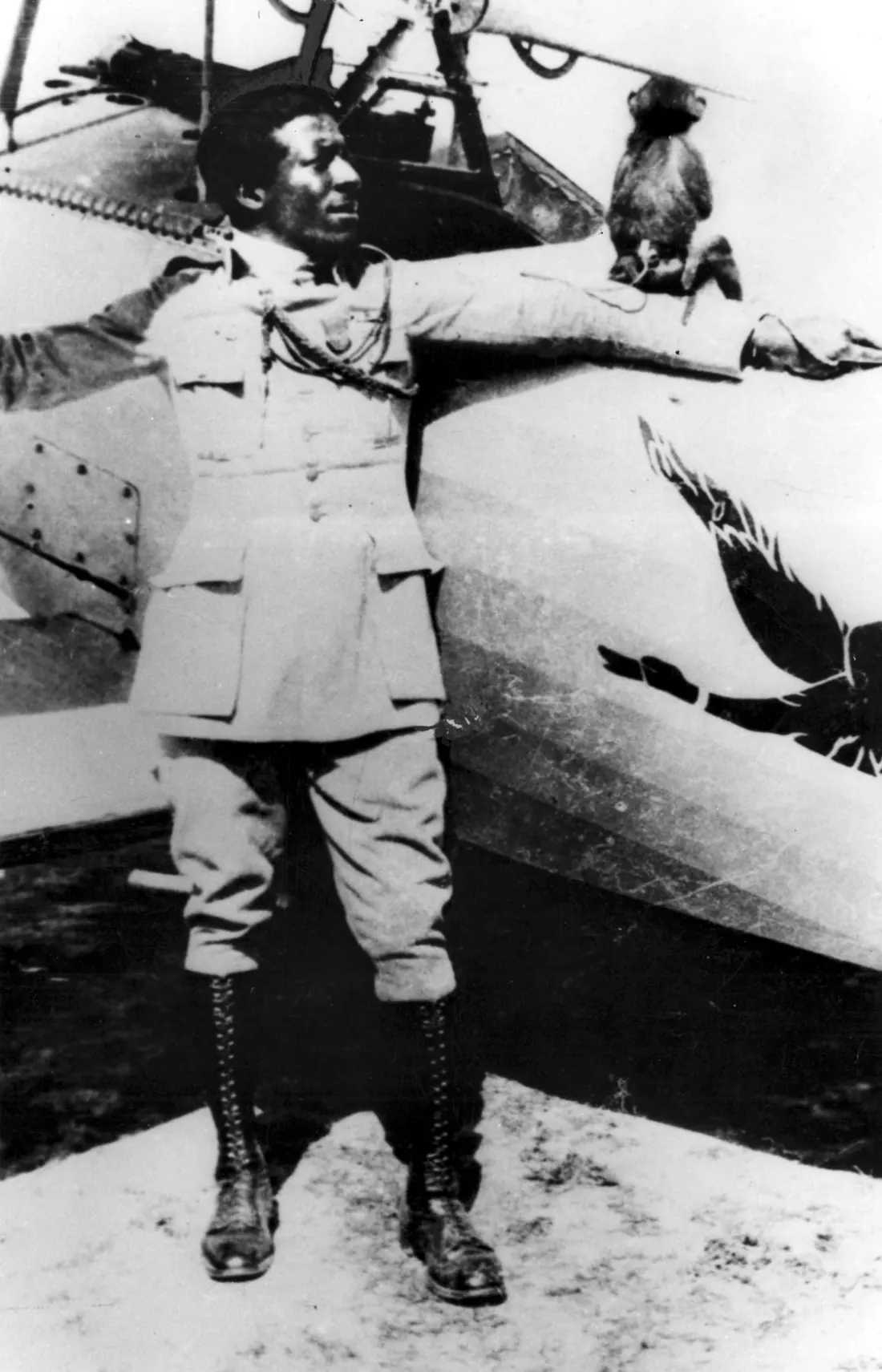
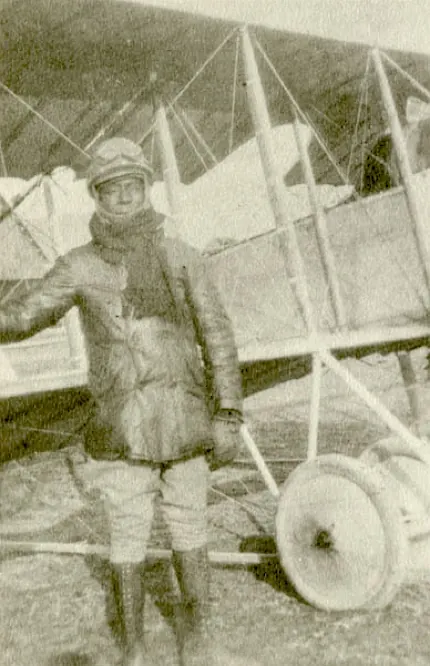
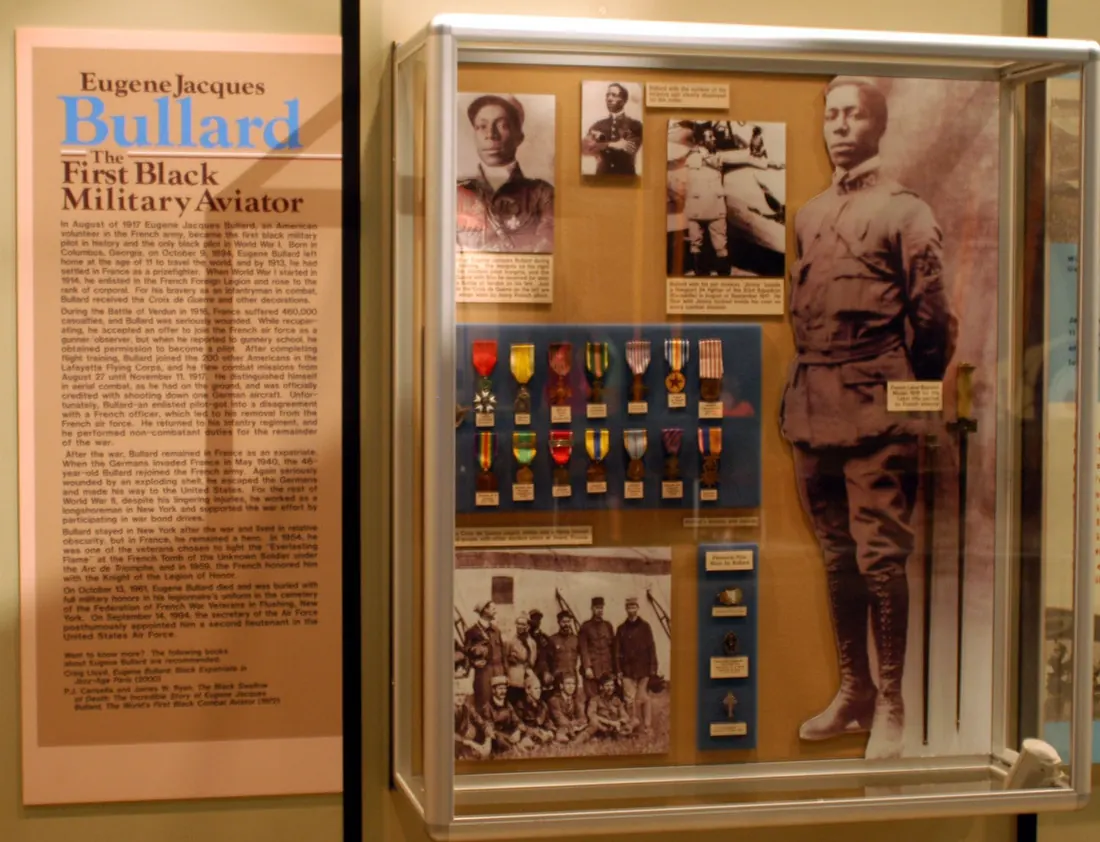
“In August of 1917 Eugene Jacques Bullard, an American volunteer in the French army, became the first African American military pilot,” the National Museum of the U.S. Air Force says. A museum photo caption has him “beside a Nieuport 24 fighter of the 93rd Squadron (Escadrille),” and he had company: “He flew with Jimmy tucked inside his coat on every combat mission.” Jimmy was “his pet Capuchin monkey,” in the Museum of Flight’s words. His own country turned him down. PBS: Bullard “applied to fly for the American Expeditionary Forces. He was rejected.” Wikipedia: “Bullard went through the medical examination, but he was not accepted, as only white pilots were chosen.”
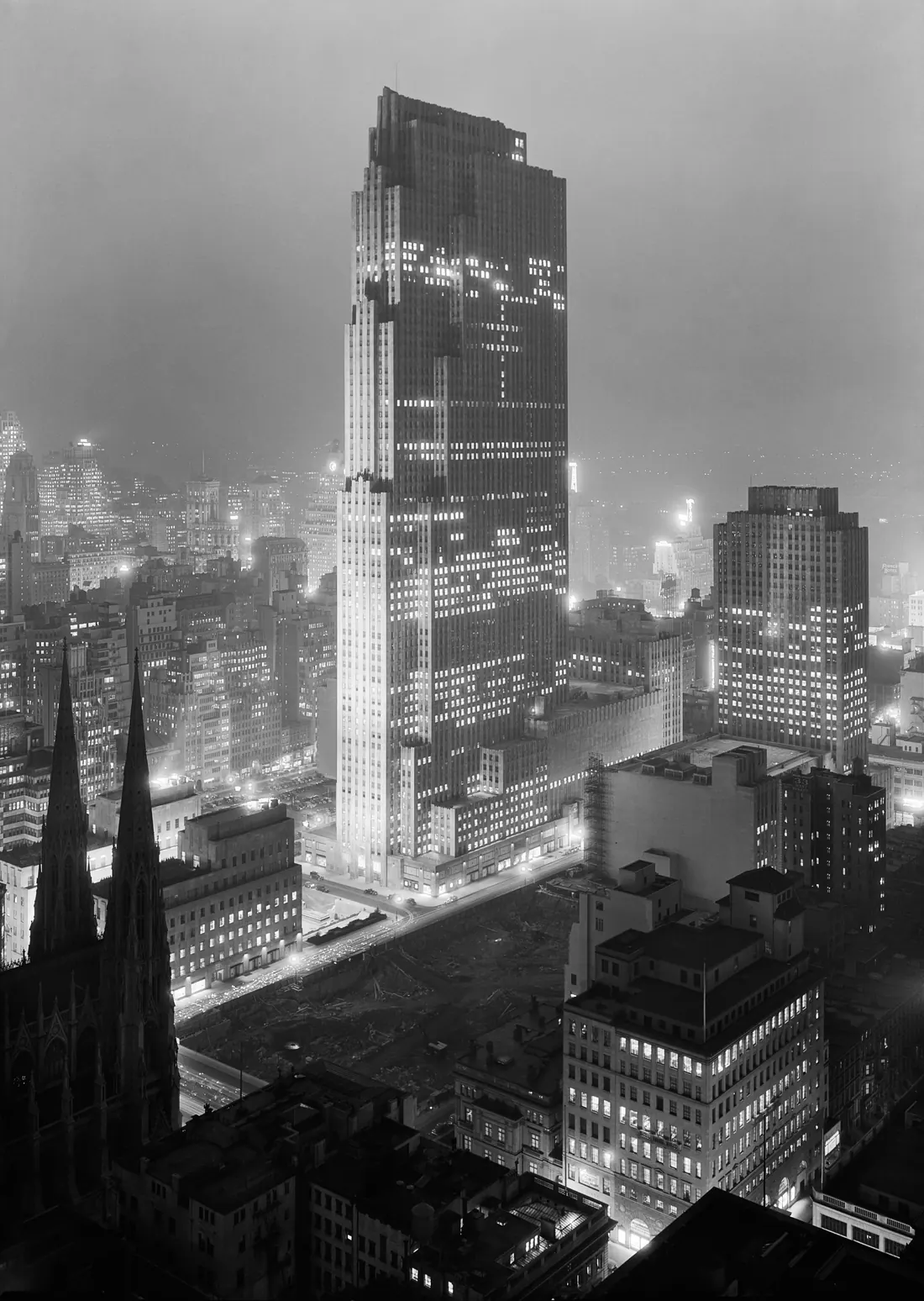
He made France his home, and in 1940 he was wounded again. “Bullard was wounded, but he escaped to neutral Spain, and in July 1940 he returned to the United States,” Wikipedia says; the Air Force museum: “Again seriously wounded by an exploding shell, he escaped the Germans and made his way to the United States.” “Bullard spent some time in a New York hospital,” and “His final job was as an elevator operator at the Rockefeller Center, where his fame as the ‘Black Swallow of Death’ was unknown.” “In the 1950s, Bullard was a relative stranger in his own homeland.”
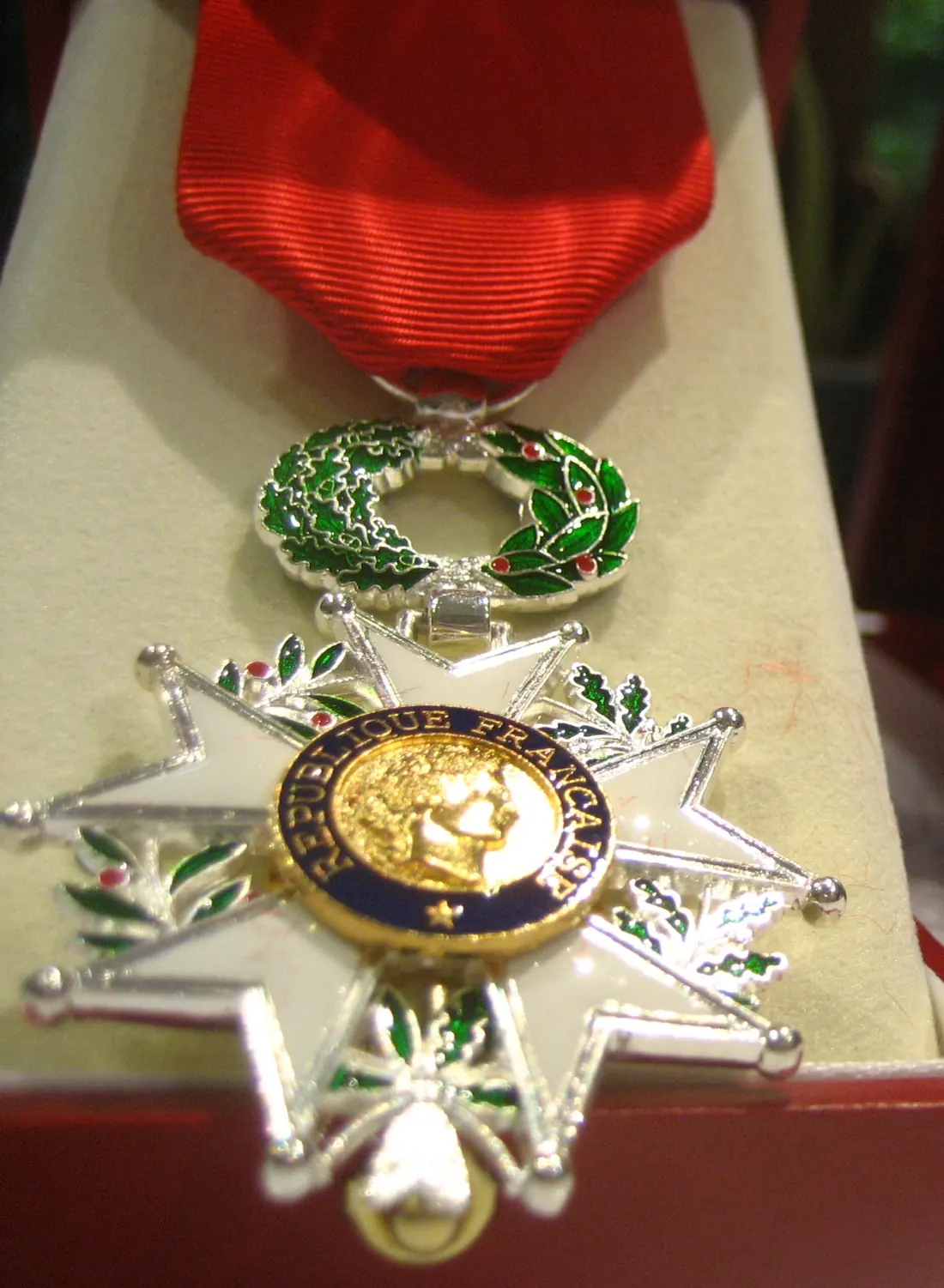
“In 1959 French president Charles de Gaulle made Bullard a knight of the French Legion of Honor,” the New Georgia Encyclopedia says. “On December 22, 1959, he was interviewed on NBC’s Today Show by Dave Garroway and received hundreds of letters from viewers. Bullard wore his elevator operator uniform during the interview.” He died in 1961, and in 1994, “thirty-three years after his death,” as PBS puts it, “the Secretary of the Air Force posthumously appointed him a second lieutenant in the United States Air Force.”
Fact check
The facts and where they come from
- This American flew fighter planes for France, but his own country wouldn’t let him fly. Wikipedia: “Bullard flew for France, not the United States”; “he was not accepted, as only white pilots were chosen.” National Museum of the U.S. Air Force (photo caption): Bullard “beside a Nieuport 24 fighter of the 93rd Squadron (Escadrille).” 12
- His name was Eugene Bullard. Wikipedia: “Eugene Jacques Bullard,” “born Eugene James Bullard.” 1
- In Georgia, he saw a mob try to lynch his father. Wikipedia: “he suffered the trauma of watching a white mob attempt to lynch his father.” New Georgia Encyclopedia: “Shaken by the near lynching of his father in 1903.” 14
- At 16, he stowed away to Europe. PBS: “in 1912, at the age of 16, he stowed away on a ship leaving Norfolk, Virginia for Germany.” Wikipedia: “In 1912, he made his way to Norfolk, Virginia, where he stowed away on the German freighter Marta Russ.” 31
- He boxed his way to Paris. Wikipedia: he “trained under the then-famous boxer Dixie Kid, who arranged for him to fight in Paris, France,” and “As a result of that visit to Paris, Bullard decided to settle in France.” New Georgia Encyclopedia: “He appeared in Paris for the first time at a boxing match in November 1913.” 14
- When war came, he joined the French Foreign Legion. Wikipedia: “On October 19, 1914, Bullard enlisted and was assigned to the 3rd Marching Regiment of the Foreign Legion.” PBS: “Bullard joined the fabled French Foreign Legion to fight for his adopted country.” 13
- At Verdun, he was badly wounded. Wikipedia: “Verdun, where he was severely wounded on March 5, 1916.” National Museum of the U.S. Air Force: “During the Battle of Verdun in 1916, Bullard was seriously wounded.” 12
- So he learned to fly. Wikipedia: “While recuperating, he learned to fly on a bet”; he “received pilot’s license number 6950 from the Aéro-Club de France on May 5, 1917.” 1
- In 1917, he became the first African American fighter pilot. National Museum of the U.S. Air Force: “In August of 1917 Eugene Jacques Bullard, an American volunteer in the French army, became the first African American military pilot.” New Georgia Encyclopedia: “Eugene Bullard was the world’s first Black combat aviator, flying in French squadrons.” Museum of Flight: “There were around five black military pilots in World War I, and Bullard was the only American.” 245
- He flew with a pet monkey in his coat. National Museum of the U.S. Air Force (photo caption): “He flew with Jimmy tucked inside his coat on every combat mission.” Museum of Flight: “Accompanying him on every combat flight was a lucky charm tucked inside his coat—his pet Capuchin monkey named Jimmy.” 25
- But America’s air service took only white pilots. Wikipedia: “Bullard went through the medical examination, but he was not accepted, as only white pilots were chosen.” PBS: Bullard “applied to fly for the American Expeditionary Forces. He was rejected.” 13
- In 1940, wounded again, he escaped to New York. Wikipedia: “Bullard was wounded, but he escaped to neutral Spain, and in July 1940 he returned to the United States,” and “Bullard spent some time in a New York hospital.” National Museum of the U.S. Air Force: “Again seriously wounded by an exploding shell, he escaped the Germans and made his way to the United States.” 12
- There, he ran an elevator at Rockefeller Center, almost unknown. Wikipedia: “His final job was as an elevator operator at the Rockefeller Center, where his fame as the ‘Black Swallow of Death’ was unknown,” and “In the 1950s, Bullard was a relative stranger in his own homeland.” PBS: he worked as “a Rockefeller Center elevator operator.” Museum of Flight: “He lived the rest of his life virtually unknown in his native land.” 135
- In 1959, France made him a knight of the Legion of Honor. National Museum of the U.S. Air Force: “in 1959, the French honored him with the Knight of the Legion of Honor.” New Georgia Encyclopedia: “In 1959 French president Charles de Gaulle made Bullard a knight of the French Legion of Honor.” 24
- He went on the Today show in his elevator uniform. Wikipedia: “On December 22, 1959, he was interviewed on NBC’s Today Show by Dave Garroway and received hundreds of letters from viewers. Bullard wore his elevator operator uniform during the interview.” PBS (photo caption): “In 1959, Bullard appeared in his elevator operator’s uniform on the Today Show.” Museum of Flight: “This distinctive medal led to a live interview on TV’s popular Today Show with Dave Garroway.” 135
- Then in 1994, the US Air Force finally made him a second lieutenant. National Museum of the U.S. Air Force: “On Sept. 14, 1994, the Secretary of the Air Force posthumously appointed him a second lieutenant in the United States Air Force.” Wikipedia: “Bullard was posthumously commissioned a second lieutenant in the United States Air Force.” PBS: “thirty-three years after his death, the United States Air Force appointed him a second lieutenant.” 213
Sources
- Eugene Bullard Wikipedia
- Eugene Jacques Bullard (fact sheet) National Museum of the U.S. Air Force
- The Two Lives of Eugene Bullard PBS American Experience
- Eugene Bullard (Craig Lloyd) New Georgia Encyclopedia
- Eugene Bullard, the First African American Fighter Pilot and Veteran of Two World Wars (Brenda Mandt) The Museum of Flight blog
Notes
The first, or one of the first? The National Museum of the U.S. Air Force calls him “the first African American military pilot” and the New Georgia Encyclopedia “the world’s first Black combat aviator,” but Wikipedia says “one of the first African-American military pilots” and names Black pilots of other nations in World War I (Pierre Réjon, William Robinson Clarke, Domenico Mondelli and Ahmet Ali Çelikten). We say the first African American fighter pilot, which claims a first only among Americans.
The Today show: the date (December 22, 1959), the host (Dave Garroway) and the elevator uniform are in Wikipedia and in a PBS photo caption. The popular version, in which Garroway “discovered” him running the elevator in the NBC building and noticed his medals, isn’t confirmed by these sources and isn’t used; the Museum of Flight says the Legion of Honor led to the interview.
The Legion and Verdun: by the time of Verdun (March 1916) he had moved from the Foreign Legion to the 170th Infantry Regiment (Wikipedia; PBS: “transferred to a standard French army unit”), so the Short keeps the two apart.
Dates that differ: his birth year (1894 to the Air Force museum, 1895 to Wikipedia and the New Georgia Encyclopedia), his death (October 12, 1961, to Wikipedia and the encyclopedia, October 13 to the museum) and his commission (August 23, 1994, to Wikipedia, September 14, 1994, to the museum; Wikipedia’s “77 years to the day after the physical” is only in Wikipedia). We give only the years.
Left out: why he left French aviation (a dispute with a French officer, which Wikipedia says happened “allegedly” and PBS tells three ways); his aerial victories (one confirmed to the Air Force museum, unconfirmed to Wikipedia and the Museum of Flight); the number of his missions (“more than twenty,” Wikipedia) and of his French medals (14 to Wikipedia, 15 on his own 1961 photo sheet); and his age when he ran away from home (“likely only 11,” PBS, which adds “Accounts vary”).
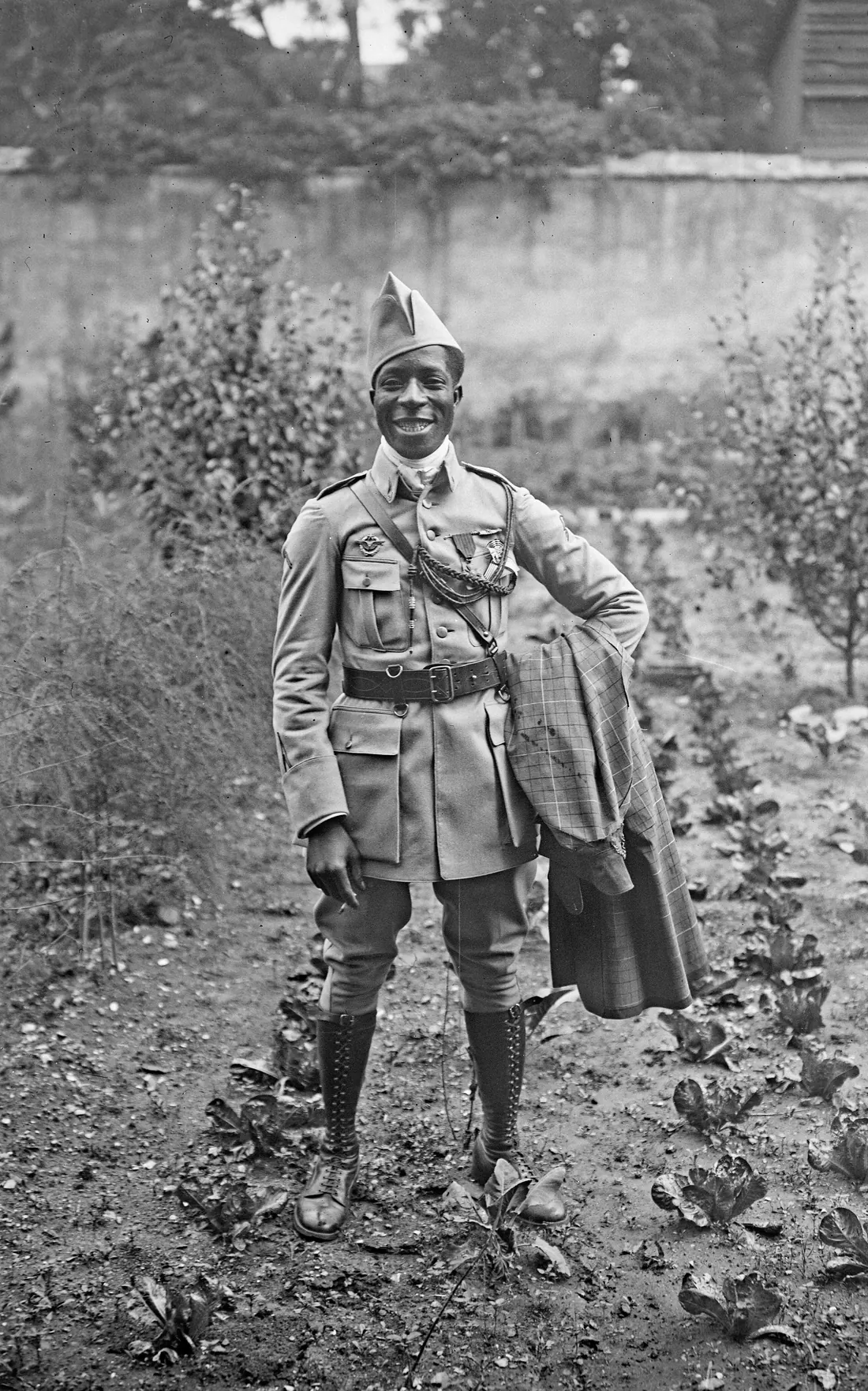
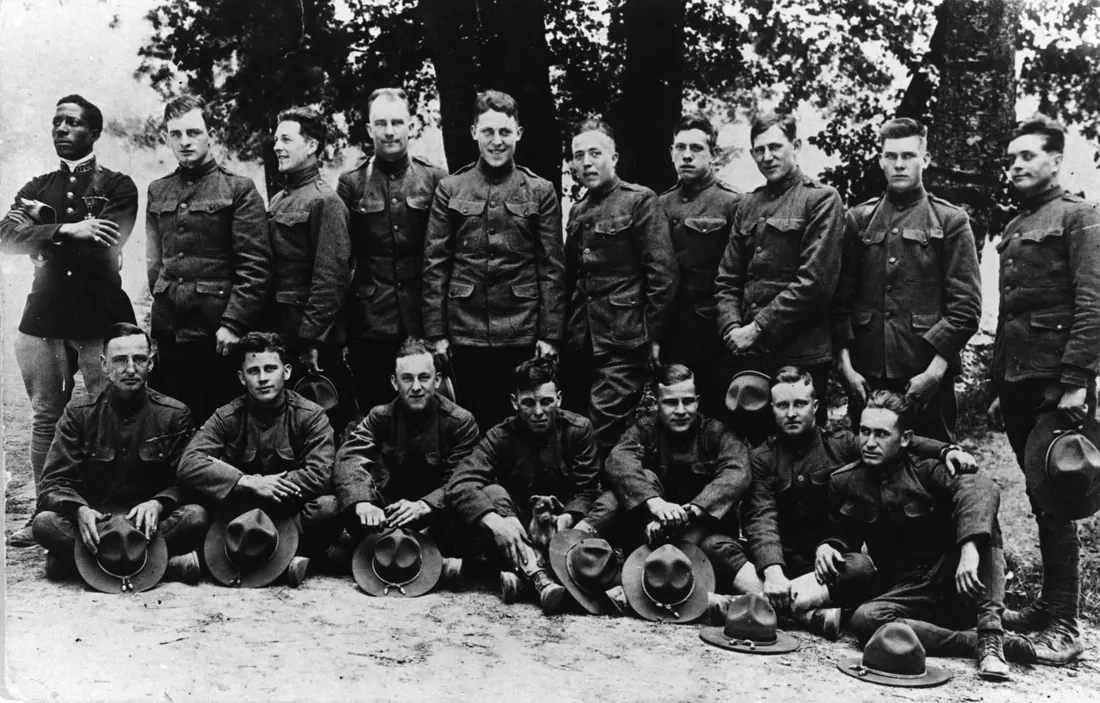
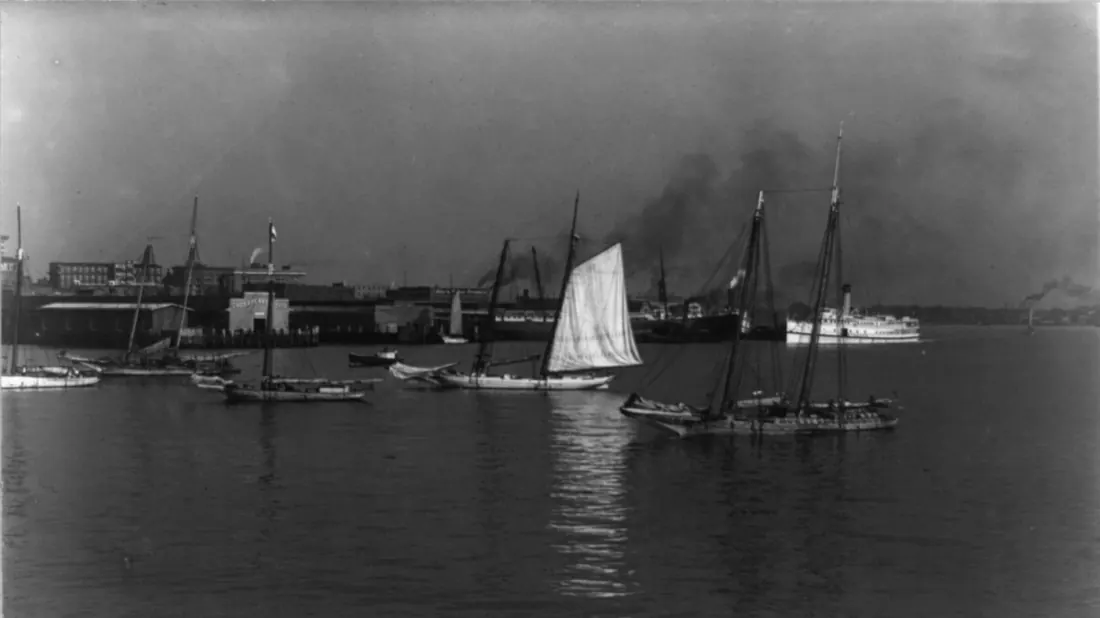
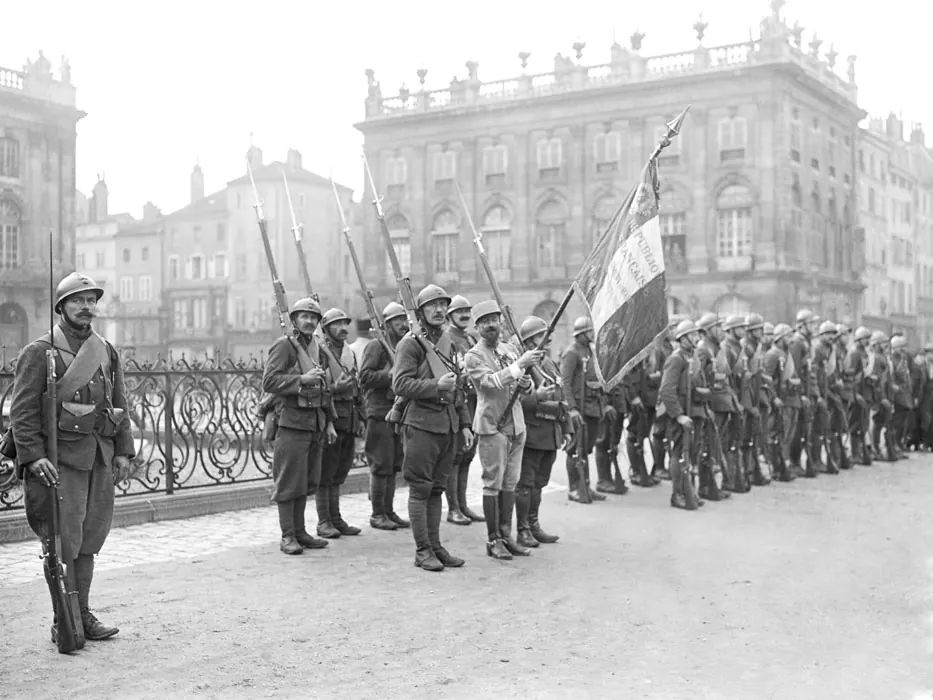
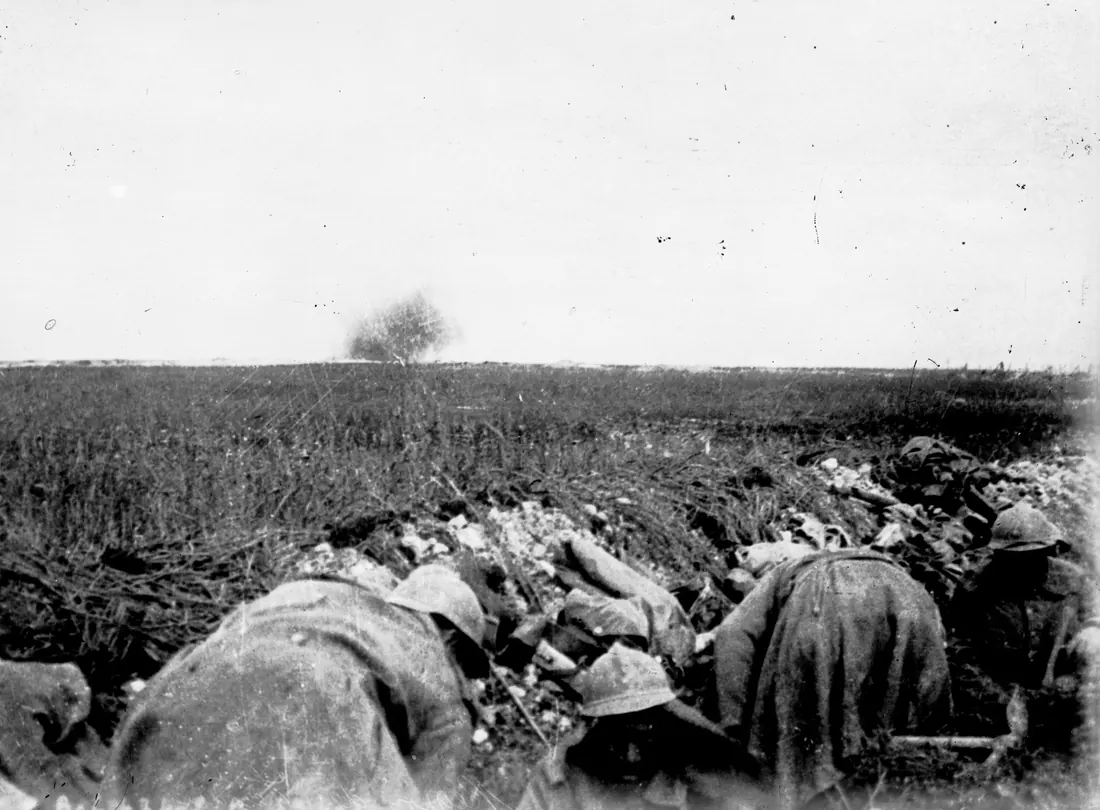
Pictures: Eugene Bullard himself is in the portrait in the uniform of the 170th Infantry with his Croix de Guerre (France, about 1917), the flight-training portrait of 1917, the photo with his monkey Jimmy beside a Nieuport 24 of Escadrille SPA 93 (August–September 1917), the boxing photo (date unknown), the photo in front of a Caudron G.3 trainer (about 1917) and the group photo with American soldiers (far left, in French uniform, about 1917–18), all U.S. Air Force photos whose original photographers are unknown, most from the photo sheet he signed for the Air Force Museum in 1961; and in the Agence Rol press photo taken in Paris on July 4, 1917 (Bibliothèque nationale de France). The Norfolk harbor (H. C. Mann, 1910), the Foreign Legion’s marching regiment on parade in Nancy (November 1918), the French soldiers in a trench near Verdun (Agence Rol, July 1916) and Rockefeller Center at night (Samuel H. Gottscho, 1933) show the places and units of his story, not Bullard himself. The medal is another knight’s badge of the Legion of Honor, photographed in 2008, not his own. The exhibit is the Bullard display at the National Museum of the U.S. Air Force.
Photo credits
The archive photos in this story
The photographs and illustrations in this story are in the public domain or shared under open licenses; each one is credited below with its license. Tap one to enlarge it, or follow the link to its Wikimedia Commons page for the full record. The narration, captions and graphics in the Short are our own; its music and sound effects are credited below.
Music and sound effects
Music: Grieg, Peer Gynt Suite No. 1, Op. 46: IV. In the Hall of the Mountain King (Musopen Symphony Orchestra, public domain); Satie, Gymnopedie No. 1 (Lent et douloureux) (Robin Alciatore, piano, public domain); Brahms, Symphony No. 2 in D major, Op. 73: IV. Allegro con spirito (Musopen Symphony Orchestra, CC0).
Sound effects: Freesound, CC0.