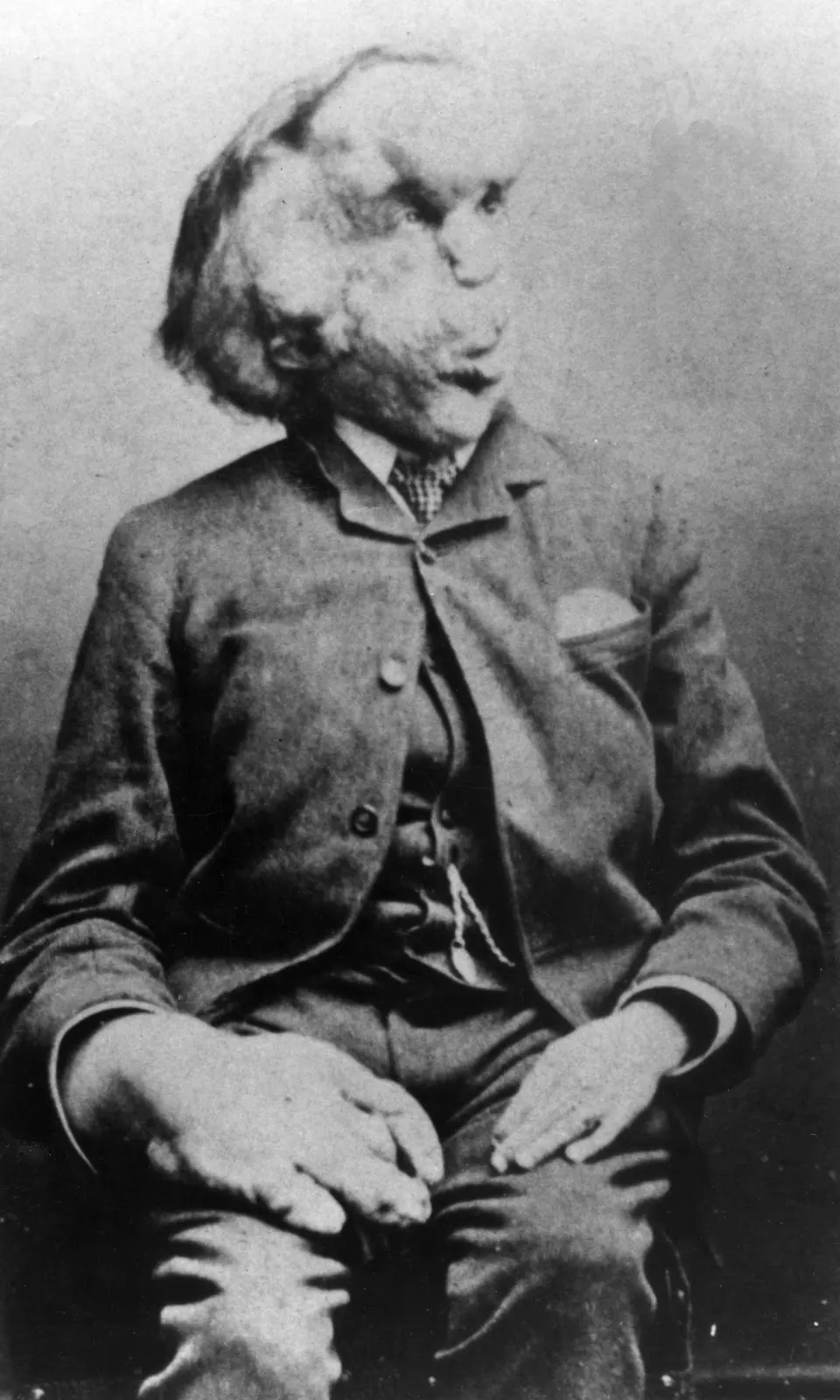
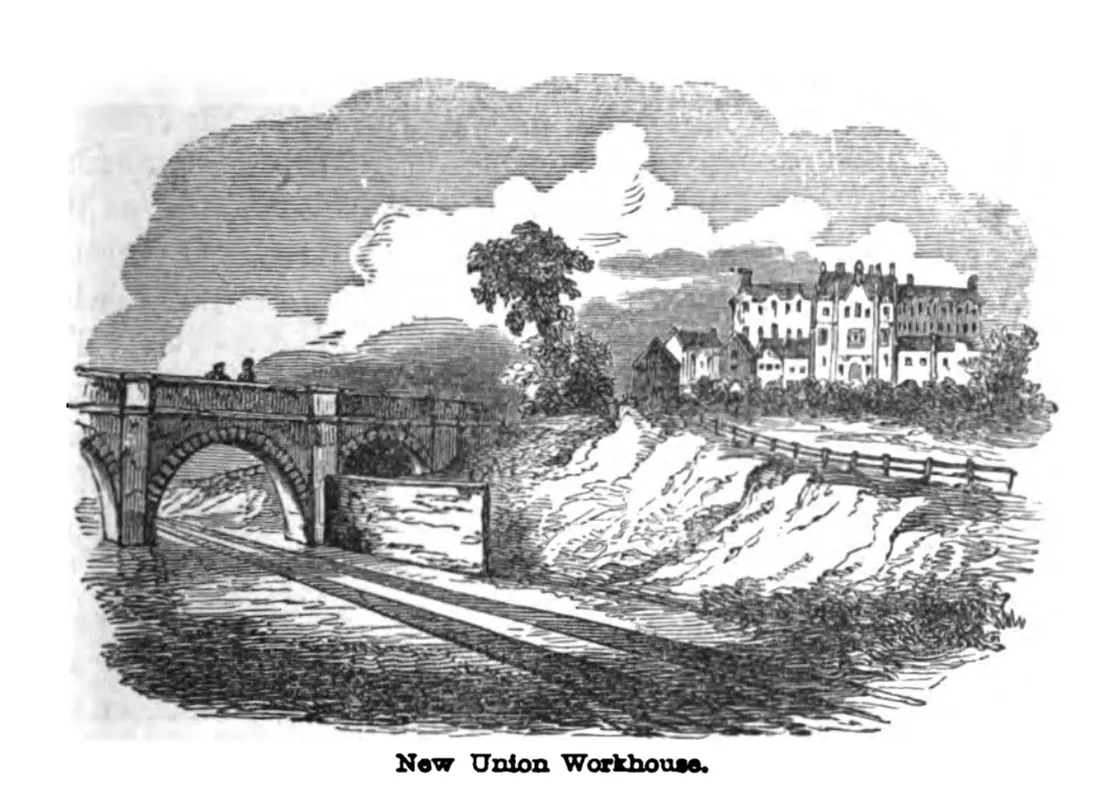
Joseph Carey Merrick “was born on 5 August 1862, at 50 Lee Street in Leicester,” Wikipedia says. He “was apparently healthy at birth,” but he “began to develop abnormally before the age of five.” “In late December 1879, now 17 years old, Merrick entered the Leicester Union Workhouse.” He left it briefly and came back, and “This time, he stayed for four years.”
“Merrick concluded that his only escape from the workhouse might be through the world of human novelty exhibitions,” Wikipedia says. “He wrote a speculative letter to Sam Torr,” a showman, and proposed that he might be exhibited; the London Museum says he “decided to become part of a human exhibit to earn money and gain freedom from the workhouse.” “He was first exhibited at a freak show under the stage name ‘The Elephant Man,’” and in London he was shown “in a penny gaff shop rented by showman Tom Norman,” who led “the assembled crowd into the shop” to “observe Merrick up close.”
He was then sent on a tour of Europe, “where he was robbed, beaten and abandoned,” the National Human Genome Research Institute says. “In Brussels, Merrick was deserted by his new manager, who stole his £50 (equivalent to about £5,600 in 2024) savings,” in Wikipedia’s words. He made his way back, and “Merrick reached London on 24 June 1886.” “Unable to communicate,” the NHGRI says, “police found Treves’ business card on him”; in Wikipedia’s words, “his only identifying possession was Treves’s card.” The surgeon Frederick Treves “took him in a hansom cab to the London Hospital,” and the London Museum says that “in June 1886” he “was admitted to the London Hospital by a surgeon named Frederick Treves.”
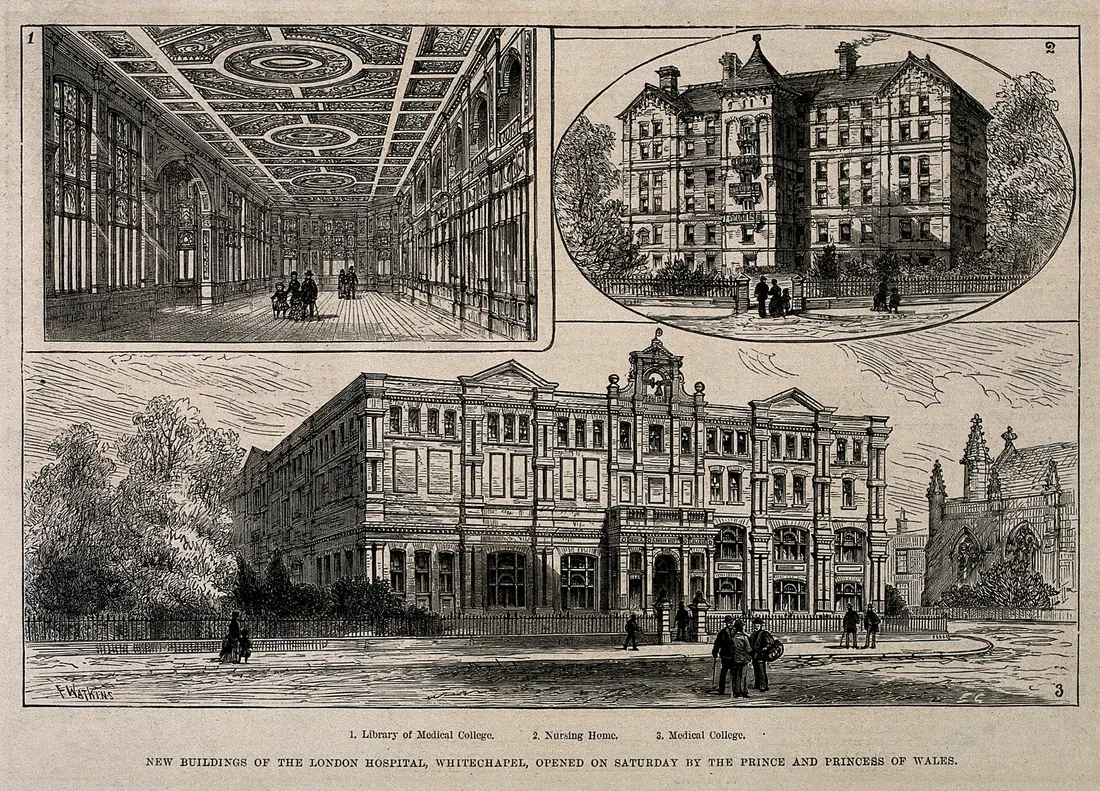
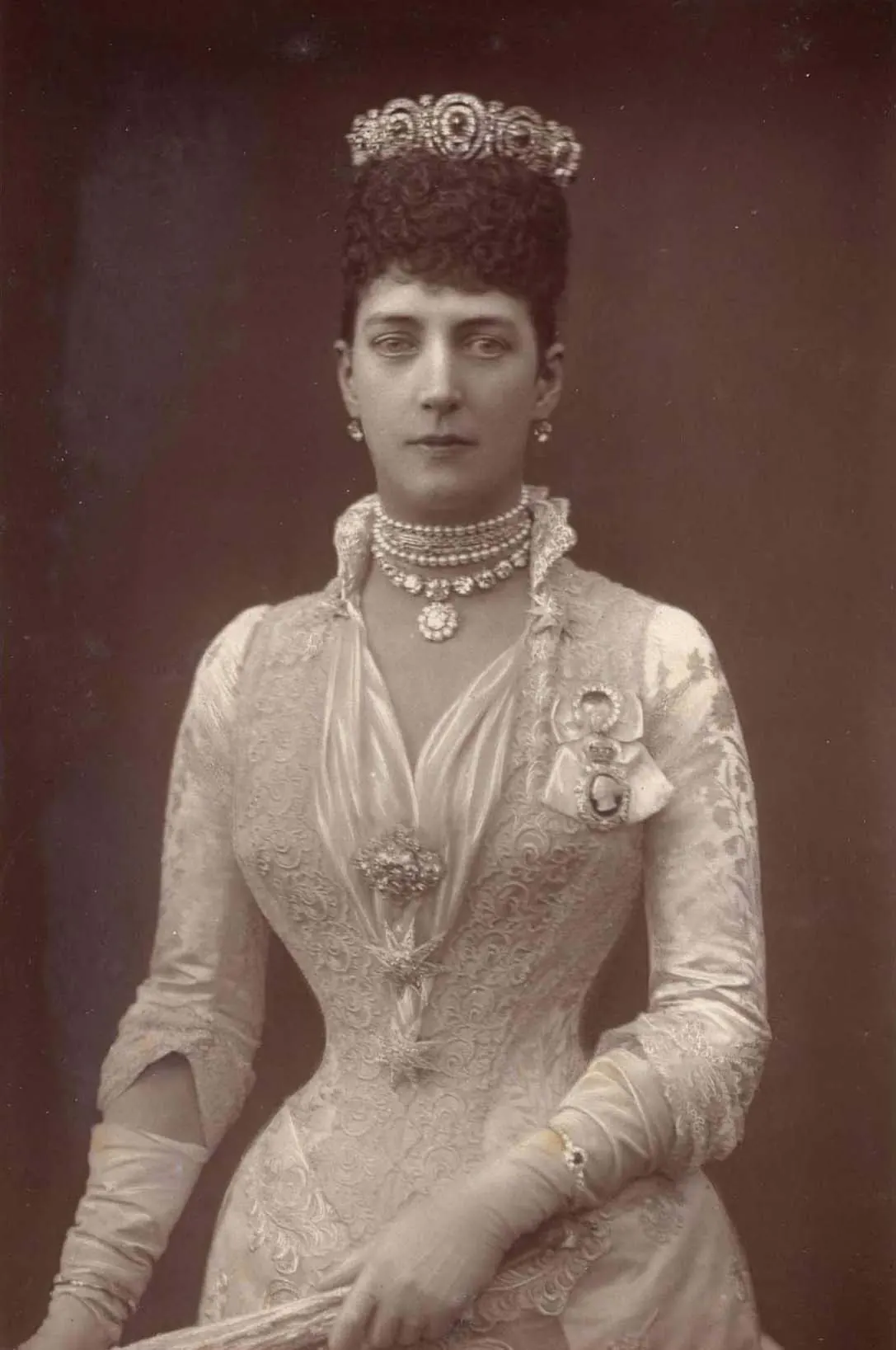
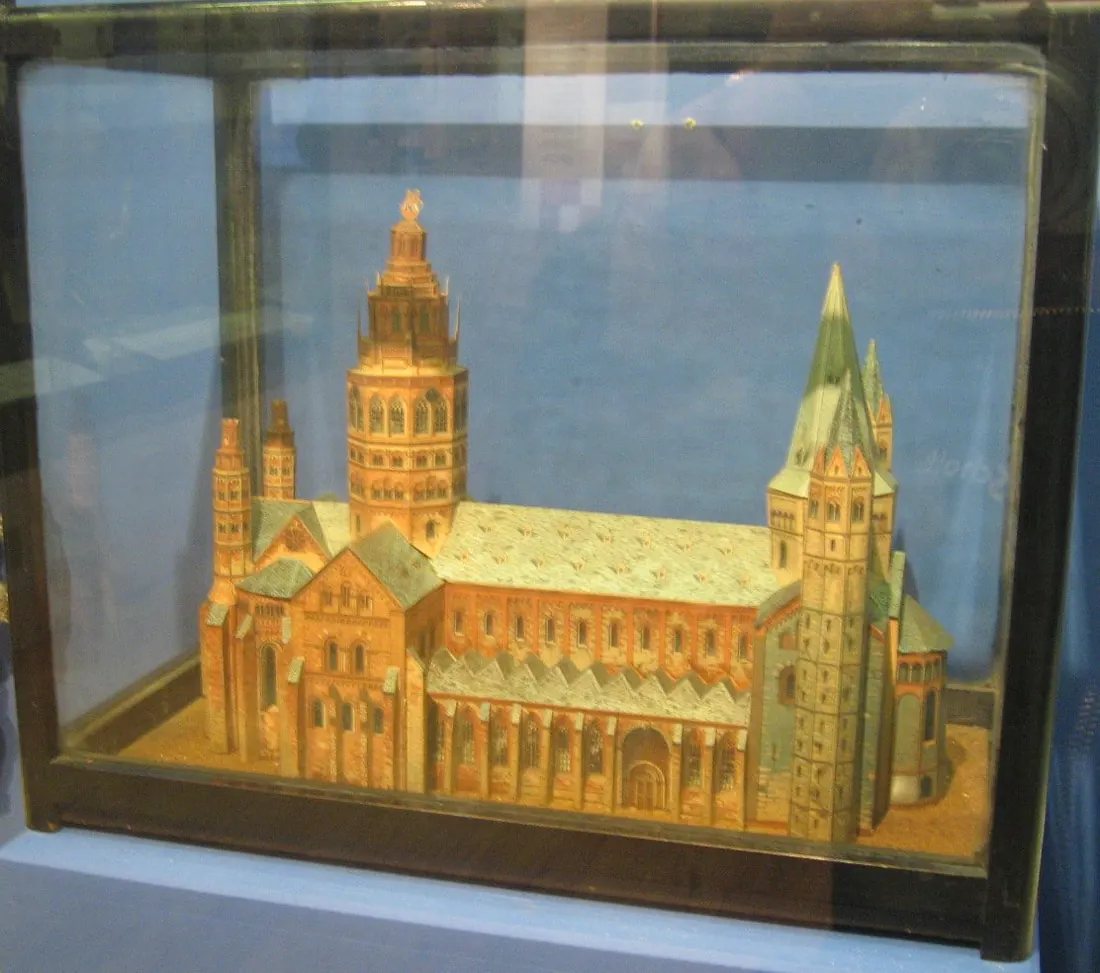
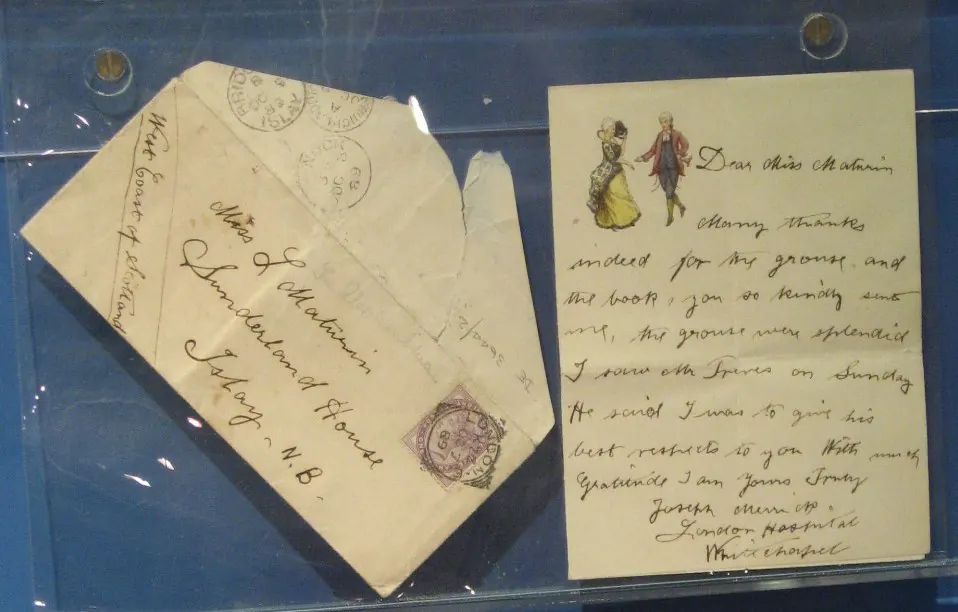
Carr Gomm then wrote a letter to The Times, “printed on 4 December 1886,” and “The public response—in letters and donations—was significant.” “With the financial backing of many donors,” the NHGRI says, “Carr Gomm was able to convince the hospital committee to provide Merrick a home in the hospital for the remainder of his life.” On May 21, 1887, the Prince and Princess of Wales came to the hospital to open two new buildings, and “Princess Alexandra shook Merrick’s hand and sat with him.” “Merrick spent his days reading and constructing models of buildings out of card,” among them, the NHGRI says, “an intricate church built out of playing cards.” And “An avid letter writer, Merrick often ended his letters with a poem, ‘False Greatness’ by Isaac Watts,” with the lines “I would be measured by the soul; The mind’s the standard of the man.”
But he could never rest like other people: “he always slept sitting up, with his legs drawn up and his head resting on his knees,” Wikipedia says. “His enlarged head was too heavy to allow him to sleep lying down.” “He died on 11 April 1890, while sleeping, at the age of 27.” Treves, in his 1923 memoir, wrote: “He often said to me that he wished he could lie down to sleep ‘like other people.’ I think on this last night he must, with some determination, have made the experiment.” The certified cause of death, Wikipedia says, “was asphyxia, resulting from the weight of his head as he lay down.”
Fact check
The facts and where they come from
- He was put on show as the Elephant Man, but he couldn’t even lie down to sleep. Wikipedia: “He was first exhibited at a freak show under the stage name ‘The Elephant Man’”; “His enlarged head was too heavy to allow him to sleep lying down.” Treves: “So large and so heavy was his head that he could not sleep lying down.” 14
- His name was Joseph Merrick. Wikipedia: “Joseph Carey Merrick (5 August 1862 – 11 April 1890), sometimes erroneously referred to as John Merrick.” 1
- Born in Leicester in 1862, he began growing abnormally before age five. Wikipedia: “Joseph Carey Merrick was born on 5 August 1862, at 50 Lee Street in Leicester”; “Merrick was apparently healthy at birth”; he “began to develop abnormally before the age of five.” National Human Genome Research Institute: “an apparently healthy baby, was born to Mary Jane and Joseph Merrick in Leicester, England.” 13
- At 17, he entered the workhouse. Wikipedia: “In late December 1879, now 17 years old, Merrick entered the Leicester Union Workhouse,” and after a brief time outside, “This time, he stayed for four years.” 1
- To escape, he asked a showman to exhibit him. Wikipedia: “Merrick concluded that his only escape from the workhouse might be through the world of human novelty exhibitions. He wrote a speculative letter to Sam Torr”; he “contacted a showman named Sam Torr and proposed that he might be exhibited.” London Museum: “Merrick decided to become part of a human exhibit to earn money and gain freedom from the workhouse.” 12
- Crowds paid to stare. Wikipedia: “Merrick travelled to London to be exhibited in a penny gaff shop rented by showman Tom Norman”; Norman led “the assembled crowd into the shop” to “observe Merrick up close.” 1
- In Belgium, his manager stole his savings and abandoned him. Wikipedia: “In Brussels, Merrick was deserted by his new manager, who stole his £50 (equivalent to about £5,600 in 2024) savings.” London Museum: “But his manager robbed him of these savings and abandoned him in Brussels.” National Human Genome Research Institute: he was sent “to tour in Europe where he was robbed, beaten and abandoned.” 123
- Back in London, police found a surgeon’s card on him. Wikipedia: “Merrick reached London on 24 June 1886”; “his only identifying possession was Treves’s card.” National Human Genome Research Institute: “unable to communicate, police found Treves’ business card on him.” Treves: “It was my card.” 134
- That surgeon, Frederick Treves, took him into the London Hospital. Wikipedia: he “took him in a hansom cab to the London Hospital.” London Museum: “in June 1886 was admitted to the London Hospital by a surgeon named Frederick Treves.” 12
- Strangers sent money so he could stay for life. Wikipedia: “Gomm wrote a letter to The Times, printed on 4 December 1886”; “The public response—in letters and donations—was significant”; “It was decided that he would be allowed to stay there for the remainder of his life.” National Human Genome Research Institute: “With the financial backing of many donors, Carr Gomm was able to convince the hospital committee to provide Merrick a home in the hospital for the remainder of his life.” Treves: “enough money was forthcoming to maintain Merrick for life without any charge upon the hospital funds.” 134
- Princess Alexandra came to shake his hand. Wikipedia: “On 21 May 1887, two new buildings were completed at the hospital and the Prince and Princess of Wales came to open them officially”; “Princess Alexandra shook Merrick’s hand and sat with him.” London Museum: “That included Alexandra, the princess of Wales.” Treves: she “shook him warmly by the hand.” 124
- He built a model church out of card. Wikipedia: “Merrick spent his days reading and constructing models of buildings out of card.” National Human Genome Research Institute: “creating an intricate church built out of playing cards.” 13
- His head was so heavy, he slept sitting up, with his head on his knees. Wikipedia: “he always slept sitting up, with his legs drawn up and his head resting on his knees. His enlarged head was too heavy to allow him to sleep lying down.” Treves: “his head rested on the points of his bent knees.” 14
- In April 1890, he died in his sleep. Wikipedia: “He died on 11 April 1890, while sleeping.” London Museum: “Merrick died unexpectedly at the hospital on 11 April 1890.” 12
- He was 27. Wikipedia: he died “at the age of 27.” London Museum: “aged 27.” 12
- His doctor believed he had finally tried to sleep lying down, like other people. Wikipedia: “Treves concluded that Merrick must have ‘made the experiment’, attempting to sleep lying down ‘like other people’.” Treves: “He often said to me that he wished he could lie down to sleep ‘like other people.’ I think on this last night he must, with some determination, have made the experiment.” The official cause agrees that he lay down: Wikipedia: “the certified cause of death was asphyxia, resulting from the weight of his head as he lay down”; National Human Genome Research Institute: “from asphyxia, caused by the weight of his head as he lay down.” 143
Sources
- Joseph Merrick Wikipedia
- Joseph Merrick, ‘the Elephant Man’ London Museum
- Joseph Merrick Biography National Human Genome Research Institute
- The Elephant Man and Other Reminiscences (Frederick Treves, 1923): “The Elephant Man” Wikisource
- The Leicester Union workhouse The Workhouse (workhouses.org.uk)
Notes
Born deformed? No: he was “apparently healthy at birth” (Wikipedia; the NHGRI: “an apparently healthy baby”), and the changes began in early childhood (Wikipedia: before five; a 1930 Leicester article puts the first swellings of his lip at 21 months).
Put in a freak show? Modern research shows he chose it: Wikipedia, citing his biographers Howell and Ford, says “he had voluntarily chosen to exhibit himself to make a living,” and the London Museum says the same. So the Short says he was put on show, and that he asked a showman to exhibit him.
Treves’s memoir (1923) has known errors, so it is quoted only where Wikipedia, the London Museum or the NHGRI agree: it calls him John (“his name was John Merrick”; Wikipedia explains the error), it says his mother abandoned him (refuted by Howell and Ford, Wikipedia says), and its picture of the showman Tom Norman as cruel is disputed (Wikipedia). That Merrick deliberately tried to lie down is Treves’s own conclusion, so the Short says “His doctor believed.” The official verdict (asphyxia from the weight of his head as he lay down) and Treves’s post-mortem view (a dislocated neck) differ on how he died; the Short names neither.
The card church is a model of Mainz Cathedral (the Commons photo’s description). The NHGRI says “playing cards,” so the Short says only card. His savings were about £50 (Wikipedia, the London Museum).
Left out for length: the police closing his London show before the European tour (Wikipedia; the London Museum says it was “shut down by the authorities”). The Royal London Hospital Museum, reported closed, has no page about Merrick that could be found online, so the facts were checked against the London Museum, the NHGRI, Wikipedia’s modern biographies and the museum’s own objects photographed on Commons.
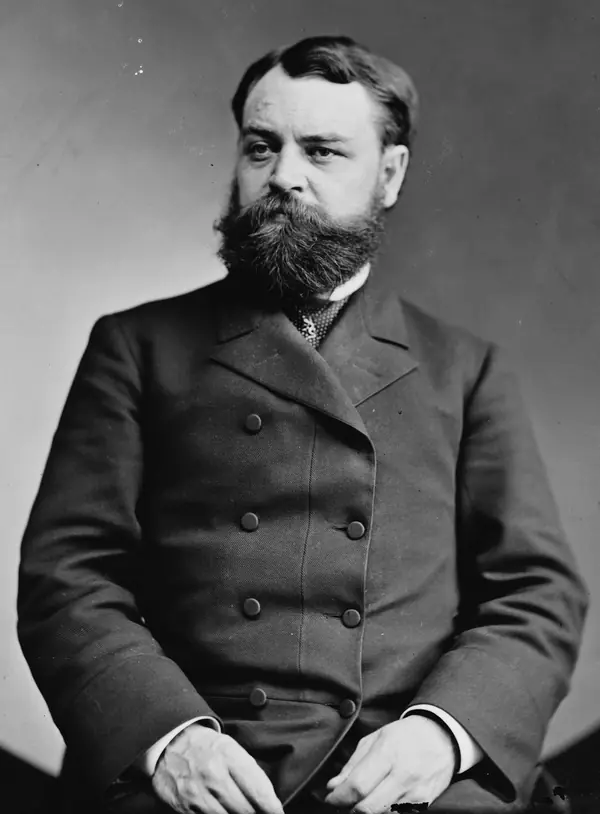
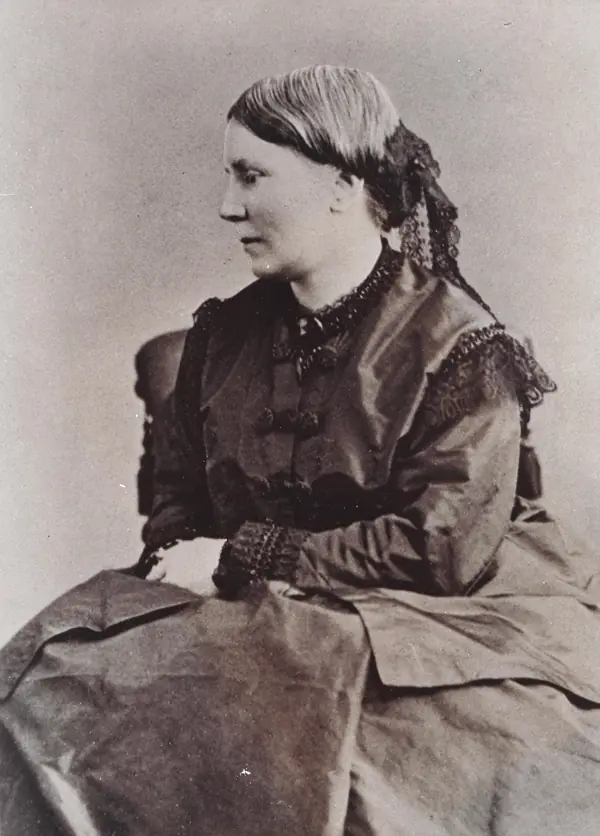
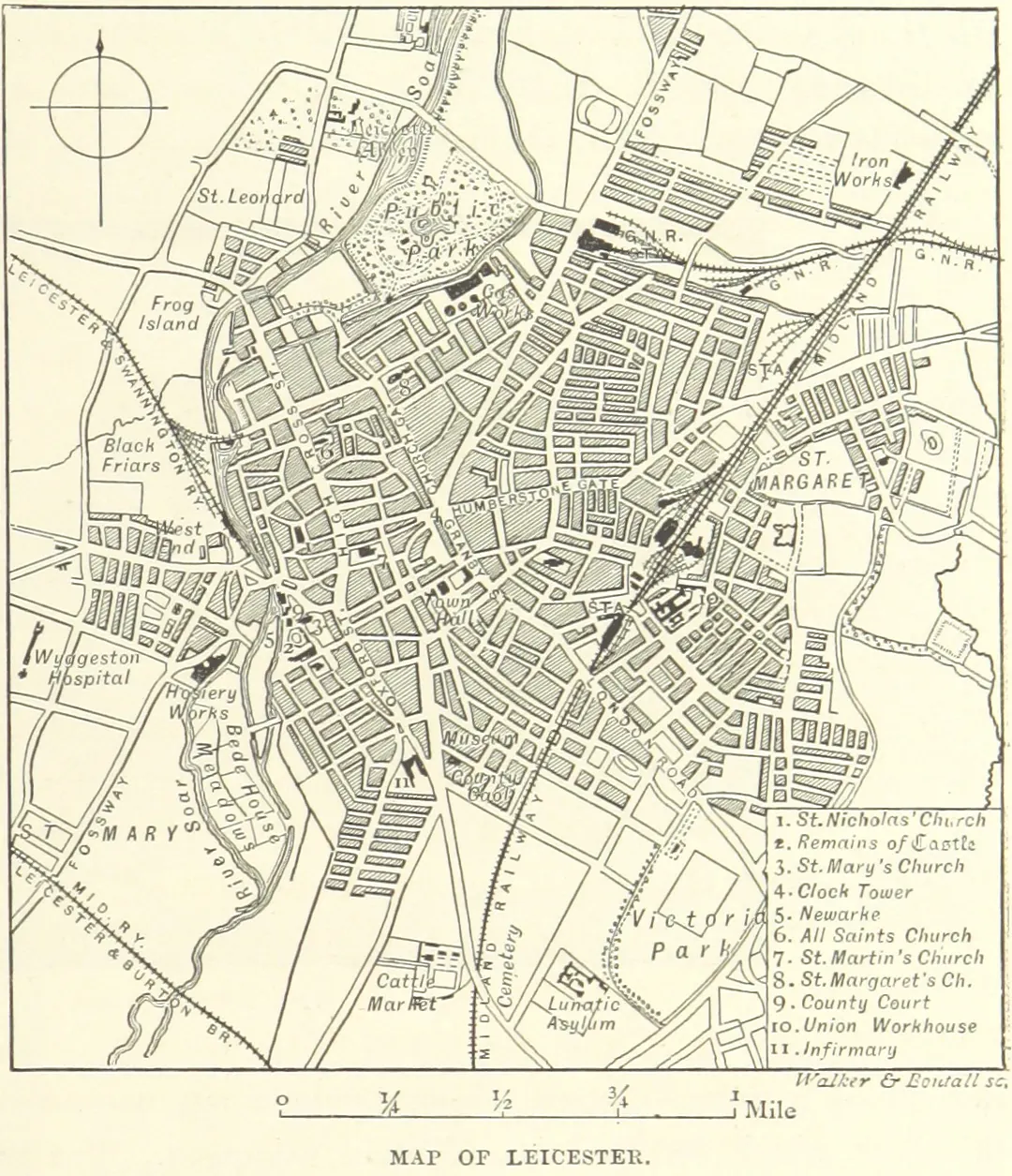
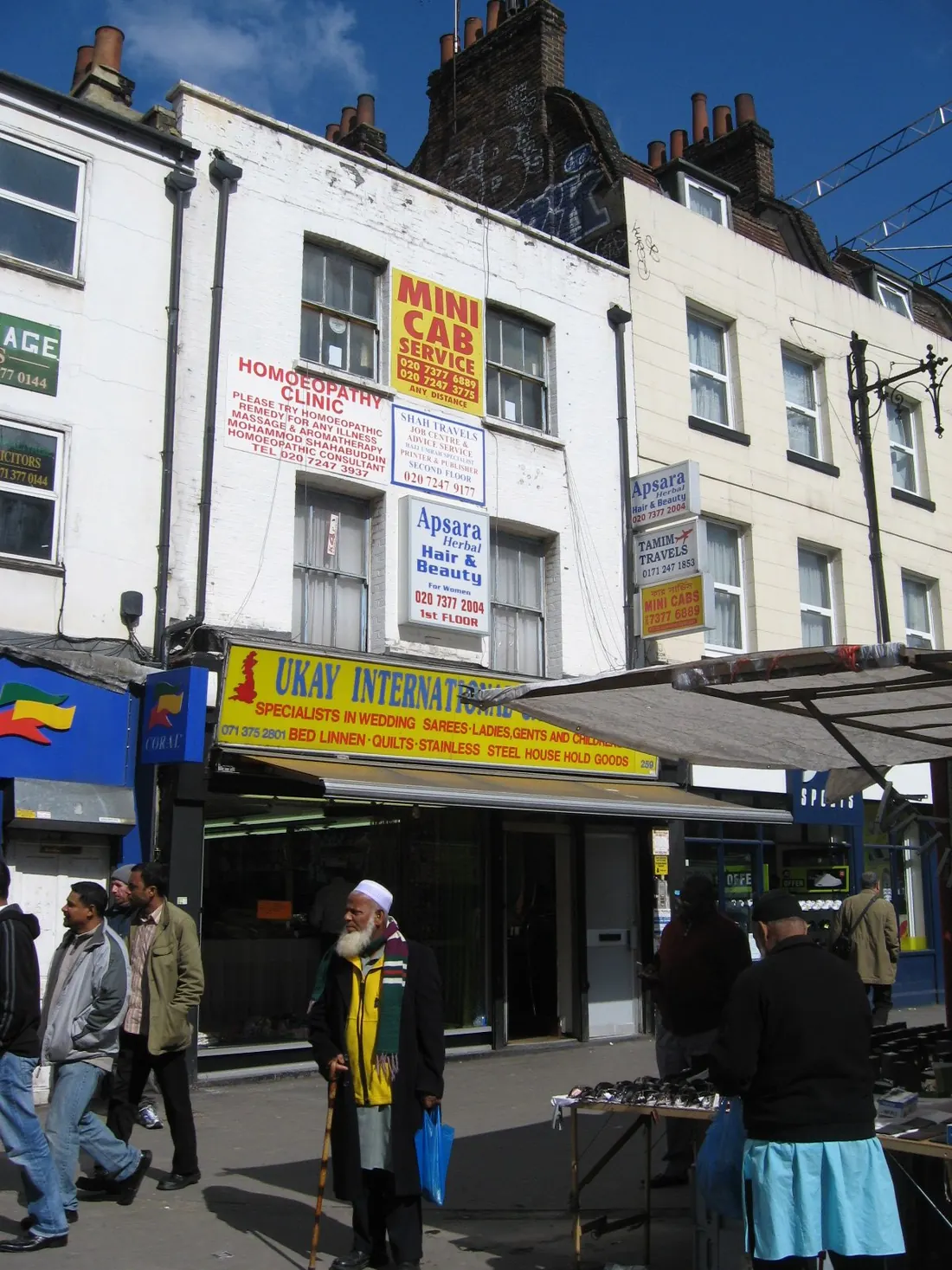
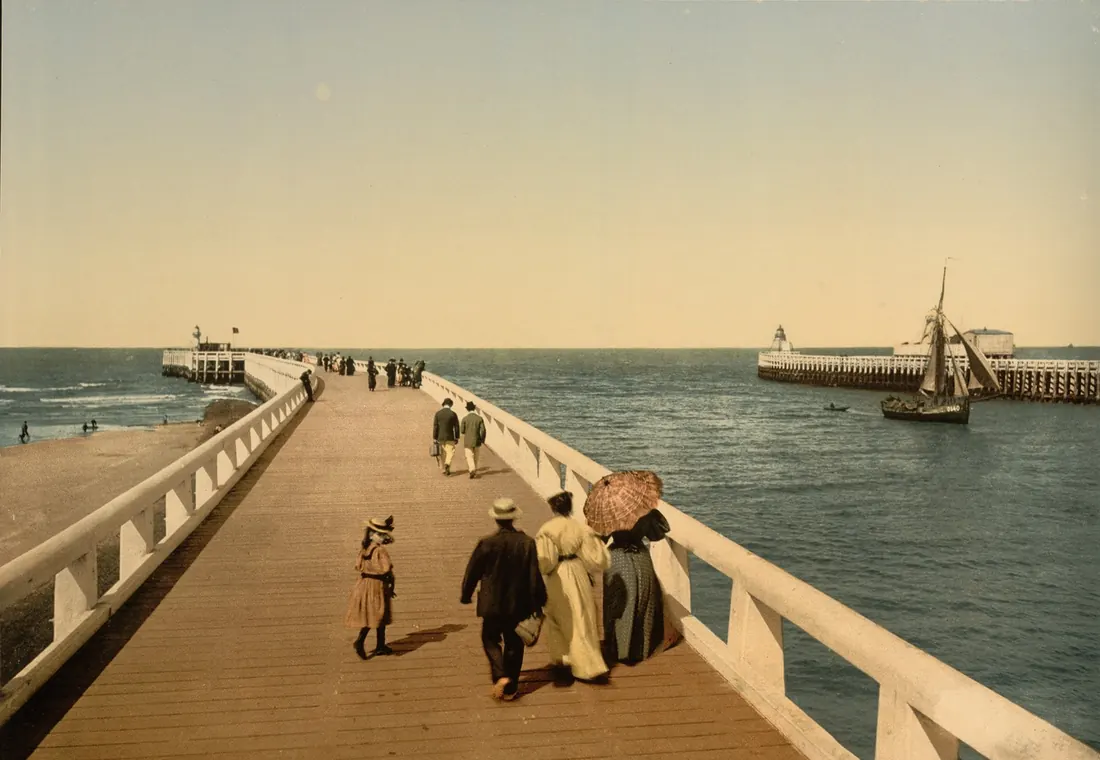
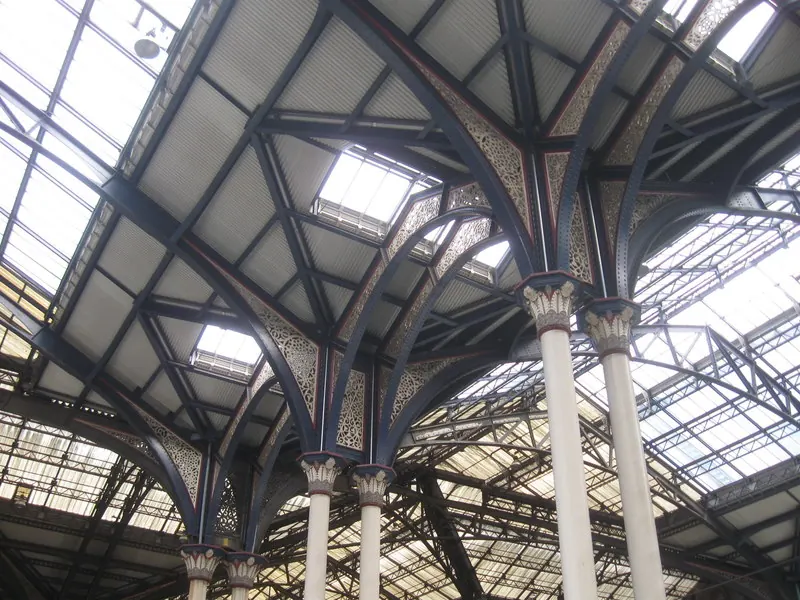
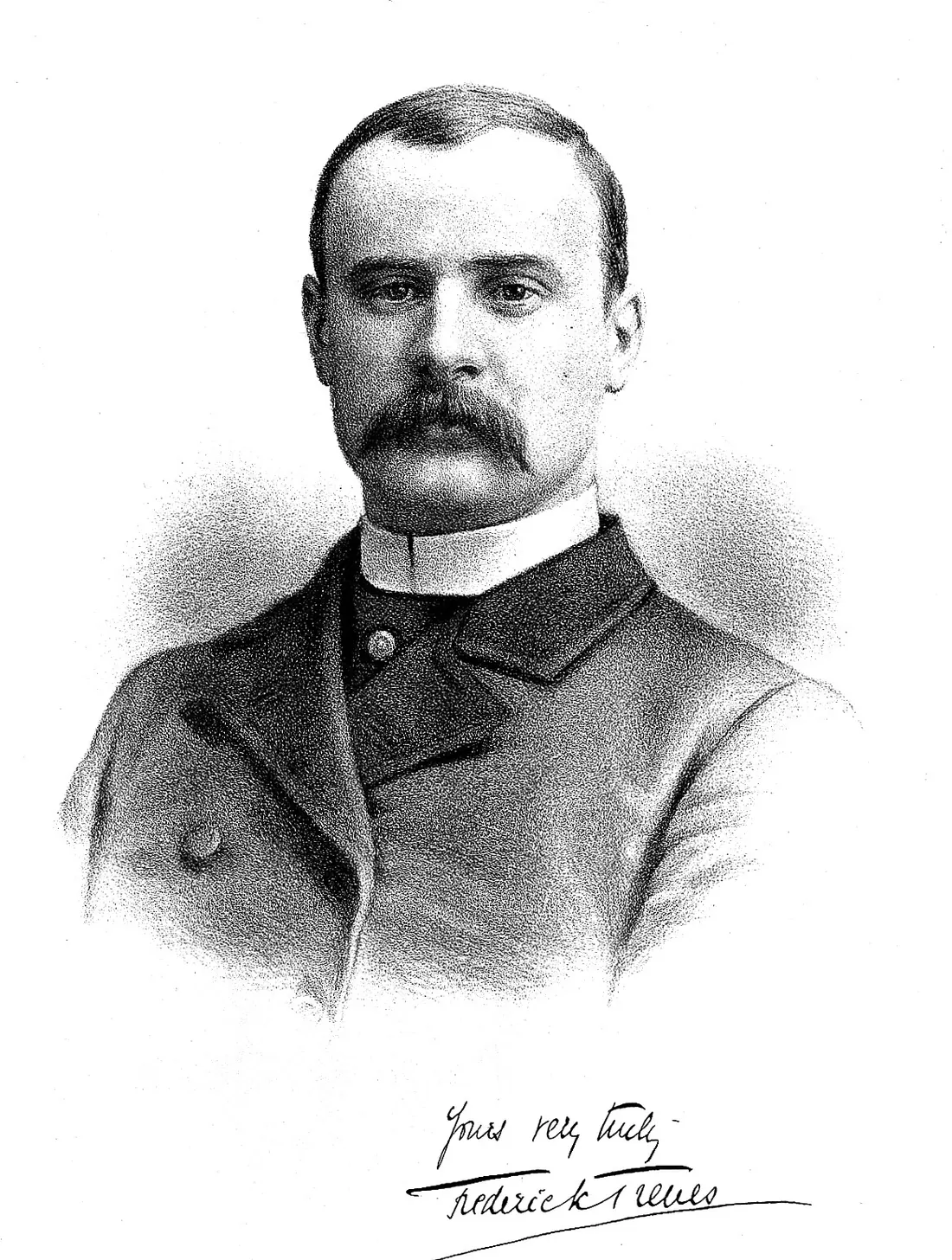
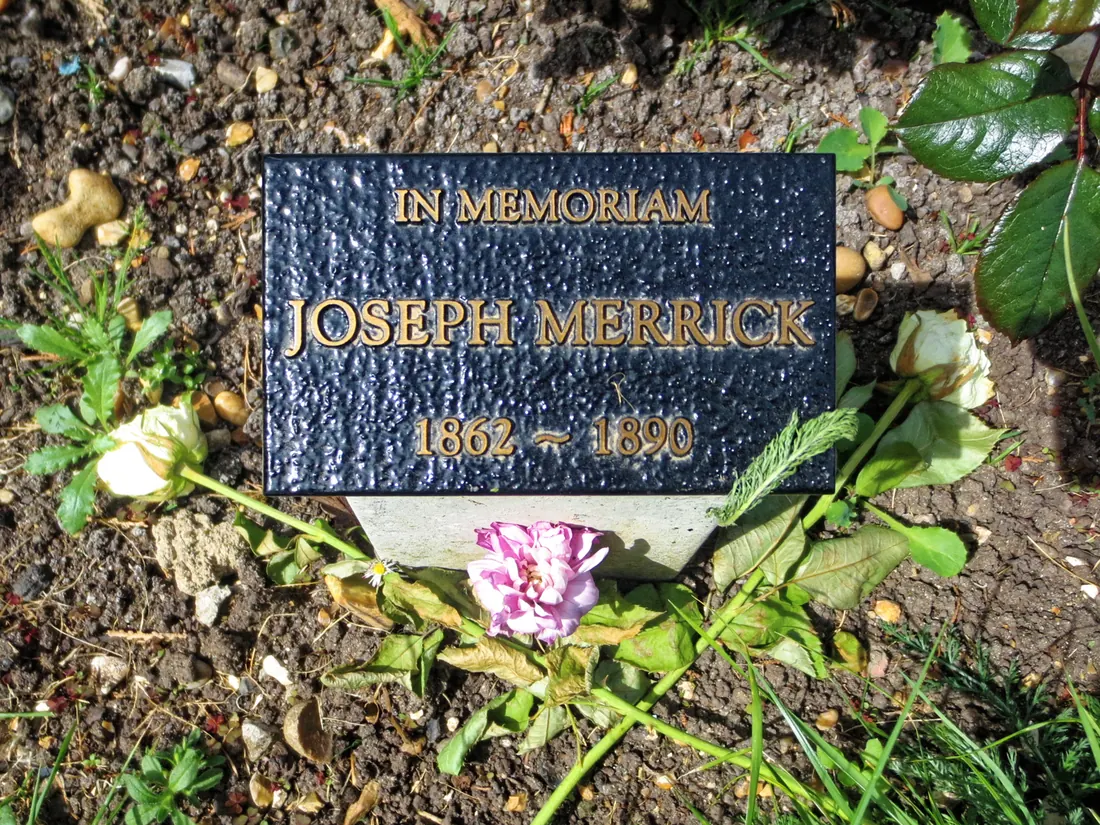
Pictures: Joseph Merrick himself is only in the carte de visite of about 1889 (Royal London Hospital Archives). Leicester is shown on a map of 1885 from Our Own Country (Cassell). The engraving of 1840 shows the Leicester Union Workhouse on Sparkenhoe Street as first built; it was “substantially rebuilt on the existing site” in 1850–51 (workhouses.org.uk), so Merrick lived in the rebuilt building on the same site. The former shop on Whitechapel Road where he was exhibited was photographed in 2008. The Ostend photochrom is from the 1890s (Wikipedia says he was refused passage at Ostend in 1886), and the Liverpool Street Station ironwork was photographed in 2011, so neither shows 1886. Treves is in a lithograph of 1884. The 1887 engraving shows the new buildings of the London Hospital opened by the Prince and Princess of Wales (the library of the medical college, the nursing home and the medical college), not Merrick’s rooms. Princess Alexandra is in W. & D. Downey’s photograph of July 27, 1889. His card model of Mainz Cathedral and his letter to Mrs. Maturin, signed “Joseph Merrick, London Hospital, Whitechapel,” were photographed in the Royal London Hospital Museum in 2008. The memorial marker in the City of London Cemetery (photographed in 2022) was identified in 2019 as the place where his soft remains were “most likely buried” (London Museum); it is a memorial, not the place where he died.
Photo credits
The archive photos in this story
The photographs and illustrations in this story are in the public domain or shared under open licenses; each one is credited below with its license. Tap one to enlarge it, or follow the link to its Wikimedia Commons page for the full record. The narration, captions and graphics in the Short are our own; its music and sound effects are credited below.
Music and sound effects
Music: Satie, Gymnopedie No. 1 (Lent et douloureux) (Robin Alciatore, piano, public domain); Mussorgsky, Pictures at an Exhibition: IV. Bydlo (piano) (Musopen, public domain); Grieg, Peer Gynt Suite No. 1, Op. 46: I. Morning Mood (Musopen Symphony Orchestra, public domain); Grieg, Peer Gynt Suite No. 1, Op. 46: II. Ase's Death (Musopen Symphony Orchestra, CC0).
Sound effects: Freesound, CC0.