Tisquantum “was a Wampanoag native of Patuxet, the site of Plymouth Colony,” the Pilgrim Hall Museum says. In Wikipedia’s words, “Bradford nicknamed him ‘Squanto’, while Edward Winslow invariably referred to him as Tisquantum, which historians believe was his proper name.” “In 1614, Tisquantum was kidnapped by English sea captain Thomas Hunt, who trafficked him to Spain, selling him in the city of Málaga.” Hunt “lured 20 Indians aboard his vessel under promise of trade, including Tisquantum,” and then “abducted seven more from the Nausets.” HISTORY.com says he was lured, “along with about two dozen other Wampanoag, onto a British ship bound for a slave market in Spain.”
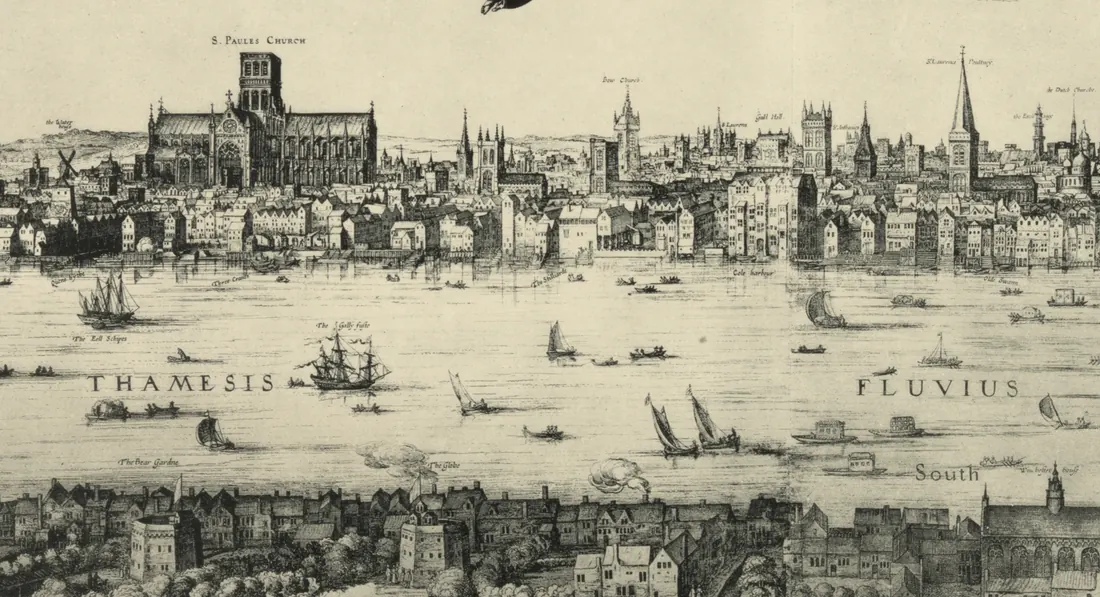
Records from Málaga, Wikipedia says, show that “on October 22, 1614, Thomas Hunt sold twenty-five Native Americans to Juan Bautista Reales.” Hunt “thought to sell them for slaves in Spain,” William Bradford wrote, “but he got away for England.” How is unknown: the captives “were said to have been ransomed by local Franciscan friars,” Wikipedia says, and “No records show how long Tisquantum lived in Spain, what he did there, or how he ‘got away for England’, as Bradford puts it.” “Tisquantum ended up in England, where he became the servant of merchant John Slany of London. He learned to speak English and make his way in an unfamiliar society,” the Pilgrim Hall Museum says.
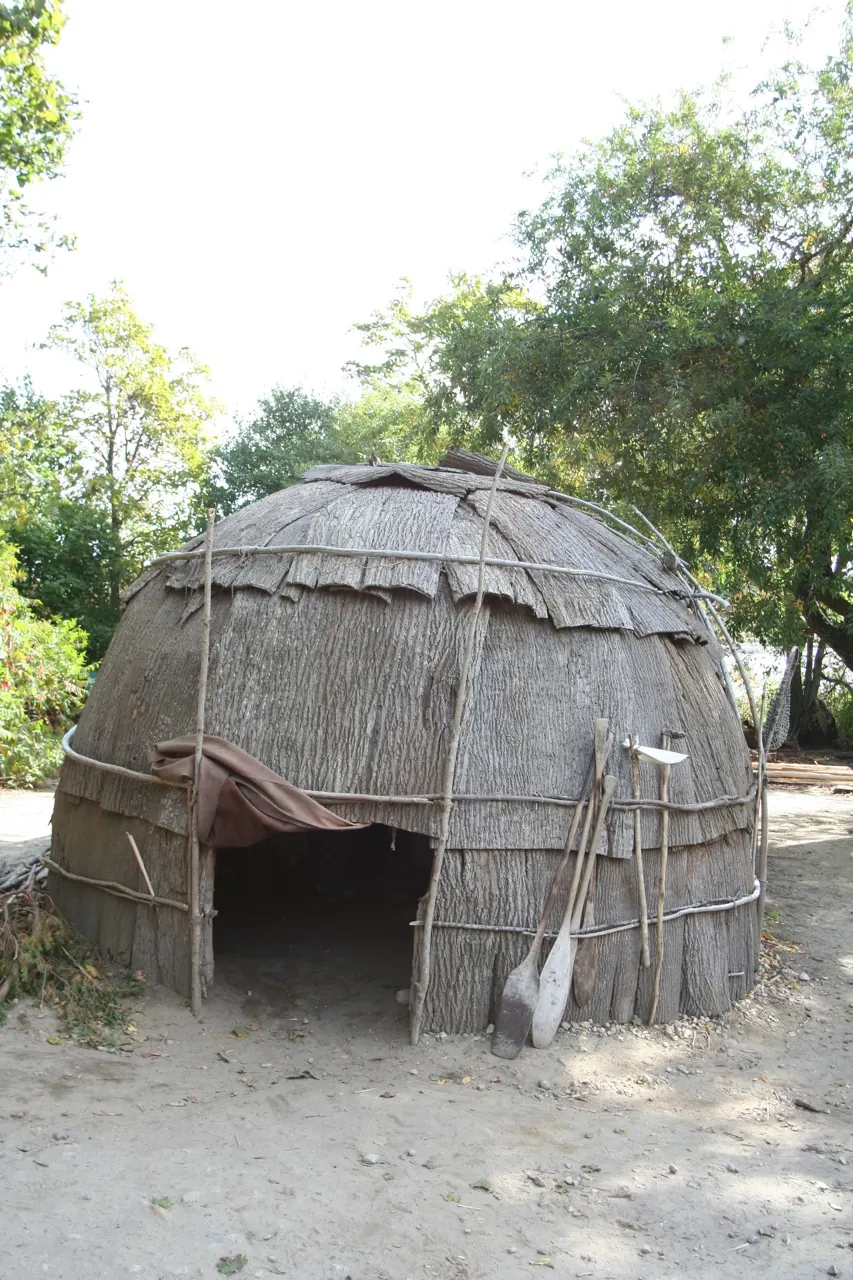
“He arrived back to his native village in America in 1619,” Wikipedia says. “After a five-year absence, Tisquantum arrived in Patuxet to deserted wetuash (homes) and overgrown cornfields - evidence of the devastating epidemics that swept through Wampanoag and other Indigenous homelands,” Plimoth Patuxet Museums says. “Tisquantum found out that nearly everyone from his home village had died in a great pandemic,” the Pilgrim Hall Museum says, and Bradford wrote: “He was a native of this place, and scarce any left besides himself.”
“The Mayflower landed in Cape Cod Bay in 1620,” and the Pilgrims made the Patuxet village’s old site Plymouth Colony; Mourt’s Relation calls it “Patuxet, where we now inhabit.” “Nearly half of the original 102 passengers had died during the first winter.” Then Samoset “returned once more on Thursday, March 22, 1621, this time with Tisquantum,” Wikipedia says, and Tisquantum “played a crucial role in the early meetings in March 1621, partly because he could speak English.” He taught them to plant corn. Bradford wrote: “Squanto stood them in great stead, showing them both the manner how to set it, and after how to dress and tend it; Also he told them except they got fish & set with it (in these old grounds) it would come to nothing.” Of their own seed, “Some English seed they sew, as wheat and pease, but it came not to good.” “But without Tisquantum to interpret and guide them to food sources, the Plymouth Colony Pilgrims might never have survived,” HISTORY.com says.
He was also a complicated figure. Bradford wrote that “Squanto sought his owne ends, and plaid his owne game,” and the Pilgrim Hall Museum says that “Tisquantum manipulated translations for his own advantage and lost the favor of Ousamequin, the Massasoit.” In 1622, on a voyage on which the ship harbored “near Mamamoycke (now Chatham),” Wikipedia says, “Tisquantum contracted what Bradford called an ‘Indian fever.’” Bradford wrote: “In this place Tisquantum fell sick of Indian fever, bleeding much at the nose (which the Indians take as a symptom of death) and within a few days died there; desiring the Governor to pray for him, that he might go to the Englishmen’s God in Heaven; and bequeathed sundry of his things to English friends, as remembrances of his love; of whom they had a great loss.”
Fact check
The facts and where they come from
- He was sold as a slave, but when he got home, his whole village was gone. Pilgrim Hall Museum: “Captain Thomas Hunt tricked a group of Wampanoag men and boys and sold them as slaves in Spain.” Wikipedia: “In 1614, Tisquantum was kidnapped by English sea captain Thomas Hunt, who trafficked him to Spain, selling him in the city of Málaga”; “They discovered that all inhabitants had died in Tisquantum’s home village at Patucket.” Plimoth Patuxet Museums: “After a five-year absence, Tisquantum arrived in Patuxet to deserted wetuash (homes) and overgrown cornfields.” Bradford: “He was a native of this place, and scarce any left besides himself.” 312
- His name was Tisquantum; the English called him Squanto. Wikipedia: “Bradford nicknamed him ‘Squanto’, while Edward Winslow invariably referred to him as Tisquantum, which historians believe was his proper name.” Pilgrim Hall Museum: “Tisquantum, also known by the Pilgrims as Squanto.” 13
- He was Wampanoag, from Patuxet. Pilgrim Hall Museum: he “was a Wampanoag native of Patuxet, the site of Plymouth Colony.” Wikipedia: he “was a member of the Patuxet tribe of Wampanoags.” 31
- In 1614, English captain Thomas Hunt lured him and over twenty others aboard. Wikipedia: Hunt “lured 20 Indians aboard his vessel under promise of trade, including Tisquantum,” then “abducted seven more from the Nausets.” Mourt’s Relation (Plimoth Patuxet Museums): “one of the twenty Captives that by [Thomas] Hunt were carried away.” HISTORY.com: “he had been lured, along with about two dozen other Wampanoag, onto a British ship bound for a slave market in Spain.” 124
- Hunt sold them as slaves in Spain. Pilgrim Hall Museum: Hunt “sold them as slaves in Spain.” Wikipedia, citing the Málaga records: “on October 22, 1614, Thomas Hunt sold twenty-five Native Americans to Juan Bautista Reales.” 31
- He got away to England and learned English. Bradford (Plimoth Patuxet Museums): “who thought to sell them for slaves in Spain, but he got away for England.” Pilgrim Hall Museum: “Tisquantum ended up in England, where he became the servant of merchant John Slany of London. He learned to speak English and make his way in an unfamiliar society.” 23
- In 1619, he made it home. Wikipedia: “He arrived back to his native village in America in 1619.” Pilgrim Hall Museum: “Returning home in 1619.” 13
- The homes stood empty, and the cornfields were overgrown. Plimoth Patuxet Museums: “deserted wetuash (homes) and overgrown cornfields - evidence of the devastating epidemics that swept through Wampanoag and other Indigenous homelands.” 2
- Disease had killed nearly everyone in his village. Pilgrim Hall Museum: “Tisquantum found out that nearly everyone from his home village had died in a great pandemic.” 3
- Then the Mayflower arrived, and the English settled on his land. Wikipedia: “The Mayflower landed in Cape Cod Bay in 1620”; “the Pilgrims had established the Patuxets former habitation as the site of Plymouth Colony.” Pilgrim Hall Museum: “When English colonist arrived and occupied Patuxet.” Mourt’s Relation: “Patuxet, where we now inhabit.” 132
- That first winter, nearly half of them died. Wikipedia (Plymouth Colony): “Nearly half of the original 102 passengers had died during the first winter.” 5
- In March 1621, he walked in, speaking English. Wikipedia: Samoset “returned once more on Thursday, March 22, 1621, this time with Tisquantum”; “He played a crucial role in the early meetings in March 1621, partly because he could speak English.” Mourt’s Relation (Plimoth Patuxet Museums): he “could speak a little English.” 12
- He taught them to plant corn, feeding the soil with fish. Bradford (Plimoth Patuxet Museums): “Squanto stood them in great stead, showing them both the manner how to set it, and after how to dress and tend it; Also he told them except they got fish & set with it (in these old grounds) it would come to nothing.” 2
- Without him, they might not have survived. HISTORY.com: “But without Tisquantum to interpret and guide them to food sources, the Plymouth Colony Pilgrims might never have survived.” Wikipedia: “this proved vital because the seeds the Pilgrims had brought from England mostly failed.” Bradford: “Some English seed they sew, as wheat and pease, but it came not to good.” 412
- In 1622, he caught a fever. Wikipedia: “During that voyage, Tisquantum contracted what Bradford called an ‘Indian fever’”; the ship harbored “near Mamamoycke (now Chatham).” Pilgrim Hall Museum: “In 1622, before further conflict ensued, Tisquantum died of illness.” 13
- He asked the governor to pray for him, and left his things to English friends. Bradford (Wikipedia): “In this place Tisquantum fell sick of Indian fever, bleeding much at the nose (which the Indians take as a symptom of death) and within a few days died there; desiring the Governor to pray for him, that he might go to the Englishmen’s God in Heaven; and bequeathed sundry of his things to English friends, as remembrances of his love; of whom they had a great loss.” 1
Sources
- Squanto Wikipedia
- Tisquantum (with extracts from Bradford’s Of Plymouth Plantation and Mourt’s Relation) Plimoth Patuxet Museums
- Tisquantum / Squanto Pilgrim Hall Museum
- Who Was Squanto, and What Was His Role in the First Thanksgiving? (Tony Tekaroniake Evans) HISTORY.com
- Plymouth Colony Wikipedia
Notes
“The last of the Patuxet” is a popular claim, but the primary sources differ: Bradford wrote “scarce any left besides himself,” and the Pilgrim Hall Museum says “nearly everyone” from his village had died. The Short says “nearly everyone in his village,” and its opening “his whole village was gone” means the deserted homes that Plimoth Patuxet Museums describes.
How he left Spain is unknown: the captives “were said to have been ransomed by local Franciscan friars” (Wikipedia), and the Pilgrim Hall Museum says “Freed by intermediaries.” We use Bradford’s “got away,” and never say he escaped or spent years in slavery, which the sources can’t support.
How many captives: 20 from Patuxet plus seven Nauset (Wikipedia, Mourt’s Relation), 25 sold in Málaga (the Málaga records, via Wikipedia), or “about two dozen” (HISTORY.com). The Short says “over twenty others.”
Where he learned English: in England, with John Slany (Pilgrim Hall Museum), or “during his captivity” (Wikipedia). The Short just says he learned it.
The disease: what it was is debated (leptospirosis, smallpox and others are proposed), so we say only “disease.”
His death: Bradford, who was there, says fever. The historian Nathaniel Philbrick suggests he may have been poisoned (Wikipedia; HISTORY.com: “perhaps even poisoned by his own people in late 1622”); the Short follows Bradford and leaves the poisoning theory out.
His politics: in 1622 he “sought his owne ends” (Bradford), and Massasoit demanded his execution (Wikipedia, Pilgrim Hall Museum). To many Wampanoag today he is a complicated figure; the Wampanoag historian Nanepashemet, quoted by Plimoth Patuxet Museums, says “He is often looked upon as an anti-hero due to his plotting against Massasoit.”
Thanksgiving is left out: Wikipedia says Bradford “did not, however, describe any harvest festival with their native allies,” and HISTORY.com and Plimoth Patuxet Museums treat the popular story as partly myth.
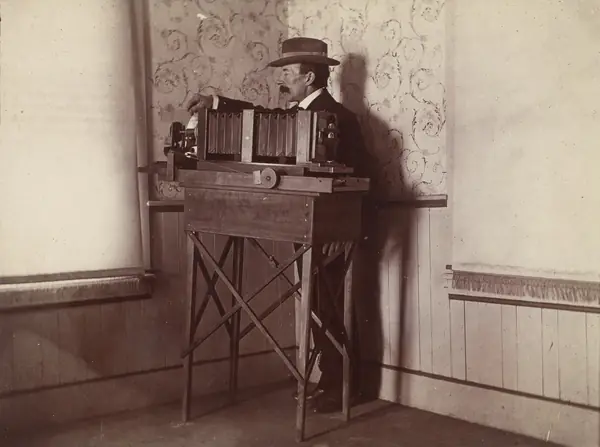
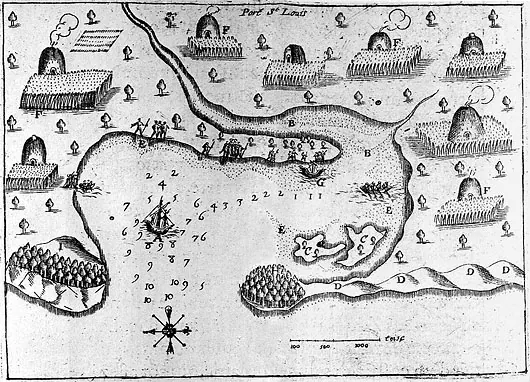
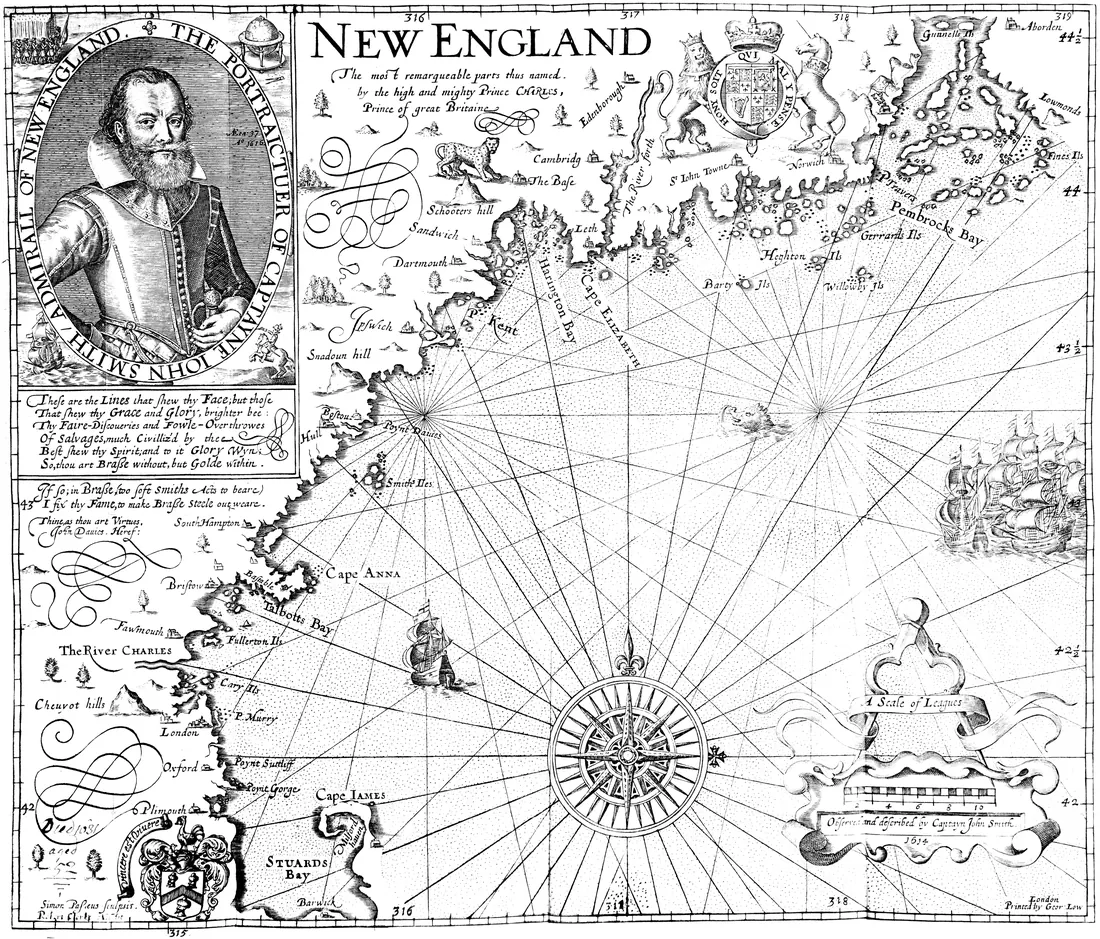
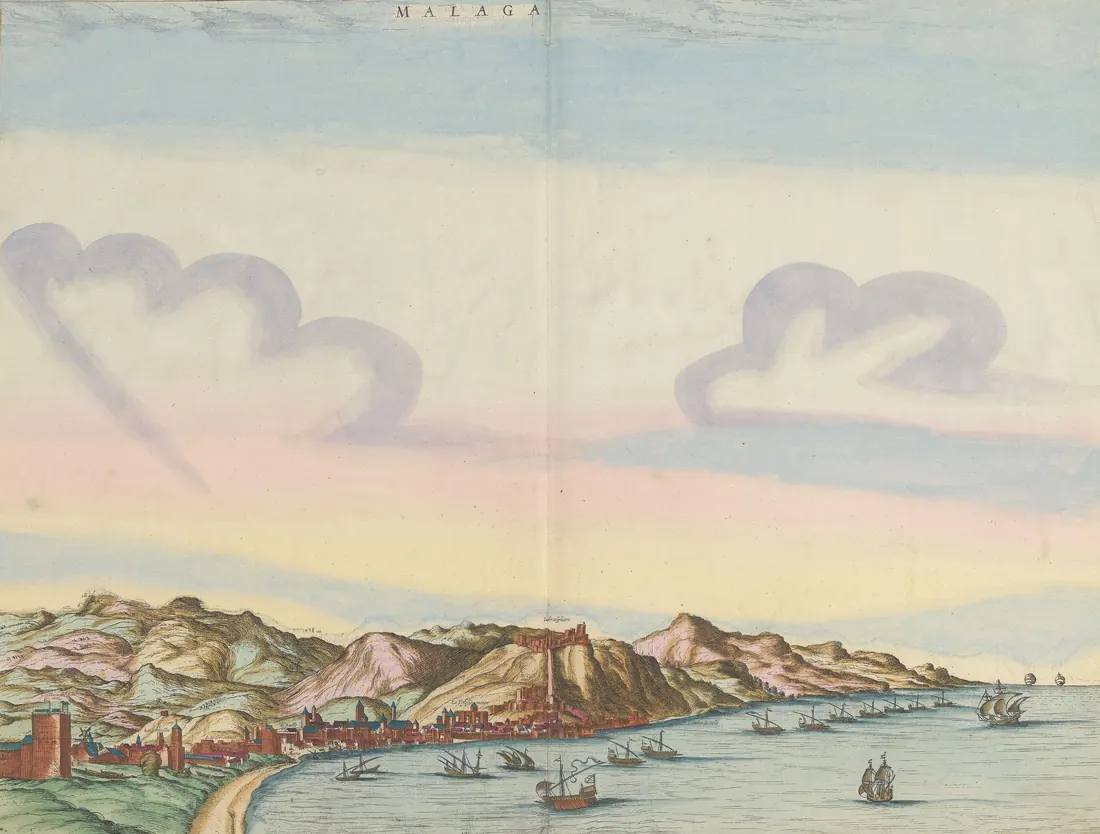
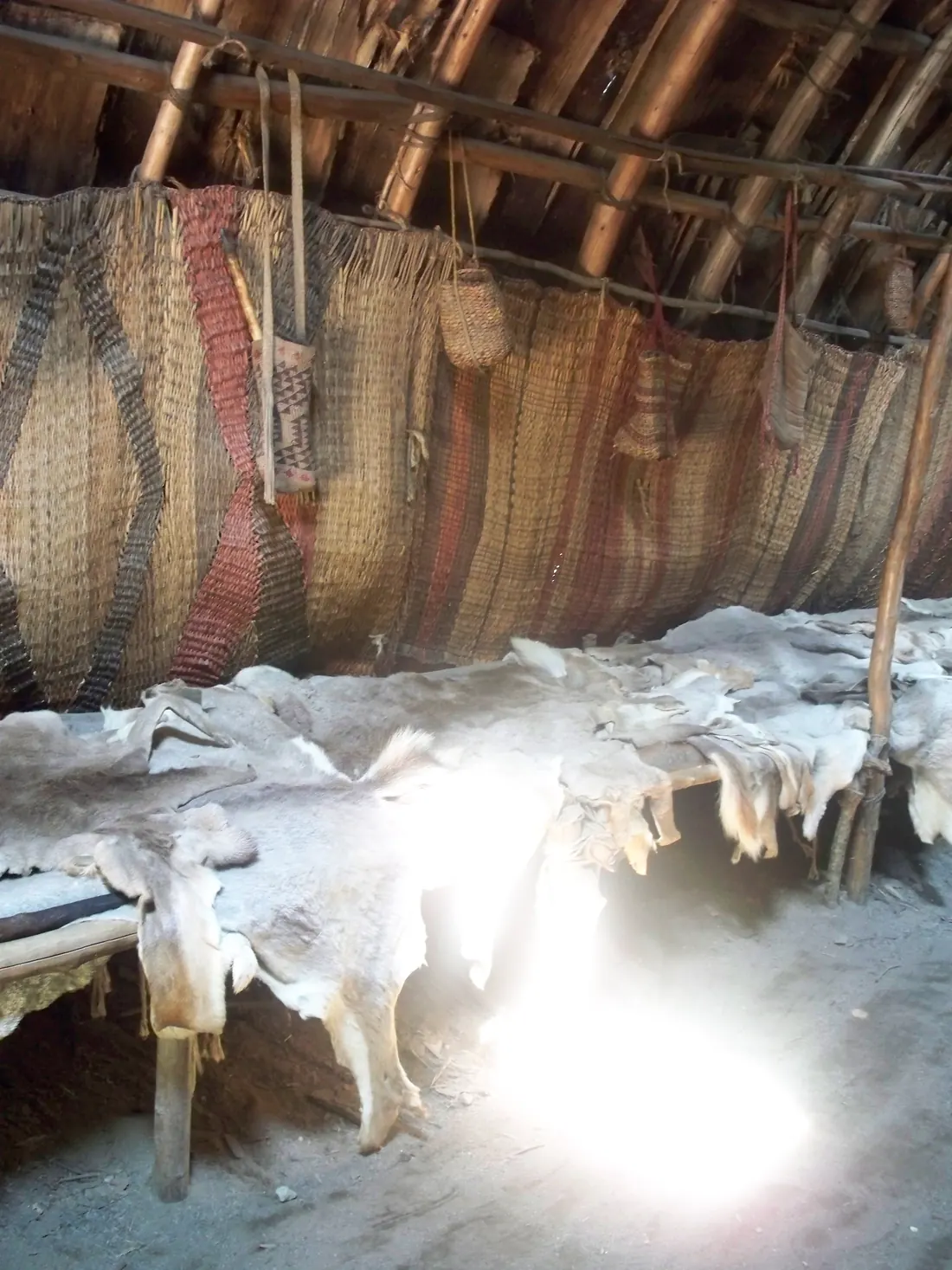
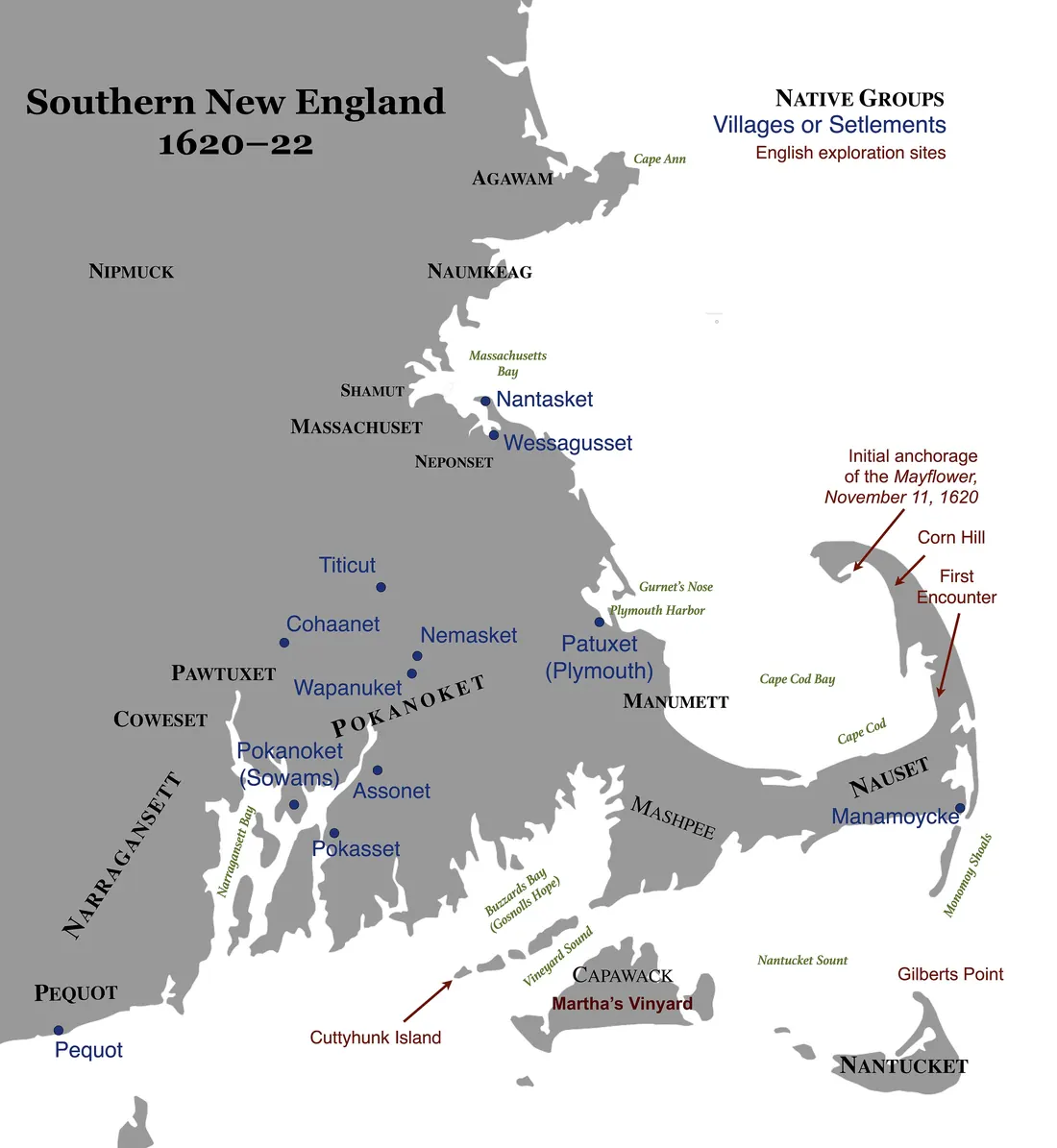
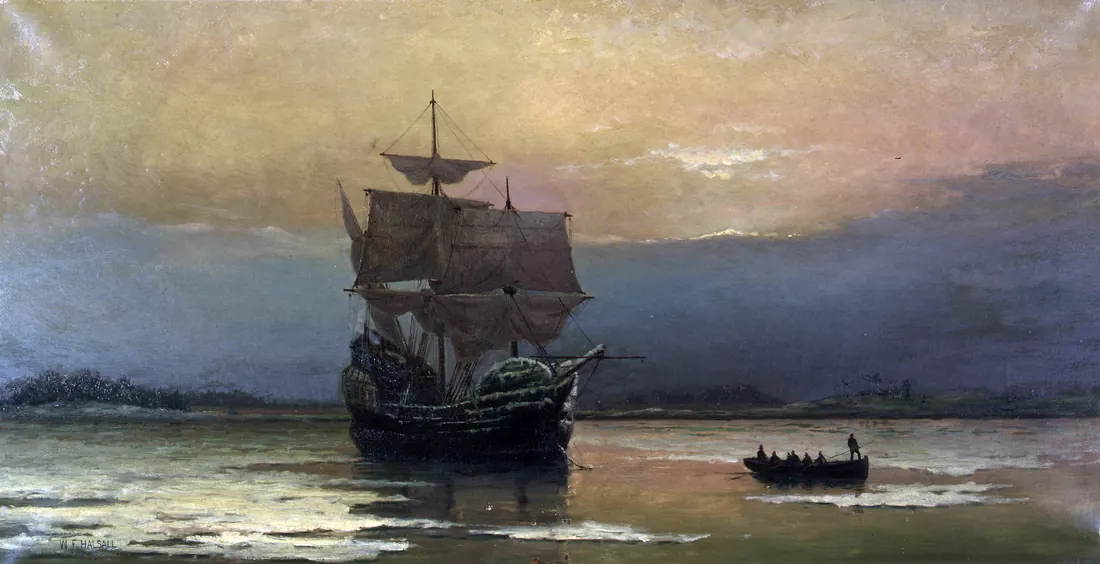
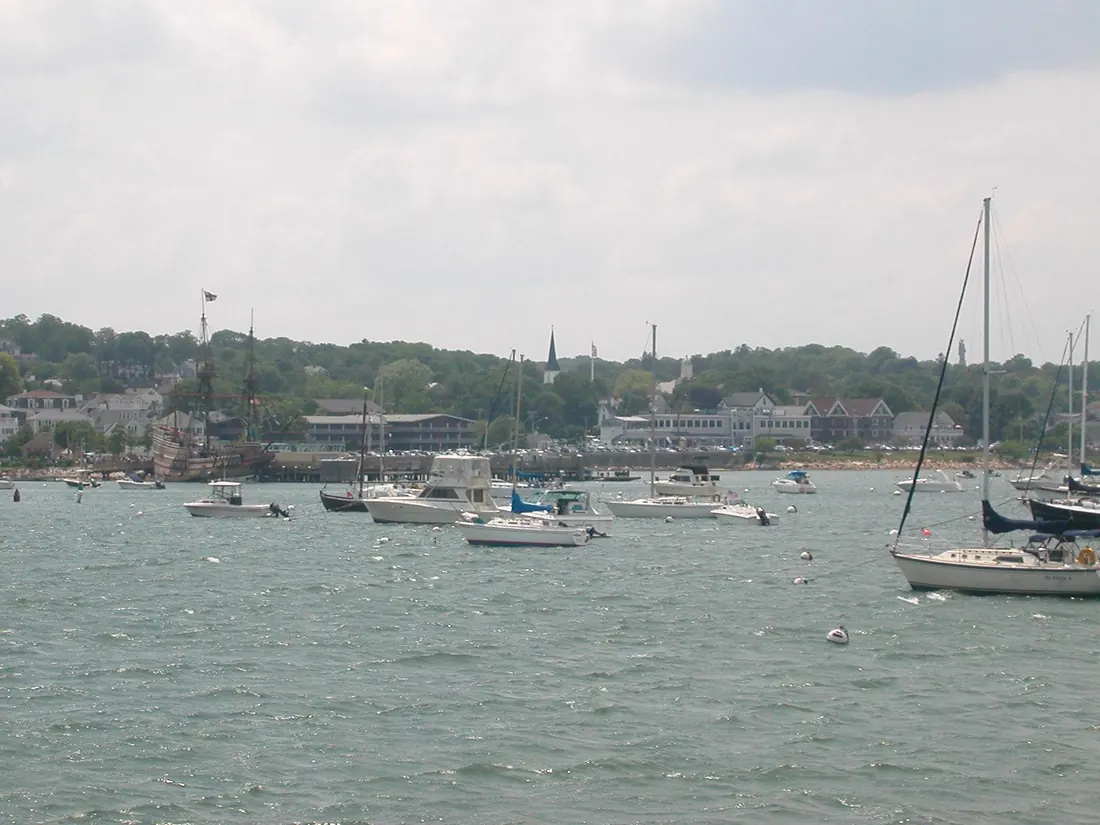
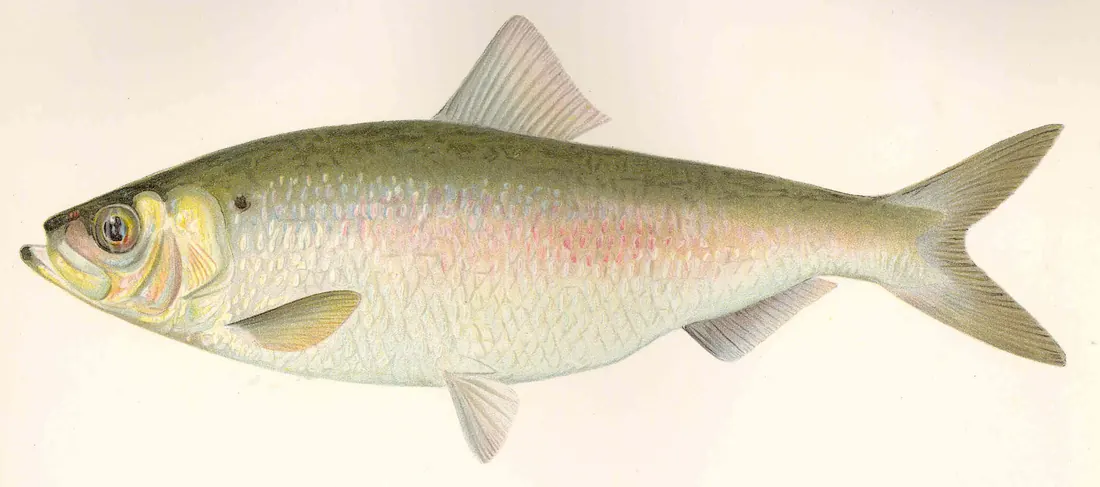
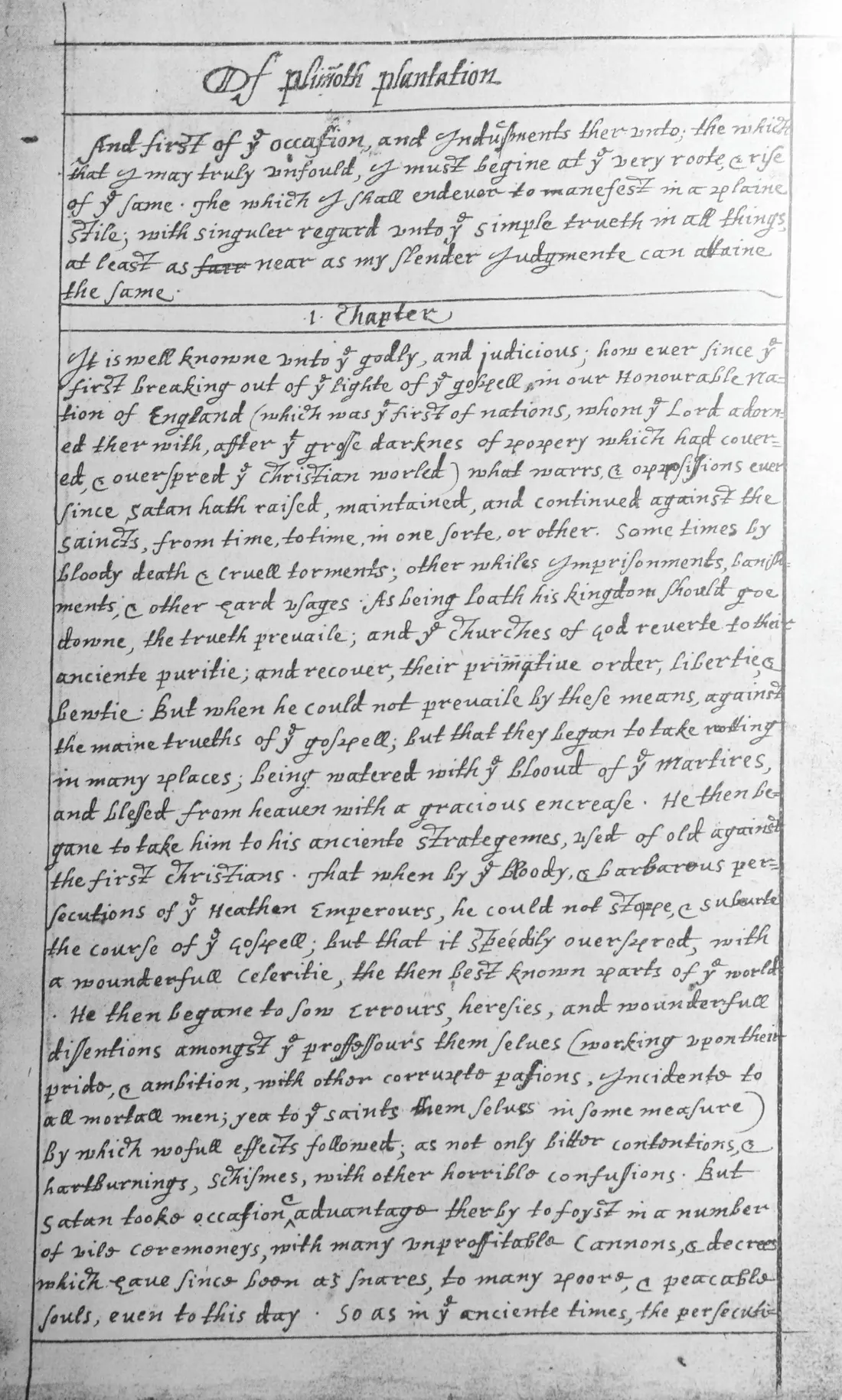
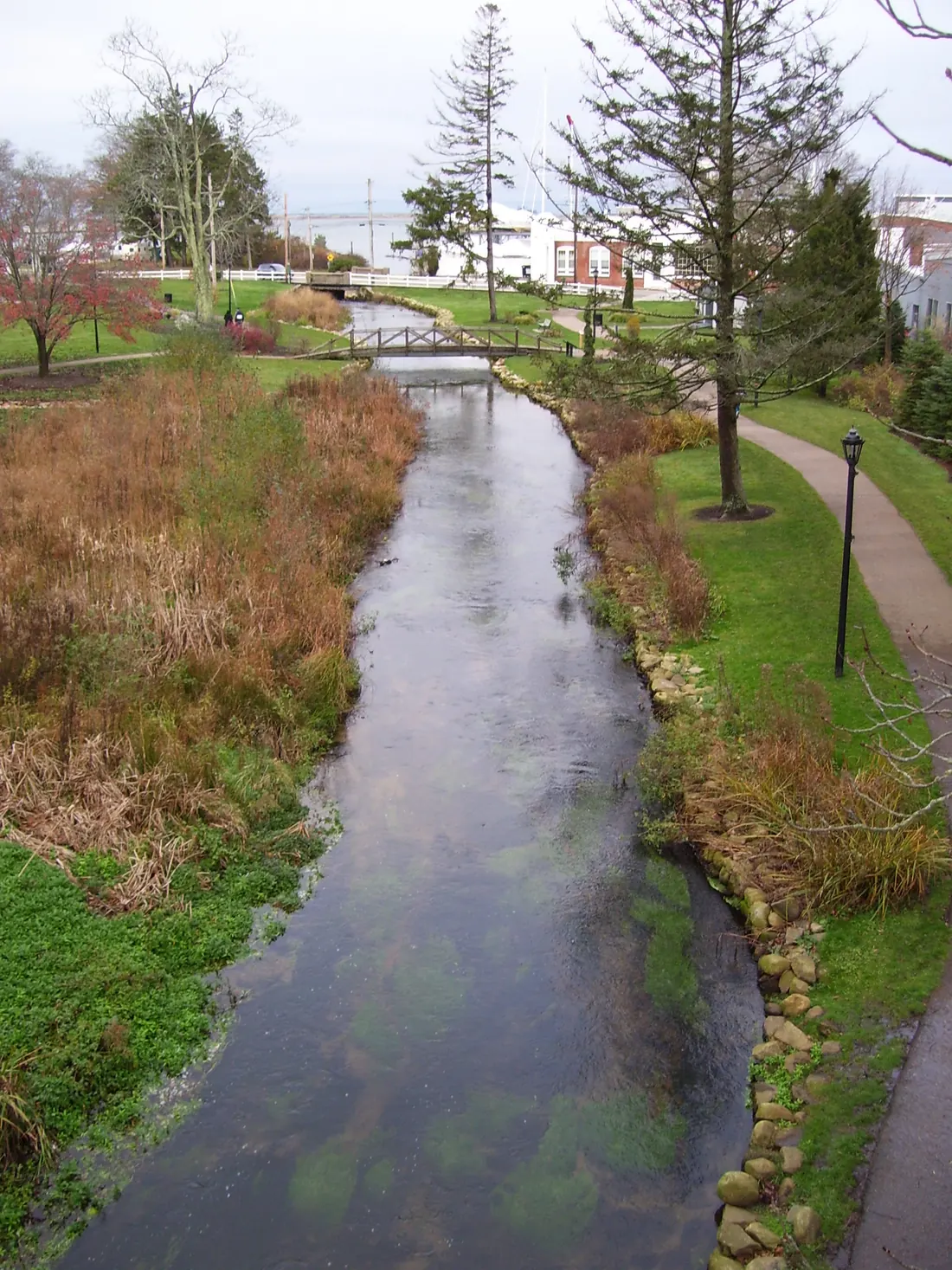
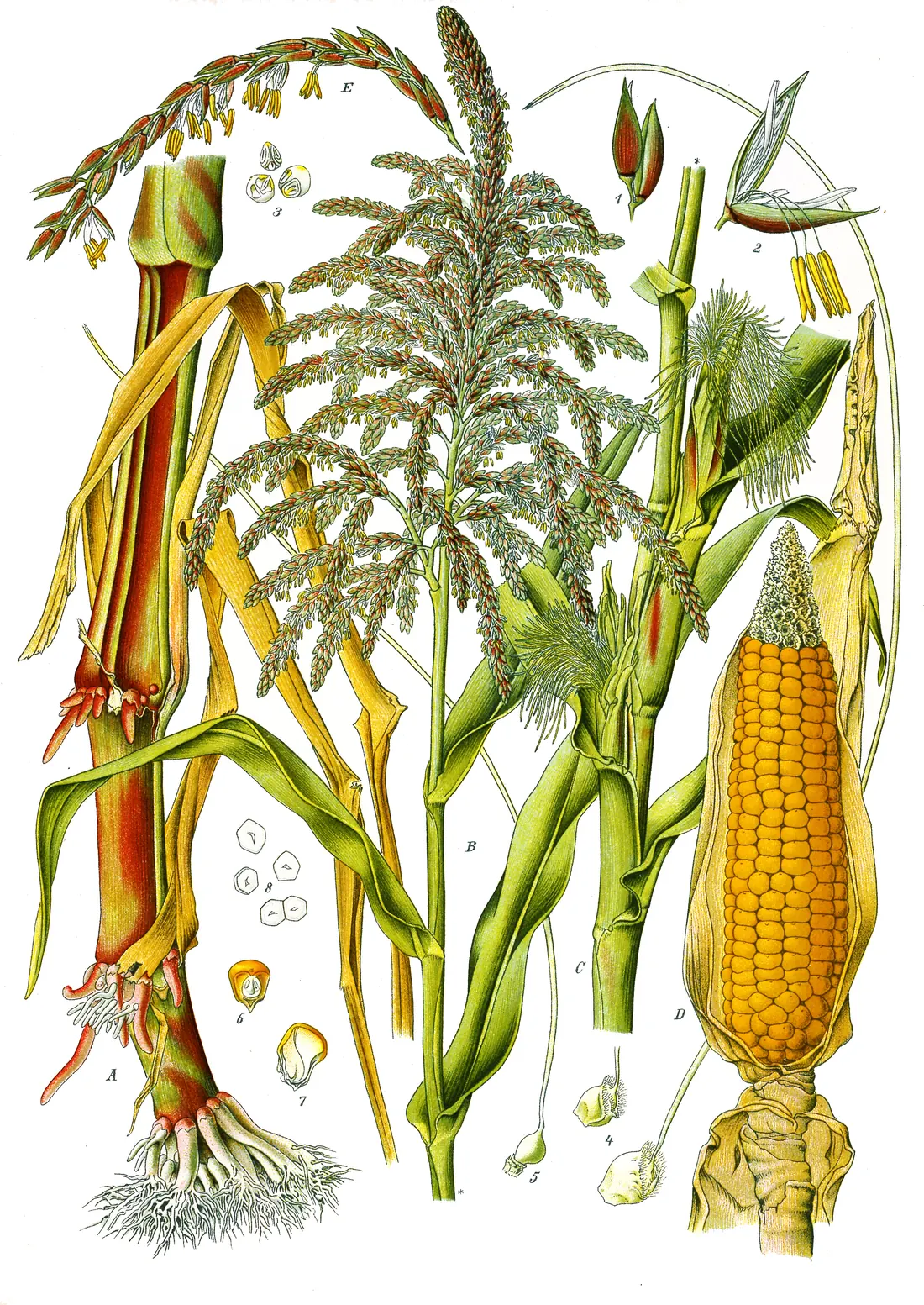
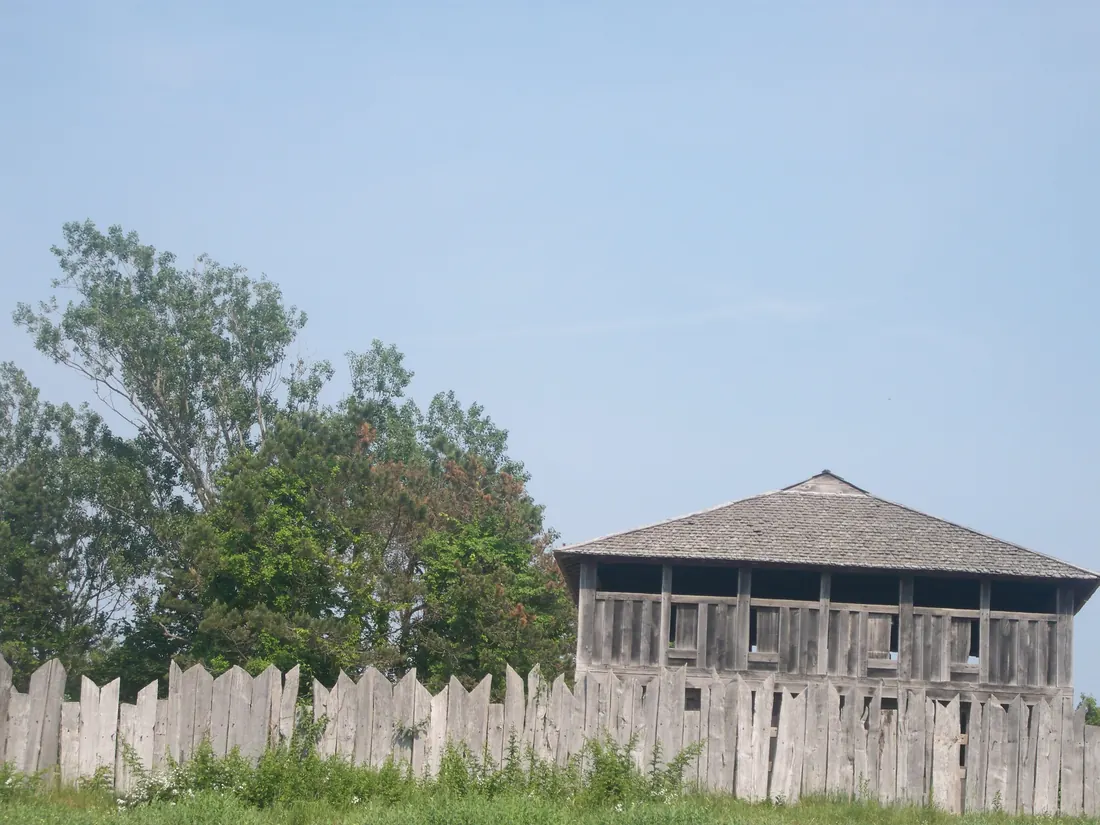
Pictures: no portrait of Tisquantum exists, and we show no artist’s picture of him. Samuel de Champlain’s drawing of Plymouth Harbor (“Port St. Louis”), made in 1605 and published in 1613, shows the Patuxet houses and cornfields nine years before the kidnapping. John Smith’s map of New England, engraved by Simon de Passe and published in 1616, comes from the 1614 voyage on which Hunt commanded the second ship (Wikipedia); its portrait is John Smith, and its ship is a map ornament, not Hunt’s ship. Málaga is shown in a view of 1657, and London in Claes Visscher’s panorama of 1616. William Halsall’s Mayflower in Plymouth Harbor (1882) is an artist’s version. The two Wampanoag houses and the English village are modern reconstructions, near Plymouth and at Plimoth Patuxet Museums, photographed in 2006 and 2008, and the harbor (with the Mayflower II replica) and Town Brook were photographed in 2008 and 2009. The map of Southern New England, 1620–22, was drawn in 2017. The maize is a plate from Köhler’s Medizinal-Pflanzen (1887), the alewife (a river herring) is from a New York fisheries report of 1898, and the manuscript page is the first page of Bradford’s Of Plimoth Plantation, from the 1900 facsimile.
Photo credits
The archive photos in this story
The photographs and illustrations in this story are in the public domain or shared under open licenses; each one is credited below with its license. Tap one to enlarge it, or follow the link to its Wikimedia Commons page for the full record. The narration, captions and graphics in the Short are our own; its music and sound effects are credited below.
Music and sound effects
Music: Mussorgsky, Night on Bald Mountain (1886 version) (Musopen, public domain); Dvorak, Symphony No. 9 'From the New World': II. Largo (Musopen, public domain).
Sound effects: Freesound, CC0.