“Bobby belonged to John Gray, who worked for the Edinburgh City Police as a nightwatchman,” Wikipedia says, and “Bobby would follow John Gray while he was at work.” Historic UK tells it this way: “To keep him company through the long winter nights John took on a partner, a diminutive Skye Terrier, his ‘watchdog’ called Bobby.” History Hit adds that “At the time, policemen were obliged to have watchdogs with them.” Gray died, Wikipedia says, “on 15 February 1858 and was buried in Greyfriars Kirkyard.”
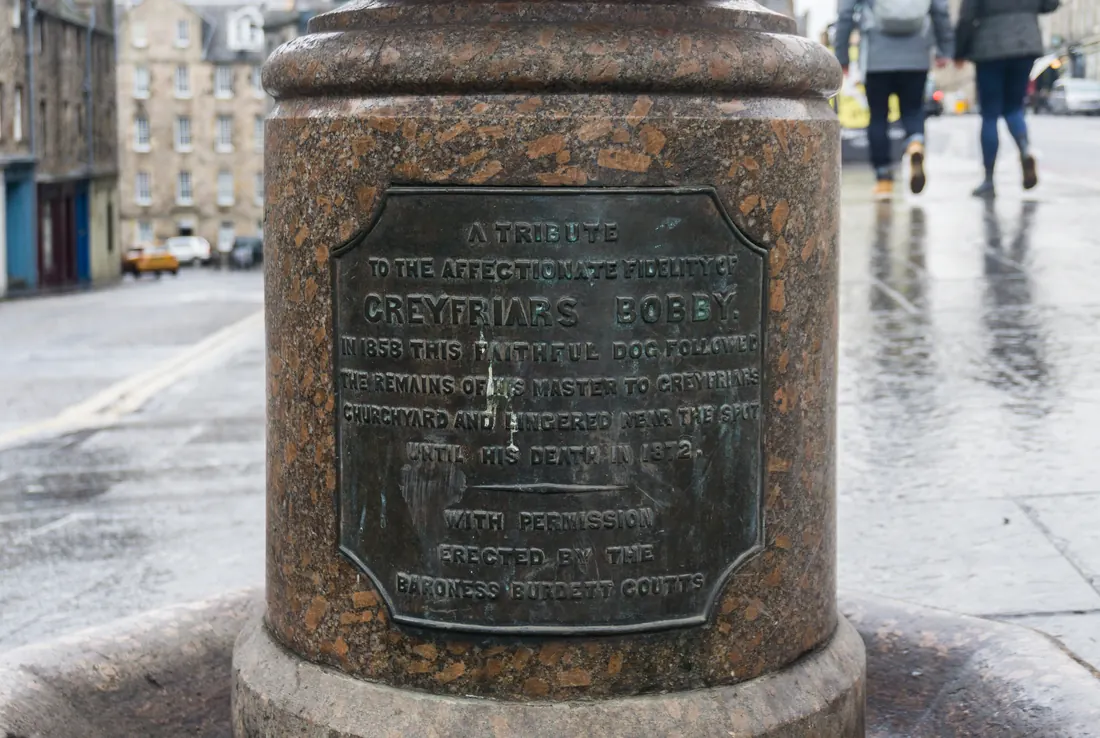
What happened next is the popular account, and Wikipedia says that “its accuracy is disputed.” In the story, Bobby would not leave. The inscription on his fountain says that “In 1858 this faithful dog followed the remains of his master to Greyfriars churchyard and lingered near the spot until his death in 1872.” Historic UK writes that “Bobby soon touched the hearts of the local residents when he refused to leave his master’s grave, even in the worst weather conditions.” “The gardener and keeper of Greyfriars tried on many occasions to evict Bobby from the Kirkyard,” it goes on. “In the end he gave up and provided a shelter for Bobby by placing sacking beneath two tablestones at the side of John Gray’s grave.”
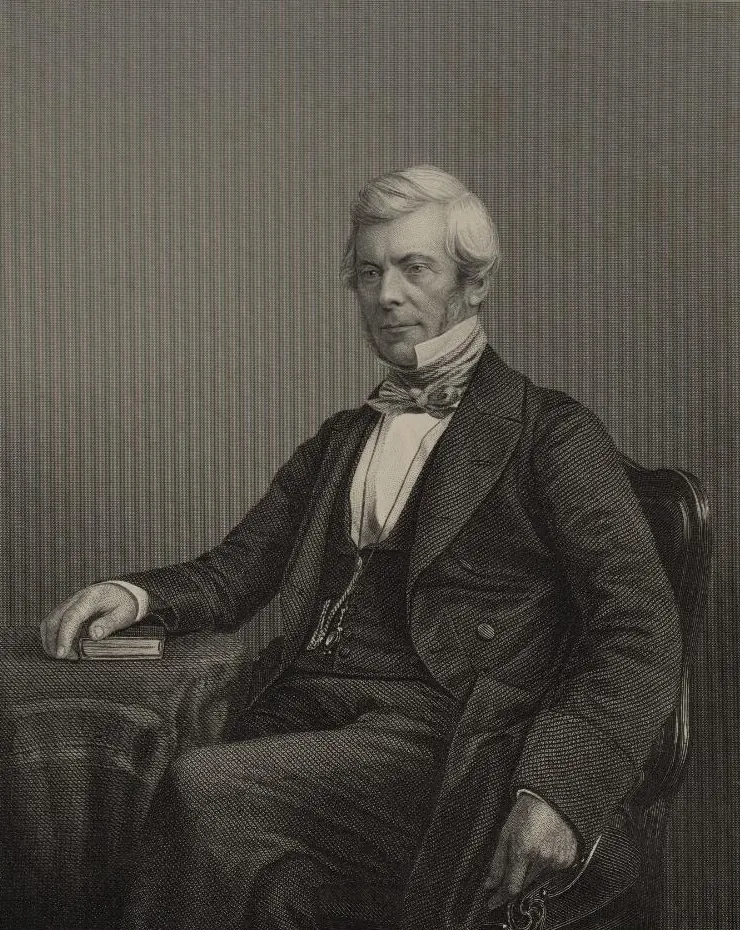
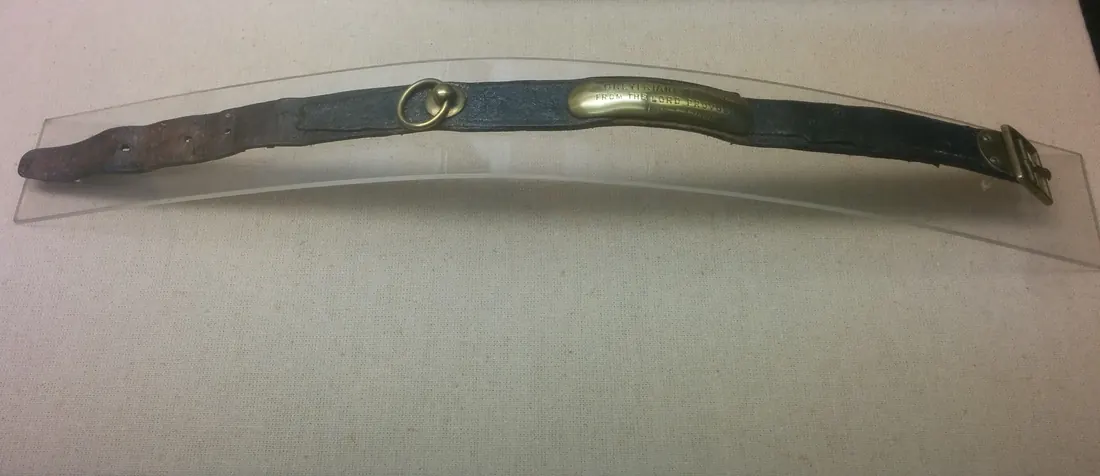
The license is documented. “In 1867 a new bye-law was passed that required all dogs to be licensed in the city or they would be destroyed,” Historic UK says. Wikipedia: “In 1867 the lord provost of Edinburgh, Sir William Chambers, who was also a director of the Scottish Society for Prevention of Cruelty to Animals, paid for Bobby’s licence and gave the dog a collar, now in the Museum of Edinburgh.” The Gazetteer for Scotland says “he personally bought the dog a collar, paid for his annual dog licence.” Its brass inscription reads “Greyfriars Bobby from the Lord Provost 1867 licensed,” Historic UK says, and “This can be seen at the Museum of Edinburgh.”
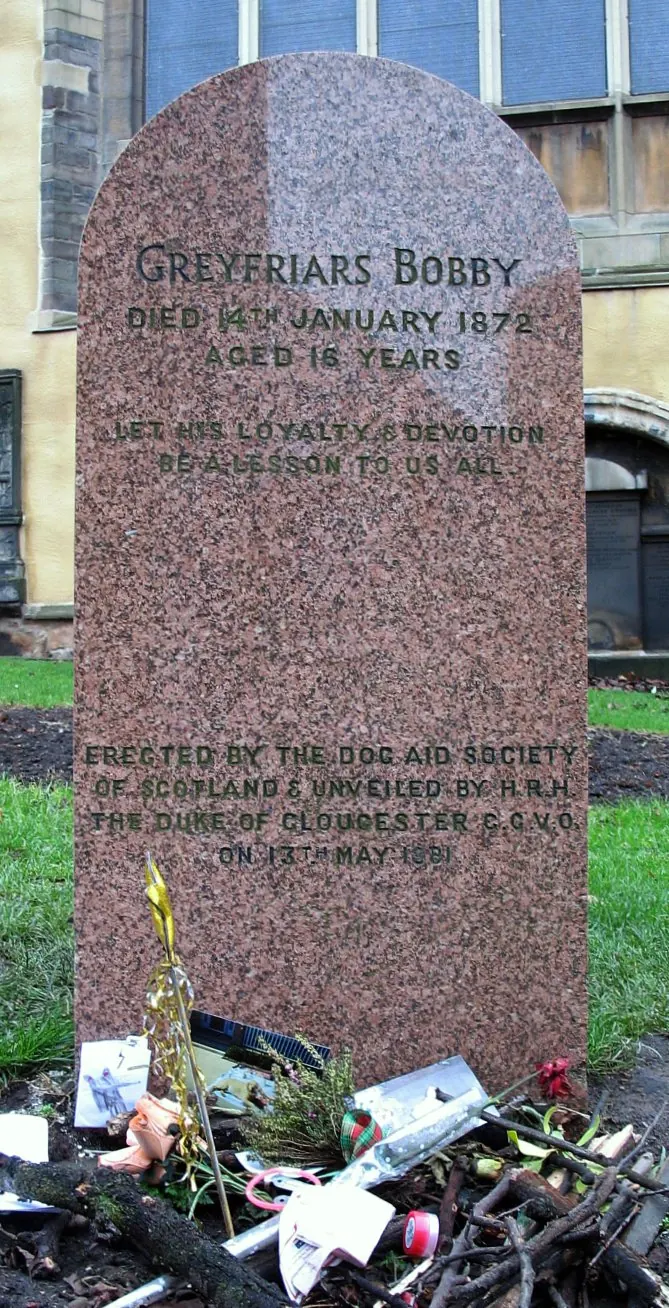
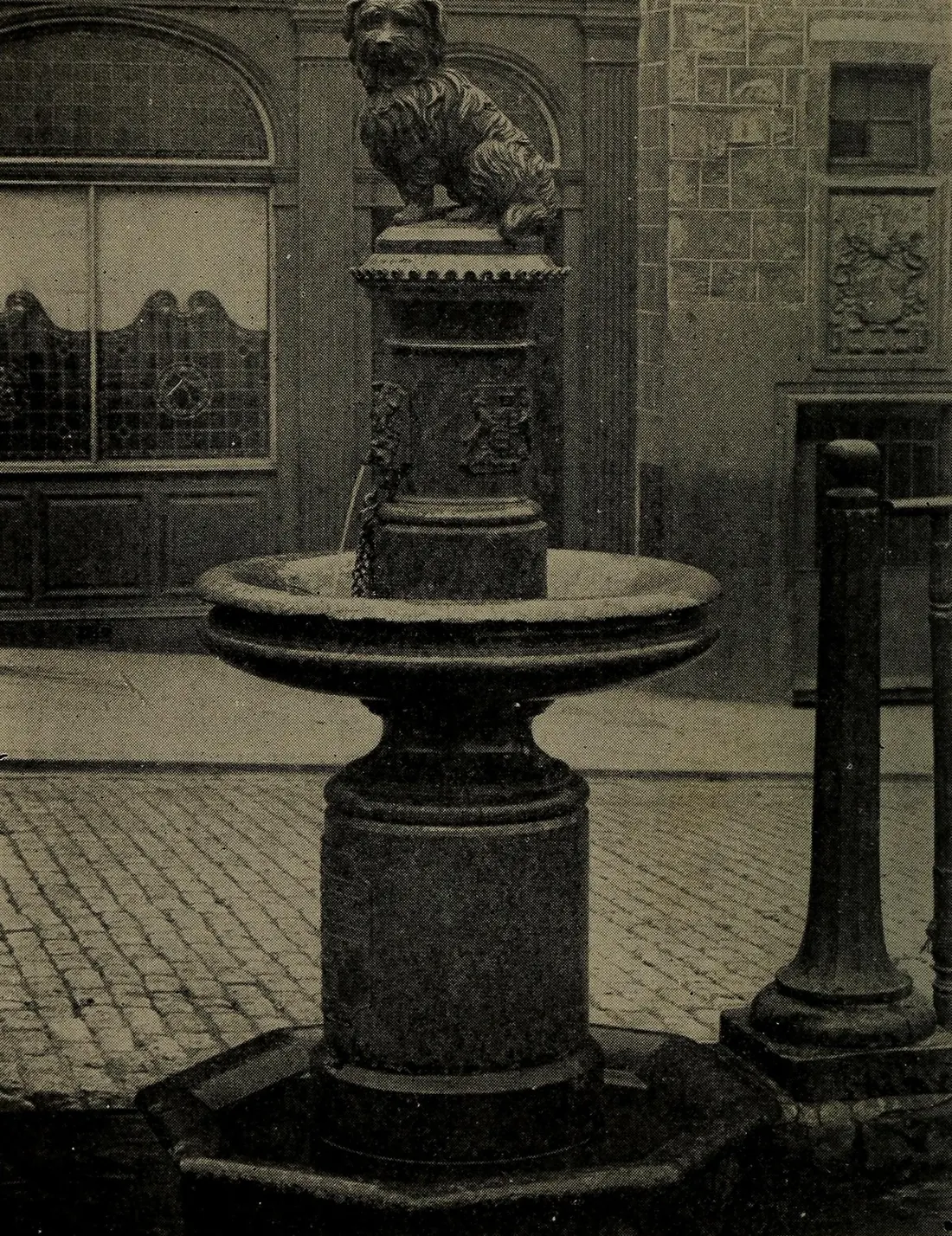
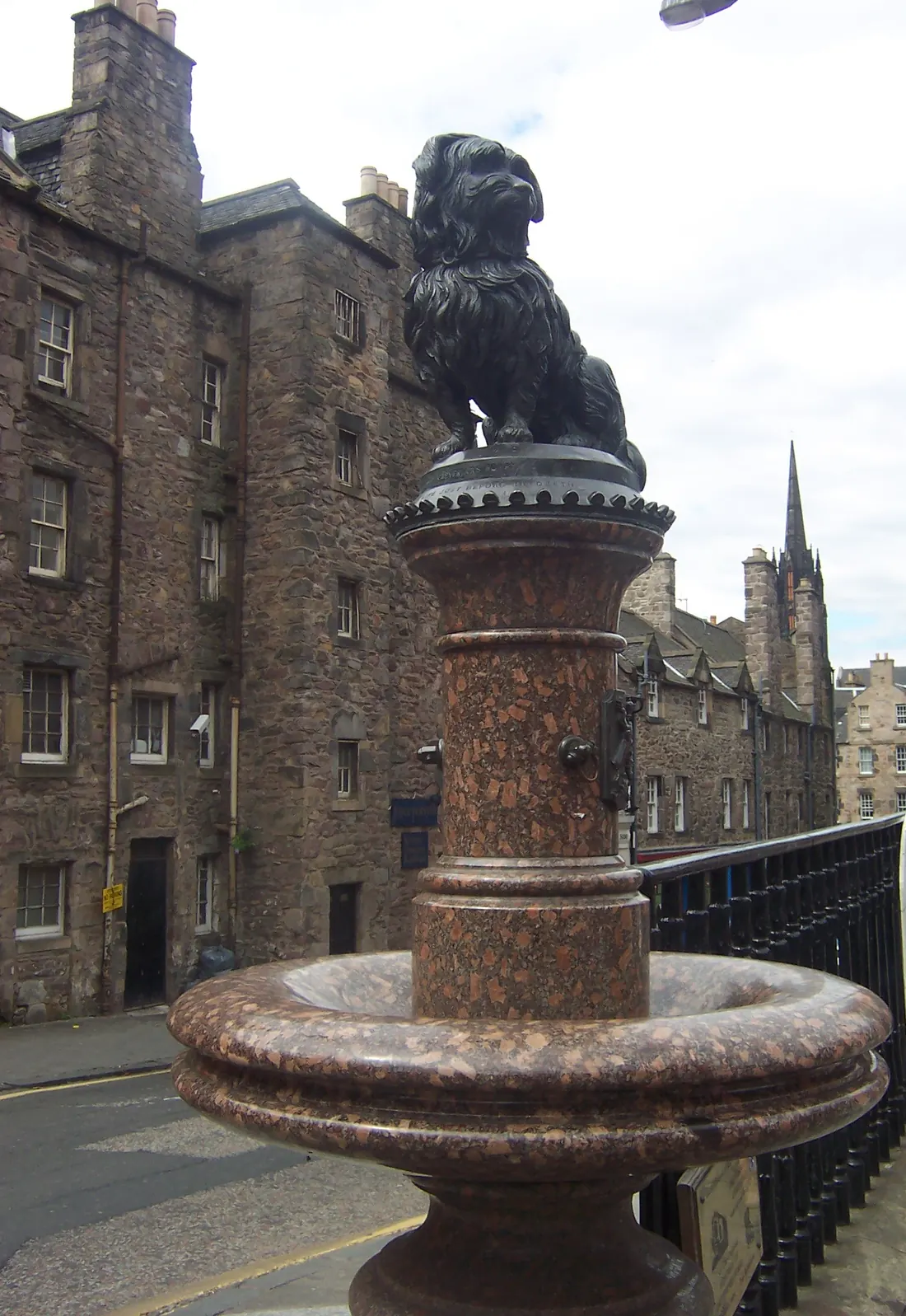
“Bobby is said to have sat by the grave for 14 years. He died on 14 January 1872,” Wikipedia says; Historic UK: “For fourteen years the dead man’s faithful dog kept constant watch and guard over the grave until his own death in 1872.” “He was buried just inside the gate of Greyfriars Kirkyard, not far from John Gray’s grave.” “A year later, the English philanthropist Lady Burdett-Coutts was charmed by the story and had a drinking fountain topped with Bobby’s statue (commissioned from the sculptor William Brodie) erected at the junction of George IV Bridge and Candlemaker Row (opposite the entrance to the churchyard) to commemorate him,” Wikipedia says, and History Hit: “It was unveiled on 15 November 1873.” His headstone, “erected by The Dog Aid Society of Scotland and unveiled by the Duke of Gloucester on 13 May 1981,” reads: “Let his loyalty and devotion be a lesson to us all.”
Not everyone believes the vigil. “Jan Bondeson’s book advances the view that fundamental claims about the dog and its loyalty are untrue,” Wikipedia says, and “Bondeson also speculates that in 1867 the original Bobby died and was replaced with a younger dog, which explains Bobby’s supposed longevity.” As NBC News reported it, “He says the story was a fabrication, created by cemetery curator, James Brown, and restaurant owner, John Traill, to drum up custom for local businesses.”
Fact check
The facts and where they come from
- This dog’s master died, but, by the popular account, the dog refused to leave his grave. Historic UK: “Bobby soon touched the hearts of the local residents when he refused to leave his master’s grave, even in the worst weather conditions.” History Hit: “Bobby soon drew attention from local residents as he refused to leave his master’s grave, even when the weather was severe and he became old.” Wikipedia frames it as “reportedly spending 14 years guarding the grave of his owner.” 231
- His name was Bobby. Wikipedia: he “became known in 19th-century Edinburgh for reportedly spending 14 years guarding the grave of his owner until his death.” 1
- He followed his master, the night watchman John Gray, while he worked. Wikipedia: “Bobby belonged to John Gray, who worked for the Edinburgh City Police as a nightwatchman” and “Bobby would follow John Gray while he was at work.” Historic UK: “To keep him company through the long winter nights John took on a partner, a diminutive Skye Terrier, his ‘watchdog’ called Bobby.” History Hit: “At the time, policemen were obliged to have watchdogs with them.” 123
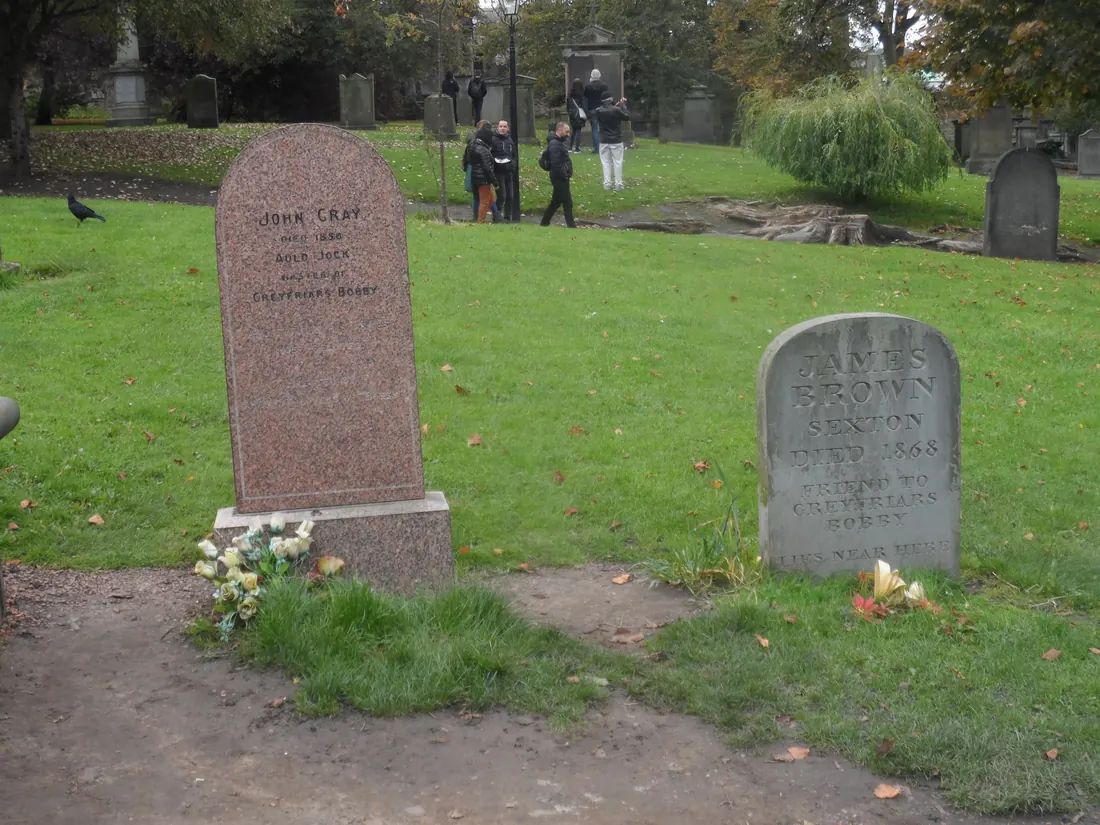
- In 1858, John Gray died. Wikipedia: Gray died “on 15 February 1858 and was buried in Greyfriars Kirkyard.” Historic Environment Scotland: “a memorial stone erected by American dog lovers over the grave of John Grey (Bobby’s master).” 14
- Bobby followed him to Greyfriars Kirkyard, and stayed, as the inscription on his fountain tells it: “In 1858 this faithful dog followed the remains of his master to Greyfriars churchyard and lingered near the spot until his death in 1872.” 4
- The keeper reportedly kept throwing him out. Historic UK: “The gardener and keeper of Greyfriars tried on many occasions to evict Bobby from the Kirkyard.” History Hit: “The gardener and keeper of Greyfriars tried to evict Bobby from the Kirkyard many times.” 23
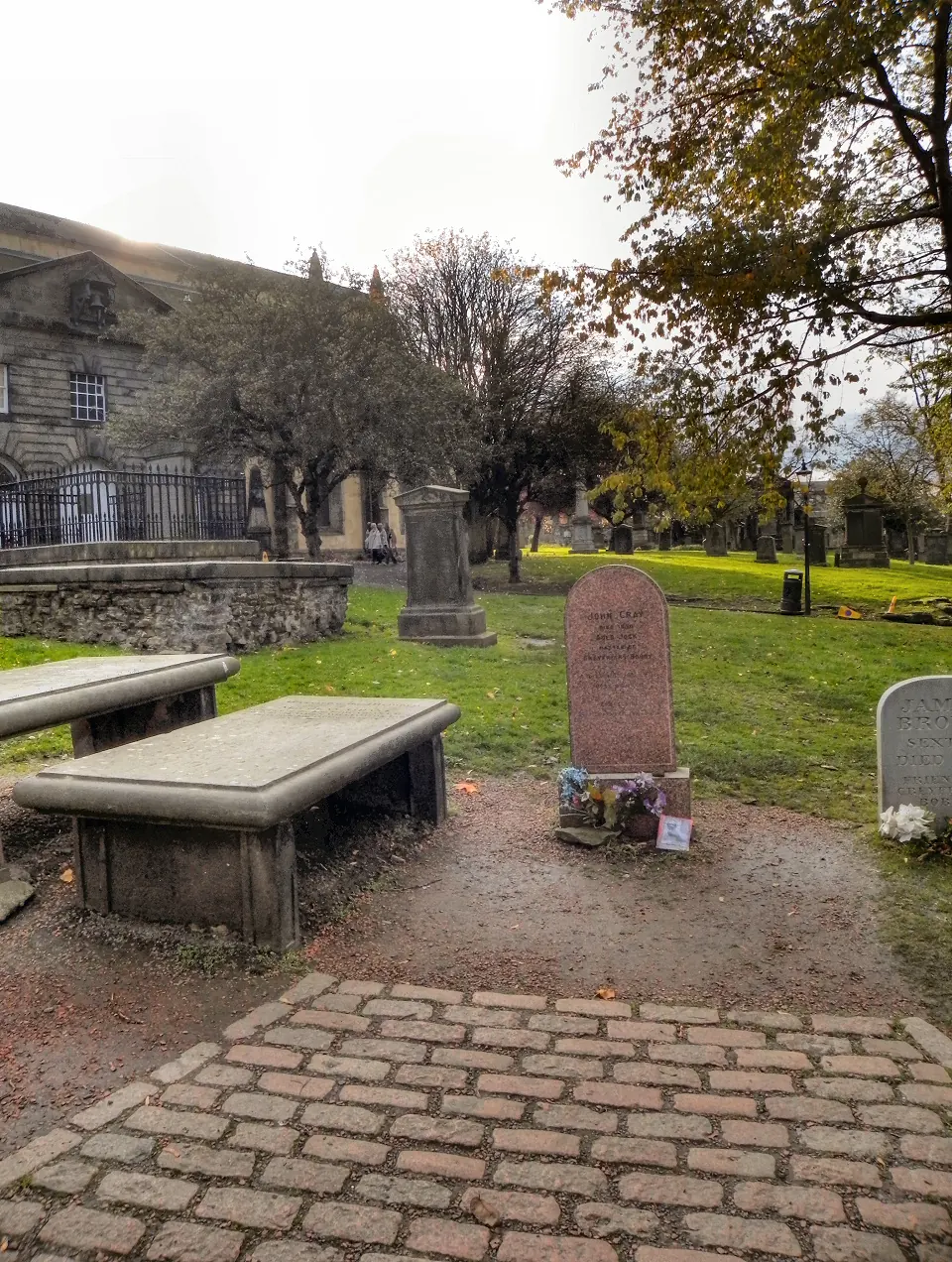
- In the end, he gave up and made him a shelter by the grave. Historic UK: “In the end he gave up and provided a shelter for Bobby by placing sacking beneath two tablestones at the side of John Gray’s grave.” History Hit: “in the end, he gave up and provided Bobby with a shelter by placing some sacking between two tablestones next to Gray’s grave.” 23
- Then, in 1867, a new law said unlicensed dogs would be destroyed. Historic UK: “In 1867 a new bye-law was passed that required all dogs to be licensed in the city or they would be destroyed.” History Hit: “In 1867, a new bye-law was passed that required all dogs in the city to be licensed, or they would be euthanised.” 23
- So Edinburgh’s Lord Provost, Sir William Chambers, paid Bobby’s license himself. Wikipedia: “In 1867 the lord provost of Edinburgh, Sir William Chambers, who was also a director of the Scottish Society for Prevention of Cruelty to Animals, paid for Bobby’s licence and gave the dog a collar, now in the Museum of Edinburgh.” Gazetteer for Scotland: “he personally bought the dog a collar, paid for his annual dog licence.” 15
- His new collar read, “Greyfriars Bobby, from the Lord Provost, 1867, licensed.” Historic UK: Sir William Chambers “decided to pay Bobby’s licence and presented him with a collar with a brass inscription ‘Greyfriars Bobby from the Lord Provost 1867 licensed’. This can be seen at the Museum of Edinburgh.” 2
- The story says he kept watch for 14 years, until his death in 1872. Wikipedia: “Bobby is said to have sat by the grave for 14 years. He died on 14 January 1872.” Historic UK: “For fourteen years the dead man’s faithful dog kept constant watch and guard over the grave until his own death in 1872.” 12
- He was buried inside the kirkyard gate, near his master. Wikipedia: “He was buried just inside the gate of Greyfriars Kirkyard, not far from John Gray’s grave.” 1
- A year later, his statue went up across the street. Wikipedia: “A year later, the English philanthropist Lady Burdett-Coutts was charmed by the story and had a drinking fountain topped with Bobby’s statue (commissioned from the sculptor William Brodie) erected at the junction of George IV Bridge and Candlemaker Row (opposite the entrance to the churchyard) to commemorate him.” Historic Environment Scotland: “William Brodie, 1873. Life-size bronze statue of terrier on cylindrical red granite plinth.” History Hit: “It was unveiled on 15 November 1873.” 143
- His headstone reads, “Let his loyalty and devotion be a lesson to us all.” Wikipedia: “Greyfriars Bobby’s headstone, erected by The Dog Aid Society of Scotland and unveiled by the Duke of Gloucester on 13 May 1981. The monument reads, ‘Greyfriars Bobby – Died 14 January 1872 – Aged 16 years – Let his loyalty and devotion be a lesson to us all’.” 1
Sources
- Greyfriars Bobby Wikipedia
- Greyfriars Bobby Historic UK
- Greyfriars Bobby: Scotland’s Most Famous Dog History Hit
- George IV Bridge, Greyfriars Bobby Fountain (listed building LB27899) Historic Environment Scotland
- Greyfriars’ Bobby Gazetteer for Scotland
- Historian: Greyfriars Bobby was a scam to lure tourists (Reuters, 2011) NBC News
Notes
The vigil is the popular account, and its accuracy is disputed (Wikipedia: “though its accuracy is disputed”). The historian Jan Bondeson (Greyfriars Bobby: The Most Faithful Dog in the World, 2011) argues that Bobby was a well-fed kirkyard stray and that the vigil was a story that drew visitors (Wikipedia, NBC News). He also says the first dog died in 1867 and was replaced (NBC News: “A dead bobby was no good for business, so they replaced him with a pure-bred Skye terrier who lived for a further five years until 1872”), and Wikipedia notes that 19th-century Europe had “more than 60 documented accounts” of dogs at graves. So the Short says “The story says” on the fourteen years and “reportedly” on the keeper, and nothing in it depends on the same dog keeping watch all fourteen years. What is documented is said plainly: the 1867 license and the collar, which survives in the Museum of Edinburgh, his death in January 1872, his burial in the kirkyard, the 1873 fountain and the 1981 headstone.
Which John Gray: Wikipedia notes a debate over whether Bobby’s master was the police night watchman or a farmer of the same name. The Short follows the best-known version, the night watchman (Wikipedia, Historic UK, History Hit).
His breed: a Skye Terrier (Historic UK) or a Dandie Dinmont (Wikipedia, citing Macbeth 2022), so the Short says only “dog.”
The statue’s date: 1873 (Historic Environment Scotland; History Hit: unveiled on 15 November 1873; Wikipedia: “A year later”), though the Gazetteer for Scotland says “Erected in 1872.” The Short says “A year later.”
The license law was a city bye-law (Historic UK, History Hit). Its exact text wasn’t found online, so the Short says only that a new law said unlicensed dogs would be destroyed. A museum label in a visitor’s photo of the collar says that John Traill refused to pay for his license; that is left out, because it was read only from that photo.
Left out as single-source or legend: the one o’clock gun lunches at Traill’s coffee house (History Hit says Traill “only owned the coffee shop four years after Gray died”), the “Freedom of the City” (the Gazetteer for Scotland only), Gray’s death from tuberculosis (Wikipedia says “reportedly”) and the headstone’s “Aged 16 years.”
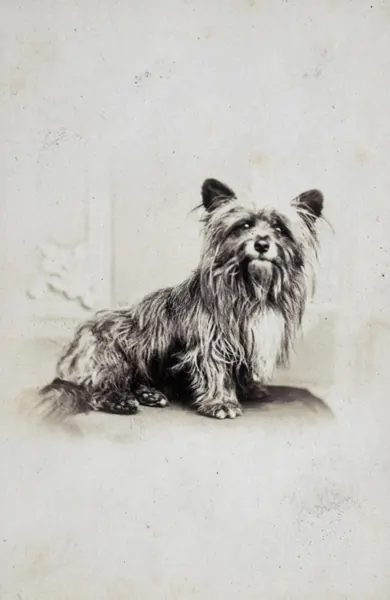
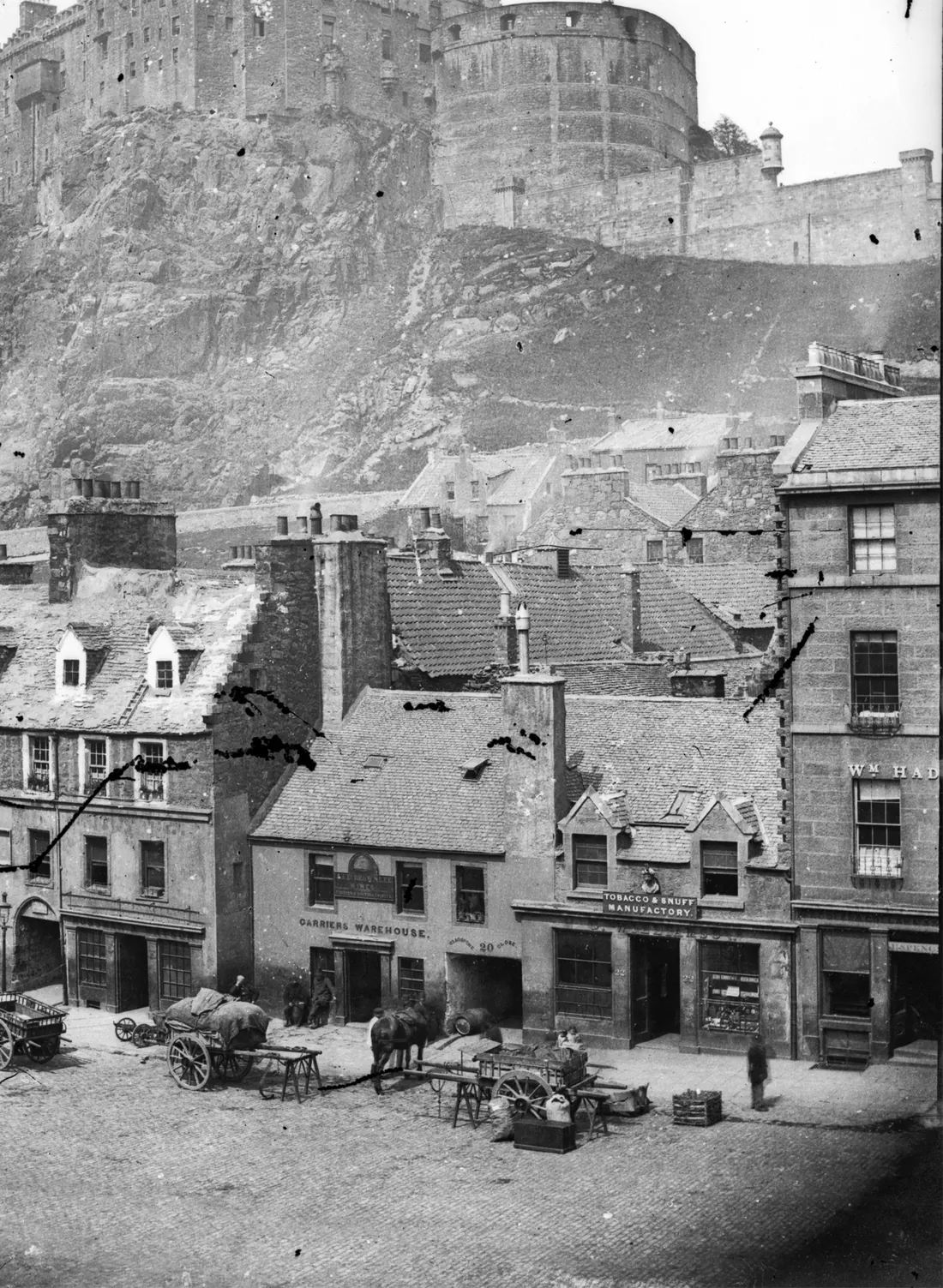
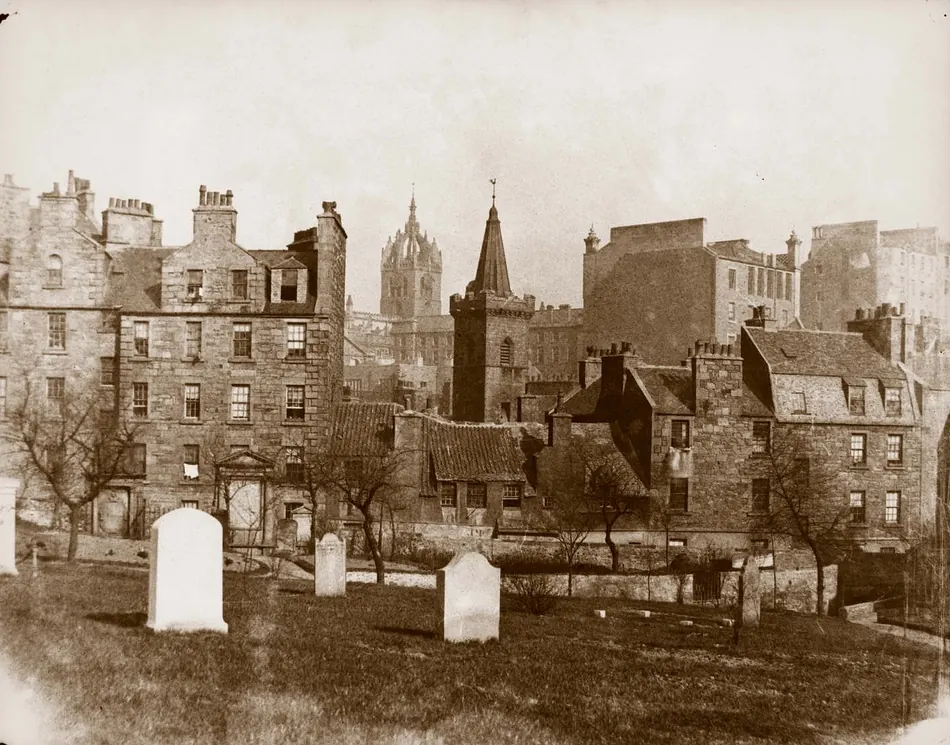
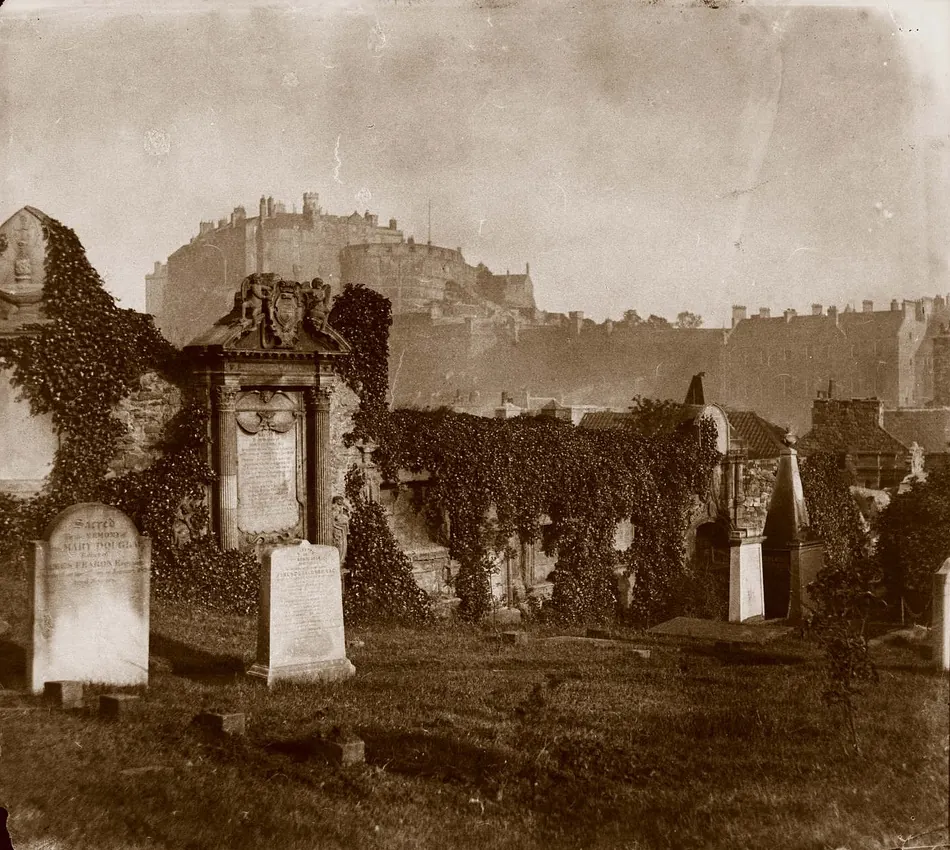
Pictures: Bobby himself is in the albumen print of about 1865 at the National Galleries of Scotland, photographer unknown, the only photo a museum catalogs as Bobby; History Hit captions the same print “thought to be of Greyfriars Bobby.” No photo of John Gray exists, so no one is shown as him. Sir William Chambers is in Daniel John Pound’s engraving after a photograph by Mayall, about 1860. The Grassmarket stereo photo (1867–70) and Thomas Keith’s two photos of Greyfriars churchyard (1850s) show Bobby’s Edinburgh in his time, not Bobby. John Gray’s headstone, photographed in 2019 beside James Brown’s stone, was put up later by American admirers. The fountain plaque (2017), the tablestones by John Gray’s grave (2011), Bobby’s 1981 headstone (photographed in 2007) and the fountain today are modern photos of the real places, and the collar is photographed in the Museum of Edinburgh. The 1903 photo of the fountain is from Conrad Jenness Miller’s Dogs of All Nations.
Photo credits
The archive photos in this story
The photographs and illustrations in this story are in the public domain or shared under open licenses; each one is credited below with its license. Tap one to enlarge it, or follow the link to its Wikimedia Commons page for the full record. The narration, captions and graphics in the Short are our own; its music and sound effects are credited below.
Music and sound effects
Music: Schumann, Kinderszenen, Op. 15: No. 1 'Of Foreign Lands and Peoples' (Musopen, public domain); Grieg, Peer Gynt Suite No. 1, Op. 46: I. Morning Mood (Musopen Symphony Orchestra, public domain); Grieg, Peer Gynt Suite No. 1, Op. 46: II. Ase's Death (Musopen Symphony Orchestra, CC0).
Sound effects: Freesound, CC0.