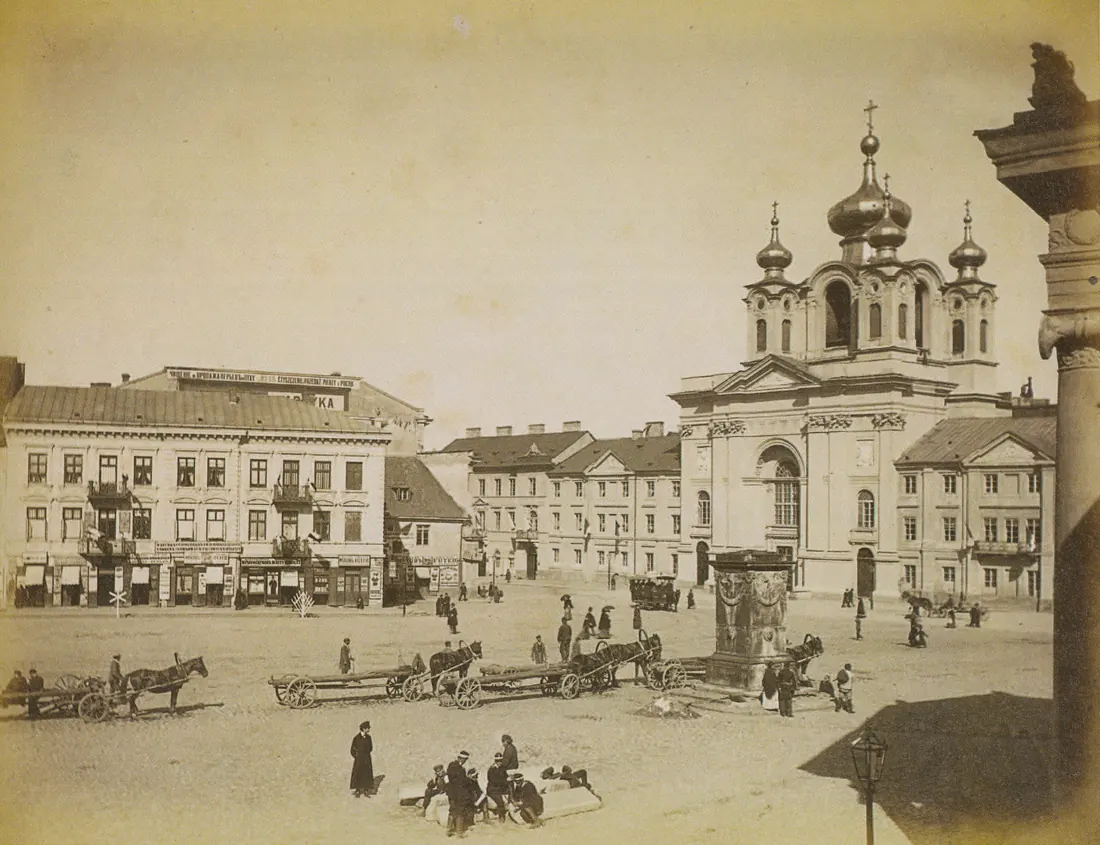
Maria Salomea Skłodowska Curie, “better known as Marie Curie,” was “a Polish and naturalised-French physicist and chemist,” Wikipedia says, born in “Warsaw, the capital of Congress Poland in the Russian Empire.” Of the University of Warsaw, the American Institute of Physics says, “women were not welcome there.” “Unable to enrol in a regular institution of higher education because she was a woman, she and her sister Bronisława became involved with the clandestine Flying University,” Wikipedia says; its article on that school calls it “a single, informal, and illegal, secret university open for both sexes.” “Maria and Bronya joined other friends in attending the Floating University,” the American Institute of Physics says. “This illegal night school got its name from the fact that its classes met in changing locations, the better to evade the watchful eyes of the czarist authorities.”
“In late 1891, she left Poland for France,” Wikipedia says. How poor she was is told as a story: Wikipedia says “She subsisted on her meagre resources, keeping herself warm during cold winters by wearing all the clothes she had,” and the American Institute of Physics says “Stories from these years tell how she kept herself warm during the winter months by wearing every piece of clothing she owned, and how she fainted from hunger because she was too absorbed in study to eat.” “In July 1898, Curie and her husband published a joint paper announcing the existence of an element they named ‘polonium,’” and on December 26, 1898, Wikipedia says, “the Curies announced the existence of a second element, which they named ‘radium.’” To isolate them “from the bismuth and barium with which they were mixed,” the American Institute of Physics says, “the Curies moved their lab to an abandoned shed across the school courtyard. The shed, formerly a medical school dissecting room, was poorly outfitted and ventilated. It was not weathertight.” In Wikipedia’s words, it “was poorly ventilated and not even waterproof.”
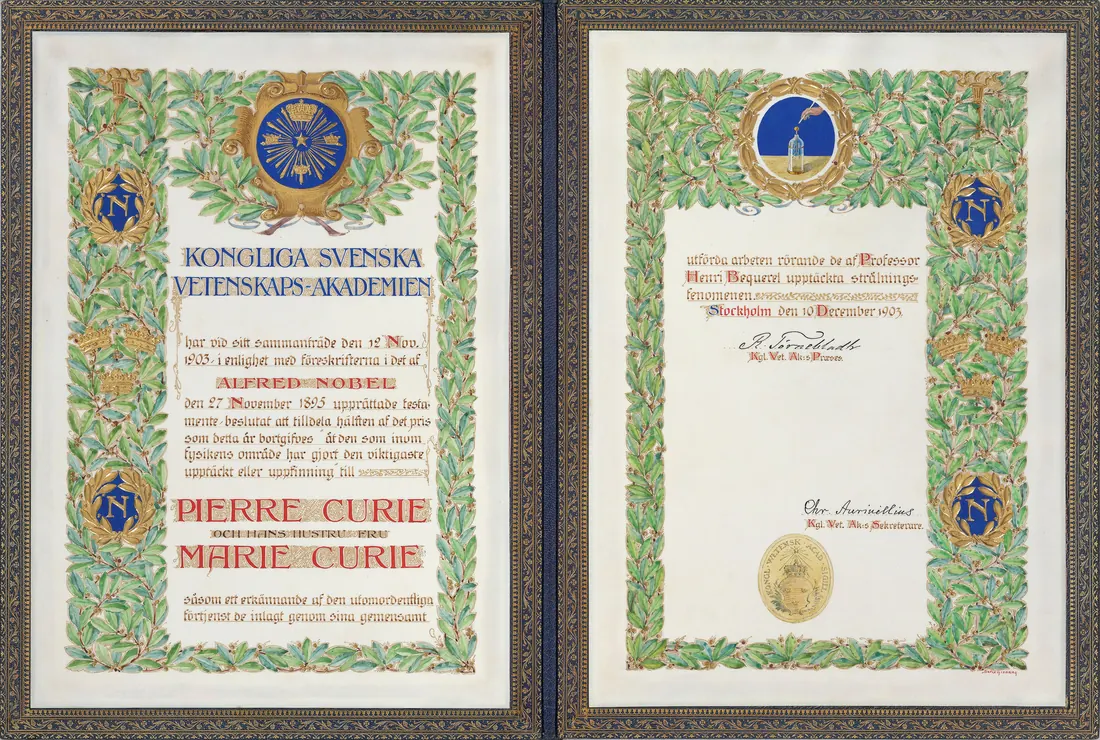
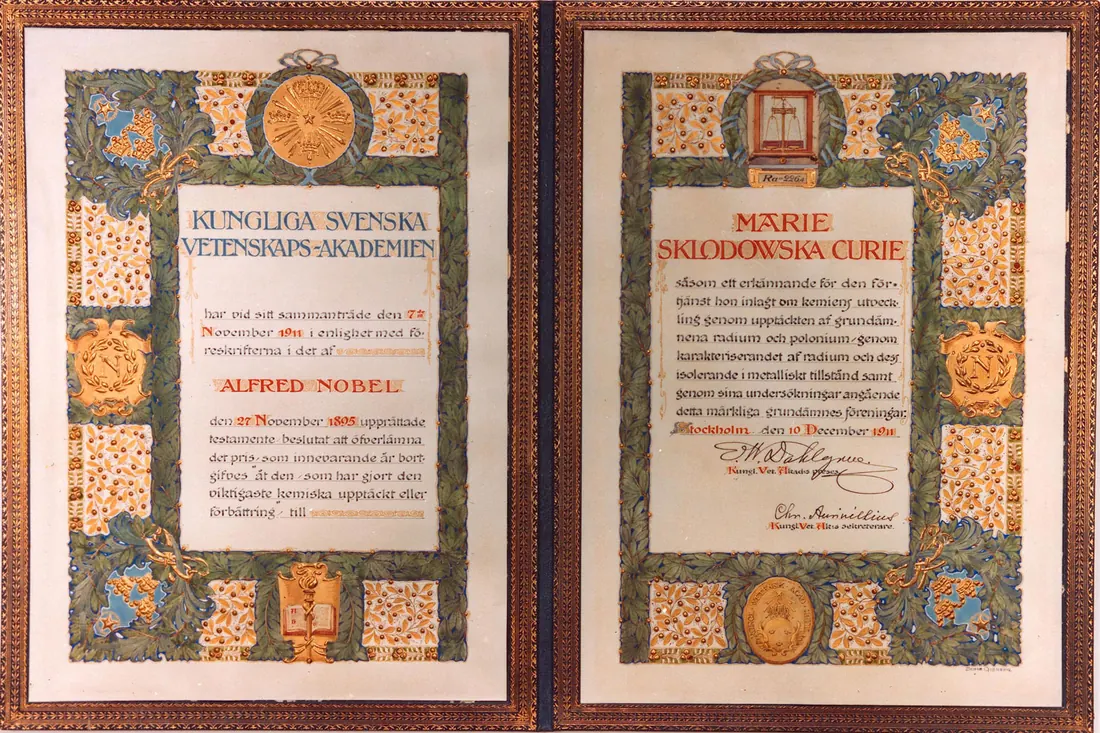
“In 1903 the French Academy of Sciences nominated Henri Becquerel and Pierre — but not Marie — Curie as candidates for the physics prize,” the American Institute of Physics says; Wikipedia says, “At first the committee had intended to honour only Pierre Curie and Henri Becquerel.” Pierre wrote to Mittag-Leffler, “I very much wish to be considered together with Madame Curie with respect to our research on radioactive bodies,” and “after his complaint, Marie’s name was added to the nomination. Marie Curie was the first woman to be awarded a Nobel Prize,” Wikipedia says. On April 19, 1906, Wikipedia says, “Pierre Curie died in a road accident. Walking across the Rue Dauphine in heavy rain, he was struck by a horse-drawn vehicle and fell under its wheels, which fractured his skull and killed him instantly”; the American Institute of Physics says “he was run over by a horse-drawn wagon with a load of military uniforms, weighing some six tons.” “She was the first woman to become a professor at the University of Paris,” Wikipedia says, and with the Nobel Prize in Chemistry of 1911 she “went on to become the first person ever to be awarded two Nobel Prizes,” the Nobel Prize says.
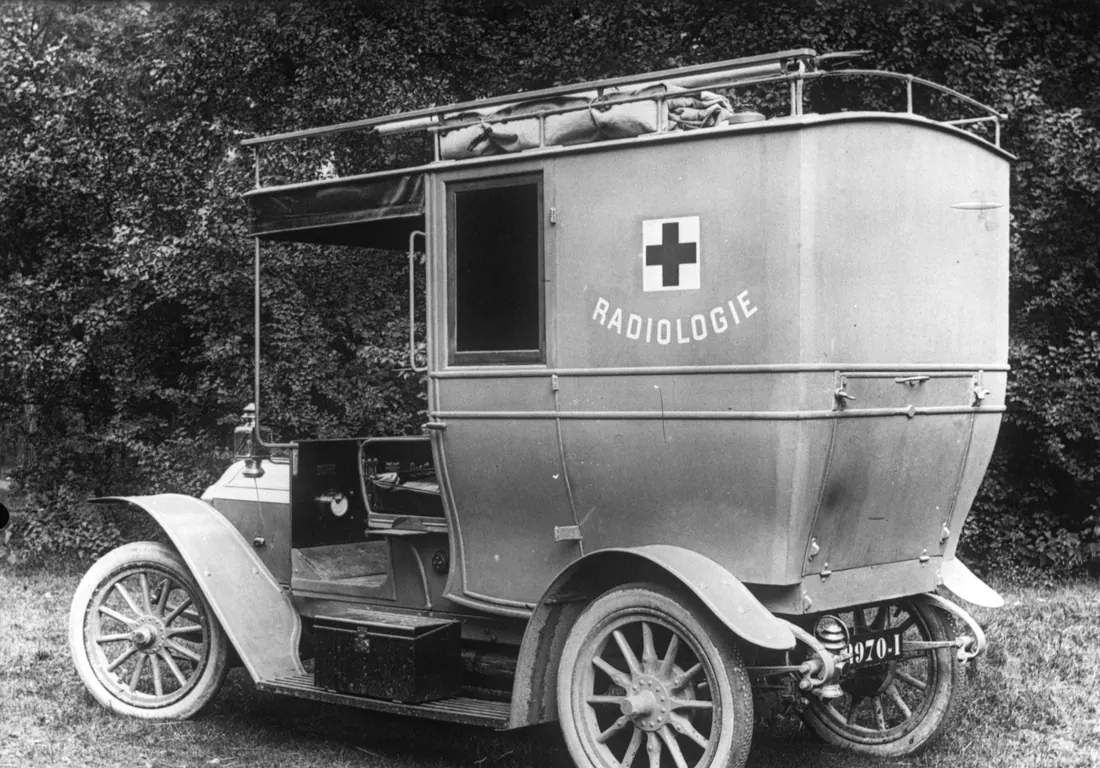
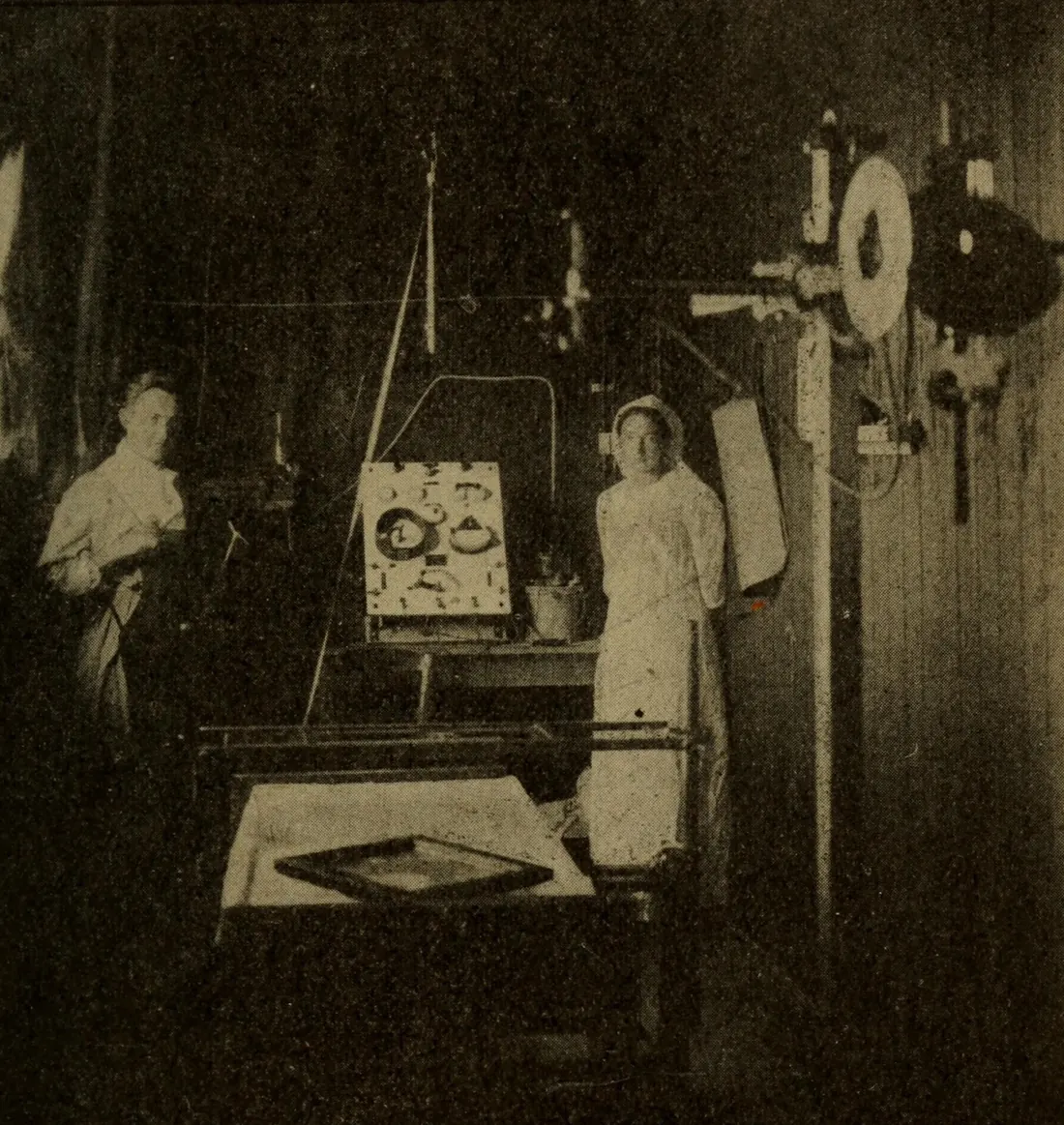
In World War I, “By late October 1914, the first of 20 radiology vehicles she would equip was ready,” the American Institute of Physics says. “Intending to operate the petite Curie herself if necessary, she learned how to drive a car,” and “Accompanied by a military doctor, mother and daughter made their first trip to the battle front in the autumn of 1914.” “French enlisted men would soon dub these mobile radiology installations, which transported X-ray apparatus to the wounded at the battle front, petites Curies (little Curies).” “It is estimated that over a million wounded soldiers were treated with her X-ray units,” Wikipedia says. On July 4, 1934, it says, “she died aged 66 at the Sancellemoz sanatorium in Passy, Haute-Savoie, from aplastic anaemia believed to have been contracted from her long-term exposure to radiation.” The sanatorium’s director wrote, “The bone marrow did not react, probably because it had been injured by a long accumulation of radiations,” and the Nobel Prize says her death “was likely caused by radiation exposure.”
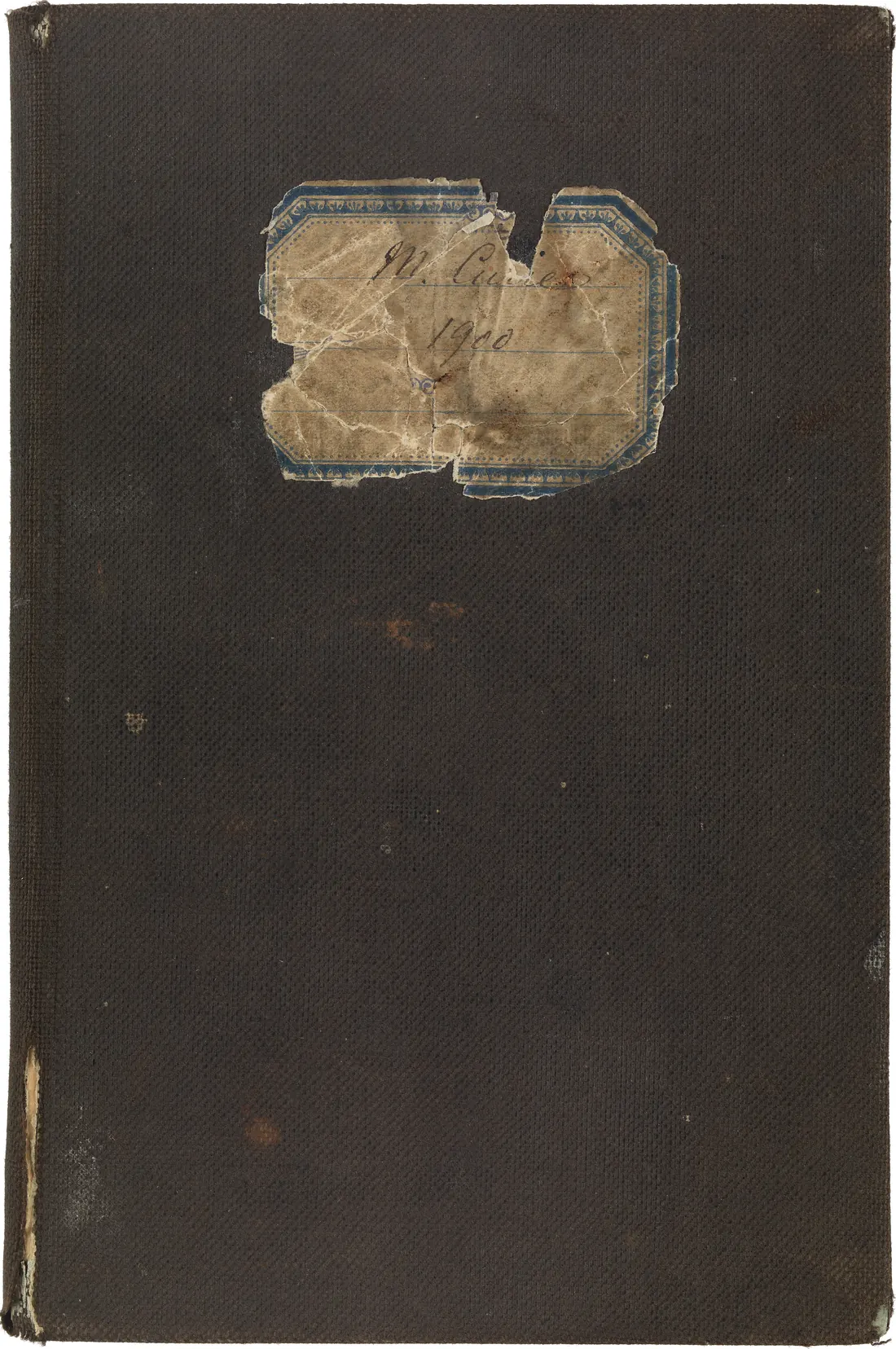
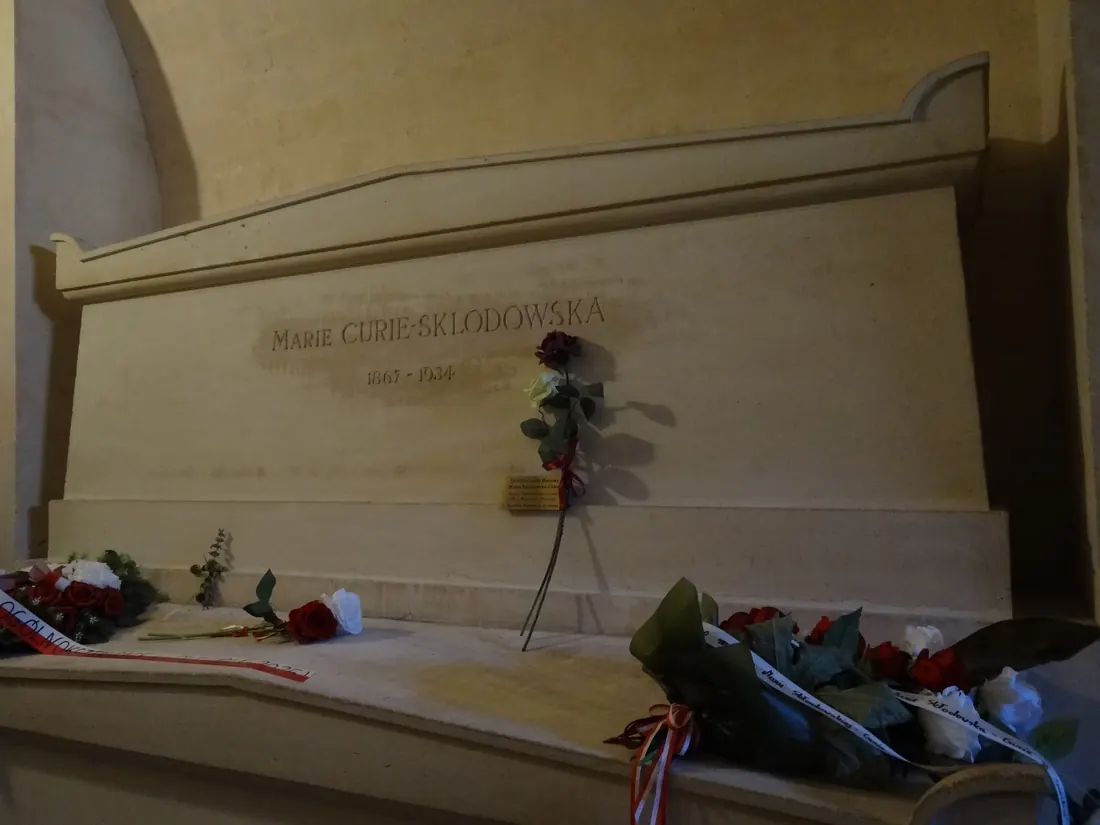
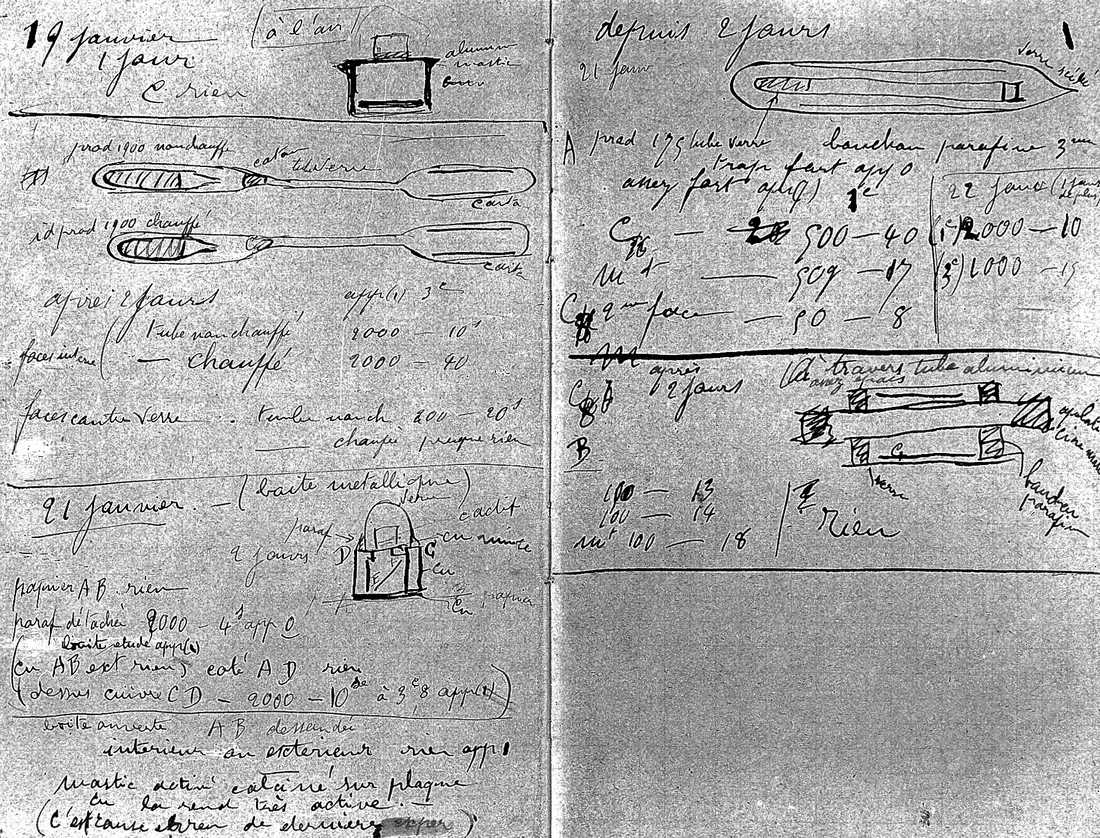
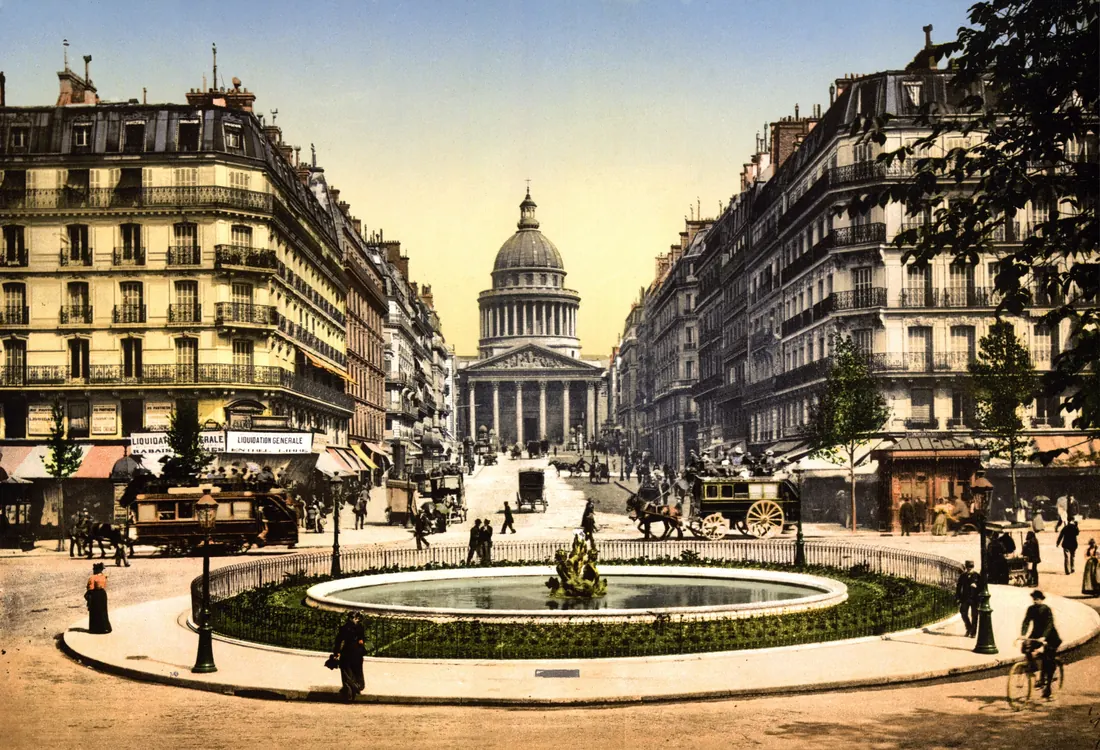
“In 1995, she became the first woman to be entombed on her own merits in the Paris Panthéon,” Wikipedia says; in the American Institute of Physics’s words, “Marie Curie thus became the first woman whose own accomplishments earned her the right to rest for eternity alongside France’s most eminent men.” And her papers are still radioactive. “A few of her books and papers are still so radioactive that they are stored in lead boxes,” the Nobel Prize says. “For example, Marie Curie’s notebook from 1899–1902, containing notes from experiments on radioactive substances, is still radioactive and will be for 1,500 years.” The Bibliothèque nationale de France, which holds the Curie papers, says “les particules radioactives sont restées sur leurs écrits et y sont encore actives” (the radioactive particles stayed on her writings and are still active there); “les volumes ne sont consultables que dans le cadre de demandes très particulières et selon un protocole de suivi très strict” (the volumes can be consulted only for very particular requests, under a very strict monitoring protocol).
Fact check
The facts and where they come from
- She won two Nobel Prizes, but her notebooks are so radioactive they’re kept in lead boxes. The Nobel Prize: “Only one woman, Marie Curie, has been honoured twice, with the Nobel Prize in Physics 1903 and the Nobel Prize in Chemistry 1911”; “A few of her books and papers are still so radioactive that they are stored in lead boxes. For example, Marie Curie’s notebook from 1899–1902, containing notes from experiments on radioactive substances, is still radioactive and will be for 1,500 years.” Wikipedia: “Her papers are kept in lead-lined boxes, and those who wish to consult them must wear protective clothing.” Bibliothèque nationale de France: “les particules radioactives sont restées sur leurs écrits et y sont encore actives” (the radioactive particles stayed on her writings and are still active there); “les volumes ne sont consultables que dans le cadre de demandes très particulières et selon un protocole de suivi très strict” (the volumes can be consulted only for very particular requests, under a very strict monitoring protocol). Wellcome Collection, of the notebook shown: “Dated from 27 May, 1899 to 4 December, 1902.” 3164515
- Her name was Marie Curie, physicist and chemist. Wikipedia: “Maria Salomea Skłodowska Curie … better known as Marie Curie, was a Polish and naturalised-French physicist and chemist.” 6
- In Russian-ruled Poland, women weren’t allowed into university. Wikipedia: “Unable to enrol in a regular institution of higher education because she was a woman, she and her sister Bronisława became involved with the clandestine Flying University”; she was born in “Warsaw, the capital of Congress Poland in the Russian Empire.” American Institute of Physics: “Although Joseph was able to enroll in the medical school at the University of Warsaw, women were not welcome there.” 68
- So she studied in secret, at the illegal Flying University. American Institute of Physics: “Maria and Bronya joined other friends in attending the Floating University. This illegal night school got its name from the fact that its classes met in changing locations, the better to evade the watchful eyes of the czarist authorities.” Wikipedia: “a single, informal, and illegal, secret university open for both sexes known as the Flying University.” 87
- She moved to Paris, so poor that she reportedly wore all her clothes to keep warm. Wikipedia: “In late 1891, she left Poland for France.” … “She subsisted on her meagre resources, keeping herself warm during cold winters by wearing all the clothes she had.” American Institute of Physics: “Stories from these years tell how she kept herself warm during the winter months by wearing every piece of clothing she owned, and how she fainted from hunger because she was too absorbed in study to eat.” 69
- In a leaky shed, she and her husband, Pierre, hunted down polonium and radium. Wikipedia: “most of their research was carried out in a converted shed next to ESPCI. The shed, formerly a medical school dissecting room, was poorly ventilated and not even waterproof.” American Institute of Physics: “Marie set out to isolate them from the bismuth and barium with which they were mixed. Since the Municipal School storeroom would be inadequate to the task, the Curies moved their lab to an abandoned shed across the school courtyard. The shed, formerly a medical school dissecting room, was poorly outfitted and ventilated. It was not weathertight.” Wikipedia: “In July 1898, Curie and her husband published a joint paper announcing the existence of an element they named ‘polonium’” … “On 26 December 1898, the Curies announced the existence of a second element, which they named ‘radium.’” 610
- In 1903, she was almost left off the Nobel Prize. American Institute of Physics: “In 1903 the French Academy of Sciences nominated Henri Becquerel and Pierre — but not Marie — Curie as candidates for the physics prize.” Wikipedia: “At first the committee had intended to honour only Pierre Curie and Henri Becquerel.” 116
- Pierre insisted, and she became the first woman to win one. Pierre, in his 1903 letter to Mittag-Leffler, quoted by the American Institute of Physics: “I very much wish to be considered together with Madame Curie with respect to our research on radioactive bodies.” Wikipedia: “after his complaint, Marie’s name was added to the nomination. Marie Curie was the first woman to be awarded a Nobel Prize.” 116
- In the rain, Pierre was killed by a horse-drawn wagon. American Institute of Physics: “he braved the heavy rain” … “he was run over by a horse-drawn wagon with a load of military uniforms, weighing some six tons. He was killed instantly.” Wikipedia: “On 19 April 1906, Pierre Curie died in a road accident. Walking across the Rue Dauphine in heavy rain, he was struck by a horse-drawn vehicle and fell under its wheels, which fractured his skull and killed him instantly.” 126
- In 1911, she became the first person to win two. The Nobel Prize: she “went on to become the first person ever to be awarded two Nobel Prizes.” Wikipedia: “the first person to win a Nobel Prize twice and the only person to win a Nobel Prize in two different scientific fields.” 26
- In World War I, she took X-ray cars to the front. American Institute of Physics: “By late October 1914, the first of 20 radiology vehicles she would equip was ready.” … “Intending to operate the petite Curie herself if necessary, she learned how to drive a car” … “Accompanied by a military doctor, mother and daughter made their first trip to the battle front in the autumn of 1914.” Her book La radiologie et la guerre (1921), plate III: “Salle de radiographie de l’hôpital n° 112 à Amiens, installé en baraquements (année 1916)” (the X-ray room of hospital no. 112 at Amiens, set up in huts, 1916). 1316
- Soldiers called them Little Curies. American Institute of Physics: “French enlisted men would soon dub these mobile radiology installations, which transported X-ray apparatus to the wounded at the battle front, petites Curies (little Curies).” Wikipedia: “which came to be popularly known as petites Curies (‘Little Curies’).” 136
- In 1934, she died, most likely from radiation. The Nobel Prize: “Marie Curie’s death from aplastic anemia in 1934, at age 66, was likely caused by radiation exposure.” The sanatorium’s director, quoted by the American Institute of Physics: “The bone marrow did not react, probably because it had been injured by a long accumulation of radiations.” Wikipedia: “on 4 July 1934, she died aged 66 at the Sancellemoz sanatorium in Passy, Haute-Savoie, from aplastic anaemia believed to have been contracted from her long-term exposure to radiation.” 1146
- Today she rests in the Panthéon. Wikipedia: “in 1995, she became the first woman to be entombed on her own merits in the Paris Panthéon.” 6
- She was the first woman there for her own work. American Institute of Physics: “Marie Curie thus became the first woman whose own accomplishments earned her the right to rest for eternity alongside France’s most eminent men.” Wikipedia: “the first woman to be entombed on her own merits in the Paris Panthéon.” 146
Sources
- Women who changed science: Marie Curie The Nobel Prize
- Marie Curie – Facts (Nobel Prize in Physics 1903) The Nobel Prize
- Nobel Prize awarded women The Nobel Prize
- Les cahiers de Marie Curie conservés à la BnF sont-ils radioactifs ? Bibliothèque nationale de France
- Un héritage qui rayonne. Les carnets de Marie Curie Bibliothèque nationale de France
- Marie Curie Wikipedia
- Flying University Wikipedia
- Marie Curie and the Science of Radioactivity (her girlhood in Poland) American Institute of Physics
- Marie Curie and the Science of Radioactivity (her student years in Paris) American Institute of Physics
- Marie Curie and the Science of Radioactivity (the research in the shed) American Institute of Physics
- Marie Curie and the Science of Radioactivity (the 1903 Nobel Prize) American Institute of Physics
- Marie Curie and the Science of Radioactivity (Pierre’s death) American Institute of Physics
- Marie Curie and the Science of Radioactivity (the war) American Institute of Physics
- Marie Curie and the Science of Radioactivity (her last years and the Panthéon) American Institute of Physics
- Marie Curie’s notebook, 1899–1902 (Wellcome Collection L0066919) Wikimedia Commons
- La radiologie et la guerre (Marie Curie, 1921), full text Internet Archive
Notes
Lead boxes: the Nobel Prize says some of her books and papers “are stored in lead boxes,” and Wikipedia (citing Bill Bryson, 2004) says “lead-lined boxes” and protective clothing. The Bibliothèque nationale de France, which holds the Curie papers, confirms that the contamination is still active, but describes encapsulated sheets, plastic covers, microfilms and a strict consultation protocol; it doesn’t mention lead boxes, and it says two notebooks shown in its museum add nothing measurable to natural background radiation. The Short uses the Nobel Prize’s words. The Christian Science Monitor (2011) adds that readers sign “a waiver of liability”; we leave that out, and we don’t say the notebooks are too radioactive to touch: they are handled under protection, but they can be consulted.
The clothes: Wikipedia states it as fact, but the American Institute of Physics calls these “Stories from these years,” so the Short says “reportedly,” and so do we.
The shed: the American Institute of Physics says the Curies moved into it to isolate the new elements after identifying them; Wikipedia says most of their research was done there. The Short says they “hunted down” polonium and radium in the shed, which fits both.
Who left her off: the American Institute of Physics says the French Academy of Sciences nominated only Becquerel and Pierre; Wikipedia says the committee at first intended to honor only them. The Short says only that she was almost left off.
Pierre’s death: a “horse-drawn wagon” with about six tons of military uniforms (the American Institute of Physics), a “horse-drawn vehicle” (Wikipedia), a “horse and carriage” (the Nobel Prize).
What killed her: aplastic anemia, “likely” (the Nobel Prize), “probably” (her doctor) or “believed” (Wikipedia) to come from radiation. When her body was exhumed in 1995, the French radiation office suggested that her X-ray work in the war, not radium, was the more likely cause (Wikipedia). The Short says “most likely from radiation,” which covers both.
The cars: the American Institute of Physics says she learned to drive in case she had to; the Short says only that she took X-ray cars to the front. “Over a million wounded soldiers” is an estimate (Wikipedia, citing Reid and Estreicher) that also counts the 200 fixed units.
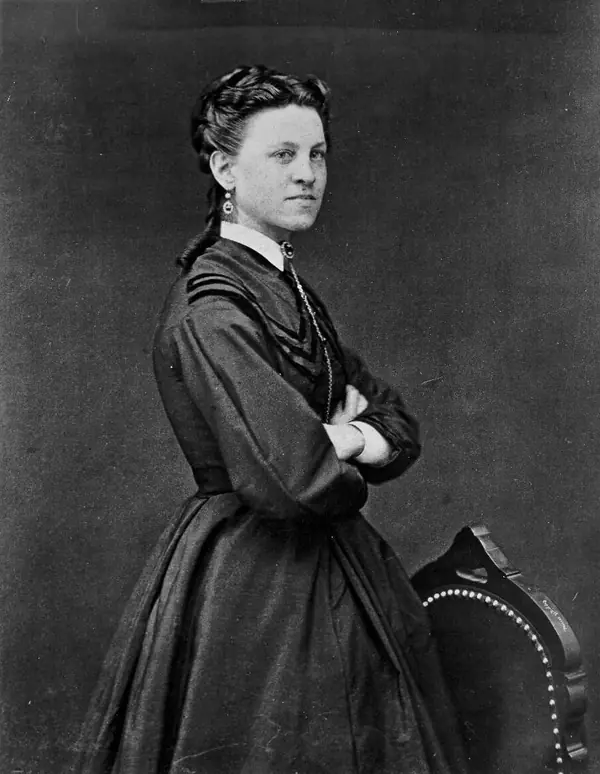
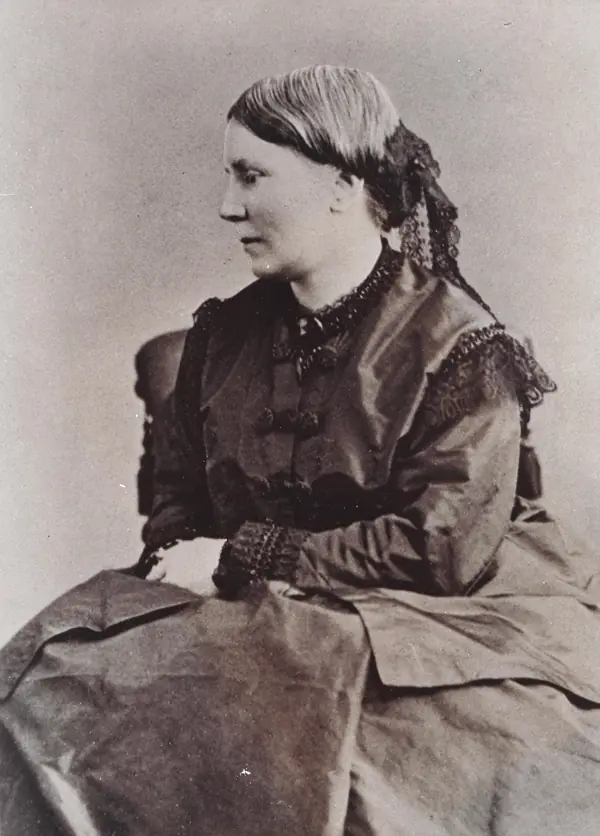
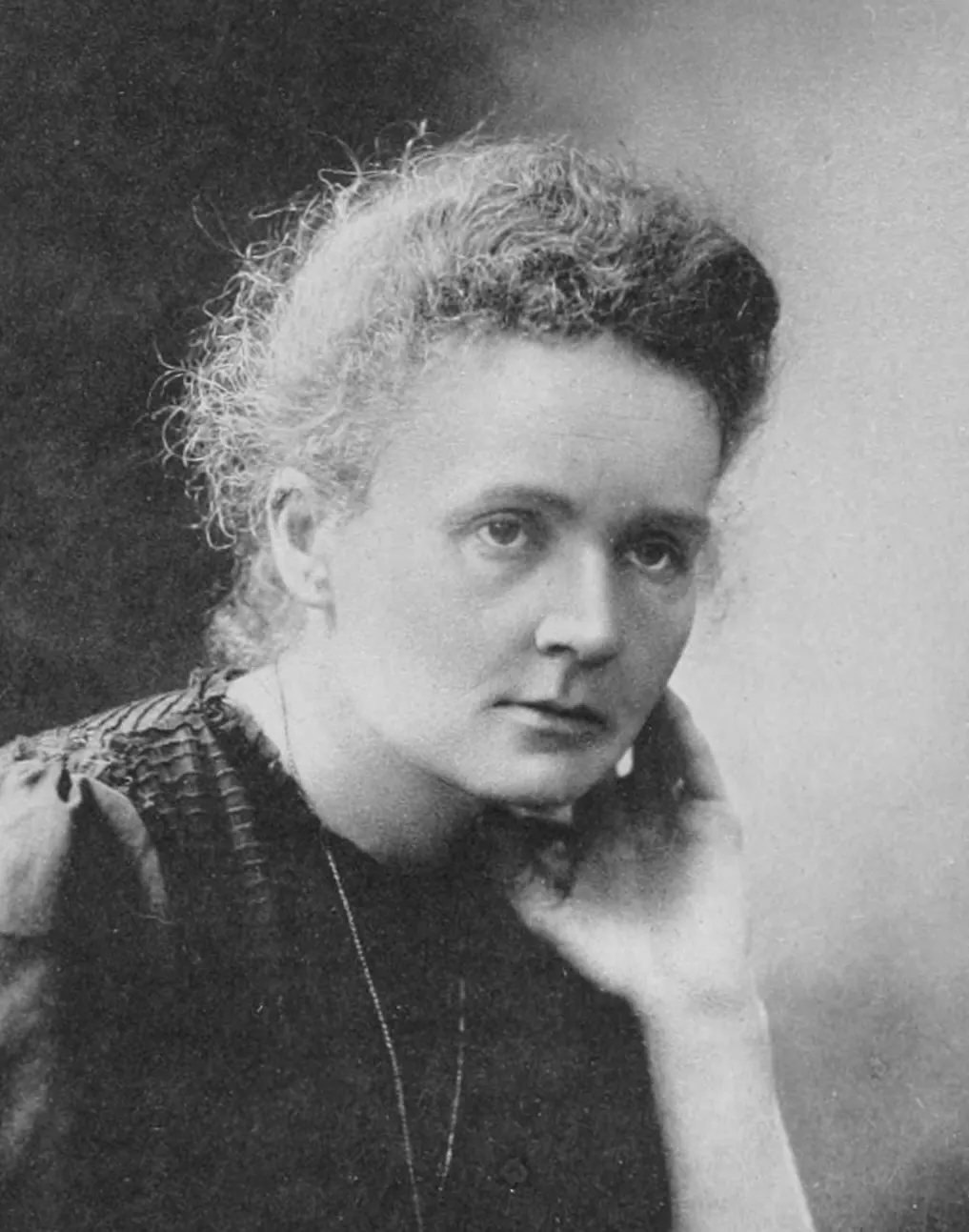
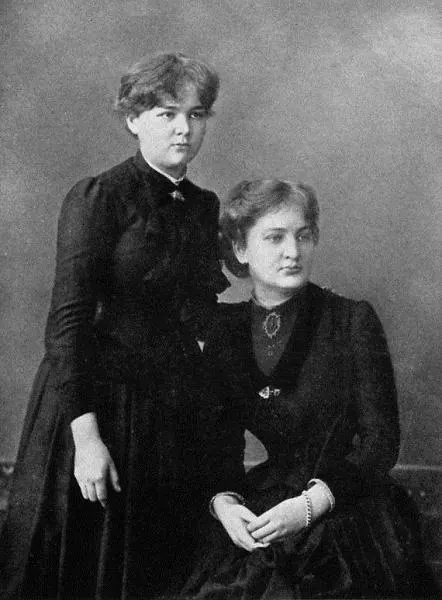
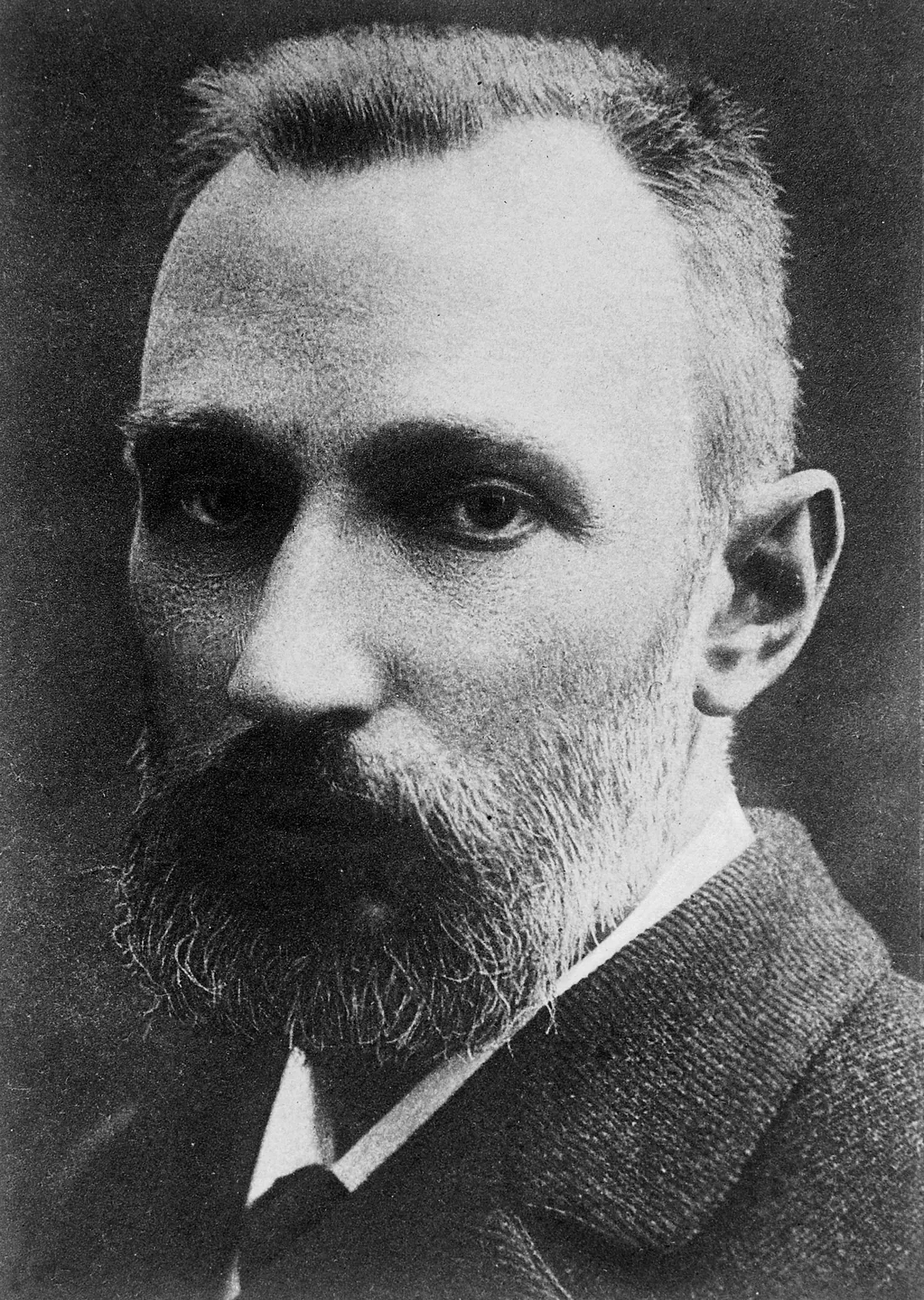
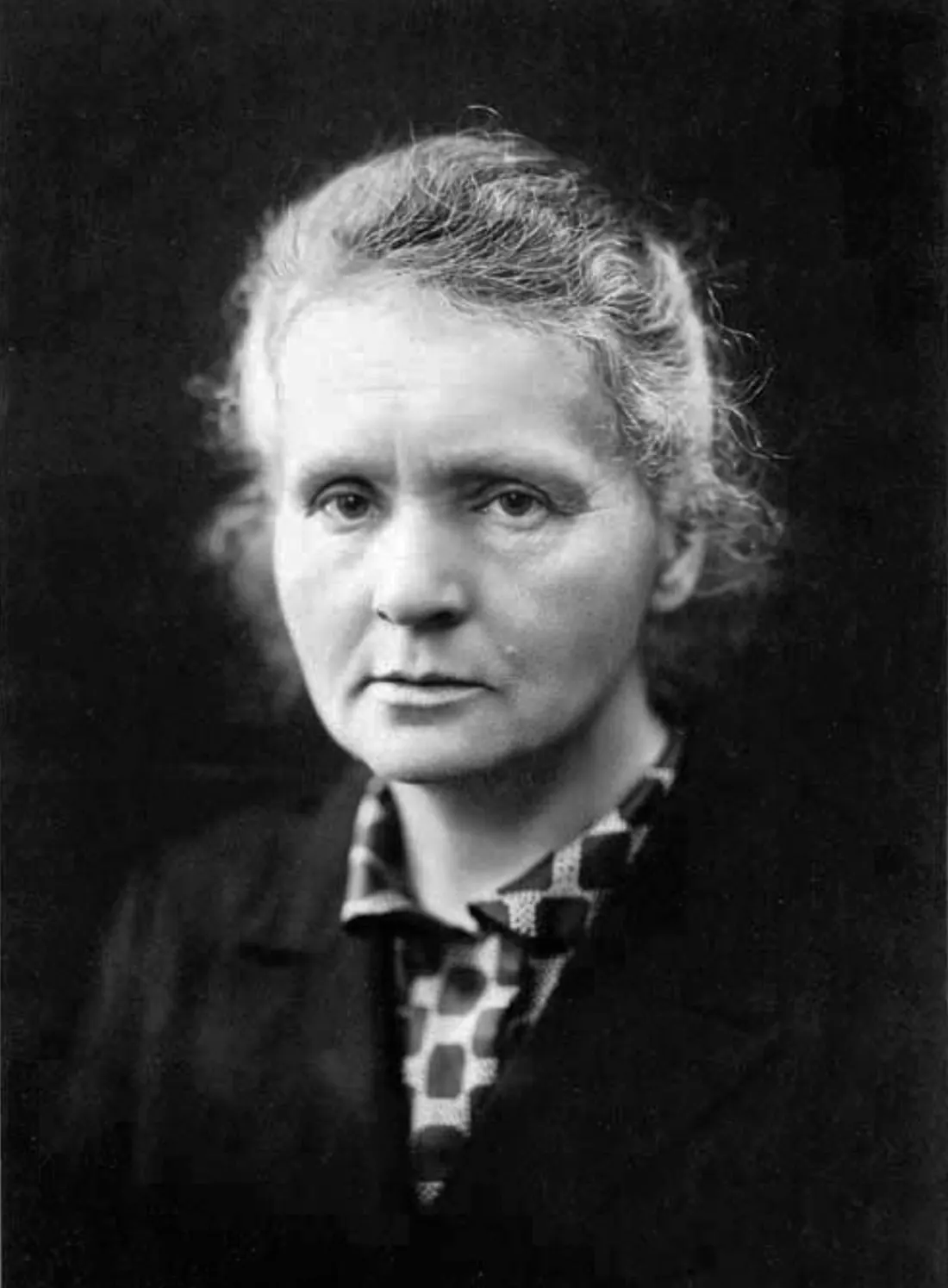
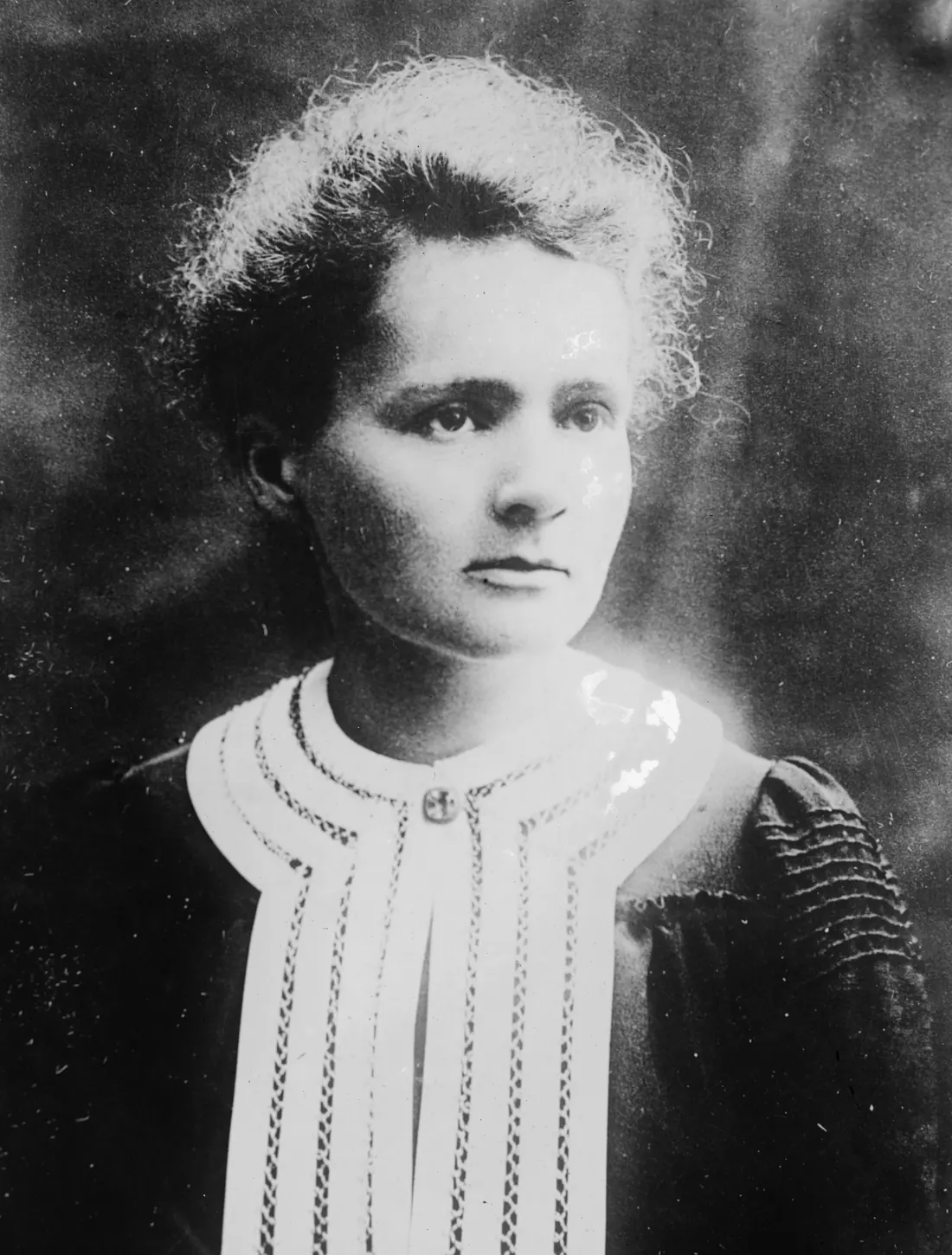
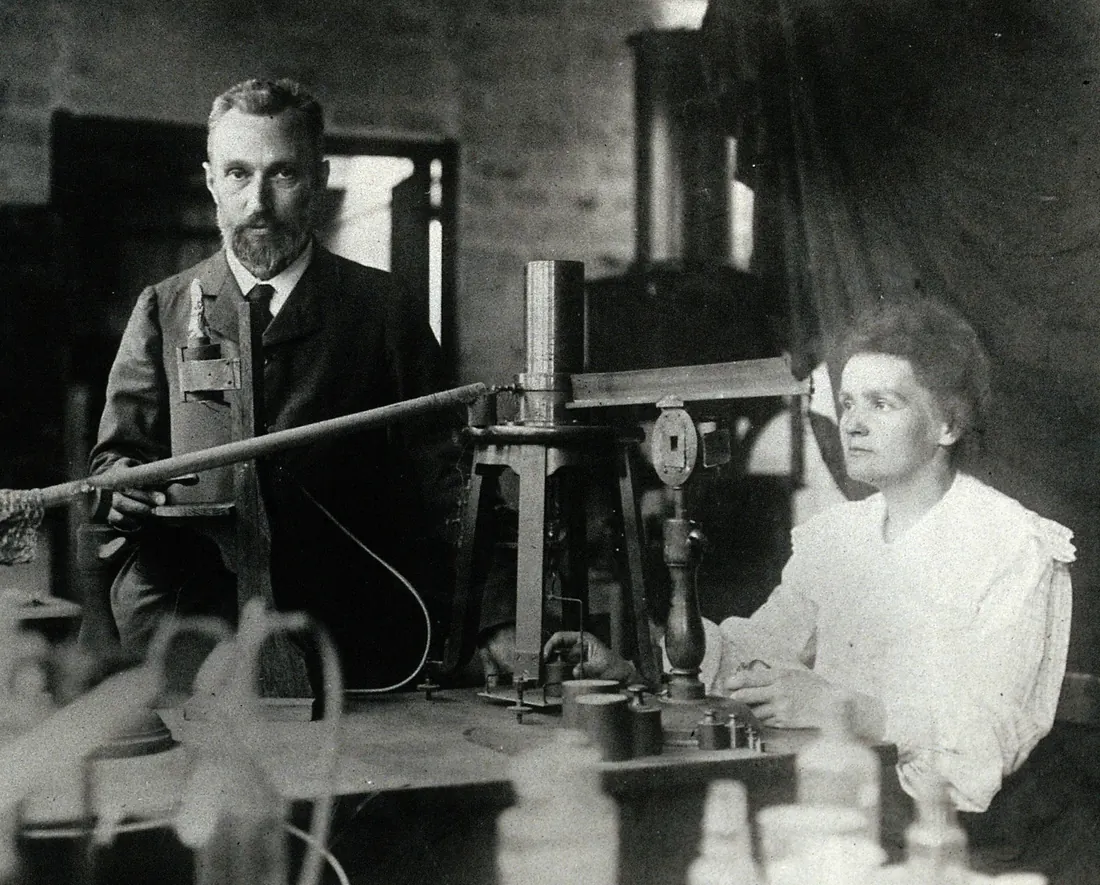
Pictures: Marie Curie herself is in her Nobel portrait of 1911, printed in Les Prix Nobel (1912), the Bain News Service photograph of 1903 (Library of Congress) and Henri Manuel’s photograph of about 1920; as Maria Skłodowska she stands beside her seated sister Bronisława in about 1886. Pierre Curie was photographed by Eugène Pirou in Paris. The two of them in their laboratory were printed in Popular Science Monthly in 1904, years after the 1898 discoveries. The notebook cover, labeled “M. Curie 1900,” is her laboratory notebook of 1899–1902, and the pages are from her notebook (both Wellcome Collection). Warsaw is Konrad Brandel’s photograph of Plac Krasińskich with the Russian Orthodox church, about 1885, not the Flying University, which met in private homes; Paris is a photochrom of the Panthéon and the rue Soufflot in the Latin Quarter, about 1890–1900. Her Nobel diplomas of 1903 and 1911 are by Sofia Gisberg. The radiology car is a French Red Cross X-ray car photographed by Agence Rol in 1914, not identified as one of hers, and the X-ray room of military hospital no. 112 at Amiens, 1916, is plate III of her own book La radiologie et la guerre (1921). Her tomb in the crypt of the Panthéon was photographed in 2025.
Photo credits
The archive photos in this story
The photographs and illustrations in this story are in the public domain or shared under open licenses; each one is credited below with its license. Tap one to enlarge it, or follow the link to its Wikimedia Commons page for the full record. The narration, captions and graphics in the Short are our own; its music and sound effects are credited below.
Music and sound effects
Music: Mussorgsky, Pictures at an Exhibition: IV. Bydlo (piano) (Musopen, public domain); Grieg, Peer Gynt Suite No. 1, Op. 46: II. Ase's Death (Musopen Symphony Orchestra, CC0); Brahms, Symphony No. 2 in D major, Op. 73: IV. Allegro con spirito (Musopen Symphony Orchestra, CC0); Dvorak, Symphony No. 9 'From the New World': II. Largo (Musopen, public domain).
Sound effects: Freesound, CC0.