Dick Fosbury, “high jumper, born 6 March 1947; died 12 March 2023,” as The Guardian’s obituary has it, was “Born in Portland, Oregon” and “grew up in Medford.” “Back then, high jumpers used two styles both facing the bar,” NPR says, and the Associated Press: “Before Fosbury, many high jumpers cleared their heights by running parallel to the bar, then using a straddle kick to leap over before landing with their faces pointed downward.” “Fosbury preferred the scissors, but in high school, it wasn’t working. He was losing a lot.”
“Then at a track meet in 1963, something happened,” NPR says. “Lifting his hips leaning back farther, Fosbury soared higher with each jump.” “It was the start of a two-year evolution that ultimately had Fosbury doing a full back layout over the bar.” In the AP’s words, “Fosbury took off at an angle, leaped backward, bent himself into a ‘J’ shape to catapult his 6-foot-4-inch frame over the bar.” “The term ‘Fosbury Flop’ is credited to the Medford Mail-Tribune, which wrote the headline ‘Fosbury Flops Over the Bar’ after one of his high school meets. The reporter wrote that Fosbury looked like a fish flopping in a boat.” Fosbury said in 2009 that the Flop “got its name earlier in 1968 when a journalist asked what my technique was called, and I borrowed the terminology my hometown newspaper had used in a picture caption, which read: ‘Fosbury flops over the bar’.”
“The technique was the subject of scorn and ridicule in some corners,” the AP says. “Fosbury once received a letter from a Los Angeles medical director suggesting his technique would lead to ‘a rash of broken necks.’” “At Oregon State University, Fosbury’s college coach tried to switch him back to the ‘western roll’, but agreed to let him use the flop in his freshman team meets,” The Guardian says, and “during the 60s, mats filled with foam rubber started to replace pits.” “The next year, he won his first of two national college titles clearing 7ft 2½in, then won the US Olympic trials in Los Angeles.” In Mexico City, he told NPR, “When I got to the Olympics, though, that really was the first time where I began to talk to other coaches who insisted and told me I would never succeed with this technique I’d developed.”
“Fosbury had every one of 80,000 fans who jammed Estadio Olimpico on the final day of track competition, October 20, captivated,” Track & Field News reported. “He cleared every height he attempted through 7-3 3/8 on his first try.” At 7-4¼, “the officials marked his first miss of the entire competition.” “Caruthers missed his first try and each man couldn’t get over on their second jumps. So now it was the last chance for each man.” Then, “Again he stood for two minutes, then rocked back on his heel and sped toward the bar. He drove powerfully off his right foot, arched his back and simply sailed over,” “flipping over 7-4¼ for Olympic and American records.” “Fosbury cleared 2.24 meters (7 feet, 4¼ inches) to win the gold and set an Olympic record,” the AP says; that day, The New York Times wrote, “he amazed 80,000 persons.”
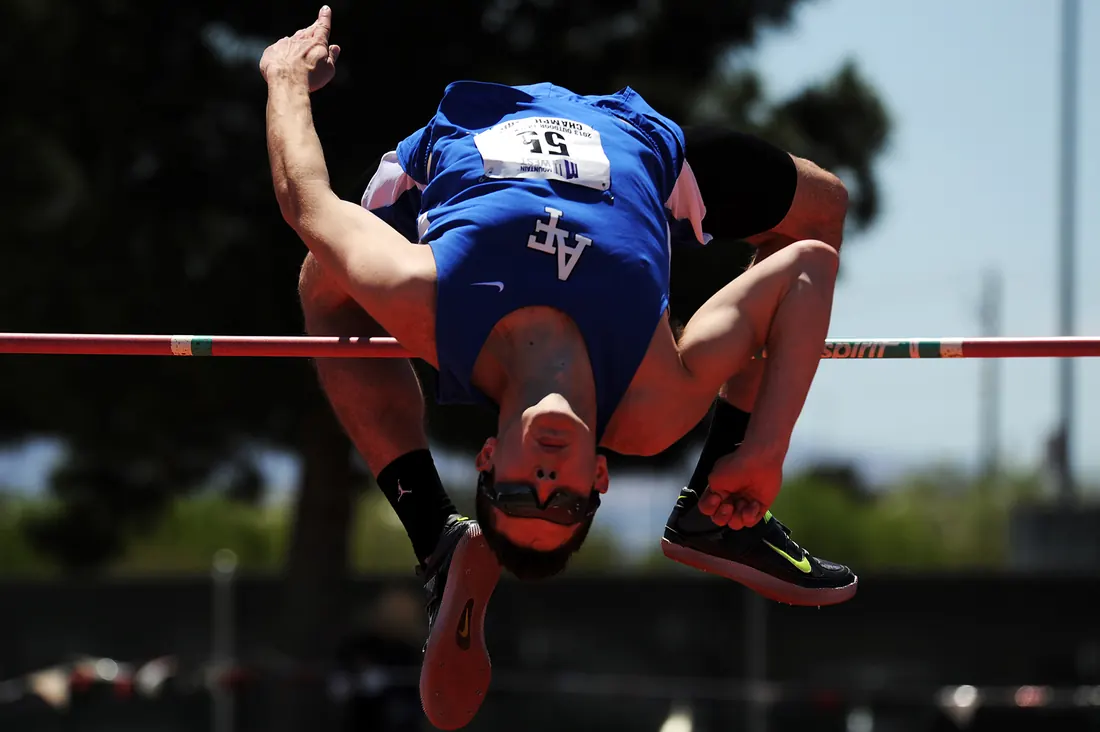
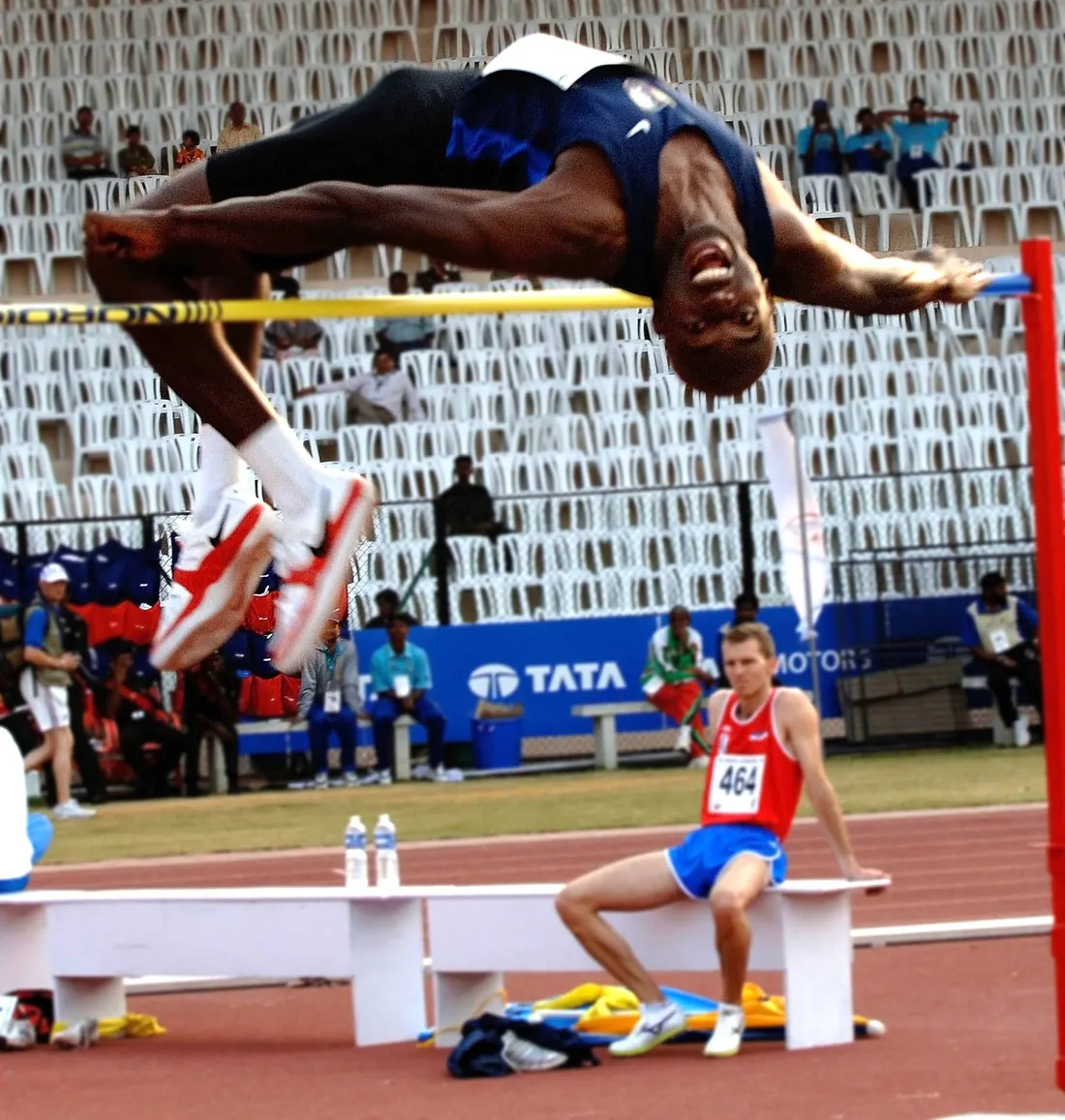
“By the next Olympics, 28 of the 40 jumpers were using Fosbury’s technique,” the AP says; in The Guardian’s words, “By the time Munich staged the games in 1972, 28 of the 40 jumpers were ‘flopping’,” and “virtually all jumpers since have flopped.” “The Montreal Games in 1976 marked the last Olympics in which a high jumper won using a technique other than the Fosbury Flop,” the AP says, and The New York Times: “Within a decade of his gold medal, the scissors kick had been rendered old-fashioned and the great majority of Olympic high jumpers were using Fosbury’s technique.” Dick Fosbury died on March 12, 2023, aged 76.
Fact check
The facts and where they come from
- He went over the bar backwards, but he was warned it would cause broken necks. Associated Press: “Fosbury took off at an angle, leaped backward, bent himself into a ‘J’ shape to catapult his 6-foot-4-inch frame over the bar” … “Fosbury once received a letter from a Los Angeles medical director suggesting his technique would lead to ‘a rash of broken necks.’” 1
- His name was Dick Fosbury. The Guardian: “Born in Portland, Oregon, Fosbury grew up in Medford”; “Dick (Richard Douglas) Fosbury, high jumper, born 6 March 1947; died 12 March 2023.” 4
- Back then, high jumpers faced the bar. NPR: “Back then, high jumpers used two styles both facing the bar.” Associated Press: “Before Fosbury, many high jumpers cleared their heights by running parallel to the bar, then using a straddle kick to leap over before landing with their faces pointed downward.” 21
- In high school, Fosbury kept losing. NPR: “Fosbury preferred the scissors, but in high school, it wasn’t working. He was losing a lot.” 2
- Then he leaned back, lifted his hips, and went higher. NPR: “Then at a track meet in 1963, something happened.” … “Lifting his hips leaning back farther, Fosbury soared higher with each jump.” … “It was the start of a two-year evolution that ultimately had Fosbury doing a full back layout over the bar.” 23
- A local paper said he looked like a fish flopping in a boat. Associated Press: “The term ‘Fosbury Flop’ is credited to the Medford Mail-Tribune, which wrote the headline ‘Fosbury Flops Over the Bar’ after one of his high school meets. The reporter wrote that Fosbury looked like a fish flopping in a boat.” … “The technique was the subject of scorn and ridicule in some corners.” 1
- The caption said he flopped, and the name stuck. Fosbury in 2009, quoted by The Guardian: the Flop “got its name earlier in 1968 when a journalist asked what my technique was called, and I borrowed the terminology my hometown newspaper had used in a picture caption, which read: ‘Fosbury flops over the bar’.” 51
- His college coach tried to switch him back. Instead, he won the Olympic trials. The Guardian: “At Oregon State University, Fosbury’s college coach tried to switch him back to the ‘western roll’, but agreed to let him use the flop in his freshman team meets.” … “The next year, he won his first of two national college titles clearing 7ft 2½in, then won the US Olympic trials in Los Angeles.” 4
- At the Olympics, he said, rival coaches told him he’d never succeed. Fosbury to NPR: “When I got to the Olympics, though, that really was the first time where I began to talk to other coaches who insisted and told me I would never succeed with this technique I’d developed.” 3
- On October 20, 1968, 80,000 fans watched the final. Track & Field News: “Fosbury had every one of 80,000 fans who jammed Estadio Olimpico on the final day of track competition, October 20, captivated.” The New York Times: “And today in Mexico City he amazed 80,000 persons” … “for an Olympic record.” 67
- Every height, first try. Then the bar rose to an Olympic record, 2.24 meters. Track & Field News: “He cleared every height he attempted through 7-3 3/8 on his first try,” then went on “flipping over 7-4¼ for Olympic and American records.” Associated Press: “Fosbury cleared 2.24 meters (7 feet, 4¼ inches) to win the gold and set an Olympic record.” 61
- He missed. He missed again. One jump left. Track & Field News: at 7-4¼ “the officials marked his first miss of the entire competition” … “Caruthers missed his first try and each man couldn’t get over on their second jumps. So now it was the last chance for each man.” Wikipedia: “Fosbury missed on his first two attempts, but cleared on his third.” 68
- He rocked on his heels, sprinted, and sailed over. Track & Field News: “Again he stood for two minutes, then rocked back on his heel and sped toward the bar. He drove powerfully off his right foot, arched his back and simply sailed over.” 6
- Olympic gold. Associated Press: “to win the gold and set an Olympic record.” 1
- At the next Olympics, 28 of 40 jumpers flopped. Associated Press: “By the next Olympics, 28 of the 40 jumpers were using Fosbury’s technique.” The Guardian: “By the time Munich staged the games in 1972, 28 of the 40 jumpers were ‘flopping’.” 14
- Today, almost every high jumper does the Fosbury Flop. The Guardian: “virtually all jumpers since have flopped.” Associated Press: “The Montreal Games in 1976 marked the last Olympics in which a high jumper won using a technique other than the Fosbury Flop.” The New York Times: “Within a decade of his gold medal, the scissors kick had been rendered old-fashioned and the great majority of Olympic high jumpers were using Fosbury’s technique.” 417
Sources
- Dick Fosbury, who reinvented high jumping with his ‘Fosbury Flop,’ dies at 76 (Associated Press obituary, March 13, 2023) The Boston Globe
- Dick Fosbury Turned His Back On The Bar And Made A Flop A Success (Tom Goldman, transcript, October 20, 2018) NPR
- High jumper Dick Fosbury, who revolutionized the sport, with his ‘flop,’ dies at 76 (Tom Goldman, with the 2018 interview) NPR
- Dick Fosbury obituary (Michael Carlson, March 17, 2023) The Guardian
- Dick Fosbury, Olympic champion who changed high jump forever, dies aged 76 (Martin Pengelly, March 13, 2023) The Guardian
- 1968 Olympics Men’s High Jump — Fosbury Flop Loosens Crowd (Jon Hendershott, October/November 1968) Track & Field News
- Fearless Fosbury Flops to Glory (Joseph Durso, October 20, 1968) The New York Times
- Dick Fosbury Wikipedia
Notes
“The whole stadium laughed,” as some retellings say, is left out: the only account written at the time, Track & Field News in 1968, says the 80,000 fans were “captivated” and that “the crowd exploded into wild cheers and applause,” and Bob Welch’s book The Wizard of Foz, excerpted by NBC Sports in 2018, describes “a yowl” of approval. No reliable source we found says the Mexico City crowd laughed. The doubters in the Short are the local paper, the medical director’s letter, his college coach and the coaches at the Olympics, each sourced.
“Two different coloured shoes” is also left out: the only mention we found is one unnamed archive voice in the NPR transcript (“mismatched running shoes”), and no other reliable source confirms it.
“Broken necks” comes from a single letter by a Los Angeles medical director, reported by the Associated Press from Richard Hoffer’s book; the letter worried about young Americans copying him (“For the good of young Americans, you should stop this ridiculous attack on the bar”). The Short says only that he was warned.
The fish: the AP says the Medford Mail-Tribune reporter wrote that he looked like a fish flopping in a boat; the NPR transcript paraphrases it as “like a fish flops on dry land.” The caption’s wording varies: “Fosbury Flops Over the Bar” (AP), “Fosbury flops over the bar” (Fosbury in 2009).
“Rival coaches”: Fosbury said “other coaches”; the Short says “rival coaches,” meaning coaches of other teams, and marks it as his account. Track & Field News says he “rocked back on his heel”; the Short says “heels.”
Foam mats: The Guardian says only that “during the 60s, mats filled with foam rubber started to replace pits,” so we don’t say they had already replaced sand pits by the time he flopped.
How long the final lasted: “well over three hours” (Track & Field News, 1968) or “more than four hours” (The Guardian, 2023). The Short gives no number. Nor does it claim he was the only one: the Canadian Debbie Brill developed a similar “Brill Bend” at the same time (The Guardian).
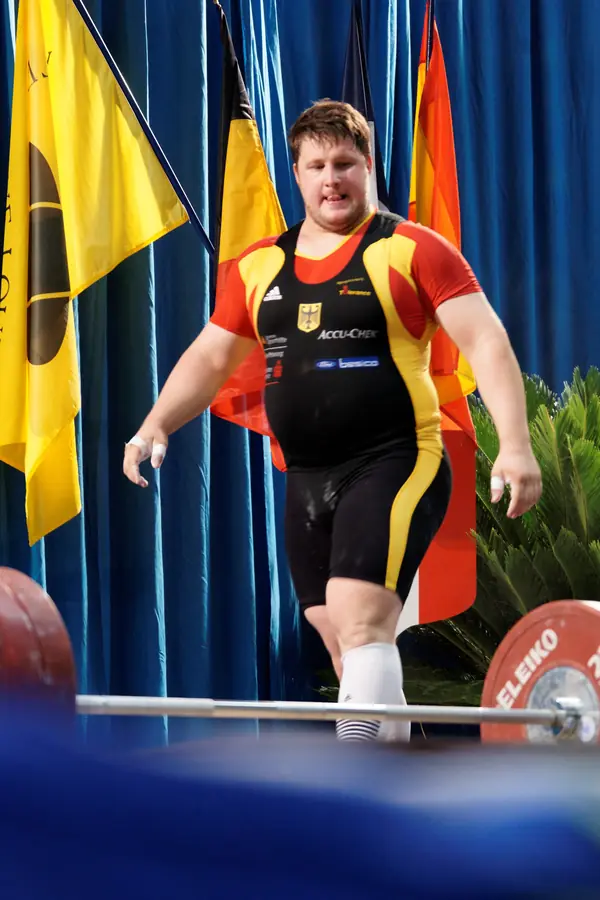
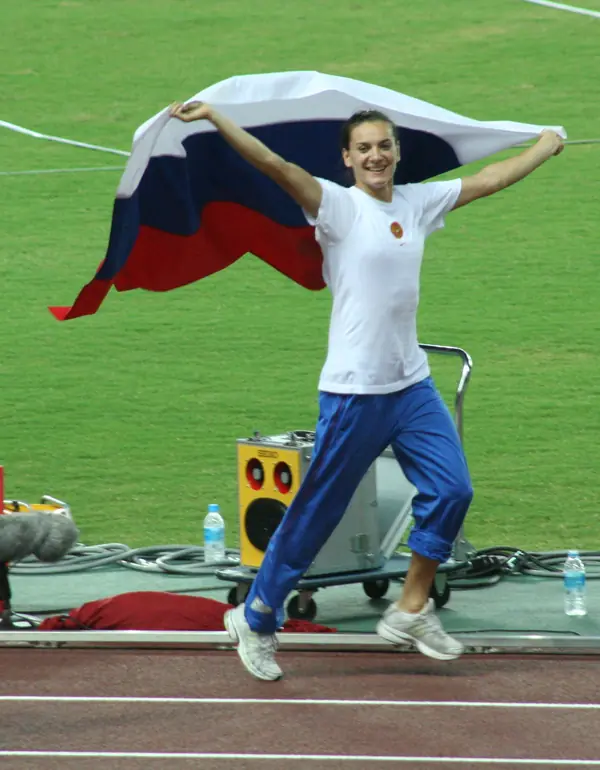
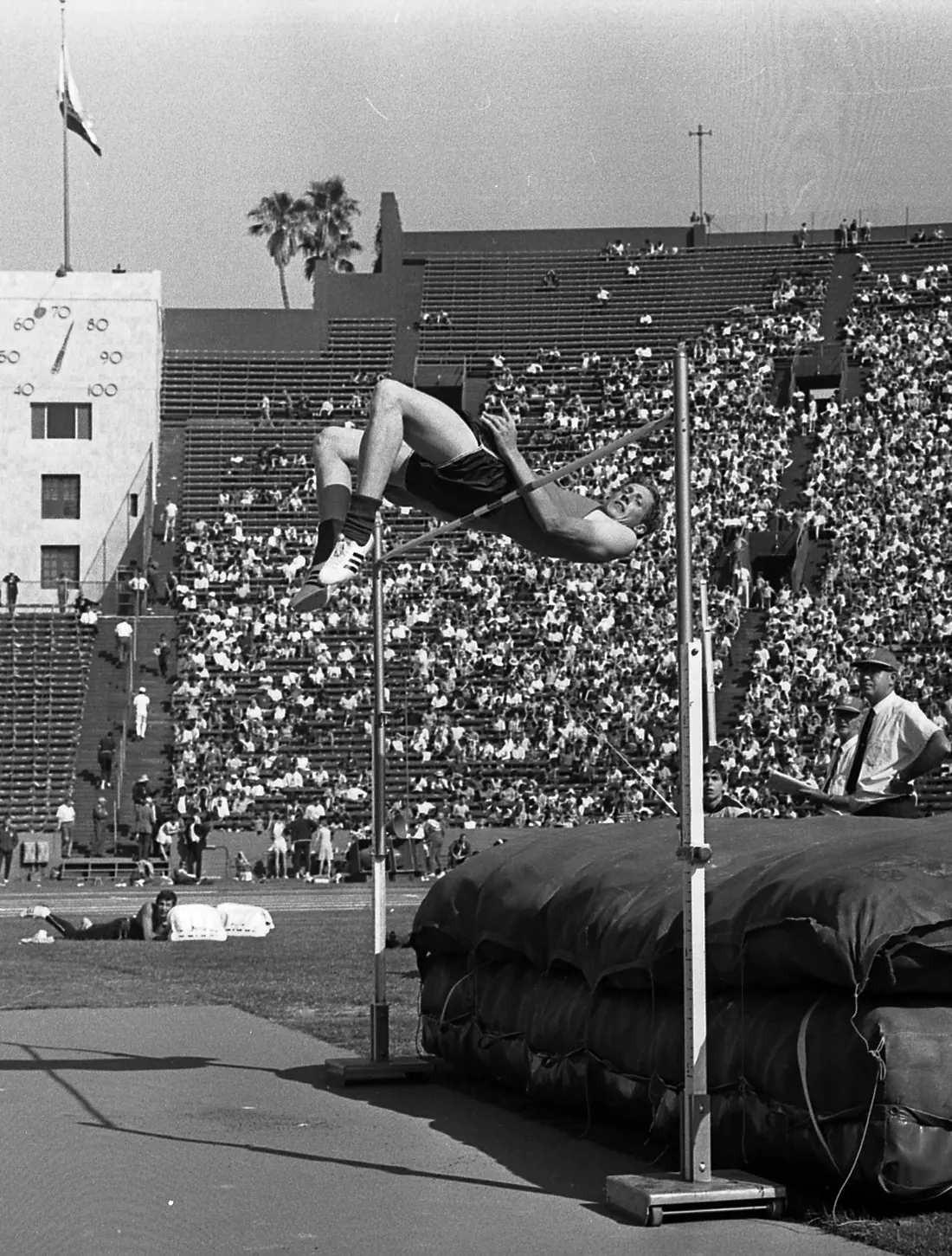
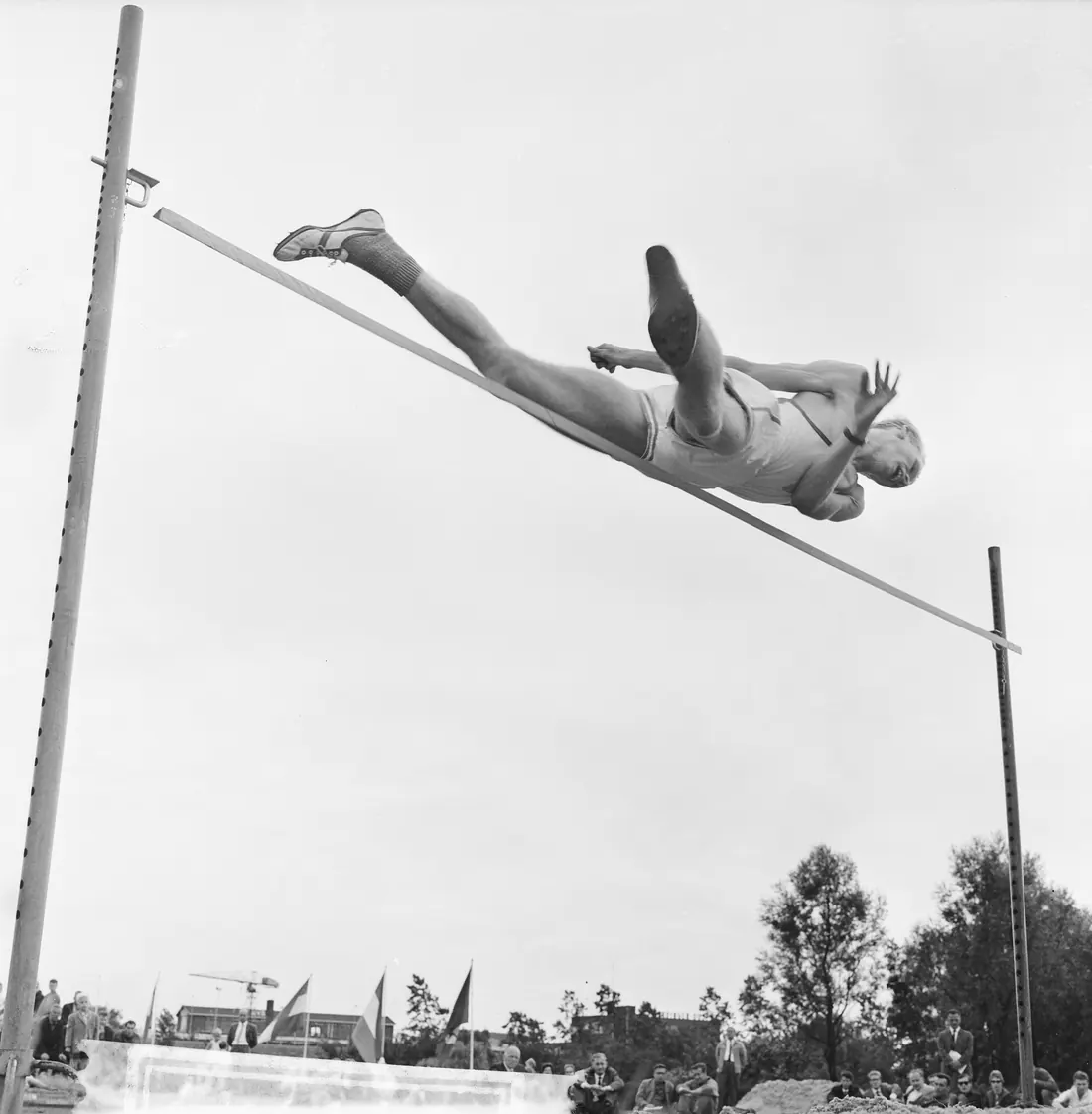
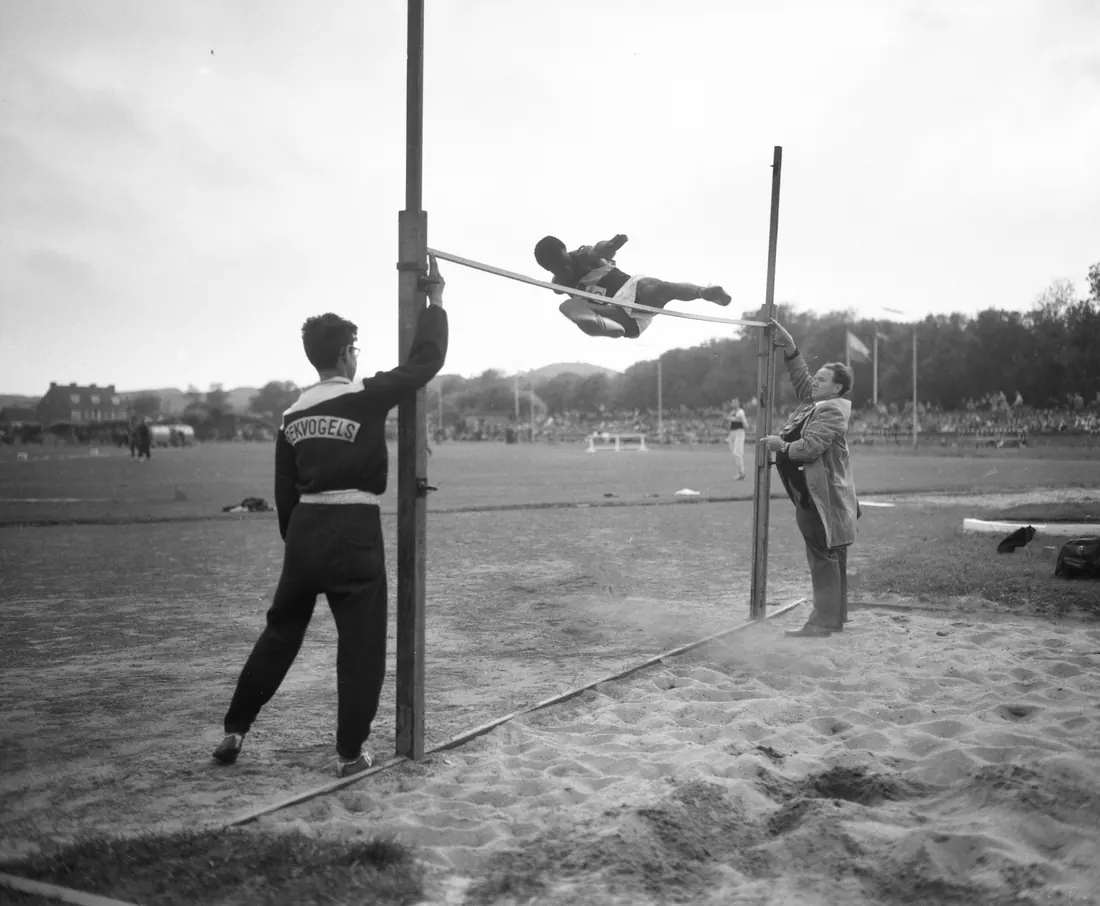
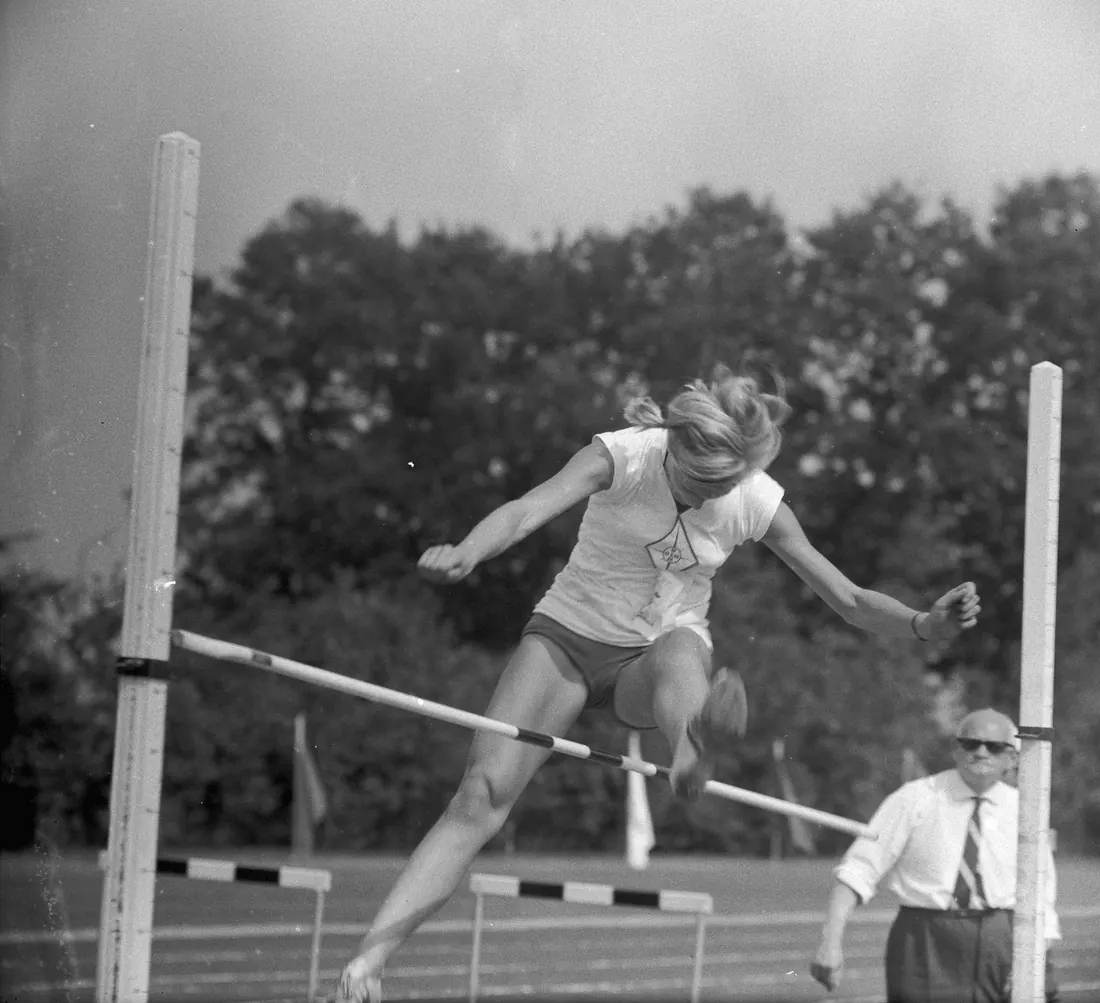
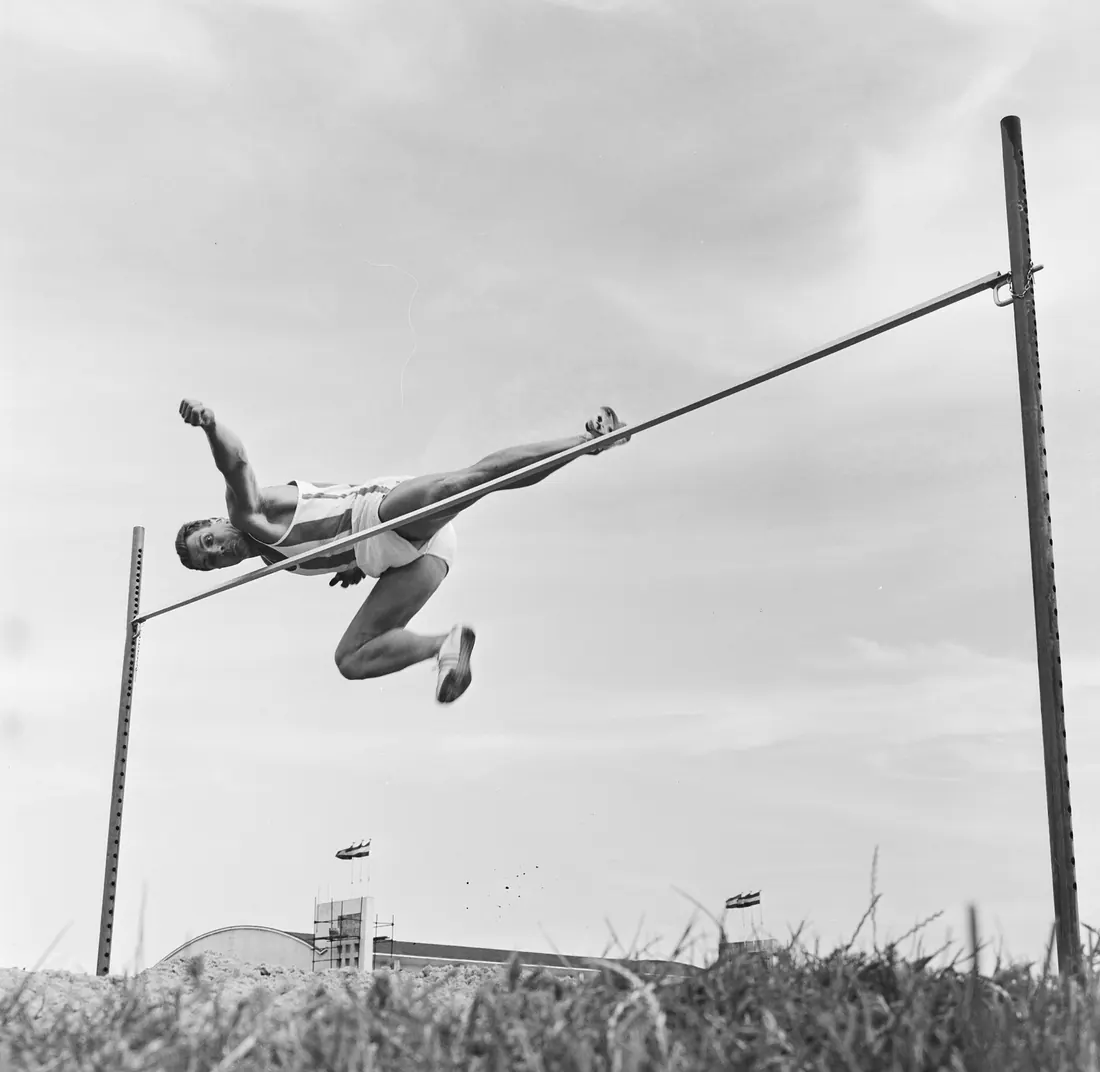
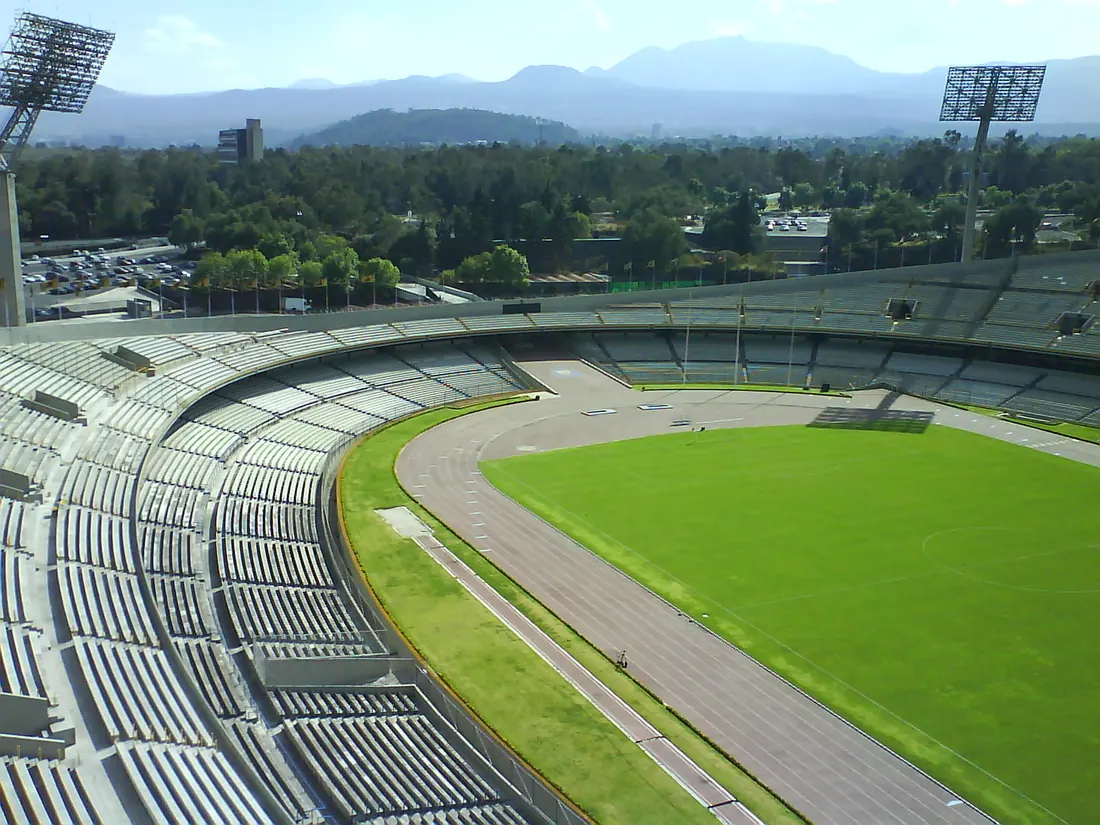
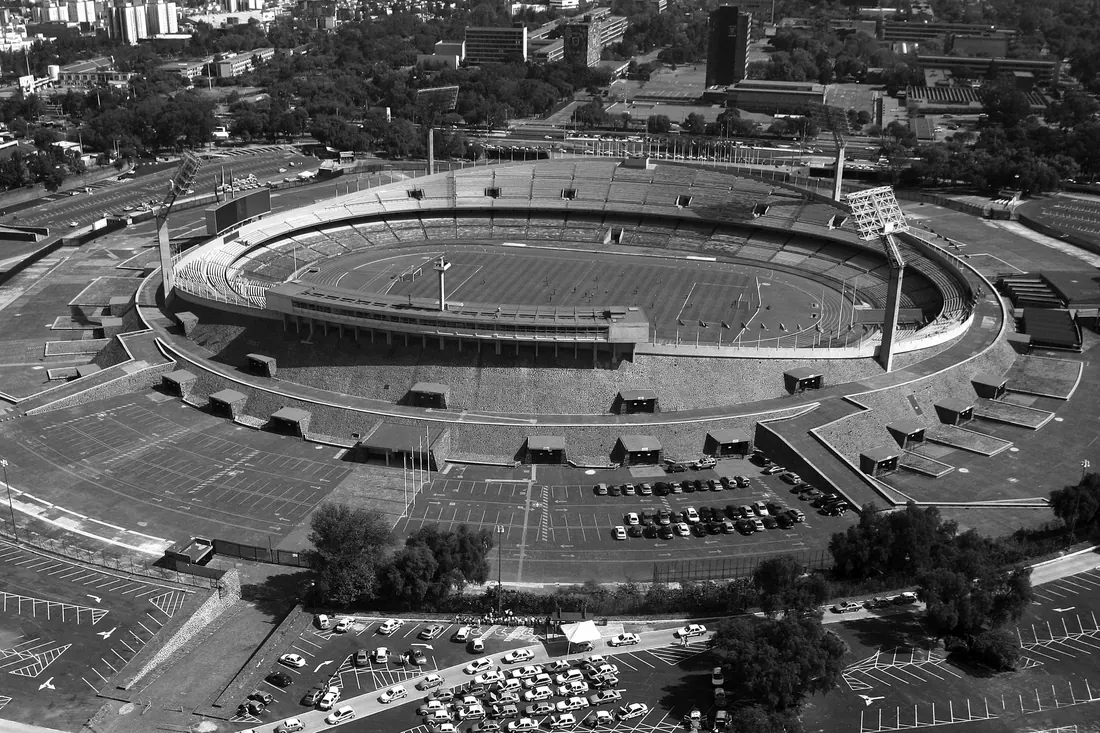
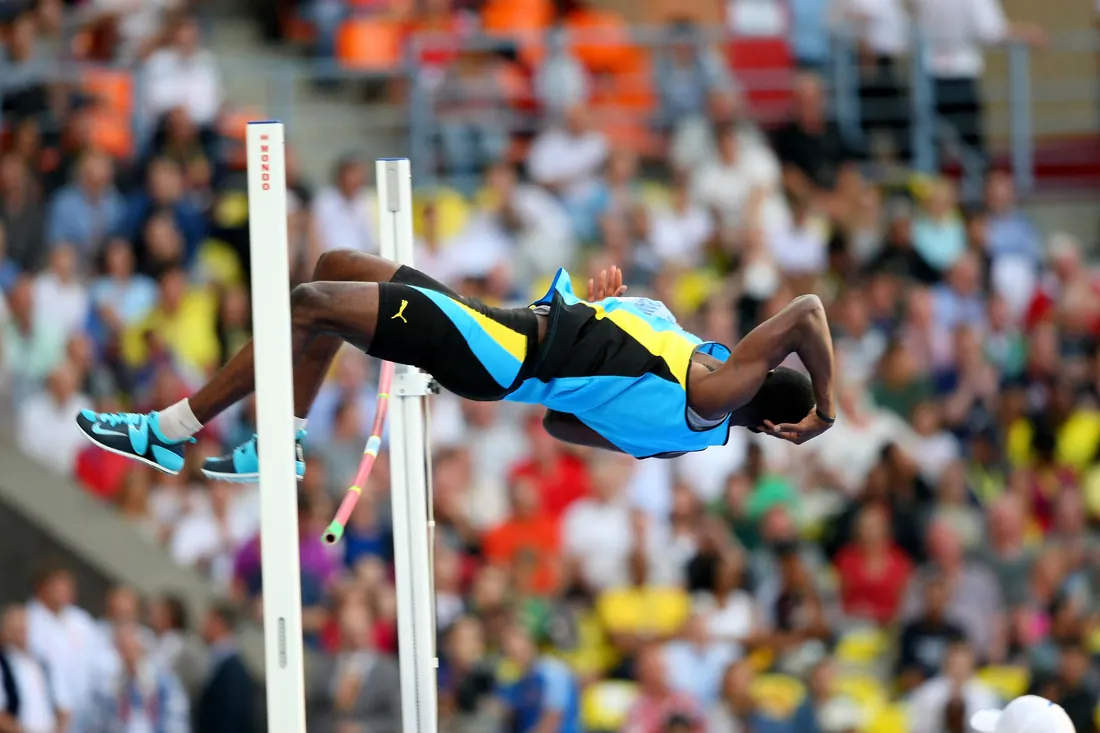
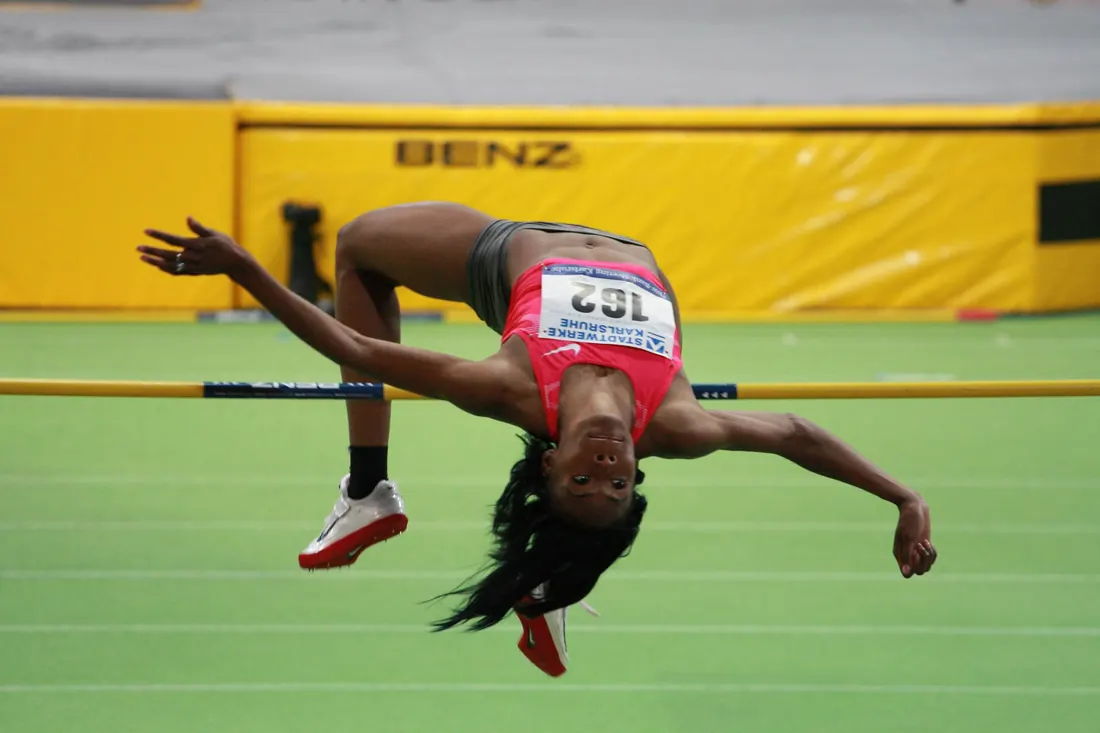
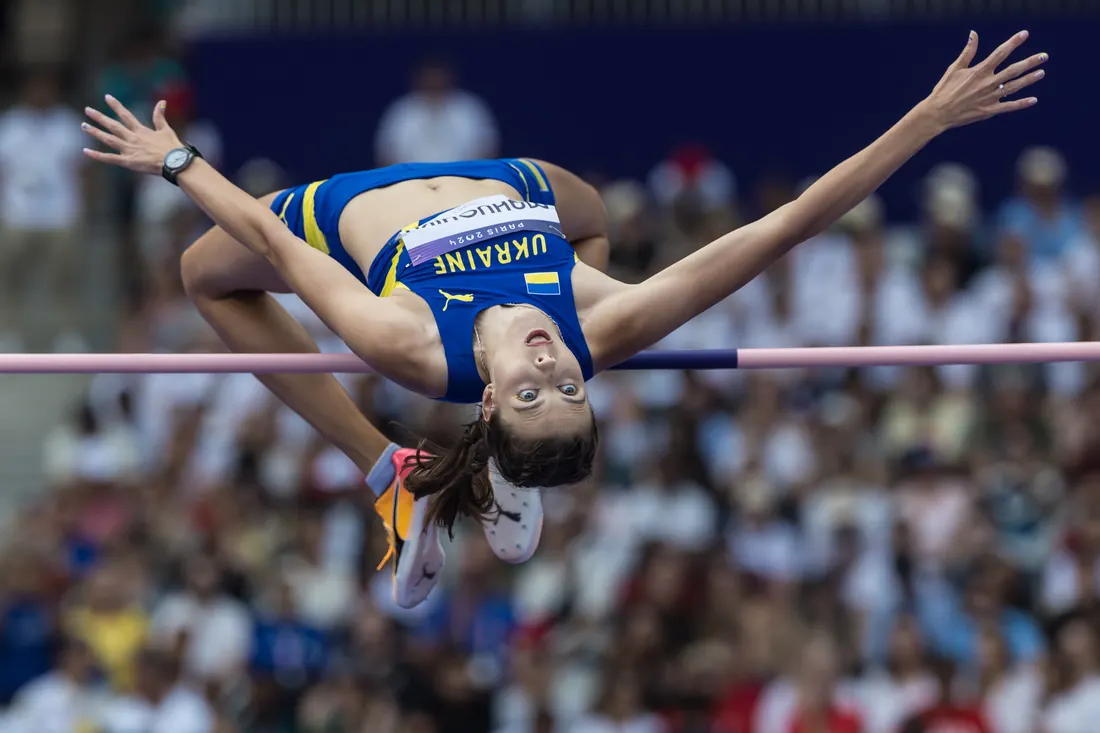
Pictures: the only free photo of Dick Fosbury we found is the Los Angeles Times photo of him clearing the bar at the 1968 US Olympic trials in the Los Angeles Memorial Coliseum (UCLA Library), not the Mexico City final. The old styles are shown by Dutch athletes photographed for Anefo (Nationaal Archief): Marjan Thomas using the scissors at Apeldoorn in 1964 (Jack de Nijs), Rein Knol and Eef Kamerbeek using the straddle in the Dutch decathlon of 1962 (Eric Koch), and a jump into a sand pit at The Hague against London in 1961 (Joop van Bilsen). The flop today is shown by a US Army athlete at the 2007 Military World Games and a US Air Force Academy cadet in 2013, neither of them Fosbury, and by Donald Thomas of the Bahamas in Moscow in 2013, Chaunte Lowe of the United States in 2010 and Ukraine’s Yaroslava Mahuchikh at the Paris 2024 Olympics. Estadio Olímpico Universitario in Mexico City, where he won, is seen in 2008, from the air in 2007 and full in 2013.
Photo credits
The archive photos in this story
The photographs and illustrations in this story are in the public domain or shared under open licenses; each one is credited below with its license. Tap one to enlarge it, or follow the link to its Wikimedia Commons page for the full record. The narration, captions and graphics in the Short are our own; its music and sound effects are credited below.

Music and sound effects
Music: Grieg, Peer Gynt Suite No. 1, Op. 46: IV. In the Hall of the Mountain King (Musopen Symphony Orchestra, public domain); Beethoven, Coriolan Overture, Op. 62 (Musopen Symphony Orchestra, CC0); Brahms, Symphony No. 1 in C minor, Op. 68: IV. Adagio - Piu andante - Allegro non troppo, ma con brio (Musopen Symphony Orchestra, CC0).
Sound effects: Freesound, CC0.