Florence Nightingale “was an English social reformer, statistician and the founder of modern nursing,” Wikipedia says. “Born into a wealthy family, Florence overcame the narrow opportunities offered to girls of her station,” the National Army Museum says. “She proposed training in Salisbury, but her parents refused,” BBC Teach says. “They thought nursing was lowly, immodest work done by the poor or servants, completely unsuitable for a woman of Florence’s social standing.” Still, “In 1851, despite the disapproval of her family, she completed a course of nursing training in Germany,” the National Army Museum says.
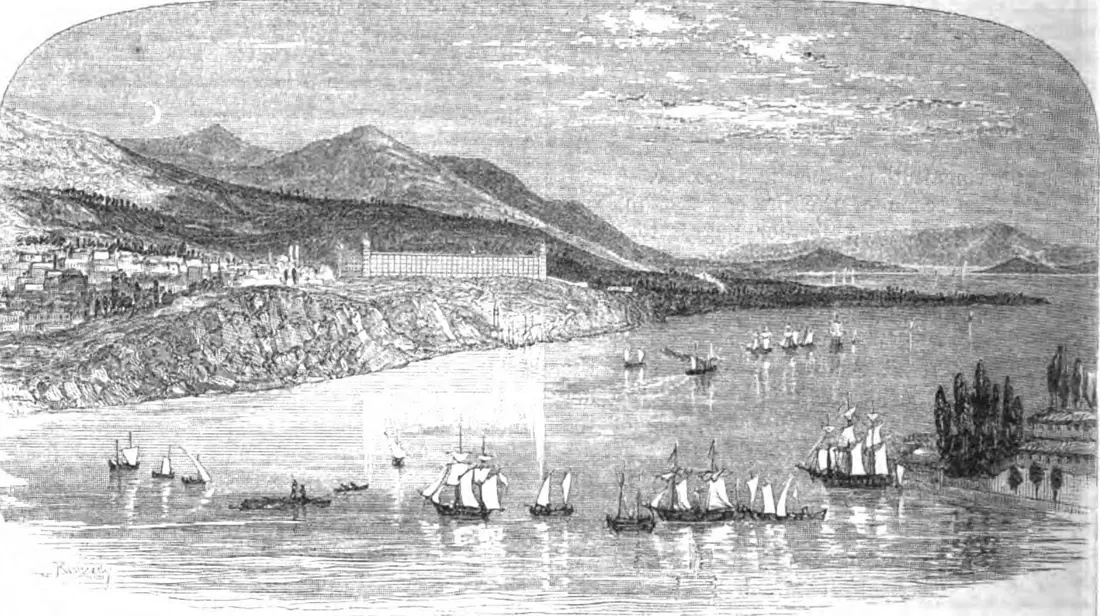
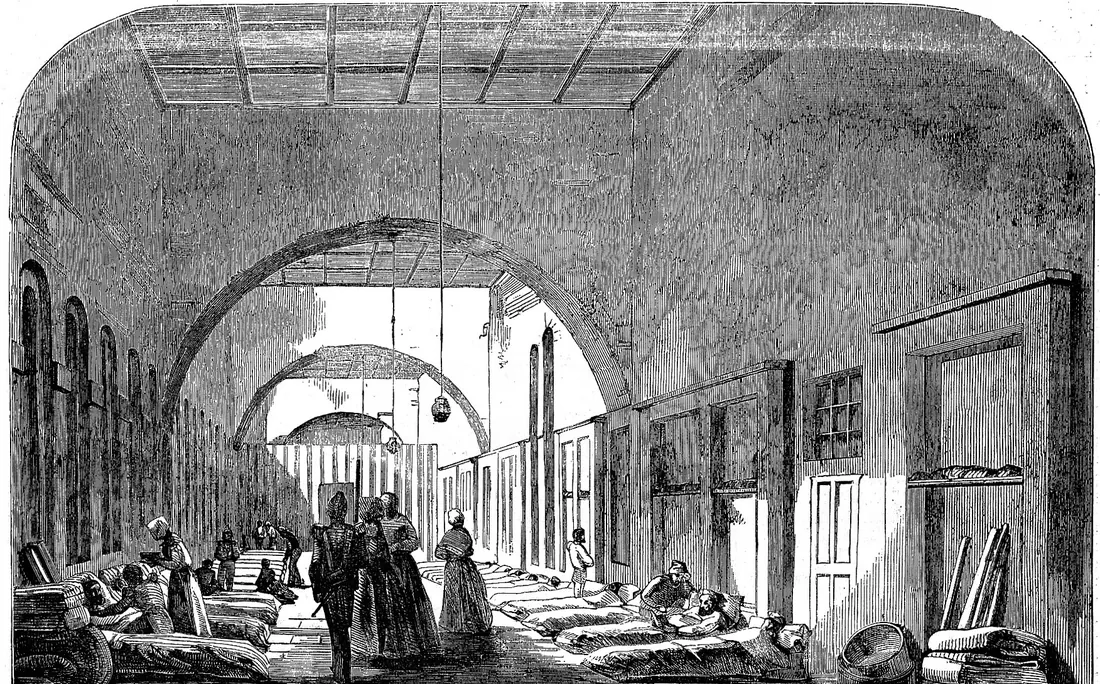
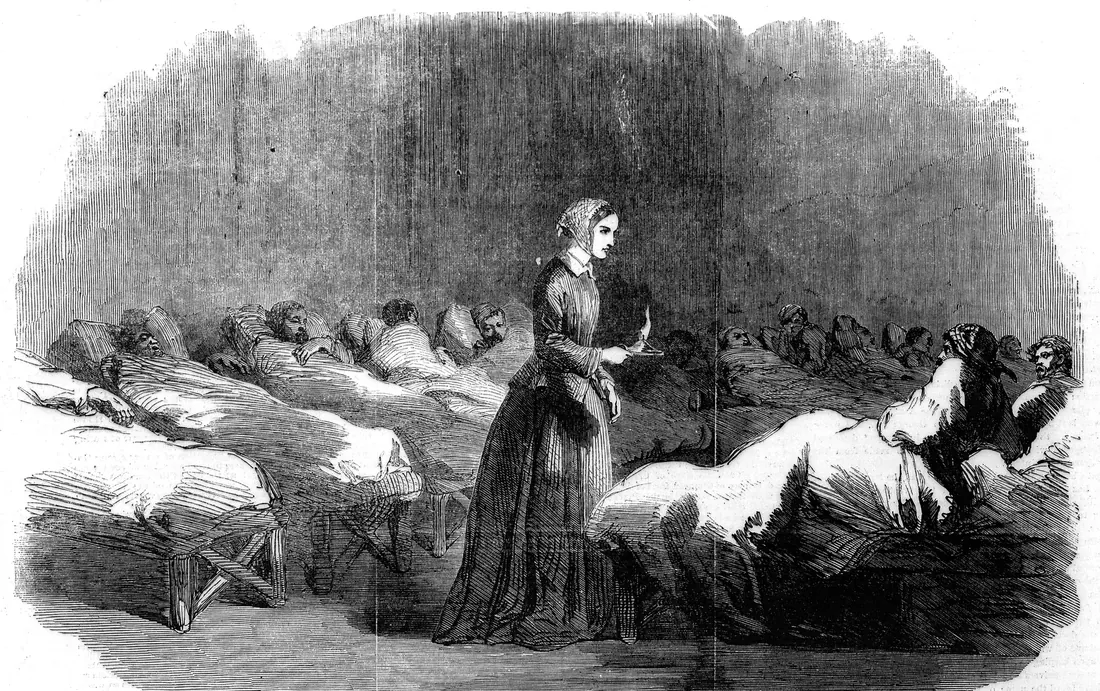
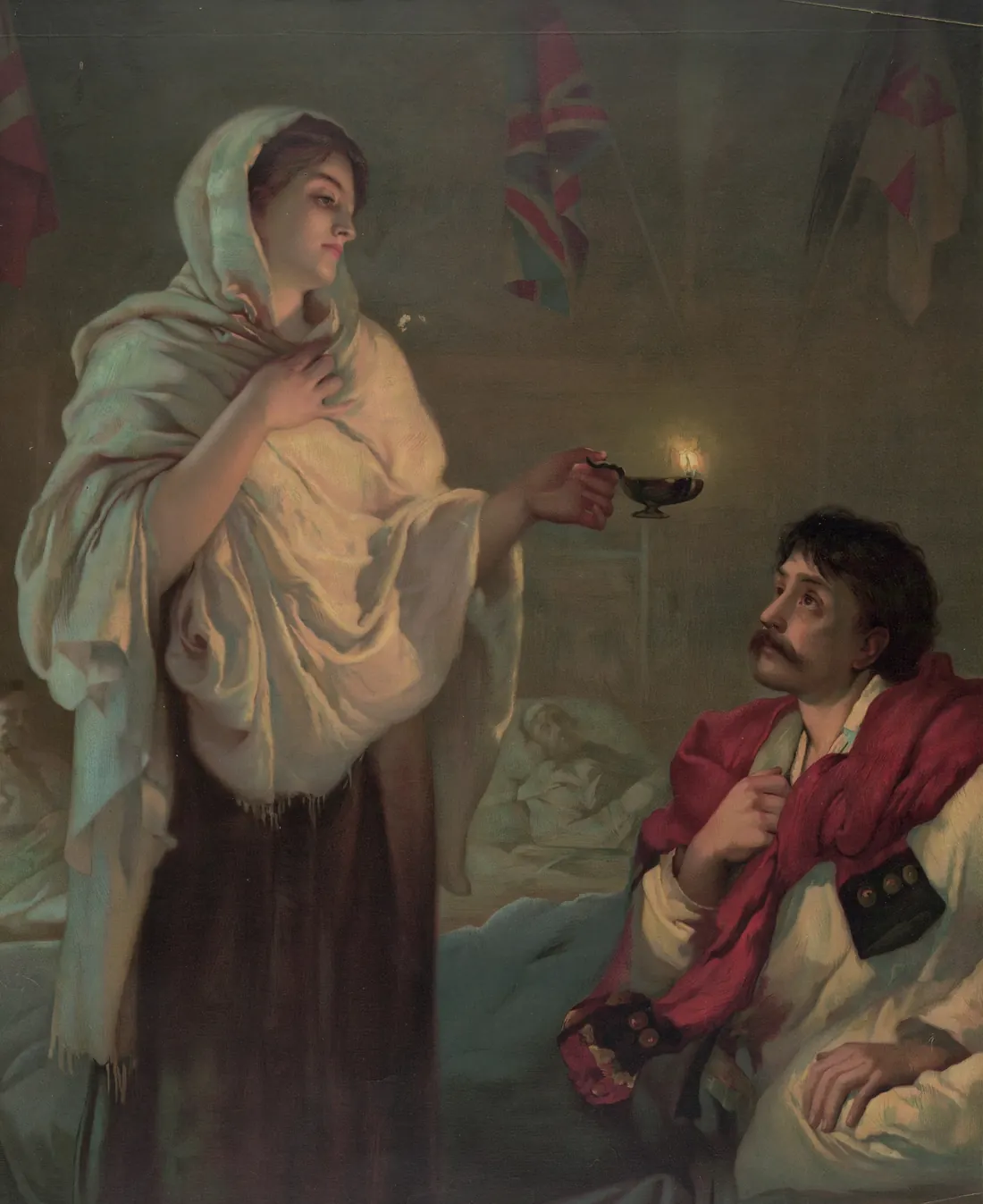
“Florence Nightingale’s most famous contribution came during the Crimean War,” Wikipedia says. In the BBC’s words, she was appointed “to take 38 nurses to the military hospital in Scutari, Turkey”; Wikipedia dates it: “On 21 October 1854, she and the staff of 38 women volunteer nurses” … and “Nightingale arrived at Selimiye Barracks in Scutari early in November 1854.” “At Scutari, near Constantinople, the conditions were dire. The dirty and vermin-ridden hospital lacked even basic equipment and provisions,” the National Army Museum says, and “The unventilated building sat on top of a damaged sewer.” “Ten times more soldiers died from illnesses such as typhus, typhoid, cholera, and dysentery than from battle wounds,” Wikipedia says. At night, in the words of The Times, “she may be observed alone, with a little lamp in her hand, making her solitary rounds,” and “Nightingale gained the nickname ‘The Lady with the Lamp’ from a phrase in a report in The Times,” Wikipedia says.
But “During her first winter at Scutari, 4,077 British soldiers died there,” Wikipedia says; of the death toll, the BBC says, “It kept increasing relentlessly, with over four thousand deaths in a single winter.” “Florence mistakenly blamed the high number of deaths on inadequate nutrition, not on poor sanitation,” the National Army Museum says, and Wikipedia says “Nightingale still believed that the death rates were due to poor nutrition, lack of supplies, stale air, and overworking of the soldiers.” “In the spring of 1855, the British government sent out a sanitary commission to investigate the conditions at Scutari,” the BBC says. “It discovered the barrack hospital was built on a sewer, meaning patients were drinking contaminated water.” “The commission flushed out the sewers and improved ventilation. Death rates were sharply reduced,” Wikipedia says; in the National Army Museum’s words, “The death rate only dropped after the sanitary commission repaired the sewers and improved the ventilation.”
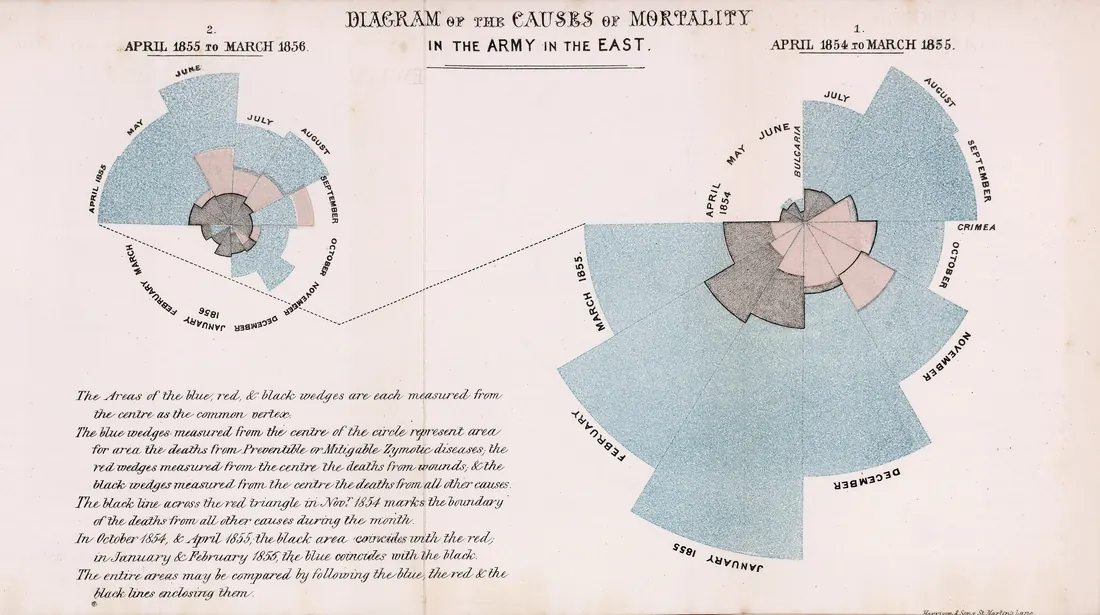
“After she returned to Britain and began collecting evidence before the Royal Commission on the Health of the Army, she came to believe that most of the soldiers at the hospital were killed by poor living conditions,” Wikipedia says. “Leading statistician William Farr and John Sutherland of the Sanitary Commission helped her analyse vast amounts of complex army data,” the BBC says, and “The truth she uncovered was shocking – 16,000 of the 18,000 deaths were not due to battle wounds but to preventable diseases, spread by poor sanitation.” In Eye Magazine’s words, “It is equally clear that disease, not the Russians, was the real enemy.” “She made extensive use of coxcombs to present reports on the nature and magnitude of the conditions of medical care in the Crimean War to Members of Parliament and civil servants who would have been unlikely to read or understand traditional statistical reports,” Wikipedia says. “Fearing that the statistics might seem ‘dry’, she included visual representations of the data,” Eye says: “she plotted the data clockwise on two connected circular charts, with 30-degree segments representing each month. For each month, causes of death were shown in superimposed wedges: coloured blue for ‘preventible or mitigable zymotic diseases’ (such as cholera and dysentery), red for ‘wounds’ and black for ‘all other causes’.”
“Her Notes on Matters Affecting the Health, Efficiency and Hospital Administration of the British Army: Founded Chiefly on the Experience of the Late War was published in 1858,” Eye says, and “In the year it was published, she became the first woman elected to the Royal Statistical Society.” The society itself says “Florence Nightingale was the first female member of the RSS, having joined the Society (then the London Statistical Society) in 1858, just two years after her return from the Crimean War.” “In light of Florence’s work, new army medical, sanitary science and statistics departments were established to improve healthcare,” the BBC says, and “her skill for communication and mathematics helped overhaul army and civilian healthcare and saved thousands from a gruesome death.” “The legend of the saintly nurse has long obscured the truth – that her mathematical genius was what really saved so many lives.”
Fact check
The facts and where they come from
- She was famous for her lamp, but her real weapon was a chart. BBC Teach: “The legend of the saintly nurse has long obscured the truth – that her mathematical genius was what really saved so many lives”; “It wasn’t until after she had processed all she had learned at Scutari, that Florence used her fame as a powerful weapon in her mission to save lives.” Her chart of 1858: “Diagram of the causes of mortality in the army in the East.” 27
- Her name was Florence Nightingale, nurse and statistician. Wikipedia: she “was an English social reformer, statistician and the founder of modern nursing.” 1
- Her wealthy parents thought nursing was beneath her. BBC Teach: “She proposed training in Salisbury, but her parents refused. They thought nursing was lowly, immodest work done by the poor or servants, completely unsuitable for a woman of Florence’s social standing.” National Army Museum: “Born into a wealthy family, Florence overcame the narrow opportunities offered to girls of her station. In 1851, despite the disapproval of her family, she completed a course of nursing training in Germany.” 23
- In 1854, she took 38 nurses to the Crimean War. Wikipedia: “On 21 October 1854, she and the staff of 38 women volunteer nurses” … “Nightingale arrived at Selimiye Barracks in Scutari early in November 1854”; “Florence Nightingale’s most famous contribution came during the Crimean War.” BBC Teach: “He appointed her to take 38 nurses to the military hospital in Scutari, Turkey.” 12
- The hospital sat on a broken sewer, swarming with vermin. National Army Museum: “At Scutari, near Constantinople, the conditions were dire. The dirty and vermin-ridden hospital lacked even basic equipment and provisions”; “The unventilated building sat on top of a damaged sewer.” BBC Teach, on the sanitary commission: “It discovered the barrack hospital was built on a sewer, meaning patients were drinking contaminated water.” 32
- At night, she walked the wards with a little lamp. The Times, quoted by Wikipedia: “she may be observed alone, with a little lamp in her hand, making her solitary rounds.” National Army Museum: “‘The Times’ reported that at night she would walk among the beds, checking the wounded men holding a light in her hand.” 13
- They called her the Lady with the Lamp. Wikipedia: “Nightingale gained the nickname ‘The Lady with the Lamp’ from a phrase in a report in The Times.” National Army Museum: “Florence gained the nickname ‘the Lady with the Lamp’ during her work at Scutari.” 13
- But that winter, more than four thousand soldiers died there. Wikipedia: “During her first winter at Scutari, 4,077 British soldiers died there.” BBC Teach: “It kept increasing relentlessly, with over four thousand deaths in a single winter.” 12
- Even she blamed bad food, not the filth. National Army Museum: “Florence mistakenly blamed the high number of deaths on inadequate nutrition, not on poor sanitation.” Wikipedia: “Nightingale still believed that the death rates were due to poor nutrition, lack of supplies, stale air, and overworking of the soldiers.” 31
- Deaths only fell after inspectors flushed the sewers. National Army Museum: “The death rate only dropped after the sanitary commission repaired the sewers and improved the ventilation.” Wikipedia: “The commission flushed out the sewers and improved ventilation. Death rates were sharply reduced.” BBC Teach: “In the spring of 1855, the British government sent out a sanitary commission to investigate the conditions at Scutari.” 312
- Back home, she crunched the numbers. BBC Teach: “Leading statistician William Farr and John Sutherland of the Sanitary Commission helped her analyse vast amounts of complex army data.” Wikipedia: “After she returned to Britain and began collecting evidence before the Royal Commission on the Health of the Army, she came to believe that most of the soldiers at the hospital were killed by poor living conditions.” 21
- Of 18,000 dead, 16,000 died of preventable disease. BBC Teach: “The truth she uncovered was shocking – 16,000 of the 18,000 deaths were not due to battle wounds but to preventable diseases, spread by poor sanitation.” Eye Magazine: “It is equally clear that disease, not the Russians, was the real enemy.” 24
- Politicians wouldn’t read tables, so she drew them a rose. Wikipedia: “She made extensive use of coxcombs to present reports on the nature and magnitude of the conditions of medical care in the Crimean War to Members of Parliament and civil servants who would have been unlikely to read or understand traditional statistical reports.” BBC Teach: “Rather than lists or tables, she represented the death toll in a revolutionary way.” Eye Magazine: “Fearing that the statistics might seem ‘dry’, she included visual representations of the data.” 124
- Each wedge was a month, and blue meant preventable deaths. Eye Magazine: “she plotted the data clockwise on two connected circular charts, with 30-degree segments representing each month. For each month, causes of death were shown in superimposed wedges: coloured blue for ‘preventible or mitigable zymotic diseases’ (such as cholera and dysentery), red for ‘wounds’ and black for ‘all other causes’.” Lehigh University Libraries: “Each of the twelve sections represents one month and each of the three colors represents a different cause of death.” 46
- She became the first woman in the Royal Statistical Society. Royal Statistical Society: “Florence Nightingale was the first female member of the RSS, having joined the Society (then the London Statistical Society) in 1858, just two years after her return from the Crimean War.” Eye Magazine: “In the year it was published, she became the first woman elected to the Royal Statistical Society.” 54
- Her chart helped save the living. BBC Teach: “In light of Florence’s work, new army medical, sanitary science and statistics departments were established to improve healthcare”; “her skill for communication and mathematics helped overhaul army and civilian healthcare and saved thousands from a gruesome death.” 2
Sources
- Florence Nightingale Wikipedia
- Florence Nightingale: Saving lives with statistics BBC Teach
- Florence Nightingale: The Lady with the Lamp National Army Museum
- Lady with the diagram (Winter 2011) Eye Magazine
- Nightingale 2020: The bicentenary of our first female fellow Royal Statistical Society
- Nightingale’s Rose Diagram Lehigh University Libraries
- Diagram of the causes of mortality in the army in the East (Florence Nightingale, 1858) Wikimedia Commons
Notes
“42% to 2%”: Wikipedia reports that Stephen Paget “asserted that Nightingale reduced the death rate from 42% to 2%” (in the Dictionary of National Biography), and the National Army Museum says the hospital’s death rate had “risen to 42 per cent” by February 1855. The drop to 2% is disputed, and it was the sanitary commission, not Nightingale, that fixed the sewers, so the Short gives no percentage, and neither do we; the BBC’s “fell by 99% in a single year” is left out too.
The Royal Statistical Society: the society itself and Eye Magazine say she joined in 1858; Wikipedia, the National Army Museum and King’s College London say 1859. The Short gives no year.
“16,000 of 18,000”: these are the BBC’s rounded figures for the army’s deaths in the whole war, not only at Scutari, so the Short puts them after “Back home, she crunched the numbers” and says “Of eighteen thousand dead.”
“Even she blamed bad food”: the National Army Museum says she “mistakenly blamed” inadequate nutrition, and Wikipedia lists nutrition, supplies, stale air and overwork; the Short simplifies to food. Wikipedia also notes recent claims that her achievements in the Crimean War “were exaggerated by the media at the time,” which the scholar Lynn McDonald disputes; we keep to the documented record.
Thirty-eight nurses: Wikipedia counts 38 volunteer nurses plus 15 Catholic nuns; the BBC says 38 nurses, and so does the Short.
The nickname came from a phrase in a Times report and was spread by Longfellow’s poem of 1857 (Wikipedia, the National Army Museum); the Short says only “They called her.”
The rose: the polar area diagram had been used before, by Guerry (1829) and Lalanne (1830), Wikipedia notes, and William Farr helped her with the data (BBC). The Short says she “drew them a rose,” not that she invented the form.
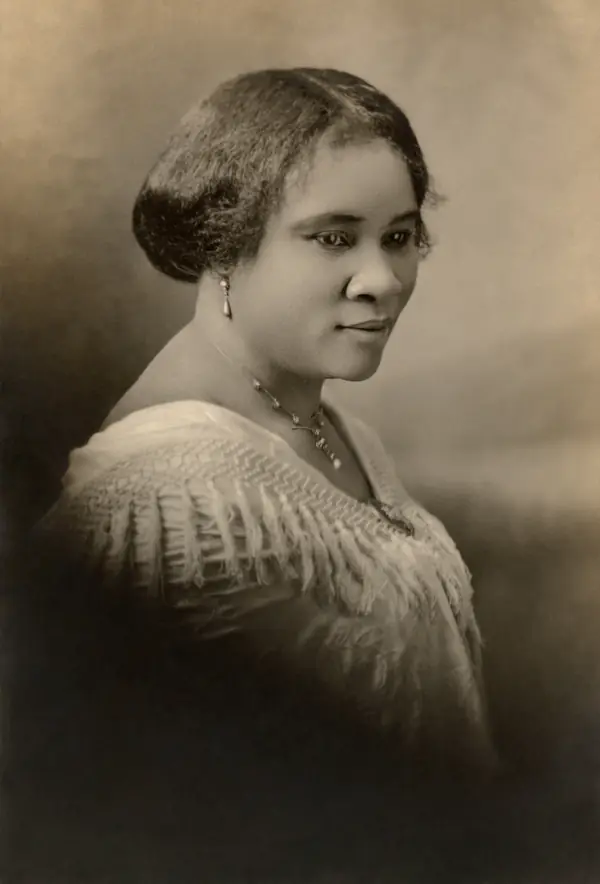
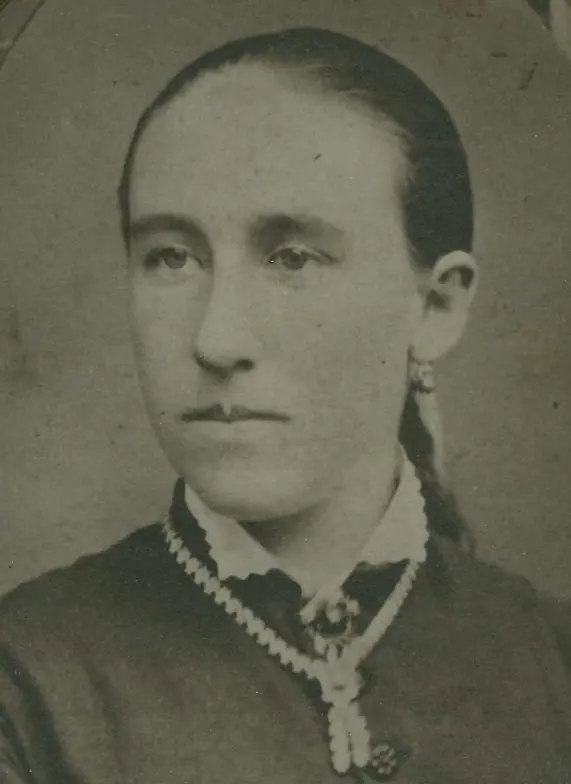
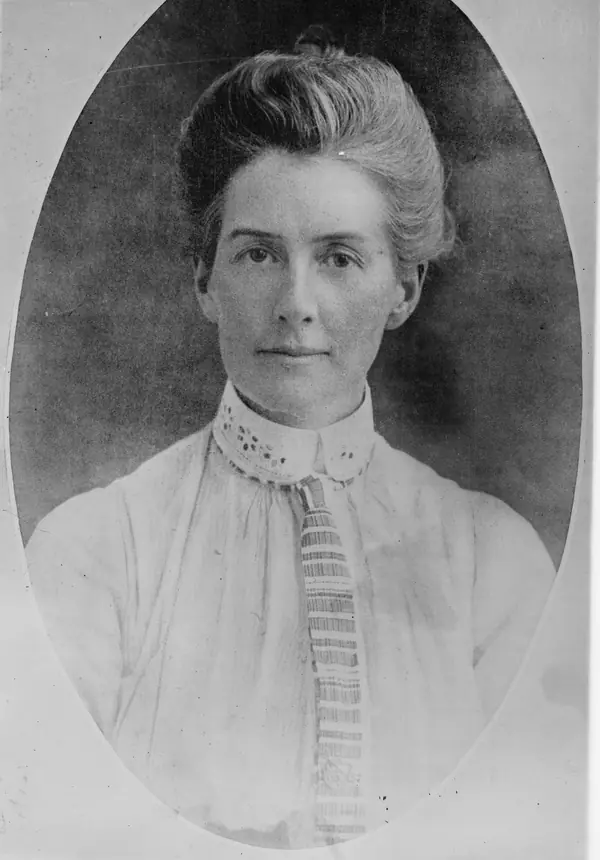
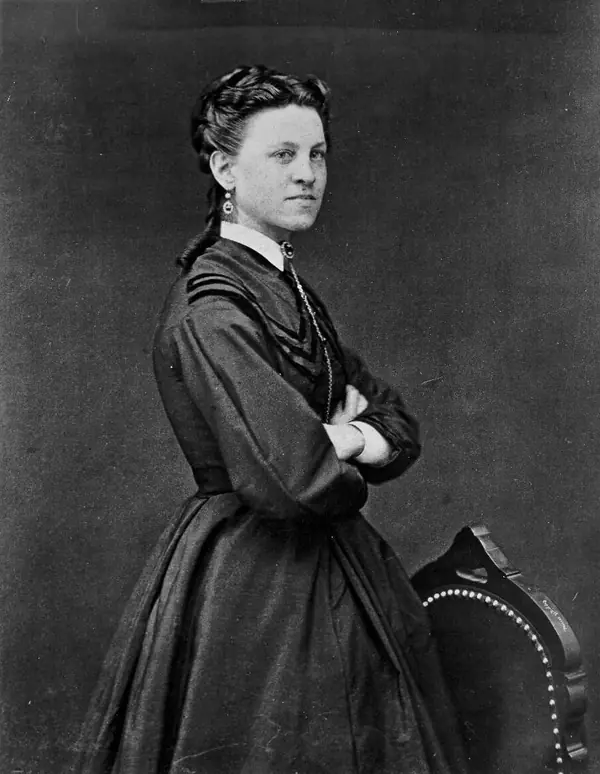
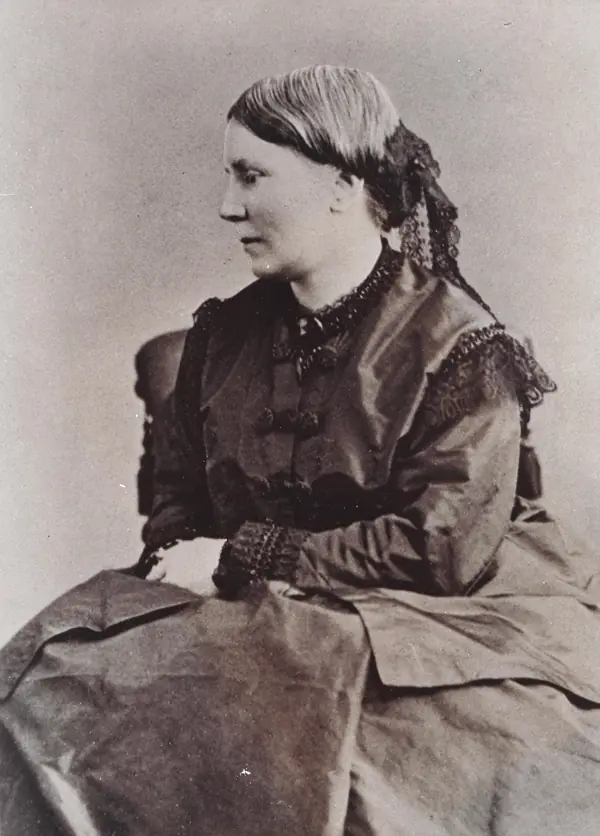
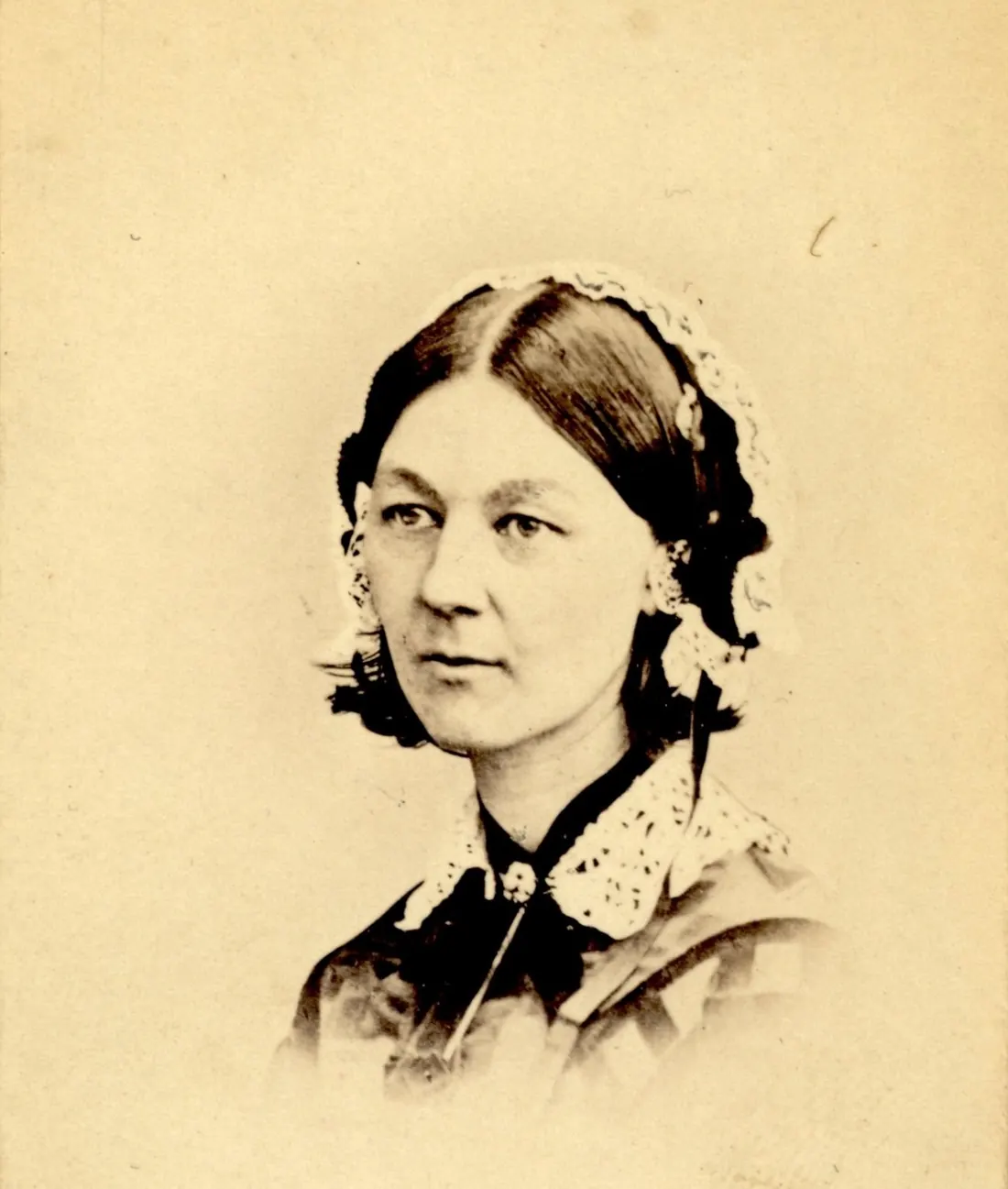
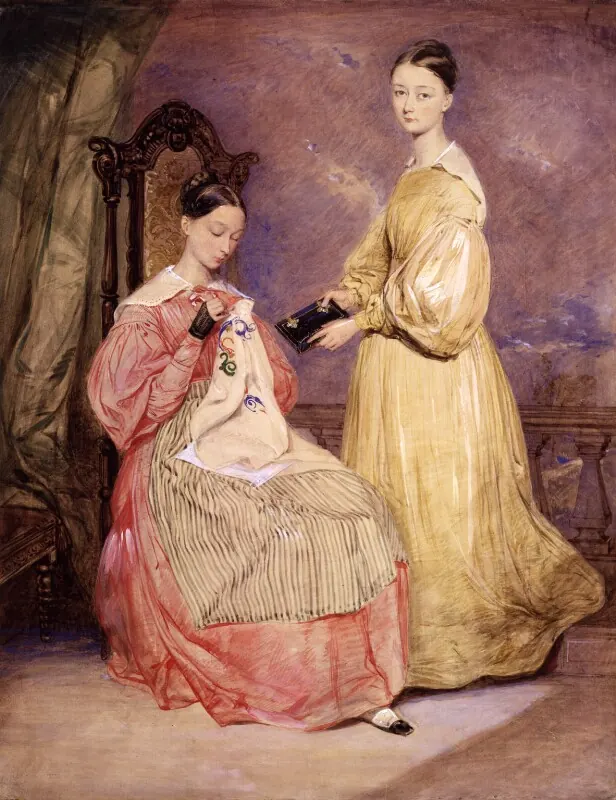
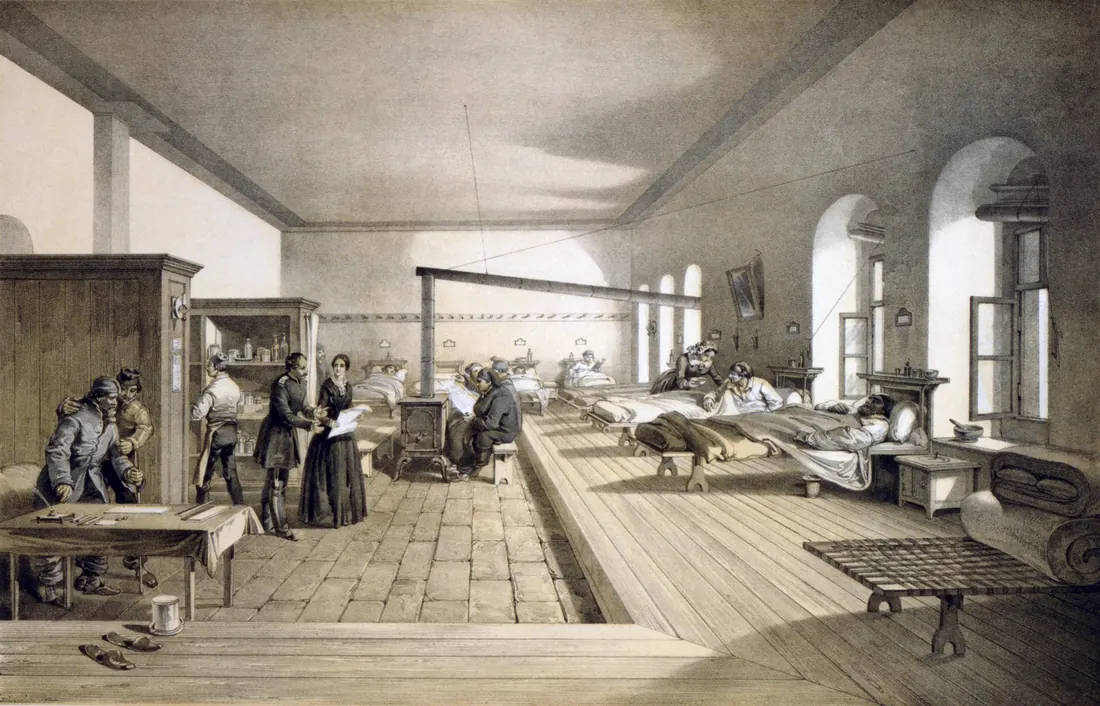
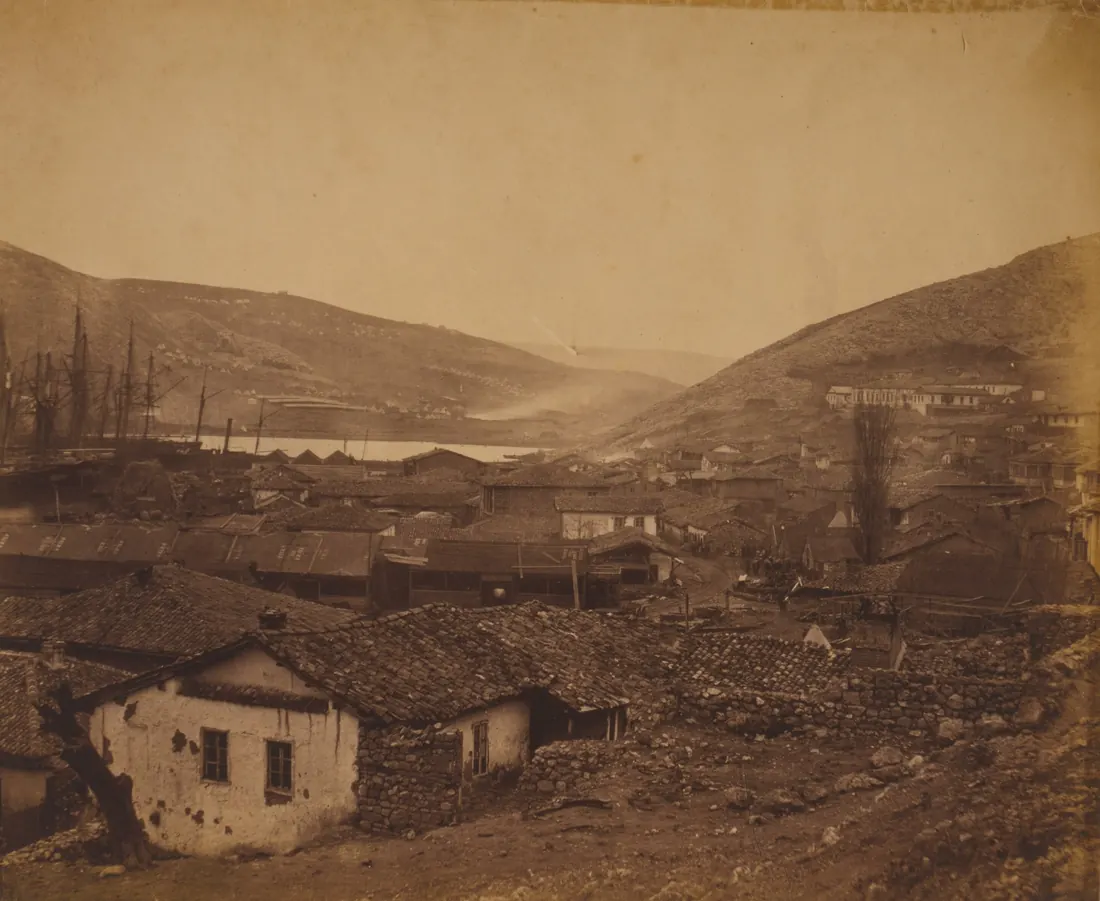
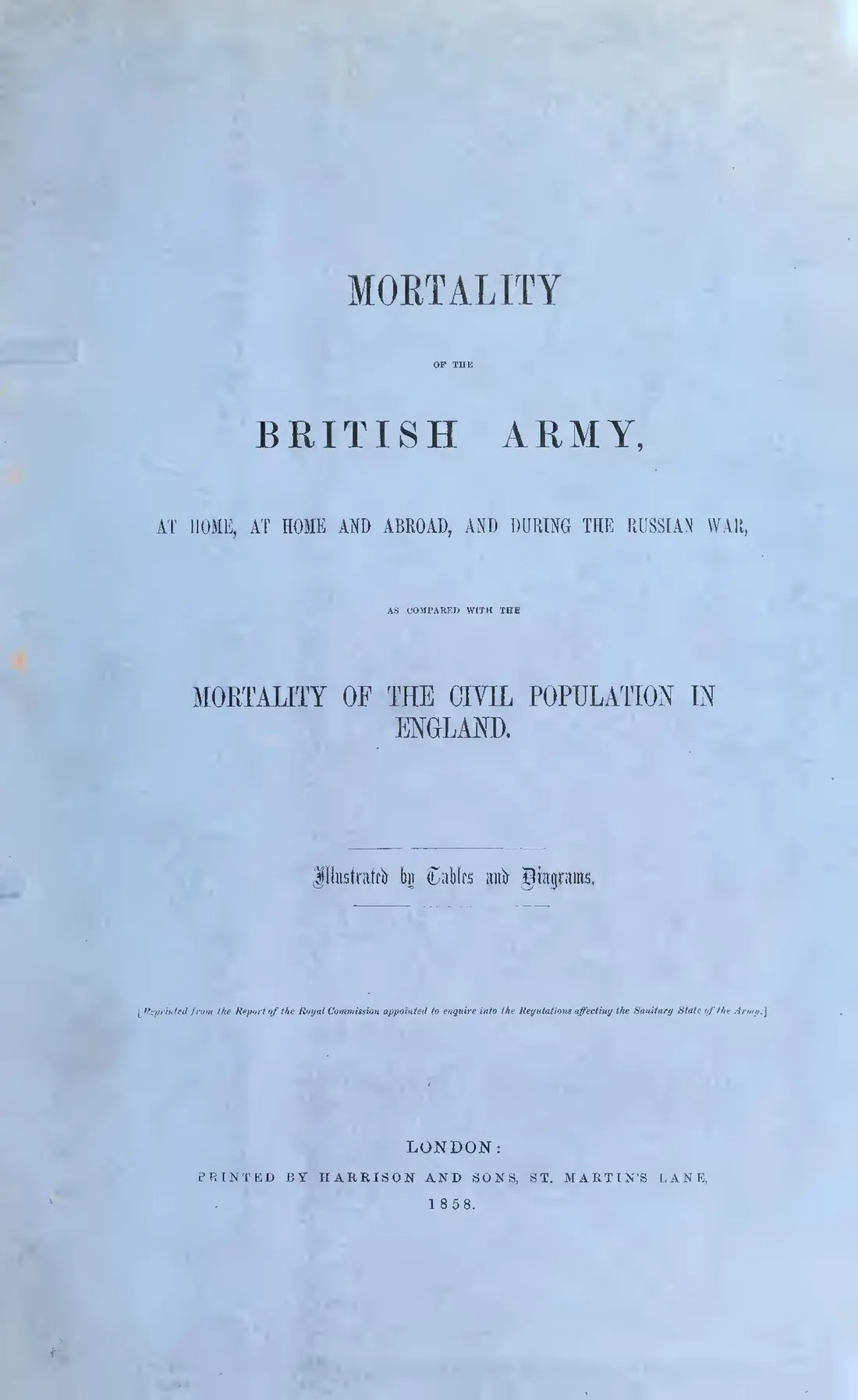
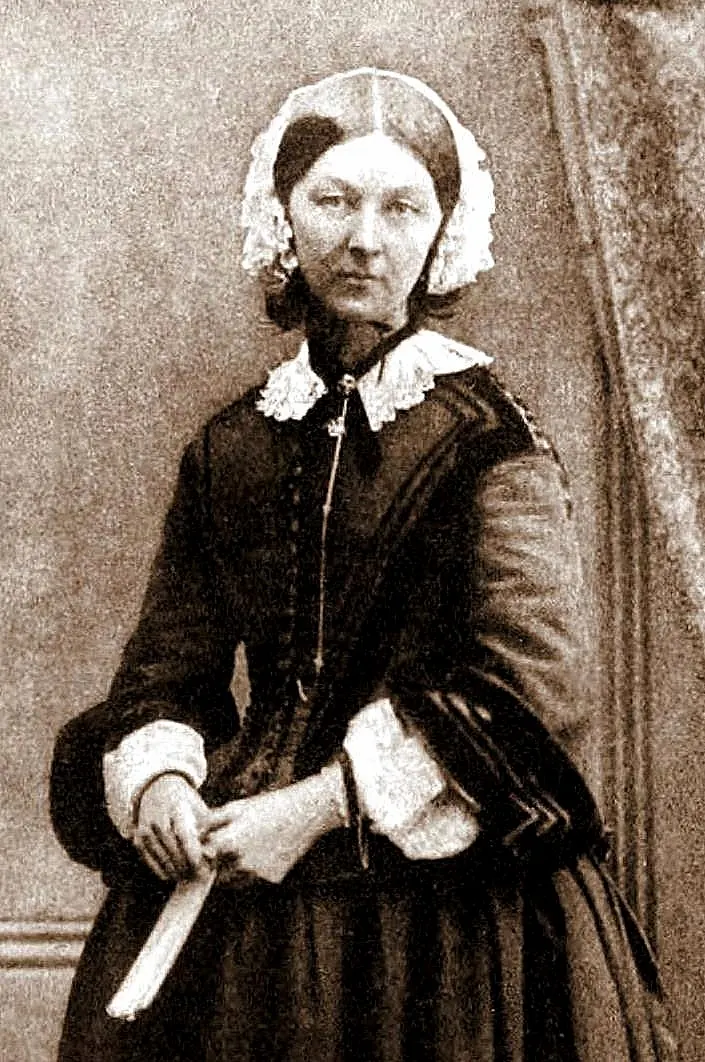
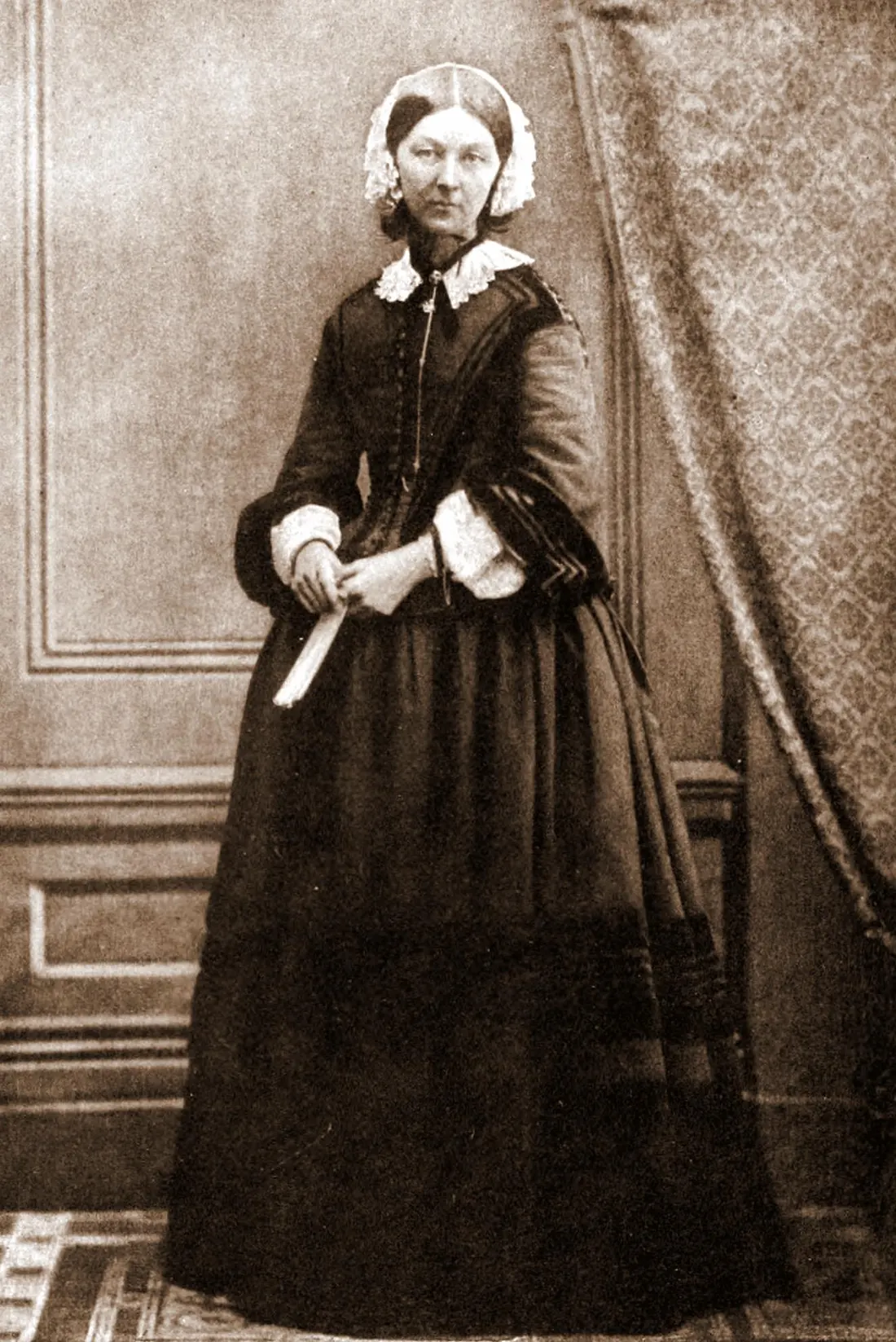
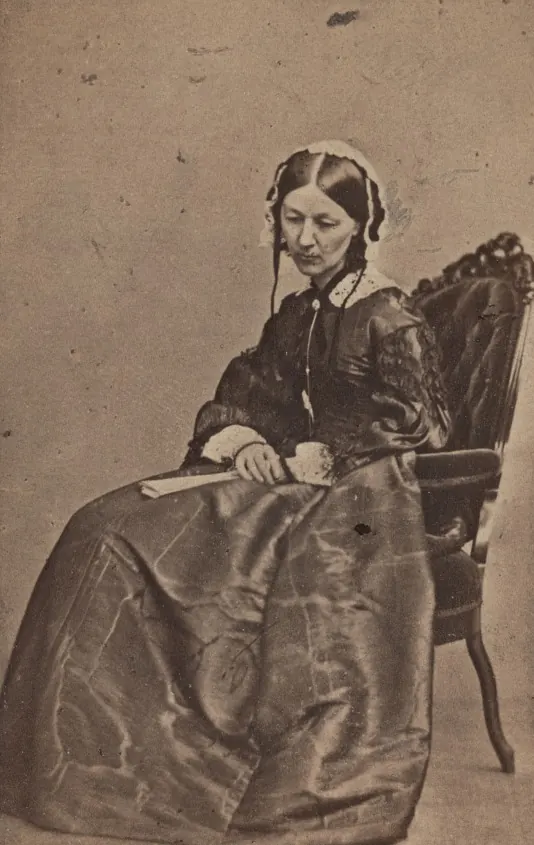
Pictures: Florence Nightingale herself was photographed by William Edward Kilburn in 1854, by H. Lenthall, Kilburn’s successor, in London in about 1856, by Henry Hering in about 1857–58 and by Goodman in about 1858. William White’s watercolor of about 1836 shows her with her sister, Parthenope, not her parents. The Barrack Hospital at Scutari is a wood engraving from George Dodd’s Pictorial History of the Russian War (1856), and the corridor of the new Barrack Hospital is from the Illustrated London News of December 16, 1854. “Miss Nightingale in the Hospital at Scutari” is from the Illustrated London News of February 24, 1855, during her time there; The Lady with the Lamp, a chromolithograph after Henrietta Rae (Cassell, 1891), is a later artist’s image. Roger Fenton’s General View of Balaklava (1855), with the hospital on the right, shows the war in the Crimea, not Scutari, and William Simpson’s view of a ward at Scutari (1856) shows the hospital after the reforms. Her Diagram of the causes of mortality in the army in the East and the cover of Mortality of the British Army are both from 1858.
Photo credits
The archive photos in this story
The photographs and illustrations in this story are in the public domain or shared under open licenses; each one is credited below with its license. Tap one to enlarge it, or follow the link to its Wikimedia Commons page for the full record. The narration, captions and graphics in the Short are our own; its music and sound effects are credited below.
Music and sound effects
Music: Satie, Gymnopedie No. 1 (Lent et douloureux) (Robin Alciatore, piano, public domain); Mussorgsky, Night on Bald Mountain (1886 version) (Musopen, public domain); Brahms, Symphony No. 2 in D major, Op. 73: IV. Allegro con spirito (Musopen Symphony Orchestra, CC0); Brahms, Symphony No. 1 in C minor, Op. 68: IV. Adagio - Piu andante - Allegro non troppo, ma con brio (Musopen Symphony Orchestra, CC0).
Sound effects: Freesound, CC0.