“The son of a Church of England vicar, Jonathan Edwards was originally equally famous for his refusal to compete on a Sunday for religious reasons,” Olympedia says. “Edwards, a religious man, missed the 1991 World Championships because he would not jump on a Sunday,” the Associated Press reported in 1995. “Two years later, he relaxed his rule and won the bronze medal at the 1993 championships.” At the Olympics, Olympedia’s results list him “23 r1/2” in 1988 and “35 r1/2” in 1992: out in the first of two rounds both times. Even so, Olympedia says, “His career before 1995 was not unsuccessful.”
In August 1995 the AP wrote that “Only a year ago, Edwards … was hardly close to being a legend,” after he had been “afflicted by the Epstein-Barr virus. The illness, which causes mononucleosis, interfered with his training and continued to affect him until March.” In his words, “I felt low physically and mentally.” He later told World Athletics that “my technique was outstanding and the balance I had throughout the phases – which was brought about through me changing my technique and using a double arm action.”
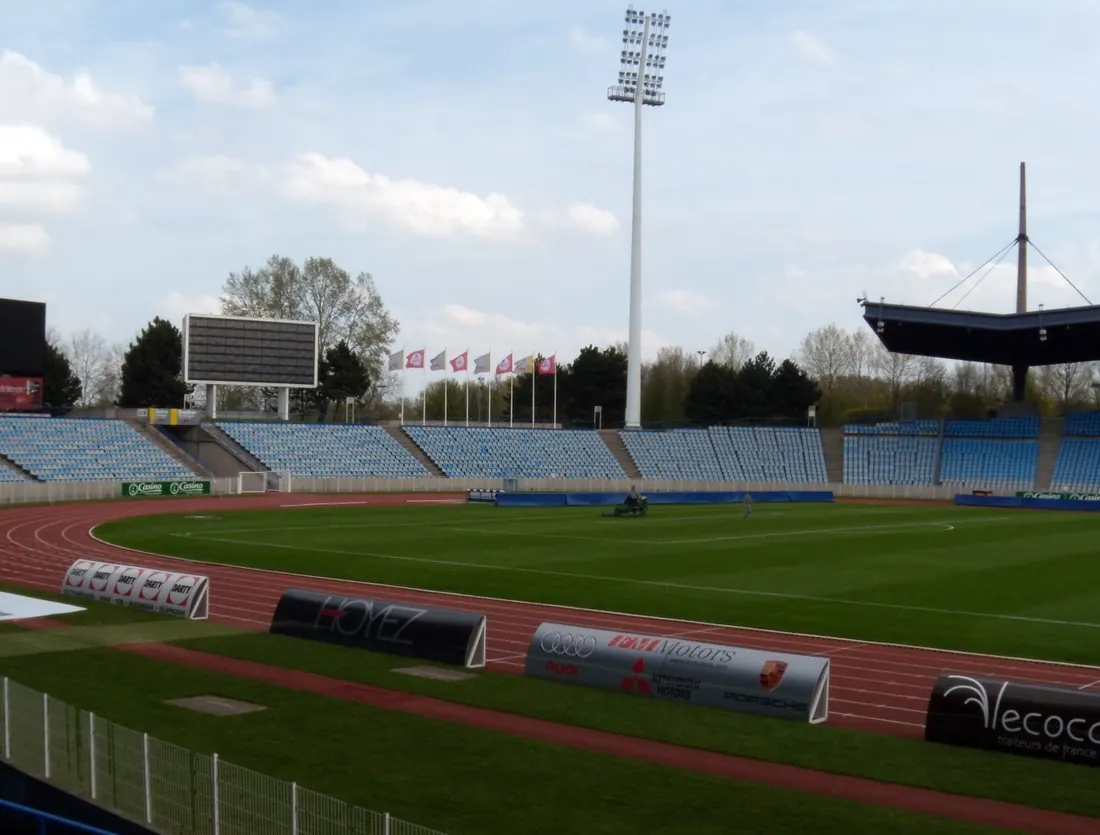
“Early in the season, he sailed out to a wind-assisted 18.43m (2.4m/s) to win at the European Cup,” World Athletics says, in “the French surrounds of the Stadium Lille-Metropole,” as Team GB puts it. The AP reported that “On June 25 in the European Cup at Lille, France, he surpassed the world record three times,” and that “each jump was wind-aided and unable to be accepted as world marks.” “At the European Cup in France Edwards produced the two longest, albeit wind-assisted, leaps in history and jumped nearly a quarter-metre further than any previous jump and 46 cm more than the official world record,” Olympedia says. But the jump was “assisted by a wind speed of 2.4m/s that meant the distance could not stand as a world record” (Team GB).
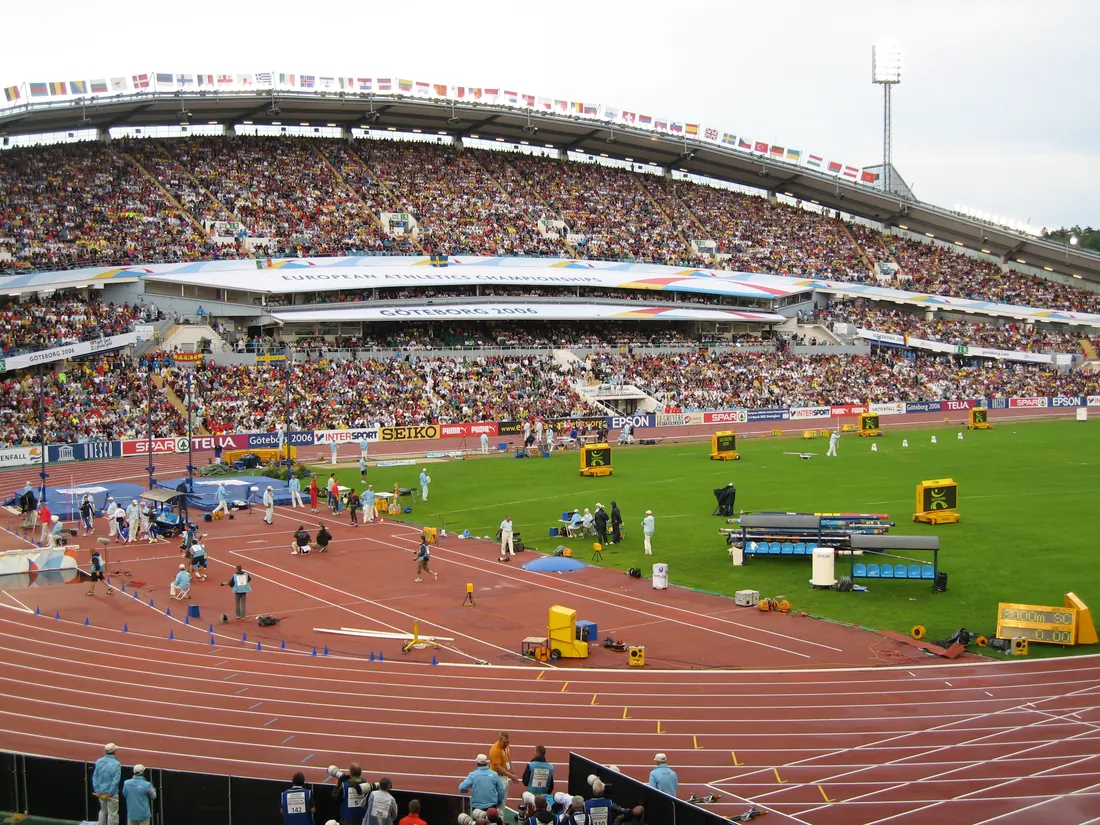
The World Championships came next, at the Ullevi Stadium in Gothenburg; World Athletics’ all-time list dates his record “Ullevi Stadium, Göteborg (SWE) 07 AUG 1995.” “I’ve been petrified for the last three days,” he told the AP. Team GB says “he became the first man to pass 18m in his first jump, smashing the barrier with a distance of 18.16m.” “It took a few moments before his distance was confirmed at 18.16m,” World Athletics says: “a world record and the first wind-legal jump beyond 18 metres.” “About 20 minutes later, Edwards was on the runway again for the second round.” “And then it flashed up on the scoreboard: 18.29m.” “18.29m was just over 60 feet,” he said. “So I’d broken the metric barrier of 18 metres and the imperial barrier of 60 feet.”
More than 30 years later, his 18.29 meters still heads World Athletics’ all-time list, ahead of Christian Taylor’s 18.21 from 2015. In 2025, Team GB wrote that “no one has beaten the record he set all those years ago.” In 2000, Olympedia’s results show, he won Olympic gold. “And no, I didn’t think it would last this long,” he said.
Fact check
The facts and where they come from
- He jumped farther than anyone in history, but it couldn’t count as a record. Olympedia: “At the European Cup in France Edwards produced the two longest, albeit wind-assisted, leaps in history and jumped nearly a quarter-metre further than any previous jump and 46 cm more than the official world record.” Team GB: “While assisted by a wind speed of 2.4m/s that meant the distance could not stand as a world record.” Associated Press: “but each jump was wind-aided and unable to be accepted as world marks.” 534
- His name is Jonathan Edwards. World Athletics all-time list: “1 18.29 +1.3 Jonathan EDWARDS … GBR.” 2
- A vicar’s son, he once refused to jump on Sundays. Olympedia: “The son of a Church of England vicar, Jonathan Edwards was originally equally famous for his refusal to compete on a Sunday for religious reasons.” 5
- So he missed the 1991 World Championships. Associated Press: “Edwards, a religious man, missed the 1991 World Championships because he would not jump on a Sunday. Two years later, he relaxed his rule and won the bronze medal at the 1993 championships.” 4
- Twice at the Olympics, he didn’t even make the final. Olympedia results: “1988 Summer Olympics … Triple Jump, Men … 23 r1/2” and “1992 Summer Olympics … Triple Jump, Men … 35 r1/2” (out in the first of two rounds). 5
- A virus in 1994 left him low, physically and mentally. Associated Press (August 1995): “Only a year ago, Edwards … was hardly close to being a legend” … “afflicted by the Epstein-Barr virus. The illness, which causes mononucleosis, interfered with his training and continued to affect him until March.” His words: “I felt low physically and mentally.” 4
- Then he changed his technique, swinging both arms. Edwards, to World Athletics: “my technique was outstanding and the balance I had throughout the phases – which was brought about through me changing my technique and using a double arm action.” 1
- In June 1995, he flew 18.43 meters, but the tailwind was too strong. World Athletics: “Early in the season, he sailed out to a wind-assisted 18.43m (2.4m/s) to win at the European Cup.” Associated Press: “On June 25 in the European Cup at Lille, France, he surpassed the world record three times.” Team GB: “the French surrounds of the Stadium Lille-Metropole” and “While assisted by a wind speed of 2.4m/s that meant the distance could not stand as a world record.” 143
- Weeks later, at the World Championships in Gothenburg, he was petrified. Edwards, to World Athletics: “so I was petrified.” Associated Press (his words, 1995): “I’ve been petrified for the last three days.” World Athletics all-time list: “Ullevi Stadium, Göteborg (SWE) 07 AUG 1995.” 142
- His first jump measured 18.16 meters. World Athletics: “It took a few moments before his distance was confirmed at 18.16m.” Team GB: “he became the first man to pass 18m in his first jump, smashing the barrier with a distance of 18.16m.” 13
- A world record, and the first legal jump past 18 meters. World Athletics: “18.16m, a world record and the first wind-legal jump beyond 18 metres.” 1
- He went again, about 20 minutes later. World Athletics: “About 20 minutes later, Edwards was on the runway again for the second round.” 1
- This time, 18.29 meters, just over 60 feet. World Athletics: “And then it flashed up on the scoreboard: 18.29m.” Edwards: “18.29m was just over 60 feet. So I’d broken the metric barrier of 18 metres and the imperial barrier of 60 feet.” 1
- More than 30 years on, nobody has beaten it. World Athletics all-time list (read October 30, 2026): Edwards’s 18.29 of August 7, 1995, is still first; second is Christian Taylor’s 18.21 (2015). Team GB (August 2025): “no one has beaten the record he set all those years ago.” 23
- The vicar’s son who once wouldn’t jump on Sundays still holds the world record. Olympedia: “The son of a Church of England vicar” … “his refusal to compete on a Sunday for religious reasons.” World Athletics all-time list: “1 18.29 +1.3 Jonathan EDWARDS … GBR.” 52
Sources
- Jonathan Edwards world record triple jump (Jon Mulkeen, 2021, updated August 6, 2025) World Athletics
- All-time top list: men’s triple jump (read October 30, 2026) World Athletics
- Jonathan Edwards’ world record: 30 years on (August 2025) Team GB
- Edwards jump jump jumps to new record (Associated Press, August 8, 1995) Deseret News
- Jonathan Edwards Olympedia
Notes
Popular retellings say that scientists had called an 18-meter jump impossible, that he was a total failure before 1995, that he invented the double-arm technique, that his 18.16 didn’t count because his foot was over the board, that he was told to prove himself or go home, and that he refused to celebrate. No source we read supports any of these, and three are contradicted: Olympedia says “His career before 1995 was not unsuccessful,” World Athletics says 18.16 meters was “a world record and the first wind-legal jump beyond 18 metres,” and it describes him “arms aloft and celebrating.” All are left out. He changed his technique to “a double arm action,” in his words; the Short doesn’t say he invented it.
“Farther than anyone in history” is about the Lille jumps on that day (Olympedia: “the two longest, albeit wind-assisted, leaps in history”), and the Short says it in the past tense.
Lille: the 1995 European Cup final was at the Stadium Lille-Métropole in Villeneuve-d’Ascq, in the Lille metropolitan area (Team GB); the AP says “at Lille, France.”
The virus: the AP (August 1995) says “Only a year ago” and that it lasted “until March”; Athletics Weekly says he was diagnosed at the end of the 1994 season. The Short says 1994 and uses his own words for how it left him, “low physically and mentally,” not the reporter’s. Nor does it link the illness to the new technique: World Athletics, in his words, says only that he changed his technique; the Short says “Then.”
1991: the men’s triple jump final was on Monday, August 26, 1991 (Wikipedia); the AP says he missed the championships because he would not jump on a Sunday, and that he relaxed his rule two years later. The Short says only that he missed them.
No count is given of the men who have jumped past 18 meters: Team GB said seven in 2025, and Andy Díaz Hernández’s 18.15 in August 2026 has changed it.
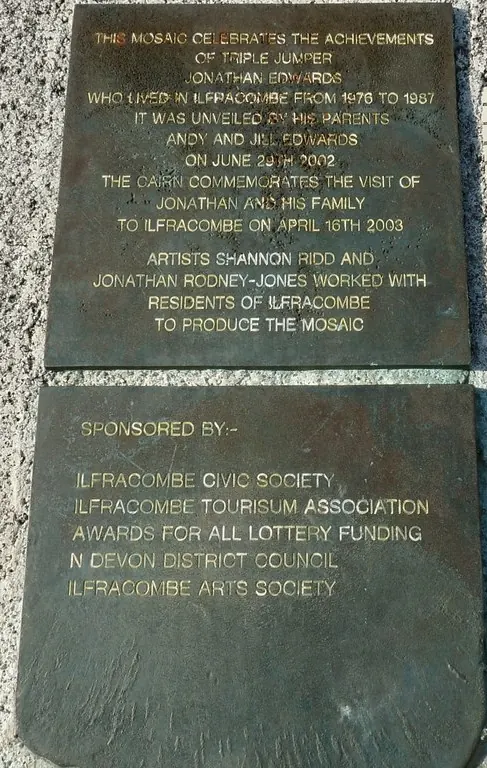
Jonathan Edwards is alive. We use only his public record and his own published words (the AP in 1995, World Athletics, Team GB); his illness is named as the AP reported it in 1995. Left out: his private life and family. The plaque in Ilfracombe names his parents, who unveiled it in public in 2002; this page doesn’t name them.
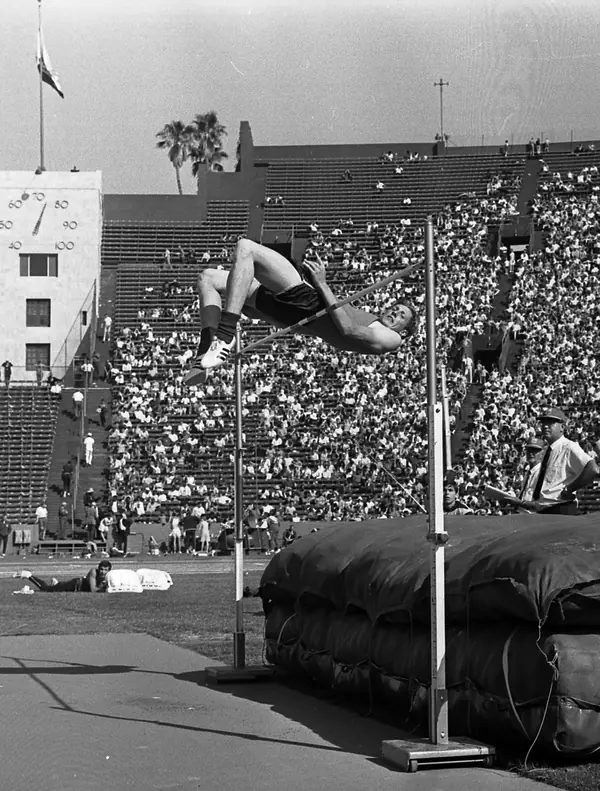
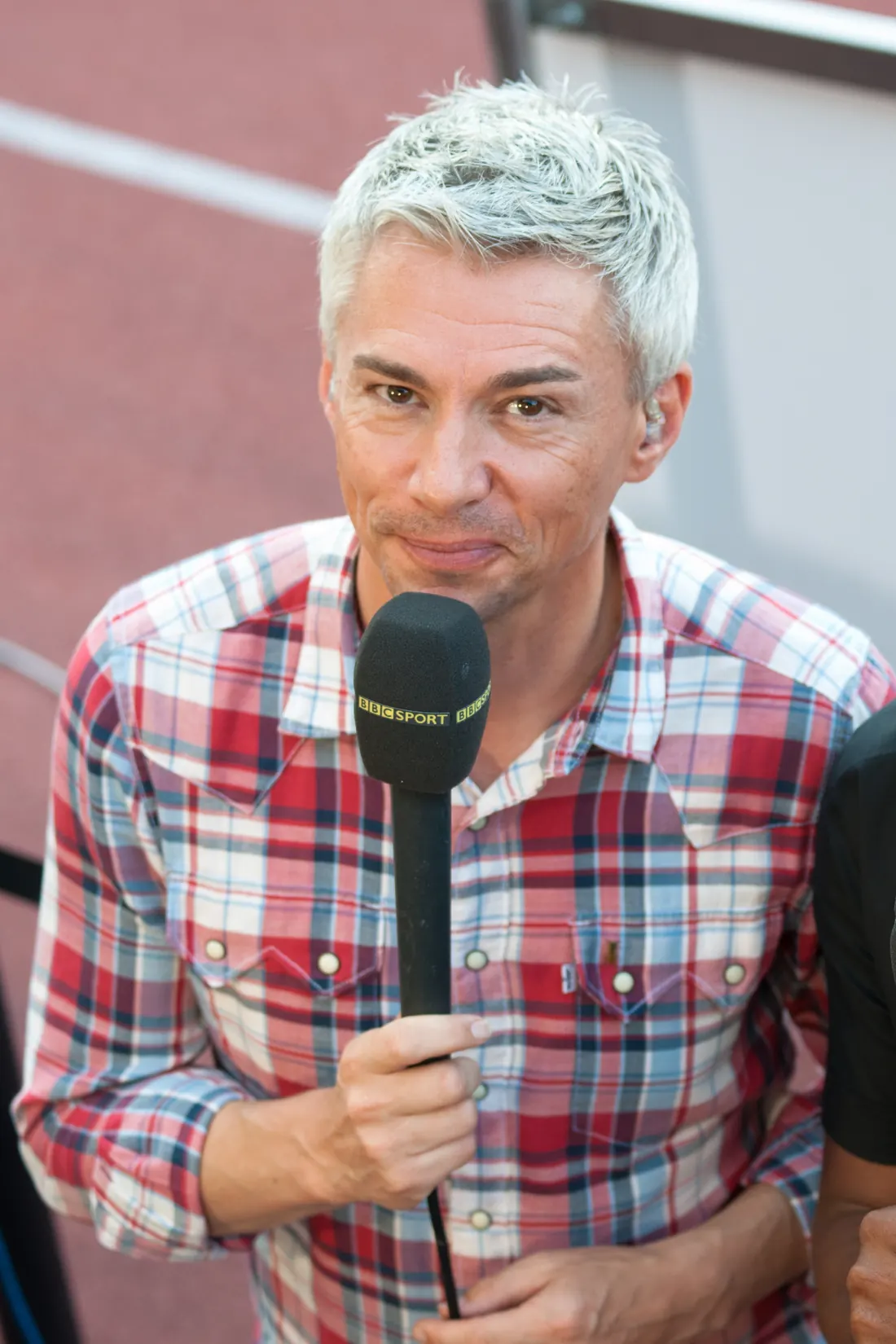
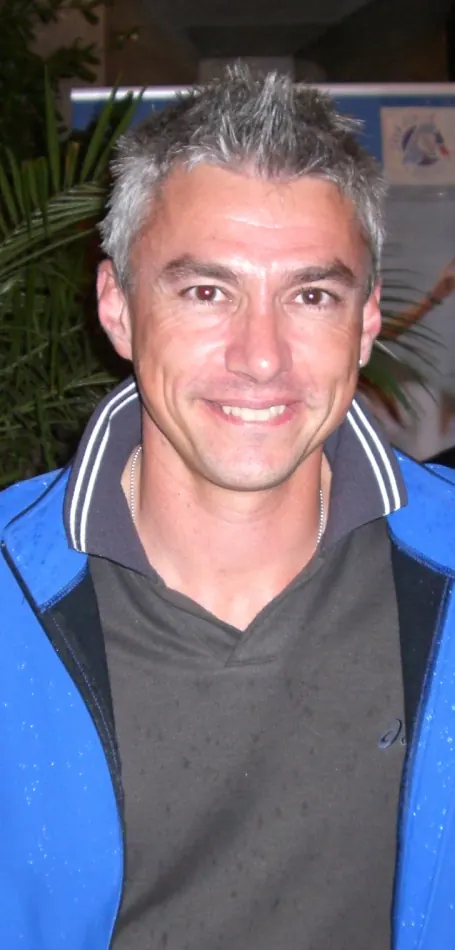
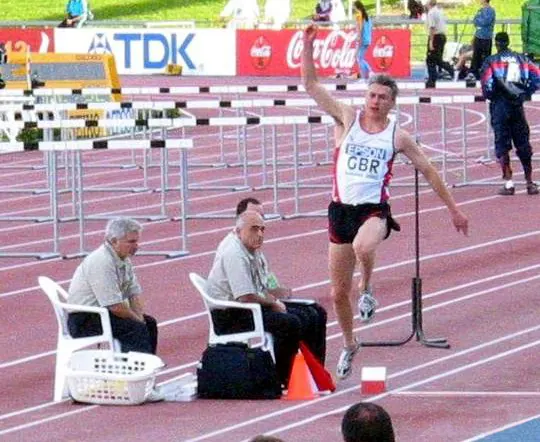
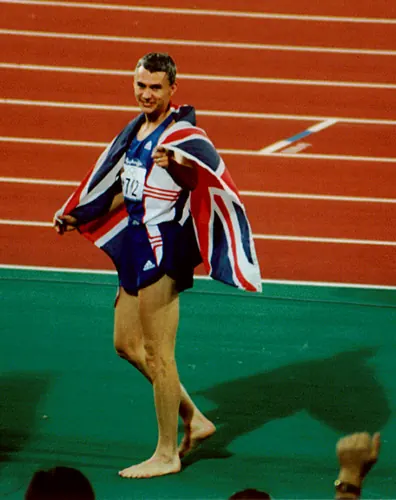
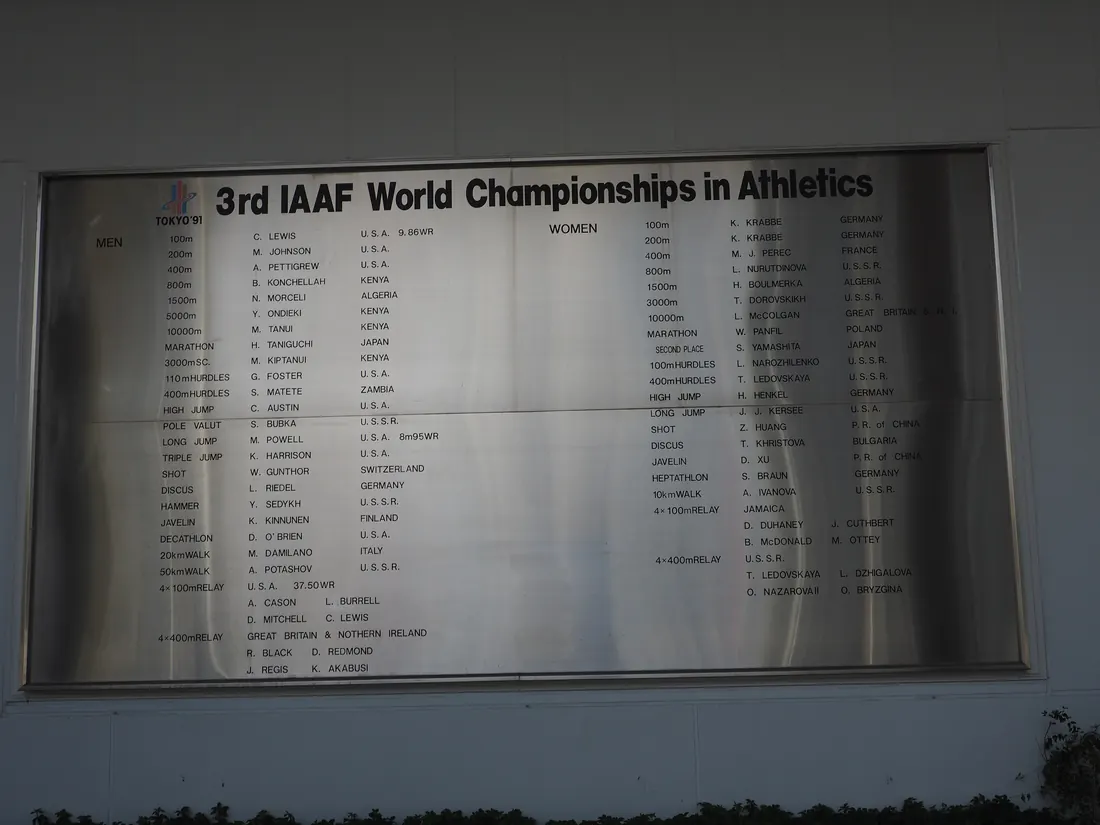
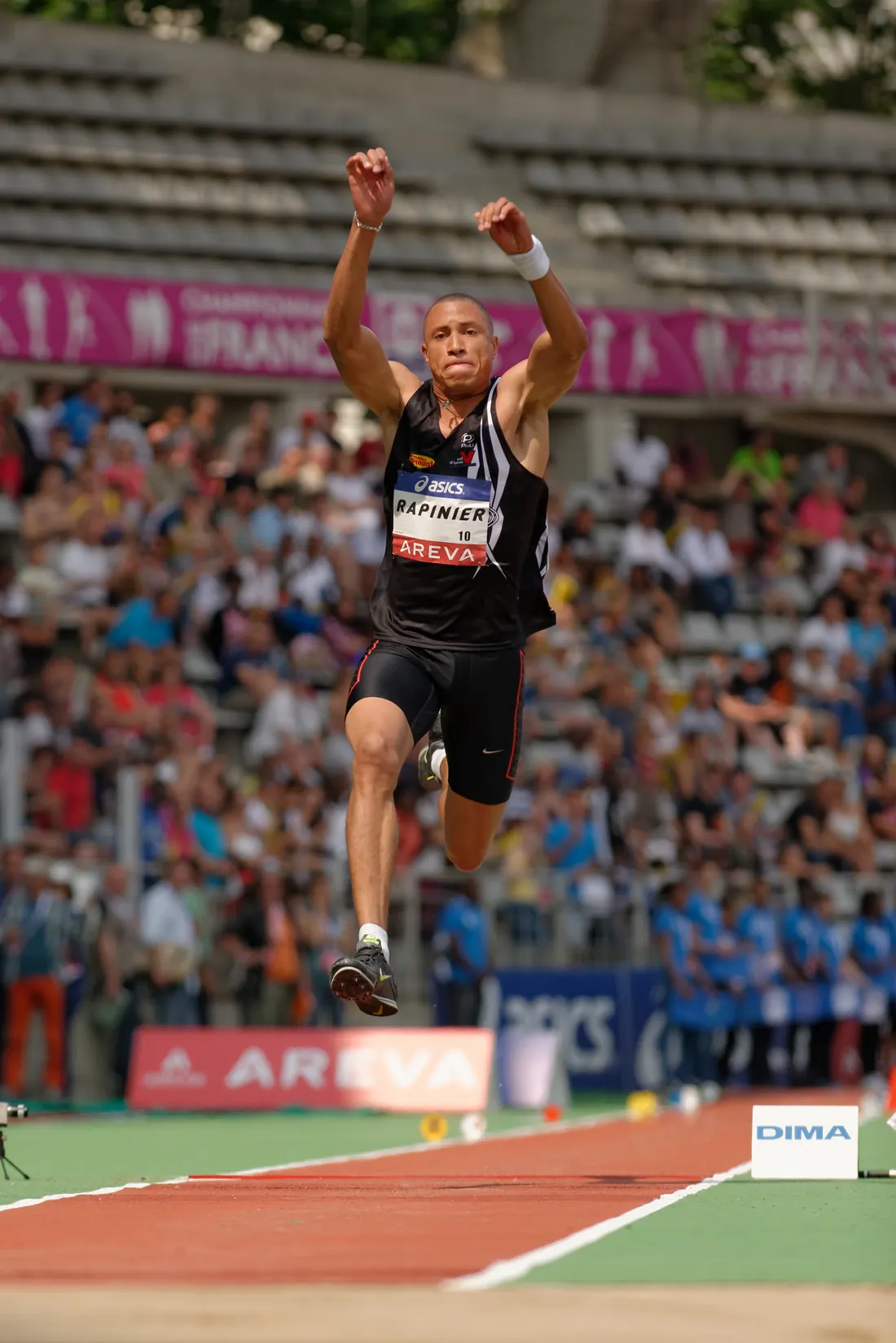
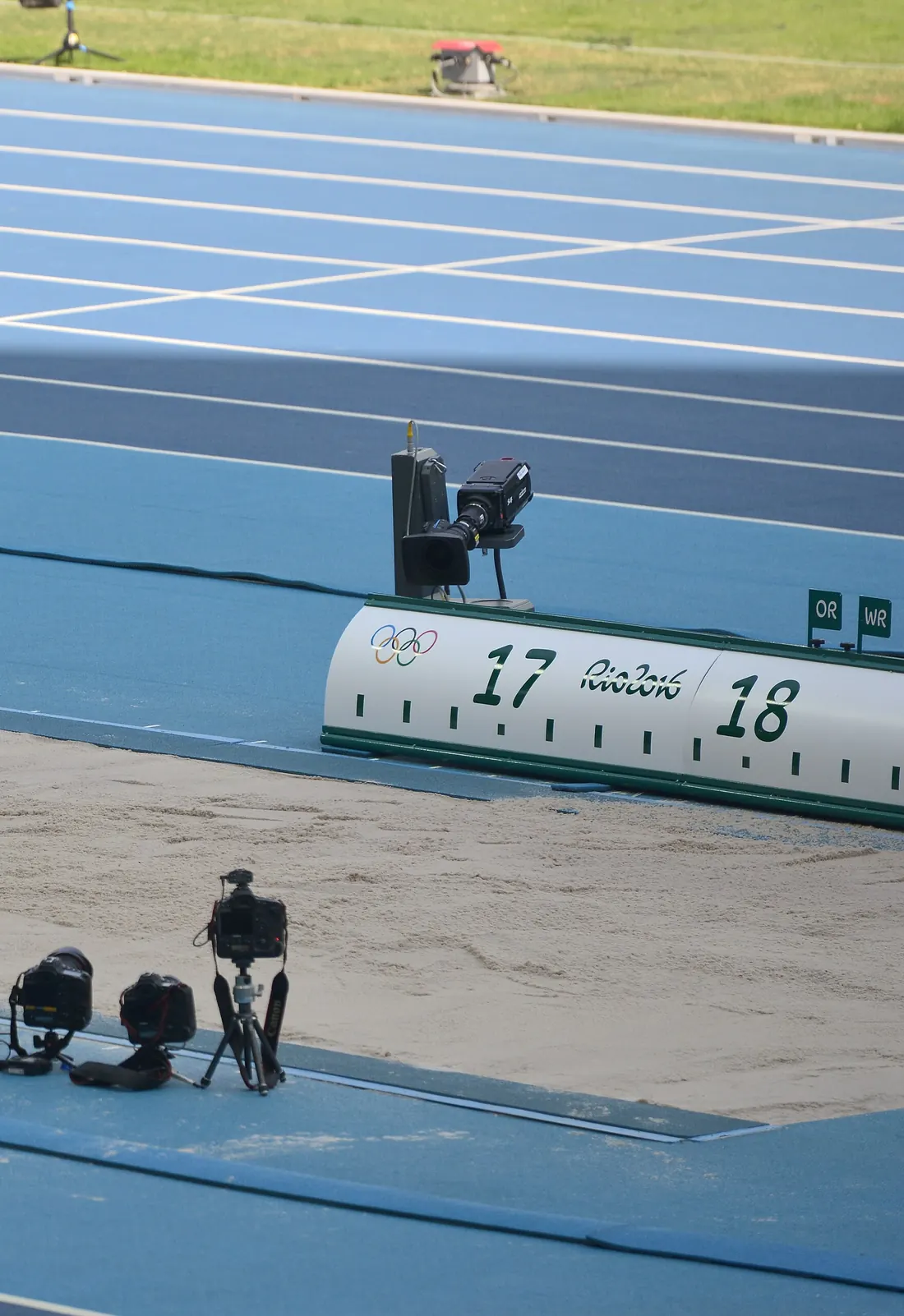
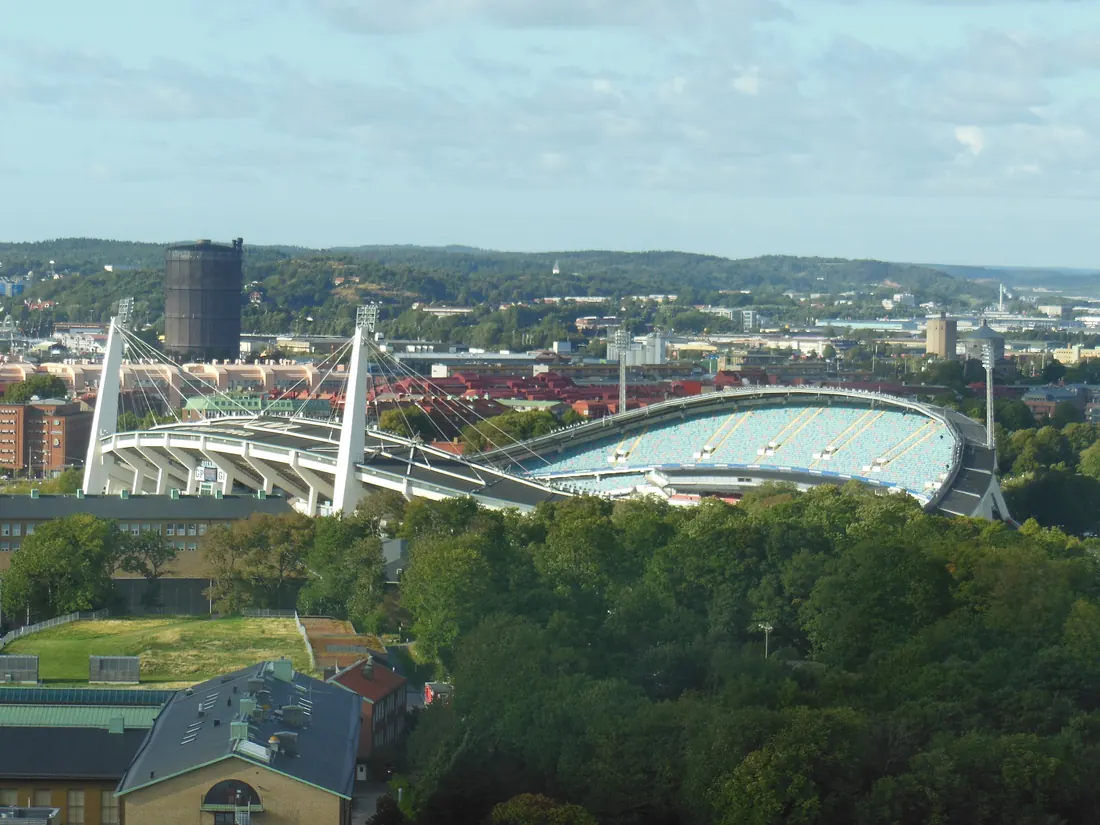
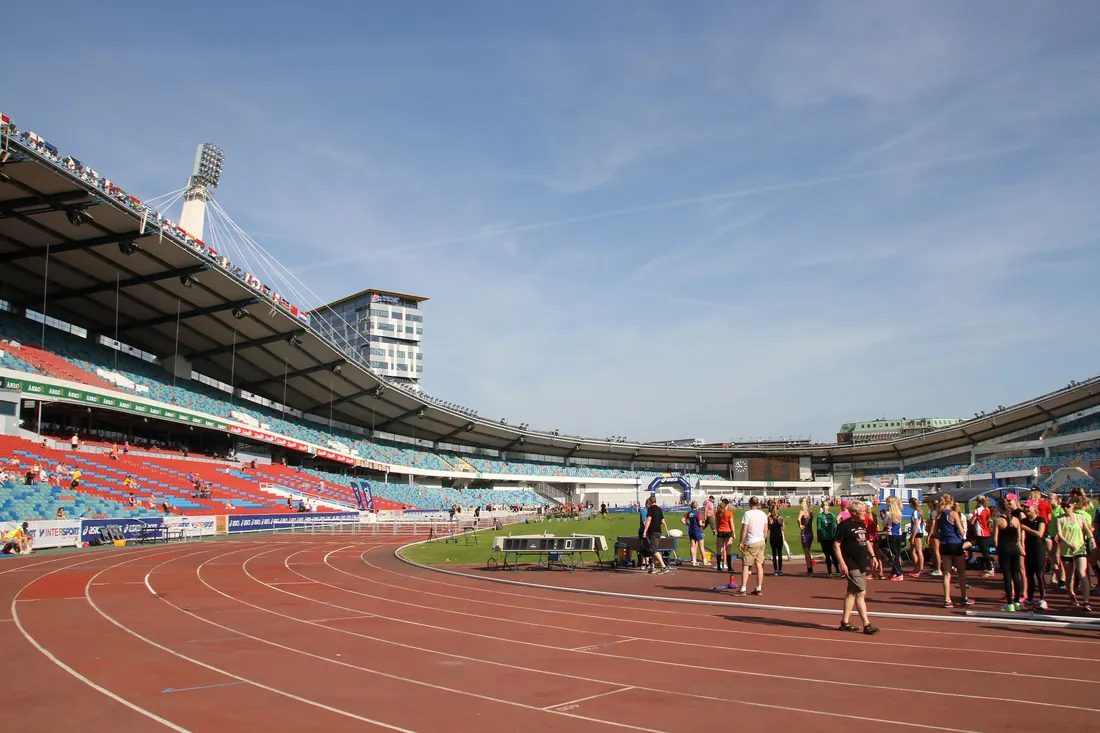
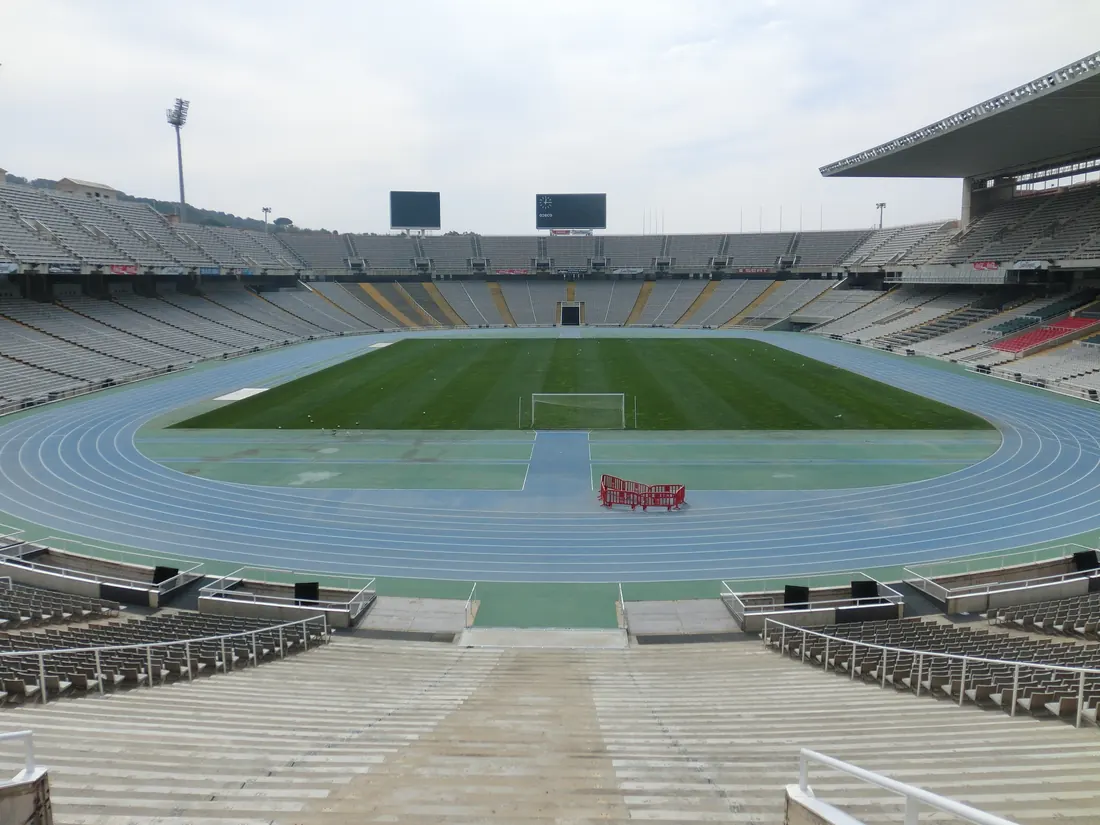
Pictures: no free photo shows either 1995 jump or the Lille meeting. Jonathan Edwards himself is in Ludovic Péron’s photo of him presenting at Athletissima in Lausanne on August 23, 2012; in Ance84’s photo in Gothenburg during the 2006 European Championships (August 11, 2006, cropped to him); in Tomás Galindo’s photo of him competing at the 1998 European Championships in Budapest; and in the photo of him with the Union flag after his Olympic win in Sydney on September 25, 2000. The double-arm swing is Yoann Rapinier, not Edwards, at the French Championships in Paris on July 13, 2013. The Lille photo is the Stadium Lille-Métropole in January 2009; the Ullevi photos are from 2006 (the packed stands at the European Championships), 2012 (from Gothia Towers), 2015 (the track during the VU Games) and 2019 (from Västra Folkungabron). The 1991 world champions’ honor board is at Tokyo’s National Stadium, photographed in January 2023; the Barcelona Olympic stadium is from March 2013; the 17- and 18-meter board is beside the triple jump pit at the Rio 2016 Olympics (August 16, 2016). The bronze plaques beside the Ilfracombe mosaic that celebrates him were photographed on April 4, 2010, and cropped so that the mosaic itself isn’t shown.
Photo credits
The archive photos in this story
The photographs and illustrations in this story are in the public domain or shared under open licenses; each one is credited below with its license. Tap one to enlarge it, or follow the link to its Wikimedia Commons page for the full record. The narration, captions and graphics in the Short are our own; its music and sound effects are credited below.

Music and sound effects
Music: Brahms, Symphony No. 1 in C minor, Op. 68: I. Un poco sostenuto - Allegro (Musopen Symphony Orchestra, CC0); Tchaikovsky, Symphony No. 6 'Pathetique', Op. 74: IV. Finale: Adagio lamentoso (Musopen Symphony Orchestra, CC0); Beethoven, Coriolan Overture, Op. 62 (Musopen Symphony Orchestra, CC0); Brahms, Symphony No. 1 in C minor, Op. 68: IV. Adagio - Piu andante - Allegro non troppo, ma con brio (Musopen Symphony Orchestra, CC0).
Sound effects: Freesound, CC0.