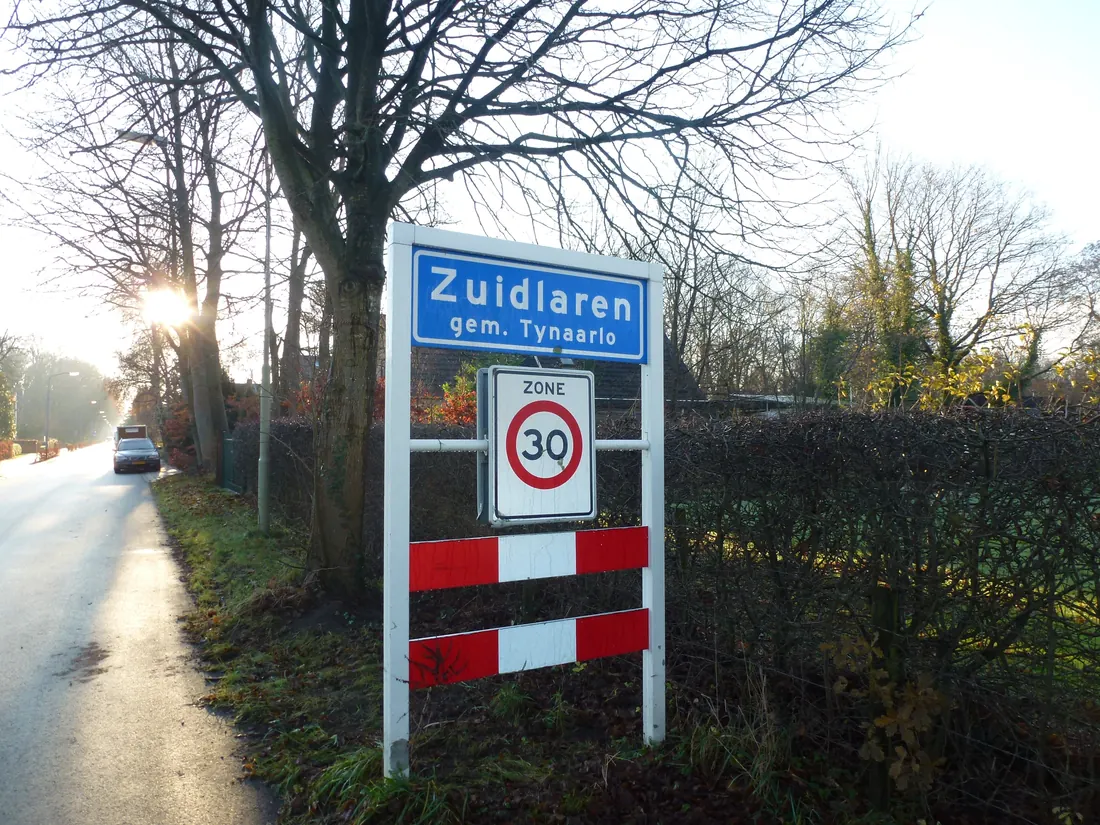
Sifan Hassan “was born in Ethiopia but moved to the Netherlands as a refugee,” the Associated Press says. She was “Born in Adama, southeast of the Ethiopian capital Addis Ababa,” AFP says, and “Aged 15, she left for the Netherlands — she has never explained why.” “She was first housed in a center for underaged asylum-seekers in Zuidlaren, in the northern Netherlands. She told De Volkskrant daily she cried there every day.” Later, AFP says, “She finally arrived at Eindhoven to do a nursing course and fell in with other Ethiopians, some of whom were members of the local athletics club.”
At the Tokyo Olympics she was going for “a historic distance treble,” in World Athletics’ words, and the AP noted that “No athlete has won 1,500-, 5,000- and 10,000-meter golds at the same Olympics.” “Hassan’s grueling schedule means she will have to run six races in eight days in the Tokyo heat and humidity,” it said. On August 2, 2021, in “round one of the Women’s 1500m heats,” as the AP’s photo caption puts it, “the world champion tripped over another runner and fell at the final bell of her 1,500-meter heat.” “A domino effect as the women jockeyed for position brought down the runner directly ahead of her and she had nowhere to go but down,” World Athletics says.
“Hassan was dawdling around the back of the field at the bell,” World Athletics says, but “she sprang back up immediately and set off after the pack, now vanishing into the distance.” Athletics Weekly says “she hit the ground hard with about 380m to go” and “she got up and immediately began sprinting, moving from 12th to first place to win the heat in 4:05.17.” “Within 50 metres she had raced back to the group and proceeded to pass the entire field over the final 300m and win the race,” World Athletics says, and “Hassan said the shock of her fall made her feel like she had drunk ‘20 cups of coffee.’”
World Athletics summed up her day: “Not falling in the heats of the 1500m, which happened this morning. Not running for a gold medal in 28C and 84 percent humidity 12 hours later, which happened this evening.” In the 5,000-meter final, “She stopped the clock in 14:36.79.” “I can’t believe I am the Olympic champion – I was so scared. I thought I was not going to make it,” she said.
The AP had warned of “the 1,500 and 10,000 finals on back-to-back days on Friday and Saturday.” On Friday, August 6, “Kenya’s Faith Kipyegon retained her Olympic title in the women’s 1,500 metres,” Reuters reported, and “Hassan had to settle for bronze as Britain’s Laura Muir took silver.” On Saturday, “Dutchwoman Sifan Hassan secured a second title and third medal at the Tokyo Olympics,” Reuters said, “showing her blistering pace down the home straight to win the women’s 10,000m.” “Sifan Hassan closed out her 3-event, 6-race triple-medal quest by stopping the clock in 29:55.32 and adding gold in the 10,000 to her 5000 gold and 1500 bronze,” Track & Field News wrote, under the headline “Final Score: 2 Golds, 1 Bronze.”
Fact check
The facts and where they come from
- She fell on the final lap of an Olympic race, but she wasn’t finished. Associated Press: “the world champion tripped over another runner and fell at the final bell of her 1,500-meter heat.” 2
- Her name is Sifan Hassan. Associated Press: “Hassan, who was born in Ethiopia but moved to the Netherlands as a refugee.” 2
- At 15, she came to the Netherlands as a refugee from Ethiopia. AFP: “Born in Adama, southeast of the Ethiopian capital Addis Ababa” … “Aged 15, she left for the Netherlands — she has never explained why.” Associated Press: she “moved to the Netherlands as a refugee.” 42
- She cried every day in a shelter for young asylum seekers. AFP: “She was first housed in a center for underaged asylum-seekers in Zuidlaren, in the northern Netherlands. She told De Volkskrant daily she cried there every day.” 4
- At the Tokyo Olympics, she chased medals at three distances. Associated Press: “Sifan Hassan’s bid for a distance treble at the Olympics.” World Athletics: “a historic distance treble at the Tokyo Olympic Games.” 21
- On August 2, in her 1,500-meter heat, she tripped over a fallen runner at the bell. Associated Press: “Hassan tried, but failed, to hurdle over” a runner “who tumbled just in front of her as runners jostled for position at the start of the final lap”; its photo caption: “round one of the Women’s 1500m heats … on August 02, 2021.” World Athletics: “A domino effect as the women jockeyed for position brought down the runner directly ahead of her and she had nowhere to go but down.” 21
- She got up near the back, with under a lap to go. Athletics Weekly: “she hit the ground hard with about 380m to go” and “she got up and immediately began sprinting, moving from 12th to first place to win the heat in 4:05.17.” World Athletics: “Hassan was dawdling around the back of the field at the bell” … “she sprang back up immediately and set off after the pack, now vanishing into the distance.” 31
- Within 50 meters, she was back with the pack. World Athletics: “Within 50 metres she had raced back to the group.” 1
- Then she passed the entire field and won. World Athletics: “proceeded to pass the entire field over the final 300m and win the race.” Associated Press: “Hassan finished in 4 minutes, 5.17 seconds to qualify for the semifinals.” 12
- Just 12 hours later, she ran the 5,000-meter final. World Athletics: “Not falling in the heats of the 1500m, which happened this morning. Not running for a gold medal in 28C and 84 percent humidity 12 hours later, which happened this evening.” 1
- She won gold. World Athletics: “She stopped the clock in 14:36.79” and “With her first Olympic gold medal secured.” 1
- Days later, she took bronze in the 1,500 meters. Reuters (Friday, August 6, 2021): “Kenya’s Faith Kipyegon retained her Olympic title in the women’s 1,500 metres at the Olympic Stadium on Friday” … “Hassan had to settle for bronze as Britain’s Laura Muir took silver.” 5
- The next day, she won the 10,000 meters. Reuters: “Dutchwoman Sifan Hassan secured a second title and third medal at the Tokyo Olympics on Saturday, showing her blistering pace down the home straight to win the women’s 10,000m” (“cross the line in 29:55.32”). Associated Press: “the 1,500 and 10,000 finals on back-to-back days on Friday and Saturday.” 62
- That’s six races in eight days, and three medals. Associated Press: “Hassan’s grueling schedule means she will have to run six races in eight days in the Tokyo heat and humidity.” Track & Field News: “Sifan Hassan closed out her 3-event, 6-race triple-medal quest by stopping the clock in 29:55.32 and adding gold in the 10,000 to her 5000 gold and 1500 bronze.” 27
- The girl who cried every day in a shelter was a double Olympic champion. AFP: “She told De Volkskrant daily she cried there every day.” Track & Field News: “Final Score: 2 Golds, 1 Bronze.” 47
Sources
- Unstoppable Hassan wins first Olympic title while El Bakkali and Allman produce convincing victories (Tokyo Olympic Games, day four, August 2, 2021) World Athletics
- What a Recovery! Hassan Falls, Gets Up and Wins 1,500 Heat (Associated Press, August 2, 2021) NBC Washington
- Sifan Hassan survives heavy fall in 1500m heat (August 2, 2021) Athletics Weekly
- Sifan Hassan: from ‘shy’ refugee to Olympic champion (AFP, August 5, 2024) Arab News
- Kenya’s Kipyegon wins women’s 1,500 metres gold (Reuters, August 6, 2021) The Peninsula
- Dutchwoman Hassan Wins 10,000m Gold, Completes Double (Reuters, August 7, 2021) NBC Washington
- Olympic Women’s 10,000 — Final Score: 2 Golds, 1 Bronze (September 2021) Track & Field News
Notes
Where she got up: Athletics Weekly says she went “from 12th to first”; the Associated Press says she was third from last of 15 at the start of the last lap; LetsRun says 11th at the bell; Wikipedia says 14 runners were ahead of her, which the results contradict. The Short says only “near the back,” as World Athletics does (“around the back of the field”).
Who fell: the reports differ on which runners went down first and in what order. World Athletics calls it “a domino effect” that “brought down the runner directly ahead of her”; the Short says only “a fallen runner,” and we name and blame no one.
“Under a lap to go”: Athletics Weekly says “about 380m to go,” the Associated Press “at the final bell.”
Her age: AFP and Wikipedia say 15; one NBC piece says 16. AFP says “she has never explained why” she left Ethiopia, so neither the Short nor this page gives a reason.
“Twelve hours later” is World Athletics’ figure: the heat was in the morning session and the 5,000-meter final in the evening session of the same day.
Left out: her private life and family, which none of these sources goes into, and her races after Tokyo. Sifan Hassan is alive and still competing; the shelter detail is her own published account (De Volkskrant, quoted by AFP).
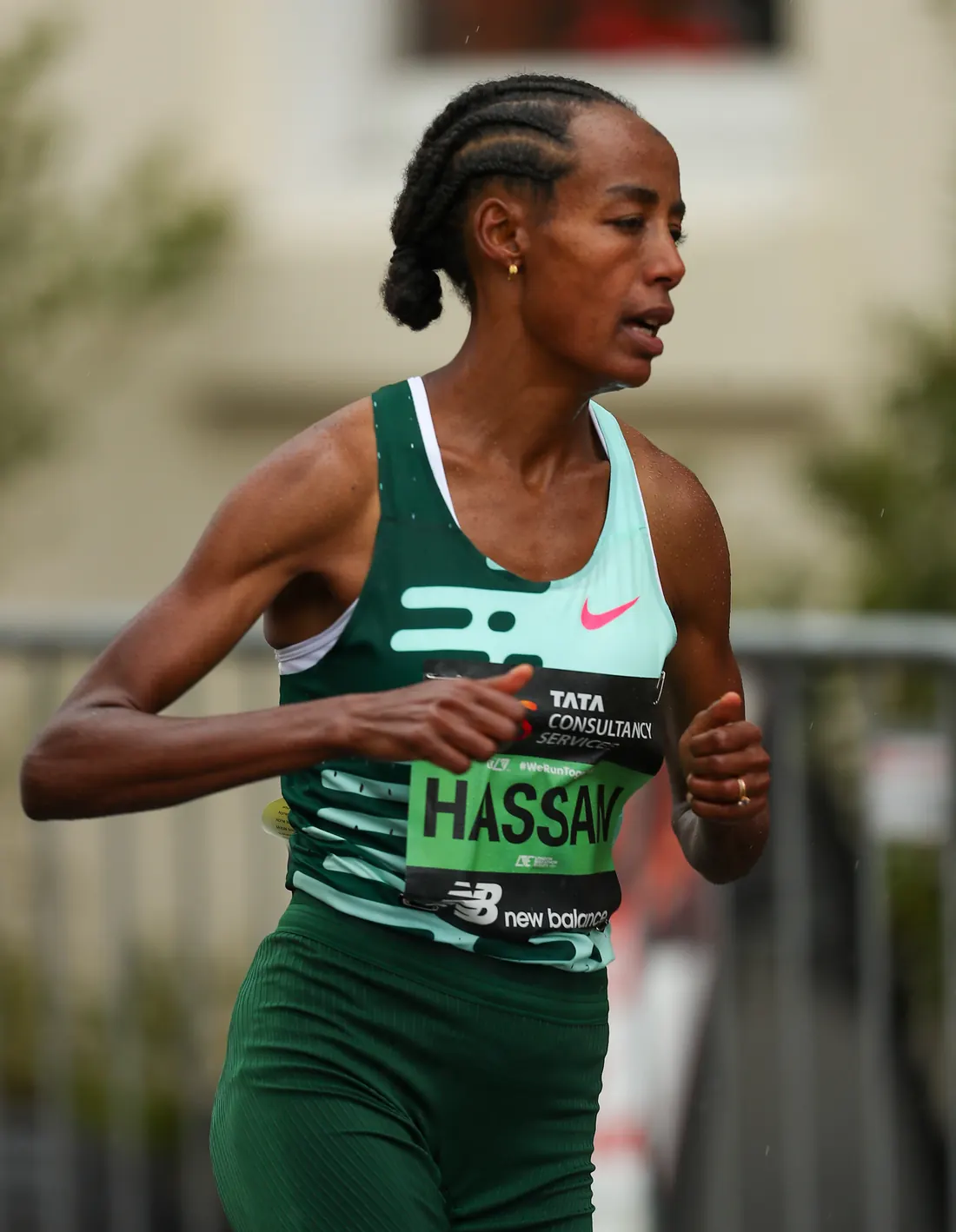
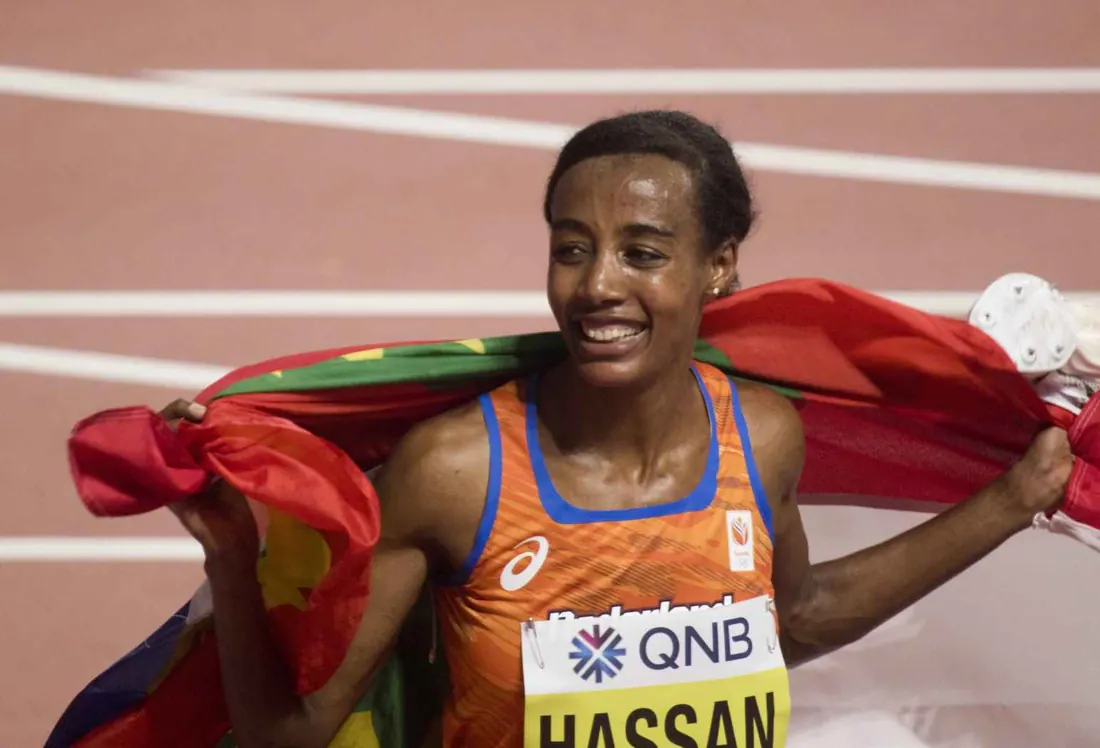
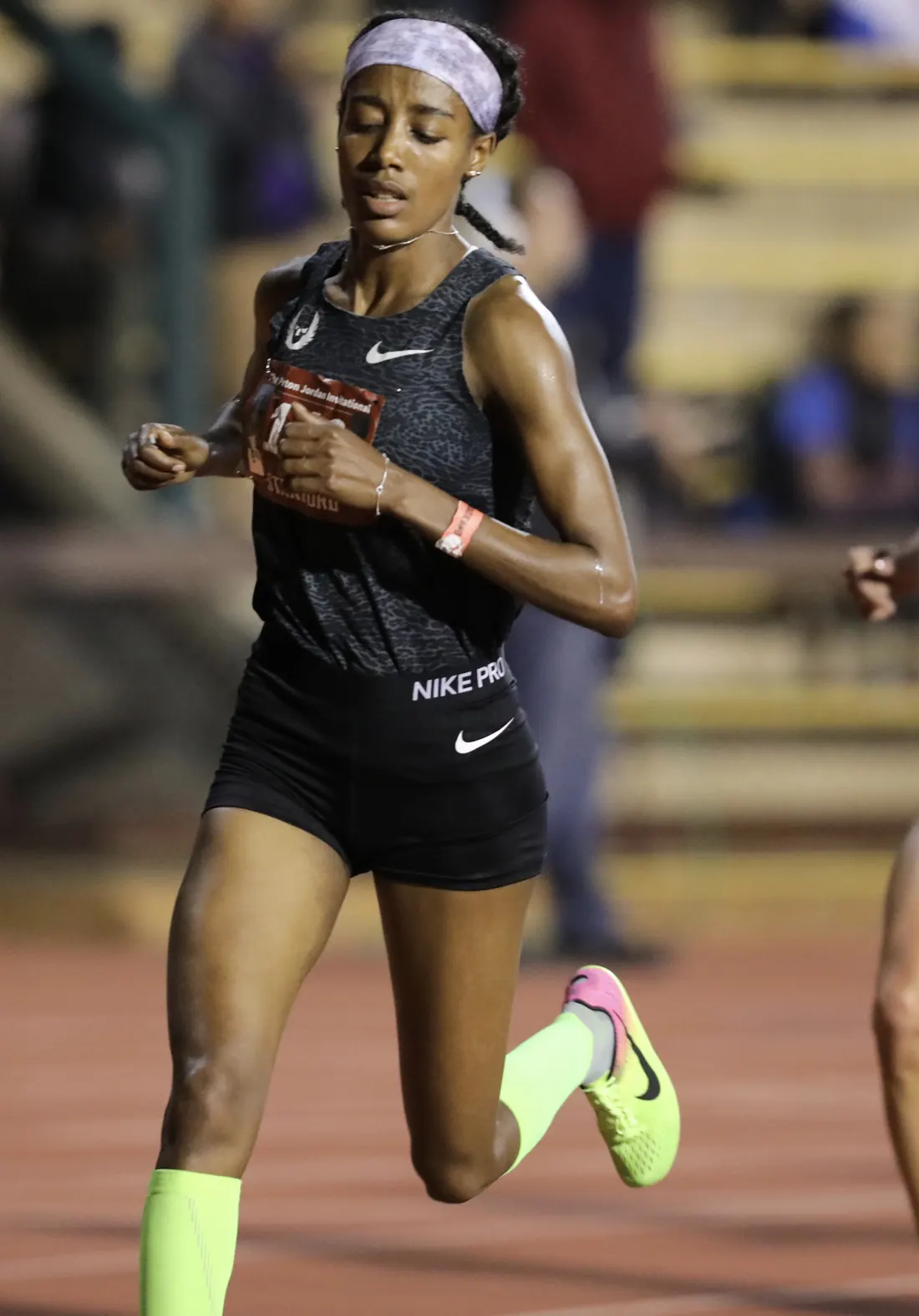
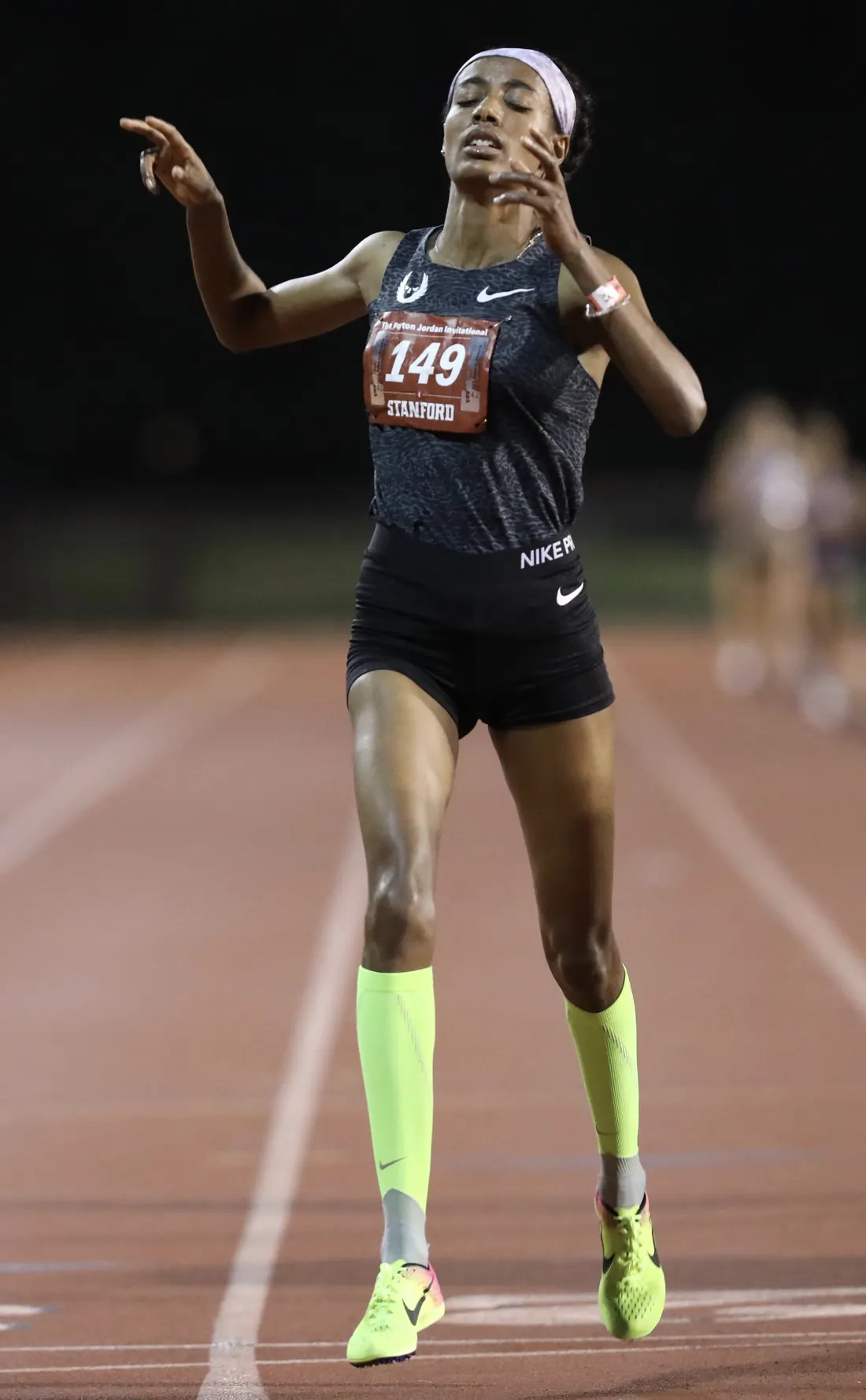
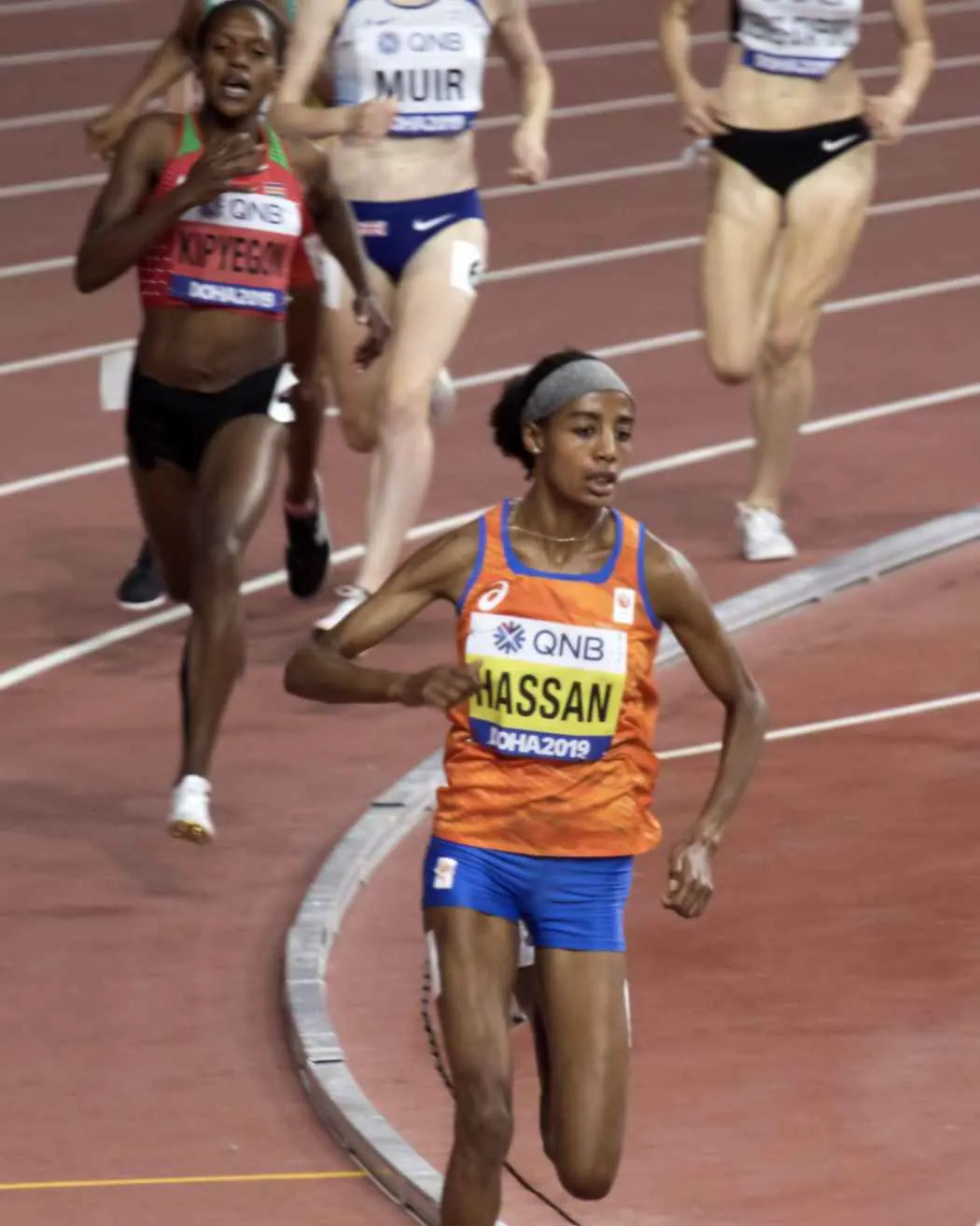
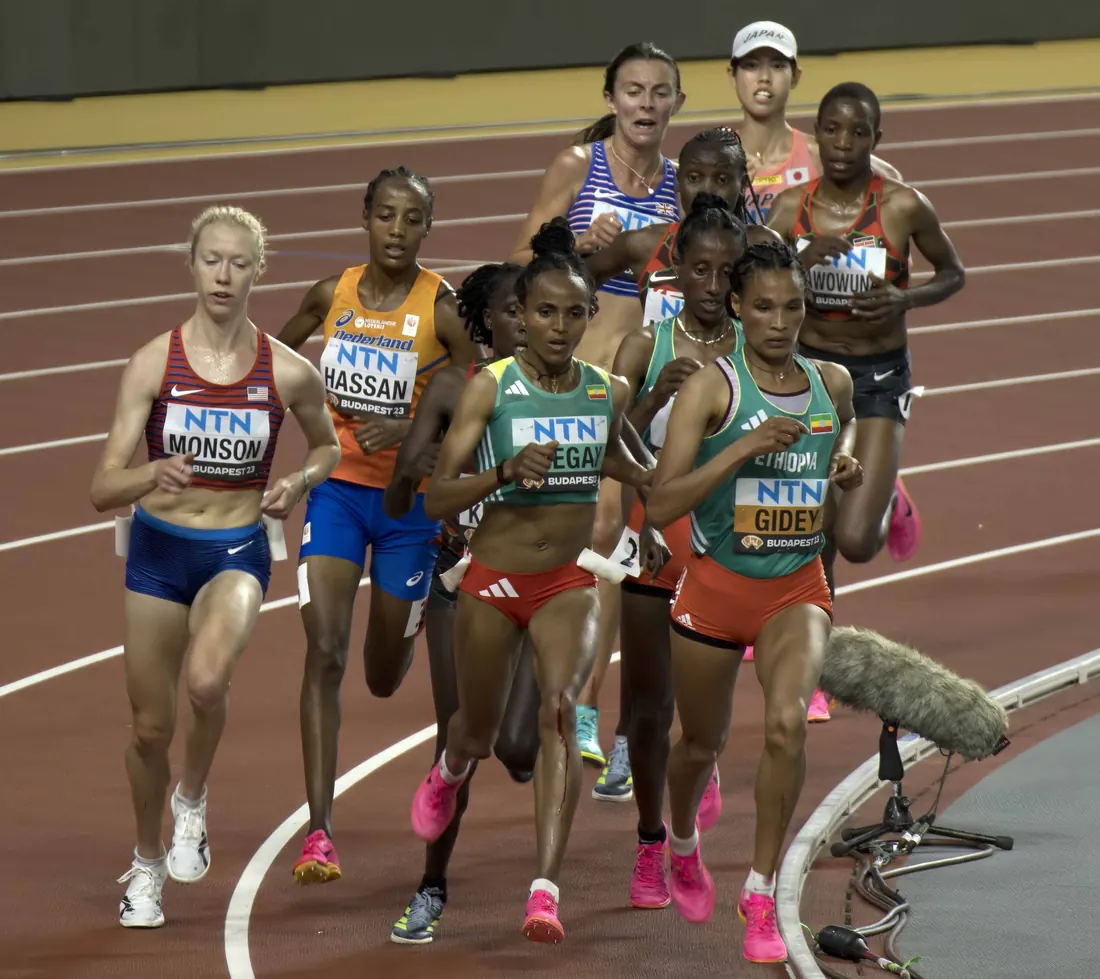
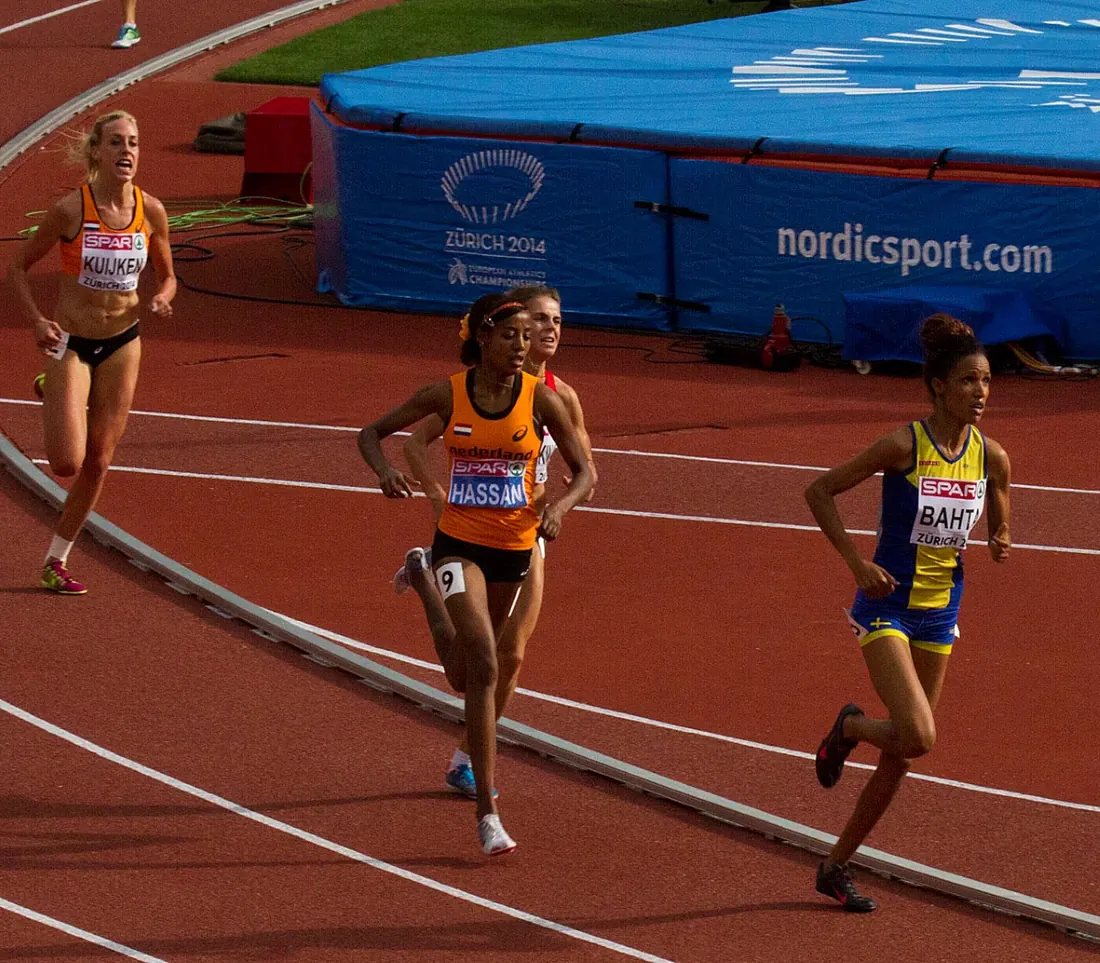
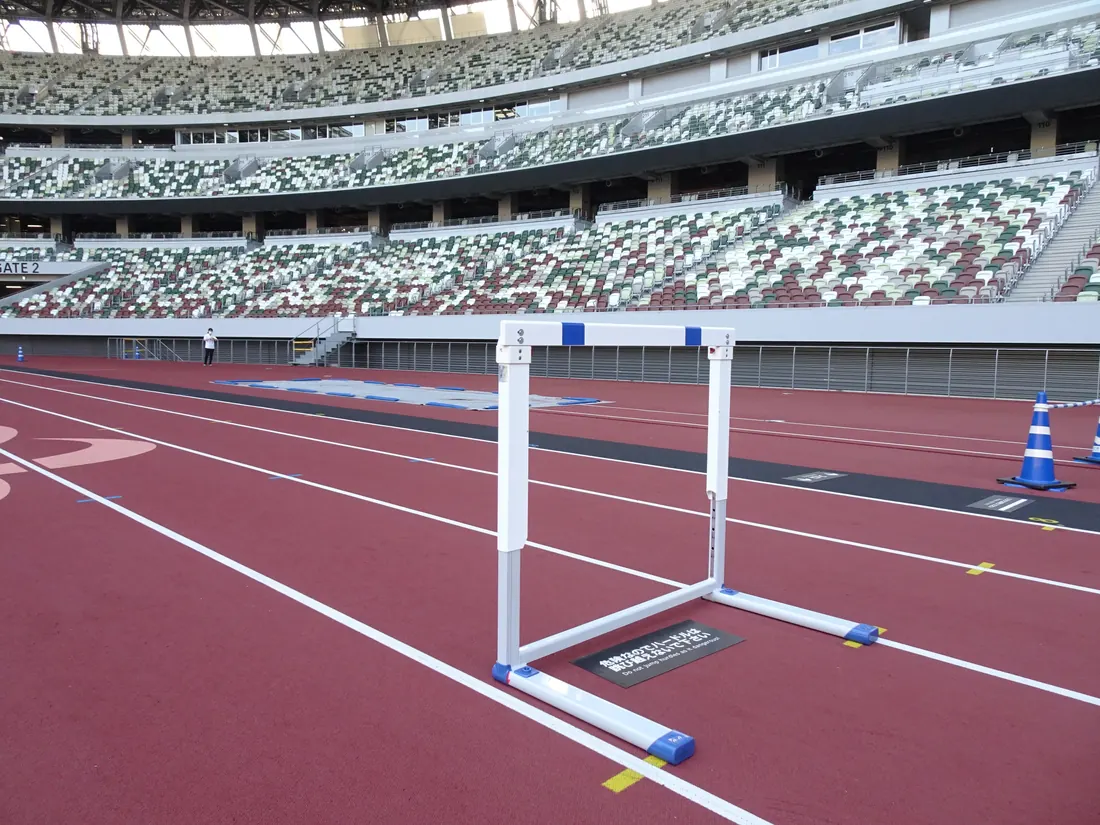
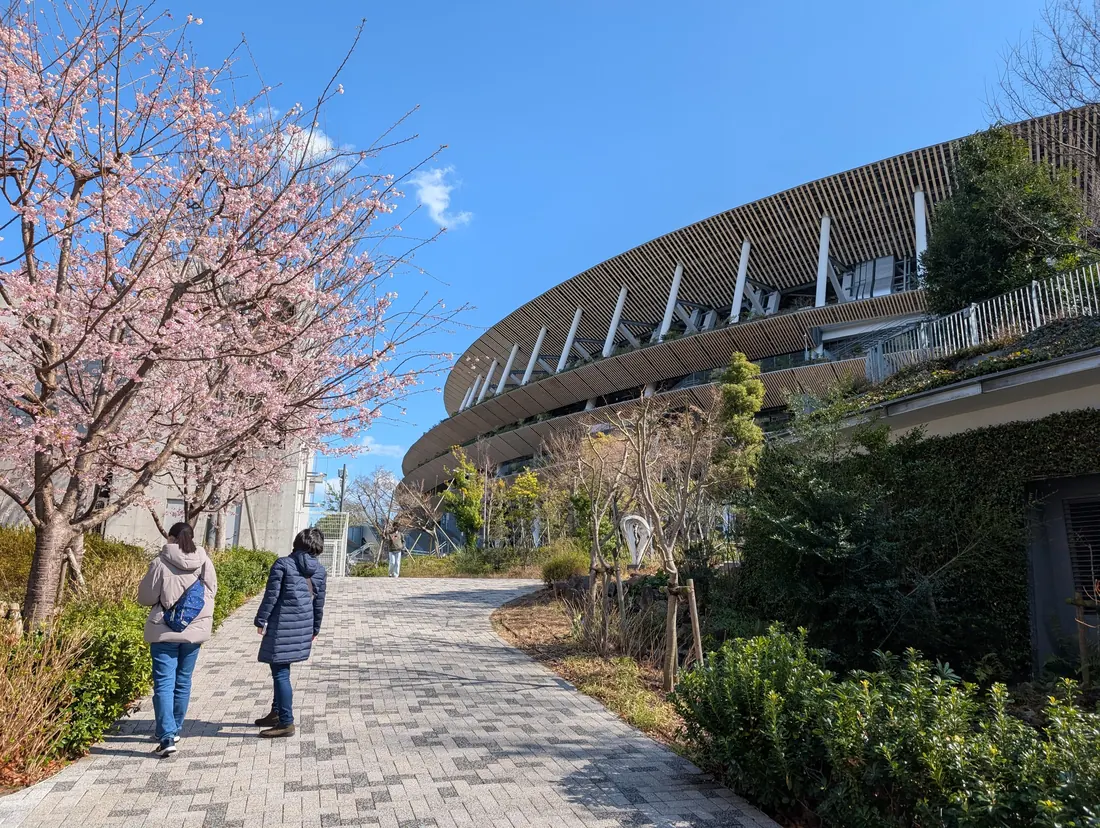
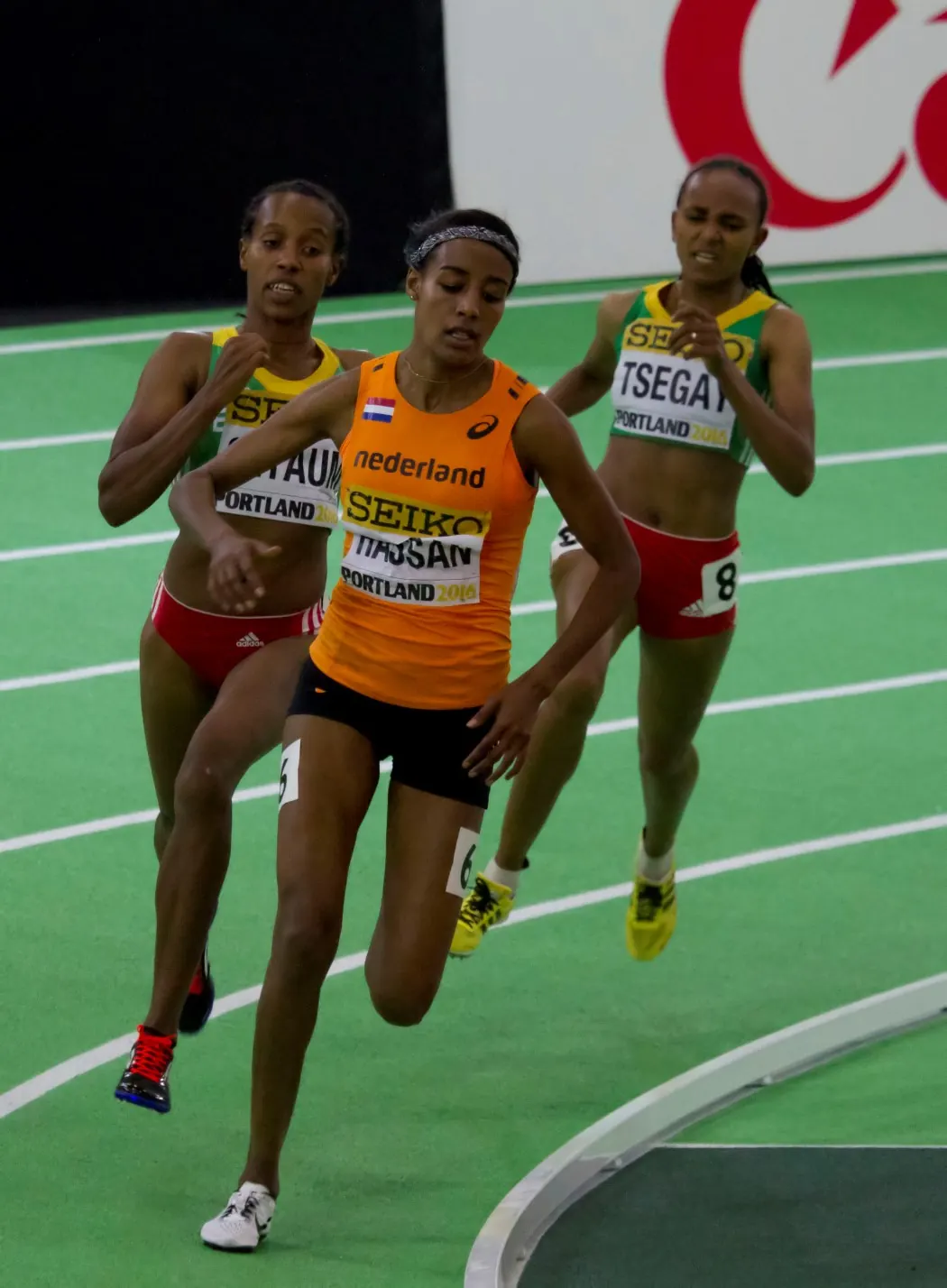
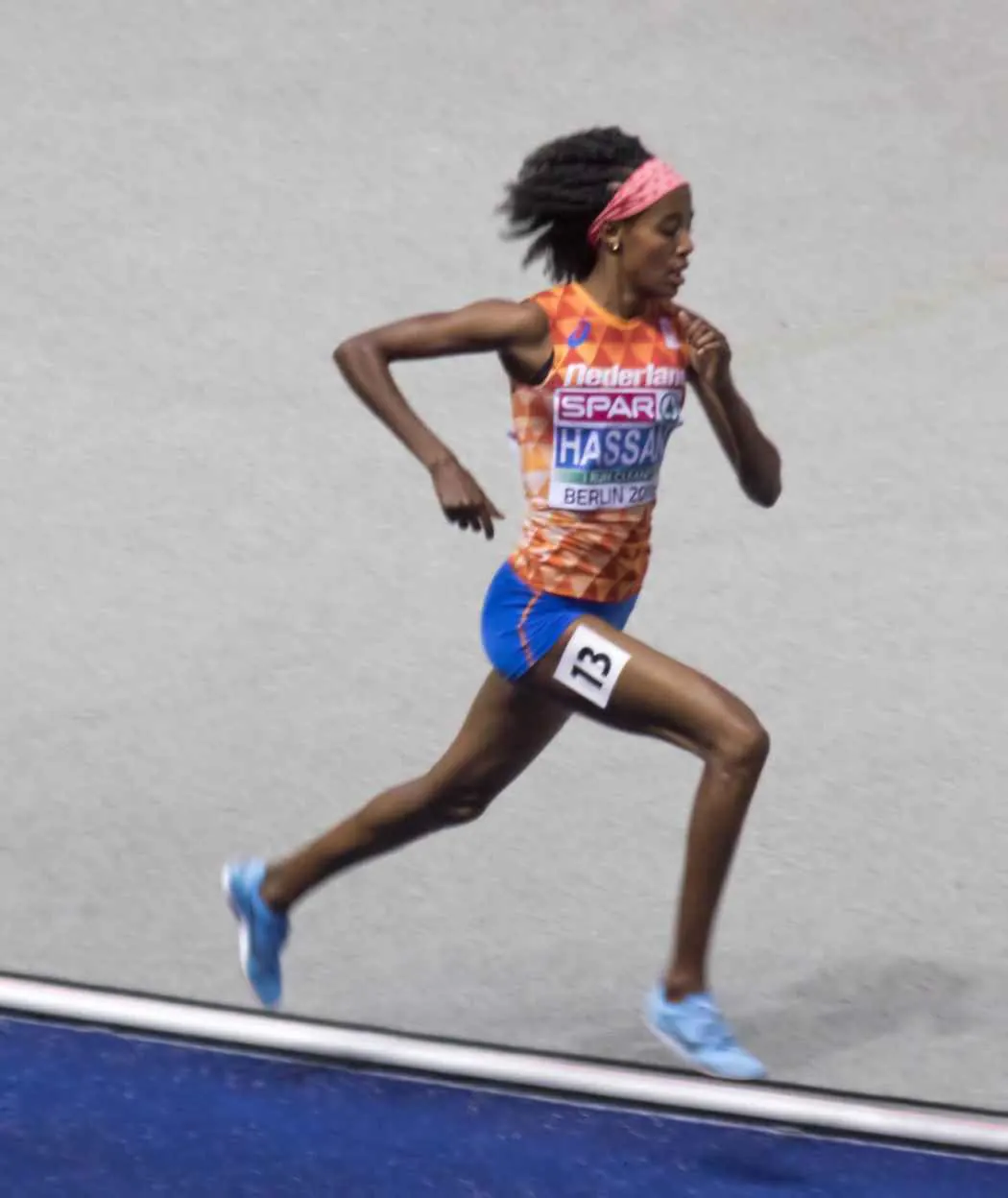
Pictures: there is no free photo of the Tokyo heat, the fall or the Tokyo finals, so none of these photos is from the Tokyo Olympics. Sifan Hassan herself is in Filip Bossuyt’s photos from the European Championships in Zurich (the 5,000 meters, August 16, 2014) and Berlin (August 12, 2018), the World Indoor Championships in Portland (March 18 and, in the 1,500-meter final, March 20, 2016), the World Championships in Doha (celebrating her 10,000-meter world title on September 28, 2019; leading the 1,500-meter final and with the Dutch flag afterward on October 5, 2019) and in Budapest (in the pack in the 10,000-meter final, August 19, 2023); in jenaragon94’s photos from the Payton Jordan Invitational at Stanford on May 2, 2019, racing and at the finish; and in Katie Chan’s photo of her winning the London Marathon on April 23, 2023. Adama is Tokuma Avenue, the main road through her birth city, at sunset in September 2022. Zuidlaren is the village sign, photographed in December 2015, not the shelter itself. The Tokyo Olympic Stadium is seen from outside in March 2025 and inside, empty, in June 2022.
Photo credits
The archive photos in this story
The photographs and illustrations in this story are in the public domain or shared under open licenses; each one is credited below with its license. Tap one to enlarge it, or follow the link to its Wikimedia Commons page for the full record. The narration, captions and graphics in the Short are our own; its music and sound effects are credited below.




Music and sound effects
Music: Mussorgsky, Pictures at an Exhibition: IV. Bydlo (piano) (Musopen, public domain); Beethoven, Coriolan Overture, Op. 62 (Musopen Symphony Orchestra, CC0); Brahms, Symphony No. 2 in D major, Op. 73: IV. Allegro con spirito (Musopen Symphony Orchestra, CC0); Dvorak, Symphony No. 9 'From the New World': II. Largo (Musopen, public domain).
Sound effects: Freesound, CC0.