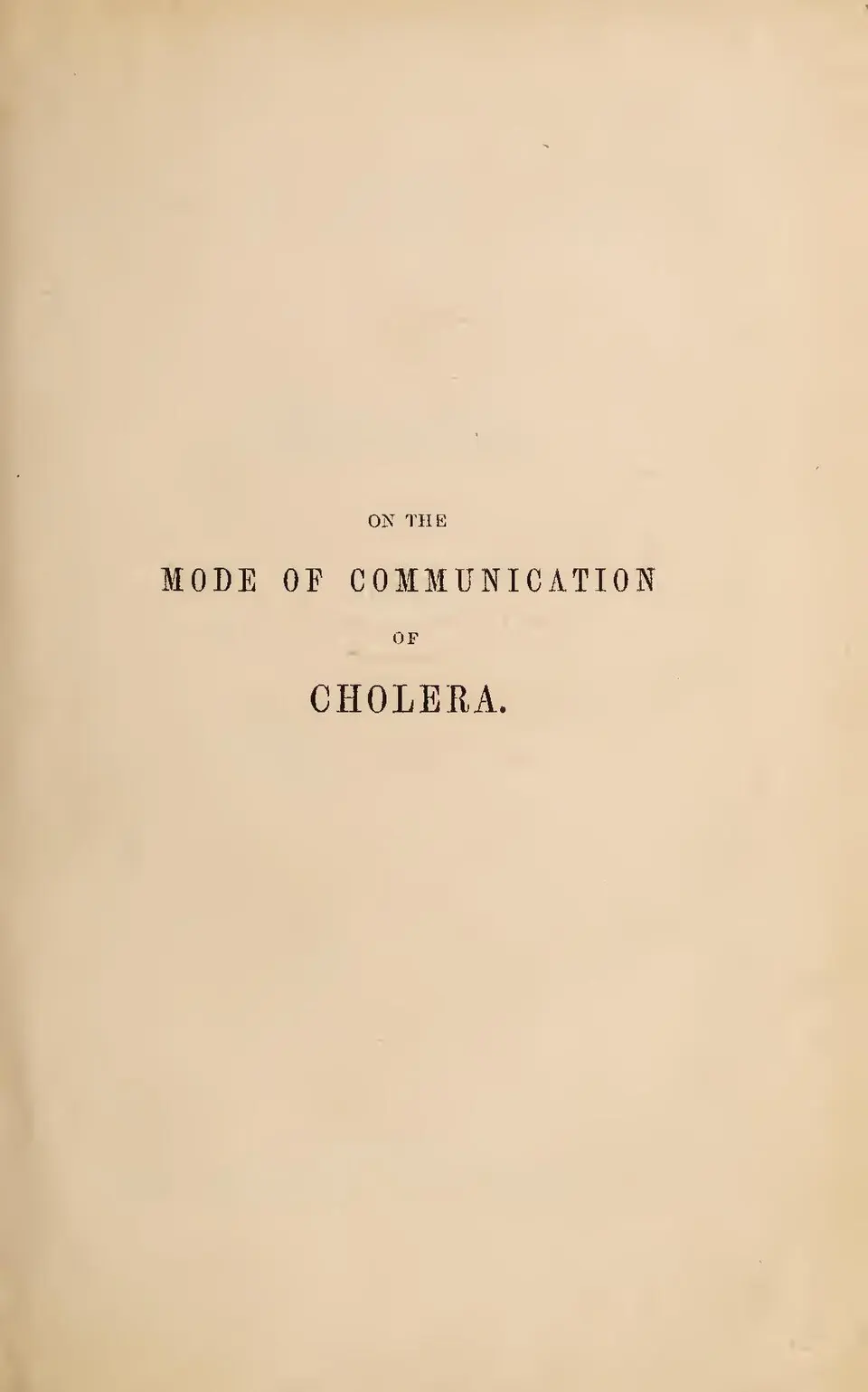
John Snow (1813–1858) “was an English physician,” Wikipedia says, and he “set up his practice at 54 Frith Street in Soho as a surgeon and general practitioner.” In his day, Wikipedia says, “the then-dominant miasma theory” held “that diseases such as cholera and bubonic plague were caused by pollution or a noxious form of ‘bad air’”; in the London Museum’s words, “They thought disease spread by inhaling dirty air, known as ‘miasma’.” Snow had a theory of his own: “He first published his theory in an 1849 essay, On the Mode of Communication of Cholera,” Wikipedia says.
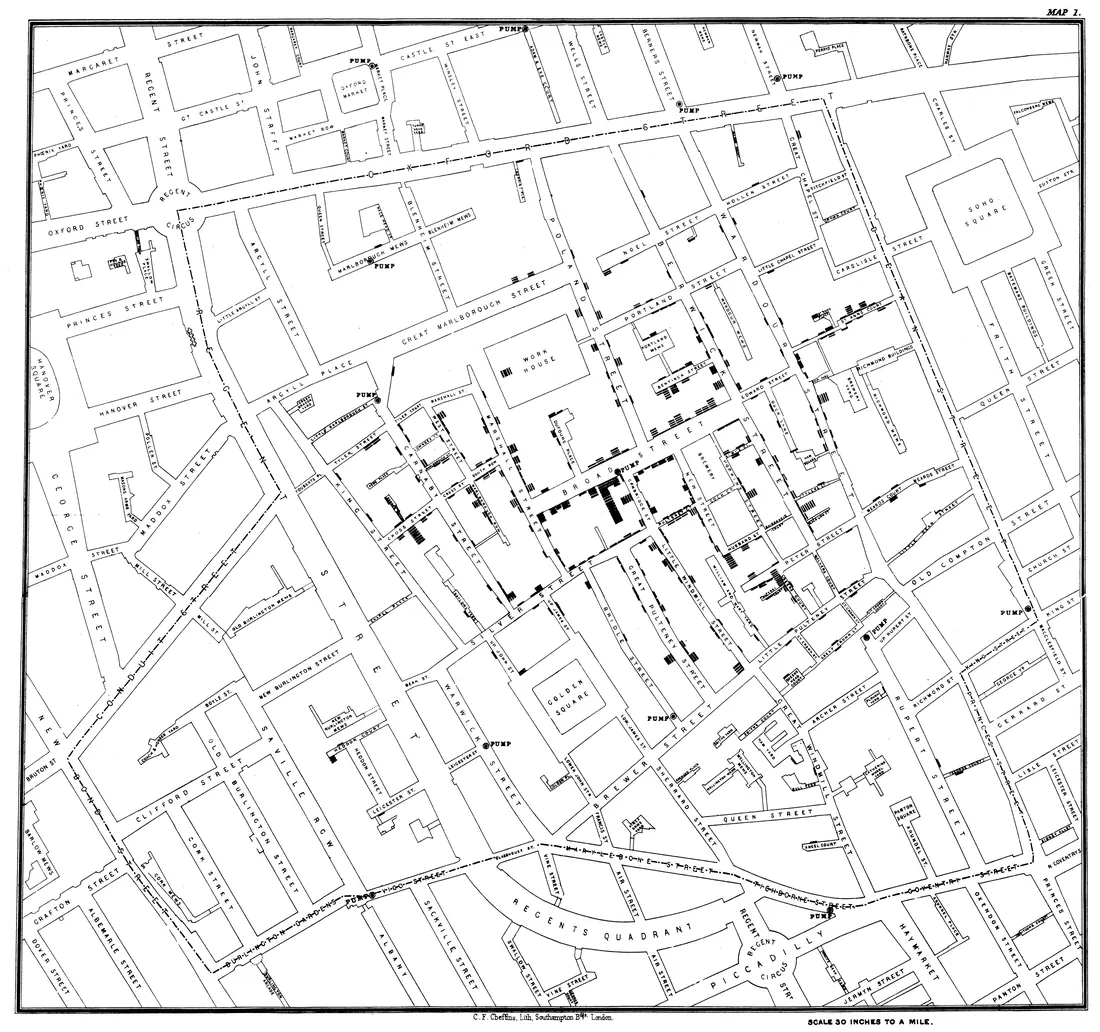
“On 31 August 1854, after several other outbreaks elsewhere in the city, there was a major outbreak of cholera in Soho,” Wikipedia says; Snow dated it to “the night between the 31st August and the 1st September.” By his own count, “Within two hundred and fifty yards of the spot where Cambridge Street joins Broad Street, there were upwards of five hundred fatal attacks of cholera in ten days”; the London Museum says “In just 10 days, 500 people died.” “I suspected some contamination of the water of the much-frequented street-pump in Broad Street,” Snow wrote, and “On proceeding to the spot, I found that nearly all the deaths had taken place within a short distance of the [Broad Street] pump.” “There were only ten deaths in houses situated decidedly nearer to another street-pump. In five of these cases the families of the deceased persons informed me that they always sent to the pump in Broad Street, as they preferred the water to that of the pumps which were nearer.” The London Museum says that “Using the addresses of the people who’d died, he began to plot the cases of cholera on a map,” and “The map showed clearly that the deaths were clustered around a water pump on Broad Street, now Broadwick Street.”
“I had an interview with the Board of Guardians of St. James’s parish, on the evening of Thursday, 7th September, and represented the above circumstances to them,” Snow wrote. “In consequence of what I said, the handle of the pump was removed on the following day”; the CDC dates it: “the pump handle was removed on September 8, 1854.” “At the end of September [1854] the cholera outbreak described above was all but over, with the death toll standing at 616 people of the Soho neighborhood,” the UCLA John Snow site says. But deaths were already falling: Snow himself wrote that “the attacks had so far diminished before the use of the water was stopped, that it is impossible to decide whether the well still contained the cholera poison in an active state.” And “The Board of Health ultimately attributed the 1854 epidemic to miasma,” Wikipedia says; in the London Museum’s words, “In their minds, sewage caused the bad air that spread disease,” and “Snow’s discovery about cholera wasn’t immediately accepted by authorities.” The Reverend Henry Whitehead, quoted on the UCLA site, wrote: “But scarcely anyone seriously belied in his theory” (sic, for “believed”).
The Lancet’s 1855 editorial on his theories was, in the UCLA site’s word, “excoriating.” It said that “In riding his hobby very hard, he has fallen down through a gully-hole and has never since been able to get out again,” and asked, “Has he any facts to show in proof? No!”; in 2013 The Lancet allowed that these comments “were perhaps somewhat overly negative in tone,” and the UCLA site speaks of “Lancet founding Editor Thomas Wakley’s surprising contempt for Snow.” “Snow suffered a stroke while working in his London office on 10 June 1858. He was 45 years old at the time. He never recovered, dying six days later on 16 June 1858,” Wikipedia says. The Lancet’s obituary read, in full: “Dr John Snow: This well-known physician died at noon, on the 16th instant, at his house in Sackville Street, from an attack of apoplexy. His researches on chloroform and other anaesthetics were appreciated by the profession.” In 2013 The Lancet called it “extraordinary in its brevity and its failure even to mention cholera.”
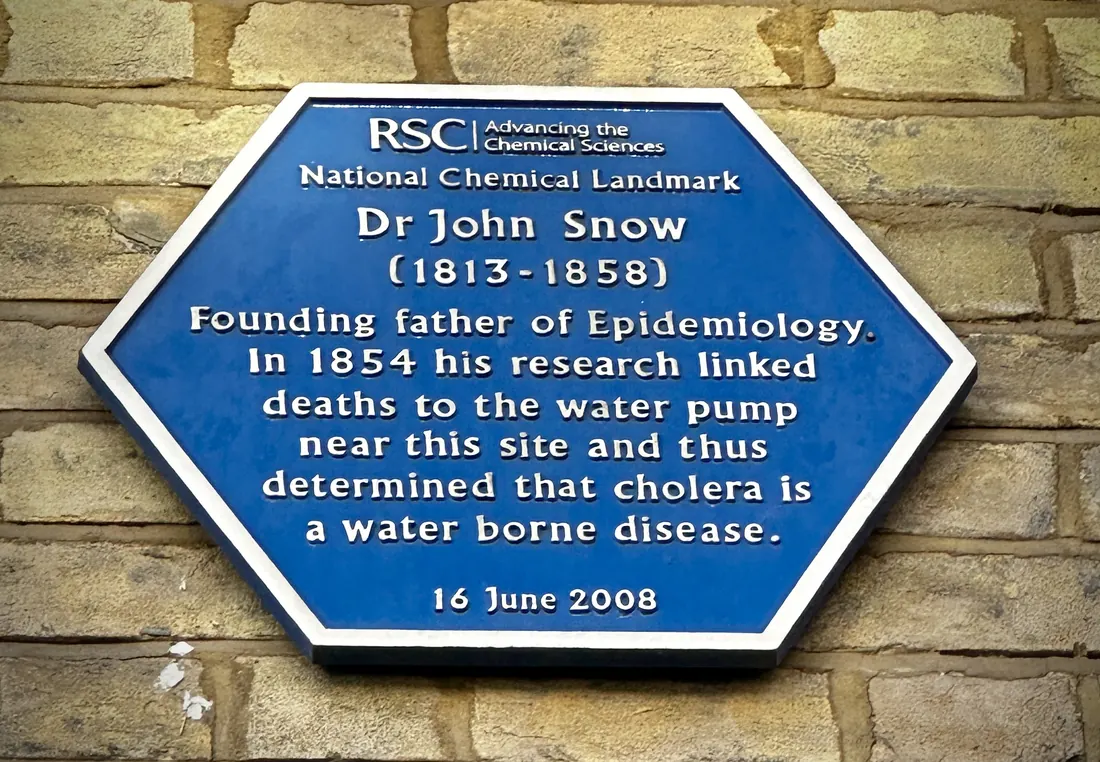
On April 13, 2013, The Lancet printed this: “The Lancet wishes to correct, after an unduly prolonged period of reflection, an impression that it may have given in its obituary of Dr John Snow on June 26, 1858.” Today, in the words of David Vachon, quoted on the UCLA site, “John Snow is widely considered to be the father of [modern] epidemiology”; Wikipedia says “He is considered one of the founders of modern epidemiology,” and the 2008 plaque on Broadwick Street calls him the “Founding father of Epidemiology.”
Fact check
The facts and where they come from
- This doctor traced a deadly outbreak to one water pump, but the experts refused to believe him. Wikipedia: “his work in tracing the source of a cholera outbreak in London’s Soho, which he identified as a particular public water pump.” Wikipedia’s article on the outbreak: “The Board of Health ultimately attributed the 1854 epidemic to miasma.” The Reverend Henry Whitehead, quoted on the UCLA John Snow site: “But scarcely anyone seriously belied in his theory” (sic, for “believed”). London Museum: “Snow’s discovery about cholera wasn’t immediately accepted by authorities.” 1258
- His name was John Snow, a doctor in London. Wikipedia: “John Snow (15 March 1813 – 16 June 1858) was an English physician”; “Snow set up his practice at 54 Frith Street in Soho as a surgeon and general practitioner.” 1
- In 1854, cholera exploded in Soho, London. Wikipedia’s article on the outbreak: “On 31 August 1854, after several other outbreaks elsewhere in the city, there was a major outbreak of cholera in Soho.” Snow, quoted on the UCLA John Snow site: “the so-called outbreak, which commenced in the night between the 31st August and the 1st September.” London Museum: “A third outbreak began in Soho on 31 August 1854.” 248
- Within ten days, more than five hundred were dead. Snow (1855): “Within two hundred and fifty yards of the spot where Cambridge Street joins Broad Street, there were upwards of five hundred fatal attacks of cholera in ten days.” London Museum: “In just 10 days, 500 people died.” 38
- Most doctors blamed miasma, bad air. The Lancet (2013), on the UCLA John Snow site: “his views were shared by most medical men at the time: miasma, or the stench from decaying vegetable and animal matter, was widely held responsible for epidemic disease.” London Museum: “They thought disease spread by inhaling dirty air, known as ‘miasma’.” Wikipedia: “the then-dominant miasma theory that stated that diseases such as cholera and bubonic plague were caused by pollution or a noxious form of ‘bad air’.” 681
- But Snow suspected the water. Wikipedia: “He first published his theory in an 1849 essay, On the Mode of Communication of Cholera.” Snow, quoted on the UCLA John Snow site: “I suspected some contamination of the water of the much-frequented street-pump in Broad Street.” 14
- He mapped the deaths, and nearly all were near one pump, on Broad Street. Snow, quoted by Wikipedia: “On proceeding to the spot, I found that nearly all the deaths had taken place within a short distance of the [Broad Street] pump.” London Museum: “Using the addresses of the people who’d died, he began to plot the cases of cholera on a map”; “The map showed clearly that the deaths were clustered around a water pump on Broad Street, now Broadwick Street.” 18
- Even some who lived nearer other pumps sent for its water. Snow, quoted by Wikipedia: “There were only ten deaths in houses situated decidedly nearer to another street-pump. In five of these cases the families of the deceased persons informed me that they always sent to the pump in Broad Street, as they preferred the water to that of the pumps which were nearer.” 1
- He took his evidence to the parish board. Snow (1855), quoted on the UCLA John Snow site: “I had an interview with the Board of Guardians of St. James’s parish, on the evening of Thursday, 7th September, and represented the above circumstances to them.” 5
- The next day, the pump’s handle came off. Snow, quoted on the UCLA John Snow site: “In consequence of what I said, the handle of the pump was removed on the following day.” CDC: “the pump handle was removed on September 8, 1854.” 510
- Soon, the outbreak was over. UCLA John Snow site: “At the end of September [1854] the cholera outbreak described above was all but over, with the death toll standing at 616 people of the Soho neighborhood.” London Museum: “The cholera outbreak subsided.” But it was already in decline; Snow, quoted by Wikipedia: “the attacks had so far diminished before the use of the water was stopped, that it is impossible to decide whether the well still contained the cholera poison in an active state.” 481
- But the authorities still blamed bad air. Wikipedia’s article on the outbreak: “The Board of Health ultimately attributed the 1854 epidemic to miasma.” London Museum: “In their minds, sewage caused the bad air that spread disease.” 28
- The Lancet mocked his theories. The Lancet (2013), on the UCLA John Snow site and The History Blog: “The Editor would also like to add that comments such as ‘In riding his hobby very hard, he has fallen down through a gully-hole and has never since been able to get out again’ and ‘Has he any facts to show in proof? No!’, published in an Editorial on Dr Snow’s theories in 1855, were perhaps somewhat overly negative in tone.” UCLA John Snow site: “Even allowing for Lancet founding Editor Thomas Wakley’s surprising contempt for Snow.” 69
- The quote, word for word, from The Lancet’s 1855 editorial on his theories, as quoted by The Lancet in 2013: “Has he any facts to show in proof? No!” 69
- When Snow died in 1858, the journal’s obituary didn’t even mention cholera. Wikipedia: “Snow suffered a stroke while working in his London office on 10 June 1858. He was 45 years old at the time. He never recovered, dying six days later on 16 June 1858.” The 1858 obituary in full, as reprinted in 2013: “Dr John Snow: This well-known physician died at noon, on the 16th instant, at his house in Sackville Street, from an attack of apoplexy. His researches on chloroform and other anaesthetics were appreciated by the profession.” The Lancet (2013): “the obituary was extraordinary in its brevity and its failure even to mention cholera.” 169
- In 2013, The Lancet finally corrected it. The Lancet (April 13, 2013): “The Lancet wishes to correct, after an unduly prolonged period of reflection, an impression that it may have given in its obituary of Dr John Snow on June 26, 1858.” Wikipedia: “In 2013 The Lancet printed a correction of its brief obituary of Snow, originally published in 1858.” 691
- Today, he’s called the father of modern epidemiology. David Vachon, quoted on the UCLA John Snow site: “John Snow is widely considered to be the father of [modern] epidemiology.” Wikipedia: “He is considered one of the founders of modern epidemiology.” The 2008 plaque on Broadwick Street: “Founding father of Epidemiology.” 7111
Sources
- John Snow Wikipedia
- 1854 Broad Street cholera outbreak Wikipedia
- John Snow, On the Mode of Communication of Cholera, 2nd edition (1855), Part 2 UCLA Fielding School of Public Health
- Investigation of Broad Street Pump Outbreak UCLA Fielding School of Public Health
- Removal of handle, index case and Rev. Whitehead UCLA Fielding School of Public Health
- Remembrances and New The Lancet Obituary (The Lancet, April 13, 2013) UCLA Fielding School of Public Health
- Father of Modern Epidemiology UCLA Fielding School of Public Health
- John Snow: Cholera & the Broad Street pump London Museum
- The Lancet admits: You knew something, John Snow (April 16, 2013) The History Blog
- 150th Anniversary of John Snow and the Pump Handle (2004) CDC, Morbidity and Mortality Weekly Report
- The John Snow plaque, Broadwick Street (Royal Society of Chemistry, 2008) Wikimedia Commons
Notes
The death toll: Snow counted “upwards of five hundred fatal attacks of cholera in ten days” within 250 yards of the spot where Cambridge Street joins Broad Street; the UCLA John Snow site gives 616 deaths in Soho by the end of September (Snow’s table runs from August 19 to September 30), and Wikipedia’s article on the outbreak now gives 420. The Short uses only Snow’s own ten-day figure, “more than five hundred.”
Did the handle stop it? Snow himself wrote that the attacks “had so far diminished before the use of the water was stopped” that he could not tell whether the well was still dangerous, and the Reverend Henry Whitehead showed in 1867 that the outbreak had largely run its course; Whitehead also thought that removing the handle probably prevented a new outbreak (UCLA). The Short says only that the handle came off and that “soon, the outbreak was over.”
“Put the handle back”: the often-told story that the authorities later put the handle back (Wikipedia, after Chapelle’s 2005 book Wellsprings) rests on that one secondary source, so we leave it out.
The map came later: Snow traced the deaths in early September from the death register and by asking families; his famous dot map was drawn afterwards and published in his 1855 book. The Short says “He mapped the deaths,” as the London Museum does, but not that the map existed before the handle came off.
“Mocked his theories”: the 1855 editorial “had been provoked by Snow’s support for what were known as the ‘nuisance traders’” (UCLA), that is, his evidence to Parliament that foul smells from “nuisance trades” did not cause epidemic disease, not the Broad Street pump itself. The Short says “mocked his theories,” the words The Lancet used in 2013 (“an Editorial on Dr Snow’s theories”).
Apology or correction: The Lancet’s 2013 text, written by Sandra Hempel (UCLA), is a correction (“wishes to correct”), not an apology, so the Short says “corrected it.”
“Refused to believe him”: most medical men and the Board of Health kept to miasma, but William Farr, one of his chief opponents, came round in 1866 (Wikipedia); the Short doesn’t claim that nobody ever believed him. Left out for length: the brewery workers who drank beer and survived (Snow, 1855).
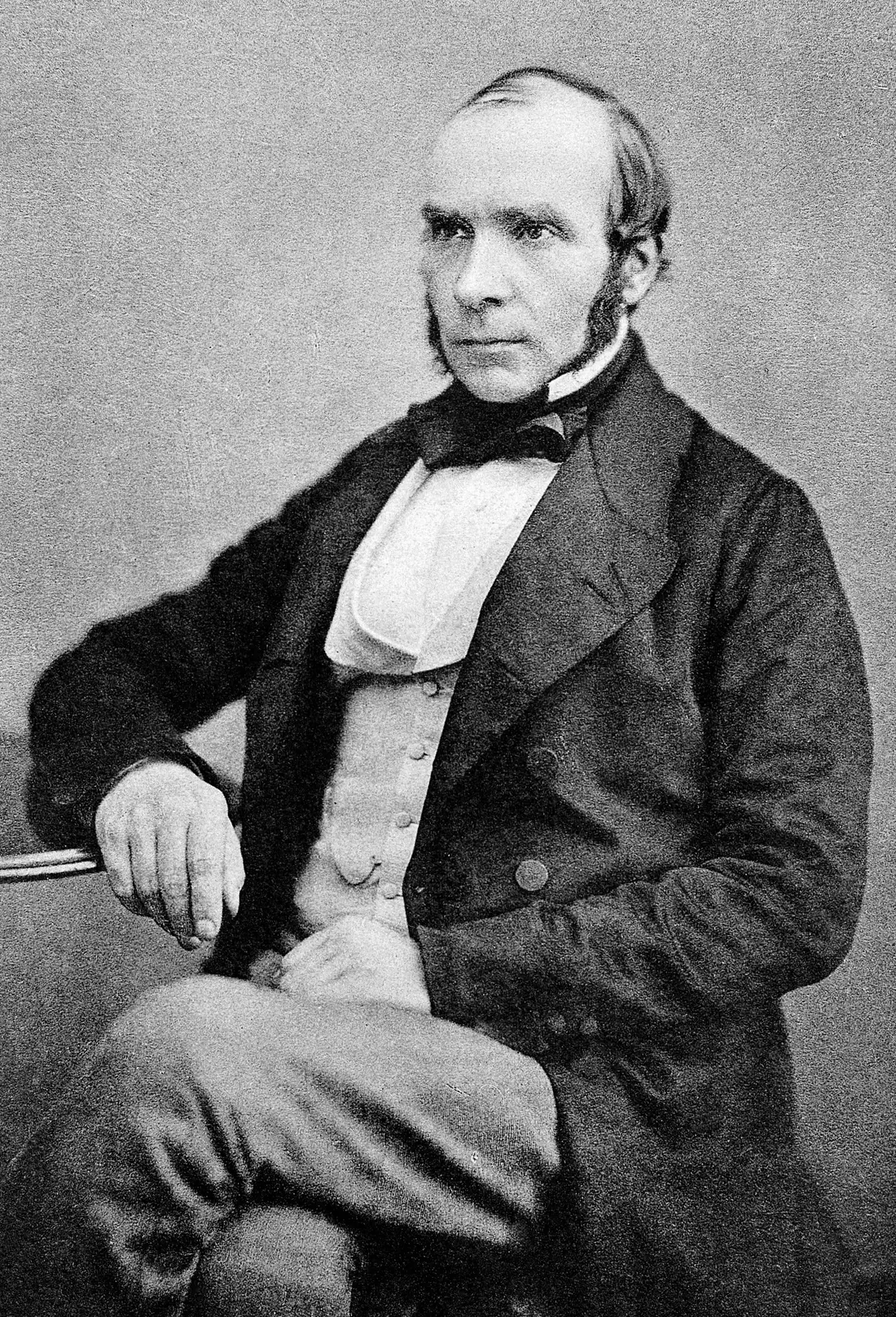
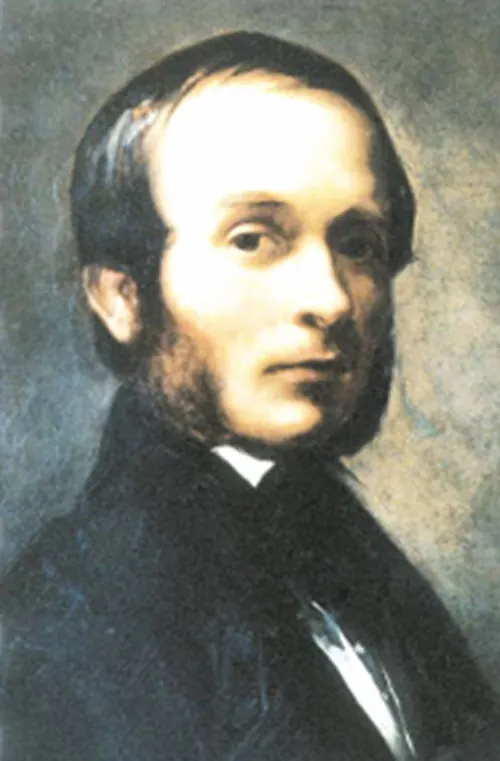
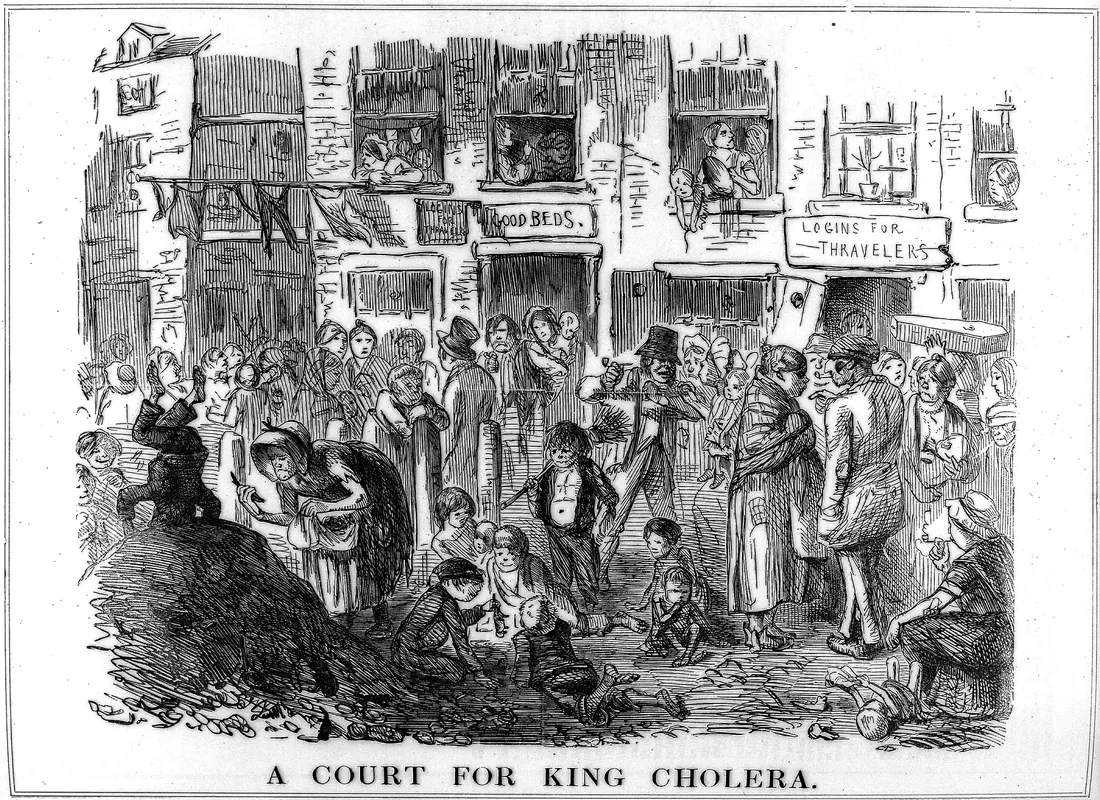
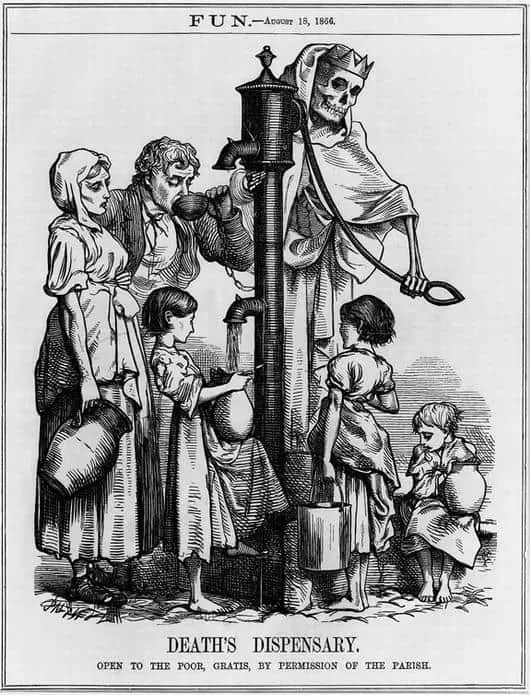
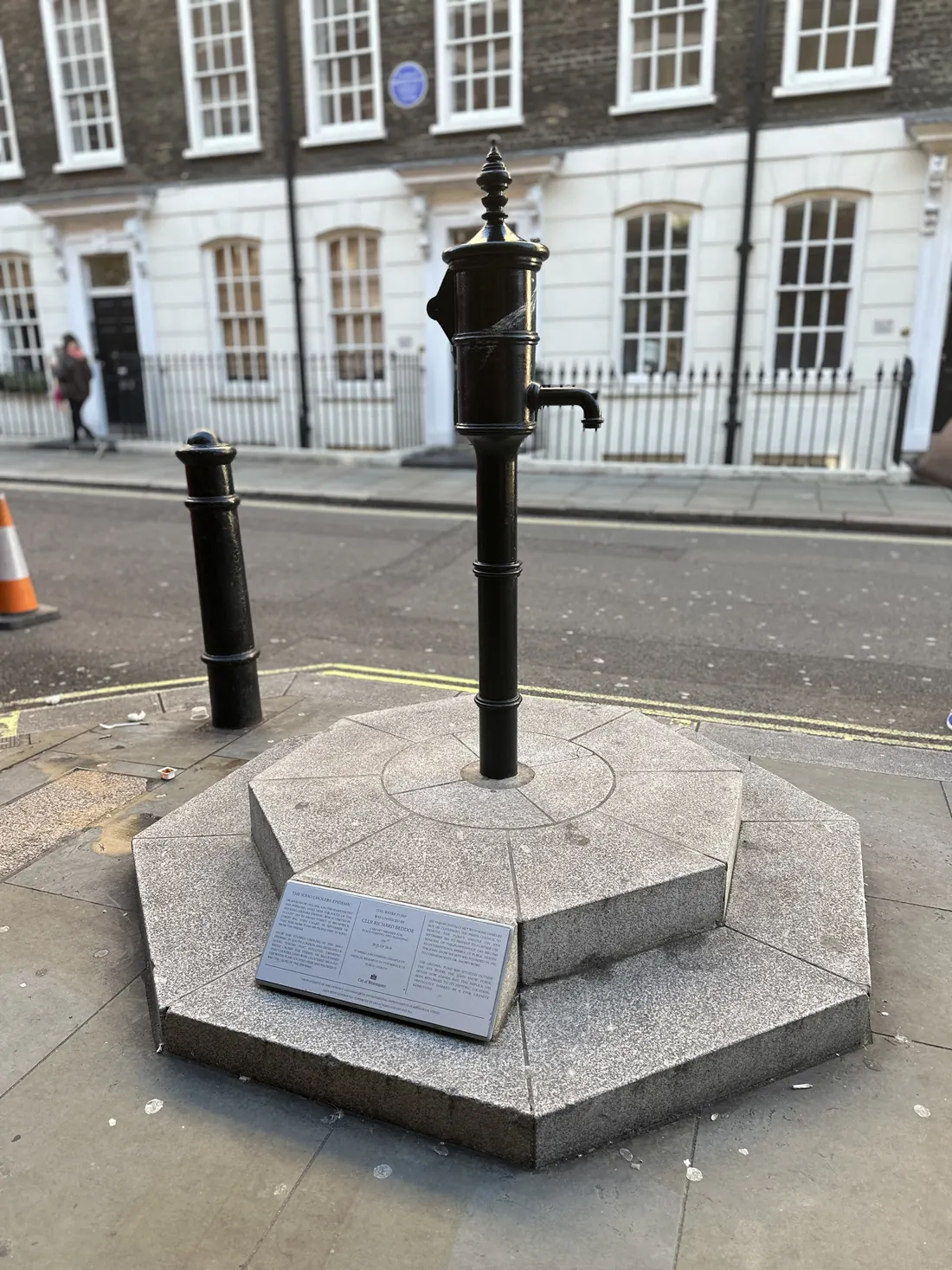
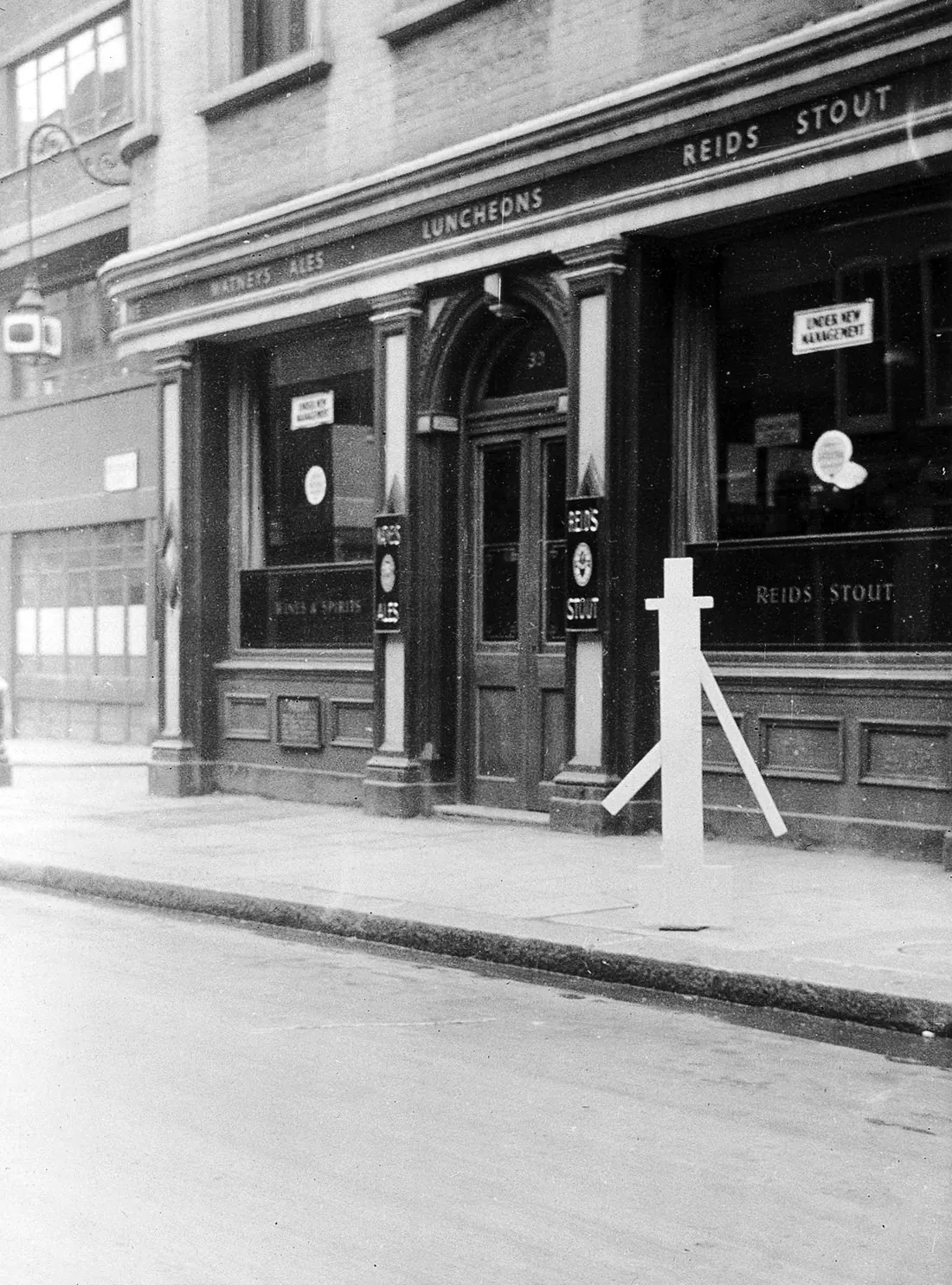
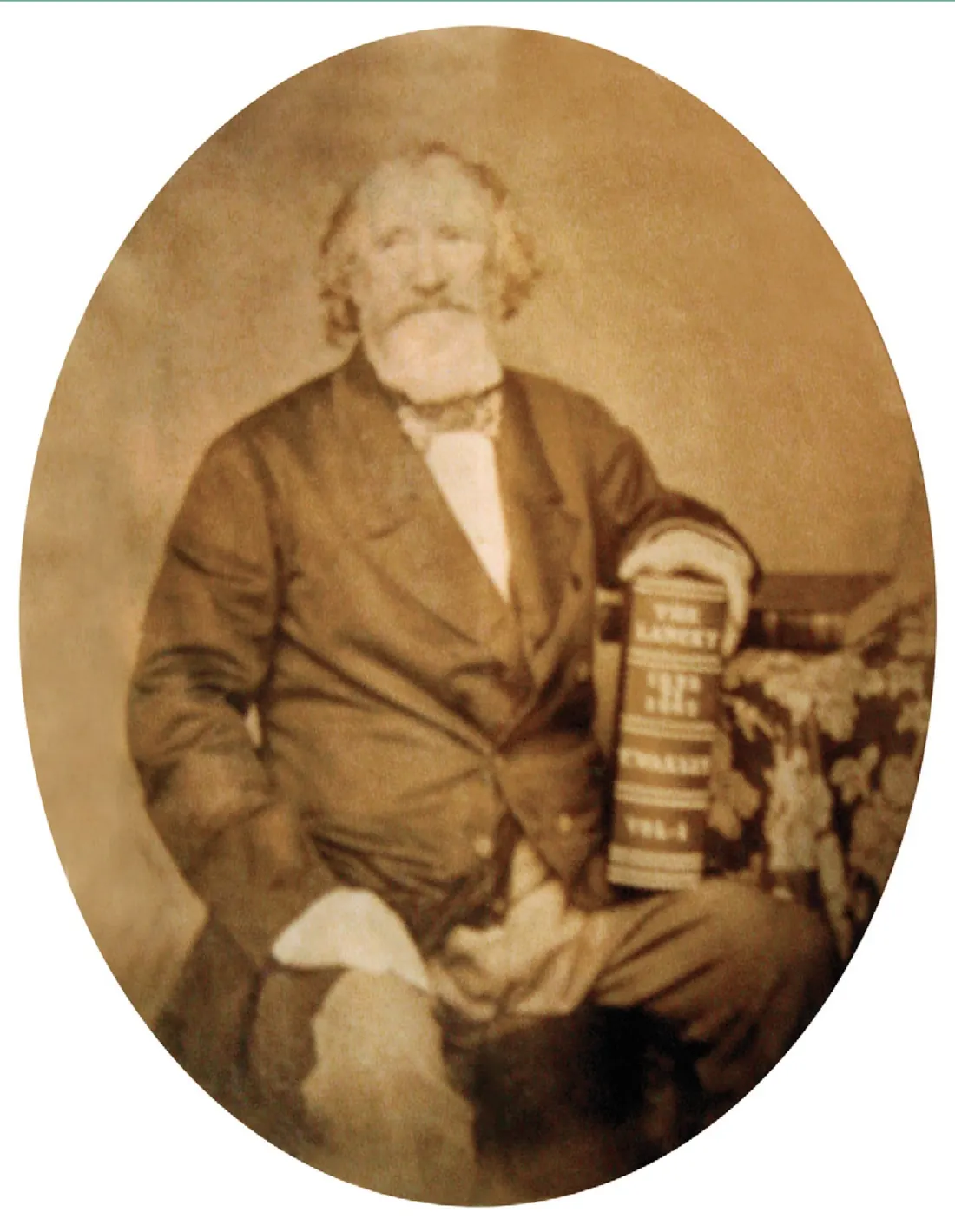
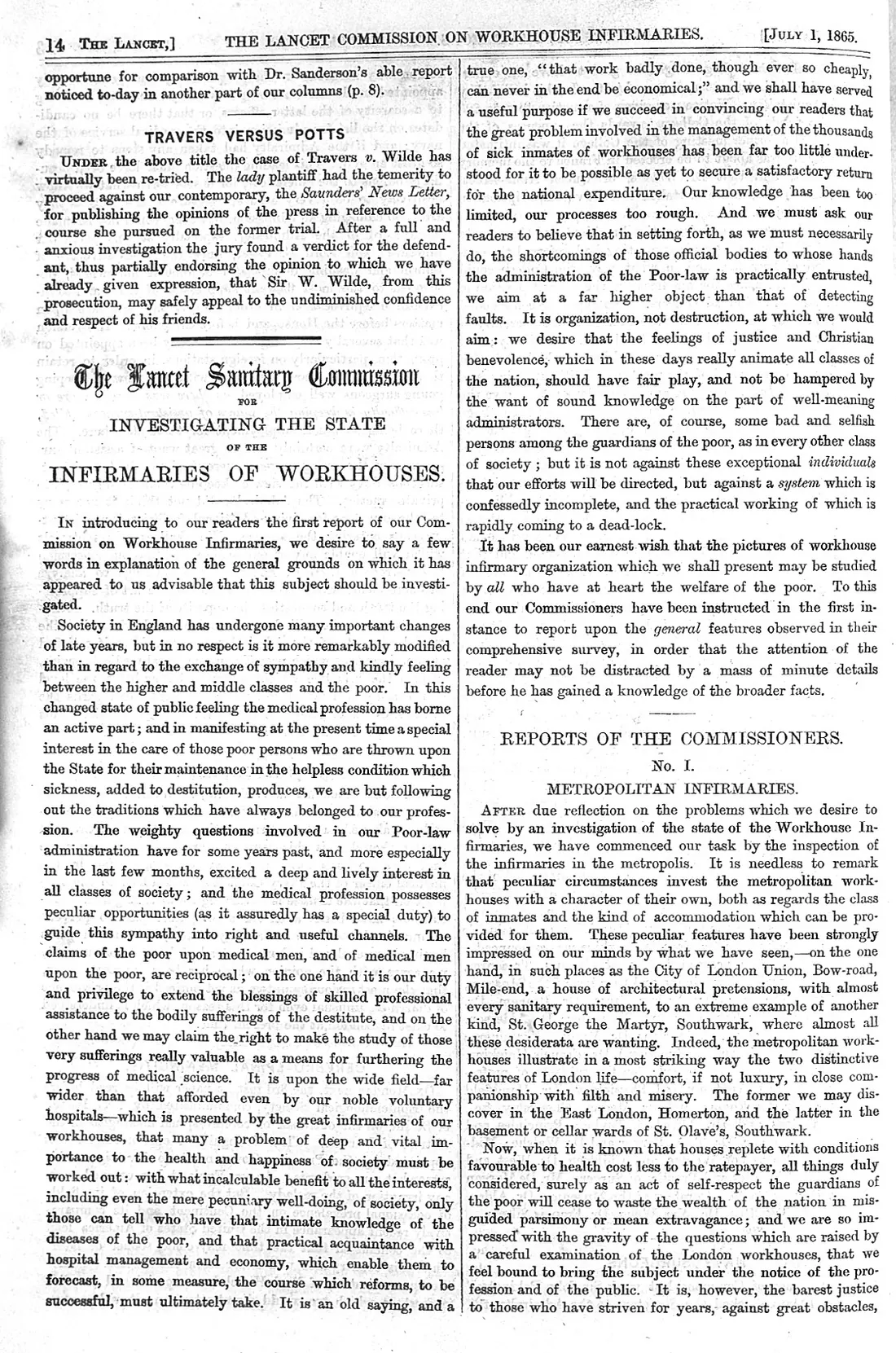
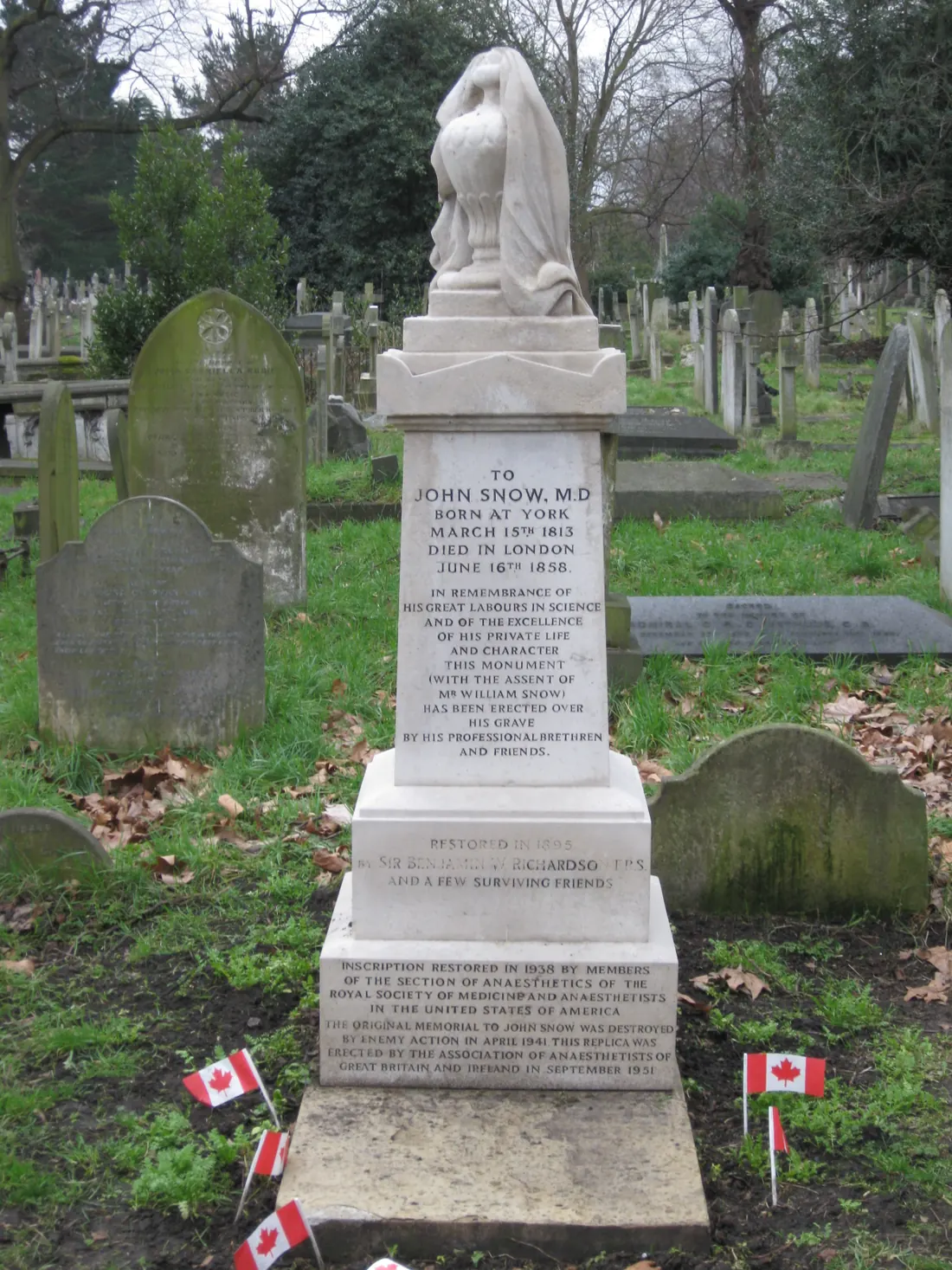
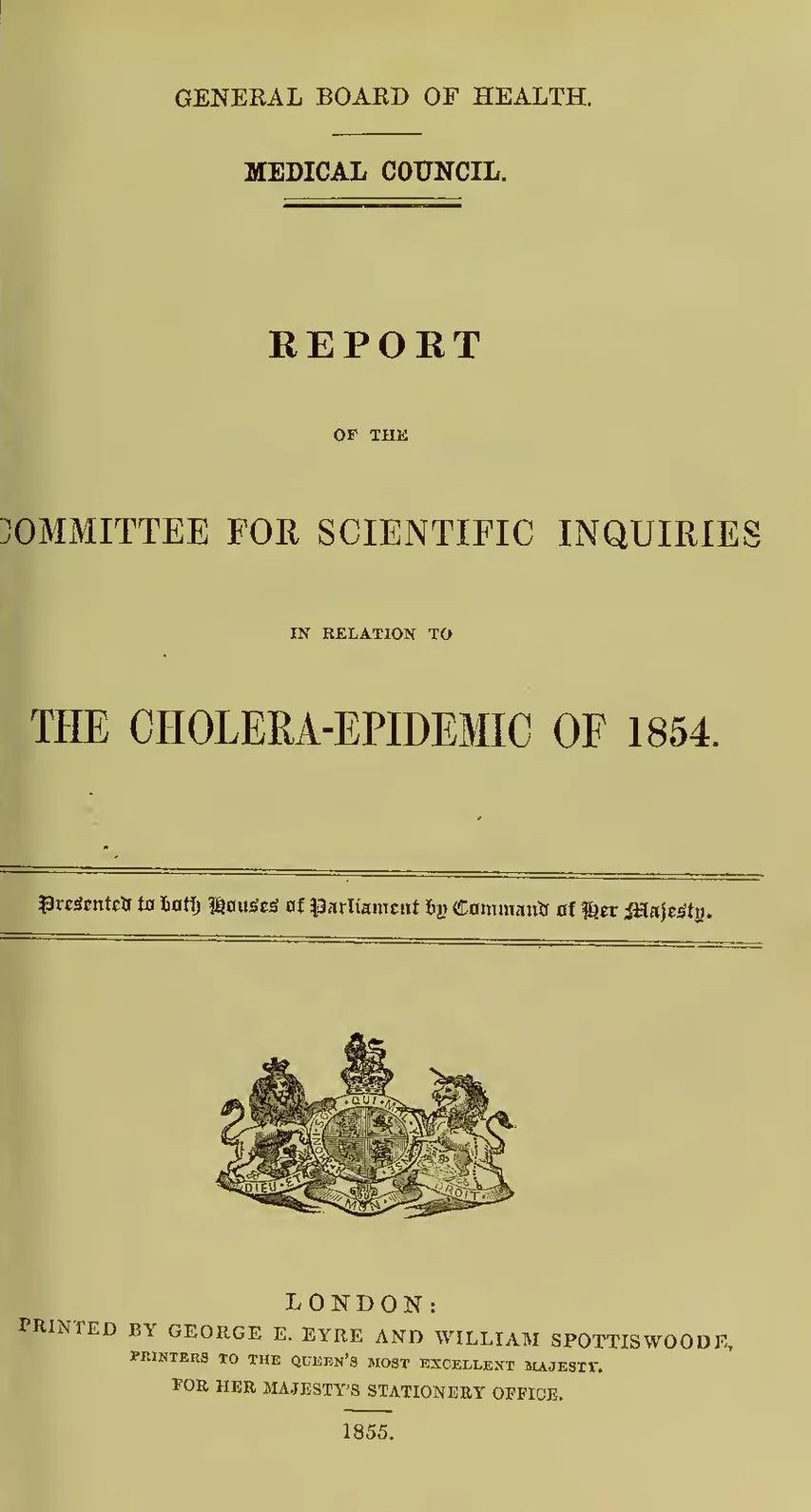
Pictures: John Snow himself is in a photograph of 1856 (an autotype published in 1887) and Thomas Jones Barker’s oil portrait of 1847. His map of the cholera deaths around the Broad Street pump, a lithograph by C. F. Cheffins, was published in his 1855 book. There is no picture of the 1854 outbreak itself: Punch’s “A Court for King Cholera” (1852) shows a filthy London court two years earlier, and George John Pinwell’s “Death’s Dispensary” (Fun magazine, 1866), with Death at a pump, was drawn after Snow’s death. The title page is that of his 1849 essay On the Mode of Communication of Cholera, and the report is the General Board of Health’s report on the 1854 epidemic (1855). Thomas Wakley, The Lancet’s founding editor, holds a Lancet volume in a photograph of about 1862, and the Lancet page is from July 1, 1865, not the 1855 editorial or the 2013 correction. The replica pump on Broadwick Street deliberately has no handle (photographed in 2023), and an undated later photograph of Broad Street shows a white silhouette of the pump at its old site. His grave in Brompton Cemetery, London, was photographed in 2010, and the Royal Society of Chemistry’s 2008 plaque in 2023.
Photo credits
The archive photos in this story
The photographs and illustrations in this story are in the public domain or shared under open licenses; each one is credited below with its license. Tap one to enlarge it, or follow the link to its Wikimedia Commons page for the full record. The narration, captions and graphics in the Short are our own; its music and sound effects are credited below.
Music and sound effects
Music: Brahms, Tragic Overture, Op. 81 (Musopen Symphony Orchestra, CC0); Brahms, Symphony No. 2 in D major, Op. 73: IV. Allegro con spirito (Musopen Symphony Orchestra, CC0); Mussorgsky, Pictures at an Exhibition: IV. Bydlo (piano) (Musopen, public domain); Brahms, Symphony No. 1 in C minor, Op. 68: IV. Adagio - Piu andante - Allegro non troppo, ma con brio (Musopen Symphony Orchestra, CC0).
Sound effects: Freesound, CC0.