Yelena Isinbayeva “had been a successful gymnast at home in Volgograd but, exceeding 1.70 metres in height, she was considered too tall to become one of the best,” World Athletics wrote in 2004. “I had been practising ten years for gymnastics and when I was 15 my coach from gymnastics asked me ‘do you want to try pole vault, because in gymnastics you have no chance to be anything more than master of sport?’,” she told Laureus. “So he brought me to Yevgeny Trofimov, the only coach in Volgograd for pole vault.” “Isinbayeva won the World Youth Games just six months after taking the pole in hand for the first time,” Russian Life says.
At the Beijing Olympics she was defending her title, and the final began at 19:20 on August 18, 2008, the official results show. “As has become the norm, Isinbayeva whiled away her time lying on the grass near the runway, a cap and towel covering her face, seemingly oblivious to the dramatic competition unfolding in the background,” World Athletics reported. She was “electing to begin her defence at 4.70m,” BBC Sport said; by Olympedia’s jump-by-jump table, her 11 rivals took 53 attempts at the lower heights, and five of them were out before she jumped. “Isinbayeva opened with a first-vault clearance at 4.70 (15-5),” Olympedia says, and Reuters wrote that she “sheltered under a towel and then, bizarrely, a duvet to focus her mind between vaults as cameramen swarmed around her.”
“Stuczynski led after clearing 4.80 (15-9), and was the only other vaulter left, as Isinbayeva passed to 4.85 (15-11),” Olympedia says. “She had already clinched the gold with her second jump, a clean effort at 4.85m,” World Athletics reported. The American Jenn Stuczynski “jumped at 4.90 (16-0¾), at which the Russian passed, but went out after three misses,” and “Isinbayeva now had the gold medal but she was not done.”
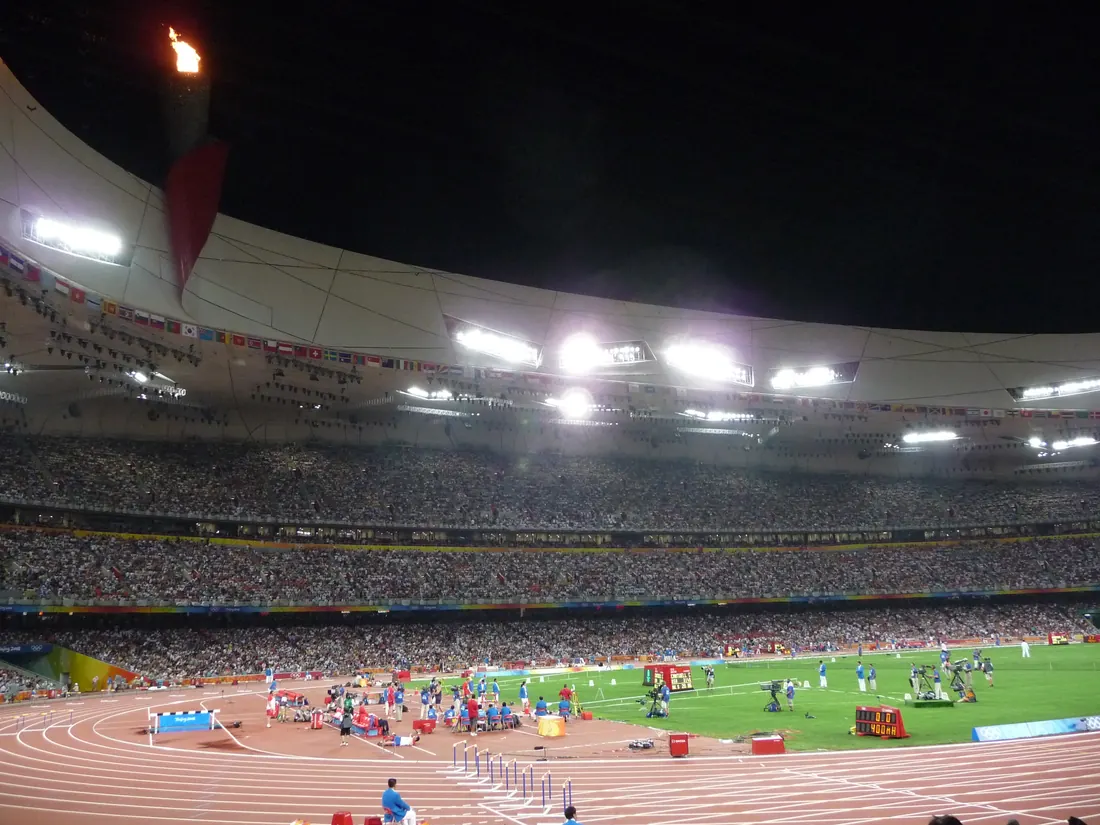
“With only the women’s pole vault still running at the Bird’s Nest,” as BBC Sport put it, she “had the 91,000 crowd eating out of her hand for half an hour,” Reuters said. “Next came an assault on her four-year-old Olympic record of 4.91m, which she managed on her third try at 4.95m,” World Athletics says, and then she “moved the bar up to the world record height of 5.05m.” “I felt confident that I will do 5.05 without any problem, but then the first two attempts were missed,” she told Laureus. “Finally, on her third attempt, she cleared 5.05 meters, screaming with joy even as she fell to earth,” Reuters wrote.
The jump was “adding a centimetre to her own 5.04m record set last month at the Herculis Super Grand Prix in Monaco,” World Athletics said. “‘I was trying to do my best for the crowd,’ said the 26-year-old after setting her 24th world mark.” To Reuters she put it this way: “I felt like I was an actress and all the stadium was just for me.”
Fact check
The facts and where they come from
- She was lying on the grass with a towel over her face, but this was the Olympic final. World Athletics: “As has become the norm, Isinbayeva whiled away her time lying on the grass near the runway, a cap and towel covering her face, seemingly oblivious to the dramatic competition unfolding in the background.” The Christian Science Monitor, on her routine: “she lies on the infield of the track with her back to the competition and a towel over her head.” 18
- Her name is Yelena Isinbayeva. BBC Sport: “Russia’s Yelena Isinbayeva broke her own women’s pole vault world record on the way to defending her Olympic title.” 5
- She trained as a gymnast for 10 years, until they said she was too tall. Isinbayeva, to Laureus: “I had been practising ten years for gymnastics and when I was 15 my coach from gymnastics asked me ‘do you want to try pole vault, because in gymnastics you have no chance to be anything more than master of sport?’.” World Athletics: “She had been a successful gymnast at home in Volgograd but, exceeding 1.70 metres in height, she was considered too tall to become one of the best.” 92
- At 15, she switched to the pole vault. World Athletics: “Yelena Isinbayeva was 15 when the course of her life changed.” Isinbayeva, to Laureus: “So he brought me to Yevgeny Trofimov, the only coach in Volgograd for pole vault.” 29
- In Beijing, she came to defend her Olympic title. BBC Sport: “on the way to defending her Olympic title.” World Athletics results: “18 AUG 2008 19:20.” 53
- Her rivals took more than 50 jumps before she took one. Olympedia’s jump-by-jump table: she passed 4.30, 4.45, 4.55 and 4.65 meters and cleared 4.70 first time, while her 11 rivals’ attempts at 4.30 to 4.65 add up to 53, and five of them were already out. World Athletics: “The majority of the half dozen other competitors who remained in the competition were already struggling when Isinbayeva opened at 4.70m.” BBC Sport: “electing to begin her defence at 4.70m.” 415
- She cleared 4.70 first time, then went back under her towel. Olympedia: “Isinbayeva opened with a first-vault clearance at 4.70 (15-5).” Reuters: “Defending her title, Isinbayeva sheltered under a towel and then, bizarrely, a duvet to focus her mind between vaults as cameramen swarmed around her.” The Christian Science Monitor: “Hide under a white comforter in 90-degree heat to focus.” 467
- The American cleared 4.80 and took the lead. Olympedia: “Stuczynski led after clearing 4.80 (15-9), and was the only other vaulter left, as Isinbayeva passed to 4.85 (15-11).” 4
- She got up and cleared 4.85. World Athletics: “She had already clinched the gold with her second jump, a clean effort at 4.85m.” 1
- Her rival missed three times. Olympedia: “She jumped at 4.90 (16-0¾), at which the Russian passed, but went out after three misses.” 4
- The gold was hers. Olympedia: “Isinbayeva now had the gold medal but she was not done.” BBC Sport: “The Russian needed just two jumps in the final to claim her second Olympics gold.” 45
- Then, alone in a stadium of 91,000, she kept raising the bar. Reuters: she “had the 91,000 crowd eating out of her hand for half an hour” and “was the lone athlete in action as she tried to take it a centimeter higher.” BBC Sport: “With only the women’s pole vault still running at the Bird’s Nest, the Volgograd athlete moved the bar up to the world record height of 5.05m.” World Athletics: “Next came an assault on her four-year-old Olympic record of 4.91m, which she managed on her third try at 4.95m.” 651
- At 5.05, a world record, she missed twice. Isinbayeva, to Laureus: “I felt confident that I will do 5.05 without any problem, but then the first two attempts were missed.” BBC Sport: “which she cleared, again, with her third and final attempt.” 95
- On her last try, she flew over. Reuters: “Finally, on her third attempt, she cleared 5.05 meters, screaming with joy even as she fell to earth.” World Athletics results: “5.05 WR.” 63
- The girl too tall for gymnastics had flown higher than any woman ever. World Athletics: “adding a centimetre to her own 5.04m record set last month at the Herculis Super Grand Prix in Monaco” and “‘I was trying to do my best for the crowd,’ said the 26-year-old after setting her 24th world mark.” 1
Sources
- Women’s Pole Vault – Final (Bob Ramsak, August 18, 2008) World Athletics
- Isinbayeva’s shining example (March 6, 2004) World Athletics
- Results: women’s pole vault final, Beijing 2008 Olympic Games World Athletics
- Pole Vault, Women, 2008 (jump-by-jump results) Olympedia
- Isinbayeva wins with new record (August 18, 2008) BBC Sport
- Isinbayeva soars to new world record (Reuters, Simon Denyer, August 19, 2008) Arab News
- With only one gold, Isinbaeva still the best ever (Mark Sappenfield, August 18, 2008) The Christian Science Monitor
- Yelena Isinbayeva, Russia, pole vault (Mark Sappenfield, July 30, 2012) The Christian Science Monitor
- Interview with Yelena Isinbayeva in Monaco – Edited Transcript (April 15, 2012) Laureus
- The Volgograd Miracle (November–December 2004) Russian Life
Notes
“Sleeping”: a popular retelling says she slept through the final; no source we read says so. World Athletics says she was “lying on the grass near the runway, a cap and towel covering her face”; Reuters mentions a towel and “a duvet,” The Christian Science Monitor “a white comforter.” The Short and this page say only that she lay with a towel over her face.
How long she waited: no source gives it, so the Short counts jumps instead: 53, from Olympedia’s jump-by-jump table (said as “more than fifty”). The final began at 19:20 (official results). Other claims in popular retellings, about rivals hating her or the crowd turning on her, have no source and are left out.
Her own memory of the heights: in 2012 she told Laureus she won with two jumps at 4.75 and 4.85; the official results show 4.70 and 4.85. We follow the results.
Who suggested the pole vault: in her own account her gymnastics coach took her to Yevgeny Trofimov; another account credits Trofimov’s invitation. The Short says only that she switched. “Ten years” of gymnastics is her own figure, and her height (given as 1.73 or 1.74 meters) is not used; World Athletics says “exceeding 1.70 metres.”
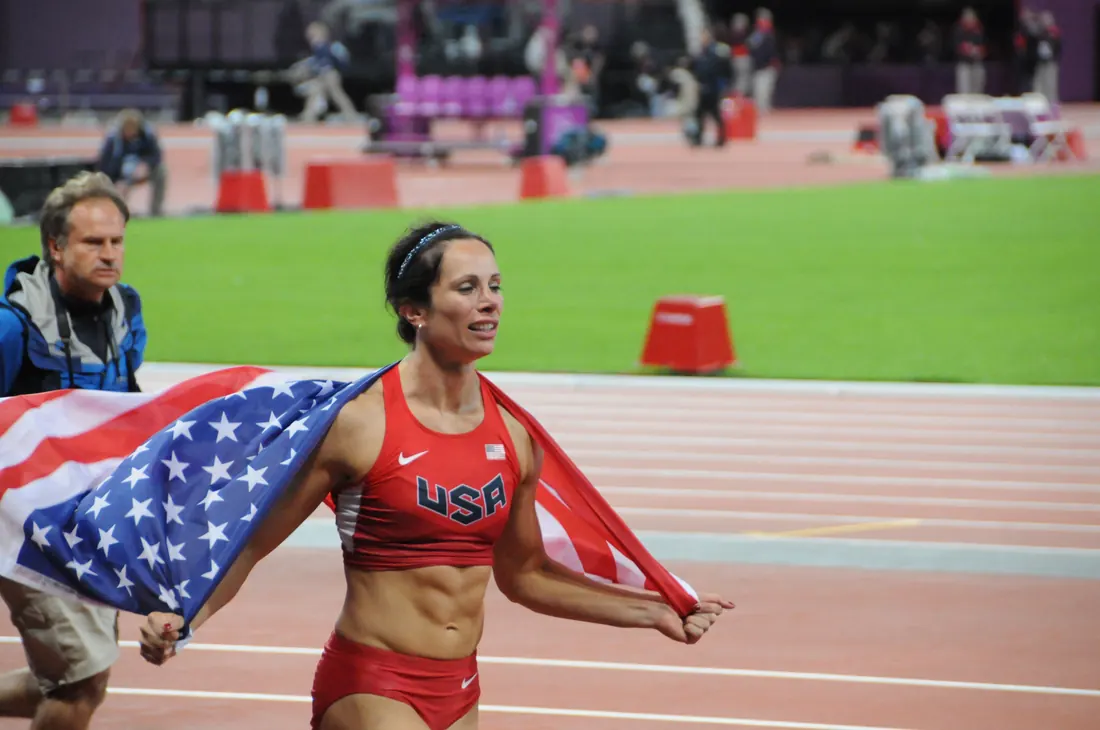
Left out: Jenn Stuczynski’s words before the Games and Isinbayeva’s reply at the press conference; both women are alive, and the story does not need the needle. Stuczynski, now Jenn Suhr, is named only as the American who led.
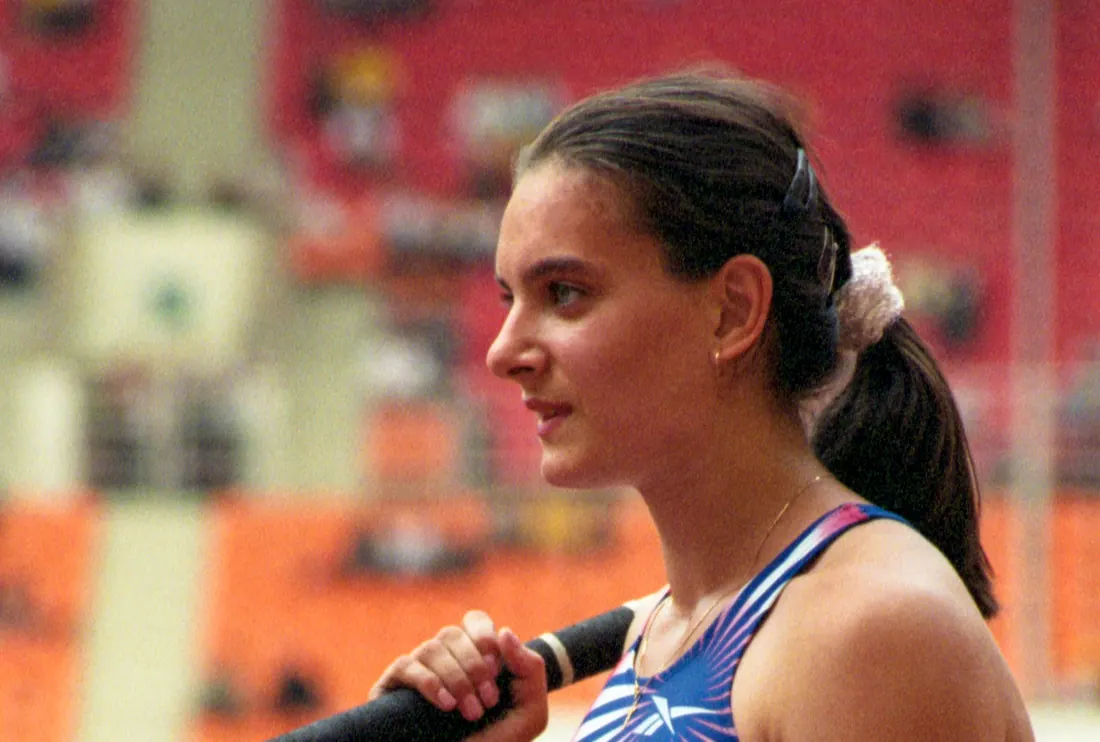
Yelena Isinbayeva is alive. Nothing here goes into her politics, her later public roles or statements, her private life or money, and no government photo of her is used. The photo of her at 16 is cropped to head and shoulders.
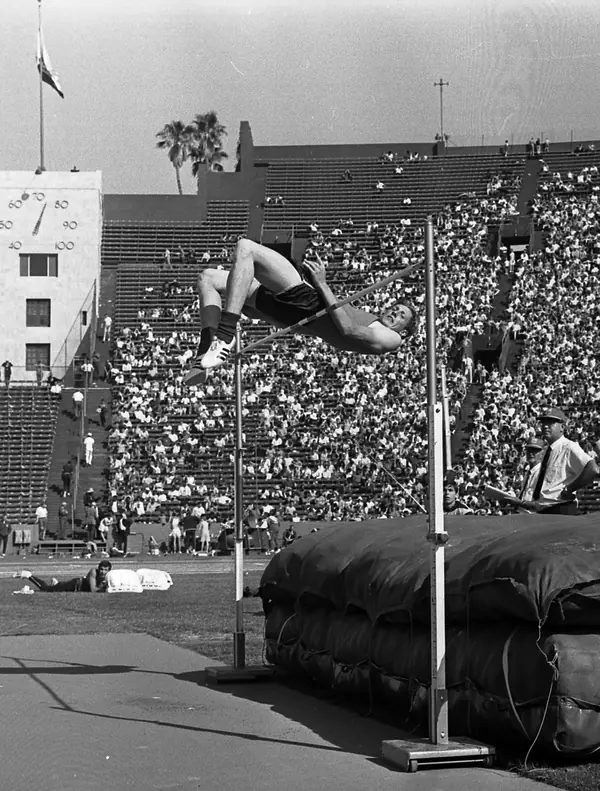
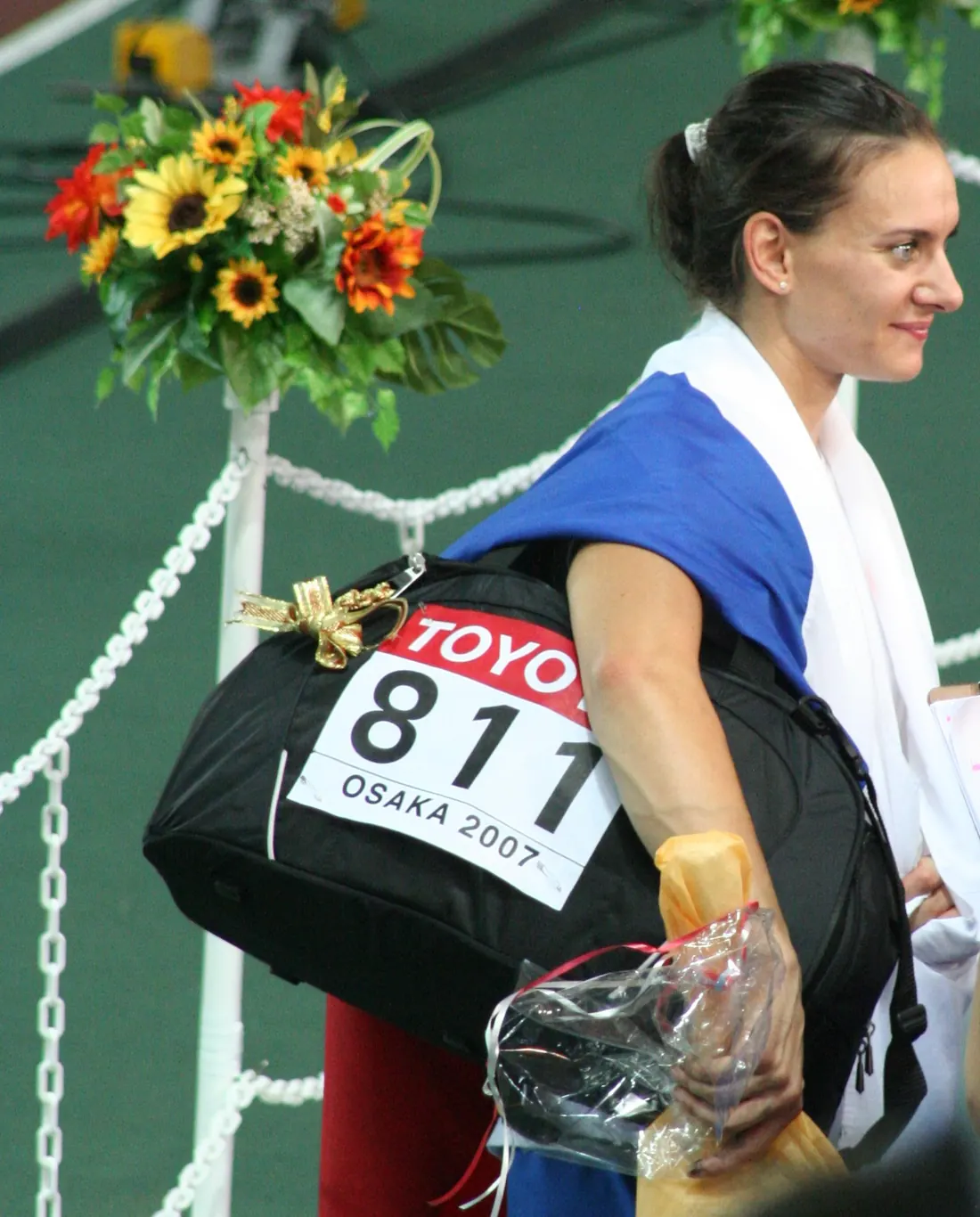
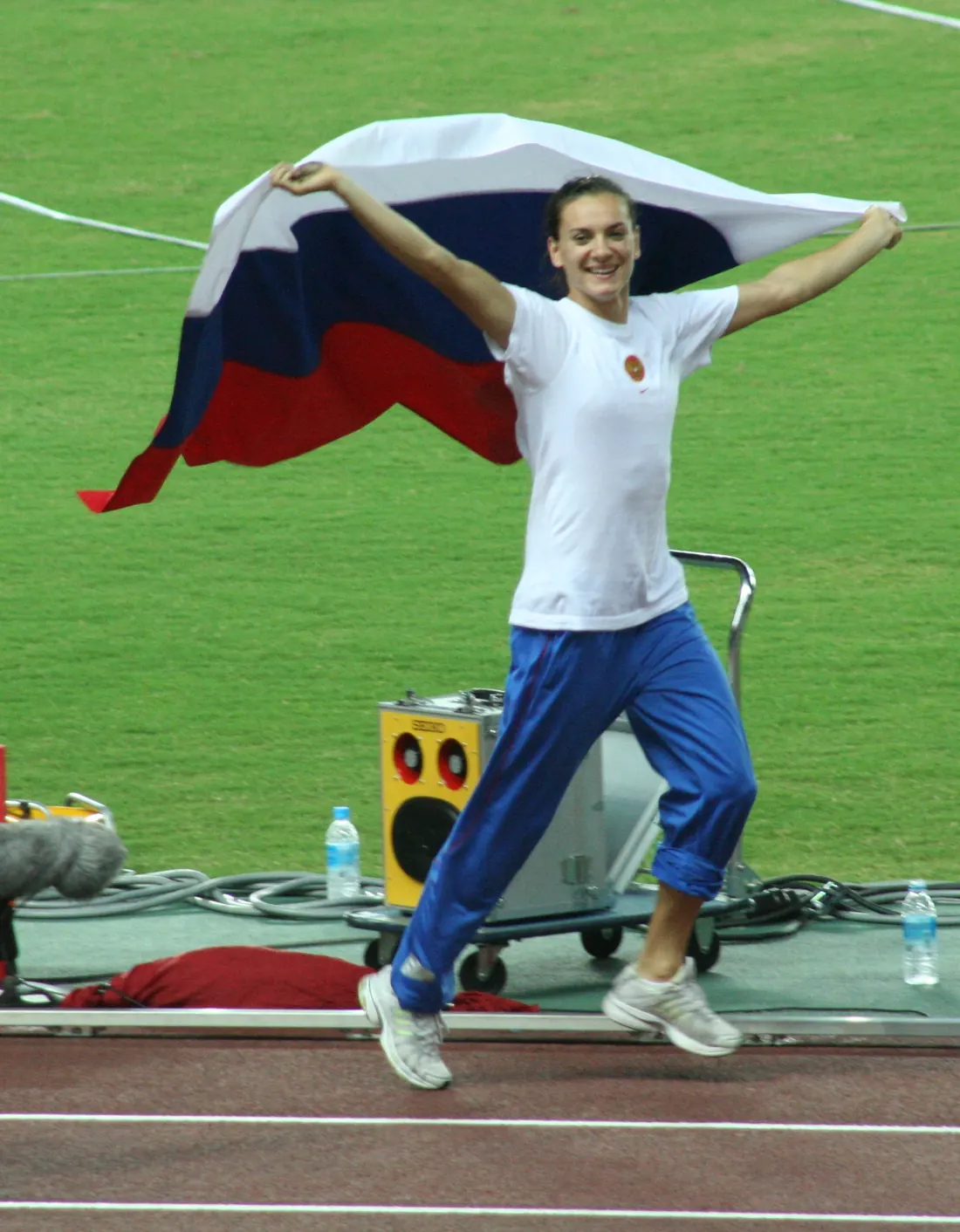
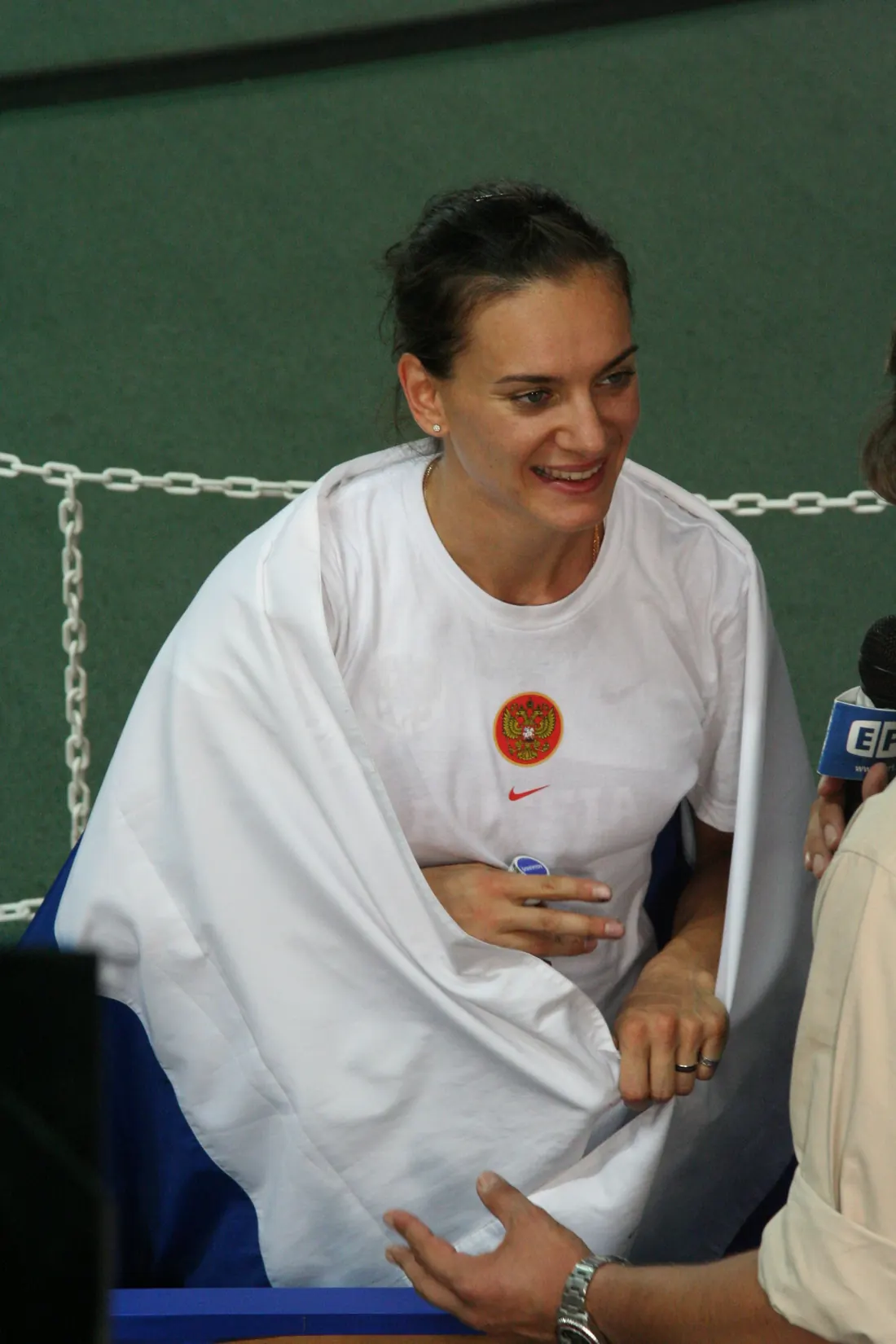
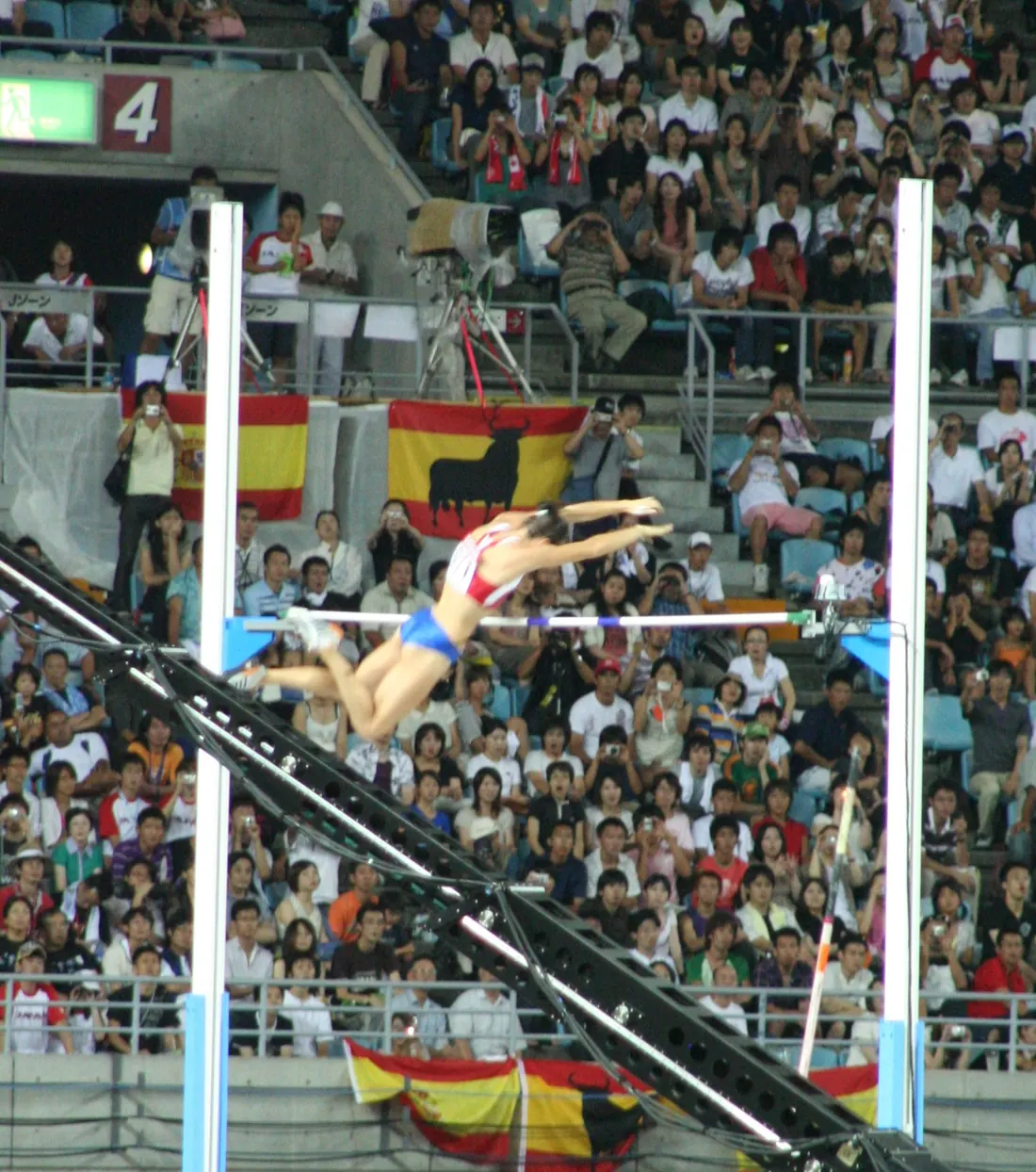
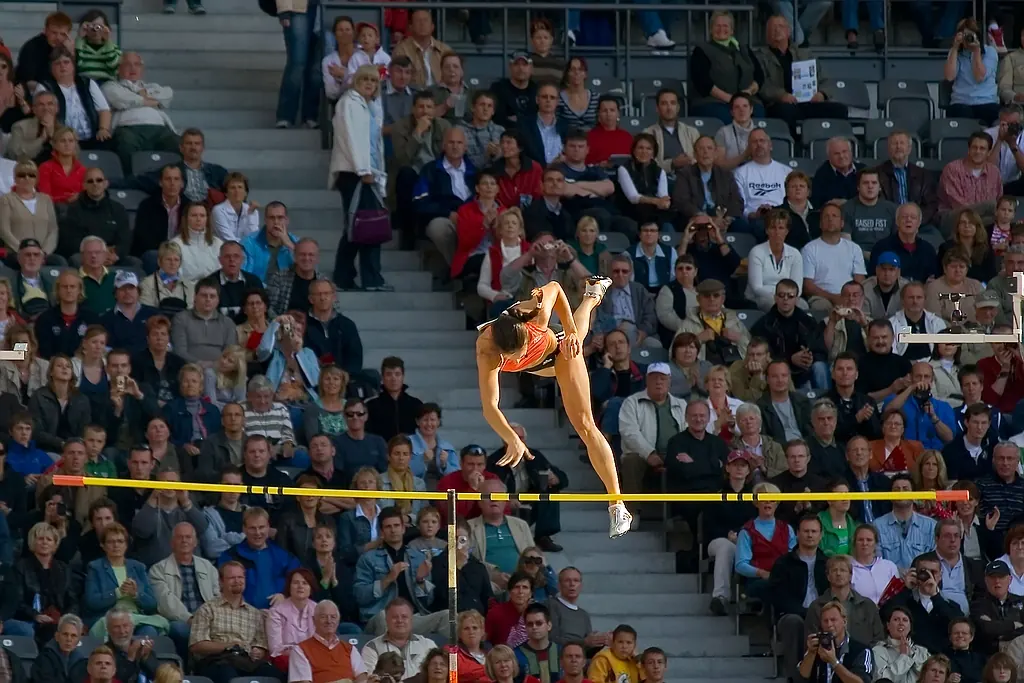
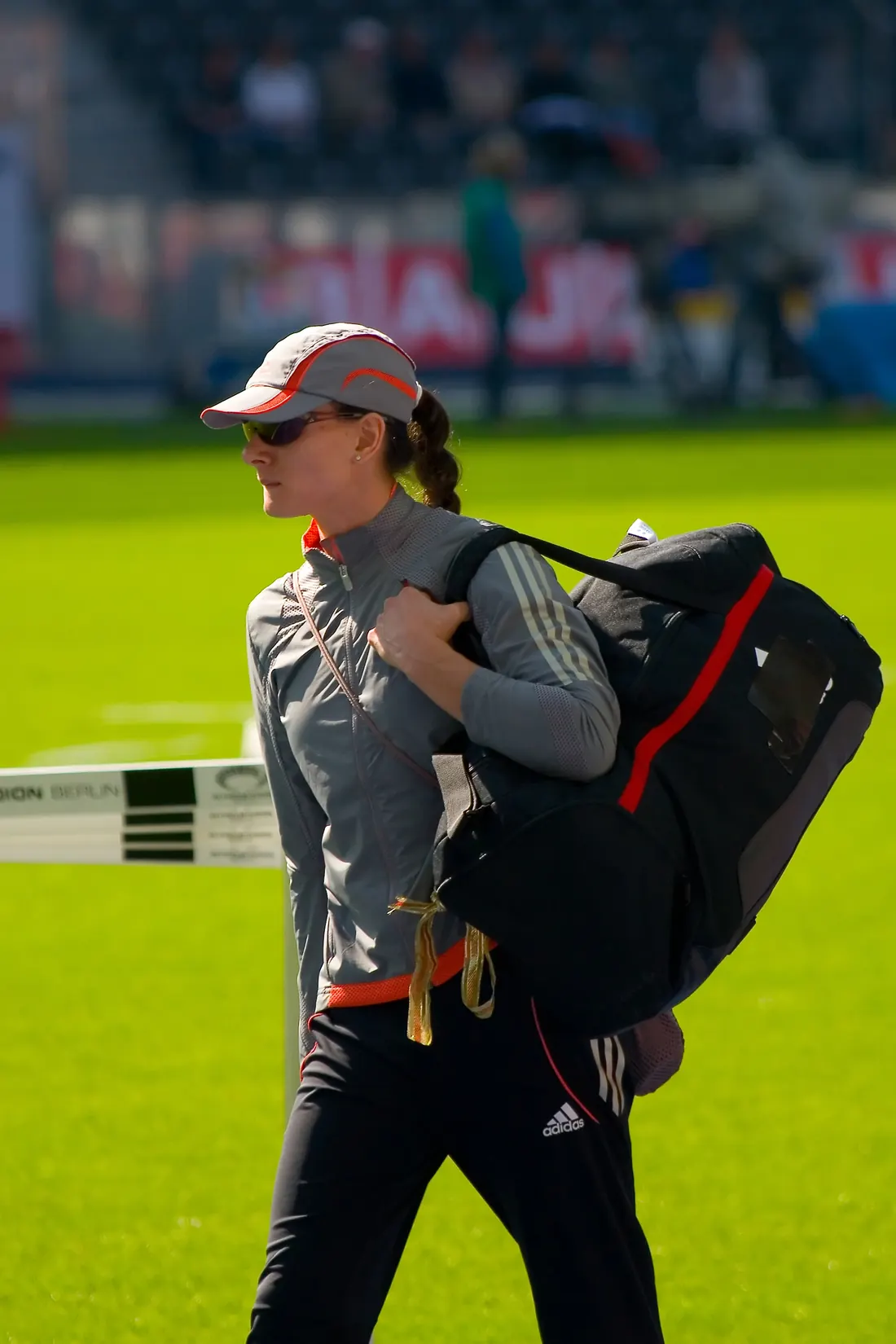
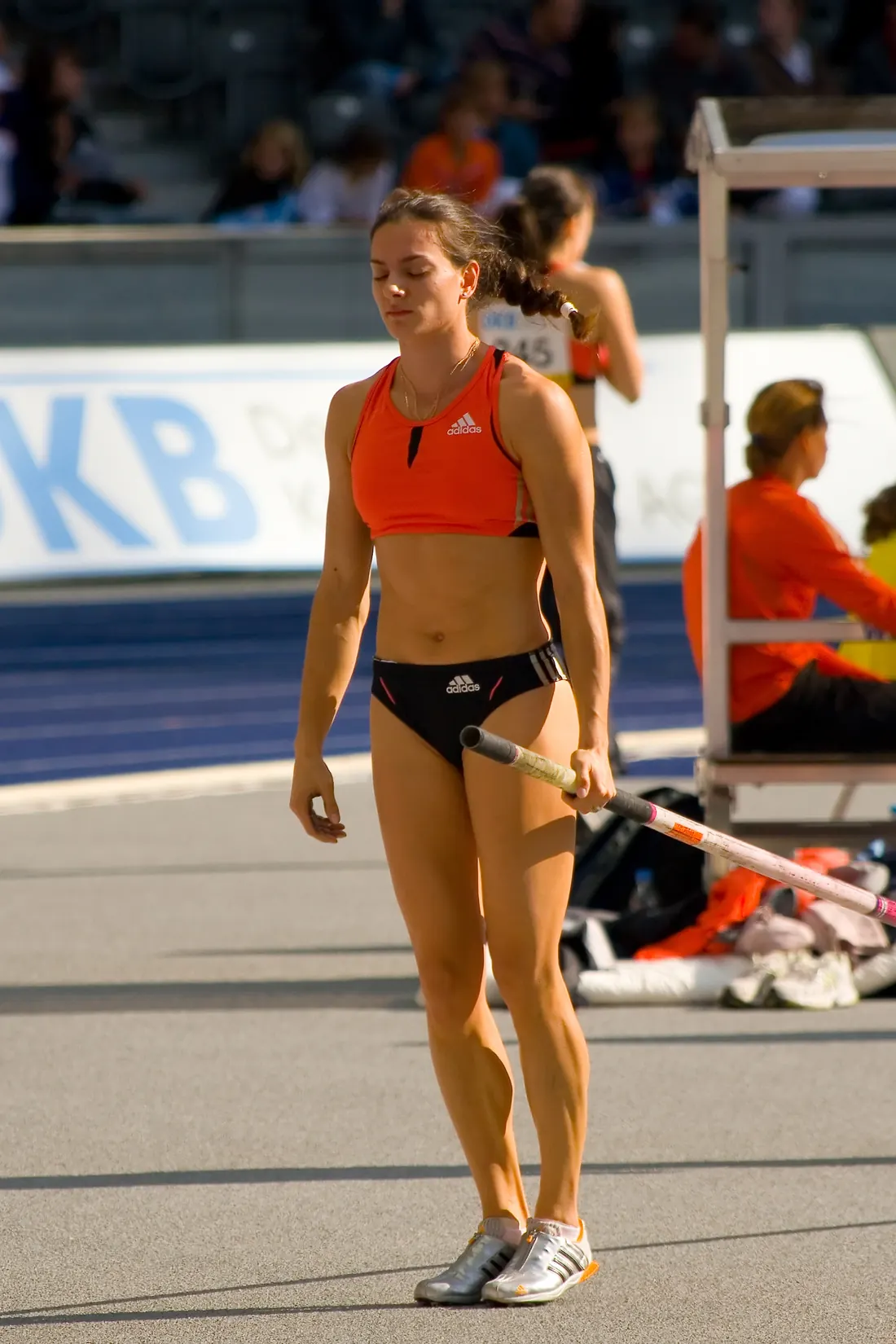
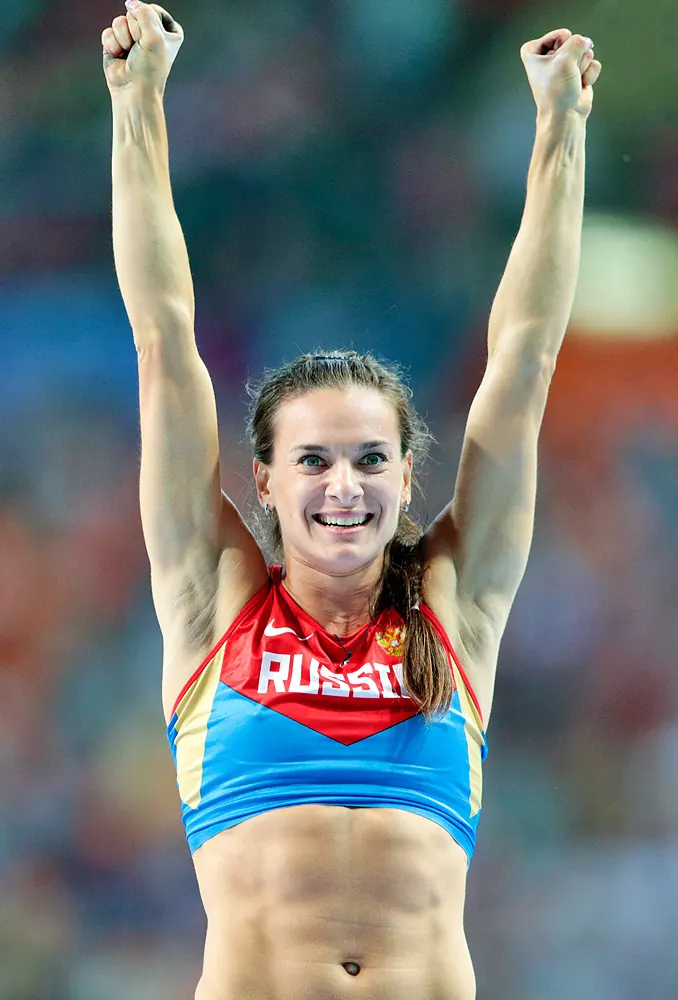
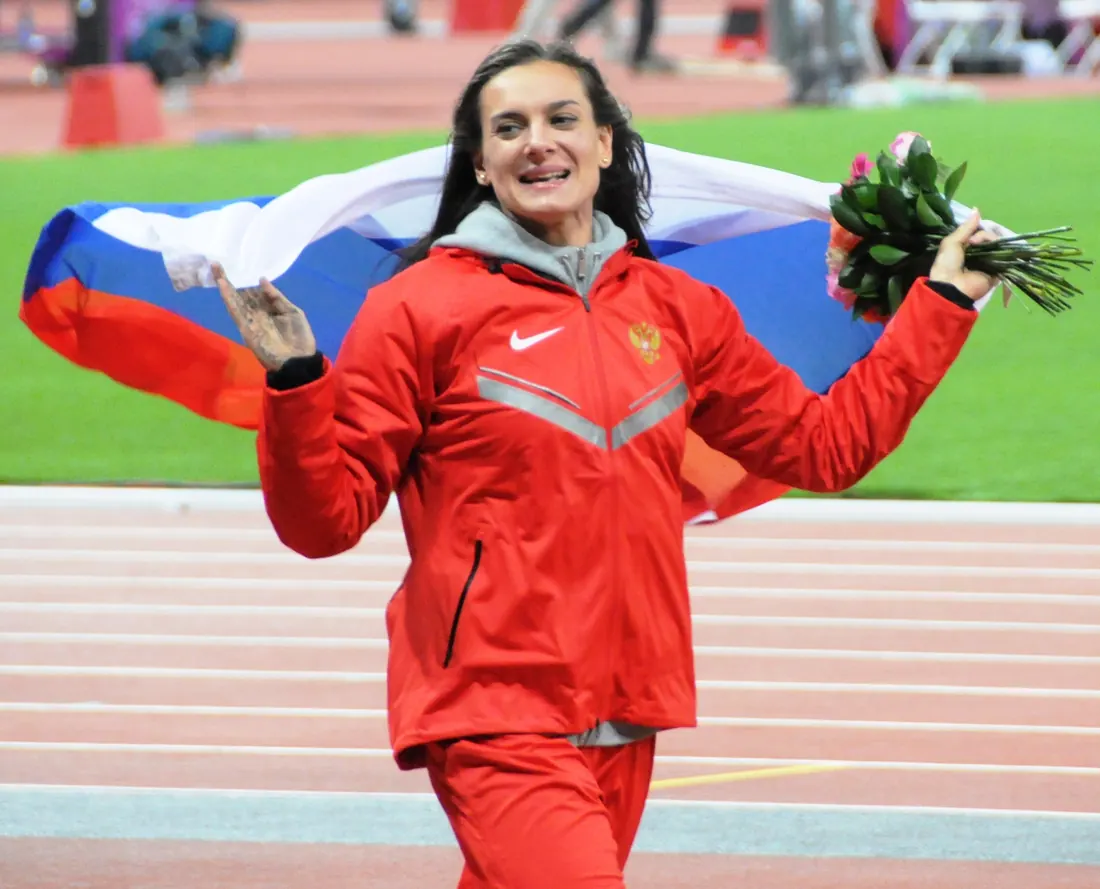
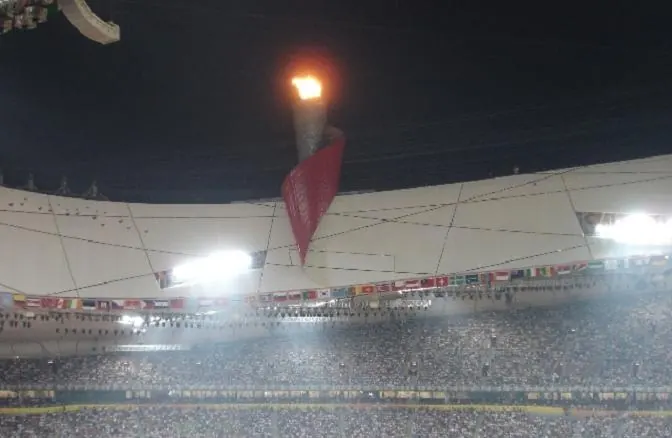
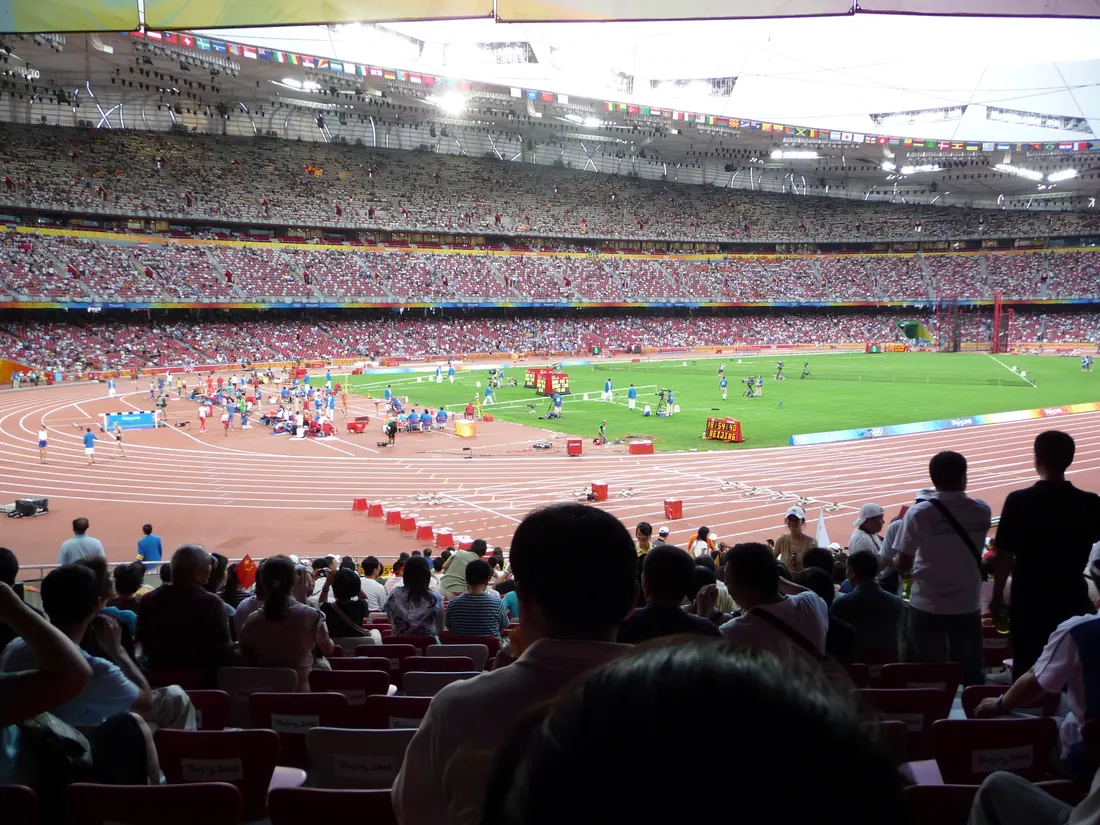
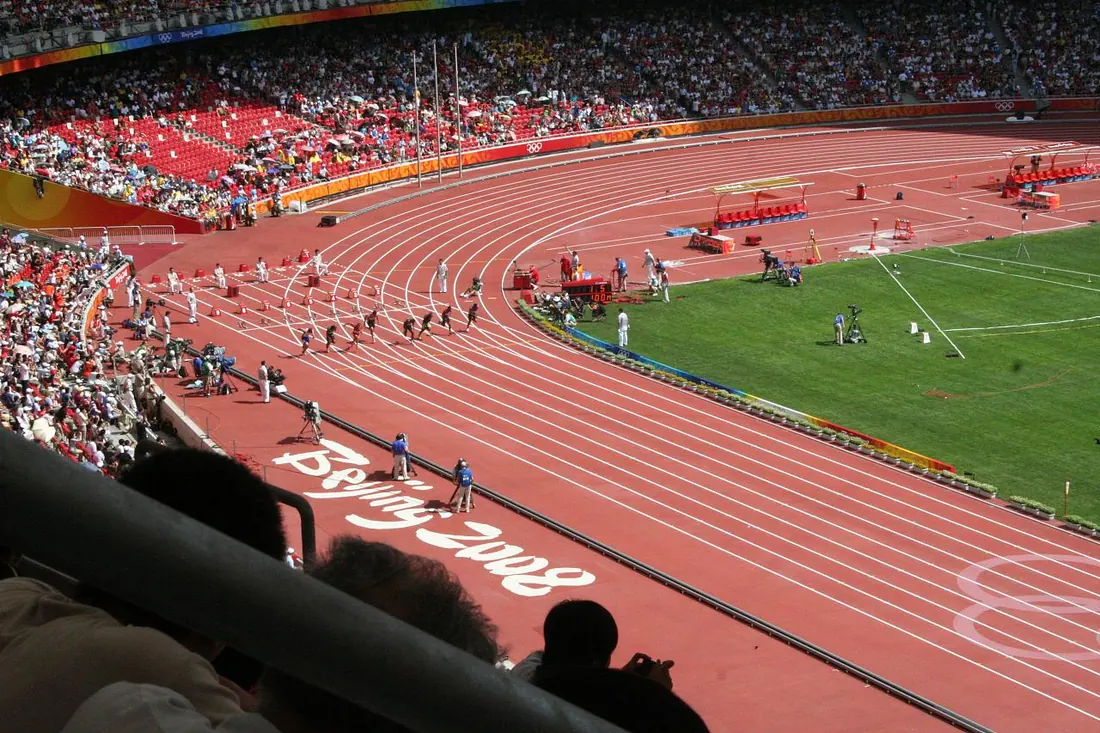
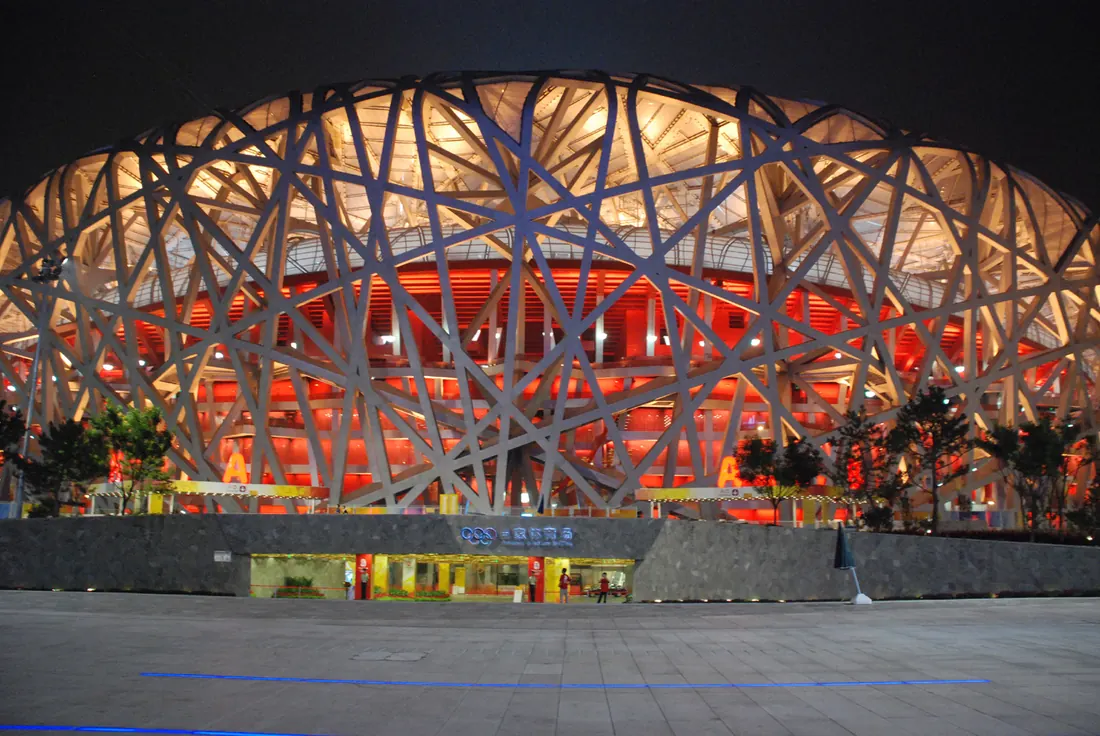
Pictures: no photo here shows the Beijing final. Isinbayeva herself is in Eckhard Pecher’s four photos from the World Championships in Osaka on August 28, 2007, the day she won the world title (at the interview stand with a towel around her neck, being interviewed, with the flag, and clearing 4.80 meters); André Zehetbauer’s three photos from ISTAF Berlin on September 16, 2007 (in a cap with her bag, with her pole, and clearing the bar); Leo Medvedev’s photo from the World Youth Games in Moscow in July 1998, when she was 16, cropped to head and shoulders; Tab59’s photo of her with the flag after her bronze at the London Olympics on August 6, 2012; and Augustas Didžgalvis’s photo from the World Championships in Moscow on August 13, 2013. Jenn Suhr, who was Jenn Stuczynski in 2008, is in Tab59’s photo with the US flag after her gold at the London Olympics on August 6, 2012. The Beijing National Stadium is seen inside during the Olympic athletics on August 15 and 16, 2008 (moodler, Shaon Diwakar), from outside at night on August 16, 2008 (Jmex60), and inside with the Olympic flame on the night of the final, August 18, 2008 (Alex Needham; the camera’s date imprint is cropped off).
Photo credits
The archive photos in this story
The photographs and illustrations in this story are in the public domain or shared under open licenses; each one is credited below with its license. Tap one to enlarge it, or follow the link to its Wikimedia Commons page for the full record. The narration, captions and graphics in the Short are our own; its music and sound effects are credited below.
Music and sound effects
Music: Grieg, Peer Gynt Suite No. 1, Op. 46: I. Morning Mood (Musopen Symphony Orchestra, public domain); Beethoven, Coriolan Overture, Op. 62 (Musopen Symphony Orchestra, CC0); Brahms, Symphony No. 1 in C minor, Op. 68: IV. Adagio - Piu andante - Allegro non troppo, ma con brio (Musopen Symphony Orchestra, CC0).
Sound effects: Freesound, CC0.