“Renowned rock climber Alex Honnold” climbs in “a style known as ‘free soloing,’” National Geographic explains: with “no ropes or any other equipment that aids or protects him as he climbs, leaving no margin of error,” where “positioning a foot slightly too low or high could mean the difference between life and death.” “For years he’d been thinking about what it would take to free solo El Capitan,” “the iconic nearly 3,000-foot granite wall” in Yosemite. “My goal was simply to climb El Cap without a rope,” Honnold wrote in the American Alpine Journal.
“I worked the Freerider extensively in preparation for the potential solo,” he wrote of the fall of 2016. “But the bigger problem was that I seriously sprained my ankle in a careless slip on the Freeblast slabs.” Still, “by the middle of November I’d done enough rehearsal on the Freerider that I felt vaguely close to being able to solo the route … I figured I should give it one good try before winter. I started in the dark since I needed to get to the crux before the sun hit it.”
It went wrong. “It felt cold and my shoe felt too tight—my injured foot was still swollen. I felt nervous and climbed poorly.” “I climbed up to the crux of the Freeblast slab (pitch five) before I finally succumbed to my uneasiness and grabbed a bolt. … From Heart Ledge, I rappelled to the ground with a borrowed sling and carabiner. I’d failed to free solo Freerider.” National Geographic: he “backed off after less than an hour of climbing because conditions did not feel right.”
He came back to Yosemite Valley for the spring season, and “Preparing for the rest of the route simply meant rehearsing the Boulder Problem and the upper corners, memorizing the difficult moves that I knew I couldn’t avoid.” “On June 3 I woke up early … I started climbing at first light,” he wrote; National Geographic says he began “in the pink light of dawn at 5:32 a.m.” The crux was “the 5.13a Boulder Problem on pitch 23.” “At the Boulder Problem I dropped even deeper into autopilot mode—I climbed it exactly as I always had in rehearsal but without the rope this time. It felt perfect.”
“He ascended the peak in 3 hours, 56 minutes, taking the final moderate pitch at a near run. At 9:28 a.m. PDT … he pulled his body over the rocky lip of summit,” National Geographic reported. At the foot of the wall, asked about the best day of his life, he said: “Honestly, I think this is the most satisfied I’ve ever been. It was exactly what I hoped for.” The American Alpine Journal calls it “the first free solo of one of the main faces of El Capitan,” and his fellow climber Tommy Caldwell said, “This is the ‘moon landing’ of free soloing.” It became the subject of Free Solo, “the Oscar-winning film by E. Chai Vasarhelyi and Jimmy Chin.” “Years of dreaming and several seasons of effort had all come together,” Honnold wrote. “But most importantly, I’d finally climbed El Cap without a rope.”
Fact check
The facts and where they come from
- A single slip would kill him, and the last time he tried, he backed down. National Geographic: free soloing means “no ropes or any other equipment that aids or protects him as he climbs, leaving no margin of error”; “positioning a foot slightly too low or high could mean the difference between life and death.” National Geographic: “This past November, Honnold made his first attempt at the free solo, but backed off after less than an hour of climbing because conditions did not feel right.” 2
- His name is Alex Honnold. National Geographic: “Renowned rock climber Alex Honnold”; “a style known as ‘free soloing.’” 2
- His dream was El Capitan, 3,000 feet of granite, with no rope. Honnold, in the American Alpine Journal: “I free soloed Freerider on El Capitan, the culmination of an eight-year dream”; “the 3,000-foot route”; “My goal was simply to climb El Cap without a rope.” National Geographic: “the iconic nearly 3,000-foot granite wall known as El Capitan”; “For years he’d been thinking about what it would take to free solo El Capitan.” U.S. Geological Survey: “rises about 3,000 ft (900 m) from the valley floor.” 124
- In the fall of 2016, he badly sprained his ankle. Honnold, of the fall of 2016: “I worked the Freerider extensively in preparation for the potential solo … But the bigger problem was that I seriously sprained my ankle in a careless slip on the Freeblast slabs.” 1
- In November, he tried anyway, starting in the dark. Honnold: “by the middle of November I’d done enough rehearsal on the Freerider that I felt vaguely close to being able to solo the route … I figured I should give it one good try before winter. I started in the dark since I needed to get to the crux before the sun hit it.” 1
- “I felt nervous and climbed poorly,” he wrote. Honnold: “It felt cold and my shoe felt too tight—my injured foot was still swollen. I felt nervous and climbed poorly.” 1
- Less than an hour in, he grabbed a bolt and turned back. National Geographic: “backed off after less than an hour of climbing.” Honnold: “I climbed up to the crux of the Freeblast slab (pitch five) before I finally succumbed to my uneasiness and grabbed a bolt. … From Heart Ledge, I rappelled to the ground with a borrowed sling and carabiner. I’d failed to free solo Freerider.” 21
- That spring, he memorized every hard move. Honnold: he came “back to the Valley for the spring season”; “Preparing for the rest of the route simply meant rehearsing the Boulder Problem and the upper corners, memorizing the difficult moves that I knew I couldn’t avoid.” National Geographic: he “spends hours perfecting, rehearsing, and memorizing exact sequences of hand and foot placements for every key pitch.” 12
- On June 3, 2017, he started up at first light. Honnold: “On June 3 I woke up early … I started climbing at first light.” National Geographic: “He completed the feat on Saturday, June 3, 2017”; he began “in the pink light of dawn at 5:32 a.m.” 12
- Higher up came the crux, a section called the Boulder Problem. Honnold: “the 5.13a Boulder Problem on pitch 23” heads his list of scary sections, “from most to least serious”; “the crux of Freerider, pitch 23.” Honnold, to National Geographic: “And the Boulder Problem was the crux.” 13
- He climbed it exactly as rehearsed. “It felt perfect,” he wrote. Honnold: “At the Boulder Problem I dropped even deeper into autopilot mode—I climbed it exactly as I always had in rehearsal but without the rope this time. It felt perfect.” 1
- After 3 hours and 56 minutes, he pulled over the top. National Geographic: “He ascended the peak in 3 hours, 56 minutes, taking the final moderate pitch at a near run. At 9:28 a.m. PDT … he pulled his body over the rocky lip of summit.” Honnold: “3 hours and 56 minutes of climbing.” 21
- “Honestly, I think this is the most satisfied I’ve ever been,” he said. Honnold, to National Geographic, answering “You just had the best day of your life”: “Honestly, I think this is the most satisfied I’ve ever been. It was exactly what I hoped for.” 3
- The wall that once turned him back was finally his. Honnold: “Years of dreaming and several seasons of effort had all come together … But most importantly, I’d finally climbed El Cap without a rope.” 1
Sources
- Freerider: Free Solo on El Capitan (Alex Honnold, American Alpine Journal 2018) American Alpine Club
- Exclusive: Alex Honnold Completes the Most Dangerous Free-Solo Ascent Ever (Mark Synnott, June 4, 2017; updated October 3, 2018) National Geographic
- Alex Honnold’s first interview after free-solo climbing El Capitan (Mark Synnott, June 4, 2017) National Geographic
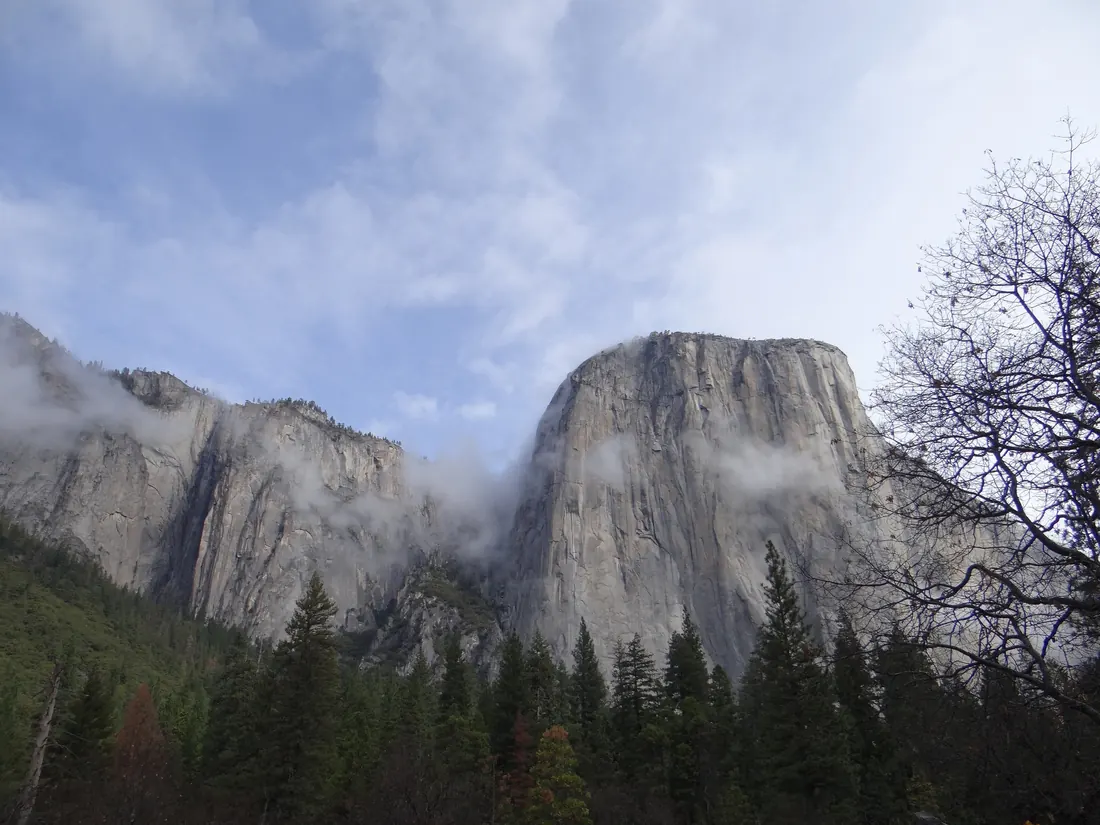
- Fog Clears Around El Capitan, Yosemite National Park, California U.S. Geological Survey, on Flickr
Notes
Height: National Geographic says “nearly 3,000-foot,” the American Alpine Journal “the 3,000-foot route,” and the U.S. Geological Survey “about 3,000 ft.” The Short says “three thousand feet of granite,” the round figure in all three.
“The first”: National Geographic calls him the first person to free solo El Capitan, but Honnold had already free soloed El Capitan’s West Face and East Buttress, which he says are not “real” El Cap routes (American Alpine Journal). The Short doesn’t say “first”; this page uses the journal’s own words, “the first free solo of one of the main faces of El Capitan.”
The November 2016 attempt: National Geographic says he backed off “because conditions did not feel right”; his own account adds the cold, the tight shoe on his swollen foot, the bolt at pitch five and the rappel from Heart Ledge. Both agree he did not go on; “turned back” and “backed down” cover both.
Not used: the number of pitches (National Geographic “30 sections—or pitches,” the journal “33 guidebook pitches, with variations”) and the route’s grade; a “karate kick” move at the crux, which neither his own account nor National Geographic describes; the film’s private scenes (his partner, his family); his January 2026 climb of Taipei 101, a different story with no free photos.
Alex Honnold is alive. Only his own published words (the American Alpine Journal and his National Geographic interview) and National Geographic’s reporting are used, and nothing about his private life. Free soloing is extremely dangerous.
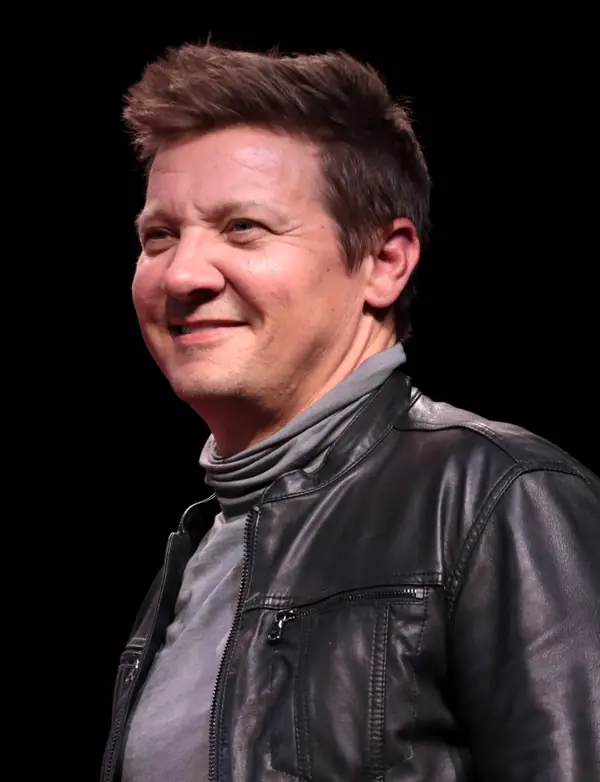
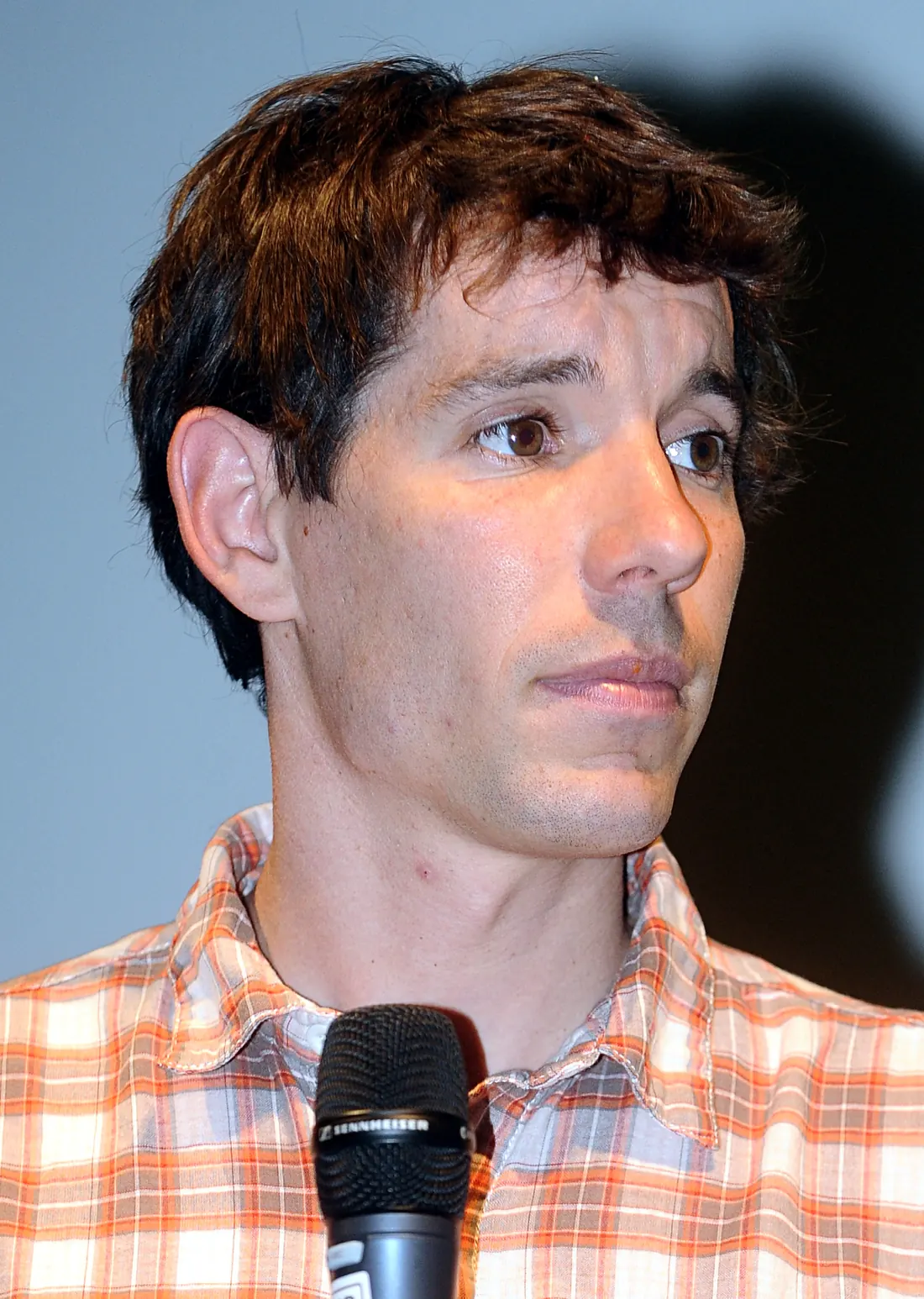
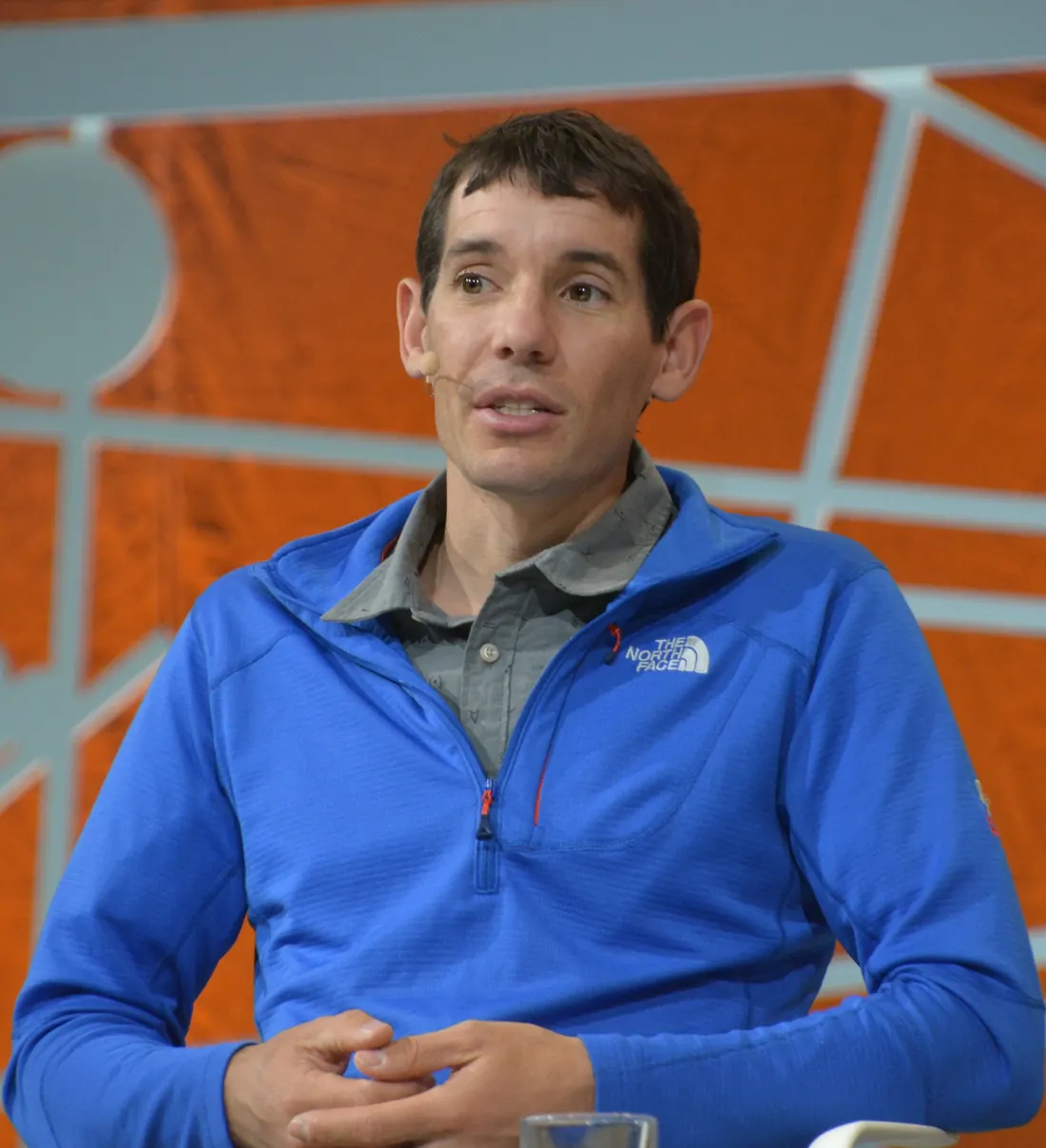
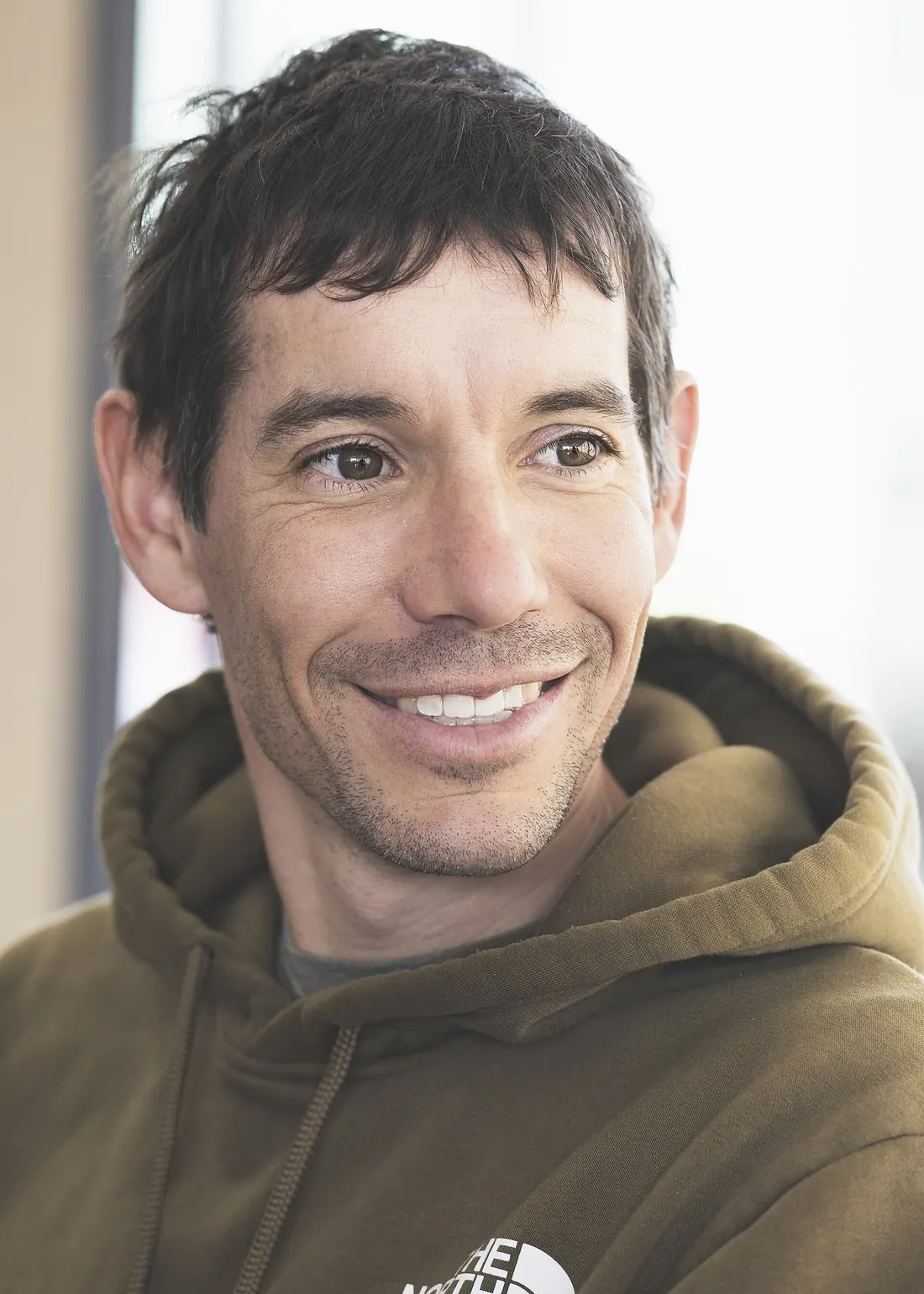
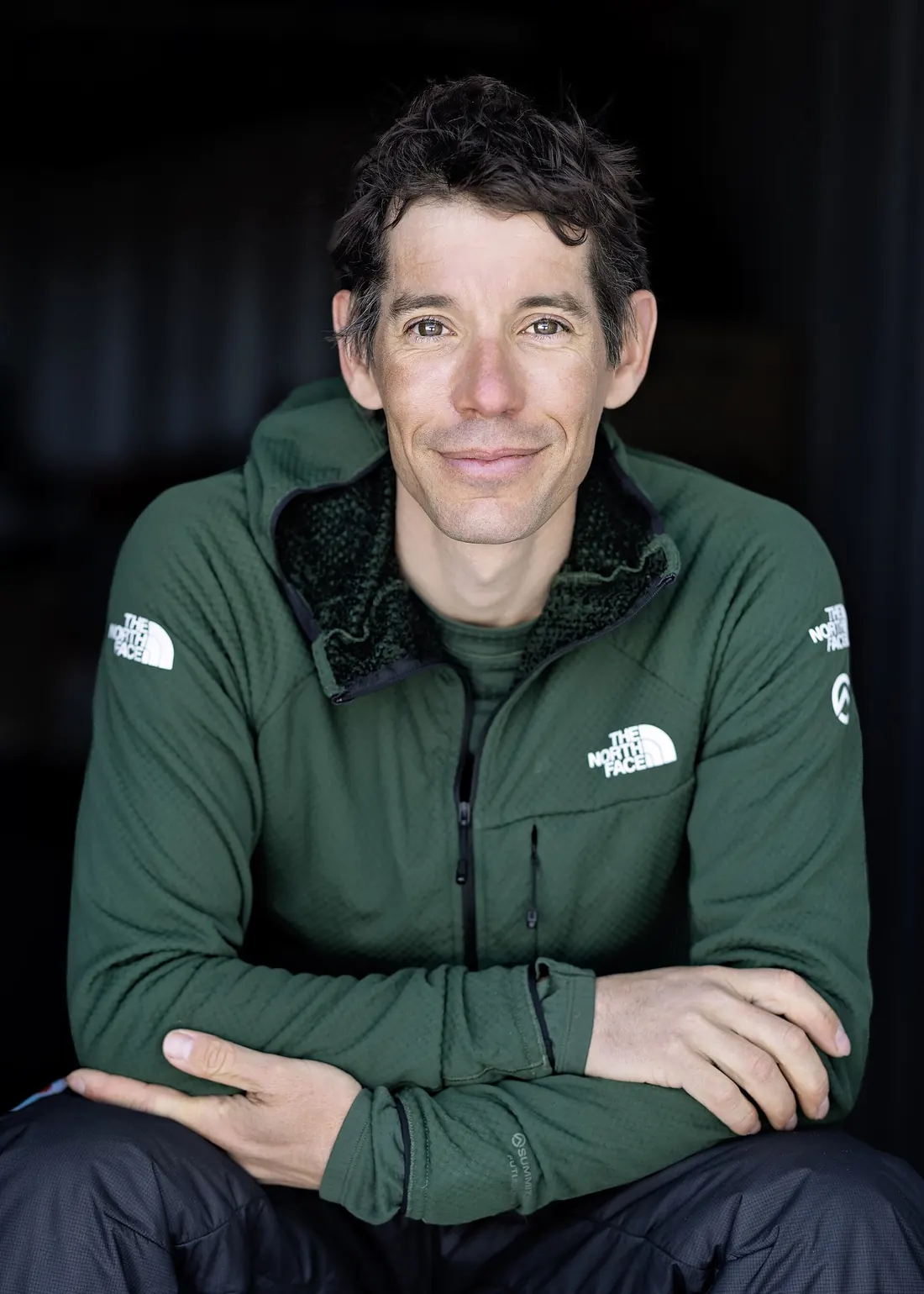
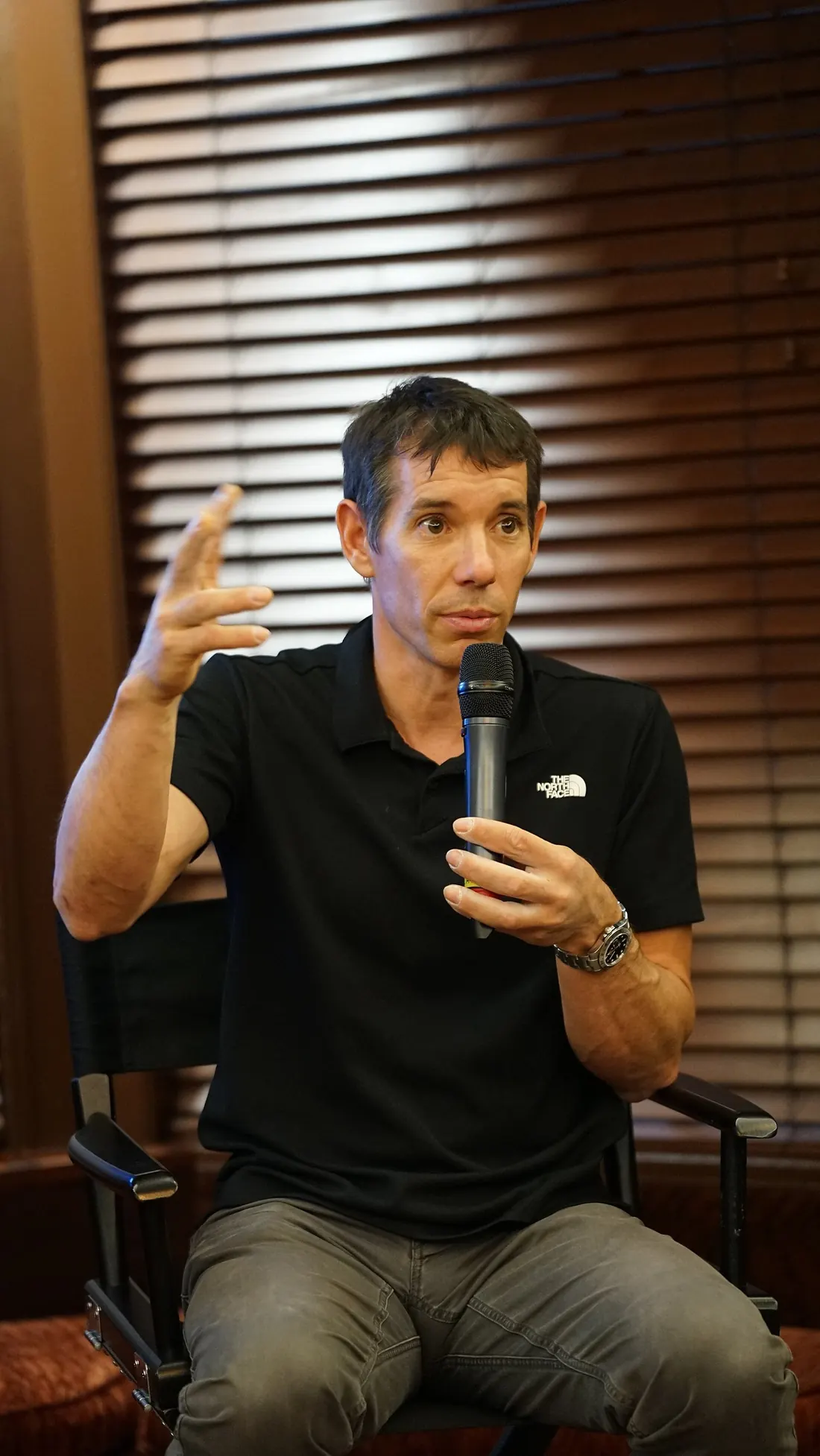
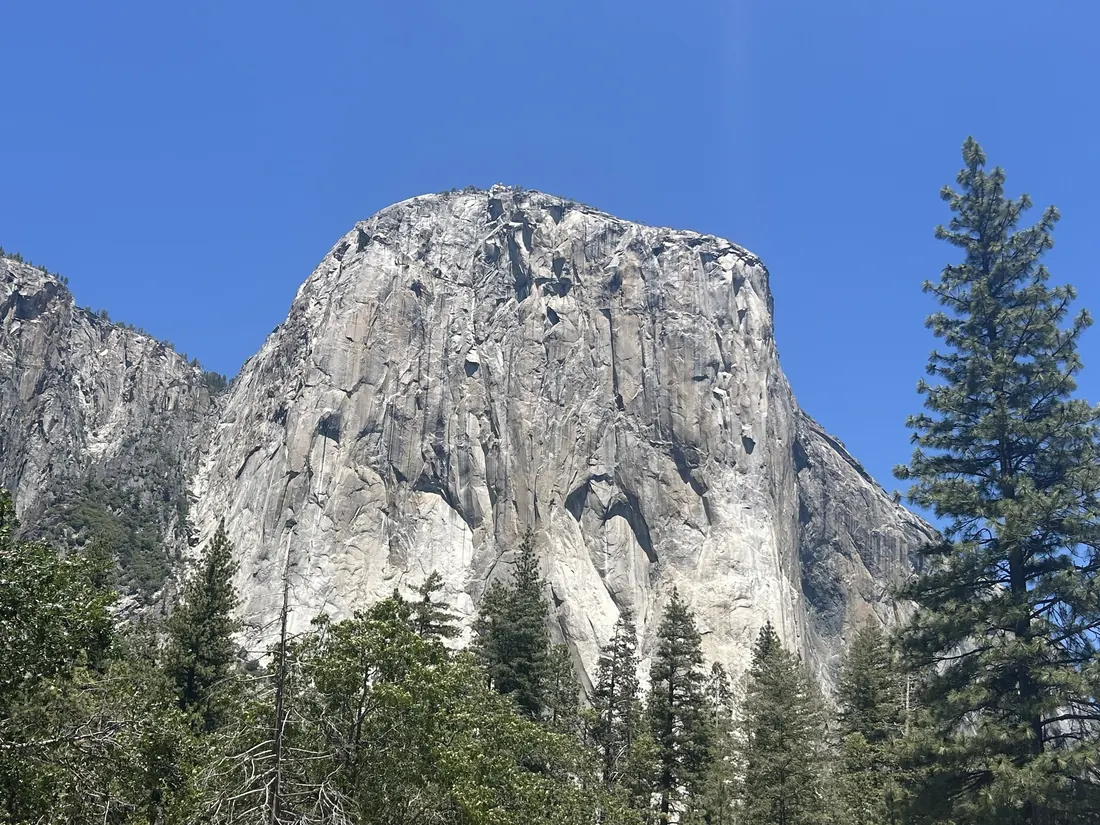
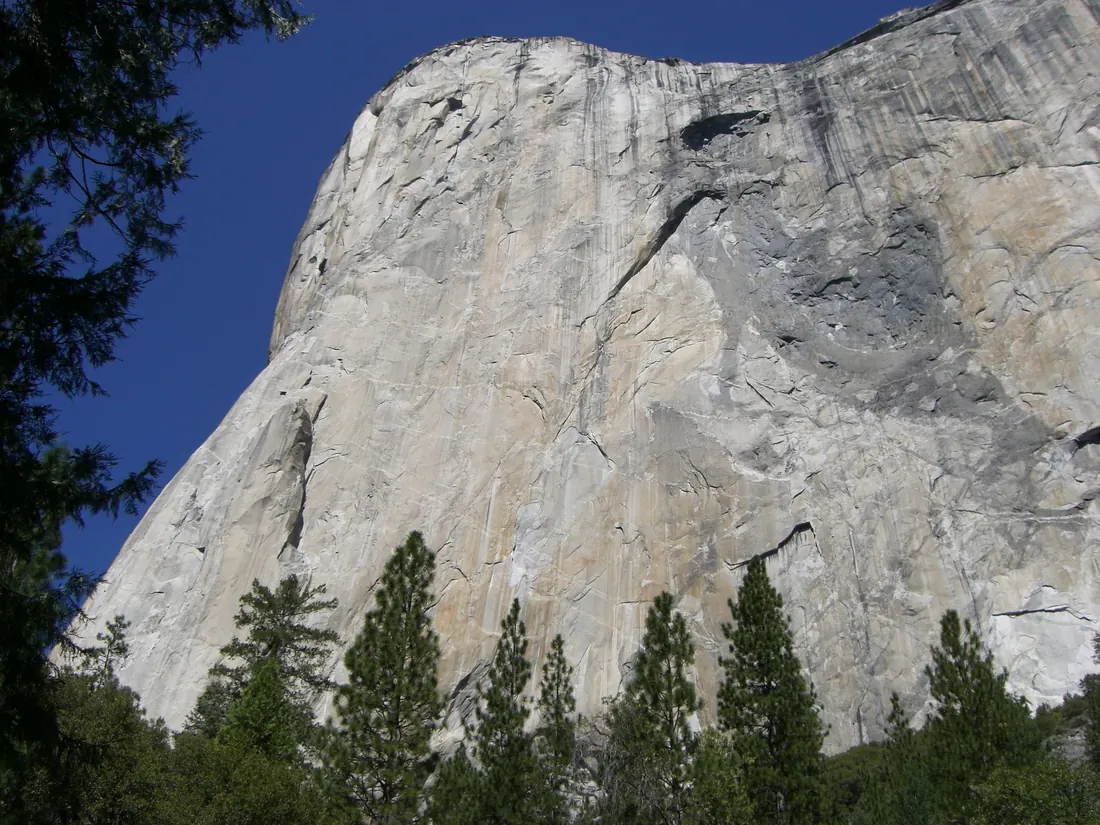
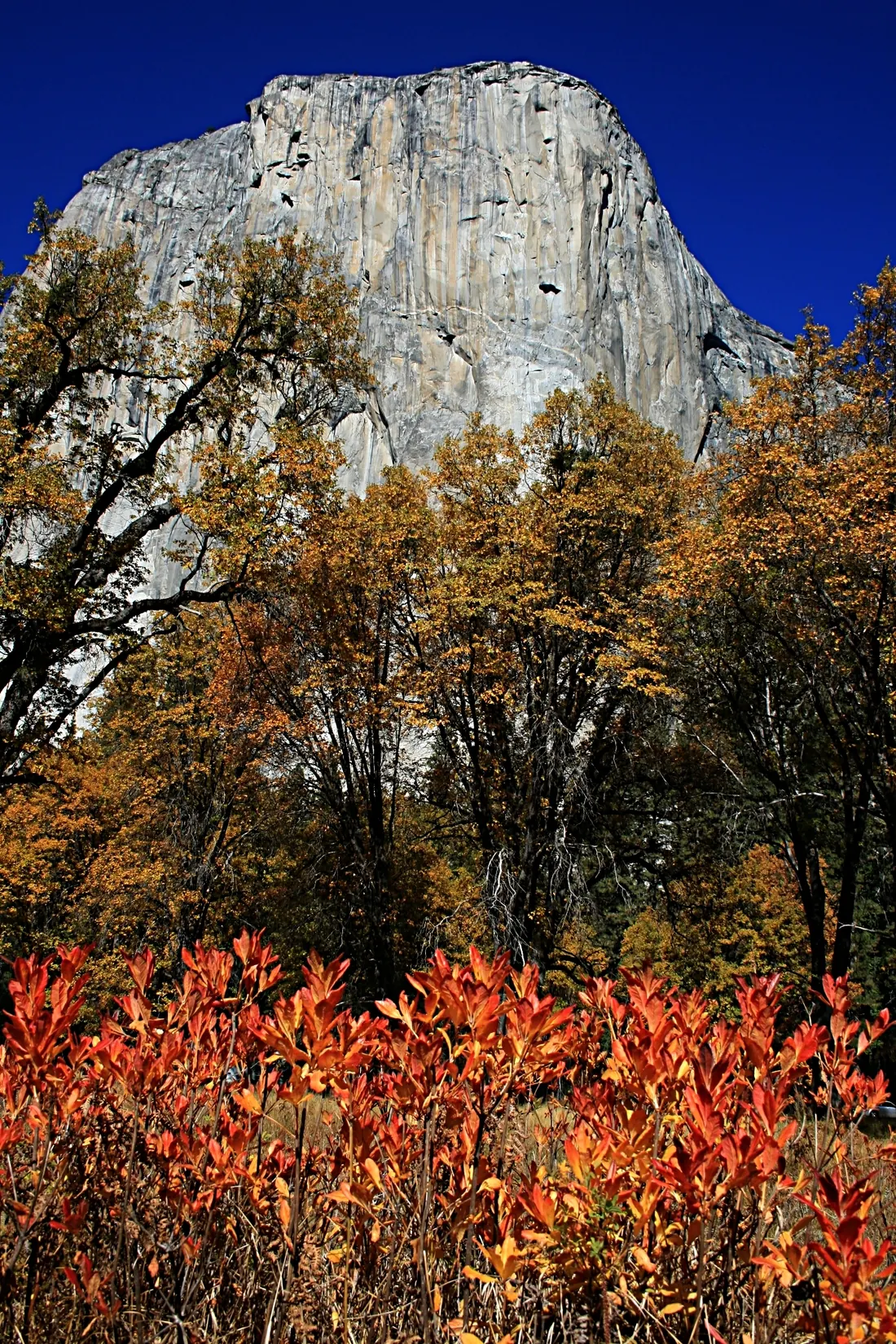
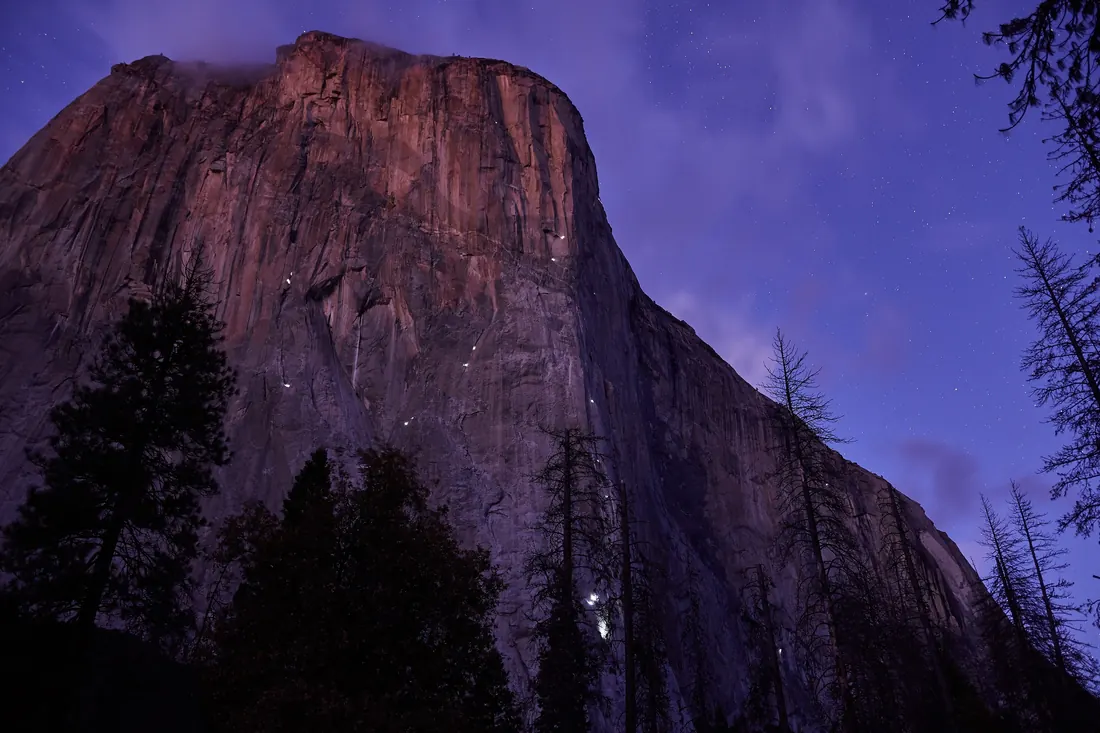
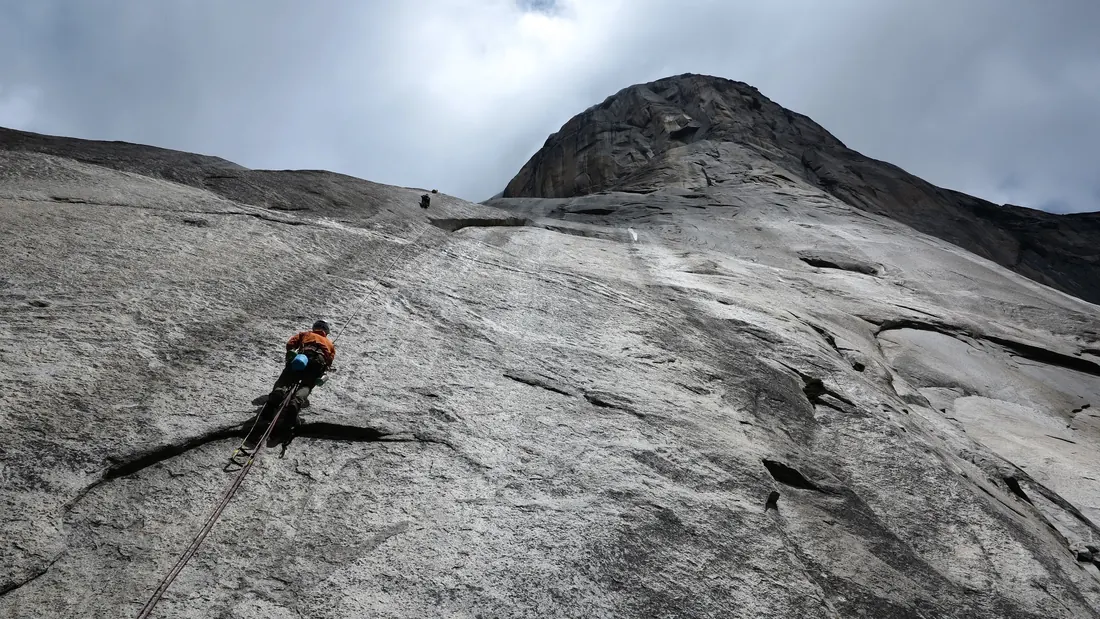
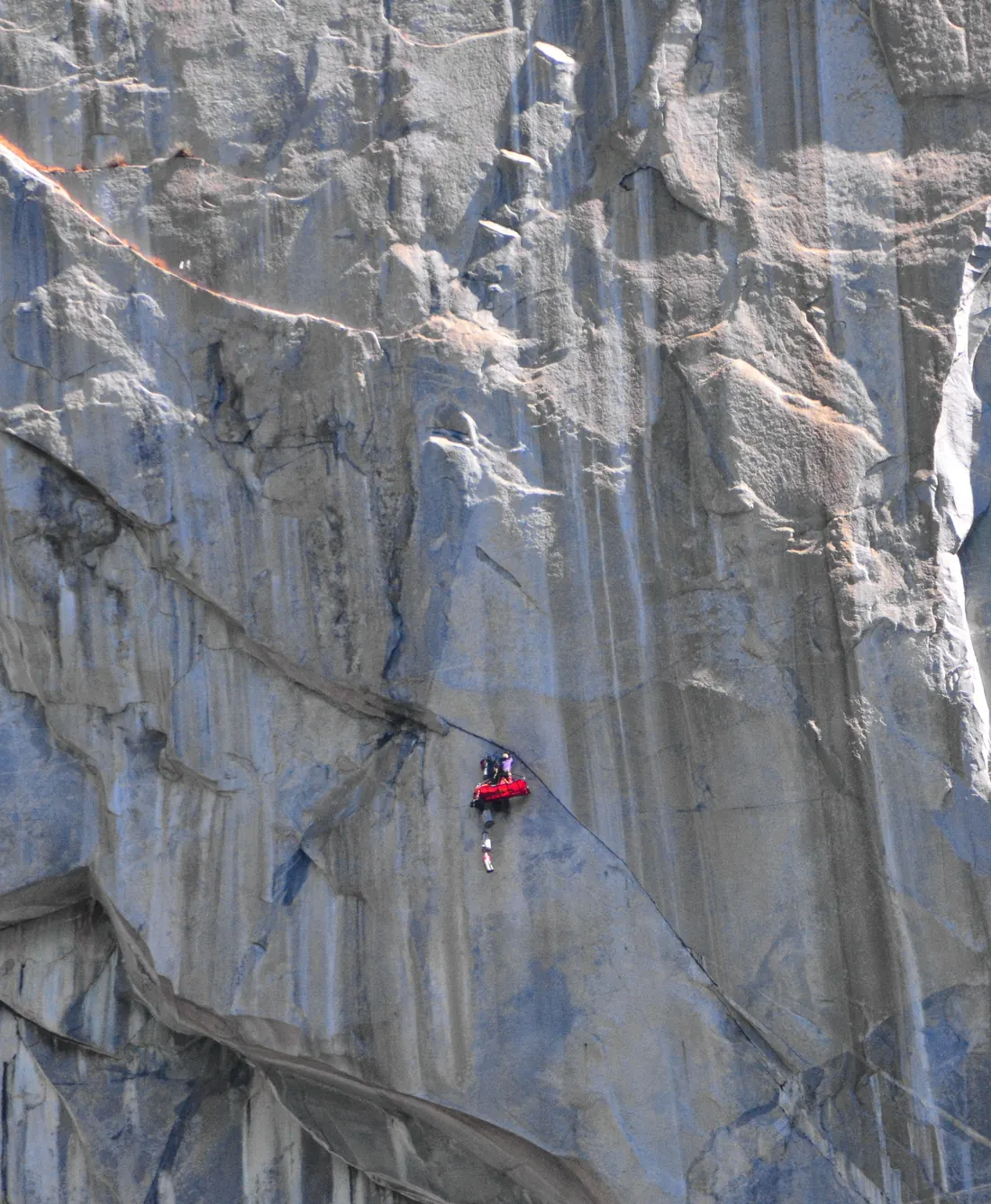
Pictures: no free photo shows the free solo or the November 2016 attempt. Alex Honnold himself is at the Trento Film Festival in Italy on May 1, 2014 (Niccolò Caranti), at Nobel Week Dialogue in Gothenburg, Sweden, on December 9, 2019 (Bengt Oberger), in Christopher Michel’s portraits of December 27, 2022, and in Antarctica on January 10, 2023, and at New York Climate Week on September 24, 2026 (Xuthoria). El Capitan is seen as fog clears on April 17, 2014 (a U.S. Geological Survey photo by Alex Demas), its main face from the roadside on June 17, 2025 (EF5), the “Wall of Early Morning Light” in September 2009 (Meros Felsenmaus), in autumn on October 23, 2007 (Brocken Inaglory), and at night in 2017 with the lights of climbers spending the night on the wall (C-M); none is from the day of the climb. The climbers in two photos are other people, not Honnold: a roped climber on the lower slabs on May 6, 2016 (Dave Riggs) and big-wall climbers high on the face on June 11, 2015 (Mike McBey).
Photo credits
The archive photos in this story
The photographs and illustrations in this story are in the public domain or shared under open licenses; each one is credited below with its license. Tap one to enlarge it, or follow the link to its Wikimedia Commons page for the full record. The narration, captions and graphics in the Short are our own; its music and sound effects are credited below.
Music and sound effects
Music: Satie, Gymnopedie No. 1 (Lent et douloureux) (Robin Alciatore, piano, public domain); Mussorgsky, Pictures at an Exhibition: IV. Bydlo (piano) (Musopen, public domain); Beethoven, Coriolan Overture, Op. 62 (Musopen Symphony Orchestra, CC0); Brahms, Symphony No. 1 in C minor, Op. 68: IV. Adagio - Piu andante - Allegro non troppo, ma con brio (Musopen Symphony Orchestra, CC0).
Sound effects: Freesound, CC0.