The Unlikely Ones Watch on YouTube
All stories Paris · 2024

Noah Lyles

Last After 40 Meters, Then Olympic Gold

Noah Lyles spent many nights in the hospital with asthma as a child, has spoken of dyslexia and ADHD, and has said he was depressed before the Tokyo Olympics. In the Olympic 100 m final at the Stade de France in Paris on August 4, 2024, he ran in lane seven, was tied for the slowest reaction to the gun, was last through 40 meters and only seventh at halfway, then chased the field down, leaned, and told Jamaica’s Kishane Thompson, “I think you got that one big dog.” Both men were clocked at 9.79, but the photo finish gave Lyles the gold by five thousandths of a second, and four days later, after testing positive for Covid, he still took bronze in the 200 m.

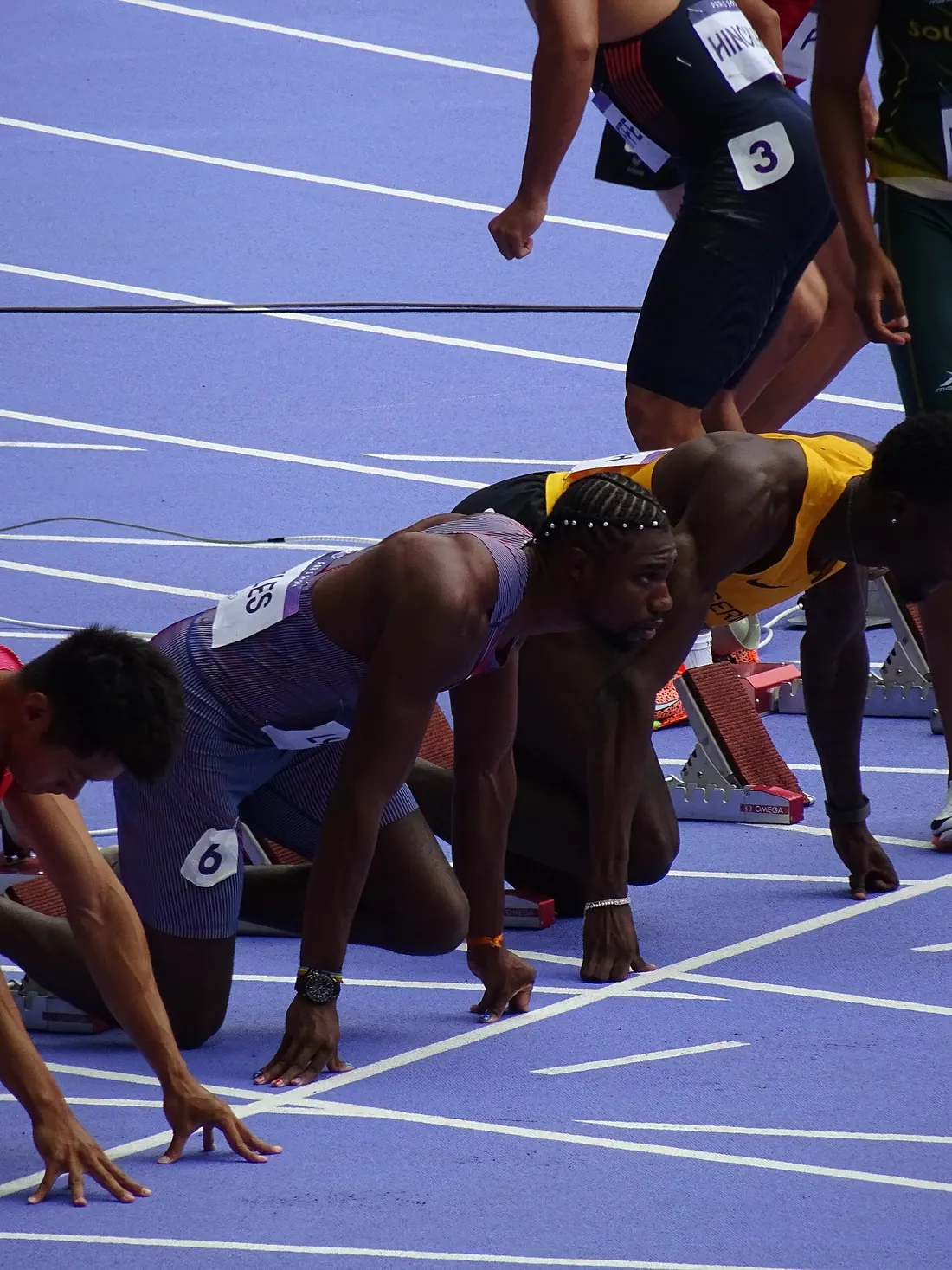
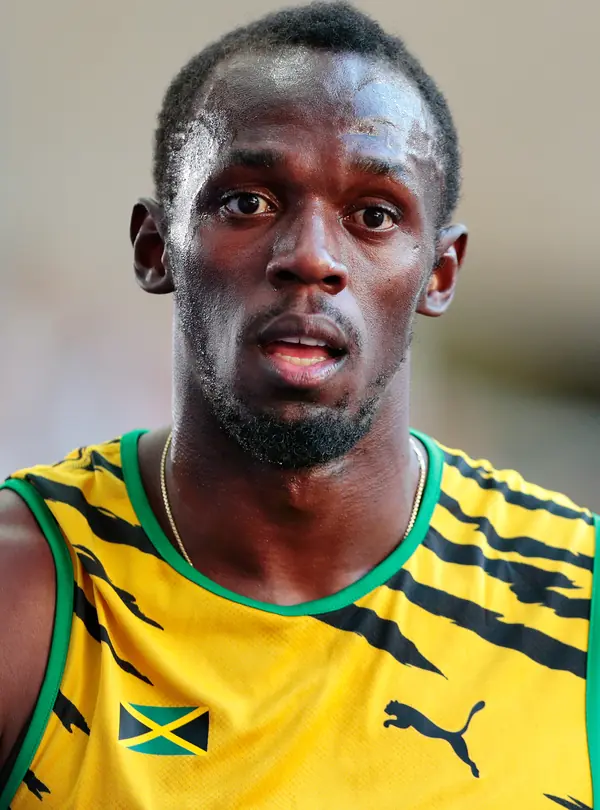
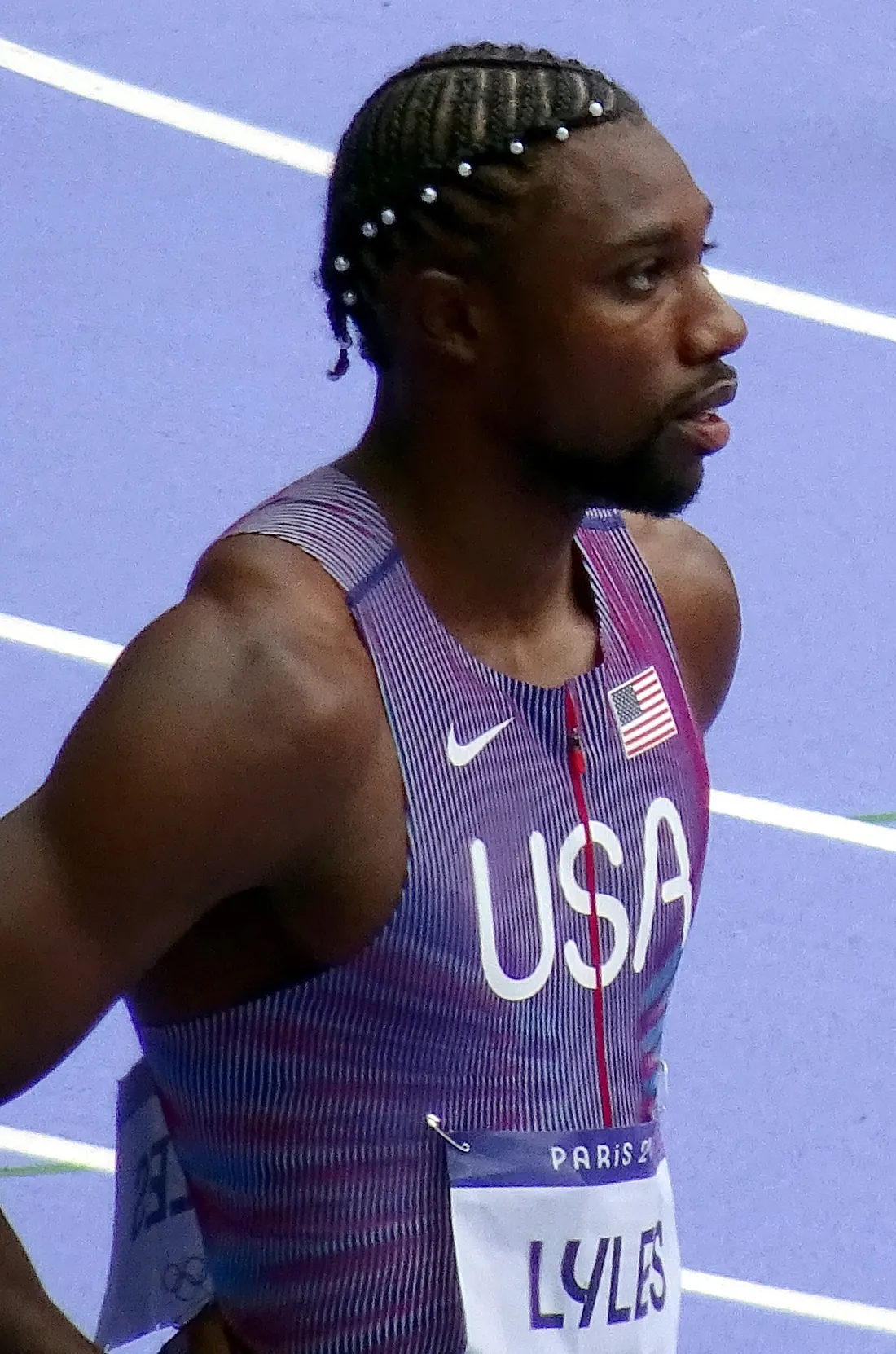
Noah Lyles in the men’s 100 m first round, Stade de France, Paris, August 3, 2024 (the day before the final)

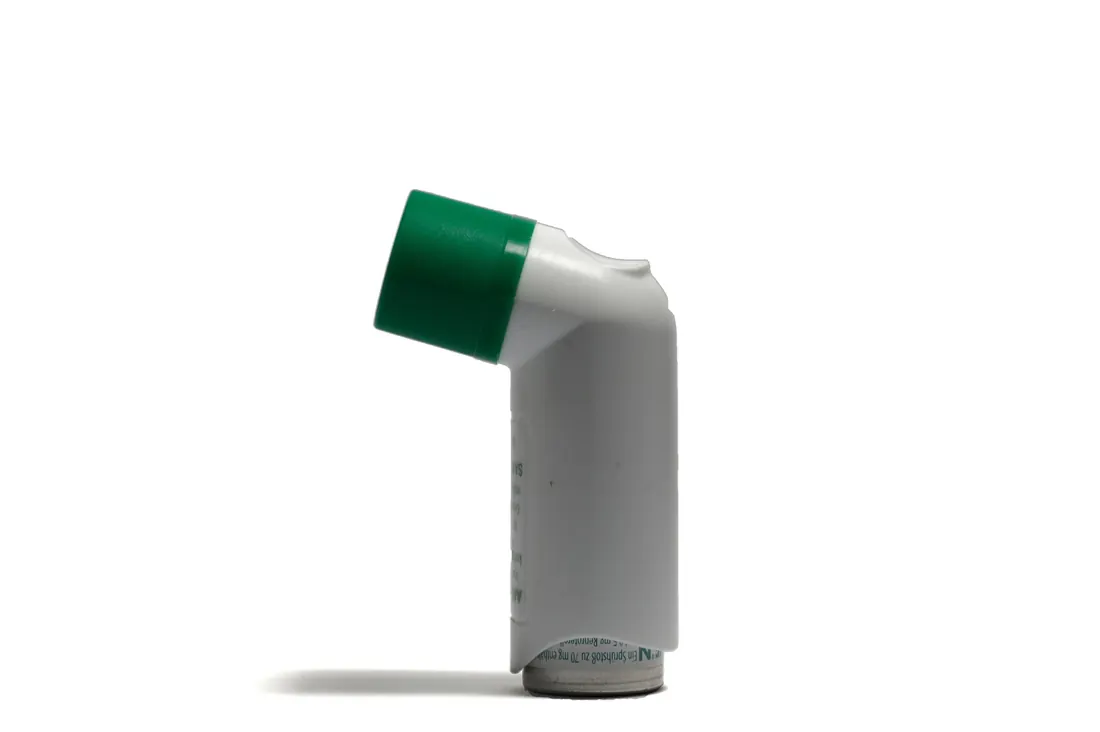
Noah Lyles has described “the many nights he spent as a child in the hospital, receiving medication to calm his asthma episodes,” NBC reports. “I didn’t get to participate in sports ’till I got about seven or eight... there wasn’t a time that I can remember where asthma was not an issue,” he says in Netflix’s SPRINT, as NBC quotes him. School was hard too: “Lyles told TIME that he was diagnosed with the disorders as a child, around the time he was in middle school, and that these made school ‘difficult,’” NBC wrote of his dyslexia and ADHD (his own post says ADD, and “ADD is an outdated term for ADHD,” NBC notes). And “The Noah leading up to Tokyo was depressed,” he told NBC4 Washington.

At the Paris 2024 Olympics, “Noah Lyles finished second in his opening heat of the Olympic 100 meters Saturday but still advanced,” the Associated Press reported; that was August 3, the day before the final. The final came the next evening, “in front of a mesmerised crowd at the Stade de France on Sunday (4),” World Athletics wrote, and “USA’s Noah Lyles brought his ‘main character energy’ to the Paris 2024 Games.” “He [Thompson] was out there in lane four and I was in lane seven,” Lyles told Athletics Weekly. Kishane Thompson was “Jamaica’s world leader,” in World Athletics’ words, “the fastest man in the world so far this year with the 9.77 PB he ran in June.”

“He had the slowest reaction to the gun and occupied last place, eighth, through the first 40 meters,” Team USA reported; FloTrack says “he was tied for the slowest at 0.178 with Letsile Tebogo.” “He moved into seventh at 50 meters, passing U.S. teammate Kenneth Bednarek, and jumped to third by 60m.” “In his trademark style he chased them down and then drew equal, crossing the line in a finish too close to call from the eye,” World Athletics wrote. As Lyles told Athletics Weekly, “something said I needed to lean.”

Then came the wait. “After the race I came up, we were waiting for the names to pop up,” Lyles told Team USA. “And I’ll be honest, I came over, I was like, ‘I think you got that one big dog.’” Both men were “clocked at 9.79,” Athletics Weekly wrote, but NBC Olympics reported “a lifetime-best 9.784 seconds” for Lyles: “Lyles crossed the finish line just five thousandths of a second ahead of Thompson, who posted a time of 9.789. The result wasn’t clear until nearly 30 seconds after the end of the race, as the competitors waited nervously for the details of their photo finish.” Then “he held his arms out wide and then ripped off his name bib to show it to the camera,” World Athletics wrote. His was “the first by an American in the 100m dash since the Olympic Games Athens 2004, when Justin Gatlin won it in 9.85 seconds,” Team USA said.

“Four days on from his 100m victory in Paris, Lyles wasn’t able to immediately celebrate his second medal as he was helped off the track in a wheelchair,” World Athletics reported on August 8. “He later explained that he had tested positive for Covid on Tuesday.” Letsile Tebogo won the 200 m “with an African record of 19.46”; “Bednarek got silver in 19.62 and Lyles bronze in 19.70.” Covid “definitely affected my performance,” Lyles said, NBC News reported. In a post on X that NBC quoted, he wrote: “I have Asthma, allergies, dyslexia, ADD, anxiety, and Depression. But I will tell you that what you have does not define what you can become. Why Not You!”

Watch on YouTubeSources and photo credits are below.

Fact check

The facts and where they come from

  1. He was last after 40 meters, yet he won Olympic gold. Team USA: “He had the slowest reaction to the gun and occupied last place, eighth, through the first 40 meters.” World Athletics: “the six-time world gold medallist dipped to victory in a PB of 9.79” to “take the Olympic title.” 21
  2. His name is Noah Lyles. World Athletics: “USA’s Noah Lyles brought his ‘main character energy’ to the Paris 2024 Games.” 1
  3. As a boy, he spent many nights in the hospital with asthma. NBC: “He went on to describe the many nights he spent as a child in the hospital, receiving medication to calm his asthma episodes.” Lyles, in Netflix’s SPRINT, as NBC quotes him: “I didn’t get to participate in sports ’till I got about seven or eight... there wasn’t a time that I can remember where asthma was not an issue.” 11
  4. School was hard too, with dyslexia and ADHD. NBC: “Lyles told TIME that he was diagnosed with the disorders as a child, around the time he was in middle school, and that these made school ‘difficult.’” NBC: “ADD is an outdated term for ADHD” (his own post says “ADD”). 11
  5. Before the Tokyo Olympics, he said, he was depressed. NBC: “‘The Noah leading up to Tokyo was depressed,’ Lyles told NBC4 Washington in June.” 11
  6. In the Paris 100 meter final, he was in lane seven. Lyles, to Athletics Weekly: “He [Thompson] was out there in lane four and I was in lane seven.” World Athletics: “in front of a mesmerised crowd at the Stade de France on Sunday (4).” 41
  7. The year’s fastest man, Kishane Thompson, was in lane four. World Athletics: “Jamaica’s world leader Kishane Thompson”; “Thompson, the fastest man in the world so far this year with the 9.77 PB he ran in June.” Lyles, to Athletics Weekly: “He [Thompson] was out there in lane four.” 14
  8. Nobody was slower to react to the gun. Team USA: “He had the slowest reaction to the gun.” FloTrack: “he was tied for the slowest at 0.178 with Letsile Tebogo.” 27
  9. Even at halfway, he was only seventh. Team USA: “He moved into seventh at 50 meters, passing U.S. teammate Kenneth Bednarek, and jumped to third by 60m.” Sports Illustrated: “Lyles was in last place at the 40 meter mark, and just seventh by the time the race got to the halfway point.” 26
  10. Then he chased them down, and something told him to lean. World Athletics: “In his trademark style he chased them down and then drew equal, crossing the line in a finish too close to call from the eye.” Lyles, to Athletics Weekly: “something said I needed to lean.” To ABC News: “Something said I need to lean.” 145
  11. Afterward, he told Thompson, “I think you got that one, big dog.” Lyles, to Team USA: “After the race I came up, we were waiting for the names to pop up … And I’ll be honest, I came over, I was like, ‘I think you got that one big dog.’” Athletics Weekly has the same words; ABC News spells it “big dawg.” 245
  12. Both times read 9.79. World Athletics: “Noah Lyles (USA) 9.79 PB,” “Kishane Thompson (JAM) 9.79.” Athletics Weekly: “he and Thompson both being clocked at 9.79 (1.0).” 14
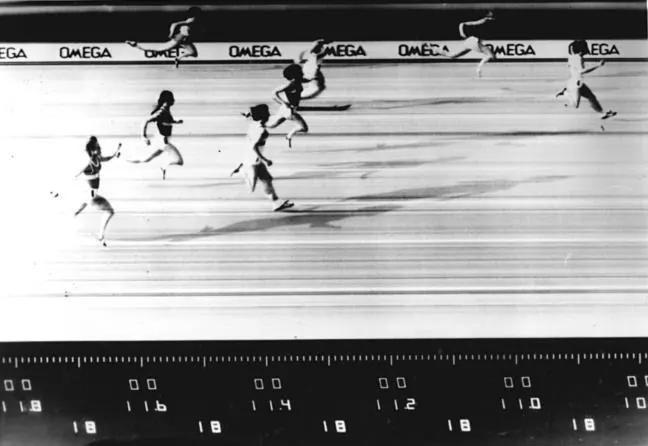
  13. The photo finish gave it to Lyles, by five thousandths of a second. World Athletics: “pipping Jamaica’s world leader Kishane Thompson by just five thousandths of a second.” NBC Olympics: “a lifetime-best 9.784 seconds. Lyles crossed the finish line just five thousandths of a second ahead of Thompson, who posted a time of 9.789. The result wasn’t clear until nearly 30 seconds after the end of the race, as the competitors waited nervously for the details of their photo finish.” 13
  14. Just four days later, with Covid, he still took bronze in the 200. World Athletics: “Four days on from his 100m victory in Paris, Lyles wasn’t able to immediately celebrate his second medal as he was helped off the track in a wheelchair. He later explained that he had tested positive for Covid on Tuesday”; “Lyles bronze in 19.70.” NBC News: “Two days after Noah Lyles said he had tested positive for Covid, the American sprinter finished third in the 200-meter final.” 910
  15. “What you have does not define what you can become,” he wrote. His post on X, as NBC quotes it: “I have Asthma, allergies, dyslexia, ADD, anxiety, and Depression. But I will tell you that what you have does not define what you can become. Why Not You!” 11

Sources

  1. Lyles wins Olympic 100m gold in photo finish in Paris (Jess Whittington, August 4, 2024) World Athletics
  2. The Fastest Man in the World: Noah Lyles Wins Men’s 100-Meter Gold in Paris (Madie Chandler, August 4, 2024) Team USA
  3. Paris Olympics: men’s 100m final report NBC Olympics
  4. Late surge carries Noah Lyles to Olympic 100m gold (Euan Crumley, August 4, 2024) Athletics Weekly
  5. Noah Lyles wins gold for U.S. in 100m by 0.005 of a second (Coley Harvey, August 4, 2024) ABC News
  6. Stunning Multi-Frame Overlay Captures Epic 100m Final Sports Illustrated
  7. Noah Lyles Wins The Olympic 100 Meter Championship In Paris FloTrack
  8. Noah Lyles closes strong to advance in 1st round of 100m at Olympics The Associated Press, on theScore
  9. Paris 2024 Olympic Games report: men’s 200m (August 8, 2024) World Athletics
  10. U.S. track star Noah Lyles takes bronze in 200 meters, says he tested positive for Covid (August 8, 2024) NBC News
  11. Noah Lyles health: Team USA sprinter wins with asthma, allergies, ADHD NBC Connecticut

Notes

Reaction: Team USA says he had “the slowest reaction to the gun”; FloTrack says “he was tied for the slowest at 0.178 with Letsile Tebogo.” The Short says “Nobody was slower to react to the gun,” which is true either way.

Position: last, eighth, through 40 meters and seventh at 50 meters (Team USA); last at 40 meters and “just seventh by the time the race got to the halfway point” (Sports Illustrated). World Athletics adds that “it was the first time that eight men have finished sub-10 in the same wind legal race.”

Lane: one outlet put Lyles in lane six; his own words to Athletics Weekly put him in lane seven and Thompson in lane four.

Times: both men’s official times are 9.79 (World Athletics); the photo finish split them at 9.784 and 9.789 (NBC Olympics). NBC Olympics also notes that Thompson’s foot “appeared to cross the finish line before any of Lyles’ feet, but that’s irrelevant,” because the torso decides; the Short doesn’t go into it.

“Big dog”: Team USA and Athletics Weekly print “big dog”; ABC News spells it “big dawg.”

ADHD: his post says “ADD”; NBC notes that “ADD is an outdated term for ADHD,” and the Short says ADHD.

Covid: World Athletics says he “had tested positive for Covid on Tuesday”; NBC News says the 200 m final came “Two days after Noah Lyles said he had tested positive for Covid.” The Short says only “with Covid.”

Noah Lyles and Kishane Thompson are alive. Only race results, reporting by major outlets and Lyles’s own public words about his health (his post on X, and what he told TIME, NBC4 Washington and Netflix’s SPRINT, as NBC reported them) are used; nothing else about his health, his family or his private life. The other sprinters in the photos are named only in the captions.

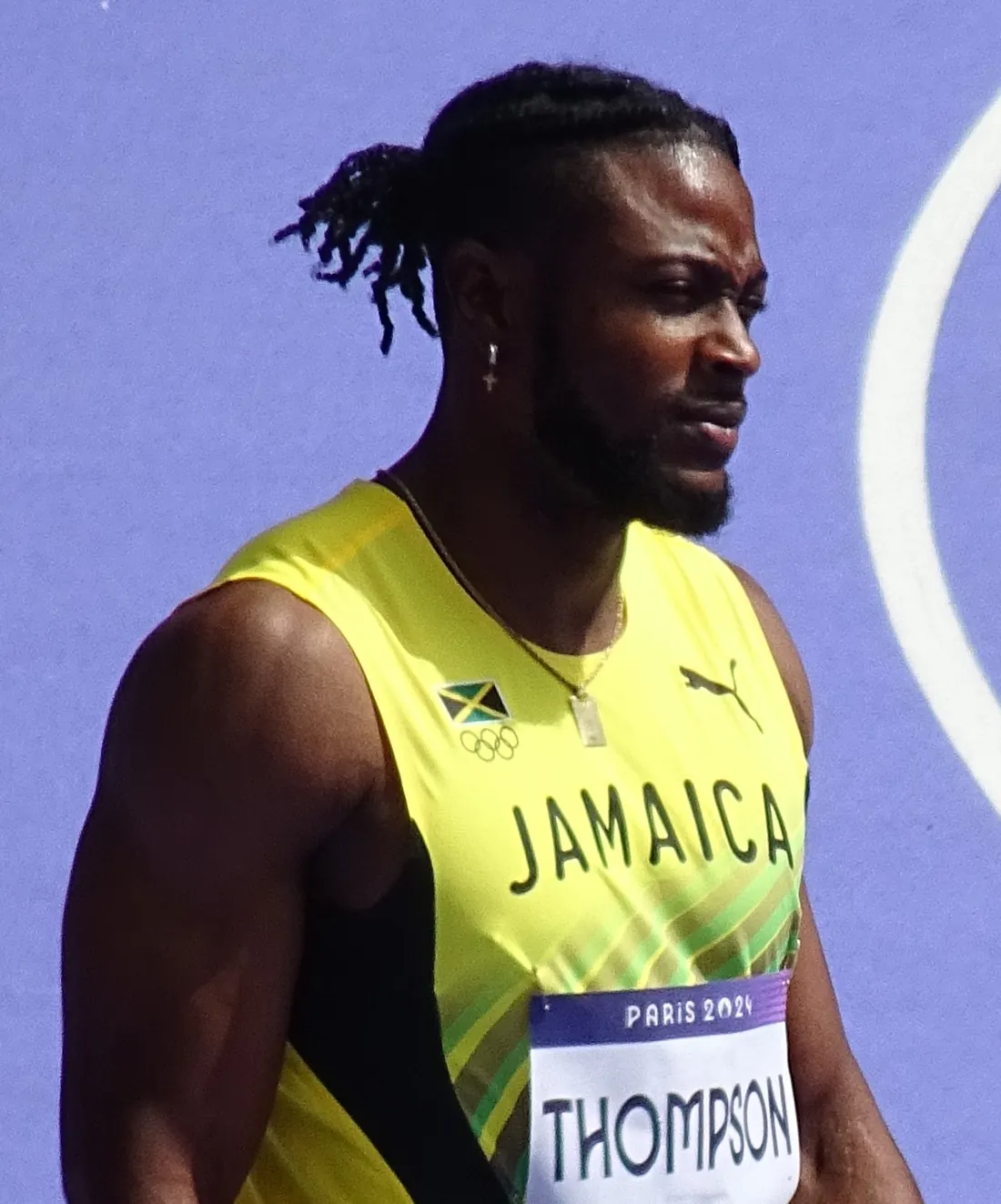
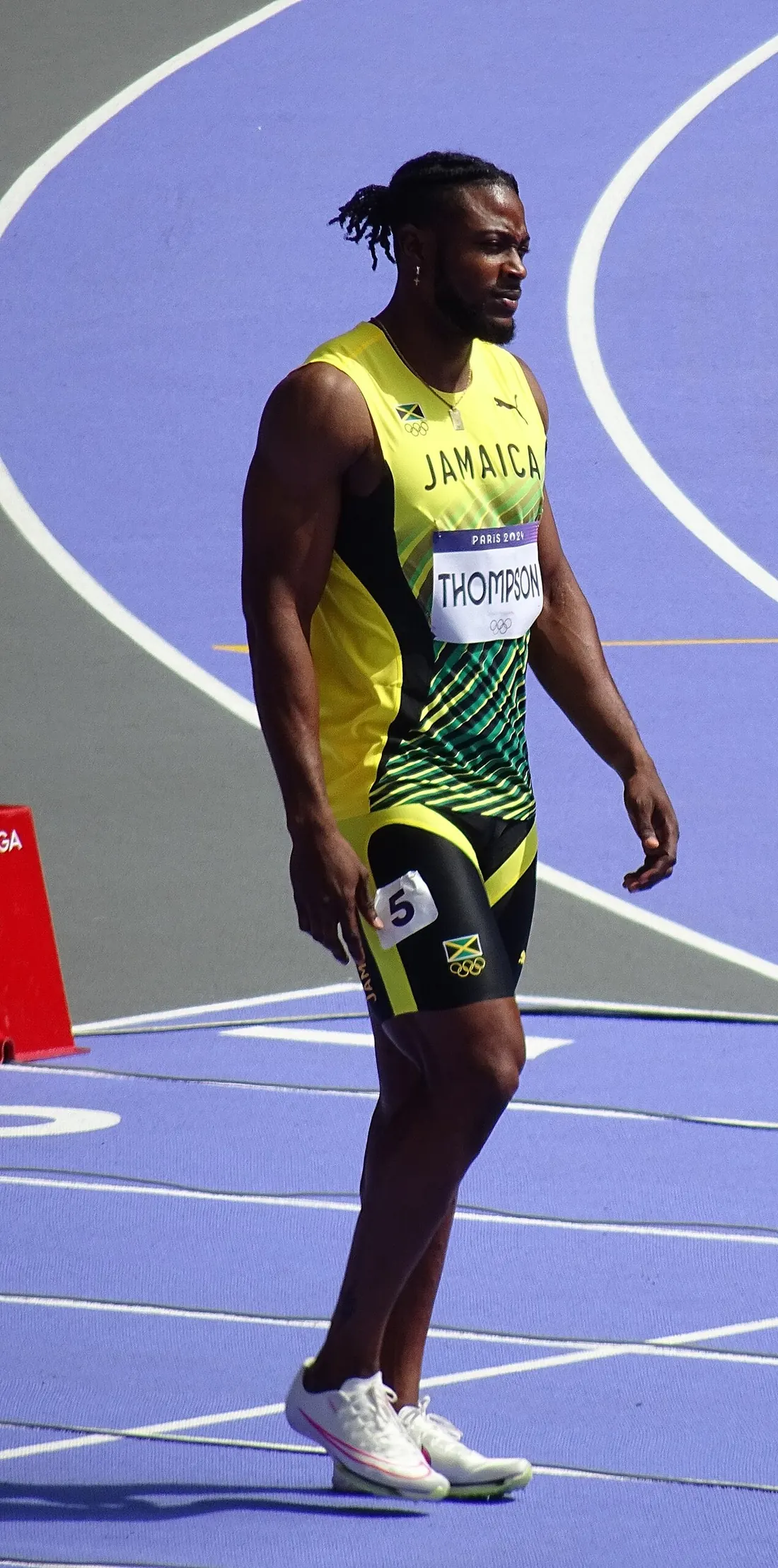
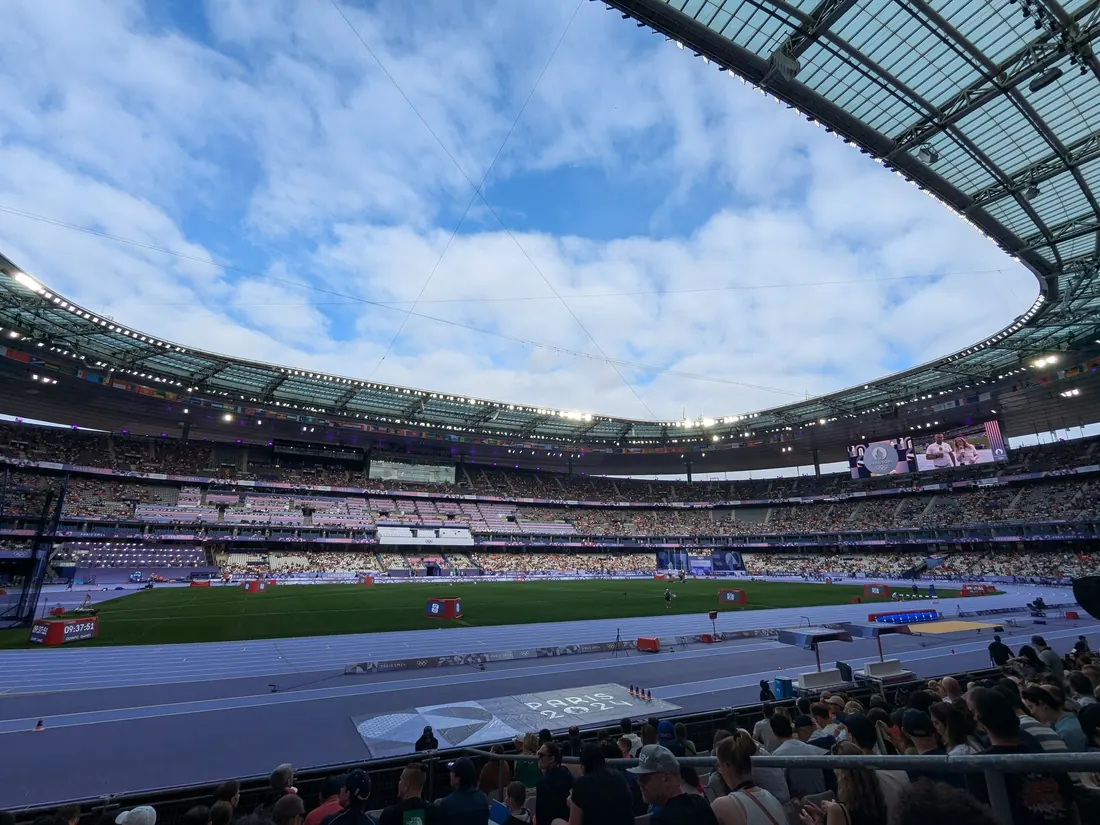
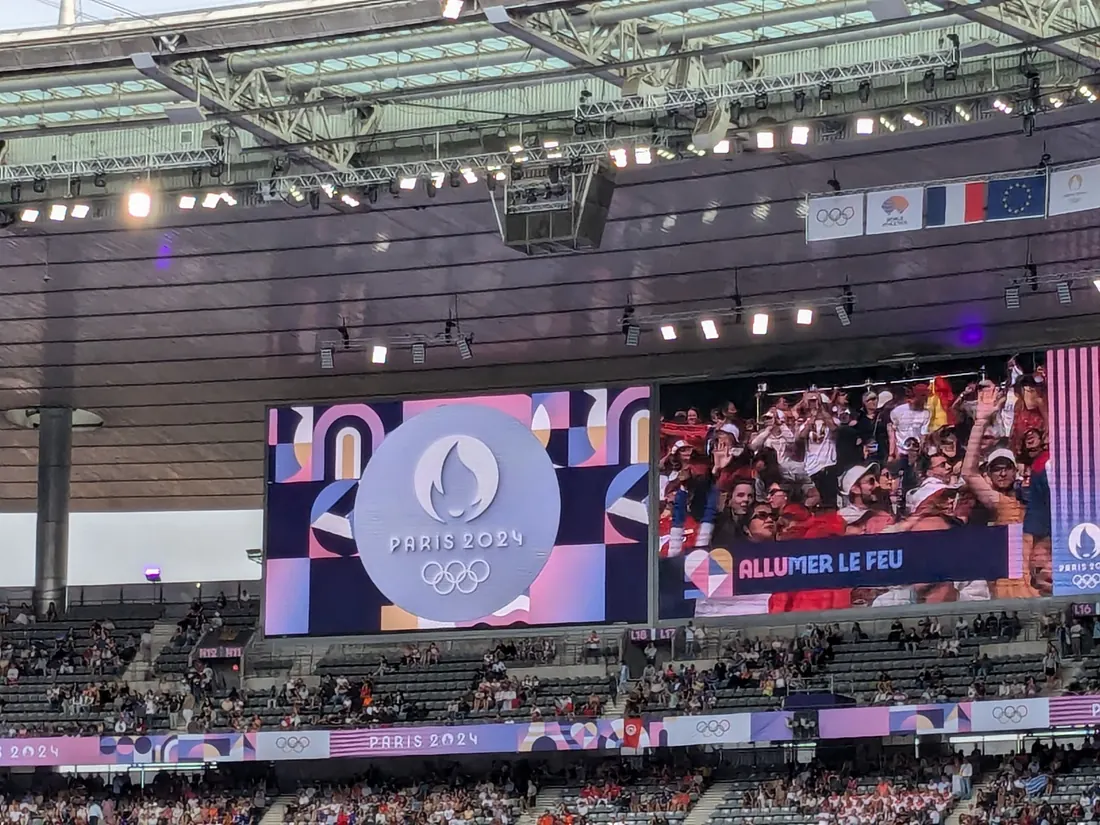
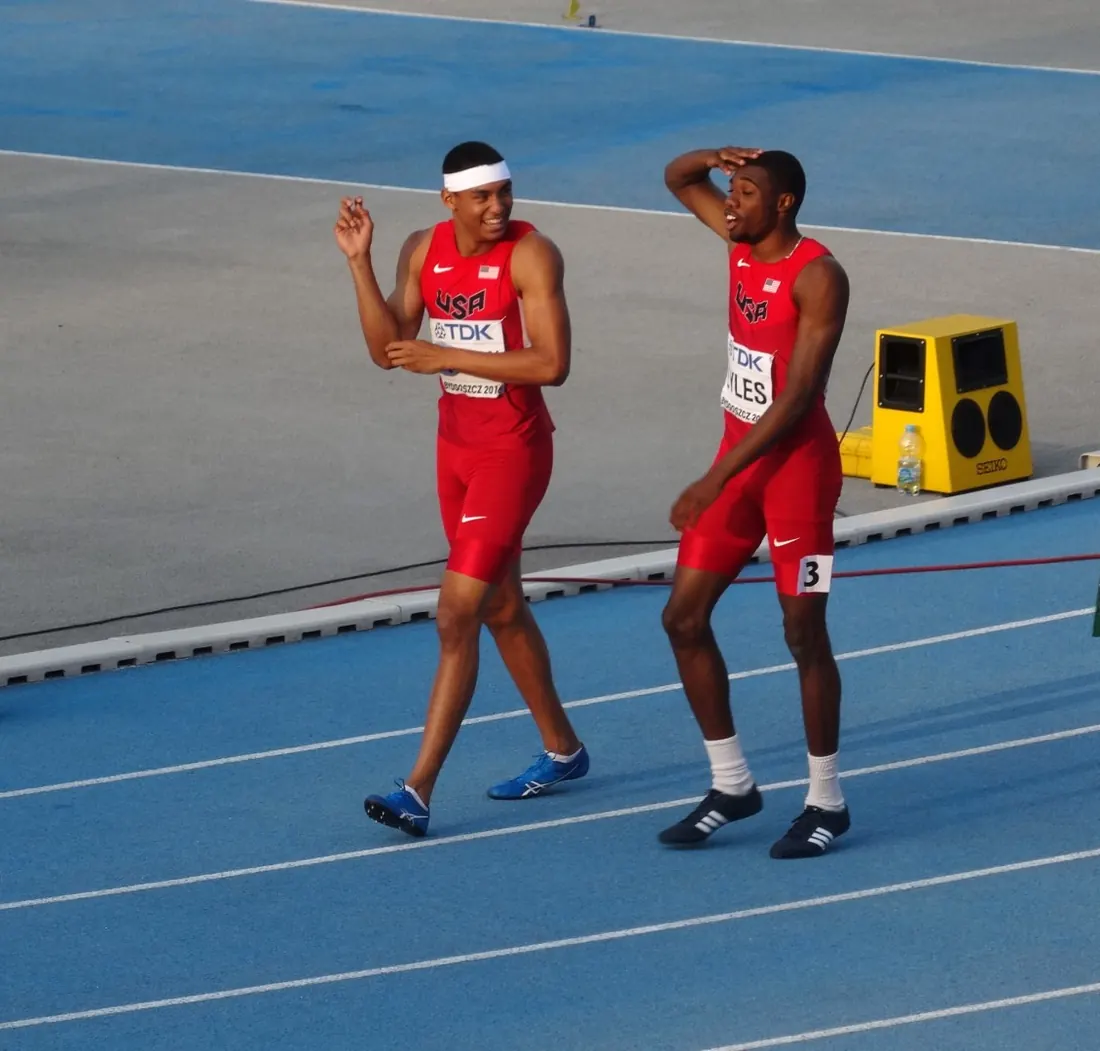
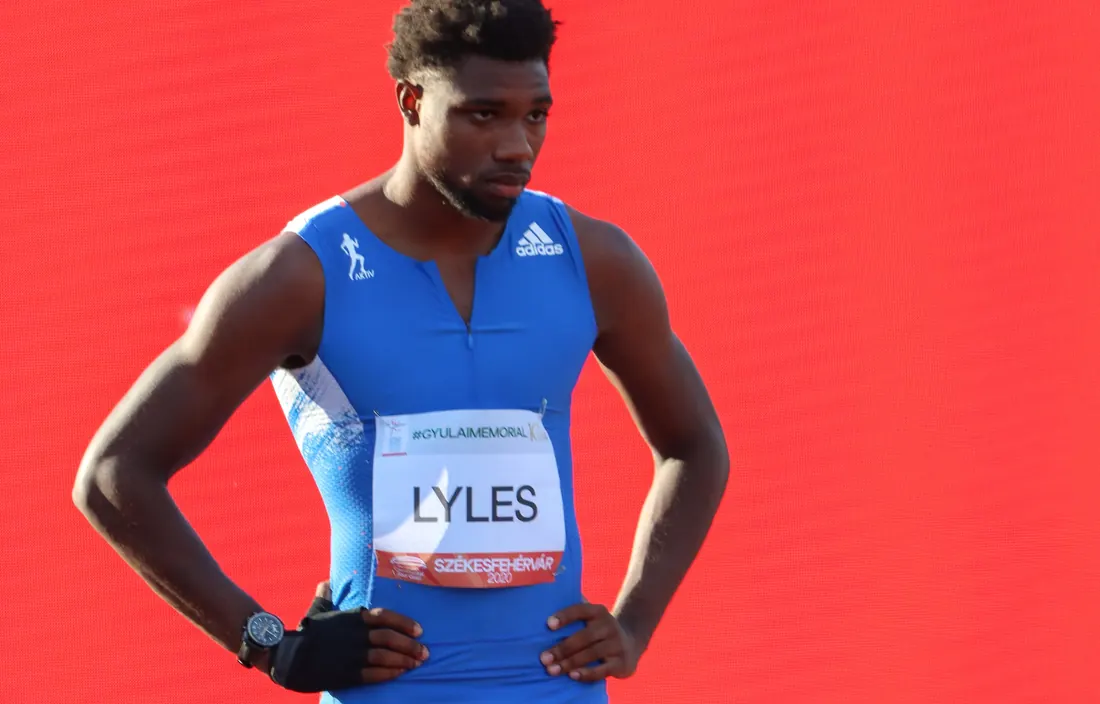
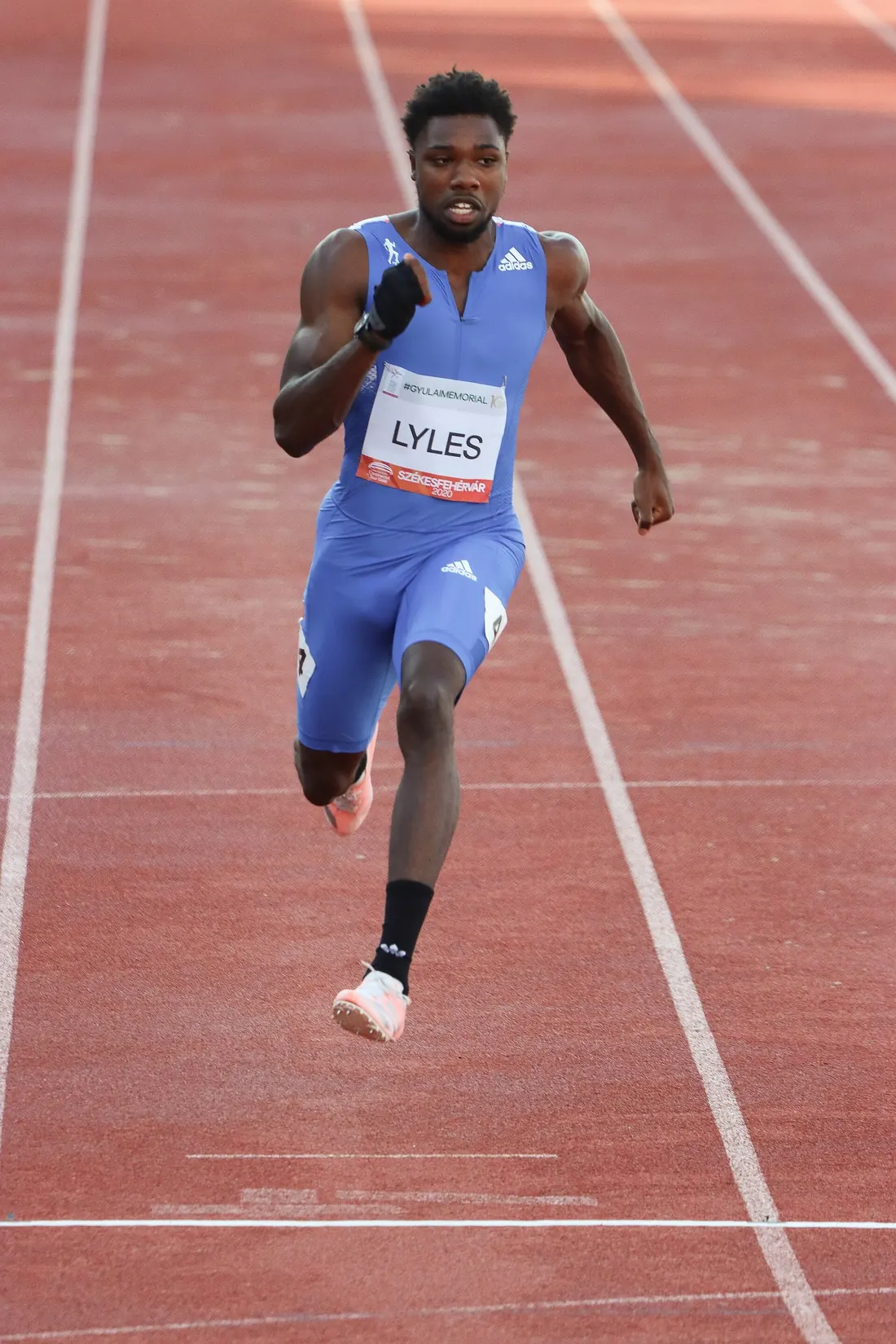
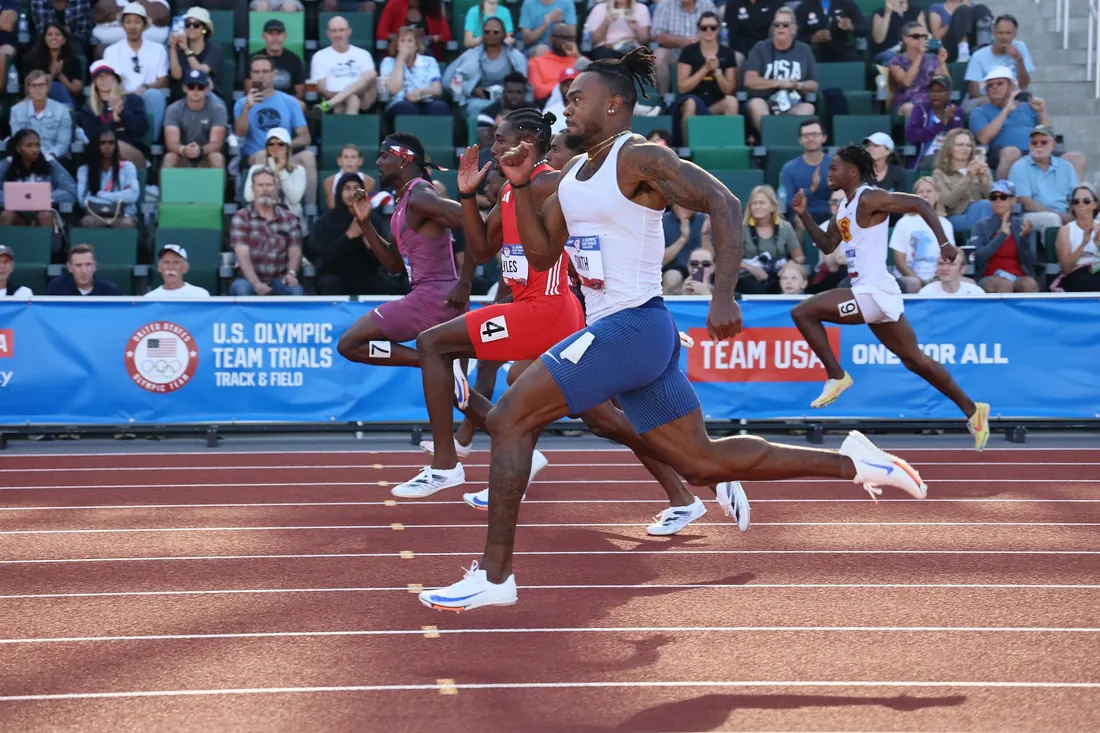
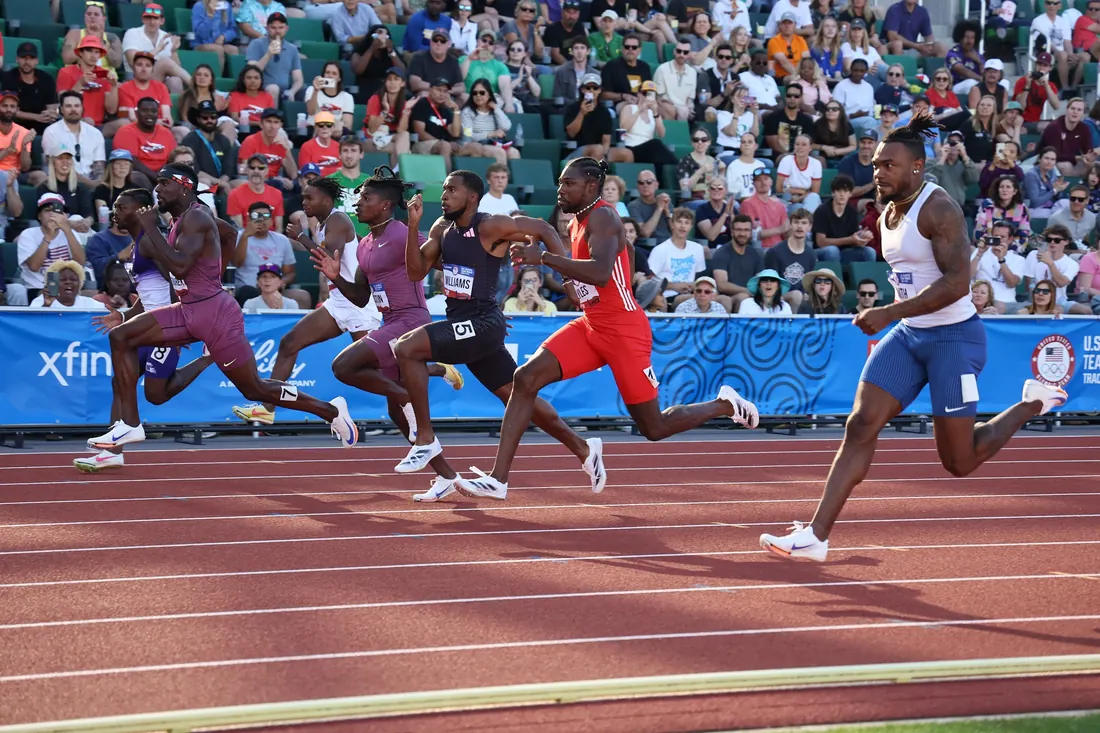
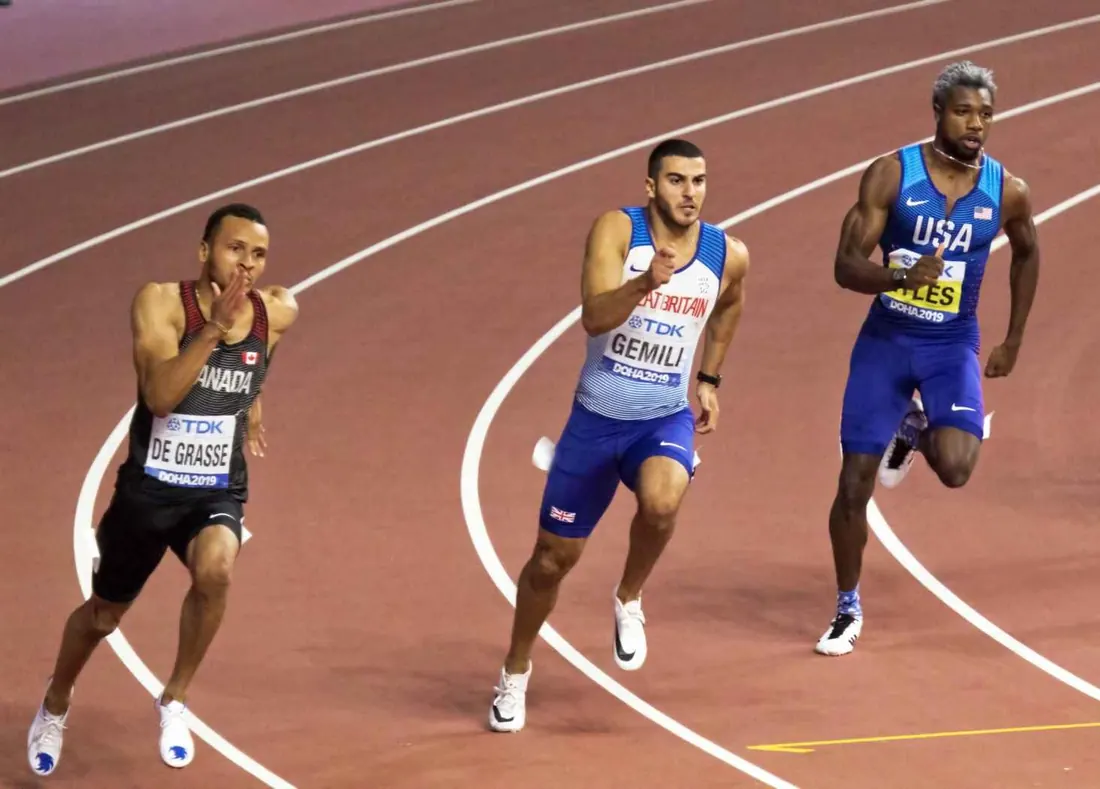
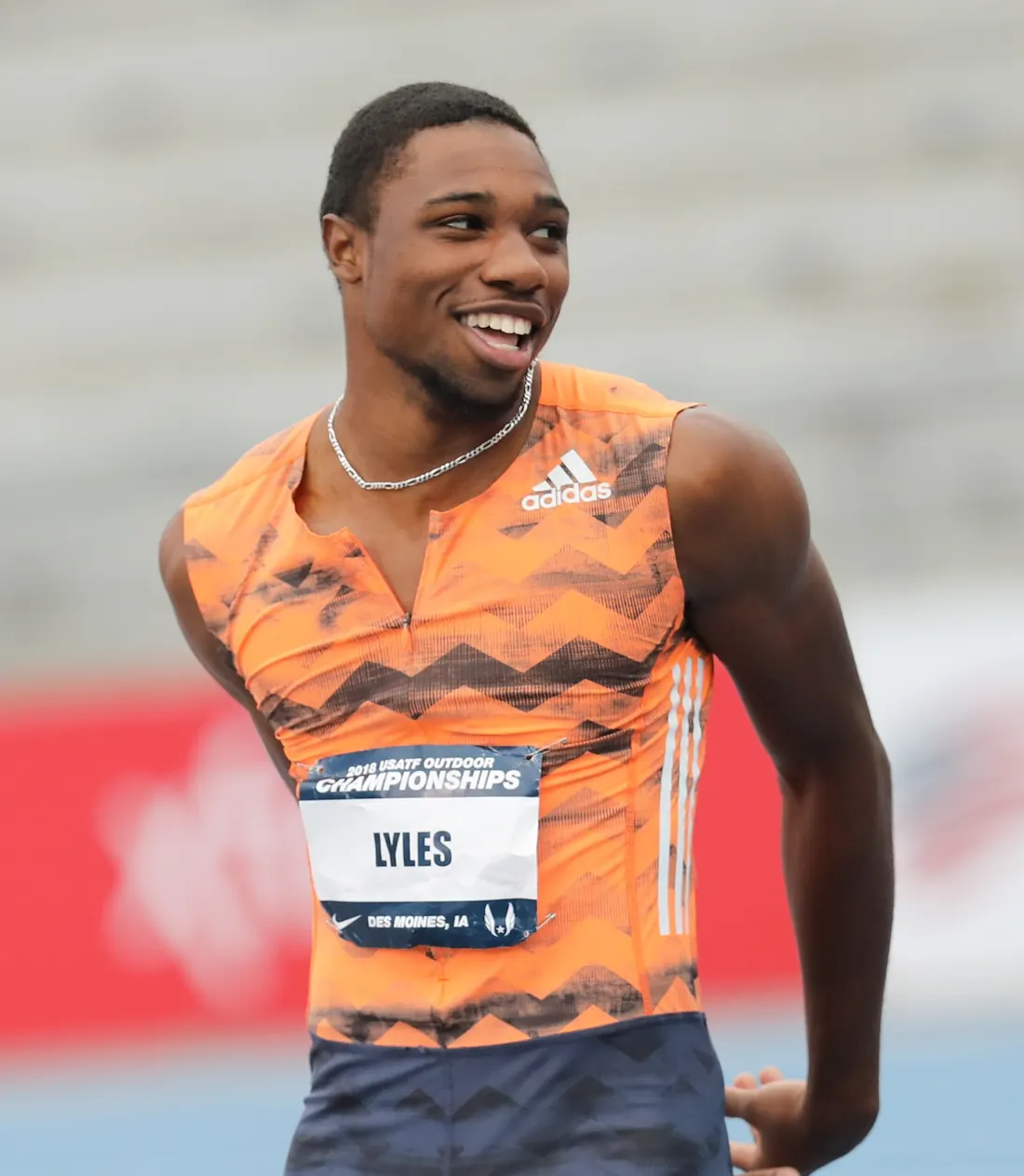
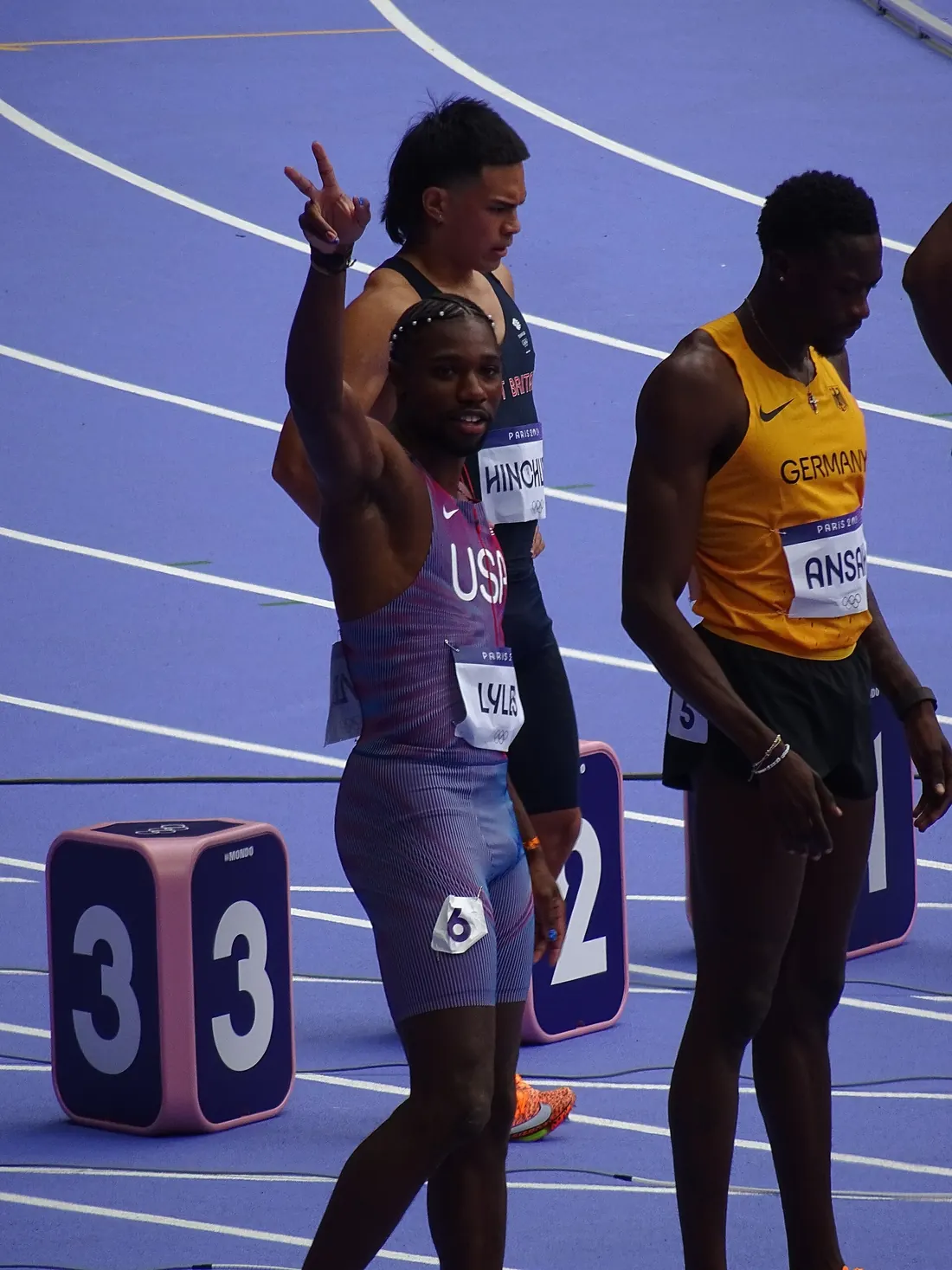
Pictures: no free photo shows the Paris 100 m final, its photo finish or the 200 m final; every picture of those moments we found is agency, broadcast or Olympic-media work, so none is used. Noah Lyles is at the Stade de France in the men’s 100 m first round on August 3, 2024, the day before the final, in three photos by Aeltegop (close up, waving, and settling into his blocks), who also photographed Kishane Thompson twice in the same round; in a 100 m race at the US Olympic Trials in Eugene, Oregon, on June 23, 2024, in red (two photos by jenaragon94); at the 2018 USATF Outdoor Championships in Des Moines on June 22, 2018 (jenaragon94); at the Gyulai Memorial in Székesfehérvár, Hungary, on August 18 and 19, 2020 (Bob Ramsak); with a US teammate after the 4x100 m relay final at the IAAF World U20 Championships in Bydgoszcz, Poland, on July 23, 2016 (Pit1233); and with Adam Gemili and Andre De Grasse in the 200 m final at the World Championships in Doha on October 1, 2019 (filip bossuyt). The Stade de France and its giant screen are seen on the morning of August 4, 2024, the day of the final; the screen is not showing the result (Pronoia). The photo-finish picture is from Marlies Oelsner’s 100 m world record race in Dresden on July 1, 1977 (Bundesarchiv), not this race, and the inhaler is a generic one, photographed in 2022, not Lyles’s.

Photo credits

The archive photos in this story

The photographs and illustrations in this story are in the public domain or shared under open licenses; each one is credited below with its license. Tap one to enlarge it, or follow the link to its Wikimedia Commons page for the full record. The narration, captions and graphics in the Short are our own; its music and sound effects are credited below.
Music and sound effects

Music: Satie, Gymnopedie No. 1 (Lent et douloureux) (Robin Alciatore, piano, public domain); Mussorgsky, Night on Bald Mountain (1886 version) (Musopen, public domain); Brahms, Symphony No. 1 in C minor, Op. 68: IV. Adagio - Piu andante - Allegro non troppo, ma con brio (Musopen Symphony Orchestra, CC0).

Sound effects: Freesound, CC0.

More stories

Vietnam · 1968 Roy Benavidez

Zipped Into a Body Bag, Still Alive

Sources & photo credits
At sea · 1911–1916 Violet Jessop

Miss Unsinkable

Sources & photo credits
Space · 1970 Apollo 13

Houston, We’ve Had a Problem

Sources & photo credits
Antarctica · 1915 Ernest Shackleton

The Ship Crushed by Ice

Sources & photo credits
Okinawa · 1945 Desmond Doss

The Medic Who Refused to Carry a Gun

Sources & photo credits
The Moon · 1969 Apollo 11

The Landing That Almost Didn’t Happen

Sources & photo credits
South Carolina · 1863 Harriet Tubman

The Raid That Freed More Than 750

Sources & photo credits
New York · 1860 Grace Bedell

The Girl Who Told Lincoln to Grow a Beard

Sources & photo credits
Charleston · 1862 Robert Smalls

Past Fort Sumter in the Captain’s Straw Hat

Sources & photo credits
Argonne Forest · 1918 Cher Ami

Shelled by Their Own Guns, They Sent a Pigeon

Sources & photo credits
Iwo Jima · 1945 Jack Lucas

The Stowaway Who Covered Two Grenades

Sources & photo credits
Richmond · 1849 Henry “Box” Brown

Nailed in a Box, Shipped to Freedom

Sources & photo credits
Iran to Scotland · 1942–1963 Wojtek the Bear

The Bear Who Was Enlisted as a Private

Sources & photo credits
Berlin · 1936 Jesse Owens and Luz Long

The Rival Who Hugged Jesse Owens

Sources & photo credits
Alaska · 1925 The 1925 Serum Run

The Dog Who Ran the Most Dangerous Leg

Sources & photo credits
Niagara Falls · 1901 Annie Edson Taylor

Over Niagara Falls in a Barrel, at 63

Sources & photo credits
Tokyo · 1925–1935 Hachikō

The Dog Who Waited Almost Ten Years

Sources & photo credits
New Orleans · 1960 Ruby Bridges

Four Marshals Walked Her Into First Grade

Sources & photo credits
Indian Territory · 1875–1902 Bass Reeves

The Lawman Who Took the Warrant for His Son

Sources & photo credits
Rome · 1960 Wilma Rudolph

From a Leg Brace to Three Olympic Golds

Sources & photo credits
Kaunas · 1940 Chiune Sugihara

Told Not To, He Wrote Visas by Hand

Sources & photo credits
Yale to France · 1917–1918 Stubby

Smuggled to France in a Coal Bin

Sources & photo credits
Arctic Ocean · 1909 Matthew Henson

Forty-Five Minutes Ahead of Peary

Sources & photo credits
Tuscumbia · 1887 Helen Keller and Anne Sullivan

Water, Spelled Into Her Hand

Sources & photo credits
Korea · 1952–1953 Sergeant Reckless

Bought for $250, Promoted to Staff Sergeant

Sources & photo credits
Pearl Harbor · 1941 Dorie Miller

He Fired a Gun He Was Never Trained to Use

Sources & photo credits
Cleveland · 1916 Garrett Morgan

The Real Inventor Posed as the Sidekick

Sources & photo credits
Chicago to France · 1920–1921 Bessie Coleman

Refused at Home, She Learned to Fly in France

Sources & photo credits
Warsaw · 1942–1943 Irena Sendler

She Buried the Children’s Names in Jars

Sources & photo credits
Albany, New York · 1888–1897 Owney

The Stray Who Rode the Mail Around the World

Sources & photo credits
Brooklyn · 1947 Jackie Robinson

He Promised Not to Fight Back

Sources & photo credits
Lubang Island · 1944–1974 Hiroo Onoda

The War Ended in 1945. He Stopped in 1974.

Sources & photo credits
Indiana to Oregon · 1923–24 Bobbie the Wonder Dog

Lost in Indiana, He Walked Home to Oregon

Sources & photo credits
Stockholm · 1912 Jim Thorpe

Stripped of His Golds Over Baseball Pay

Sources & photo credits
Pacific War · 1942–1945 The Navajo Code Talkers

Their Language Became a Code Nobody Broke

Sources & photo credits
Yangtze River · 1949 Simon the Cat

The Wounded Ship’s Cat Who Won a War Medal

Sources & photo credits
Hollywood · 1942 Hedy Lamarr

The Movie Star Who Invented Between Takes

Sources & photo credits
France · 1918 Henry Johnson

He Fought Off German Raiders With a Knife

Sources & photo credits
New York City · 1854 Elizabeth Jennings

A Century Before Rosa Parks, She Sued and Won

Sources & photo credits
Civil War · 1861–1865 Mary Edwards Walker

Stripped of Her Medal, She Wore It Anyway

Sources & photo credits
Cape Canaveral · 1961 Ham the Chimp

The Chimp Who Flew to Space Before Any Human

Sources & photo credits
Montreal · 1899 Major Taylor

Banned at Home, He Became World Champion

Sources & photo credits
Blackwell’s Island · 1887 Nellie Bly

She Faked Insanity to Expose an Asylum

Sources & photo credits
Sicily · 1943 Chips the Dog

The Hero Who Lost His Medals for Being a Dog

Sources & photo credits
NASA Langley · 1962 Katherine Johnson

John Glenn Trusted Her Over NASA’s Computers

Sources & photo credits
Fort Wagner · 1863 William Carney

He Was Shot but Wouldn’t Give Up the Flag

Sources & photo credits
Around the World · 1894–1895 Annie Londonderry

Barely a Cyclist, She Set Off Around the World

Sources & photo credits
Lyme Regis · 1823 Mary Anning

Shut Out of the Meeting on Her Own Find

Sources & photo credits
Dunkirk · 1940 Charles Lightoller

The Titanic Survivor Who Took His Boat to War

Sources & photo credits
Cavendish, Vermont · 1848 Phineas Gage

An Iron Bar Shot Through His Head. He Lived.

Sources & photo credits
Holtzwihr, France · 1945 Audie Murphy

He Fought Alone on a Burning Tank Destroyer

Sources & photo credits
Europe · 1940–1945 “Mad Jack” Churchill

He Went to War With a Sword and a Longbow

Sources & photo credits
Toledo · 1884 Moses Fleetwood Walker

In the Majors 63 Years Before Jackie Robinson

Sources & photo credits
North Atlantic · 1912 Margaret “Molly” Brown

She Begged Her Titanic Lifeboat to Go Back

Sources & photo credits
Argonne Forest · 1918 Alvin York

His Draft Card Said “Don’t Want to Fight”

Sources & photo credits
Great Barrington · 1781 Elizabeth Freeman

She Heard “Born Free” and Sued Her Owner

Sources & photo credits
Central Pacific · 1942 Eddie Rickenbacker

America’s Top Ace Was Saved by a Seagull

Sources & photo credits
Tarrytown, New York · 1782 Deborah Sampson

She Dug Out Her Own Bullet to Keep Her Secret

Sources & photo credits
Shenandoah · 1942–1977 Roy Sullivan

Lightning Hit Him Seven Times, and He Survived

Sources & photo credits
Corinth, Mississippi · 1862 Old Abe

The War Eagle the Confederates Wanted Dead

Sources & photo credits
Balaclava, Crimea · 1855 Mary Seacole

Refused as a War Nurse, She Went Anyway

Sources & photo credits
Central Pacific · 1943 Louis Zamperini

He Survived 47 Days on a Raft. Then It Got Worse

Sources & photo credits
Chickamauga · 1863 John Clem

He Went to War at Nine and Retired a General

Sources & photo credits
Cascade, Montana · 1895 Mary Fields

Born Enslaved, She Carried Montana’s Mail in Her Sixties

Sources & photo credits
Aboard the Titanic · 1912 Richard Norris Williams

The Legs a Doctor Wanted to Cut Off Won Olympic Gold

Sources & photo credits
Kingston, New York · 1828 Sojourner Truth

She Took a White Man to Court to Win Back Her Son

Sources & photo credits
Lyon, France · 1941 Virginia Hall

She Crossed the Pyrenees on a Wooden Leg Named Cuthbert

Sources & photo credits
Germany · World War II Joseph Medicine Crow

He Came Home From World War II a Crow War Chief

Sources & photo credits
Macon, Georgia · 1848 Ellen Craft

She Escaped Slavery Disguised as a White Master

Sources & photo credits
Antietam, Maryland · 1862 Clara Barton

A Bullet Through Her Sleeve Killed the Man in Her Arms

Sources & photo credits
Iwo Jima · 1945 Ira Hayes

The Iwo Jima Flag Raiser Who Never Felt Like a Hero

Sources & photo credits
Baltimore, Maryland · 1838 Frederick Douglass

He Escaped Slavery on Another Man’s Papers

Sources & photo credits
Chosin Reservoir · 1950 Jesse Brown and Tom Hudner

He Crashed His Own Plane on Purpose to Save His Friend

Sources & photo credits
Milwaukee · 1912 Theodore Roosevelt

He Was Shot in the Chest, Then Gave His Speech Anyway

Sources & photo credits
San Terenzo, Italy · 1945 Daniel Inouye

He Pried a Live Grenade From His Own Right Hand

Sources & photo credits
Dover, England · 1912 Harriet Quimby

She Flew the English Channel, but the Titanic Buried It

Sources & photo credits
Saint-Nazaire, France · 1943 Alan Magee

He Fell Four Miles With No Parachute and Lived

Sources & photo credits
Delta, Louisiana · 1867 Madam C. J. Walker

She Washed Clothes for a Living, Then Built an Empire

Sources & photo credits
Los Baños · 1945 Frank Buckles

He Lied to Fight in One World War, Then Got Captured in the Next

Sources & photo credits
Jersey City · 1863–64 Edwin Booth

He Saved Lincoln’s Son, Then His Brother Shot Lincoln

Sources & photo credits
Boone County, Iowa · 1881 Kate Shelley

She Couldn’t Swim, but She Crawled Over a Flood in the Dark

Sources & photo credits
Brussels, Belgium · 1915 Edith Cavell

She Saved German Lives, but a German Firing Squad Shot Her

Sources & photo credits
English Channel · 1926 Gertrude Ederle

She Beat Every Man’s Channel Record by Two Hours

Sources & photo credits
Vaughan, Mississippi · 1900 Casey Jones

He Told His Fireman to Jump, Then Stayed on the Train

Sources & photo credits
Calvi Vecchia, Italy · 1943 G.I. Joe

This Pigeon Beat the Bombers by Minutes

Sources & photo credits
Diamond, Missouri · c. 1864 George Washington Carver

He Was Traded for a Horse as a Baby

Sources & photo credits
Newport, Rhode Island · 1869 Ida Lewis

She Rowed Into Storms to Save Strangers

Sources & photo credits
Hampton, Virginia · 1872 Booker T. Washington

His Entrance Exam Was Sweeping a Room

Sources & photo credits
Darke County, Ohio · 1870 Annie Oakley

She Outshot Him, Then He Married Her

Sources & photo credits
France · 1917 Eugene Bullard

His Own Country Wouldn’t Let Him Fly

Sources & photo credits
London · 1886 Joseph Merrick

He Couldn’t Even Lie Down to Sleep

Sources & photo credits
Washington, D.C. · 1881 Robert Todd Lincoln

This Man Was Near Three Presidential Assassinations

Sources & photo credits
Geneva, New York · 1847 Elizabeth Blackwell

Her Medical School Admitted Her as a Joke

Sources & photo credits
Meuse-Argonne, France · 1918 Rags

This Stray Dog Carried a Message Through Poison Gas

Sources & photo credits
Jericho, Vermont · 1885 Wilson Bentley

His Neighbors Laughed at His Snowflakes

Sources & photo credits
Patuxet (Plymouth) · 1619 Tisquantum (Squanto)

He Came Home from Slavery to Find His Village Gone

Sources & photo credits
Edinburgh, Scotland · 1858 Greyfriars Bobby

The Dog Said to Have Refused to Leave His Master’s Grave

Sources & photo credits
New York · 1884 Nikola Tesla

He Lit Up the World, Then Died Alone

Sources & photo credits
Paris · 1840 Louis Braille

His School Banned This Blind Boy’s Invention

Sources & photo credits
Ross Ice Shelf · 1912 Tom Crean

He Walked 35 Miles Alone Across the Antarctic Ice to Save Him

Sources & photo credits
Auvers-sur-Oise · 1890 Vincent van Gogh

He Thought He Was a Failure

Sources & photo credits
Cannes, France · 1888 Alfred Nobel

His Obituary Came Out While He Was Alive

Sources & photo credits
Vienna · 1847 Ignaz Semmelweis

His Crime Was Telling Doctors to Wash Their Hands

Sources & photo credits
Paris · 1898 Marie Curie

Her Notebooks Are Still Radioactive Today

Sources & photo credits
Brno, Moravia · 1865 Gregor Mendel

He Failed His Teaching Exam, Then Founded Genetics

Sources & photo credits
Memphis · 1892 Ida B. Wells

They Destroyed Her Newspaper, but She Kept Writing

Sources & photo credits
Antarctica · 1912 Douglas Mawson

He Survived Antarctica Alone, Then Missed His Ship by Hours

Sources & photo credits
Boston · 1773 Phillis Wheatley

They Didn’t Believe She Wrote Her Own Poems

Sources & photo credits
Soho, London · 1854 John Snow

He Traced a Killer to One Pump, and Experts Mocked Him

Sources & photo credits
Boston · 1842 Lewis Latimer

His Father Was Jailed as a Runaway Slave

Sources & photo credits
Greenland · 1930 Alfred Wegener

He Was Right About the Continents, but Most Experts Laughed

Sources & photo credits
Scutari · 1854 Florence Nightingale

Her Real Weapon Wasn’t the Lamp

Sources & photo credits
Beijing · 2008 Usain Bolt

He Has a Curved Spine, but No Human Has Ever Run Faster

Sources & photo credits
Coronado, California · 2001 David Goggins

He Weighed Almost 300 Pounds, Then Became a Navy SEAL

Sources & photo credits
Tokyo · 2021 Mutaz Barshim and Gianmarco Tamberi

Offered a Jump-Off, He Asked to Share the Gold With His Best Friend

Sources & photo credits
Milan · 2026 Alysa Liu

She Quit at 16, Then Came Back for Olympic Gold

Sources & photo credits
Tokyo · 2021 Sifan Hassan

She Fell, Then Won Olympic Gold 12 Hours Later

Sources & photo credits
Helmand, Afghanistan · 2010 Kyle Carpenter

He Moved Toward the Grenade Instead

Sources & photo credits
Mexico City · 1968 Dick Fosbury

He Was Warned His Jump Would Break Necks

Sources & photo credits
Budapest · 2023 Femke Bol

She Fell Just Strides From Gold

Sources & photo credits
Rio de Janeiro · 2016 Mo Farah

He Fell Mid-Race With a Promise to Keep

Sources & photo credits
Prague · 1939 Nicholas Winton

He Saved 669 Children, Then Kept Quiet

Sources & photo credits
Bahrain · 2020 Romain Grosjean

His Car Split in Two and Caught Fire

Sources & photo credits
Gothenburg · 1995 Jonathan Edwards

He Out-Jumped the Record, but It Didn’t Count

Sources & photo credits
Old Trafford · 2001 David Beckham

His Country Blamed Him, Then His Free Kick Sent England to the World Cup

Sources & photo credits
Beijing · 2008 Matthias Steiner

His Wife Didn’t Live to See the Gold He Promised Her

Sources & photo credits
Beijing · 2008 Yelena Isinbayeva

She Lay Under a Towel While Her Rivals Jumped

Sources & photo credits
Cozumel, Mexico · 2016 Jonny and Alistair Brownlee

His Brother Collapsed, So He Stopped Racing

Sources & photo credits
Pomona, California · 2004 Daigo Umehara

His Health Was Almost Gone, So He Parried Every Kick

Sources & photo credits
Monza, Vienna · 2017–2019 Eliud Kipchoge

He Missed History by 25 Seconds

Sources & photo credits
Toronto · 2020 David Ayres

Both Goalies Went Down, So He Went In

Sources & photo credits
Doha · 2009 Caroline Wozniacki

She Collapsed Two Points From Winning

Sources & photo credits
Tokyo · 1990 Buster Douglas

He Kept the Promise He Made His Mom

Sources & photo credits
London · 2012 Chad le Clos

He Beat His Childhood Hero by 0.05 Seconds

Sources & photo credits
Sydney · 2000 Rulon Gardner

He Beat the Wrestler Unbeaten for 13 Years

Sources & photo credits
Los Angeles · 2018 Tyson Fury

He Got Up at the Count of Nine

Sources & photo credits
Mount Rose, Nevada · 2023 Jeremy Renner

Seven Tons Were Sliding at His Nephew

Sources & photo credits
PyeongChang · 2018 Ester Ledecká

A Snowboarder Beat the World’s Best Skiers

Sources & photo credits
Yosemite · 2017 Alex Honnold

He Backed Off Once, Then Went Ropeless

Sources & photo credits
Le Mans, France · 2013 Jann Mardenborough

He Went From PlayStation to Le Mans

Sources & photo credits
Oxford · 1954 Roger Bannister

A Medical Student Did What Seemed Impossible

Sources & photo credits
Baku · 2017 Charles Leclerc

He Told His Dying Dad a White Lie

Sources & photo credits
London · 2022 Roger Federer and Rafael Nadal

He Asked His Fiercest Rival for One Last Favor

Sources & photo credits
São Paulo · 2021 Lewis Hamilton

Sent to the Back, Then Punished Again

Sources & photo credits
Atka Bay · Dynasties, 2018 Will Lawson, Lindsay McCrae and Stefan Christmann

They Broke the One Rule of Wildlife Filming

Sources & photo credits
Augusta · 2011–2025 Rory McIlroy

He Collapsed at Augusta, Then Waited 14 Years

Sources & photo credits
Providence · 1985 Frank Caprio

His Father Watched Him Turn Down a Mother’s Plea

Sources & photo credits
Iowa City · 2017 The Iowa Wave

70,000 Fans Turn Away From the Game

Sources & photo credits
Los Angeles · 1988 Kirk Gibson

He Could Barely Walk, So He Swung

Sources & photo credits
Tokyo · 2021 Simone Biles

Lost in Mid-Air, Then Branded a Quitter

Sources & photo credits
Leeds · 2019 Marcelo Bielsa

His Team Scored, So He Gave It Back

Sources & photo credits
The Hawthorns · 2021 Alisson Becker

A Goalkeeper Ran Up for One Last Corner, and Scored

Sources & photo credits
Milan · 2026 Jack Hughes

He Lost His Teeth, Then Nearly Lost the Gold

Sources & photo credits
Napa, California · 2018 Steph Curry and Riley Morrison

A 9-Year-Old Told Steph Curry His Shoes Left Girls Out

Sources & photo credits
Gobi Desert, China · 2016 Dion Leonard and Gobi

He Came to Win a Race, and a Stray Dog Chose Him

Sources & photo credits
Budapest · 2023 Nina Kennedy and Katie Moon

They Were Called Cowards for Sharing Gold

Sources & photo credits
Paris · 2024 Remco Evenepoel

Alone in Front, Then His Tire Went Flat

Sources & photo credits
Paris · 2024 Alexis Holmes

A Fumbled Handoff, Then Olympic Gold

Sources & photo credits
Porto Alegre · 2025 Sandro Dias

He Skated Down a 22-Story Building at 50

Sources & photo credits
Western Front · 1914 The Christmas Truce

The Night the Trenches Sang

Sources & photo credits