Naomi Osaka, The New York Times wrote, “moved to the United States at age three and grew up idolising and emulating Williams.” Asked about Serena posters, she remembered: “When I was growing up, I did a whole report on her in third grade. I colored it and everything.” In it, as she told it, “I said, I want to be like her.” “It was always my dream to play Serena in the US Open finals, so I’m really glad that I was able to do that,” she said after the final, ESPN reported.
On September 8, 2018, in New York, the dream came true: the US Open final, “N. OSAKA/S. Williams,” in the words of the ASAP Sports transcript. Serena Williams, 36, “was seeking a record-tying 24th major singles championship,” The New York Times wrote. The chair umpire, CBS News reported, “initially issued a warning for a code violation in the second set’s second game for receiving coaching”; “That drew a second code violation - and, automatically, cost Williams a point,” and “He responded by issuing a third code violation, which results in a lost game. That made it 5-3 for Osaka.” “Osaka’s preternatural calm persisted throughout the rest of the deciding set,” the WTA says, and she “wrapped up a 6-2, 6-4 victory for her first Grand Slam title,” ESPN reported, “the first player from Japan to win a major singles tennis title.”
“During the trophy ceremony in Arthur Ashe Stadium, thousands of fans jeered repeatedly,” ESPN reported. “With jeers bouncing off the arena’s closed roof, both players - the champion, Osaka, and the runner-up, Williams - wiped away tears,” the Associated Press wrote. “As the players stood next to each other, fans booed when the master of ceremonies began to speak, and Osaka pulled her visor down over her face and cried,” The New York Times wrote. “Williams moved over and put her arm around Osaka,” the Times wrote, and told the crowd, as ESPN quoted her: “I know you guys were here rooting, and I was rooting, too, but let’s make this the best moment we can. ... We’re going to get through this, and let’s be positive. So congratulations, Naomi. No more booing.”
Osaka still apologized. “I know that everyone was cheering for her,” she told the crowd, referring to Williams, The New York Times reported. “I’m sorry it had to end like this.” Williams said, the AP reported: “Maybe it was the mom in me that was like, ‘Listen, we’ve got to pull ourselves together here.’”
That night, at her press conference, Osaka said: “Anyway, when I hugged her at the net, I felt like a little kid again.” The hug had come at the net when the match ended, before the ceremony. Days later, “Osaka told television host Ellen DeGeneres that Serena Williams said she was ‘proud’ of her during the trophy ceremony while boos filled the stadium,” the Associated Press reported.
Fact check
The facts and where they come from
- She had just beaten her idol, but the crowd was booing. ESPN (Associated Press): “a 20-year-old who is the first player from Japan to win a major singles tennis title and idolizes the 36-year-old American”; “During the trophy ceremony in Arthur Ashe Stadium, thousands of fans jeered repeatedly.” 1
- Her name is Naomi Osaka. She was 20. ESPN: “a 20-year-old.” The New York Times: “Osaka, 20, moved to the United States at age three and grew up idolising and emulating Williams.” 13
- In third grade, she wrote a report on Serena Williams. Osaka, at her press conference after the final (ASAP Sports): “When I was growing up, I did a whole report on her in third grade. I colored it and everything.” The WTA has the same words. 45
- In it, she said, “I want to be like her.” Osaka (ASAP Sports): “I said, I want to be like her (smiling).” WTA: “I said, ‘I want to be like her.’” 45
- In 2018, she faced Serena in the US Open final. ASAP Sports: “U.S. OPEN September 8, 2018 Naomi Osaka New York, NY, USA N. OSAKA/S. Williams 6-2, 6-4.” 4
- Serena was chasing a record-tying 24th Grand Slam title. ESPN: “Williams, the runner-up in her bid for a record-tying 24th Grand Slam trophy.” The New York Times: “who was seeking a record-tying 24th major singles championship.” 13
- Serena then got three code violations, one costing a game. CBS News: “he initially issued a warning for a code violation in the second set’s second game for receiving coaching” … “That drew a second code violation - and, automatically, cost Williams a point.” … “He responded by issuing a third code violation, which results in a lost game. That made it 5-3 for Osaka.” The Associated Press: “Williams was docked a point and a game for three code violations.” 26
- Osaka stayed calm and won, Japan’s first Grand Slam singles champion. ESPN: “Naomi Osaka wrapped up a 6-2, 6-4 victory for her first Grand Slam title”; “the first player from Japan to win a major singles tennis title.” WTA: “Osaka’s preternatural calm persisted throughout the rest of the deciding set.” 15
- At the ceremony, thousands of fans kept booing. ESPN: “thousands of fans jeered repeatedly.” CBS News: “Thousands of fans jeered repeatedly during the trophy ceremony as Osaka and Williams cried.” 12
- Osaka pulled her visor down over her face and cried. The New York Times: “As the players stood next to each other, fans booed when the master of ceremonies began to speak, and Osaka pulled her visor down over her face and cried.” 3
- Serena put an arm around her. ESPN: “Williams put an arm around Osaka’s shoulder and told the crowd.” The New York Times: “Williams moved over and put her arm around Osaka.” The Associated Press: “put her arm around the tearful 20-year-old.” 136
- “Let’s make this the best moment we can,” she told the crowd. Williams, as ESPN quotes her: “I know you guys were here rooting, and I was rooting, too, but let’s make this the best moment we can. ... We’re going to get through this, and let’s be positive. So congratulations, Naomi. No more booing.” CBS News has the same words. 12
- “So congratulations, Naomi. No more booing.” ESPN and CBS News: “So congratulations, Naomi. No more booing.” The New York Times: “So congratulations, Naomi. No more booing!” 123
- Osaka still apologized: “I’m sorry it had to end like this.” The New York Times: “‘I know that everyone was cheering for her,’ she told the crowd, referring to Williams. ‘I’m sorry it had to end like this.’” NBC 6 South Florida: “‘I know that everyone was cheering for her and I’m sorry it had to end like this,’ Osaka said Saturday.” ESPN has “I’m sorry that it had to end like this.” 381
- Osaka said, “When I hugged her at the net, I felt like a little kid again.” Osaka, at her press conference after the final (ASAP Sports): “Anyway, when I hugged her at the net, I felt like a little kid again.” 4
Sources
- Naomi Osaka wins controversial 2018 US Open over Serena Williams (Associated Press, September 8, 2018) ESPN
- Naomi Osaka upsets Serena Williams in U.S. Open (September 8, 2018) CBS News
- Naomi Osaka Beats Serena Williams in a joyless US Open final (The New York Times News Service) Gulf News
- US Open press conference transcript: Naomi Osaka (September 8, 2018) ASAP Sports
- Top 5 WTA 2018 Upsets (No.3): Osaka overcomes Serena to claim historic US Open title WTA
- Osaka on “The Ellen DeGeneres Show” (Associated Press, September 13, 2018) The Associated Press, on Boston.com
- The Associated Press’s final report on the 2018 US Open women’s final (September 9, 2018) The Associated Press, on The Philippine Star
- Boos at US Open Final Left Winner Naomi Osaka ‘a Little Bit Sad’ NBC 6 South Florida
Notes
The crowd: we found no reliable source for a crowd figure; the Associated Press, ESPN and CBS News say “thousands.” A popular retelling’s “24,000” isn’t used.
Who the boos were for: fans were protesting the officiating, as The New York Times and CBS Sports reported, but Osaka later said on the “Today” show that she “wasn’t really sure if they were booing at me” (NBC). The Short says only that the crowd was booing.
The dispute: the Short gives it one factual line, three code violations, one costing a game (CBS News, the Associated Press). Who was right isn’t discussed here, and the chair umpire isn’t named.
“I want to be like her”: Osaka’s words, about her third-grade report, are “I said, I want to be like her”; the Short says, “In it, she said, ‘I want to be like her.’”
The hug: Osaka hugged Serena at the net when the match ended, before the ceremony; she spoke of it at her press conference that night. The Short puts her words last, after the ceremony.
The apology: The New York Times and NBC have “I’m sorry it had to end like this”; ESPN has “I’m sorry that it had to end like this.” The Short uses the first.
Naomi Osaka and Serena Williams are alive. Only the match facts, their words on court and at press conferences, and Osaka’s public TV interviews are used; nothing about either woman’s private life.
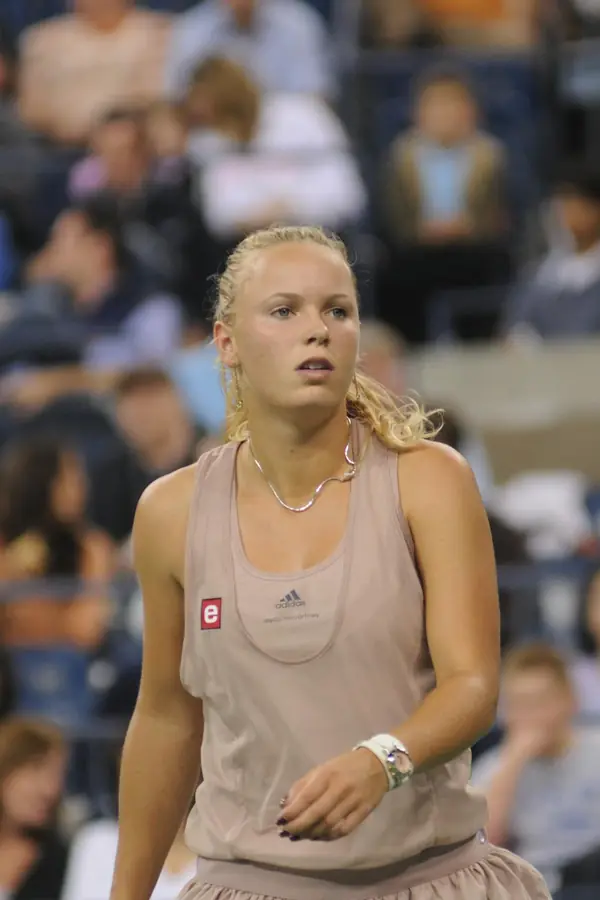
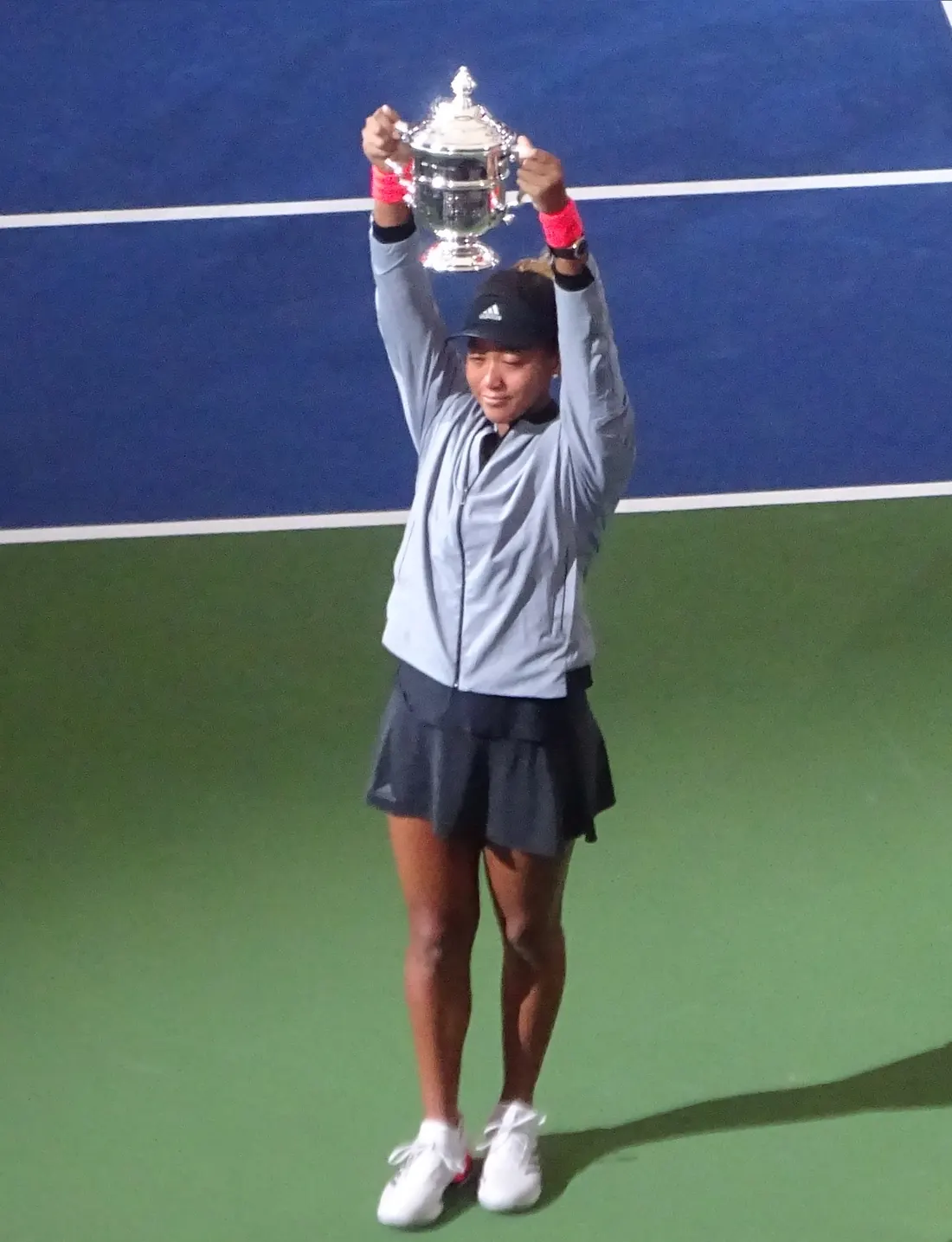
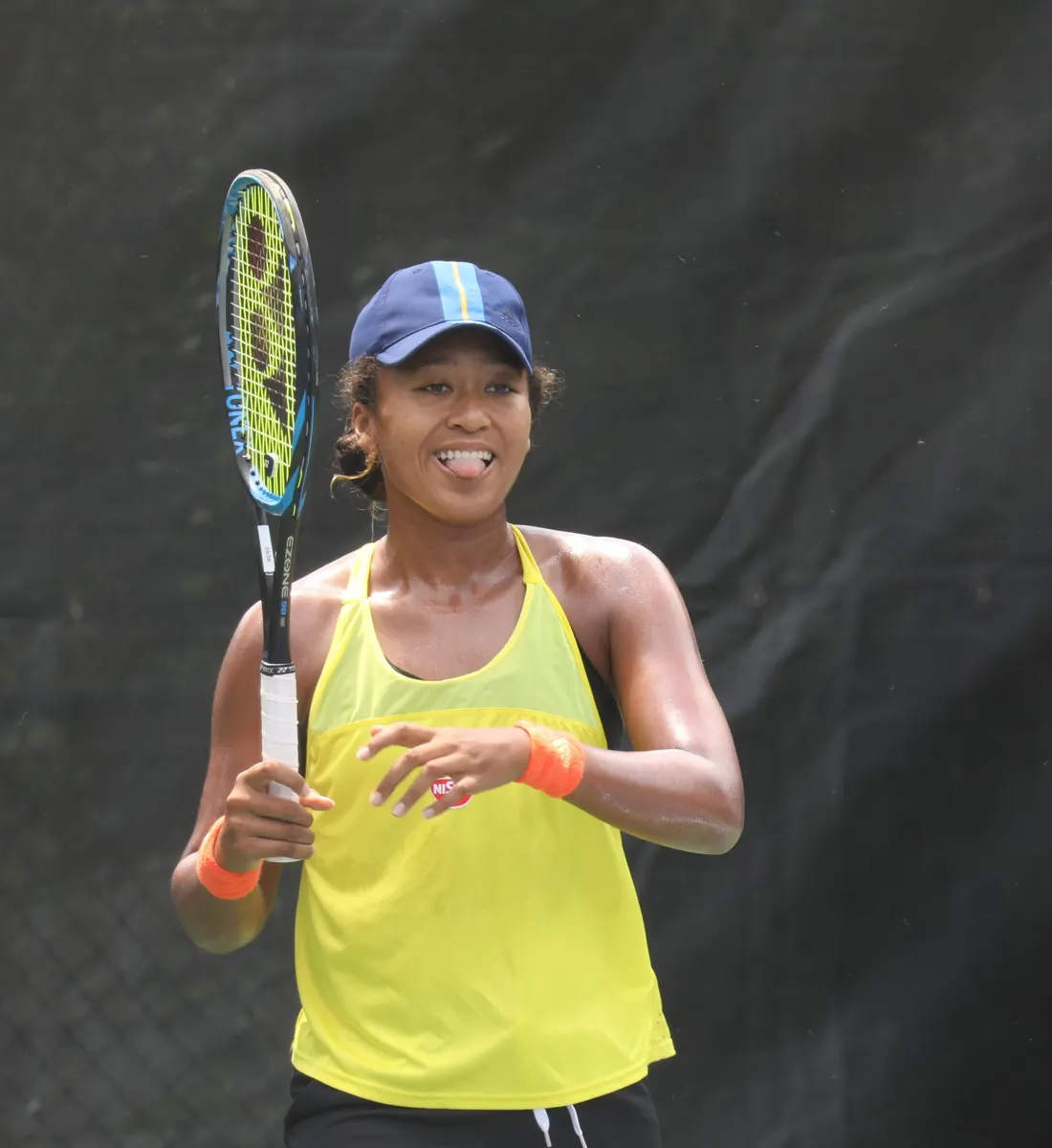
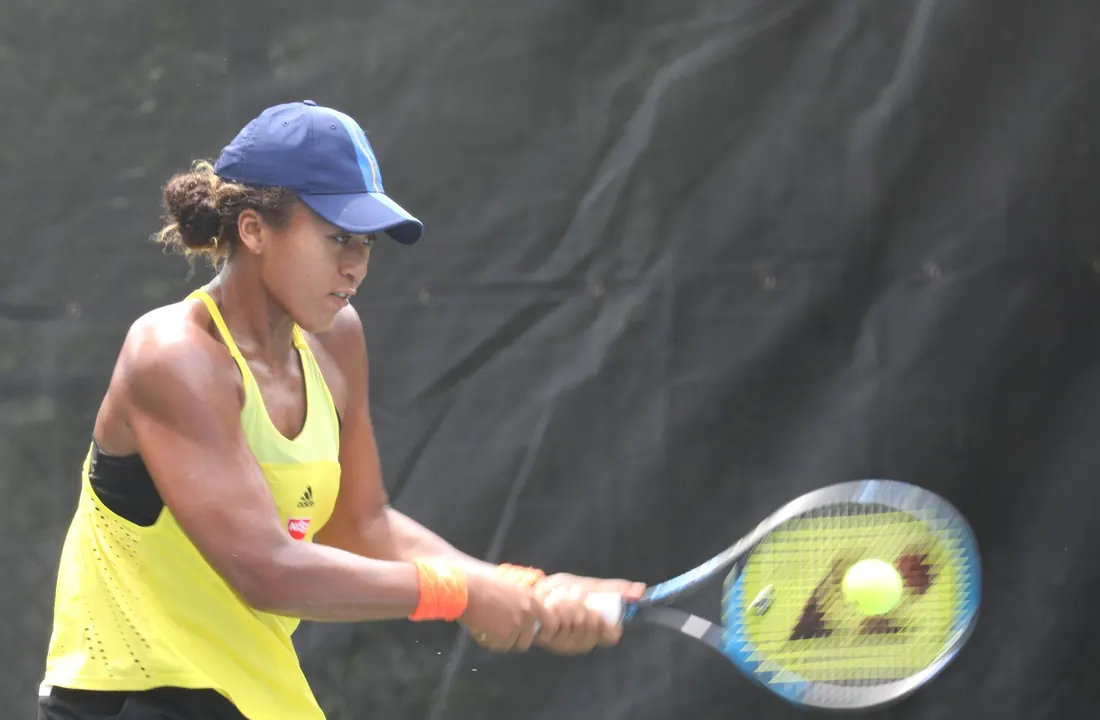
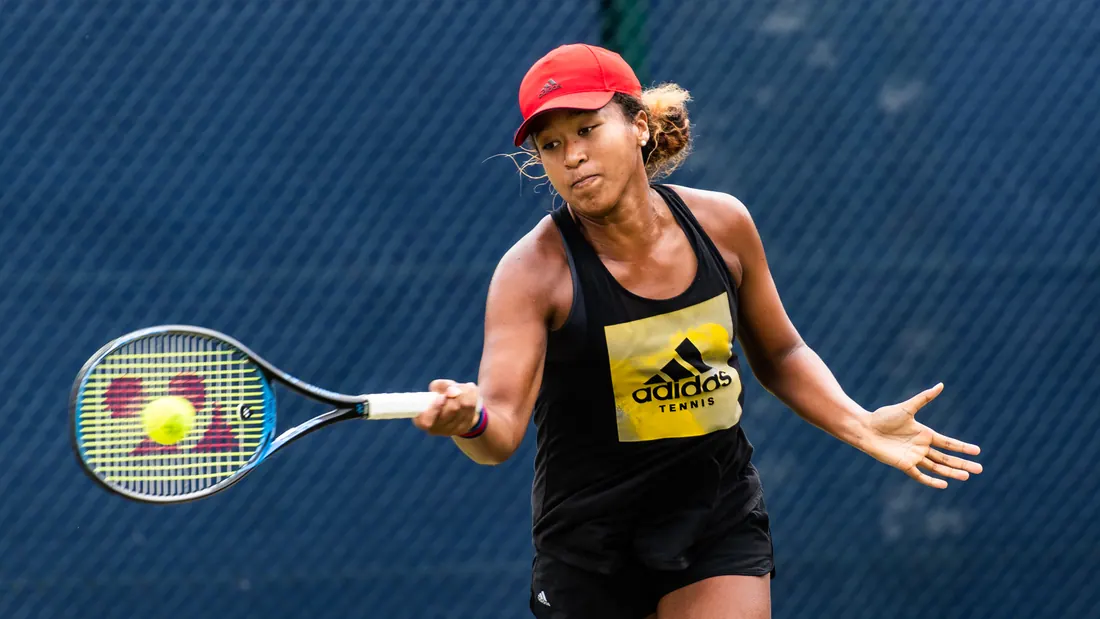
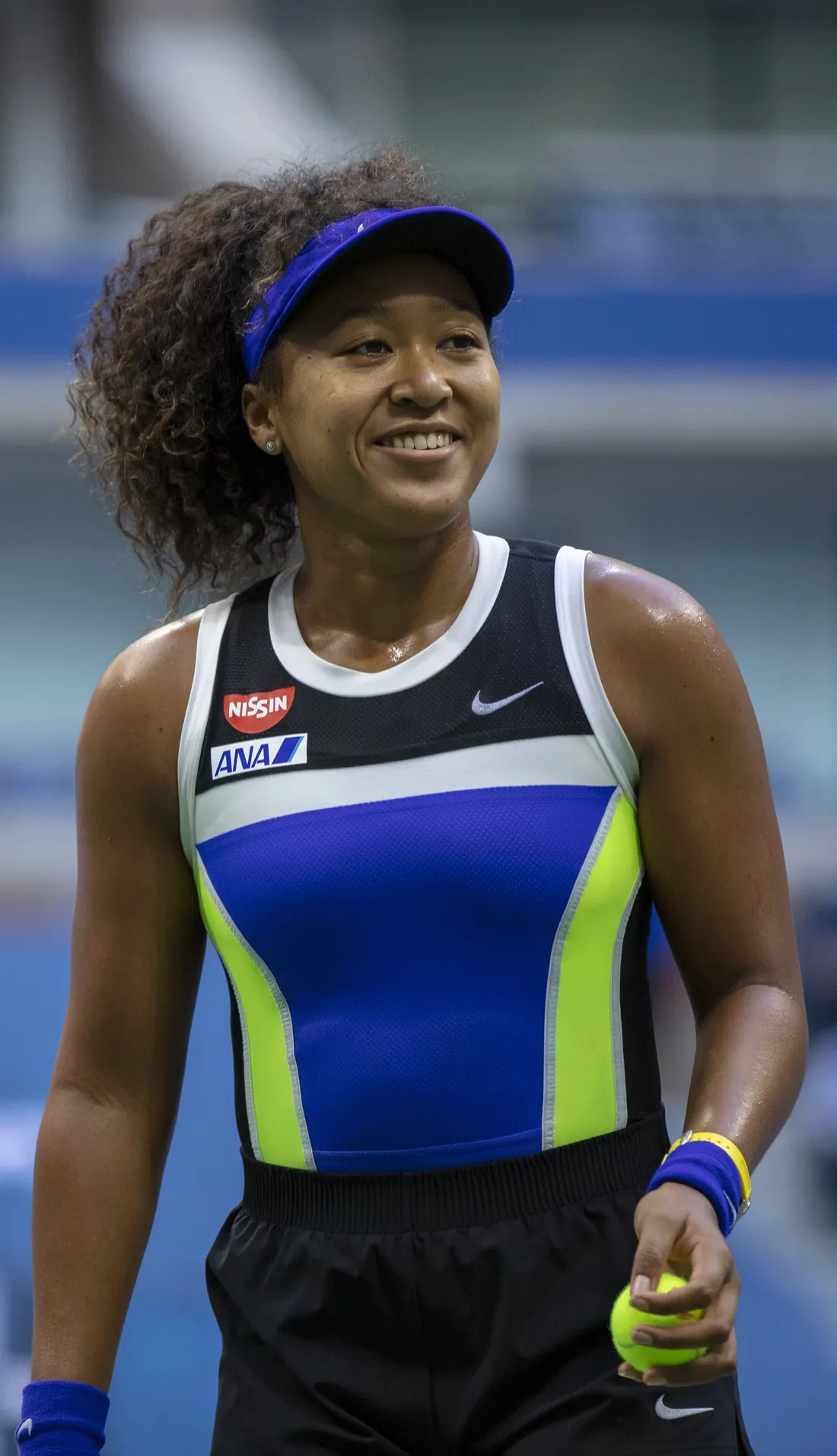
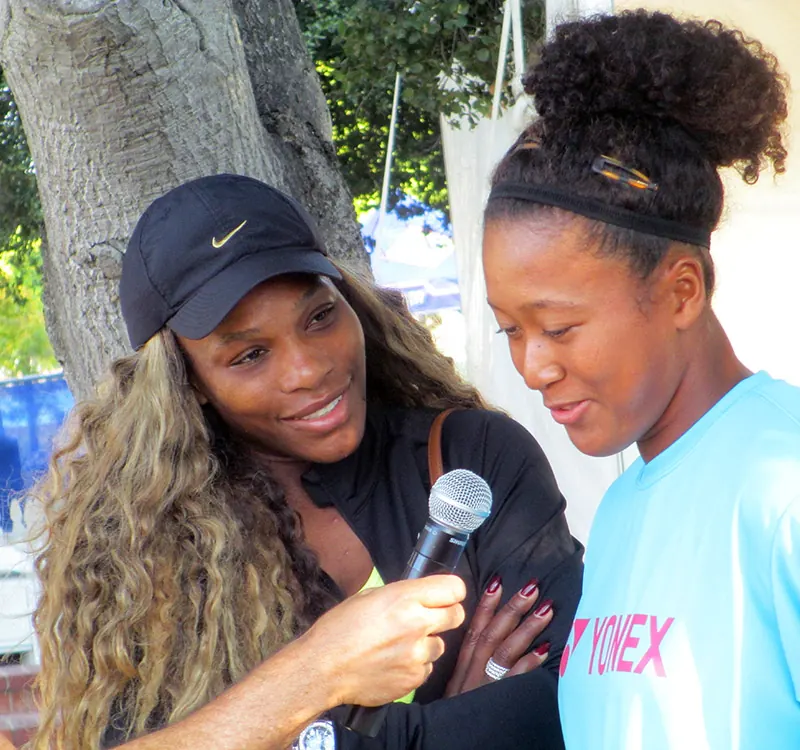
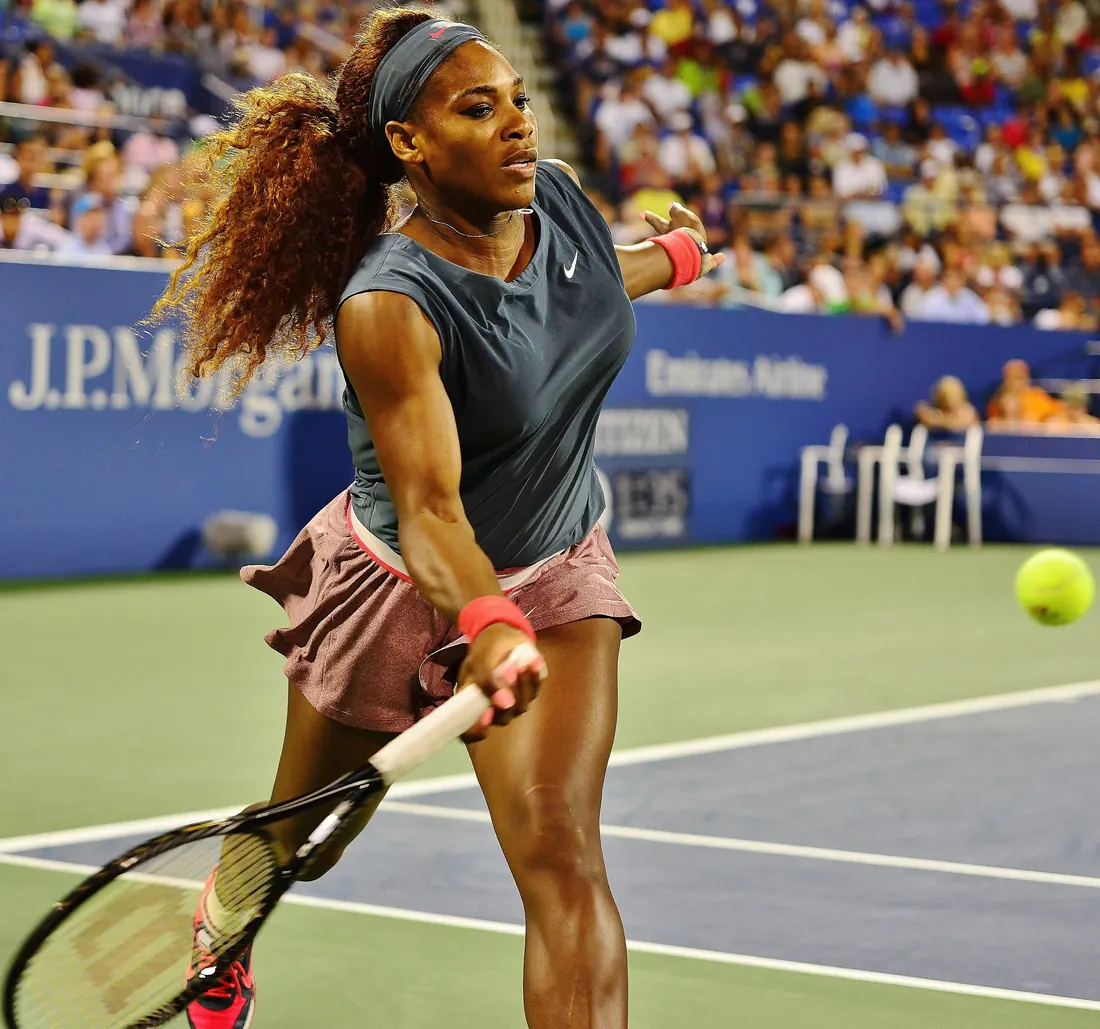
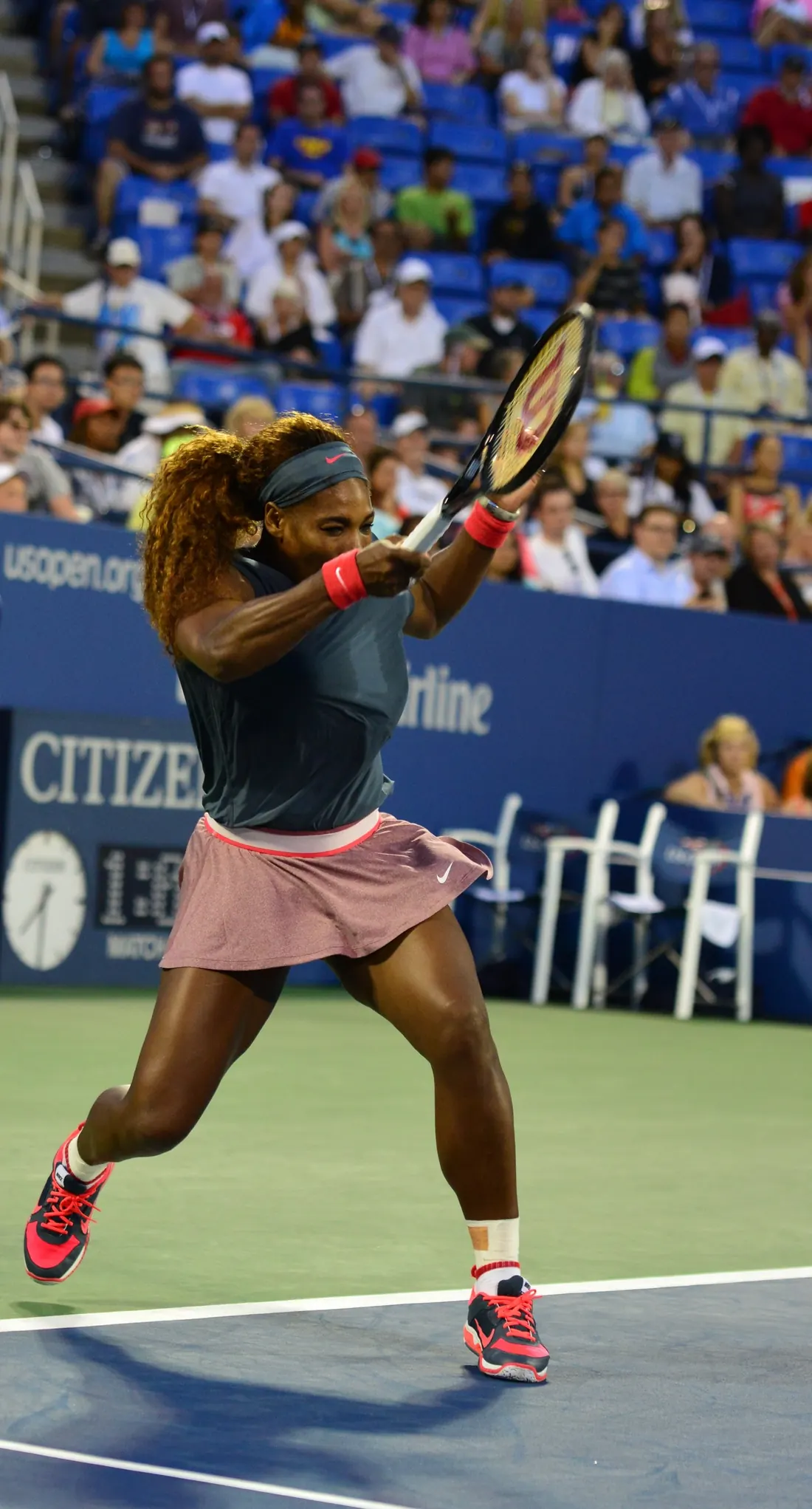
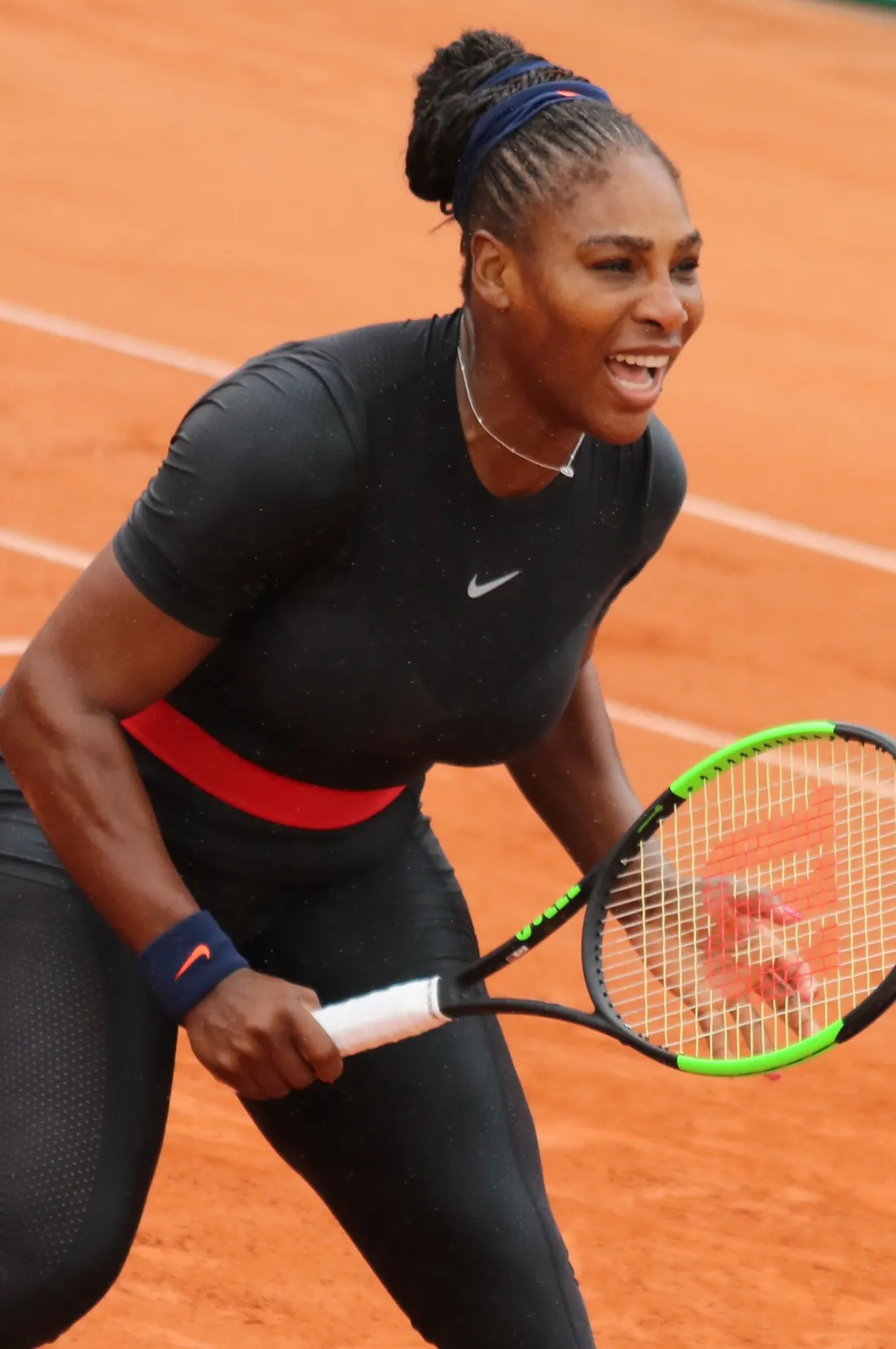
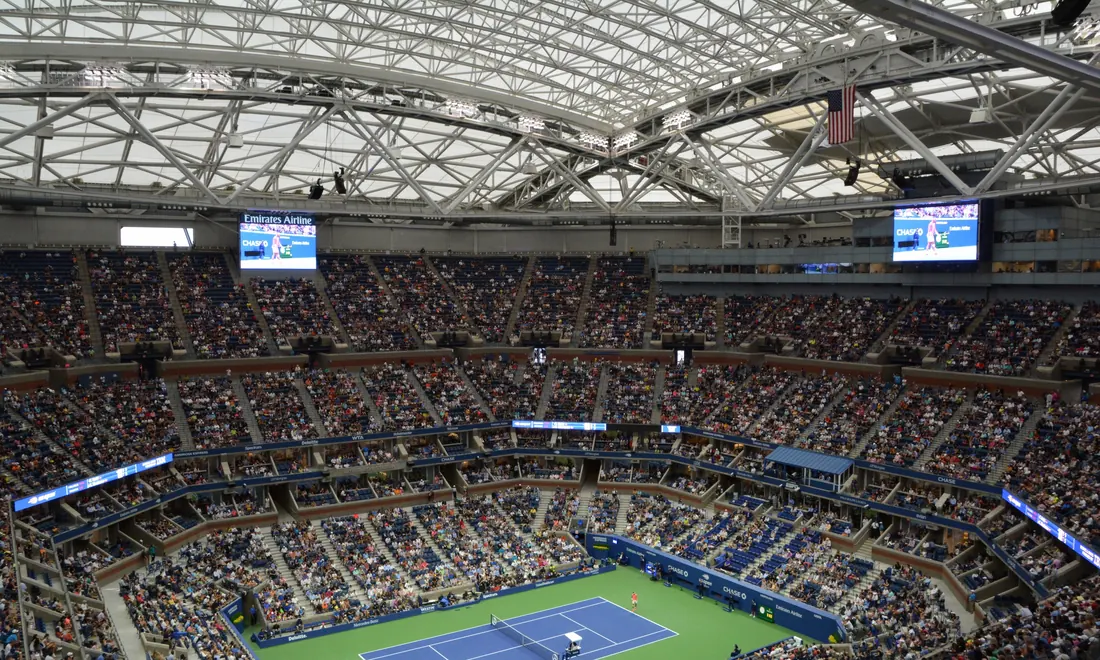
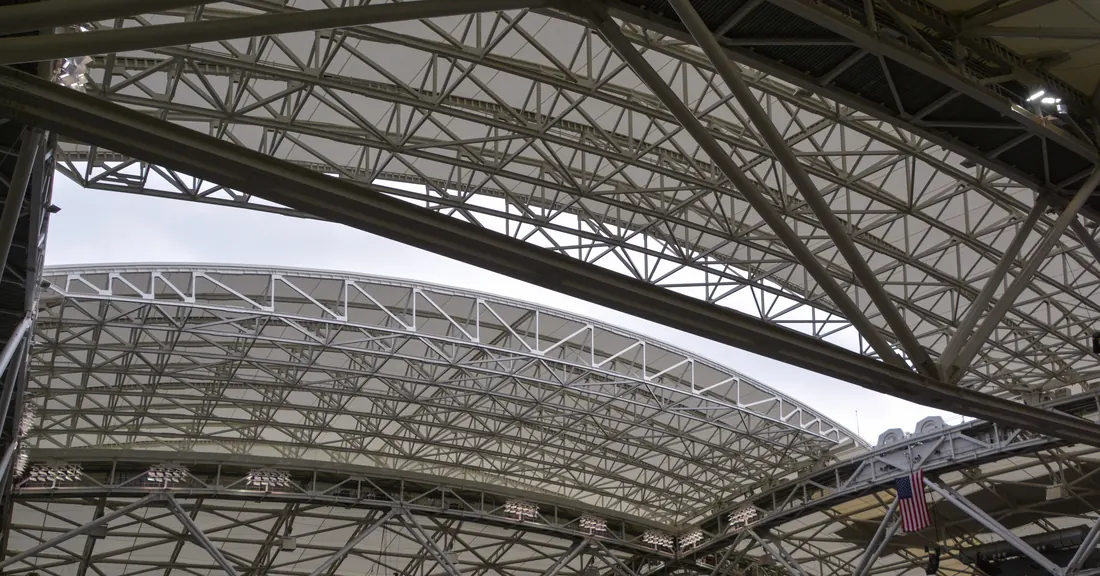
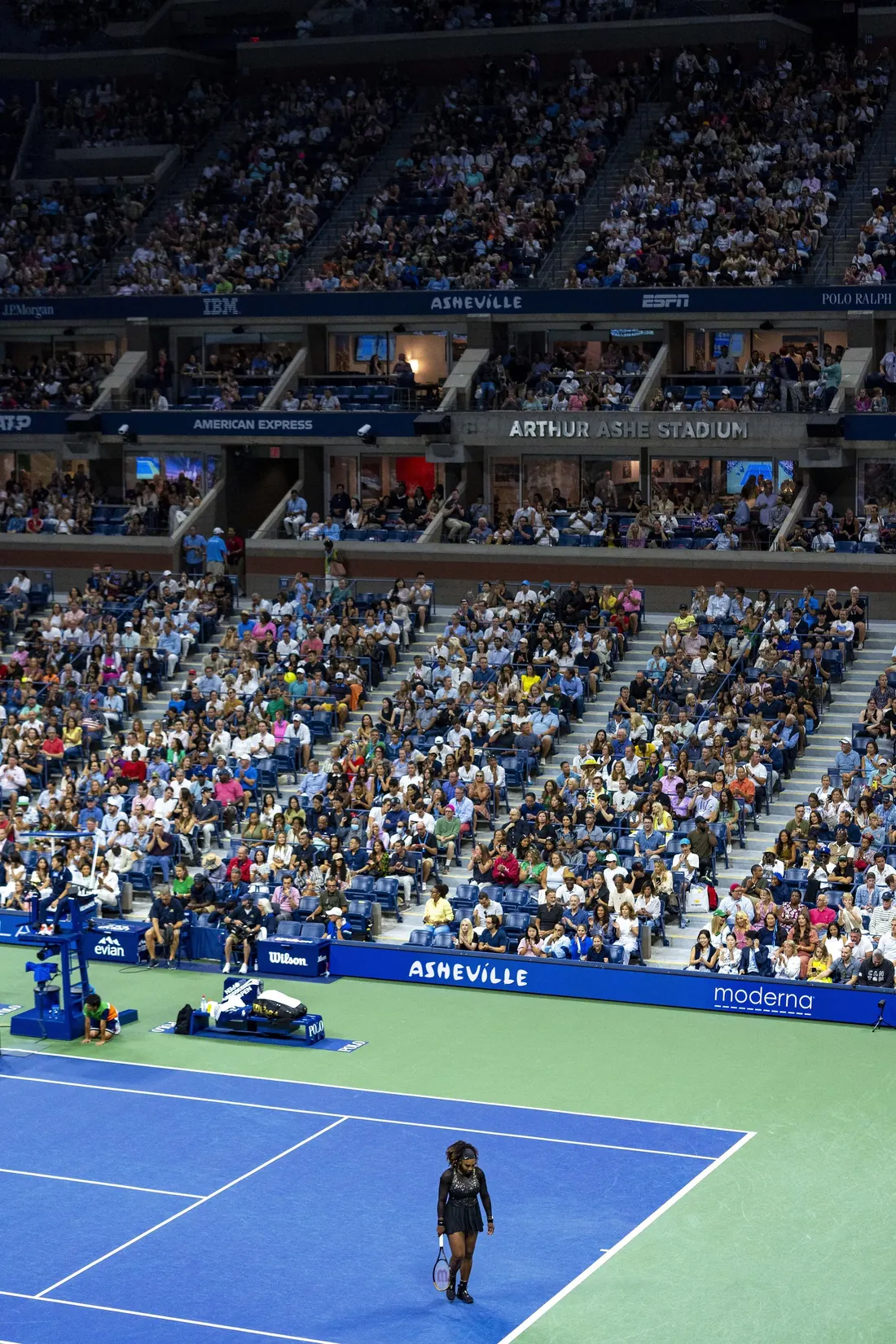
Pictures: no free photo shows the match, the booing or Serena comforting Osaka; every picture of those moments we found is agency or tournament work, and no broadcast footage or stills are used. Only one photo is from that day: Naomi Osaka lifting the trophy at the ceremony in Arthur Ashe Stadium on September 8, 2018, taken from the stands by a spectator (Azilko); it shows the trophy lift, not the moment she cried. Osaka is also at the 2018 Citi Open in Washington on July 29, 2018 (two photos by JC), hitting a forehand on grass on June 10, 2018 (Peter Menzel), and smiling during her 2020 US Open final in Arthur Ashe Stadium on September 12, 2020, two years later (AndrewHenkelman, cropped). At 16, she stands beside Serena Williams during an interview at the Bank of the West Classic at Stanford on July 28, 2014 (topol6). Serena Williams is at the 2013 US Open on August 29, 2013 (two photos by Edwin Martinez) and at Roland Garros on June 1, 2018, three months before the final (si.robi). Arthur Ashe Stadium is seen with its roof closed, and with the roof closing, on August 31, 2018, a week before the final (two photos by Carine06, cropped), and full on September 2, 2022 (All-Pro Reels).
Photo credits
The archive photos in this story
The photographs and illustrations in this story are in the public domain or shared under open licenses; each one is credited below with its license. Tap one to enlarge it, or follow the link to its Wikimedia Commons page for the full record. The narration, captions and graphics in the Short are our own; its music and sound effects are credited below.
Music and sound effects
Music: Schumann, Kinderszenen, Op. 15: No. 1 'Of Foreign Lands and Peoples (Musopen, public domain); Mussorgsky, Pictures at an Exhibition: IV. Bydlo (piano) (Musopen, public domain); Dvorak, Symphony No. 9 'From the New World': II. Largo (Musopen, public domain).
Sound effects: Freesound, CC0.