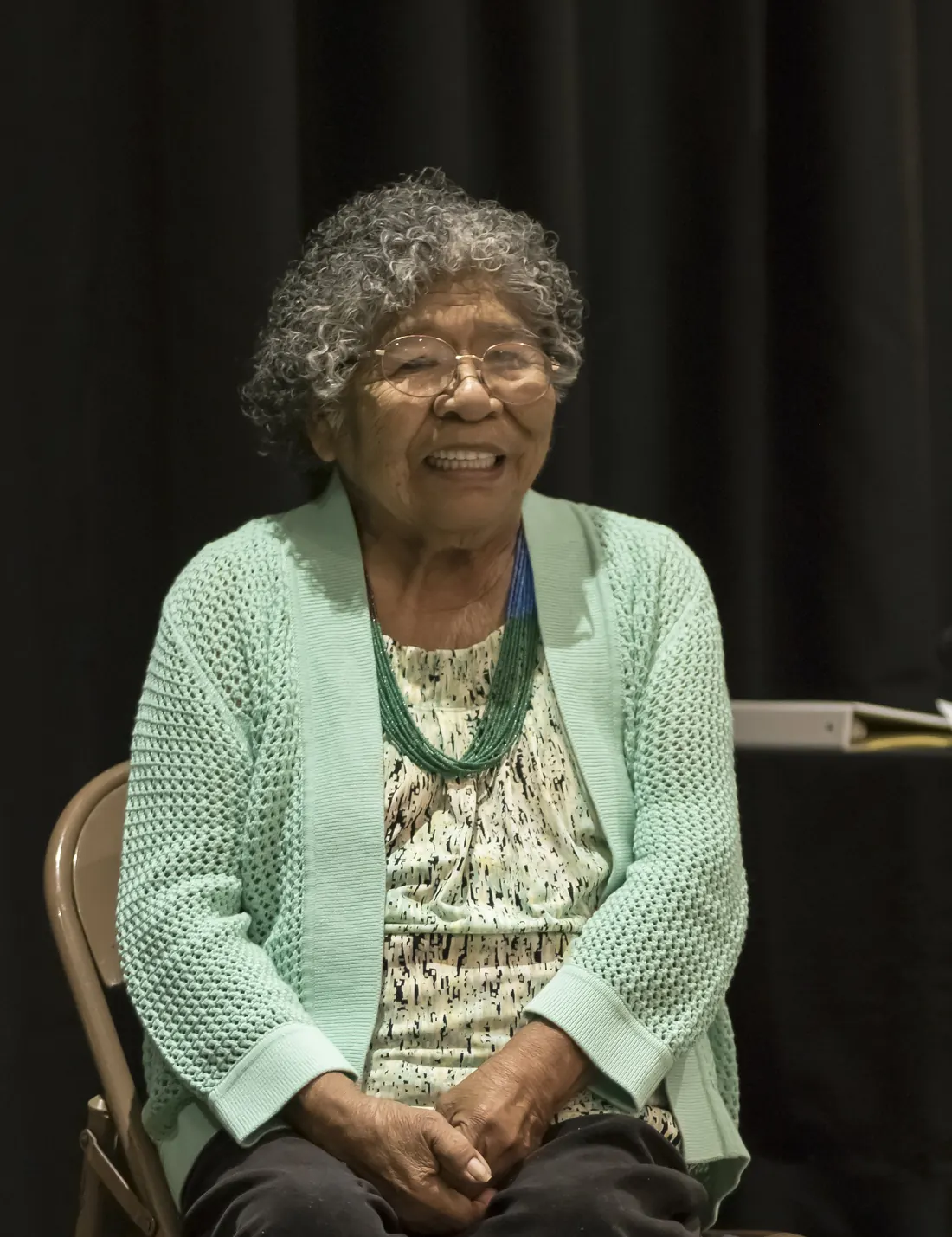
Marie Wilcox, the Associated Press wrote, “grew up in foothills northeast of Visalia and worked at a fruit packing house in Exeter for much of her life.” She was “born Nov. 24, 1933,” the Fresno Bee wrote, and her tribe was the Wukchumni, whose language, the Global Oneness Project explains, is “a dialect of the Tule-Kaweah language from the Yokuts tribal group, which originated along the Tule and Kaweah Rivers of Central California.” “Today, it is estimated that fewer than 200 Wukchumni remain,” the project says, and she became “the last fluent speaker of the Wukchumni language.” She had not even passed it on at home: “Wilcox did not share the language with her children until much later in life,” the First Nations Development Institute writes.
“In the early 1990s, Wilcox began writing down every Wukchumni word she could remember on envelopes and scraps of paper,” the institute writes. “Eventually, she started typing up and recording these word lists.” The AP described her “diligently typing Wukchumni words and stories into an old computer at her Woodlake home”; “She lived in that house for the past 53 years,” the Bee added. In a film, she said: “I’m just a pecker, one word at a time … and I was slow, just peck, peck, peck.” She documented her language “word by word,” the Global Oneness Project says, “in the form of a written and spoken dictionary,” and “she worked for more than 20 years to produce a dictionary,” the AP wrote.
Her work “got a boost in 2014 when The New York Times made a short documentary,” the AP wrote. In it, she said: “It just seems weird that I am the last one and, I don’t know, it’s just — it’ll just be gone one of these days maybe, I don’t know. It might go on and on.” She didn’t keep it to herself. In 2014, The Atlantic wrote that she “teaches weekly classes with her daughter,” and the AP wrote that “She was regularly teaching Wukchumni language classes through the Owens Valley Career Development Center.” Her daughter, Jennifer Malone, “did not learn how to speak the Wukchumni language until she was a grandmother,” the First Nations Development Institute writes. On the page for its 2019 film, the Global Oneness Project wrote: “Within Marie’s family, speaking Wukchumni has become a collective effort across four generations.” And “Marie’s great-great-grandson … is the first person in four generations who is being raised from birth to speak the Wukchumni language.”
Marie Wilcox died on September 25, 2021. “She was 87,” the AP reported. “Wilcox was once the last fluent speaker of Wukchumni,” it wrote. “Now there are at least three fluent speakers of the language, including her daughter.” They are “all members of her family,” her daughter, Jennifer Malone, told the Fresno Bee, which added: “She’s included in that trio.” “A Wukchumni dictionary Wilcox wrote was copyrighted, and her family is now looking for a publisher for it,” the AP said.
And in her language, there is no goodbye. “There is no word for goodbye in the Wukchumni language, Wilcox said in a 2019 video about her culture,” the Bee wrote. “We don’t have a goodbye because we never said goodbye,” she explained. “We just said, ‘We’ll see you later. ... I’ll see you when you return.’”
Fact check
The facts and where they come from
- She was the last fluent speaker of her tribe’s language, and it would die with her. The Associated Press: “Wilcox was once the last fluent speaker of Wukchumni.” Wilcox, in the 2014 New York Times film (AP): “It just seems weird that I am the last one and, I don’t know, it’s just — it’ll just be gone one of these days maybe.” Global Oneness Project: “Marie Wilcox, the last fluent speaker of the Wukchumni language.” 14
- Her name was Marie Wilcox, and her people were the Wukchumni of California. The Associated Press: “Marie Wilcox, a Native American woman in California who saved her tribe’s dying language”; “the language spoken by her tribe in California’s San Joaquin Valley.” Global Oneness Project: “Wukchumni, a dialect of the Tule-Kaweah language from the Yokuts tribal group, which originated along the Tule and Kaweah Rivers of Central California.” 15
- She hadn’t even taught the language to her own children. First Nations Development Institute: “Wilcox did not share the language with her children until much later in life.” 3
- So she wrote down every word she remembered, on envelopes and scraps of paper. First Nations Development Institute: “In the early 1990s, Wilcox began writing down every Wukchumni word she could remember on envelopes and scraps of paper.” Global Oneness Project: “Marie started the Wukchumni dictionary by writing down the words she knew on envelopes and papers.” 34
- Then she typed them into an old computer. The Associated Press: “diligently typing Wukchumni words and stories into an old computer at her Woodlake home.” The Fresno Bee: “into an old computer at her Woodlake home. She lived in that house for the past 53 years.” First Nations Development Institute: “Eventually, she started typing up and recording these word lists.” 123
- “I was slow, just peck, peck, peck,” she said. The Fresno Bee: “‘I’m just a pecker, one word at a time,’ Wilcox said in the film, ‘and I was slow, just peck, peck, peck.’” 2
- She recorded her voice saying each word. First Nations Development Institute: “she started typing up and recording these word lists.” Global Oneness Project: “documented her language— word by word— in the form of a written and spoken dictionary.” Salon: “the creation of a written and oral dictionary.” 357
- “It just seems weird that I am the last one,” she said. The Associated Press, from the 2014 New York Times film: “It just seems weird that I am the last one and, I don’t know, it’s just — it’ll just be gone one of these days maybe, I don’t know. It might go on and on.” The Fresno Bee has the same words. 12
- Her daughter Jennifer, a grandmother herself, kept learning until she was fluent. First Nations Development Institute: “Malone did not learn how to speak the Wukchumni language until she was a grandmother.” The Associated Press: “Now there are at least three fluent speakers of the language, including her daughter.” The Fresno Bee: “there are at least three fluent Wukchumni speakers, all members of her family, said her daughter, Jennifer Malone. She’s included in that trio.” 312
- Soon, four generations of her family were speaking it. Global Oneness Project (2019): “Within Marie’s family, speaking Wukchumni has become a collective effort across four generations.” 5
- The youngest, her great-great-grandson, was learning it from birth. Global Oneness Project: “Marie’s great-great-grandson … is the first person in four generations who is being raised from birth to speak the Wukchumni language.” 5
- When Marie died in 2021, she was no longer the last. The Associated Press (October 8, 2021): “Wilcox died Sept. 25 …”; “She was 87.”; “Wilcox was once the last fluent speaker of Wukchumni … Now there are at least three fluent speakers of the language, including her daughter.”; “The lifelong Tulare County resident.” 1
- In her language, there is no word for goodbye. The Fresno Bee: “There is no word for goodbye in the Wukchumni language, Wilcox said in a 2019 video about her culture.” 2
- “I’ll see you when you return,” she explained. The Fresno Bee: “‘We don’t have a goodbye because we never said goodbye,’ Wilcox explained. ‘We just said, “We’ll see you later. ... I’ll see you when you return.”’” 2
Sources
- Marie Wilcox, who saved her tribe’s language, dies (October 8, 2021, archived copy) The Associated Press
- Native elder saved her tribe’s language. Her Tulare County family vows to ‘keep it going’ (Carmen Kohlruss, October 8, 2021, archived copy) The Fresno Bee
- Jennifer Malone (fellow profile) First Nations Development Institute
- Marie’s Dictionary (film by Emmanuel Vaughan-Lee, 2014) Global Oneness Project
- Wukchumni (film by Emmanuel Vaughan-Lee and Adam Loften, 2019) Global Oneness Project
- Saving Wukchumni (Chris Heller, September 22, 2014, archived copy) The Atlantic
- Keeping Native American languages alive: In ‘Marie’s Dictionary,’ Wukchumni lives on (Tom Roston, April 20, 2018) Salon
Notes
When she started: the First Nations Development Institute says the early 1990s; the Associated Press and the Global Oneness Project say she worked on it for more than 20 years, and The Atlantic, in 2014, said more than seven. The Short gives no start year.
“It would die with her”: those are the Short’s words. Her own, in the 2014 film, were that the language would “just be gone one of these days maybe,” and “It might go on and on” (AP). When she became the last fluent speaker isn’t known from the sources we read; she was called that by 2014 (Global Oneness Project, The Atlantic).
Who taught whom: a popular retelling says her family learned from the dictionary just so they could talk to her; no source we read gives that reason. The sources say she taught classes with her daughter (The Atlantic) and that her daughter learned the language as a grandmother (First Nations Development Institute). The Short says only that Jennifer kept learning until she was fluent and that four generations spoke it.
Her computer: the same retelling says she learned to use a computer in her 80s; we found no source for that. The Short says only that she typed the words into an old computer (AP).
“No longer the last”: in 2021 the AP counted at least three fluent speakers, including her daughter, and the Fresno Bee says all three are members of her family. The four generations are from the Global Oneness Project’s 2019 film.
Marie Wilcox died in 2021. Her daughter, Jennifer Malone, is named as the AP and the Fresno Bee name her, and only for learning the language and becoming fluent. Her great-great-grandson is a child: he isn’t named or shown, and only the Global Oneness Project’s line about him learning from birth is used. Other family details, the circumstances of her death and a painful chapter of local history in one report were left out.
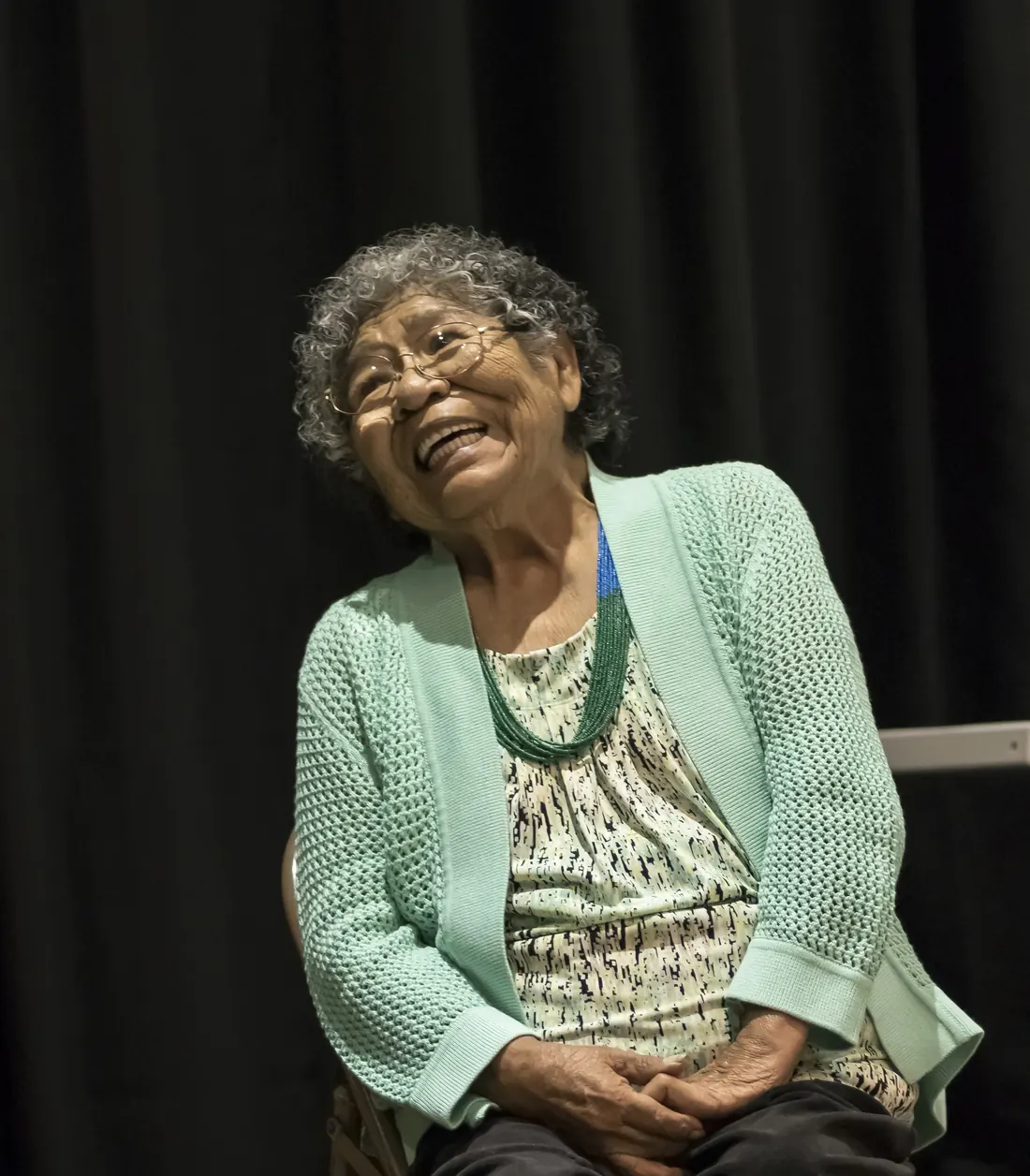
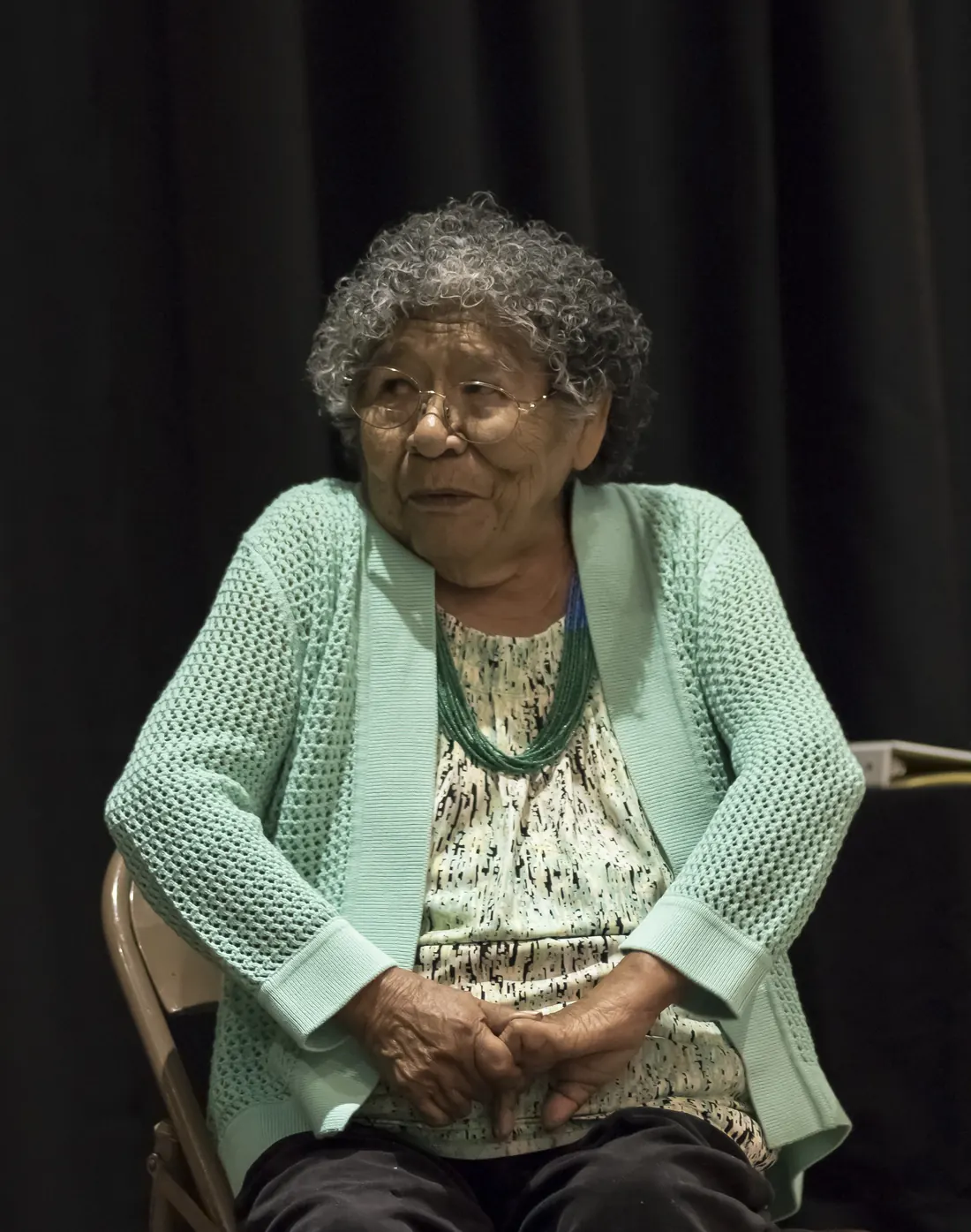
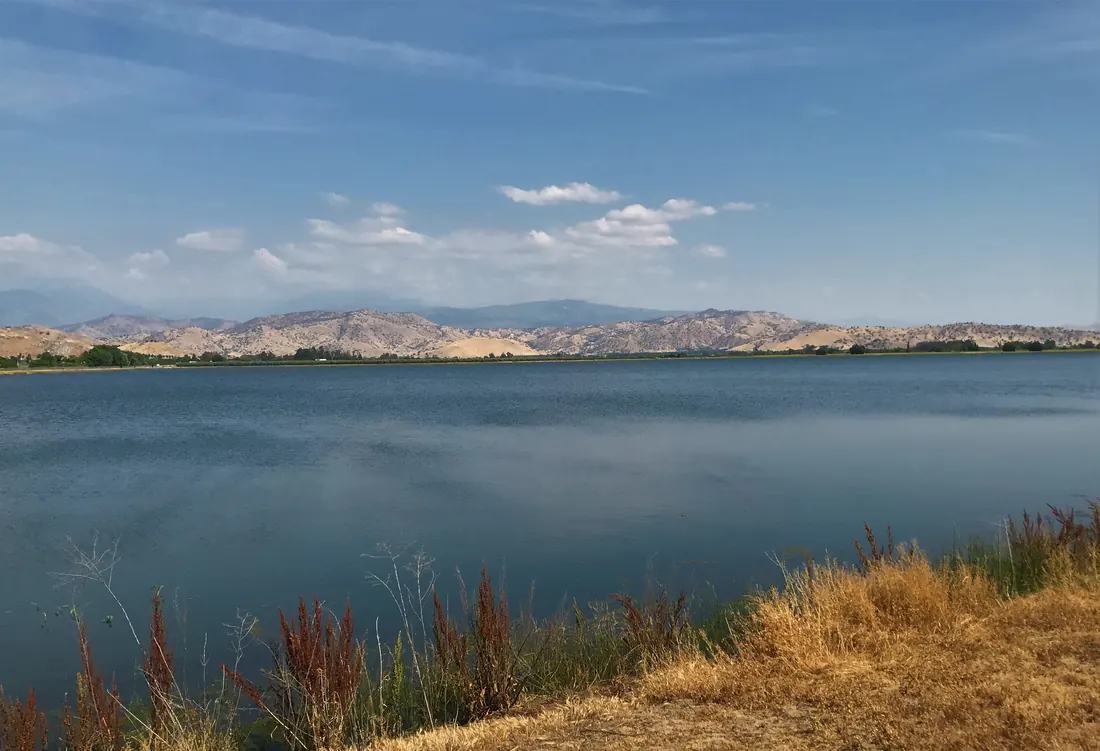
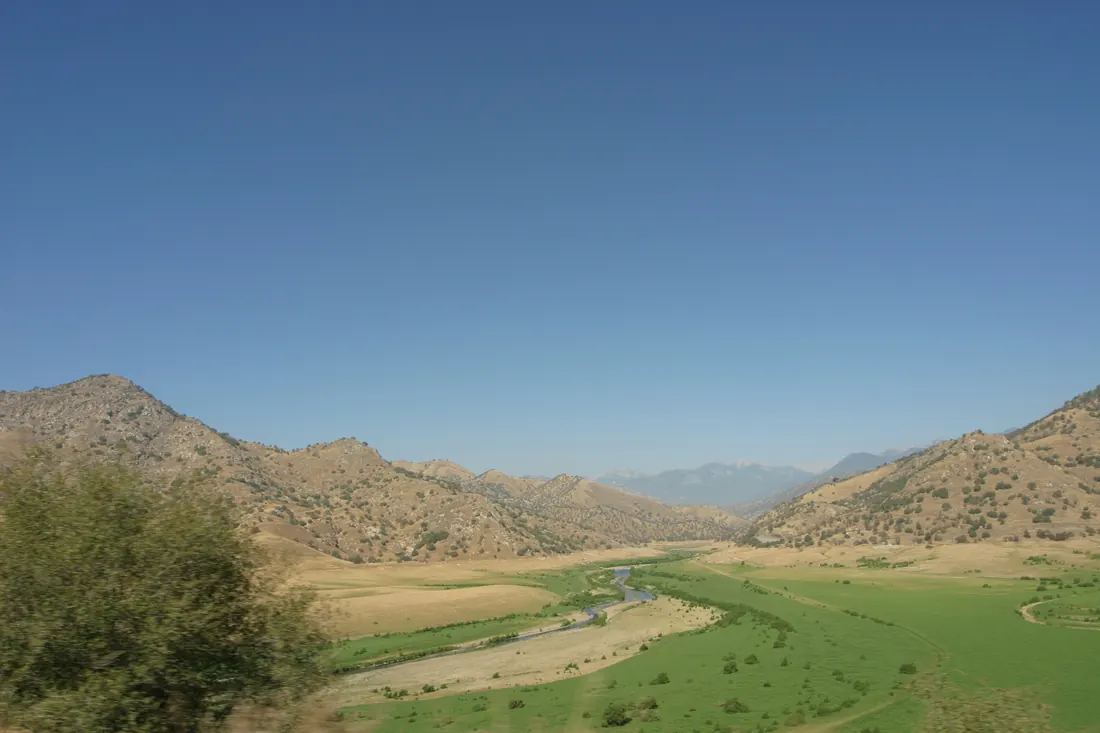
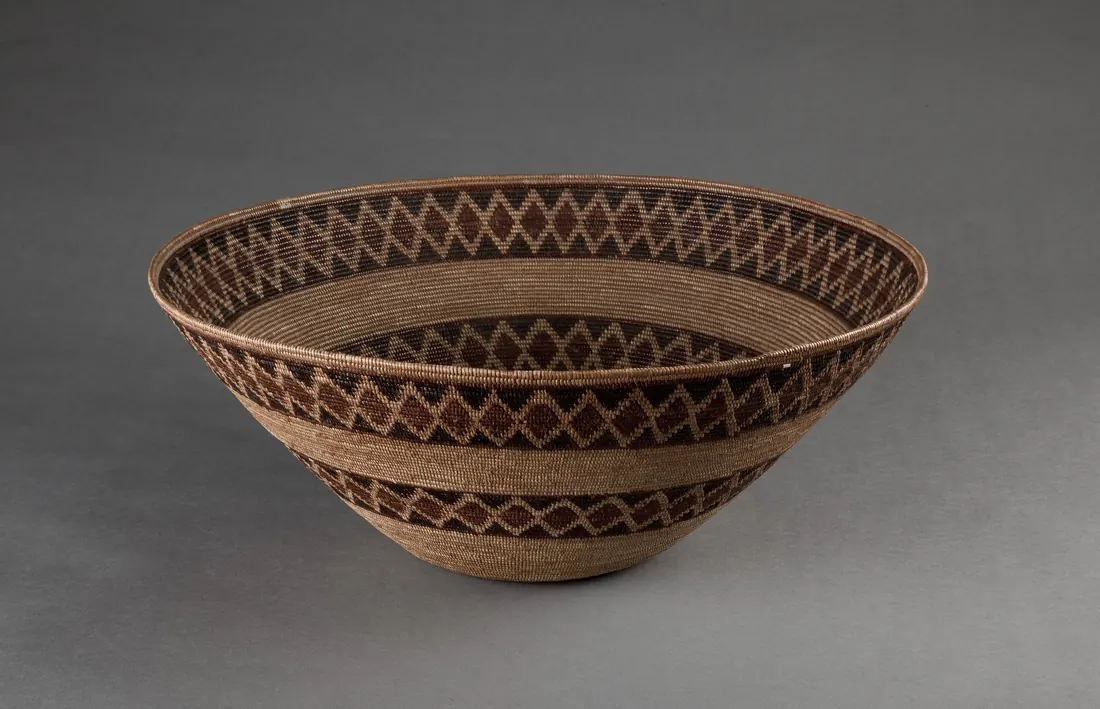
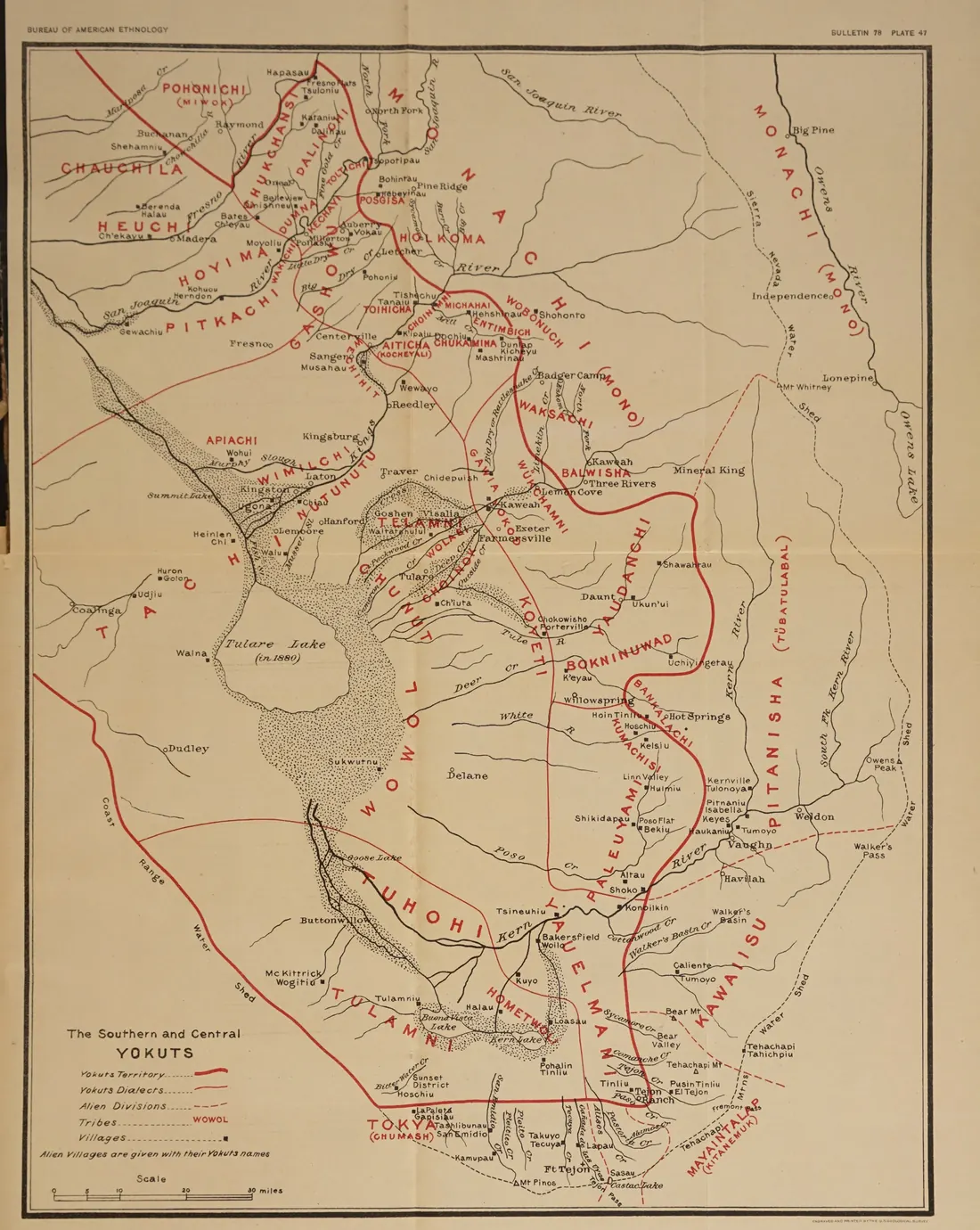
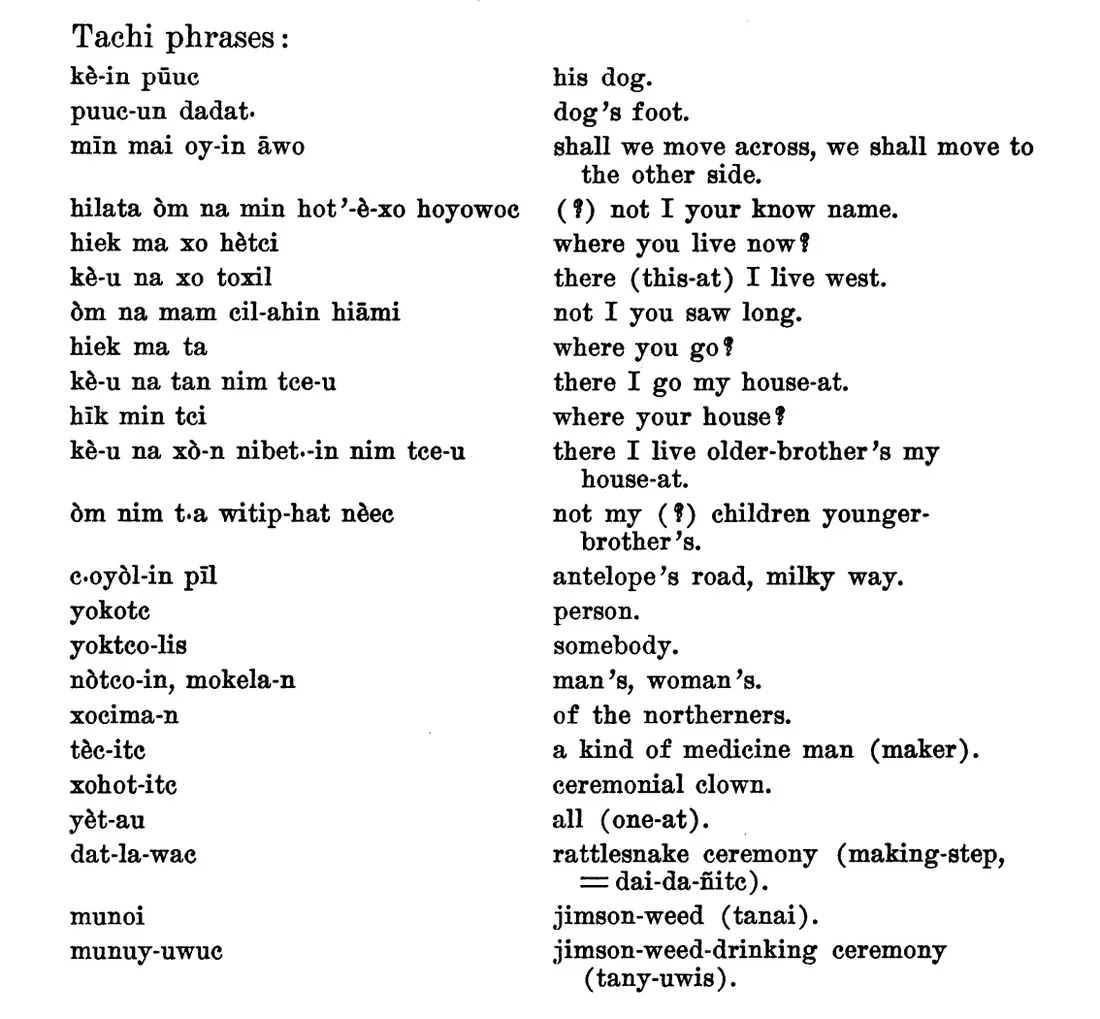
Pictures: no free photo shows her dictionary, her envelopes, her computer, her recordings, her classes or her family; the photos of those in the films and news reports are copyrighted, so none is used. Marie Wilcox is seen in three photos from one evening, March 4, 2016, a community awards night in Woodlake where she received a Lifetime Achievement Award: smiling, laughing and speaking (Tommy Lee Kreger). Bravo Lake in Woodlake, her home town, is seen on May 28, 2023; it is not her house (Fruitianslip). The Kaweah River valley in the Sierra foothills, Wukchumni country, is seen on September 22, 2002 (Vlad Butsky). The basket is a Yokuts basket from about 1890 in the Bowers Museum, not hers, though she “also enjoyed traditional Native American basket weaving,” the AP wrote (Bowers Museum). The map is A. L. Kroeber’s “The Southern and Central Yokuts” from 1925, which marks WUKCHAMNI near Lemon Cove, Three Rivers and Visalia, and the page of words is a list of Tachi Yokuts phrases Kroeber wrote down in 1907; Tachi is another Yokuts dialect, and the page is not her writing.
Photo credits
The archive photos in this story
The photographs and illustrations in this story are in the public domain or shared under open licenses; each one is credited below with its license. Tap one to enlarge it, or follow the link to its Wikimedia Commons page for the full record. The narration, captions and graphics in the Short are our own; its music and sound effects are credited below.
Music and sound effects
Music: Schumann, Kinderszenen, Op. 15: No. 1 'Of Foreign Lands and Peoples (Musopen, public domain); Mussorgsky, Pictures at an Exhibition: IV. Bydlo (piano) (Musopen, public domain); Dvorak, Symphony No. 9 'From the New World': II. Largo (Musopen, public domain).
Sound effects: Freesound, CC0.