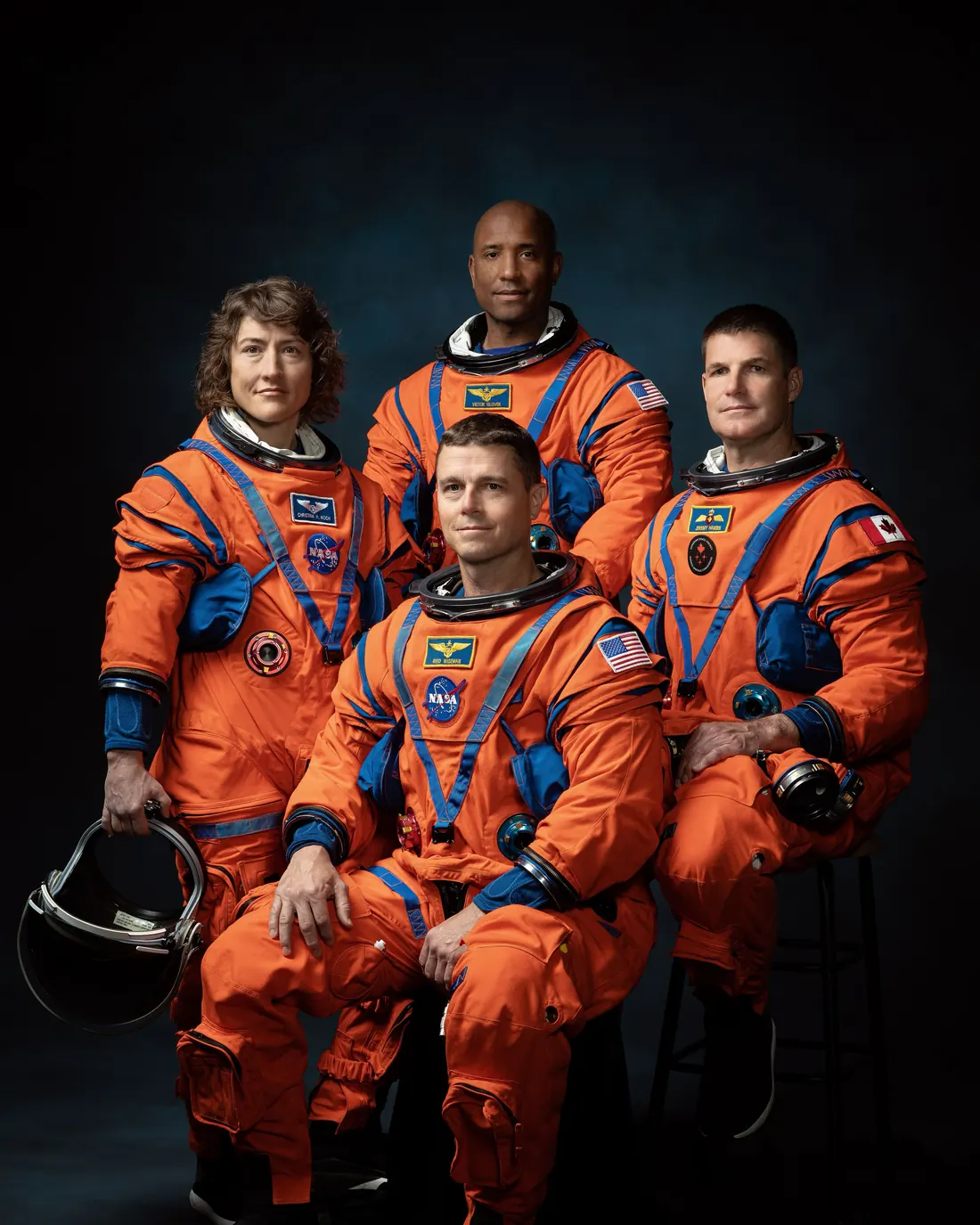
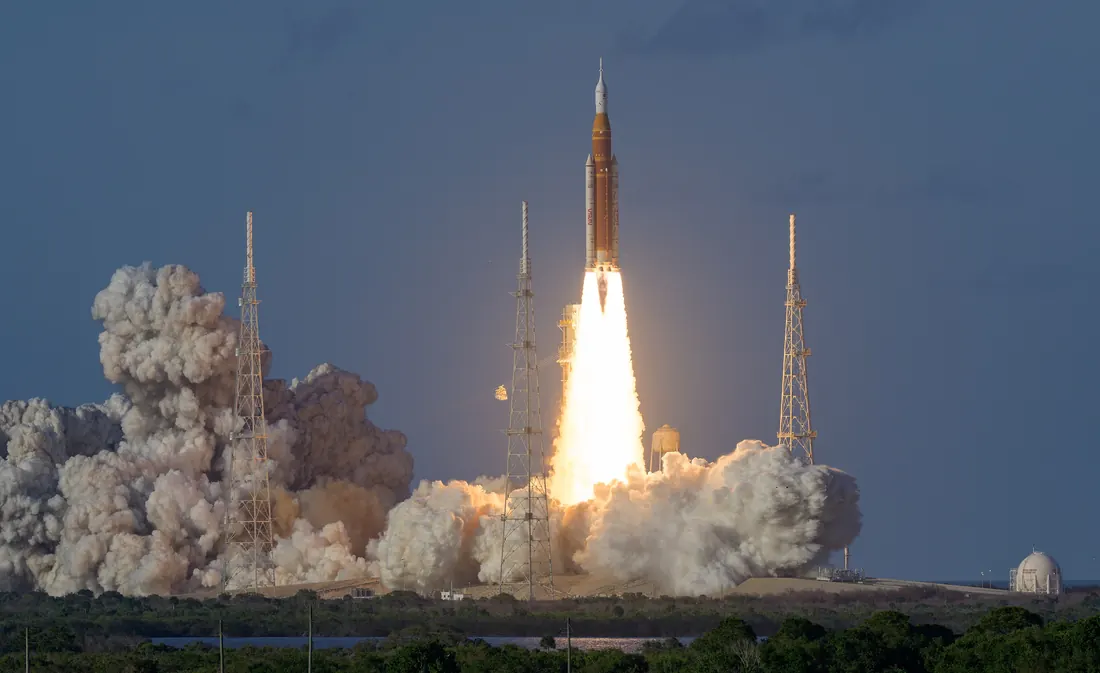
“Fifty-three years ago, humanity left the Moon,” NASA wrote. “The first Artemis crew launched on NASA’s SLS rocket at 6:35 p.m. April 1, from Launch Pad 39B at the agency’s Kennedy Space Center in Florida.” The crew were “NASA astronauts Reid Wiseman, Victor Glover, and Christina Koch, and CSA (Canadian Space Agency) astronaut Jeremy Hansen,” and NASA calls them “The first astronauts to travel to the Moon in more than half a century.” Their spacecraft was “named Integrity by the crew.”
“On Monday, April 6, 2026, six days into the Artemis II mission,” as NASA put it, they flew past the Moon, “marking humanity’s first return to the Moon since Apollo 17 in 1972.” Shortly after 2 p.m., they proposed names for two craters. “Mission specialist Jeremy Hansen, on the line with mission control, suggested that the first crater be named after their spacecraft, ‘Integrity.’ For the second, they suggested Carroll, in honor of Wiseman’s wife,” NPR reported. “The second honors Wiseman’s late wife, Carroll,” NASA said.
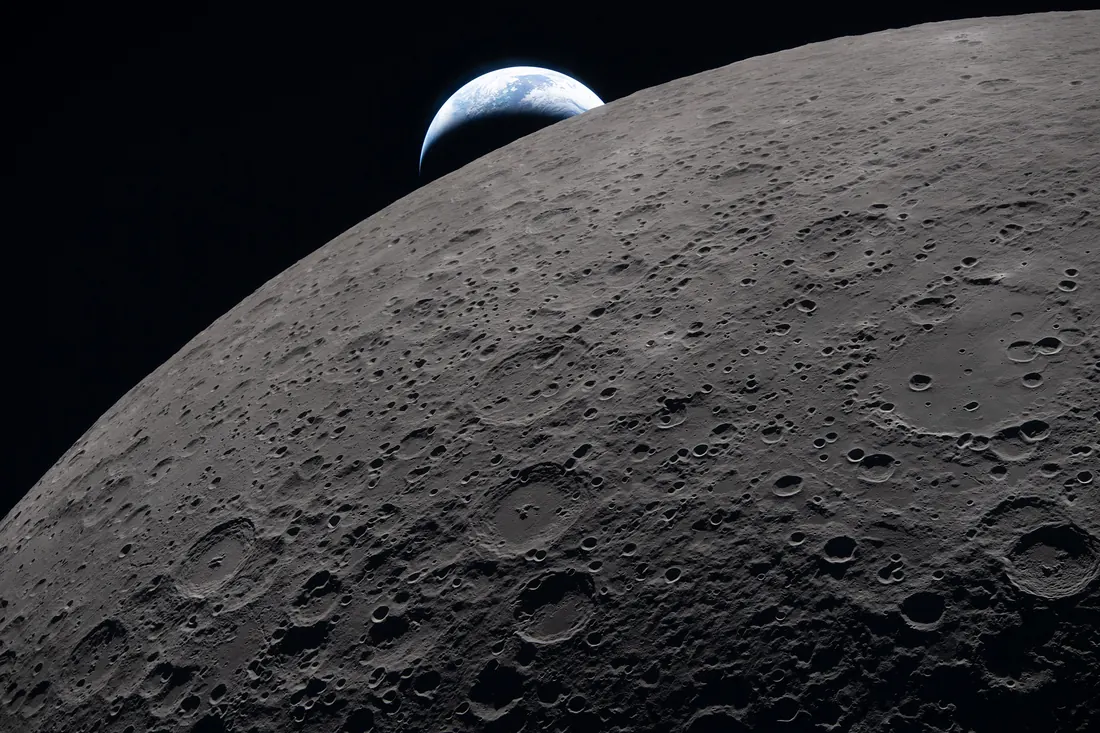
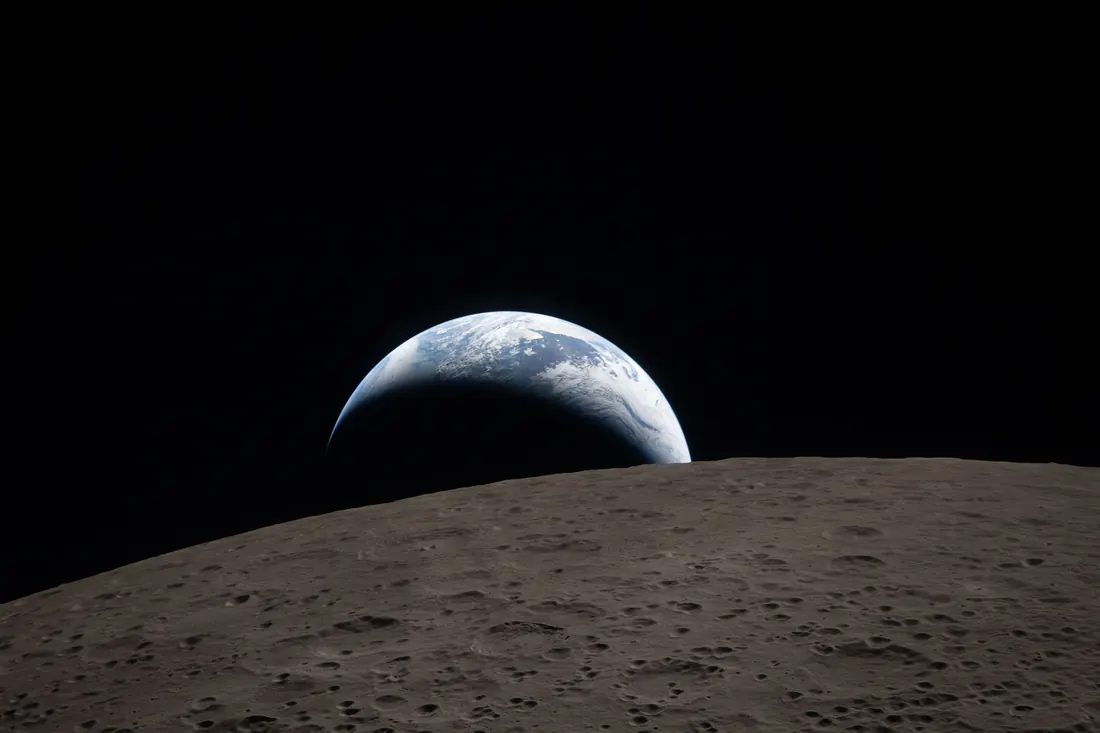
Then came the far side. “For about 40 minutes, the lunar surface blocks the radio signals from NASA’s Deep Space Network on Earth needed to stay in contact with the crew,” NASA explained. Mission Control called: “Integrity, Houston. You are six minutes from your 40-minute lunar flyby LOS. From all of us, it’s a privilege to witness you carry the fire past our farthest reach. Thank you, Godspeed.” “Pilot Victor Glover responded,” NASA’s Curious Universe podcast says: “And to all of you down on Earth and around Earth, we love you, from the Moon.” NASA’s blog logged the Earthset at 6:41 p.m., when “the crew witnessed an ‘Earthset’ — the moment Earth dropped below the lunar horizon,” and at 6:44 p.m. it reported: “The Orion spacecraft has entered a planned communications blackout as it passes behind the Moon.”
“With that, the astronauts were completely alone,” the podcast says. “During a planned 40-minute loss of signal as Orion passed behind the Moon, the spacecraft and its crew made their closest approach at 7:00 p.m., flying at about 4,067 miles above the surface,” NASA reported. “Two minutes later, the crew reached the mission’s maximum distance from Earth at 252,756 miles, setting a new record for human spaceflight.”
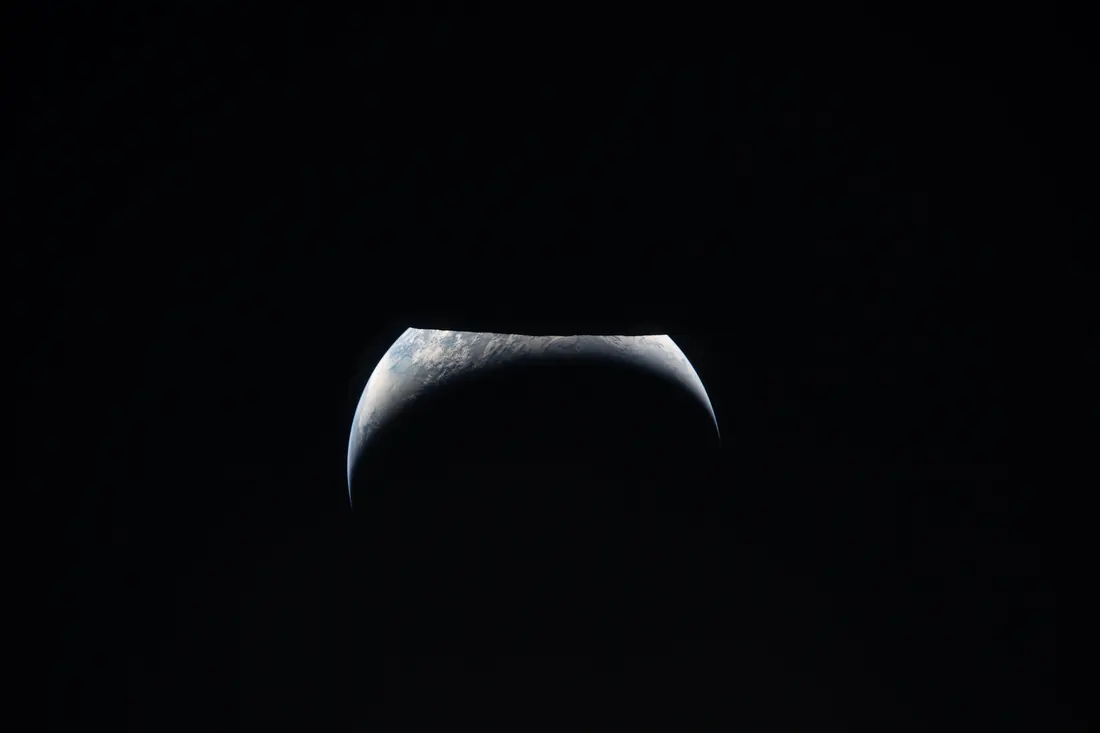
At 7:24 p.m., NASA’s blog says, “The Artemis II crew witnessed an Earthrise as Orion emerged from behind the Moon, moments before the Deep Space Network reacquired the spacecraft’s signal and restored communications.” “Forty minutes later, the astronauts regained contact.” “Integrity. Comm check,” Christina Koch called, and in that call, as NASA’s transcript has it, she said: “And it is so great to hear from Earth again,” and “we will always choose Earth. We will always choose each other.” Mission Control answered, “We are Earth bound and ready to bring you home.” Four days later, Integrity splashed down “at 5:07 p.m. PDT Friday off the coast of San Diego,” NASA says.
Fact check
The facts and where they come from
- A crew of four flew behind the Moon, and for 40 minutes, nobody on Earth could reach them. NASA (Flight Day 6 blog): “For about 40 minutes, the lunar surface blocks the radio signals from NASA’s Deep Space Network on Earth needed to stay in contact with the crew.” NASA’s Curious Universe: “a period of about 40 minutes when they flew behind the Moon, completely out of contact with all of us on Earth.” 15
- Their names are Reid Wiseman, Victor Glover, Christina Koch and Jeremy Hansen. NASA: “NASA astronauts Reid Wiseman, Victor Glover, and Christina Koch, and CSA (Canadian Space Agency) astronaut Jeremy Hansen.” 4
- In April 2026, they became the first people sent to the Moon in 53 years. NASA: “The first Artemis crew launched on NASA’s SLS rocket at 6:35 p.m. April 1, from Launch Pad 39B at the agency’s Kennedy Space Center in Florida”; “The first astronauts to travel to the Moon in more than half a century”; “Fifty-three years ago, humanity left the Moon.” NASA (flyby wrap-up): “marking humanity’s first return to the Moon since Apollo 17 in 1972.” 42
- On day six, they proposed naming a crater after their commander’s late wife, Carroll. NASA: “On Monday, April 6, 2026, six days into the Artemis II mission”; “The second honors Wiseman’s late wife, Carroll.” NPR: “For the second, they suggested Carroll, in honor of Wiseman’s wife.” 37
- With six minutes to go, Houston said, “Thank you, Godspeed.” Mission Control, in NASA’s Curious Universe transcript: “Integrity, Houston. You are six minutes from your 40-minute lunar flyby LOS. From all of us, it’s a privilege to witness you carry the fire past our farthest reach. Thank you, Godspeed.” 5
- Victor Glover answered, “We love you, from the Moon.” NASA’s Curious Universe: “Pilot Victor Glover responded”; “And to all of you down on Earth and around Earth, we love you, from the Moon.” NASA (Flight Day 6 blog, 6:44 p.m., Victor Glover, Artemis II pilot): “we love you, from the Moon.” 51
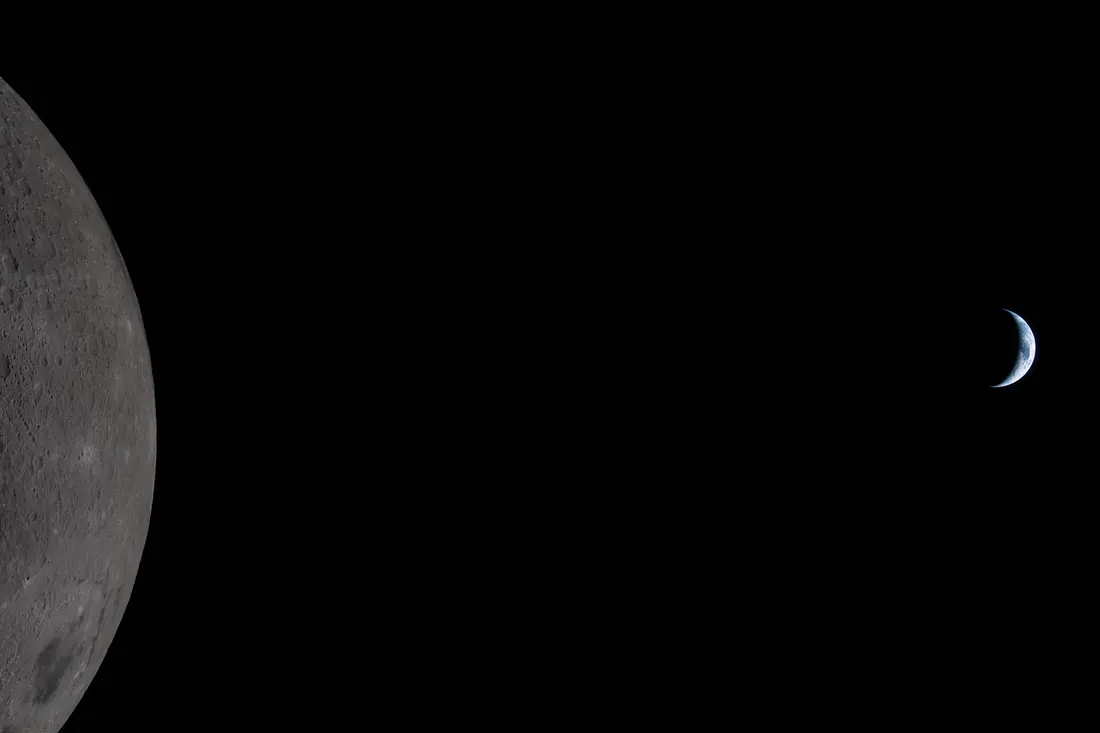
- As the Earth slipped behind the Moon, the radio went silent. NASA (Flight Day 6 blog, 6:41 p.m.): “the crew witnessed an ‘Earthset’ — the moment Earth dropped below the lunar horizon”; (6:44 p.m.) “The Orion spacecraft has entered a planned communications blackout as it passes behind the Moon.” NASA image caption: “captured at 6:41 p.m. EDT, on April 6, 2026, just three minutes before the Orion spacecraft and its crew went behind the Moon and lost contact with Earth for 40 minutes.” 16
- Alone, they passed about 4,000 miles above the far side. NASA’s Curious Universe: “With that, the astronauts were completely alone.” NASA (flyby wrap-up): “During a planned 40-minute loss of signal as Orion passed behind the Moon, the spacecraft and its crew made their closest approach at 7:00 p.m., flying at about 4,067 miles above the surface.” 52
- In that silence, they reached the farthest point any human has ever been. NASA (flyby wrap-up): “Two minutes later, the crew reached the mission’s maximum distance from Earth at 252,756 miles, setting a new record for human spaceflight.” NASA (Flight Day 6 blog, 7:02 p.m.): “The Artemis II crew has reached the mission’s maximum distance from Earth at 252,756 miles, setting a new record for human spaceflight.” 21
- Then, 40 minutes later, the Earth rose again over the Moon. NASA (Flight Day 6 blog, 7:24 p.m.): “The Artemis II crew witnessed an Earthrise as Orion emerged from behind the Moon, moments before the Deep Space Network reacquired the spacecraft’s signal and restored communications.” NASA’s Curious Universe: “Forty minutes later, the astronauts regained contact.” 15
- “It is so great to hear from Earth again,” Christina Koch said. NASA’s Curious Universe transcript: “CHRISTINA KOCH: Integrity. Comm check.” … “And it is so great to hear from Earth again.” AOL: “‘It’s so great to hear from Earth again,’ astronaut Christina Koch said.” 59
- “We will always choose Earth. We will always choose each other.” Christina Koch, in NASA’s Curious Universe transcript (the same call): “we will always choose Earth. We will always choose each other.” AFP: “‘We will always choose Earth, we will always choose each other,’ said astronaut Christina Koch.” 58
Sources
- Artemis II Flight Day 6: Lunar Flyby Updates (live blog, April 6, 2026) NASA
- Artemis II Flight Day 6: Crew Wraps Historic Lunar Flyby (April 6, 2026) NASA
- NASA’s Artemis II Crew Eclipses Record for Farthest Human Spaceflight (news release, April 6, 2026) NASA
- NASA Welcomes Record-Setting Artemis II Moonfarers Back to Earth (news release, April 10, 2026, updated May 7, 2026) NASA
- Update: Artemis II Crew Flies Around the Moon (Curious Universe podcast and transcript, April 8, 2026) NASA
- Image art002e009289 and its caption (April 6, 2026) NASA Image and Video Library
- Astronauts suggest naming a moon crater ‘Carroll’ after their commander’s late wife (April 7, 2026) NPR, via VPM
- Signal cut, signal restored: Nasa regains communications with astronauts after expected blackout (AFP, April 6–7, 2026) Gulf News
- Watch: Artemis II crew reconnects with Earth after 40-minute blackout following moon fly-by (April 7, 2026) AOL
Notes
Before the blackout: NASA’s blog and AFP give “We will see you on the other side” to Victor Glover, but NASA’s own transcript gives it to Mission Control (“Houston copies. We’ll see you on the other side.”), so it isn’t used. Only the words every source gives to Glover, “we love you, from the Moon,” are quoted.
When Koch spoke: AFP says her words came “in initial comments following the signal cut”; NASA’s transcript puts them in her first call after the signal came back (“Integrity. Comm check.”). This page follows NASA.
Times and numbers: NASA gives loss of signal at 6:44 p.m. (other outlets say about 6:43 or 6:45); the Earthrise photos are timed 7:22 p.m., the blog’s Earthrise entry 7:24 p.m. and the planned end of the blackout 7:25 p.m., so the Short says only “forty minutes,” as NASA does. The closest approach was 4,070 miles before the flight and 4,067 miles in NASA’s final figure; the Short says “about four thousand.” The maximum distance is 252,756 miles in NASA’s reports and 252,752 miles in Gulf News, citing a NASA post; the Short gives no figure.
The craters: the names are proposals, which NASA will submit to the International Astronomical Union, so the Short says “proposed.”
Left out: NASA changed its release’s statements about the crew’s “firsts” on the evening of April 6, so this page makes no claims about them. The splashdown and re-entry are mentioned only in passing.
Reid Wiseman, Victor Glover, Christina Koch and Jeremy Hansen are alive. Only NASA’s published mission facts and the crew’s own words, from NASA’s transcript and blog, are used, and they are named by their mission roles. Carroll is named only as NASA and the crew named her, for the crater; private family details in NPR’s report are left out. The mission-control staff are not named.
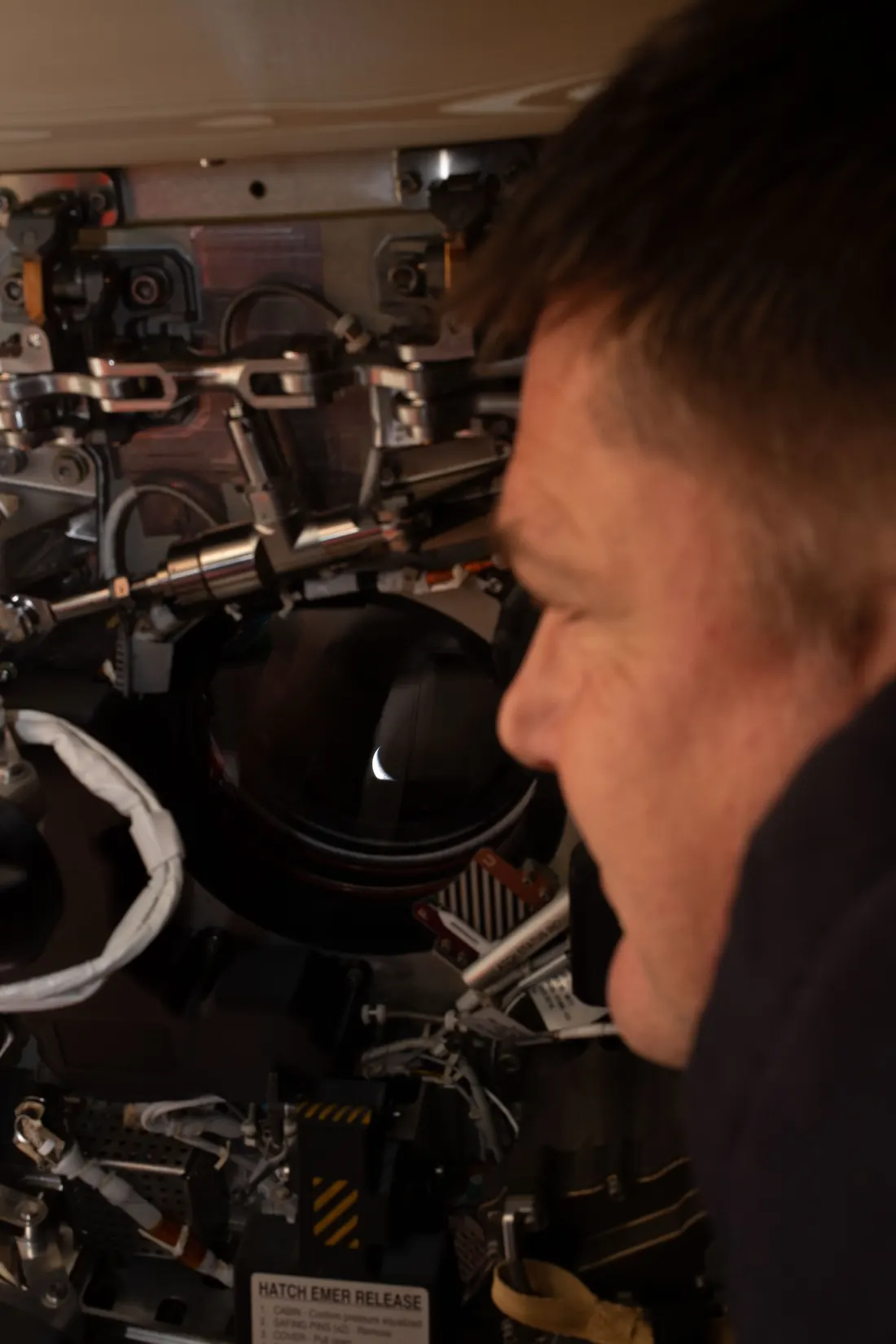
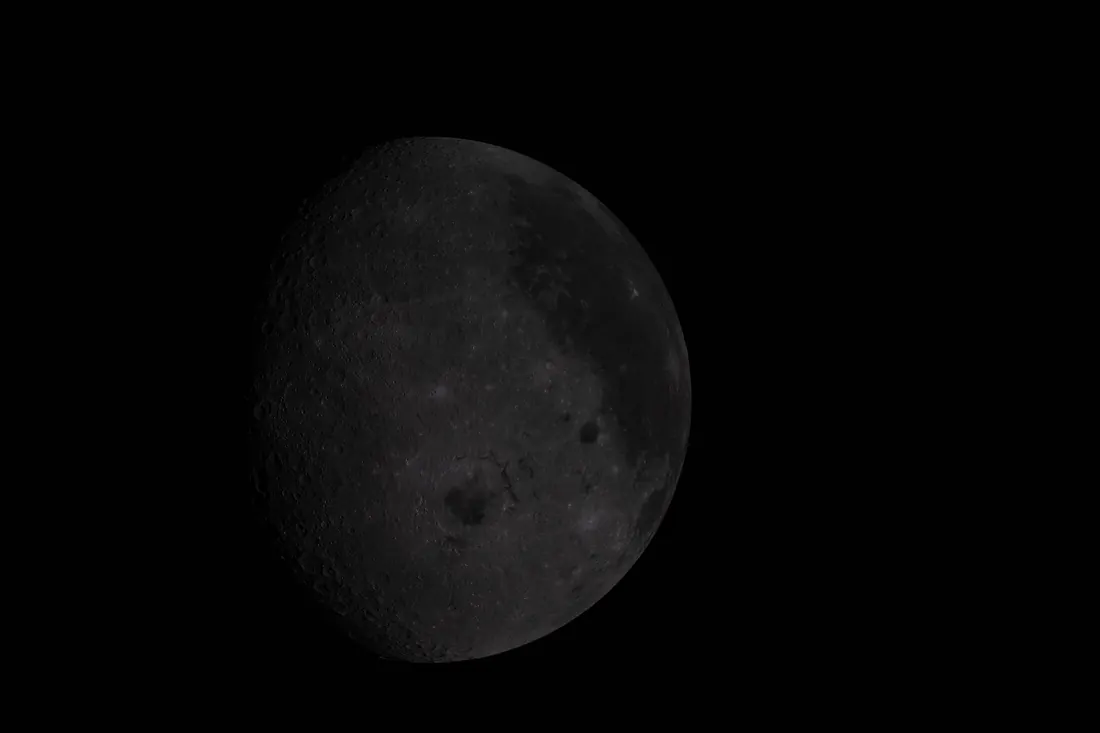
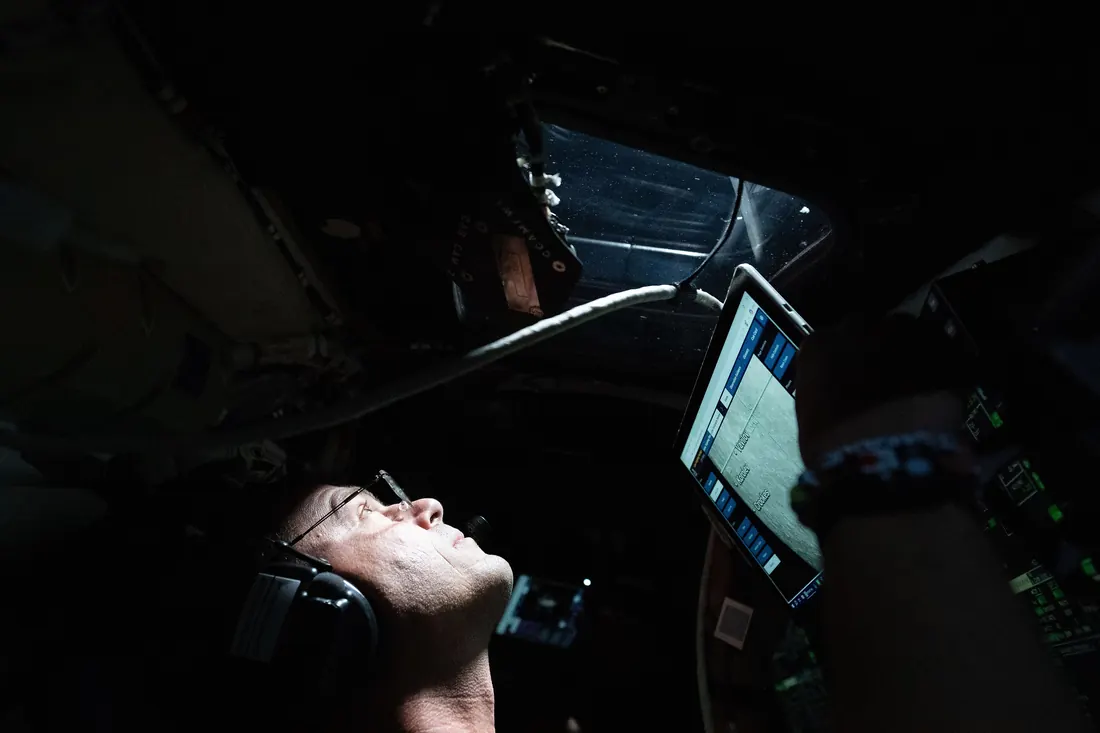
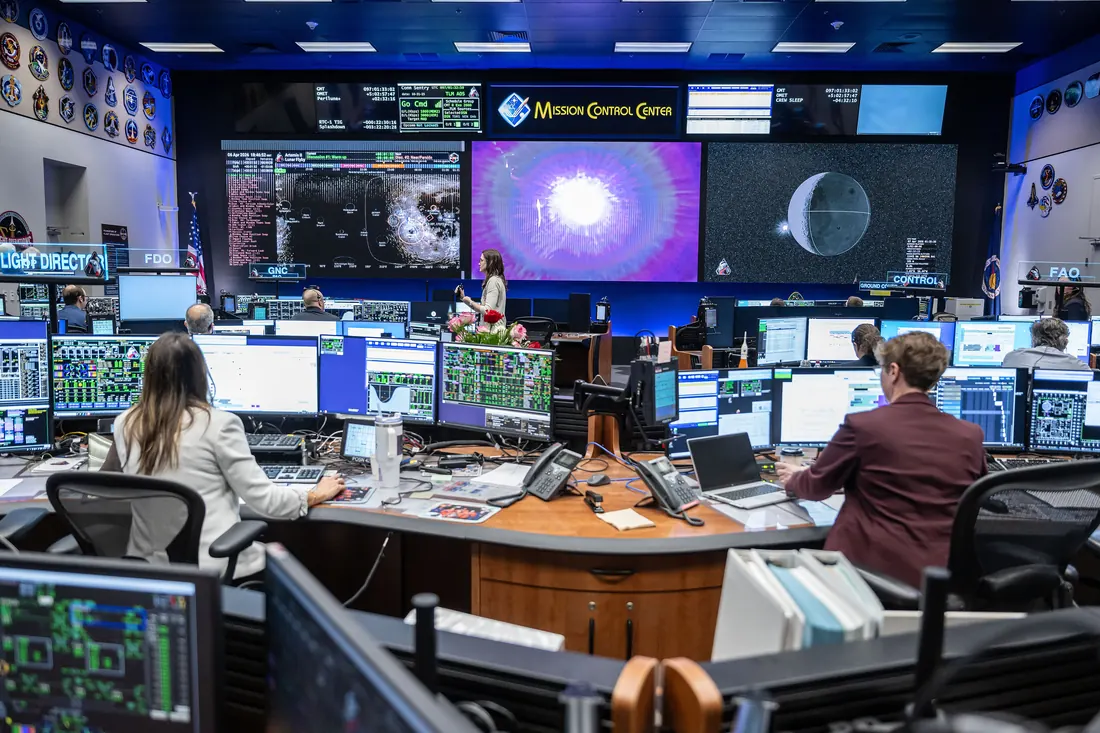
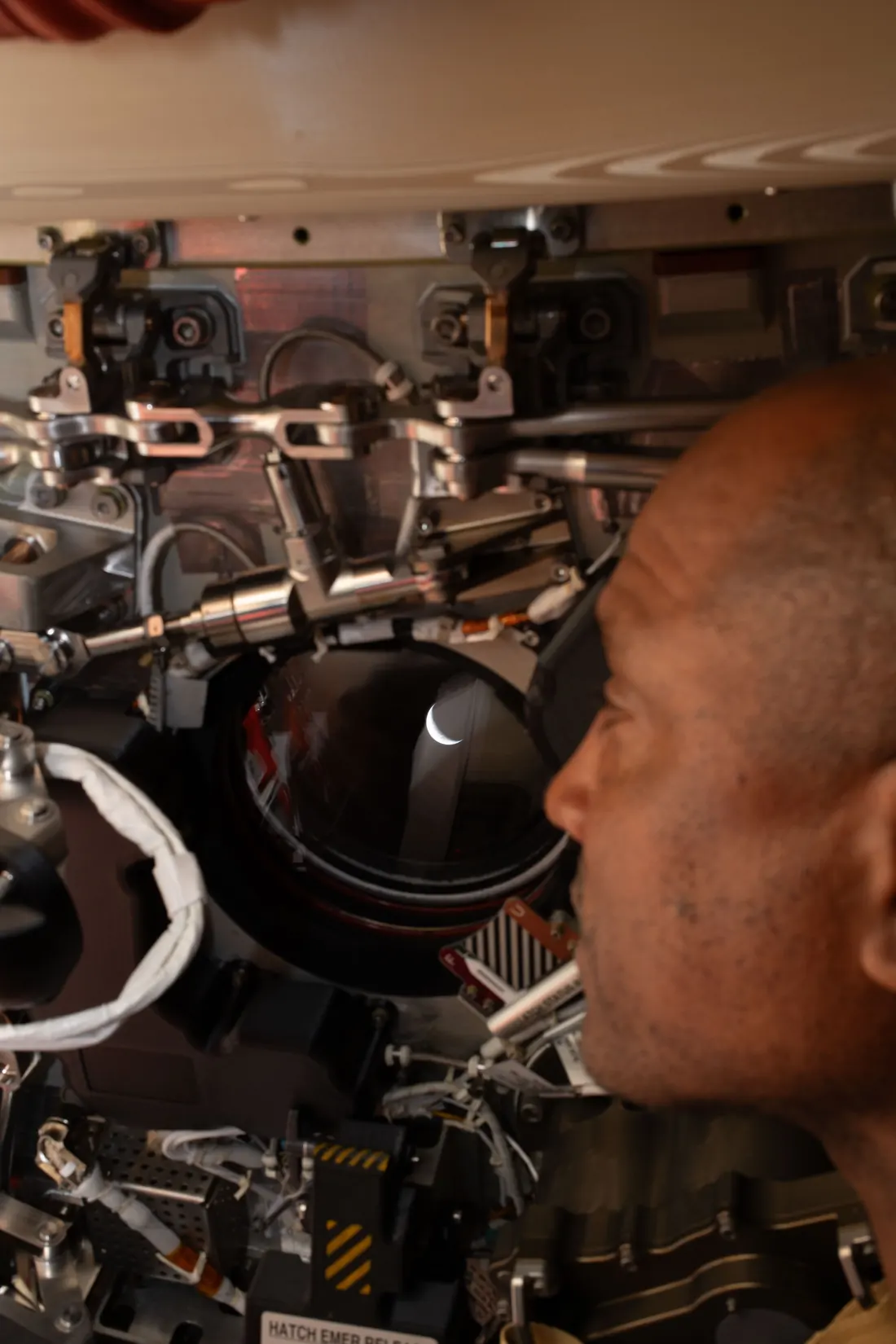
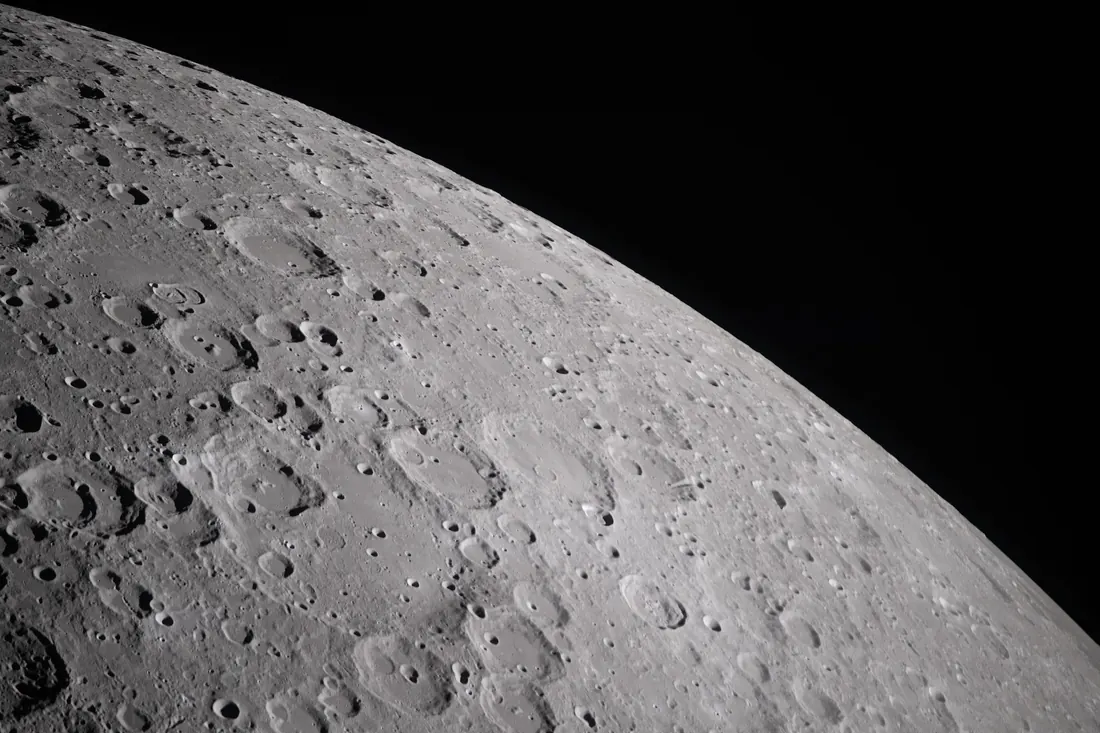
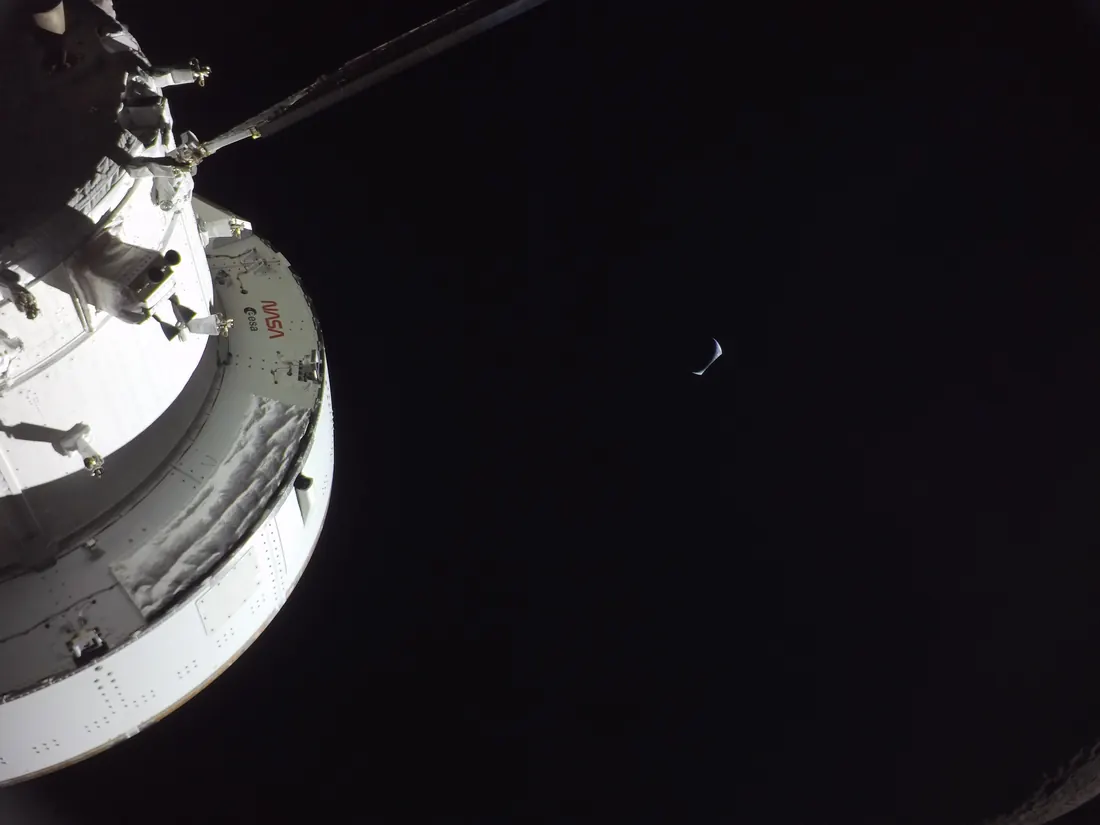
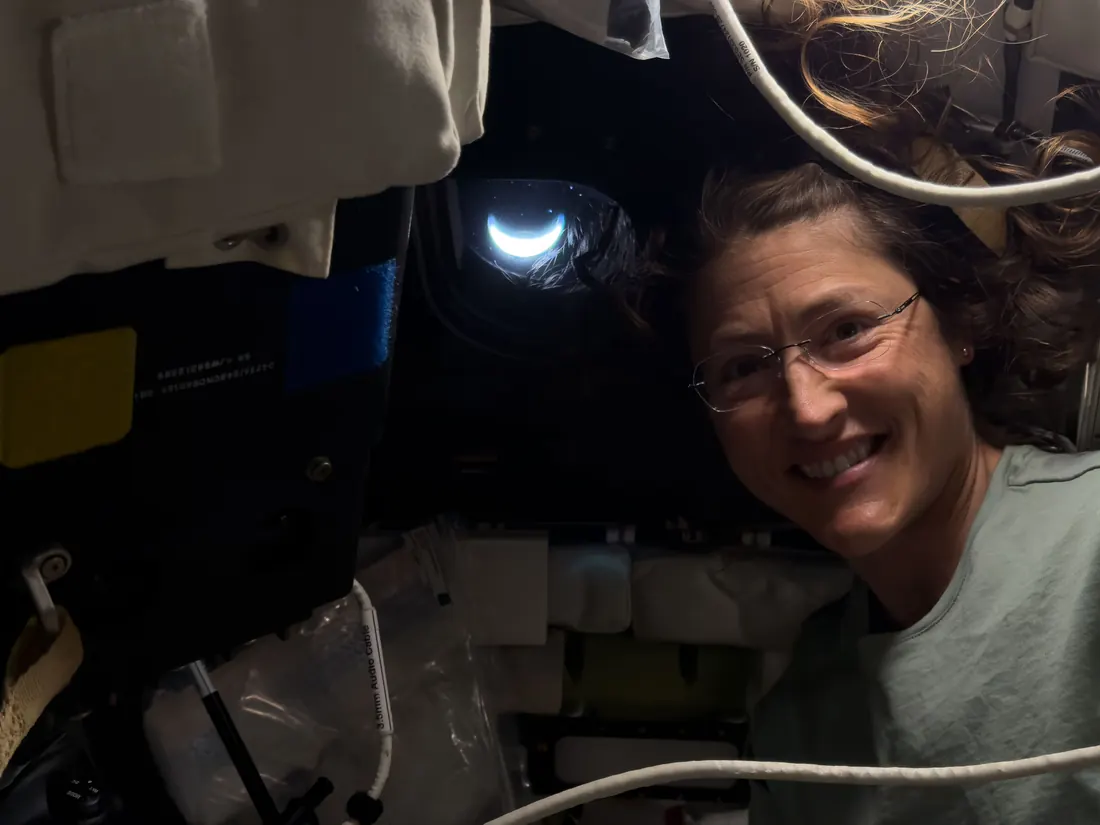
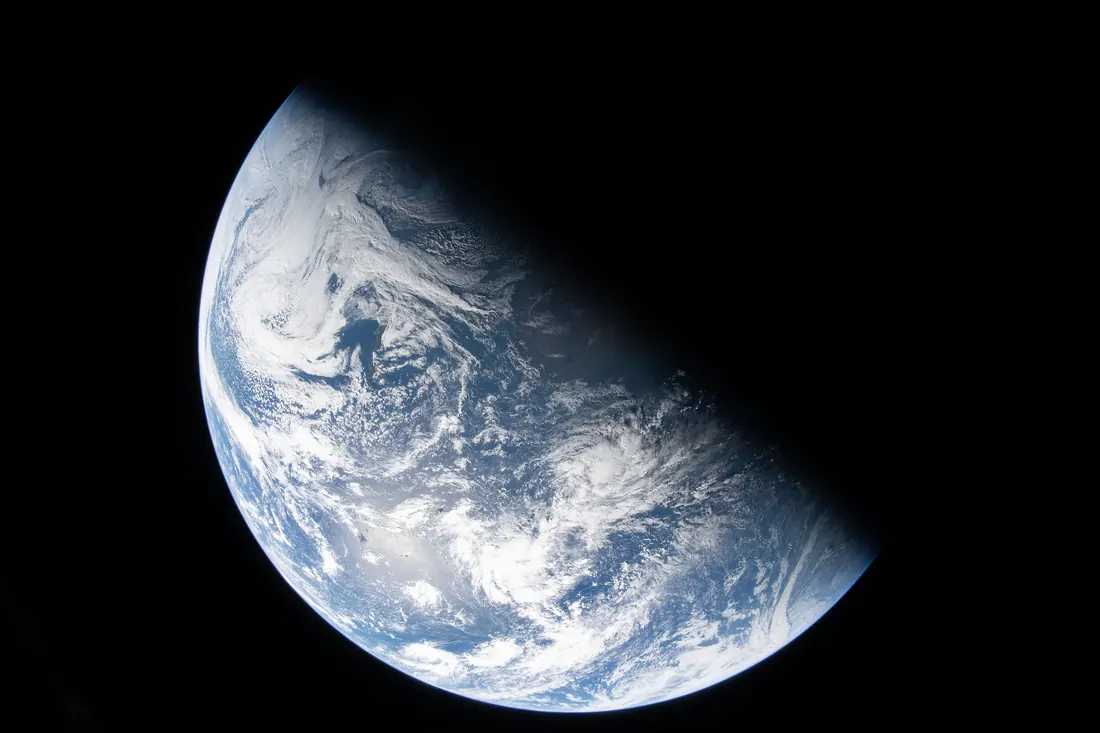
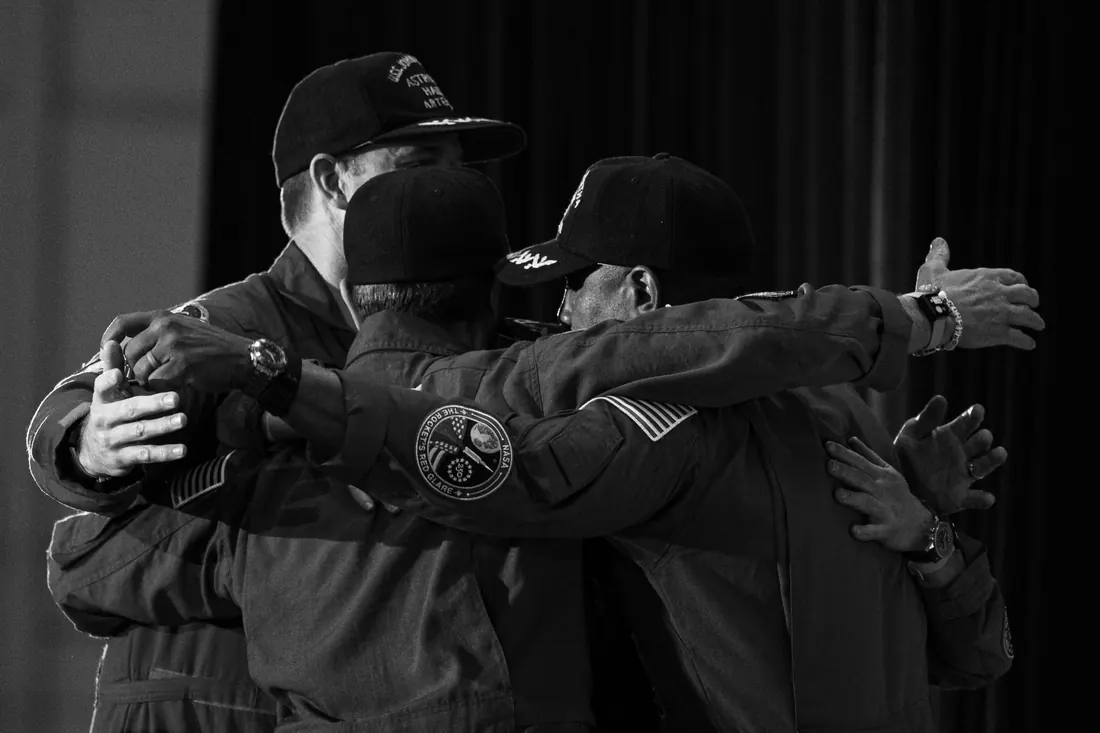
Pictures: no camera could send pictures during the 40 minutes behind the Moon, so the silence is shown with the crew’s own photos from that day. All are NASA photos, in the public domain. Jeremy Hansen (art002e009272) and Victor Glover (art002e009273) are at Orion’s windows looking back at Earth ahead of the flyby, and Reid Wiseman is in the lunar observation period (art002e014231), all on April 6, 2026; Christina Koch is inside Orion with a crescent Earth in the window on April 8, on the way home, not the moment she spoke (art002e041711). The official crew portrait is from 2023, not the flight (Josh Valcarcel), and the hug is at the crew’s return event at Ellington Field, Houston, on April 11, 2026 (John Kraus). The launch is from Kennedy Space Center on April 1, 2026 (Bill Ingalls), and the flight control team is in Houston’s White Flight Control Room during the flyby (Robert Markowitz). From Orion on April 6: the Earthset through the window (art002e009288) and the far side with the Earth setting (art002e009289), both at 6:41 p.m., three minutes before the signal was lost; a tiny crescent Earth beyond the Moon’s limb, 36 minutes before Earthset, not the farthest point itself (art002e009284); craters (art002e010399) and the Moon early in the flyby (art002e012178); and the Earthrise at 7:22 p.m. from a camera on Orion’s solar array wing (art002e016299) and through the window (art002e009280). The Earth photo was taken by Reid Wiseman on April 2, 2026, four days before the flyby (art002e000190). The other people in these photos are not named.
Photo credits
The archive photos in this story
All the photographs and illustrations in this story are in the public domain. Tap one to enlarge it, or follow the link to its Wikimedia Commons page for the full record. The narration, captions and graphics in the Short are our own; its music and sound effects are credited below.
Music and sound effects
Music: Schumann, Kinderszenen, Op. 15: No. 1 'Of Foreign Lands and Peoples (Musopen, public domain); Mussorgsky, Pictures at an Exhibition: IV. Bydlo (piano) (Musopen, public domain); Dvorak, Symphony No. 9 'From the New World': II. Largo (Musopen, public domain).
Sound effects: Freesound, CC0.