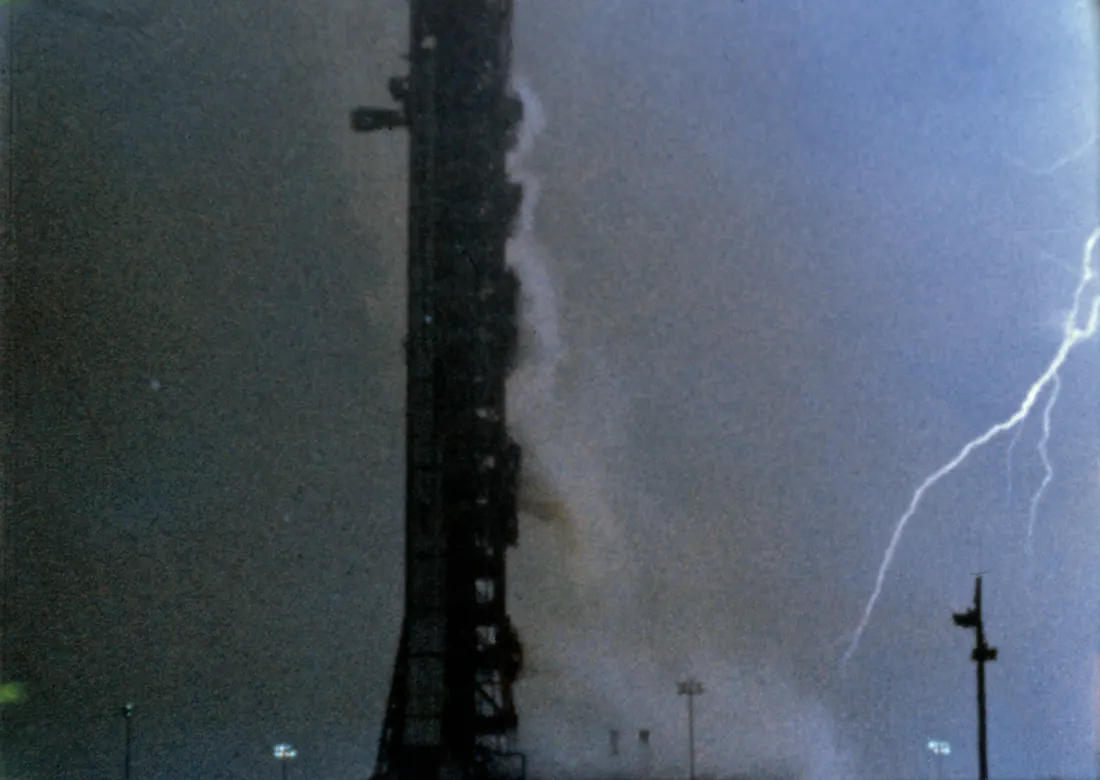
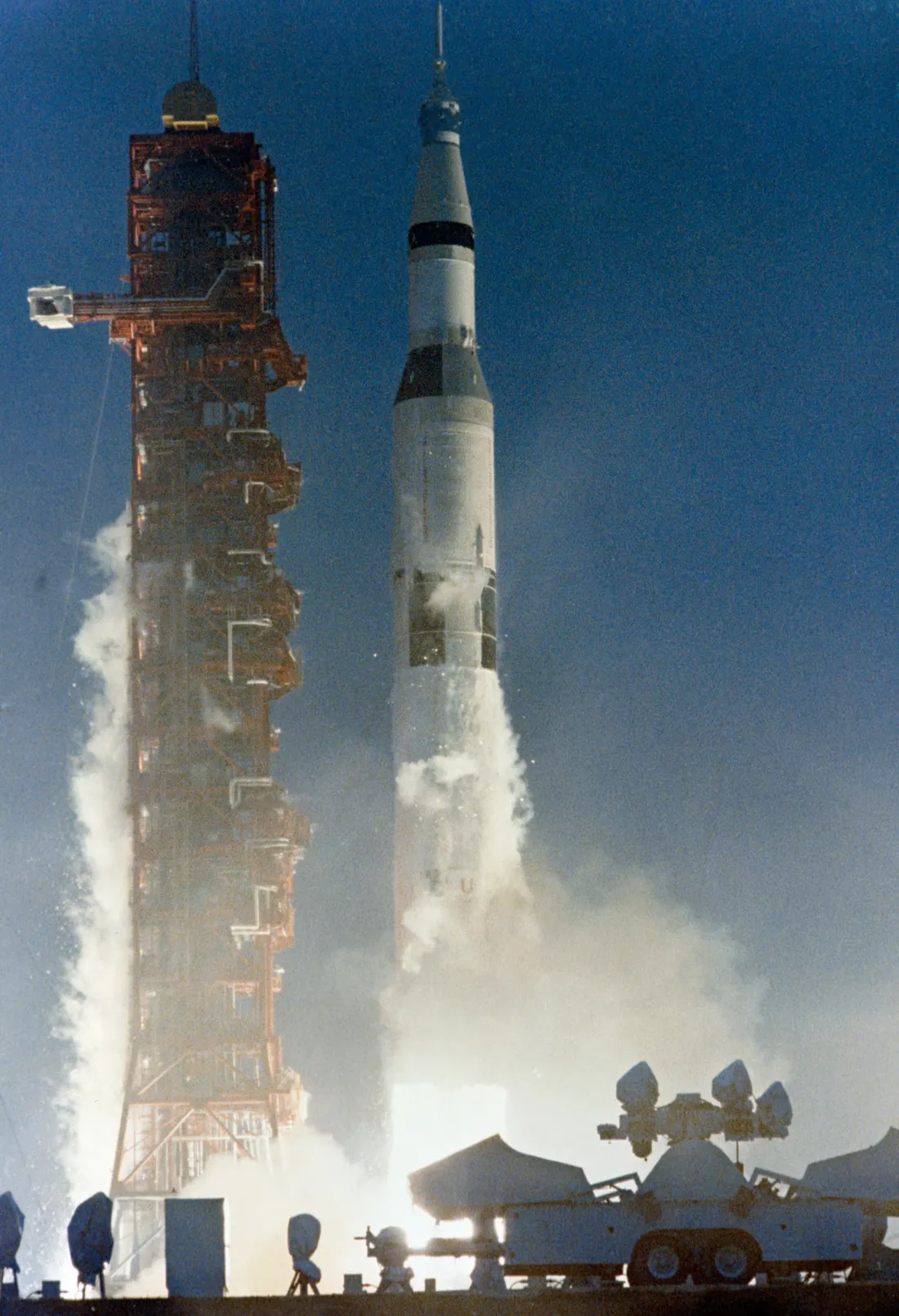
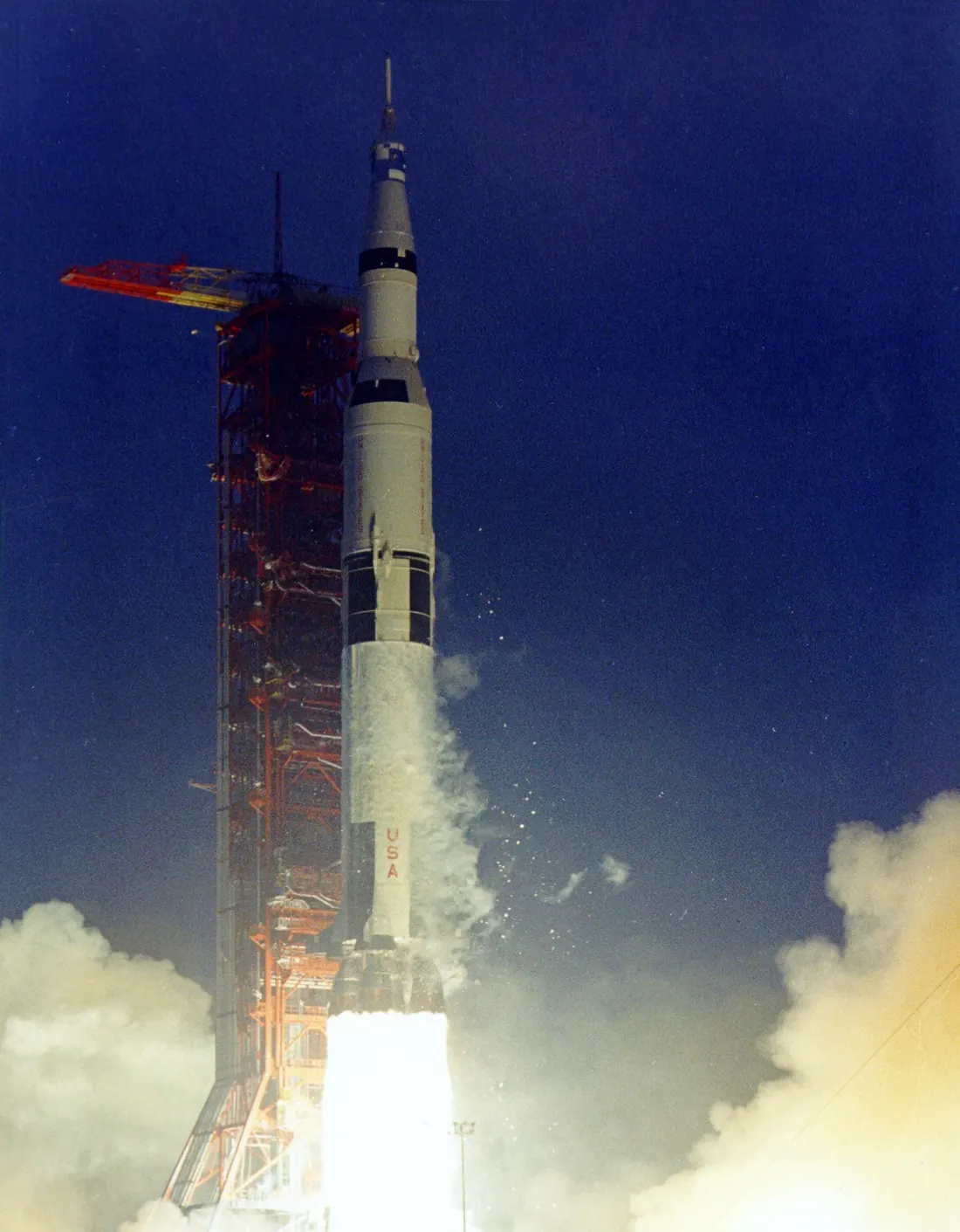
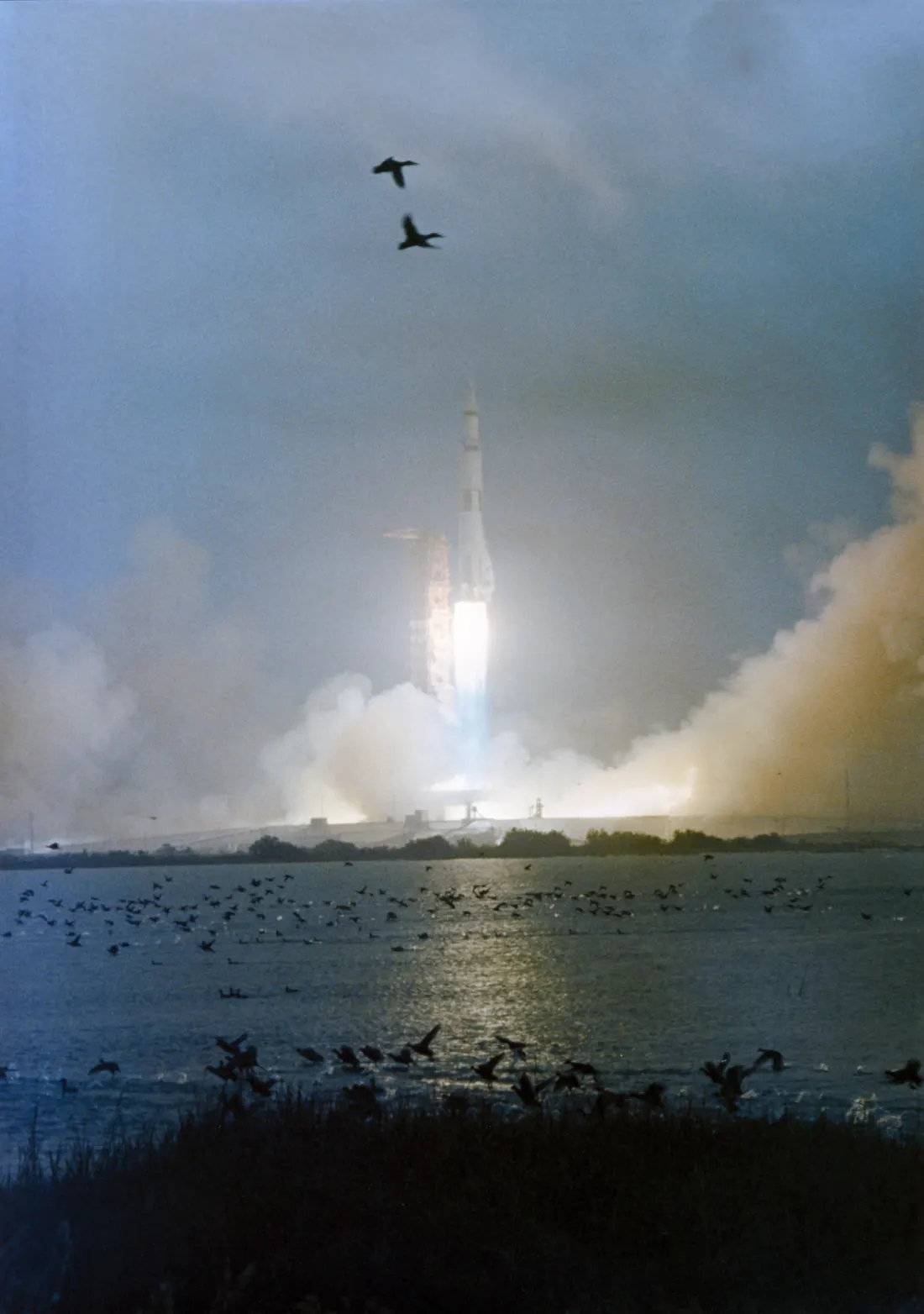
On November 14, 1969, with President Richard Nixon in attendance, Apollo 12 lifted off from Kennedy Space Center at 11:22 a.m. EST. “The sky was overcast with clouds between 2,000 and 10,000 feet,” the Apollo Flight Journal says, and “as the booster passed through the overhanging cloud layer, a lightning struck the Saturn V stack just 36.5 seconds after liftoff.” “A second strike at 52 seconds” followed, Wikipedia says, and the discharge “knocked all three fuel cells offline.”
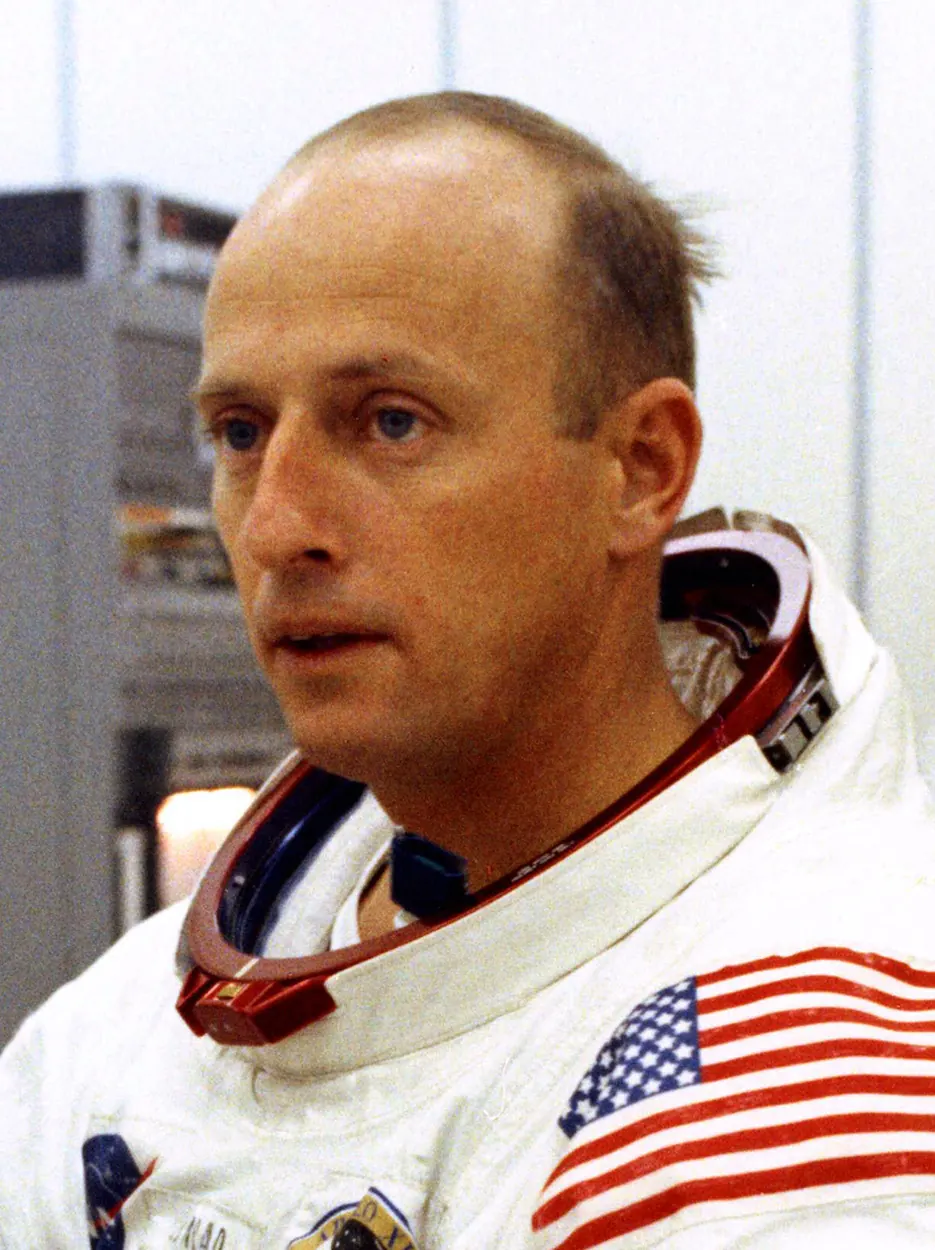
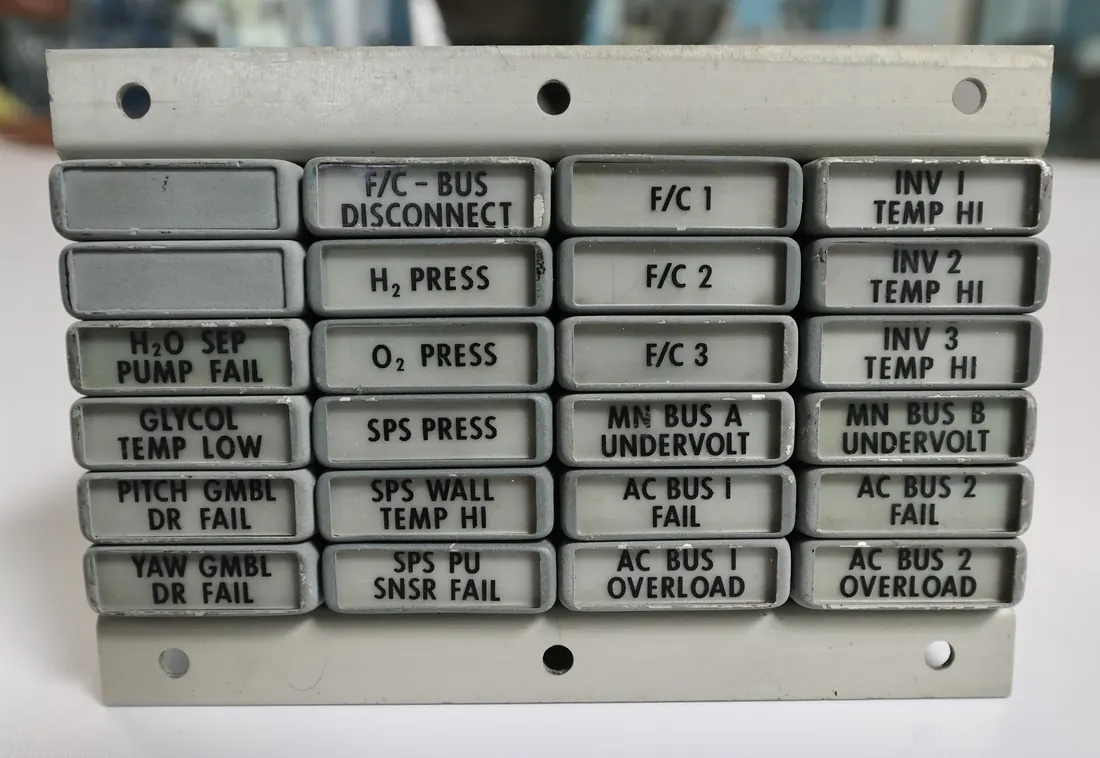
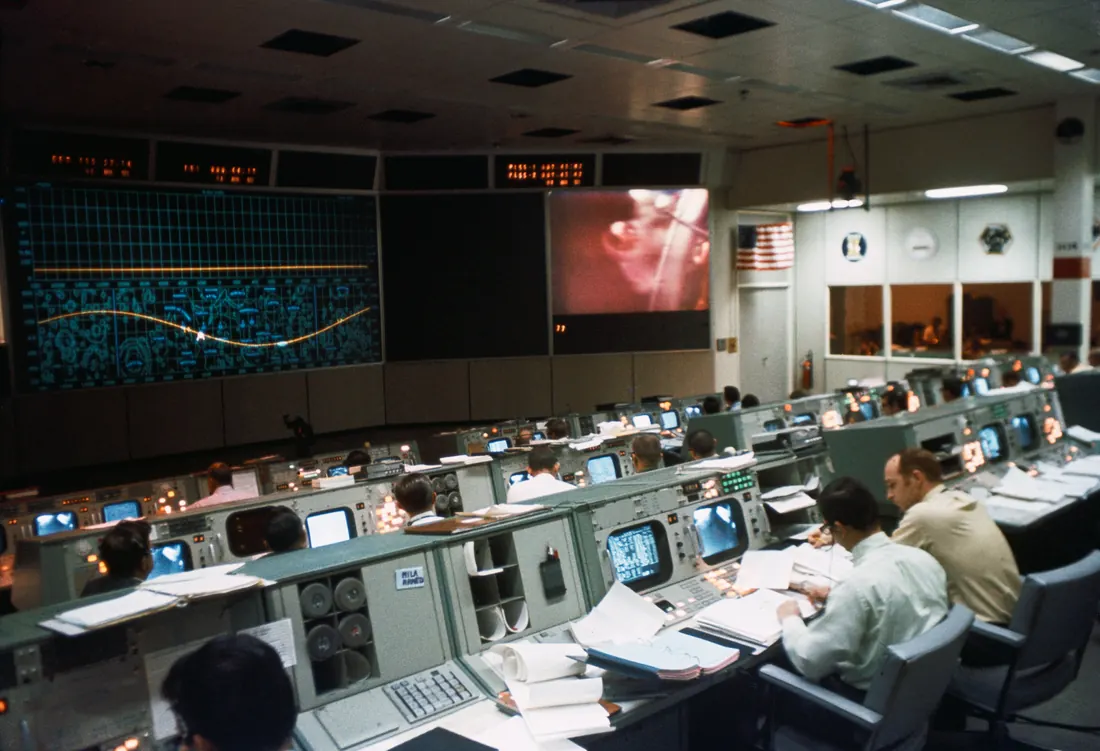
“Okay, we just lost the platform, gang. I don’t know what happened here; we had everything in the world drop out,” commander Pete Conrad radioed. Ten seconds later he read out “three fuel cell lights, an AC bus light, a fuel cell disconnect, AC bus overload 1 and 2, Main Bus A and B out.” “In Mission Control, data on controllers’ displays turned to gibberish,” NASA says. Gerry Griffin, the flight director, remembered: “it was my first job as a launch flight director. And I thought we were going to have to abort. I never will forget that feeling. My heart was in my throat.”
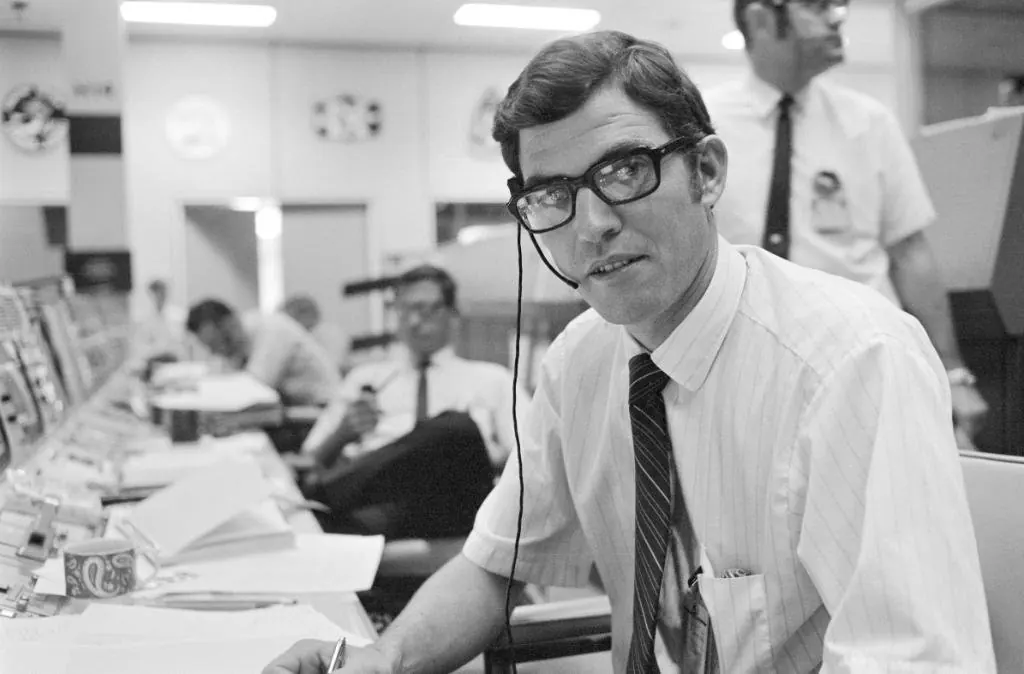
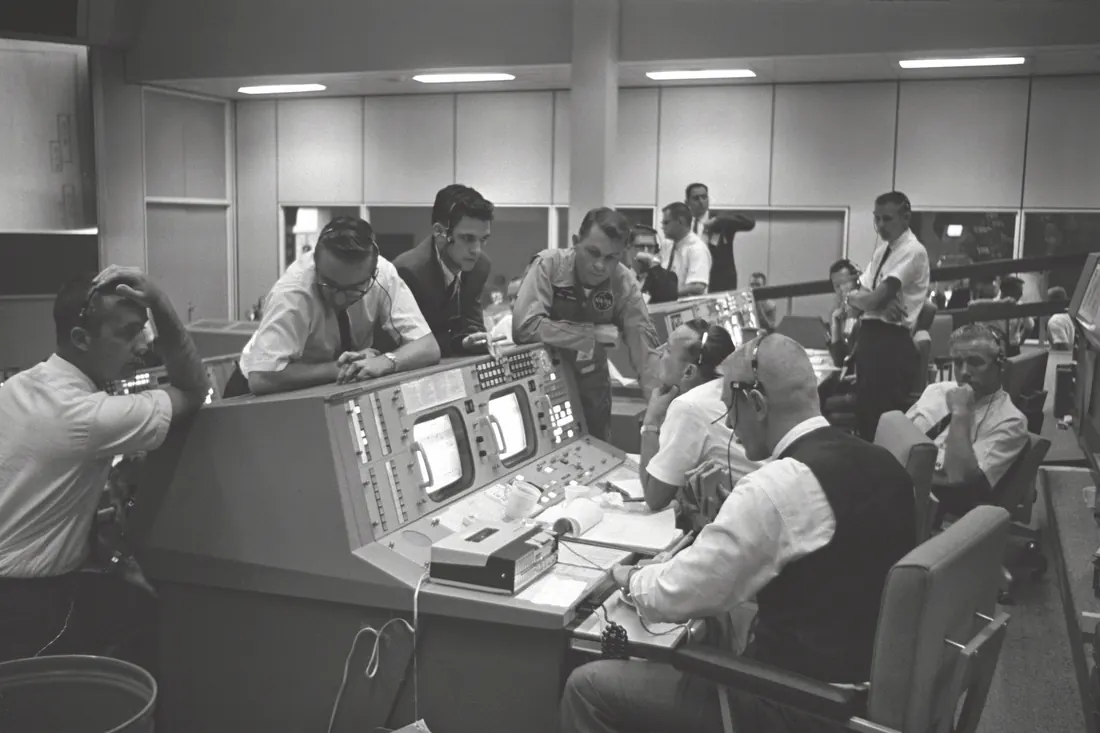
At “the Electrical, Environmental, and Communications (EECOM) console, staffed by a young engineer named John W. Aaron,” as NASA puts it, the numbers looked familiar. “I happened to be on the third shift one night watching a test of the command module that they were performing at Kennedy,” Aaron recalled. “They dropped all the power on the vehicle to go on battery.” “But I drove home that night, thinking where did those squirrelly numbers come from.” The next morning he and Dick Brown “sat down and went through all the circuitry to find out just how does this thing work.” When lightning struck Apollo 12, “that exact pattern showed up. So it wasn’t that I understood exactly what had happened, I recognized a pattern and how to get out of it.”
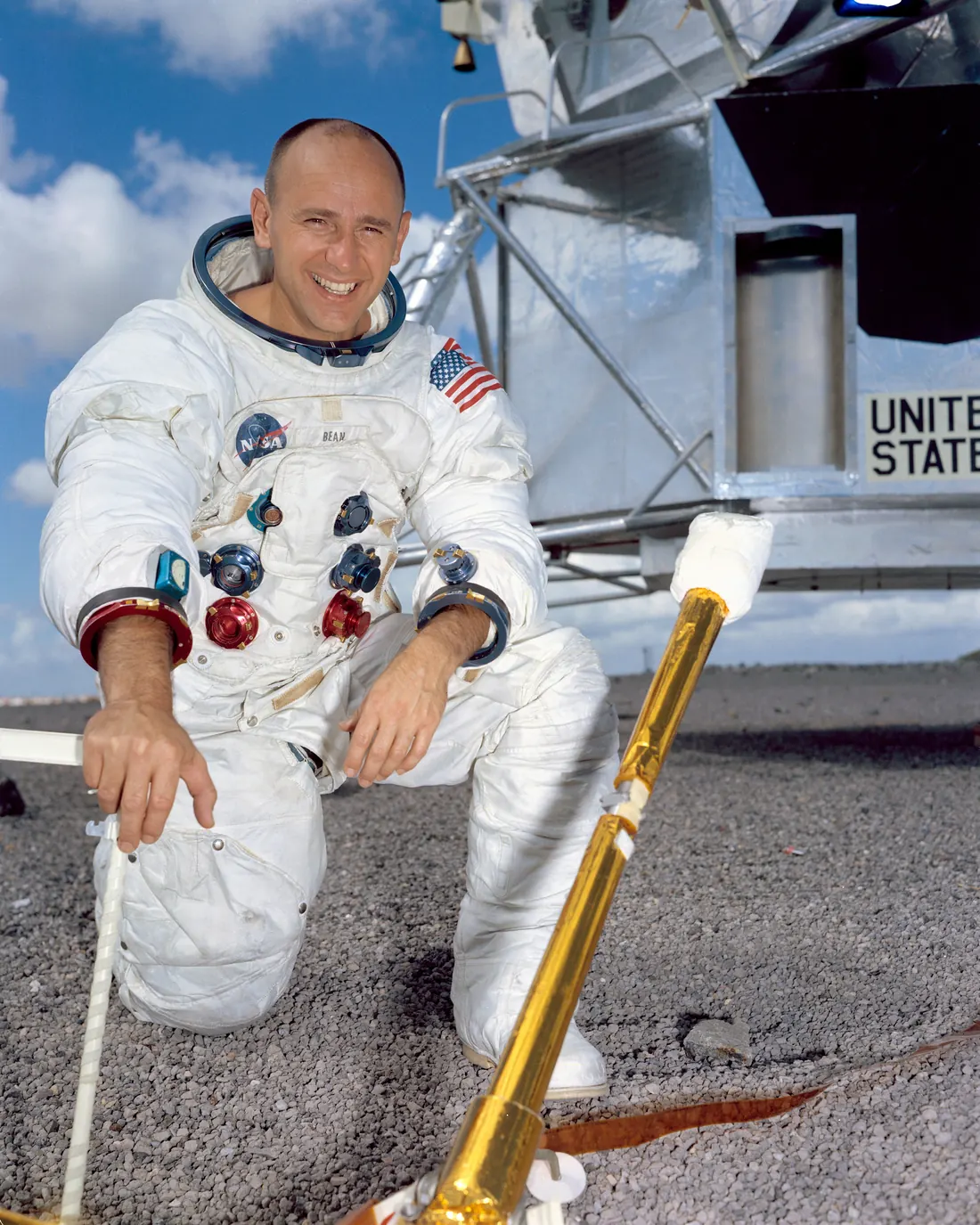
“Flight, EECOM. Try SCE to Aux,” he called: in NASA’s words, “moving a seldom-used switch from its Normal to its Auxiliary position.” Griffin: “He said, ‘SCE to aux,’ and I yelled over the top of the console, ‘What?’ I’d never heard of the switch. We’d never touched it.” But “Bean recalled that the switch was located on his panel and carried out the requested action,” NASA says, and “Several seconds later, Aaron reported seeing good data on his screen.” AmericaSpace: “John Aaron had effectively saved the second manned landing mission to the Moon.”
On November 19, 1969, five days after launch, the lunar module Intrepid landed in the Ocean of Storms, about 535 feet from Surveyor 3. Aaron, “from rural southwest Oklahoma,” as he put it, had joined NASA in 1964 meaning to stay only a while: “I’ll go down there and do that a couple of years and then I’ll come back and raise Herefords.” His colleagues called him a “steely-eyed missile man.” “Of course, you can tell I never got back to raising Herefords,” he said, “and it’s probably a good thing.”
Fact check
The facts and where they come from
- Lightning hit their Moon rocket twice, but the man who saved the mission wasn’t on board. Wikipedia: “Apollo 12 was twice struck by lightning.” NASA: “His quick action saved the launch from the results of what turned out to be lightning striking the rocket twice.” AmericaSpace: “John Aaron had effectively saved the second manned landing mission to the Moon.” 716
- His name is John Aaron. NASA: “the Electrical, Environmental, and Communications (EECOM) console, staffed by a young engineer named John W. Aaron.” 1
- In November 1969, Apollo 12 launched into thick clouds. NASA: “Lift off came precisely at 11:22 AM EST on Nov. 14, 1969.” Apollo Flight Journal: “the sky was overcast with clouds between 2,000 and 10,000 feet.” 13
- Just 36 seconds in, lightning hit the rocket. Then it hit again. Apollo Flight Journal: “36.5 seconds into the flight, Apollo 12 is struck by the first of two lightning discharges” and “At 52 seconds, a second lightning strike causes the guidance platform in the Command Module to lose its reference.” NASA: “The flight proceeded normally for the first 36 seconds.” 21
- Pete Conrad radioed, “we had everything in the world drop out.” Apollo Flight Journal, 1 minute 2 seconds into the flight: “Okay, we just lost the platform, gang. I don’t know what happened here; we had everything in the world drop out.” Wikipedia: the discharge “knocked all three fuel cells offline.” 27
- In Mission Control, the data turned to gibberish. NASA: “In Mission Control, data on controllers’ displays turned to gibberish.” 1
- The flight director thought they’d have to abort. Gerry Griffin: “And I was the flight director, and it was my first job as a launch flight director. And I thought we were going to have to abort. I never will forget that feeling. My heart was in my throat.” 5
- But John had seen this exact pattern once before. Aaron: “Well, never thinking that when lightning struck the vehicle on Apollo 12, that exact pattern showed up. So it wasn’t that I understood exactly what had happened, I recognized a pattern and how to get out of it.” NASA: “remembering a test a year earlier.” 41
- Late one night, he’d watched a test lose power, and worked out why. Aaron: “I happened to be on the third shift one night watching a test of the command module that they were performing at Kennedy” … “They dropped all the power on the vehicle to go on battery.” … “But I drove home that night, thinking where did those squirrelly numbers come from.” 42
- So he called out, “Try SCE to Aux.” Wikipedia: “Flight, EECOM. Try SCE to Aux.” The CAPCOM, Gerald Carr, then radioed, “Apollo 12, Houston. Try SCE to Auxiliary. Over.” NASA: “moving a seldom-used switch from its Normal to its Auxiliary position.” 731
- Even the flight director had never heard of it. Griffin: “I’d never heard of the switch. We’d never touched it.” Wikipedia: “neither Flight Director Gerald Griffin, CAPCOM Gerald P. Carr, nor Conrad knew what it was.” 57
- But Alan Bean remembered it, and flipped it. Griffin: “Bean knew where that switch was.” NASA: “Bean recalled that the switch was located on his panel and carried out the requested action.” Wikipedia: “Bean, who as LMP was the spacecraft’s engineer, knew where to find it and threw the switch.” 517
- Within seconds, the data came back. NASA: “Several seconds later, Aaron reported seeing good data on his screen.” Apollo Flight Journal: “The post-flight mission report states that the fuel cells are reconnected to the spacecraft power busses at 2 minutes, 22 seconds.” 12
- Days later, they landed on the Moon: the lunar module Intrepid landed in the Ocean of Storms on November 19, 1969, five days after launch, about 535 feet from Surveyor 3. 7
- John planned to stay a couple of years, then go raise cattle. Aaron: “I’ll go down there and do that a couple of years and then I’ll come back and raise Herefords.” 4
- He never went back to the cattle. Aaron: “Of course, you can tell I never got back to raising Herefords, and it’s probably a good thing. I would have probably starved to death in the meantime.” 4
Sources
- 50 Years Ago: Return to the Moon (John Uri, 2019) NASA
- Apollo 12 launch transcript Apollo Flight Journal
- More than SCE to AUX (Johannes Kemppanen) Apollo Flight Journal
- John W. Aaron oral history, January 18, 2000 NASA Johnson Space Center Oral History Project (archived copy)
- Gerald D. Griffin oral history, March 12, 1999 NASA Johnson Space Center Oral History Project (archived copy)
- SCE to Aux: Remembering Apollo 12’s Hair-Raising Ride to the Moon, 50 Years Ago (Part 1) AmericaSpace
- Apollo 12 Wikipedia
- John Aaron Wikipedia
Notes
Sources disagree on John Aaron’s age at the time, and no NASA page gives his birth date, so the page gives no age; NASA calls him “a young engineer.”
The fear of an abort was on the ground, not in the cockpit: Conrad said in his debrief, “I never considered any kind of an abort.” So the page says only that the flight director thought they would have to abort.
Rain: NASA describes “the dark and rainy morning sky,” but the Apollo Flight Journal’s study says “At the time of the launch there was no rain in Kennedy Space Center, although the sky was overcast,” so the page says only “thick clouds.”
The Apollo Flight Journal notes that Dick Gordon could also have found the switch, so the page does not claim Bean was the only one who knew it. The call’s exact wording varies between sources; “Try SCE to Aux” is common to all of them.
The night test: NASA says “a test a year earlier”; Aaron’s own account gives no date. The fuel cells were back on line at 2 minutes 22 seconds, after the switch brought the data back.
Left out: the controllers’ worry about the parachutes and Aaron’s later work on Apollo 13. Only John Aaron’s own oral-history words and published mission facts are used about him.
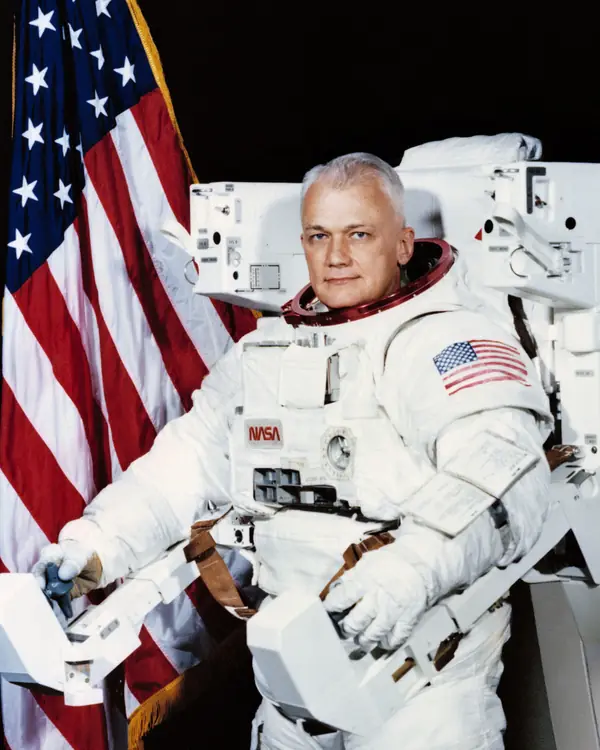
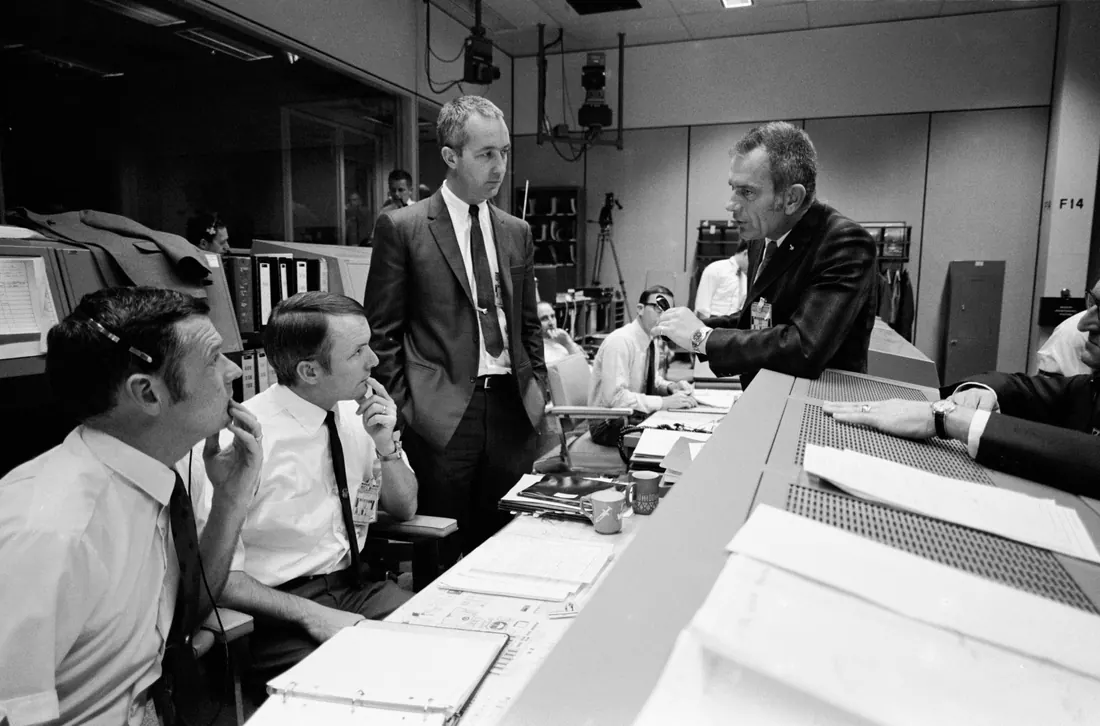
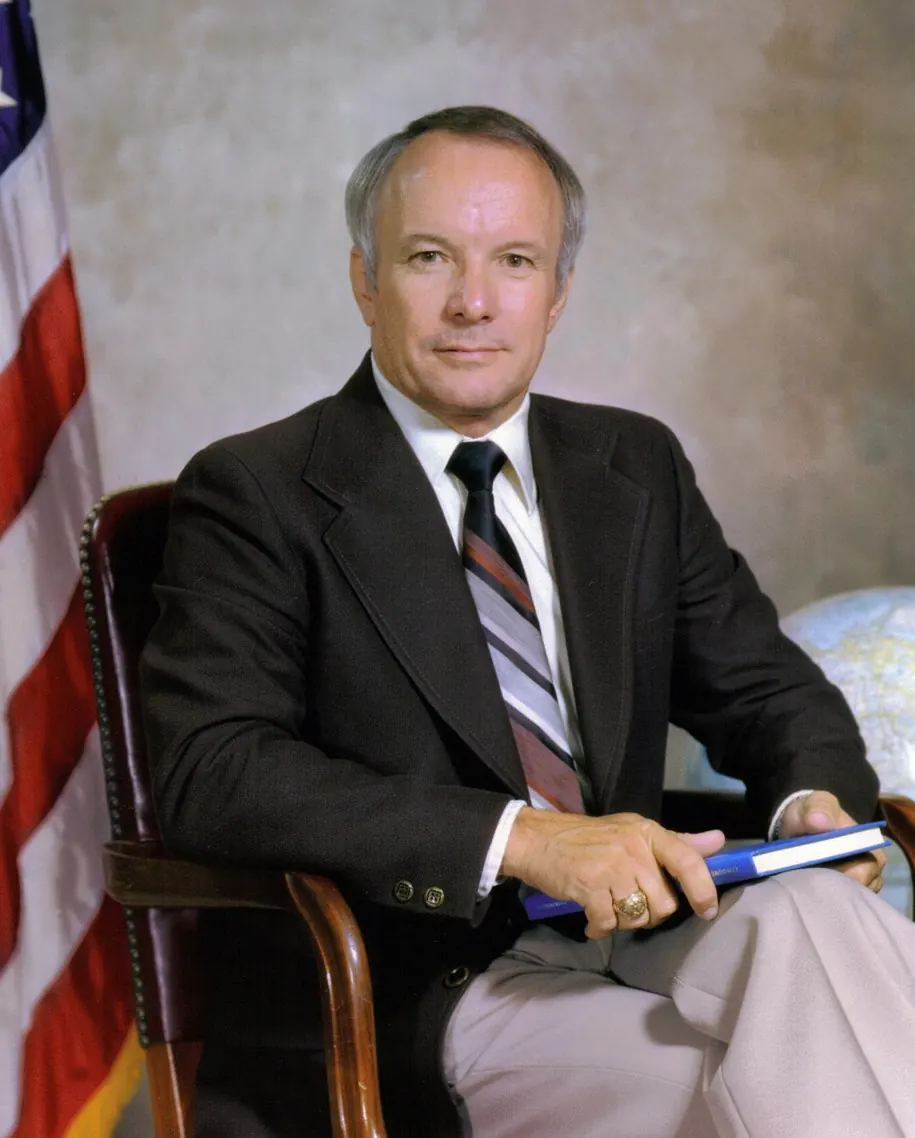
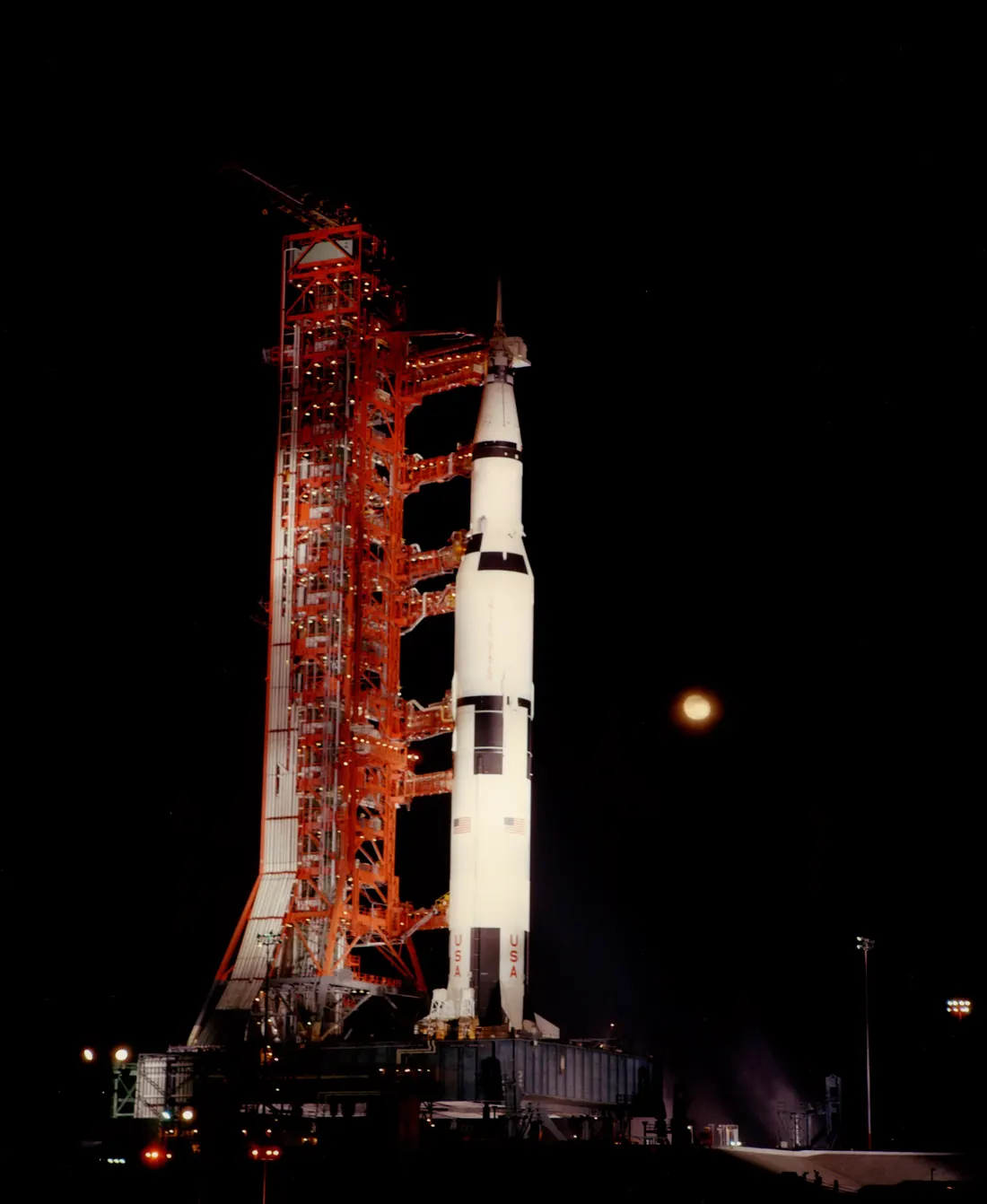
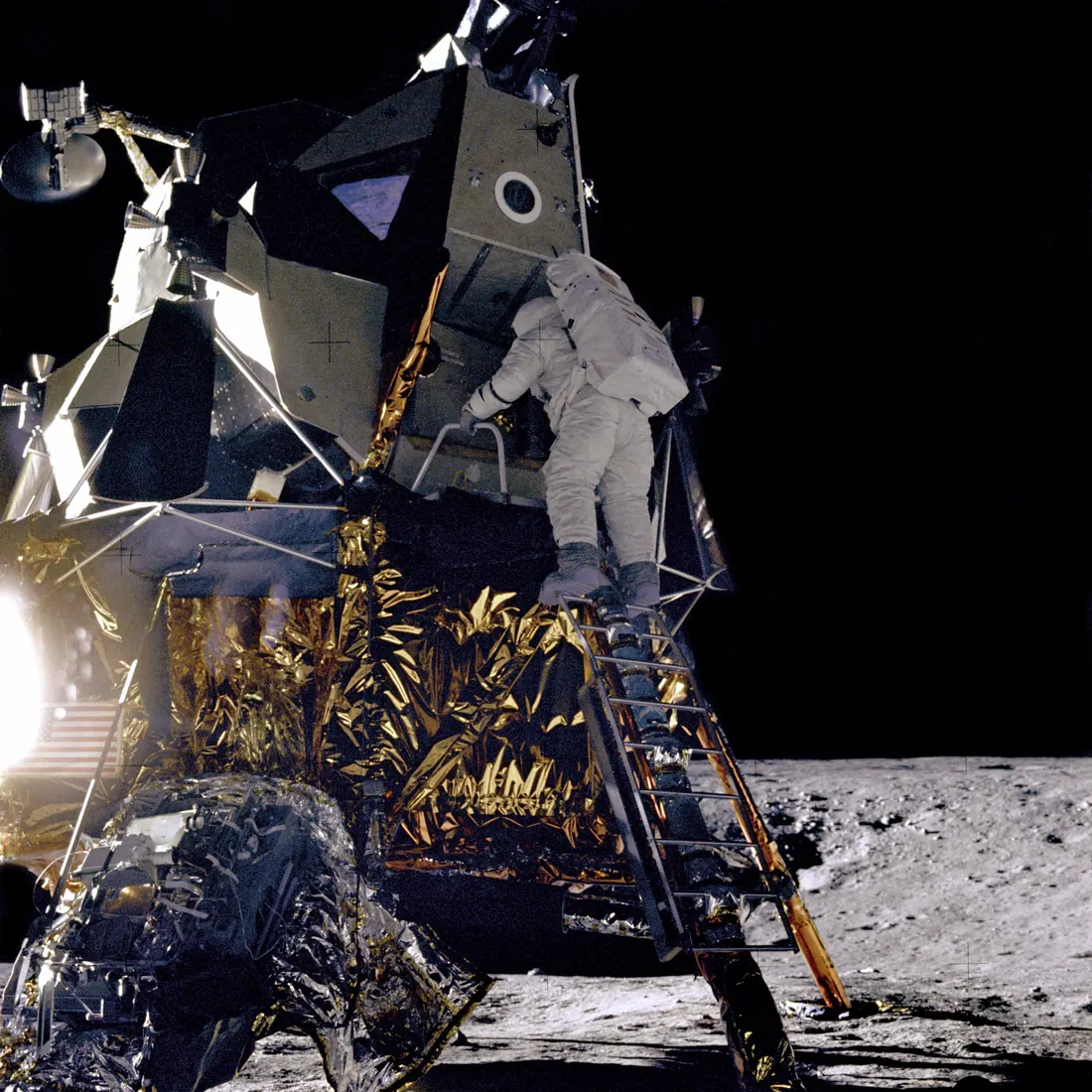
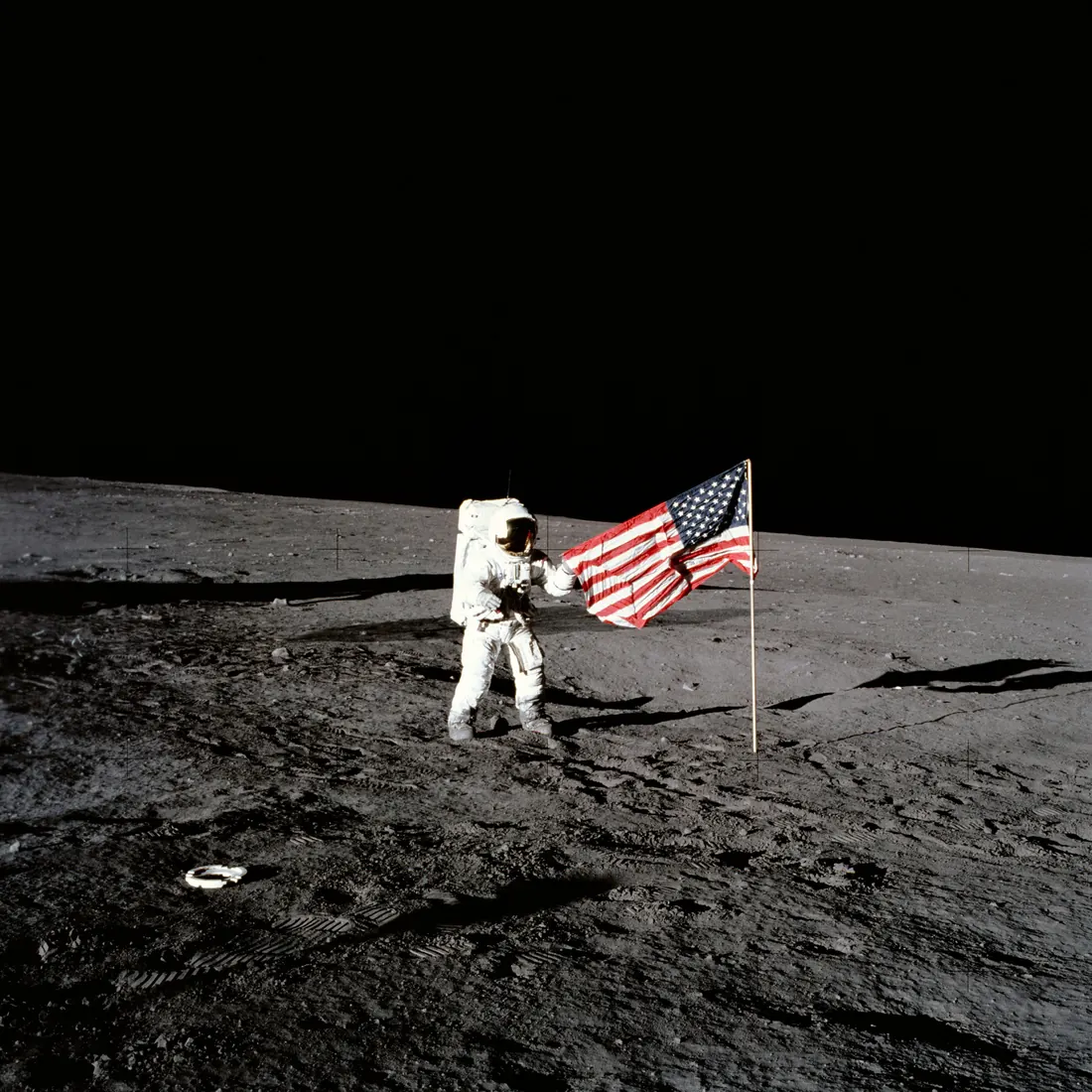
Pictures: all are NASA photos in the public domain except the warning panel and the cattle. John Aaron is at his console in Mission Control (a NASA History Office photo, date not known) and, standing in the center with a headset, at the flight directors’ console during Gemini 5 on August 21, 1965, where NASA’s caption names him. The lightning is a frame from NASA’s 16 mm pad film of the Apollo 12 launch on November 14, 1969; there is no separate photo of the second strike. The launch, liftoff and cloud photos are from the same morning, and Pete Conrad is at suit-up before launch. The warning panel is an Apollo command module master caution and event annunciator panel made in 1966, photographed by Steve Jurvetson in 2024; it is not the one flown on Apollo 12. Mission Control is shown during Apollo 12’s lunar surface activity on November 19, 1969, not the launch. Gerry Griffin is in his 1983 NASA portrait and, as the second seated man, in Mission Control with Glynn Lunney, McDivitt and Slayton on April 16, 1970, during Apollo 13. The night photo is Apollo 12 on Pad 39A on October 28, 1969, not the test Aaron watched. Alan Bean is in his crew portrait of September 22, 1969, and climbing down Intrepid’s ladder on November 19, 1969, photographed by Pete Conrad, who stands beside the flag the same day. The Hereford cattle were photographed in Prince Edward Island, Canada, in 2026 by Quintin Soloviev and only illustrate “raise cattle.”
Photo credits
The archive photos in this story
The photographs and illustrations in this story are in the public domain or shared under open licenses; each one is credited below with its license. Tap one to enlarge it, or follow the link to its Wikimedia Commons page for the full record. The narration, captions and graphics in the Short are our own; its music and sound effects are credited below.

Music and sound effects
Music: Schumann, Kinderszenen, Op. 15: No. 1 'Of Foreign Lands and Peoples (Musopen, public domain); Mussorgsky, Pictures at an Exhibition: IV. Bydlo (piano) (Musopen, public domain); Dvorak, Symphony No. 9 'From the New World': II. Largo (Musopen, public domain).
Sound effects: Freesound, CC0.