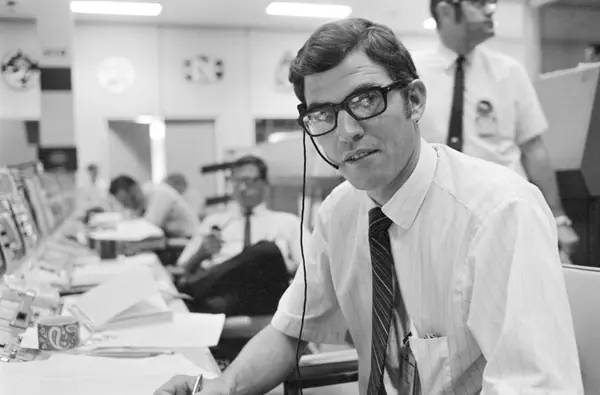
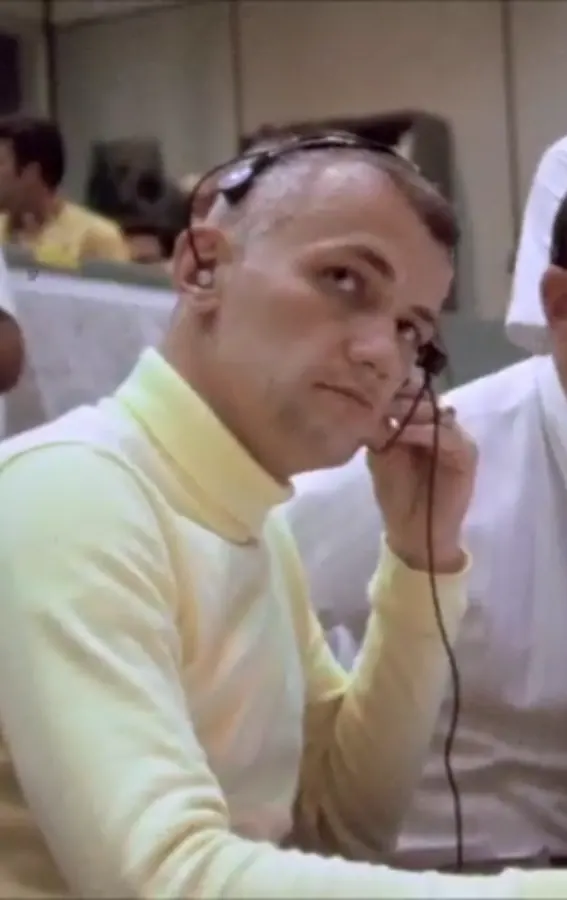
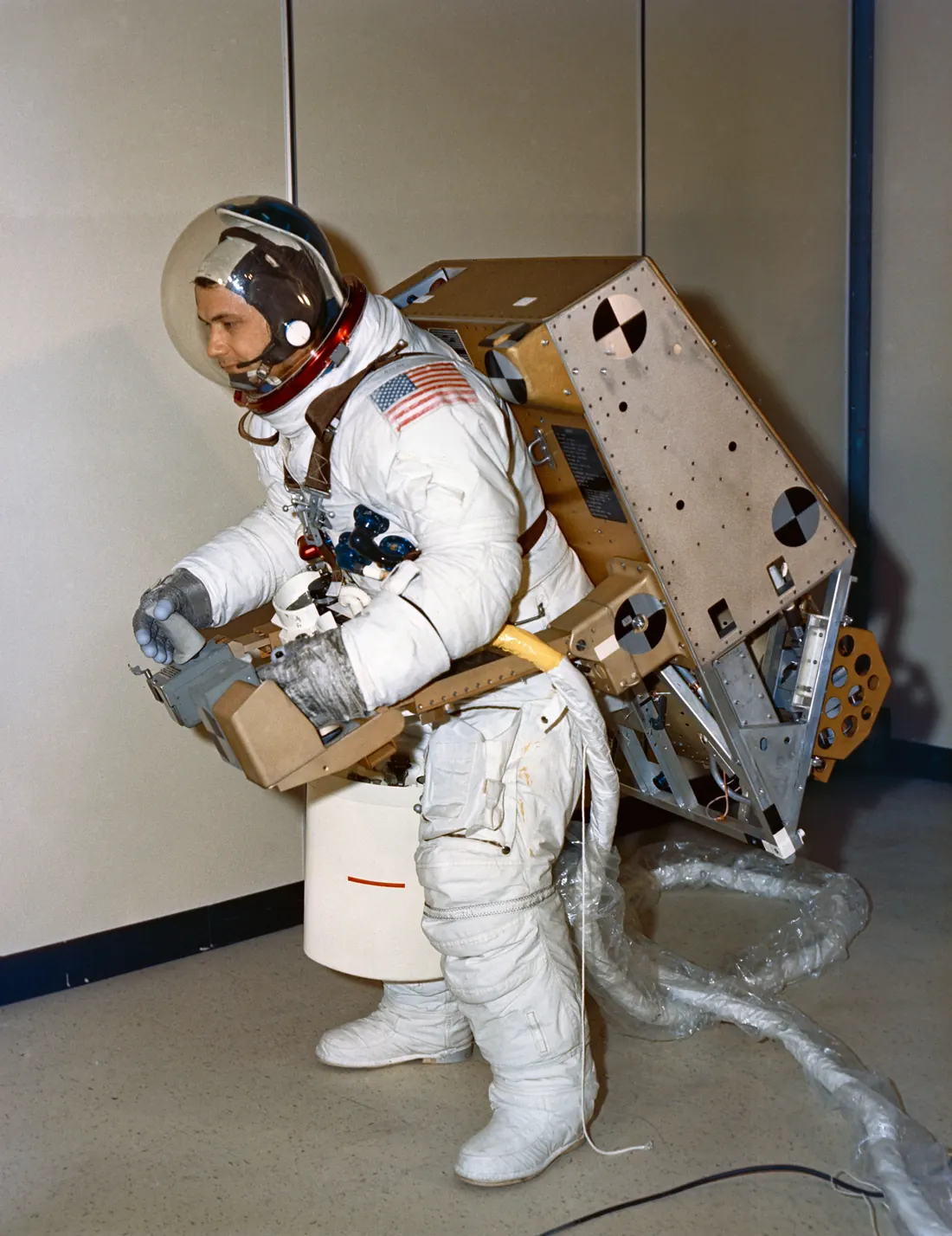
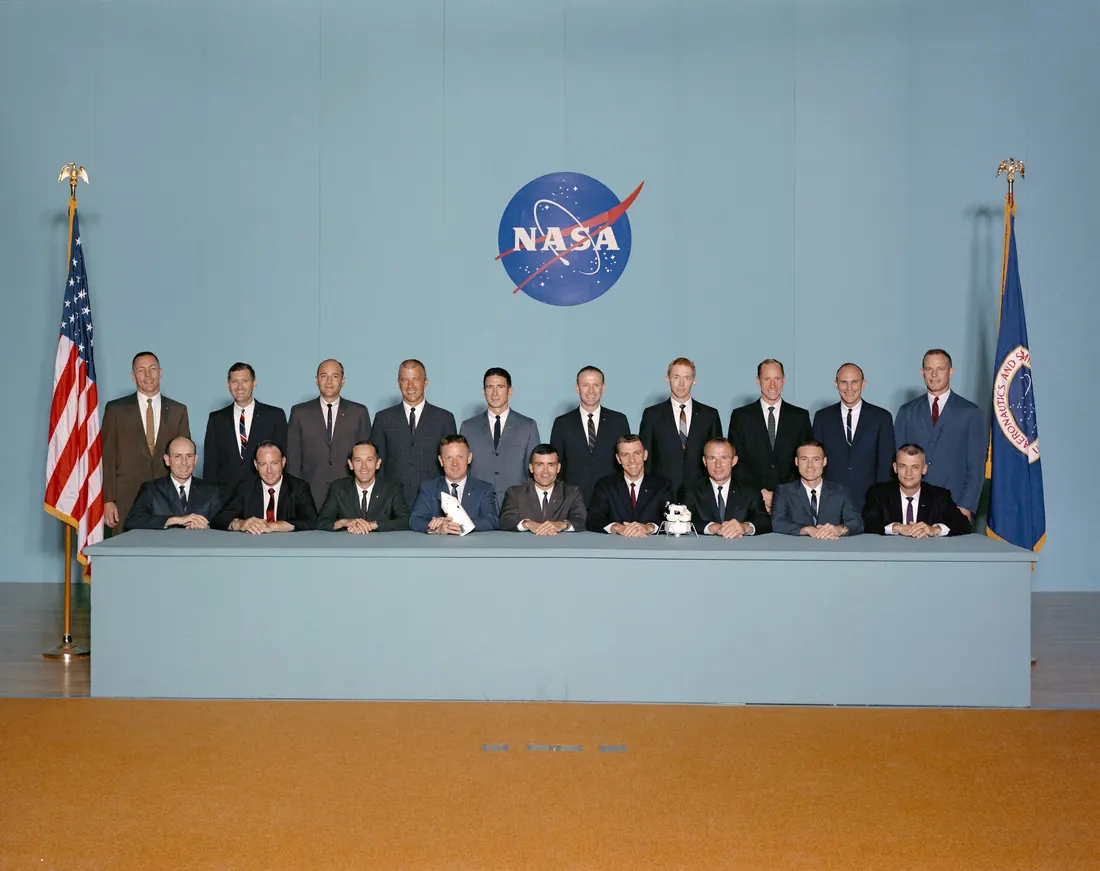
NASA picked Bruce McCandless II as an astronaut in April 1966, the youngest member of NASA Astronaut Group 5, and then he waited. “McCandless had been an astronaut for a long time before he first flew in space aboard the shuttle,” NPR said. “As an historical footnote, McCandless served as capsule communicator during Armstrong’s historic Moonwalk,” NASA notes. And “He helped to develop the MMU,” the Manned Maneuvering Unit, “a nitrogen-propelled backpack he operated with hand controls,” as Astronomy describes it.
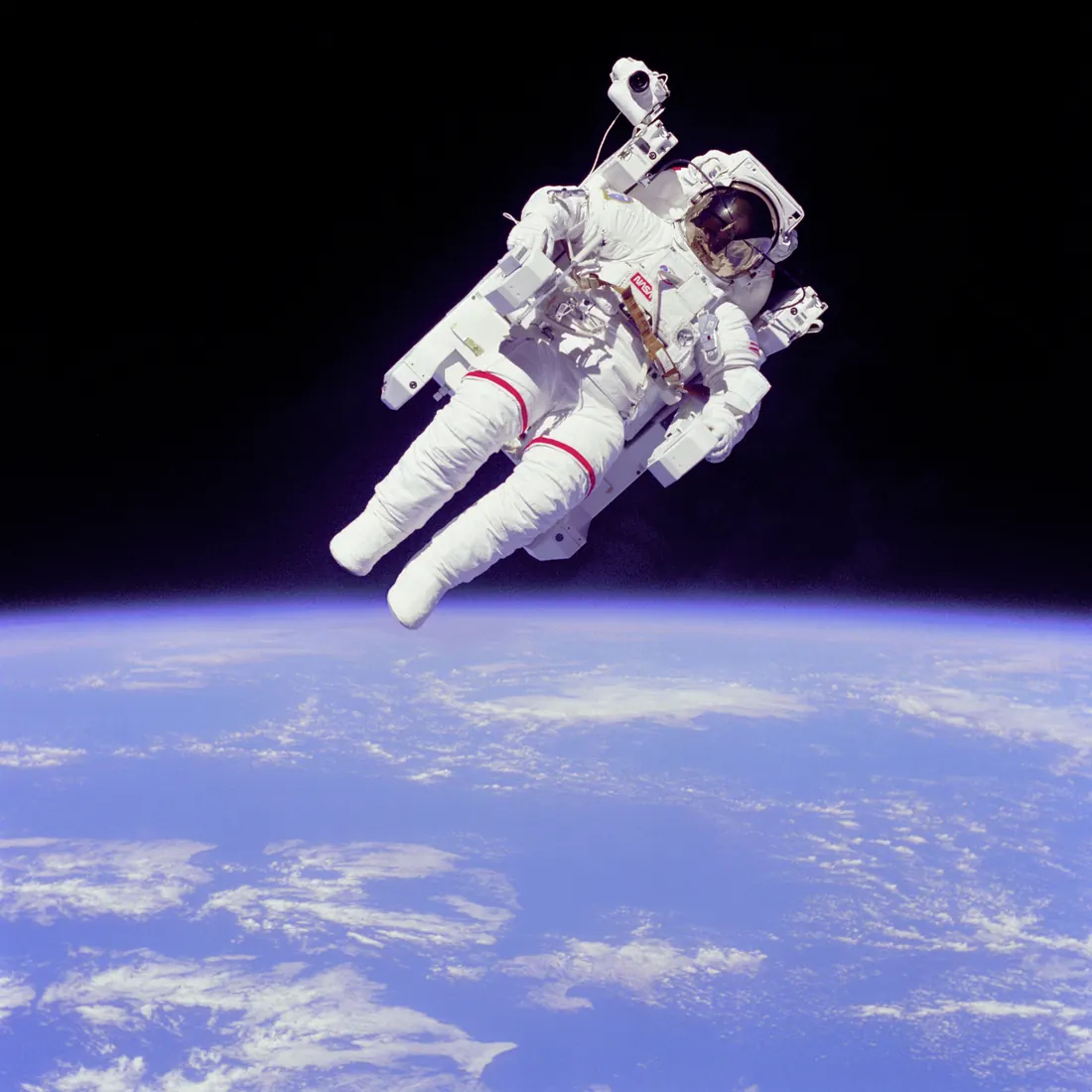
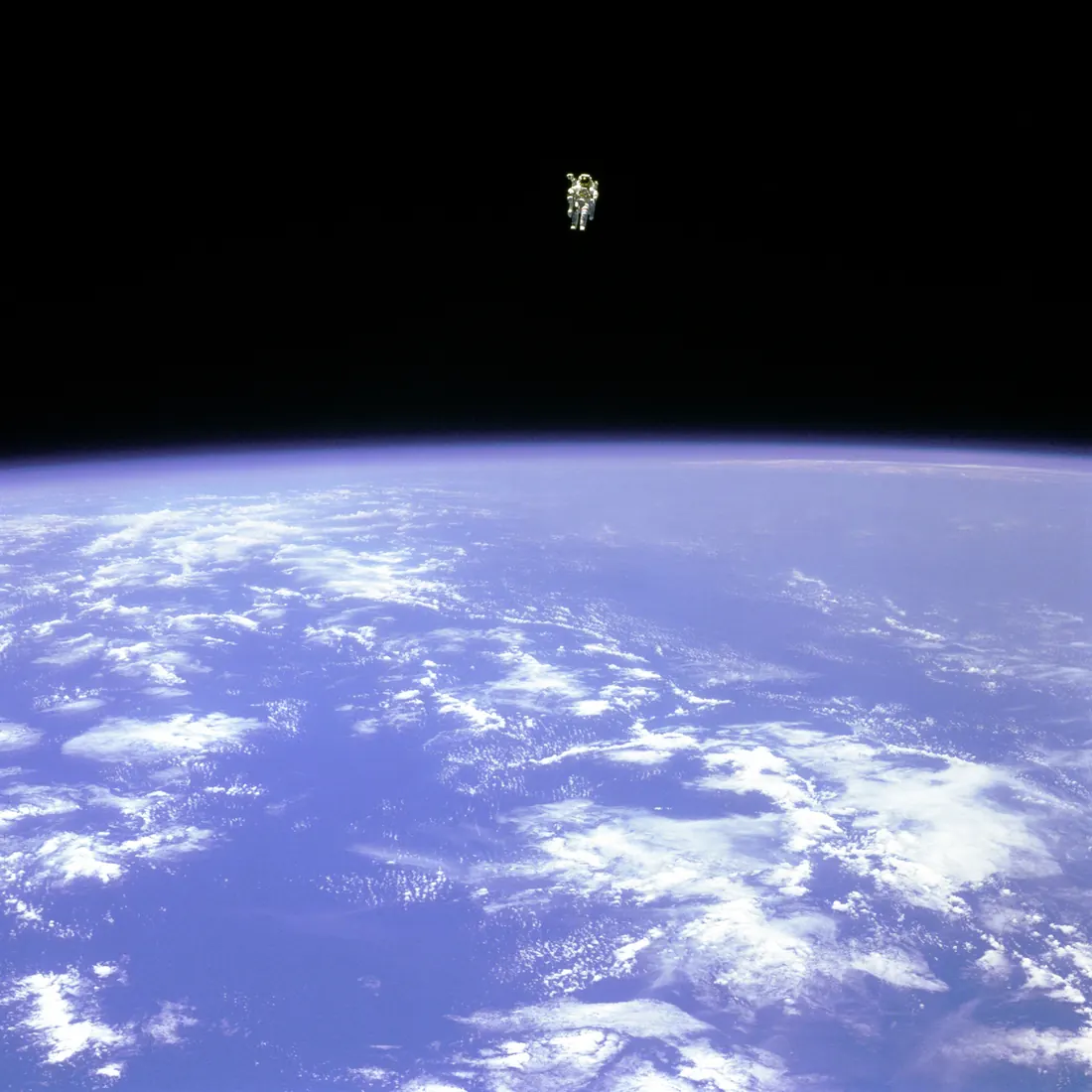
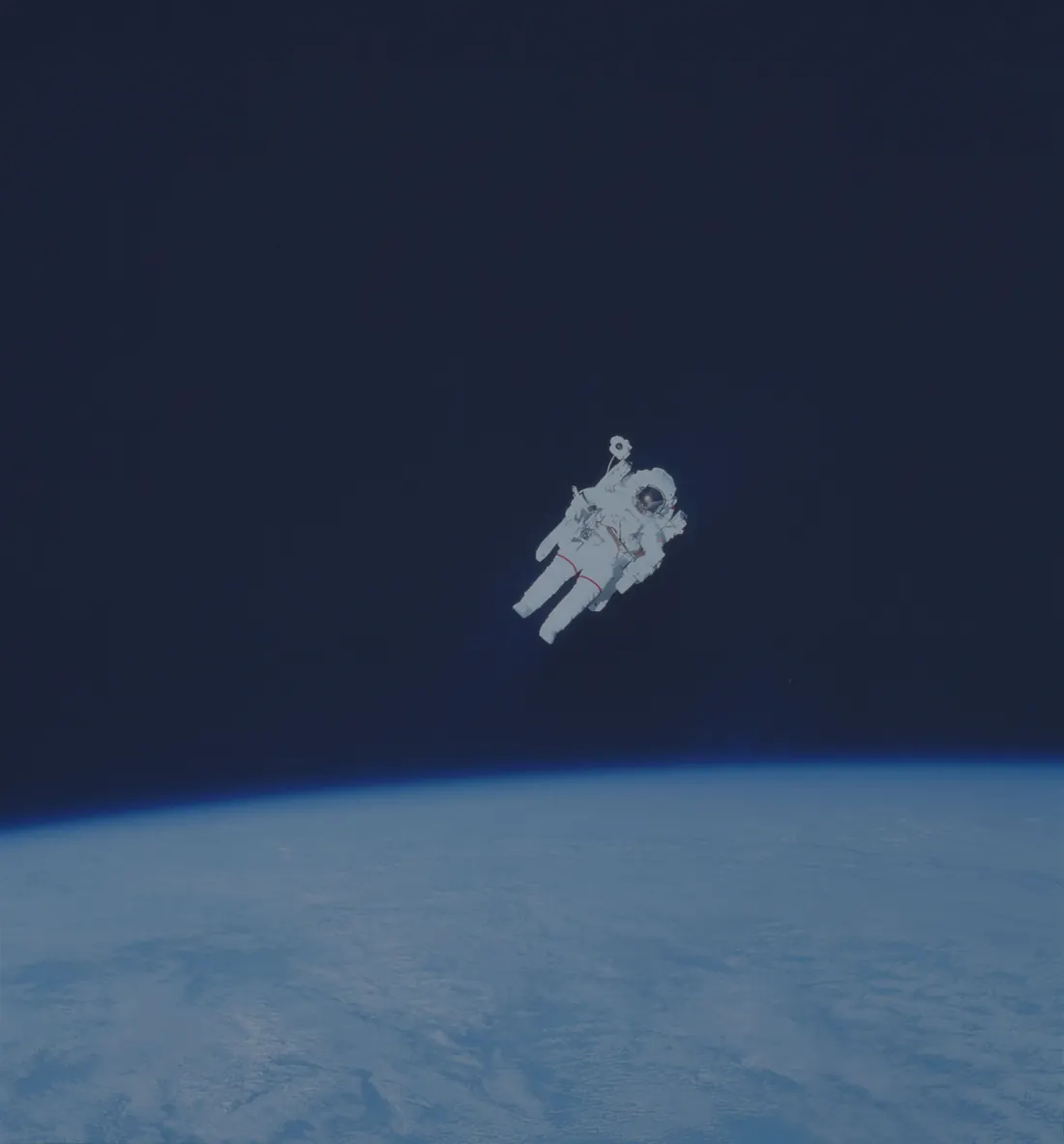
“On Feb. 3, 1984, space shuttle Challenger took off on its fourth flight, STS-41B,” and for McCandless it was the first trip into space, almost 18 years after his selection. On February 7 he flew the MMU out of the payload bay. “Previous spacewalkers remained connected to the vehicle with tethers,” NASA explains, and NPR said, “It was the first time an astronaut had ever floated freely in space.” “It may have been one small step for Neil,” he proclaimed, “but it’s a heck of a big leap for me.”
“He flew 150 feet away from the orbiter … returned to the spacecraft, then backed out again to 320 feet before returning to the payload bay.” Relative to Earth he was moving at almost 18,000 mph, and relative to the shuttle at about 1 foot per second. If the backpack had failed, “the shuttle could be maneuvered into position to rescue an astronaut should an MMU fail.” “I got quite cold. My teeth were chattering. I was shivering,” he told NPR.
Inside the cabin, “‘Hoot’ Gibson, the flight’s pilot,” as NASA’s historian tells it, “picked up a Hasselblad camera and began documenting the events.” “Because the sun was in his eyes, he closed the helmet visor, which made it difficult to identify who exactly was inside the spacesuit.” “The result was one of NASA’s most iconic and requested images.” “My anonymity means people can imagine themselves doing the same thing,” McCandless said, and “I like to encourage folks to look at that and say, ‘Well, I can do better than that.’”
McCandless later helped deploy the Hubble Space Telescope in 1990. He died in December 2017, at the age of 80.
Fact check
The facts and where they come from
- He flew away from his spaceship, but nothing was holding him to it. NPR: “In 1984, McCandless strapped on a jet-powered backpack and flew away from the shuttle, by himself, untethered.” NASA: “As astronaut Bruce McCandless II flew the Manned Maneuvering Unit (MMU) out of the space shuttle Challenger’s payload bay for the first time on February 7, 1984, many in the agency were fearful about the use of a self-propelled and untethered backpack in space.” 51
- His name was Bruce McCandless II. 7
- NASA picked him in 1966, but he waited almost 18 years to fly. NASA: “For the other four, STS-41B represented their first trip into space, although McCandless had served as an astronaut since his selection in 1966.” NPR: “McCandless had been an astronaut for a long time before he first flew in space aboard the shuttle.” 257
- When Neil Armstrong walked on the Moon, he was the voice in Houston. NASA: “As an historical footnote, McCandless served as capsule communicator during Armstrong’s historic Moonwalk.” NPR: “His was one of the voices that kept the first moon-landing crew in touch with mission control in 1969.” 25
- Meanwhile, he helped build a jet backpack. NASA: “He helped to develop the MMU and as a backup crew member for the Skylab 2 mission in 1973, he helped train astronauts to fly the Astronaut Maneuvering Unit, the MMU’s predecessor.” NPR: “While supporting other missions and waiting his turn, he helped design what became known as the MMU — the manned maneuvering unit.” 256
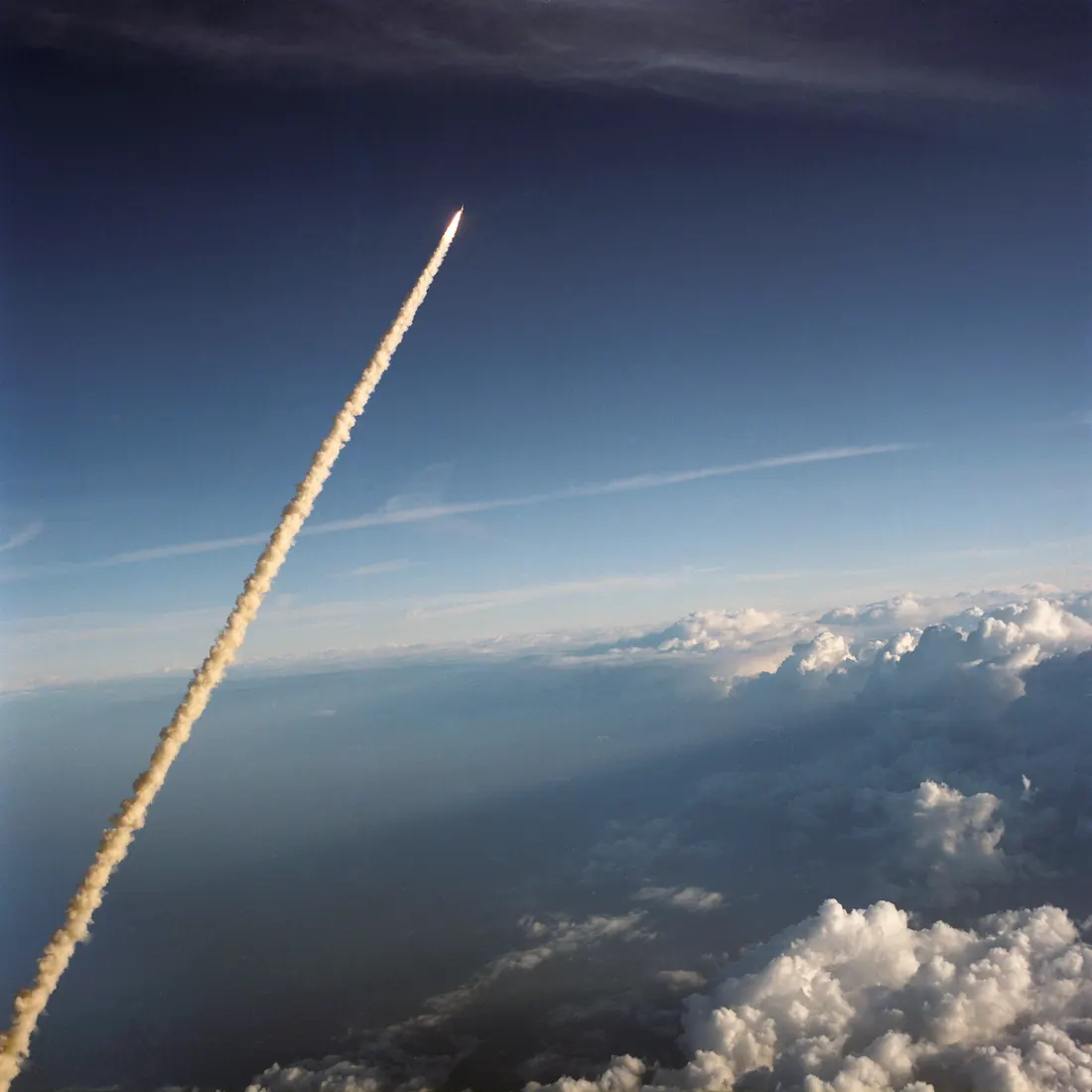
- In February 1984, he finally reached orbit. NASA: “On Feb. 3, 1984, space shuttle Challenger took off on its fourth flight, STS-41B”; “Liftoff occurred on schedule at 8:00 a.m. EST.” 28
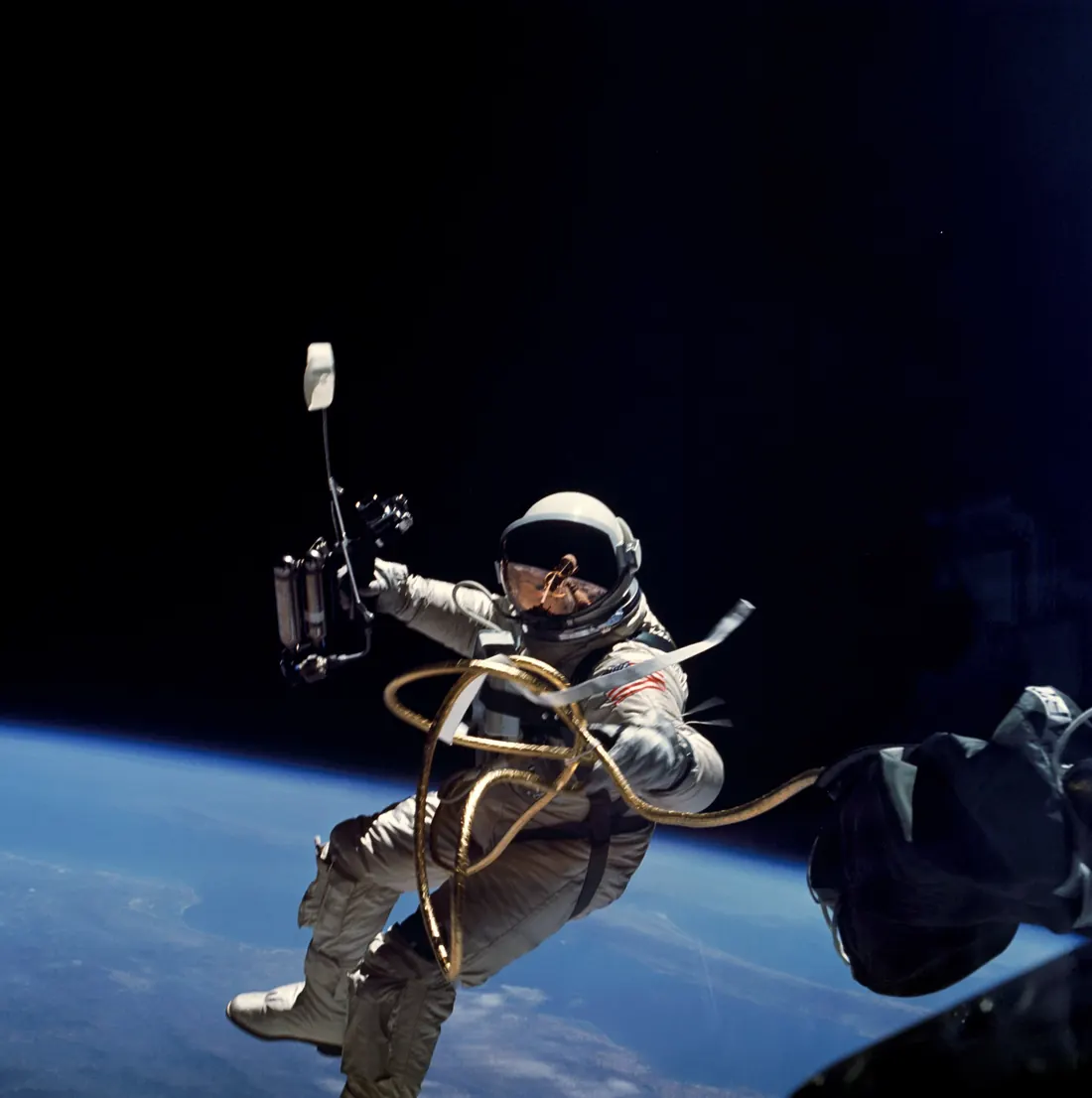
- Every spacewalker before him had been tied to the ship. NASA: “Previous spacewalkers remained connected to the vehicle with tethers.” NPR: “It was the first time an astronaut had ever floated freely in space.” On the first US spacewalk, in 1965, “White was attached to the spacecraft by a 25 foot umbilical line and a 23 foot tether line, both wrapped in gold tape to form one cord.” 154
- He strapped on the backpack and let go. NPR: “During the mission, McCandless climbed into the 300-pound contraption and slowly eased out of the shuttle’s cargo bay.” 5
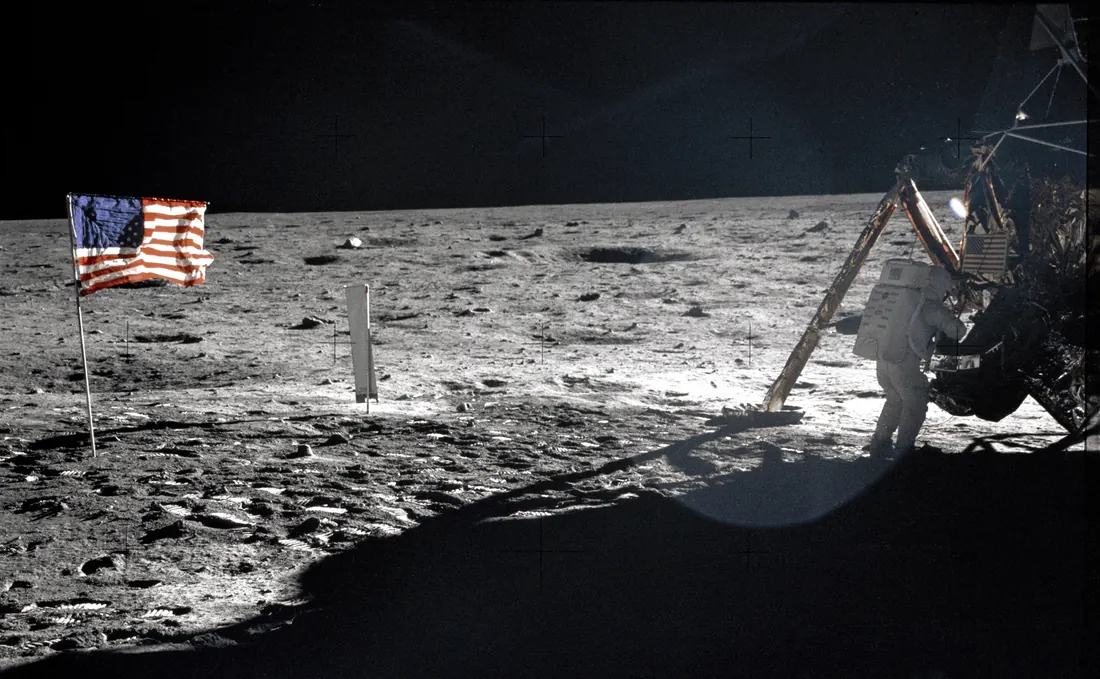
- He joked, “It may have been one small step for Neil, but it’s a heck of a big leap for me.” Astronomy: “It may have been one small step for Neil, but it’s a heck of a big leap for me.” NASA: “humorously echoing Apollo 11 astronaut Neil A. Armstrong’s first words.” 162
- He flew out 320 feet. NASA: “He flew 150 feet away from the orbiter … returned to the spacecraft, then backed out again to 320 feet before returning to the payload bay.” Astronomy: “he explored as far as 320 feet (98 meters) from Challenger.” 26
- If the jets failed, the shuttle would have to catch him. NASA’s history More Favored than the Birds: “the shuttle could be maneuvered into position to rescue an astronaut should an MMU fail.” 32
- A crewmate inside snapped his picture. NASA: “‘Hoot’ Gibson, the flight’s pilot, shot the photograph featured on the February 20, 1984, issue of the magazine from the crew cabin” … “he picked up a Hasselblad camera and began documenting the events.” 1
- His gold visor was down, so nobody could see his face. NASA: “Because the sun was in his eyes, he closed the helmet visor, which made it difficult to identify who exactly was inside the spacesuit.” McCandless, to NPR: “I had the gold sun visor down.” 15
- He said that meant anyone could imagine it was them. NASA: “‘My anonymity means people can imagine themselves doing the same thing,’ he said.” NPR: “So that in principle, people could imagine themselves inside of there instead of me,” he said. 15
- It could be you: the Short’s own words, built on his. McCandless, to NPR: “I like to encourage folks to look at that and say, ‘Well, I can do better than that.’” 5
Sources
- The Iconic Photos from STS-41B (2024) NASA
- 40 Years Ago: STS-41B, the First Flight of the Manned Maneuvering Unit (2024) NASA
- More Favored than the Birds (SP-4219), chapter 13 NASA
- Ed White, First American Spacewalker NASA
- Bruce McCandless, first astronaut to fly untethered in space, has died (2017) NPR
- Feb. 7, 1984: First untethered spacewalk Astronomy
- Bruce McCandless II Wikipedia
- STS-41-B Wikipedia
Notes
The joke’s exact words vary: NASA’s 2024 photo history and Astronomy print “It may have been one small step for Neil, but it’s a heck of a big leap for me,” NASA’s 2024 mission history begins it “that may have been,” and McCandless himself told NPR “heckuva.” The page uses the first wording.
“Almost 18 years”: from his selection in April 1966 to the launch on February 3, 1984, is 17 years and 10 months.
The spacewalk was on February 7, 1984 (NASA, Wikipedia); some photo captions give February 11 or 12, which are catalog or release dates.
“Every spacewalker before him had been tied to the ship” is NASA’s wording. The moonwalkers were not tethered, but they were walking on the Moon, not floating in space.
Who took the famous photo: NASA’s historian says Hoot Gibson shot the photo on the February 20, 1984, magazine cover from the crew cabin, while the best-known copy is credited simply to NASA. The page says only that a crewmate photographed him.
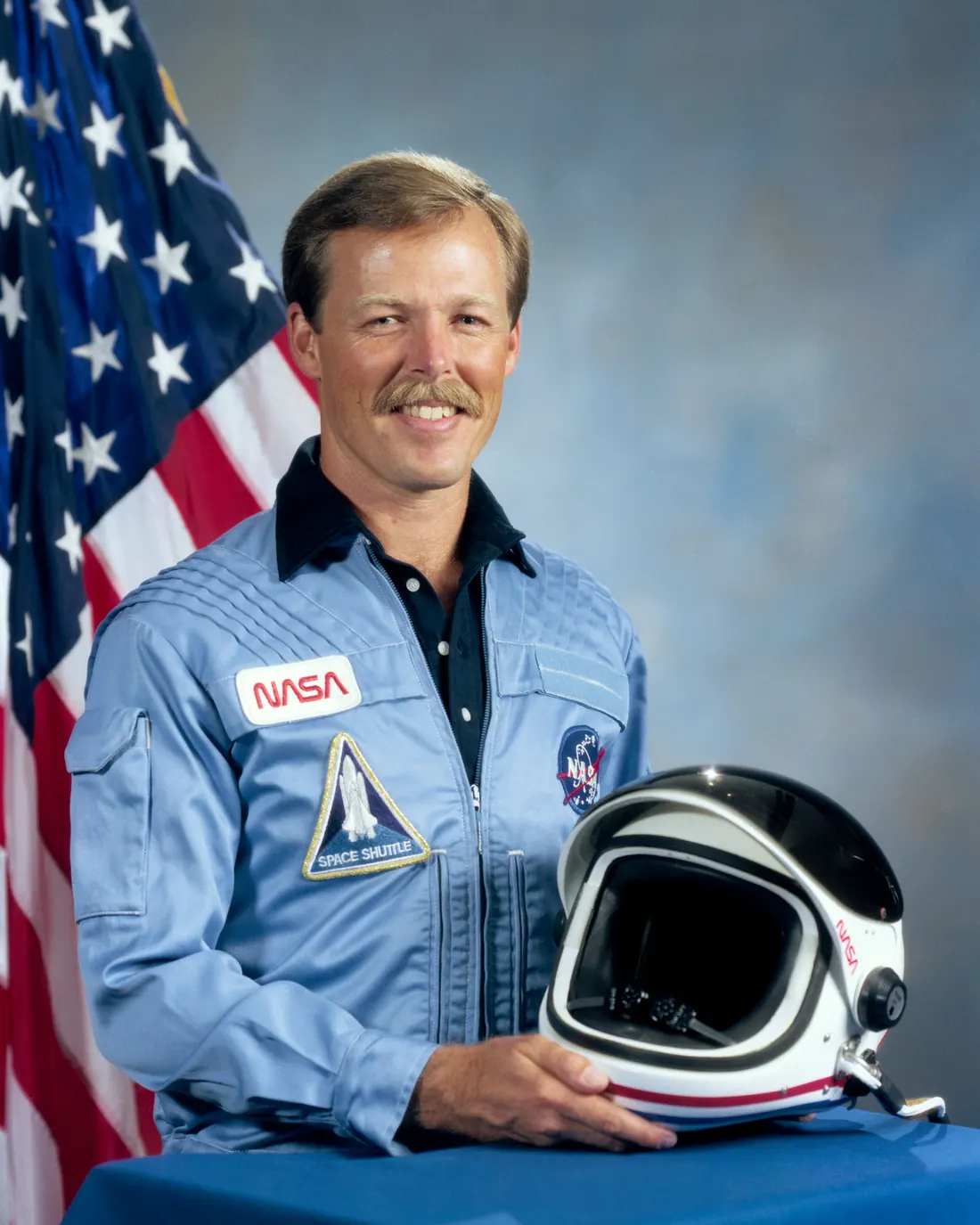
Left out: his family, his Navy career and a later dispute over the photo’s use. Robert Gibson is named only as NASA’s history names him, as the flight’s pilot.
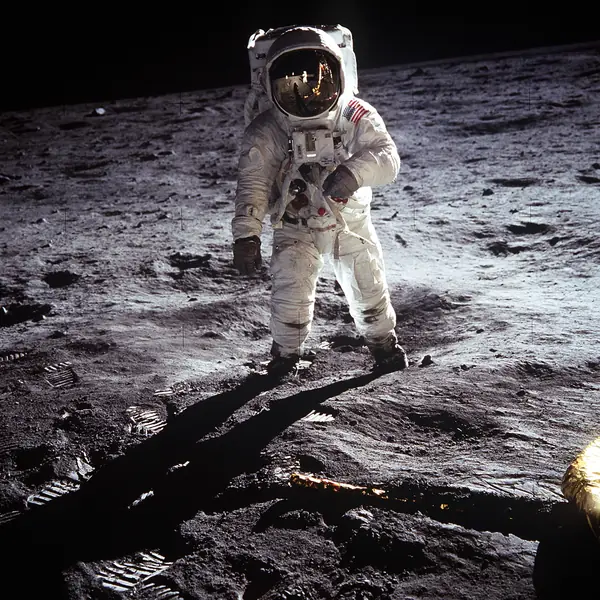
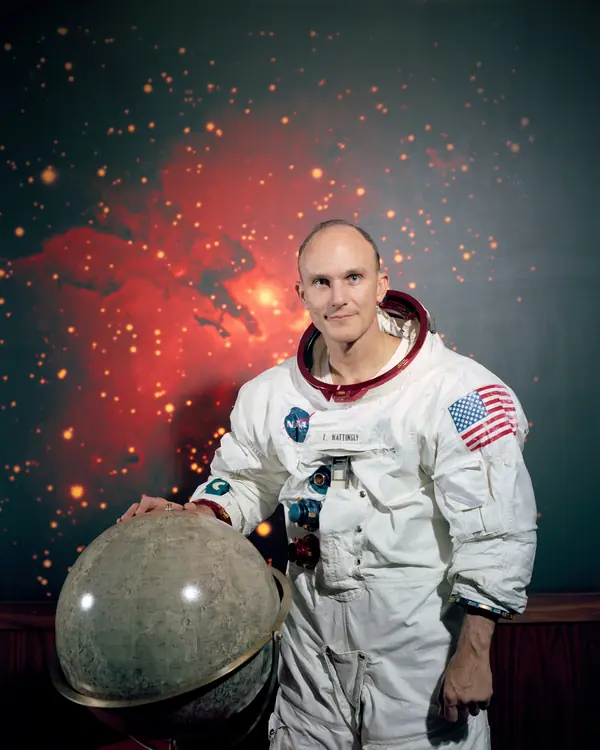
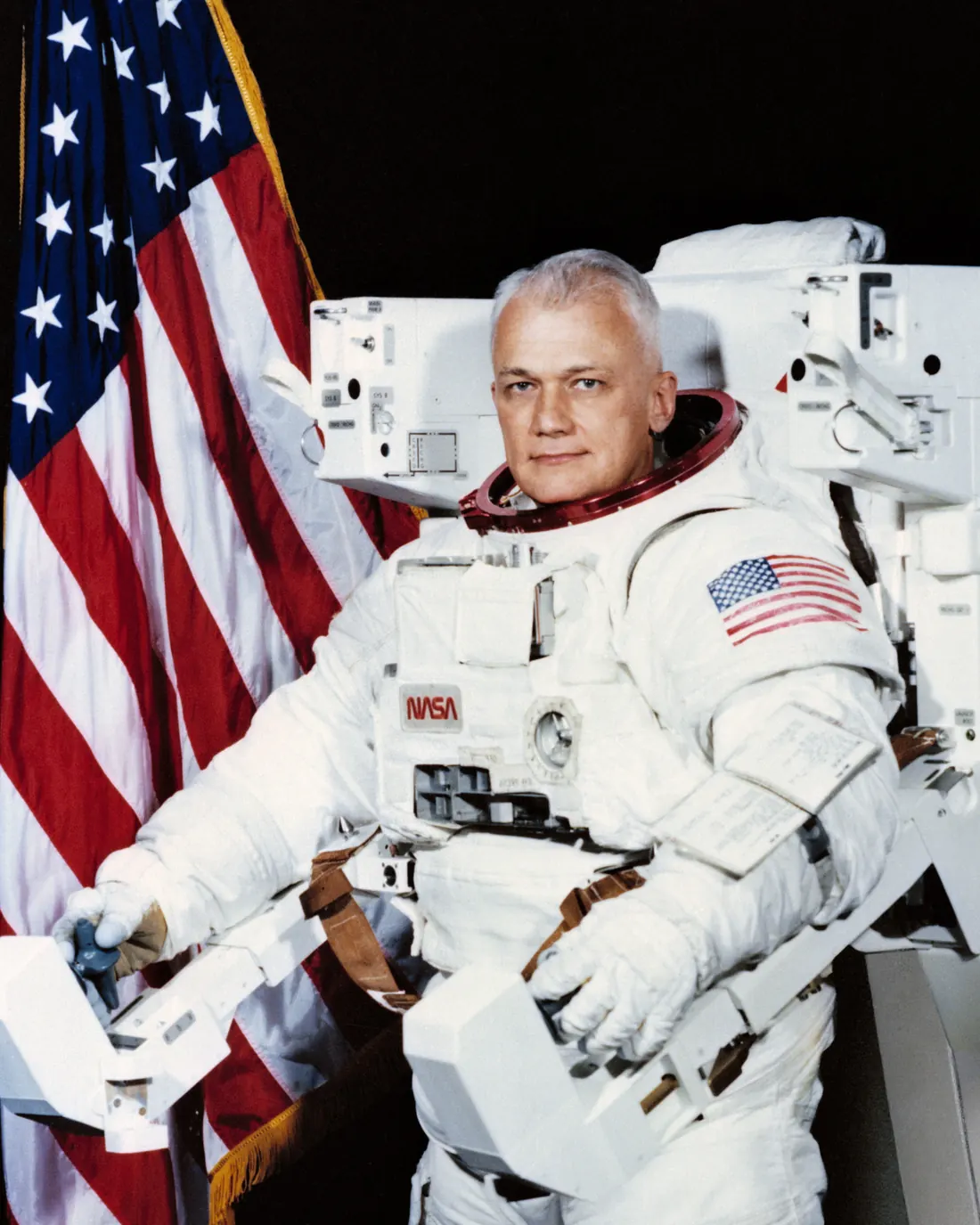
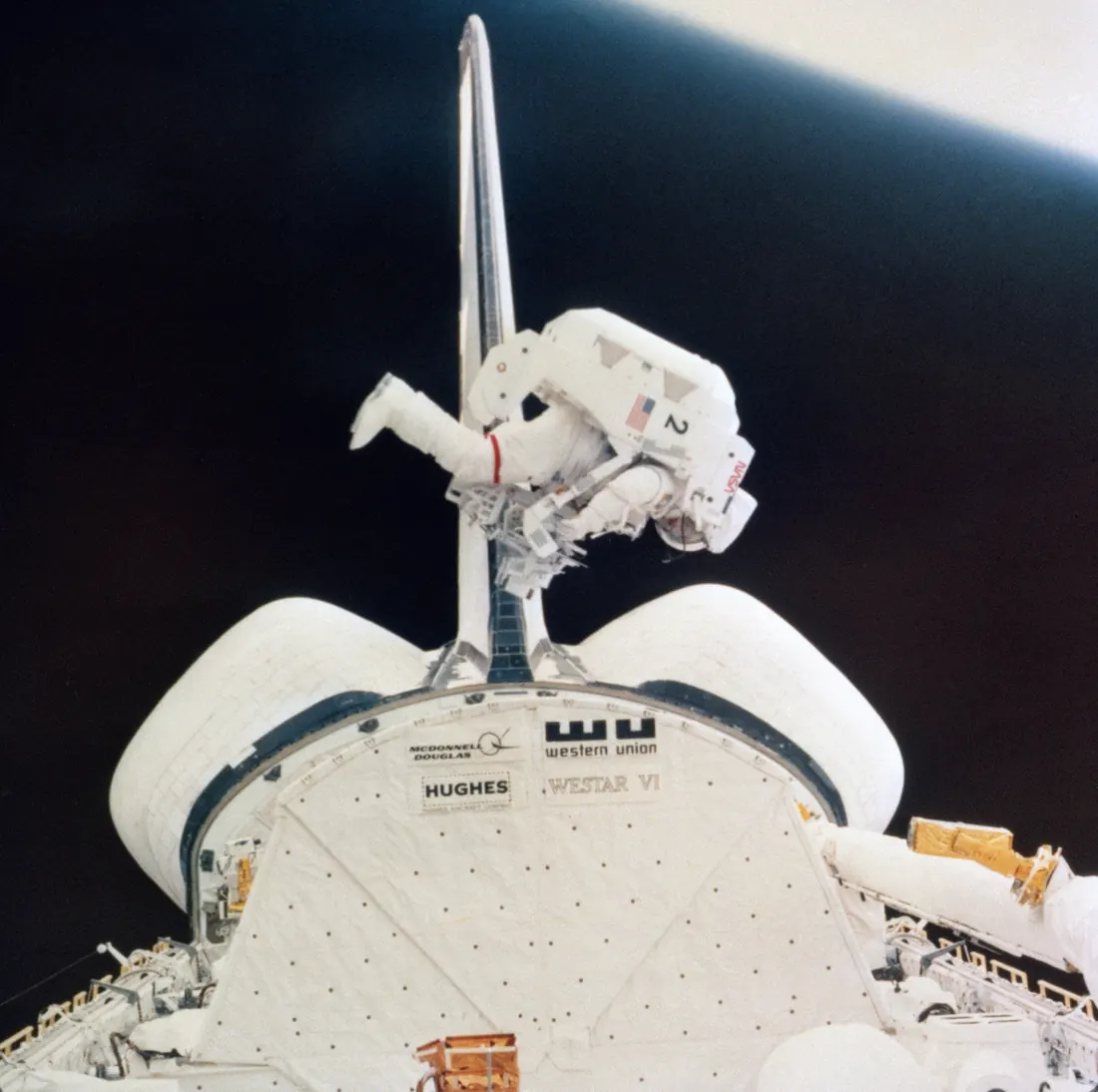
Pictures: all are NASA photos in the public domain. McCandless is shown flying the Manned Maneuvering Unit untethered above the Earth, flying out from Challenger and at his farthest point, about 320 feet, all on February 7, 1984; above the payload bay with a docking tool, from the later spacewalk on the same mission; in his official portrait in the spacesuit with the MMU, 1982; testing an astronaut maneuvering unit test model at Martin Marietta in Denver, 1972; at the capsule communicator’s console during the Apollo 11 moonwalk, July 1969, a frame of NASA film; and at the far right of the front row in the 1966 photo of NASA Astronaut Group 5. Neil Armstrong is at the lunar module Eagle on July 20, 1969, photographed by Buzz Aldrin. Ed White is on the first US spacewalk, tethered to Gemini 4, on June 3, 1965. Challenger lifts off on February 3, 1984, and Robert “Hoot” Gibson is in his 1984 NASA portrait.
Photo credits
The archive photos in this story
All the photographs and illustrations in this story are in the public domain. Tap one to enlarge it, or follow the link to its Wikimedia Commons page for the full record. The narration, captions and graphics in the Short are our own; its music and sound effects are credited below.
Music and sound effects
Music: Schumann, Kinderszenen, Op. 15: No. 1 'Of Foreign Lands and Peoples (Musopen, public domain); Mussorgsky, Pictures at an Exhibition: IV. Bydlo (piano) (Musopen, public domain); Dvorak, Symphony No. 9 'From the New World': II. Largo (Musopen, public domain).
Sound effects: Freesound, CC0.