Wojtek “was officially drafted into the Polish Army as a private.” As Wojciech Narębski told the BBC in 2011, “He had a pay book. He didn’t receive money, but was officially a Polish soldier.” The bear “was adopted by what became known as the 22nd Artillery Supply Company of the Polish II Corps,” and Narębski met him in Palestine in October 1942. “Thus began a near three-year friendship between Wojtek the bear and the then 17-year-old Polish soldier. The bond between the two was strengthened by the fact that they shared the same first name, as the diminutive form of Wojciech in Polish is Wojtek.” Narębski “was known as ‘Little Wojtek’ and the bear as ‘Big Wojtek.’”
“Because of his size Wojtek received double rations,” the BBC says, and he liked “asking for unlit cigarettes, which he would eat.” He also liked to “wrestle with his comrades. When an opponent lost, Wojtek would lick their face in apology,” AFP reported.
After the war, “Mr Narebski spent time in Yorkshire before returning to Poland.” His company “was demobbed in Berwickshire, Scotland, while Wojtek was taken to live at Edinburgh Zoo, where some of the ex-troops would visit him.” “I went to Edinburgh Zoo once or twice when Voytek was there,” Augustyn Karolewski told BBC News in 2008. “And as soon as I mentioned his name he would sit on his backside and shake his head wanting a cigarette.”
Then, Narębski recalled, “The communist authorities in Poland wanted to take him to the zoo in Poland, but my colleagues who were staying in Scotland were against this.” Polish Wikipedia, citing two 1959 articles in the newspaper Głos Robotniczy, says that in late 1958 the Poznań branch of the Society for the Protection of Animals, with the Polish Zoological Society and the veterans’ union ZBoWiD, raised his conditions with Edinburgh Zoo and proposed moving him to a Polish zoo, and that in early February 1959 a representative of the Oliwa zoo in Gdańsk went to Edinburgh, while a large enclosure was begun. But Wojtek stayed at Edinburgh Zoo, “where he spent the rest of his life.”
In Poland, “It was difficult for him to correspond with his former comrades who stayed in Scotland because of the restrictions in Poland, but he never forgot Wojtek.” The bear died on December 2, 1963. “However he did hear about Wojtek’s death in 1963. ‘It was very sorrowful news,’ says Mr Narebski.” “It was very pleasant for me to think about him. I felt like he was my older brother,” he told the BBC. And in 2019, at 93, he told AFP: “Because he was brought up from a cub among people, he acquired human traits… In a bear’s body there was a Polish soul.”
Fact check
The facts and where they come from
- Communist Poland wanted the soldier bear in a Polish zoo, and the men who raised him said no. Wojciech Narębski (BBC World Service, 2011): “The communist authorities in Poland wanted to take him to the zoo in Poland, but my colleagues who were staying in Scotland were against this.” Polish Wikipedia, citing Głos Robotniczy (January 23 and February 17, 1959): in late 1958 the Poznań branch of the Society for the Protection of Animals, with the Polish Zoological Society and the veterans’ union ZBoWiD, proposed moving him to a Polish zoo. 15
- His name was Wojtek, the bear enlisted in the Polish army. Wikipedia: “Wojtek was officially drafted into the Polish Army as a private.” Narębski: “He had a pay book. He didn’t receive money, but was officially a Polish soldier.” 41
- In his company was a 17-year-old soldier with the same name, Wojciech Narębski. BBC World Service: the bear “was adopted by what became known as the 22nd Artillery Supply Company of the Polish II Corps”; “Thus began a near three-year friendship between Wojtek the bear and the then 17-year-old Polish soldier. The bond between the two was strengthened by the fact that they shared the same first name, as the diminutive form of Wojciech in Polish is Wojtek.” Narębski met him in Palestine in October 1942. 1
- So they became Little Wojtek and Big Wojtek. AFP: Narębski “was known as ‘Little Wojtek’ and the bear as ‘Big Wojtek.’” 3
- The bear got double rations, and ate cigarettes. BBC World Service: “Because of his size Wojtek received double rations”; he liked “asking for unlit cigarettes, which he would eat.” AFP: “smoke (or rather eat) cigarettes.” 13
- When he beat a man at wrestling, he licked his face to say sorry. AFP: Wojtek liked to “wrestle with his comrades. When an opponent lost, Wojtek would lick their face in apology.” 3
- After the war, Little Wojtek went home to Poland. BBC World Service: “Mr Narebski spent time in Yorkshire before returning to Poland.” 1
- Big Wojtek stayed in Scotland, at Edinburgh Zoo. BBC World Service: “After the war his company was demobbed in Berwickshire, Scotland, while Wojtek was taken to live at Edinburgh Zoo, where some of the ex-troops would visit him.” Wikipedia: “Following demobilisation on 15 November 1947, Wojtek was given to Edinburgh Zoo, where he spent the rest of his life.” 14
- Old comrades visited, and at his name, he’d sit down and beg for a cigarette. Augustyn Karolewski (BBC News, 2008): “I went to Edinburgh Zoo once or twice when Voytek was there,” “And as soon as I mentioned his name he would sit on his backside and shake his head wanting a cigarette.” Wikipedia: he was “often visited by journalists and former Polish soldiers, some of whom tossed cigarettes for him to eat.” 24
- Then Communist Poland wanted him. Narębski: “The communist authorities in Poland wanted to take him to the zoo in Poland.” Polish Wikipedia, citing Głos Robotniczy (1959): in early February 1959 a representative of the Oliwa (Gdańsk) zoo went to Edinburgh, and a large enclosure was begun. 15
- His comrades in Scotland were against it, and he stayed. Narębski: “but my colleagues who were staying in Scotland were against this.” Wikipedia: Edinburgh Zoo, “where he spent the rest of his life.” 14
- Little Wojtek could barely write to them, but never forgot the bear. BBC World Service: “It was difficult for him to correspond with his former comrades who stayed in Scotland because of the restrictions in Poland, but he never forgot Wojtek.” 1
- When Big Wojtek died in 1963, he called it very sorrowful news. BBC World Service: “However he did hear about Wojtek’s death in 1963. ‘It was very sorrowful news,’ says Mr Narebski.” Wikipedia: Wojtek died on December 2, 1963. 14
- “I felt like he was my older brother.” BBC World Service: “It was very pleasant for me to think about him. I felt like he was my older brother,” Mr Narebski says. 1
- “In a bear’s body,” he said, “there was a Polish soul.” Narębski (AFP, 2019): “Because he was brought up from a cub among people, he acquired human traits… In a bear’s body there was a Polish soul.” 3
Sources
- Martin Vennard, Story of Poland’s ‘soldier bear’ Wojtek turned into film (November 16, 2011) BBC World Service
- Honour sought for ‘Soldier Bear’ (January 25, 2008) BBC News
- Animated film to spotlight bear that served in WWII (AFP, January 13, 2019) Egypt Independent
- Wojtek Wikipedia
- Wojtek (niedźwiedź), citing Głos Robotniczy, January 23 and February 17, 1959 Polish Wikipedia
Notes
Communist Poland’s bid rests on Wojciech Narębski’s own account to the BBC and on two 1959 articles in Głos Robotniczy that we know only through Polish Wikipedia’s citation, so the page names their source each time. The Short names no year and no zoo.
Quote order: in the BBC article, “I felt like he was my older brother” comes just before the line about hearing of the bear’s death; the Short puts it after. It is a general feeling, not dated.
Left out: a zoo story that rests on a single community source; his age at death and his weight, on which sources differ; and his swim in the Adriatic, for length.
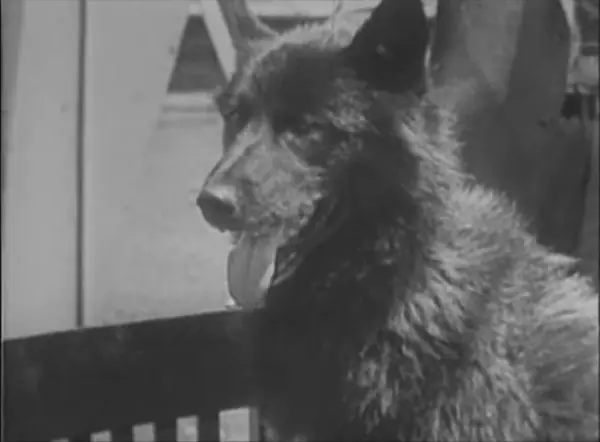
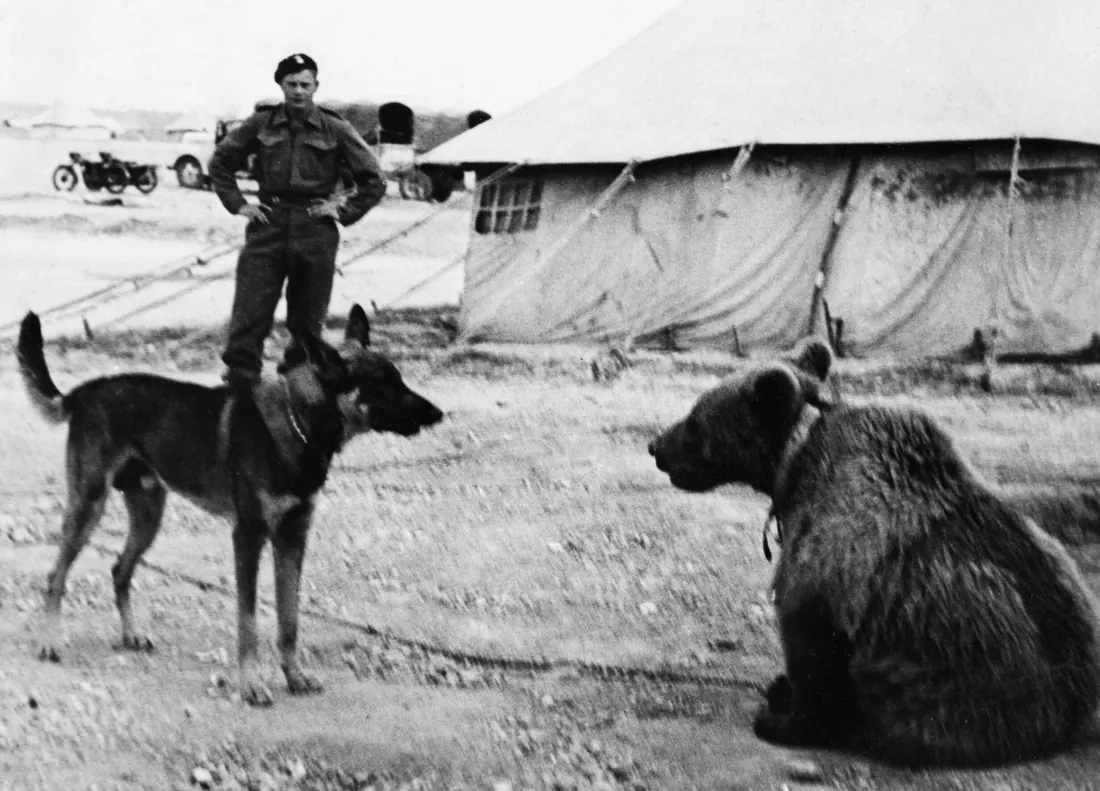
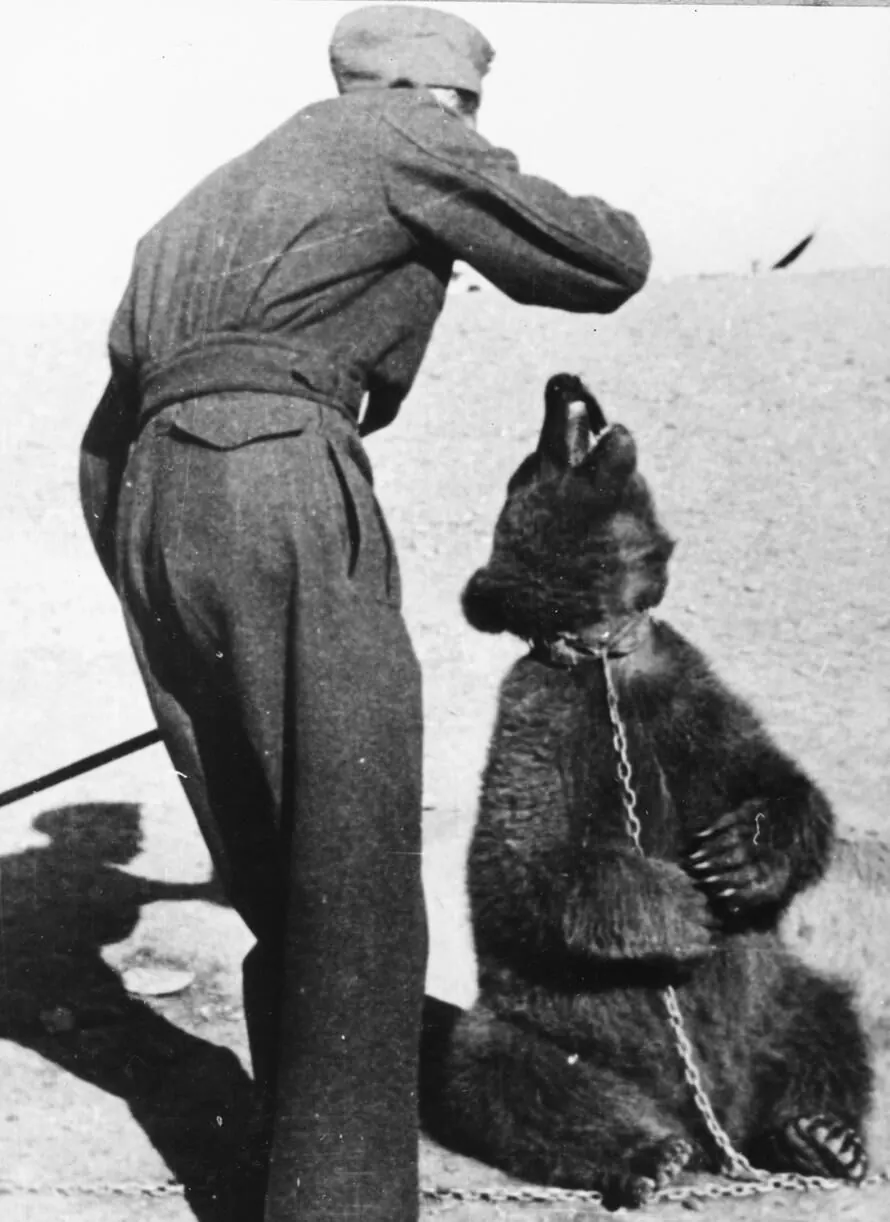
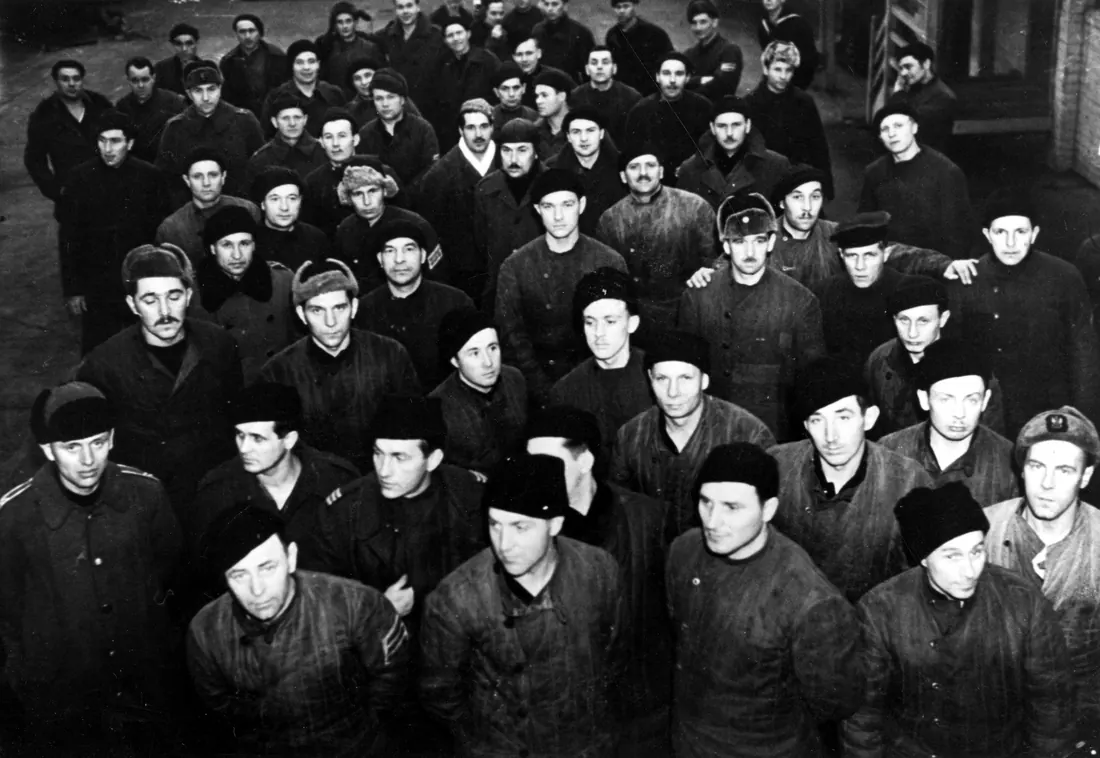
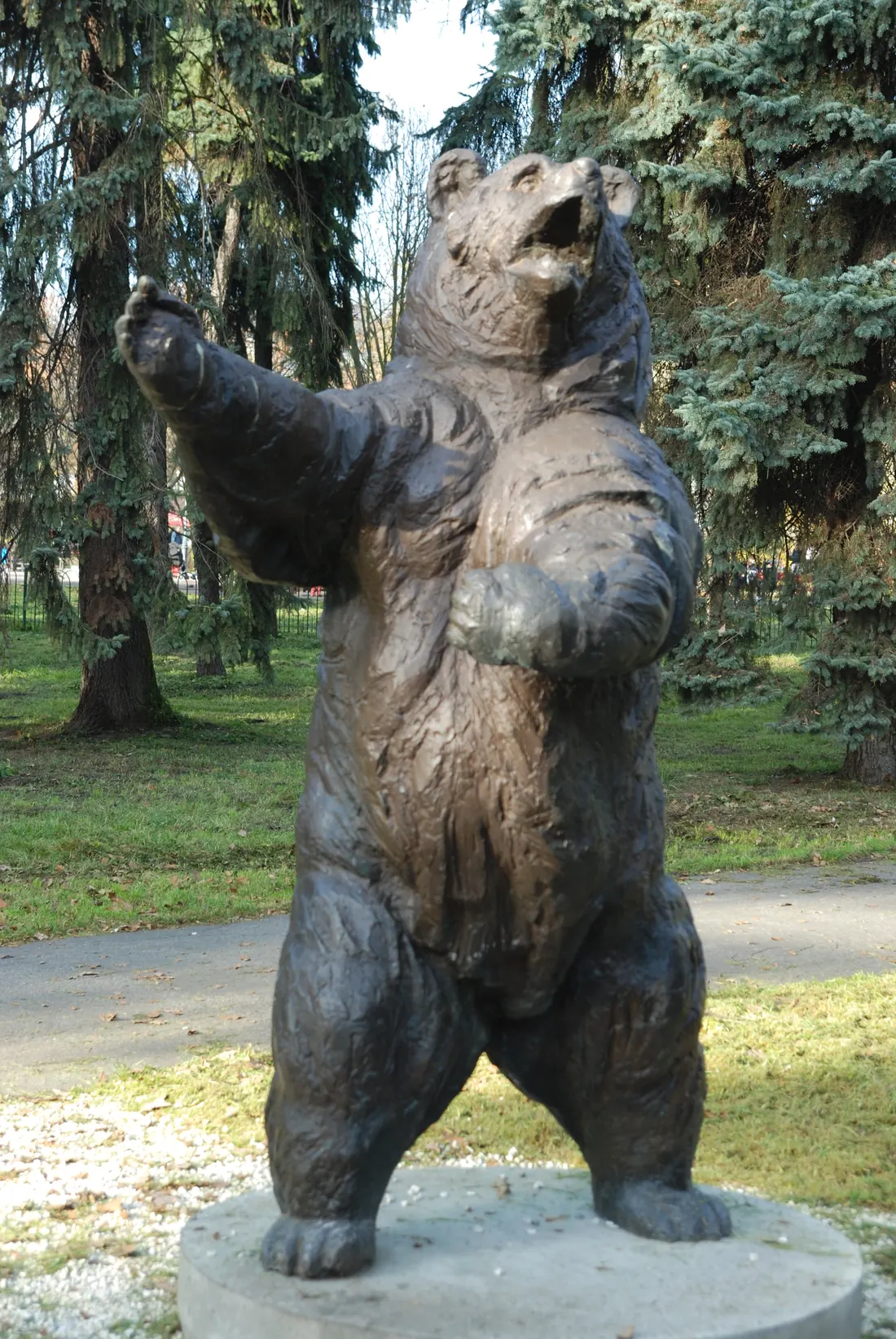
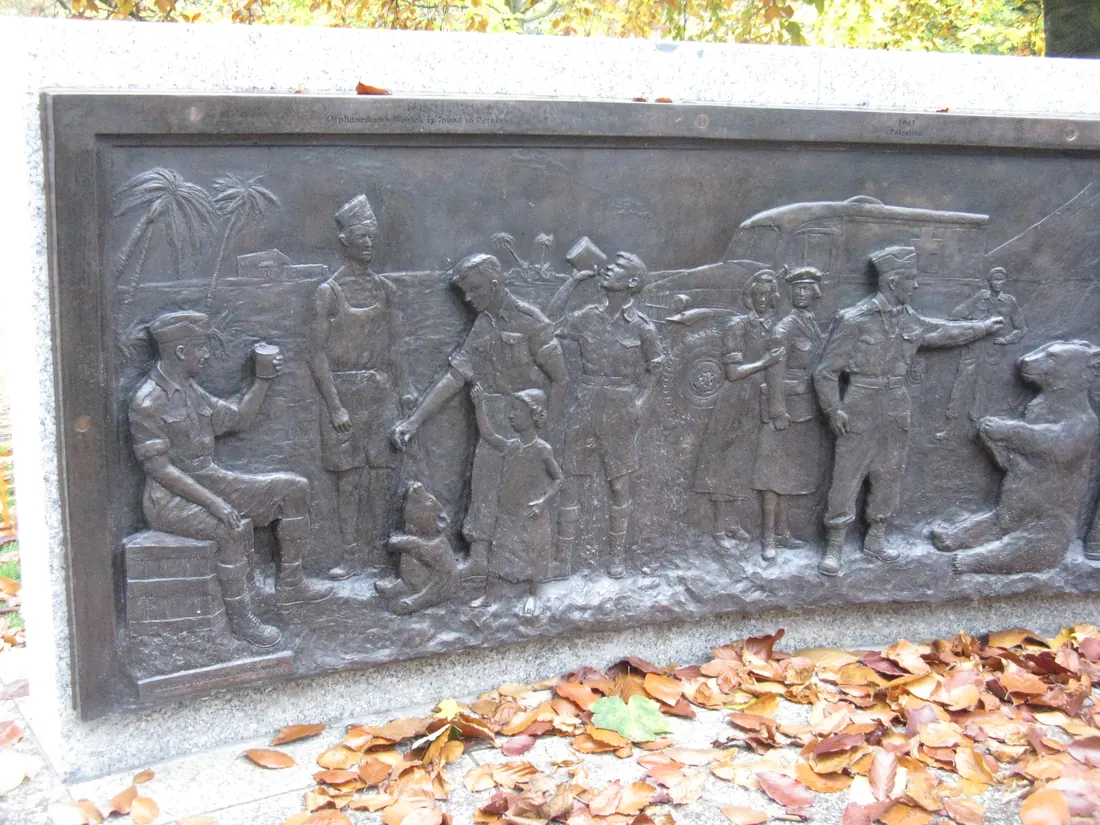
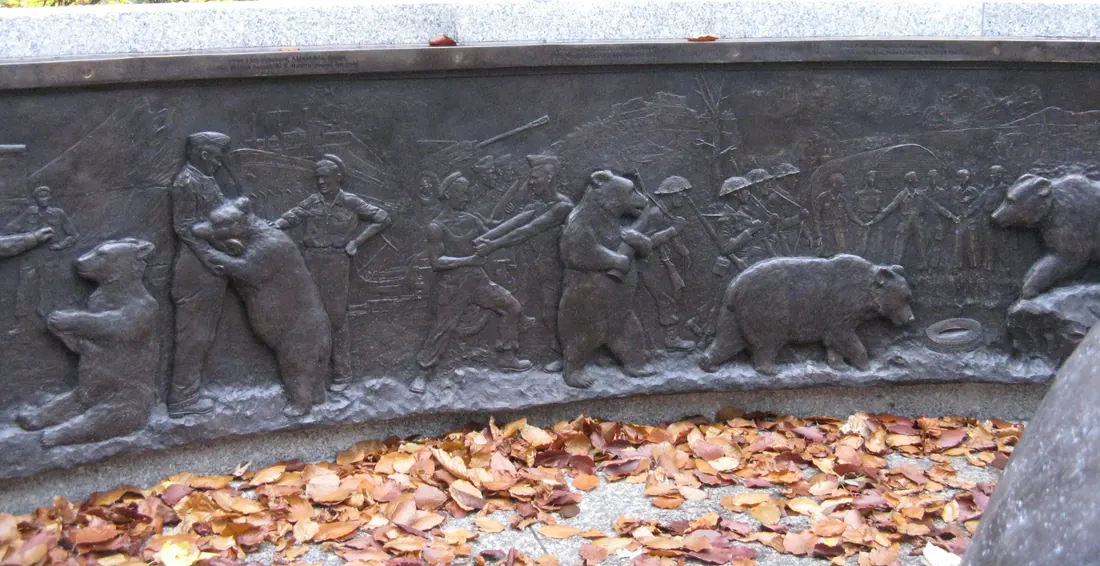
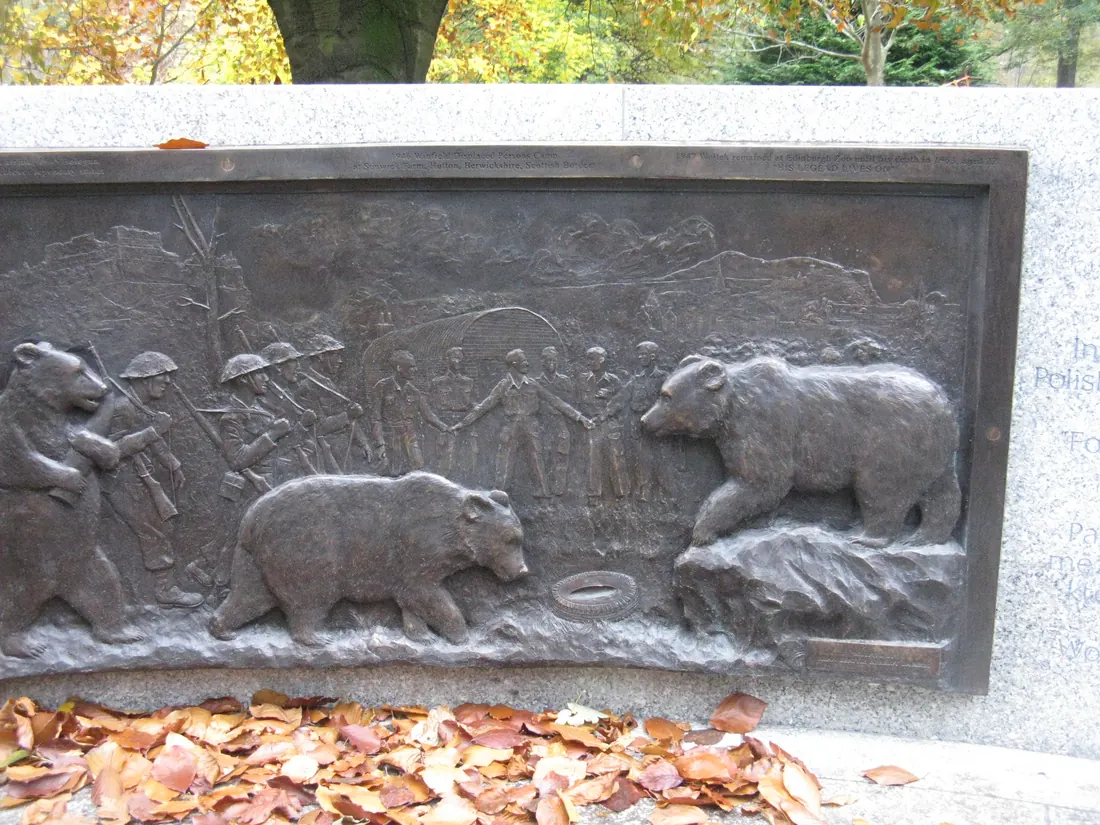
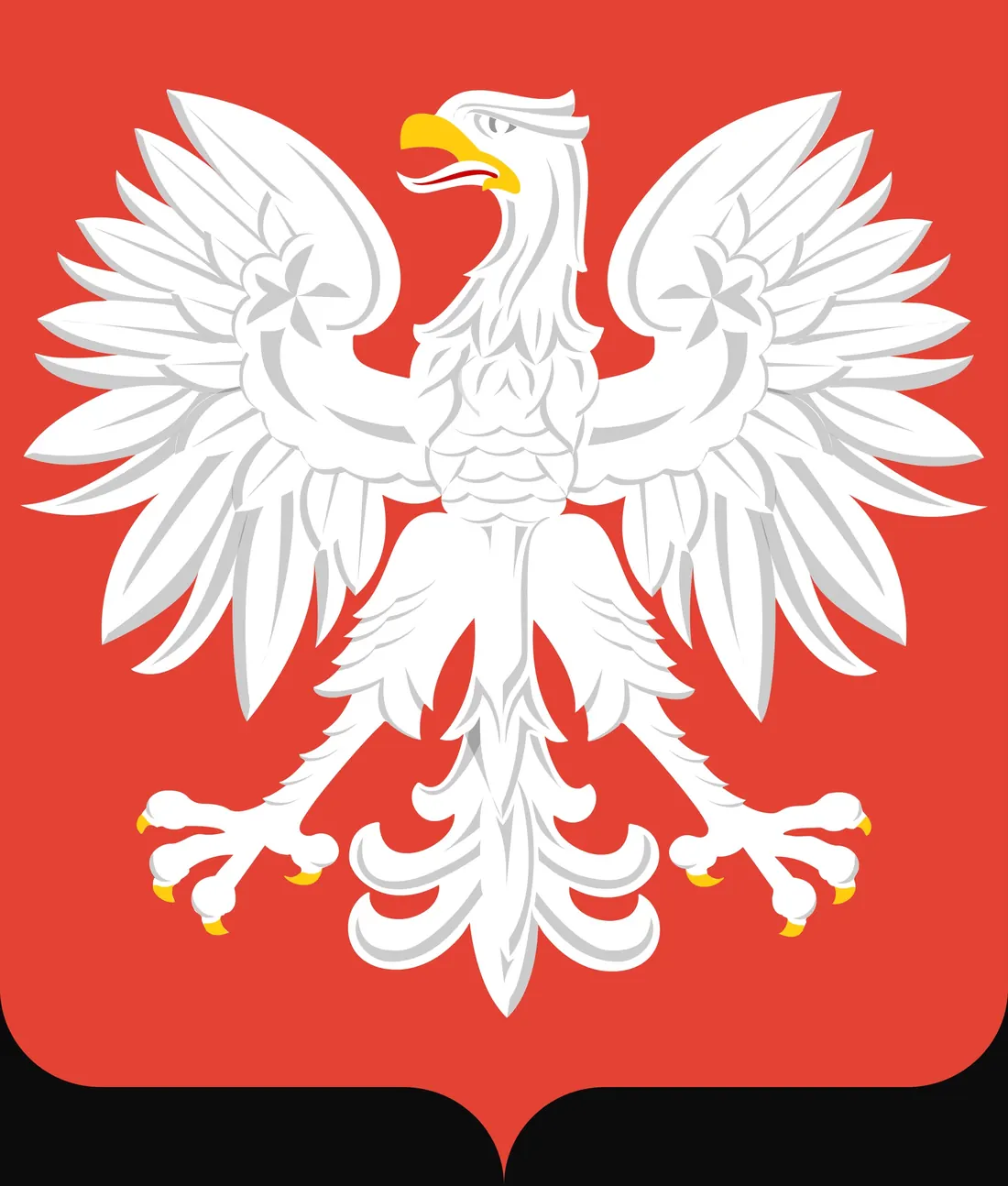
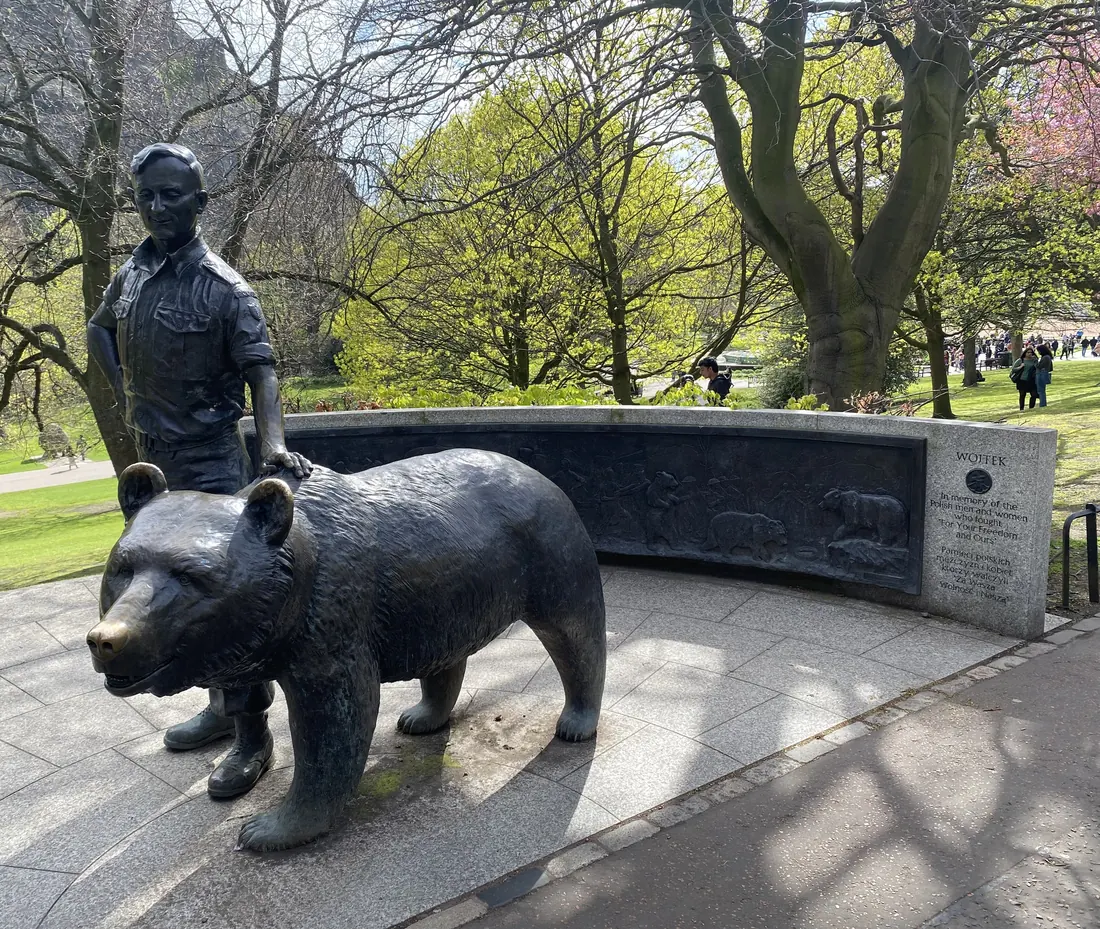
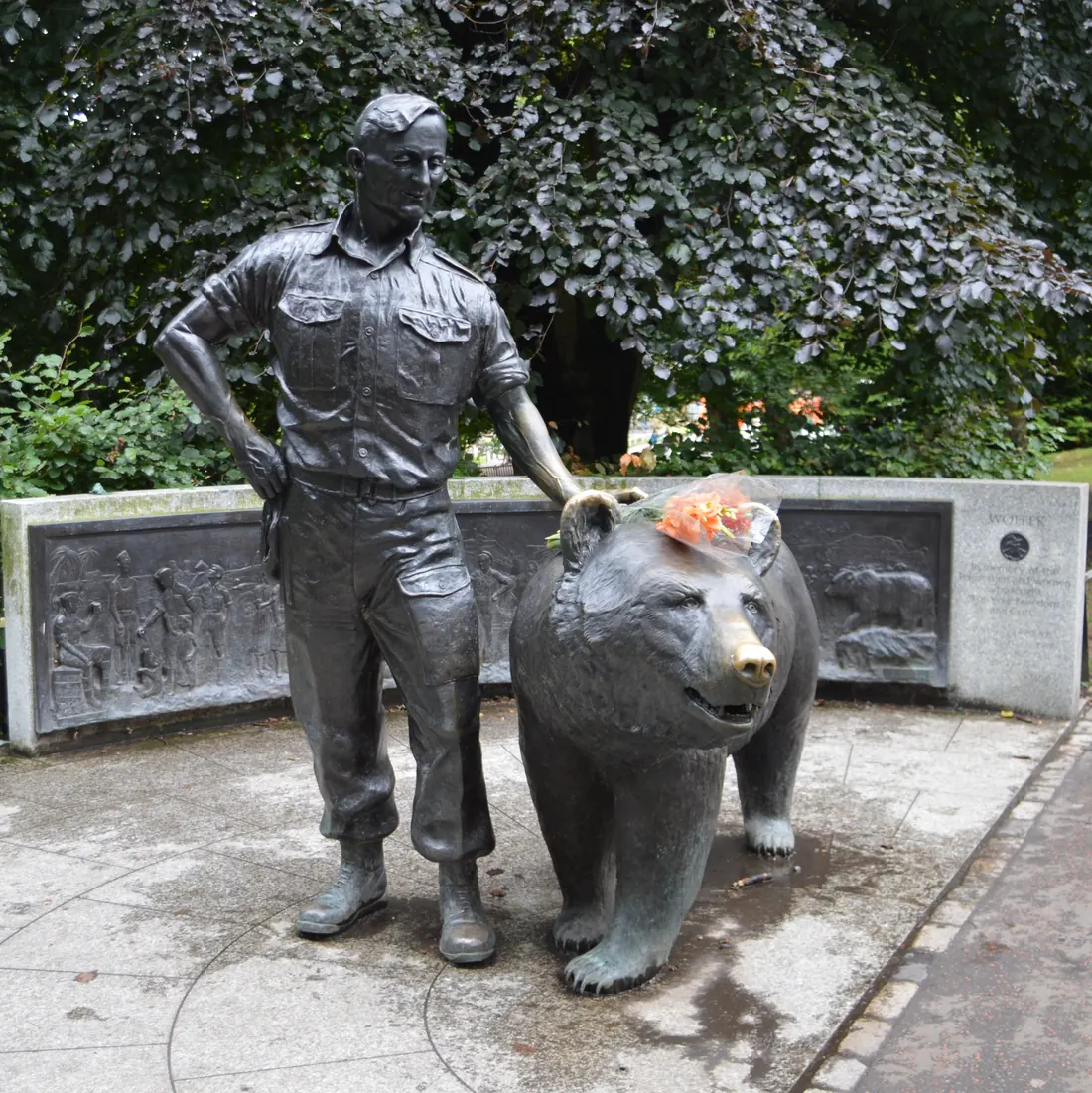
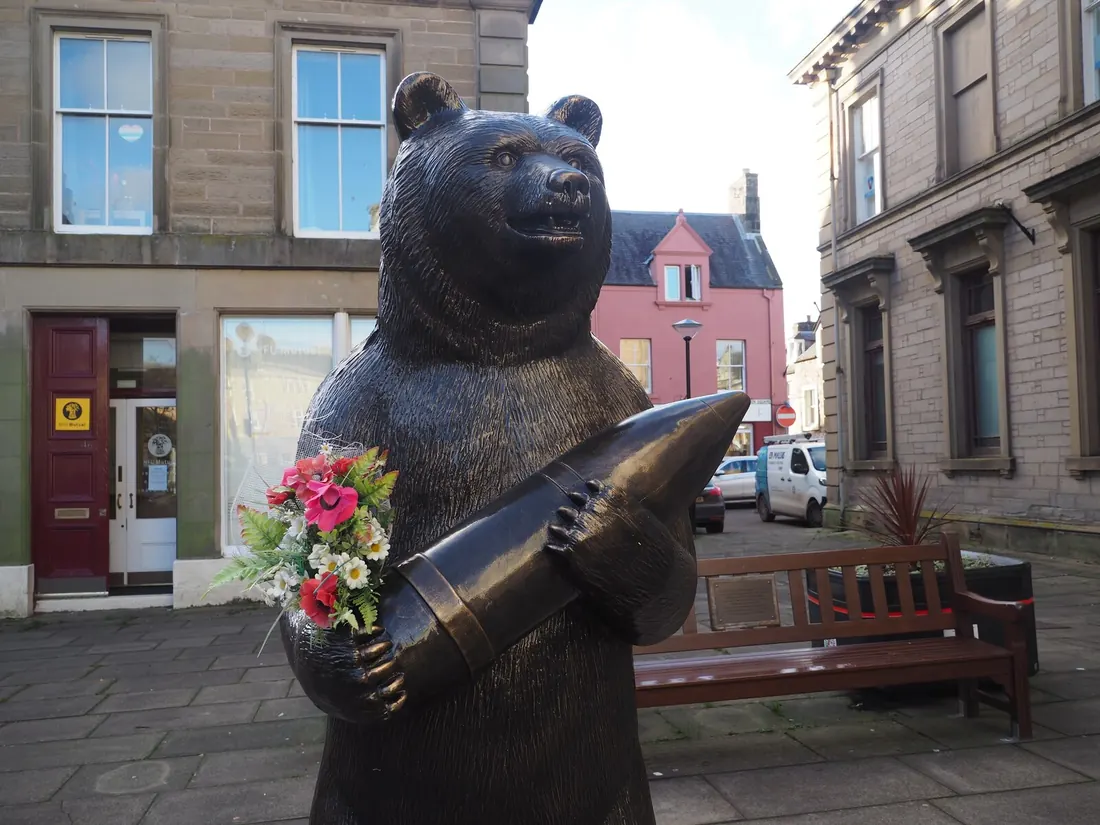
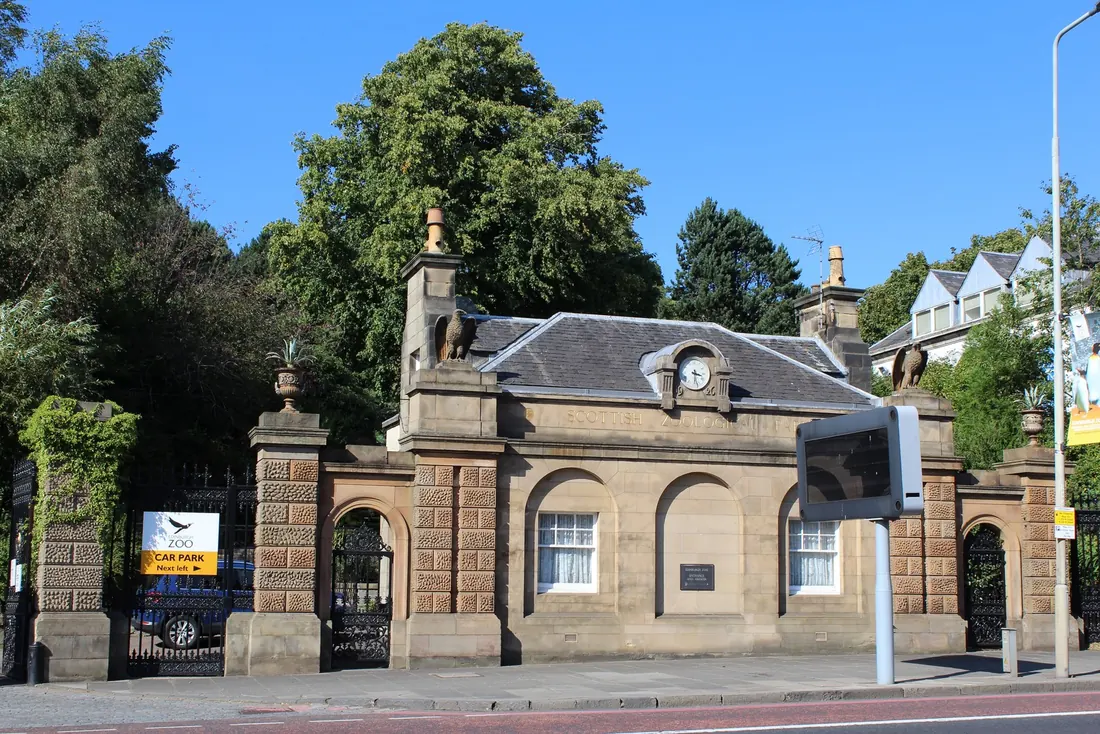
Pictures: no free photo of Wojciech Narębski was found, and he is not in any photo on this page. Wojtek himself is in only two photos, both by a Polish official photographer in the Middle East in 1942–43: sitting by a tent, facing a camp dog, with a soldier behind (Imperial War Museums HU 16545), and being fed by a soldier of his company (IWM MH 1246). The volunteers for the Polish army in the USSR, 1941–42 (NAC 21-158), are unnamed young volunteers, not Narębski. The Edinburgh memorial in Princes Street Gardens (Alan Beattie Herriot, unveiled 2015) is shown in its bronze relief, photographed by M J Richardson in 2015 (a soldier feeding the cub in Iran and Palestine, the wrestling, and the camp in Scotland and the zoo), and in its statue of a soldier with the bear, photographed on April 19, 2025, and August 16, 2022; the soldier is not Narębski. The statues in Duns, Scottish Borders (unveiled 2016, photographed in 2020), and in Jordan Park, Kraków (unveiled 2014, photographed that year), the Edinburgh Zoo gate lodge in 2013 and the coat of arms of the Polish People’s Republic (1955–80) complete the pictures.
Photo credits
The archive photos in this story
The photographs and illustrations in this story are in the public domain or shared under open licenses; each one is credited below with its license. Tap one to enlarge it, or follow the link to its Wikimedia Commons page for the full record. The narration, captions and graphics in the Short are our own; its music and sound effects are credited below.
Music and sound effects
Music: Schumann, Kinderszenen, Op. 15: No. 1 'Of Foreign Lands and Peoples (Musopen, public domain); Mussorgsky, Pictures at an Exhibition: IV. Bydlo (piano) (Musopen, public domain); Dvorak, Symphony No. 9 'From the New World': II. Largo (Musopen, public domain).
Sound effects: Freesound, CC0.