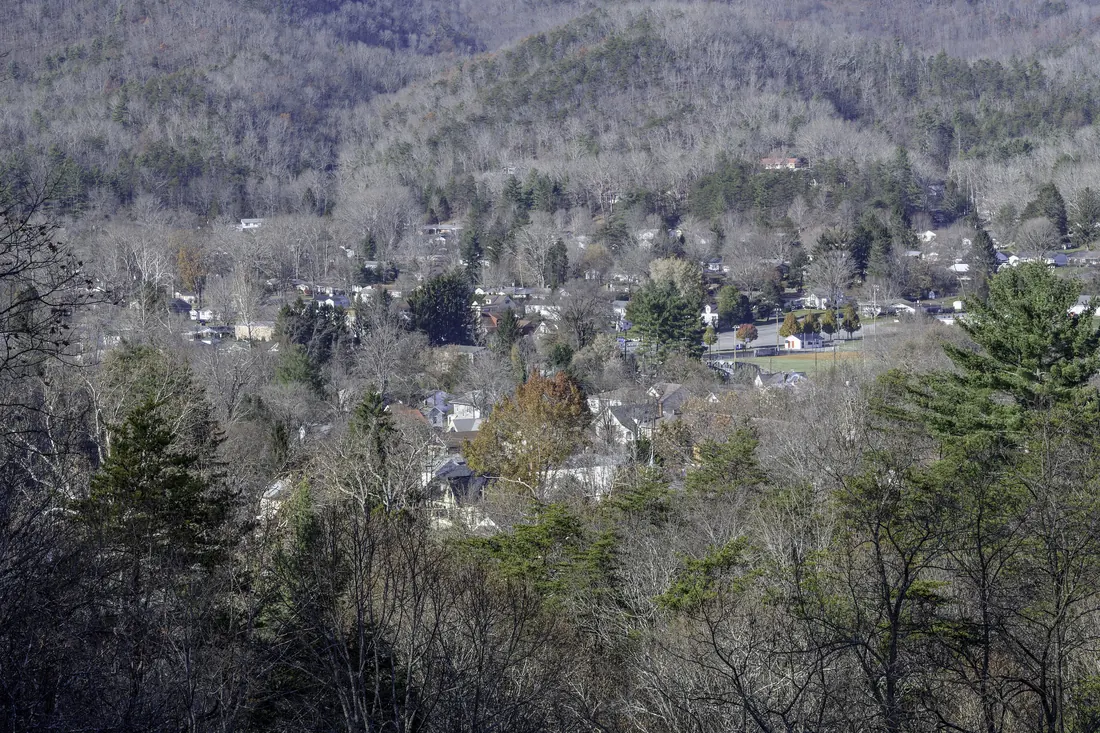
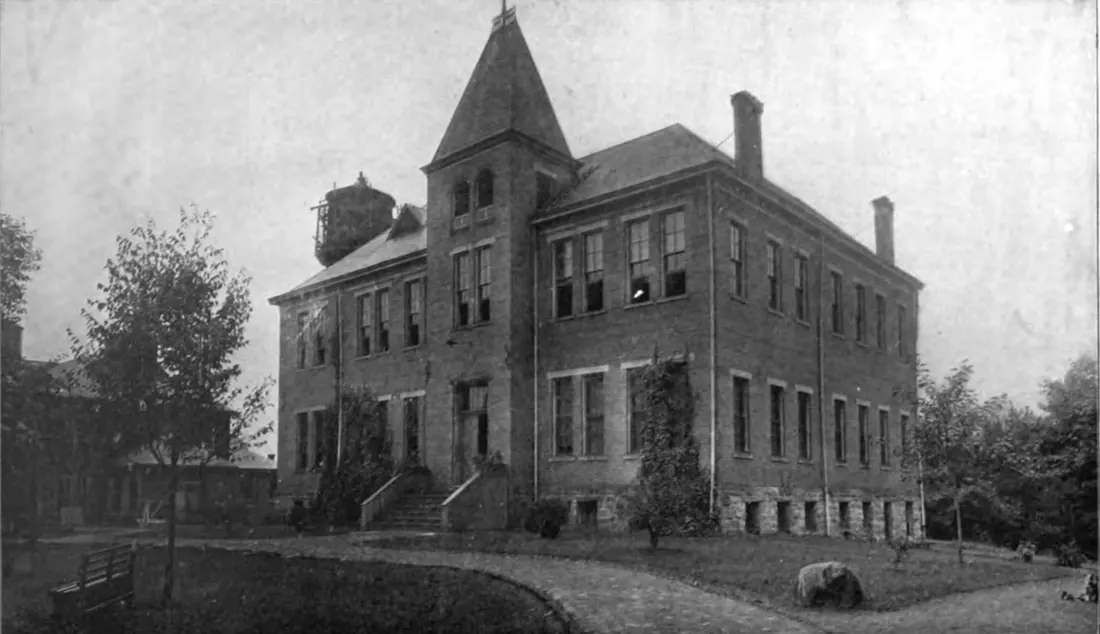
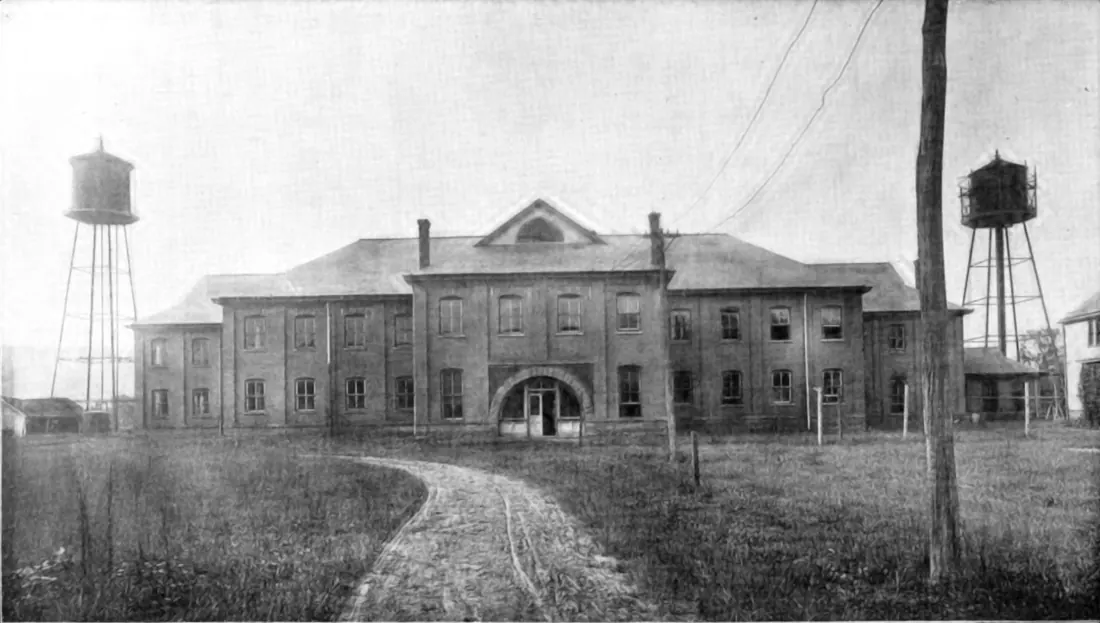
Katherine Johnson was born in White Sulphur Springs, West Virginia, in 1918. As a girl, she remembered, “I counted everything. I counted the steps to the road, the steps up to church, the number of dishes and silverware I washed … anything that could be counted, I did.” At ten she was ready for high school, but “Because Greenbrier County did not offer public schooling for African-American students beyond eighth grade, the Colemans arranged for their children to attend a high school in Institute, West Virginia,” Wikipedia says. The school was on the campus of West Virginia State College, and she began there in 1928.
So every fall the family made the trip. NASA says her father “drove his family 120 miles to Institute, West Virginia, where she could continue her education through high school”; MacTutor says that “every autumn, Katherine’s mother moved with her children to a rented home in Institute,” and in the summer they went back to White Sulphur Springs.
At West Virginia State College she “found a mentor in math professor W. W. Schieffelin Claytor, the third African American to earn a PhD in mathematics,” NASA says. When she needed analytic geometry, which the college didn’t offer, “he simply put on a course just for Katherine,” MacTutor writes. “In 1937, at age 18, she graduated summa cum laude with degrees in mathematics and French” (Wikipedia).
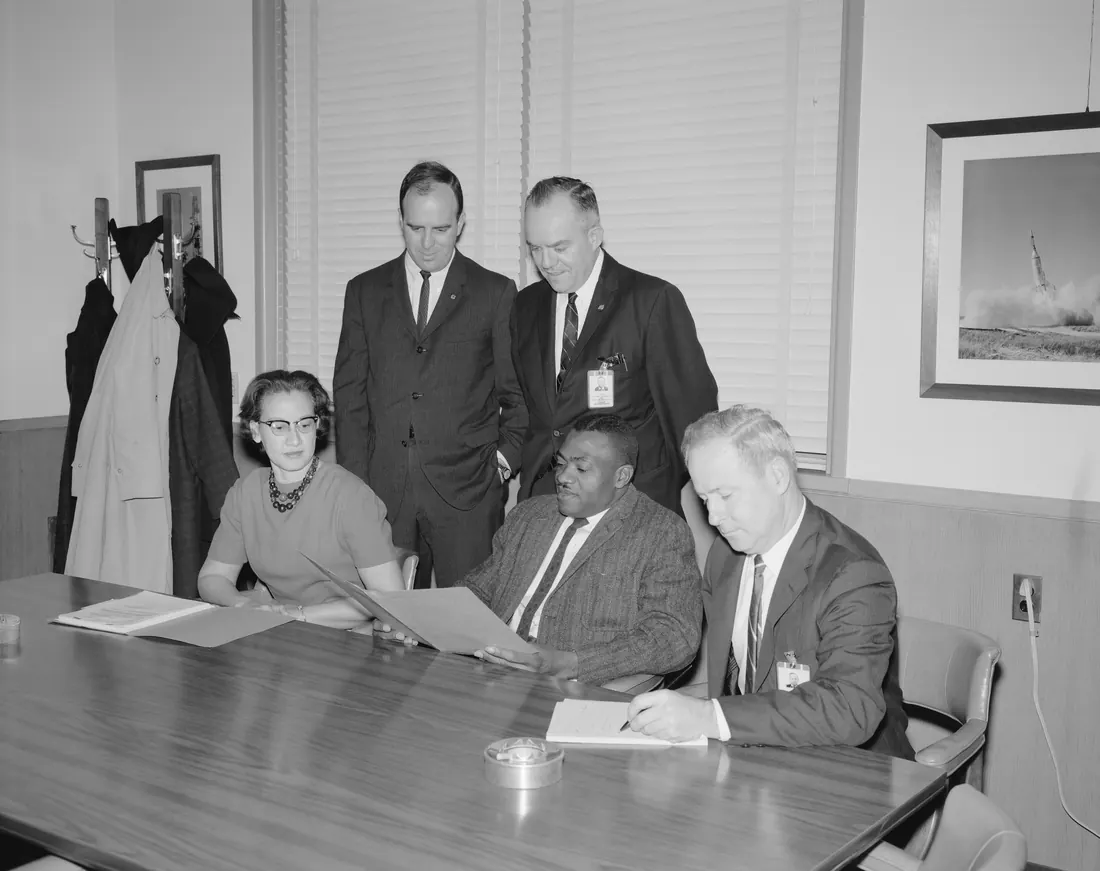
She was at Langley when, in December 1956, her husband, James, died of cancer, leaving her with their three daughters. At NASA, MacTutor writes, there was “discrimination against women and they were not allowed to attend briefings.” She kept asking. “I’d listen and listen and ask questions. Then, of course, I’d ask why I couldn’t go myself, and eventually they just got tired of answering all my questions and just let me in to the briefings.”
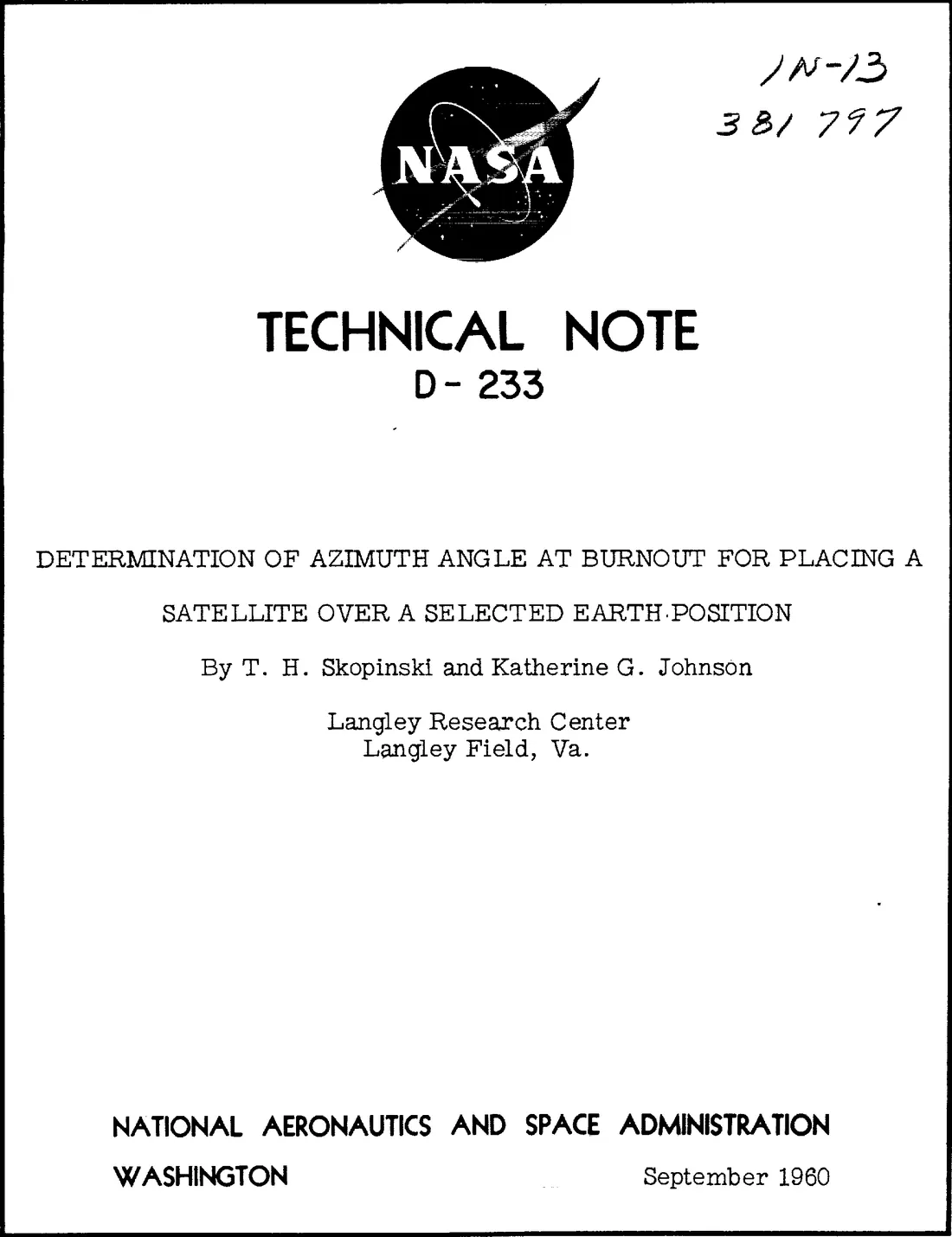
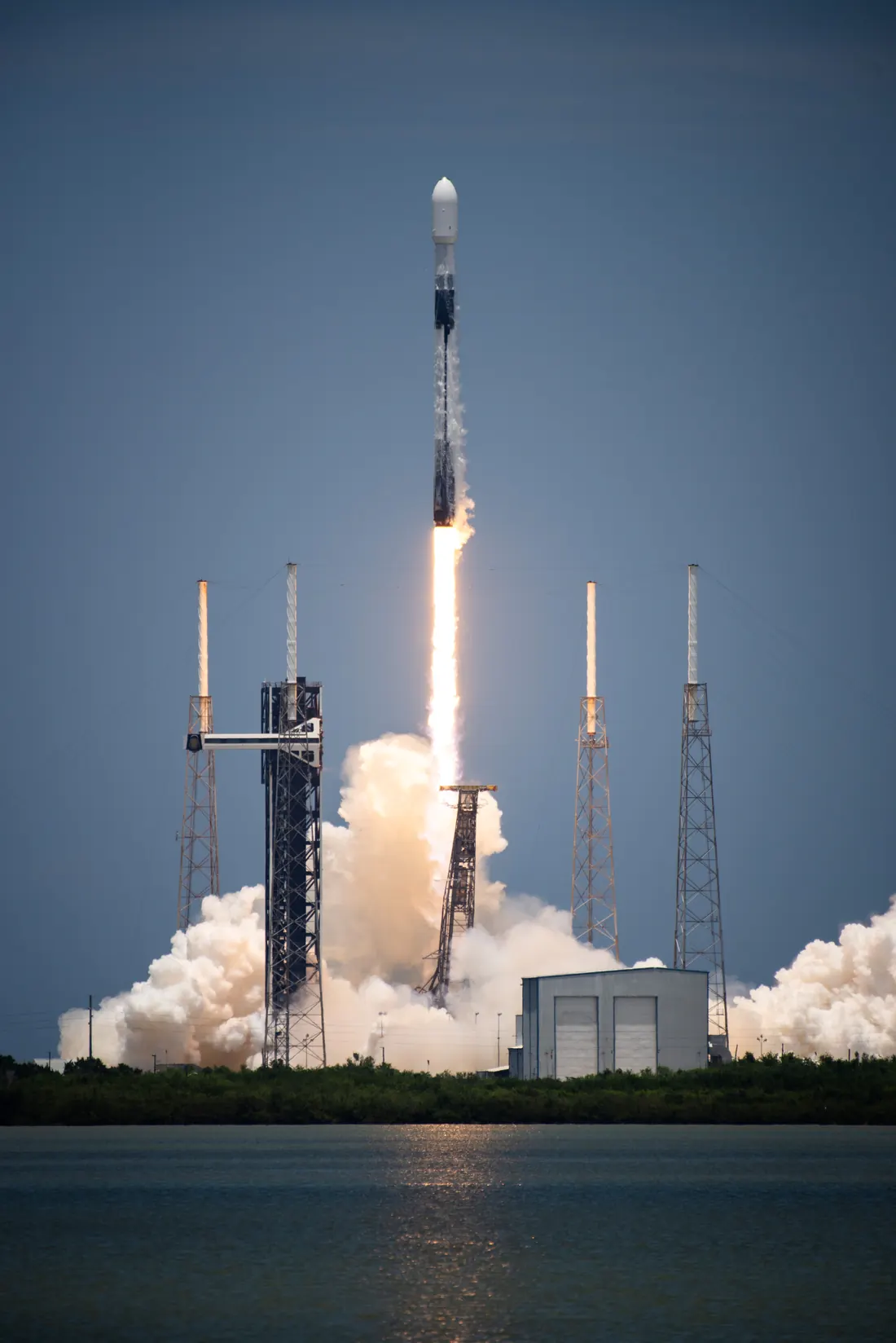
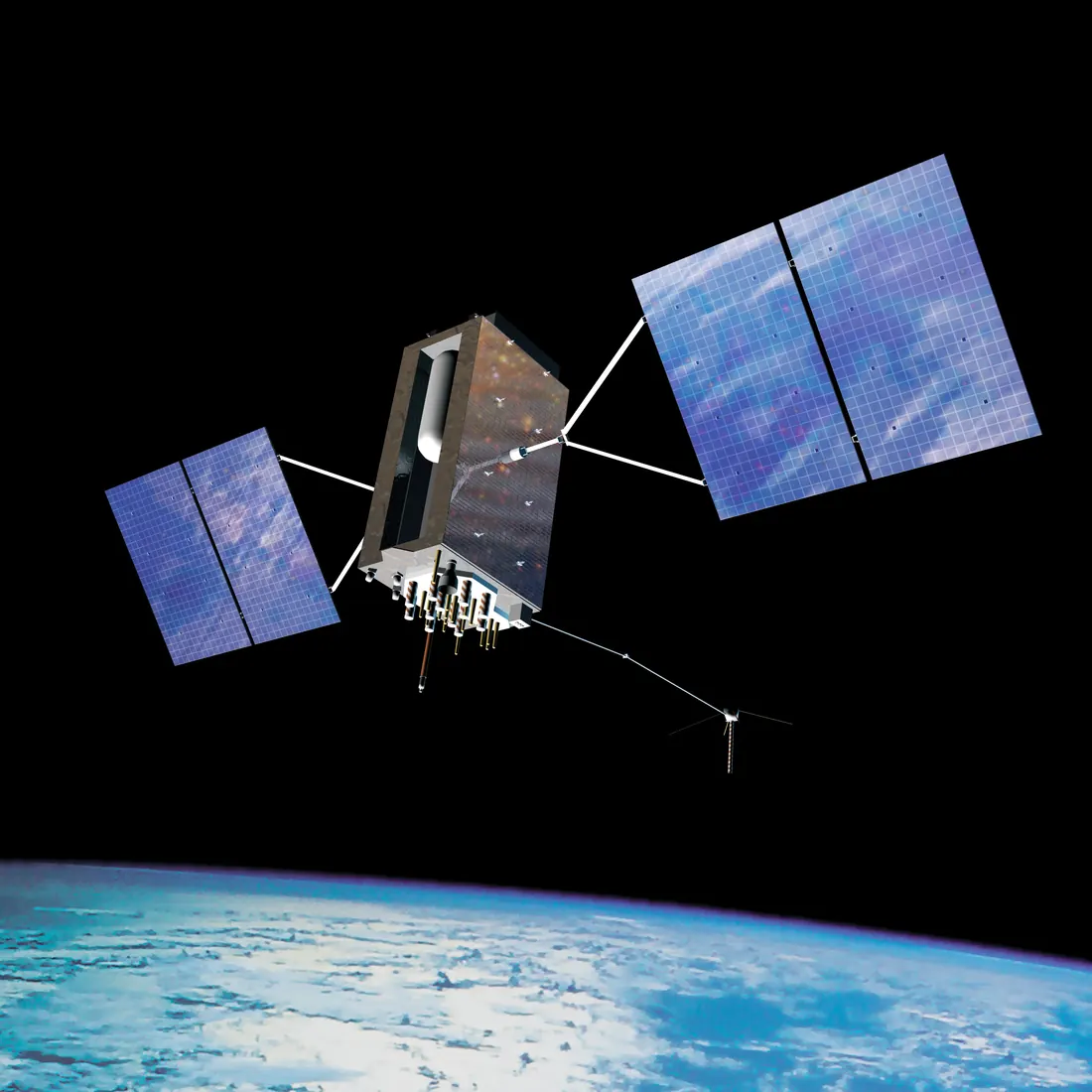
“In the early days of NASA women were not allowed to put their names on the reports—no woman in my division had had her name on a report,” she said. In September 1960 came NASA Technical Note D-233, Determination of Azimuth Angle at Burnout for Placing a Satellite Over a Selected Earth Position, “By T. H. Skopinski and Katherine G. Johnson.” “It was the first time a woman in the Flight Research Division had received credit as an author of a research report,” NASA says. Decades later the US Space Force named its GPS III satellite SV08 for her, and on May 30, 2025, a Falcon 9 carried it into orbit from Cape Canaveral Space Force Station.
Fact check
The facts and where they come from
- She was in high school at ten, but her county had no school for Black children past eighth grade. NASA (2015): “by the time she was 10 years old, she was a high school freshman.” MacTutor: “At age ten she was ready to enter high school”; “White Sulphur Springs had no high school for black children.” Wikipedia: “Because Greenbrier County did not offer public schooling for African-American students beyond eighth grade, the Colemans arranged for their children to attend a high school in Institute, West Virginia.” NASA: “Born in White Sulphur Springs, West Virginia, in 1918.” 1452
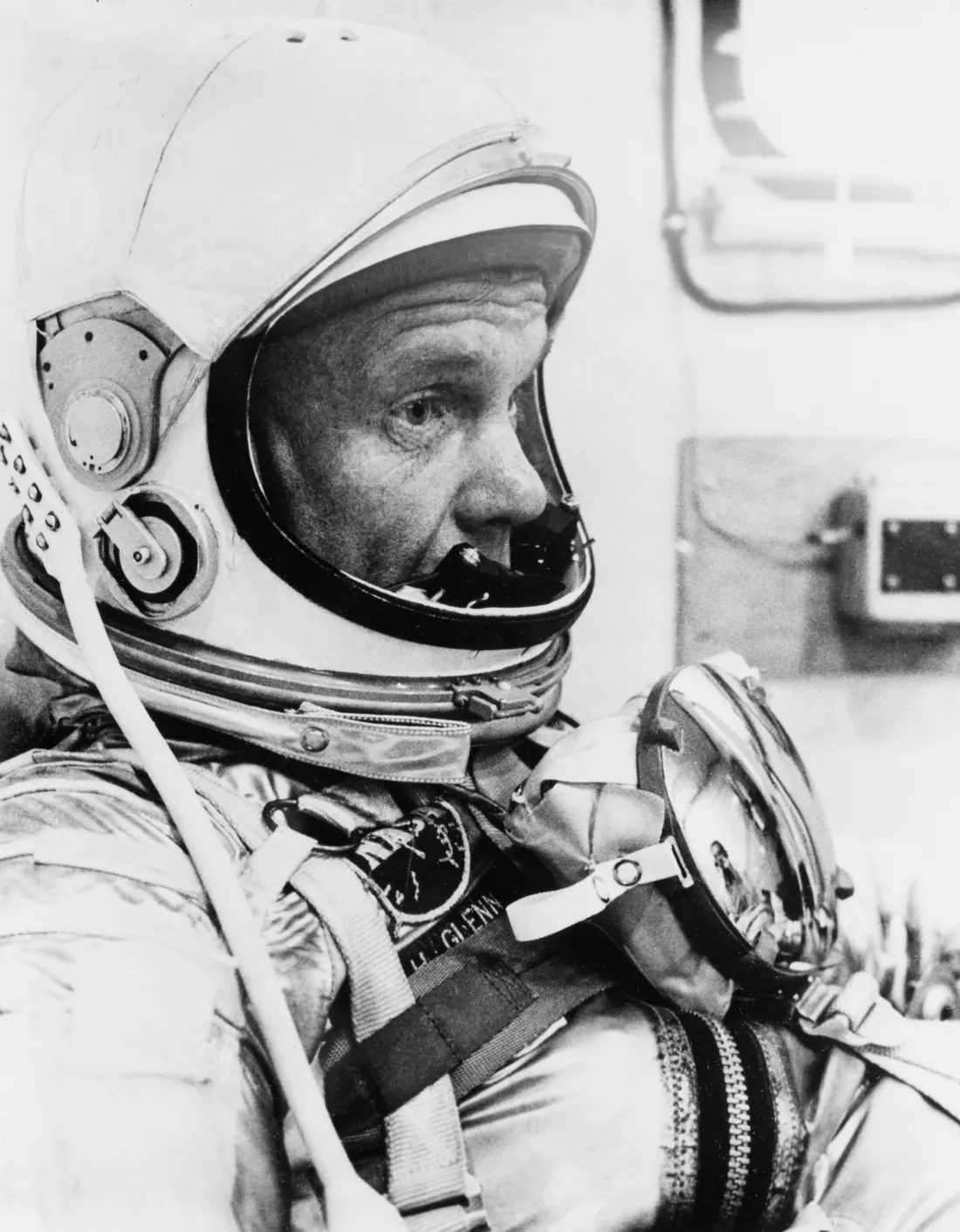
- Her name was Katherine Johnson, the NASA mathematician John Glenn trusted over computers. As Part 1 told, by her account Glenn asked engineers to “get the girl” to run the numbers by hand: “If she says they’re good,” she remembered him saying, “then I’m ready to go” (NASA). 23
- As a girl, she counted everything, even the steps up to church. NASA (2015), quoting her: “I counted everything. I counted the steps to the road, the steps up to church, the number of dishes and silverware I washed … anything that could be counted, I did.” 1
- So every fall, her family moved 120 miles to keep her in school. NASA (2015): “He drove his family 120 miles to Institute, West Virginia, where she could continue her education through high school.” MacTutor: “every autumn, Katherine’s mother moved with her children to a rented home in Institute, Kanawha County, West Virginia, so their children could attend high school there.” Wikipedia: “The family split their time between Institute during the school year and White Sulphur Springs in the summer.” Her high school was on the West Virginia State College campus (Wikipedia). 14510
- In college, a professor created a math class just for her. MacTutor: “he simply put on a course just for Katherine.” Wikipedia: “Claytor added new courses just for Johnson.” NASA: she “found a mentor in math professor W. W. Schieffelin Claytor, the third African American to earn a PhD in mathematics.” 452
- She graduated college at 18, with top honors in math and French. NASA: “She graduated with highest honors in 1937”; “B.S., Mathematics and French, West Virginia State College, 1937.” Wikipedia: “In 1937, at age 18, she graduated summa cum laude with degrees in mathematics and French.” 25
- Her first husband died of cancer, leaving her with three daughters. NASA: “As she was wrapping up this work her husband died of cancer in December 1956.” NASA (2017): “It was during this time that her husband James died of cancer in December 1956”; “When their three daughters got older, she returned to teaching.” MacTutor: “in 1956, he died from a brain tumour which, sadly, had been inoperable.” 234
- At NASA, women weren’t allowed in the briefings. MacTutor: “after the change to NASA, this segregation ended. However, there was still discrimination against women and they were not allowed to attend briefings.” NASA (2017): “She was assertive, asking to be included in editorial meetings (where no women had gone before).” 43
- She kept asking questions until they let her in. Her own words, quoted by MacTutor: “I’d listen and listen and ask questions. Then, of course, I’d ask why I couldn’t go myself, and eventually they just got tired of answering all my questions and just let me in to the briefings.” 4
- No woman in her division had ever had her name on a report. Her own words, quoted by Wikipedia and MacTutor: “In the early days of NASA women were not allowed to put their names on the reports—no woman in my division had had her name on a report.” 54
- Hers was the first, in 1960. NASA: “In 1960, she and engineer Ted Skopinski coauthored Determination of Azimuth Angle at Burnout for Placing a Satellite Over a Selected Earth Position … It was the first time a woman in the Flight Research Division had received credit as an author of a research report.” The report, NASA Technical Note D-233: “By T. H. Skopinski and Katherine G. Johnson,” “Langley Research Center, Langley Field, Va.,” “September 1960.” 26
- And in 2025, a GPS satellite named Katherine Johnson was launched into orbit. US Space Force (2020): “SV08 was named ‘Katherine Johnson’ in honor of the trailblazing National Aeronautics and Space Administration (NASA) mathematician and ‘human computer.’” Space Force statement, via SatNews: “launched the National Security Space Launch GPS III-7 (SV08) mission aboard a Falcon 9 rocket carrying Space Vehicle 08 (SV-08) into orbit, at 1:37 p.m. EDT May 30 from Space Launch Complex 40 (SLC-40), Cape Canaveral Space Force Station, Florida.” Space.com: “The GPS III SV-08 satellite is named after pioneering NASA mathematician” Katherine Johnson. 789
- She once checked an astronaut’s orbit by hand. NASA: Glenn asked engineers to “get the girl” to run the same numbers “but by hand, on her desktop mechanical calculating machine.” 2
- Now her name has an orbit of its own: the GPS III satellite “Katherine Johnson” (SV08) is in orbit (SatNews). The picture is the US Air Force’s 2010 artist’s impression of a GPS III satellite, the same type, not SV08 itself. 8
Sources
- Katherine Johnson: The Girl Who Loved to Count (2015) NASA
- Katherine Johnson Biography NASA
- Katherine G. Johnson (2017) NASA
- Katherine Coleman Goble Johnson MacTutor History of Mathematics, University of St Andrews
- Katherine Johnson Wikipedia
- Determination of Azimuth Angle at Burnout for Placing a Satellite Over a Selected Earth Position (Technical Note D-233, September 1960) NASA Technical Reports Server
- GPS III SV-08 core mate complete, space vehicle named for NASA trailblazer (2020) US Space Force, Space and Missile Systems Center
- Statement: U.S. Space Force field commands successfully launch GPS III, demonstrating expedited launch capabilities (June 2, 2025) SatNews
- SpaceX launches advanced GPS satellite for US Space Force in record-short turnaround (2025) Space.com
- West Virginia State University Wikipedia
Notes
Her age in high school: ten (NASA 2015, MacTutor, Wikipedia). NASA’s 2016 biography says “By 13, she was attending the high school,” which doesn’t contradict ten, but its next line, “At 18, she enrolled in the college itself,” clashes with its own 1937 graduation date. This page follows NASA 2015, MacTutor and Wikipedia: high school at ten, college degree at 18. Her age at high-school graduation is left out.
Who moved: NASA (2015) says her father drove the family 120 miles; MacTutor says her mother moved with the children every autumn, “around 200 km,” about the same distance. We say “the family.”
The class: analytic geometry (MacTutor) or “new courses” (Wikipedia). The Short says “a math class.”
Her first husband’s death: NASA says cancer; MacTutor and Wikipedia say an inoperable brain tumor. The Short says cancer. His surname, the year of her second marriage and its length are left out here.
The briefings: her own words say “briefings”; NASA (2017) says “editorial meetings (where no women had gone before)” and places it in her early Langley years under NACA, while MacTutor places it after the change to NASA in 1958. The Short says “At NASA.”
“The first”: the first woman in the Flight Research Division credited as an author, not the first at NASA, so we say “no woman in her division.”
Left out for length: her place in the 1939 integration of West Virginia University’s graduate school, a West Virginia facility named for her in 2019 and the Cygnus cargo ship named for her.
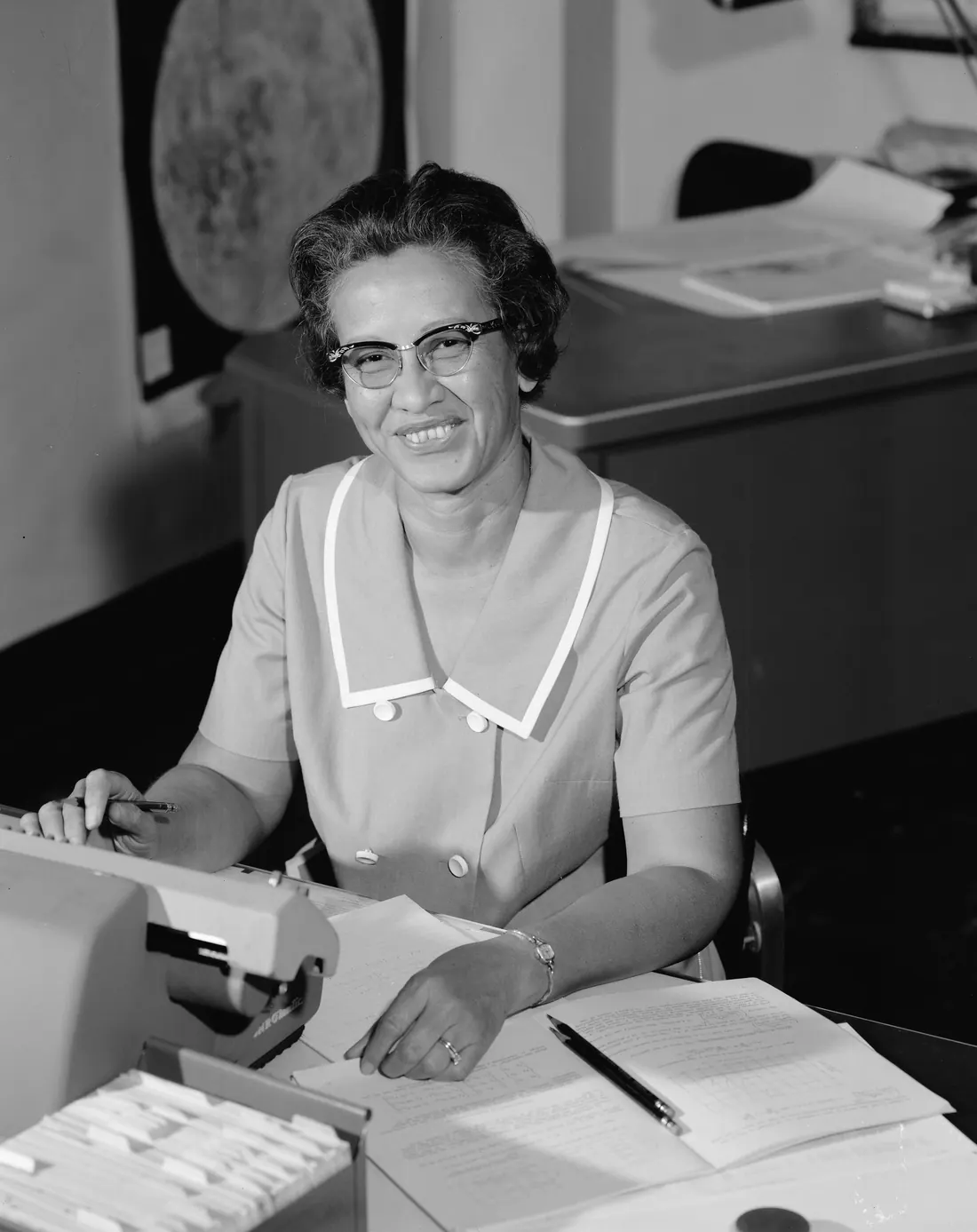
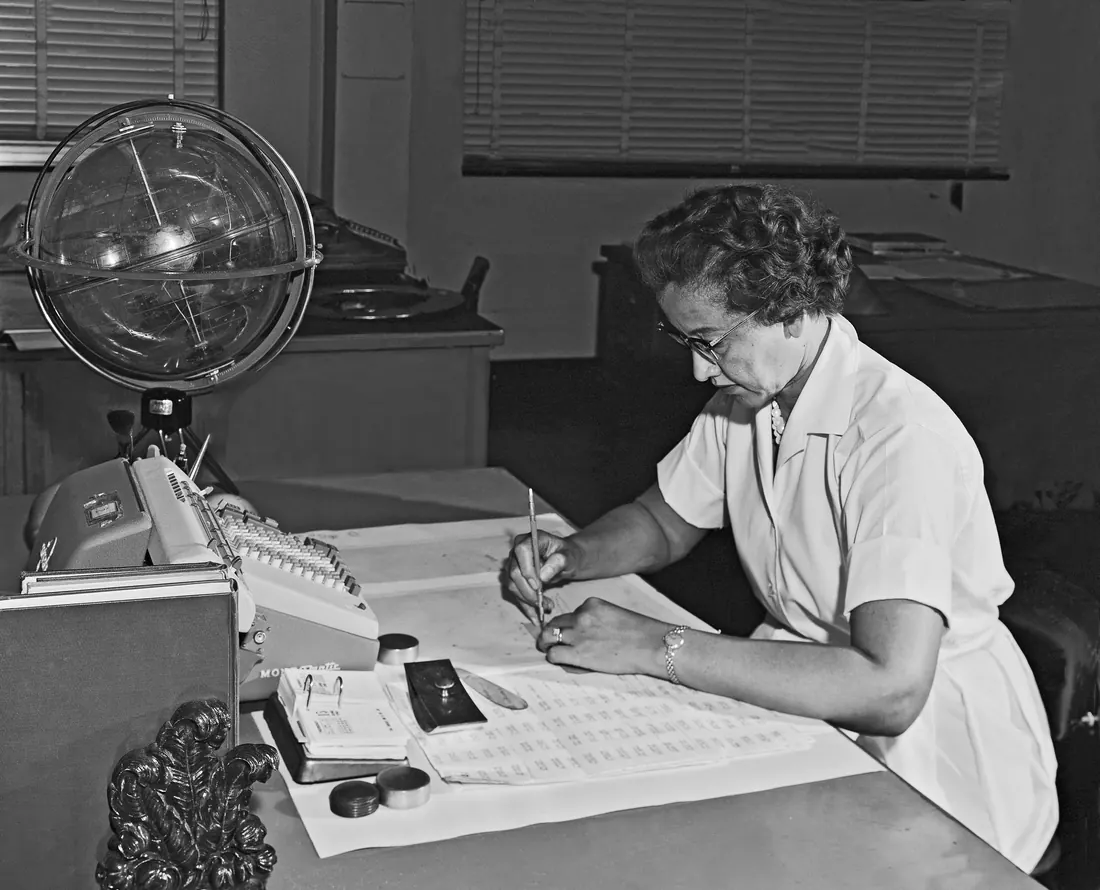
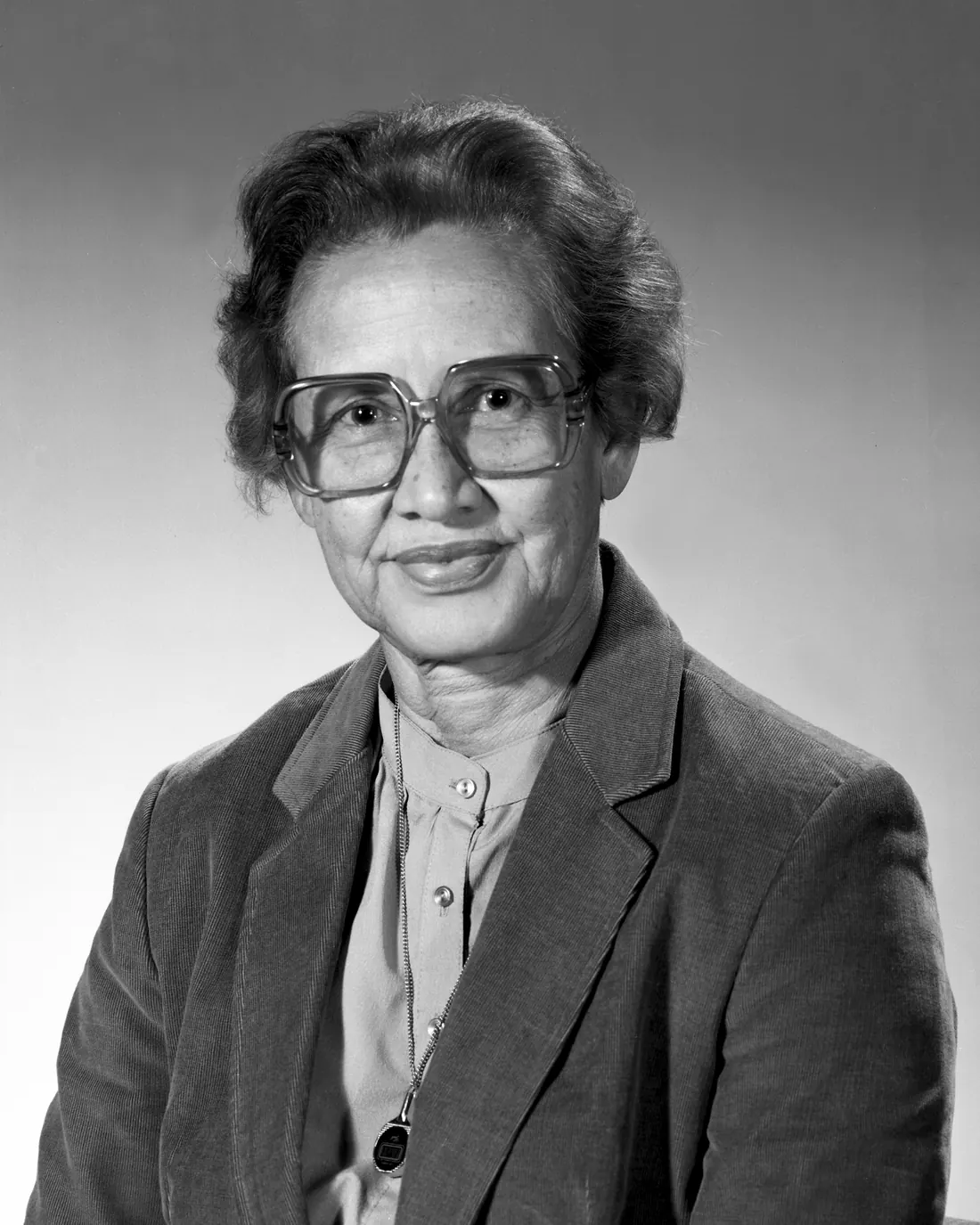
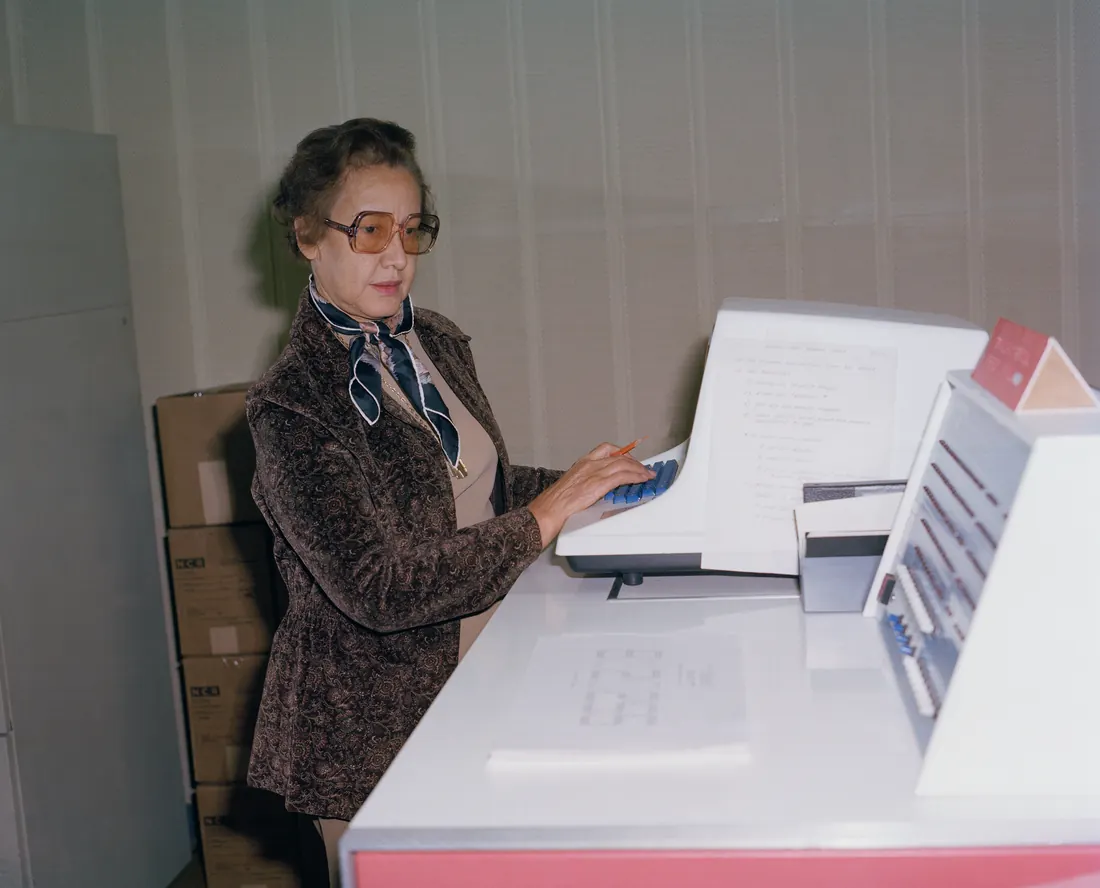
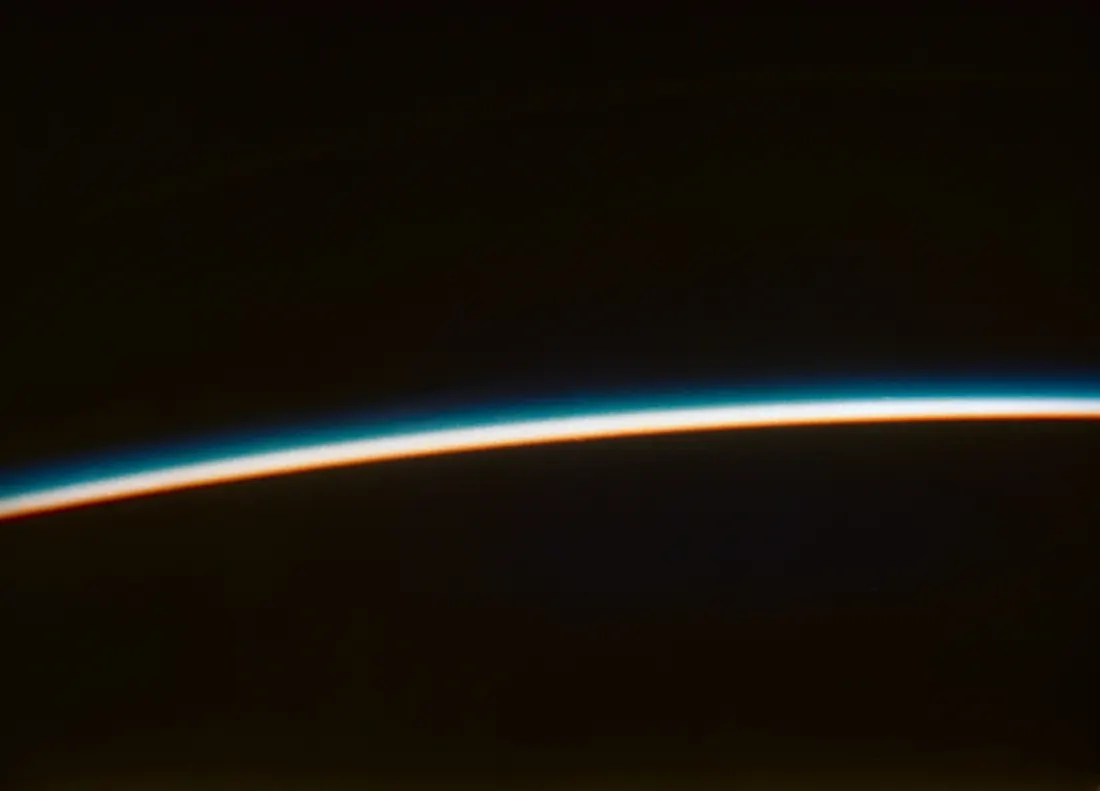
Pictures: no free photo exists of her childhood, her college years, her first husband or a briefing. She is shown at NASA Langley in 1983, at a computer terminal in 1980, at work on December 7, 1962, and at her desk in 1966 (none from her college years), and at a meeting of Langley’s Equal Employment Opportunity committee with four men on March 22, 1965, which stands in for the briefings. White Sulphur Springs was photographed in 2017, long after her childhood. Fleming Hall and the A. B. White Trades Building are at the West Virginia Colored Institute in Institute in 1910, the campus later named West Virginia State College, years before she studied there. The report page is the real title page of Technical Note D-233, September 1960; NASA’s handwritten accession number is in its top corner. John Glenn is in his Mercury space suit on February 20, 1962, and the orbital sunset is the one he photographed from Friendship 7 that day. The launch photo is the real GPS III SV08 launch, May 30, 2025; the satellite picture is an artist’s impression of the GPS III type from 2010, not SV08 itself.
Photo credits
The archive photos in this story
The photographs and illustrations in this story are in the public domain or shared under open licenses; each one is credited below with its license. Tap one to enlarge it, or follow the link to its Wikimedia Commons page for the full record. The narration, captions and graphics in the Short are our own; its music and sound effects are credited below.
Music and sound effects
Music: Schumann, Kinderszenen, Op. 15: No. 1 'Of Foreign Lands and Peoples (Musopen, public domain); Mussorgsky, Pictures at an Exhibition: IV. Bydlo (piano) (Musopen, public domain); Dvorak, Symphony No. 9 'From the New World': II. Largo (Musopen, public domain).
Sound effects: Freesound, CC0.