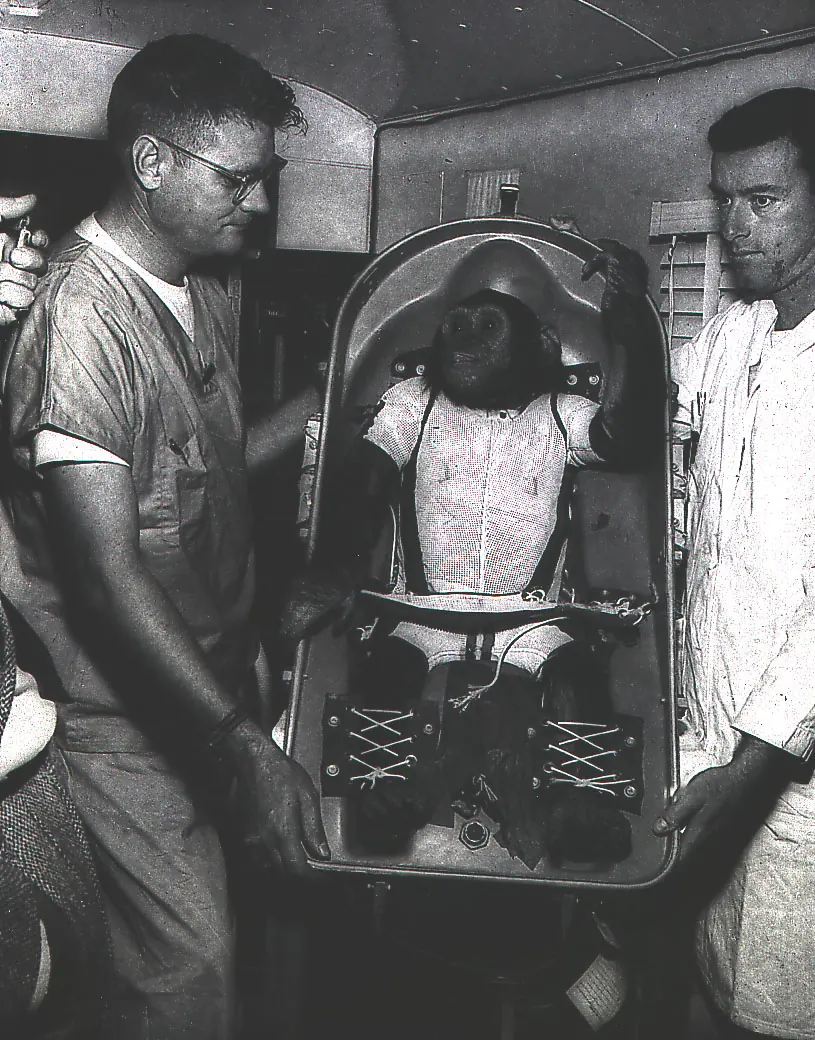
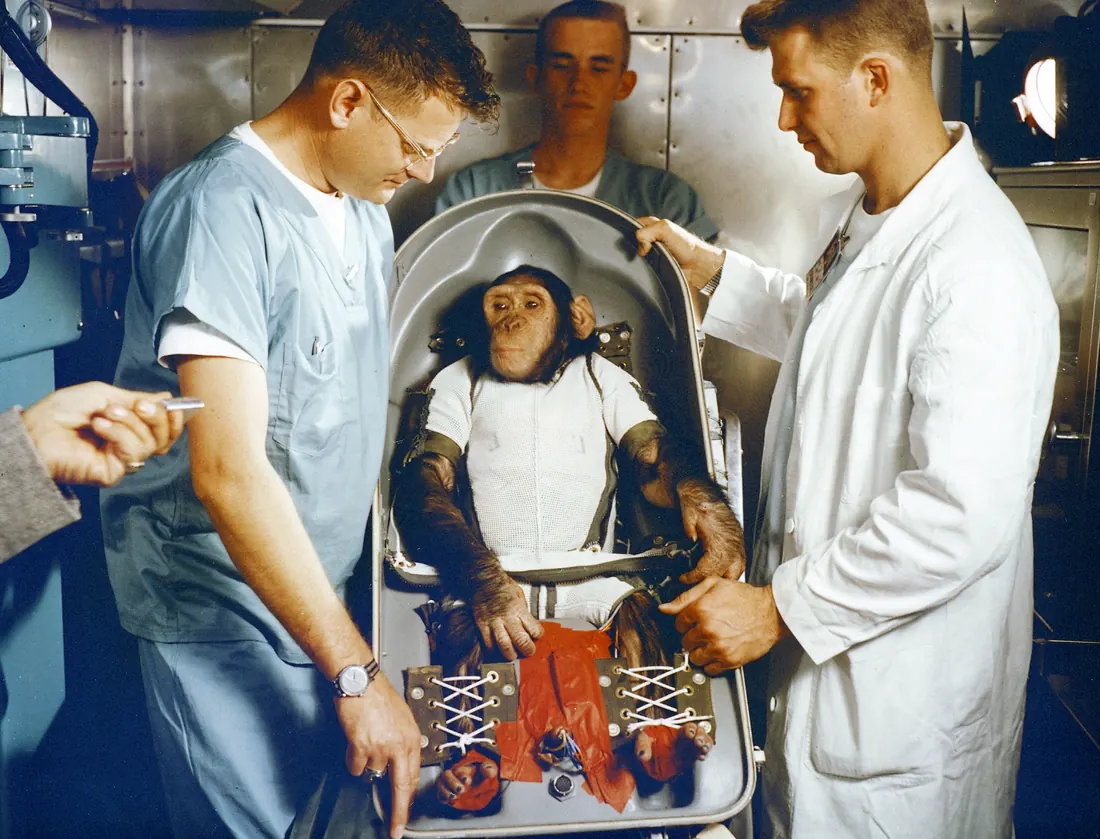
Ham flew NASA’s Mercury-Redstone 2 on January 31, 1961, some ten weeks ahead of Yuri Gagarin, and came home alive. Afterward, as Air & Space Forces Magazine tells it, “the press wanted more photos of him in his contour couch, but he resisted being strapped back into it and no amount of urging could persuade him otherwise.” When his handlers tried to force him back into his capsule to pose for the photos, WETA’s Boundary Stones says, “he panicked,” and “NASA ruled out training him for a second mission when he fought to avoid getting strapped back into his capsule.” “Ham returned to the Cape as a candidate for the second chimp mission into space, Mercury-Atlas 5, on Nov. 29, 1961, but his spacefaring days were over.”
From 1963 he lived at the National Zoo in Washington, “by himself in a 10’ x 14’ cage, about as big as your average garden shed,” WETA says. For 17 years he was “interacting with keepers and the public, but never another member of his own species,” the Randolph Hub writes. Then he moved to the North Carolina Zoo in Asheboro, where, after a month settling in, he joined a troop of six younger chimps.
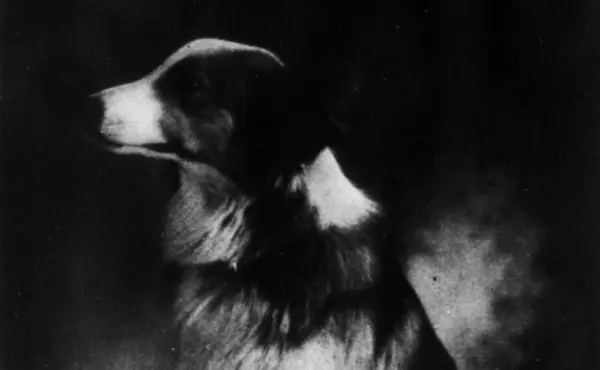
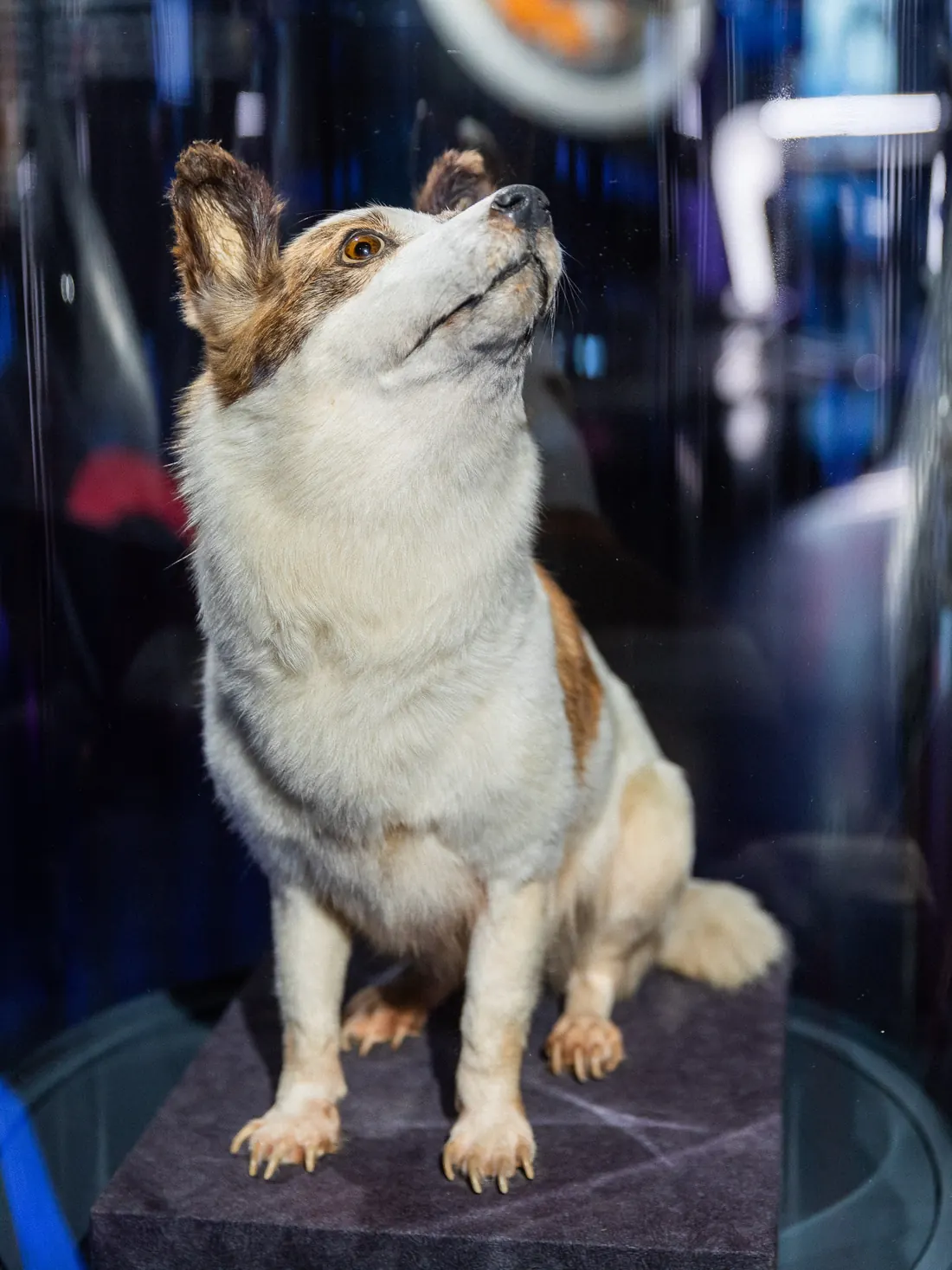
Ham died in 1983 “as a result of chronic heart and liver disease,” according to the National Museum of Health and Medicine. During the necropsy, Henry Nicholls writes, “care was taken to keep his skin in good condition so it could be stuffed and displayed.” Wikipedia says the plan followed “Soviet precedent with pioneering space dogs Belka and Strelka,” and both dogs were preserved. “News of this plan reached the public on 26 January.” “The press and public were in an uproar,” WETA says. “Taxidermy is the wrong stuff” ran a leader in the following day’s Washington Post, and it said: “How about treating America’s First Ape with a little respect? Bury Ham.” A high school student wrote: “A chimpanzee is not a green pepper!”
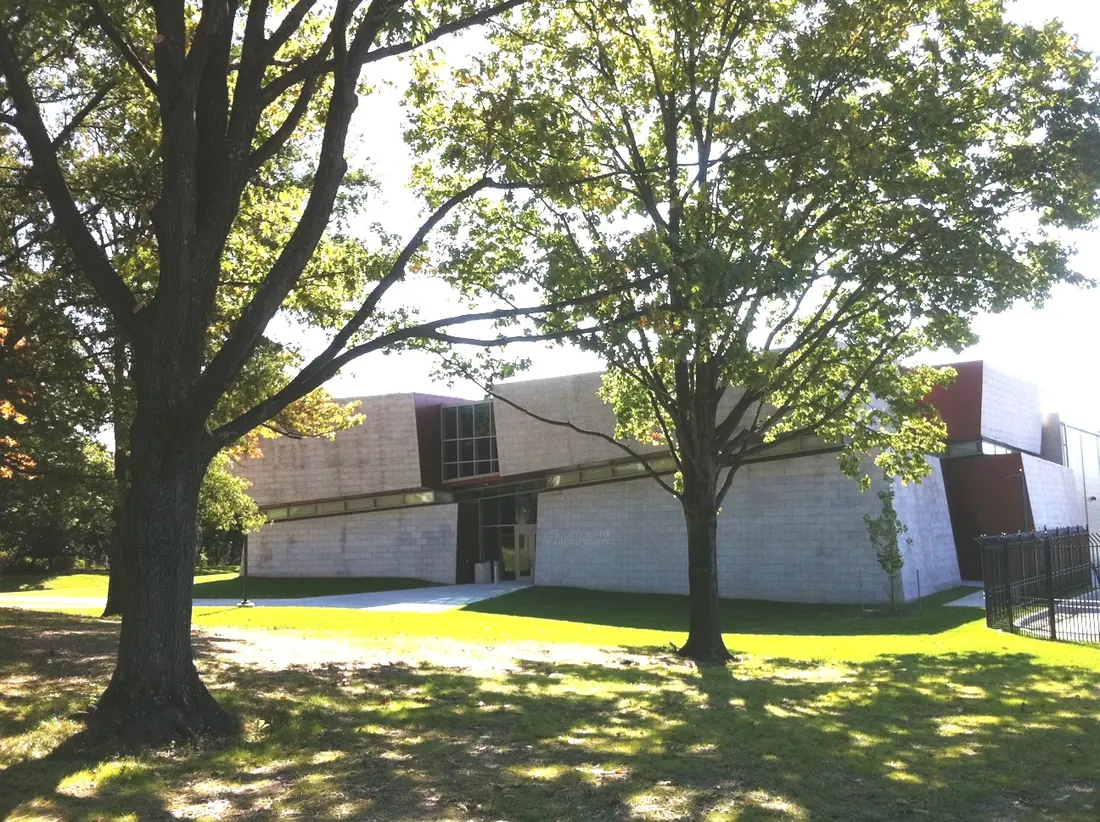
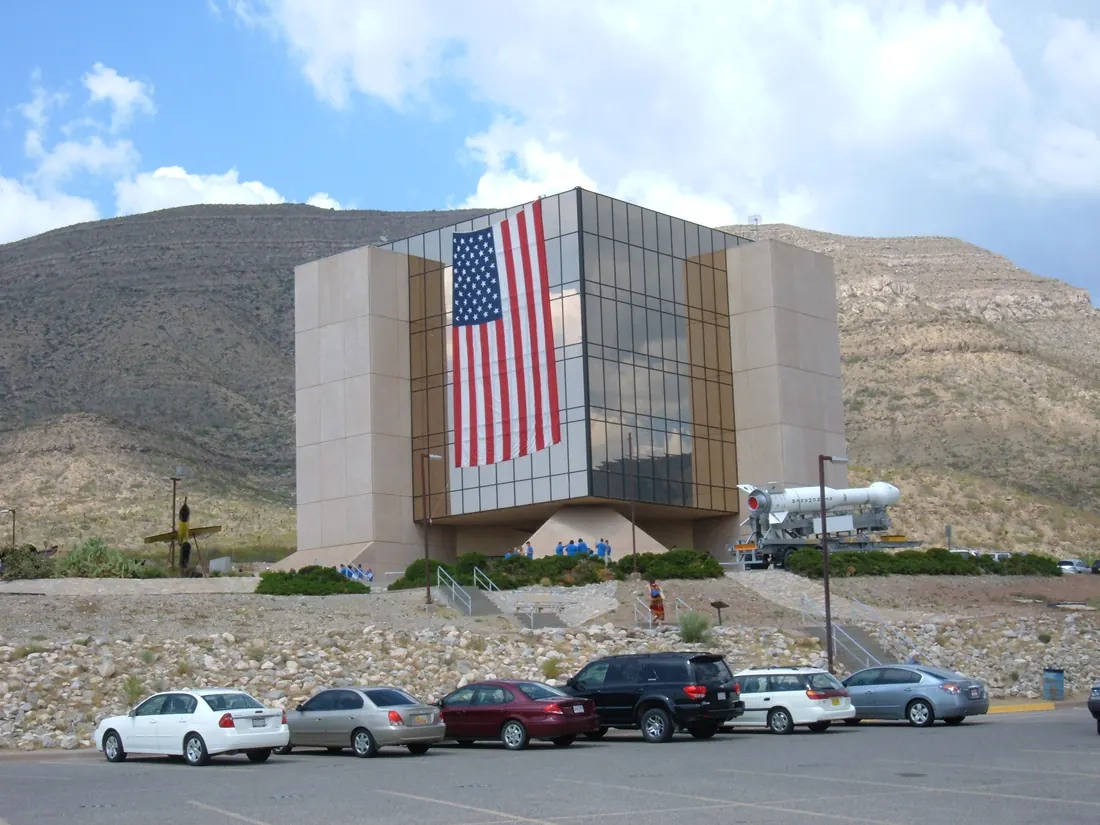
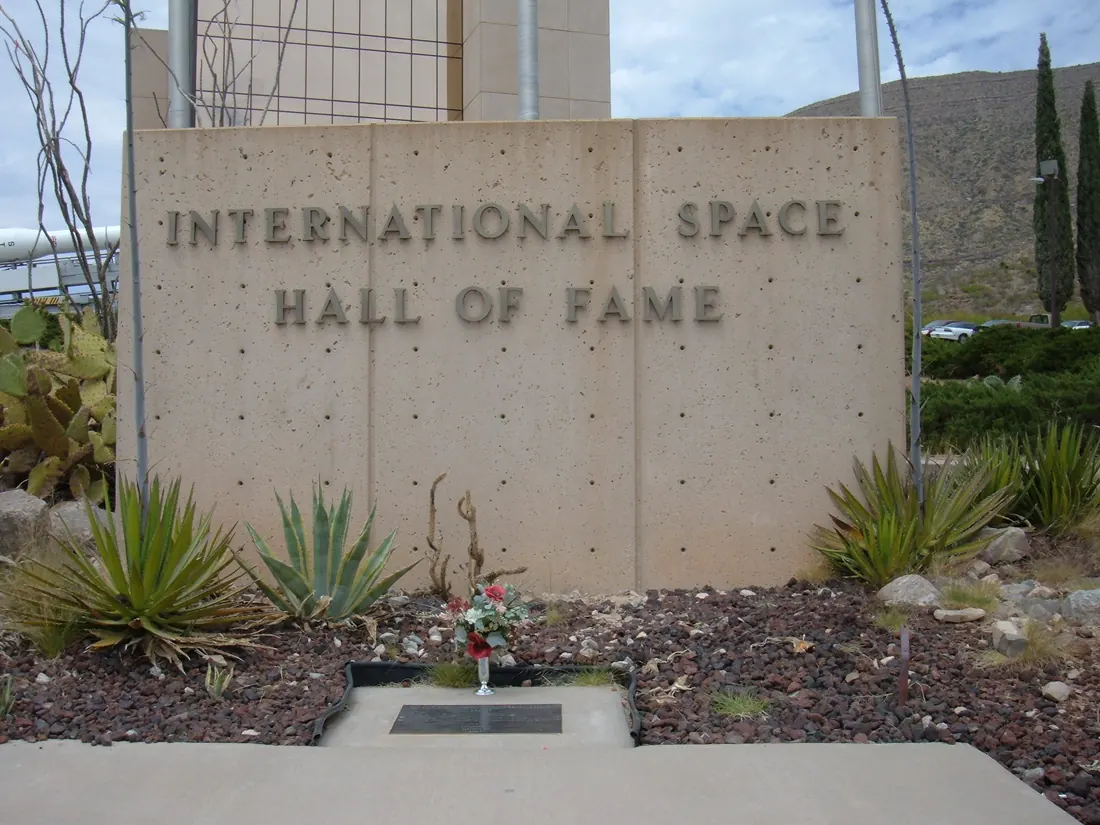
The plan was dropped. “You will be happy to learn that following our initial decision, the question was reconsidered and it was decided not to stuff and display him,” the AFIP wrote back. His bones were taken to the Walter Reed Army Medical Center and “carefully arranged in a drawer at the NMHM under accession number 1,871,496,” where Nicholls saw them in 2007. The museum, then at Walter Reed in Washington, moved to Silver Spring, Maryland, in 2011, and his skeleton is still in its care. “Ham’s skin and organs were cremated and today lay buried under a bronze plaque at the Museum of Space History,” WETA says, in front of the flagpole at the International Space Hall of Fame in Alamogordo, New Mexico.
On July 14, 2026, World Chimpanzee Day, North Carolina dedicated a highway historical marker to him at the roundabout near the North Carolina Zoo’s entrance. It reads: “On Jan. 31, 1961 flew a suborbital flight on NASA Project Mercury mission. First great ape in space. Retired here to N.C. Zoo.” At the dedication, Jen Ireland, the zoo’s curator of mammals, said: “While his time at the North Carolina Zoo was short, it was the only time in his life that he had the opportunity to be a chimpanzee.”
Fact check
The facts and where they come from
- He survived space, but when he died, they planned to stuff him for display. Astronomy: “an intrepid chimpanzee called Ham was launched on a rocket from Cape Canaveral in the United States, and returned to Earth alive.” Henry Nicholls: “During the procedure, care was taken to keep his skin in good condition so it could be stuffed and displayed in the National Air and Space Museum.” Astronomy: “A proposal to stuff and display his body was abandoned after an outcry.” The National Museum of Health and Medicine: “a controversy arose over what to do with HAM’s remains.” 913
- His name was Ham, the chimp who flew to space before any human. The Guardian, 2013: “exiting earth’s atmosphere some ten weeks ahead of Soviet pioneer Yuri Gagarin.” The National Museum of Health and Medicine: “HAM was the first chimp in space”; NASA: “the first chimpanzee in space.” 12311
- After his flight, the press wanted photos of him back in his capsule. Air & Space Forces: “After Ham’s mission, the press wanted more photos of him in his contour couch, but he resisted being strapped back into it and no amount of urging could persuade him otherwise.” WETA: “When his handlers tried to force him back into his capsule to pose for photos by the press, he panicked.” 82
- He panicked and fought, and he never flew again. WETA: “NASA ruled out training him for a second mission when he fought to avoid getting strapped back into his capsule.” Air & Space Forces: “Ham returned to the Cape as a candidate for the second chimp mission into space, Mercury-Atlas 5, on Nov. 29, 1961, but his spacefaring days were over.” Wikipedia (citing NASA’s This New Ocean): “panic when his handler would try to situate him into a capsule for photos.” 2813
- At the zoo, he lived alone in a cage the size of a garden shed. WETA: “he lived by himself in a 10’ x 14’ cage, about as big as your average garden shed.” The Randolph Hub: “where he lived alone among chimpanzees — interacting with keepers and the public, but never another member of his own species — for 17 years.” 24
- He died in 1983, of heart and liver disease. The National Museum of Health and Medicine: “died January 19, 1983 at 26 years as a result of chronic heart and liver disease.” The Randolph Hub: “A necropsy on the 26-year-old chimp found chronic liver and heart disease.” 34
- Doctors kept his skin in good condition, so he could be stuffed. Pathologists from the AFIP and the National Zoo did the work (Henry Nicholls). WETA: “The pathologists took careful measures to preserve his skin in good condition.” Wikipedia: “Ham’s body was to be taxidermied and placed on display at the Smithsonian Institution, following Soviet precedent with pioneering space dogs Belka and Strelka.” NASA StarChild: “Today, a preserved Belka can be seen in the Memorial Museum of Astronautics in Moscow. Strelka was also preserved.” 121310
- The press and the public were in an uproar. WETA: “The press and public were in an uproar.” Henry Nicholls: “News of this plan reached the public on 26 January.” “The public was outraged.” The National Museum of Health and Medicine: “This resulted in a public outcry about death without dignity.” A high school student wrote, “A chimpanzee is not a green pepper!” (her letter in the Smithsonian Archives, quoted by Nicholls). 213
- The Washington Post wrote, bury Ham. Henry Nicholls: ““Taxidermy is the wrong stuff” ran a rhetorical leader in the following day’s Washington Post”; the leader: “How about treating America’s First Ape with a little respect? Bury Ham.” WETA quotes the same lines. 12
- The plan was dropped. The AFIP’s reply, quoted by Henry Nicholls and WETA: “You will be happy to learn that following our initial decision, the question was reconsidered and it was decided not to stuff and display him.” Astronomy: “abandoned after an outcry.” 129
- His skeleton went into a museum drawer, filed under a number. Henry Nicholls, who saw the drawer in 2007: “Then they were driven back to the Walter Reed Army Medical Center and carefully arranged in a drawer at the NMHM under accession number 1,871,496.” The National Museum of Health and Medicine: “his skeleton was entrusted [to the National] Museum of Health and Medicine, where it is cared for today.” 13
- The rest of him lies in New Mexico, under a bronze plaque. WETA: “Ham’s skin and organs were cremated and today lay buried under a bronze plaque at the Museum of Space History.” The Randolph Hub: “his remains are buried beneath a bronze plaque at the International Space Hall of Fame in Alamogordo, New Mexico.” Air & Space Forces: “laid to rest in front of the flagpole at the International Space Hall of Fame and the New Mexico Museum of Space History in Alamogordo.” 248
- And in 2026, North Carolina gave him a historic marker outside his last zoo. North Carolina’s Department of Natural and Cultural Resources (July 8, 2026): “The marker commemorating Ham the Astrochimp will be installed on July 14, at the roundabout at” Zoo Connector and Zoo Parkway. The Randolph Hub: it “now stands at the roundabout where Zoo Connector (N.C. 159) meets Zoo Parkway, near the zoo’s entrance,” dedicated “appropriately enough on World Chimpanzee Day.” The marker (K-70): “On Jan. 31, 1961 flew a suborbital flight on NASA Project Mercury mission. First great ape in space. Retired here to N.C. Zoo.” 546
- The zoo’s curator said his short time there was the only time in his life he got to be a chimpanzee. Jen Ireland, the North Carolina Zoo’s curator of mammals, at the dedication on July 14, 2026: “While his time at the North Carolina Zoo was short, it was the only time in his life that he had the opportunity to be a chimpanzee.” He had arrived there on September 25, 1980, and after a month settling in he joined a troop of six younger chimps (the Randolph Hub; North Carolina’s Department of Natural and Cultural Resources, 2016). 47
Sources
- Cameroon’s Gagarin: The Afterlife of Ham the Astrochimp (2011, archived copy) Henry Nicholls, The Way of the Panda
- Remembering Ham, National Zoo’s Very Own Astrochimp (June 6, 2025) WETA Boundary Stones
- HAM: The First Astrochimp (2019) National Museum of Health and Medicine
- NC Zoo unveils highway historical marker honoring Ham the Astrochimp (2026) Randolph Hub
- Ham the Astrochimp, first hominid launched into space, to be featured on N.C. Highway Historical Marker (press release, July 8, 2026) North Carolina Department of Natural and Cultural Resources
- Ham the Astrochimp, K-70 (marker text) North Carolina Department of Natural and Cultural Resources
- Astrochimp Ham’s retirement years in Asheboro (September 25, 2016) North Carolina Department of Natural and Cultural Resources
- The Astrochimps Air & Space Forces Magazine
- Apes, robots and men: the life and death of the first space chimp Astronomy
- Question 49: animals in space NASA StarChild
- A Brief History of Animals in Space NASA
- Ham the astrochimp: hero or victim? The Guardian (Henry Nicholls, December 16, 2013)
- Ham (chimpanzee) Wikipedia
Notes
Where he was to be displayed: the National Air and Space Museum (Henry Nicholls, from the 1983 papers), the Smithsonian Institution (Wikipedia), the Great Ape House at the National Zoo (the National Museum of Health and Medicine) or the International Space Hall of Fame (WETA). This page says only that he was to be stuffed and displayed.
Who planned it: the Washington Post reported “The Smithsonian will arrange for the chimp’s taxidermy” (quoted by Nicholls); WETA says the Air Force, which still owned him, decided. This page says only “the plan.”
His death: January 17, 1983 (Nicholls, the Randolph Hub) or January 19 (the National Museum of Health and Medicine, Wikipedia; Nicholls says that was the day of the necropsy), and his age is given as 25 or 26. As on Part 1’s page, only the year is given.
“Panicked and fought”: WETA says “he panicked” and “he fought”; Wikipedia, citing NASA’s This New Ocean, says “panic”; Air & Space Forces says he “resisted.” All agree he would not go back in.
“Alone”: WETA says he lived “by himself” next to four other chimps, and that the zoo briefly moved a female, Maggie, in with him; every other source says he lived alone for 17 years.
His move to North Carolina: the Randolph Hub and North Carolina’s Department of Natural and Cultural Resources give September 25, 1980; Part 1’s page gives no year because one Wikipedia article says 1981, so the story above gives none either.
The “Bury Ham” leader is unsigned, so we say only that the Washington Post wrote it. The 1983 page itself wasn’t found online; two independent writers, Henry Nicholls and WETA, quote it identically. The student who wrote about the green pepper is not named here.
Left out for thin sourcing or length: the price the Air Force paid for him, a claim that he was chosen only the night before the launch, letters said to have been answered with his fingerprint, a story of a zoo sold a fake Ham, a eulogy known from one book, and whether Alan Shepard was invited to the burial.
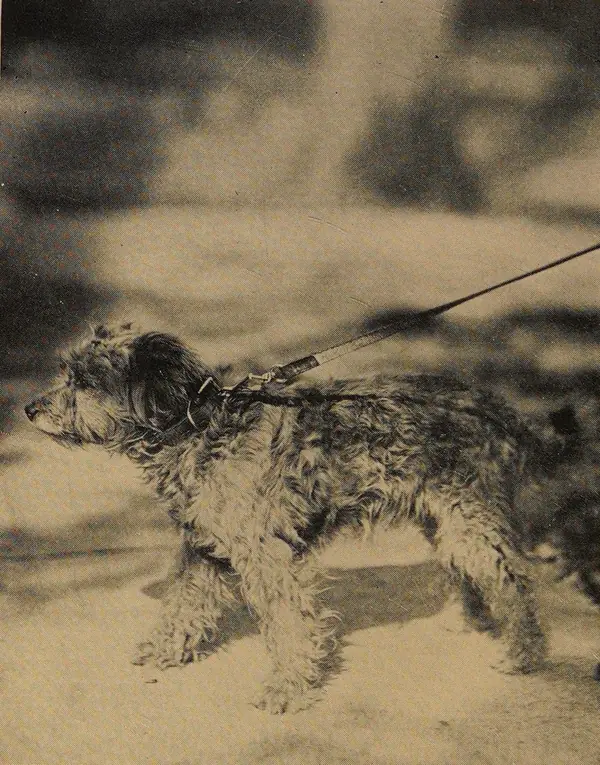
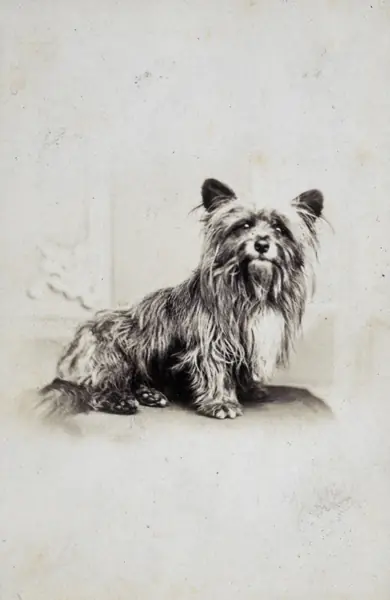
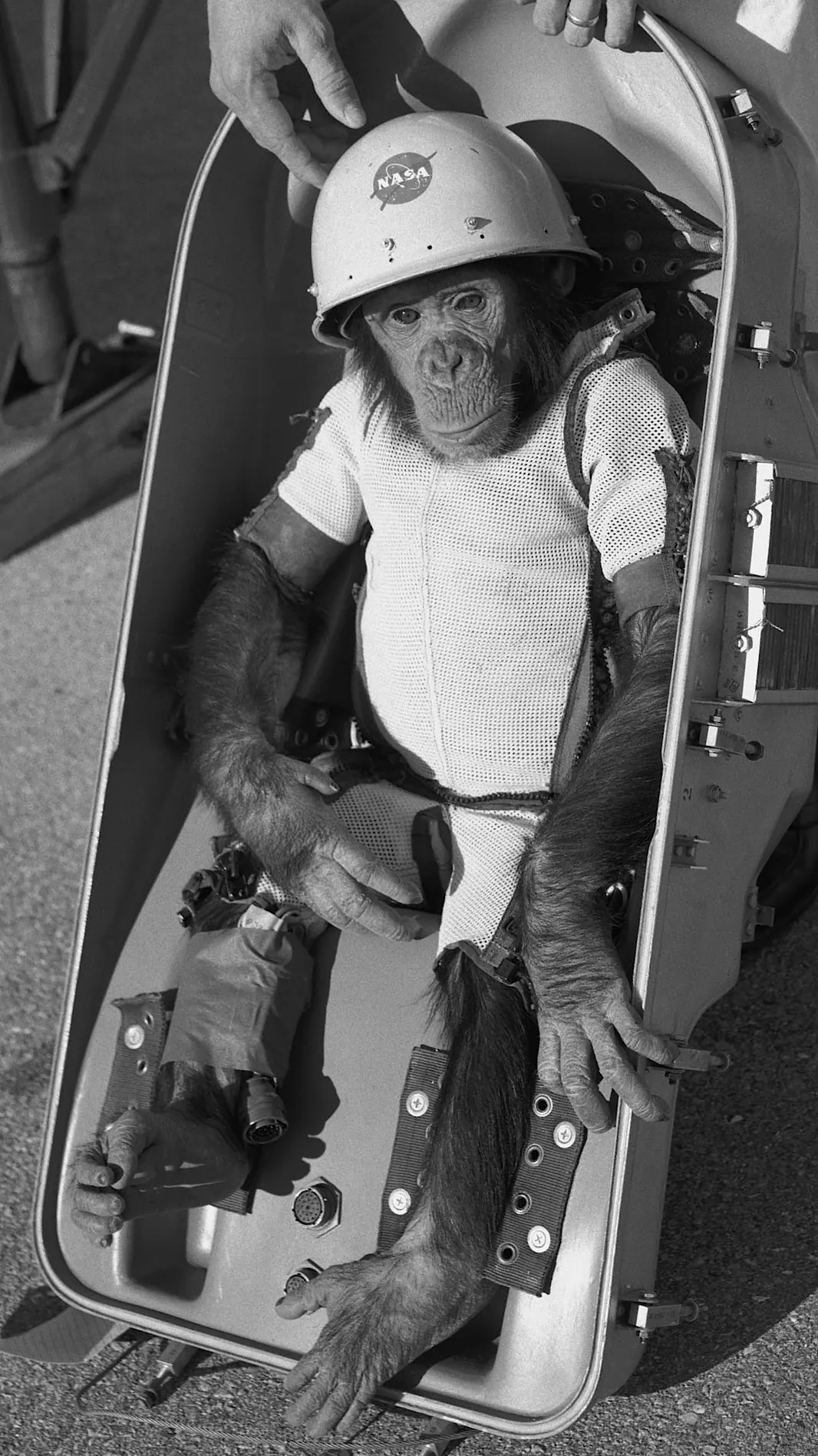
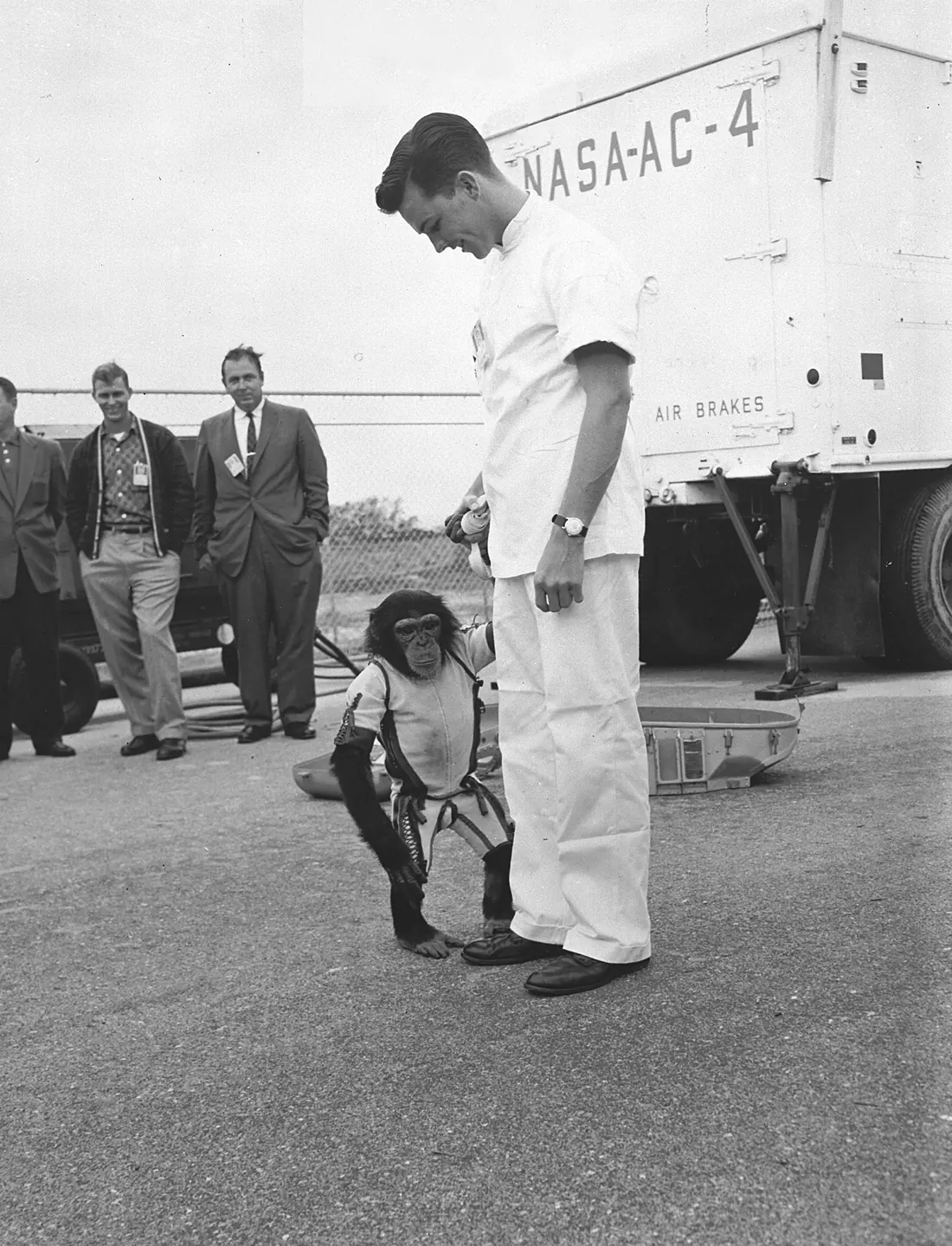
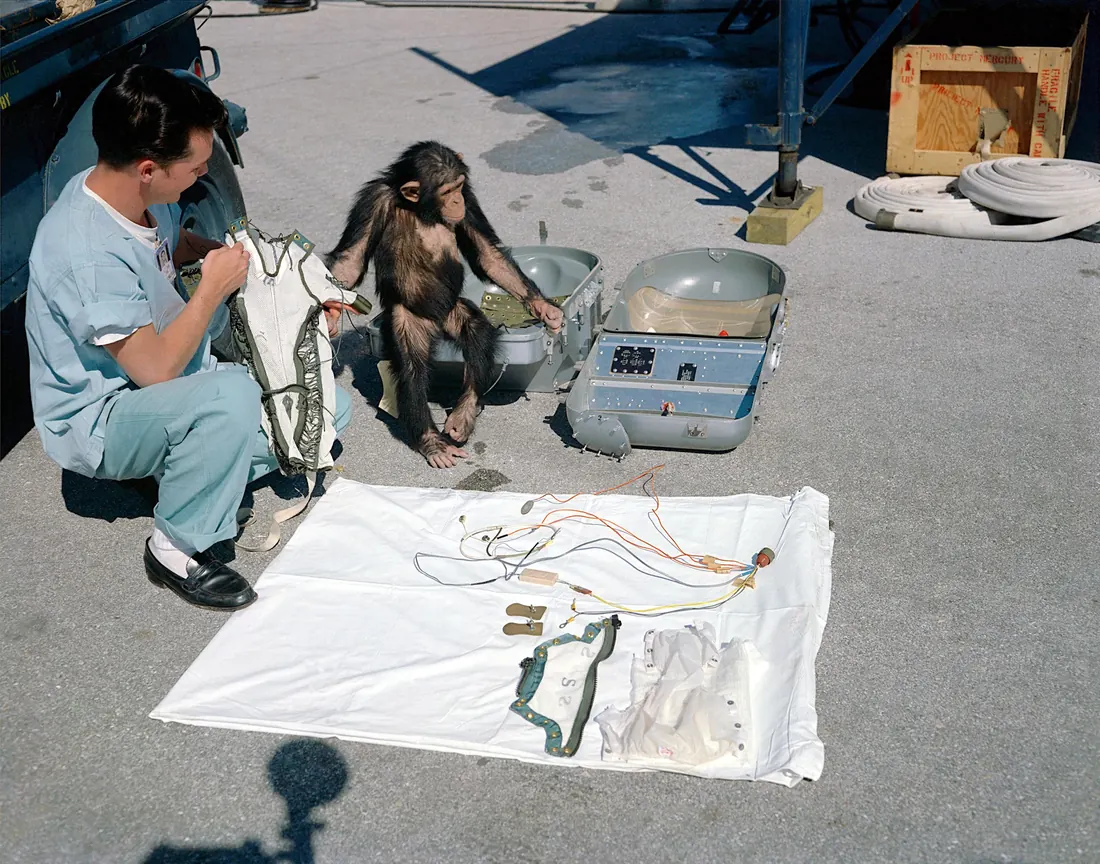
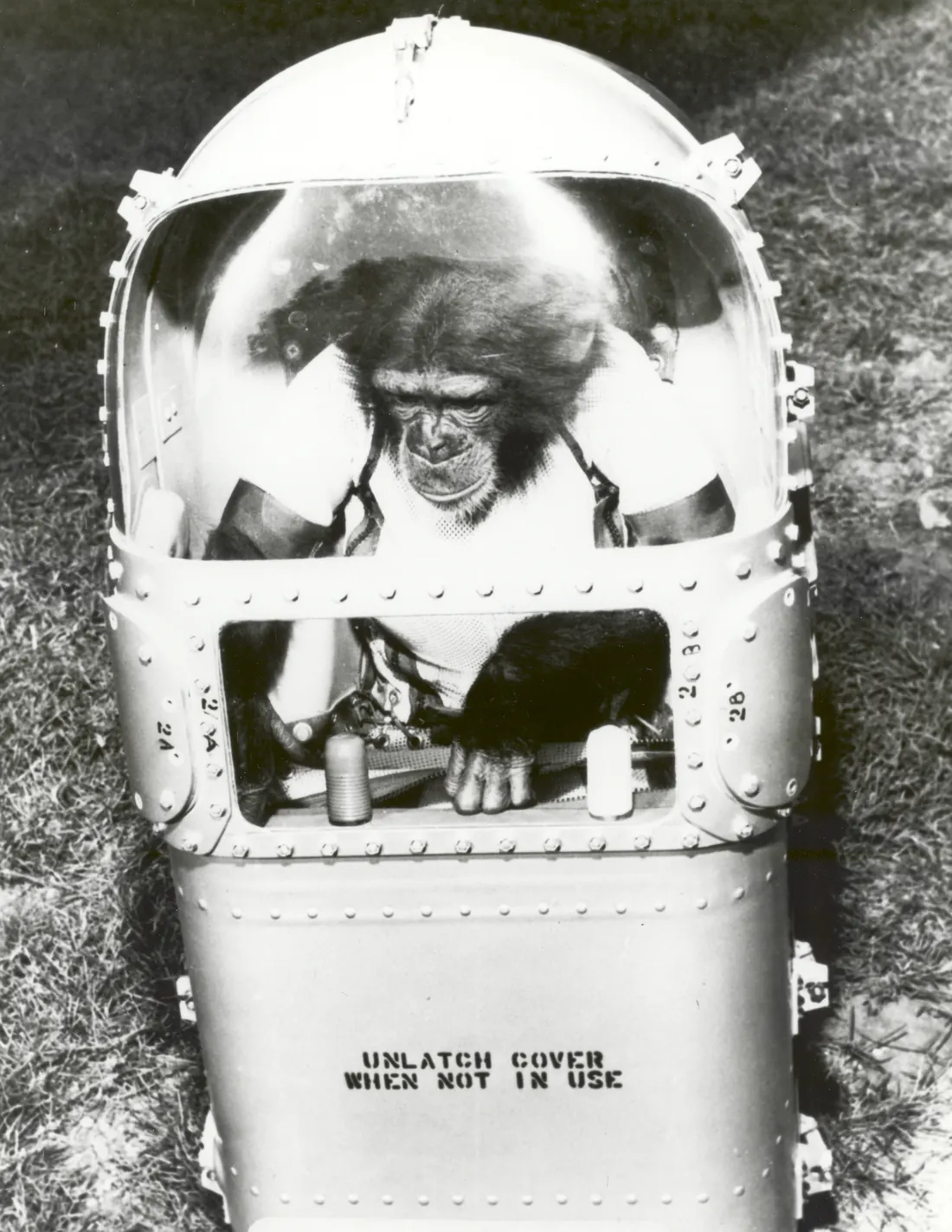
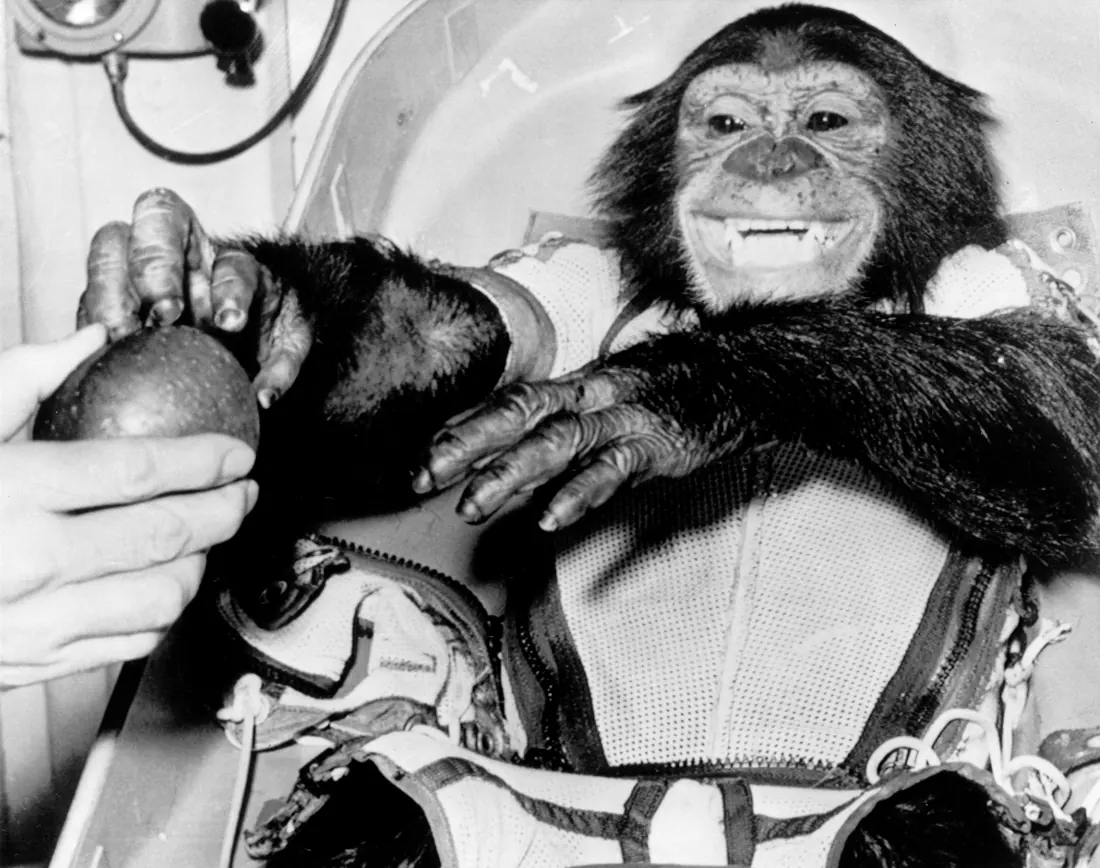
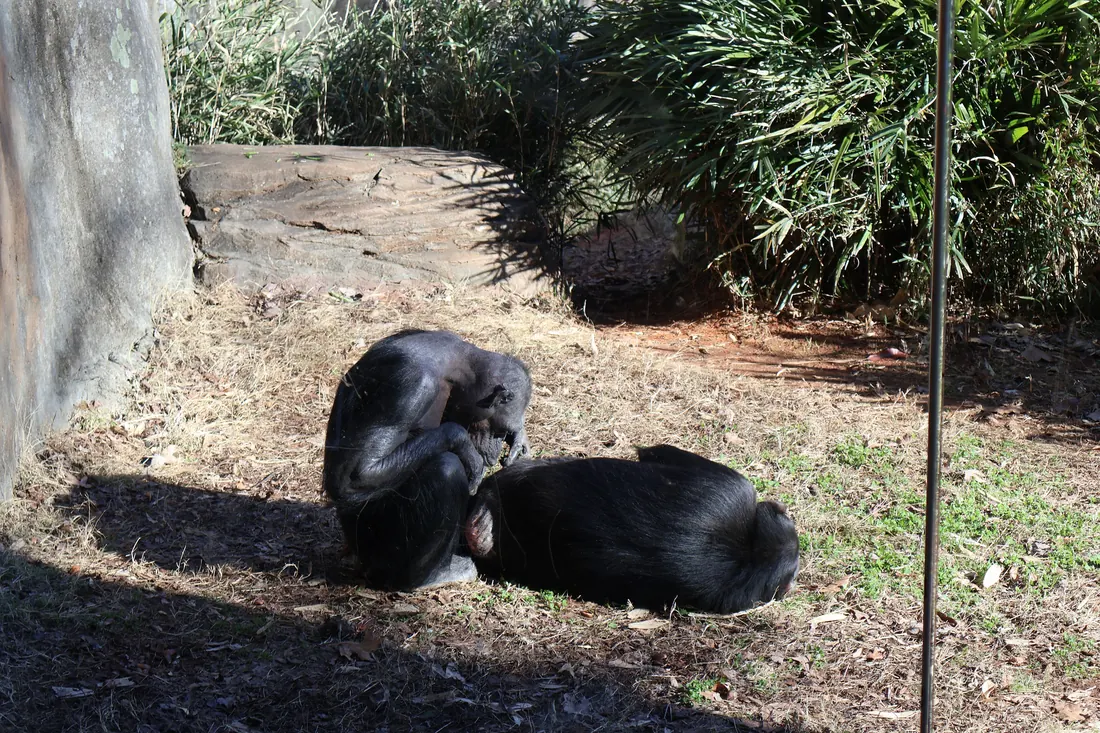
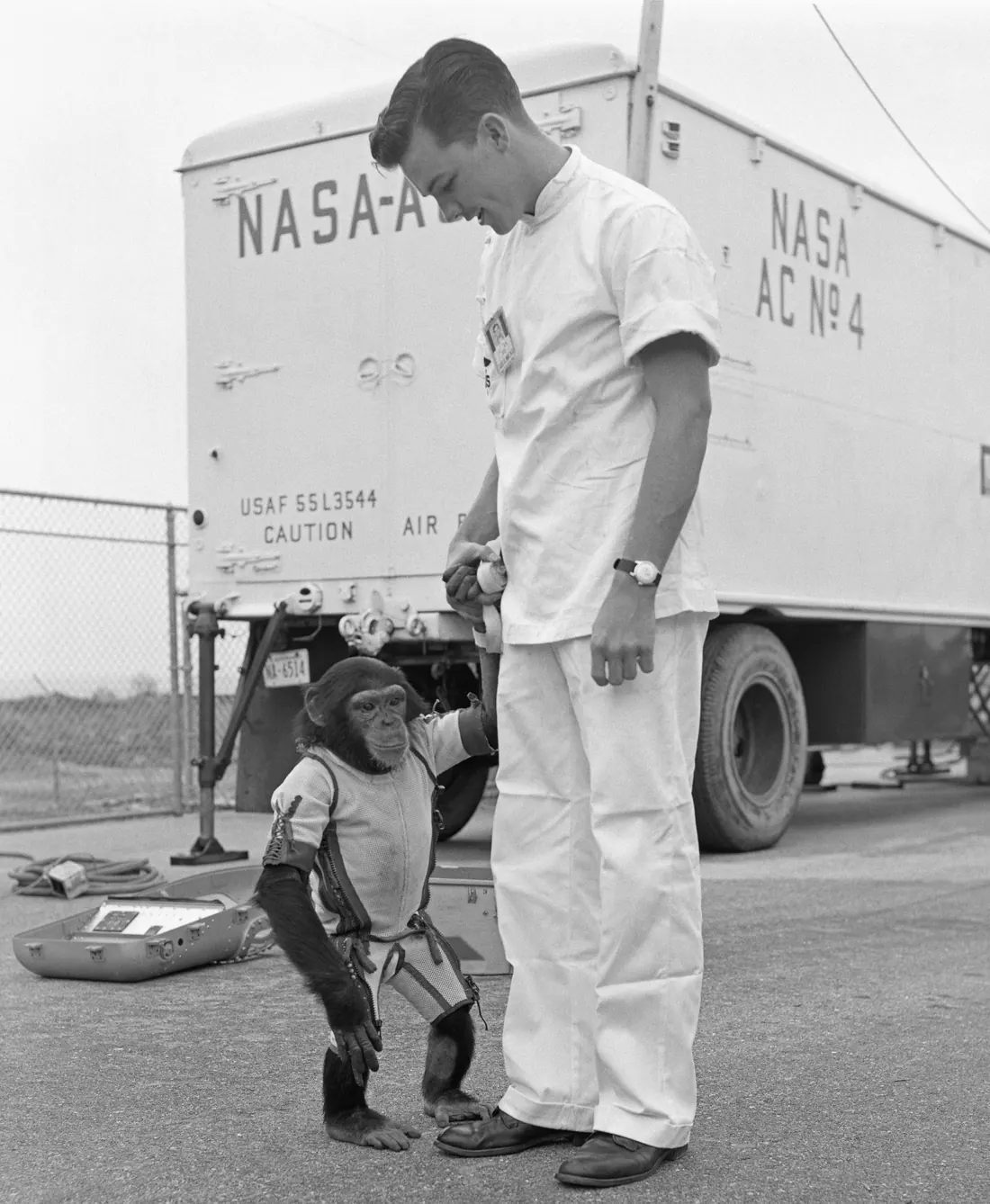
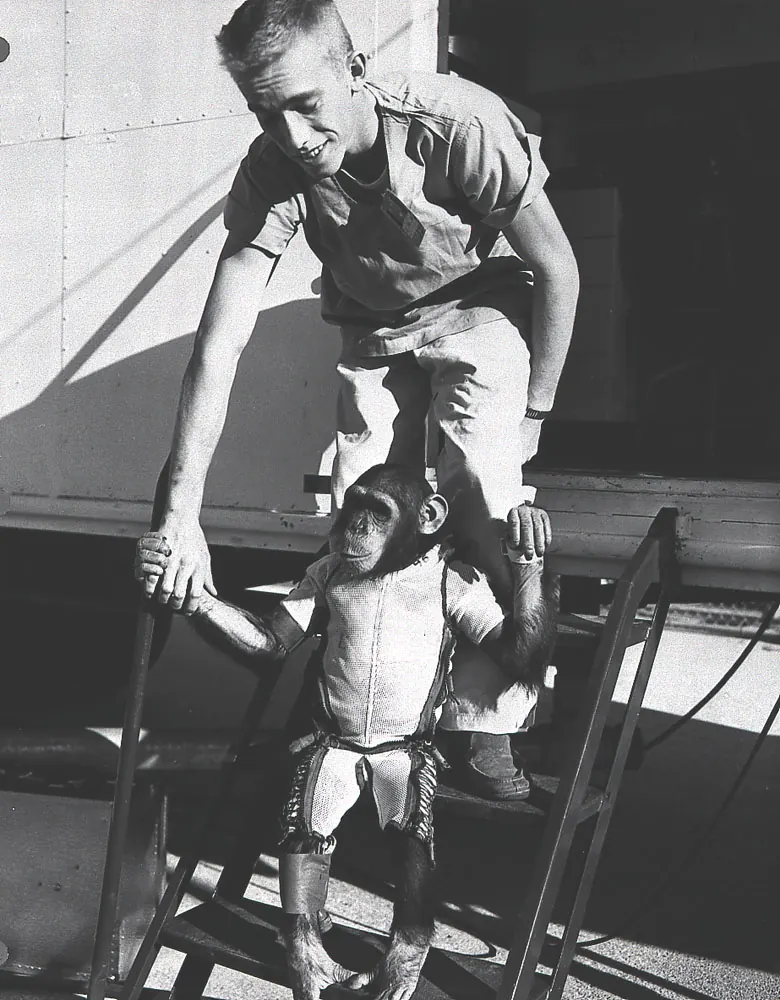
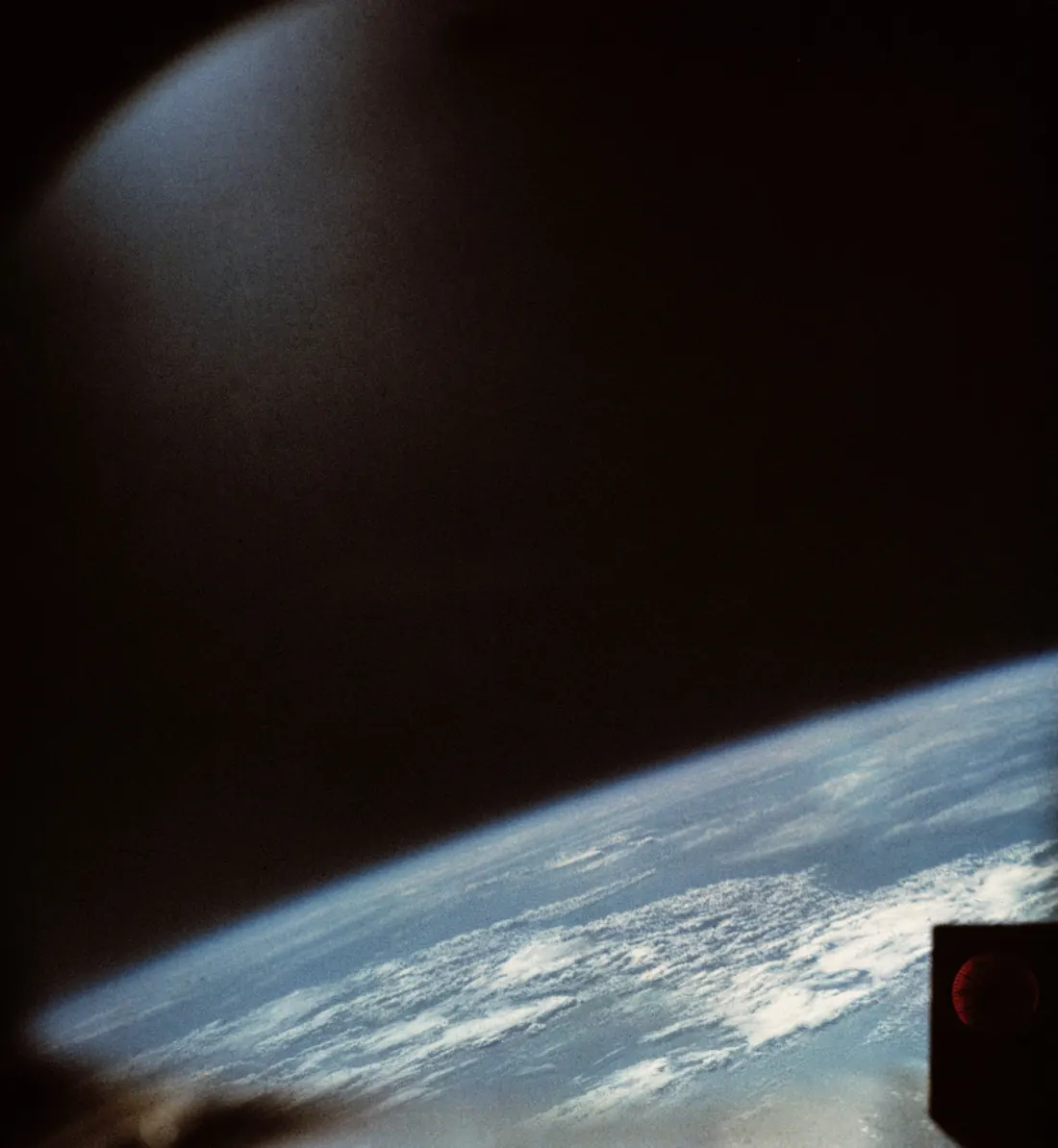
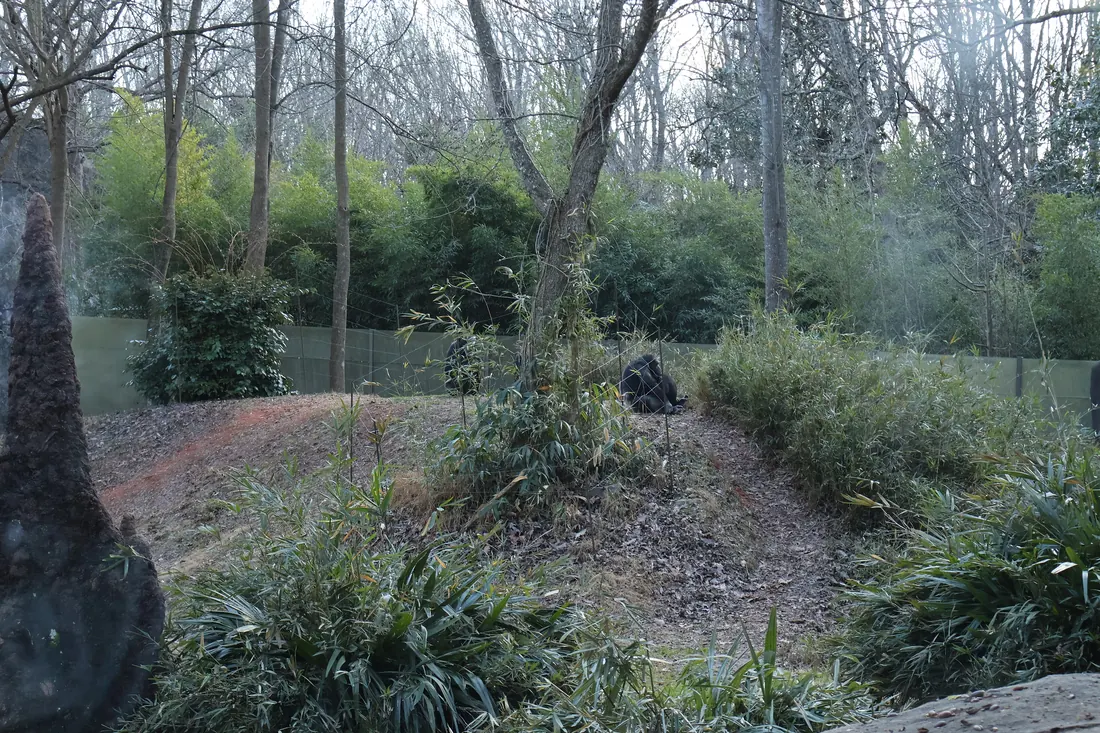
Pictures: every chimp shown as Ham is Ham himself, in NASA photos from January 1961; no photo exists of his panic, his zoo cage, his skeleton’s drawer or the marker. He is shown beside his handler and the NASA transfer van on January 31, 1961; in his flight suit holding his handler’s hand; held in his couch by two handlers on the day of the flight (before it, not the press photos he refused); reaching for an apple aboard USS Donner after the flight; sealed in his pressurized couch; with a handler and his flight equipment on January 23, 1961 (not his zoo cage); in his couch with a NASA helmet he didn’t wear in flight; beside the van with onlookers; and in his couch with handlers. The Earth photo was taken from his capsule during the flight. Strelka, a Soviet space dog preserved at the Memorial Museum of Cosmonautics in Moscow, was photographed by the museum in 2019; she is not Ham. The National Museum of Health and Medicine building in Silver Spring, Maryland, was photographed in 2011 (in 1983 the museum was at Walter Reed in Washington). The New Mexico Museum of Space History and Ham’s grave at the International Space Hall of Fame were photographed in 2008. The two North Carolina Zoo photos, from 2023, show today’s chimpanzees and their habitat, not Ham’s group and not the marker.
Photo credits
The archive photos in this story
The photographs and illustrations in this story are in the public domain or shared under open licenses; each one is credited below with its license. Tap one to enlarge it, or follow the link to its Wikimedia Commons page for the full record. The narration, captions and graphics in the Short are our own; its music and sound effects are credited below.
Music and sound effects
Music: Schumann, Kinderszenen, Op. 15: No. 1 'Of Foreign Lands and Peoples (Musopen, public domain); Mussorgsky, Pictures at an Exhibition: IV. Bydlo (piano) (Musopen, public domain); Dvorak, Symphony No. 9 'From the New World': II. Largo (Musopen, public domain).
Sound effects: Freesound, CC0.