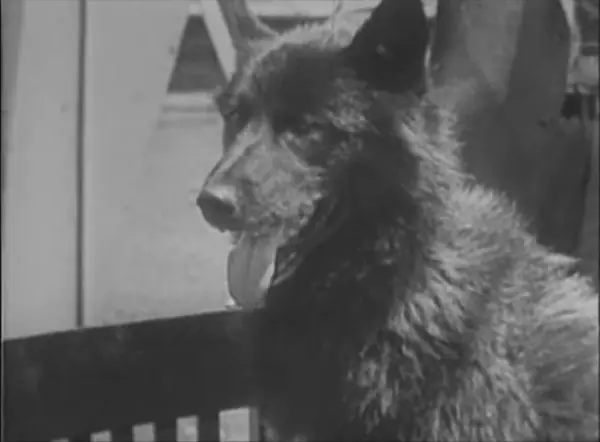
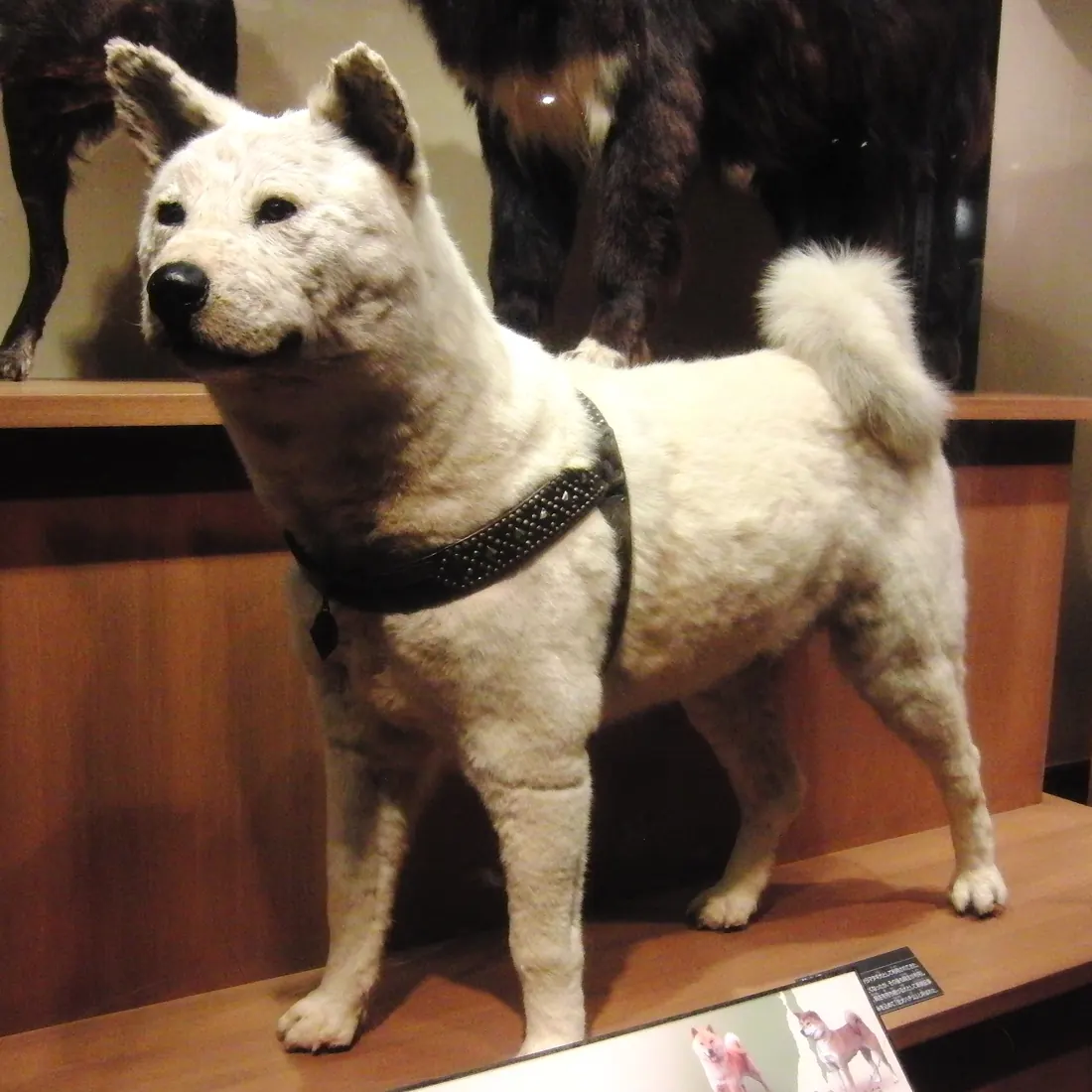
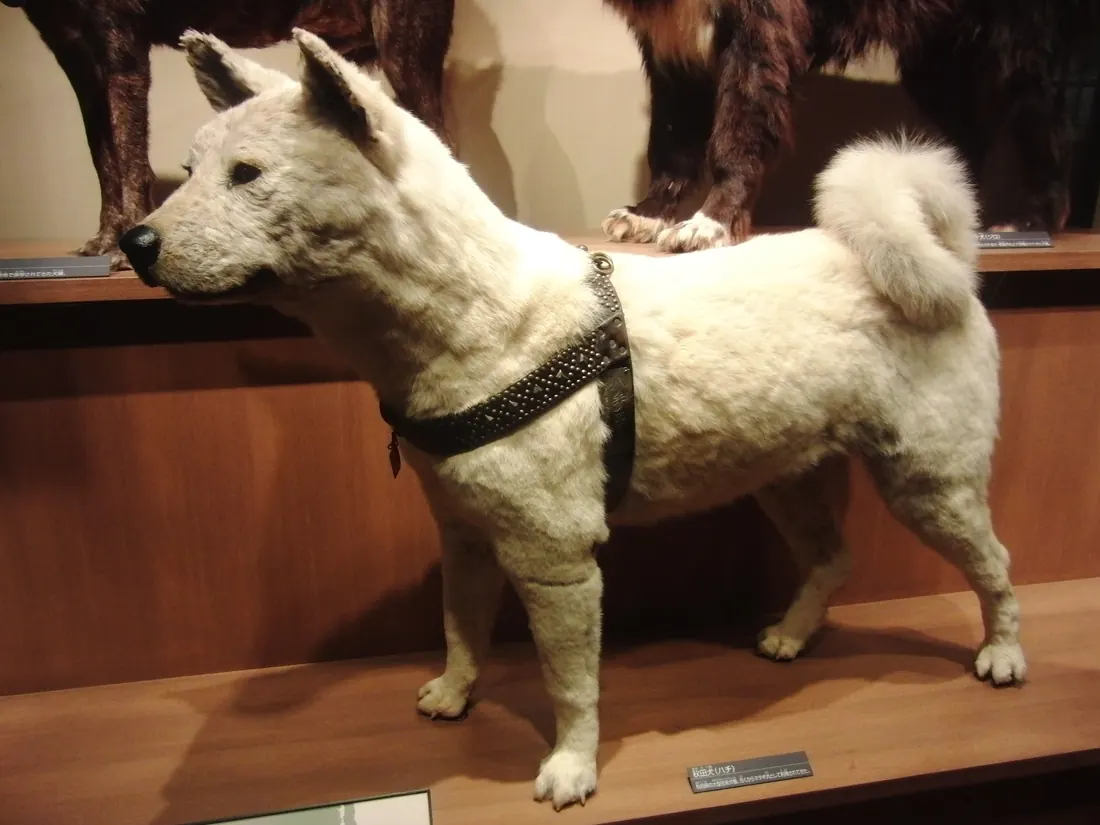
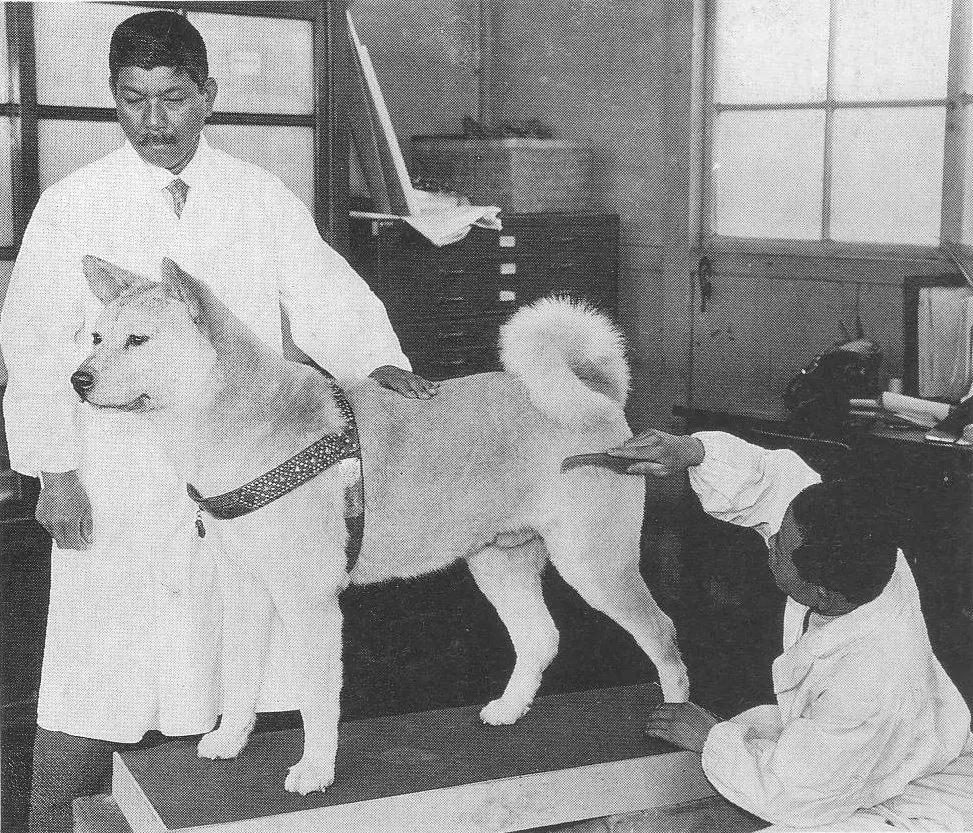
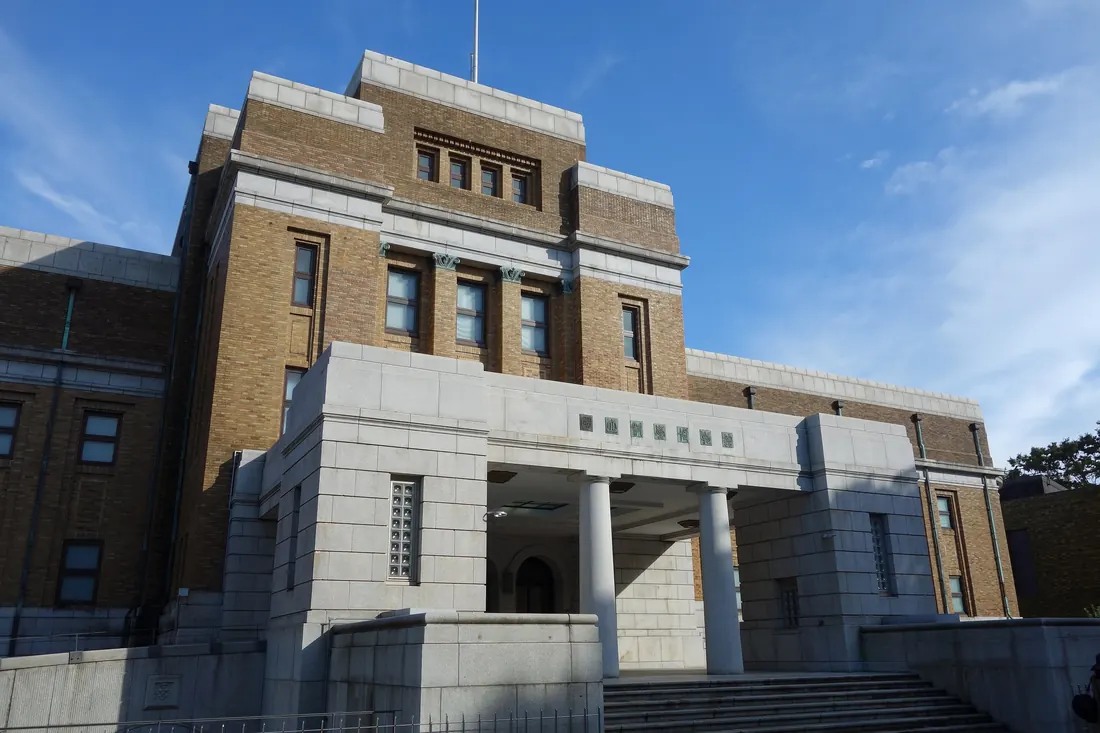
“Sometime before dawn on March 8, 1935, Hachiko’s dead body was found on the south side of Shibuya Station,” the University of Tokyo writes. “The body of Hachiko was stuffed and put on display at the National Museum of Nature and Science,” and he is still there: “you can see a taxidermied Hachiko” at the museum, Time Out Tokyo says, and Wikipedia adds that “his taxidermy is on display at the National Science Museum of Japan in Ueno.”
His organs were kept too. In the university’s words, “his internal organs (lungs, heart, esophagus, liver and spleen) that had been removed during the autopsy were preserved in formalin as laboratory specimens,” and “The pathologic observations revealed that there were over 30 Dirofilariae in the heart.” Wikipedia says “The veterinarians preserved his heart, lungs, liver, spleen, and esophagus in glass jars.”
Scientists looked again at “pathological tissue specimens taken from Hachiko’s preserved organs in 2011.” Professor Uchida “found that Hachiko had possibly suffered from lung carcinosarcoma with metastasis to the heart,” so his last years may have hurt: if so, the university says, “the malignant tumors in his lungs would have made his later years quite painful.” Yet “From then until his death on March 8, 1935, Hachikō returned to Shibuya Station almost every day to await Ueno’s return.”
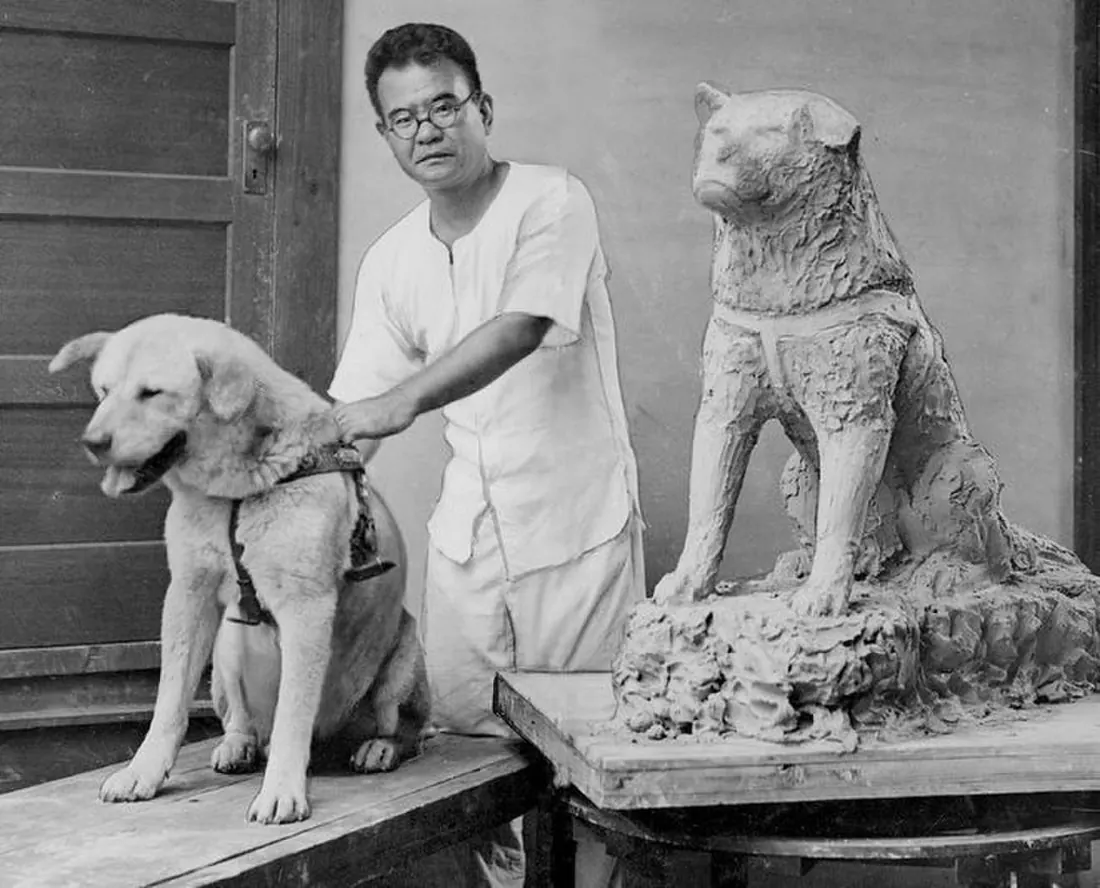
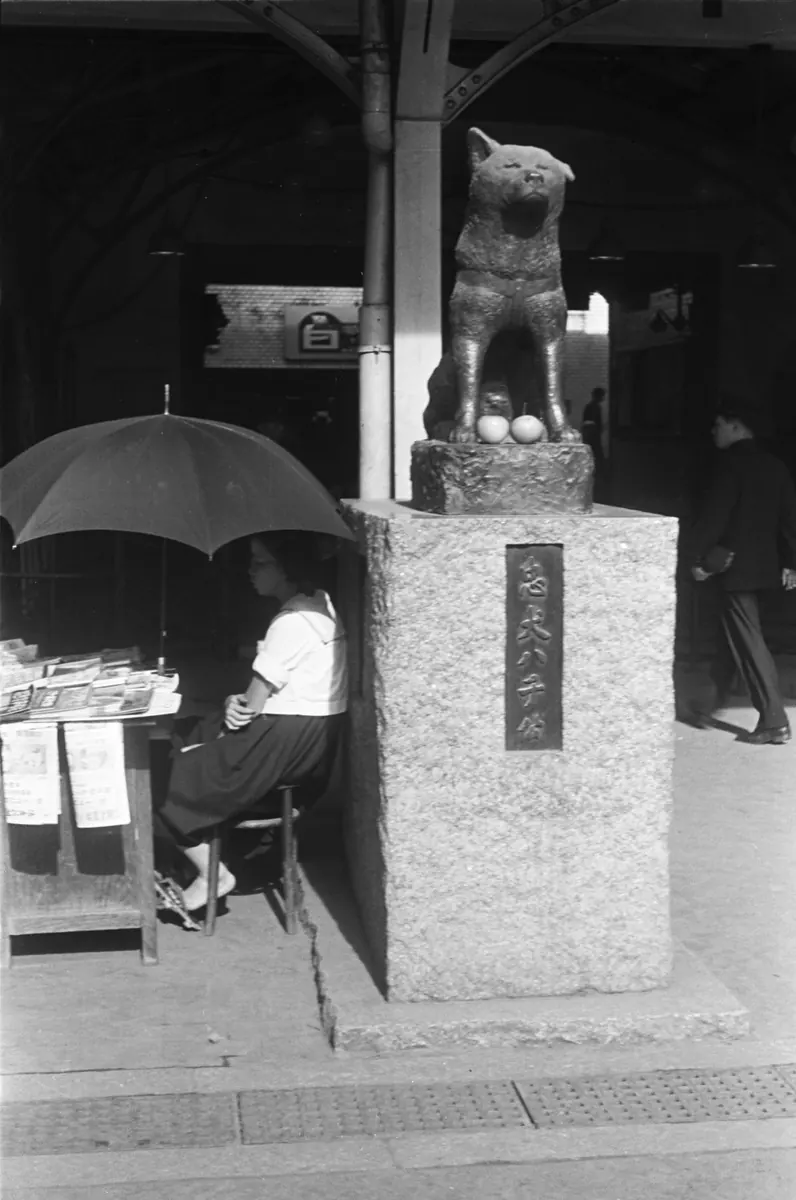
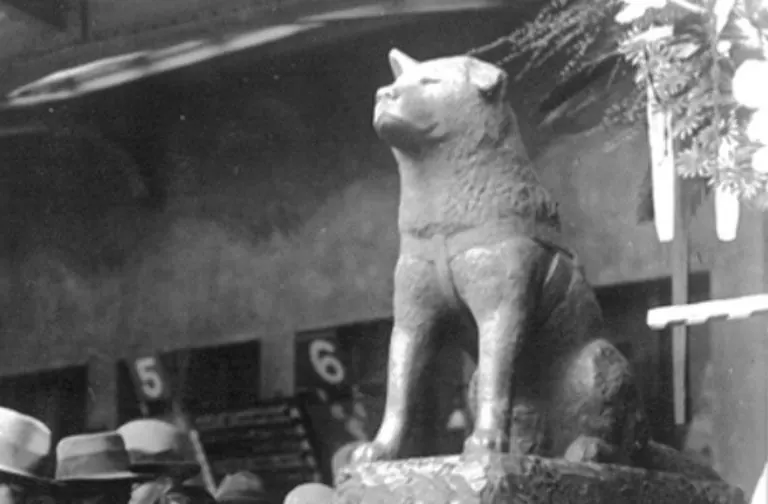
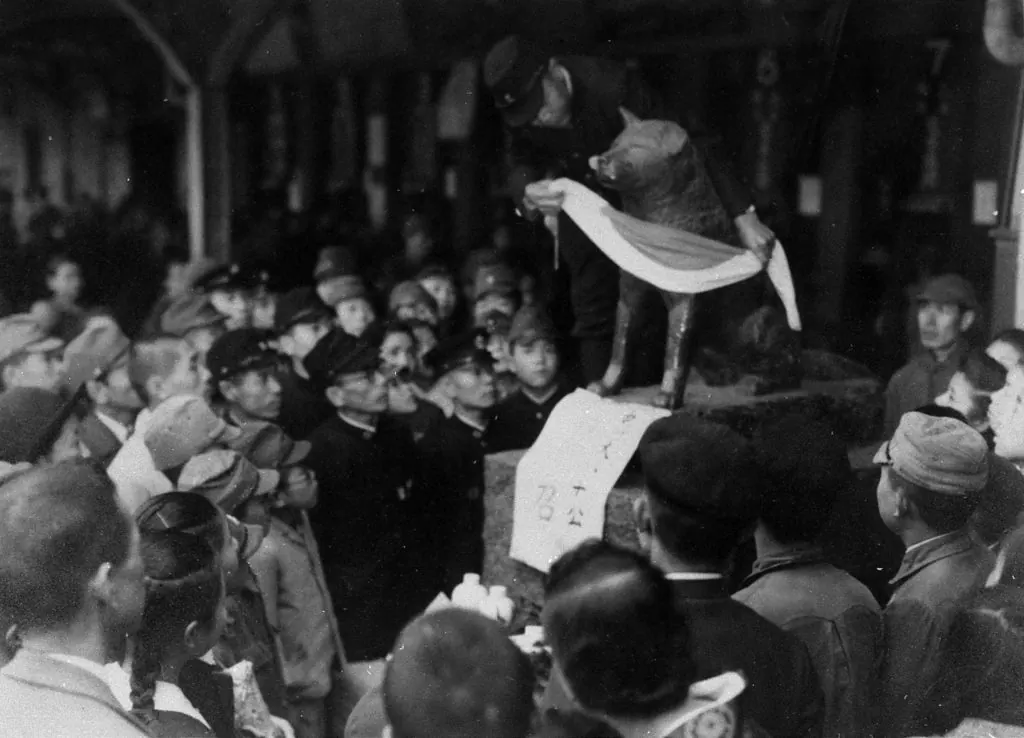
Then came the war. “WW2 called for the collection of all metallic items and the statue in Shibuya was removed and contributed,” says Ōdate’s Hachikō 100th-anniversary project. “The statue was taken down on October 12, 1944, amid an emotional farewell ceremony,” and “It was eventually melted down on August 14, 1945, in Hamamatsu, one day before Emperor Hirohito announced surrender, ending World War II.” By then its sculptor, Teru Andō, was dead: in May 1945, the Shibuya Shoto Museum of Art says, an air raid hit his home and studio in Yoyogi, Shibuya, and Andō was among its victims.
“After the war, Ando’s son Takeshi built a new statue, which is the one you see in Shibuya today,” Time Out Tokyo says; it was unveiled on August 15, 1948. Then, for the 80th “anniversary of the beloved dog’s passing,” came a statue at the University of Tokyo “depicting the gleeful reunion of a young Hachiko and his master.” For its model, the university’s account says, “we visited an Akita dog breeder to take photos of dogs jumping up on Professor Shiozawa to use as samples.” It was unveiled in March 2015, and it “depicts an excited Hachikō jumping up to greet his master at the end of a workday.” Since 2016, Ueno’s partner Yaeko has rested with them: “Yaeko has been resting together with Professor Ueno and Hachiko in Aoyama Cemetery since 2016.”
Fact check
The facts and where they come from
- The dog who waited almost ten years had to wait 80 more, in a statue, to greet his owner. Wikipedia: “for whom he continued to wait for almost ten years following Ueno’s death in 1925.” University of Tokyo: a statue for the 80th “anniversary of the beloved dog’s passing,” “depicting the gleeful reunion of a young Hachiko and his master.” 12
- His name was Hachikō, the dog who kept waiting at Shibuya Station. Wikipedia: “From then until his death on March 8, 1935, Hachikō returned to Shibuya Station almost every day to await Ueno’s return.” 1
- When he died in 1935, his body was preserved. University of Tokyo: “Sometime before dawn on March 8, 1935, Hachiko’s dead body was found on the south side of Shibuya Station”; “The body of Hachiko was stuffed and put on display at the National Museum of Nature and Science.” 3
- You can still see him today, in a Tokyo museum. Time Out Tokyo: “you can see a taxidermied Hachiko” at “the National Museum of Nature and Science.” Wikipedia: “his taxidermy is on display at the National Science Museum of Japan in Ueno.” Japanese Wikipedia: on show in the museum’s Japan Gallery, 2nd floor, north wing. 415
- Even his heart was kept in a jar, with over 30 worms inside. University of Tokyo: “his internal organs (lungs, heart, esophagus, liver and spleen) that had been removed during the autopsy were preserved in formalin as laboratory specimens”; “The pathologic observations revealed that there were over 30 Dirofilariae in the heart.” Wikipedia: “The veterinarians preserved his heart, lungs, liver, spleen, and esophagus in glass jars.” 31
- Scientists looked again in 2011, and found signs of cancer. University of Tokyo: “pathological tissue specimens taken from Hachiko’s preserved organs in 2011”; Professor Uchida “found that Hachiko had possibly suffered from lung carcinosarcoma with metastasis to the heart.” Wikipedia: results “released in March 2011.” Time Out Tokyo: “a re-examination in 2010 concluded that Hachiko actually died of cancer.” 314
- His last years may have hurt, but he still went to the station. University of Tokyo: “the malignant tumors in his lungs would have made his later years quite painful.” Wikipedia: “From then until his death on March 8, 1935, Hachikō returned to Shibuya Station almost every day to await Ueno’s return.” 31
- Then came the war. The Hachikō 100th-anniversary project: “WW2 called for the collection of all metallic items.” 7
- His statue was taken down for metal in 1944. Wikipedia: “The statue was taken down on October 12, 1944, amid an emotional farewell ceremony.” The Hachikō 100th-anniversary project: “WW2 called for the collection of all metallic items and the statue in Shibuya was removed and contributed.” 17
- It was melted one day before the war ended. Time Out Tokyo: “the original statue was melted just one day before the war ended.” Wikipedia: “It was eventually melted down on August 14, 1945, in Hamamatsu, one day before Emperor Hirohito announced surrender, ending World War II.” Japanese Wikipedia (Teru Andō): melted on August 14, 1945, the day before Japan’s defeat. 416
- The sculptor who made it had been killed in an air raid. Shibuya Shoto Museum of Art: “1945年5月、渋谷区代々木の自宅兼アトリエが空襲にさらされ、安藤もその犠牲となりました” (in May 1945 an air raid hit his home and studio in Yoyogi, Shibuya, and Andō was among its victims). Wikipedia: “Andō and his daughter both perished in this fire.” 81
- So his son built Hachikō again, and it still stands at Shibuya. Time Out Tokyo: “After the war, Ando’s son Takeshi built a new statue, which is the one you see in Shibuya today.” Bijutsu Techo: “安藤の長男・士(たけし)が初代をモデルに制作した二代目が渋谷駅前に置かれている” (the second statue, made by Andō’s eldest son Takeshi on the model of the first, stands in front of Shibuya Station). Wikipedia: unveiled on August 15, 1948. 491
- Then, in 2015, the University of Tokyo unveiled a new statue. University of Tokyo: “Finally, on March 8, 2015, an unveiling ceremony for the statue was held.” 2
- It shows Hachikō jumping up to greet the professor. Wikipedia: it “depicts an excited Hachikō jumping up to greet his master at the end of a workday.” University of Tokyo: “we visited an Akita dog breeder to take photos of dogs jumping up on Professor Shiozawa to use as samples.” 12
- After all those years, the professor finally came home: the statue shows their reunion. University of Tokyo: a statue “depicting the gleeful reunion of a young Hachiko and his master.” 2
Sources
- Hachikō Wikipedia
- Hachiko and UTokyo (part 1): The interwoven story of a dog, the University and various people The University of Tokyo
- Hachiko and UTokyo (part 2): The interwoven story of a dog, the University and various people The University of Tokyo
- 10 things you didn’t know about Hachiko, Japan’s most loyal dog Time Out Tokyo
- ハチ公 (Hachikō) Japanese Wikipedia
- 安藤照 (Teru Andō) Japanese Wikipedia
- Hachikō 100th Anniversary: Story Visit Akita (Ōdate, Akita)
- Teru Andō retrospective (exhibition page, 2025) Shibuya Shoto Museum of Art
- Report on the Teru Andō exhibition (2025) Bijutsu Techo
Notes
The Short’s first line is a figure of speech: Hachikō didn’t literally wait 80 more years. The 2015 statue, made for the 80th anniversary of his death, shows the reunion.
Cause of death: the 1935 autopsy blamed heartworm; the 2011 look at his preserved organs found that he had “possibly” suffered from lung cancer (University of Tokyo). Wikipedia and Time Out Tokyo state the cancer more firmly, and Time Out dates the re-examination to 2010. The Short says “signs of cancer” and that his last years “may have hurt.”
The statue was taken down on October 12, 1944, and melted on August 14, 1945 (Wikipedia, Japanese Wikipedia, Time Out Tokyo); the Short keeps the two dates apart.
The 2015 statue was unveiled on March 8 (University of Tokyo) or March 9 (Wikipedia), so the page says only March 2015.
Left out: a thinly sourced story about how the 1948 statue was made, side details of his funeral and autopsy, the statues in Ōdate and a 2016 replica in New Jersey.
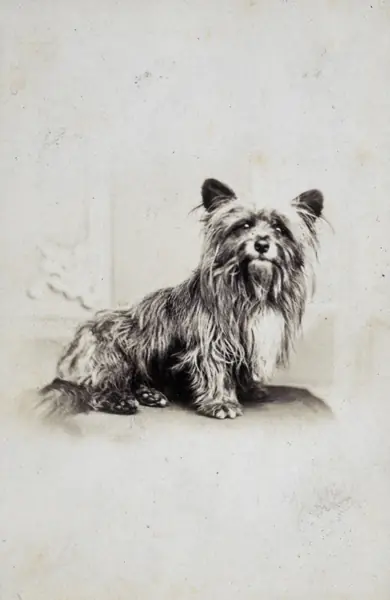
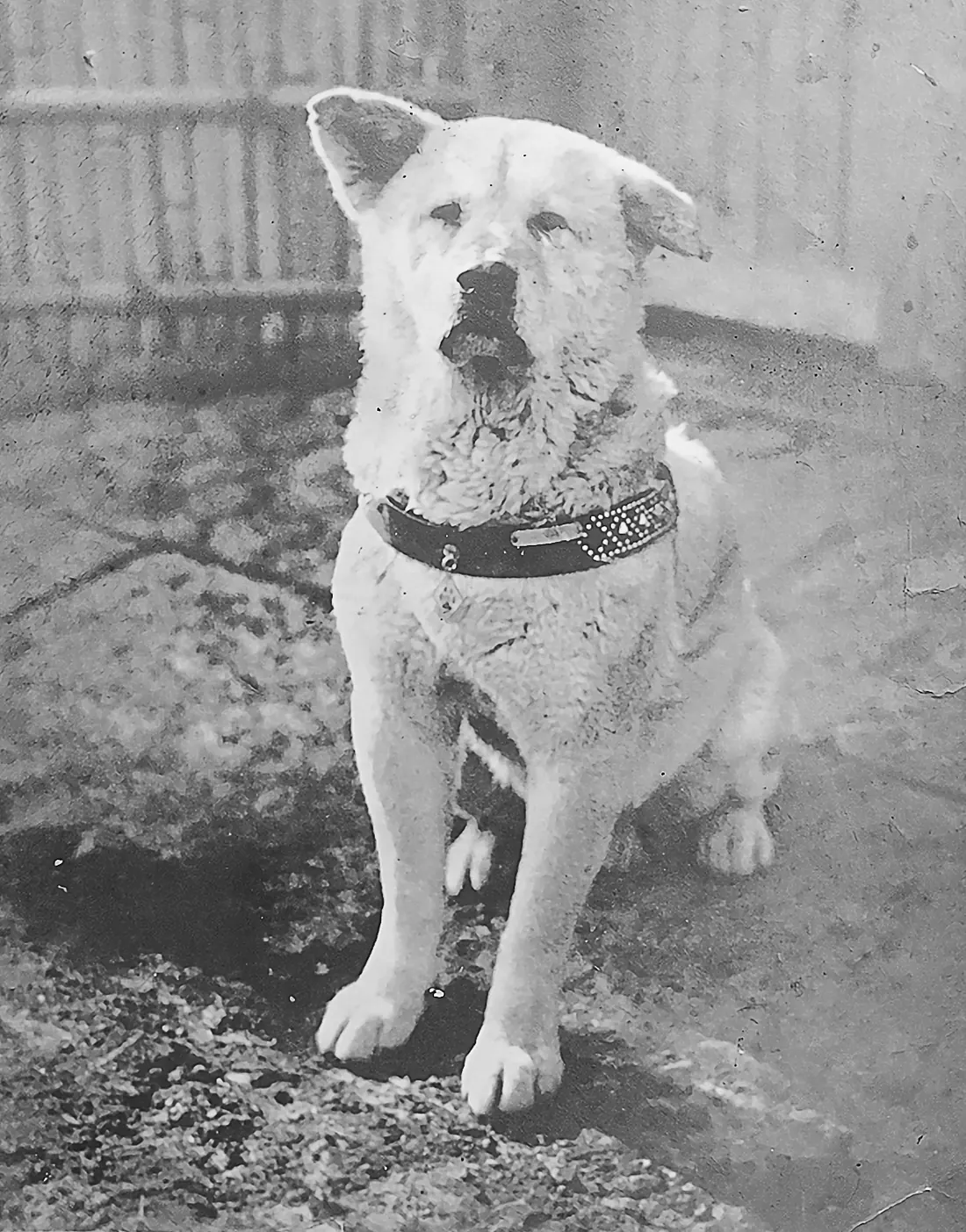
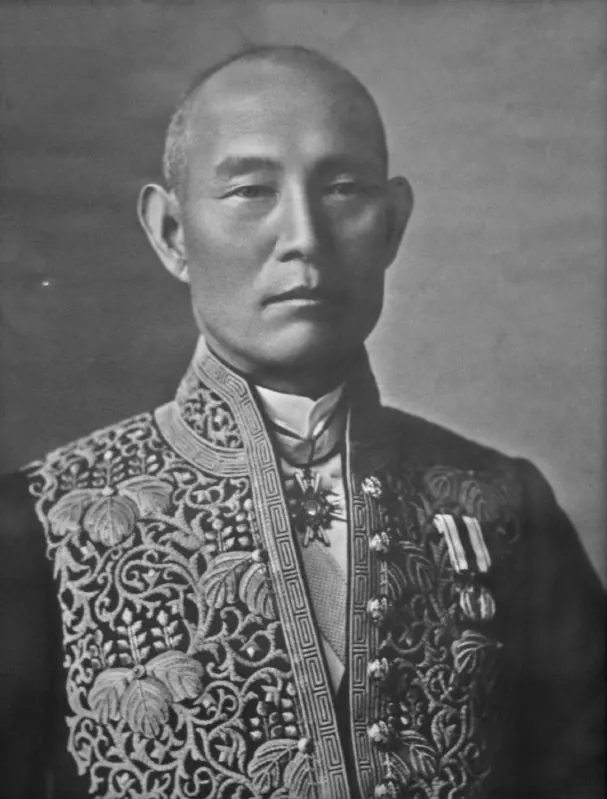
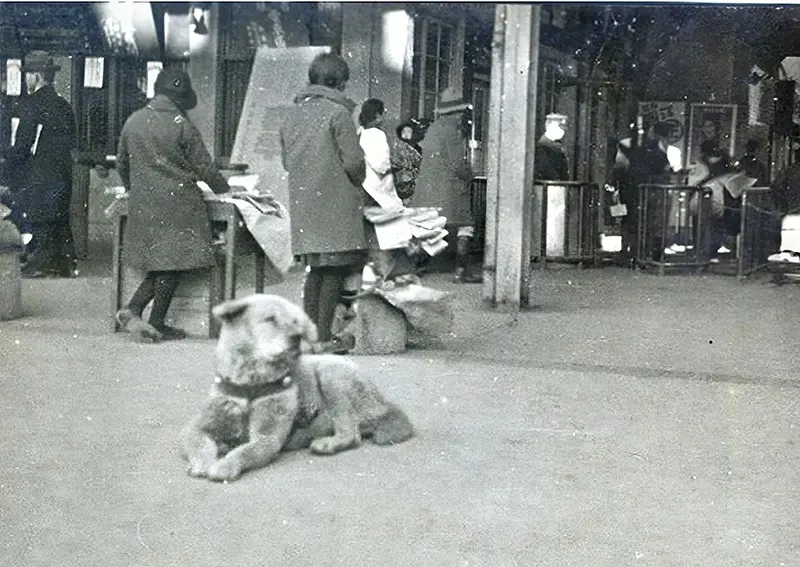
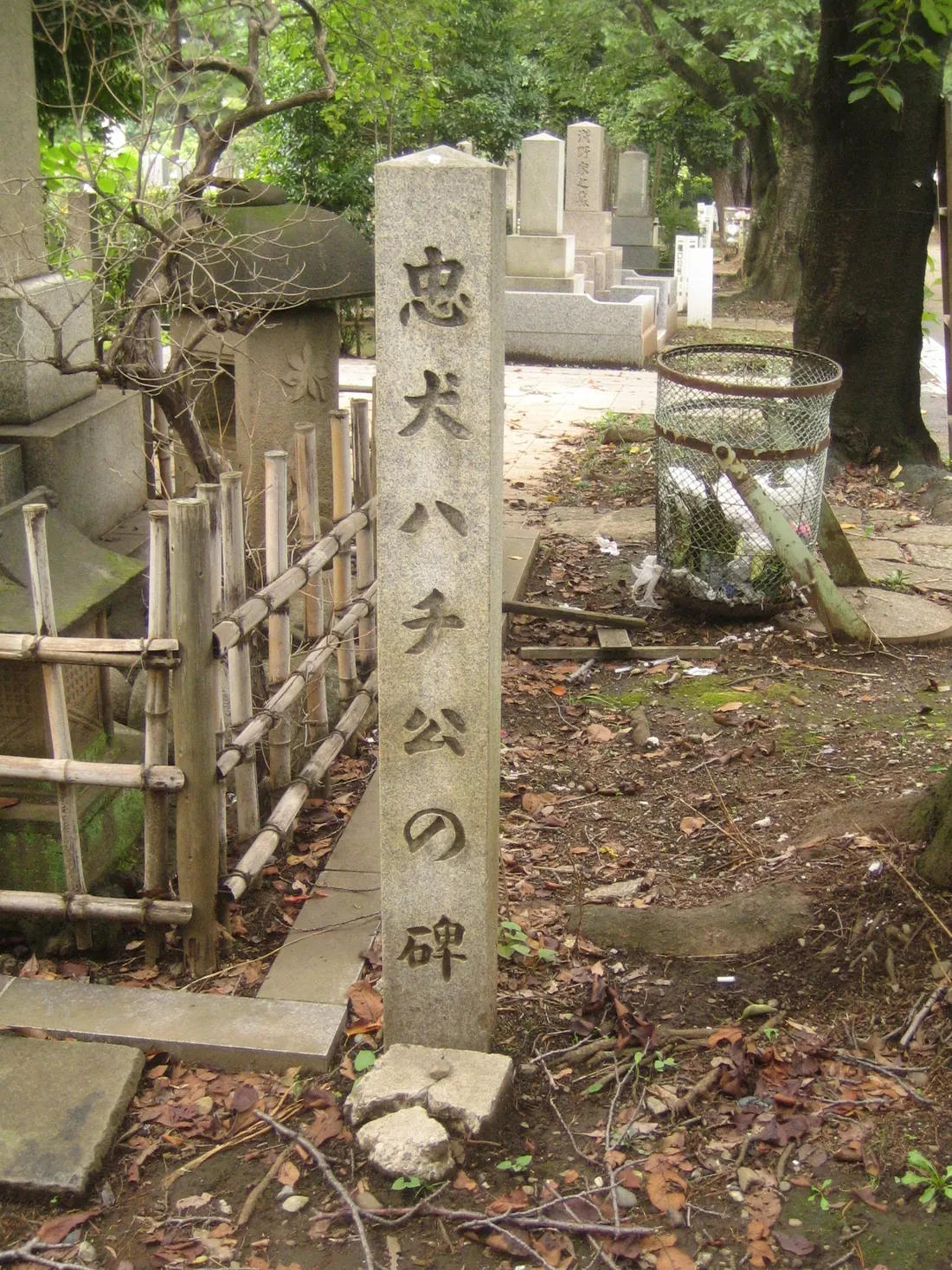
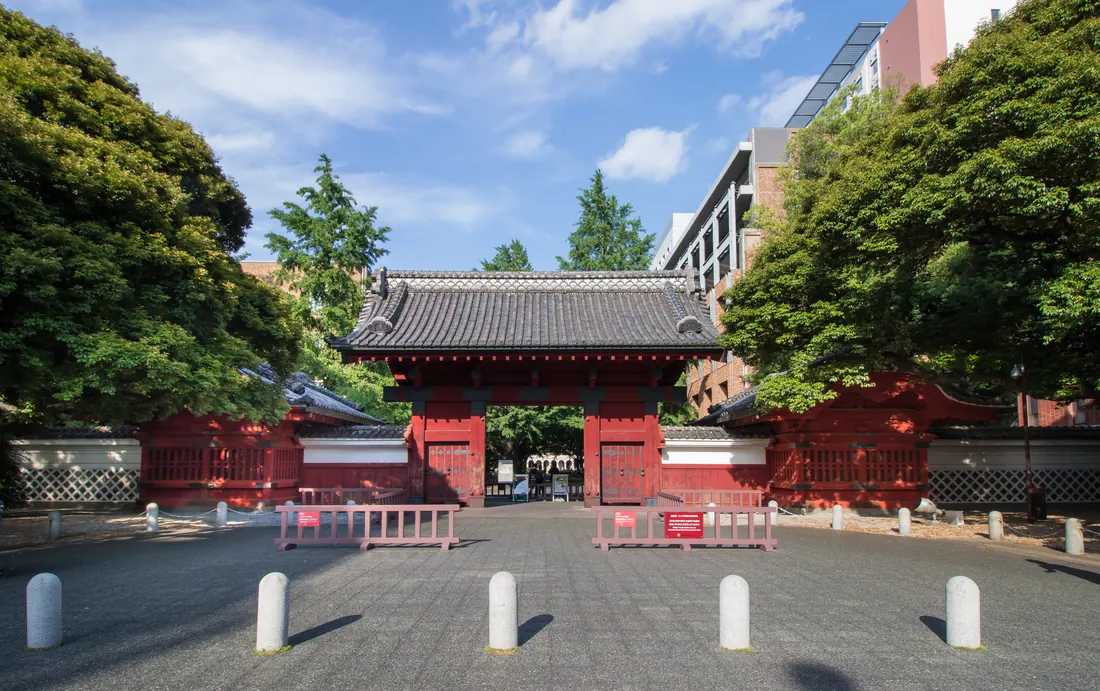
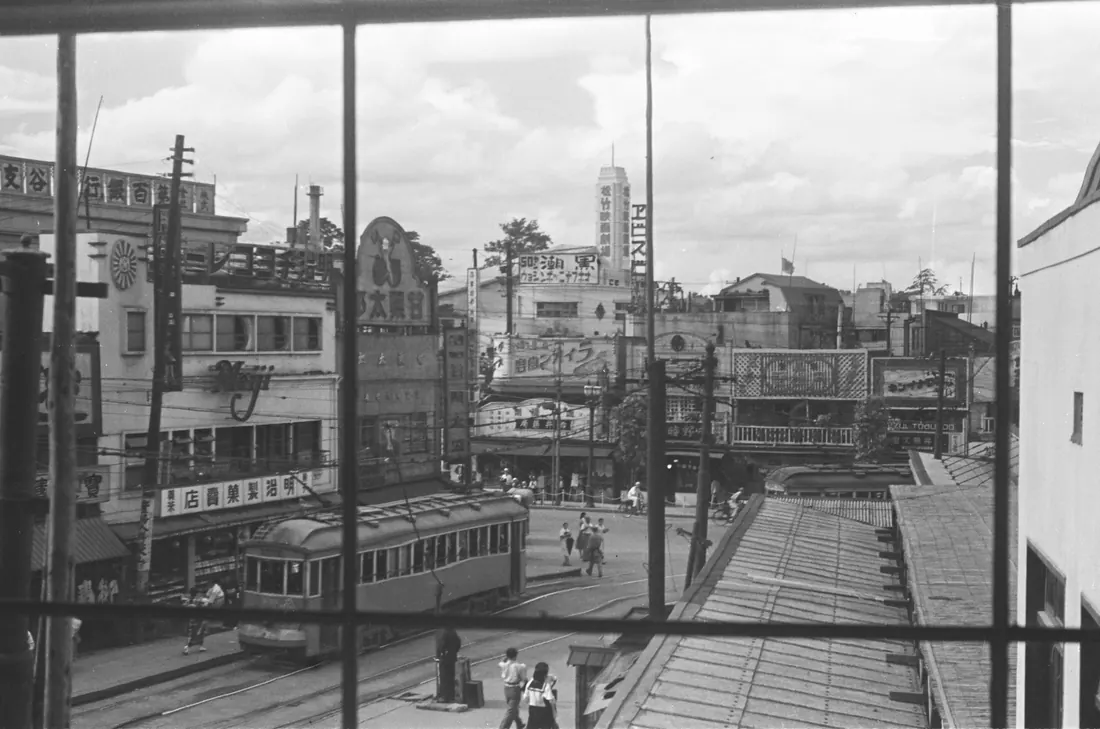
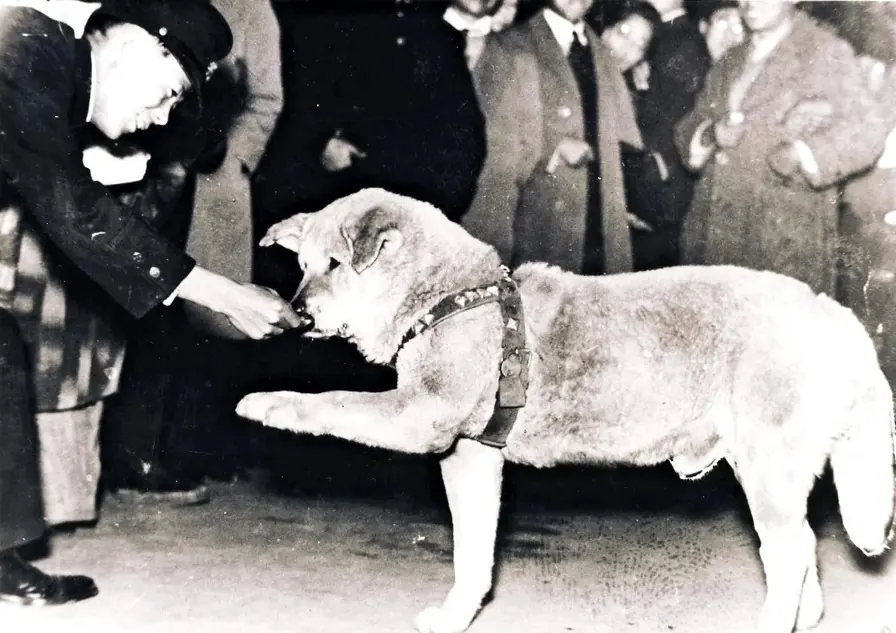
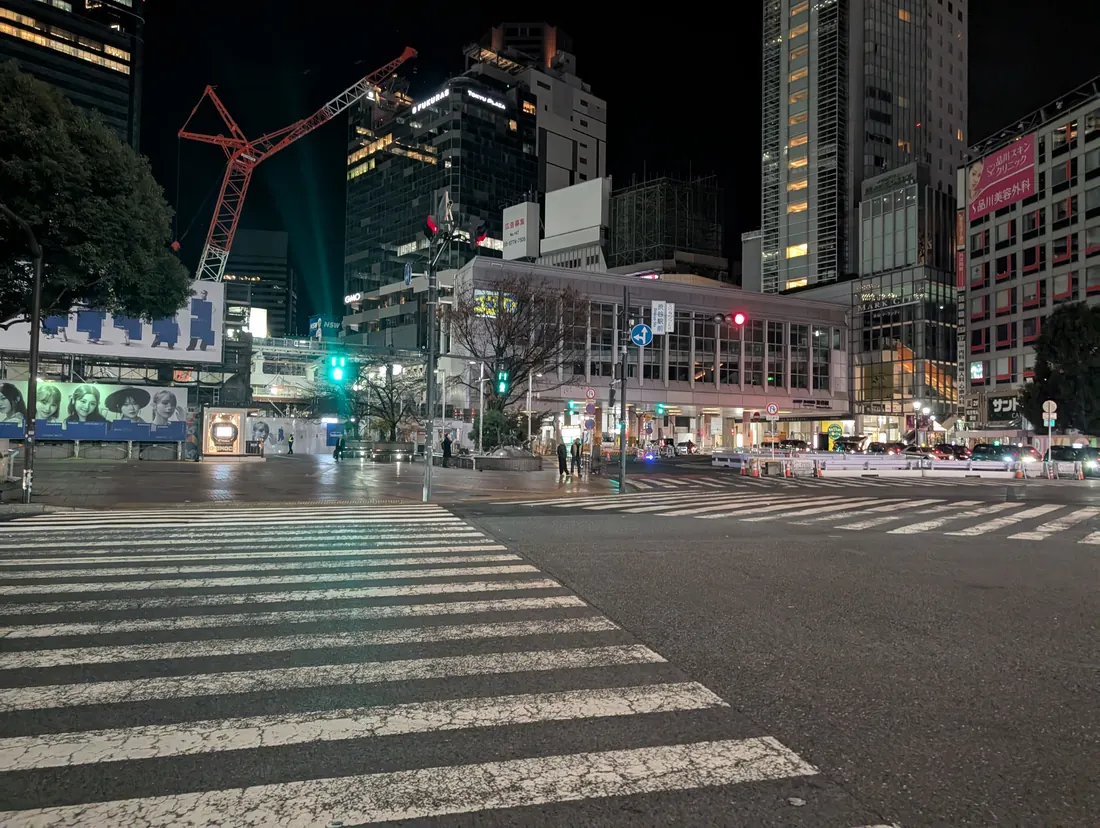
Pictures: no free photo shows his heart in its jar, the 2011 study or the 1948 and 2015 statues, which are recent copyrighted sculptures, so neither is shown; the plaster model, Shibuya Crossing and the University of Tokyo’s Akamon gate stand in for them (the 2015 statue stands on the university’s nearby Yayoi campus). Hachikō himself is in a portrait from about 1934, waiting at Shibuya Station and giving a paw to station attendant Kasaburō Gomi (both about 1933), beside Teru Andō and the plaster model of his statue in August 1933, and as his mount, being made at the Tokyo Science Museum in 1935 (his pelt was mounted that year by the taxidermist Kiichi Sakamoto) and on display at the National Museum of Nature and Science in 2013 and 2011 (Momotarou2012). Professor Hidesaburō Ueno is in a portrait from before 1925. The first statue (Teru Andō, 1934) is at Shibuya Station before 1945, in 1939 (Kōji Morooka) and at its farewell ceremony on October 12, 1944. Shibuya Station is in 1939 (Kōji Morooka); the museum building in 2013 (Daderot); the empty Shibuya Scramble Crossing at 2 a.m. in 2024 (Syced); the Akamon gate in 2019 (Kakidai); and Hachikō’s monument stone at Aoyama Cemetery in 2007 (Lombroso).
Photo credits
The archive photos in this story
The photographs and illustrations in this story are in the public domain or shared under open licenses; each one is credited below with its license. Tap one to enlarge it, or follow the link to its Wikimedia Commons page for the full record. The narration, captions and graphics in the Short are our own; its music and sound effects are credited below.
Music and sound effects
Music: Schumann, Kinderszenen, Op. 15: No. 1 'Of Foreign Lands and Peoples (Musopen, public domain); Mussorgsky, Pictures at an Exhibition: IV. Bydlo (piano) (Musopen, public domain); Dvorak, Symphony No. 9 'From the New World': II. Largo (Musopen, public domain).
Sound effects: Freesound, CC0.