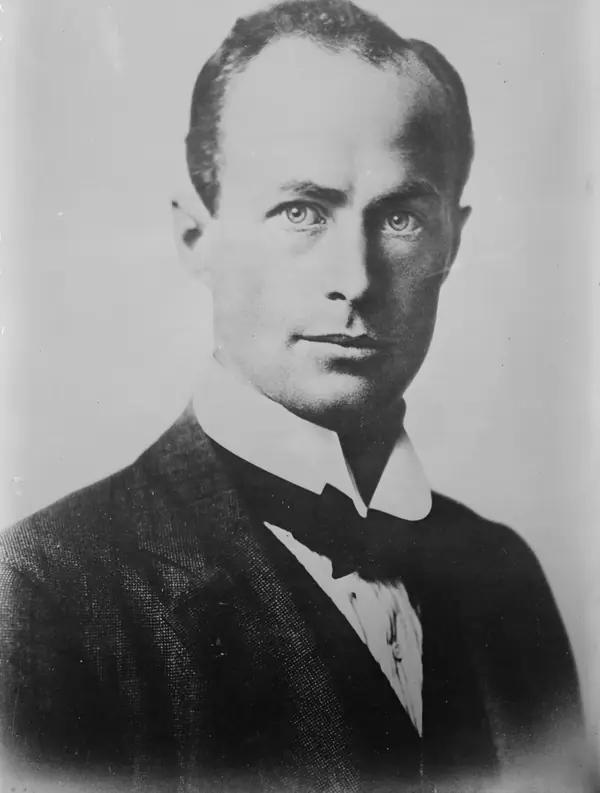
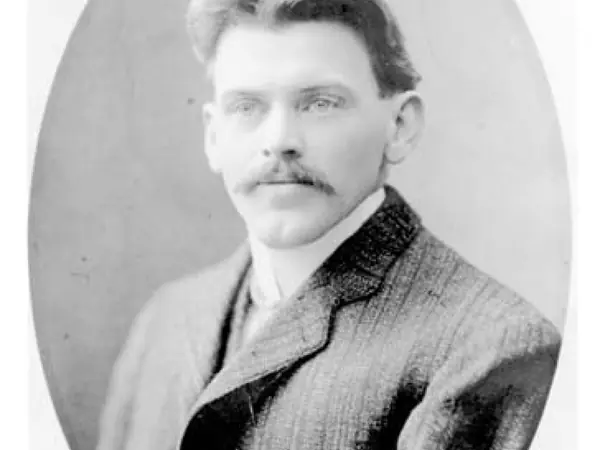
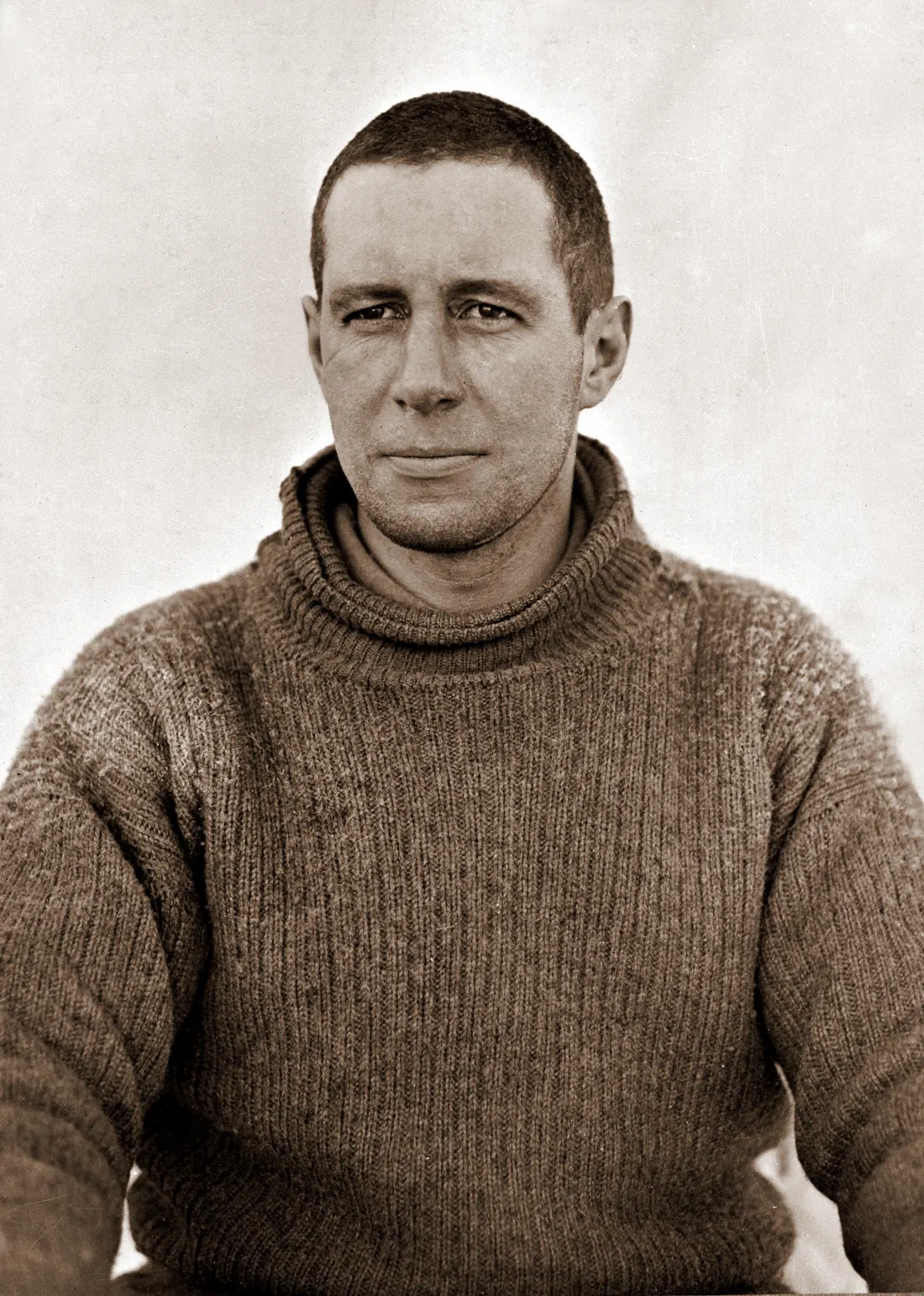
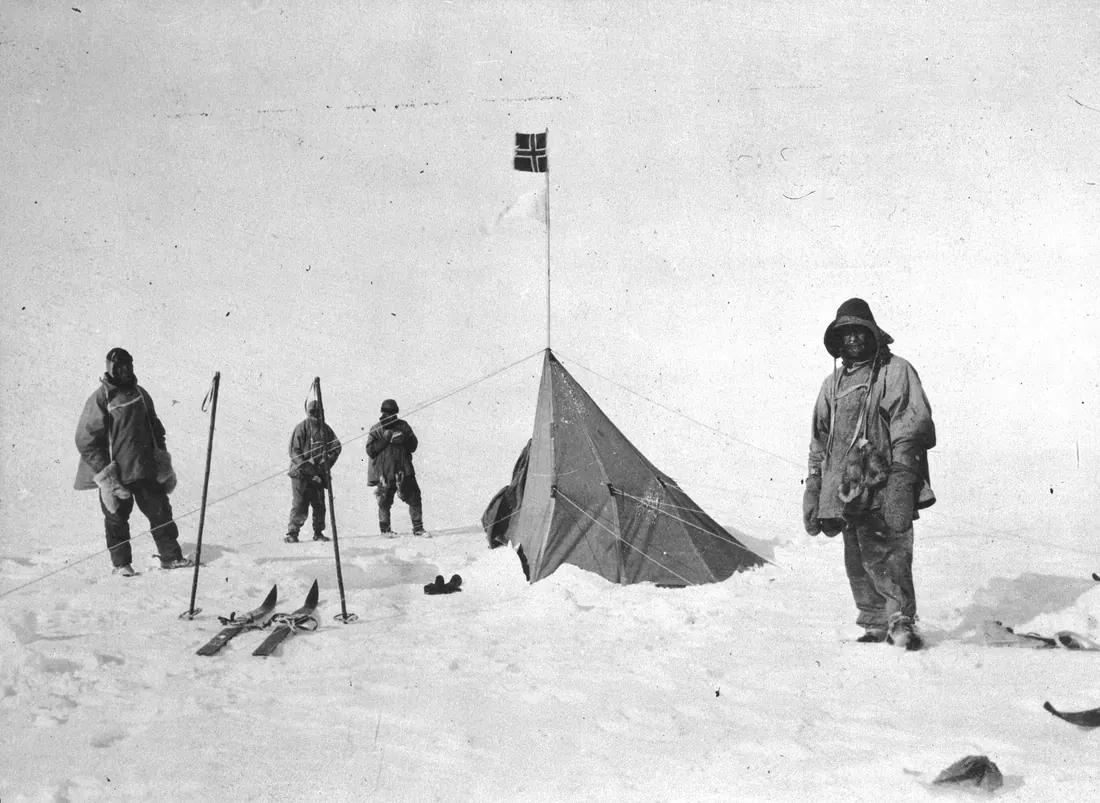
Lawrence Oates “was a British army officer, and later an Antarctic explorer,” Wikipedia says. “He was promoted to captain in 1906,” in the 6th (Inniskilling) Dragoons, a cavalry regiment, and on the expedition he was “Nicknamed ‘the soldier’ by his fellow expedition members.” “In 1910, he applied to join Robert Falcon Scott’s expedition to the South Pole—the Terra Nova expedition,” and “Scott eventually selected him as one of the five-man party who would travel the final distance to the Pole.” Scott “and four companions attained the pole on 17 January 1912, where they found that a Norwegian team led by Roald Amundsen had preceded them by 34 days.”
On the way back, “The party then met with three, ultimately critical, difficulties: the non-appearance of the dog teams, an unexpected large drop in temperature and a shortage of fuel in the depots.” “Near the bottom of the glacier Evans collapsed, and died on 17 February.” “The party were further slowed down by the frostbite in Oates’ left foot.” On March 10, Scott wrote, “Shortage on our allowance all round,” and of Oates, “He keeps us waiting in the morning”; on March 12, “Oates not pulling much, and now with hands as well as feet pretty well useless.”
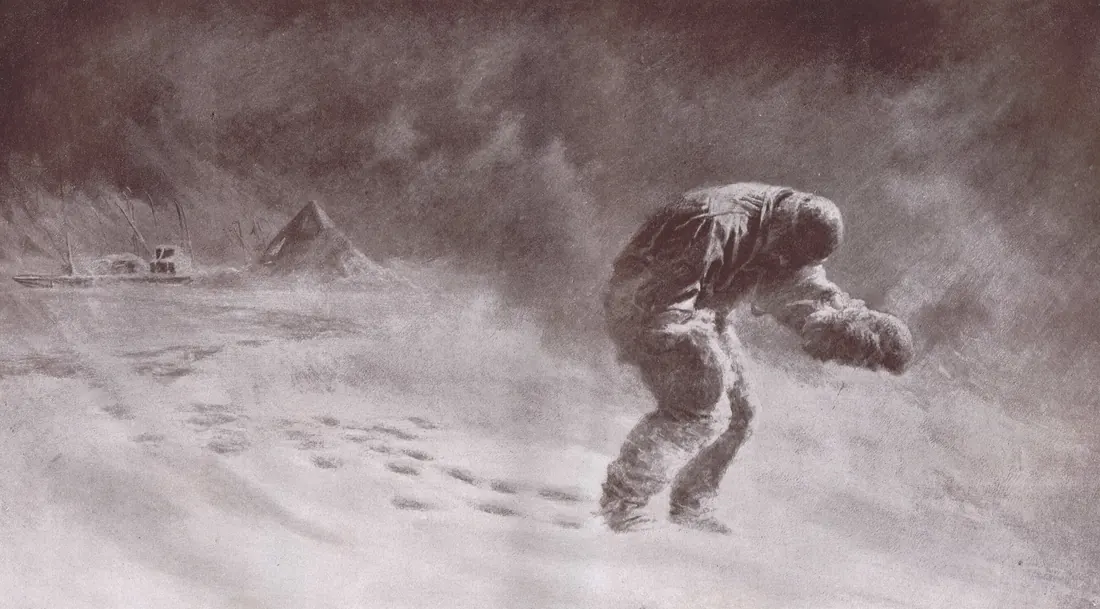
In his entry for March 16 or 17 (he had “Lost track of dates, but think the last correct”), Scott wrote that “poor Titus Oates said he couldn’t go on; he proposed we should leave him in his sleeping-bag. That we could not do, and induced him to come on, on the afternoon march.” Then: “He slept through the night before last, hoping not to wake; but he woke in the morning.” “It was blowing a blizzard.” “He said, ‘I am just going outside and may be some time.’” “He went out into the blizzard and we have not seen him since.” “The cold is intense, -40° at midday.” “We knew that poor Oates was walking to his death, but though we tried to dissuade him, we knew it was the act of a brave man and an English gentleman.” Wikipedia says that “he chose certain death for himself to relieve them of the burden of caring for him.”
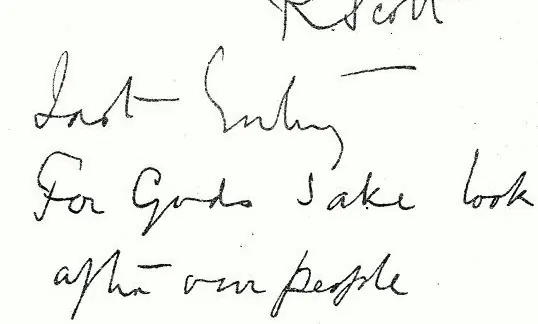
In his Message to the Public, Scott wrote that “we should have got through in spite of the weather but for the sickening of a second companion, Captain Oates, and a shortage of fuel in our depôts for which I cannot account,” and of “the storm which has fallen on us within 11 miles of the depôt at which we hoped to secure our final supplies.” The depot was the “One Ton food depot.” Wikipedia calls the final page “Scott’s last diary entry, dated 29 March 1912, the presumed date of their deaths,” and its last words are “For God’s sake look after our people.”
In November 1912 the search party came. On November 14, Apsley Cherry-Garrard wrote, “There was here a bit of sacking on the cairn, and Oates’ bag,” and “One of the finnesko was slit down the front as far as the leather beckets, evidently to get his bad foot into it.” “We have seen no sign of Oates’ body.” The next day, “We built a cairn to mark the spot near which Oates walked out to his death, and we placed a cross on it. Lashed to the cross is a record, as follows:” “Hereabouts died a very gallant gentleman, Captain L. E. G. Oates of the Inniskilling Dragoons. In March 1912, returning from the Pole, he walked willingly to his death in a blizzard to try and save his comrades, beset by hardship.” His date of death is usually given as March 17, 1912, “his 32nd birthday”; “Oates’s body was never found.” In the parish church at Gestingthorpe, Essex, there is “a brass memorial plaque to him,” which “his mother, Caroline, polished weekly for the rest of her life.”
Fact check
The facts and where they come from
- His companions refused to leave him behind, so he walked out into a blizzard at forty below. Scott: “he proposed we should leave him in his sleeping-bag. That we could not do”; “He went out into the blizzard and we have not seen him since”; “The cold is intense, -40° at midday.” Wikipedia: “Oates had walked out of the tent the previous day into a −40 °F (−40 °C) blizzard to his death.” 13
- His name was Lawrence Oates, a soldier on Captain Scott’s South Pole expedition. Wikipedia: he “was a British army officer, and later an Antarctic explorer,” “Nicknamed ‘the soldier’ by his fellow expedition members”; “In 1910, he applied to join Robert Falcon Scott’s expedition to the South Pole—the Terra Nova expedition.” “He was promoted to captain in 1906,” in the 6th (Inniskilling) Dragoons, a cavalry regiment. 3
- In January 1912, they reached the Pole, five weeks after the Norwegians. Wikipedia (Terra Nova Expedition): “He and four companions attained the pole on 17 January 1912, where they found that a Norwegian team led by Roald Amundsen had preceded them by 34 days.” Wikipedia (Lawrence Oates): “beating Scott’s party by 35 days.” 43
- On the way home, food and fuel ran short, and one man died. Wikipedia: “The party then met with three, ultimately critical, difficulties: the non-appearance of the dog teams, an unexpected large drop in temperature and a shortage of fuel in the depots”; “Near the bottom of the glacier Evans collapsed, and died on 17 February.” Scott, March 10: “Shortage on our allowance all round.” 41
- His feet froze, and he slowed them down. Wikipedia: “The party were further slowed down by the frostbite in Oates’ left foot.” Scott, March 12: “Oates not pulling much, and now with hands as well as feet pretty well useless”; March 10: “He keeps us waiting in the morning.” 41
- He asked them to leave him in his sleeping bag. Scott: “poor Titus Oates said he couldn’t go on; he proposed we should leave him in his sleeping-bag.” Wikipedia: “On 15 March, Oates told his companions that he could not go on and proposed that they leave him in his sleeping bag, which they refused to do.” 13
- They refused. Scott: “That we could not do, and induced him to come on, on the afternoon march.” 13
- That night, he slept hoping never to wake. Scott: “He slept through the night before last, hoping not to wake; but he woke in the morning.” 1
- But he woke to a blizzard. Scott: “It was blowing a blizzard.” 1
- He said, “I am just going outside and may be some time.” Scott: “He said, ‘I am just going outside and may be some time.’” Wikipedia: “Scott wrote that Oates’ last words were, ‘I am just going outside and may be some time’.” 14
- He walked out, and they never saw him again. Scott: “He went out into the blizzard and we have not seen him since.” Wikipedia: “Oates’s body was never found.” 13
- Scott wrote, “We knew that poor Oates was walking to his death.” Scott: “We knew that poor Oates was walking to his death, but though we tried to dissuade him, we knew it was the act of a brave man and an English gentleman.” 1
- The others died about two weeks later, 11 miles from food. Scott’s Message to the Public: “the storm which has fallen on us within 11 miles of the depôt at which we hoped to secure our final supplies.” Wikipedia (Terra Nova Expedition): “Scott’s last diary entry, dated 29 March 1912, the presumed date of their deaths.” Wikipedia (Lawrence Oates): “eleven miles (18 km) short of their objective,” the “One Ton food depot.” 143
- Searchers left a cross with a note. Cherry-Garrard, November 15, 1912: “We built a cairn to mark the spot near which Oates walked out to his death, and we placed a cross on it. Lashed to the cross is a record, as follows:” Wikipedia: “On 15 November, they raised a cairn near to where they believed he had died.” 24
- It reads, “Hereabouts died a very gallant gentleman.” Cherry-Garrard: “Hereabouts died a very gallant gentleman, Captain L. E. G. Oates of the Inniskilling Dragoons. In March 1912, returning from the Pole, he walked willingly to his death in a blizzard to try and save his comrades, beset by hardship.” 2
Sources
- Scott’s Last Expedition, Vol. I (Robert Falcon Scott’s journals, 1913) Project Gutenberg
- The Worst Journey in the World (Apsley Cherry-Garrard, 1922) Project Gutenberg
- Lawrence Oates Wikipedia
- Terra Nova Expedition Wikipedia
Notes
The date: Scott dated the entry March 16 or 17 and wrote that Oates walked out “yesterday.” Wikipedia gives March 17, his 32nd birthday, as the date of his death, but no one saw him die and his body was never found. The Short gives no date. Wikipedia’s article on Oates puts his request to be left behind on March 15.
“Forty below” is Scott’s midday reading in the same entry (“-40° at midday”), in Fahrenheit; −40 °F is also −40 °C, so the Short says only “forty below.”
Five weeks: Amundsen’s team reached the Pole 34 days earlier (Wikipedia’s Terra Nova Expedition article) or 35 days earlier (its article on Oates).
“About two weeks” runs from Oates’s walk (March 16 or 17) to Scott’s last entry, dated March 29, the presumed date of their deaths; Wikipedia’s article on Oates says they died “nine days later.” The depot, One Ton Depot, held food and fuel (Scott’s “final supplies”), so the Short says “eleven miles from food.”
His last words are known only from Scott’s journal, so the page says “Scott wrote.” The Short calls the others his companions. Cherry-Garrard says the words were on a record lashed to the cross; the searchers also built a cairn and cross over the tent of Scott, Wilson and Bowers, which is a different cross.
Left out: his life before the expedition, his work with the ponies and the debate about Scott’s planning. None is needed for this story.
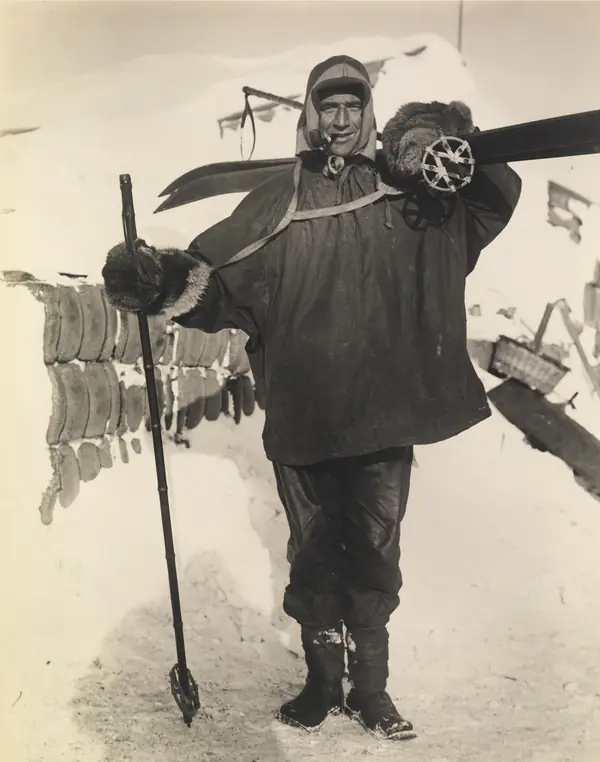
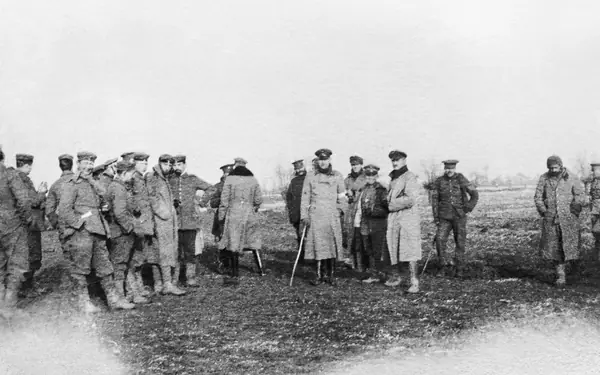
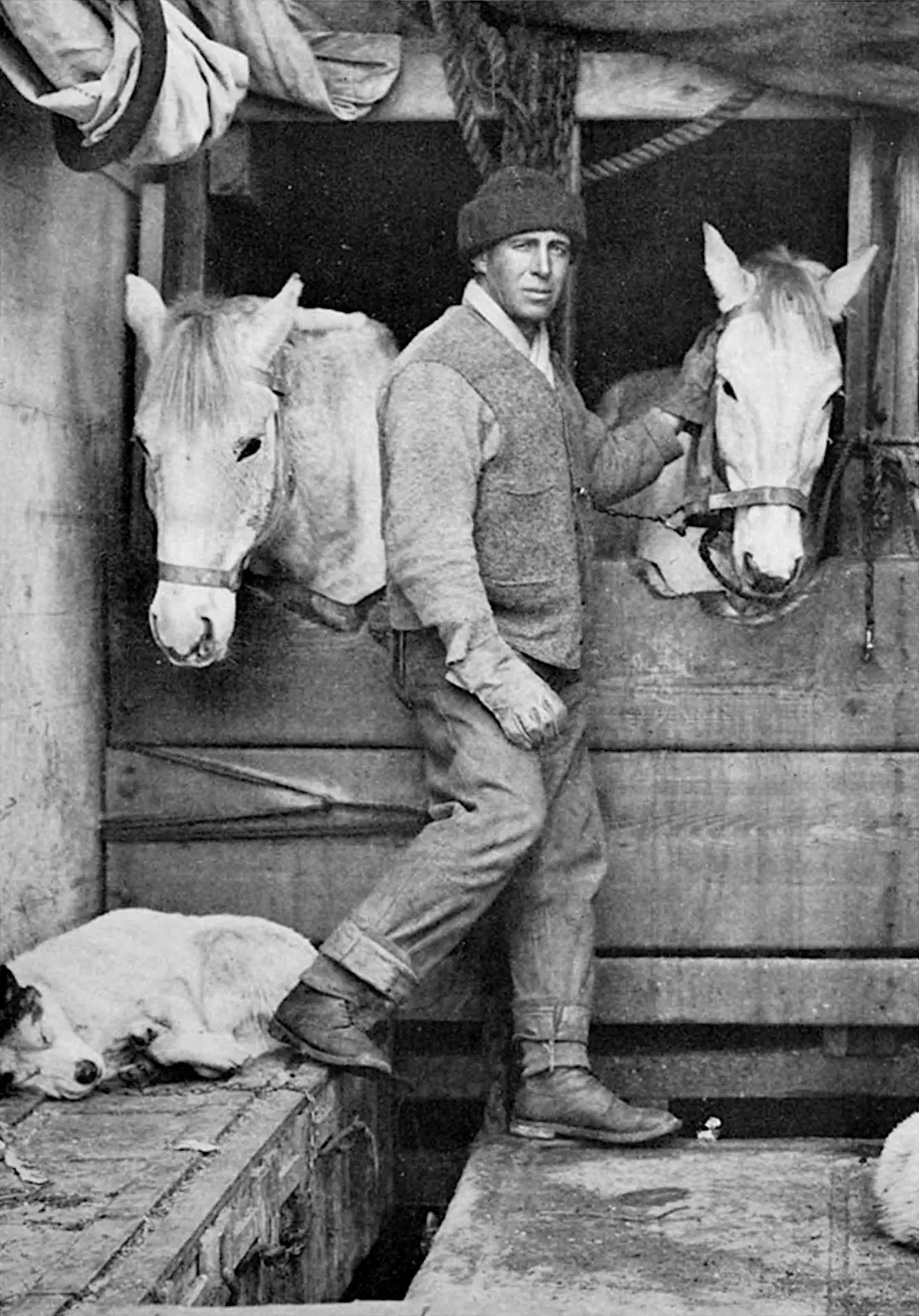
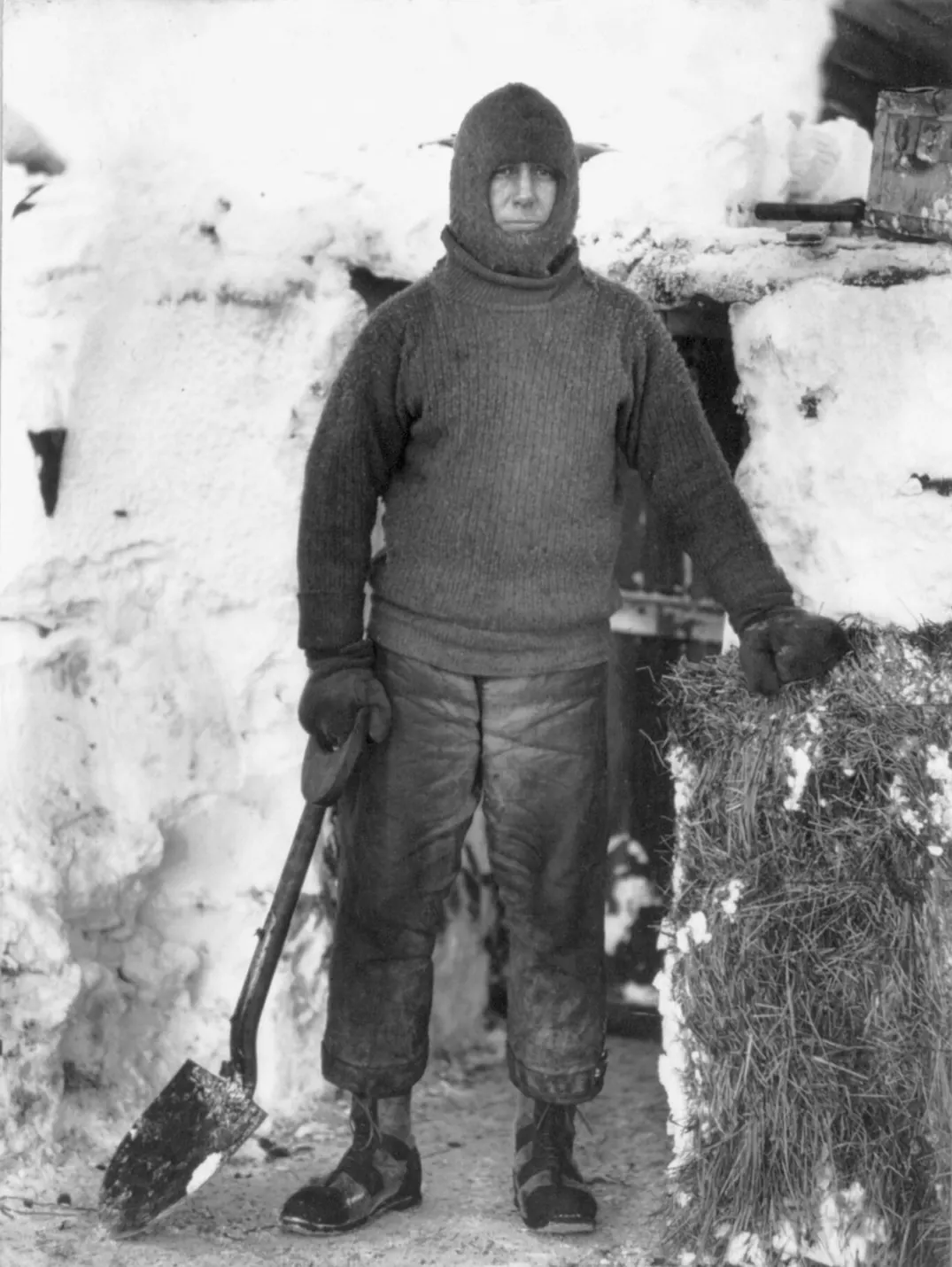
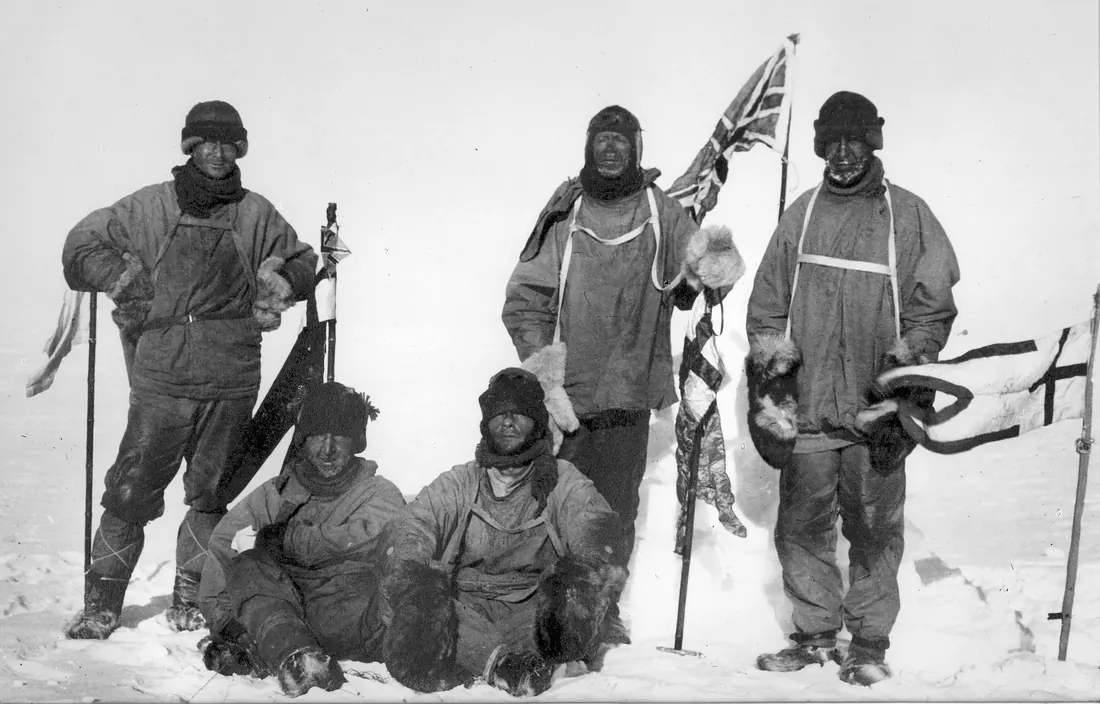
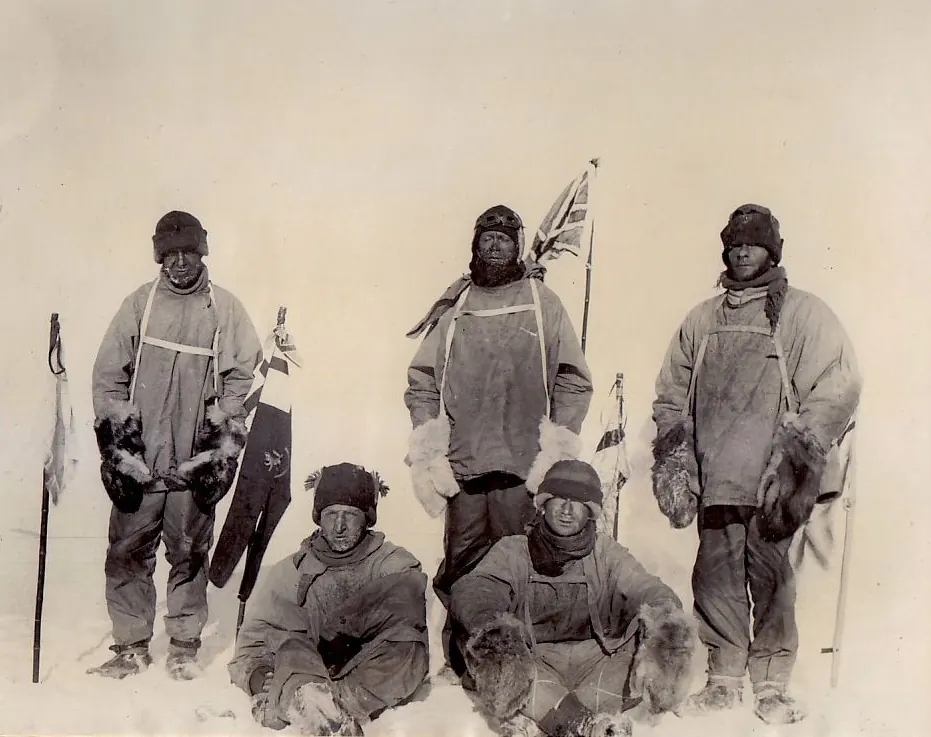
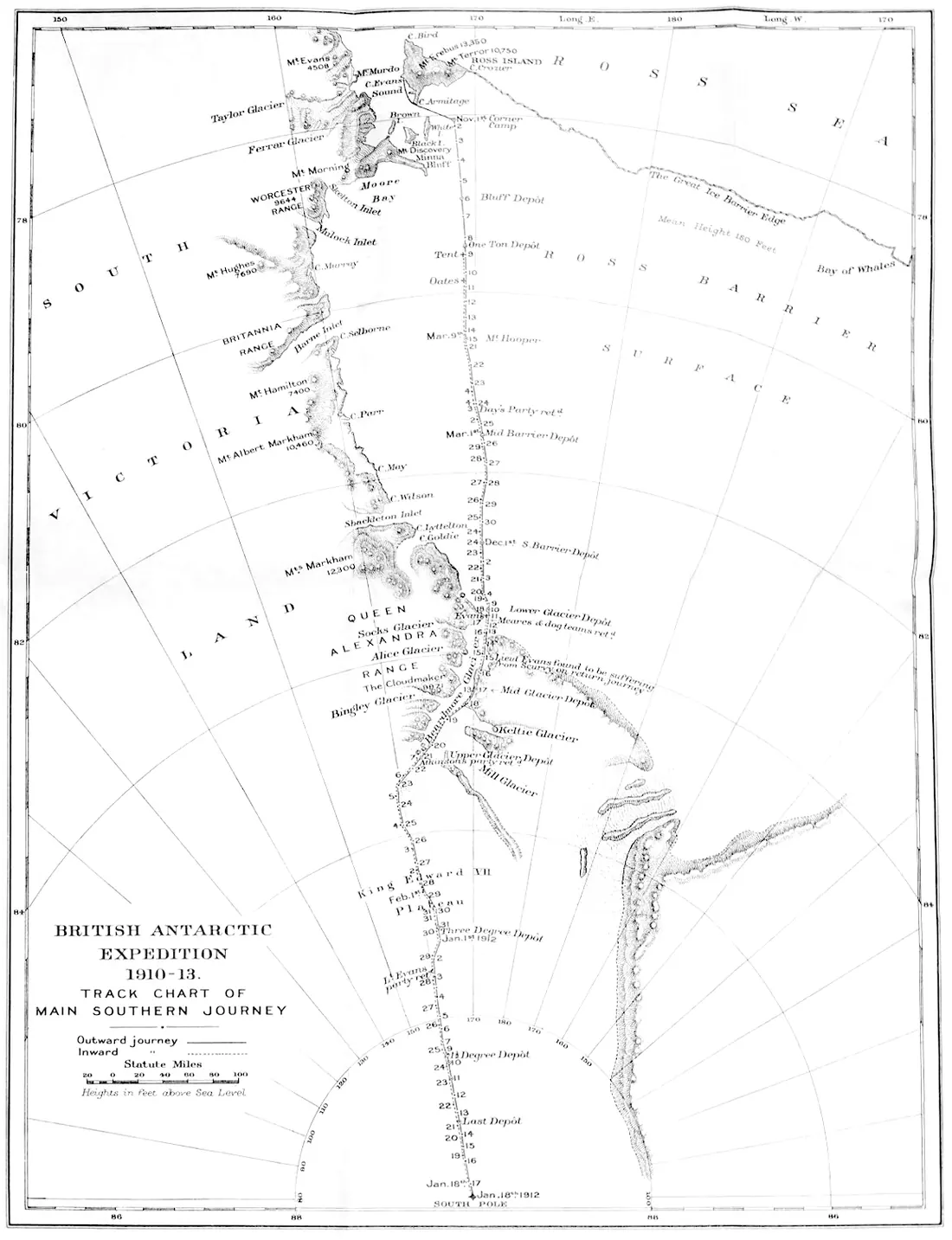
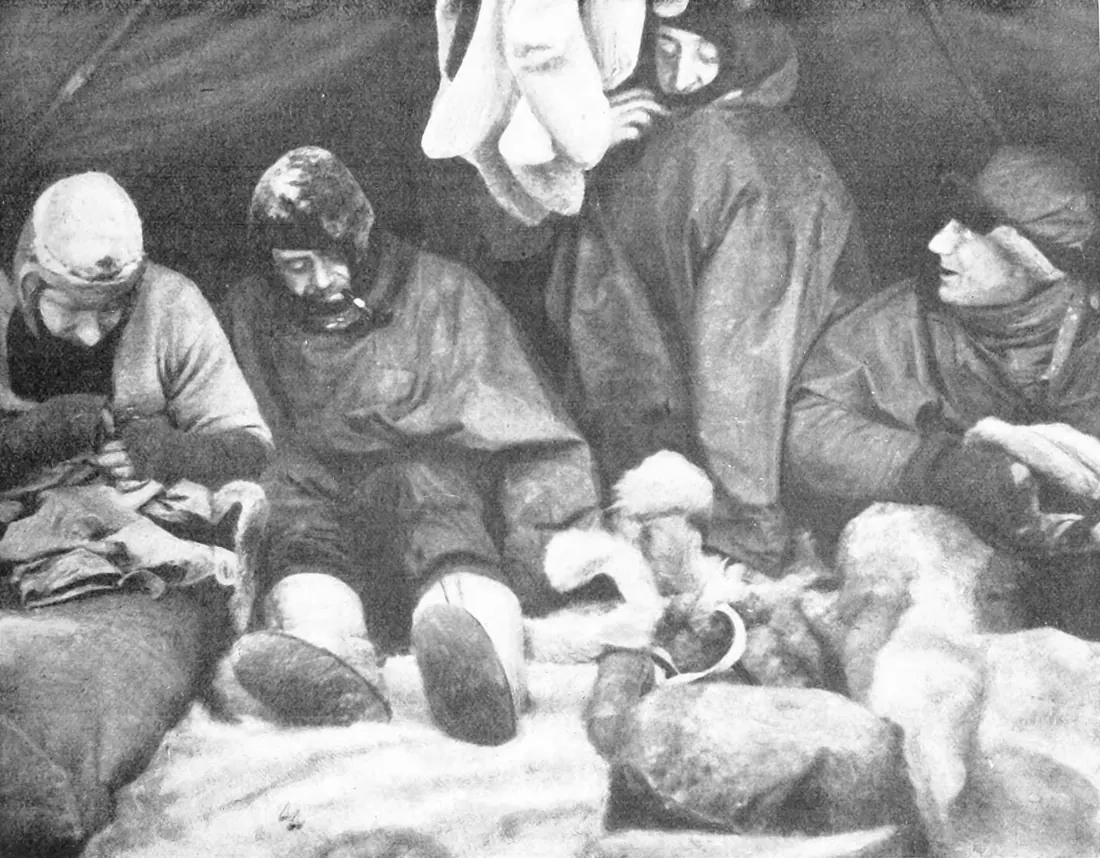
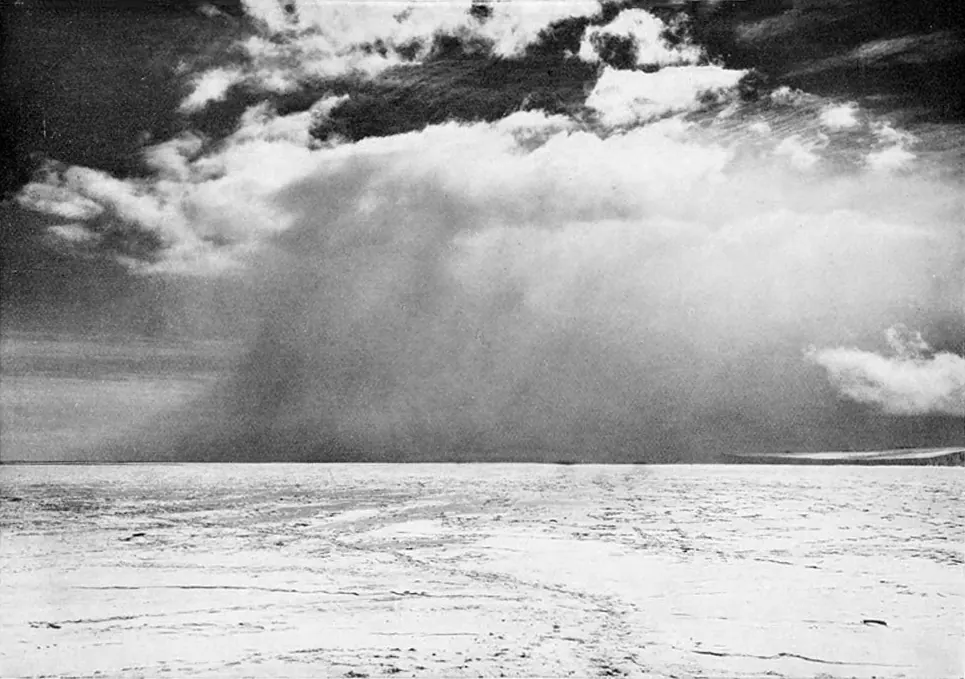
Pictures: Herbert Ponting photographed Oates about 1911 (the portrait, and Oates standing in the snow with a shovel) and with ponies on the Terra Nova in 1910. The two photos of the five men of the polar party at the South Pole, January 1912, are Henry Bowers’s; the photo of Scott, Bowers, Wilson and Evans at Amundsen’s tent at the Pole, January 18, 1912, is credited to Oates. The sleeping-bag frame is from Ponting’s film of October 1911, not from the march, and Oates is not in it. “A Blizzard Approaching across the Sea Ice” is Ponting’s, from 1911, not the blizzard Oates walked into. The track chart of the southern journey and the facsimiles of Scott’s Message to the Public and his last entry were printed in Scott’s Last Expedition in 1913. “A Very Gallant Gentleman” is a 1913 painting by John Charles Dollman, an artist’s impression; nobody photographed the walk.
Photo credits
The archive photos in this story
The photographs and illustrations in this story are in the public domain or shared under open licenses; each one is credited below with its license. Tap one to enlarge it, or follow the link to its Wikimedia Commons page for the full record. The narration, captions and graphics in the Short are our own; its music and sound effects are credited below.

Music and sound effects
Music: Schumann, Kinderszenen, Op. 15: No. 1 'Of Foreign Lands and Peoples (Musopen, public domain); Mussorgsky, Pictures at an Exhibition: IV. Bydlo (piano) (Musopen, public domain); Dvorak, Symphony No. 9 'From the New World': II. Largo (Musopen, public domain).
Sound effects: Freesound, CC0.