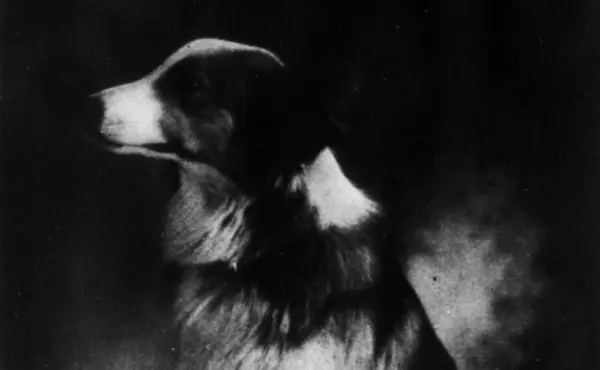
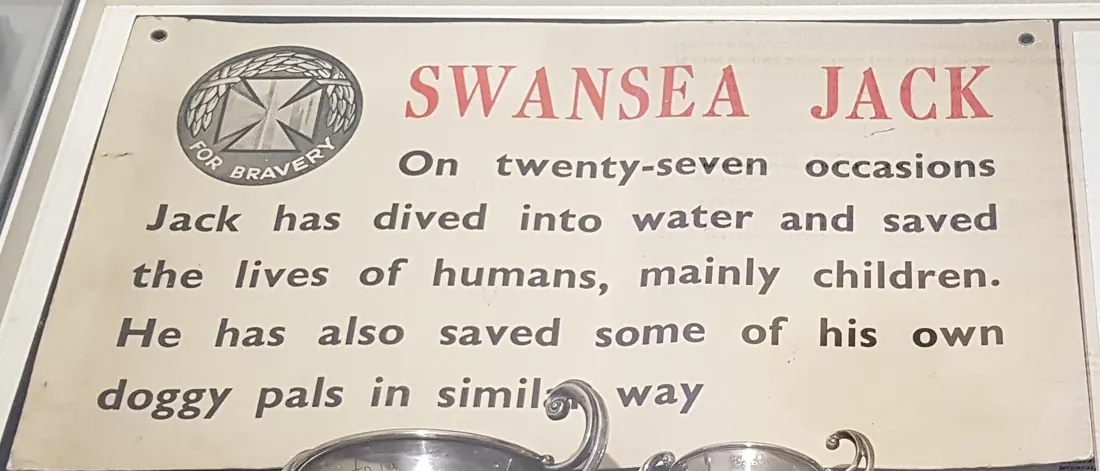
“Swansea Jack was a black retriever dog who lived with his master, William Thomas, near Swansea’s North Dock,” a display panel in Swansea says. “When he heard cries for help, Jack would leap into the water and pull the unfortunate person to the side.” Wikipedia tells it the same way: “Jack would always respond to cries for help from the water, diving into the water and pulling whoever was in difficulty to safety at the dockside.”
“His first rescue, in June 1931, when he saved a 12-year-old boy, went unreported.” “A few weeks later, this time in front of a crowd, Jack rescued a swimmer from the docks.” Then “He was photographed for the local paper and the city council awarded him a silver collar.” Visit Swansea Bay, Swansea Council’s tourism site, lists more honors: “In August 1931 Jack was made an honorary life member of the renowned Tail Waggers’ Club”; “1932-Swansea Carnival presented a medal for extreme gallantry and worthwhile work for the town”; “1934 – Swansea Corporation presented a silver-mounted lead.”
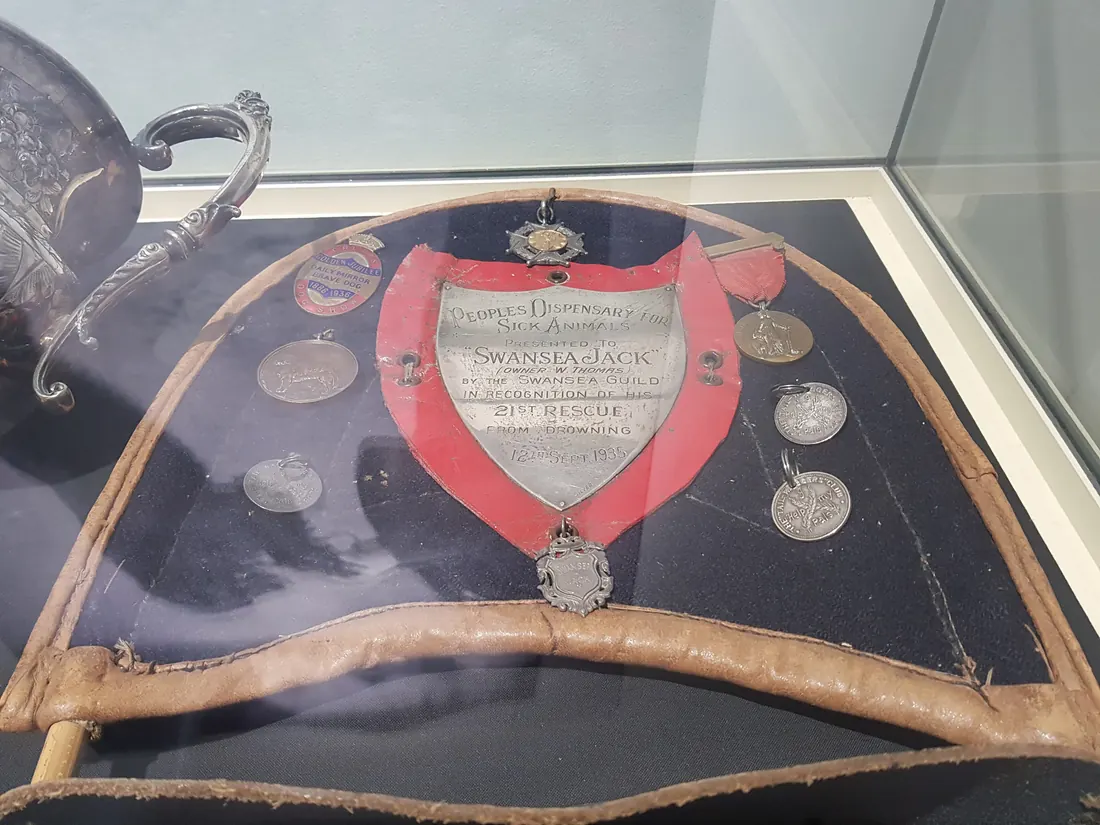
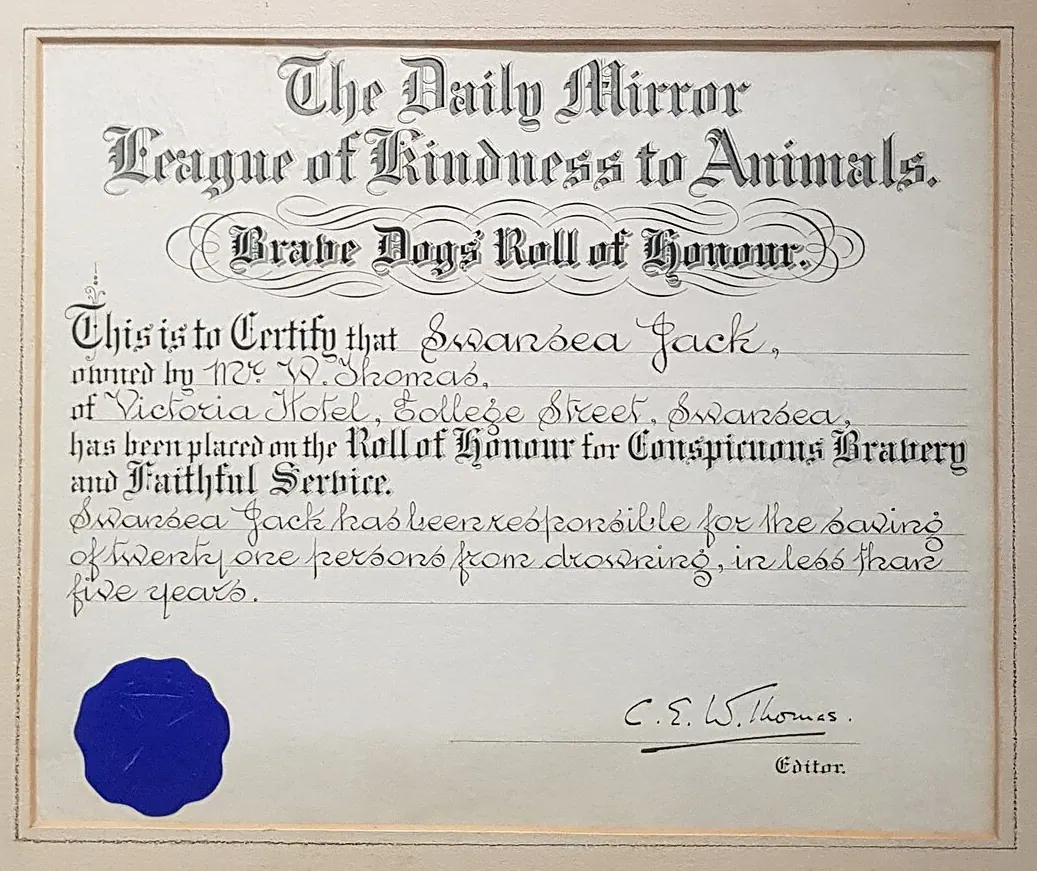
His PDSA shield was presented “BY THE SWANSEA GUILD IN RECOGNITION OF HIS 21ST RESCUE FROM DROWNING 12TH SEPT. 1935,” and a Daily Mirror certificate says, “Swansea Jack has been responsible for the saving of twenty one persons from drowning, in less than five years.” “The National Canine Defence League twice awarded him their bronze medal. This was known as the ‘Canine V.C.’ and Jack was the only dog to have received two.” And “The Star newspaper made him ‘Bravest Dog of the Year’ in 1936 and even the Lord Mayor of London presented him with a silver cup.”
“Jack passed away on 2nd October 1937 after a month-long illness, suspected to have been caused by rat poison,” Visit Swansea Bay says. Wikipedia adds that “it is not known whether this was accidental or intentional.” He was seven. “His death was reported by the press across the UK and the press claimed he had saved 29 lives.”
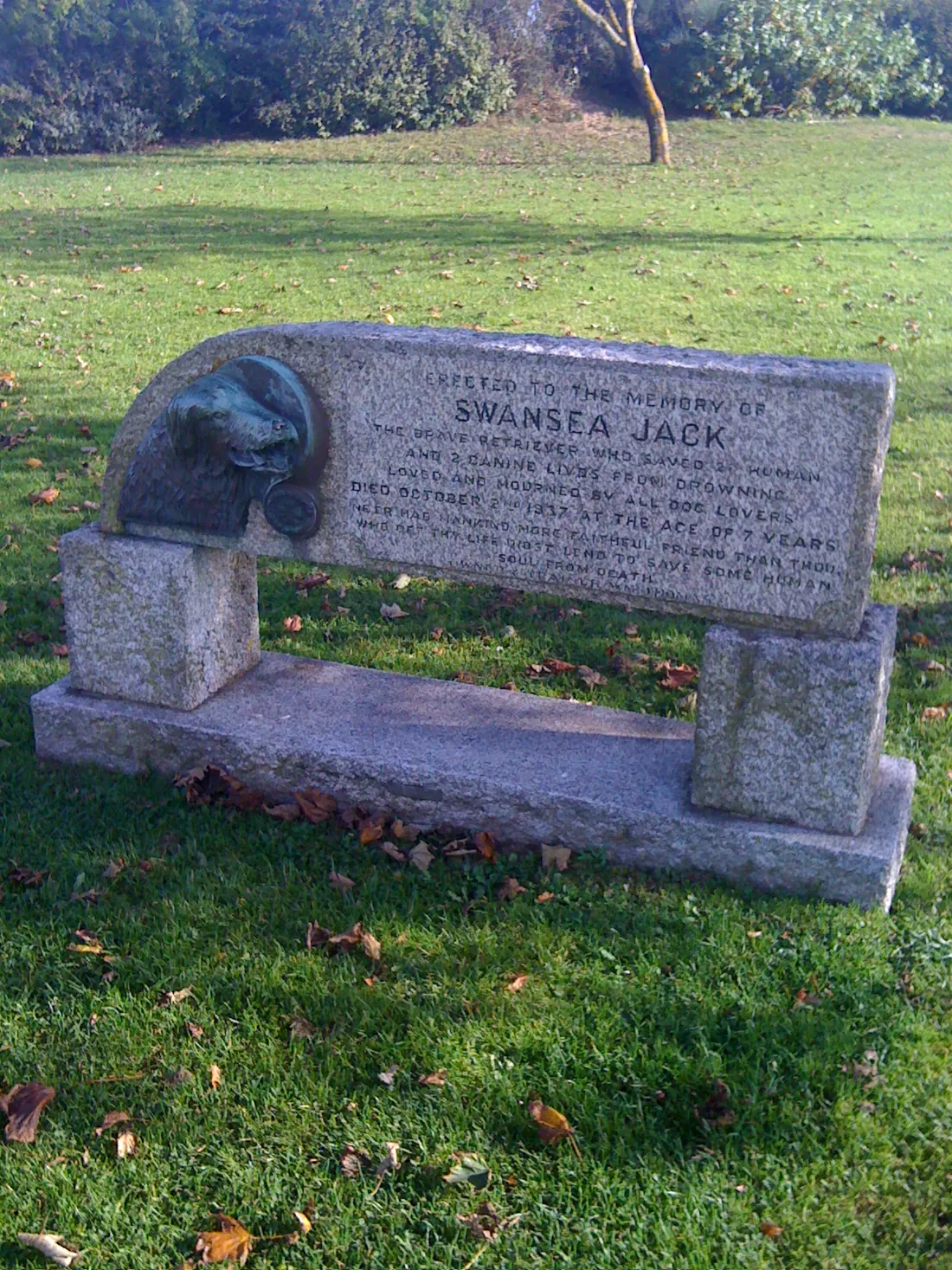
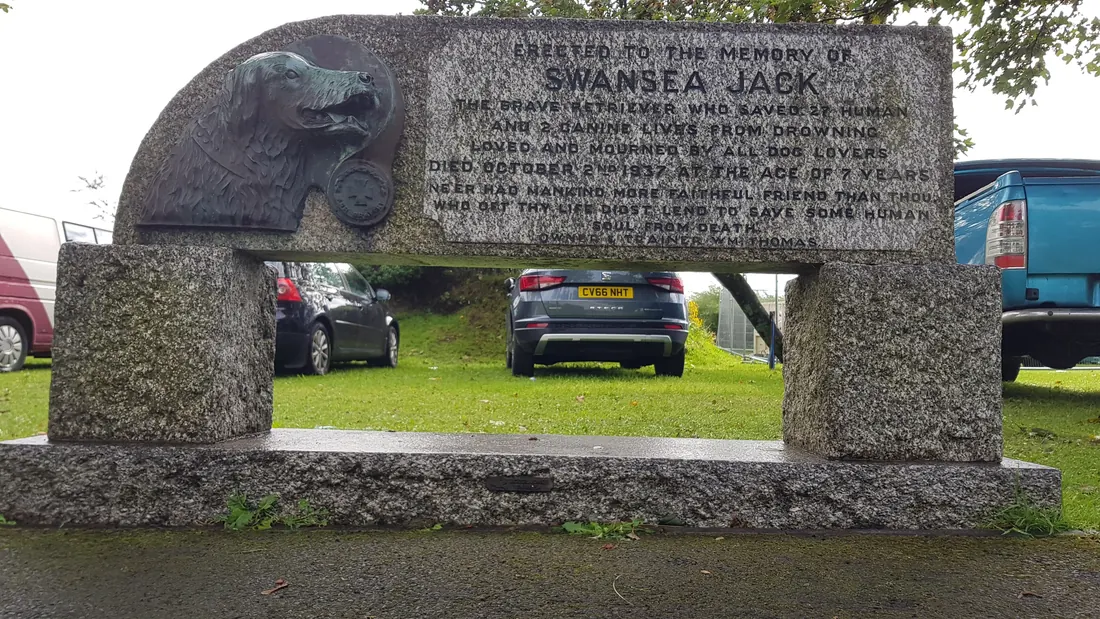
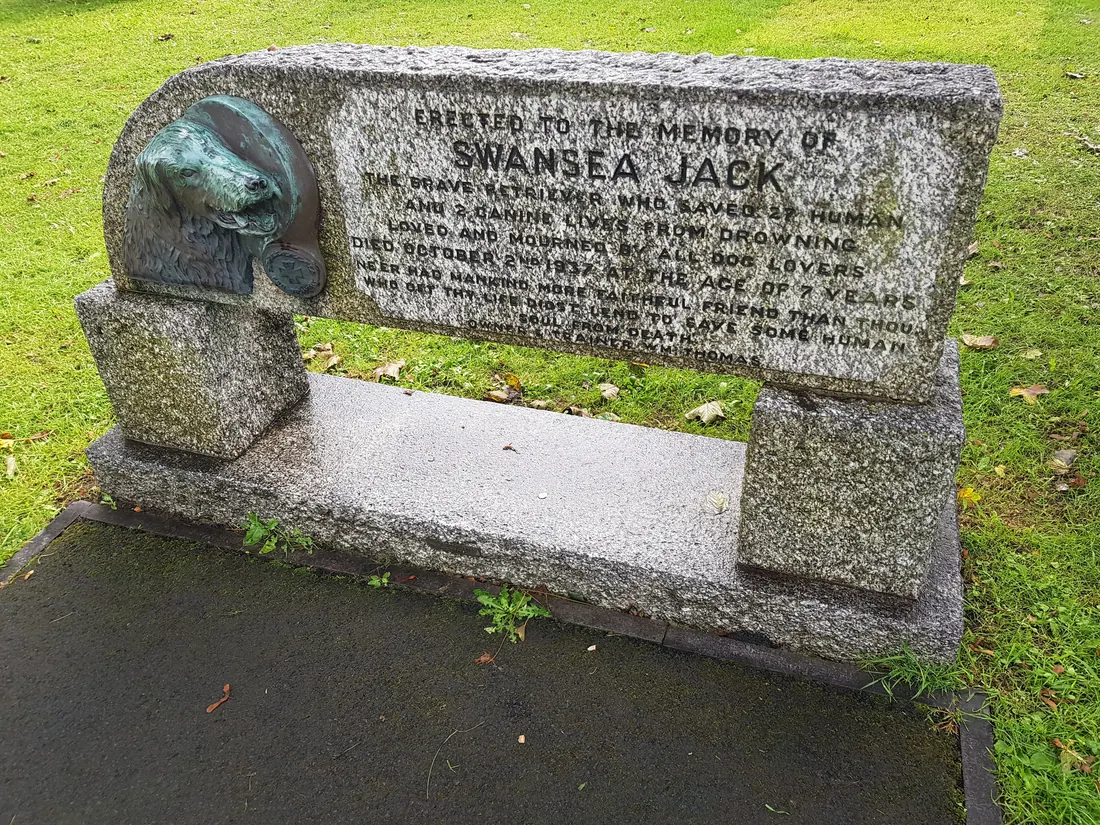
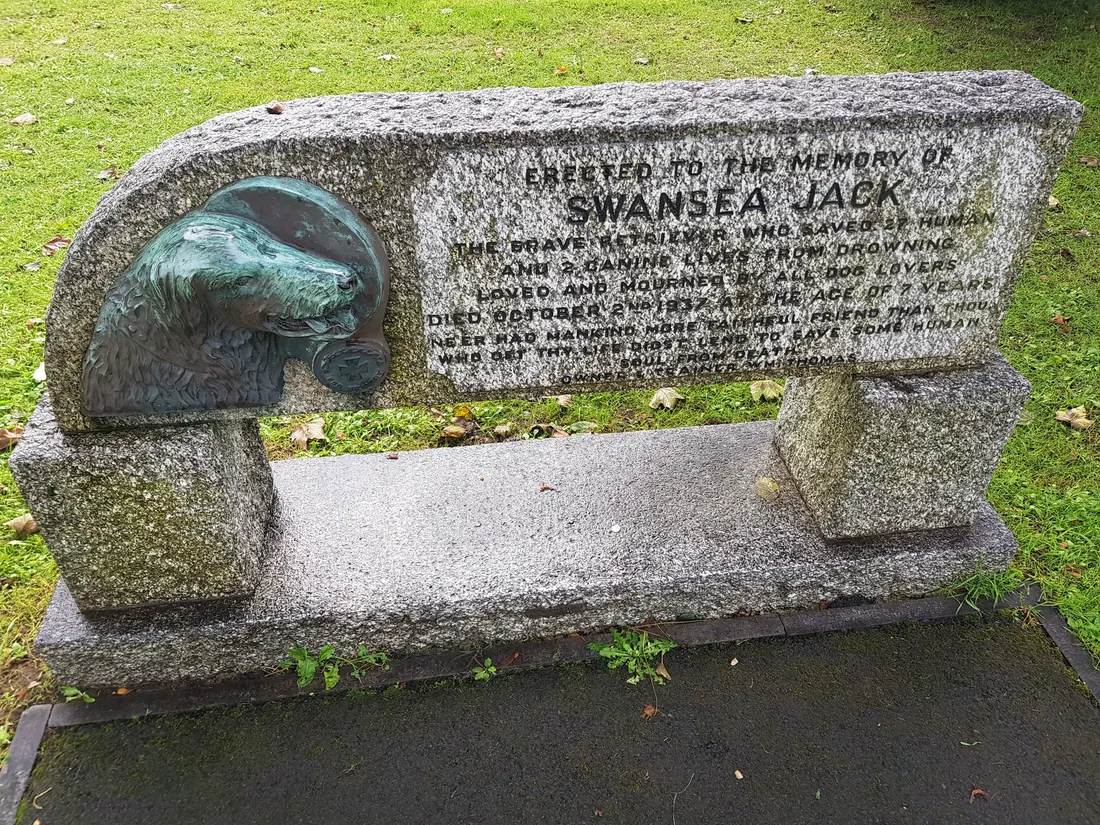
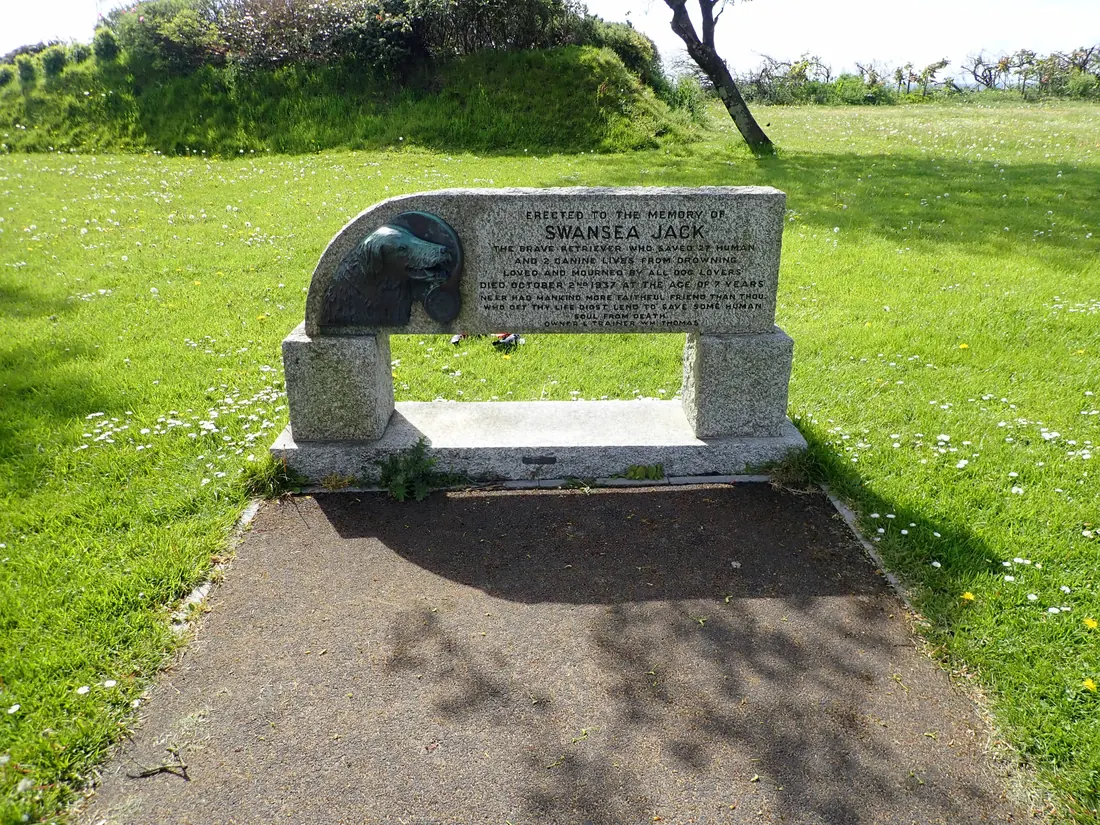
“A public fund collected over £70 and donations were received as far afield as Canada and New Zealand,” and “on the first anniversary of his death, the 6ft by 3ft bronze and grey Penzance granite memorial was formally unveiled.” It stands on the Promenade in Swansea near St Helen’s Rugby Ground, and its inscription reads: “ERECTED TO THE MEMORY OF SWANSEA JACK THE BRAVE RETRIEVER WHO SAVED 27 HUMAN AND 2 CANINE LIVES FROM DROWNING LOVED AND MOURNED BY ALL DOG LOVERS DIED OCTOBER 2ND 1937 AT THE AGE OF 7 YEARS NEVER HAD MANKIND MORE FAITHFUL FRIEND THAN THOU WHO OFT THY LIFE DIDST LEND TO SAVE SOME HUMAN SOUL FROM DEATH.”
Fact check
The facts and where they come from
- This dog reportedly saved 27 people from drowning, but no one could save him. His memorial: “WHO SAVED 27 HUMAN AND 2 CANINE LIVES FROM DROWNING.” Coflein: “Jack was a dog said to have rescued at least 27 people from drowning between 1930 and 1937.” The display panel: “It is believed that Jack rescued 27 people in five years.” Visit Swansea Bay: “Jack passed away on 2nd October 1937 after a month-long illness, suspected to have been caused by rat poison.” 1423
- His name was Swansea Jack. His memorial: “ERECTED TO THE MEMORY OF SWANSEA JACK THE BRAVE RETRIEVER.” 15
- He was a black retriever from the docks of Swansea, Wales. The display panel: “Swansea Jack was a black retriever dog who lived with his master, William Thomas, near Swansea’s North Dock.” Wikipedia: “He was a black retriever with a longish coat.” 25
- When he heard cries for help, he leapt into the water and pulled people out. The display panel: “When he heard cries for help, Jack would leap into the water and pull the unfortunate person to the side.” Wikipedia: “Jack would always respond to cries for help from the water, diving into the water and pulling whoever was in difficulty to safety at the dockside.” 25
- In 1931, he saved a 12-year-old boy. The display panel: “His first rescue was in 1931, when he saved a 12 year old boy.” Wikipedia: “His first rescue, in June 1931, when he saved a 12-year-old boy, went unreported.” 235
- Weeks later, he saved a swimmer as a crowd watched. The display panel: “A few weeks later Jack rescued a swimmer in the docks, in front of a crowd.” Wikipedia: “A few weeks later, this time in front of a crowd, Jack rescued a swimmer from the docks.” 25
- The town gave him a silver collar, and the honors began. The display panel: “He was photographed for the local paper and the city council awarded him a silver collar.” Visit Swansea Bay: “1931- The people of Swansea presented an inscribed silver and leather collar”; “In August 1931 Jack was made an honorary life member of the renowned Tail Waggers’ Club.” 23
- By September 1935, he had made his 21st rescue. His PDSA shield: “PRESENTED TO ‘SWANSEA JACK’ (OWNER W. THOMAS) BY THE SWANSEA GUILD IN RECOGNITION OF HIS 21ST RESCUE FROM DROWNING 12TH SEPT. 1935.” His Daily Mirror certificate: “Swansea Jack has been responsible for the saving of twenty one persons from drowning, in less than five years.” 78
- Twice, he won the canine Victoria Cross, and no other dog has. The display panel: “The National Canine Defence League twice awarded him their bronze medal. This was known as the ‘Canine V.C.’ and Jack was the only dog to have received two.” Wikipedia: “he is still the only dog to have been awarded two bronze medals by the National Canine Defence League (now known as Dogs Trust).” Swansea Bay News: “He is still the only dog in history to have received this award, which is known as the Canine Victoria Cross, twice.” 256
- In 1936, a London newspaper named him Bravest Dog of the Year. The display panel: “The Star newspaper made him ‘Bravest Dog of the Year’ in 1936.” Wikipedia: “In 1936 he had the prestigious ‘Bravest Dog of the Year’ award bestowed upon him by the Star newspaper in London.” 25
- Then he fell ill, probably from rat poison. Visit Swansea Bay: “after a month-long illness, suspected to have been caused by rat poison.” Wikipedia: “Swansea Jack died on 2 October 1937 after eating rat poison; it is not known whether this was accidental or intentional.” 35
- He died at just seven. His memorial: “DIED OCTOBER 2ND 1937 AT THE AGE OF 7 YEARS.” 1
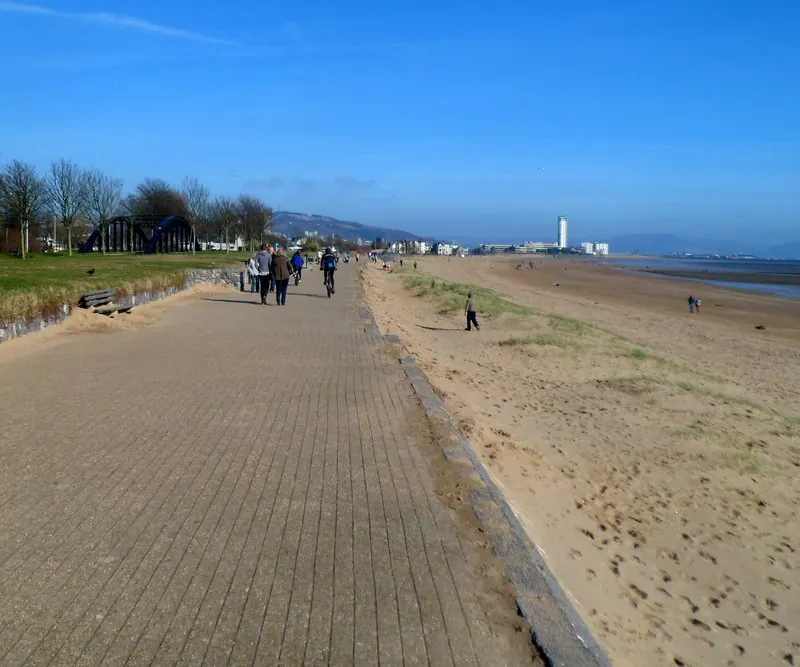
- Swansea paid for a memorial on the promenade. Wikipedia: “His burial monument, paid for by public subscription, is located on the Promenade in Swansea near St Helen’s Rugby Ground.” Visit Swansea Bay: “a public fund collected over £70 and donations were received as far afield as Canada and New Zealand.” Coflein: “This memorial was erected in his memory in 1938.” 534
- It says he saved 27 people and two dogs: “WHO SAVED 27 HUMAN AND 2 CANINE LIVES FROM DROWNING.” 1
- And it says, “Never had mankind more faithful friend than thou.” The inscription: “NEVER HAD MANKIND MORE FAITHFUL FRIEND THAN THOU WHO OFT THY LIFE DIDST LEND TO SAVE SOME HUMAN SOUL FROM DEATH.” 1
Sources
- The inscription on Swansea Jack’s memorial (photo by Irid Escent, 2019) Wikimedia Commons
- The “Swansea Jack, Local Hero” display panel, Swansea (photo by Irid Escent, 2019) Wikimedia Commons
- Looking back at Swansea Jack (1930–1937) Visit Swansea Bay (Swansea Council)
- Swansea Jack Memorial (NPRN 419557) Coflein, Royal Commission on the Ancient and Historical Monuments of Wales
- Swansea Jack Wikipedia
- Swansea Jack lifesaving hero dog from the 1930s lives again in new book (November 17, 2022) Swansea Bay News
- His PDSA shield on display in Swansea (photo by Irid Escent, 2019) Wikimedia Commons
- His Daily Mirror certificate on display in Swansea (photo by Irid Escent, 2019) Wikimedia Commons
Notes
The count: 27 people and two dogs is what his memorial says, and what Visit Swansea Bay, the 2019 display panel and Swansea Bay News give. Coflein says “said to have rescued at least 27,” the panel says “It is believed,” and Wikipedia says “Legend has it” (its lead says 29, as the 1937 papers did). Visit Swansea Bay adds that “speculation mounted over the validity of some of Jack’s alleged rescues,” but “there was no disputing the awards that he won.” So the page says he is said to have saved 27, and attributes the number to his memorial.
The two medals: the panel, Wikipedia and Swansea Bay News say the National Canine Defence League gave him its bronze medal twice; Visit Swansea Bay’s timeline lists one “Special Medal” (1935).
Rat poison is “suspected” (Visit Swansea Bay); Wikipedia says he died “after eating rat poison,” and no one knows whether it was accidental or deliberate. The page never says anyone poisoned him. “No one could save him” is the Short’s way of saying he died of an illness; no source says what treatment he had.
The panel says “the city council” gave him his collar; Swansea was a town until 1969, so the Short says “the town.”
Left out: a few details found only in one late retelling or reported without proof, and the PDSA Dickin Medal, which Wikipedia’s infobox lists but which was created in 1943, after his death.
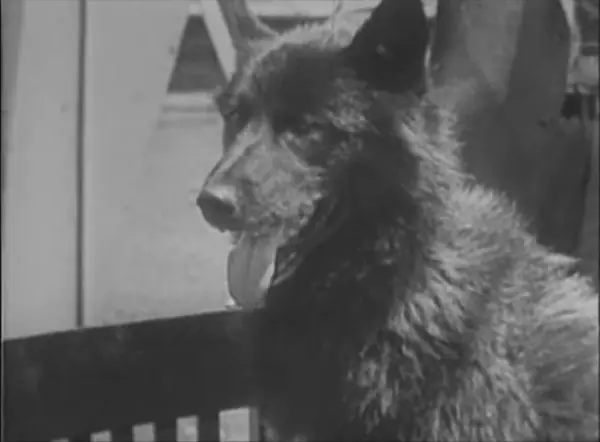
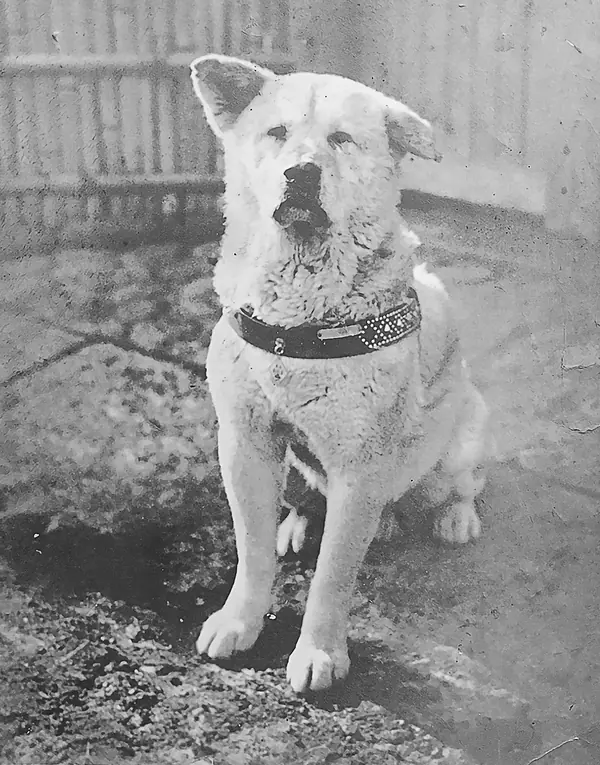
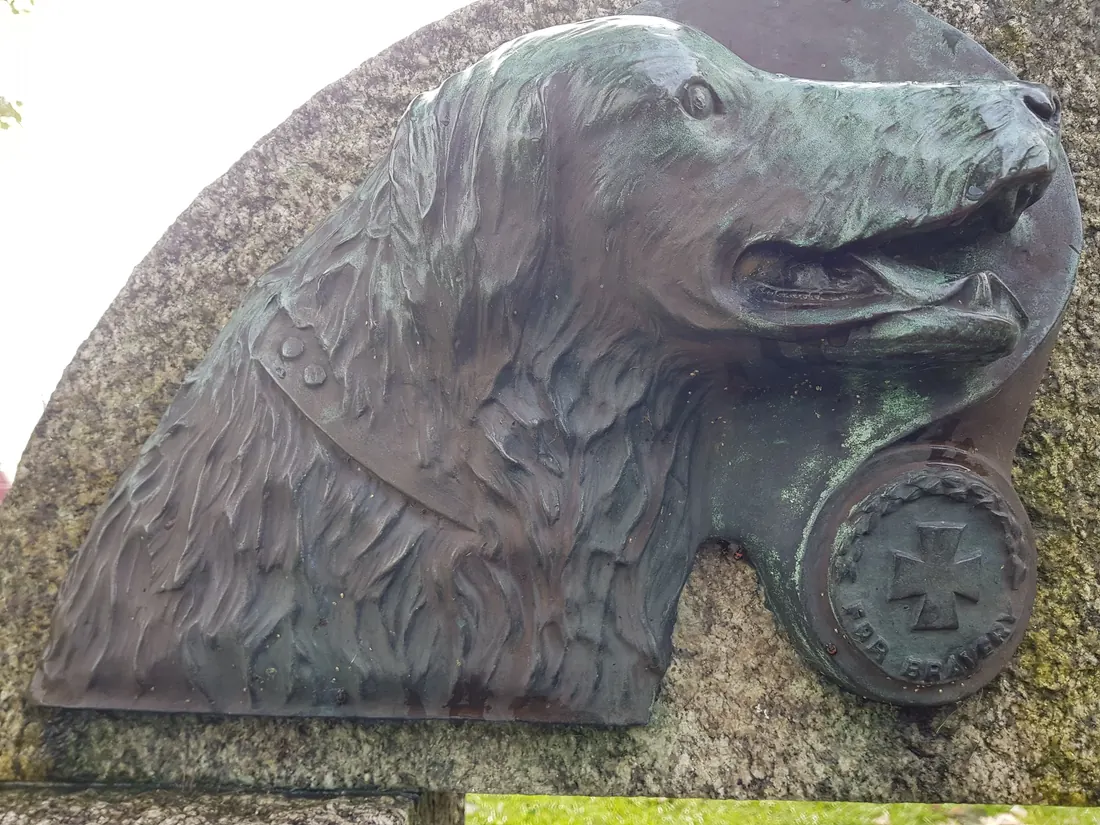
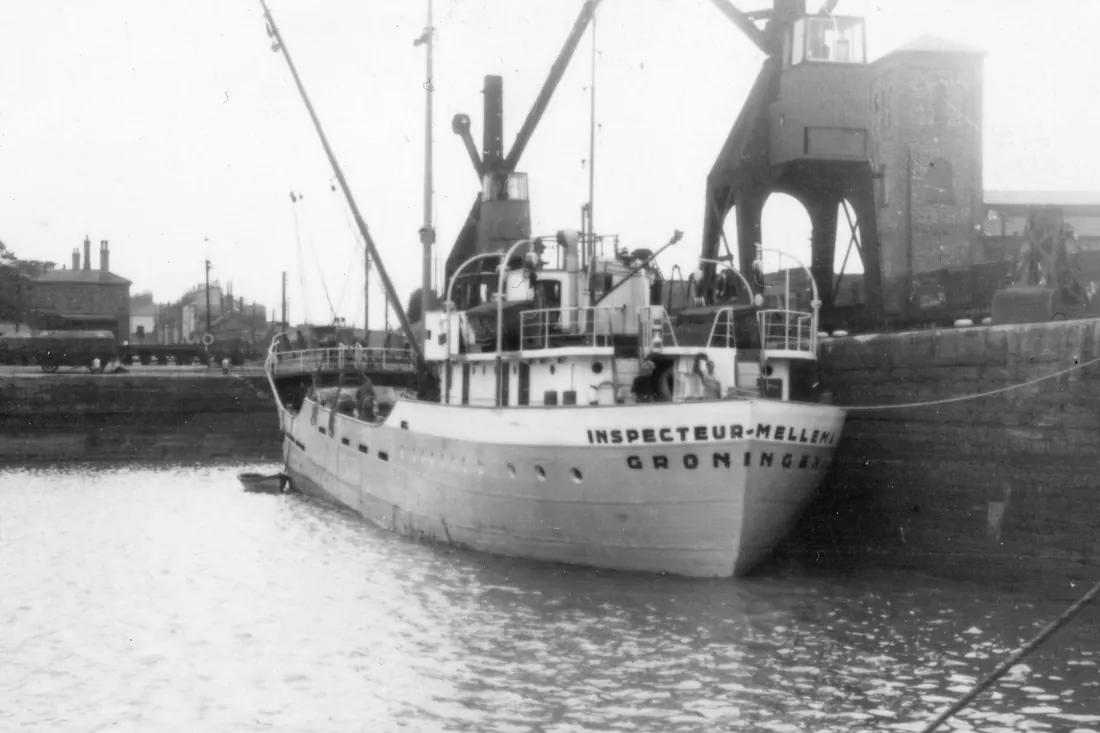
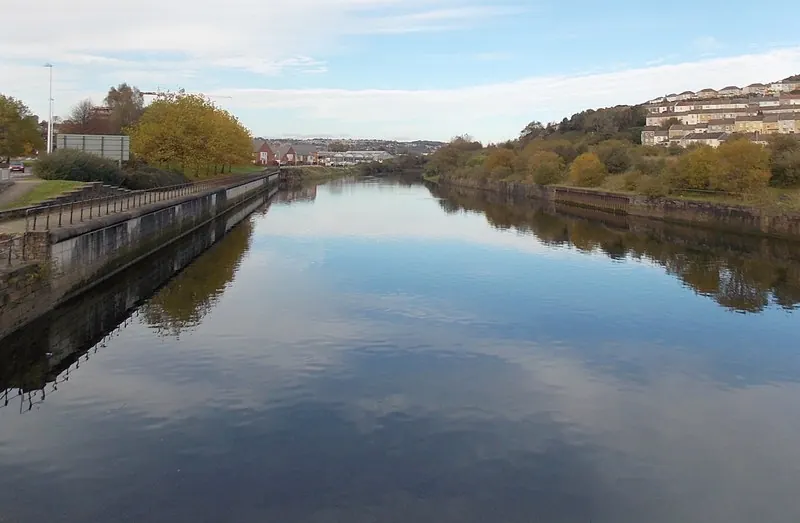
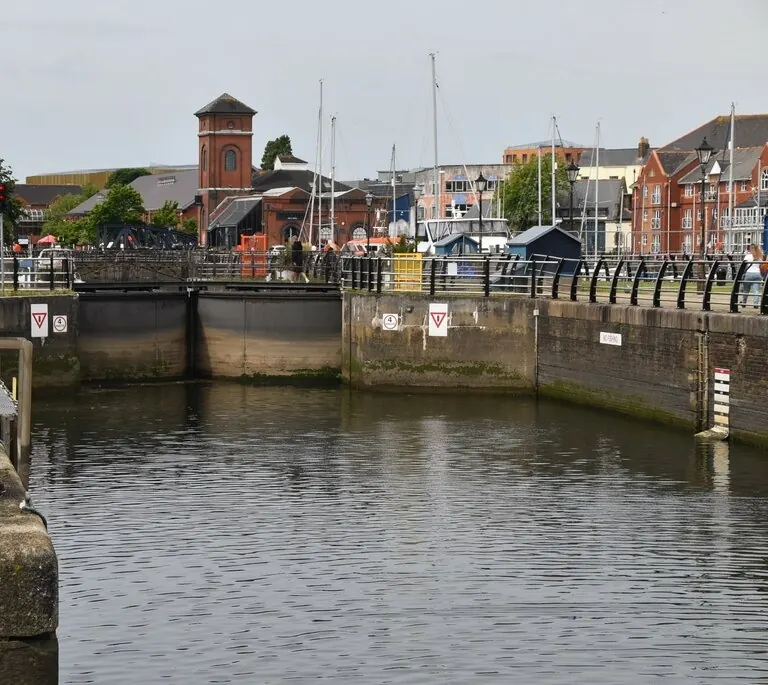
Pictures: no free photo of Jack alive exists (his 1930s pictures are press photos), so his face is the bronze relief of his head on his 1938 memorial, and the “For Bravery” medal shown beside it is part of the relief. The memorial photos were taken by Irid Escent on September 24, 2019, Rhodri77 on October 10, 2009, and Eirian Evans on May 7, 2019. His real awards are shown on display in Swansea in 2019: his PDSA shield with medals and Tail-Waggers’ Club tags, the Daily Mirror certificate, a National Canine Defence League “For Bravery” card and his cups. The docks photo is from summer 1963, the dock lock from 2022, the River Tawe from 2013 and the promenade from 2012, not Jack’s time.
Photo credits
The archive photos in this story
The photographs and illustrations in this story are in the public domain or shared under open licenses; each one is credited below with its license. Tap one to enlarge it, or follow the link to its Wikimedia Commons page for the full record. The narration, captions and graphics in the Short are our own; its music and sound effects are credited below.
Music and sound effects
Music: Schumann, Kinderszenen, Op. 15: No. 1 'Of Foreign Lands and Peoples (Musopen, public domain); Mussorgsky, Pictures at an Exhibition: IV. Bydlo (piano) (Musopen, public domain); Dvorak, Symphony No. 9 'From the New World': II. Largo (Musopen, public domain).
Sound effects: Freesound, CC0.