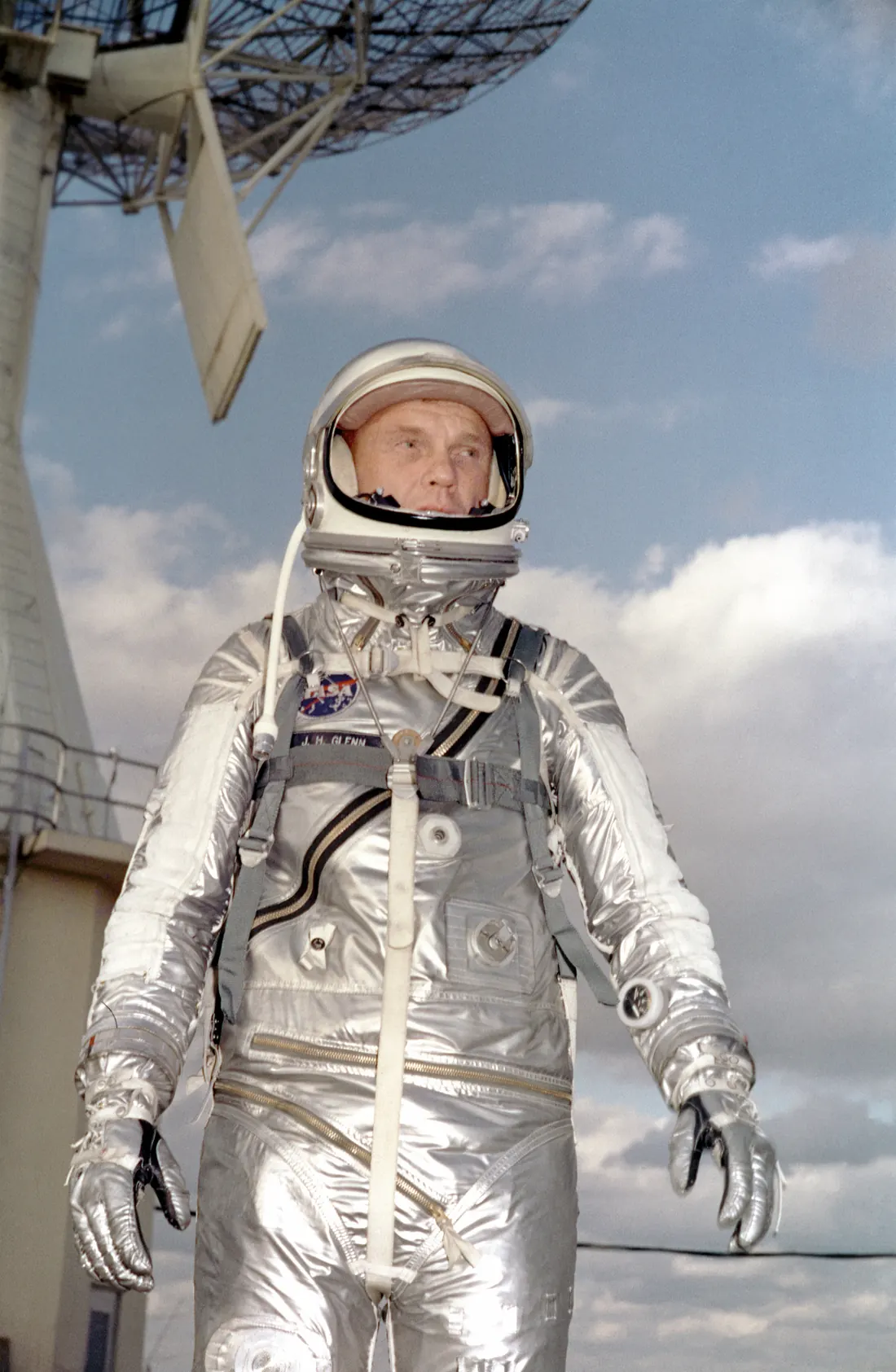
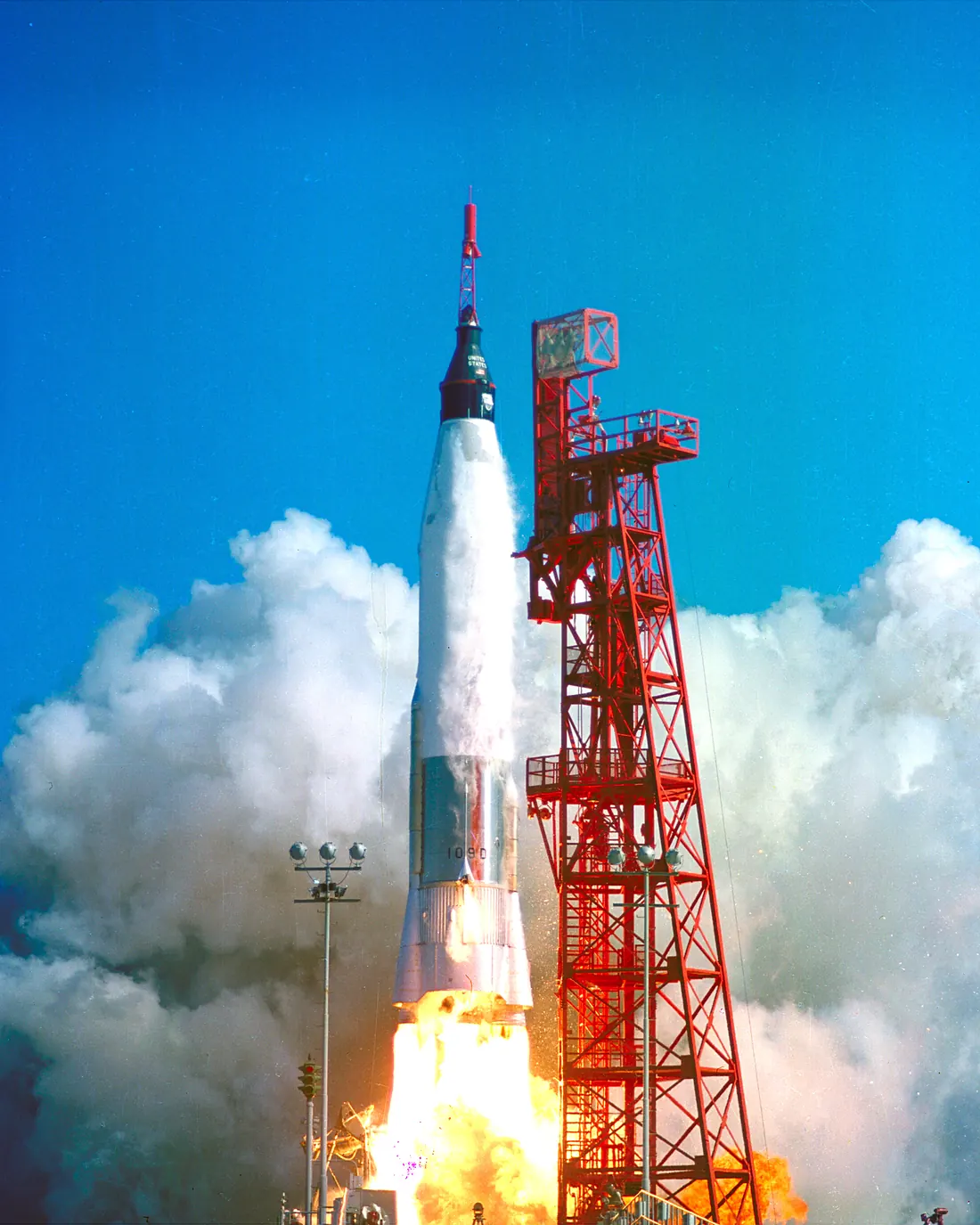
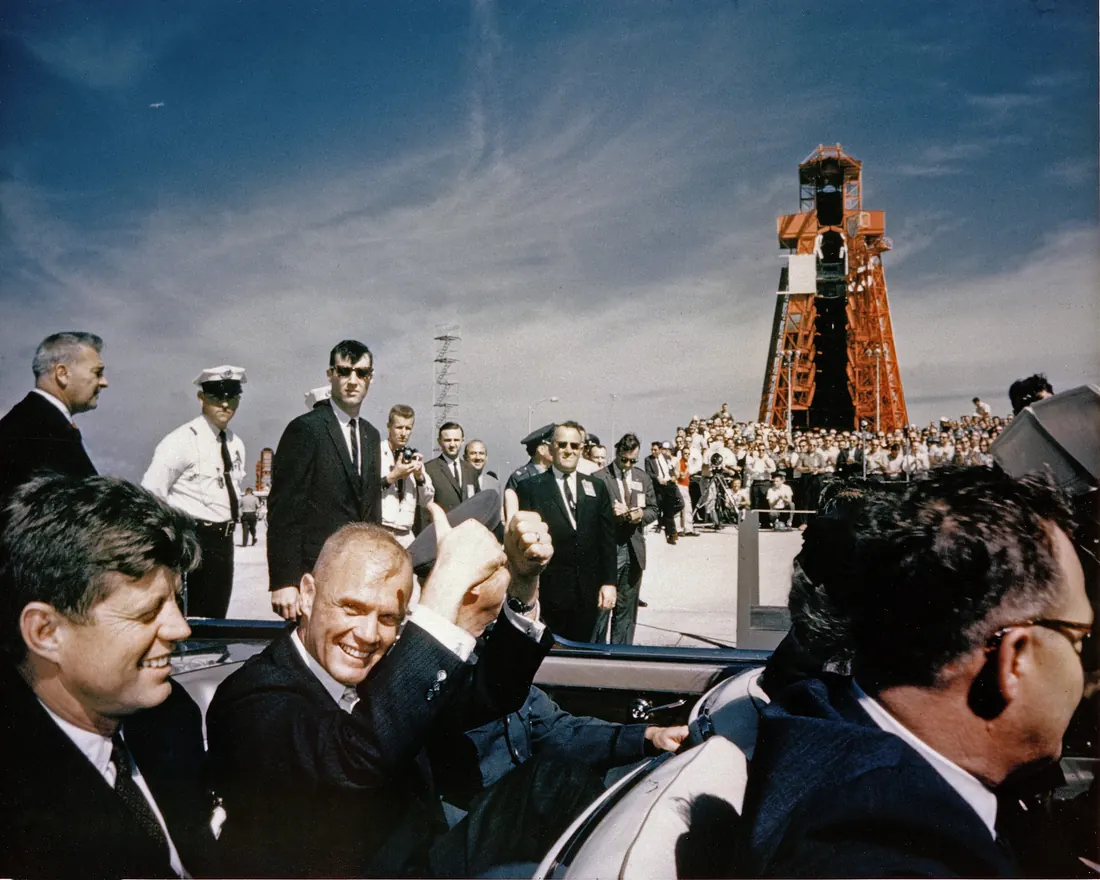
“On February 20, 1962, Glenn flew the Friendship 7 mission, becoming the first American to orbit the Earth,” Wikipedia says. As the Mercury-Atlas rocket rose from Pad 14 at Cape Canaveral, his backup, Scott Carpenter, “radioed, ‘Godspeed, John Glenn,’ from NASA’s Cape Canaveral blockhouse as his colleague headed for history,” NBC News wrote, though “Due to a glitch in Glenn’s radio, he did not hear the Carpenter phrase during launch.” Glenn orbited the Earth, “circling it three times in 1962,” and “As the first American in orbit, Glenn became a national hero, met President John F. Kennedy, and received a ticker-tape parade in New York.”
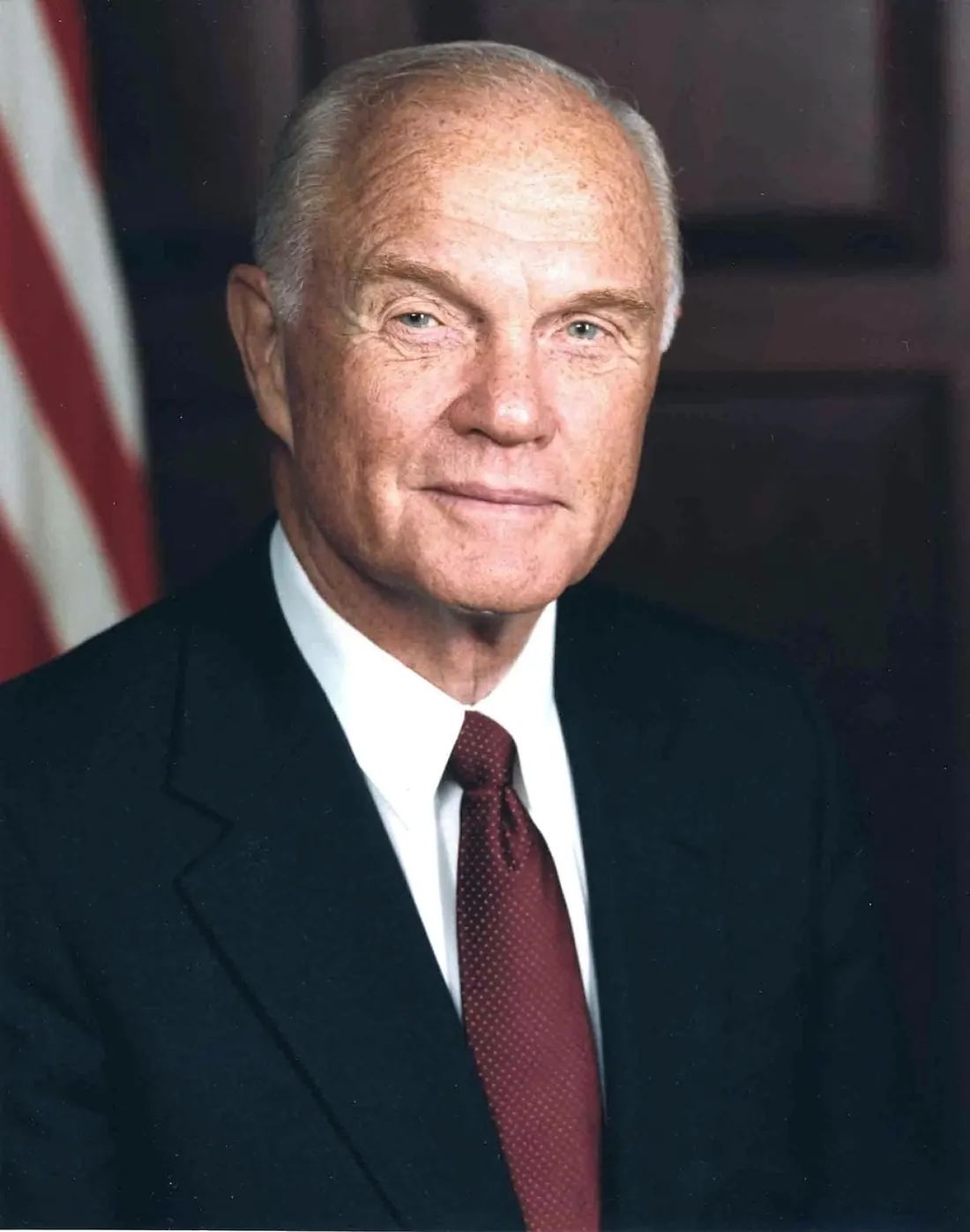
He wanted to go back. “Glenn had lobbied hard with NASA officials to return to space as part of the two-man or three-man crews of the Gemini and Apollo programs, but was denied all requests,” Ohio State University Libraries says. “Unknown to Glenn at the time, President Kennedy had judged him to be too valuable a national asset to risk in another space flight.” “Glenn resigned from NASA in January 1964,” Wikipedia says, and “Glenn was first elected to the Senate in 1974 and served for 24 years until January 1999.”
“In 1995, Glenn read Space Physiology and Medicine, a book written by NASA doctors. He realized that many changes that occur to physical attributes during space flight, such as loss of bone and muscle mass and blood plasma, are the same as changes that result from aging.” “Glenn thought NASA should send an older person on a shuttle mission, and that it should be him. Starting in 1995, he began lobbying NASA director Dan Goldin for the mission.” “Goldin said he would consider it if there was a scientific reason, and if Glenn could pass the same physical examination the younger astronauts took. Glenn performed research on the subject and passed the physical examination.” “It would be 36 years after the flight of Friendship 7 until NASA finally granted John Glenn his request to return to space,” Ohio State says.
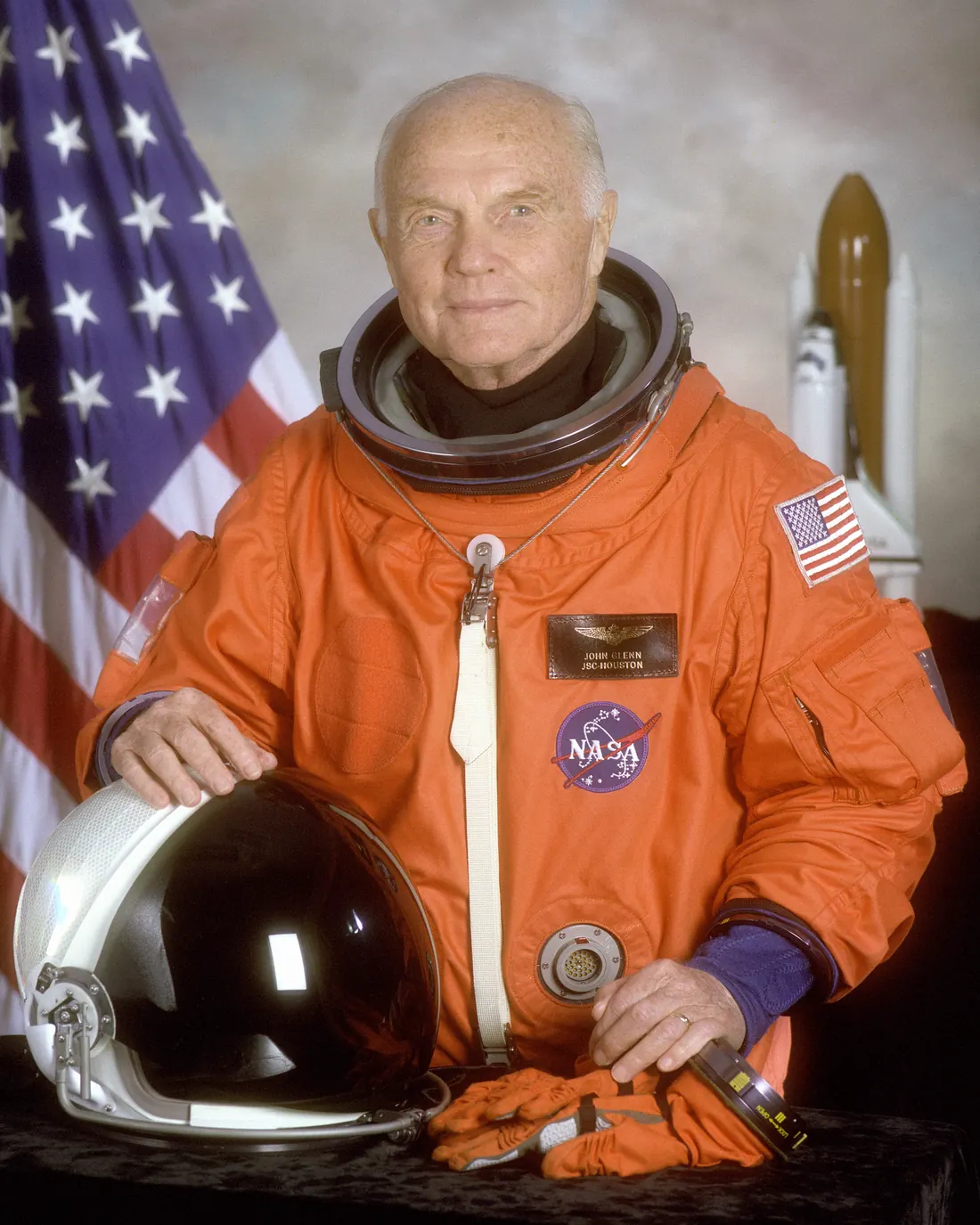
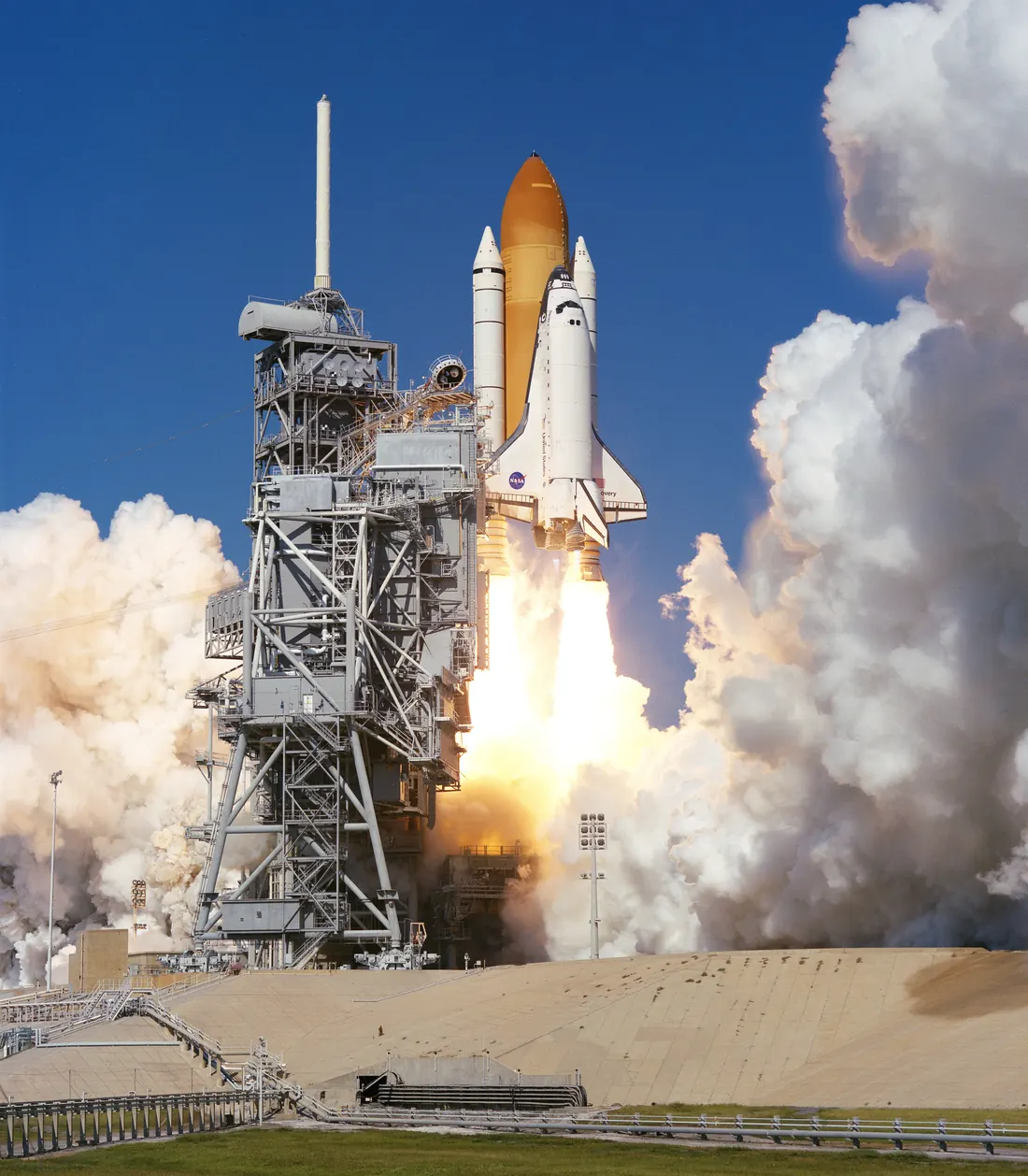
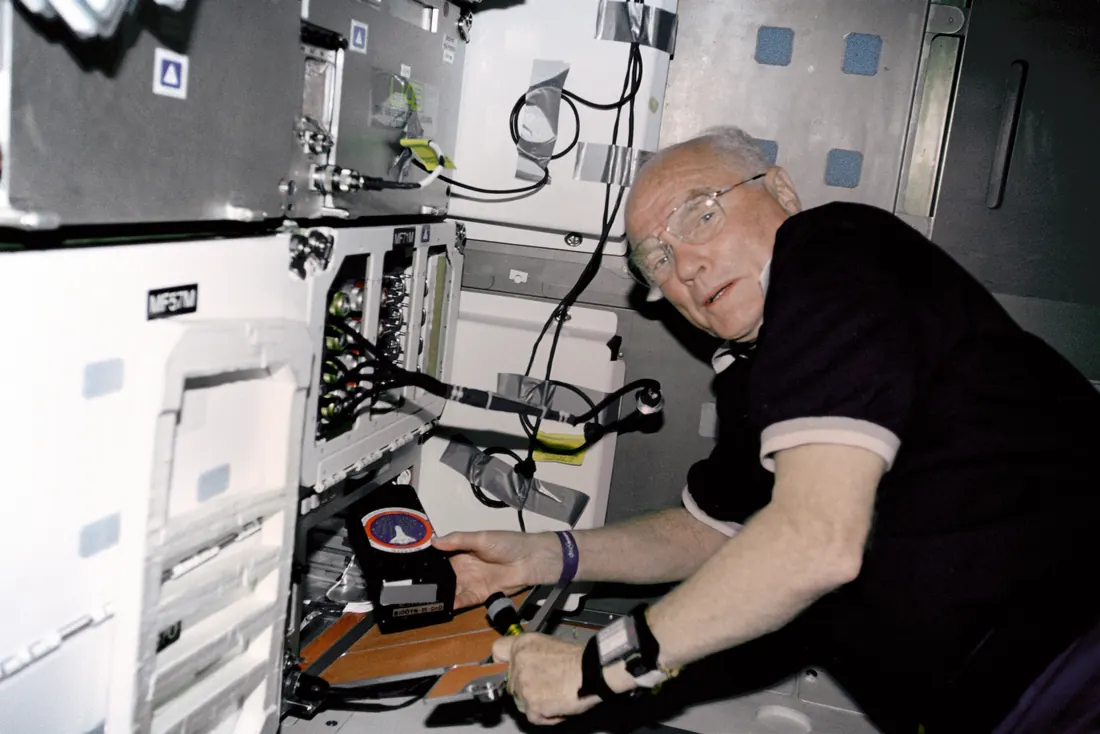
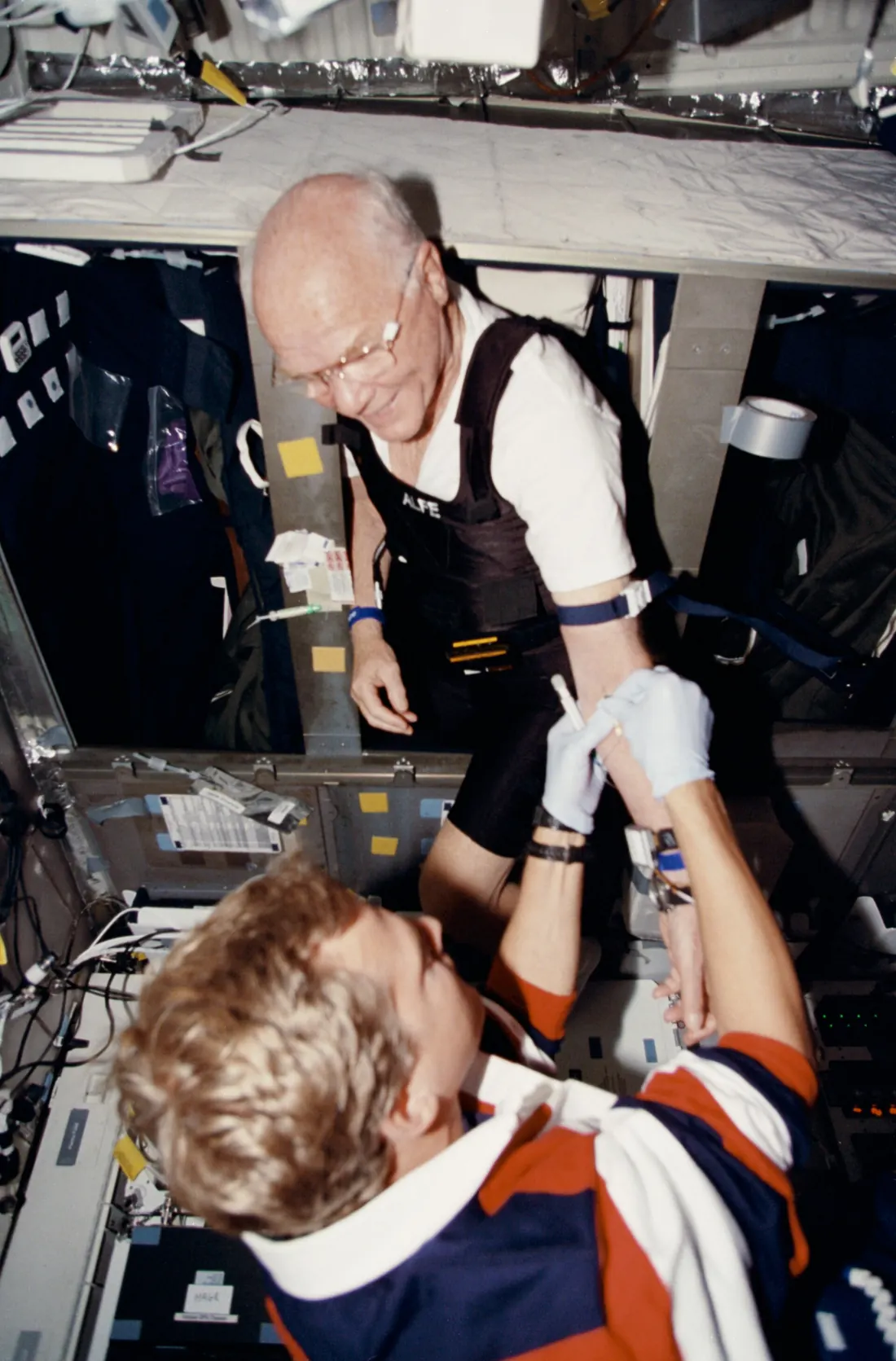
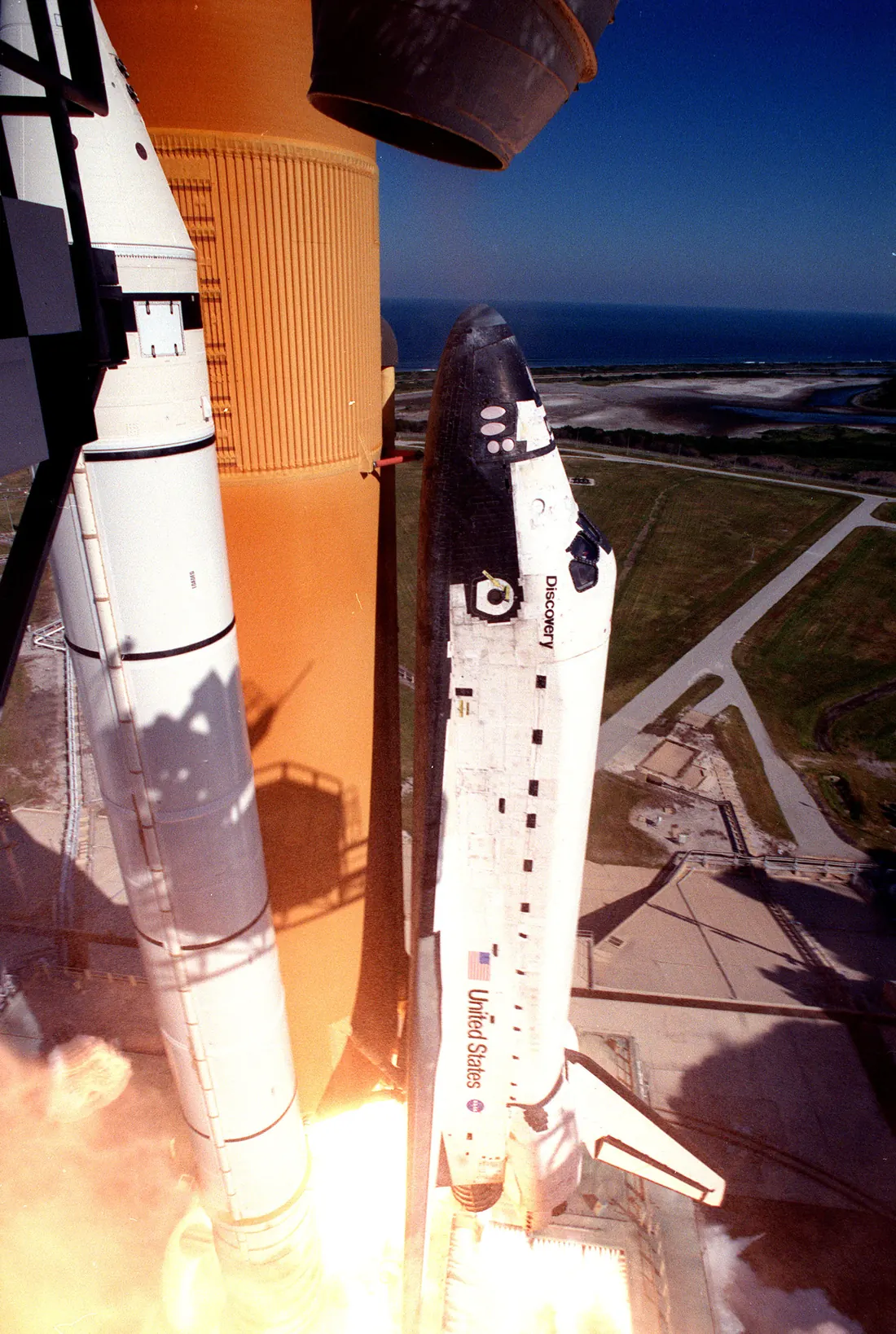
On October 29, 1998, Space Shuttle Discovery lifted off from Launch Pad 39B with Glenn aboard, “36 years, eight months and nine days after he became the first American to orbit the Earth,” NASA says. “At 77 years old, Glenn at the time became the oldest person to go to space.” His youngest crewmate, Pedro Duque, was born on March 14, 1963, Wikipedia says, 13 months after Friendship 7. Carpenter “gave his most famous phrase a reprise for Glenn’s launch,” NBC News wrote: “Good luck, have a safe flight, and … once again, Godspeed, John Glenn.” NASA’s medical research on the flight “included a battery of tests on Payload Specialist Glenn” on how the absence of gravity affects “balance and perception, immune system response, bone and muscle density, metabolism and blood flow, and sleep.” In 1962 he had radioed, “Roger. Zero G, and I feel fine. Capsule is turning around.” In 1998, “‘Zero G, and I feel fine,’ Glenn called from orbit, paraphrasing himself from 36 years earlier,” TIME reported.
His record as the oldest person in space was “a record that remained unbroken for 23 years,” until an older flier made a suborbital flight, but “Glenn, however, remains the oldest person to reach Earth orbit,” Wikipedia says. Before each mission, The Washington Post wrote, “Glenn would utter the same words” to his wife, Annie: “‘I’m just going down to the corner store to get a pack of gum.’ ‘Don’t be long,’ she would always respond.” In 1998 “they repeated the dialogue. This time, he slipped her the perfect coda – a pack of gum – which she kept in a breast pocket until he returned to earth.” Discovery landed on November 7, 1998. Glenn died on December 8, 2016, aged 95; he and Annie “remained married for 73 years until his death.”
Fact check
The facts and where they come from
- He was 77 years old, but he was going back to space. NASA: “STS-95 carried John H. Glenn back into orbit in his return to space. At 77 years old, Glenn at the time became the oldest person to go to space.” Wikipedia: “In 1998, he flew into space again at the age of 77.” 111
- His name was John Glenn. Wikipedia: “On February 20, 1962, Glenn flew the Friendship 7 mission.” 11
- In February 1962, he became the first American to orbit the Earth. Wikipedia: “On February 20, 1962, Glenn flew the Friendship 7 mission, becoming the first American to orbit the Earth.” NASA’s photo caption: “the Mercury-Atlas rocket is launched from Pad 14.” 1115
- As he launched, fellow astronaut Scott Carpenter said, “Godspeed, John Glenn.” NBC News: “It was Carpenter who served as the backup for the Friendship 7 mission on Feb. 20, 1962 … And it was Carpenter who radioed, ‘Godspeed, John Glenn,’ from NASA’s Cape Canaveral blockhouse as his colleague headed for history.” Wikipedia: “capsule communicator Scott Carpenter uttered the famous phrase ‘Godspeed, John Glenn.’” 512
- He circled the planet three times and came home a hero. Wikipedia: the first American to orbit the Earth, “circling it three times in 1962”; “As the first American in orbit, Glenn became a national hero, met President John F. Kennedy, and received a ticker-tape parade in New York.” NASA’s photo caption, February 23, 1962: “Astronaut John H. Glenn Jr. gives a double thumbs-up as he and President John F. Kennedy arrive at the Cape Canaveral Missile Test Annex.” 1116
- He kept asking to fly again, but he was too precious to risk. Ohio State University Libraries: “Glenn had lobbied hard with NASA officials to return to space as part of the two-man or three-man crews of the Gemini and Apollo programs, but was denied all requests. Unknown to Glenn at the time, President Kennedy had judged him to be too valuable a national asset to risk in another space flight.” Wikipedia: NASA Administrator Bolden said Kennedy would not “risk putting him back in space again.” 411
- He left NASA and became a US senator. Wikipedia: “Glenn resigned from NASA in January 1964”; “Glenn was first elected to the Senate in 1974 and served for 24 years until January 1999.” 11
- Then he read that space changes the body the way aging does. Wikipedia: “In 1995, Glenn read Space Physiology and Medicine, a book written by NASA doctors. He realized that many changes that occur to physical attributes during space flight, such as loss of bone and muscle mass and blood plasma, are the same as changes that result from aging.” NASA: “Scientists recognize several parallels between the effects of spaceflight on the human body and the natural changes that take place as a person ages.” 112
- So he pushed NASA to send an old man into space: himself. Wikipedia: “Glenn thought NASA should send an older person on a shuttle mission, and that it should be him. Starting in 1995, he began lobbying NASA director Dan Goldin for the mission.” Ohio State University Libraries: “It would be 36 years after the flight of Friendship 7 until NASA finally granted John Glenn his request to return to space.” 114
- His youngest crewmate hadn’t even been born when he first orbited. Wikipedia: Pedro Duque was born on “14 March 1963,” 13 months after Friendship 7. JAXA lists the crew’s ages at the time of Glenn’s 1962 flight, with Duque “one year before borne.” 148
- In October 1998, 36 years later, he launched again. NASA: “The scientific research mission also returned space pioneer John Glenn to orbit – 36 years, eight months and nine days after he became the first American to orbit the Earth.” NASA’s photo caption: “Space Shuttle Discovery lifts off from Launch Pad 39B at 2:19 p.m. EST Oct. 29.” 117
- And Scott Carpenter said it again: “Once again, Godspeed, John Glenn.” NBC News: “He gave his most famous phrase a reprise for Glenn’s launch: ‘Good luck, have a safe flight, and … once again, Godspeed, John Glenn.’” NASA’s Astronomy Picture of the Day: “On tape, fellow Mercury Program astronaut Scott Carpenter again wished, ‘… Godspeed John Glenn.’” 53
- He became the oldest person ever to orbit the Earth. Wikipedia (STS-95): “Glenn, however, remains the oldest person to reach Earth orbit.” Wikipedia (John Glenn): “making him the oldest person to enter Earth orbit.” 1311
- From orbit, he echoed his first flight: “Zero G, and I feel fine.” In 1962, NPR’s transcript of the Friendship 7 audio: “Roger. Zero G, and I feel fine. Capsule is turning around.” In 1998, NASA’s Astronomy Picture of the Day: “From orbit, Glenn commented, ‘… zero-g and I feel fine!’” TIME: “‘Zero G, and I feel fine,’ Glenn called from orbit, paraphrasing himself from 36 years earlier.” 637
Sources
- STS-95 NASA
- Oct. 29, 1998 - John Glenn Returns to Space NASA
- Astronomy Picture of the Day, October 30, 1998 (John Glenn, Discovery launch) NASA
- Celebrating the Friendship 7 Flight: Acclaim Ohio State University Libraries
- Godspeed: Mercury astronaut Scott Carpenter dies at age 88 (Alan Boyle, October 10, 2013) NBC News
- John Glenn On 50 Years Since His First Orbit (All Things Considered, February 20, 2012; transcript) NPR
- Victory Lap (Jeffrey Kluger, November 9, 1998) TIME
- Astronaut John Glenn (STS-95) JAXA
- Annie Glenn: ‘When I called John, he cried. People just couldn’t believe that I could really talk’ (Travis M. Andrews, December 9, 2016) The Washington Post
- The same Washington Post article, syndicated copy (December 9, 2016) Infobae
- John Glenn Wikipedia
- Mercury-Atlas 6 Wikipedia
- STS-95 Wikipedia
- Pedro Duque Wikipedia
- Launch of Friendship 7 (NASA photo KSC-62PC-0011 and its caption) Wikimedia Commons
- Glenn and President Kennedy at Cape Canaveral (NASA photo KSC-62C-0363 and its caption) Wikimedia Commons
- STS-95 launch (NASA photo KSC-98PC-1449 and its caption) Wikimedia Commons
Notes
Kennedy keeping him on the ground rests on Glenn’s later account and on retellings by Ohio State University Libraries and NASA Administrator Bolden; History.com says only “It is believed.” The page says what Ohio State says, and the Short says only that he was “too precious to risk.”
The 1998 “Godspeed”: NBC News quotes the full words, while NASA’s Astronomy Picture of the Day says Carpenter’s message was “on tape,” so it isn’t clear whether he spoke it live in launch control. The page says only that he said it again.
“Zero G, and I feel fine” in 1998: NASA’s quote begins with an ellipsis and TIME says he was paraphrasing himself, so the page says he echoed his 1962 words, not that he repeated them word for word.
The record: older people have since flown to space, but on suborbital flights, so the page says he is the oldest person to orbit the Earth, not to go to space. His youngest crewmate: JAXA gives the other crew members’ ages at the time of the 1962 flight; Pedro Duque was the only one not yet born.
The gum: the 1998 detail (the pack she kept in a breast pocket) comes from one 2016 Washington Post article, read in its syndicated copy on Infobae; TIME’s 1998 story also tells of the gum, with Annie’s reply as “don’t take too long.”
Left out: the rest of his political career, including his 1984 run for president, and the debate over whether the 1998 flight was a political favor. None is needed for this story.
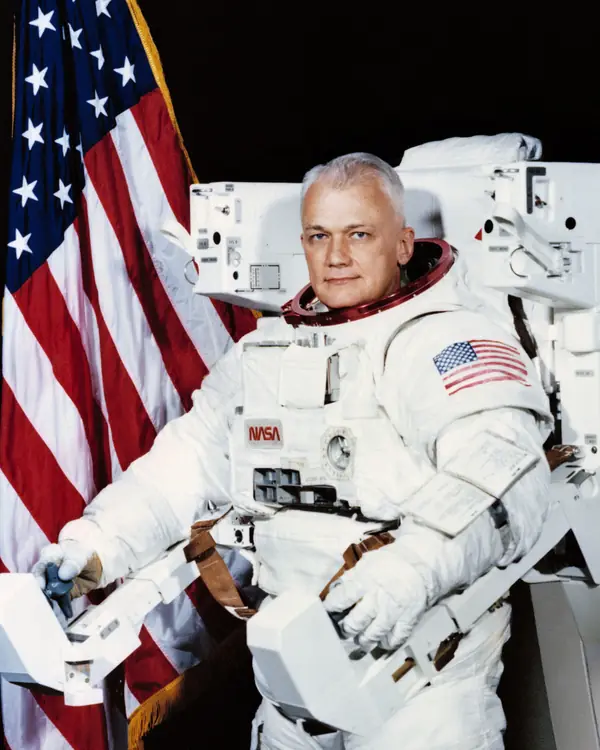
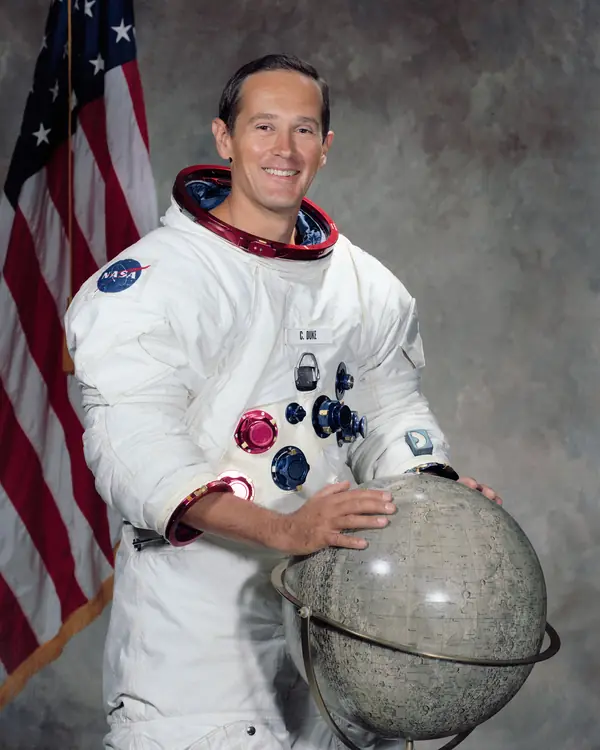
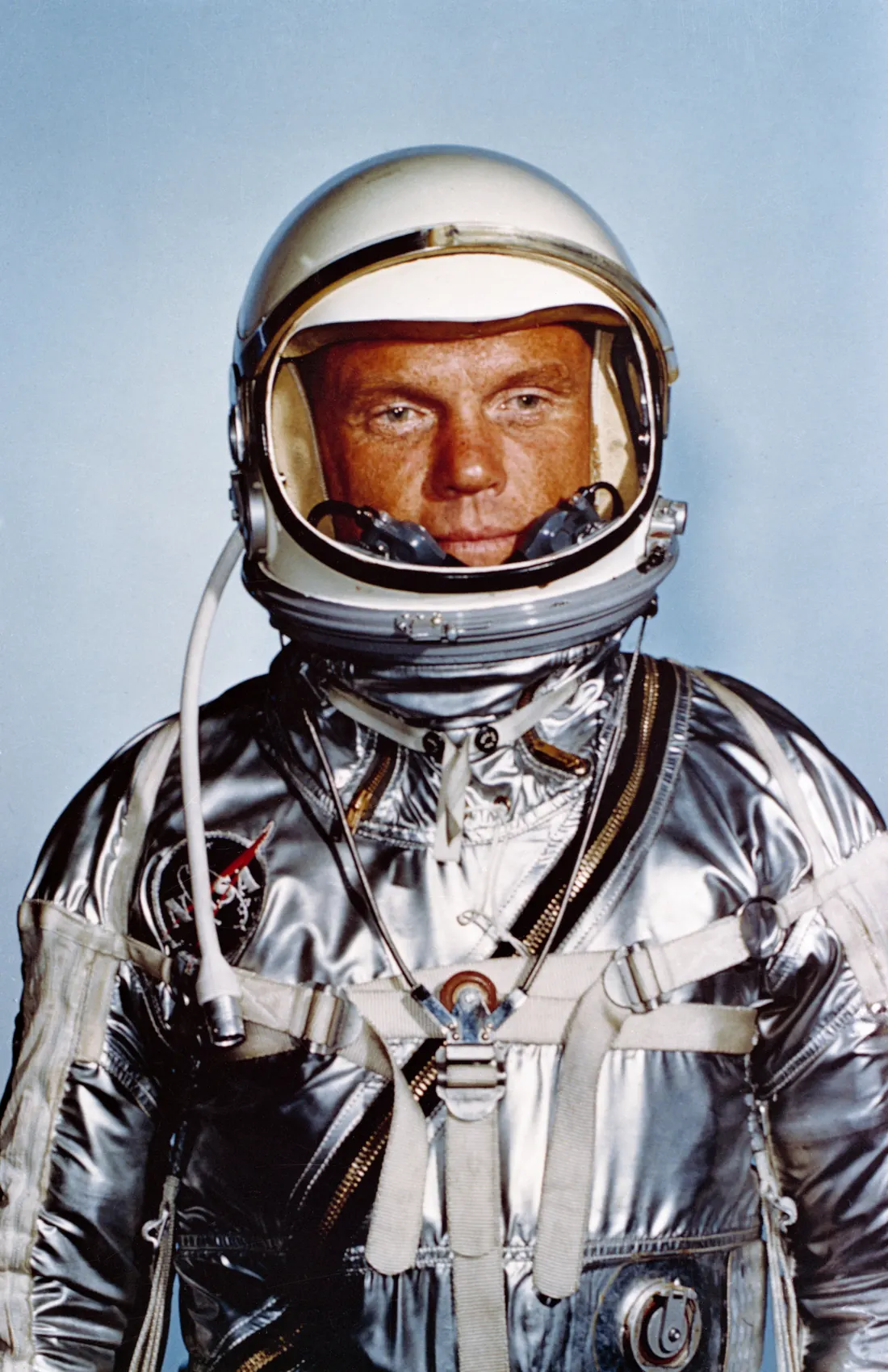
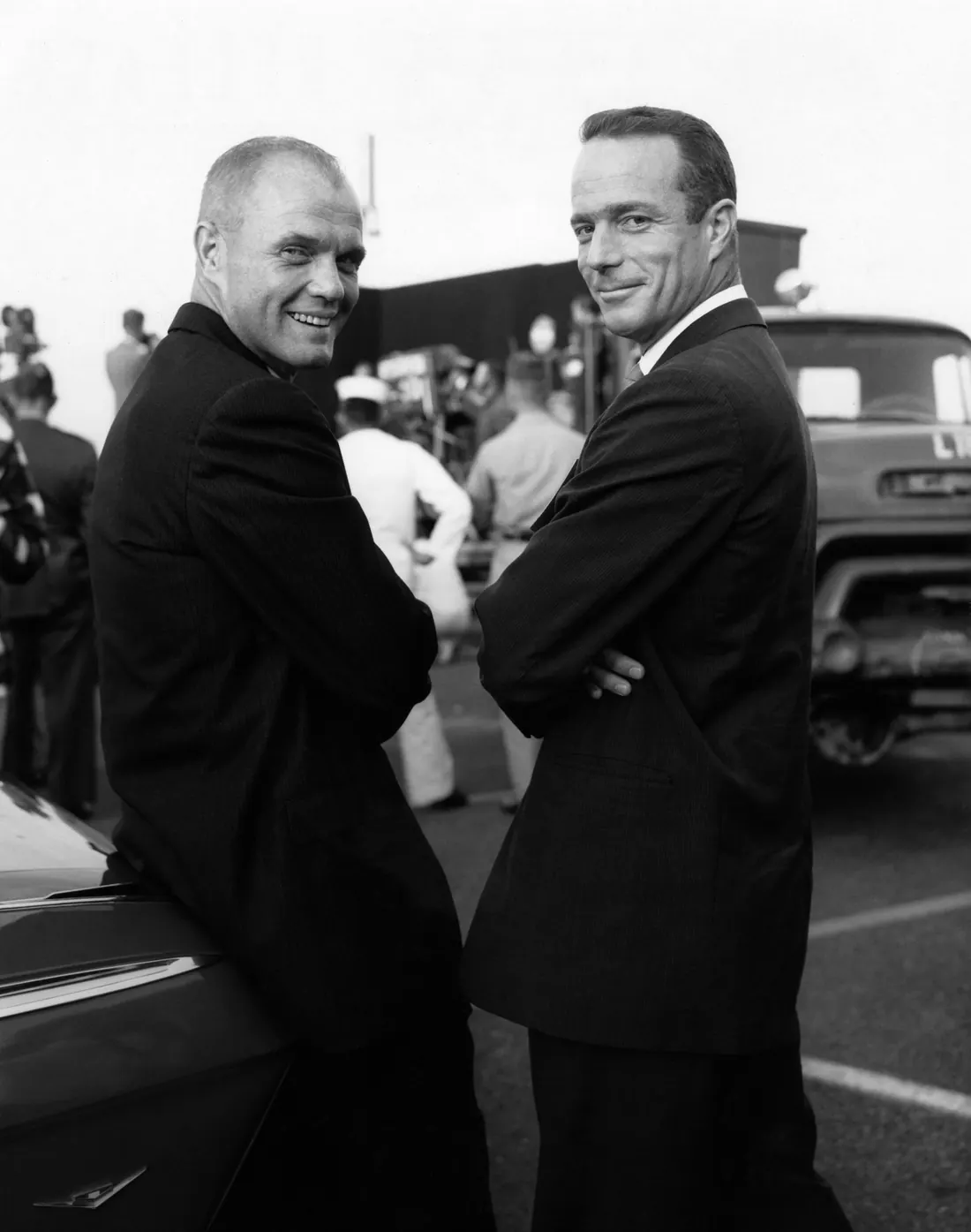
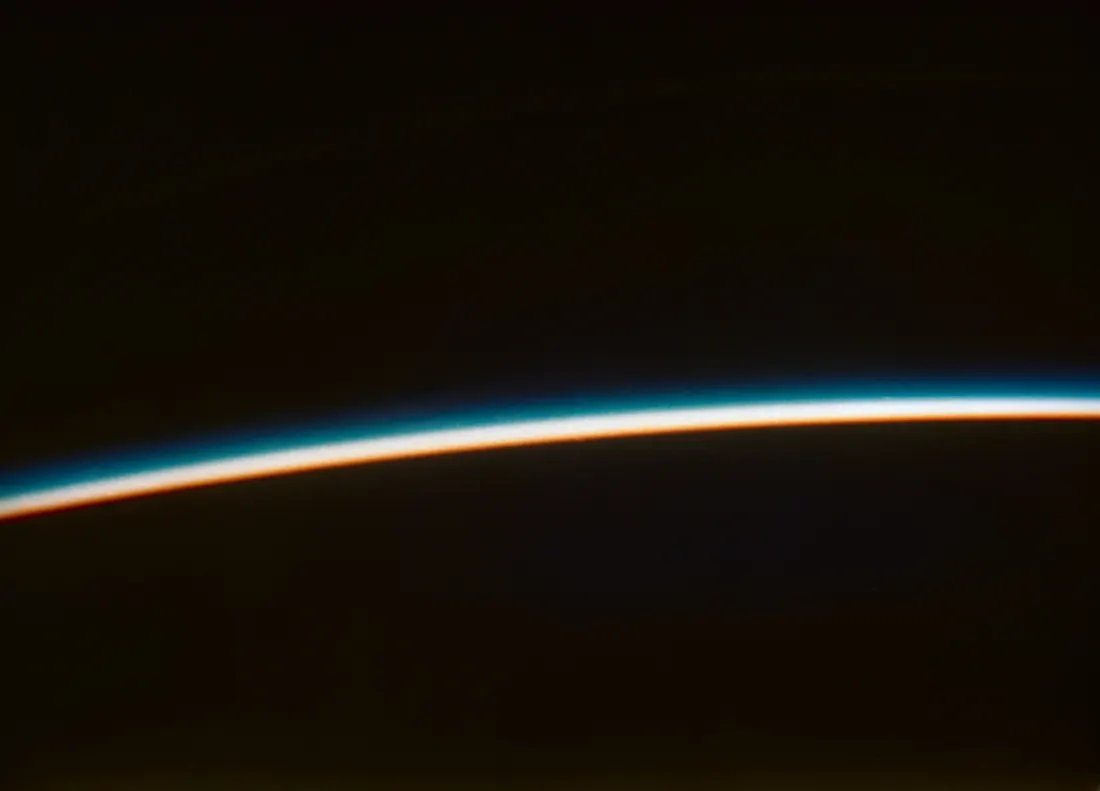
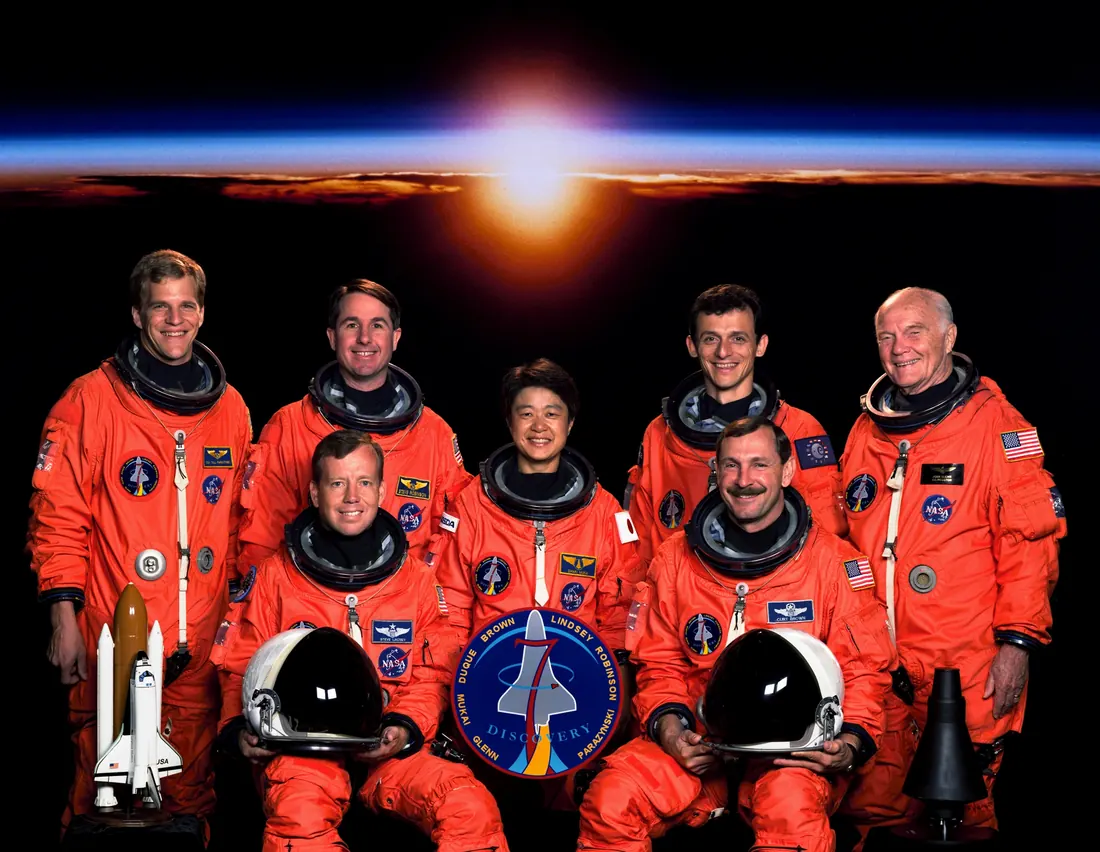
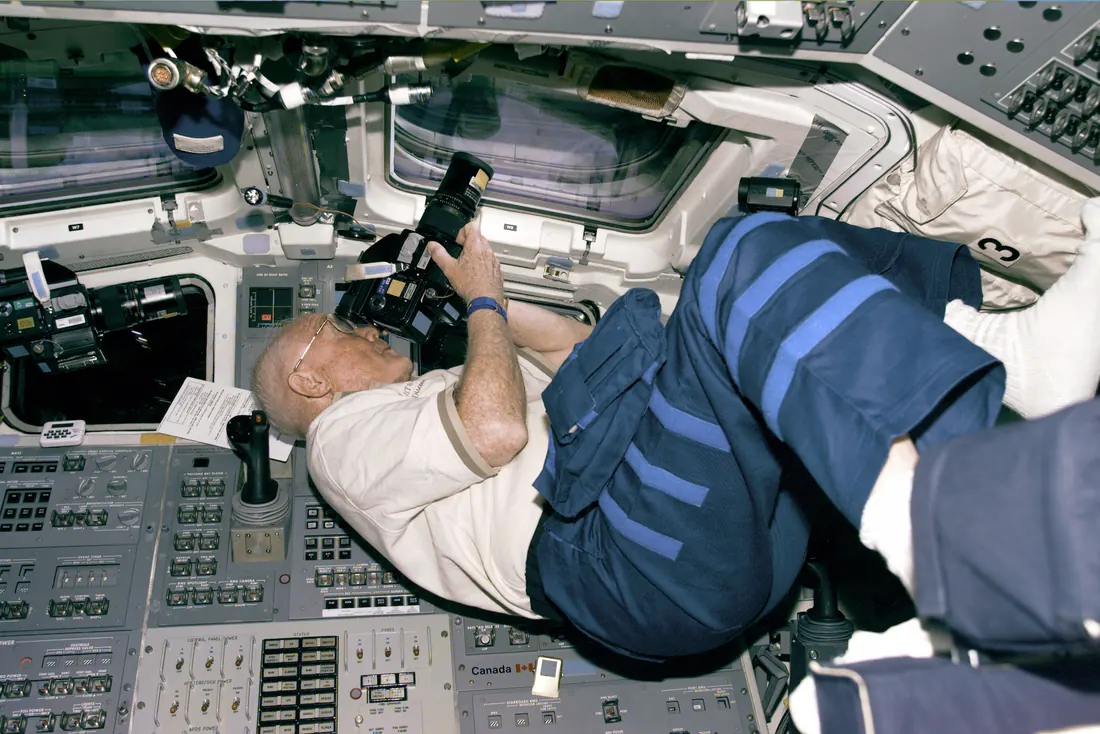
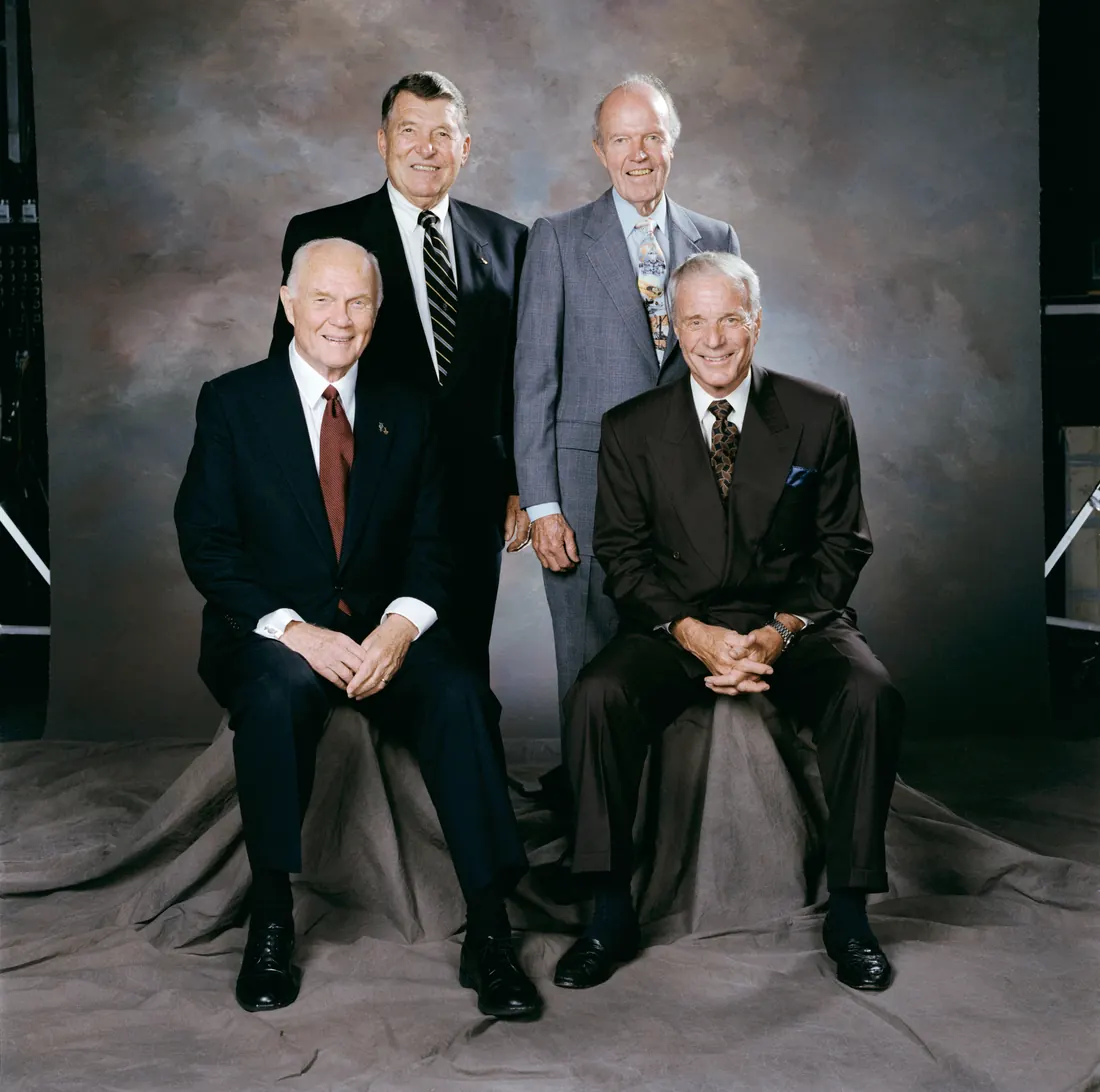
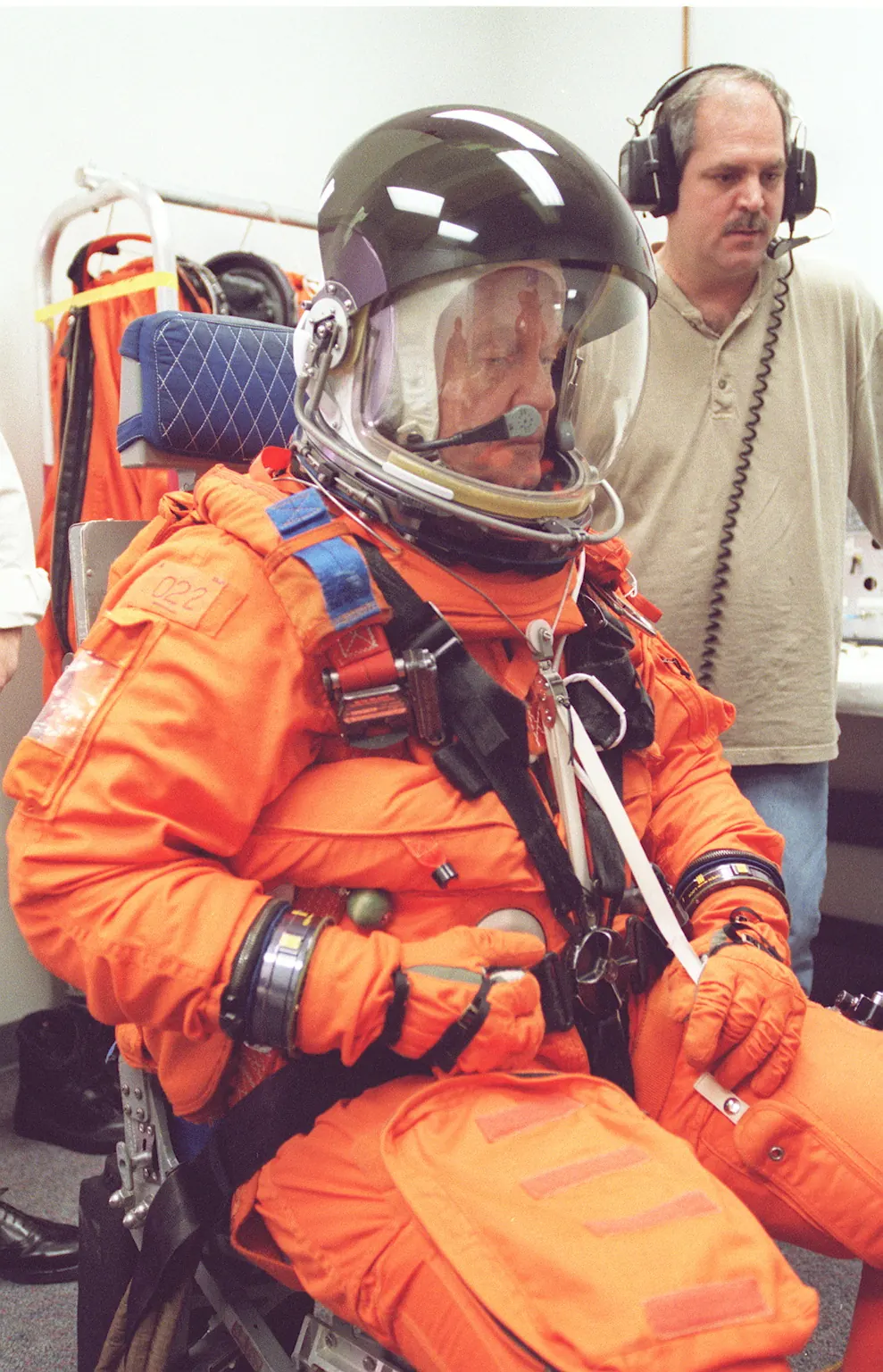
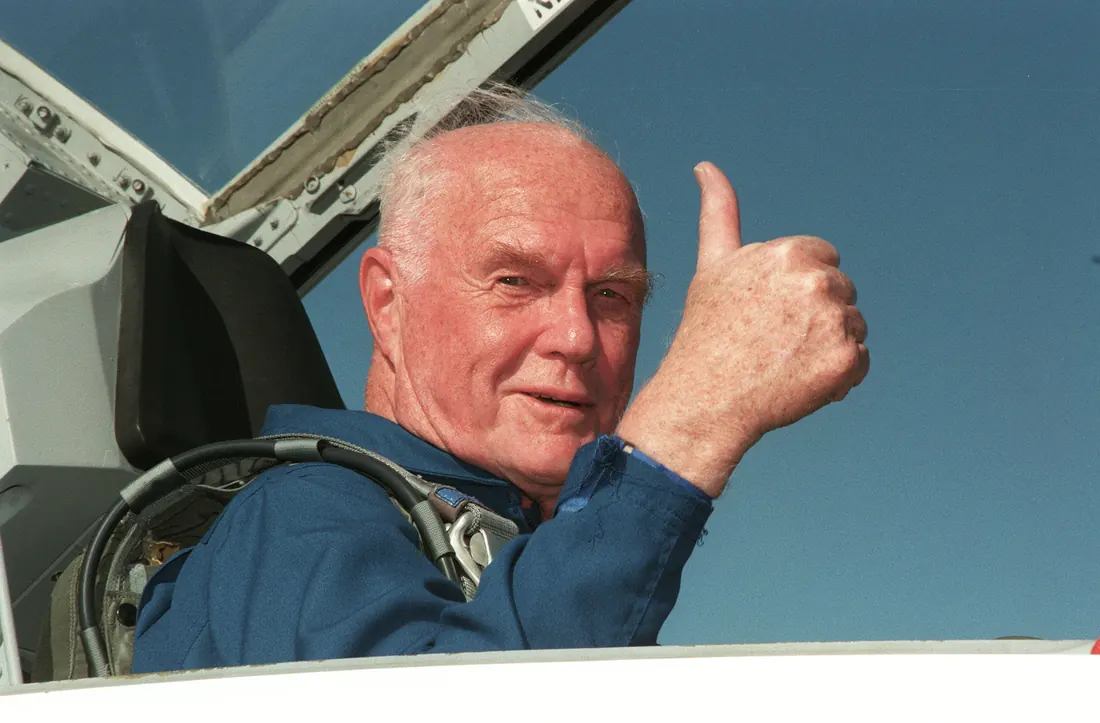
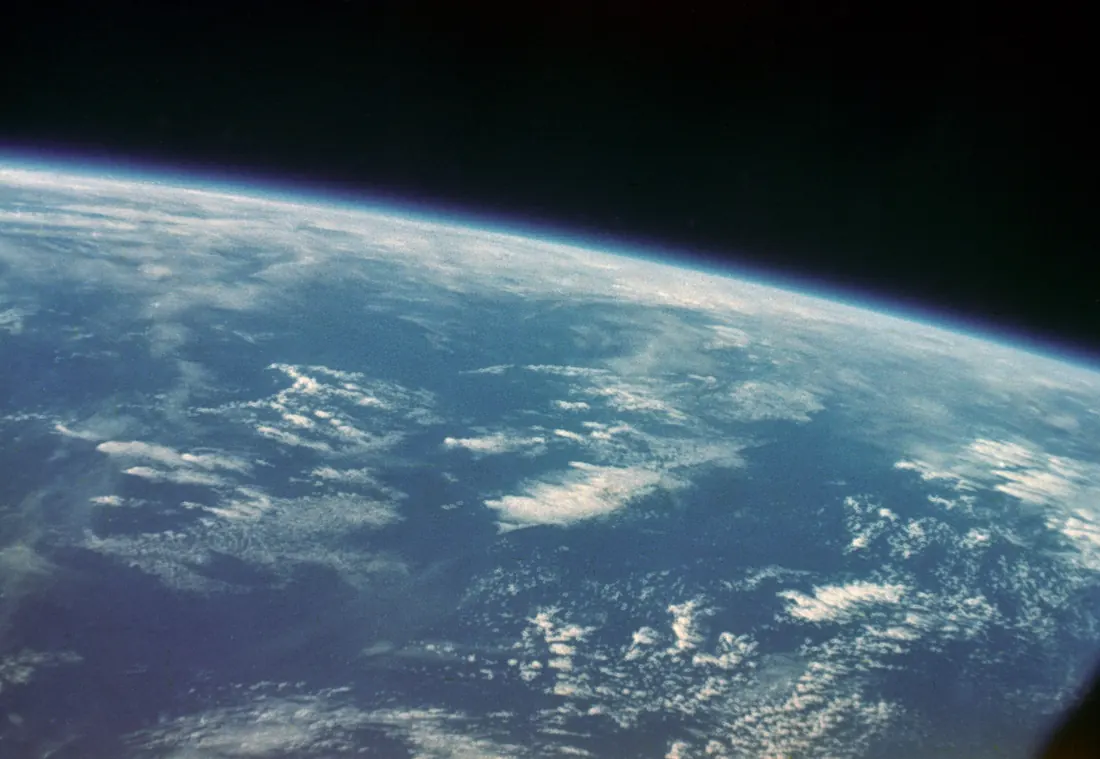
Pictures: all are NASA photos in the public domain, except Senator Glenn’s official US Senate portrait. From 1962: Glenn’s Mercury portrait in his spacesuit; Glenn in his silver suit during training at the Cape on February 13, a week before the flight; Friendship 7 lifting off from Pad 14 on February 20; the Earth and an orbital sunset, both photographed by Glenn from Friendship 7; Glenn with his backup, Scott Carpenter, at Cape Canaveral around the time of the flight (not launch day); and his double thumbs-up beside President Kennedy at Cape Canaveral on February 23, three days after the flight. From 1998: his STS-95 portrait (April 14); his first launch-and-entry suit fitting at Johnson Space Center (February 17), with a suit technician; the STS-95 crew portrait (June); the four surviving Mercury astronauts, Glenn, Schirra, Cooper and Carpenter (August 5); his thumbs-up from a T-38 jet on arriving at Kennedy Space Center (October 26); Discovery lifting off from Pad 39B (October 29, two views); and, in orbit, Scott Parazynski drawing Glenn’s blood for an experiment, Glenn at the Osteoporosis Experiment in Orbit on the middeck, and Glenn photographing Earth from the flight deck on October 31. No photo shows him saying “I feel fine.” The other people in these photos are not named.
Photo credits
The archive photos in this story
All the photographs and illustrations in this story are in the public domain. Tap one to enlarge it, or follow the link to its Wikimedia Commons page for the full record. The narration, captions and graphics in the Short are our own; its music and sound effects are credited below.
Music and sound effects
Music: Schumann, Kinderszenen, Op. 15: No. 1 'Of Foreign Lands and Peoples (Musopen, public domain); Mussorgsky, Pictures at an Exhibition: IV. Bydlo (piano) (Musopen, public domain); Dvorak, Symphony No. 9 'From the New World': II. Largo (Musopen, public domain).
Sound effects: Freesound, CC0.