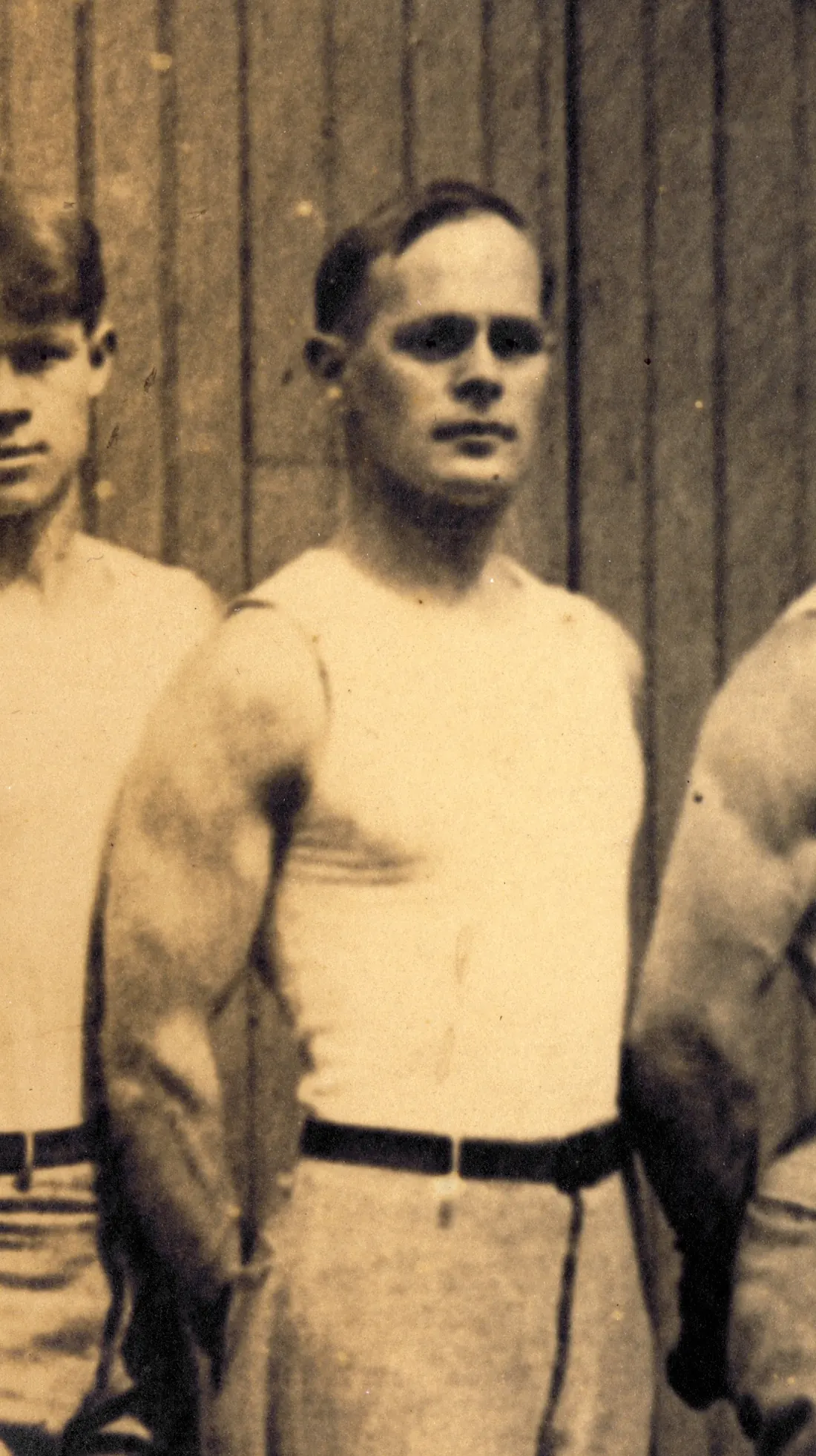
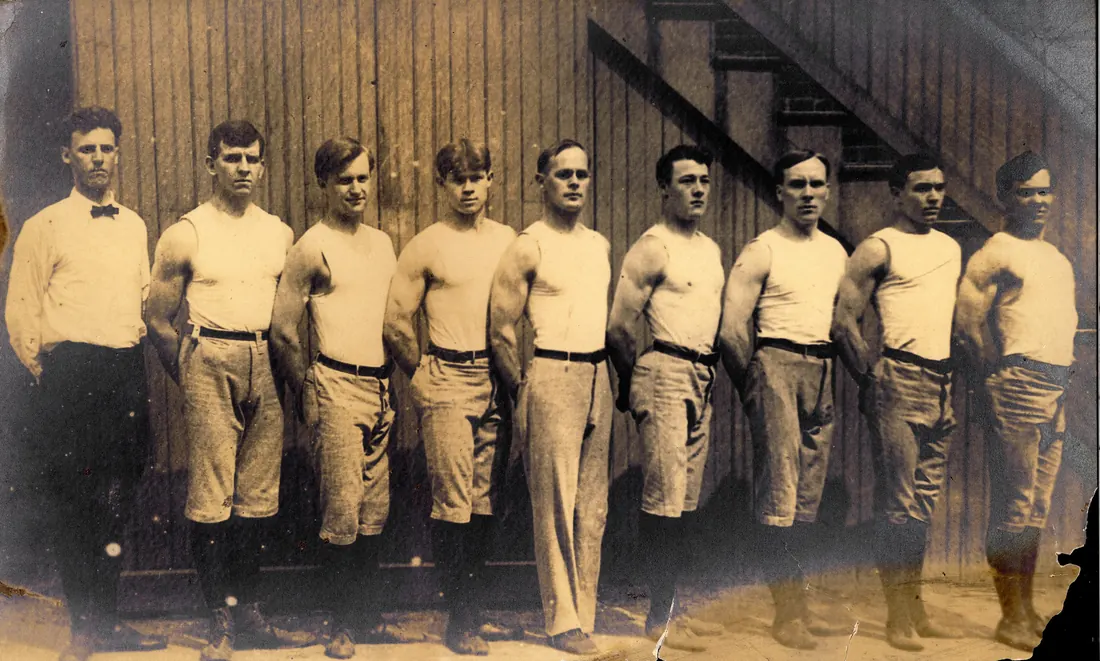
George Eyser was born on August 31, 1870, Olympedia says, and “Eyser arrived in America, from Germany, at the age of 14.” He “settled in Denver, Colorado before moving to St. Louis where he worked as a book-keeper for a construction company.” “The club he joined was the Concordia Turnverein,” Joshua Prager writes in The American Scholar.
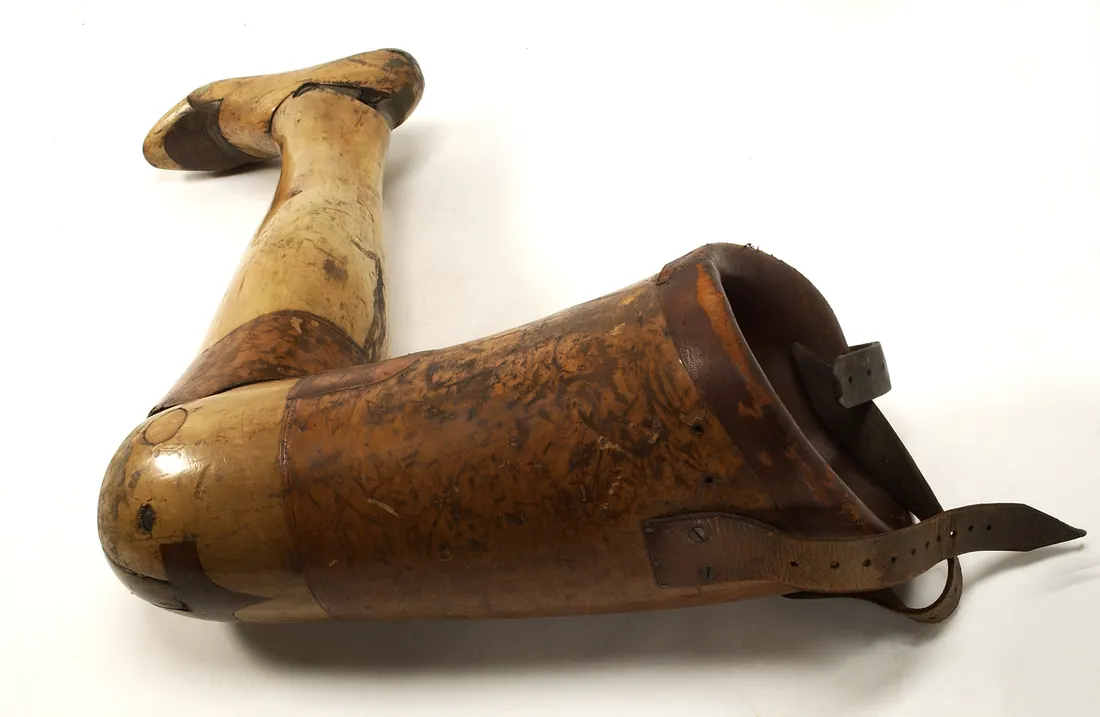
“The next year, in 1891, Eyser lost a portion of his left leg,” Prager writes, and “A subsequent surgery, I learned, amputated the leg below the knee.” “The assertion, in recent decades, that Eyser was disabled in a train accident is baseless.” But “after two long years of rehabilitation from his injury, Eyser returned to his Turnverein and to gymnastics.” “George Eyser had a wooden leg.”
In 1904 “the games were moved to St. Louis to coincide with the World’s Fair.” In July, “Eyser finished 76th in the shot put and dead last in both the long jump and 100-yard dash.” Olympedia: “he did superbly on the gymnastics apparatus events, but finished dead last in the track & field competition, hampered especially by very poor scores in the 100 yard dash and long jump.”
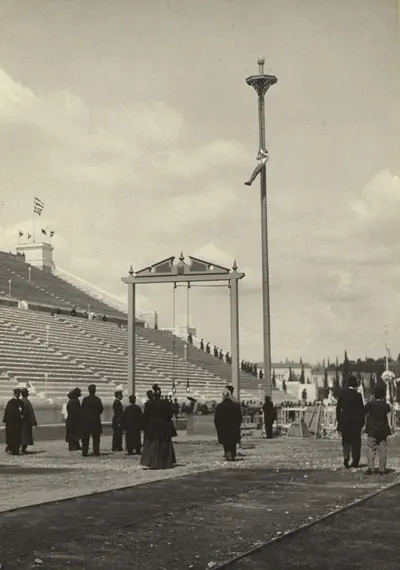
Then, on October 28, 1904, came the apparatus events. In the rope climb, “the rope was 25 feet,” and “Eyser was first to the top, striking the bell that marked the end of his climb after seven seconds flat.” The horse vault “did not yet offer the aid of a springboard,” and “Anton Heida and George Eyser tied for first.” On the parallel bars, “The event was won by George Eyser by only one point over Anton Heida,” “by a single point, 44–43.” He added silver on the side horse and in the four-event all-around and bronze on the horizontal bar. “He won six medals in one day,” Guinness World Records says: “three gold (rope climbing, vault, parallel bars), two silver (pommel horse, combined event - parallel bars, horizontal bar, vault, pommel horse) and one bronze (horizontal bar).”
The October events were small. “These were the AAU Gymnastics Championships for that year and there were no foreign entrants or foreign competitors,” Olympedia says, and it lists three known competitors in each apparatus event; in the all-around, “There were apparently 38 entries and 10 gymnasts who actually competed.” Guinness World Records counts him “not only the first athlete with a disability to compete at an Olympic Games” “but also the first disabled medallist,” and “Remarkably, Eyser was the only athlete with a prosthetic leg to compete at the Olympic Games until 2008,” “when South African swimmer Natalie du Toit took part in the 10 km swimming marathon in Beijing, China, in 2008.”
Fact check
The facts and where they come from
- He won six Olympic medals in one day, but one of his legs was made of wood. Guinness World Records: “He won six medals in one day - three gold (rope climbing, vault, parallel bars), two silver (pommel horse, combined event - parallel bars, horizontal bar, vault, pommel horse) and one bronze (horizontal bar).” The American Scholar: “George Eyser had a wooden leg.” Olympedia: “He competed at the Olympics as a gymnast with a wooden leg.” 214
- His name was George Eyser. The American Scholar: “The club he joined was the Concordia Turnverein.” 31
- He came to America from Germany at 14. Olympedia: “Eyser arrived in America, from Germany, at the age of 14.” 3
- As a young man, he lost his left leg below the knee. The American Scholar: “The next year, in 1891, Eyser lost a portion of his left leg”; “A subsequent surgery, I learned, amputated the leg below the knee.” Olympedia gives his birth date as August 31, 1870, so he was 20 or 21. 13
- On a wooden leg, he went back to gymnastics. The American Scholar: “after two long years of rehabilitation from his injury, Eyser returned to his Turnverein and to gymnastics”; “The legs were known as ‘cork legs.’” 1
- The Olympics came to his city, St. Louis, in 1904. Olympedia: he “settled in Denver, Colorado before moving to St. Louis where he worked as a book-keeper for a construction company.” The American Scholar: “the games were moved to St. Louis to coincide with the World’s Fair.” Wikipedia: “The 1904 Olympics, held in St. Louis.” 3111
- In July, he finished dead last in the sprint and the long jump. The American Scholar: “Eyser finished 76th in the shot put and dead last in both the long jump and 100-yard dash.” Olympedia: “finished dead last in the track & field competition, hampered especially by very poor scores in the 100 yard dash and long jump.” 14
- Then came one day in October: October 28, 1904. Guinness World Records: “Eyser won his six medals on 28 October 1904.” 25
- He climbed a 25-foot rope in seven seconds, and won gold. Olympedia: “In this event, the rope was 25 feet”; it lists “1 George Eyser USA 7.0 Gold.” The American Scholar: “Eyser was first to the top, striking the bell that marked the end of his climb after seven seconds flat.” 51
- He vaulted the horse with no springboard, and won gold again. The American Scholar: the horse vault “did not yet offer the aid of a springboard.” Olympedia: “Anton Heida and George Eyser tied for first.” 16
- He won the parallel bars by one point, his third gold. Olympedia: “The event was won by George Eyser by only one point over Anton Heida.” The American Scholar: “by a single point, 44–43.” 71
- Then came two silvers and a bronze: silver on the side horse and in the four-event all-around, and bronze on the horizontal bar. Guinness World Records: “two silver (pommel horse, combined event - parallel bars, horizontal bar, vault, pommel horse) and one bronze (horizontal bar).” 81092
- That’s six Olympic medals in a single day. The American Scholar: “the six Olympic medals he won on a single October day in 1904.” Olympedia: “he won six Olympic medals, including three gold.” 142
- For over a century, no other Olympian competed on an artificial leg. Guinness World Records: “Remarkably, Eyser was the only athlete with a prosthetic leg to compete at the Olympic Games until 2008.” Wikipedia: “Before 2008, Eyser was the only person with an artificial leg to have competed at the Olympic Games.” 211
- The man who finished last in July won six medals in October: “dead last in both the long jump and 100-yard dash” in July, and “the six Olympic medals he won on a single October day in 1904.” 12
Sources
- A Forgotten Turner Classic (Joshua Prager, June 3, 2024) The American Scholar
- First para-athlete to compete at an Olympic Games Guinness World Records
- George Eyser Olympedia
- Artistic Gymnastics at the 1904 Summer Olympics Olympedia
- Rope Climbing, Men, 1904 (results) Olympedia
- Horse Vault, Men, 1904 (results) Olympedia
- Parallel Bars, Men, 1904 (results) Olympedia
- Side Horse, Men, 1904 (results) Olympedia
- Horizontal Bar, Men, 1904 (results) Olympedia
- All-Around, Four Events, Men, 1904 (results) Olympedia
- George Eyser Wikipedia
Notes
How he lost the leg: Wikipedia, Olympedia and other retellings say a train ran over it, and Olympics.com says the circumstances are unknown. Joshua Prager (The American Scholar, 2024) found an 1895 magazine caption describing an illness or injury and long confinement (1891–93), first a foot amputation and then a below-knee one, and calls the train story “baseless.” The page gives no cause.
Below the knee or most of his left leg: Wikipedia says “most”; Prager, from the records, says below the knee. Wooden or cork: Prager says the legs were known as “cork legs” and also that “George Eyser had a wooden leg”; Olympedia, Guinness World Records and Wikipedia say wooden.
The date is October 28, 1904 (Olympedia, Guinness World Records, Prager) or October 29 (Wikipedia).
The October events were the AAU championships, run as Olympic events, with only American club gymnasts and about three known finishers per apparatus event, so the page doesn’t say he beat a big field. Anton Heida also won six medals that day, five of them gold, so the page doesn’t say Eyser was the only one.
“Went home with six medals” is the Short’s figure of speech for winning them; he lived in St. Louis, and no source we read says what became of the medals. He was born in Kiel (Wikipedia) or Dänisch-Nienhof, Schwedeneck (Olympedia), so the page says only Germany.
Left out: how and where he died, which is not part of this story.
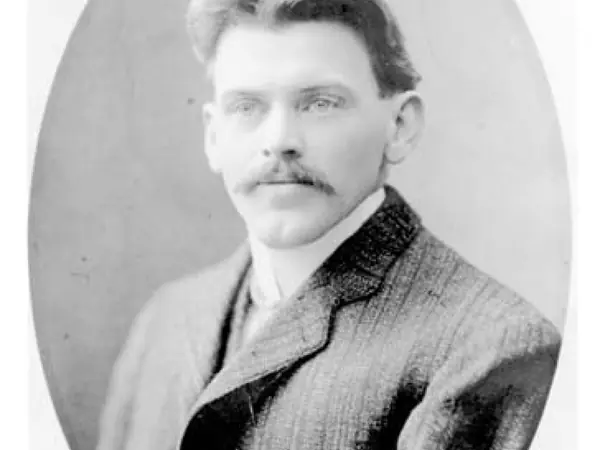
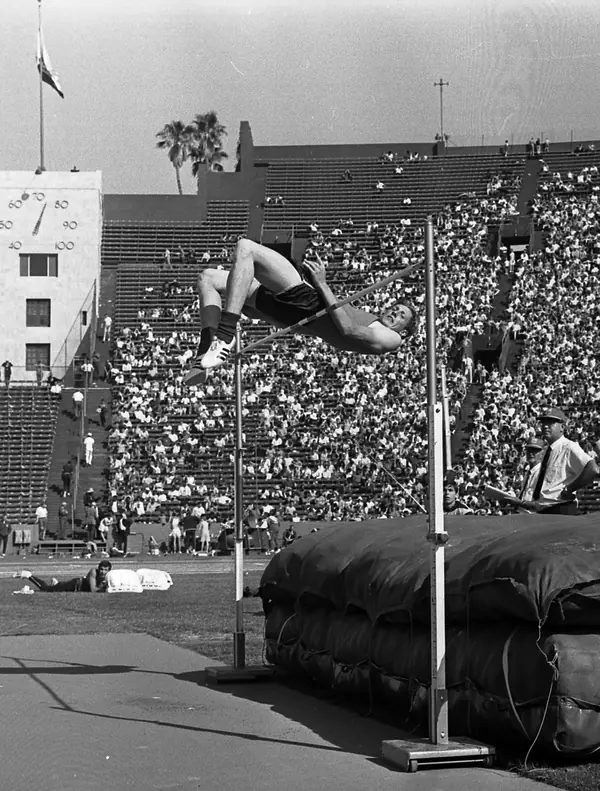
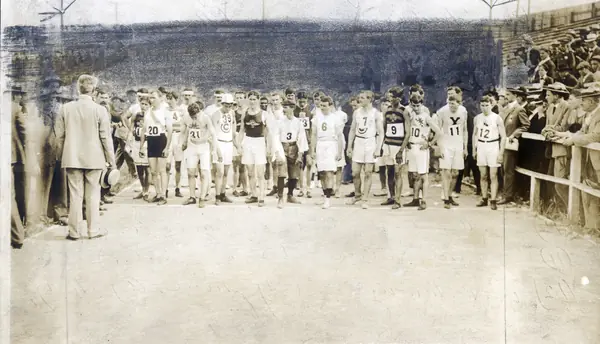
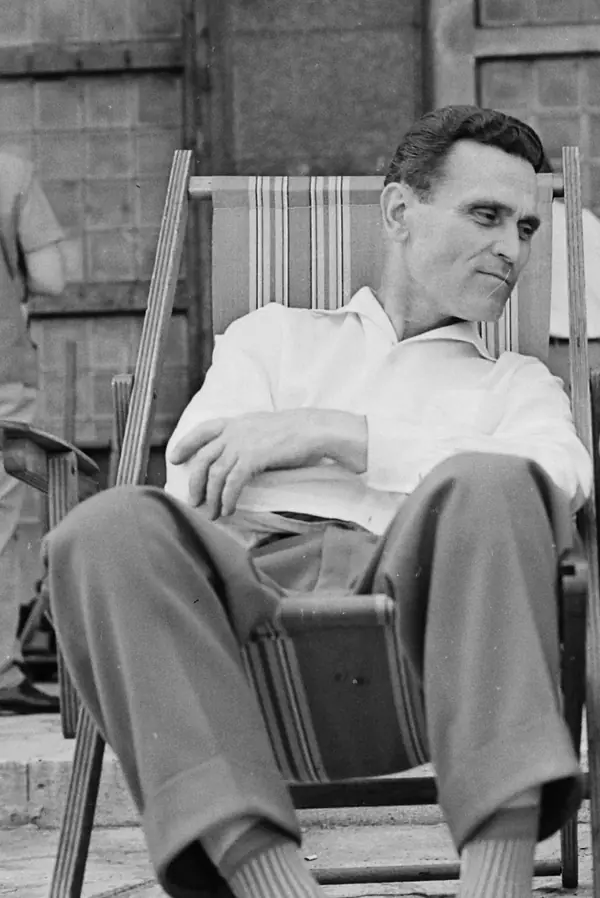
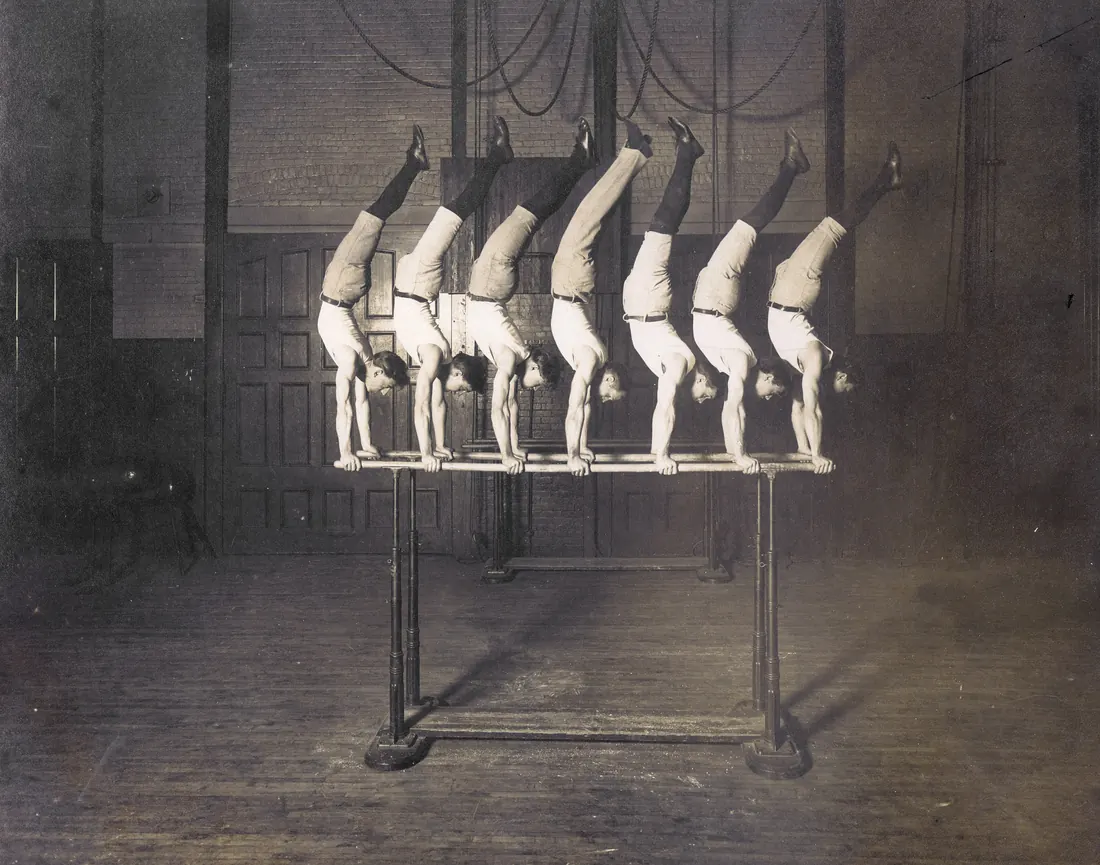
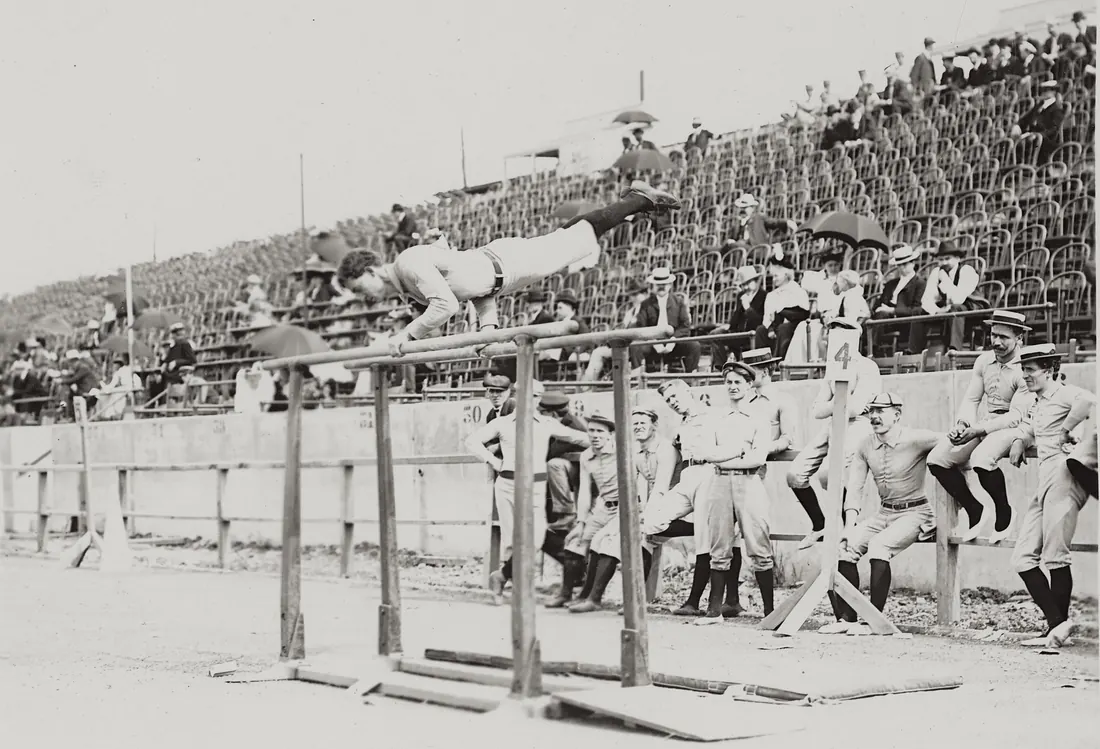
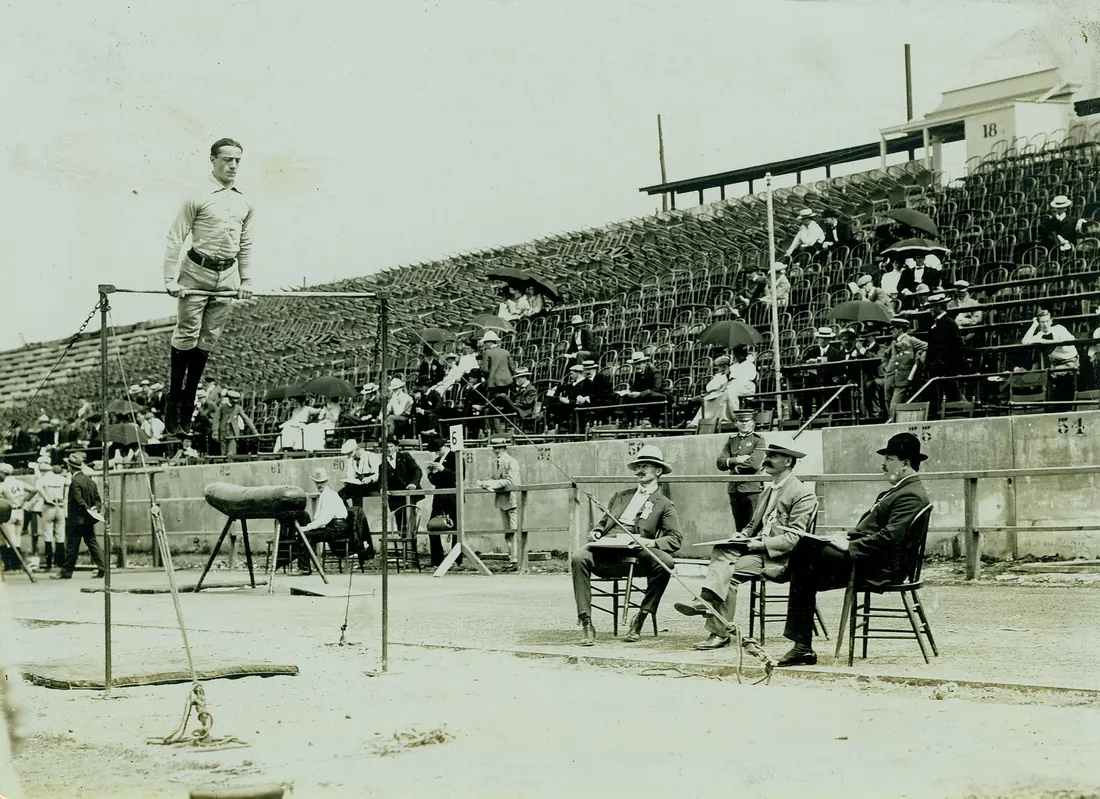
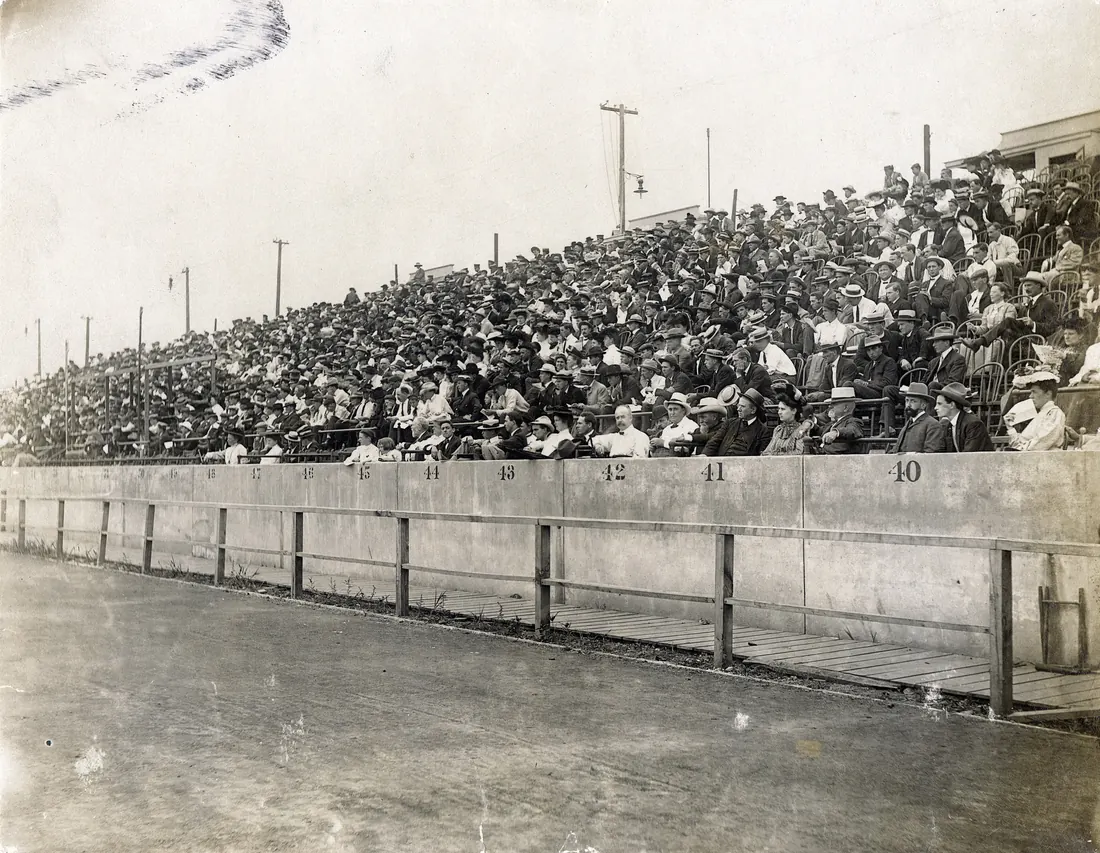
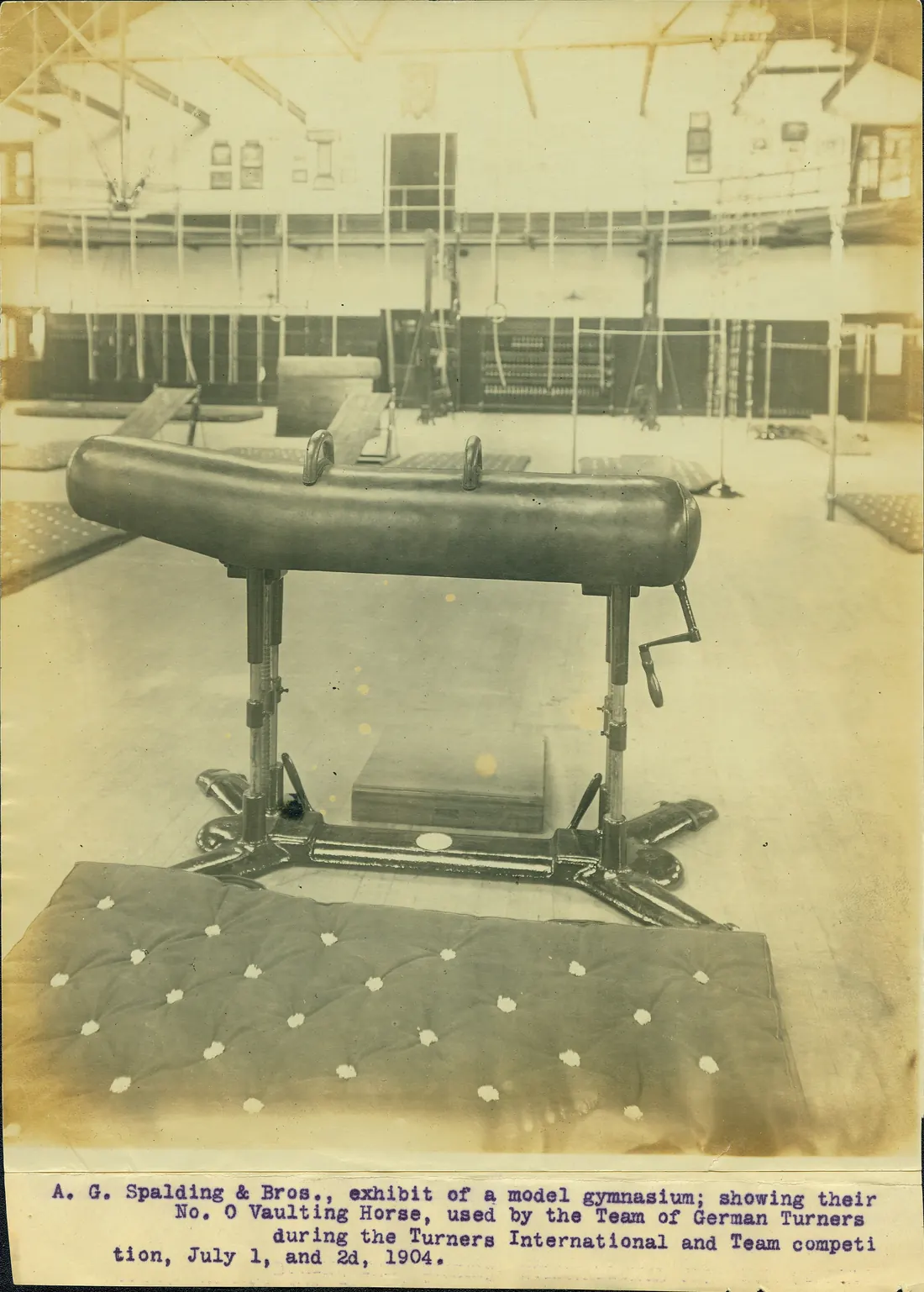
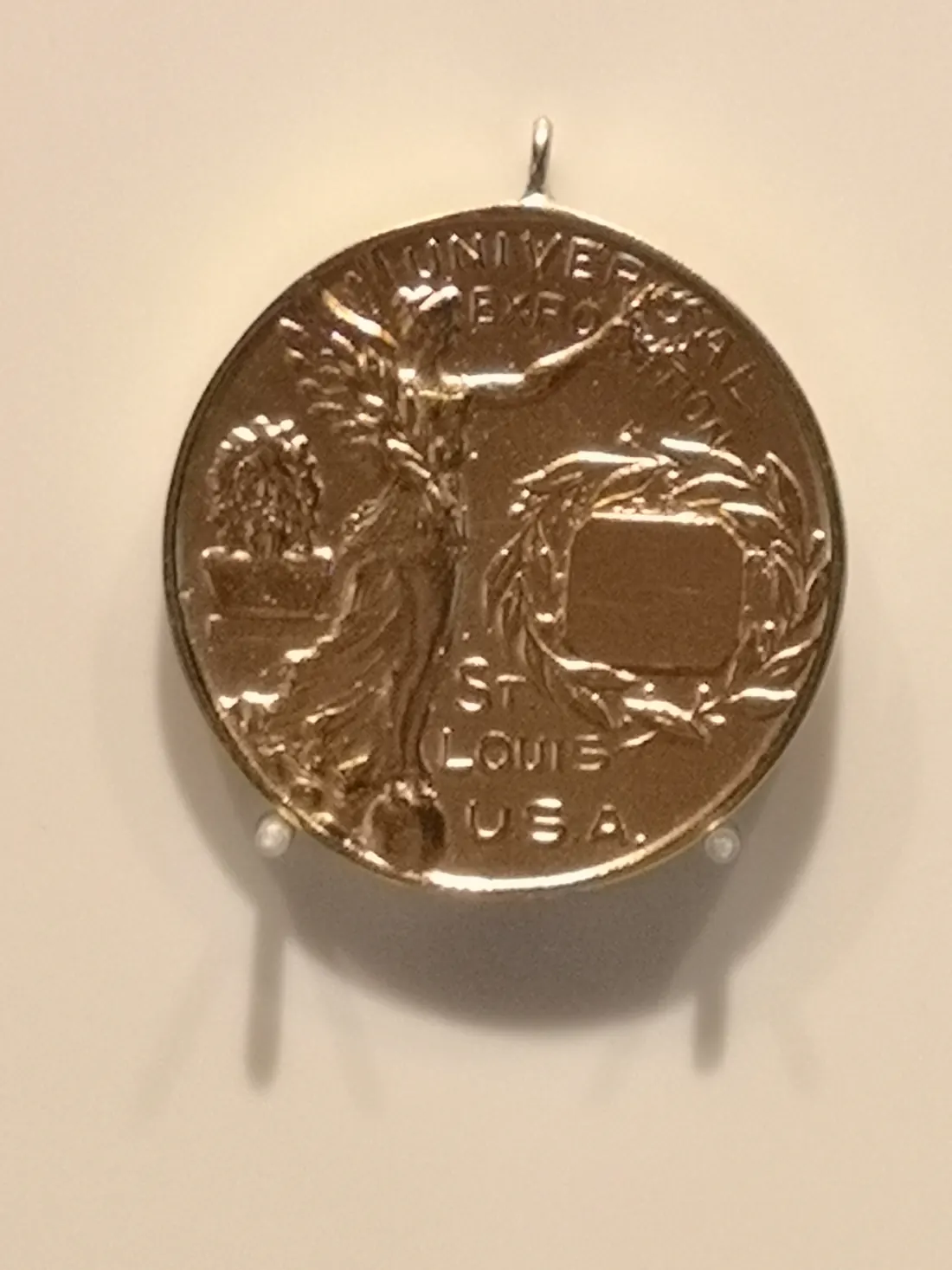
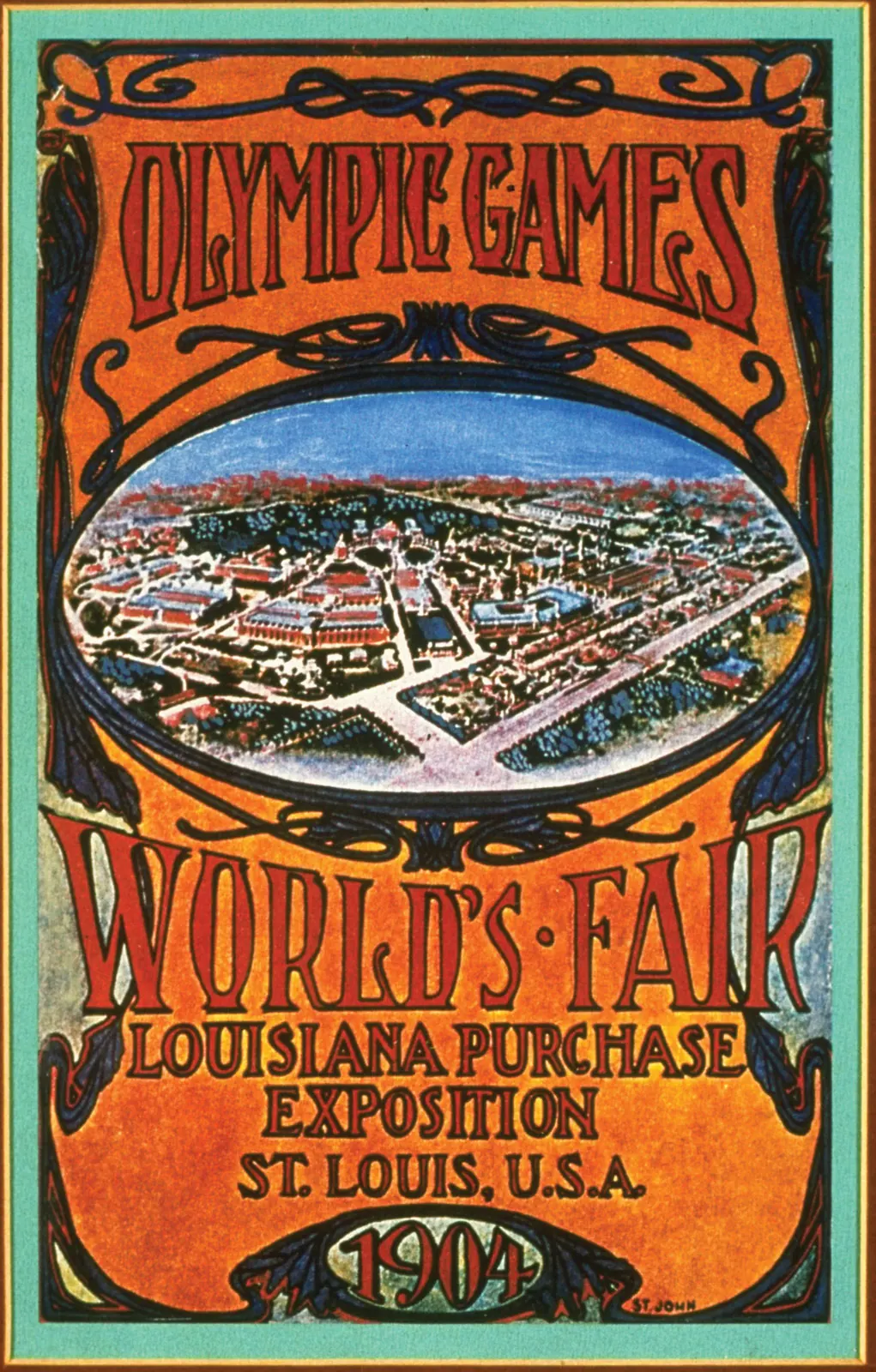
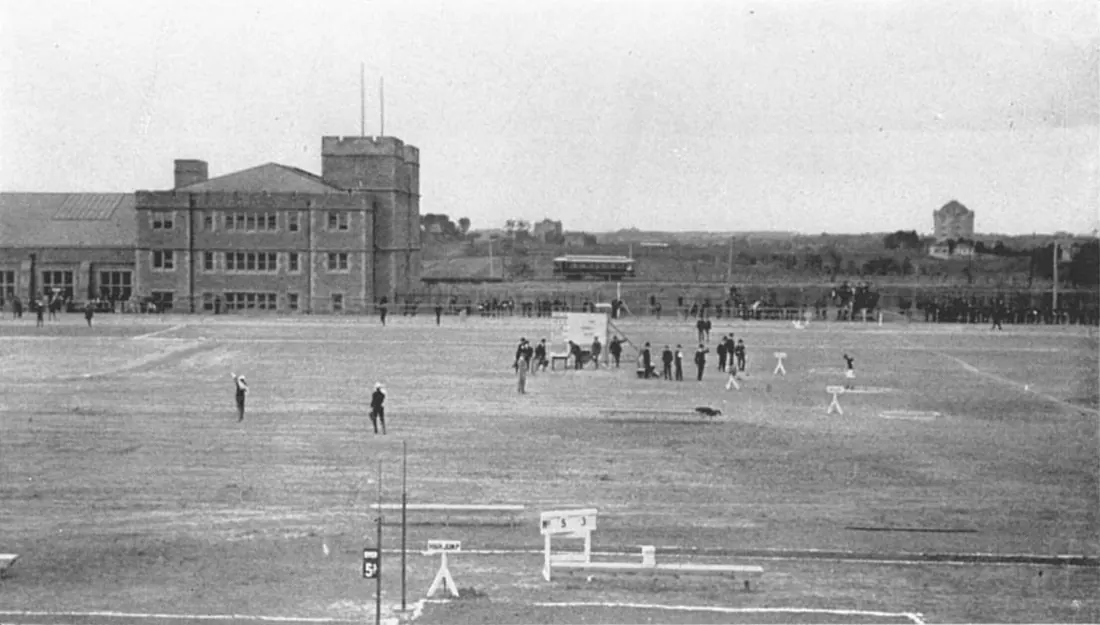
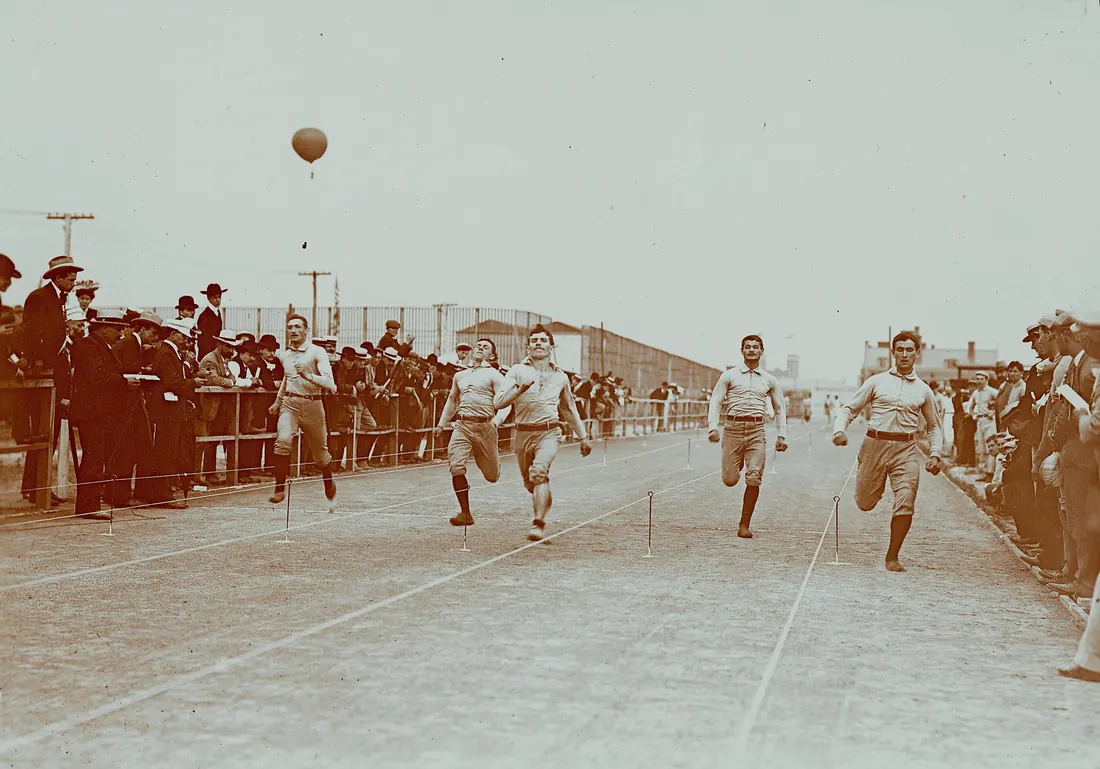
Pictures: no free photo shows Eyser at the 1904 Games. His face comes from a 1908 team photo, not 1904: his Concordia Turnverein team at the International Turnfest in Frankfurt, Germany, in June 1908, with Eyser in the center (Missouri History Museum); the close-ups of his face and of the legs of Eyser and two teammates are crops of it. The 1907 photo shows his club’s “First Active Class” doing handstands on the parallel bars, with Eyser in the center. The 100-yard dash, the athlete on the parallel bars and the gymnastics championship are from the Turner Games of July 1904 and show unidentified athletes, not Eyser. The vaulting horse was used by the team of German Turners at the Turners’ competition of July 1–2, 1904. The stadium crowd, Francis Field on the opening day and the poster are from the 1904 Games. The rope climb was photographed at the 1896 Olympics in Athens by Albert Meyer and is not Eyser. The gold medal is a 1904 Olympic gold medal at the Olympic Museum in Lausanne, photographed in 2020, not one of his, and the wooden leg is a museum piece from the Wellcome Collection, not his.
Photo credits
The archive photos in this story
The photographs and illustrations in this story are in the public domain or shared under open licenses; each one is credited below with its license. Tap one to enlarge it, or follow the link to its Wikimedia Commons page for the full record. The narration, captions and graphics in the Short are our own; its music and sound effects are credited below.
Music and sound effects
Music: Schumann, Kinderszenen, Op. 15: No. 1 'Of Foreign Lands and Peoples (Musopen, public domain); Mussorgsky, Pictures at an Exhibition: IV. Bydlo (piano) (Musopen, public domain); Dvorak, Symphony No. 9 'From the New World': II. Largo (Musopen, public domain).
Sound effects: Freesound, CC0.