The 1904 Olympic marathon was run “in St. Louis on August 30, 1904,” “with a temperature of around 90 degrees Fahrenheit (32 degrees Celsius) at the starting time,” Wikipedia says, and “The remainder of the course was on dusty country roads.” Of the “32 athletes coming from seven nations … only 14 managed to complete the race.” Among them was Fred Lorz of New York, “listed as representing the Mohawk Athletic Club,” who “was reported to have done all his training at night due to his profession as a bricklayer.”
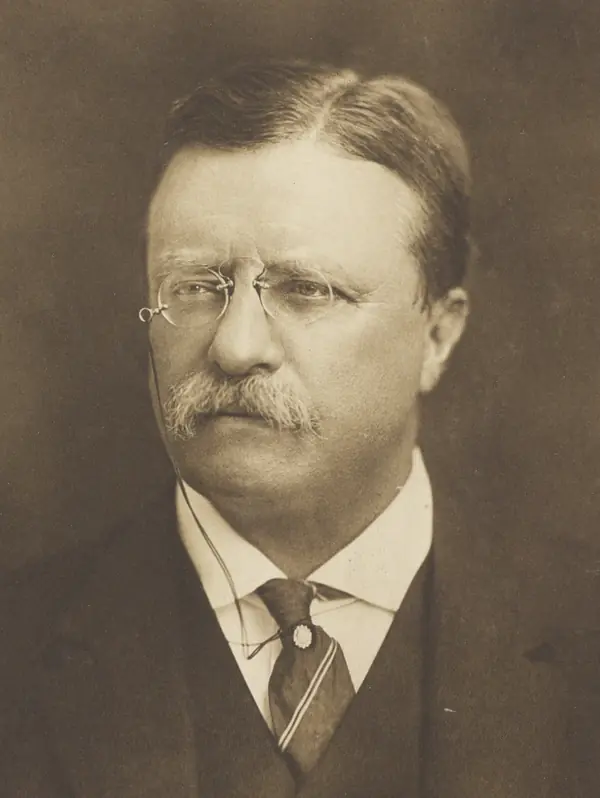
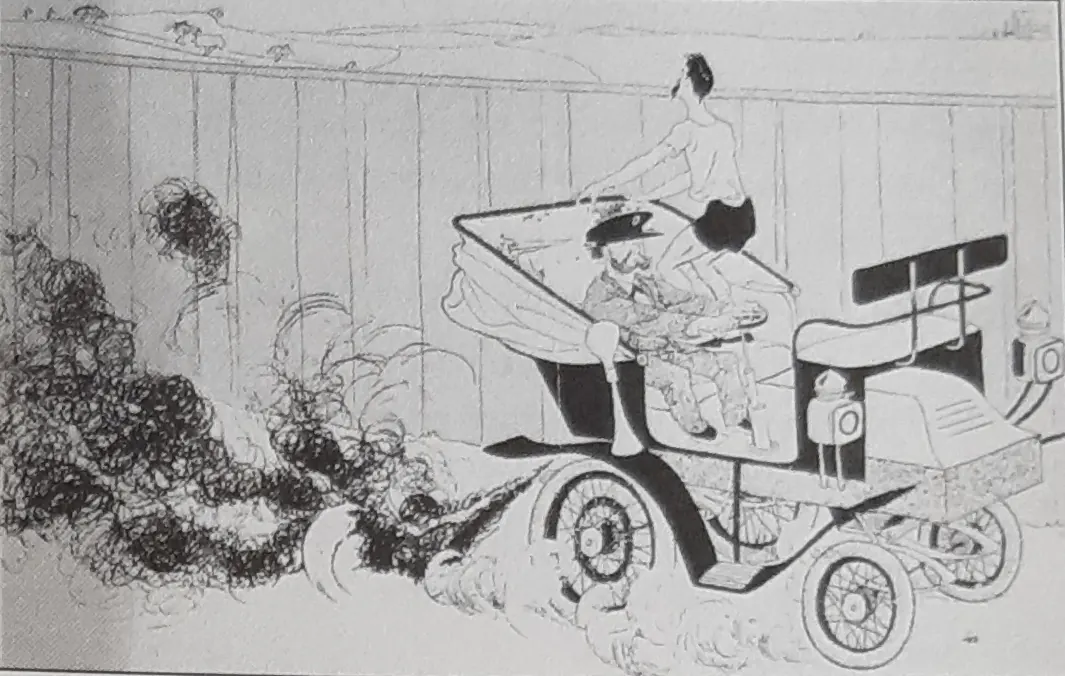
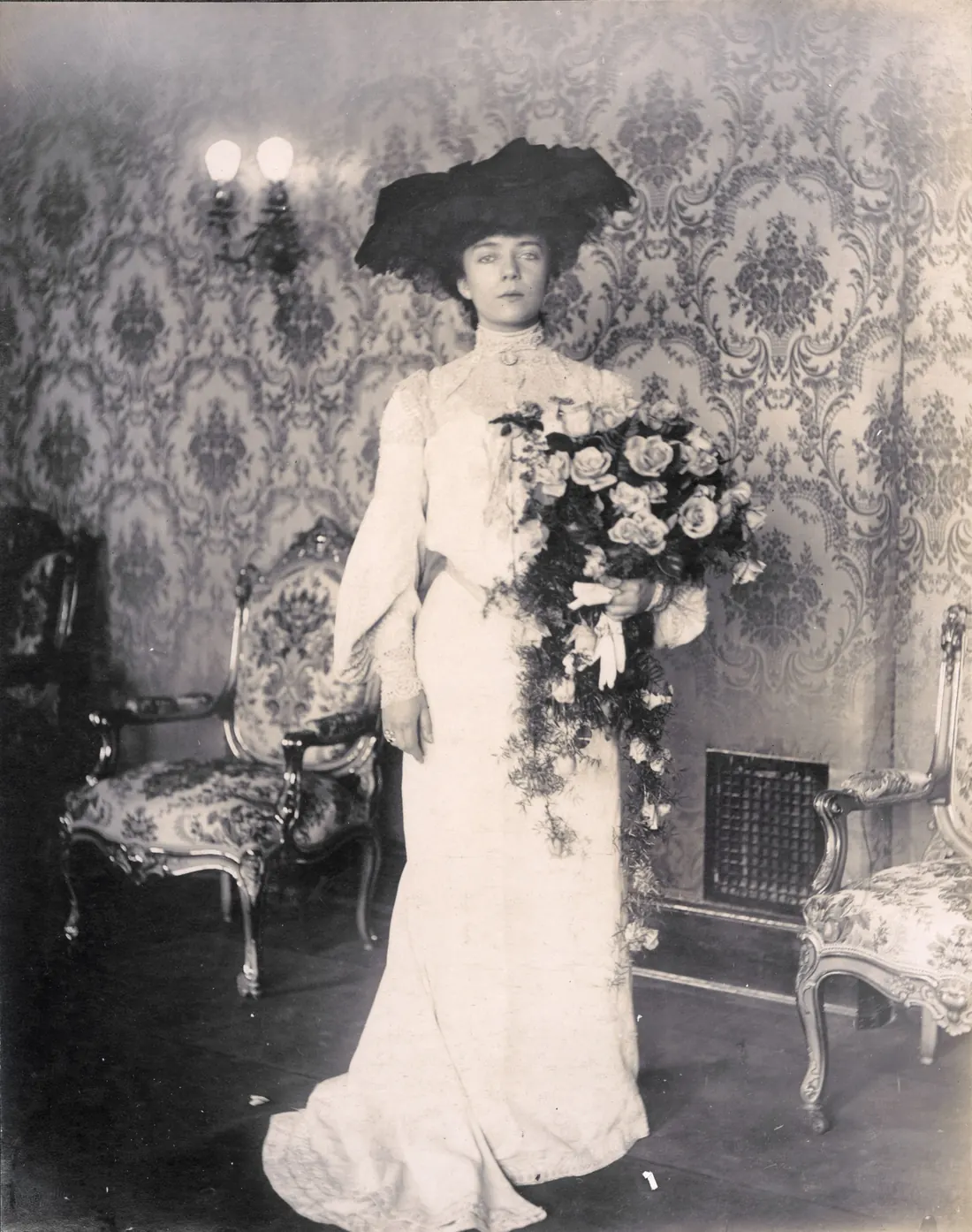
“Lorz, suffering cramps, had actually dropped out of the race after nine miles,” and “His manager gave him a lift in his car.” He “hitched a ride back to the stadium in a car, waving at spectators and runners alike during the ride.” “When the car broke down at the 19th mile, he re-entered the race and jogged across the finish line.” “The first to arrive at the finish line, after three hours and 13 minutes … was Frederick Lorz,” and he “was greeted as the winner.” He reportedly “had his photograph taken with Alice Roosevelt, daughter of then-U.S. President Theodore Roosevelt: she placed a wreath upon Lorz’s head, and was about to award him the gold medal,” Wikipedia says, citing Smithsonian Magazine; St. Louis Magazine says it was “just as she was looping the gold medal around his neck.”
Then came the end of it, “when spectators claimed Lorz had not run the entire race.” “Despite his claim that he was playing a practical joke, the AAU responded by banning Lorz for life.”
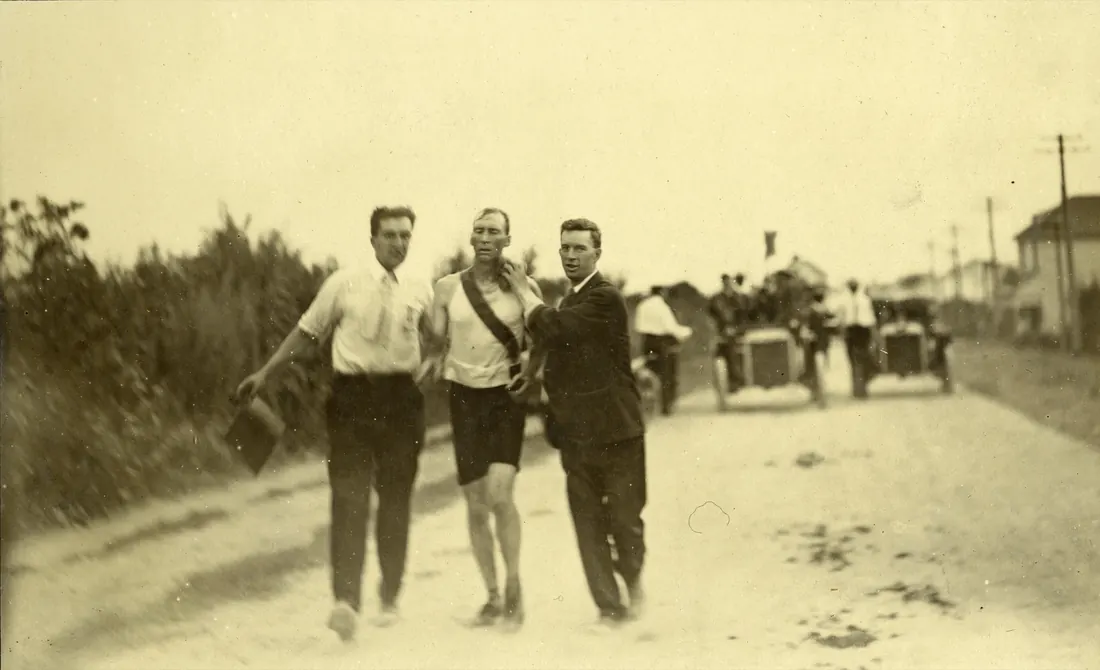
The real winner, Thomas Hicks, “continued to battle onwards, hallucinating, and was barely able to walk for most of the course.” “Hicks received several doses of strychnine – a common rat poison, which stimulates the nervous system in small doses – mixed with brandy and egg white,” Wikipedia says, and Popular Science writes that “his trainers gave him approximately a milligram of strychnine sulphate and an egg white,” then “a second dose, along with two more egg whites and a slug of brandy.” “When he reached the stadium, his support team carried him over the line, holding him in the air while he shuffled his feet as if still running”; “he had to be held up by two men just to cross it.” He won in “the slowest winning time, 3:28:53,” and “Hicks had to be carried off the track on a stretcher, and might have died in the stadium had he not been treated by four doctors.” “Another dose might have been fatal,” Wikipedia’s article on Hicks says.
Lorz’s ban did not last: “this was commuted to six months on February 19, 1905,” and “Lorz then legitimately won the Boston Marathon in 1905 with a time of 2:38:25.”
Fact check
The facts and where they come from
- He finished the Olympic marathon first, but he had ridden part of it in a car. Wikipedia: “While Frederick Lorz was greeted as the apparent winner, he was later disqualified as he had hitched a ride in a car for part of the race.” Wikipedia’s article on Lorz: he “broke the finishing line tape and was greeted as the winner.” Olympedia lists him as disqualified. 124
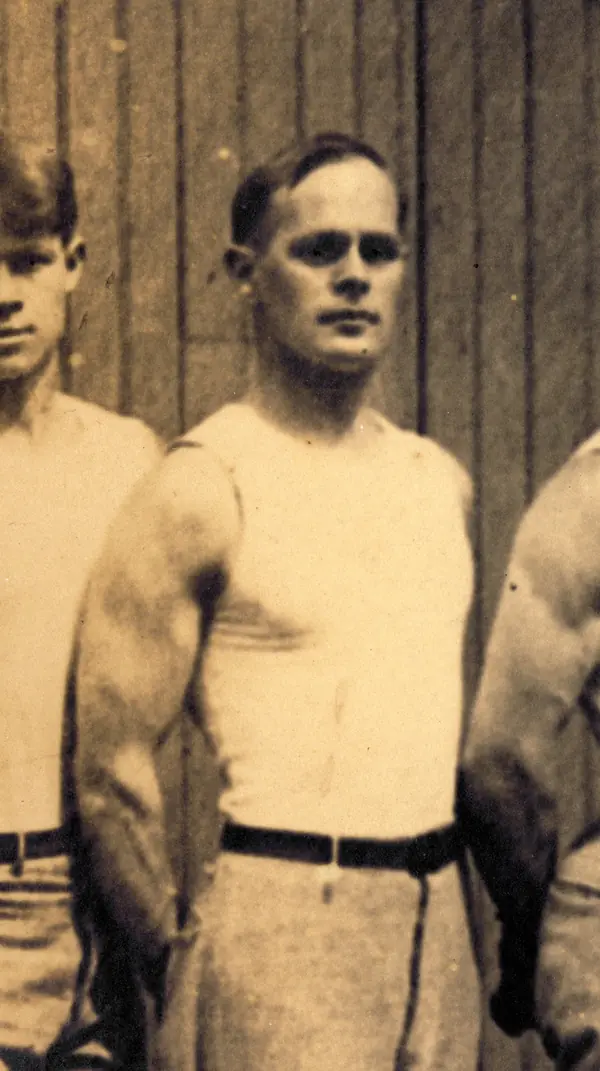
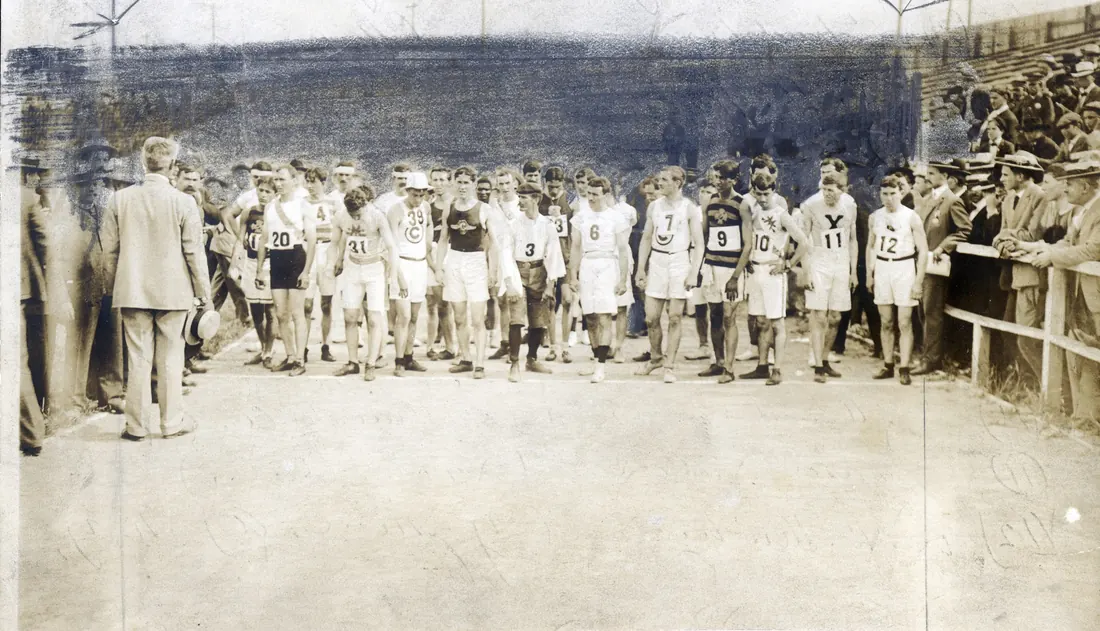
- His name was Fred Lorz, a New York bricklayer. Wikipedia: “Born in New York City, Lorz was reported to have done all his training at night due to his profession as a bricklayer.” In the start-line photo, the Missouri History Museum lists “Fred Longm (31)” beside Thomas Hicks. 27
- In Saint Louis in 1904, it was 90 degrees, on dusty roads. Wikipedia: “with a temperature of around 90 degrees Fahrenheit (32 degrees Celsius) at the starting time”; “The remainder of the course was on dusty country roads.” St. Louis Magazine: “The temperature was about 92 degrees.” Wikipedia (Lorz): “in St. Louis on August 30, 1904.” 162
- After nine miles, Lorz got cramps and quit. Wikipedia: “Lorz, suffering cramps, had actually dropped out of the race after nine miles.” Wikipedia (Lorz): “Lorz stopped running because of exhaustion after nine miles.” St. Louis Magazine: “overcome by cramps at mile 9.” 126
- His manager gave him a lift, and he waved at runners as he passed. Wikipedia (Lorz): “His manager gave him a lift in his car.” St. Louis Magazine: “His manager gave him a lift for the next 11 miles.” Wikipedia (the marathon): he “hitched a ride back to the stadium in a car, waving at spectators and runners alike during the ride.” 261
- When the car broke down, he jogged in to cheers. Wikipedia: “When the car broke down at the 19th mile, he re-entered the race and jogged across the finish line”; “After being hailed as the winner.” Wikipedia (Lorz): he “was greeted as the winner.” 12
- The President’s daughter reportedly nearly gave him the gold medal. Wikipedia: “he had his photograph taken with Alice Roosevelt, daughter of then-U.S. President Theodore Roosevelt: she placed a wreath upon Lorz’s head, and was about to award him the gold medal.” St. Louis Magazine: “just as she was looping the gold medal around his neck.” 16
- Then spectators said he had ridden in a car. Wikipedia: “when spectators claimed Lorz had not run the entire race.” Wikipedia (Lorz): “After spectators claimed he had not run the entire race.” 12
- He called it a joke and was banned for life. Wikipedia: “Despite his claim that he was playing a practical joke, the AAU responded by banning Lorz for life.” Olympedia: banned for life, a ban quickly lifted. 124
- The real winner, Thomas Hicks, could barely walk. Wikipedia: “He continued to battle onwards, hallucinating, and was barely able to walk for most of the course.” Wikipedia (Lorz): “Thomas Hicks was the actual winner.” 12
- His trainers fed him strychnine, a rat poison, with egg whites and brandy. Wikipedia: “Hicks received several doses of strychnine – a common rat poison, which stimulates the nervous system in small doses – mixed with brandy and egg white”; “being administered brandy, raw eggs, and strychnine by his trainers.” Popular Science: “his trainers gave him approximately a milligram of strychnine sulphate and an egg white”; “a second dose, along with two more egg whites and a slug of brandy.” Wikipedia (Hicks): 1/60 grain of strychnine and some brandy, then another dose. 153
- Hallucinating, he was held up across the line. Wikipedia: “When he reached the stadium, his support team carried him over the line, holding him in the air while he shuffled his feet as if still running.” Popular Science: “he had to be held up by two men just to cross it.” 15
- It took four doctors to save him. Wikipedia: “Hicks had to be carried off the track on a stretcher, and might have died in the stadium had he not been treated by four doctors.” Wikipedia (Hicks): “Another dose might have been fatal.” 13
- The next spring, Lorz won the Boston Marathon. Wikipedia (Lorz): “the AAU responded by banning him for life, but this was commuted to six months on February 19, 1905”; “Lorz then legitimately won the Boston Marathon in 1905 with a time of 2:38:25.” Olympedia: he won the 1905 Boston Marathon. 24
- This time, he ran every step. Wikipedia (Lorz): “Lorz then legitimately won the Boston Marathon in 1905.” 2
Sources
- Athletics at the 1904 Summer Olympics – Men’s marathon Wikipedia
- Frederick Lorz Wikipedia
- Thomas Hicks (athlete) Wikipedia
- Frederick Lorz Olympedia
- At the 1904 Olympics, a marathoner took rat poison to win gold (Shoshi Parks) Popular Science
- What happened at the 1904 Olympic marathon? (2021) St. Louis Magazine
- 1904 Olympics: Runners lined up at start of Marathon Race (the Missouri History Museum’s record) Wikimedia Commons
Notes
How far he rode: Wikipedia’s article on Lorz and St. Louis Magazine say the next 11 miles (he quit nine miles in, and the car broke down at the 19th mile), but St. Louis Magazine also quotes the Louisville Courier-Journal of the time: he “had ridden about three miles in an automobile.” The Short gives no distance.
Alice Roosevelt and the medal are reported by Smithsonian Magazine (through Wikipedia) and St. Louis Magazine; we found no account from 1904, so the page keeps the Short’s “reportedly.” The heat: around 90 °F at the start (Wikipedia) or about 92 (St. Louis Magazine).
The strychnine: about a milligram (Popular Science) or 1/60 grain (Wikipedia’s article on Hicks) a dose, in two doses (Popular Science, Wikipedia on Hicks) or “several” (Wikipedia on the marathon). Strychnine was a common rat poison that in small doses was used as a stimulant. The trainers’ names in common retellings come from Smithsonian Magazine, which we could not read, so they are left out.
Who really won: Wikipedia reports that the historian Clément Genty argues that the help Hicks got (a car escort, being carried, the doses) should have disqualified him too, and that the gold should go to Albert Corey. The Short follows the official result.
“The next spring”: his ban was cut on February 19, 1905, and the sources give 1905 for his Boston win. “He ran every step” is the Short’s way of saying what Wikipedia says: he won it legitimately.
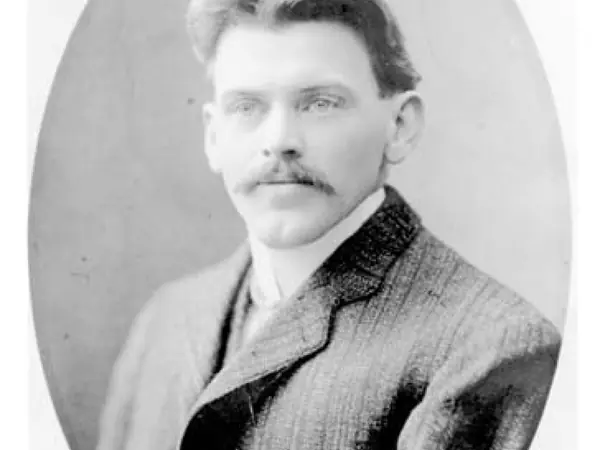
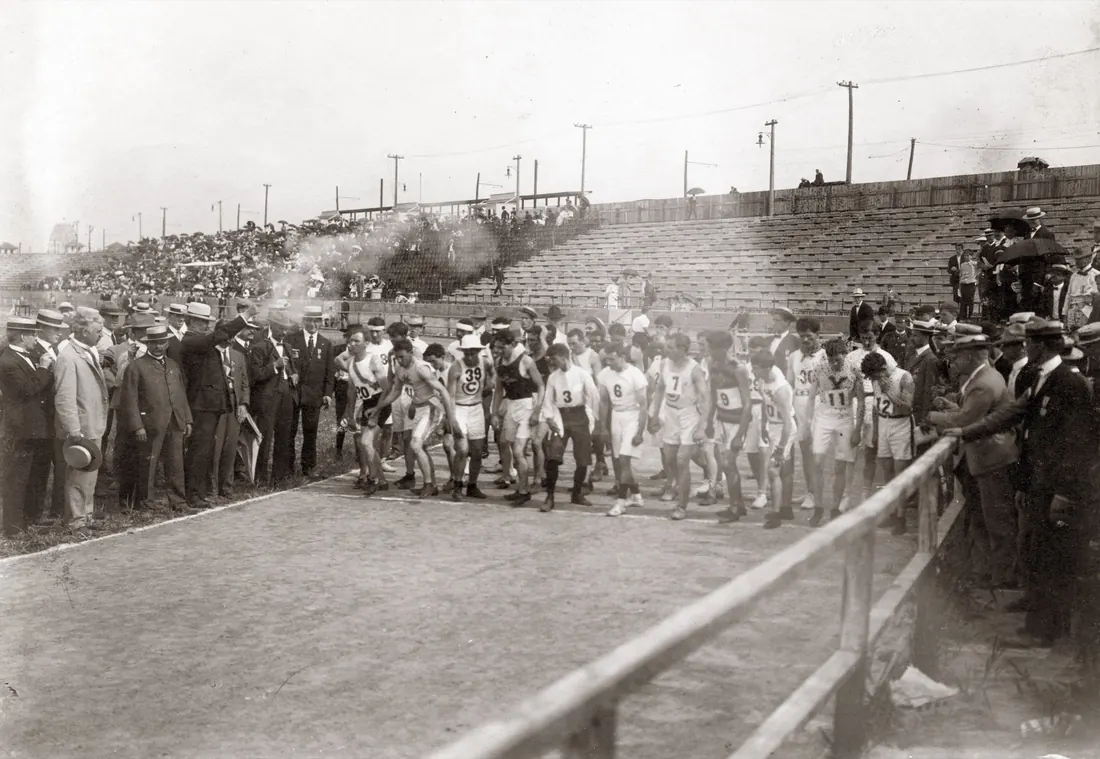
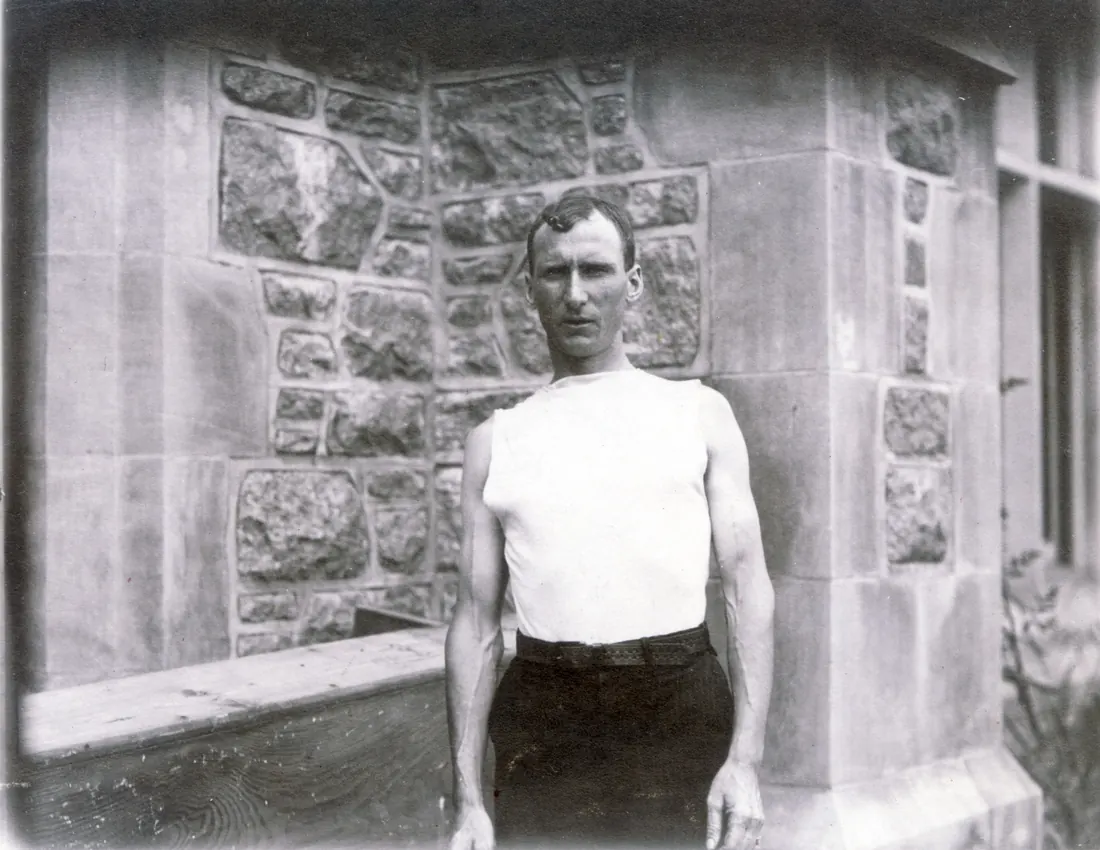
Lorz is shown as runner No. 31: the Missouri History Museum’s caption of the start-line photo lists the runners left to right as “Thomas Hicks (20), Fred Longm (31), S. H. Holt (39), Felix Caravajal (3)…”, the photo shows 20, 31, 39 and 3 in that order, and No. 31 wears the emblem of the Mohawk Athletic Club, Lorz’s club. “Longm” looks like a misreading of “Lorz”; no other Fred ran. A portrait said to be him was not used, because nothing reliable names him in it.
Left out: the race’s other strange moments and Lorz’s later life.
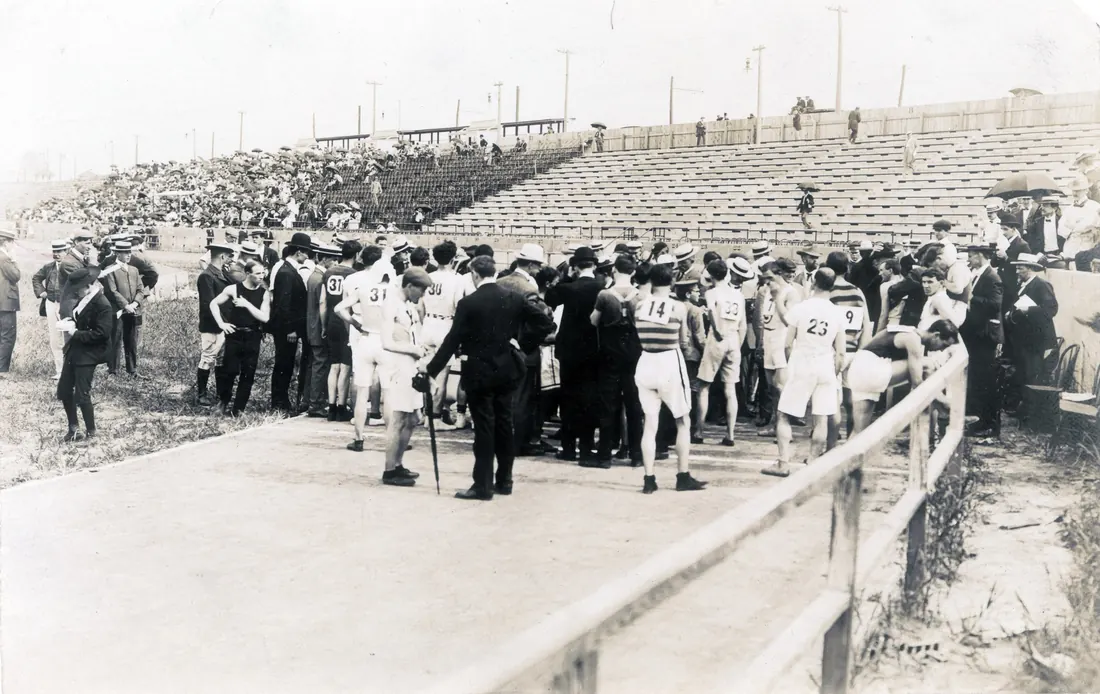
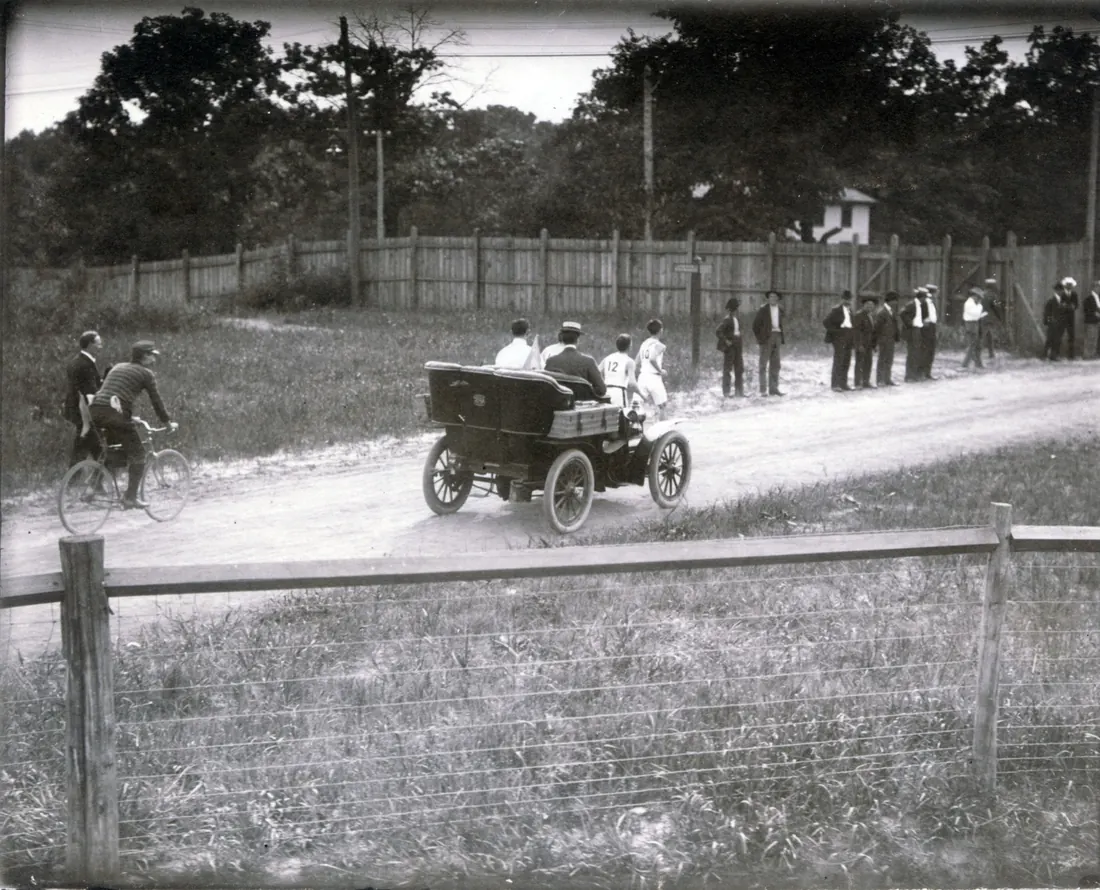
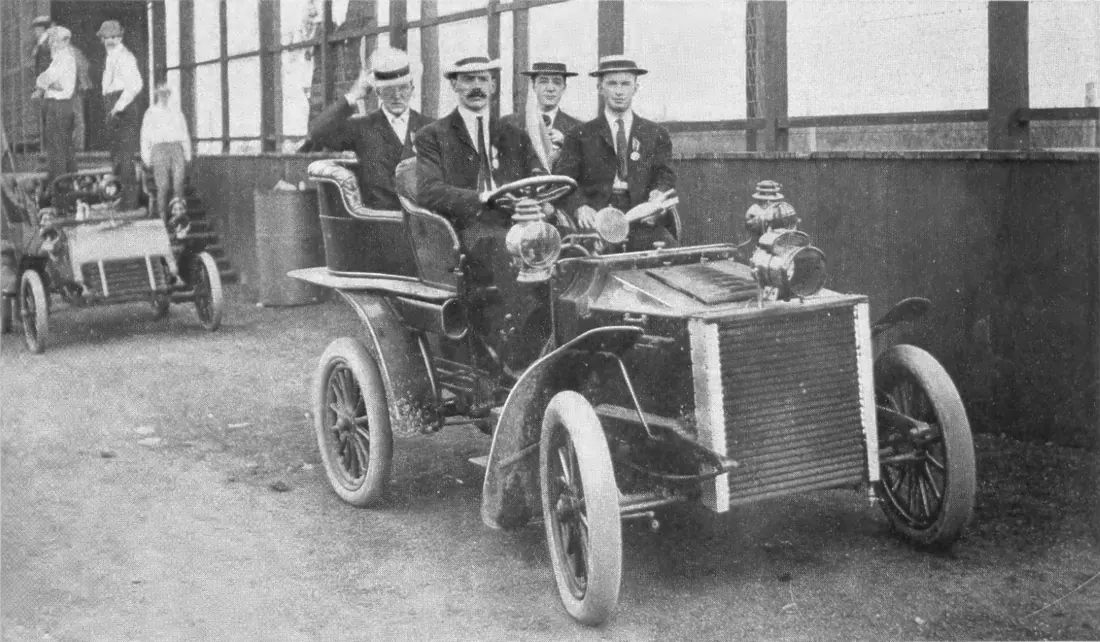
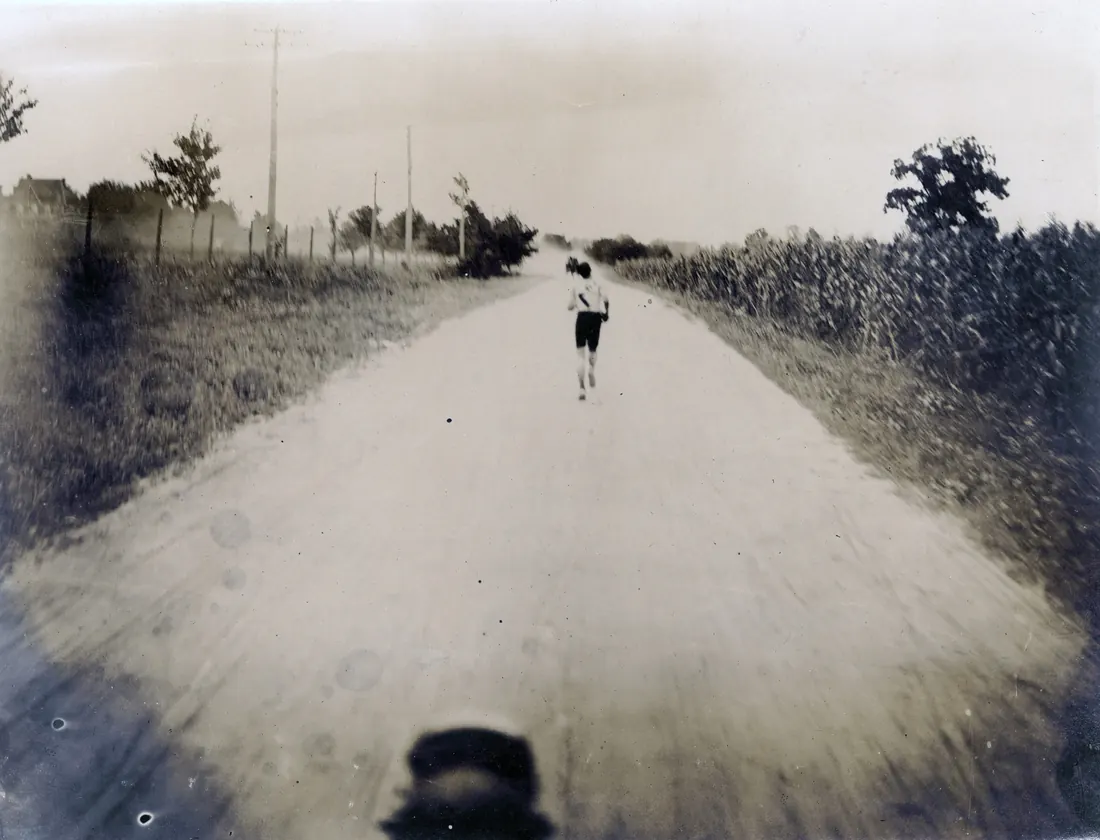
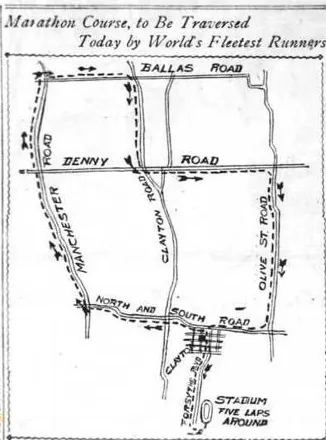
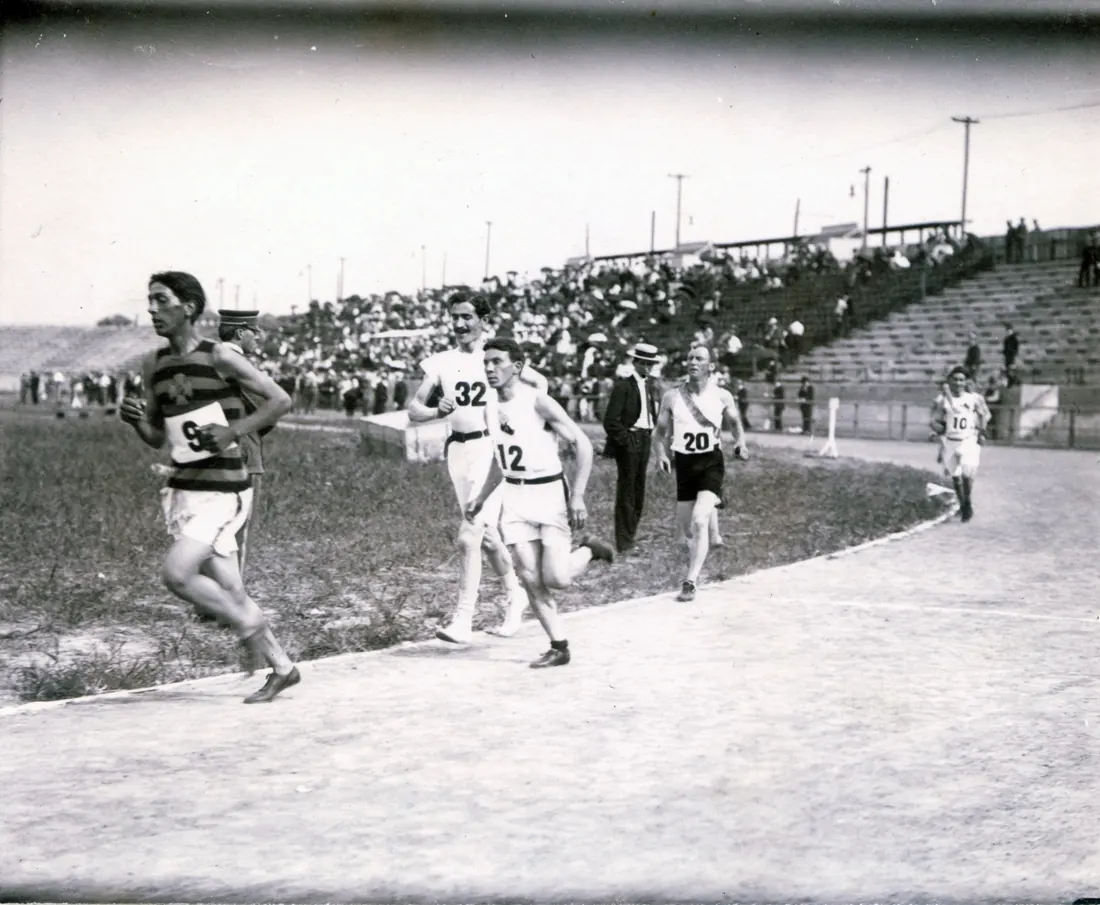
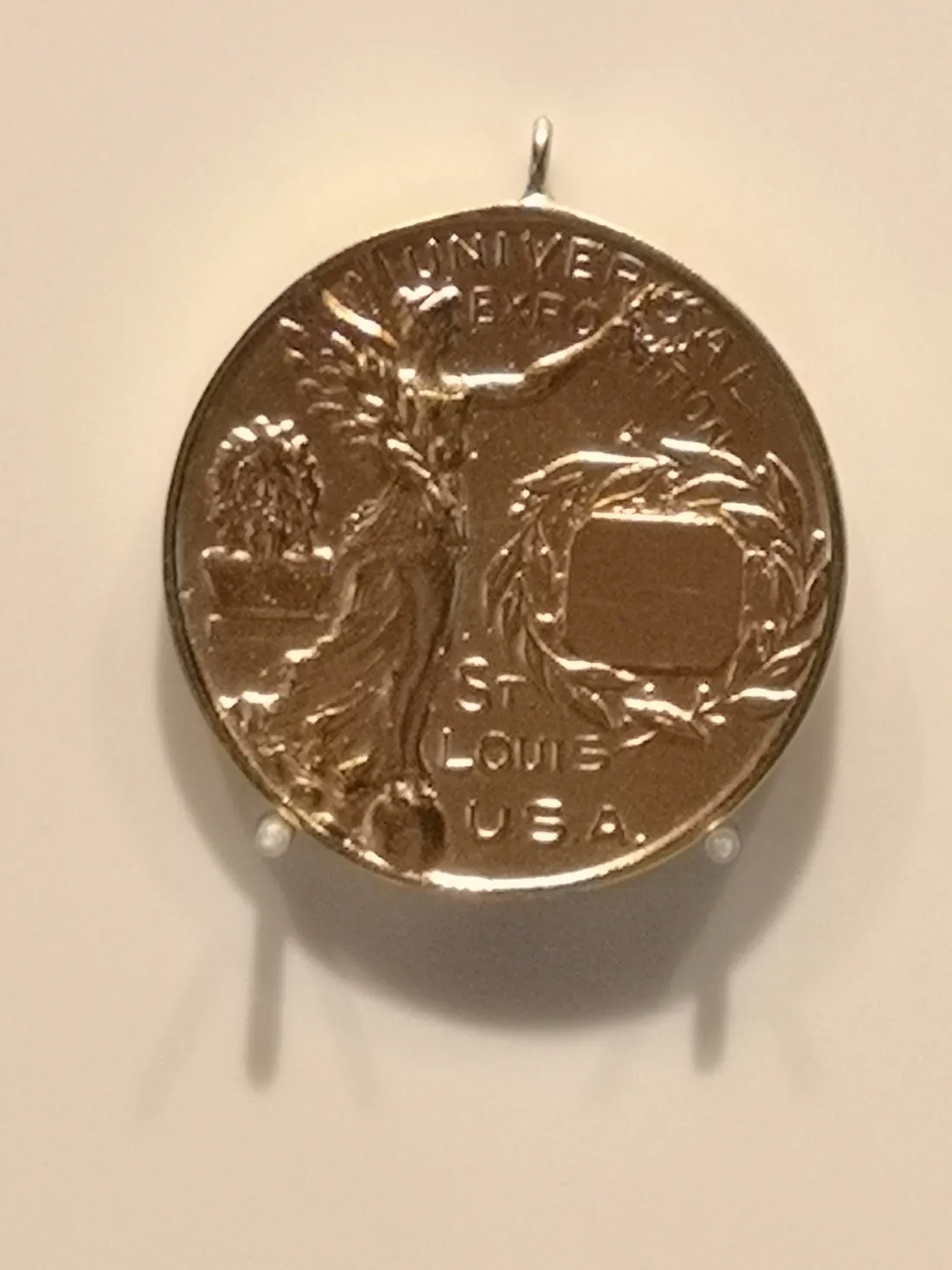
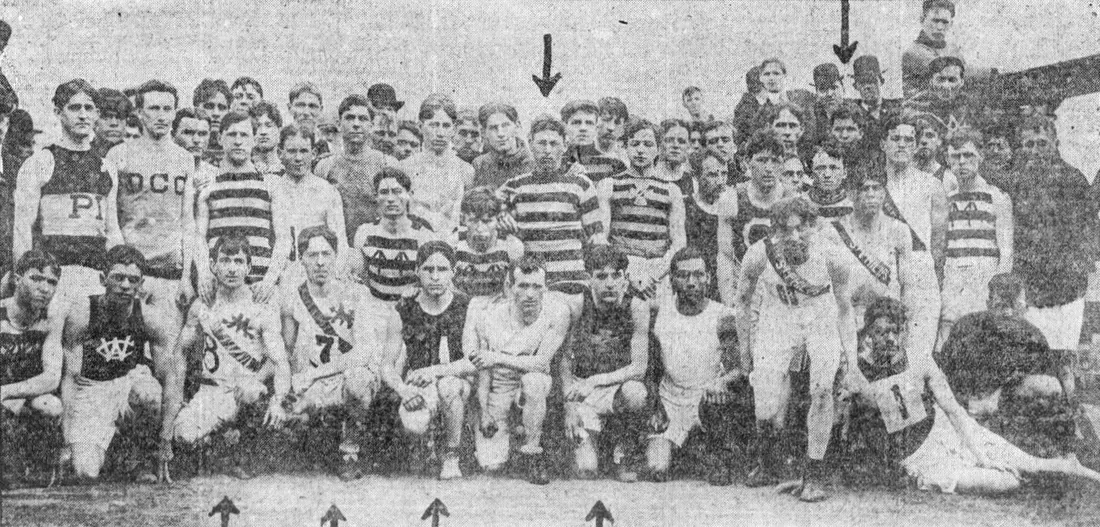
Pictures: no photo of Lorz’s ride, his finish or his 1905 Boston win exists. From the Missouri History Museum: the runners lined up for instructions at the start (Nathan Lazarnick; Lorz is No. 31, head bowed), runners forming at the start line, David R. Francis firing the starting gun, the runners on their first lap of the stadium track, the first runners leaving the stadium ahead of the referees’ car, Thomas Hicks leading at the 20-mile mark (attributed to Jessie Tarbox Beals), Hicks walking between his attendants as they sponge him (Jessie Tarbox Beals), Hicks’s portrait as the winner, and Alice Roosevelt at the 1904 World’s Fair (not at the marathon). The officials’ and reporters’ car that followed the race is from Charles J. P. Lucas’s 1905 book The Olympic Games 1904; it is not Lorz’s manager’s car. The course map is from the St. Louis Post-Dispatch, 1904, and the 1904 cartoon of Lorz in the car, an artist’s impression, from Karl Lennartz’s archive. The Boston Daily Globe picture of April 20, 1904, shows the runners of the 1904 Boston Marathon, not the 1905 race he won. The gold medal is a 1904 Saint Louis Olympic gold medal at the Olympic Museum in Lausanne, photographed in 2020, not the one Lorz was nearly given. The other people in these photos are not named.
Photo credits
The archive photos in this story
The photographs and illustrations in this story are in the public domain or shared under open licenses; each one is credited below with its license. Tap one to enlarge it, or follow the link to its Wikimedia Commons page for the full record. The narration, captions and graphics in the Short are our own; its music and sound effects are credited below.
Music and sound effects
Music: Schumann, Kinderszenen, Op. 15: No. 1 'Of Foreign Lands and Peoples (Musopen, public domain); Mussorgsky, Pictures at an Exhibition: IV. Bydlo (piano) (Musopen, public domain); Dvorak, Symphony No. 9 'From the New World': II. Largo (Musopen, public domain).
Sound effects: Freesound, CC0.