Károly Takács “joined the Hungarian Army,” Wikipedia says, and “By 1936, he was a world-class pistol shooter.” But “he was denied a place in the Hungarian shooting team for the 1936 Summer Olympics on the grounds that he was a sergeant, and only commissioned officers were allowed to compete.”
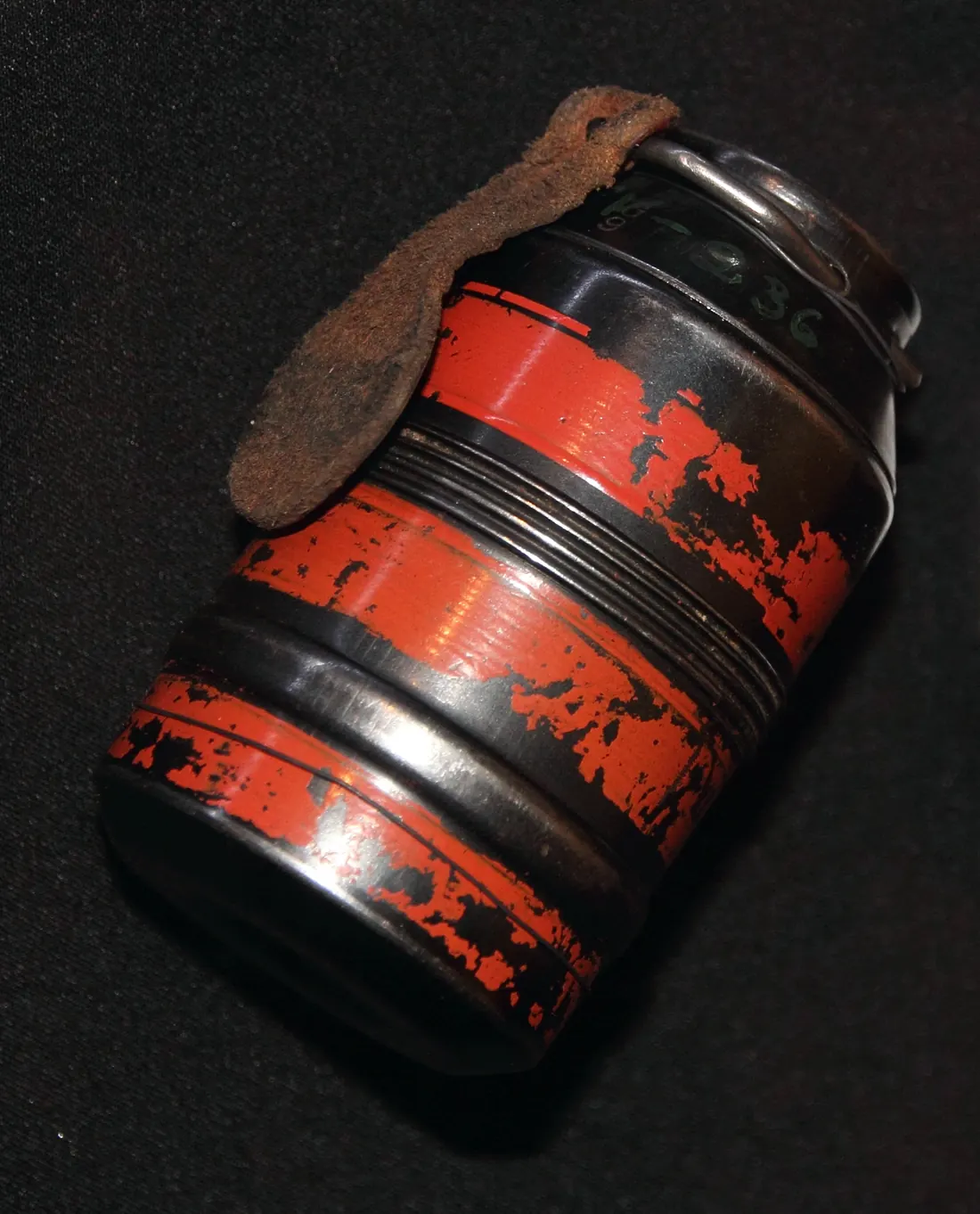
“During army training in 1938, his right hand was badly injured when a faulty grenade exploded.” Telex, which quotes his own account, gives the date as September 15, 1938, at a military exercise at Baja; in his words, “elvesztettem jobbkezemet,” I lost my right hand. “The grenade exploded while Károly Takács was holding it,” the Associated Press wrote, and “His right hand and half of his forearm were lost to the faulty weapon.”
He “switched to shooting with his left hand. He practiced in secret,” Wikipedia says; “He learned how to become a southpaw shooter in secret,” the AP wrote. In his own words: “A következő év tavaszáig állandó erős edzést tartottam bal kézzel, mintegy 10–15000 töltényt lőttem el” (until the next spring I trained hard with my left hand and fired some 10,000 to 15,000 cartridges). Then, Telex writes, “1939. áprilisban már a gyengébbnek gondolt kezével, ballal nyerte meg a magyar bajnokságot”: in April 1939, with the hand thought to be his weaker one, his left, he won the Hungarian championship, “surprising his countrymen,” as Wikipedia puts it. “He also was a member of the Hungarian team that won the 1939 UIT World Shooting Championships in the event.”
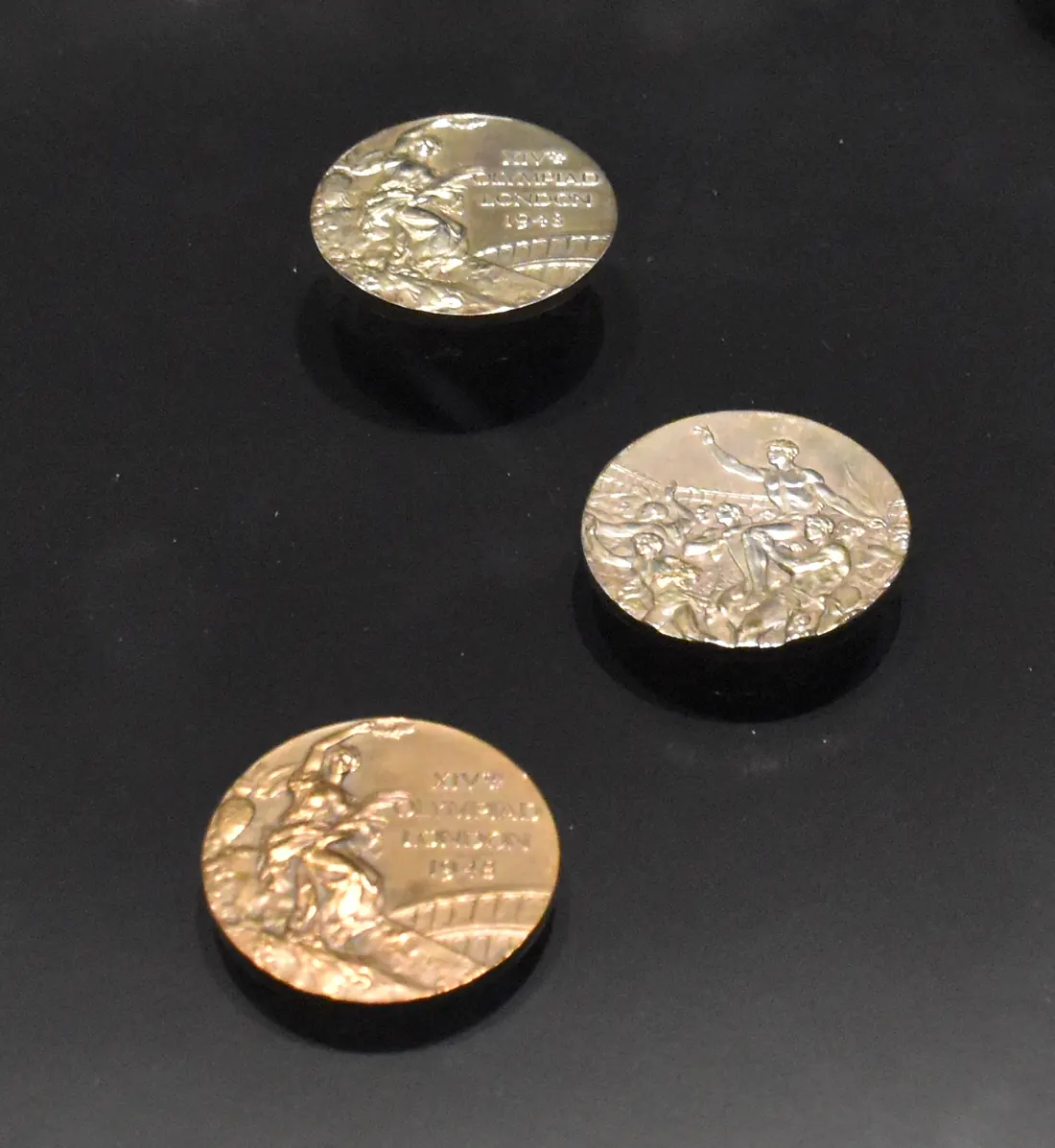
“The Olympic Games scheduled for 1940 and 1944 were canceled due to the Second World War.” Then he won “the gold medal at the 1948 Summer Olympics in London, aged 38,” beating “Argentine Carlos Enrique Díaz Sáenz Valiente, the reigning world champion.” The AP wrote, “Díaz Sáenz Valiente beat his own world record by one point. Takács beat it by 10.” Telex gives his score as 580 points, a world record, to Valiente’s 571.
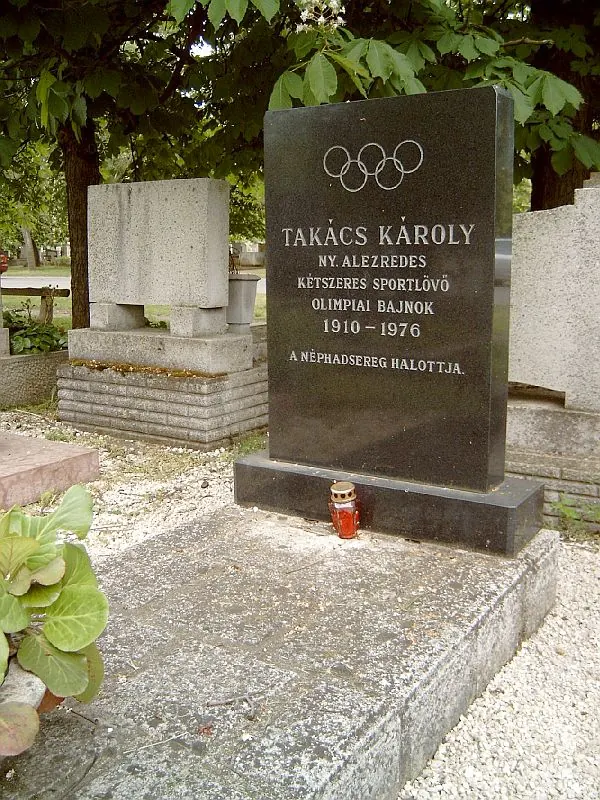
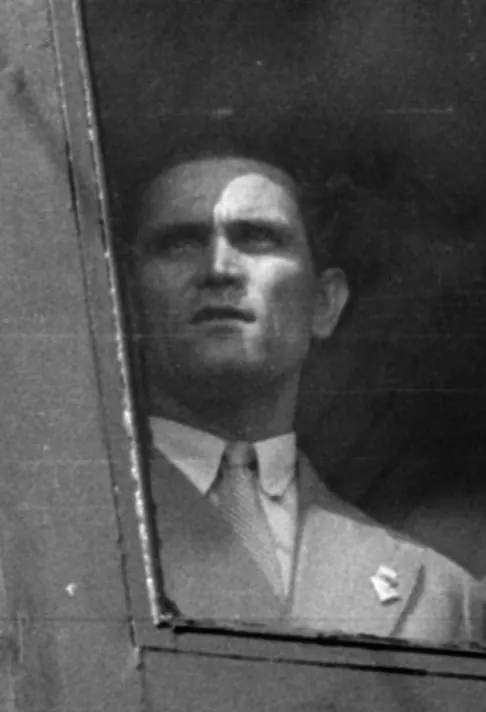
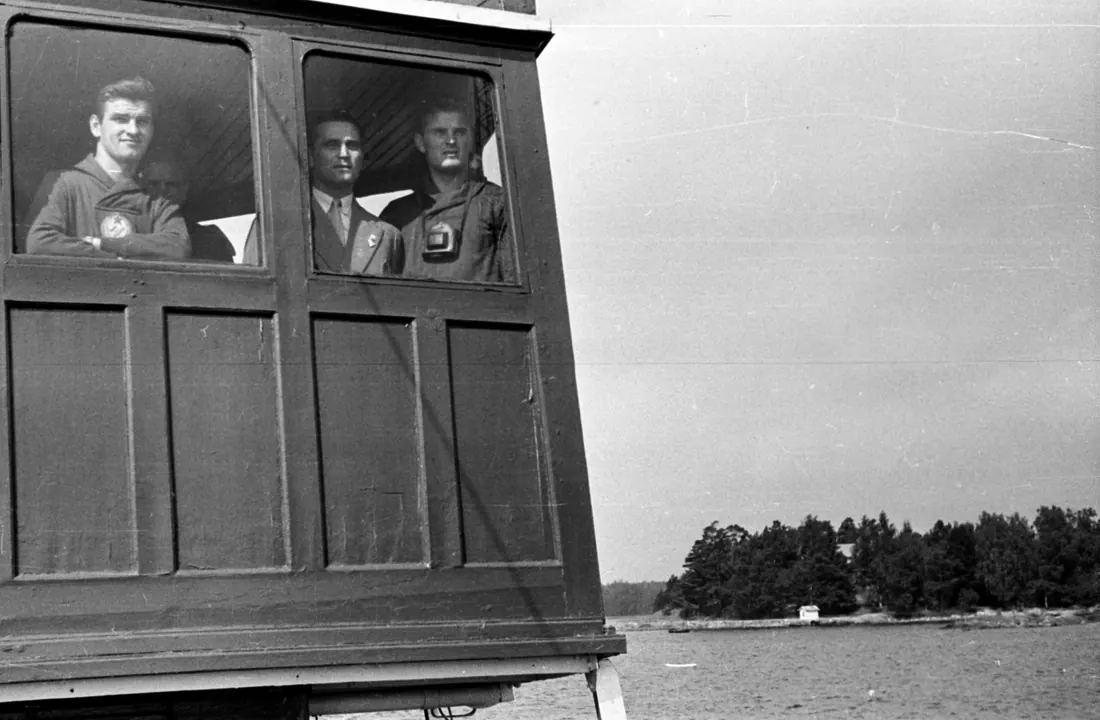
“Takács won a second gold medal in the same event at the 1952 Summer Olympics in Helsinki,” where, Telex notes, he was “az akkor 42 éves Takács Károly,” the then 42-year-old Károly Takács, and “His pupil Szilárd Kun won silver,” Olympedia says. He was the first shooter to win two Olympic gold medals in the 25-meter rapid-fire pistol, Wikipedia says, “both with his left hand after his right hand was seriously injured”; the AP wrote of him “becoming the first repeat champion in rapid fire pistol.” “He ended his army career as a lieutenant colonel,” and he died in Budapest on January 5, 1976, Olympedia says. His gravestone reads “ny. alezredes,” retired lieutenant colonel.
Fact check
The facts and where they come from
- He lost his shooting hand to a grenade, but he still won Olympic gold twice. Olympedia: he “lost his right hand in a grenade accident in 1938,” and it lists him first in London in 1948 and in Helsinki in 1952. Wikipedia: he won both golds “with his left hand after his right hand was seriously injured.” 21
- His name was Károly Takács, a Hungarian army sergeant. Olympedia: “serving as a sergeant.” Wikipedia: he “joined the Hungarian Army”; “on the grounds that he was a sergeant.” 21
- By 1936, he was a world-class pistol shooter. Wikipedia: “By 1936, he was a world-class pistol shooter.” 1
- But Hungary sent only officers to the Olympics. Wikipedia: “he was denied a place in the Hungarian shooting team for the 1936 Summer Olympics on the grounds that he was a sergeant, and only commissioned officers were allowed to compete.” 1
- Then, in 1938, a faulty grenade exploded in his right hand. Wikipedia: “During army training in 1938, his right hand was badly injured when a faulty grenade exploded.” Telex: September 15, 1938, at a military exercise. The AP: “The grenade exploded while Károly Takács was holding it.” 134
- The hand he shot with was gone. Olympedia: “lost his right hand in a grenade accident in 1938.” Telex, in his own words: “elvesztettem jobbkezemet” (I lost my right hand). The AP: “His right hand and half of his forearm were lost to the faulty weapon.” 234
- So he taught himself, in secret, to shoot with his left. Wikipedia: “switched to shooting with his left hand. He practiced in secret.” The AP: “He learned how to become a southpaw shooter in secret.” 14
- By his own count, he fired 10,000 to 15,000 rounds. Telex, in his own words: “A következő év tavaszáig állandó erős edzést tartottam bal kézzel, mintegy 10–15000 töltényt lőttem el.” (Until the next spring I trained hard with my left hand and fired some 10,000 to 15,000 cartridges.) 3
- The next spring, he won the national championship, left-handed. Telex: “1939. áprilisban már a gyengébbnek gondolt kezével, ballal nyerte meg a magyar bajnokságot” (in April 1939, with the hand thought to be his weaker one, his left, he won the Hungarian championship). Wikipedia: “surprising his countrymen when he won the Hungarian national pistol shooting championship in the spring of 1939.” 31
- Then war canceled two Olympics, and he waited ten years. Wikipedia: “The Olympic Games scheduled for 1940 and 1944 were canceled due to the Second World War.” From the 1938 accident to the 1948 Games is ten years. 1
- In London, at 38, he beat the world champion and broke the world record. Wikipedia: “winning the gold medal at the 1948 Summer Olympics in London, aged 38,” beating “Argentine Carlos Enrique Díaz Sáenz Valiente, the reigning world champion.” The AP: “Díaz Sáenz Valiente beat his own world record by one point. Takács beat it by 10.” Telex: 580 points, a world record; Valiente second with 571. 143
- In Helsinki, four years later, he won gold again. Olympedia: he “defended his Olympic title in the same discipline.” Wikipedia: “Takács won a second gold medal in the same event at the 1952 Summer Olympics in Helsinki.” 21
- Nobody had ever won that event twice. The AP: “becoming the first repeat champion in rapid fire pistol.” Wikipedia: he was the first shooter to win two Olympic gold medals in the 25-meter rapid-fire pistol. 41
- A grenade took his best hand, so he made the other one the best. Wikipedia: both golds came “with his left hand after his right hand was seriously injured.” 12
Sources
- Károly Takács Wikipedia
- Károly Takács Olympedia
- Gránát végzett a jobb kezével, ezért ballal nyerte az olimpiákat (Ághassi Attila, July 27, 2022; in Hungarian) Telex
- Hungary’s one-armed shooter wins 1948 Olympic gold (Associated Press, updated August 1, 2020) FOX Sports
- Takács Károly (in Hungarian) Magyar Életrajzi Lexikon (Hungarian Electronic Library)
- Károly Takács’s grave in Budapest (its text is legible on the photo) Wikimedia Commons
Notes
How much he lost: his right hand (Olympedia; Telex, in his own words), his right hand badly injured (Wikipedia), or “his right hand and half of his forearm” (the AP). The Short says he lost his shooting hand, which all of them support.
Where and when: Telex gives September 15, 1938, at a military exercise at Baja; Wikipedia and the AP say only army training in 1938. “Ten years” counts from the 1938 accident to the 1948 Games.
The score: Telex gives 580 points, a world record, to Valiente’s 571; the AP says he beat the old record by 10. The Short says only that he broke the world record.
A famous exchange between Takács and Valiente in London is widely retold, but we found it only in motivational retellings, not in Olympedia, Wikipedia, the AP or Telex, so it is left out.
His death: January 5, 1976 (Wikipedia, Olympedia) or January 6 (Magyar Életrajzi Lexikon).
Left out: his later Olympic Games, his other national titles and his coaching.
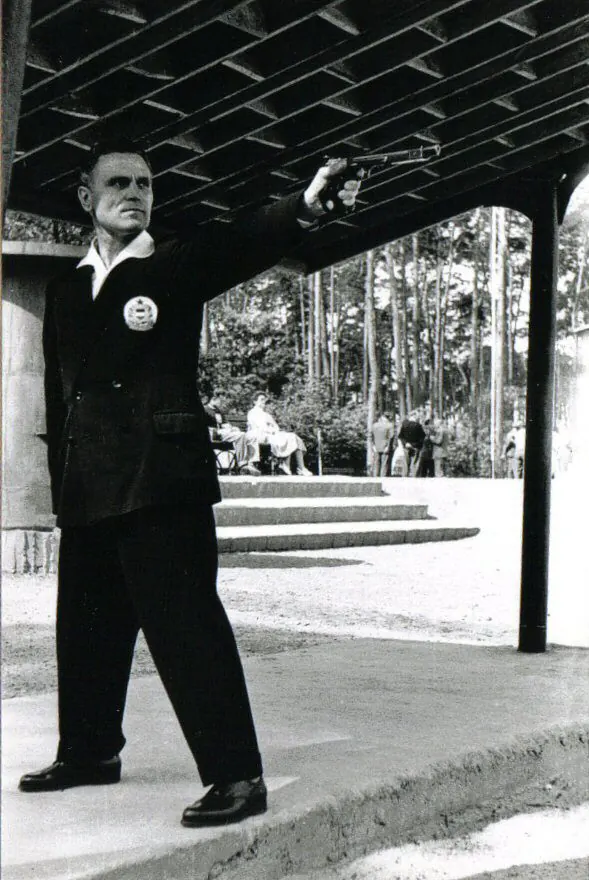
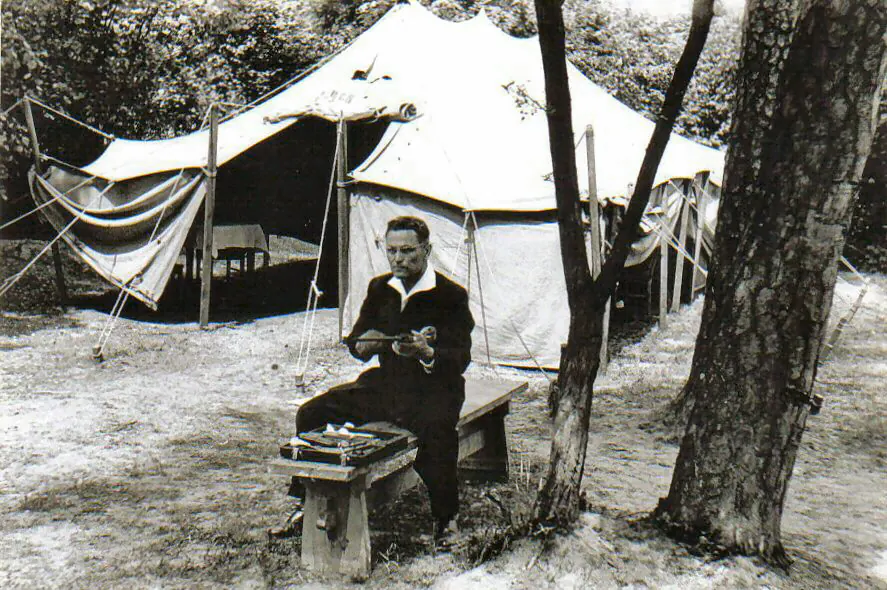
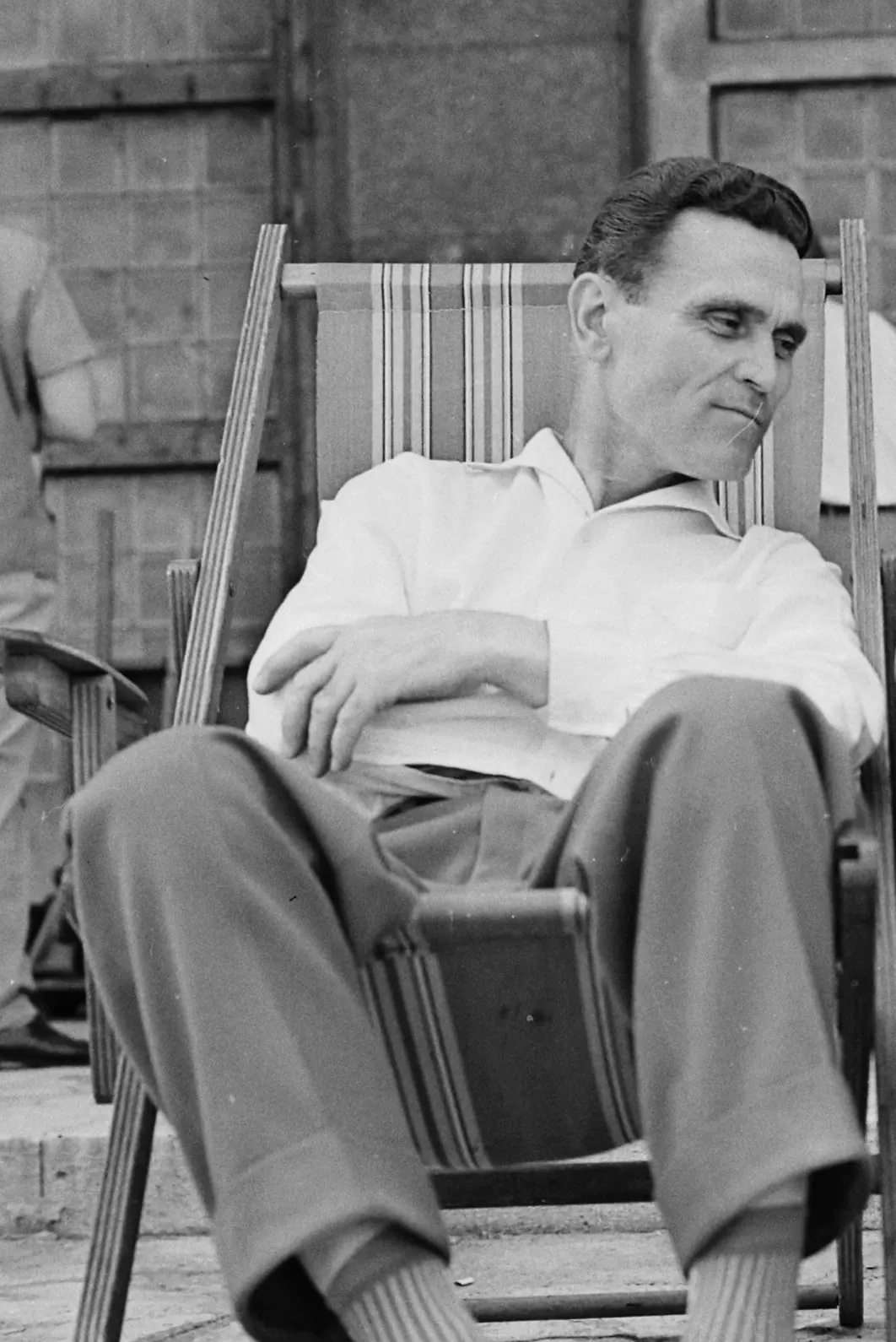
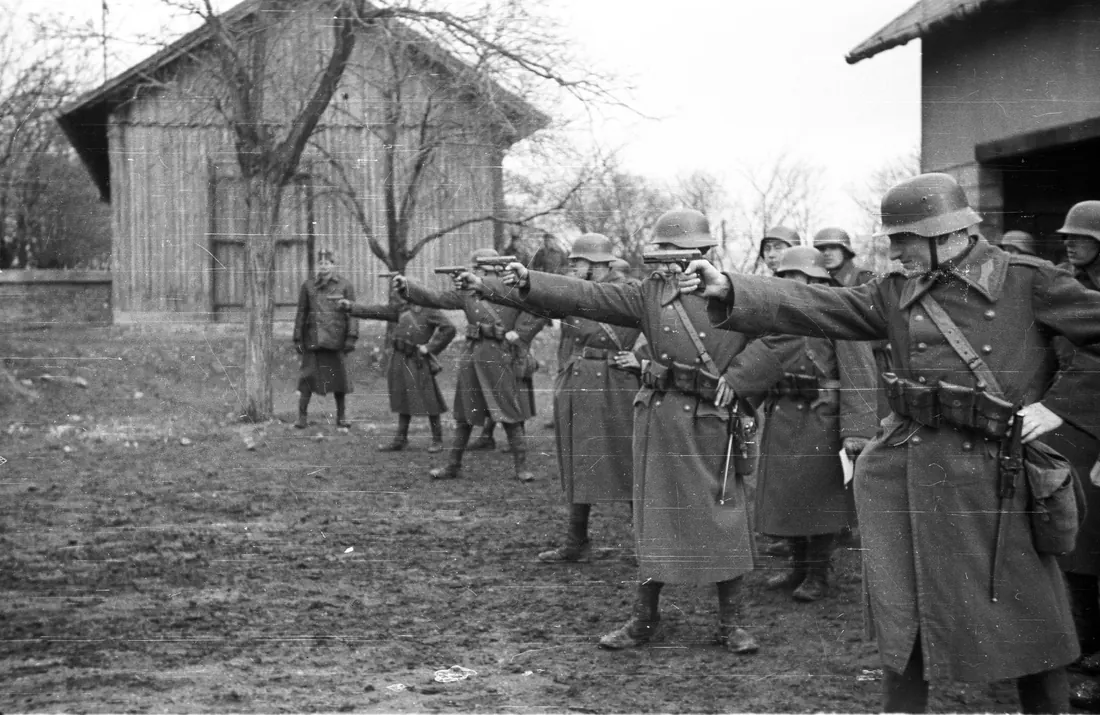
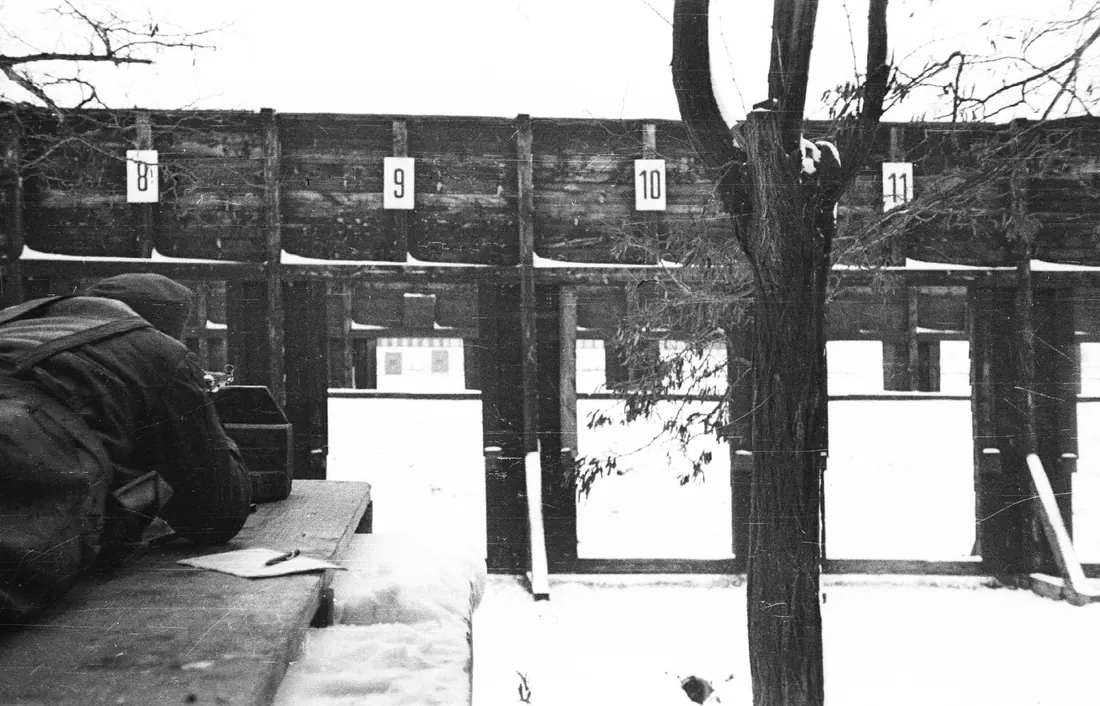
Pictures: no free photo shows him in 1938 or at the 1948 or 1952 shooting events. He is shown shooting with his left hand and preparing his pistol at the Poland–Hungary–Yugoslavia match in Bydgoszcz in 1961, photographed by Wiktor Kobyliński, who competed there; in our crop of a 1960 Fortepan photo of him with Sándor Prokopp at the Margaret Island clay-pigeon range, Budapest; and with Sándor Kocsis and József Csermák on a boat trip during the Helsinki Olympics, 1952 (one whole photo and our crop of another). The soldiers at pistol practice (1937) and the army shooting range in winter (1940) are from Fortepan, whose records give only keywords, so the descriptions are ours; Takács is not in them. The grenade is a Hungarian 36M egg hand grenade at the Mikkeli Infantry Museum, photographed in 2011, not the one that hurt him, and the medals are the London 1948 Olympic medals at the Olympic Museum in Lausanne, photographed in 2025, not his. His grave is in the Új köztemető, Budapest.
Photo credits
The archive photos in this story
The photographs and illustrations in this story are in the public domain or shared under open licenses; each one is credited below with its license. Tap one to enlarge it, or follow the link to its archive page for the full record. The narration, captions and graphics in the Short are our own; its music and sound effects are credited below.
Music and sound effects
Music: Schumann, Kinderszenen, Op. 15: No. 1 'Of Foreign Lands and Peoples (Musopen, public domain); Mussorgsky, Pictures at an Exhibition: IV. Bydlo (piano) (Musopen, public domain); Dvorak, Symphony No. 9 'From the New World': II. Largo (Musopen, public domain).
Sound effects: Freesound, CC0.